
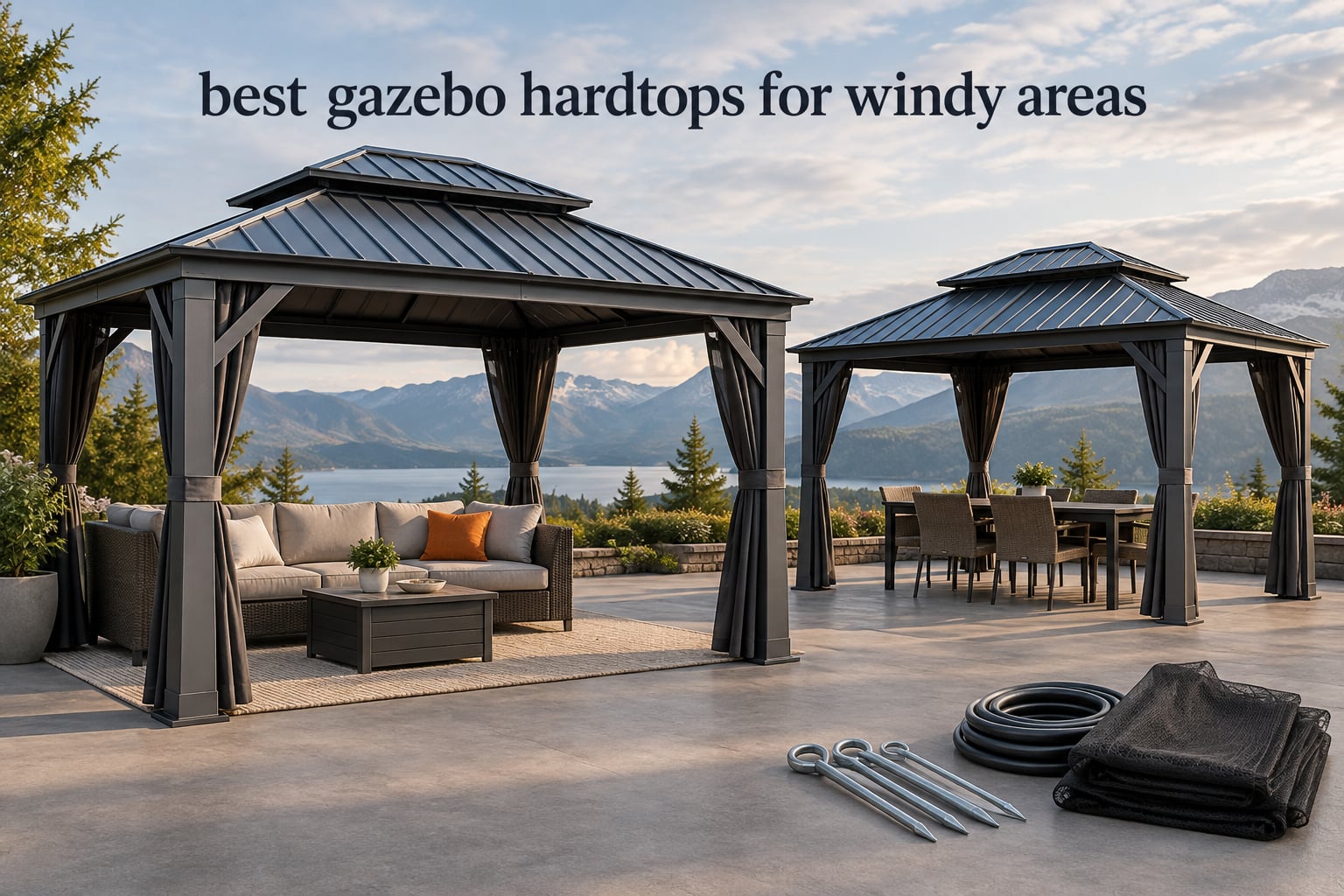
A gazebo is a large, light object held up in the air with a broad top surface, which means it behaves like a sail the moment a gust front arrives. That is why most soft-top canopies end up draped over a fence after a single storm, and why the best gazebo hardtops for windy areas are chosen on one number first: the published wind rating.
Outsunny’s 10 x 12 hardtop gazebo is our top pick for 2026. It carries a 4.4-star average across 734 ratings with only 4% one-star reviews, the tightest satisfaction profile among the picks that have a heavy review count behind them. If you want a number on the box rather than an adjective, the Aoxun 10×12 is rated at grade 7, which is 31-38 mph, and the PURPLE LEAF 8 x 12 publishes a 40 mph figure, the highest stated wind number in this group.
The rest of this guide is built around a simple rule: we only count a wind claim if the manufacturer actually publishes it. Most listing pages never state a wind speed at all, and a buyer in r/longisland put the problem plainly when they wrote that most of the models they found on Wayfair did not list wind capacity. Everything below is a hardtop gazebo, not a pop-up canopy, and every pick ships with or supports permanent anchoring.
Want the soft-top route instead? Start with our guides to the best gazebo canopies and gazebo canopies for patios, then read the anchoring section here before you buy anything for an exposed yard.
Top 3 Picks for Windy Yards in 2026

Outsunny 10×12 Hardtop Gazebo
- Galvanized steel roof on powder-coated aluminum frame
- 4.4 stars across 734 ratings
- Stakes and expansion screws fit soft or hard ground
PURPLE LEAF 8×12 Gazebo
- Published wind resistance up to 40 mph
- 3.93 inch fully enclosed triangular aluminum posts
- 5 year roof warranty

Aoxun 10×12 Hardtop Gazebo
- Published maximum wind grade 7 at 31-38 mph
- Thick powder-coated metal frame
- 4 ground piles and expansion screws included
The 10 Best Hardtop Gazebos for Windy Areas in 2026
Two products in this roundup publish a wind figure outright. The Aoxun 10×12 states a maximum wind resistance grade of 7, which converts to 31-38 mph, and the PURPLE LEAF 8 x 12 states up to 40 mph. The remaining eight describe wind performance in words like sturdy, vented or windproof, which tells you about the roof geometry but not a number you can plan around.
That difference matters more than any other single spec, so it drives the table below. We also flag the one product rated for extreme conditions by its own manufacturer, the Modern Shade, which explicitly asks owners to strip the roof, curtains and mesh before a severe storm. A gazebo that ships with its own storm instructions is telling you something useful about how much wind it is warranted to stand in.
| Product | Specifications | Action |
|---|---|---|
| Outsunny 10×12 Hardtop Gazebo |
|
Check Latest Price |
| Aoxun 10×12 Hardtop Gazebo |
|
Check Latest Price |
| PURPLE LEAF 8×12 Hardtop Gazebo |
|
Check Latest Price |
 YITAHOME 10×12 Hardtop Gazebo YITAHOME 10×12 Hardtop Gazebo |
|
Check Latest Price |
 EROMMY 10×12 Hardtop Gazebo EROMMY 10×12 Hardtop Gazebo |
|
Check Latest Price |
 Modern Shade 10×10 Hardtop Gazebo Modern Shade 10×10 Hardtop Gazebo |
|
Check Latest Price |
 Aoxun 12×16 Hardtop Gazebo Aoxun 12×16 Hardtop Gazebo |
|
Check Latest Price |
 YOLENY 10×12 Hardtop Gazebo YOLENY 10×12 Hardtop Gazebo |
|
Check Latest Price |
 AirWire 10×12 Hardtop Gazebo AirWire 10×12 Hardtop Gazebo |
|
Check Latest Price |
 HAPPATIO 12×12 Hardtop Gazebo HAPPATIO 12×12 Hardtop Gazebo |
|
Check Latest Price |
1. Outsunny 10×12 Hardtop Gazebo – The Most Consistent Performer
Outsunny 10′ x 12′ Hardtop Gazebo with Curtains and Netting, Permanent Pavilion Metal Single Roof Gazebo Canopy with Aluminum Frame and Hooks, for Garden, Patio, Backyard, Coffee Brown
Powder-coated aluminum frame
Galvanized steel roof
117.87 sq ft
209.4 lb
Pros
- 4.4 stars with only 4% one-star reviews across 734 ratings
- Highest rating of any pick carrying 700+ reviews
- Powder-coated aluminum frame resists water and corrosion
- Included stakes and expansion screws fit soft or hard ground
Cons
- Single-layer roof rather than a vented double tier
- Manufacturer says not for extreme weather and to clear snow at capacity
- Listed as water resistant rather than waterproof
This is the hardtop gazebo we would put on an exposed lawn before anything else. Outsunny pairs a galvanized steel hardtop roof with a powder-coated bronze aluminum frame, and the result is a structure owners describe as heavy duty next to the fabric canopies they replaced. The frame is described as water safe, and the roof is reported to hold up through repeated weather exposure season after season.
The satisfaction profile is what sold us. Outsunny holds a 4.4-star average with 66% five-star and 20% four-star responses, which puts 86% of buyers in the top two rungs and only 4% in the bottom one. Among the picks here with 700 or more ratings behind them, that is the strongest number, and the thin negative share means the complaints that do exist are about logistics rather than structural failure.
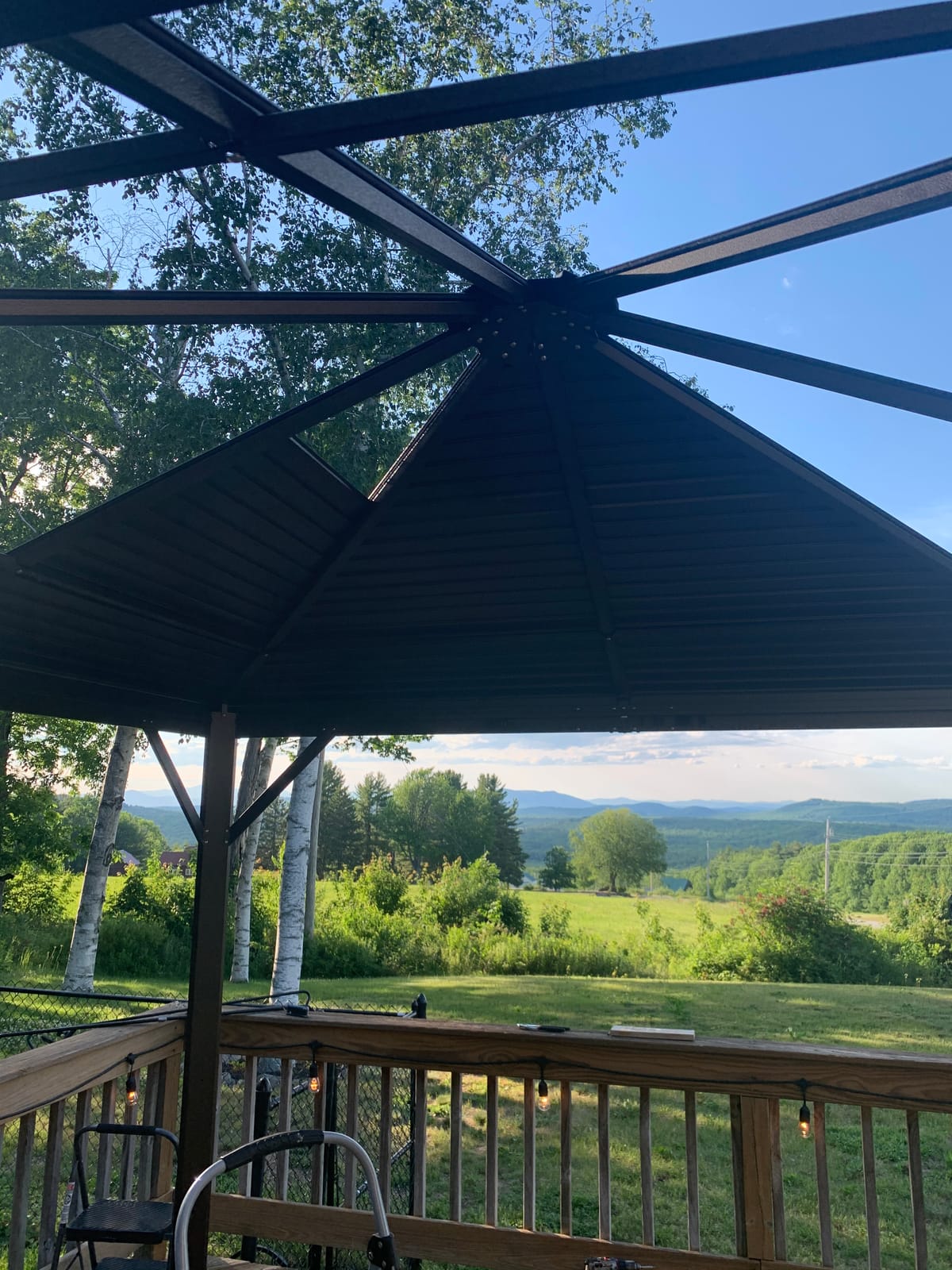
The honest limitation is the roof. This is a single-layer hardtop, not the vented double tier most competitors use, so it sheds less wind through the roof and does less to move hot air out of the interior. In exchange you get a frame that owners report standing still once it is anchored, and a mounting kit that works on a lawn, a paver patio or a deck.
One specification detail is worth checking before you order. The listing gives overall dimensions of 12 feet by roughly 9.8 feet against a nominal 10 x 12 footprint, so the usable width is narrower than the name suggests. If you are trying to cover a dining set, measure your furniture first. Outsunny rates the covered area at 117.87 sq ft, which is fine for a sofa group and tight for a long table.
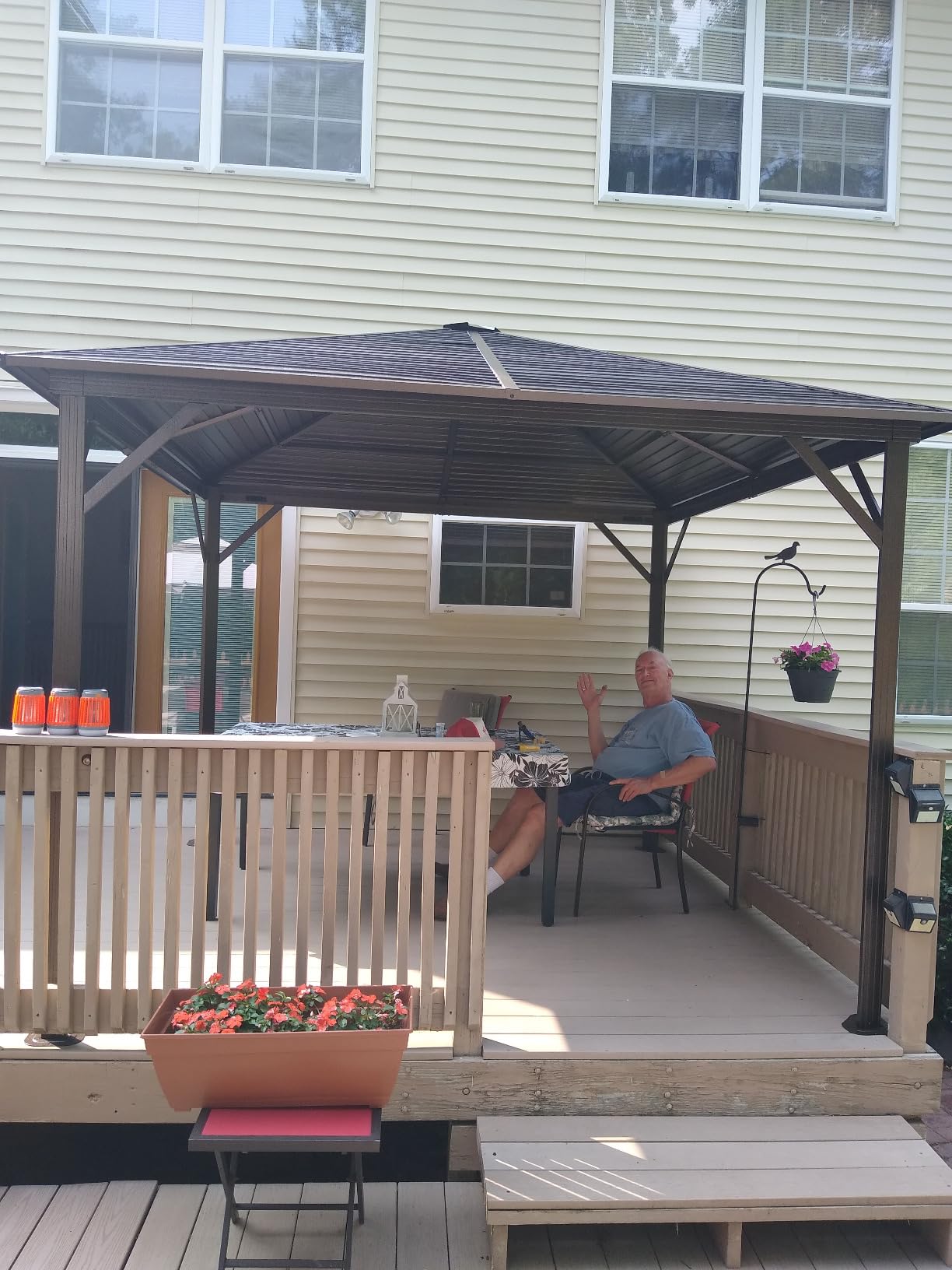
Check the footprint before you order
At 143.75 inches long by 103.25 inches wide and 103.25 inches tall, this is one of the lower-profile units in the group. Lower profile is a wind advantage because there is less surface above the yard to catch a gust, but it also means the standing height under the eave is the shortest of the picks we tested data on.
Buyers rate it for up to 10 people, and the roof hooks for lights or fans are a common addition for evening use. If your yard is tight, this footprint is the one to measure against a tape rather than a catalogue.
Why the extreme weather clause matters
The manufacturer states that the gazebo should not be used in extreme weather and that snow should be removed before the roof reaches capacity. Read that as a boundary, not a defect. It is a single-layer roof on a 209.4 pound frame, and a two-tier vented design sheds both wind and snow load more efficiently.
That makes the Outsunny a strong choice for a yard with moderate wind, and a questionable one for a site that gets direct storm fronts. Anchor it properly and it will be fine for the seasons most yards actually see. If you are on a coast or a hilltop with nothing between you and open water, read the 40 mph pick further down before you settle.
2. Aoxun 10×12 Hardtop Gazebo – The Only Pick With a Beaufort Grade
Aoxun Gazebo 10×12 Hardtop Gazebo with Double Galvanized Steel Roof, Gray
Published wind grade 7 at 31-38 mph
Thick powder-coated metal frame
120 sq ft
199.5 lb
Pros
- Only gazebo here publishing a maximum wind resistance grade
- Grade 7 covers a 31-38 mph band on the Beaufort scale
- Thick powder-coated frame with high load-bearing capacity
- Four ground piles and expansion screws included in the box
Cons
- Manufacturer instructs removing roof
- curtains and mesh in extreme weather
- Frame listed as metal rather than aluminum
- UV protection listed at only 50
The number is the reason this gazebo is on the list. Aoxun publishes a maximum wind resistance grade of 7, which on the Beaufort scale is a 31-38 mph band, and it is the only product in this roundup that attaches a wind figure to a named scale. For a buyer who has been told by most sellers that wind capacity is simply not available, a grade is a starting point you can build a decision on.
Structurally it backs the number up. The frame is a thick powder-coated metal with high load-bearing capacity, and the roof is a double galvanized steel design described as rust resistant, fade resistant and sturdy enough for heavy snow and wind. The double tier also gives you the ventilation the single-roof Outsunny lacks, which keeps the interior cooler and gives wind a path through rather than a surface to hit.
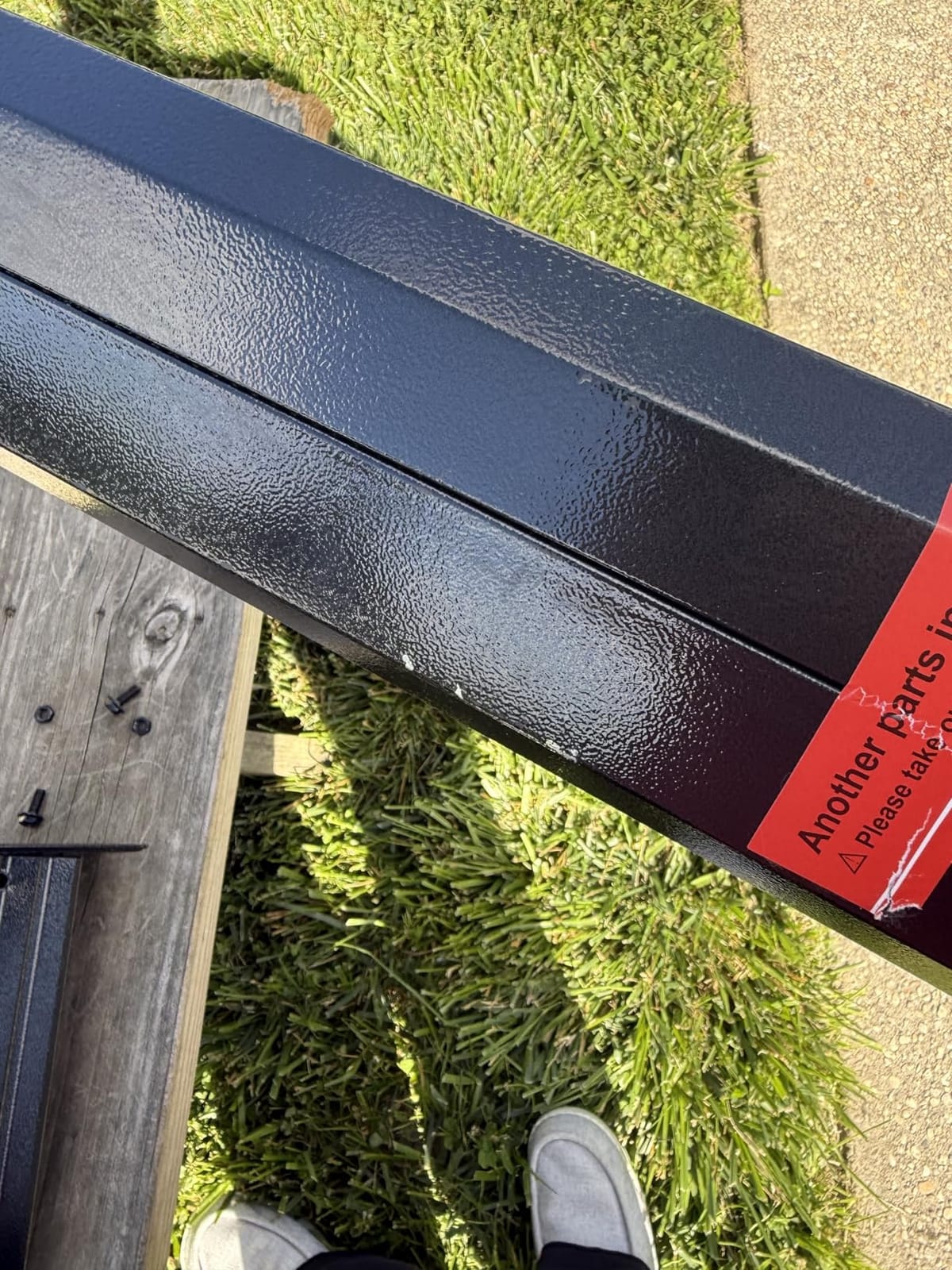
Anchoring is handled in the box. Four ground piles and expansion screws are included, and the manufacturer recommends three to four people for a two to four hour install, which is the highest crew figure among the picks here. A one-year warranty is included, and support has been reported to reply within 24 hours.
The rating is the weakest of the ten at 4.0 stars, with 12% one-star responses and a wide spread that includes 10% three-star. That pattern points to assembly friction and shipping handling rather than a structure that fails in weather. The unit still holds the number 5 position in the Gazebos category, which tells you how many people are buying it despite the flat rating.
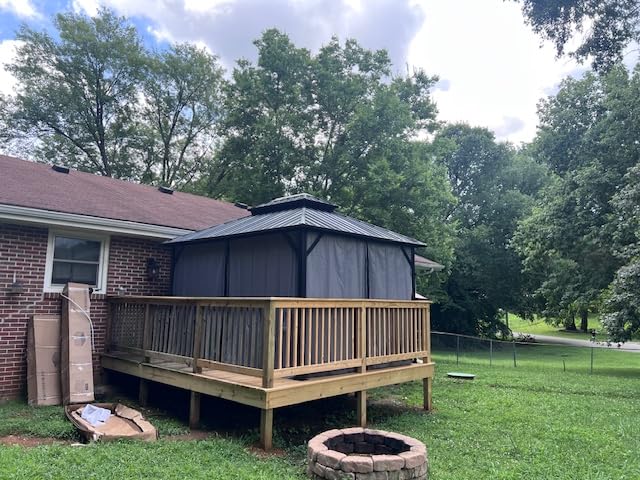
How to read the grade 7 figure honestly
A Beaufort grade describes a wind band, not a survival test. Grade 7 means near gale force, which is a real and uncomfortable amount of wind that will strain any uncovered structure. The honest use of the number is to keep your sidewalls and screens retracted below that band rather than to argue the frame will stand indefinitely.
The practical read is that this gazebo is warranted for sustained conditions in the upper 20s to mid 30s, with the attached screens removed as you approach the top of the band. That is a meaningful commitment from a manufacturer, and it is more than the other eight picks give you.
Where the specs are thin
The frame is listed as metal rather than aluminum, so the corrosion resistance story is less specific than the aluminum competitors. Coastal buyers should note that difference and plan a rinse-down routine. UV protection is listed at 50, the lowest figure in the group, which means more fading on curtains and netting over a few seasons.
Those are real trade-offs for a steel roof that will not pool water. For an inland yard with regular rain and occasional gusts, the published grade makes this an easy first choice.
3. PURPLE LEAF 8×12 Hardtop Gazebo – The Highest Published Wind Figure at 40 MPH
PURPLE LEAF Outdoor Hardtop Gazebo 8′ x 12′ Galvanized Steel Aluminum Frame
Published wind resistance up to 40 mph
3.93 inch triangular aluminum posts
96 sq ft
5 year roof warranty
Pros
- Highest published wind resistance in this group at 40 mph
- Fully enclosed 3.93 inch triangular posts beat L-profile for stability
- Longest warranty here at 5 years on the roof
- Only 2% one-star reviews across 171 ratings
Cons
- Smallest covered area here at 96 sq ft
- Standing height around six feet is tight for taller users
- Build times run 6 hours with three people to 1.5 days solo
This is the gazebo to buy if your yard is genuinely exposed. PURPLE LEAF publishes wind resistance up to 40 mph, the highest stated figure anywhere in this roundup and the only one that comes with a long warranty attached to it. The roof carries five years of cover, the frame one year, and the curtains and netting two.
The frame design is the quiet strength. Posts are 3.93 inches across and fully enclosed in a triangle profile, and reviewers specifically single that out as more stable than an L-profile post because the closed shape resists twisting at the joints. The roof is a vented double-top galvanized steel design rated for durability, UV protection and wind resistance, and the sloped profile drains rainwater without buildup.
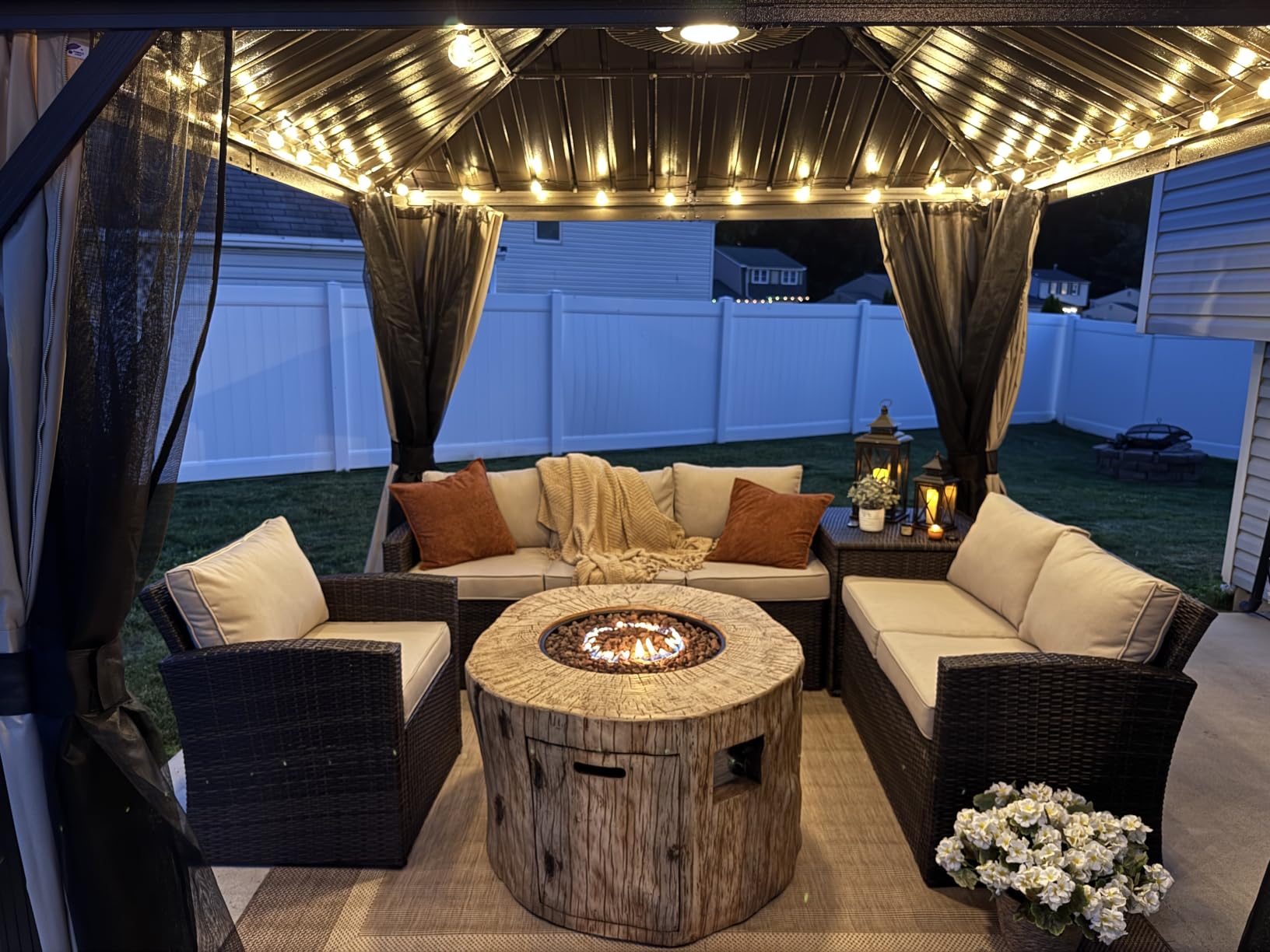
One owner screwed this gazebo to deck joists and reported that it never moved through 25 mph gusts, which is the most useful field report in the whole set because it comes from a raised deck rather than a lawn. The dual-track sidewalls use 180 GSM yarn-dyed fade-resistant curtains and 110 GSM high-tensile netting, described as three times market strength, which matters because screens are the part that tears first in wind.
Packaging is unusually good and worth noting for anyone who has been burned by a missing-parts shipment. Rubber inserts protect the roof panel corners, hardware arrives in draw bags, everything is labeled, and small spare parts are included. That is a direct answer to the missing-component complaints that show up across this category.
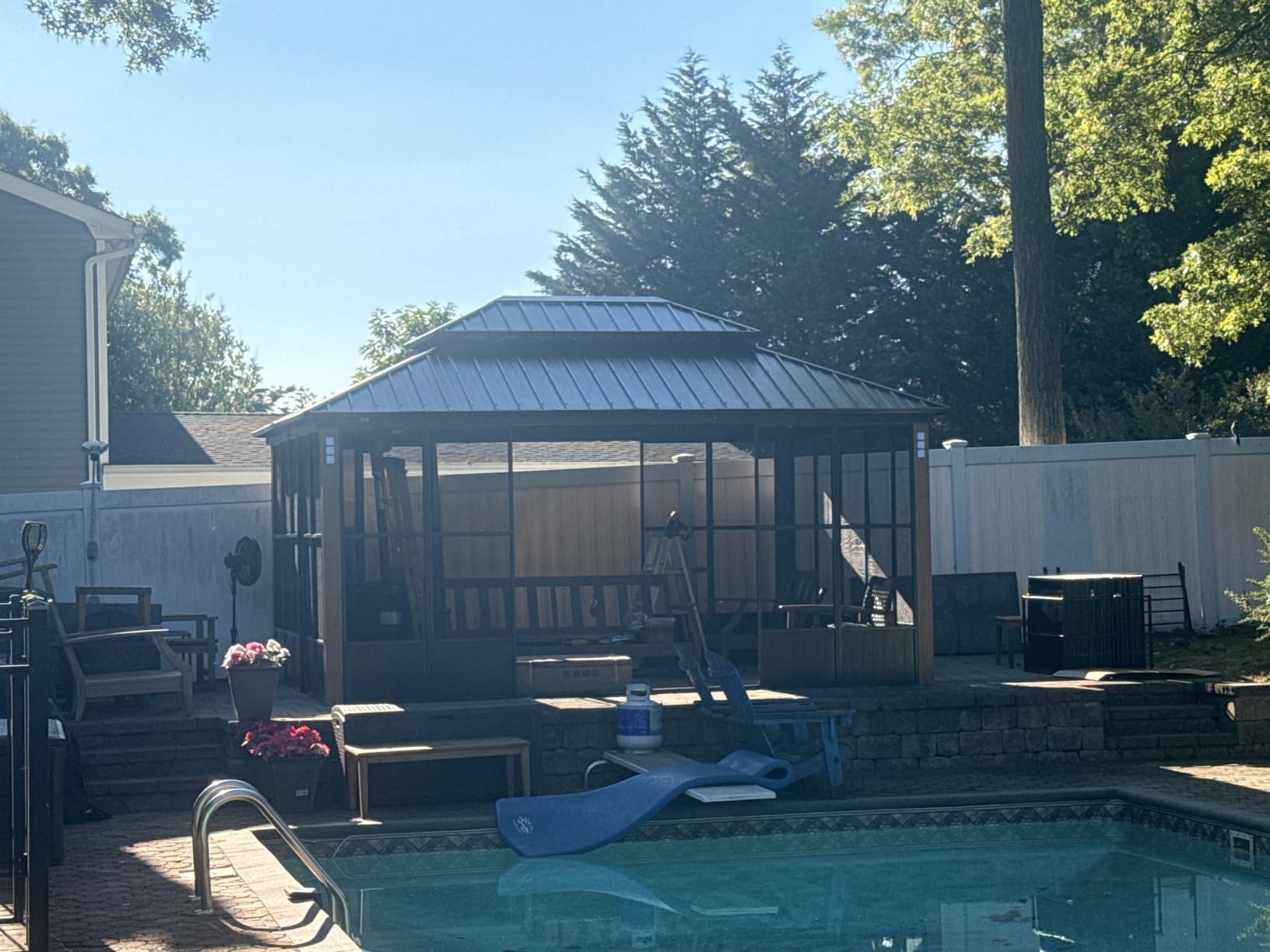
Check the height and footprint first
At 107.28 inches by 93.62 inches and 142.87 inches tall, this is the tallest and narrowest unit in the roundup, with a covered area of 96 sq ft. That is the smallest here, and one reviewer found the roughly six-foot standing height tight. Tall buyers should measure themselves against a door frame before committing.
What you trade in footprint you get back in height and clearance, which is a better deal for a garden full of planters and a narrow side yard than for a full dining set. If you need to seat eight at a table, this is the wrong shape and the Aoxun 12 x 16 further down is the right one.
Plan the assembly day properly
Build times run from about six hours with three people to roughly a day and a half for one person working alone, and the manual is mostly large pictures with limited explanatory text. Curtain grommets can pop off the outer curtain, and one reviewer reported the curtain zippers arriving installed upside down. Budget a full day with at least two people and check the zipper orientation before you start.
Customer support responds quickly but reviewers say it offers little real help during assembly, so the manual and a video are your resources. If you have assembled flat-pack furniture before, this is well within reach.
4. YITAHOME 10×12 Hardtop Gazebo – The Roomy Vented Double Roof
YITAHOME 10x12ft Hardtop Gazebo with Nettings and Curtains Heavy Duty
Vented double galvanized roof
Powder-coated aluminum frame
120 sq ft
53.3 lb
Pros
- Vented double roof described by buyers as improving airflow in strong wind
- Four reinforced corners add real frame rigidity
- Double-zipper double-track sidewalls with mesh and polyester
- Seats 10 to 12 people under cover
Cons
- Instructions are largely pictorial with mislabeled parts
- 8 to 20+ hours of reported build time for the roof sections
- Roof panel edges are sharp even with gloves included
YITAHOME carries the largest review base in this roundup at 1099 ratings, which makes it the best-documented choice here. The 120 sq ft covered area is rated for 10 to 12 people, so if your plan is a long table plus a sofa rather than a couple of loungers, this is one of the few picks that genuinely fits.
The wind design is the vented double galvanized iron top. Buyers describe it as improving airflow in strong wind, and the double layer gives wind a path through the roof instead of a flat plane to push against. The powder-coated aluminum frame resists fade, rust and corrosion, and the four reinforced corners are the part that keeps a rectangular frame from racking under side load.
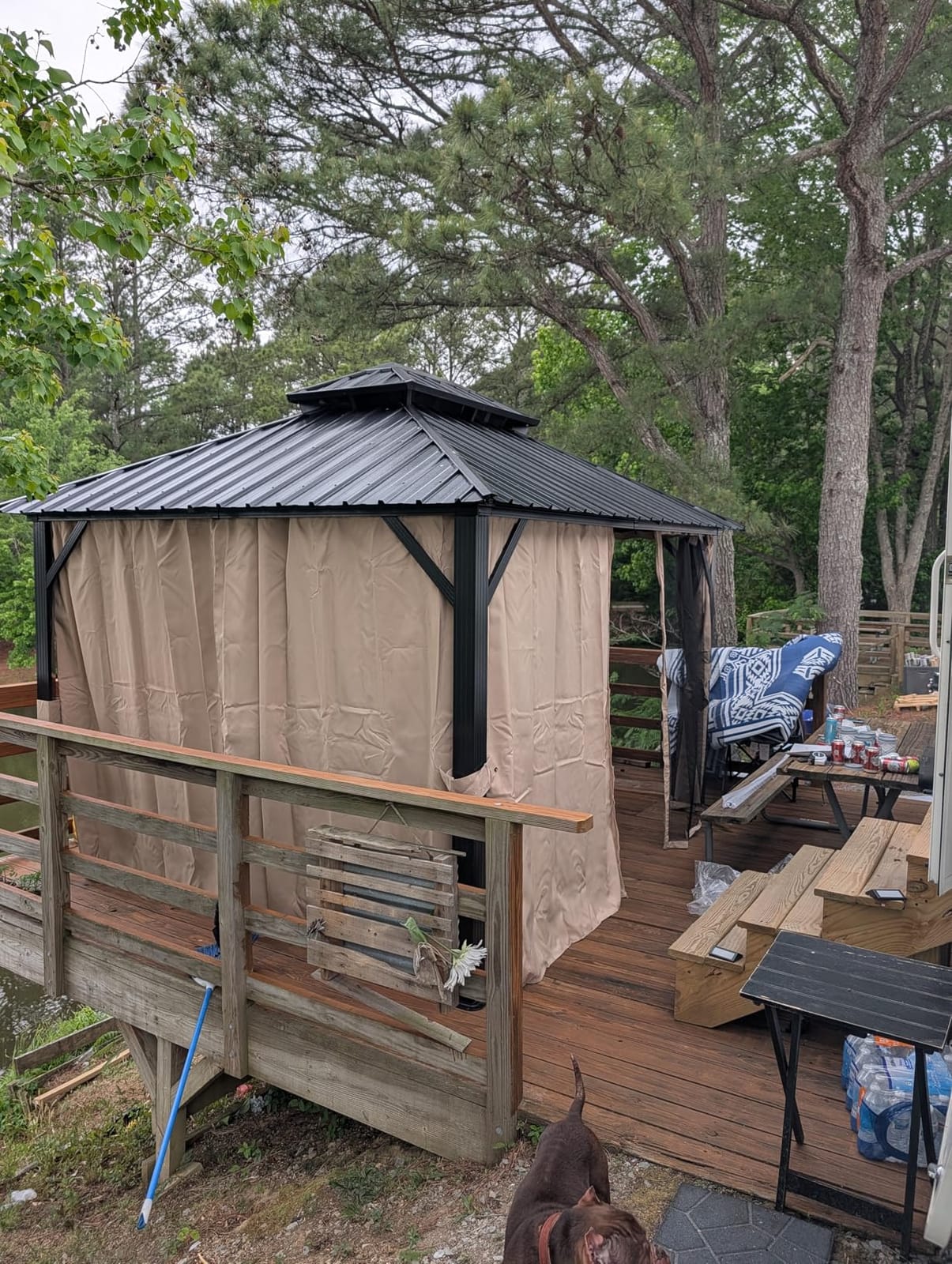
Owners anchor it to a patio and report it holding through heavy rain and wind. Feet are pre-drilled for ground stakes, and the double-zipper double-track sidewalls let you run polyester cloth and insect mesh independently, which is how you manage wind exposure on a gusty day rather than closing up the whole structure.
At 144 by 120 by 117.6 inches, this is a proper rectangular footprint rather than a compact square, and the shape gives it more surface area for wind to work on. That is a fair trade for the seating capacity, provided you anchor it properly.
The assembly is the real obstacle
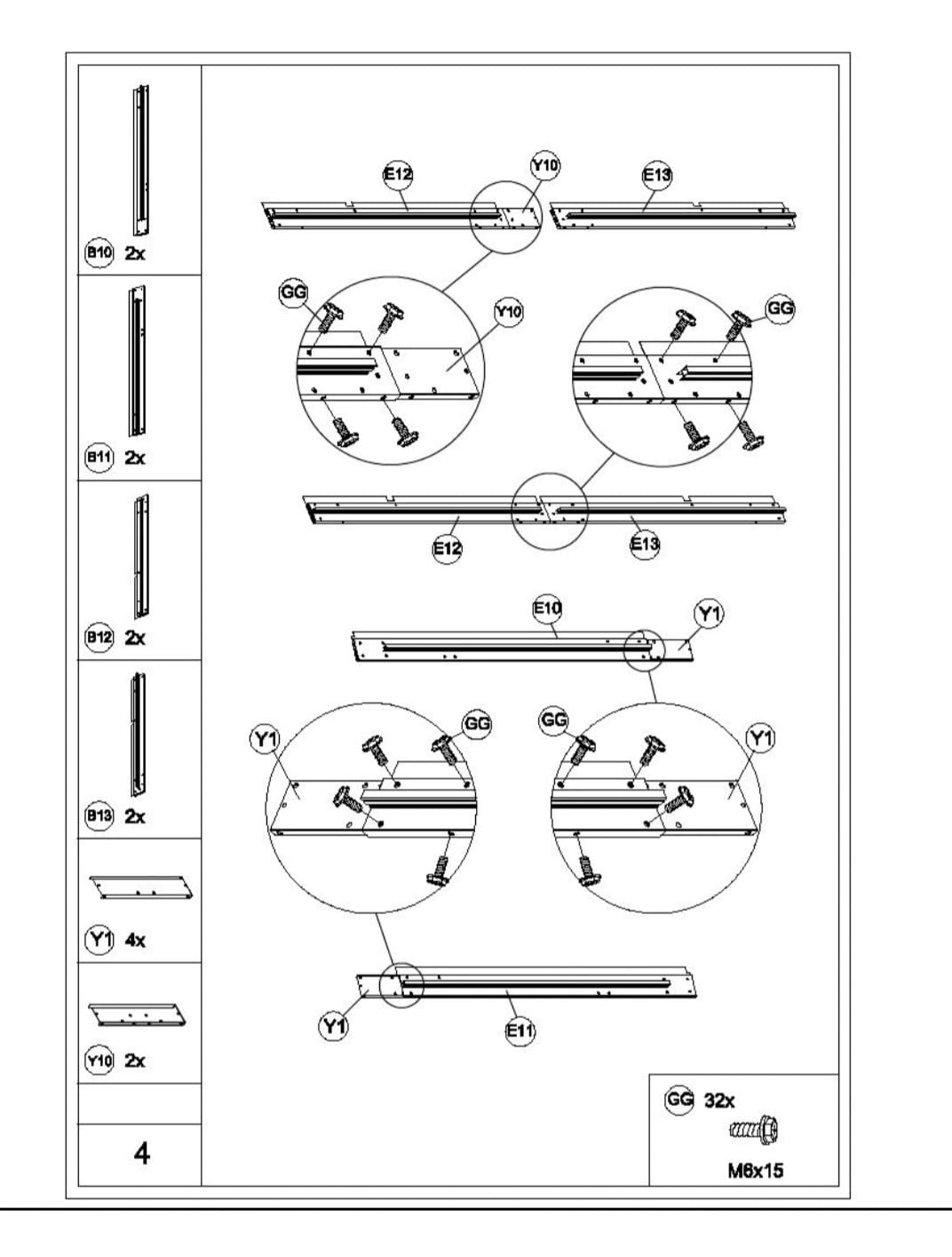
This is the one in our set where assembly time is the headline complaint. Buyers report 8 to more than 20 hours for the roof sections, and the instructions are largely pictorial with some parts mislabeled and steps out of sequence. The protective plastic film on each roof panel is hard to remove and takes hours on its own.
Roof panel edges are very sharp, and several reviewers cut their hands despite using the included gloves. If you are not comfortable with a long, fiddly flat-pack build, factor in a full weekend and ideally a second pair of hands.
Check the shipping before you start
Some shipments have arrived with missing components or badly bent roof panels, and small water guard clips on the drip edge fall off easily. Customer service is generally praised for replacements, but the replacement itself is a wait. Inspect the panels before you begin the roof stage so a bent section does not surface halfway through a ten-hour build.
Weigh that against the gain: the largest review base, a genuinely vented double roof and seating for a dozen people. For a group that eats outside every week, that capacity is worth the longer build.
5. EROMMY 10×12 Hardtop Gazebo – Built for Snow and Wind Together
EROMMY 10′ x 12′ Hardtop Gazebo, Aluminum Frame Gazebos with Galvanized Steel Double Roof, Permanent Outdoor Metal Pavilion with Curtain and Netting for Patio, Lawn, Deck
Galvanized steel double roof
Vented double top
Triangular aluminum frame
120 sq ft
Pros
- Galvanized steel roof described as strong enough to hold heavy snow
- Double top lets wind pass through while blocking UV
- Rustproof triangular powder-coated aluminum frame
- Pre-drilled bases suit uneven ground and varied surfaces
Cons
- Water resistant rather than fully waterproof
- No written wind-load rating is published for this model
EROMMY is the model to look at if your windy season and your snow season are the same three months. The galvanized steel hard roof is described by buyers as strong enough to hold heavy snow, and the double top is designed to let wind pass through while blocking harmful UV rays, which is the geometry you want in a climate that alternates between gusts and accumulation.
The triangular powder-coated aluminum frame is a rustproof closed profile, the same shape advantage that makes the PURPLE LEAF posts stable. Pre-drilled bases are included and are described as suiting uneven ground and varied installation surfaces, which is a real convenience if your lawn is not level and you are not pouring concrete.
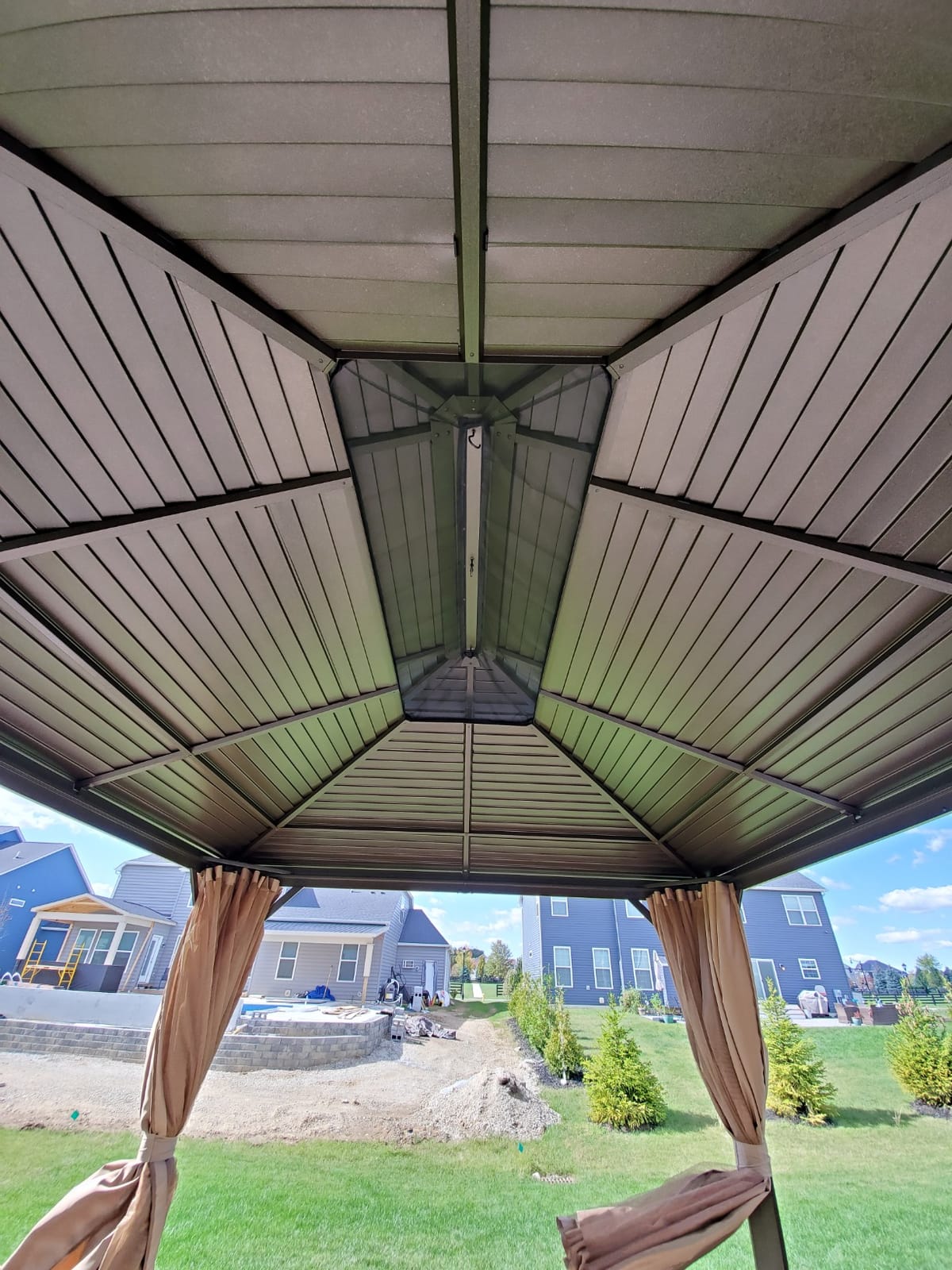
Sidewalls run on a double track system with top netting and four-side zippers, and roof hooks let you hang lights or fans. The covered area of 120 sq ft fits a sofa set or a seven-piece dining set, and the listing rates it for 3 to 8 people, which is a more conservative occupancy figure than most sellers in this category use.
The rating sits at 4.2 with a 64% five-star share and 11% one-star, with the negatives most often tied to assembly or shipping damage rather than wind performance. At 209 pounds and 120.4 by 144 by 113.7 inches, it is a standard footprint with a standard height.
Why the double top is the part that matters
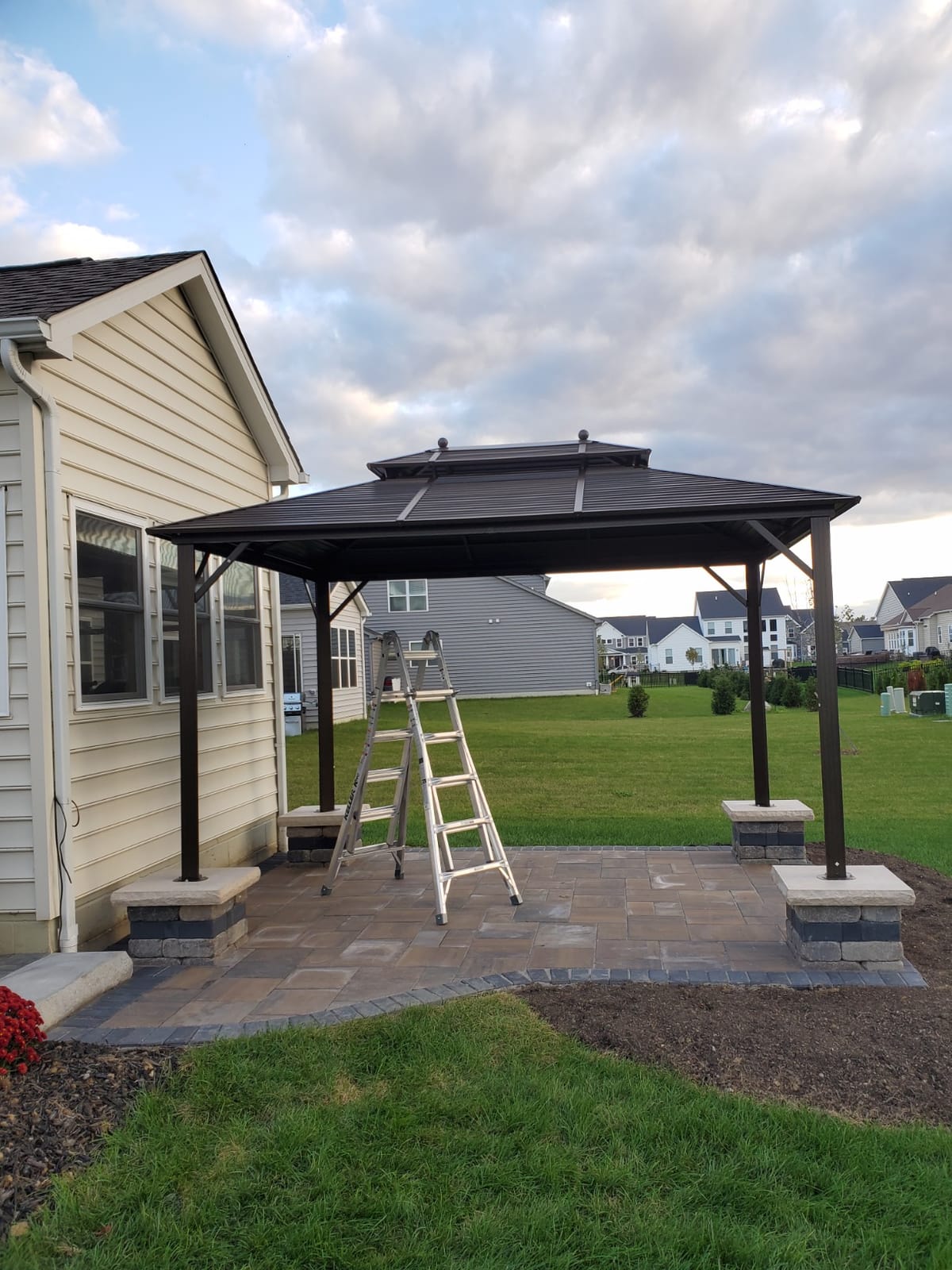
A vented double roof splits the wind into two smaller flows rather than one force hitting a single broad surface. On a galvanized steel panel that is also shedding snow, the same geometry keeps meltwater from refreezing at the seams. If both problems are in your forecast, this is the design that addresses both.
UV protection is listed at 99% and the roof style is a vertical-strip panel design, which is typically the more water-shedding layout. Combined with the double top, that is a genuinely weather-focused build for a four-season yard.
Two gaps to know about
Water resistance is listed as water resistant rather than fully waterproof, so expect the drip edge to work during rain rather than to seal indefinitely. More importantly, the manufacturer publishes no written wind-load rating for this model, so any wind claim you read here is a description of the roof geometry, not a tested figure.
That does not make it a bad buy. It makes it a spec buy, and for most inland four-season yards the vented double galvanized roof over a triangular aluminum frame is enough. Pair it with proper anchoring and treat the sidewalls as adjustable rather than permanent.
6. Modern Shade 10×10 Hardtop Gazebo – The Heaviest All-Metal Build
Modern Shade Hardtop Gazebo 10×10 with 4 LED Lights for Backyard, Black
Full galvanized steel frame and double roof
5 inch snow load
268.4 lb
4 solar LED lights
Pros
- Heaviest build in this group at 268.4 pounds
- Full steel frame with a double roof described as waterproof and windproof
- Second-highest rating here at 4.6 with 84% five-star
- Frame fits together tightly with no wobble
Cons
- No published wind-speed rating
- Arrives in multiple boxes that can land on different days
- Build takes roughly a day for two people
Modern Shade is the only pick here that is all metal from the ground up. Both the frame and the double-layer roof are galvanized steel, and at 268.4 pounds it is the heaviest structure we analyzed. That mass is the point: a heavy structure resists being lifted and resists racking at the joints, and reviewers describe the frame fitting together tightly with no wobble at all.
The review profile is the strongest in the set. It holds a 4.6-star average with 84% five-star and only 4% one-star, the smallest proportion of negative feedback of any product we looked at. Buyers single out build quality and fit, and several describe it as a clear upgrade over fabric-top models in changing weather.
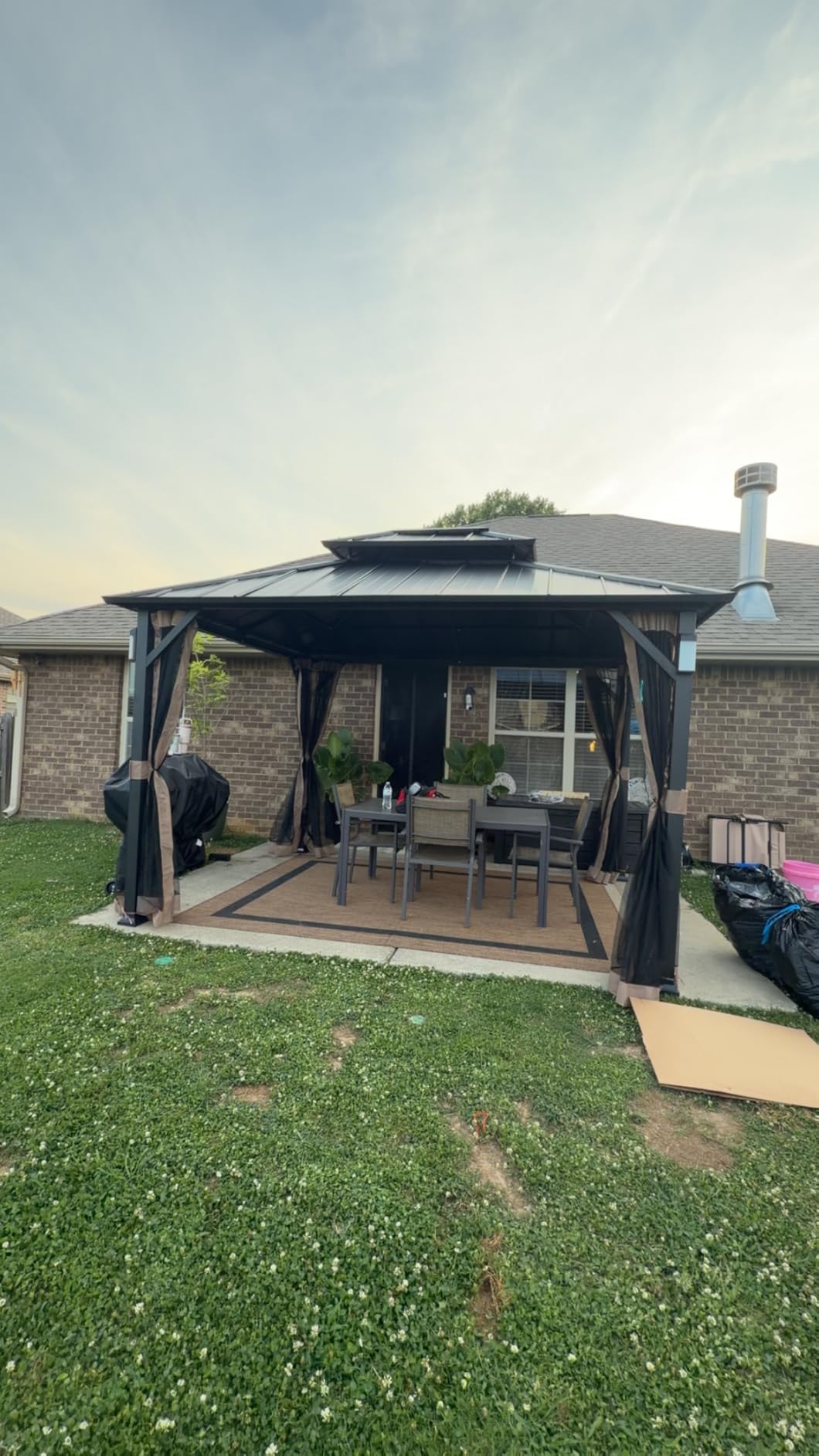
The published load figure is snow rather than wind, at up to 5 inches, and the roof is described as waterproof and windproof in general terms. Four integrated LED solar lights and removable privacy curtains make this the pick for evening use, and the size range extends to 12×20 and 12×24 units if you later want a larger footprint from the same design language.
Expansion screws at the base add reinforcement on hard surfaces. Customer service has supplied replacement parts after assembly mishaps, which matters on a build this heavy because a single mismatched post is not something you improvise around.
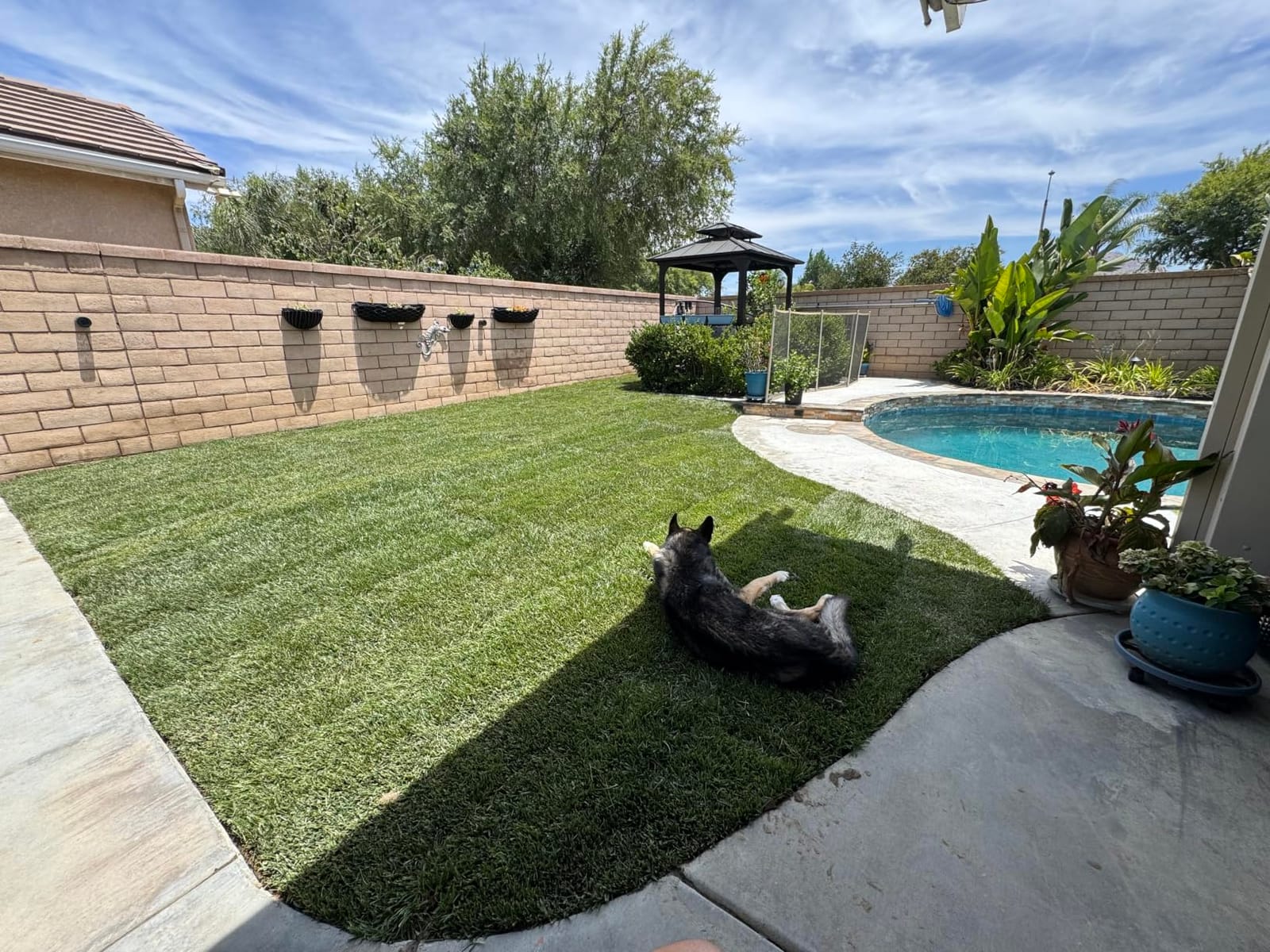
Weatherproof by claim, not by number
The roof is described as exceptionally waterproof and windproof, and a 5 inch snow load capacity is published, but no wind-speed figure accompanies it. For a buyer shopping purely on numbers, that is a gap. For a buyer who wants a rigid steel structure that will not deflect, the mass and the double roof are the argument.
At 118 by 118 inches and 115 inches tall with a rated occupancy of 6 to 7 people, the 10 x 10 is a compact square rather than a long rectangle, and a square footprint sheds wind better than a rectangle of the same area.
Plan around the delivery
The package arrives in multiple boxes that may come on different days, so you cannot begin until every box has landed. A builder reporting on this category in r/handyman asked about assembly time before buying, and the answer here is roughly a day for two people with at least three recommended for the main frame.
A few parts have been mislabeled in the instructions, and the included plug was not usable for some international buyers. Those are the small frictions that make a day-long build feel like two.
7. Aoxun 12×16 Hardtop Gazebo – The Big-Footprint Option
Aoxun 12′ X 16′ Hardtop Gazebo with Built in Drainage, Outdoor Gazebos
190.56 sq ft covered area
Hidden gutter drainage
4.7 inch aluminum posts
12 x 16 footprint
Pros
- Largest covered area in the group at 190.56 sq ft
- Integrated concealed gutters drain through the corner posts
- 4.7 inch triangular aluminum posts on a reinforced all-metal frame
- Double tier roof with 99% UV blockage and cross-ventilation
Cons
- No published wind-speed rating
- Largest and heaviest structure here so it needs serious anchoring
- Arrives in 6 separate packs
If your outdoor space needs to hold a full dining set, a deep sectional and an outdoor bar, this is the only pick in the roundup with the square footage to do it. At 190.56 sq ft covered, the Aoxun 12 x 16 is roughly 60% larger than a standard 10 x 12 and sits in its own category for footprint.
The frame is 4.7 inch triangular aluminum posts on a reinforced all-metal construction, described by owners as standing firm against everyday winds with no wobbling or warping when properly anchored. The triangular closed profile is the same geometry that makes the smaller aluminum picks stable, scaled up to a genuinely substantial post.
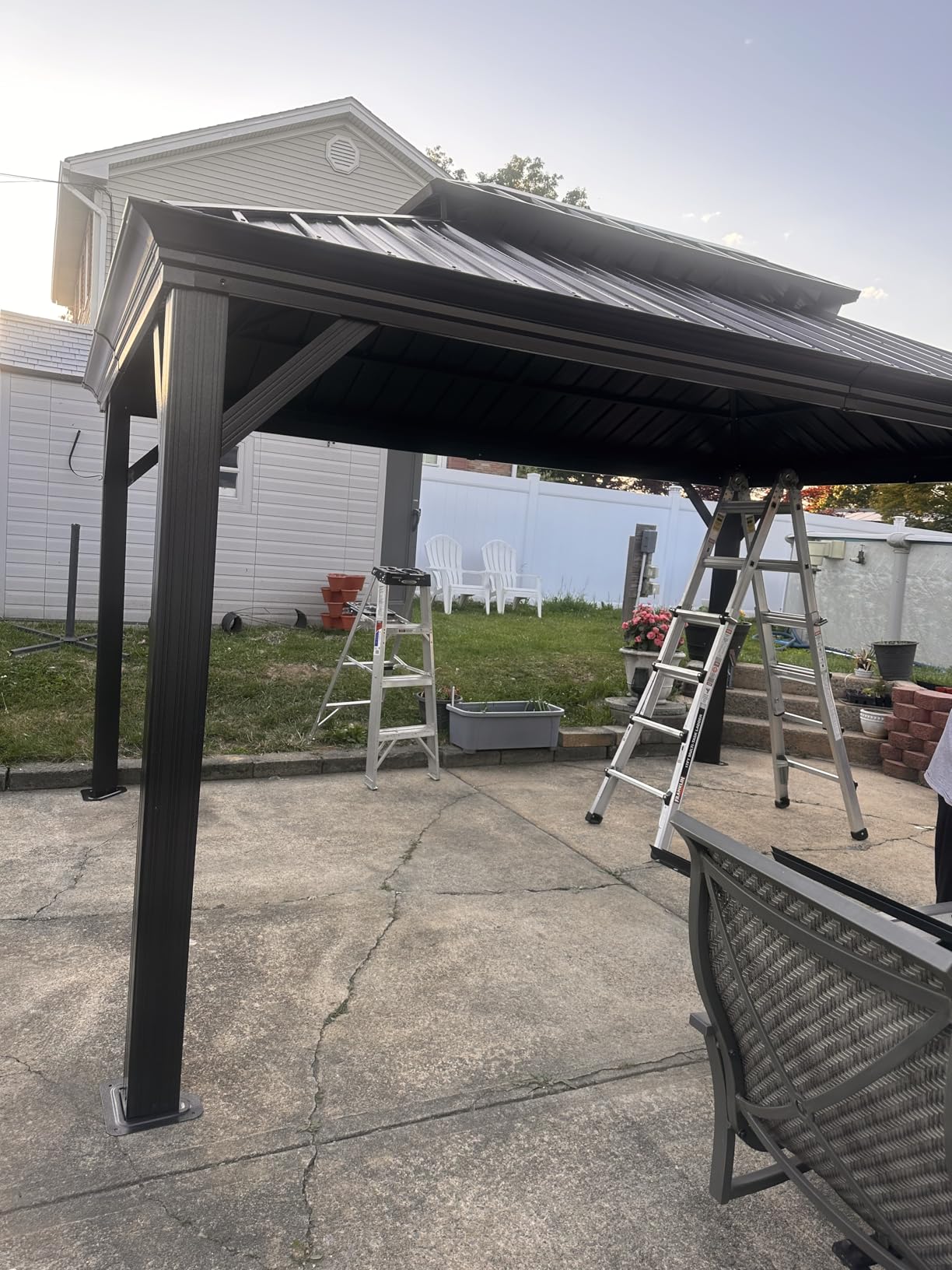
The detail we like most is the concealed gutter system. Water is routed along the roof edges and down through the corner posts instead of dripping at the eave, which means runoff ends up at the base of a post you have already anchored. On a structure this large, having the water path terminate at a structural member rather than in a muddy patch of lawn is a real improvement.
The double-tier metal roof raises the top tier for hot-air escape and cross-ventilation, blocks 99% of UV at UPF 50+, and the dual-track system lets 180 GSM polyester curtains and 35 GSM wraparound insect mesh slide independently with double-headed zippers. A reinforced ceiling hook takes a string light run or a compatible fan.
Wind and size are a package deal
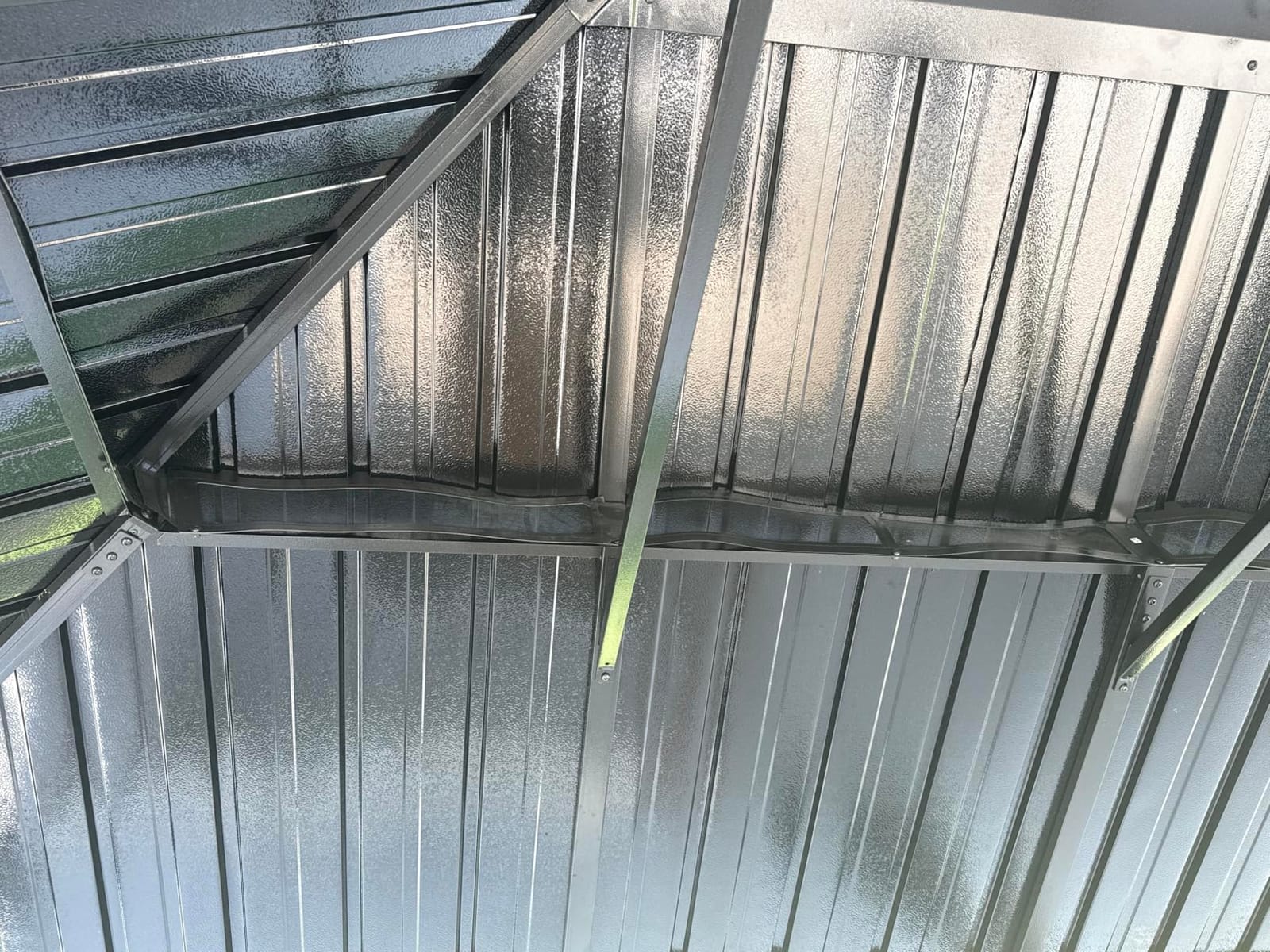
At 192 by 144 inches and 120 inches tall, this is the largest and heaviest structure in the group, and no wind-speed rating is published for it. A large roof surface is exactly the condition that turns an unanchored structure into a sail, so the honest way to read this product is that its frame is engineered to resist everyday wind and its survival in a serious gust depends almost entirely on how you anchor it.
If you are on a raised deck, this is the pick that most needs the deck-anchoring method in the guide below. Expansion hardware on a structure this size is not optional, and a concrete pour on the patio side is the version we would choose.
Check the drainage path before assembly
Because the gutters run through the corner posts, the post bases have to sit where water can drain away rather than pooling against a footing. Set the layout so the posts land on a slope or on a pad that sheds, and check that the post channels are clear before you bolt the roof on. Misaligned drainage is the one install step that is awkward to correct later.
The package arrives in six separate packs, and the frame carries a one-year construction warranty. Budget a long build day and check every pack is present before starting.
8. YOLENY 10×12 Hardtop Gazebo – Quick To Anchor, Easy To Drain
YOLENY 10′ x 12′ Hardtop Gazebo, Metal Gazebo with Aluminum Frame, Double Galvanized Steel Roof, Curtains and Netting Included, Pergolas for Patios, Garden, Parties, Lawns
Double-layer galvanized steel roof
Pre-drilled bases for deck anchoring
120 sq ft
209 lb
Pros
- Pre-drilled bases anchor to concrete
- decks or uneven ground
- Triangular powder-coated aluminum frame is rigid and stable
- Sloped roof with drainage holes sheds rain and snow
- Recommended install of 2-3 people in 2-4 hours
Cons
- Picture-only instructions with no listed support contact
- Thin lower drip edge can flex under snow load
- Roof panels are awkward to align
The YOLENY is the pick for anyone anchoring to a deck. Pre-drilled base plates are described as designed for various ground types, and multiple owners anchor to concrete and report a solid structure. If you have read the r/longisland thread about putting a hardtop on a raised deck, that is the specific problem these plates address.
Wind geometry is solid. The double-layer galvanized steel roof is described as protective against wind, rain and snow with good thermal insulation and noise reduction, and the triangular powder-coated aluminum frame is described as more rigid and stable than standard square-tube frames. The sloped roof carries drainage holes so water and snow shed instead of pooling on the panels.
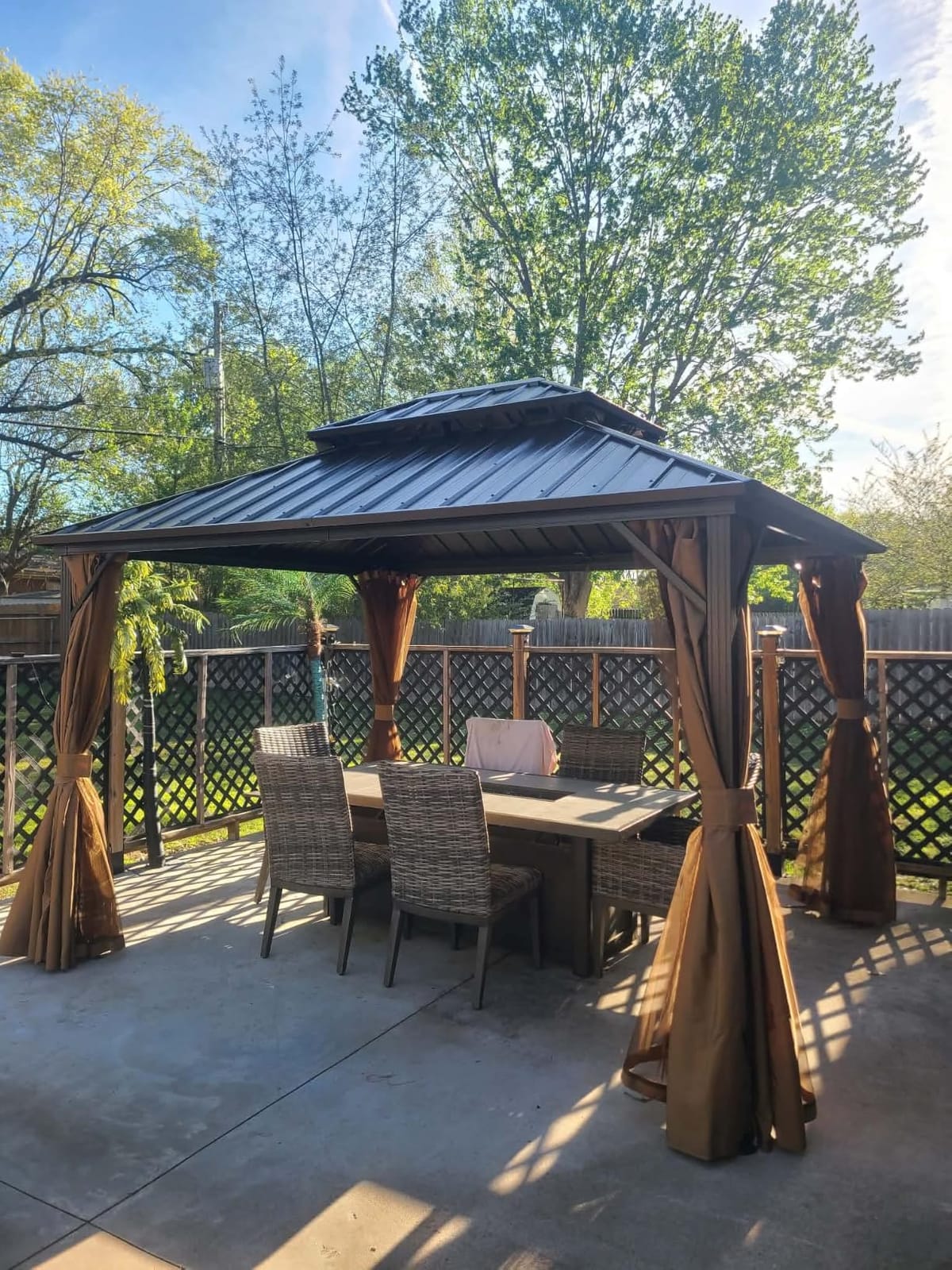
The dual-rail sidewall system lets curtains and mesh slide independently, which is how you run the structure open on a breezy day and closed when the wind picks up. At 144 by 120 by 114 inches, the footprint is a standard 10 x 12 and the covered area is 120 sq ft with UV protection listed at 99.99%.
Install guidance of two to three people over two to four hours makes this one of the quicker builds in the group, which is a meaningful difference from the eight to twenty hours some owners report elsewhere. Reviews are strongly positive on sturdiness and appearance.
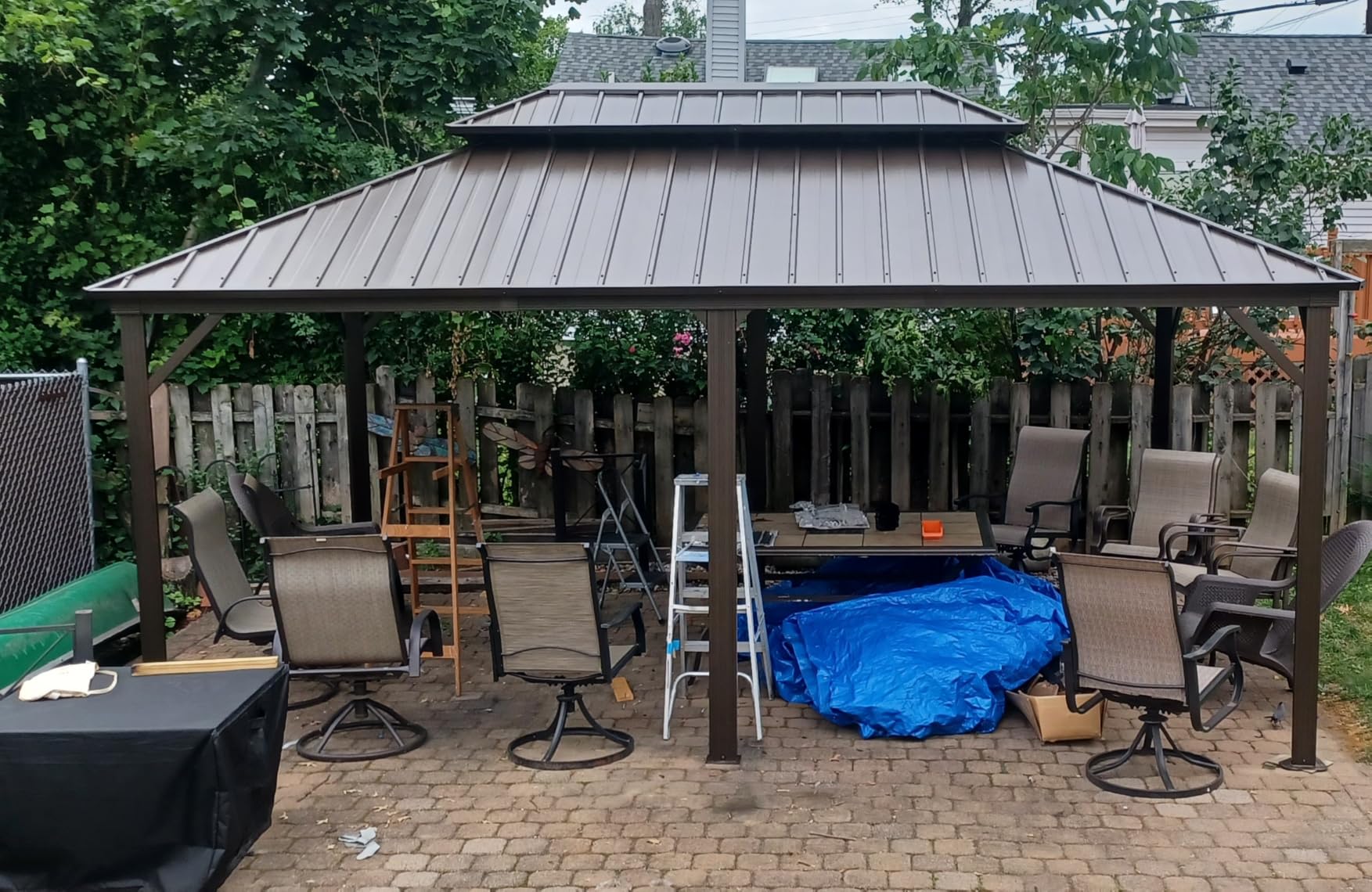
Look closely at the drip edge
The thinnest component here is the lower drip edge trim, which is held at the middle and corners only. One reviewer reported a roof-line frame connector loosening after install, and another flagged the thin trim as the point most likely to flex under snow load. On a wind-driven site, a loose connector at the roof line is the joint worth checking after the first season.
Tighten and re-check the roof-line hardware at the six-month mark, and if you are in a snow climate, do it before the first accumulation rather than after.
Documentation is the weak point
Instructions are picture-only with no written guidance and no listed customer service contact, and some shipments have arrived with missing parts where replacements were slow to arrive. Roof panels are also awkward to align, and the protective film takes a long time to peel.
Budget the two to four hours honestly, find a two-person crew, and photograph every connector before you fit the roof. Those three habits cover most of what the reviews complain about here.
9. AirWire 10×12 Hardtop Gazebo – Vented Roof, Uneven Results
AirWire 10’x12′ Hardtop Aluminum Gazebo Dark Gray
Vented double galvanized iron roof
Powder-coated aluminum frame
120 sq ft
217.2 lb
Pros
- Double-layered galvanized iron roof vented for airflow and heat dissipation
- Heavy-duty powder-coated aluminum frame rated rust and corrosion resistant
- Pre-drilled leg holes and ground stakes for anchoring exposed sites
- Dual-track curtains with zippered mesh for full enclosure
Cons
- Lowest rated here at 3.9 stars with 15% one-star reviews
- No published wind-speed or snow-load rating
- Listing names the colour dark gray while the spec block lists black
The AirWire has the right wind architecture even though the reviews are the least consistent in the group. The double-layered galvanized iron roof is vented to promote airflow and heat dissipation during windy conditions, and the frame is a heavy-duty powder-coated aluminum specified as rust, corrosion and fade resistant.
Anchoring provisions are the ones to note. Pre-drilled leg holes and included ground stakes add installation security on exposed sites, and the dual-track system carries durable curtains and high-quality zippered mesh for privacy and insect protection. At 147.6 by 120 by 110.4 inches, the covered area is 120 sq ft for 4 to 8 people, with a two to five hour install for two to four people.
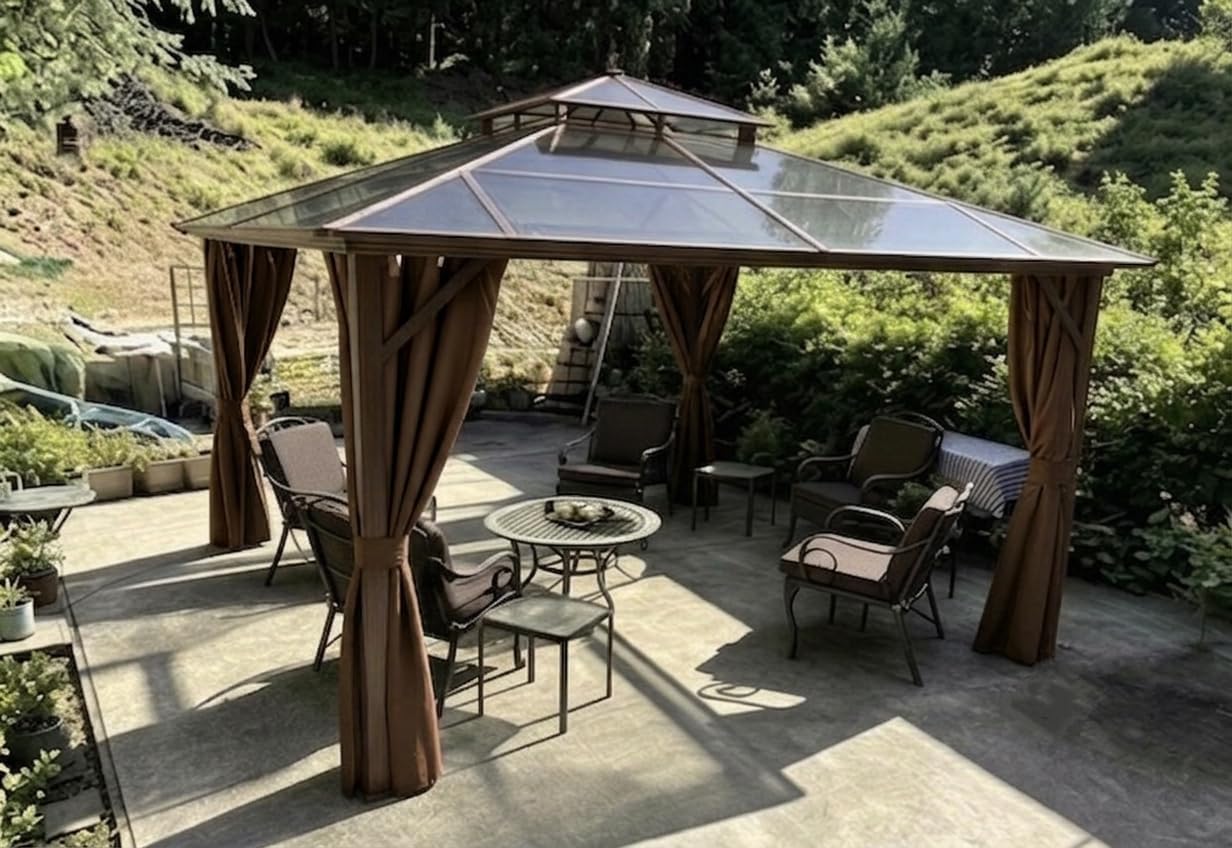
What holds it back is the satisfaction spread. At 3.9 stars it is the lowest rated here, with 15% one-star and 5% two-star responses, roughly triple the negative share of the Outsunny. The 58% five-star share still shows a solid core of satisfied owners, which points to inconsistency between production runs or shipments rather than a consistently poor product.
Water resistance is listed as water resistant rather than waterproof, and there is no published wind-speed or snow-load figure. For a windy site, the missing number is the main gap, and you would be buying the roof geometry rather than a documented capability.
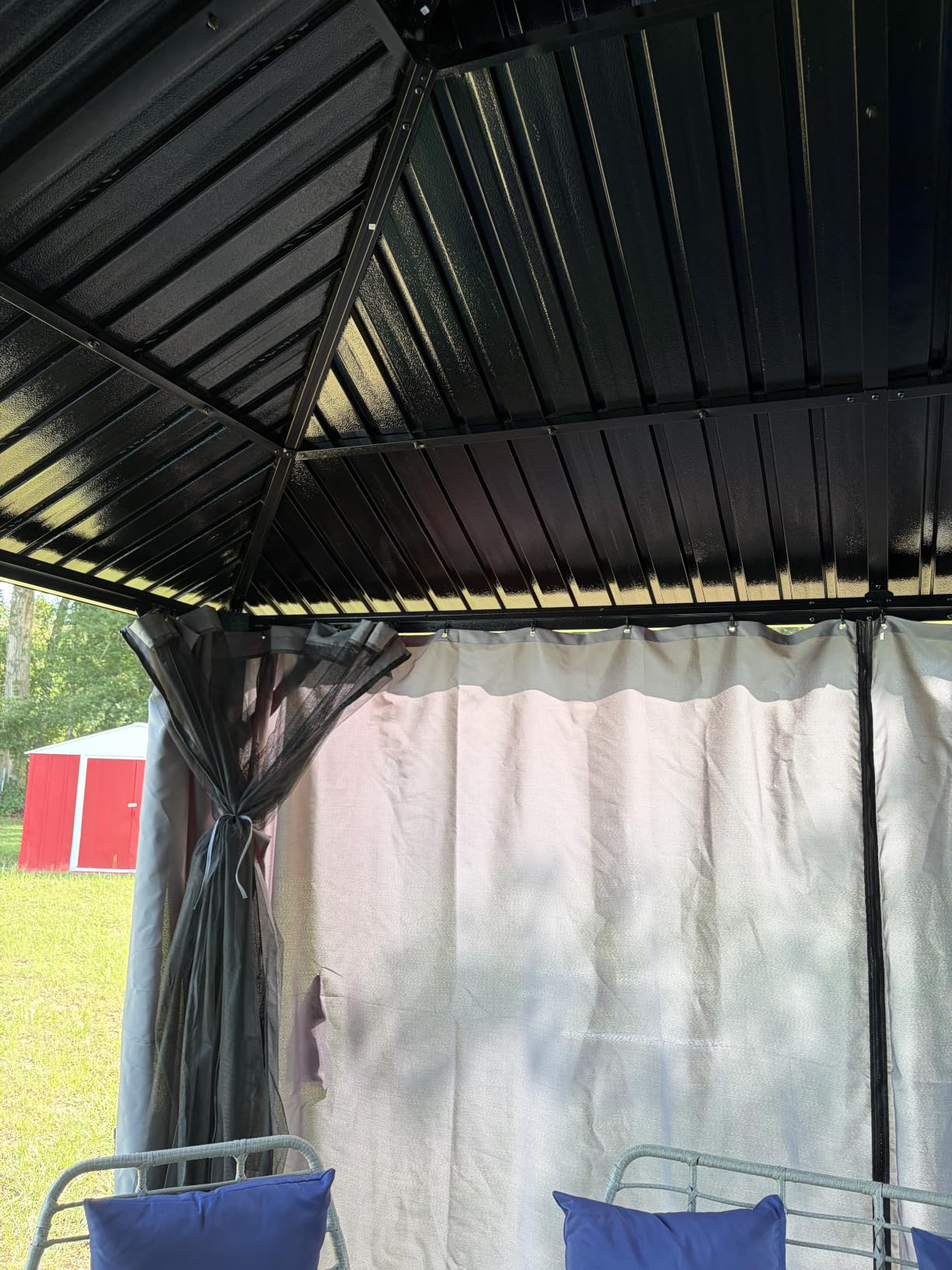
Why the vents still matter
A vented double galvanized iron roof is the correct geometry regardless of what the listing claims. Splitting the airflow into a smaller flow over the top tier and a cross-flow beneath means the roof presents less of a single broad catching surface, and the same gap lets hot air escape so the interior stays cooler through a summer afternoon.
That is the argument for this gazebo. The 217.2 pound aluminum frame is substantial, the coating is specified for corrosion resistance, and the anchor points are pre-drilled.
Know what you are accepting
Expect execution variance. The 3.9-star average and 15% one-star share mean a meaningful minority of owners had assembly or hardware problems, and the listing itself is inconsistent about colour, naming the unit dark gray while the spec block lists black.
The package arrives in three boxes that may come separately, so you cannot start until all three have landed. If you order this, inspect every part against the hardware bag before assembly and keep the manual open on a phone, because there is little written guidance to fall back on.
10. HAPPATIO 12×12 Hardtop Gazebo – Two Winters of Coastal Evidence
HAPPATIO 12’x12′ Outdoor Hardtop Gazebo, Aluminum Gazebo with Double Galvanized Steel Roof, Curtains and Netting for Patio, Backyard, Deck, Lawn, Easy Assembly (Grey)
Double galvanized roof with ventilation
Rust-resistant aluminum frame
144 sq ft
268.3 lb
Pros
- Second-heaviest build here at 268.3 pounds
- Owner reports two winters with no rust and no roof leakage after paver anchoring
- Premium rust-resistant aluminum frame suited to humid and coastal yards
- Customer service repeatedly praised with free replacement of damaged parts
Cons
- No published wind-speed rating
- One unit blew over in a freak storm while unanchored
- Screen hooks leave a gap at the top and curtains faded in one summer
The HAPPATIO is the pick with the most direct field evidence for a harsh climate. One owner anchored it to a paver patio in the hurricane-prone northeast US and reports two winters with no rust and no roof leakage. That is exactly the coastal, salt-air, four-season scenario most hardtop listings only claim in passing.
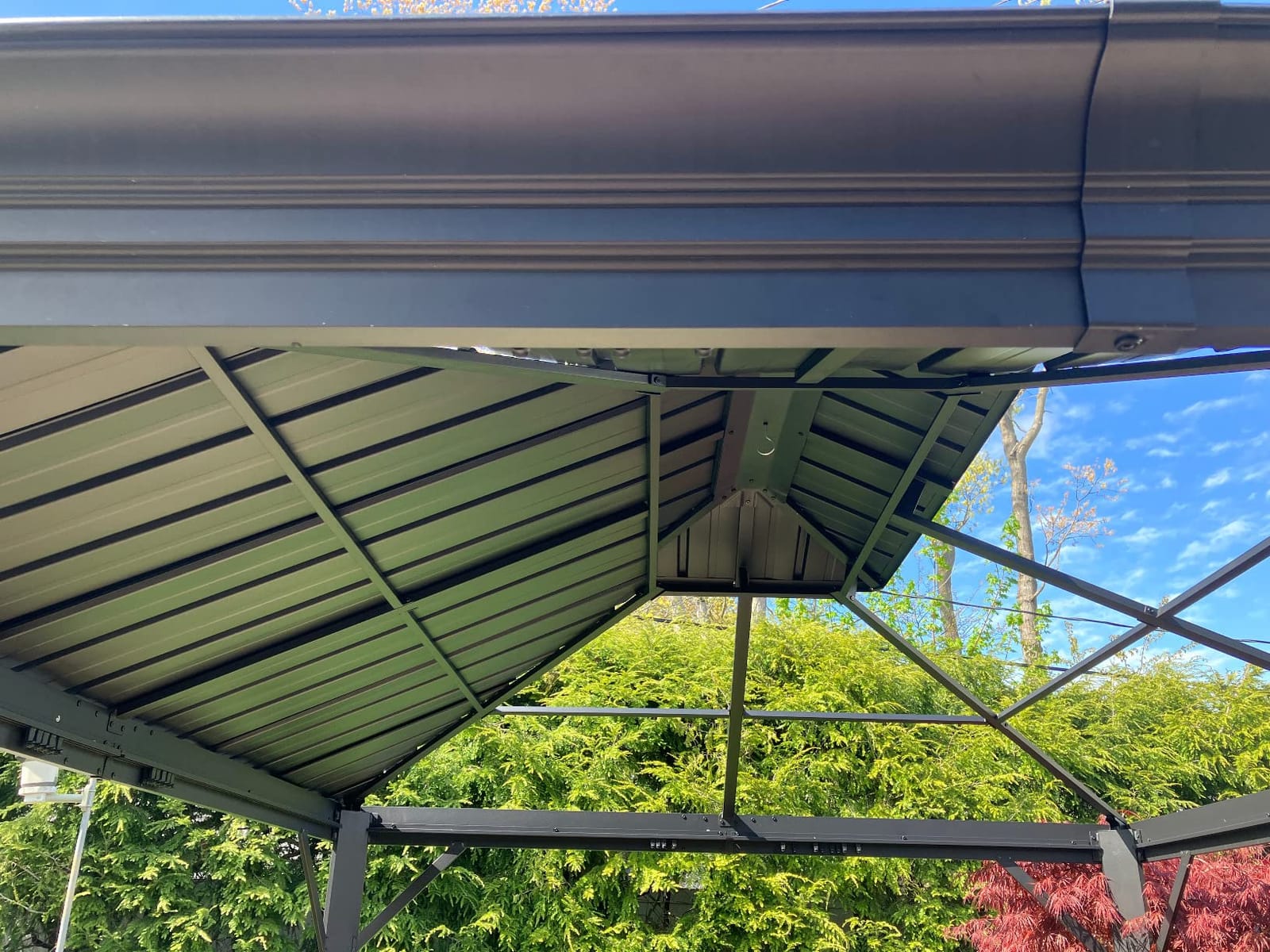
The structure backs it up. At 268.3 pounds it is the second-heaviest build in the roundup, with a double-layer galvanized steel roof that has integrated ventilation and is described as improving stability in high wind conditions. The premium rust-resistant aluminum frame is specified for long-term stability in humid, rainy or coastal environments.
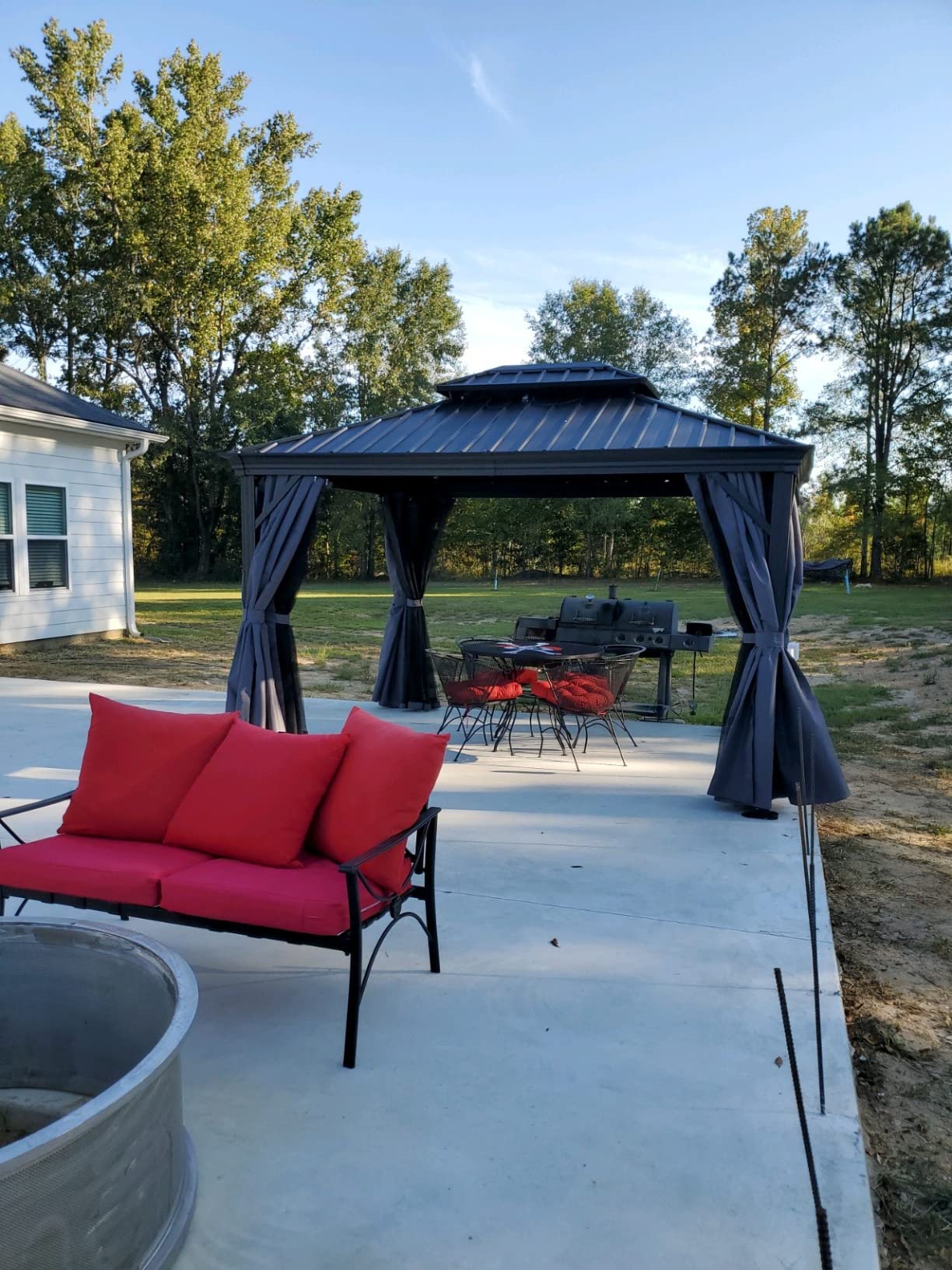
The square footprint of 144 sq ft is the largest single-dimension coverage here alongside the Aoxun 12 x 16, and a square plan sheds wind better than a rectangle of the same area. A dual rail system carries removable mesh netting and privacy curtains, and built-in center hooks take lights and decorations for evening use.
Customer service is repeatedly praised, including free replacement of damaged parts, which matters most in the situation described below.
The storm story tells you everything
One reviewer reported a freak storm that blew the unit over while it was not yet anchored, and the seller responded with free replacement parts. That single review is the most useful wind data point in this roundup, because it isolates the variable that matters: the same structure that survived two anchored coastal winters failed instantly when it was freestanding.
Anchor before the first forecast, not after. An unanchored hardtop gazebo is a sail regardless of how well its frame is made, and this is the clearest evidence in the data.
Fit and finish issues to plan around
The screen hangs on shower-curtain-type hooks and leaves a gap at the top that lets insects in, and the corrugated roof panels do not sit perfectly flush against one another, leaving visible gaps. Dark curtains showed fading after a single summer, and one owner reported a minor leak at a few spots attributed to installation rather than the roof.
Assembly runs 6 to 8 hours for two people with a manual that is confusing at first. At 98 ratings this is the smallest review base here, so treat the rating as encouraging rather than conclusive, and buy it for the aluminum frame and the anchored field reports rather than for a published number it does not have.
How We Evaluated Wind Performance
Most hardtop gazebo listings publish a material, a colour and a word like sturdy. Only a handful publish a wind figure, so the first thing we did was separate documented capability from marketing language and refuse to treat them as equivalent.
We worked through six criteria in order. First, the published wind rating, taken from the manufacturer technical block rather than the marketing headline, and treated as disqualifying when absent. Second, roof geometry, because a vented double tier sheds wind that a single layer catches. Third, frame profile, with fully enclosed triangular posts scored above L-profile and square tube.
Fourth, anchoring provisions, including whether hardware is in the box or sold separately. Fifth, the manufacturer’s own extreme-weather instruction, which tells you the intended envelope even when no number is given. Sixth, review evidence about wind performance and long-term condition, weighted toward owners reporting multiple seasons in exposed or coastal yards rather than first-week impressions.
One product in this list failed the first criterion and still earned a place, the Aoxun 10×12, because it publishes a Beaufort grade 7 covering 31-38 mph. That is a documented figure rather than an adjective, and it is why the gazebo we call our top pick, the Outsunny, is described honestly with a single-layer roof rather than having that limitation buried.
What Counts as a High Wind Rating?
A hardtop gazebo with a high wind rating publishes a speed of 40 mph or above, and pairs that figure with a vented double-tier roof and an anchored frame rather than a solid single-layer panel. Look for the number in the manufacturer technical block, not the product title, and treat 31-38 mph as a strong middle-class rating for a consumer gazebo. Most sellers publish no wind figure at all, so a stated number is already a quality signal.
On the 100 mph question, we would be straight with you. A residential hardtop gazebo rated for 100 mph is not a real consumer category, and no legitimate product we analyzed claims one. What exists instead is a 40 mph class at the top of this list, which covers a serious storm front rather than a hurricane. If your site faces that level of exposure, the correct answer is a building, not a gazebo.
One more distinction matters. A wind rating describes the frame and roof under test conditions. It says nothing about the curtains, mesh screens or netting you attach afterward, which behave as sails the moment they billow. Retract the sidewalls before the wind arrives, not during.
Roof Shape and Profile: What Actually Sheds Wind
Roof profile matters more to wind performance than frame material, and this is the cheapest improvement available to you. A vented double-tier roof splits one broad flow into a smaller flow over the raised top tier and a cross-flow underneath, so the structure presents less of a single catching surface.
Nine of the ten picks here use a double roof of some kind. The exception is the Outsunny, which is a single-layer galvanized steel roof, and that is the one structural trade-off we accepted when it won the top slot on review consistency instead.
Footprint shape is the second lever. A square plan has less perimeter per unit of area than a rectangle of the same square footage, which means fewer corners for wind to catch. The Modern Shade 10 x 10 and the HAPPATIO 12 x 12 are both square, and both are sensible picks for a yard with no windbreak.
Height is the third. Every inch of post above the yard is surface facing the wind, so a low-profile design reduces resistance at the cost of headroom. Buyers moving from a soft-top canopy to a hardtop often find the standard 9.5 to 10 foot eave height more than sufficient, and a lower profile is a genuine wind advantage on an exposed site.
Frame Materials and Wind Resistance
Aluminum is the dominant frame material in this roundup, and the reason is corrosion rather than strength. An aluminum frame does not rust, which matters across a decade in a wet or coastal climate, and the closed triangular post profile used by the PURPLE LEAF, EROMMY, YOLENY and Aoxun units resists twisting at the joints in a way that an L-profile or square tube does not.
Full steel is heavier and stiffer, which is why the Modern Shade 10 x 10 and the HAPPATIO 12 x 12 are the two heaviest builds at 268.4 and 268.3 pounds. Mass resists being lifted, and a galvanized steel frame with a galvanized steel double roof is the most rigid pairing available here. The trade is corrosion maintenance and a heavier build to assemble.
Coating grade is the detail most listings bury. A powder-coated aluminum frame is specified as rust and corrosion resistant on the EROMMY, AirWire and HAPPATIO listings, while the Aoxun 10×12 frame is described simply as metal, which is a materially vaguer statement. Coastal buyers should read the frame material line specifically, because aluminum and unspecified metal are not the same answer.
Corners and roof-line connectors are where wind damage actually starts. A rectangular frame under side load wants to rack into a parallelogram, and reinforced corners plus tight roof-line hardware are what stop it. The YITAHOME lists four reinforced corners, and that is the spec to look for when a listing does not detail its joint design.
Anchoring: How a Gazebo Stays on the Ground
Every failure story in this roundup has the same cause. The HAPPATIO that blew over in a freak storm was unanchored. Outsunny owners report stability after bolting to a patio, the PURPLE LEAF stayed put through 25 mph gusts after being screwed to deck joists, and a Trustpilot reviewer in windy Scotland considered an extra support base for a parasol a worthwhile purchase rather than a hassle. Anchoring is the cheapest wind protection available.
Ground stakes and ground nails are the light option. They suit soft ground and are included with the Outsunny, the AirWire and the YITAHOME. They are also the option most likely to pull out in saturated soil after a long rain, so treat them as a solution for mild climates and level lawns only.
Auger-style screw stakes and expansion screws are the middle option, and the Aoxun 10×12 includes four ground piles with expansion screws while the Outsunny ships with stakes and expansion screws that fit soft or hard surfaces. Expansion screws into concrete or pavers are the version we would choose on a patio, because the paver patio anchor is the exact setup an owner reported surviving two northeast winters with.
Deck anchoring is the problem most guides skip, and it is the one raised directly by the r/longisland buyer installing on a raised platform. Spikes are not available to you on a deck, so the method is structural: lag bolts or deck screws through the gazebo base plate into the joists, positioned at the posts rather than at the plate edges, with blocking added behind the joist if the span is wide. If the deck is post-on-post rather than on a ledger, the loads need to reach the ground and a concrete pour is the better answer.
Concrete footers are the permanent option. Four poured pads or a single slab give you the strongest hold and the least tolerance for movement, and they let you refit the gazebo in a new location later. Check your local zoning and any HOA rules before you pour, since a slab is a permanent structure in most jurisdictions and a spike-anchored gazebo is usually not.
Whatever method you choose, anchor on assembly day. The single most repeated piece of advice across owner reports is that the units which failed were the ones still sitting unanchored while their owners waited for a nicer day. If you still have a soft-top structure standing in the same spot, our gazebo canopies for patios guide explains the lighter anchoring those frames actually need.
Size, Snow Load and Four-Season Use
A larger gazebo gives you more room and more sail. The Aoxun 12 x 16 at 190.56 sq ft is roughly 60% bigger than a 10 x 12, and it needs correspondingly serious anchoring to be safe on an exposed site. If your wind problem is the problem you are solving, do not buy the biggest footprint available.
Snow load is the second-season problem, and only one pick here publishes one: the Modern Shade 10 x 10, rated for up to 5 inches of accumulated snow. EROMMY and Aoxun describe their galvanized roofs as strong enough to hold heavy snow without a figure. If snow and wind arrive together, the vented double roof designs are the safer bet because they shed accumulation before it loads the frame.
Watch for the geometry mismatch when measuring. The Outsunny is named 10 x 12 but its listed width is roughly 9.8 feet, and the PURPLE LEAF is 96 sq ft despite a taller frame. Gazebo dimensions are sometimes quoted post-to-post and sometimes roof-wide, so measure the furniture and the clear height before you choose a shape.
Coastal and Salt-Air Yards
Salt air destroys fasteners long before it damages aluminum, and almost no product page on this list addresses hardware grade. If you are within a few miles of open water, the r/longisland buyer in Freeport was right to raise it. Here is what actually decides survival on a coastal site.
Prefer aluminum frames over unspecified metal, because aluminum will not corrode through the way an unqualified steel bracket will. That favours the EROMMY, the AirWire, the YITAHOME, the PURPLE LEAF and the HAPPATIO over the Aoxun 10×12, whose frame is listed simply as metal.
Choose a vented double roof and retract the sidewalls. The HAPPATIO carries the best coastal field evidence we found, with an owner reporting two winters with no rust and no leakage after anchoring to pavers, and its frame is specified for humid and coastal environments. The PURPLE LEAF adds the longest warranty on the roof at five years, which matters when salt works at a joint.
Flush the hardware twice a year with fresh water, and pay attention to the roof-line connectors and base plates where two metals meet. A zinc or stainless washer over a dissimilar-metal fastener is a cheap upgrade that costs less than a single replacement bracket.
Warranty length is a useful proxy for how a manufacturer expects coastal hardware to age. The PURPLE LEAF offers 5 years on the roof, 1 year on the frame and 2 years on curtains and netting. Most of the rest of this list offers a single year on construction, which is worth weighing against the cost of a coastal repair.
Match Your Yard to a Wind Zone, Then Prep for a Storm
An open yard with no windbreak on three sides needs the 40 mph pick, the PURPLE LEAF, and the most anchoring you can reasonably install. A yard screened by mature trees or a house on two sides is a middle zone where the 31-38 mph Aoxun grade 7 or a vented double-roof aluminum unit is proportionate. An urban or sheltered yard can carry a light single-layer roof without much risk.
Coastal and hilltop sites sit at the top of that scale regardless of what the weather forecast says on the day you shop. The variable is not average conditions, it is the worst event in a ten-year window, and it is worth buying for.
Before a forecast gust front, take the sidewalls down. Mesh screens and polyester curtains billow and act as sails, and a screen that catches wind transfers that load into the frame at exactly the joints you paid for. Retract everything soft before the wind arrives rather than trying to manage it during.
Clear snow off the roof in stages rather than letting it build to capacity, and check that gutters and post channels are draining. On the Aoxun 12 x 16 the water path runs through the corner posts, so a blockage there puts water where the frame meets the ground.
Walk the base plates and re-tighten the roof-line connectors the morning before a storm. Every failure mode we found across owner reports, from a loosening connector to a frame that rocked after a season, started as hardware working loose under normal wind and cycling.
Finally, put the cover on and take any loose furniture out of the footprint area. For off-season storage a dedicated gazebo cover keeps salt and standing water off the roof panels, and it is the accessory that most directly extends the life of the structure.
Frequently Asked Questions
What hardtop gazebos have a high wind rating?
A hardtop gazebo with a high wind rating publishes a speed of 40 mph or above and pairs it with a vented double-tier roof on an anchored frame. In this group, the PURPLE LEAF 8 x 12 states up to 40 mph and the Aoxun 10×12 states Beaufort grade 7, which is 31-38 mph. Look for the number in the manufacturer technical block rather than the product title.
What is the best gazebo for strong winds?
The best gazebo for strong winds is the one with a published wind number and permanent anchoring. For an exposed yard we would pick the PURPLE LEAF 8 x 12 at up to 40 mph. For the best satisfaction record across heavy review counts, the Outsunny 10 x 12 holds a 4.4-star average across 734 ratings. Anchor it to concrete, pavers or deck joists either way.
What type of gazebo is best for wind?
A permanent hardtop gazebo with a vented double-tier roof is the best type for wind, because the raised top tier splits airflow into a smaller flow over the roof and a cross-flow underneath. A single-layer roof catches more wind, and a soft-top canopy has no frame strength at all. A square footprint and a low profile add further resistance, and retractable sidewalls prevent screens from billowing like sails.
How much wind can a gazebo withstand?
It depends entirely on whether the manufacturer publishes a figure. The only documented numbers in this roundup are Beaufort grade 7 at 31-38 mph for the Aoxun 10×12 and up to 40 mph for the PURPLE LEAF 8 x 12. Anything described only as sturdy or windproof is an unquantified claim. A wind rating covers the frame and roof, not the curtains or netting you attach.
Do I need to anchor a hardtop gazebo?
Yes, always. Every failure we found in owner reports happened to an unanchored unit, including a HAPPATIO that blew over in a freak storm while still sitting loose. Use ground stakes on soft mild-climate ground, expansion screws on a concrete or paver patio, and lag bolts or deck screws into the joists on a raised deck. Anchor on assembly day rather than waiting for a better weekend.
Conclusion: Which Hardtop Gazebo to Buy for Your Wind Zone
The best gazebo hardtops for windy areas in 2026 come down to one honest question: does the manufacturer publish a wind number? Two of the ten do. The PURPLE LEAF 8 x 12 states up to 40 mph, which makes it our pick for exposed yards, coastal sites and anywhere a ten-year storm front is part of the planning. The Aoxun 10×12 states Beaufort grade 7 at 31-38 mph, which is a documented mid-range figure for a broader set of yards.
For everything else, judge on geometry and mass. A vented double-tier roof over a fully enclosed triangular aluminum post, anchored to concrete, pavers or deck joists, is what survives. The Outsunny 10 x 12 is our overall pick because 86% of its 734 ratings sit in the top two rungs, and the HAPPATIO 12 x 12 is the one with owner reports of two anchored winters in the northeast with no rust and no leaking.
Whichever you choose, anchor it on the day it goes up, retract the sidewalls before a storm rather than during, and check the roof-line connectors every season. The frame will do what it was built to do. The anchoring is what makes sure it never has to find out.