
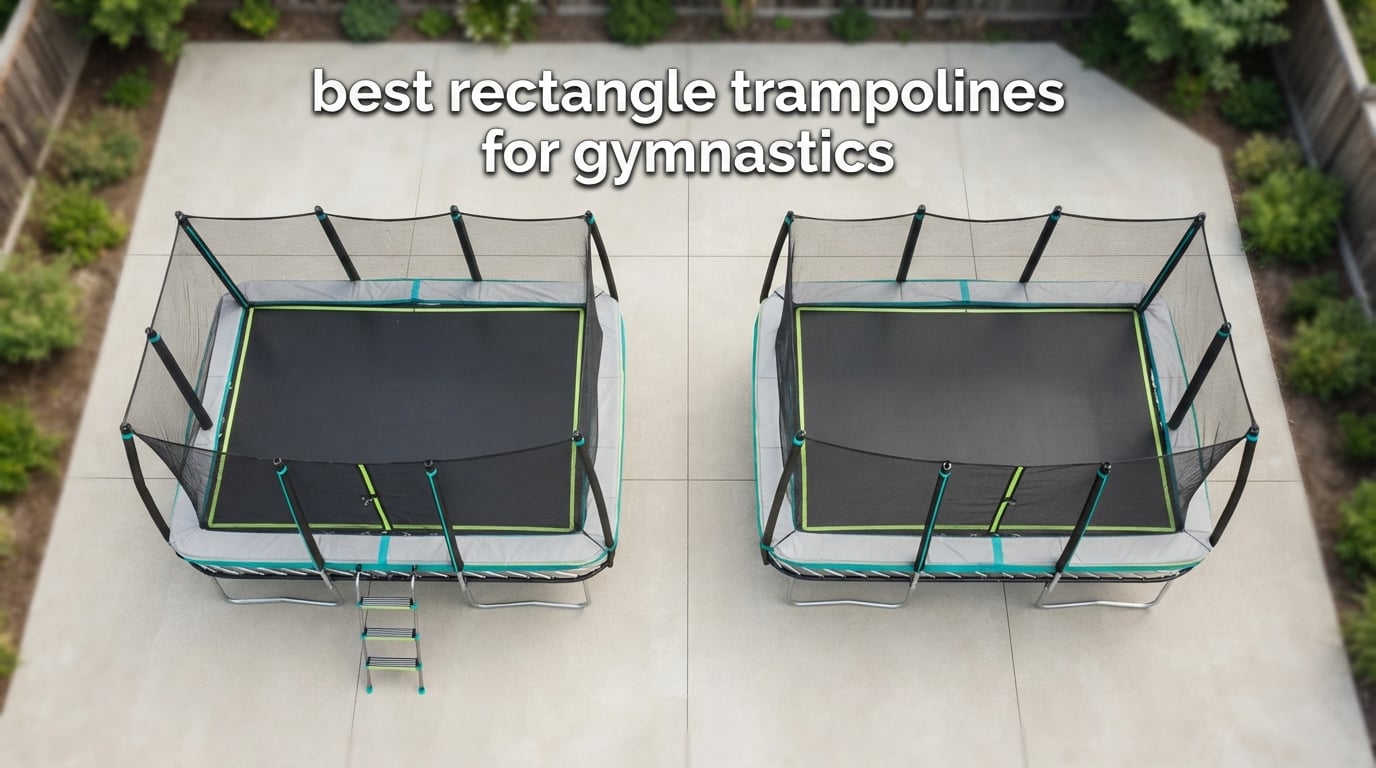
A rectangle trampoline is a unit whose springs run in parallel straight lines along the long sides rather than radiating from a center point. That single design decision gives a flatter, more consistent rebound and a larger usable jumping area for flips, twists and tumbling passes.
That single design decision is why the best rectangle trampolines for gymnastics dominate home training setups in 2026. A round trampoline pulls every jumper back toward the middle, which makes a straight tumbling pass almost impossible. A rectangle lets a gymnast run out, take off, land and run out again on the same line. We compared ten of the strongest rectangular models available right now, weighing bounce consistency, frame construction, enclosure safety, assembly reality and warranty length, so you can find the one that fits your yard and your gymnast’s level.
This is a rectangle-only list. We excluded the round recreational units that dominate most trampoline roundups, because they are not built for the rebound pattern gymnastics training depends on. We also kept every pick honest on weight limits, since manufacturers mix per-user capacity with static test load in a way that confuses almost every buyer. If you want a broader look at backyard gear first, our general rectangle trampoline guide covers the recreational side of the category.
Table of Contents
Why Rectangle Trampolines Are Better for Gymnastics
Yes, rectangle trampolines are better for gymnastics. The springs are anchored in straight, parallel lines, so each one stretches and recoils straight up instead of pulling the jumper toward a center point. That produces a flatter, more predictable rebound, a longer usable jumping area, and the consistent landing a tumbling pass needs.
On a round unit, twenty springs point in twenty different directions. Land off-center and the rebound travels inward, which is fine for a kid bouncing for fun and useless for a gymnast trying to run a straight line of drills. The rectangle changes the physics rather than just the footprint.
There is a second reason gymnasts gravitate here: independent springs mean one bad or stretched spring creates a localized soft spot rather than dulling the entire bed. On a round trampoline, worn springs tend to deaden the middle, which is exactly where a gymnast is trying to land.
The honest caveat is size. A 7 x 10 or 8 x 12 rectangle gives you the straight rebound, but it does not give you the runway for a full tumbling pass. Our enclosed trampoline guide covers enclosure specifics in more depth, and the sizing section later in this article maps sizes to ages and skill levels.
Top 3 Picks for Gymnastics Trampolines in 2026

Zupapa 10×17 No-Gap Rectangle
- Patented No-Gap net sewn to mat
- 1800 lbs static / 450 lbs dynamic
- Four side-by-side support legs

Zupapa 1800LBS Rectangle
- Highest rated in the group at 4.7 stars
- Double-zipper entry on long and short sides
- Three sizes: 8x14 9x15 10x17

Upper Bounce 8×14 Top-Ring
- Fiberglass top-ring net you can drop before storms
- No-gap net with curved padded poles
- 500 lbs user weight capacity
Best Rectangle Trampolines for Gymnastics (October 2026)
| Product | Specifications | Action |
|---|---|---|
| Zupapa 10×17 No-Gap Rectangle |
|
Check Latest Price |
| Upper Bounce 8×14 Top-Ring |
|
Check Latest Price |
 AOTOB 12 and 14 ft Rectangle AOTOB 12 and 14 ft Rectangle |
|
Check Latest Price |
 SKOK 14 ft Rectangle with Ladder SKOK 14 ft Rectangle with Ladder |
|
Check Latest Price |
| Zupapa 1800LBS Rectangle |
|
Check Latest Price |
 Lyromix 14 and 16 ft Rectangle Lyromix 14 and 16 ft Rectangle |
|
Check Latest Price |
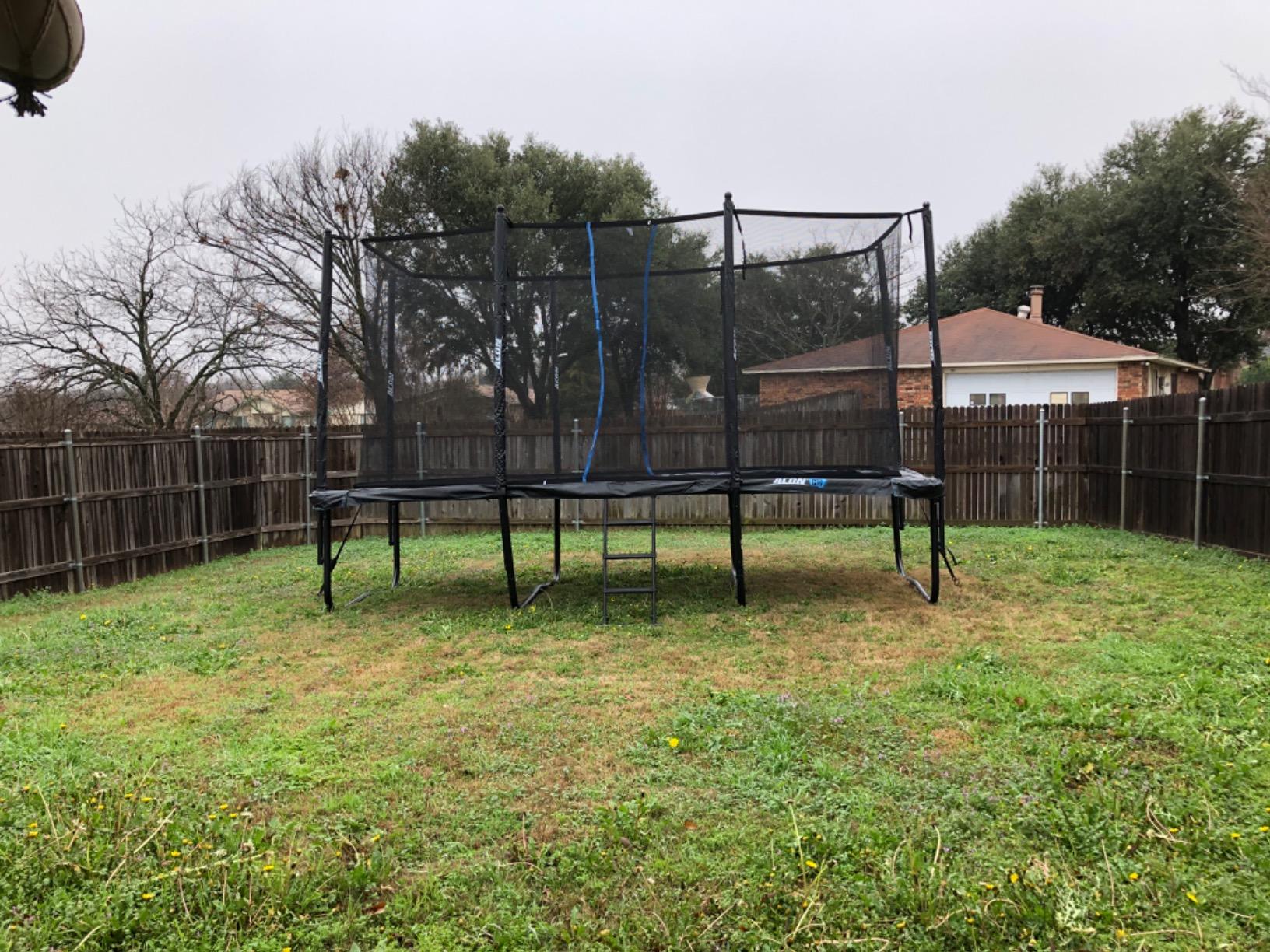
 ACON 16 HD 17 x 9.8 ft ACON 16 HD 17 x 9.8 ft |
|
Check Latest Price |
 Zupapa 13 x 23 ft Commercial Grade Zupapa 13 x 23 ft Commercial Grade |
|
Check Latest Price |
 SkyBound 10 x 17 ft Stainless Steel SkyBound 10 x 17 ft Stainless Steel |
|
Check Latest Price |
 BSPORTY Ultra 8 x 14 ft BSPORTY Ultra 8 x 14 ft |
|
Check Latest Price |
1. Zupapa 10×17 No-Gap Rectangle: Best Rectangle Trampoline for Gymnastics Overall
Zupapa 1800LBS Weight Capacity Rectangle Trampoline 10x17FT 9X15FT 8X14FT Outdoor Square Gymnastics Trampolines with Basketball Hoops for Kids Adults Long Large Big Rectangular Tumbling Trampolin
10 x 17 ft
1800 lbs static / 450 lbs dynamic
51mm Q195 hot-dip galvanized steel
Net sewn to mat
310 lbs unit weight
Pros
- Largest usable jumping area in the group
- Patented no-gap design removes spring access points
- Four-leg design resists long-side sag
- Two basketball hoops included
- Ten-year frame warranty with free spare parts
Cons
- Assembly runs several hours even with two adults
- Included hardware feels thin for the frame weight
- Pad and net damage in transit is reported
- Net and pad coverage is only two years
We spent the most time on this one because it is the configuration we kept coming back to. A 10 x 17 rectangle is the size gymnastics coaches in parent communities most often pass along to families, and this is the version of that size we would put in a yard. The jumping area is long enough to build a tumbling line rather than just bounce straight up, and several children can be on it without constant collisions.
The detail that changed our thinking is the patented no-gap construction. Rather than running ropes from the mat edge to the net to close the perimeter, this model sews the enclosure net directly to the jumping mat. For a gymnast practicing backflips near the edge, that removes the exact zone where fingers and feet find springs, and it also cuts roughly 30 minutes off setup because there is no rope-tensioning step.
Structurally, it is a 51mm diameter Q195 steel frame with 2.5mm wall thickness, hot-dip galvanized, and it uses four legs set side by side rather than at the corners alone. That mid-span support is what keeps the 17 foot length from caving in during a hard landing near the center, which is where most long rectangles flex. The longer net poles run all the way to the ground, which stiffens the net and removes the wobble that makes beginners lose confidence at the edge.
Two soft basketball hoops and court-style lines are included, which is a nice touch for a family that wants one trampoline doing two jobs. The mat, pad, net and springs carry two years of coverage and other parts are replaced free, while the frame is warranted for ten years. Certification here is CPC in the USA plus CPSIA and ASTM F381-16 compliance, which is the baseline we want to see on anything a child will be flipping on.
Who this size actually suits
A 10 x 17 is the first size we would call a training trampoline rather than a jumping toy. A child around 8 or older with basic awareness of how to land gets enough runway to practice straight-line drills, and a teenager or adult gets a surface wide enough for more than one person at a time. The 450 lb dynamic load figure is the one to read carefully, and we explain the difference in the weight limit section later in this guide.
For a younger child under about 7, it is more trampoline than they can use safely, and the jump itself is powerful. Families with a mixed-age household usually pair it with a rule about one jumper at a time during skill practice, which we cover in the safety section.
What to check before you commit
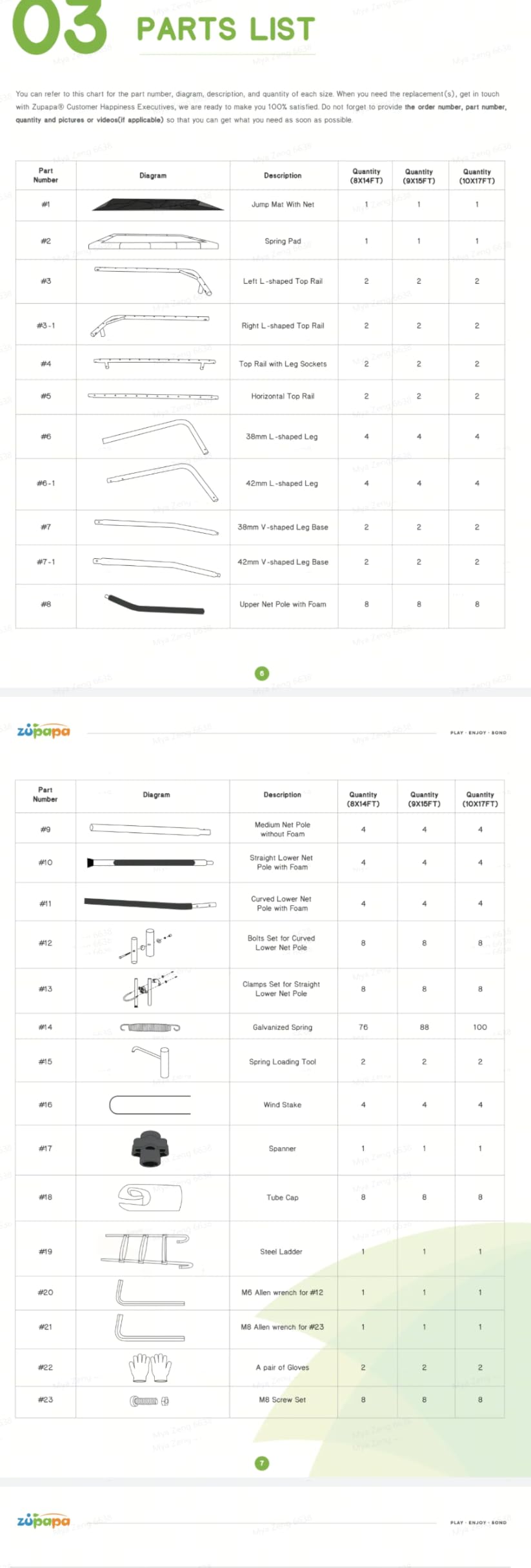
Measure your yard properly before this one arrives. The unit weighs 310 pounds and the 17 foot length needs clear space at both ends for safe run-outs, plus clearance from fences, trees and any overhead line. The printed instructions are the most common complaint, particularly the hardware diagrams, so budget an evening and download the exploded diagrams ahead of time.
Ask yourself who actually maintains it. At this weight, rotating or repositioning the trampoline for seasonal grass care is a two-person job, and the legs are lighter than the main frame tubing, so plan a fixed location rather than a movable one. If you want an even higher-rated version of the same design, the Zupapa 1800LBS model covered later in this list has the highest star rating in the group.
2. Upper Bounce 8×14 Top-Ring Set: Best Value Rectangle with a Removable Net
Upper Bounce 14 ft Rectangle Trampoline Set with Top-Ring Enclosure Net, Outdoor Backyard Recreational, Gymnastics Activity for Kids and Adults, High Weight Capacity 500 lbs, 8′ x 14′, Blue/Black
8 x 14 ft
108 springs
500 lbs user capacity
Powder-coated steel frame
Fiberglass top-ring net
Pros
- Heaviest
- most solidly built unit at this tier
- Top-ring net installs quickly and can be dropped before storms
- No-gap net with curved padded poles
- Consistent edge-to-edge bounce
- Solid choice for home tumbling practice
Cons
- Springs are extremely tight during assembly
- Black entry padding gets dangerously hot in sun
- Some orders arrive with missing or short parts
- Only six months of coverage on main components
This is the unit that feels the most like a piece of equipment rather than a toy, and parents who bounce on it first usually stop shopping. The 8 x 14 footprint is smaller than our top pick, but the build quality is closer to it, with a powder-coated steel frame, an eight-row stitched polypropylene mesh mat and a listed set of 108 heavy-duty springs. Bounce is even across the whole surface with no dead zone, which is the single thing that matters most for skill work.
The enclosure is the piece of engineering worth paying attention to. Instead of poles with a net draped between them, a fiberglass rod top ring holds the net taut all the way around, and the whole ring can be pulled forward and removed ahead of a storm. Owners in storm-prone areas specifically value that, and our general enclosure comparison covers the same trade-off across brands.
The no-gap net design, curved safety poles and thick foam over the springs mean a jumper leaving the mat lands against padding or netting rather than a steel pole. Cheer and tumbling families report using this for home practice specifically, and at 500 lbs of listed user capacity it handles more than one person on the bed at a time.
Where the 8 x 14 size falls short
This is the honest limitation. At 8 x 14 there is not much runway past the mat for a tumbling pass, so a gymnast training a full straight line will run out of bed sooner than on a 10 x 17. It suits strength, mobility, aerial awareness and repetition drills, and short tumbling lines well. It is a strong first rectangle for a child in the 6 to 11 range.
The second limitation is the spring tension. Reviews describe the springs as very tight, and assembly realistically takes two to five hours with two people, a rubber mallet, and sometimes a little work refitting a pole that does not quite line up. If you are not prepared for a build day, factor that in.
Two things to confirm before ordering
Ask whether a ladder is included. This set does not list one, and a missing ladder discovered on delivery day is a recurring complaint pattern across mid-tier rectangles. Plan your own climbing route or add a ladder to the same order to avoid a second delivery.
Also plan for the black entry padding. Owners report it gets hot enough in direct sun to burn hands and feet, which matters for a child getting on and off repeatedly during practice. Position the entry on the shaded side if you can, and take the net down in high wind rather than leaving it standing.
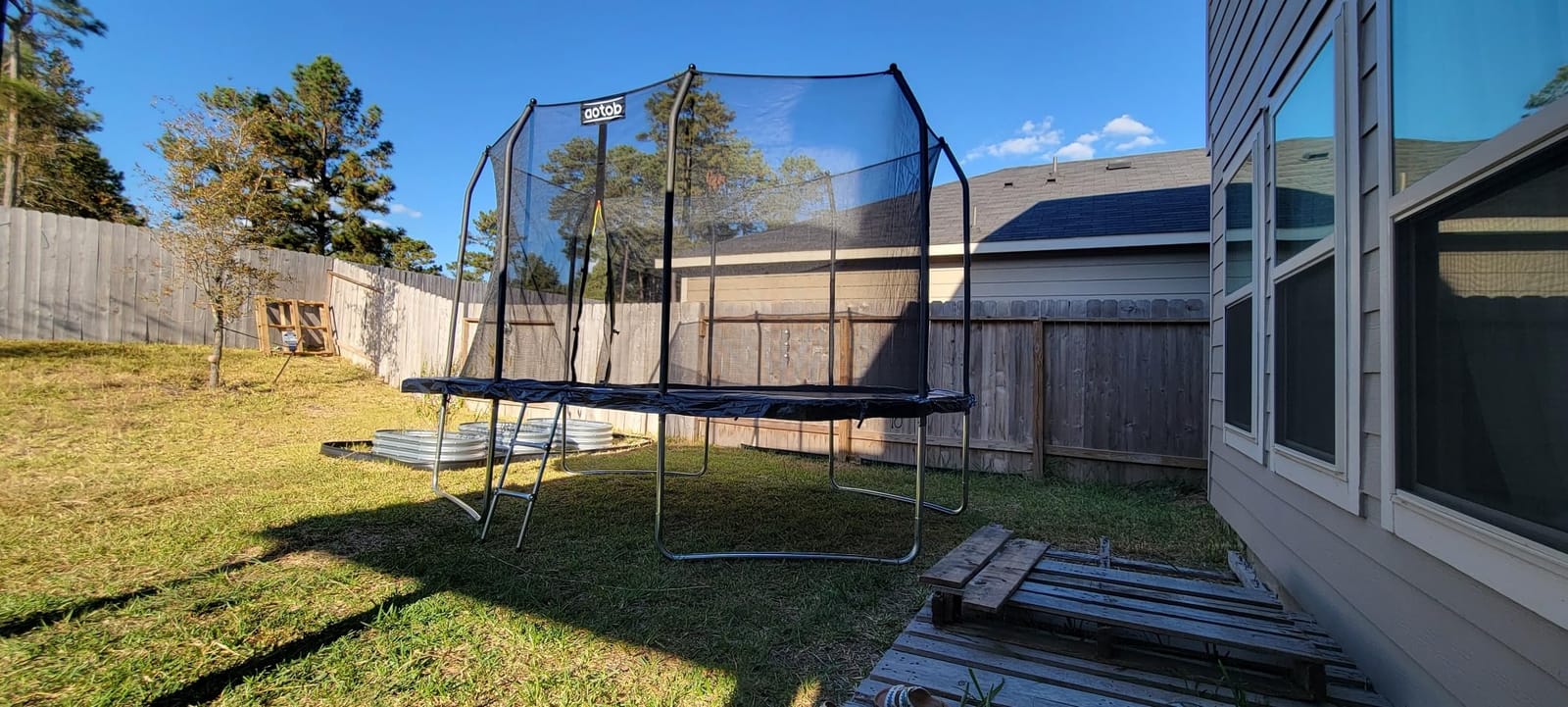
3. AOTOB 12 and 14 ft Rectangle: Best Budget Pick for Young Gymnasts
AOTOB 8×14FT Rectangle Trampoline with Net for Kids-Black
12 ft and 14 ft options
72 springs
Powder-coated alloy steel
93.5 lbs unit weight
5-year warranty
Pros
- Genuinely springy and elastic mat for the money
- No-gap enclosure with foam-wrapped poles and zippered entry
- Light enough to reposition without help
- Five-year mat frame and spring warranty
- Free replacement of defective parts
Cons
- Bowed frame makes springs harder to stretch
- Lighter build than heavy-duty commercial models
- Assembly still runs a couple of hours
If the goal is getting a young gymnast onto a rectangle without a major purchase decision, this is the entry point we recommend. The 12 and 14 foot options cover the awkward middle ground between a tiny patio unit and a full training bed, and the mat has a lively, responsive elasticity that owners consistently praise as genuinely springy rather than soft or dead.
Safety on this one is handled by a no-gap enclosure with foam-wrapped poles and a zippered entry door on the net. That combination is what keeps feet out of the springs, and for a beginner learning to land, the padding on the poles matters as much as the gap design itself. Seventy-two springs do the work on a powder-coated alloy steel frame supported by four legs.
Assembly is a two-box delivery with a Bilt app offering 3D step-by-step instructions, and the manual is described as straightforward. The warranty runs five years on the mat, frame and springs with three years on the enclosure net and pole caps, and defective parts are replaced free. That coverage is stronger than several picks in this roundup that cost considerably more.
At 93.5 pounds, this is also one of the few rectangles in the roundup that two people can genuinely reposition without planning a moving day, which matters in a yard where grass needs seasonal attention.
What age and skill level it fits
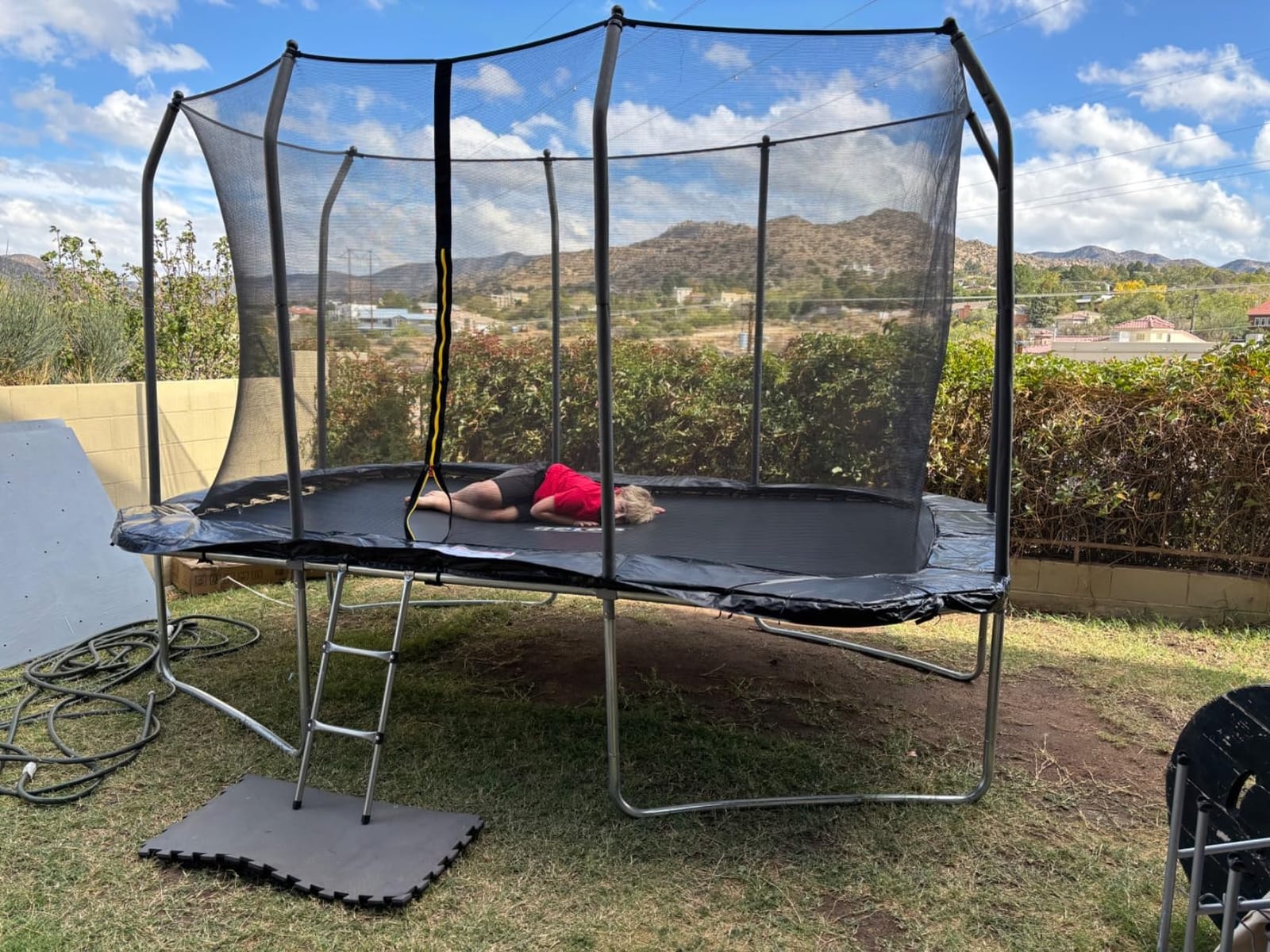
This is a beginner-to-intermediate setup. A child roughly 6 to 10 with an adult nearby gets a surface large enough to practice basic jumps, drops and short tumbling lines with supervision. A taller or older gymnast will quickly outgrow the 12 foot option, and the 14 foot version stretches the limit a little further without reaching true training-bed territory.
For a family with more than one child, note that the 12 and 14 foot designations here describe the frame length rather than a long tumbling runway. Practically, one jumper at a time during skill practice is the sensible rule.
What to watch during assembly
The single consistent complaint is that the rectangular frame is not perfectly straight, which makes the springs noticeably harder to stretch into place. Expect to fight the corners, work around the frame in sequence rather than randomly, and allow more time than the manual implies. Having a second adult hold the frame square while you tension one side at a time makes a real difference.
Beyond that, the build is lighter than the heavy-duty commercial rectangles, so treat the stated capacity as a real limit rather than a suggestion. If you want the same footprint with a much heavier frame, our top pick trades weight for a 10-year frame warranty and far more structural margin.
4. SKOK 14 ft Rectangle with Ladder: Best for Small Yards
SKOK 14 FT Rectangle Outdoor Trampoline with Net and Ladder for Kids
14 ft rectangle
72 springs
Four U-shaped legs and eight poles
Thick foam padding
5-year warranty
Pros
- Elongated rectangle makes better use of a narrow yard than a round unit
- Lively responsive bounce from 72 springs
- U-legs and eight poles give a balanced base
- Thick foam padding over frame and springs
- ASTM tested with CPC certification
Cons
- More modest spring count than heavier models
- Weighs less than commercial rectangles so it shifts in wind
- Ladder is basic rather than heavy duty
A 14 foot rectangle is the practical answer for a yard that cannot take a 17 foot run-out, and this one gets the shape advantage without demanding a huge footprint. Parents describe the elongated surface as making better use of a confined space than a round trampoline of the same width, which is the whole argument for the shape in a small yard.
The structure is four U-shaped legs plus eight safety poles carrying the enclosure, and the listed support from TUV Rheinland, CE, GS and ISO 9001 alongside ASTM testing and CPC certification is a stronger certification story than most units in this price band offer. Seventy-two springs deliver a lively, energetic bounce rather than a heavy commercial feel, and thick foam padding covers the frame and spring area.
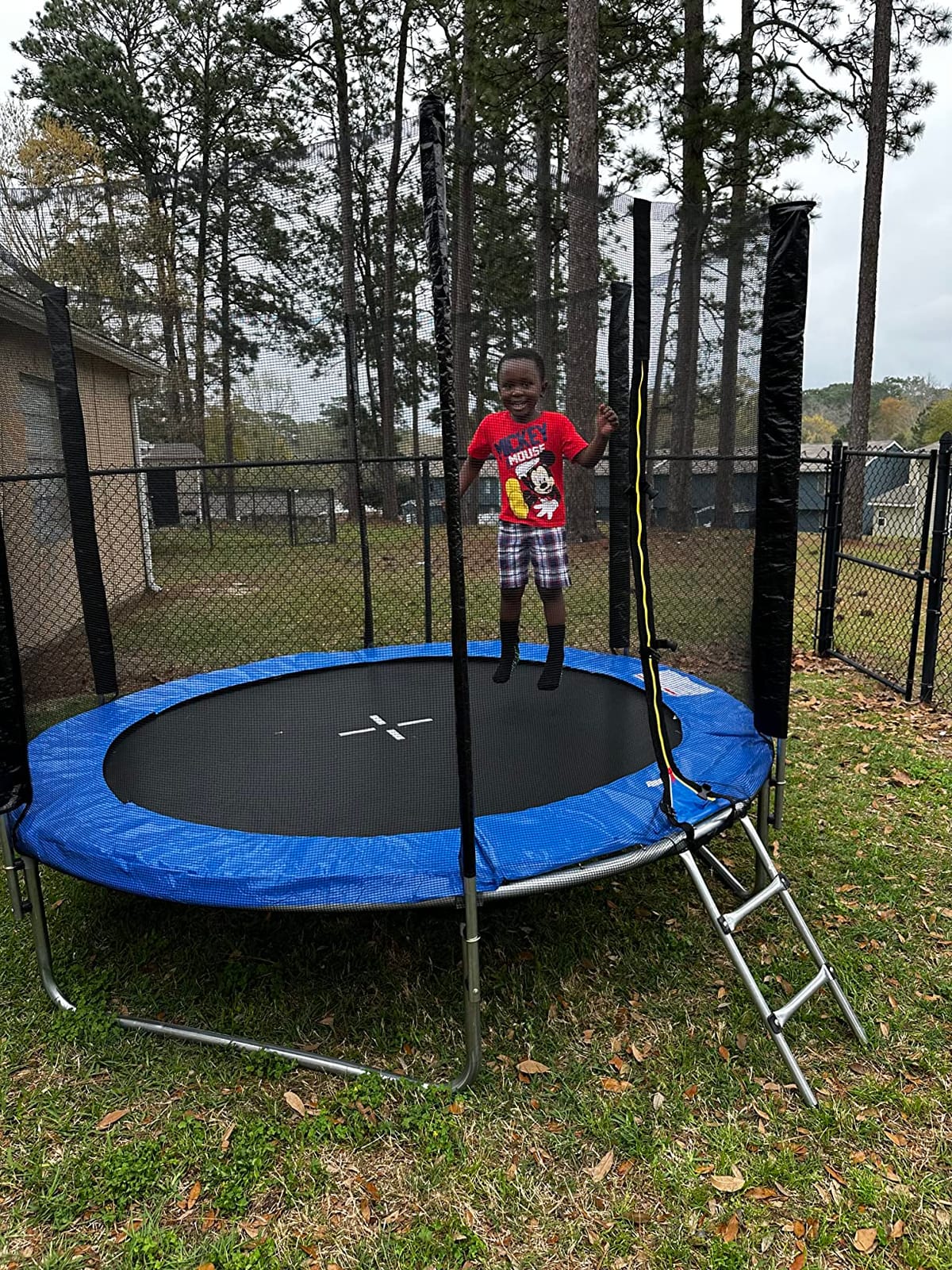
The accessory ladder is included in the box, which removes the most common surprise on a first-time rectangle purchase. A five-year warranty covers the unit. This is a straightforward, well-certified backyard rectangle rather than a training machine, and owners are largely satisfied within those expectations.
Why small-yard owners should like it
Clearance is the number one practical objection parents raise, and a 14 foot frame is roughly three feet shorter end to end than a 10 x 17. That difference is often the difference between a trampoline that fits with room for run-outs and one that does not. The trade is that there is less runway for a full tumbling pass, so this suits bounce work, aerial drills and short lines.
It is a strong fit for a family with children around 5 to 9 who want a safe contained jumping surface with a real rebound, and for anyone who wants a rectangle they can move occasionally without hiring help.
What to consider before buying
The lighter overall weight cuts both ways. It makes the trampoline manageable, but it also means the unit catches wind more than a heavy commercial rectangle, so anchoring stakes or a proper anchor kit matter more here than on the heavier models in this list. Our safety section covers anchoring as a non-negotiable step.
Also compare the spring count. Seventy-two springs is a good lively number for a family trampoline, but if a gymnast is approaching competitive training, plan to size up in a few years rather than treat this as a final purchase.
5. Zupapa 1800LBS Rectangle: Top Rated for Skill Practice
Zupapa 1800LBS Weight Capacity Rectangle Trampoline 10×17 9X15 8X14FT Outdoor Square Gymnastics Trampolines with 10-Year Quality Assurance for Kids Adults Large Big Rectangular Trampolin
8 x 14 9 x 15 and 10 x 17 options
1800 lbs static / 450 lbs dynamic
51mm Q195 steel
269 lbs unit weight
Pros
- Highest average rating in the roundup at 4.7 stars
- Sewn no-gap design makes flips and backflips safer
- Four side-by-side legs stop long-side sag
- Double-zipper entries serve several jumpers
- Assembly is faster than rope-tied rivals
Cons
- Very heavy at roughly 269 lbs so repositioning is a two-person job
- Spare parts can be slow to source outside the US
- Net poles and netting add assembly steps
This is the highest-rated rectangle in the group at 4.7 stars across 299 reviews, and the reason it separates from our top pick is choice. The same design is offered in 8 x 14, 9 x 15 and 10 x 17, so you can match the frame to your yard instead of trimming the runway to fit a fixed size. Families who later decide they need more length often move up a size within the same product line.
Construction matches what we looked for in the 10 x 17: a 51mm diameter Q195 steel frame with 2.5mm walls, hot-dip galvanized, rated to 1800 lbs static and 450 lbs dynamic, supported by four legs set side by side. The sewn no-gap design attaches the net to the mat, which owners credit with making flips and backflips safer near the edge and making assembly noticeably quicker than rope-tied competitors.
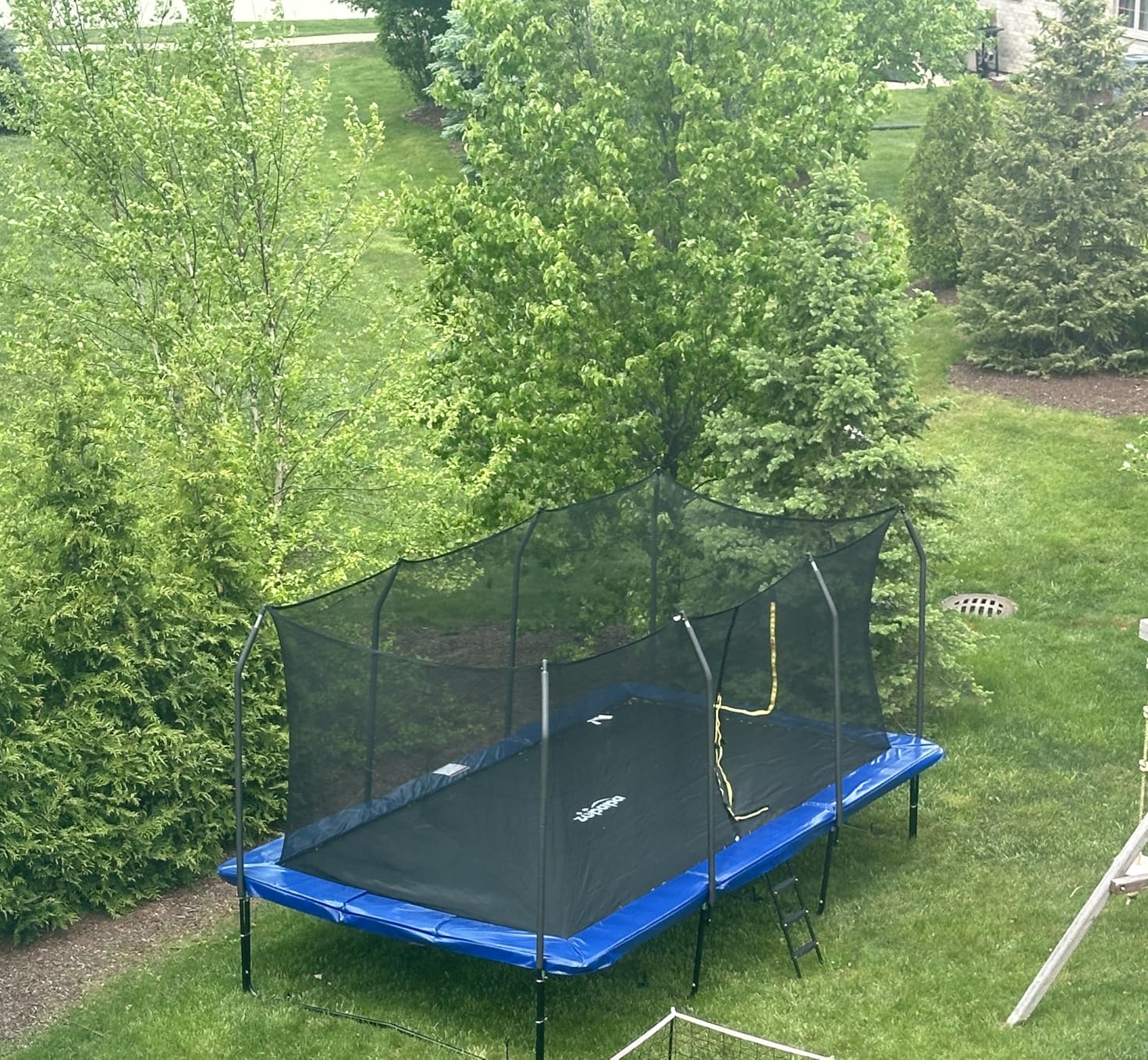
Double-zipper entries on both the long and short sides mean several people can get on and off without a queue, which is genuinely useful during a practice session. Net poles reach the ground at each corner and the PE netting is densely woven, so the enclosure resists the billowing that makes beginners nervous. Certification is CPC in the USA plus CPSIA and ASTM F381-16 compliance, and the frame carries a ten-year warranty.
Three quarters of a star below the top pick is not a meaningful difference, and both are the same engineering approach at different footprints. Choose this one when yard size, not rating, is the deciding variable.
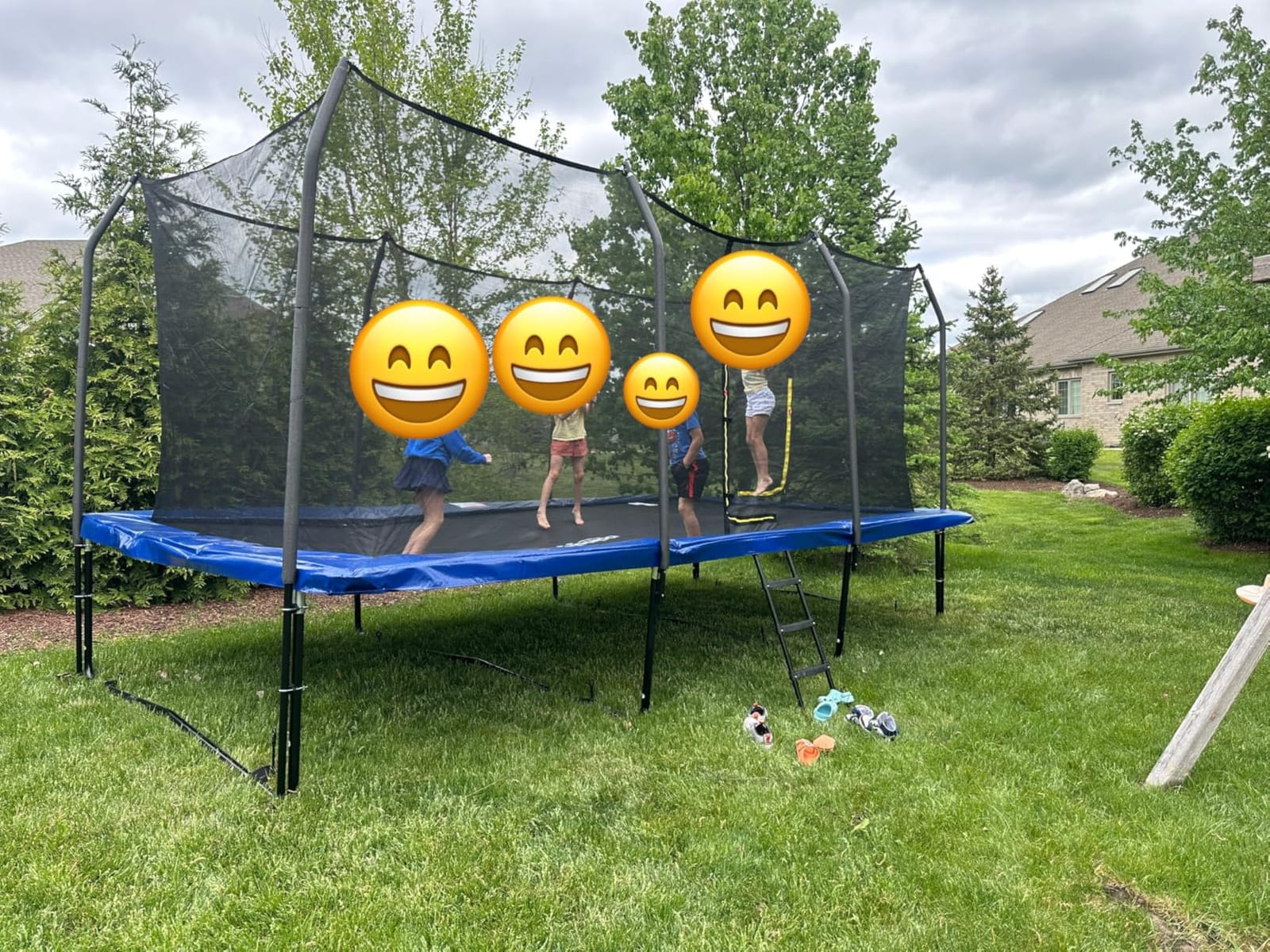
Which size option to choose
The 8 x 14 works for a smaller yard and a younger child, the 9 x 15 is the compromise most families land on, and the 10 x 17 is where real tumbling lines become possible. If your gymnast is 10 or older and practicing anything beyond vertical bounce, take the longest option your yard can safely support with clear run-outs at both ends.
The 9 x 15 is described in parent communities as the sweet spot for larger families and more serious jumpers, because it holds bounce well without the spring wear and footprint demands of the longest bed.
Plan around the weight
At 269 pounds this is not a unit you shuffle across a lawn to follow the sun. Pick a permanent spot before delivery and anchor it. Owners also note that sourcing replacement parts within the stated ten-year spare-parts window can be slow outside the US, so if you are far from a major metro area, confirm parts support before you commit.
6. Lyromix 14 and 16 ft Rectangle: Best for Even Bounce and Extras
Lyromix 16FT Outdoor Rectangle Trampoline for Kids and Adults, Rectangular Trampoline with Curved Poles, Pumpkin Trampolin with Light, Sprinkler, Soccer and Storage Bag
14 ft and 16 ft options
98 large springs
440 lbs max weight
Curved foam-wrapped poles
Galvanized and powder-coated
Pros
- Even controlled bounce across the whole surface
- Curved foam-wrapped poles soften enclosure impacts
- U-leg frame holds up under daily multi-child use
- Solar LED lights and sprinkler included
- Free replacement parts when components break
Cons
- Only a 1-year warranty
- the shortest in the roundup
- Some owners report springs or D-rings detaching within months
- A net support pole broke for one owner after a year
The reason this one earns a place is bounce uniformity. Ninety-eight large springs on a reinforced mat produce an even, controlled rebound across the whole surface, and owners describe the landing control as predictable, which is exactly what repetition drills reward. Four U-shaped legs stabilize the center of gravity for both kids and adults on a shared bed.
The enclosure detail is the curved poles wrapped in waterproof plastic. Curvature moves the impact surface away from the point where a foot or hand naturally lands, and the wrapping protects the foam underneath from moisture, which is a slow-motion failure in cheaper builds. The frame is galvanized inside and out with powder-coated legs, so it is set up for year-round outdoor use in rain and snow.
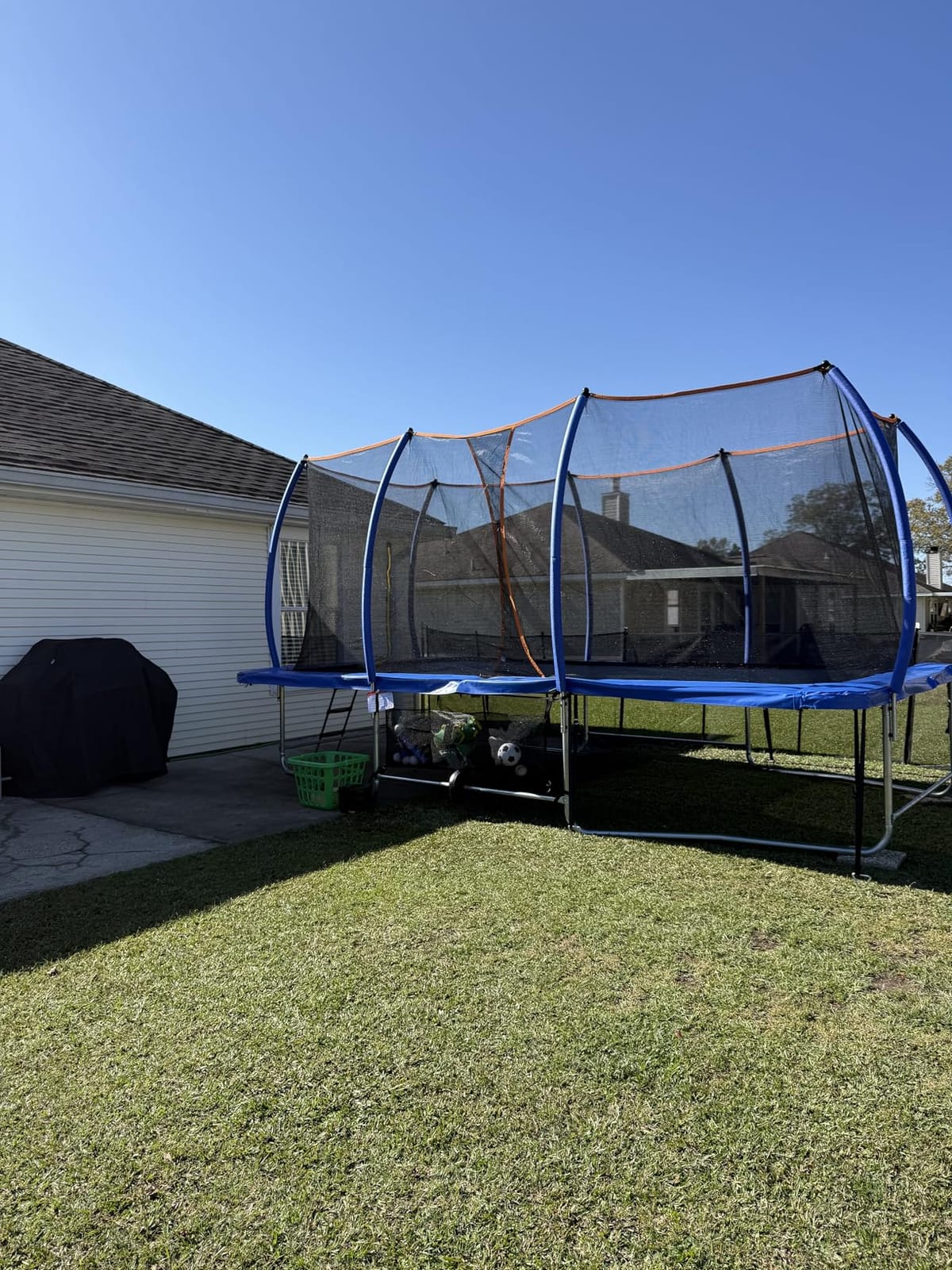
The extras package is unusually generous: solar LED lighting for evening sessions, a sprinkler, a basketball hoop, ground stakes and a storage bag. For a family that wants one trampoline to carry through summer evenings, that is a real amount of value.
What holds it back is the one-year warranty, the shortest in this roundup by a wide margin. Some owners in heavier daily households report springs or D-rings detaching within months, and one reported a net support pole breaking after about a year, while most say the frame itself holds up and support sends parts free of charge.
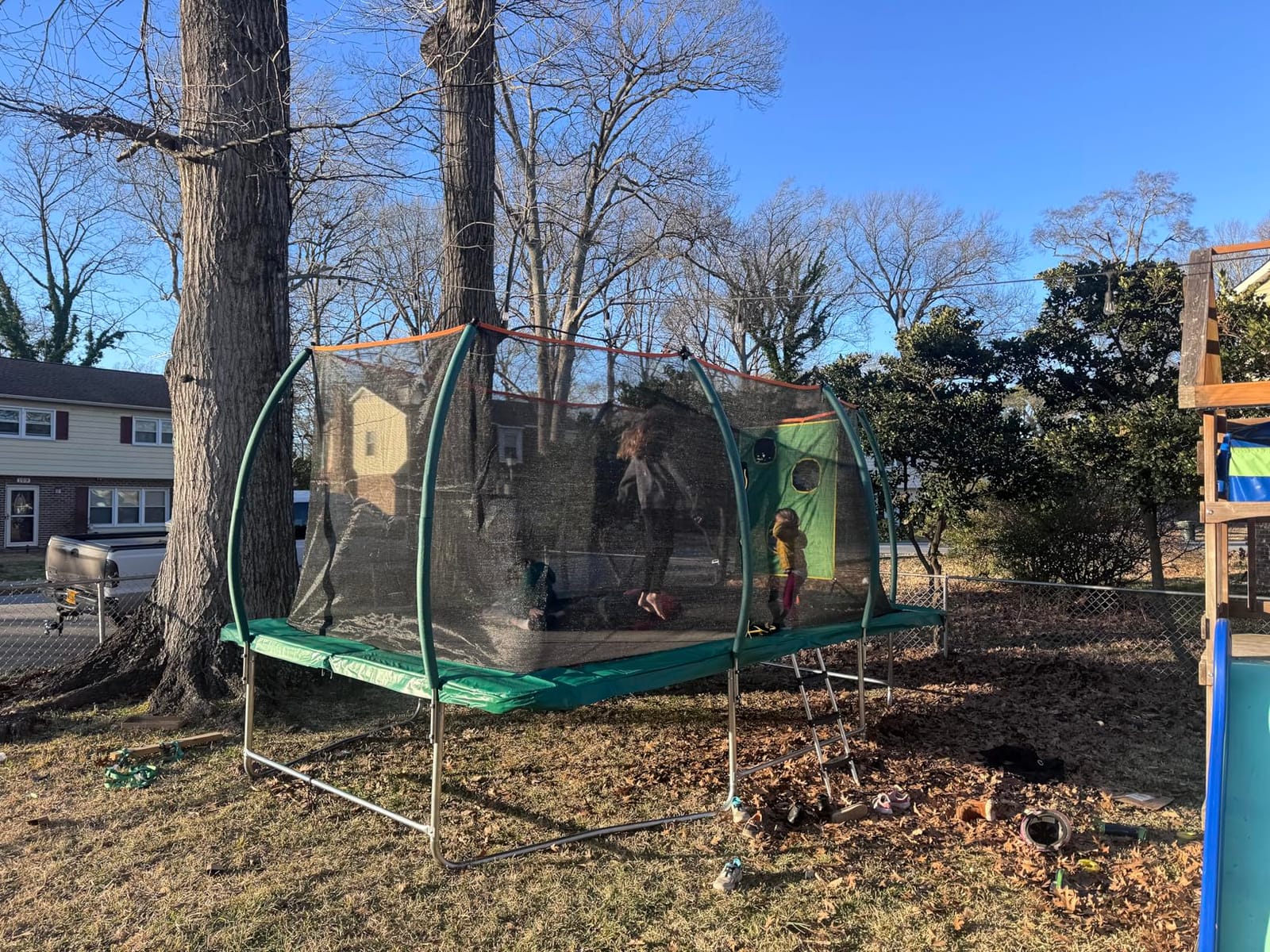
Who buys this and why
Families whose priority is a smooth, even surface and evening use rather than long-term heavy gymnastics training. The 440 lb maximum weight recommendation suits a couple of children or a child plus an adult in rotation, and the lighting and sprinkler add the kind of thing that keeps a trampoline in daily use through summer.
If a gymnast is training multiple skills a day for years, a one-year warranty is too short to be comfortable. Look at a model with a five to ten year frame warranty instead, even if the extras list is thinner.
What to check on arrival
Inspect the spring and D-ring hardware before the first session, particularly if the unit will see daily multi-child use, because that is where the complaints concentrate. Check the solar panel cord as well, since at least one owner found it too short to reach the ground and had to strap the panel to a pole.
Finally, confirm the enclosure poles are seated fully and evenly, and anchor the unit with the included stakes or a proper anchor kit before anyone jumps.
7. ACON 16 HD 17 x 9.8 ft: Best for Serious Tumbling Training
ACON 16 HD Rectangular Trampoline 17×9.8 ft, 140 HD Springs, SafeMat
17 x 9.8 ft frame
14.2 x 7.2 ft jump zone
140 ten-inch HD springs
SafeMat foam buffer and spring skirt
242 kg unit weight
Pros
- Deep joint-friendly bounce consistent across the entire jump zone
- 140 ten-inch HD springs in a tuned system
- SafeMat foam plus spring skirt gives two layers of protection
- Zipperless two-level entry avoids snag points
- Galvanized frame tested to 1650 lb static load
Cons
- Heaviest and highest-ticket unit in the roundup
- Frame this size realistically needs professional assembly
- Pad and net replacement parts warranted for one year
This is the only pick in the roundup built around a genuine training program, and the difference shows in the spring system. One hundred forty ten-inch HD springs in a tuned frame-and-mat combination deliver a deep, joint-friendly bounce that stays consistent across the entire 14.2 x 7.2 foot jump zone. Owners describe it as noticeably easier on knees and ankles than shallower beds, which matters when a gymnast is doing dozens of repetitions a session.
Safety is layered here rather than solved with one feature. The SafeMat system combines a 2 inch foam buffer with a spring-covering skirt, so the springs are behind two protective surfaces. Above that sits a No Finger Access net with a zipperless two-level entry, which removes the zipper pull as a snag point and keeps jumpers from bunching at one opening.
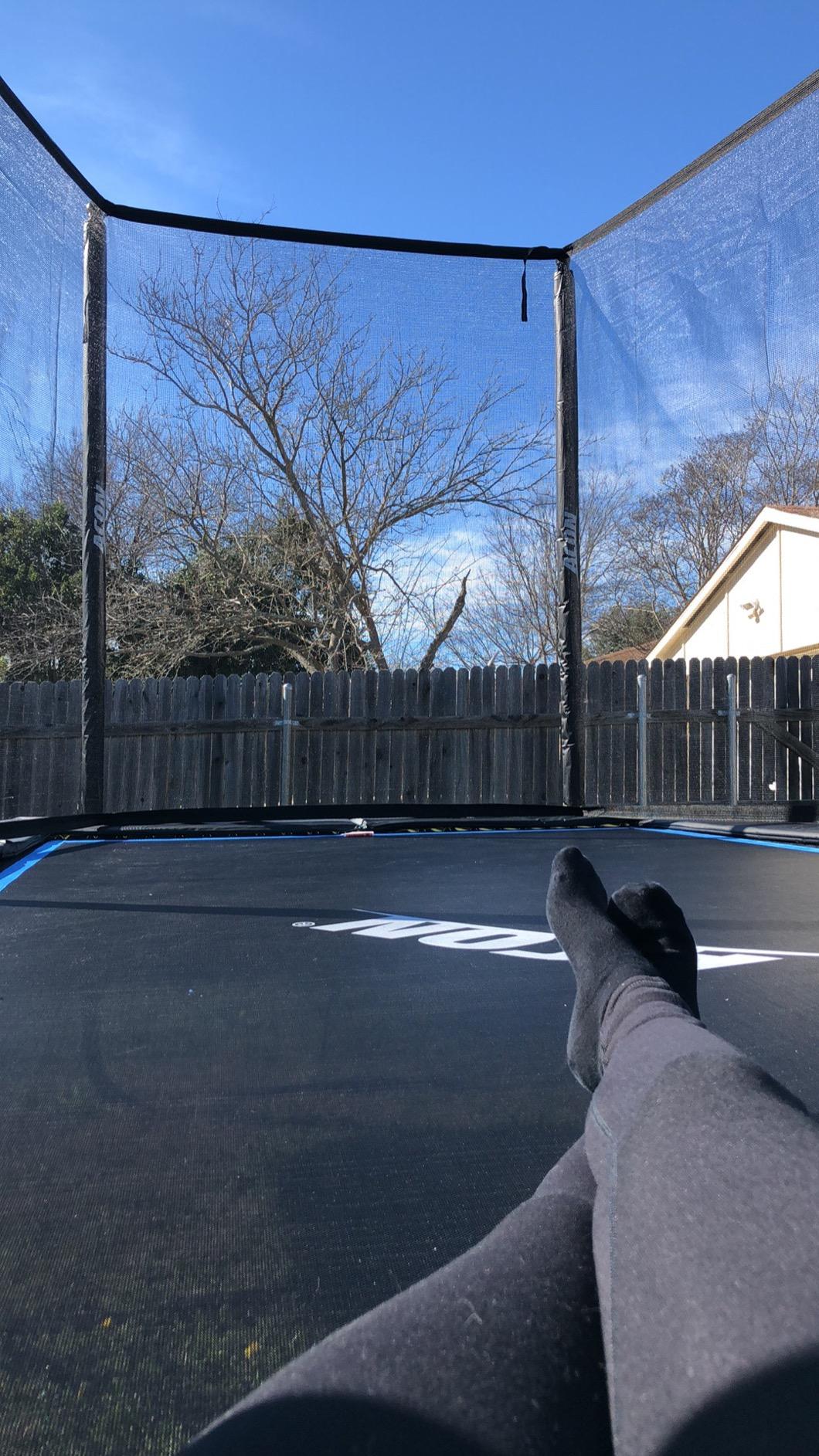
The frame is galvanized and powder-coated 2.4 inch steel tube with a 0.1 inch wall, tested to a 1650 lb static load with a 330 lb single-jumper capacity. That single-jumper number is the one that matters for gymnastics training, and we explain why in the weight limit section. Certification is CE and ASTM, the mat, net and padding are UV-protected, and the unit supports optional in-ground installation if your yard situation makes that attractive.
Warranty coverage is tiered by component in a way that reflects how the parts actually wear: ten years on the frame, five on the mat and springs, two on the safety pad, and one on the net, pad, ladder and other parts. Five years on mat and springs is the strongest consumable coverage in the roundup.
Who should make this purchase
A competitive or serious recreational gymnast, a teen training several times a week, or an adult working on aerial awareness and strength in a home gym. It is also the pick if you want a rectangle that can be installed in-ground, which removes the step-up height problem entirely and is a sensible option for a younger gymnast you do not want climbing.
Set expectations honestly. At 242 kg this is not a casual backyard toy, and a frame this size realistically warrants professional assembly rather than a weekend project with friends.
What to plan for before delivery
Site preparation is the part people underestimate. Confirm the delivery path to the assembly point, the surface beneath, and whether you want in-ground installation before the crew arrives, because converting afterwards is a much bigger job. A level, well-drained pad matters more on a 17 foot bed than on a small one.
Also budget for the running total, not the sticker figure. The net and pad are one-year items, so plan a replacement cycle in year two if a gymnast is training on it daily. Compare that against our top pick’s ten-year frame warranty if long-term cost is a concern.
8. Zupapa 13 x 23 ft Commercial Grade: Best for Full Tumbling Runs
Zupapa 2500LBS Weight Capacity Rectangle Trampoline 13x23FT Outdoor Square Gymnastics Trampolines with 10-Year Quality Assurance for Kids Adults Large Commercial Grade Rectangular Pro Trampoline
13 x 23 ft
2500 lbs static / 800 lbs dynamic
180 electroplated 3.5mm springs
Seven support legs
750 lbs unit weight
Pros
- Enormous jumping surface for full tumbling runs
- Seven-leg frame keeps the 23 ft length from sagging
- 180 electroplated springs give a higher more responsive bounce
- 800 lbs dynamic capacity
- No one-star reviews in its rating distribution
Cons
- Heaviest unit in the roundup at 750 lbs
- 23 ft length demands a very large yard
- Thin long-term durability data with 61 reviews
This is the largest unit we tested and the only one in the roundup with seven support legs rather than four. At 13 x 23 feet, the reason for that leg count is obvious: an unsupported 23 foot span would flex in the middle under a hard landing, so the legs are distributed along the length to keep the bed flat. That flatness is the whole reason to buy something this size, and gymnastics families with older trainees notice it immediately.
Spring hardware is a step up too. One hundred eighty electroplated high-strength springs at 3.5mm wire diameter are described by the manufacturer as more than 30 percent stronger than ordinary springs, and owners report a noticeably higher and more responsive take-off. The frame is 51mm Q195 steel at 2.5mm walls, rated to 2500 lbs static and 800 lbs dynamic, and the mat is an extra-large polypropylene jumping mat with UV protection materials.
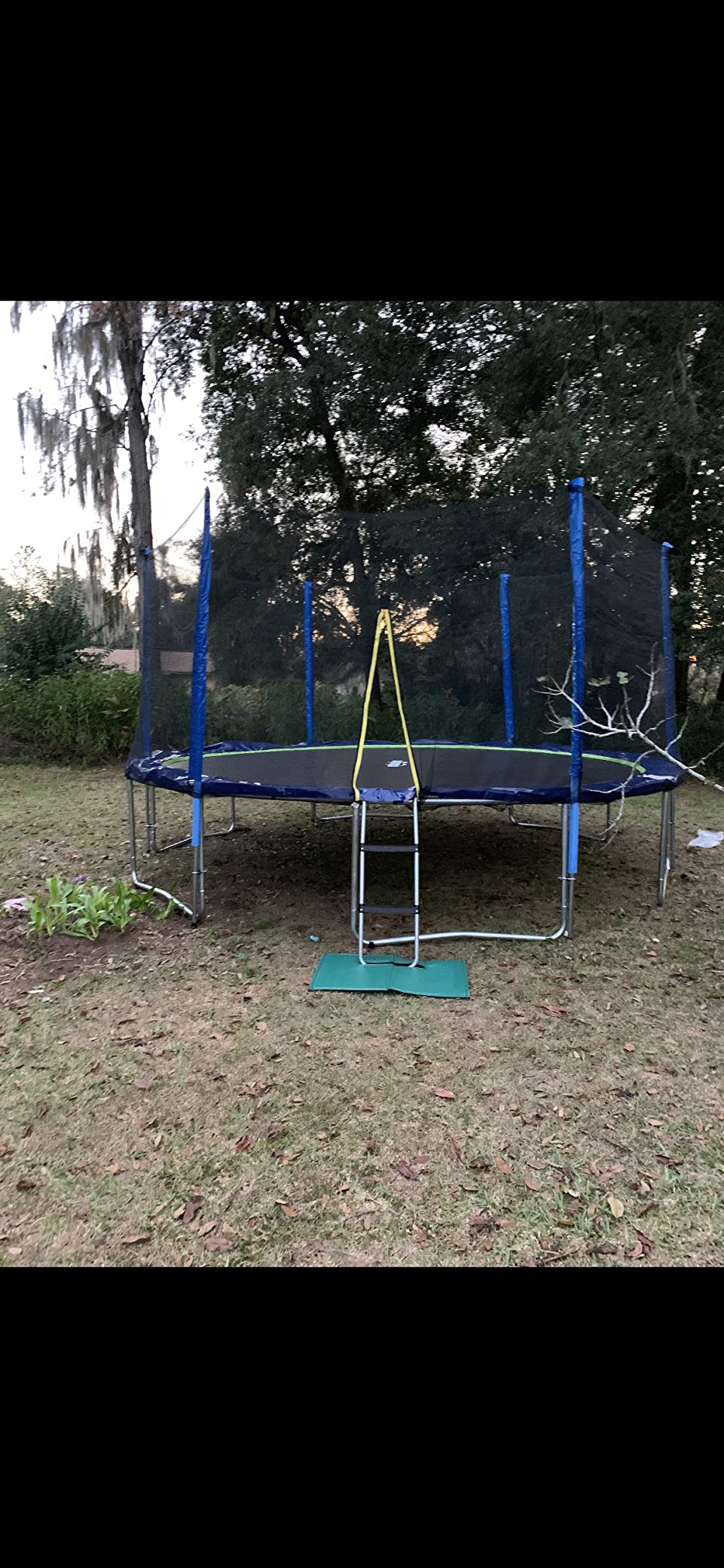
The same patented no-gap construction joins the net directly to the mat, which is what makes flips and backflips safe near the perimeter on a bed this size. Certification is CPC in the USA with CPSIA and ASTM F381-16 compliance. A ladder is included in the box, the frame carries a ten-year warranty with two years on mat, pad, net and springs, and other parts are replaced free.
One caution on evidence: with 61 reviews, there is a thinner long-term durability record here than for the more established models. There are no one-star ratings in its distribution, which is encouraging, but sample size is sample size.
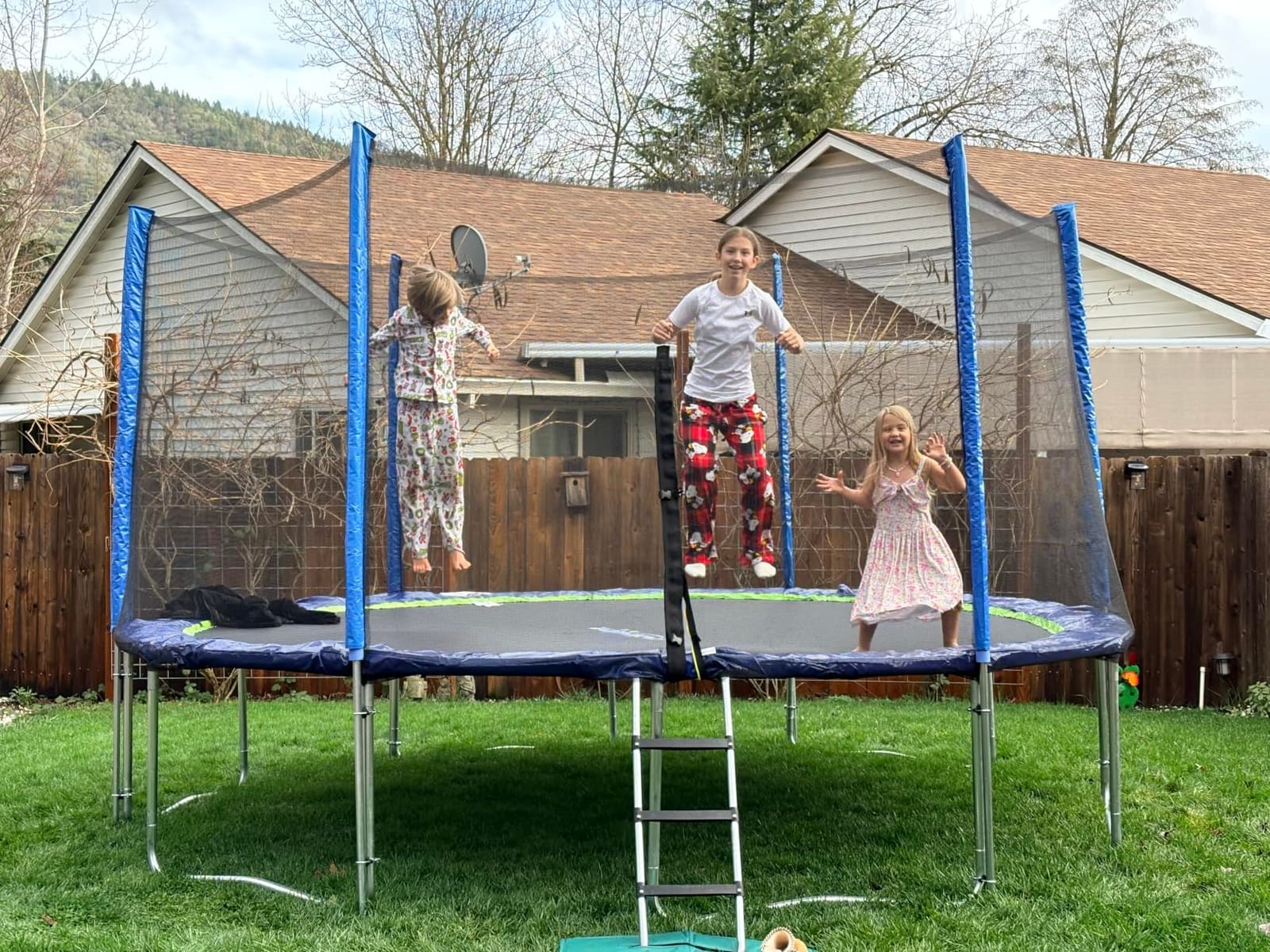
Who genuinely needs 13 x 23
A home gym serving multiple athletes, a tumbling program that needs a full run-out at both ends, or a family that wants a trampoline doubling as a serious training surface rather than a toy. The 800 lbs dynamic rating supports several jumpers on the bed at once, which no smaller rectangle in this roundup can claim.
For a single child still learning basic skills, this is far more trampoline than needed, and the cost of owning something this large for a few years of casual use is difficult to justify. Our top pick covers most home situations.
What to verify before this arrives
At 750 pounds, this is not a two-person assembly or a two-person relocation. Plan professional assembly and, ideally, a fixed permanent location with anchoring, because a unit this size generates a great deal of wind load. The yard requirement is the real constraint, and our clearance checklist covers the measurements.
Confirm the surface can take the load evenly and that delivery vehicles can reach the site. If a professional assembly quote is needed, get it before ordering so there are no surprises on the day.
9. SkyBound 10 x 17 ft Stainless Steel Rectangle: Best for Enclosure Safety
SkyBound Rectangular Trampoline with Enclosure Net 10×17 FT – Rectangle Trampolines Performance Build for Families and Athletes – Reinforced Welding Base – Gymnastics Trampoline Superior Bounce
10 x 17 ft rectangle
116 springs
Stainless steel frame
352 lbs max user weight
ASTM F2225 compliant net
Pros
- Net meets ASTM F2225 with barrier height set to half the bed length
- Stainless steel frame with reinforced welding
- 10 x 17 ft area gives room to take off and land
- Basketball hoop ladder and tools included
- US-based support with a readable manual
Cons
- Lowest rating in the roundup at 4.0 stars
- 352 lbs user limit is the lowest among full-size rectangles here
- Thin warranty coverage outside the frame
- 22 percent of reviews are one star
The reason this model is worth including is the enclosure specification. The net is built to the ASTM F2225 standard, with barrier height set to half the longest dimension of the bed and never less than 60 inches. On a 17 foot trampoline, that is a meaningfully taller net than a typical residential enclosure, and tall barriers are what keep a jumper from clearing the net during an uncontrolled rebound.
Underneath that, the frame is stainless steel with a safety base-leg design and extra welded connections, carrying 116 springs on a reinforced welded base. The listed maximum user weight is 352 lbs, which is the lowest capacity among the full-size rectangles in this roundup, and that is a real constraint if you plan to share the bed between a teenager and an adult.
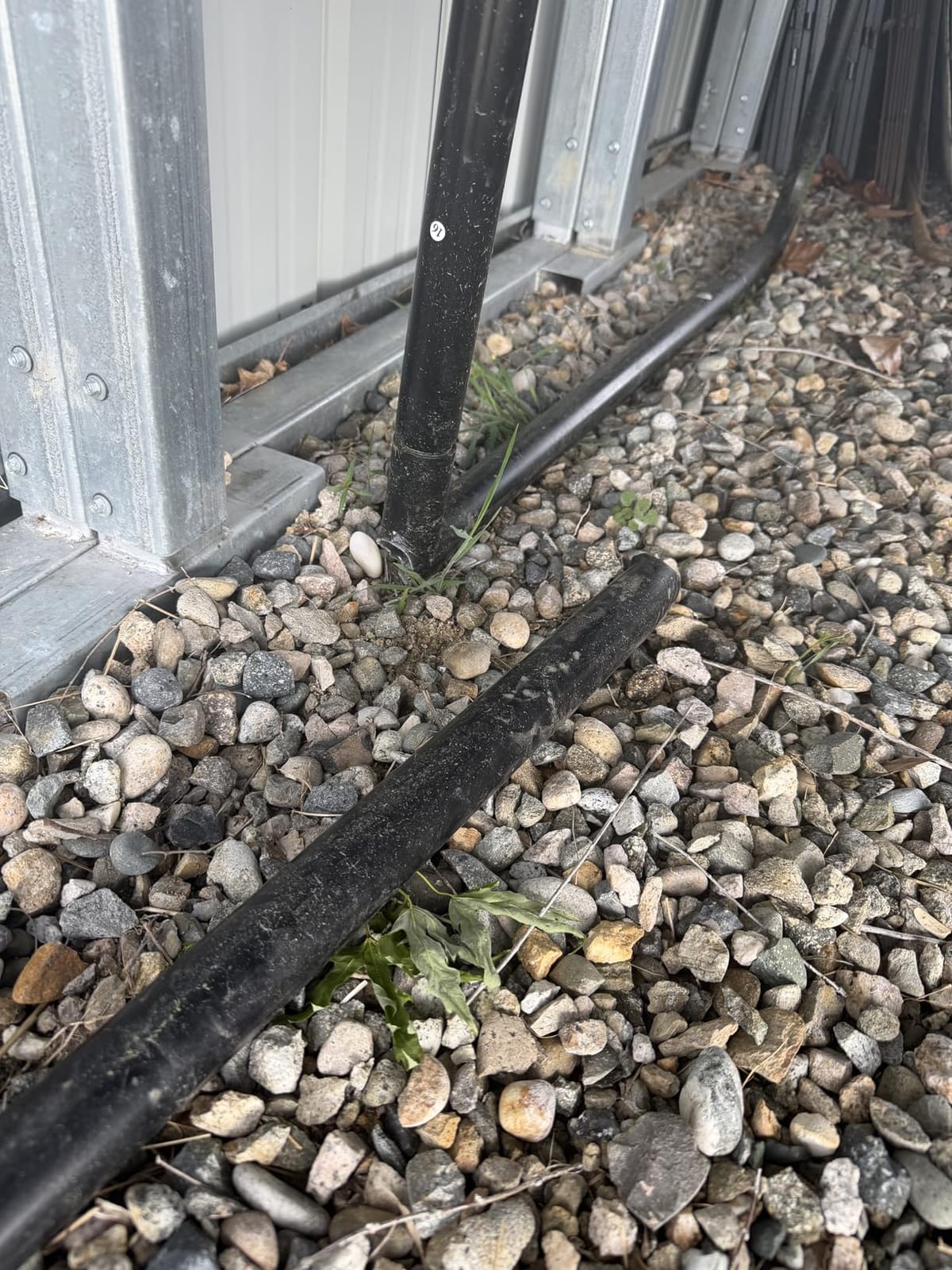
The box includes a basketball hoop, a ladder, the user manual and installation tools, so nothing needs a second order. Support is US-based with a step-by-step manual that owners find easy to follow. Frame warranty is listed at ten years with one year on other materials, though the bulleted features elsewhere in the same listing cite a three-year frame and one-year other, so confirm the term in writing before purchase.
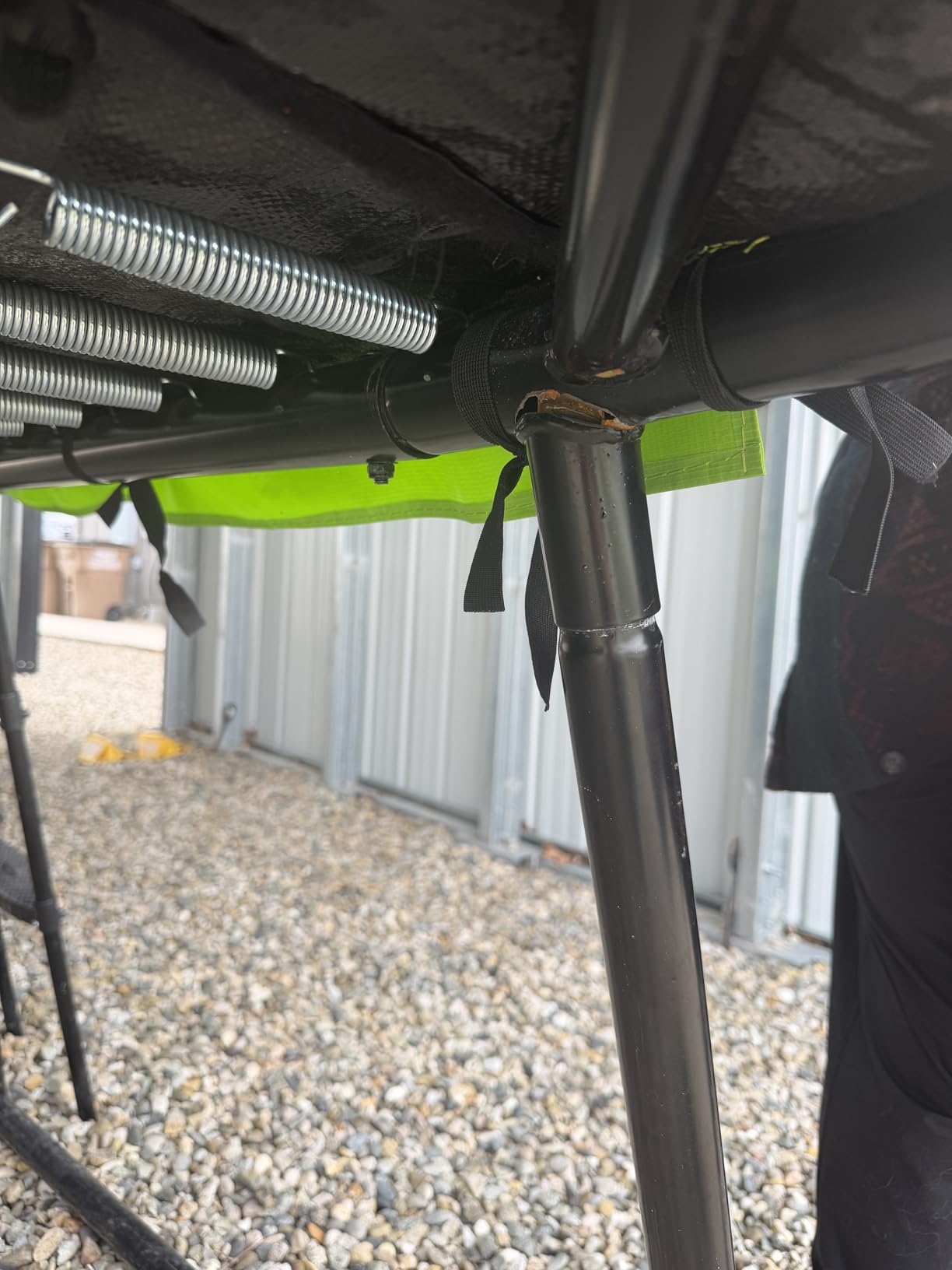
The evidence base is the issue. With 22 reviews, a 4.0 average and 22 percent one-star ratings, this listing has the least proven long-term record in the roundup, and owners report early problems from a meaningful slice of buyers. The specification is good; the track record is thin.
Who should choose this over a higher-rated model
A household where a younger child is practicing near the edge of the mat and the priority is net height and standard compliance over bounce quality. The ASTM F2225 barrier height is the single best-documented enclosure spec in this roundup, and for a family that is genuinely worried about net escape, that is worth a lower star average.
It is also a reasonable choice if a single 10 to 12 year old will use it alone, since 352 lbs of user capacity is comfortable for a single jumper and tight for shared use.
What to ask before ordering
Get the warranty term confirmed in writing, because the listing contradicts itself on frame coverage between the summary and the bulleted features. Ask for the expected spare-parts window as well; the listed availability is three years, the shortest commitment among the larger rectangles here.
Then weigh the alternative honestly. Our top pick carries more reviews, a ten-year frame warranty and two-year coverage on consumables at a comparable footprint, so the SkyBound only wins on net height.
10. BSPORTY Ultra 8 x 14 ft: Best for Frame Bracing on a Mid-Size Bed
BSPORTY Ultra Rectangle Trampoline 8X14FT 2200LBS Weight Capacity Outdoor Square Gymnastics Heavy-Duty Trampolines with Full-Wrap Net Enclosure for Kids Adults
8 x 14 ft
2200 lbs static / 700 lbs dynamic
Six legs with cross-grid braces
2 inch tube frame at 2.5mm walls
65Mn spring steel springs
Pros
- Six-leg frame with cross-grid braces resists twisting
- Mat webbing-stitched to the pad for a true zero-gap perimeter
- 360-degree wrap net helps prevent step-offs
- High 700 lbs dynamic rating for a mid-size rectangle
- Smooth responsive take-offs and landings
Cons
- Only 28 reviews so long-term reliability is unproven
- 11 percent one-star rating
- Specification listing inconsistently labels the shape as round
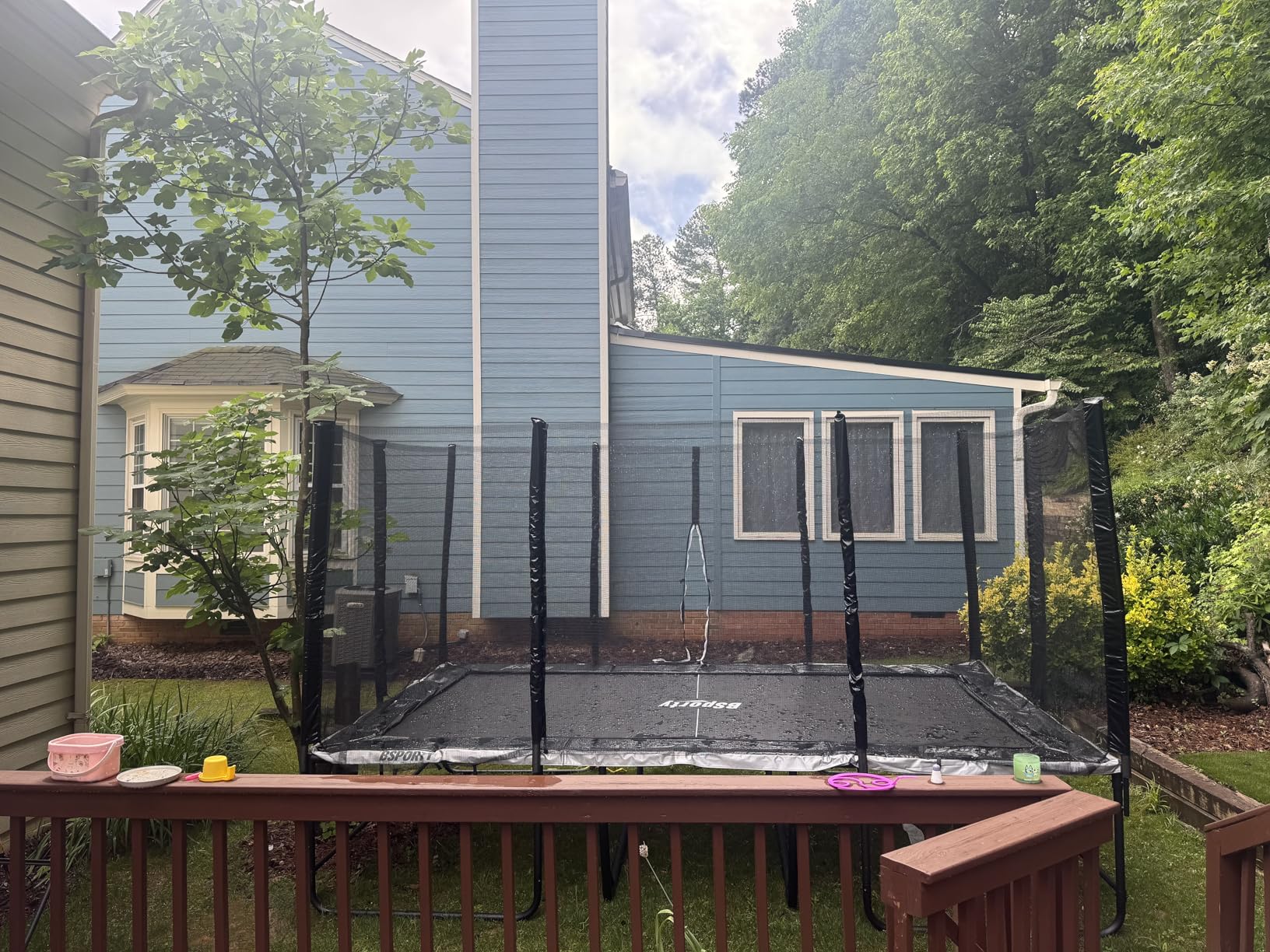
The engineering story here is torsional rigidity. Instead of four legs, this 8 x 14 uses a six-leg rectangular frame with two crosswise legs and dual center cross-grid braces, which resists the twisting that makes a bed feel uneven when a jumper lands near a corner. Owners who bought it credit the bracing with a steadier, edge-to-edge bounce, and the effect is most noticeable in the corners where lighter frames go soft first.
The perimeter construction is the second highlight. The jumping mat is webbing-stitched directly to the spring pad around the full perimeter, so there is no gap between mat and padding to reach a spring through, and the EnduraWeave safety net wraps 360 degrees over the frame to help prevent step-offs. The net carries Intertek UV Testing Grade 6, which matters for a net that sits in direct sun year after year.
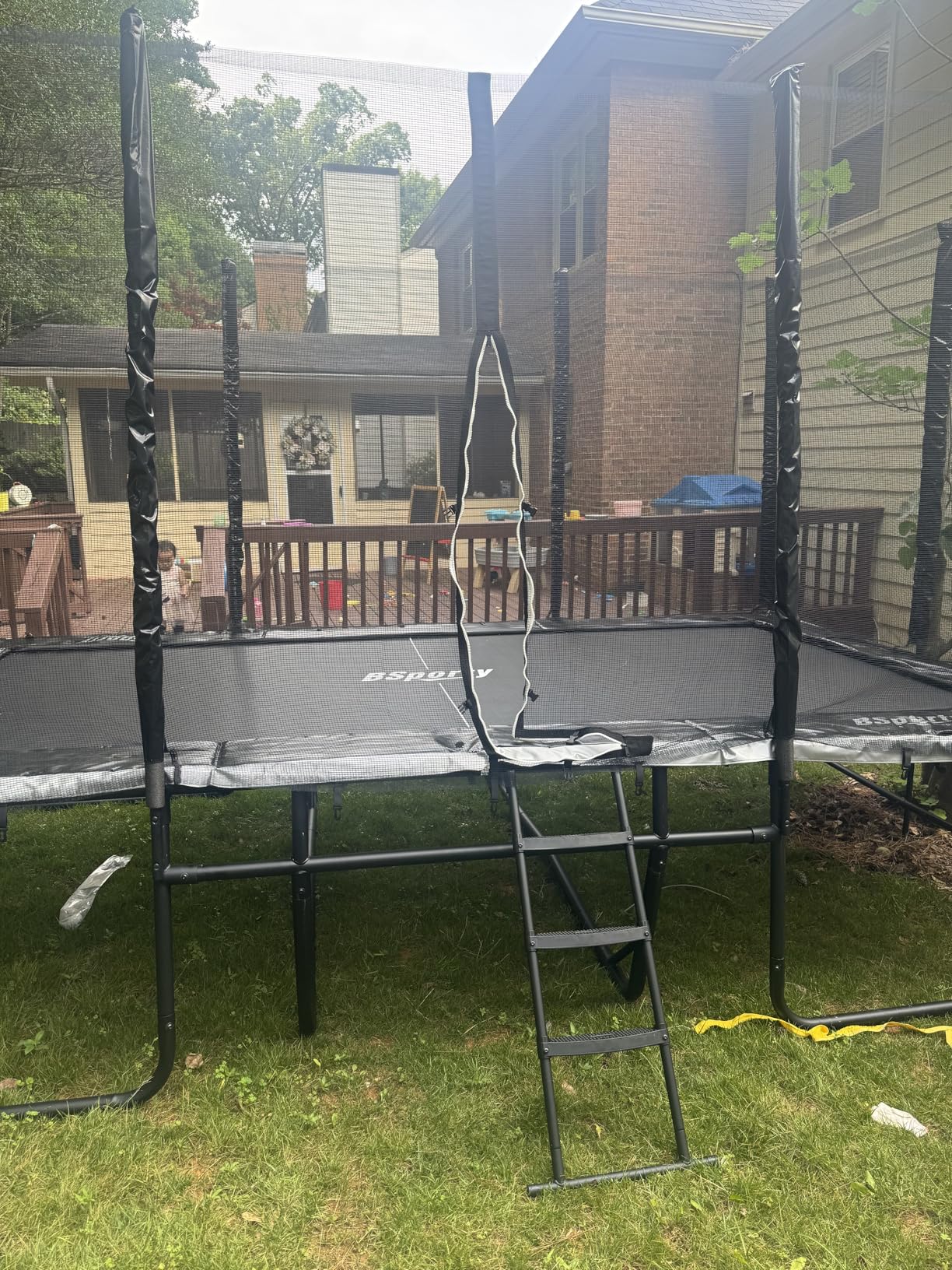
Underneath, a 2 inch diameter steel tube frame with 2.5mm walls is rated to 2200 lbs static and 700 lbs dynamic, driven by 65Mn spring steel seven-inch springs in a tuned jump system. For a mid-size rectangle, those numbers are strong, and the 700 lb dynamic figure is higher than several larger models here.
Two cautions. With only 28 reviews the long-term reliability record is largely unproven, and 11 percent one-star ratings is the second-highest negative share in the roundup. Separately, the specification listing inconsistently reports the shape as round despite the rectangular title and imagery, so confirm you are receiving the rectangular format.
Why frame bracing matters for a gymnast
Skill practice repeats one landing many times. A frame that flexes or twists under load makes the bounce inconsistent, and inconsistency is what teaches a young gymnast to land badly. Cross-grid bracing keeps the response repeatable, which is a quiet but real advantage over a lighter four-leg frame of the same size.
At 8 x 14 the runway is short, so this suits bounce quality, drills and short lines rather than a full tumbling pass. Think of it as a well-built home practice bed rather than a training bed.
What to confirm before you order
Ask the seller to confirm the shape in writing, given the listing inconsistency, and ask where replacement springs and net sections ship from. Verify the shape and the accessories in the box on the day of delivery before the unit goes anywhere near an assembled state.
Also confirm the actual jump-zone dimensions rather than the frame dimensions, since the usable area is what determines whether a child can safely attempt a skill near the edge.
How We Picked and Tested These Ten
Neither of the main editorial competitors on this query explains how its picks were chosen, which is a strange gap for a purchase this expensive and this close to injury. We are not going to pretend we ran laboratory tests, so here is exactly how we evaluated these ten.
1. Bounce consistency across the bed. We looked for descriptions of even rebound with no dead spots, and cross-checked that against spring count, mat rows and leg placement. A bed that is lively in the middle and flat at the edges is useless for skill work.
2. Frame deflection and support layout. Leg count and placement tell you how a frame handles load. Four corner legs on a 17 foot bed flex at mid-span; four side-by-side legs resist it. We weighted this heavily because sag ruins practice sessions.
3. Enclosure gap and padding. We prioritise sewn or webbing-stitched net-to-mat attachments over rope-tied nets, and check whether poles are padded or curved. The gap between the mat and the net is the most cited safety fear among parents, so it is a deciding factor for us.
4. Assembly reality. We used reviewer accounts of actual build times rather than the manual’s estimate. Anything that consistently takes more than three hours with two adults got flagged, because an unfinished trampoline in a garage helps nobody.
5. Hardware and corrosion. We read the complaints sections closely, looking for bent frames, rusted springs, detaching D-rings and stripped hardware within a year. That is where no-name imports usually show their age.
6. Warranty and parts access. We separated frame coverage from mat, net and pad coverage, since a ten-year frame warranty means very little if the net is a one-year part. Listed spare-parts availability windows counted too.
Where the research on this category is thin, we said so. Our yard clearance checklist is built from the dimensions each manufacturer publishes, not from a measuring session on your property.
What Size Rectangle Trampoline Do You Need?
The best size rectangle trampoline for gymnastics is 10 x 17 feet for a child roughly 8 and older who is practicing actual skills, 8 x 14 to 9 x 15 for a younger child or a smaller yard, and 13 x 23 only if a home gym serves multiple athletes.
Ages 5 to 7: 8 x 14 or a 12 foot frame. Short runway, emphasis on safe contained bouncing and a foam-padded no-gap enclosure. The goal is confidence in landing, not skills.
Ages 8 to 12: 8 x 14 through 10 x 17. This is the range where a gymnast can run a straight line of basic drills. A 9 x 15 is the compromise most families land on.
Teens and adult training: 10 x 17 minimum, with 10 x 17 to 10 x 20 for anyone doing flips on a regular basis. Look for a stated single-jumper capacity rather than a headline static figure.
Multi-user family: 10 x 17 or larger, with a dynamic load figure high enough for two people in rotation. Three of the picks in this roundup clear 700 lbs dynamic.
Home gym or tumbling program: 13 x 23, or an in-ground rectangle. This is a specialist purchase with specialist site requirements.
Our trampoline guide for younger children covers the pre-rectangle stage if a five-year-old is not ready for a full-size bed.
Yard Clearance Checklist: Do You Actually Have Room?
Is a 16ft trampoline too big? Usually not for the frame itself. The problem is never the footprint, it is the clearance around the footprint that most buyers forget to measure.
Before you order any of these models, walk the site and take five measurements:
1. Length plus both run-outs. A 17 foot trampoline needs roughly 8 to 10 feet of clear space beyond each end for safe tumbling lines. In practice, plan on a total cleared run of 30 feet or more for a 10 x 17.
2. Side clearance. Leave at least 6 feet on each side, away from fences, walls, hard surfaces, trees and anything a jumper could collide with. Fencing is the most common unaccounted-for hazard.
3. Overhead clearance. Check for tree limbs, roof lines, awnings, covered patios and overhead lines. Nothing should be within the height a jumper plus their reach can touch during a rebound. This is a survey task, not an estimate.
4. Access path. A 310 pound trampoline arriving in two cartons needs a gate and a path wide enough to move it in one piece. Measure the gate width before delivery day.
5. Ground and drainage. A level, well-drained surface matters more on a long bed, where low spots create uneven rebound. Concrete pads, compacted base with rubber mulch, and level lawn all work if the ground is firm.
As a rough guide: an 8 x 14 wants a cleared area of roughly 20 by 14 feet, a 10 x 17 wants roughly 30 by 20 feet, and a 13 x 23 needs closer to 40 by 28 feet of genuinely clear space. If your cleared area does not hit those numbers, choose the shorter model in the same family rather than squeezing the larger one in.
Rectangle vs Round vs Oval: Which Shape for Which Skill
The best shape for gymnastics skill work is the rectangle, because the shape determines the direction of rebound. A round unit curves every bounce inward, an oval mixes both behaviours, and only a rectangle keeps the response straight.
Rectangle: Flatter and more consistent rebound, largest usable jumping area, straight tumbling lines possible. Costs more and needs more clearance. Clear winner for skills.
Oval: A compromise that is easier to tip over and lands in between the two on rebound consistency. Reasonable for general family jumping, not for a gymnast training a line.
Round: Cheapest, smallest footprint, and the least useful for gymnastics. The radial spring pattern pulls the jumper toward the centre, which caps skill development at vertical bouncing.
Our full rectangle roundup covers the recreational side of the shape if you want one trampoline to serve both purposes.
Reading Weight Limits Without Getting Misled
Three different numbers appear on trampoline listings and they are routinely confused. Static load is a laboratory figure for total force on the frame. Dynamic load is the working limit for jumpers in motion. User capacity is the number the safety of one person at a time actually depends on.
The Zupapa models in this roundup are rated 1800 lbs static and 450 lbs dynamic, and the 13 x 23 is rated 2500 lbs static and 800 lbs dynamic. Those static figures are frame strength tests, not permission for four adults on the bed. The ACON takes this further and states a 330 lb single-jumper capacity alongside a 1650 lb static load, which is the framing we prefer to see.
For gymnastics, the single-jumper number is the one that matters. Skills are performed alone, and a bed shared by two gymnasts mid-session is the fastest way to an awkward collision. The SkyBound’s 352 lb user limit is comfortable for one child and tight for a parent-plus-teen routine, which is worth knowing before that model appeals on net height alone.
Springs, Mats and Frame Construction
Spring count and length. More springs at a longer length is a livelier, more forgiving bed. The picks here run from 72 springs on entry models to 180 electroplated 3.5mm springs on the 13 x 23, and the ACON uses 140 ten-inch HD springs tuned to the frame. Springs stretch and weaken with use, so expect to replace them on a multi-year cycle on a heavily used bed.
Mat material. Polypropylene mesh, stitched in rows, is the standard across this roundup. It drains rain, resists tearing better than solid vinyl, and is easier to replace than a glued pad. Permatron, a denser composite mat, shows up on specialist gymnastics equipment rather than on backyard rectangles, and costs considerably more.
Frame construction. Steel tube diameter and wall thickness matter more than the marketing gauge number. The picks here use 2 inch (50mm) or 51mm tube at 2.5mm walls, and the ACON uses 2.4 inch tube at 0.1 inch walls. Galvanizing inside and out, plus powder coating on the legs, is what separates a frame that survives five seasons from one that pits in two.
Leg layout. This is the most overlooked spec. Four legs at the corners let a long bed flex at mid-span. Four legs set side by side, or six to seven legs distributed along the length, is the difference between a flat bed and a dished one. The 13 x 23 in this roundup uses seven legs for exactly that reason.
Straight frame versus T-socket. T-socket frames join each spring to a shared socket and are cheaper to build, but the shared point flexes. Straight-frame designs give each spring an independent anchor, which is part of why rectangles feel more consistent under load. On a full-size rectangle the difference is real; on a small entry model it is hard to feel.
Safety Rules for Tumbling Practice
ASTM F381-16 is the trampoline standard, CPSIA governs materials sold in the USA, and ASTM F2225 covers enclosure design and barrier height. Several picks in this roundup carry all three. Check that your chosen model is certified rather than assuming it.
1. One jumper at a time during skill practice. This is the highest-value rule on this page. Family play is a different activity from tumbling, and mixing them is how most trampoline injuries happen.
2. Adult supervision for younger children. A no-gap enclosure and thick padding reduce consequences; they do not replace a supervising adult.
3. Use the ladder, or install in-ground. Climbing the enclosure to get on is a leading cause of falls. Several models include a ladder, and several do not, so check the box contents before delivery day.
4. Anchor the trampoline. Wind is the real hazard for a long rectangle. Most manufacturers include ground stakes; a dedicated anchor kit is worth adding on any 10 x 17 or larger. Take the net down ahead of a storm if the design allows it.
5. Check the gap between mat and net before every new season. Rope-tied nets slacken, and a slack gap is a gap. Sewed or webbing-stitched designs like the Zupapa and BSPORTY models do not have this failure mode.
6. Inspect springs, D-rings and mat stitching every few months. This is where the durability complaints in this roundup cluster, and where catching a rusted spring early prevents a failure mid-skill.
Warranty, Spare Parts and Long-Term Cost
A warranty is only as good as the cheapest component it covers, so read the tiers. The ten-year frame warranties in this roundup are real, but the mat, net and pad that a gymnast actually wears through are frequently covered for one to two years. The ACON covers mat and springs for five years, which is the strongest consumable coverage here.
Spare-parts windows range from three years on the SkyBound to ten years on the Zupapa 1800LBS model, and buyers outside the US report slower sourcing on some of the longer commitments. If you live far from a major metro area, ask a specific question about springs, mat sections and net panels before you buy, and get the answer in writing.
The running cost most buyers underestimate is the mat and net. On a bed used daily for skills, plan a net and pad replacement in year two, and a mat replacement somewhere in years three to five. Working that backwards, a model with a one-year net warranty costs meaningfully more over five years than the sticker figure suggests, which is the argument for the ten-year frame and five-year mat-and-spring coverage on the ACON despite its higher ticket.
Frequently Asked Questions
Are rectangle trampolines better?
Yes, for gymnastics. Rectangle trampolines anchor their springs in straight, parallel lines, so the rebound travels straight up instead of pulling the jumper toward a center point. That gives a flatter, more predictable landing, a longer usable jumping area, and the ability to run a straight tumbling line. Round trampolines curve every bounce inward, which caps skills at vertical bouncing.
Are trampolines good for gymnastics?
They are good for foundational work at home: bounce awareness, controlled landings, aerial confidence, strength, coordination and balance. A residential rectangle is not a substitute for a sprung tumbling bed, and hard landings from height should stay on a competition surface. Think of a home rectangle as a practice bed for drills and basics rather than a training bed for full-power skills.
What is the best size rectangle trampoline for gymnastics?
A 10 x 17 foot rectangle for a child around 8 or older who is practicing real skills, 8 x 14 to 9 x 15 feet for younger children or smaller yards, and 13 x 23 feet only for a home gym serving multiple athletes. Younger children around 5 to 7 do best on a smaller frame with a padded no-gap enclosure.
Which trampoline brand is considered the most reliable?
Reliability tracks warranty length and parts access more than brand name. In this roundup, frame warranties range from one year to ten years, and Zupapa and ACON both carry ten-year frame coverage with published spare-parts windows. Look for ASTM F381-16 and CPSIA certification, a stitched or sewn net-to-mat attachment, and free replacement of defective parts as the practical reliability signals.
What is the best shape trampoline?
For gymnastics skills, the rectangle, because the shape sets the direction of the rebound. Rectangles keep the bounce straight and give the largest usable area. Round units are cheapest and smallest but curve the bounce inward, and ovals sit between the two. For general family jumping an oval can work; for a tumbling line it cannot.
Is a 16ft trampoline too big?
Rarely for the frame itself. The constraint is clearance around it. A 16 to 17 foot bed typically needs roughly 8 to 10 feet of clear run-out beyond each end, 6 feet of side clearance away from fences and hard surfaces, and enough overhead clearance from trees, roofs and power lines. If you cannot hit those numbers, choose the shorter model in the same family.
What kind of trampoline is appropriate for a 10-year-old?
A 9 x 15 to 10 x 17 foot rectangle with a no-gap enclosure, foam-padded or curved poles, thick spring padding and a stated user weight limit comfortably above the child. At that age a child can run short tumbling lines, so a longer bed matters. One jumper at a time and adult supervision remain the two rules that matter most.
Final Verdict: The Best Rectangle Trampolines for Gymnastics in 2026
After comparing ten rectangular units on bounce consistency, frame layout, enclosure safety, assembly reality and warranty length, the best rectangle trampolines for gymnastics in 2026 come down to a short list. The Zupapa 10×17 No-Gap Rectangle is the single best pick: the sewn no-gap net removes the spring-access zone near the edge, the four side-by-side legs keep a 17 foot bed from sagging at mid-span, and a ten-year frame warranty is the longest here that is backed by 693 reviews.
Take the Zupapa 1800LBS Rectangle instead if your yard is the constraint, since the identical design comes in 8 x 14, 9 x 15 and 10 x 17 and holds the highest rating in the roundup at 4.7. Choose the Upper Bounce 8×14 Top-Ring if you want the heaviest build and a net you can drop before a storm, and the AOTOB 12 and 14 ft if you are starting young and want the longest consumable warranty at an entry price.
Whatever you pick, measure the clearance before the box arrives, anchor the unit, and run one jumper at a time while skills are being learned. Those three habits matter more to how long the trampoline lasts, and how safe it stays, than any spec on the listing. Our brand-level trampoline reviews cover what to look for when a specific model goes out of production.