
A powered PA speaker is a loudspeaker with an amplifier built into the cabinet, so a band can run vocal mics, guitar amps and DI boxes straight into it without a separate amp rack. The best powered PA speakers for live bands give you enough honest output for the farthest listener in the room, inputs for the whole lineup, and a box one person can still carry up the stairs.
That last part matters more than most spec sheets suggest. Forums like TalkBass and Gearspace are full of threads where a band picked the wrong cabinet and regretted the load-in, not the sound. We went through the ratings, review counts and driver sizes across ten of the most-reviewed powered cabinets available and organized them the way a band actually thinks: by driver size, by room size, and by how much gear you can carry alone.
A note on what we did and did not do. Every number in this guide comes from the manufacturer listing and the aggregated review data for that specific model. We did not measure these cabinets in a treated room, so we are not going to tell you one is twice as loud as another. What we can do is show you how the honest power claims differ from the inflated ones, and match each pick to a room and a lineup.
If you want the short version, our full comparison table is below and the reasoning follows it. We also cover how many speakers a band needs, the 10-inch versus 12-inch versus 15-inch decision, and what the 83% rule actually means when you are standing behind a PA at a bar on a Friday night.
Top 3 Picks for Live Bands in 2026
These three cover the most common band situations. The TS415 is the one we would build a first serious rig around, the IRX112BT is the value pick, and the Thump212 is the one you can move alone.

ALTO TS415 15-inch Powered PA
- 2500W active power
- 15 inch woofer with 1.4 inch HF driver
- Integrated 3-channel mixer
- Bluetooth and True Stereo linking
- ALTO app EQ control

JBL IRX112BT 12-inch Powered PA
- 1300W peak active power
- dbx DriveRack feedback suppression
- Built-in Bluetooth with stereo linking
- Four EQ presets
- Two XLR and TRS combo inputs

Mackie Thump212 12-inch Powered PA
- 1400W Class-D amplification
- 128 dB max SPL
- 29.1 pound cabinet
- Built-in feedback eliminator
- Music ducking mode
Best Powered PA Speakers for Live Bands (October 2026)
Every pick below is a powered, two-way cabinet with a built-in amplifier. The table sorts them roughly by driver size, because that single choice drives almost everything else: how deep the low end goes, how much the box weighs, and whether you can lift it up onto a stand by yourself.
| Product | Specifications | Action |
|---|---|---|
| ALTO TS415 Powered PA Speaker |
|
Check Latest Price |
 ALTO TS410 Powered PA Speaker ALTO TS410 Powered PA Speaker |
|
Check Latest Price |
| Mackie Thump212 Powered Loudspeaker |
|
Check Latest Price |
| JBL IRX112BT Powered PA Speaker |
|
Check Latest Price |
 JBL EON715 Powered PA Speaker JBL EON715 Powered PA Speaker |
|
Check Latest Price |
 Behringer B112D Active PA System Behringer B112D Active PA System |
|
Check Latest Price |
 QSC K12.2 Powered Loudspeaker QSC K12.2 Powered Loudspeaker |
|
Check Latest Price |
 Yamaha DBR10 Powered Speaker Yamaha DBR10 Powered Speaker |
|
Check Latest Price |
 Mackie SRM212 V-Class Powered Speaker Mackie SRM212 V-Class Powered Speaker |
|
Check Latest Price |
 ALTO TX410 Powered PA Speaker ALTO TX410 Powered PA Speaker |
|
Check Latest Price |
Two things stand out if you read across the rows. First, the wattage figures in this category vary by a factor of nearly six between the smallest and largest cabinet here, and none of those numbers mean the same thing. We explain how to discount them in the buying guide below. Second, weight ranges from about 15 pounds to nearly 48 pounds for the same class of box, which is a much larger spread than most buyers expect.
1. ALTO TS415 – Best all-round powered PA for a full band
ALTO TS415 2500W 15″ Powered PA Speaker
2500W active
15 inch LF plus 1.4 inch HF driver
20.8 kg
3-channel onboard mixer
Pros
- Very high output for the money
- One cabinet covers a small venue or large room
- Integrated 3-channel mixer removes the need for a console
- Wireless stereo linking between two units
- Takes extra low-end shelf boost without complaint
Cons
- Harsh upper mids at high level with dense material
- Factory EQ needs corrective work
- App parametric EQ is awkward to program
- Draws heavy power at peak
The TS415 is the cabinet we would put behind a four-piece band playing a bar with a hundred people in it. The 15-inch low-frequency driver moves more air than anything else in this group, which matters when a drummer and a bassist are both hitting at full volume and the vocal has to cut through.
What surprised us most was how much rig you can delete. There are dual XLR and quarter-inch TRS combo inputs with mic and line switches and independent level controls, so a two-channel setup runs without a console. Bluetooth streaming and True Stereo wireless linking mean two of these can cover a room with no cable between them.
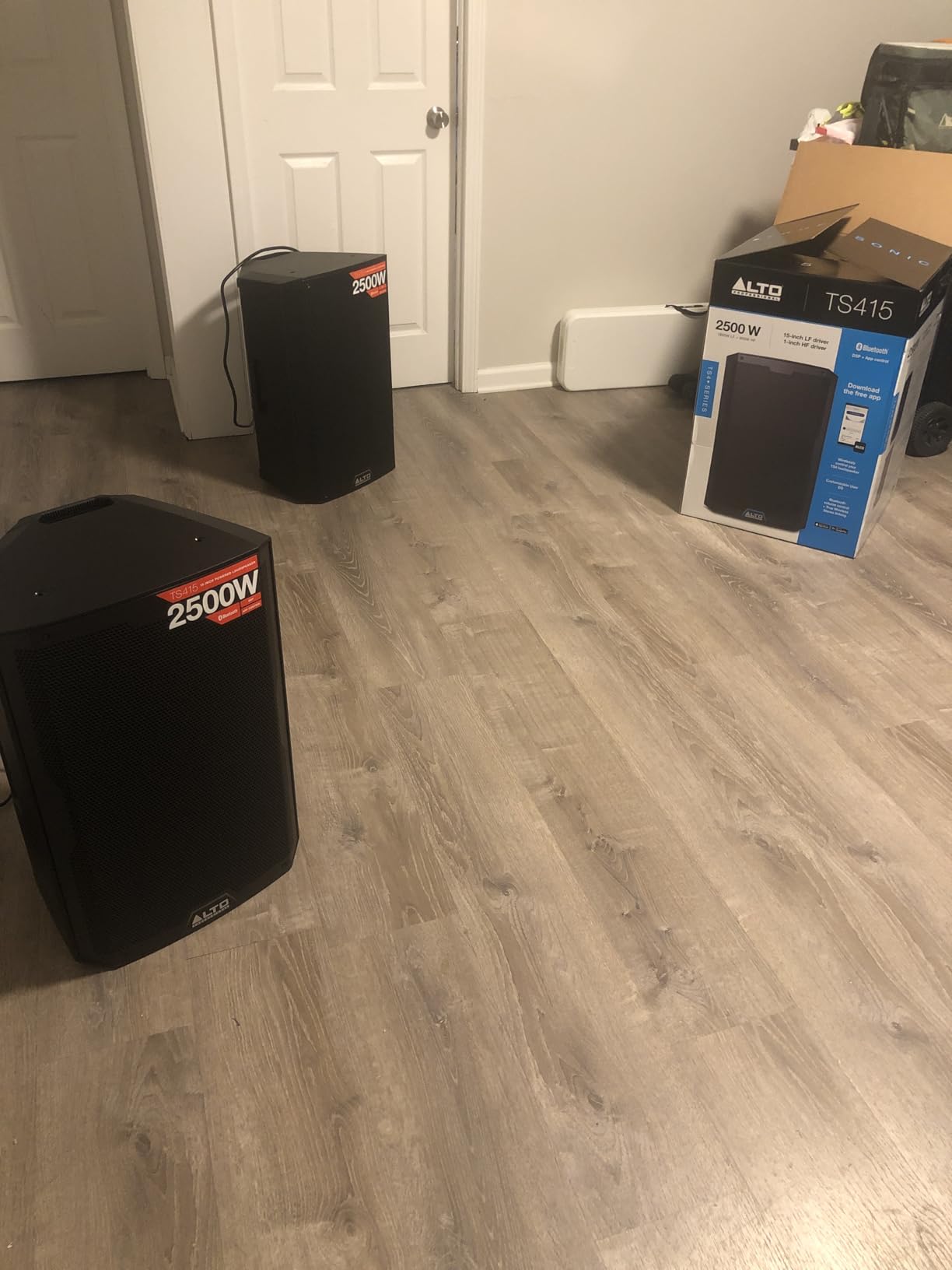
Owners consistently describe it as the best output-per-pound in the 15-inch class, and the review base of nearly six hundred ratings gives that claim real weight. The ALTO app adds custom EQ, sub size selection and speaker use modes, which sounds like a small feature until you are carrying the same box to four different rooms in a month.
It is also flexible about position. It works freestanding, on a standard 36 mm pole socket, in a wedge monitor position, or flown from the integral M10 suspension points. That last option is what separates it from the budget 15-inch boxes, which are basically floor furniture.
The honest caveat is EQ. Reviewers report that the out-of-the-box voicing is bass-forward, and the 1k to 5k region can get harsh on dense or hard rock material at high level. If your set list leans that way, budget an hour with the app before the first gig rather than after it.
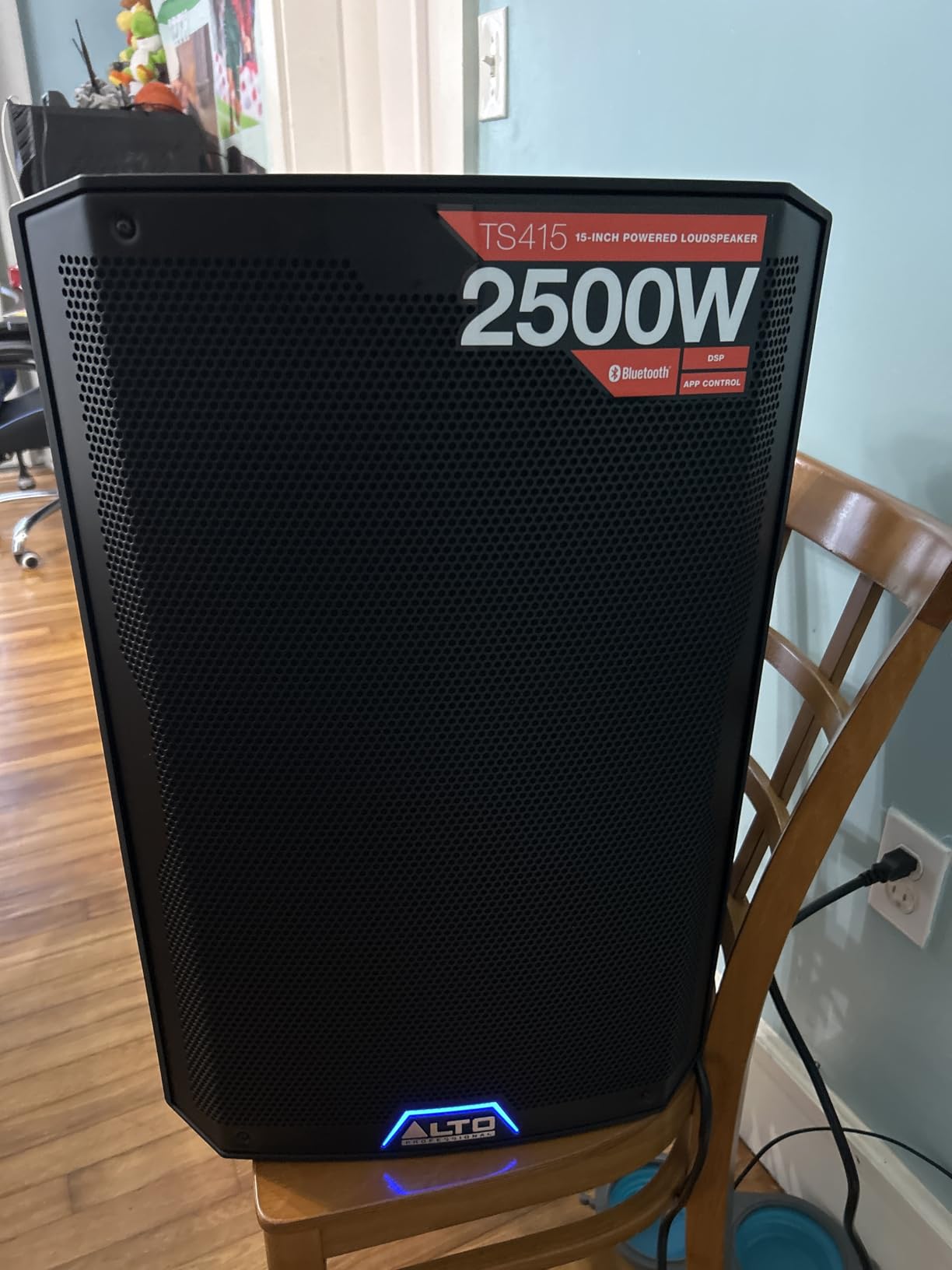
What the TS415 does well for a band
It handles the full source list. Two mics, a bass DI and a backing track can all live in the onboard mixer or in a small console upstream, and the link output passes signal to a second cabinet without an external amp.
It is also the only 15-inch here with a documented frequency range noted at 20 KHz in its listing data and a signal to noise figure of 135 dB, which tells you the electronics are quiet enough that a quiet room stays quiet.
Where it is the wrong choice
It draws around 1100W at peak, so a venue with one tired circuit can trip when both cabinets run together. Ask about circuits before you commit to two of these in a venue you have not played.
It is also the wrong pick for a band that only rehearses. For practice, the 12-inch cabinets below give you most of the clarity at a third less weight, and you will be moving them twice as often.
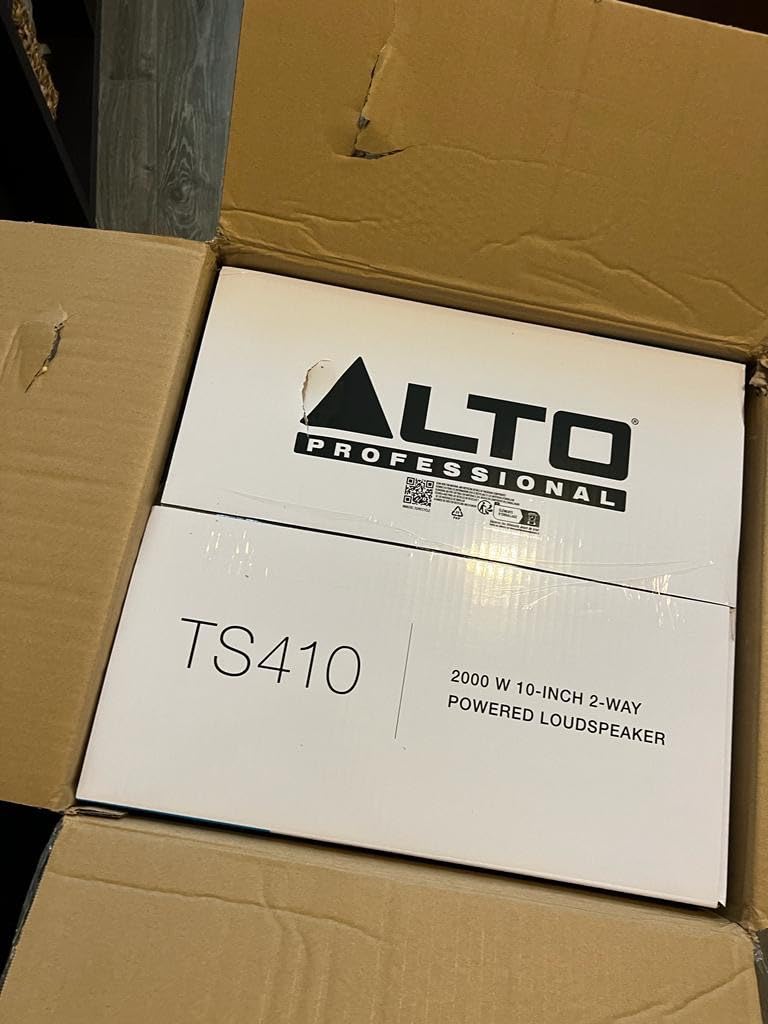
2. ALTO TS410 – Best 10-inch setup for a band running subs
ALTO TS410 2000W 10″ Powered PA Speaker
2000W active
10 inch LF plus 1.4 inch HF driver
14.5 kg
3-channel onboard mixer
Pros
- Compact 10 inch format one person can load
- Onboard 3-channel mixer covers practice and small events
- Bluetooth and wireless stereo pairing work well
- Clear and loud enough for rehearsal rooms
- Large review base of nearly 900 ratings
Cons
- 10 inch driver limits sub-bass output
- Custom EQ in the app takes practice
- Output is attenuated so sources need extra drive
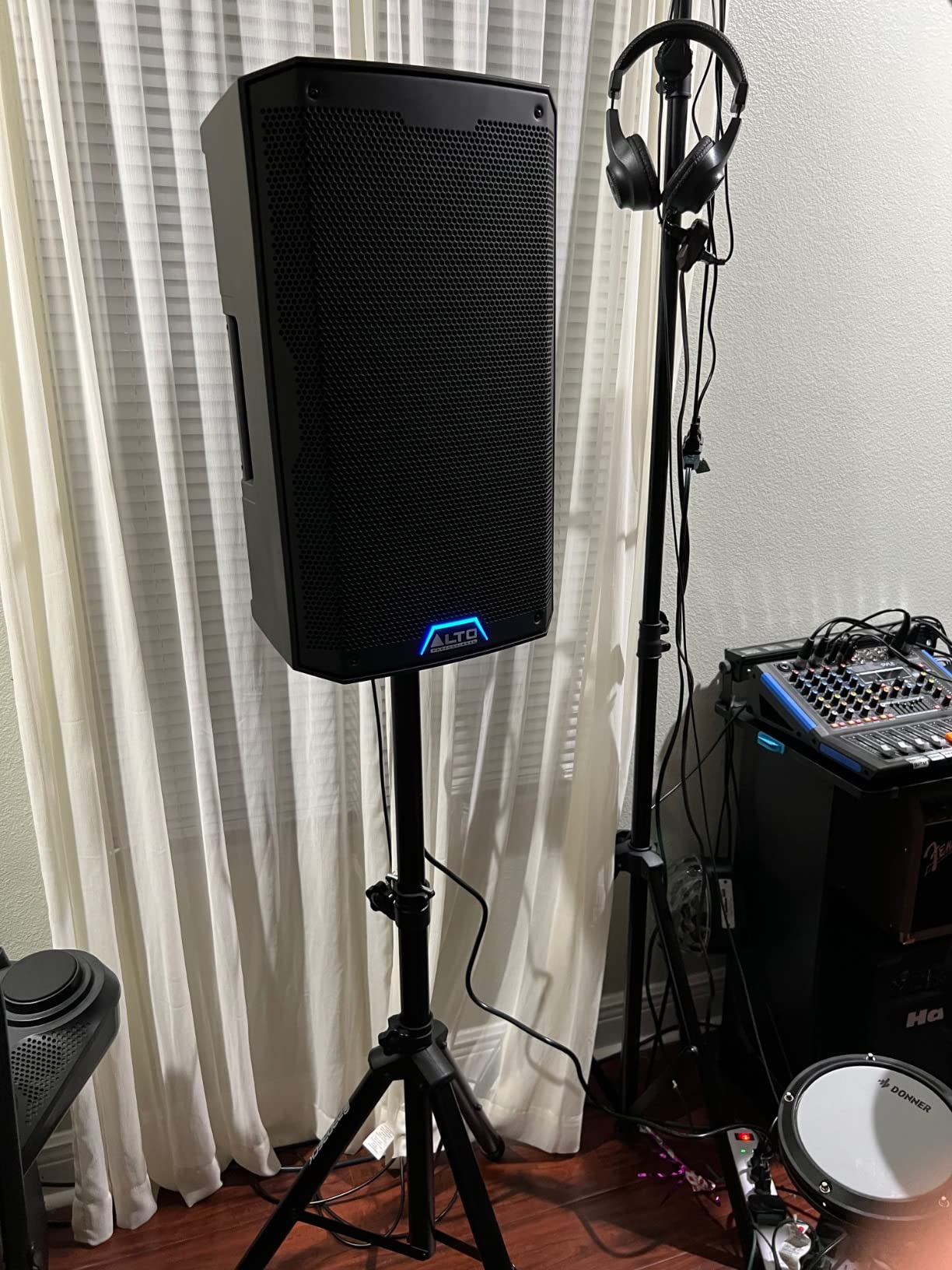
The TS410 is the answer to the driver size question when a band already owns a subwoofer. A 10-inch top in a band that has low end handled separately frees up amplifier power for the mids and highs, where vocals live.
At 14.5 kg it is a genuinely different proposition from the 15-inch cabinets. Two of these, two stands and cables is a load one person can make in a single trip from a car, which is the reality of most weekend band schedules.
With close to 900 aggregated ratings, this is one of the most thoroughly reviewed cabinets in the category, and the pattern in those reviews is consistent. Buyers highlight the onboard mixer, the app-based EQ and easy transport. Many run a pair for band rehearsal, small DJ sets and community events.
The 3-channel mixer with mic and line switches covers the common practice-room case almost exactly: two dynamic mics for vocals and a guitar, one line channel for a backing track. That is a full rehearsal rig with nothing else in the van.
The trade is direct and worth stating plainly. A 10-inch driver cannot produce the same low-end output as a 15-inch, and the sub-bass ceiling is set by the cone area, not the wattage claim. If you have no sub, this is not the box. If you have one, it is close to ideal.
Why a 10-inch top works with subs
The sub handles everything below roughly the crossover point, so the top is free to concentrate on vocal range and guitar presence. In practice that means a louder vocal for the same amplifier headroom, which is the actual goal in a loud room.
It also means a smaller footprint on stage. A band playing a festival stage with a limited backline budget can fit more of the rig in a smaller footprint, and the stands are easier to dress.
Where the 10-inch ceiling shows
Unplugged from a sub, on acoustic material or bluegrass, the box runs out of bottom before it runs out of volume. That is physics, not a fault, and it is the reason we do not put this cabinet at the top of this list.
Reviewers also note the channel input gain is attenuated, so a quiet source may need more drive than expected to reach a comfortable level. Set gain before you judge the speaker, not after.
3. Mackie Thump212 – Best for small venues and one-person load-ins
Mackie Thump212 12″ 1400W Powered Loudspeaker with Heavy-Duty Drivers
1400W Class-D
12 inch driver
29.1 pounds
128 dB max SPL
Pros
- Light enough to move by yourself
- Plenty of headroom for small gigs
- Clear and punchy for the class
- Covers roughly 150 to 250 person rooms
- XLR and quarter-inch inputs
Cons
- No Bluetooth on the standard version
- No onboard EQ so a mixer is needed for tone shaping
- Bass-forward voicing on some genres
- A minority report muddy sound
The Thump212 solves a different problem from the cabinets above it. It is a 12-inch box that weighs 29.1 pounds with side carry handles, and that weight is the entire argument. Bands regularly report replacing heavier name-brand cabinets with these and finding the volume comparable.
The published specs back that up on paper. Frequency response is listed at 47 Hz to 23 kHz, maximum SPL at 128 dB, and the amplification is a 1400W ultra-efficient Class-D design. For a room of 150 to 250 people, that is more than most bands will ever use.
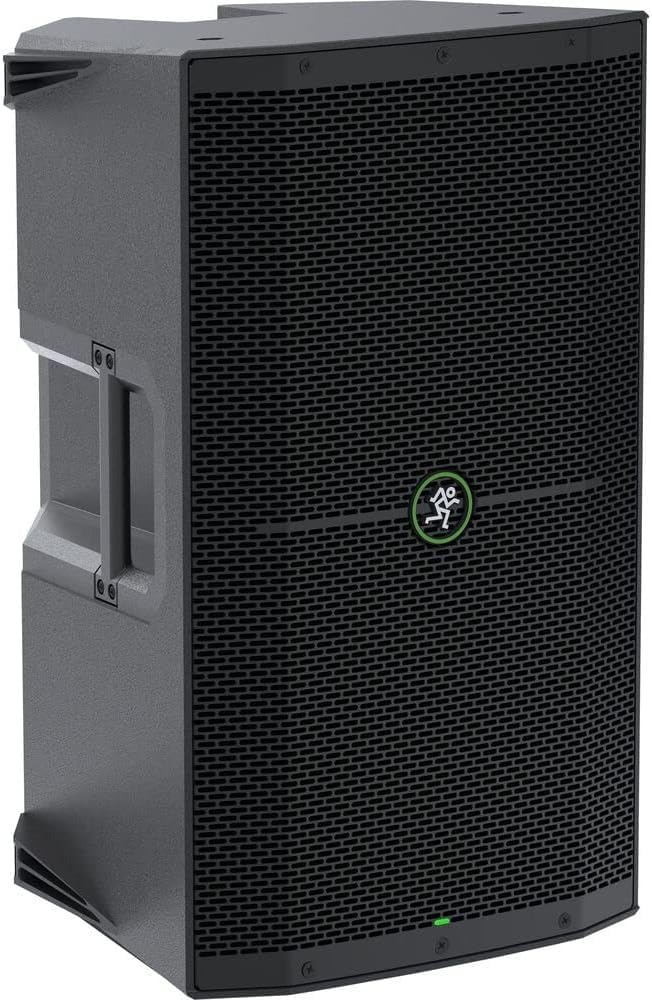
Two onboard features are genuinely useful rather than decorative. The built-in feedback eliminator gives you a first line of defense in a small room with hard walls, and the music ducking mode drops the level under speech, which matters more at a bar gig with an emcee than most buyers expect.
Its connections are simple on purpose. It takes XLR and quarter-inch inputs straight from a mixer, so it drops into a rehearsal room or a small event without anything else in the chain. The trade is that streaming backing tracks needs a separate source on the standard version.
The recurring criticism in reviews is the absence of onboard EQ and Bluetooth on the base model. That means a band that wants to shape tone or stream backing tracks needs a small mixer, and that mixer is a real part of the total rig, not an accessory.
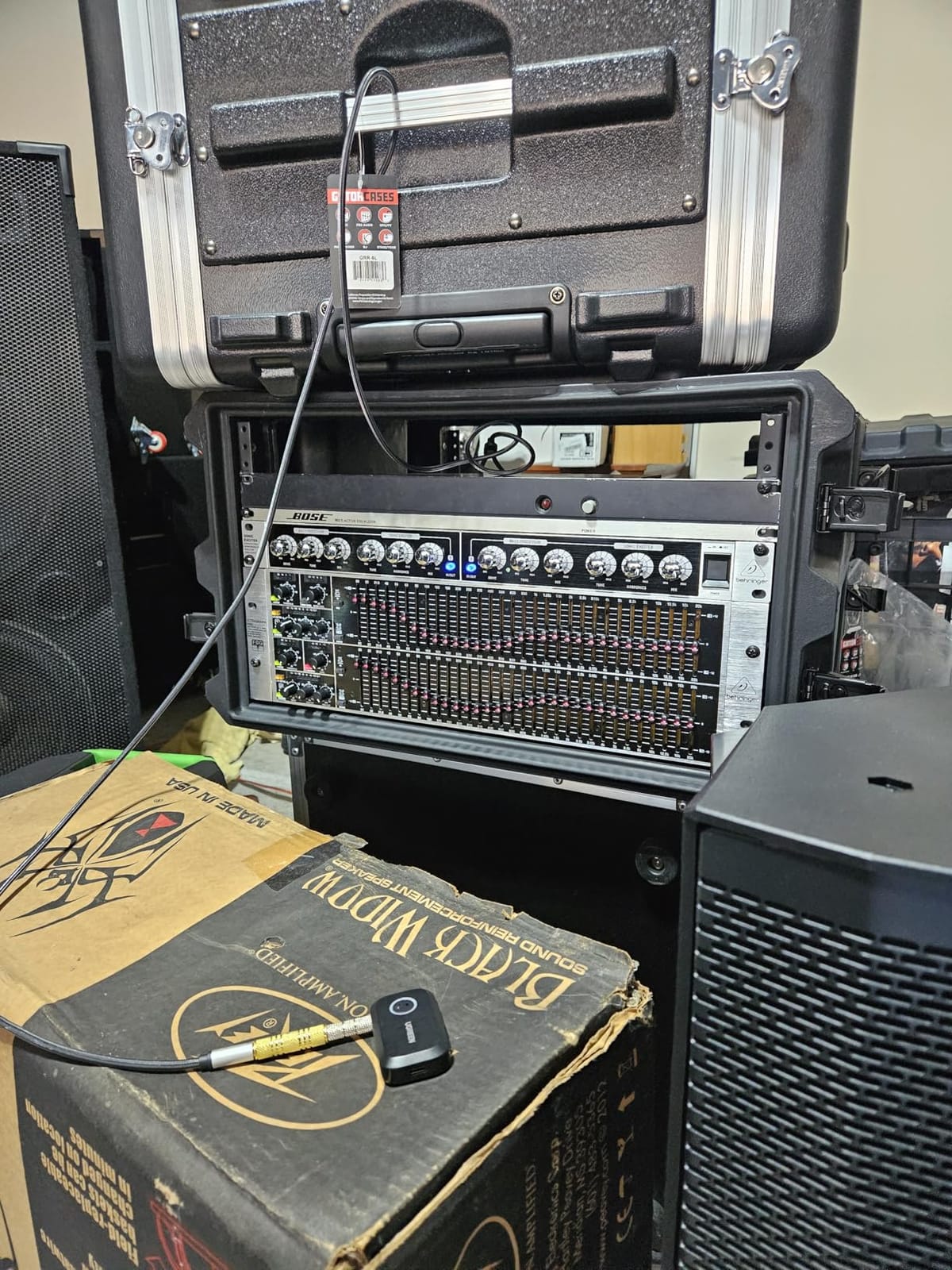
Where the Thump212 earns its place
It is the pick for a band playing bars, church services and small community halls. Users report rarely exceeding a fraction of available gain on those rooms, which is exactly the headroom profile you want.
Because it is light, it is also the easiest cabinet here to double. Adding a second pair is the cheapest upgrade path for a band that has outgrown one speaker per side, and this is the one where the maths works out.
Where it is the wrong choice
The voicing is bass-forward. On bluegrass, fingerpicked acoustic and quiet jazz, that reads as too much bottom, and with no onboard EQ you need a mixer to fix it.
A small share of owners report muddy or cluttered sound at higher levels. If your rehearsals are mostly at low volume, this will not come up. If you play loud shows in acoustically dead rooms, audition it carefully first.
4. JBL IRX112BT – Best value 12-inch for a working band
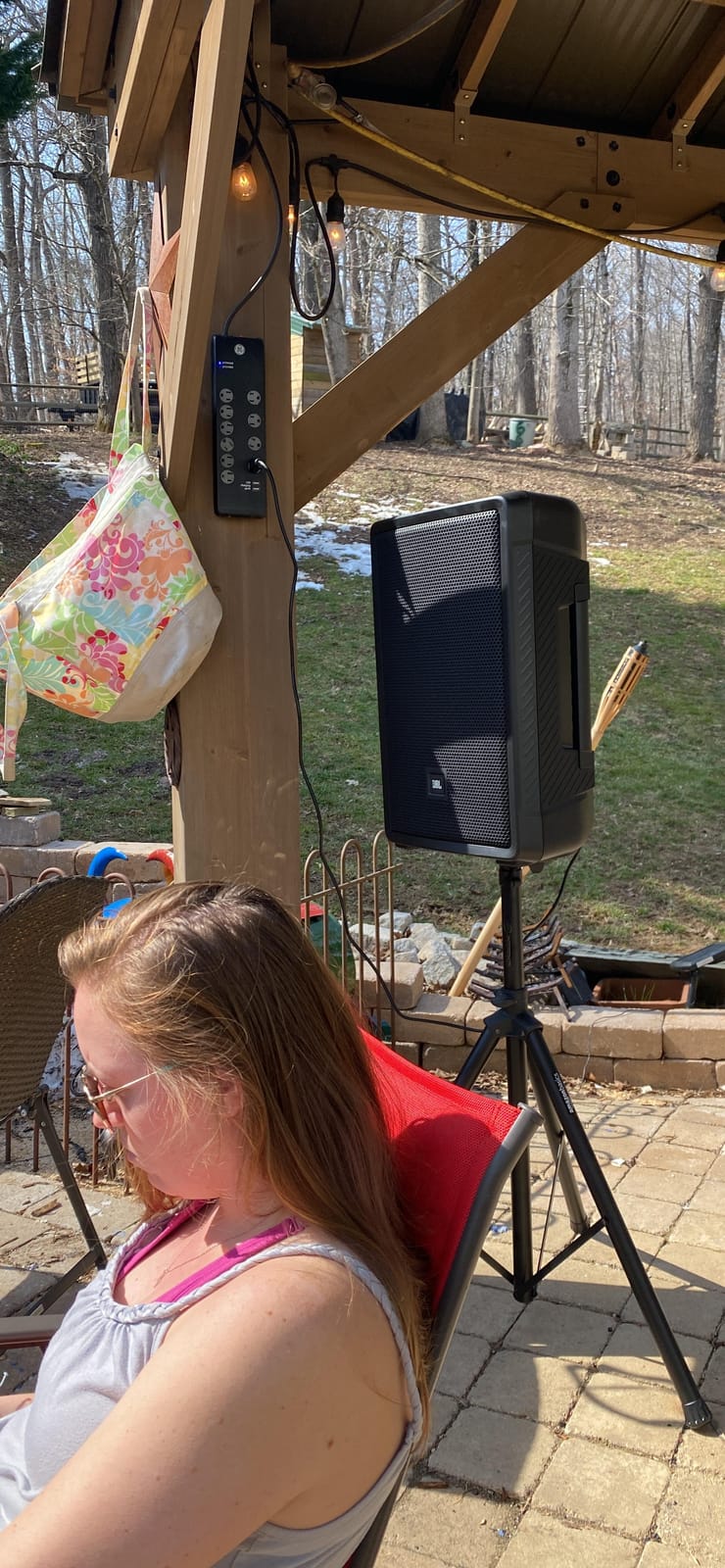
JBL Professional IRX112BT Powered PA Speaker, Portable Loudspeaker with Bluetooth, 10 Inch Woofer, 1300 Watt, Mobile DJ, Musicians, Small Venues, Ceremonies and Sports Events, Black
1300W peak active
12 inch woofer
12.4 kg
127 dB peak SPL
Pros
- Clear articulate vocals with no distortion at level
- Light for a 12 inch powered cabinet
- Bluetooth holds stable and links for stereo
- Four EQ presets plus one-touch ducking
- Tough polypropylene cabinet takes transport
Cons
- Bass is light without a subwoofer
- Some report a smaller-than-expected driver on early units
- Early units with Bluetooth or channel faults
- Not weather resistant
The IRX112BT has the largest review base of any cabinet in this list, and when you read a few hundred of them the picture is stable. It is bought for clear vocal reproduction, low weight and fast setup, and it is used for DJ sets, karaoke, church and family events as well as bands.
At 12.4 kg it is the second-lightest 12-inch here and roughly half the weight of the QSC below. The 35 mm pole socket, integrated handles and rugged polypropylene cabinet mean it is built for a van rather than a studio.
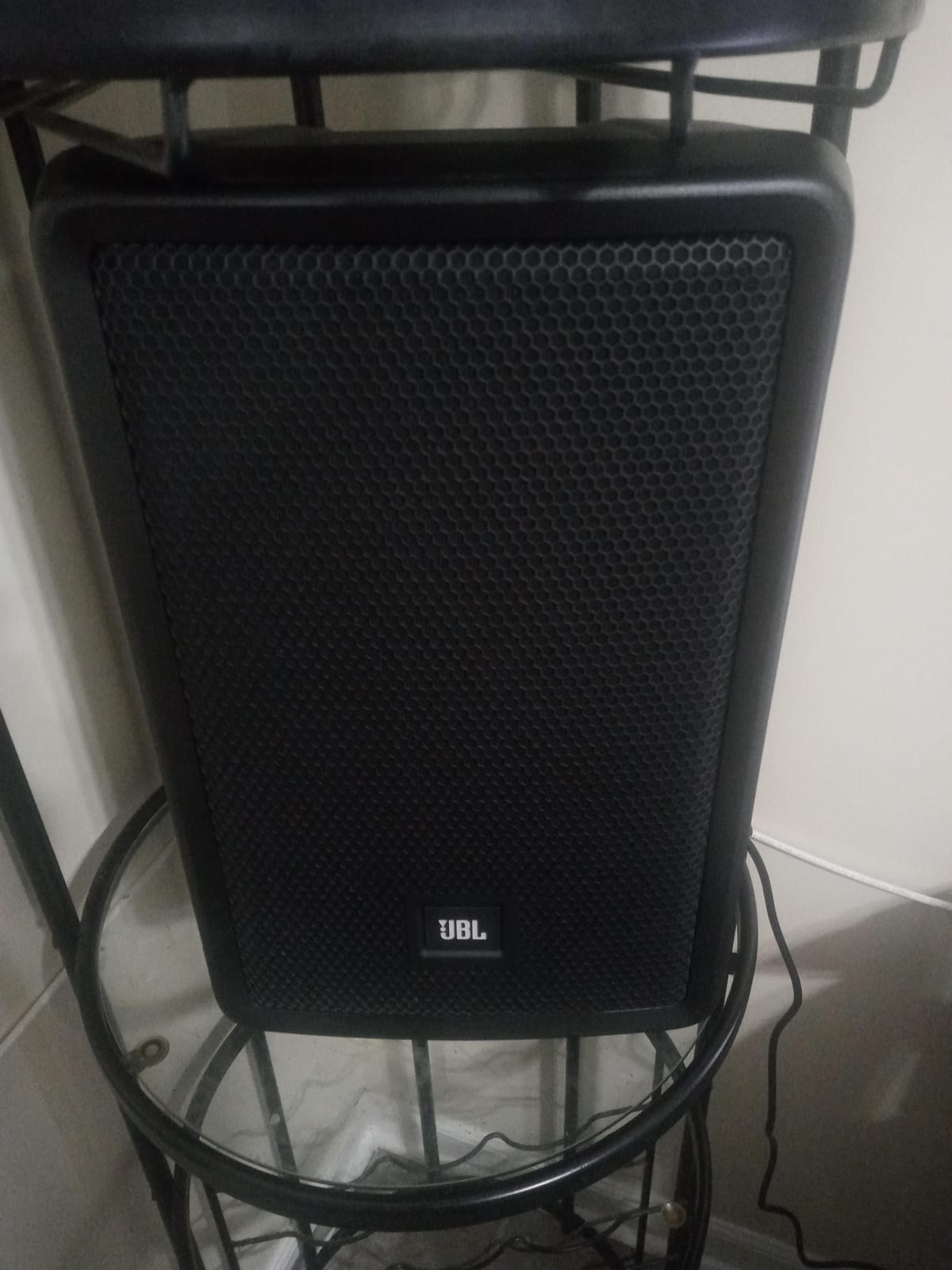
The electronics are the reason this is our value pick. The dbx DriveRack technology includes automatic feedback suppression, there are four real-world EQ presets for common applications, and Soundcraft-designed one-touch ducking lowers the music when speech is detected.
Connectivity is two XLR and TRS combo inputs plus an XLR loop-out, with Bluetooth built in for streaming and linking two units into a stereo image. That is a fuller feature set than several more expensive cabinets in this guide.
Two XLR inputs is the number a full band actually needs on stage power: one for a vocal, one for a DI or an amp return. Anything beyond that goes through a mixer upstream, which is the correct architecture anyway.
Why bands keep recommending it
Reviewers call out the dbx feedback suppression, the four presets and stable Bluetooth as the standout features for a first serious PA. Feedback in a small practice room is the most common recurring complaint in pro-audio forums, and having suppression built in changes the rehearsal experience.
It also covers rooms around 50 feet by 125 feet from a single unit according to owner reports, which is a large share of the bar and club gigs a working band plays.
Where it falls short
Bass is light for full-band reinforcement without a subwoofer, and the listing shows response starting at 53 Hz. If you are not running low end separately, budget for a sub before you judge the system.
It is not weather resistant, so an outdoor gig needs a cover. A small number of early units shipped with Bluetooth or channel faults that required replacement, so check the box on arrival rather than on stage.
5. JBL EON715 – Best for larger rooms on mains power
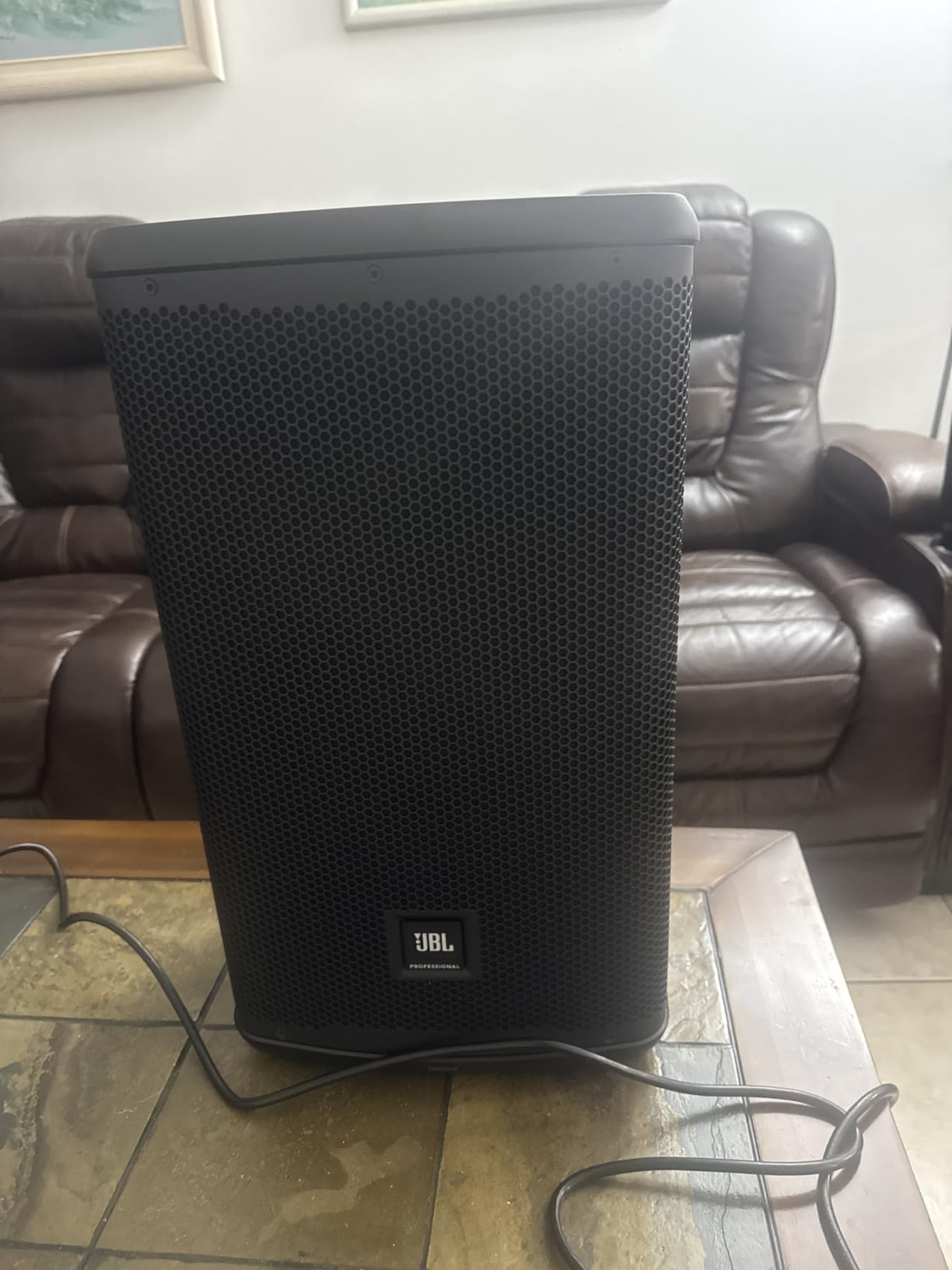
JBL Professional EON715 Powered PA Speaker, 15 inch, 1300 Watt, Black
1300W amplification
15 inch driver
46.5 pounds
Waveguide coverage
Pros
- Crisp clear sound with real low-end weight
- Enough volume for small and medium venues
- Pairs easily with a mixer and a second box
- Double handles make carrying straightforward
- Bluetooth and app control for backing tracks
Cons
- Heavy at 46.5 pounds for one person
- JBL Pro Connect app draws repeated criticism
- Some units re-pair with the phone each session
- TWS pairing has shown firmware issues
- Not weather resistant
The EON715 is the pick when the room is bigger than a bar and you have mains power. JBL Waveguide technology controls the coverage pattern, which is what stops the sound falling off unevenly across a wide floor.
Owners rate it highly for clarity, punchy low end and build quality, using it for rehearsals, DJ events, karaoke and small live rooms. The 15-inch driver and 1300W of amplification give it chest-felt low end that a 12-inch cannot match without a sub.
Bluetooth runs to 100 meters and pairs through the JBL Pro Connect app, with stereo pairing between two EON715 cabinets. There is a front LED light and display, and a metal grille over the polypropylene cabinet with double handles for carry.
It is also a dual-purpose box. Owners use it as a home practice monitor as well as a live PA, and the flat-ish response means it will not shape your ear to a bright, boxy sound during rehearsal.
Two things temper the recommendation. The cabinet is 46.5 pounds, which is the second-heaviest in this group, and carrying a pair up a stairwell without help is a genuine two-person job. Budget for it or choose a lighter cabinet.
What the EON715 does well
It handles medium rooms with real headroom, and the waveguide keeps the high end even across the audience rather than hot at the front. For a band playing a club with a deep floor, that uniformity matters more than raw output.
It pairs cleanly with a mixer and with a second cabinet, so scaling from one per side to a fuller system is straightforward rather than a rewire.
Where it disappoints
The JBL Pro Connect app is criticized repeatedly by owners, and some units need to re-pair with the phone each session. Test your actual streaming workflow before a show rather than assuming it will remember.
TWS stereo pairing has shown firmware-related failures where a new pair produced no initial sound, and the cabinet is not weather resistant for outdoor stages. None of these are dealbreakers, but all three are annoying at the worst moment.
6. Behringer B112D – Best for speech, emceeing and low-cost cover sets
Behringer EUROLIVE B112D Active 2-Way 12″ PA Speaker System with Wireless Option and Integrated Mixer
1000W active
12 inch 2-way
12.3 kg
Integrated mixer
Pros
- Best value 12 inch active cabinet here
- Integrated mixer runs without a console
- Light and compact for a 1000W class box
- Handles live playback and speech at high level
Cons
- Wireless system is a separate purchase
- Sound quality is basic against higher-tier DSP cabinets
- Limited connectivity for modern streaming setups
The B112D is bought on delivered output per pound of budget, and it does not pretend to be anything else. At 12.3 kg with a 1000W active 12-inch two-way design and an integrated mixer, it covers a rehearsal room or a small event with very little extra gear.
That integrated mixer is the feature that decides it for some bands. Run a mic, an instrument and a playback source without buying a console, and the total rig cost stays low enough that a band playing occasional cover gigs can justify it.
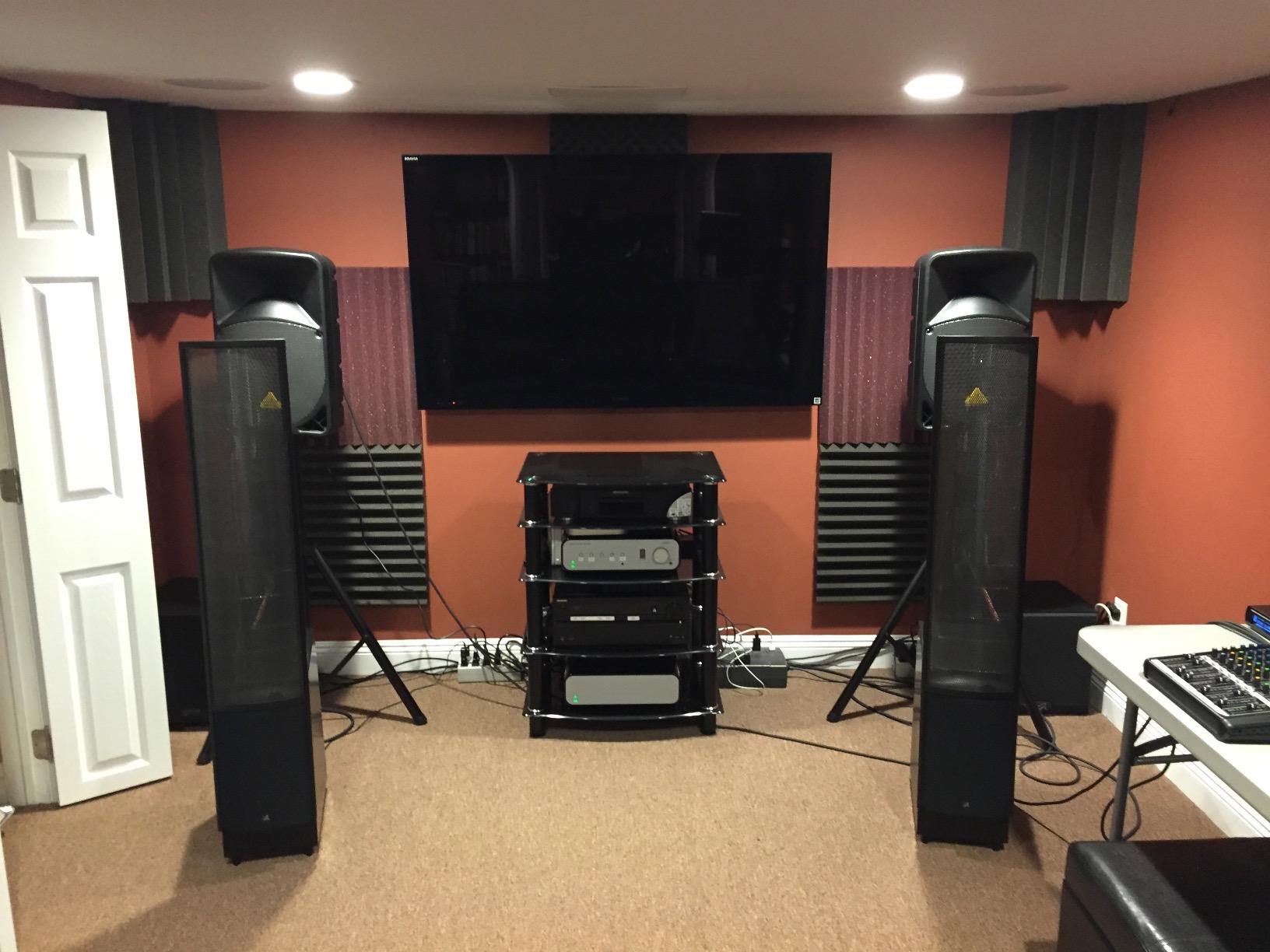
Class-D amplification keeps the weight down, and the USB port plus bass boost function handle playback for a wedding DJ set or an emcee break. Reviewers consistently frame the sound as functional rather than refined, and buy it for that reason.
The rating of 4.6 across 340 aggregated ratings is a strong signal for a product this focused. This is not a compromise box that people tolerate; it does one job well.
It is also wireless-ready for the Behringer digital wireless system, which is worth knowing but not worth budgeting on, because that system is a separate purchase and not included.
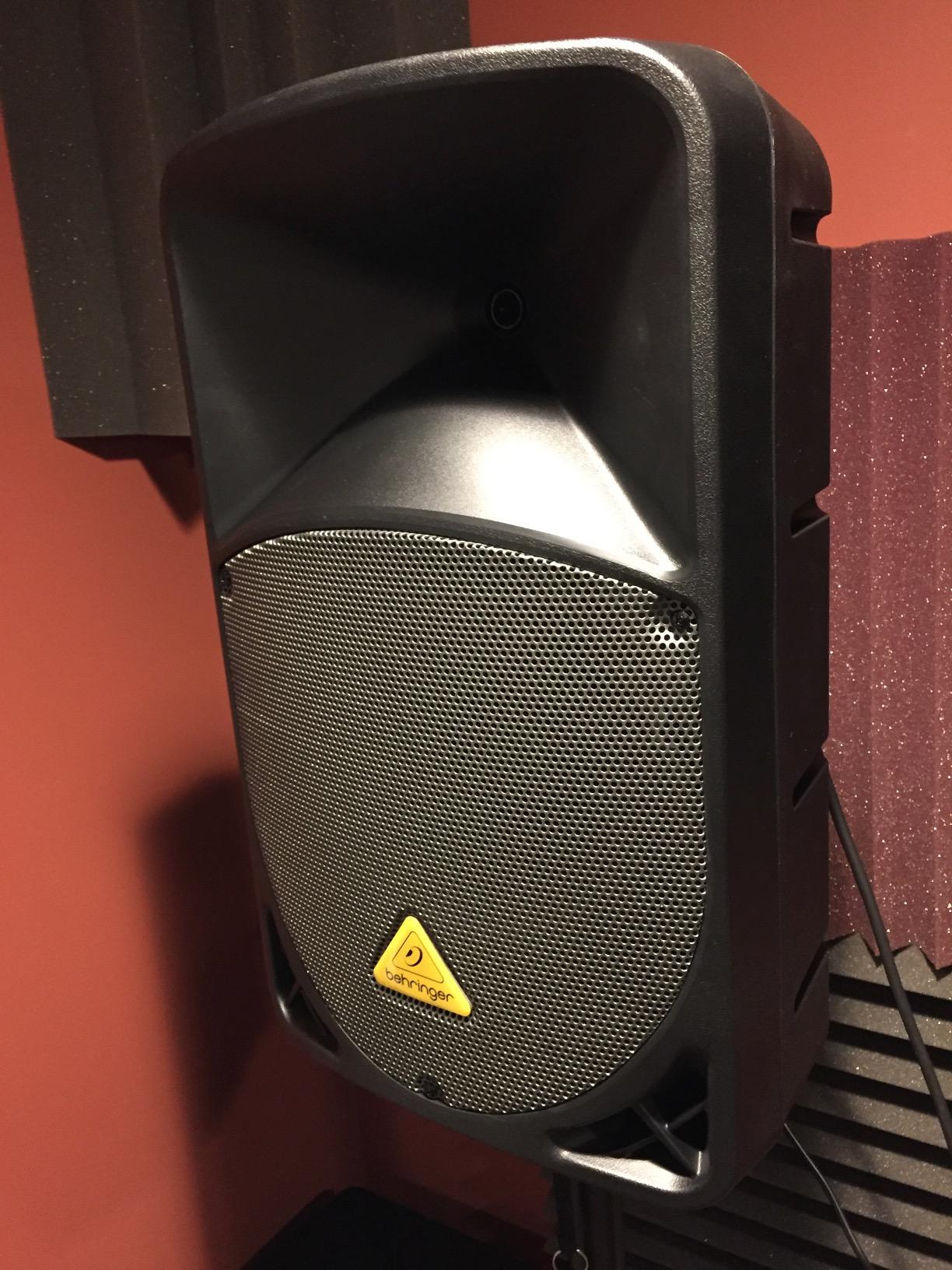
Where the B112D makes sense
It is the pick for a band that mostly rehearses, plays a handful of small events, or doubles as the PA for someone else’s speech. The onboard mixer removes the biggest line item from a starter rig.
At 12.3 kg it is one of the two lightest 12-inch cabinets here, so a band that loads in alone will feel the difference immediately.
Where it is the wrong choice
The sound is basic compared with cabinets that have real DSP behind them. If you are moving to larger rooms, you will hear the difference in vocal clarity before you hear it in volume.
Connectivity is thin for modern streaming workflows, and the listed signal-to-noise figure of 60 dB is well below the 135 dB figures given for the ALTO cabinets. In a quiet room that difference is audible on a sustained vocal.
7. QSC K12.2 – Best for professional touring setups
QSC K12.2 Active 12″ Powered 2000 Watt Loudspeaker
2000W Class-D
12 inch driver
47.8 pounds
3 year full warranty
Pros
- Reference quality clarity and headroom
- Factory presets and savable scenes for repeatable setups
- Digital display shows settings clearly
- 3 year full warranty
- Low noise variable speed cooling fan
Cons
- Heaviest cabinet here at nearly 48 pounds
- Highest cost in the group
- XLR only with no Bluetooth for backing tracks
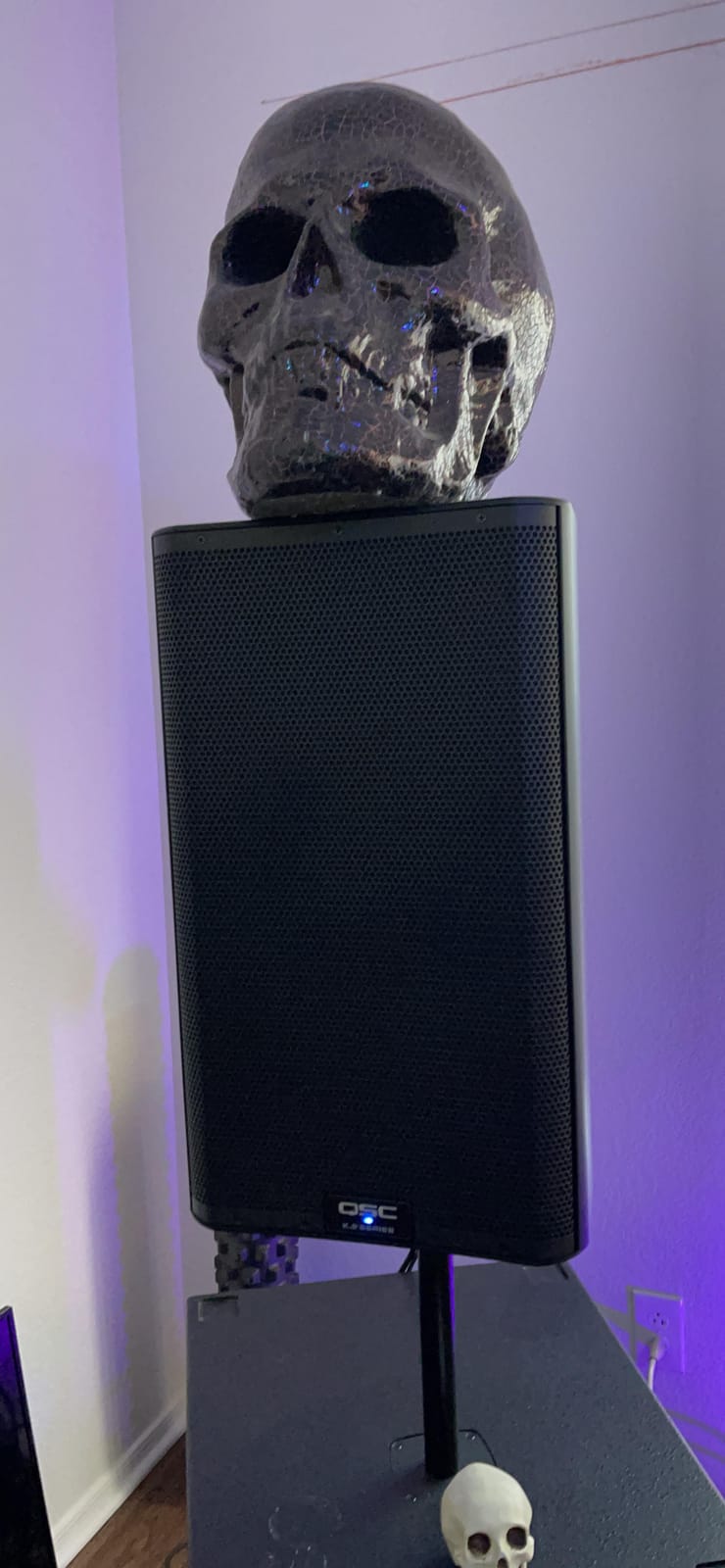
The K12.2 is the professional reference in this list, and the reason is headroom. Owners describe it as touring-grade clarity, and the DSP lets you save a scene per room so the same box behaves identically in a different venue each week.
Factory presets plus savable and recallable scenes is the feature that changes how a band works. Instead of remembering EQ positions, you recall the venue. The multi-function digital display gives clear feedback on what is selected, which matters when you are setting up in bad light.
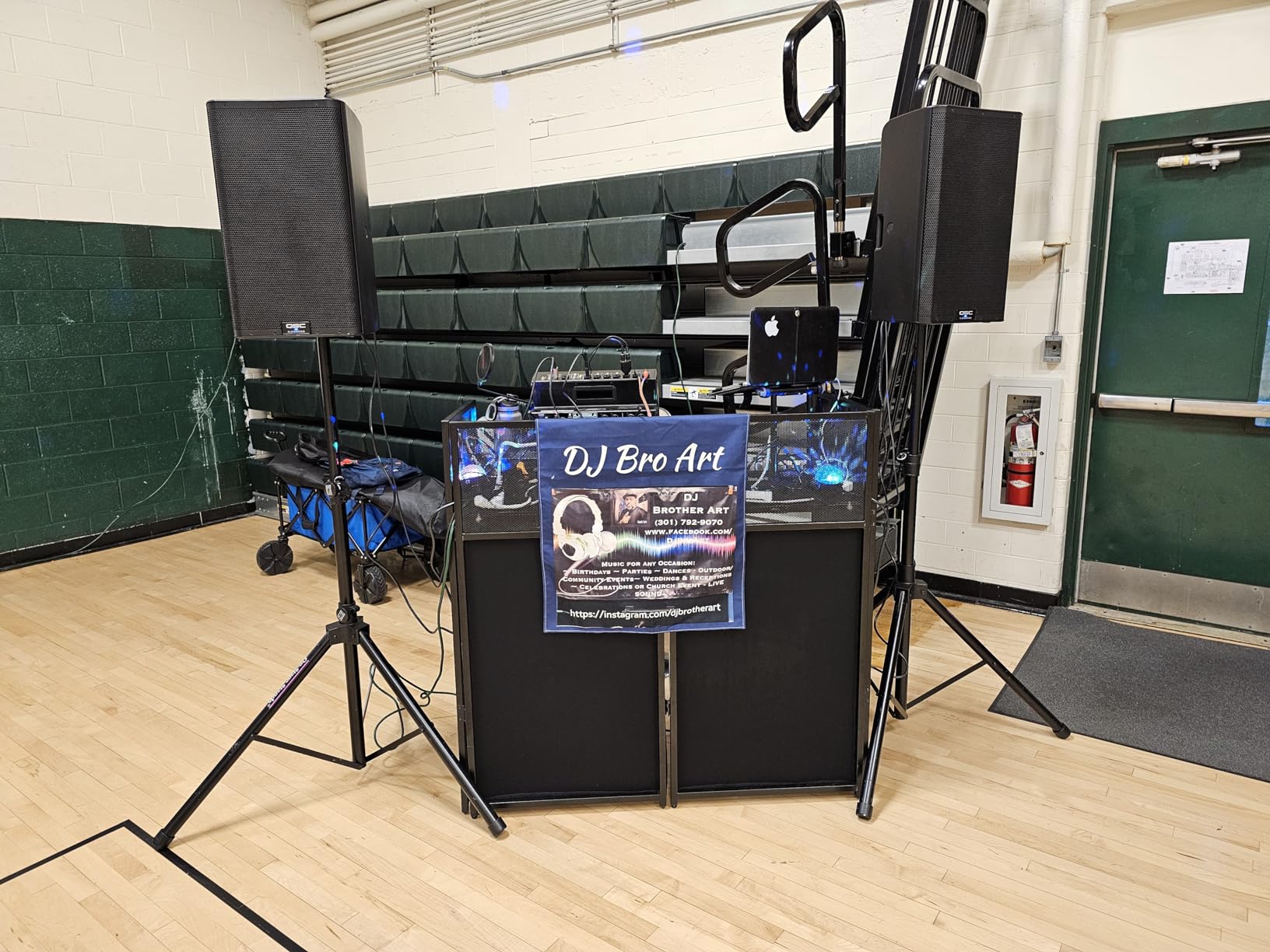
The 2000W Class-D amplifier module drives a 12-inch low-frequency driver and 1 inch tweeter, and the enclosure is steel and plastic rather than the all-plastic cabinets common at this price level. A low-noise variable speed fan handles cooling without adding audible hum.
The 3-year full warranty is the second-longest here, and it is the one that matters most for a working band. A dead driver in month eleven is a cancelled show, and a longer warranty is the cheapest insurance available.
Connectivity is XLR only. There is no Bluetooth, so backing tracks come from a device through a small mixer or a DI. For a band that runs a console anyway, that is a non-issue.
Why bands move up to it
It is favored for rehearsed, repeatable setups where the same box moves across many different rooms. Scene recall is the whole point, and no other cabinet in this list stores settings this way.
The clarity headroom means you can run a loud show and still have clean vocal reproduction, which is the difference between a band that sounds good and one that sounds exhausted at the end of a set.
Where it is the wrong choice
At 47.8 pounds it is the heaviest cabinet here, and combined with the XLR-only rear panel it is not a box you move casually. Bands without a roadie or a second pair of hands should look at the 12-inch options above.
It is also the most expensive pick in this roundup, and for a rehearsal room it is overkill. Buy it when you are playing paid shows in rooms you have not seen before, not before that.
8. Yamaha DBR10 – Best warranty coverage and lightest real output
Yamaha DBR10 700-Watt Powered Speaker
700W bi-amplified
10 inch driver
21 pounds
129 dB max SPL
Pros
- Light at about 21 pounds with genuine high output
- Clear neutral tone that compares well to costlier boxes
- Works as a main PA and as a wedge monitor
- Switchable low-frequency cutoff for sub use
- 7 year warranty
Cons
- No built-in Bluetooth so an external receiver is needed
- Headline wattage overstates real per-driver power
- RCA input path handles high levels better than quarter-inch
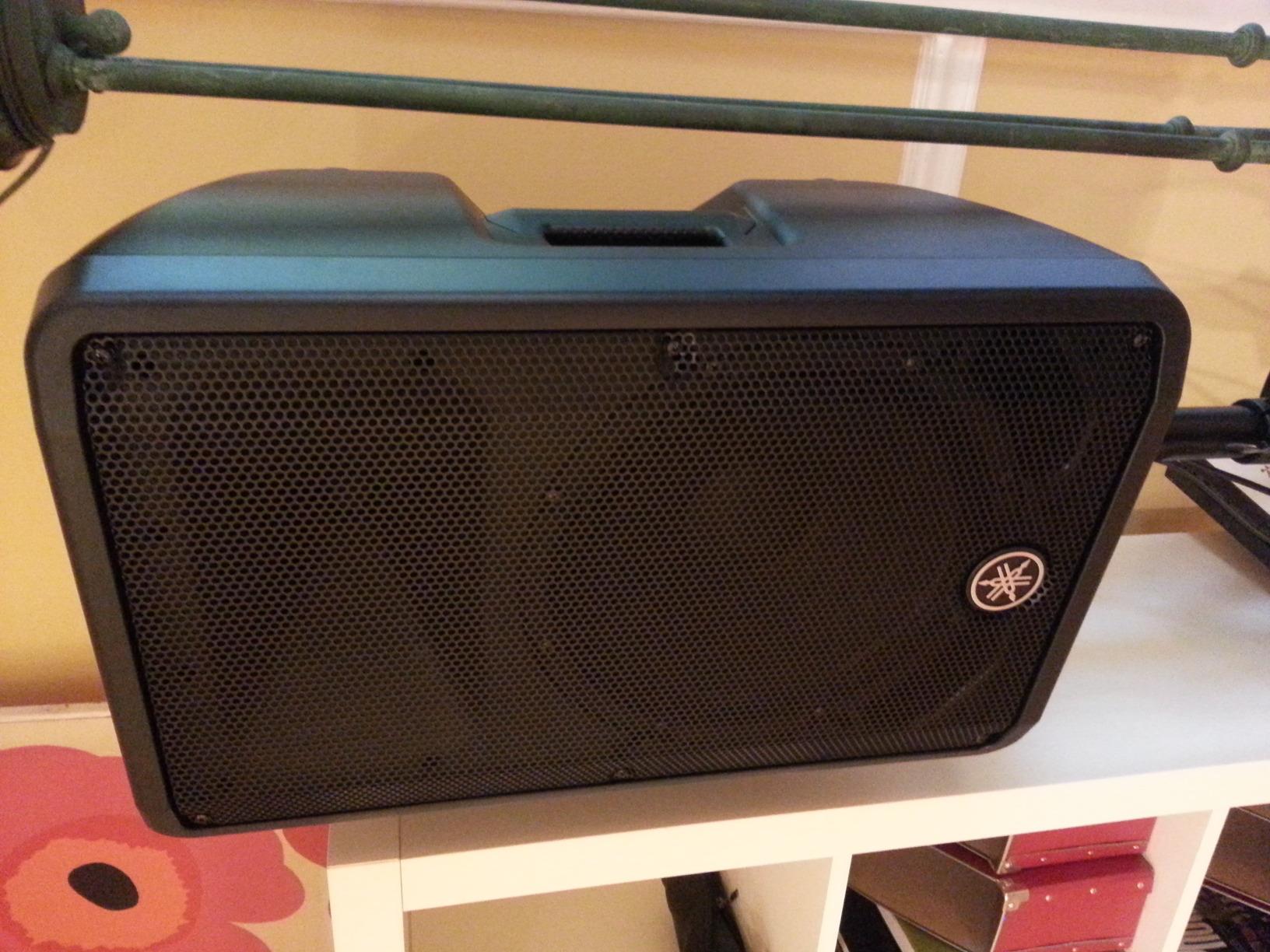
The DBR10 solves the two things a rehearsal band cares about most: weight and durability. It is 21 pounds, bi-amplified, and rated to 129 dB SPL, which is a real output figure rather than a marketing flourish.
Owners frequently substitute it for bulkier 10-inch or 15-inch cabinets, using it for rehearsals, church work, DJ front of house and drum amplification. The tone is described as clear and neutral, which is exactly what you want in a practice room where you are making decisions rather than performing.
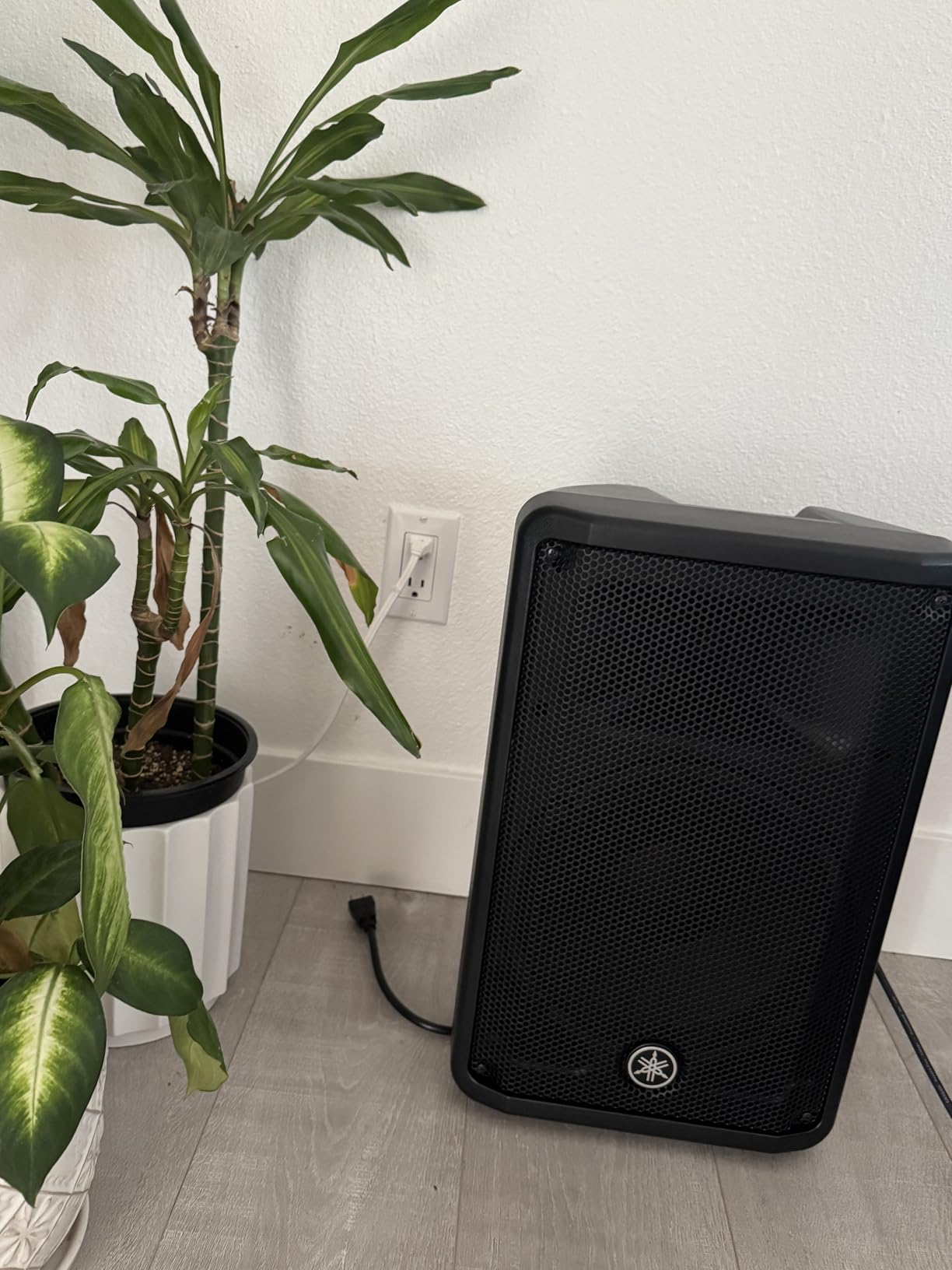
The switchable low-frequency cutoff for use with a subwoofer, combined with the switchable monitor position, makes this one of the few cabinets here that genuinely does both jobs. Bands report using it as a stage monitor as readily as a main PA.
FIR-X tuning gives a listed response of 55 Hz to 20 kHz at minus 10 dB. Combo connectors on the input and an XLR on the output mean it drops into a mixer chain without adapters, and the pole mount plus M8 flying points cover stands and light rigging.
And then there is the warranty. Seven years is the longest coverage in this group by a wide margin, and for a band that owns gear rather than renting it, that is a serious part of the purchase decision.
Where the DBR10 is the right tool
It is a strong rehearsal and small-church cabinet, and the monitor switch means one box can serve both front of house and the drummer without a second purchase.
The switchable cutoff makes it a good main when a band adds a sub later. Instead of fighting the sub for low-end output, you hand the bass over and gain several dB of clarity for the vocal.
Where it is the wrong choice
There is no Bluetooth, so streaming backing tracks requires an external receiver on the RCA input. Owners also note the RCA path handles high levels better than the quarter-inch connection, which is worth knowing before a show.
Reviewers point out that the 700W headline figure overstates the actual per-driver amplifier power. That is exactly the kind of honesty we want from a listing, and it is also why you should read this guide before comparing raw wattage between brands.
9. Mackie SRM212 V-Class – Best all-in-one mixer in one box
Mackie SRM212 V-Class 2,000W 12-inch Powered Speaker
2000W powered
12 inch LF plus 1.4 inch HF
18.4 kg
4 channel digital mixer
Pros
- Onboard DSP
- 4 channel mixer and Bluetooth in one cabinet
- High power headroom from a single box
- Compact 12 inch format fits standard cases
- 2 year Mackie warranty
Cons
- Lowest average rating in the group at 4.3 stars
- Heaviest relative to its output at about 40 pounds
- Bluetooth range limited to about 10 meters
- Costs more than several better-rated options
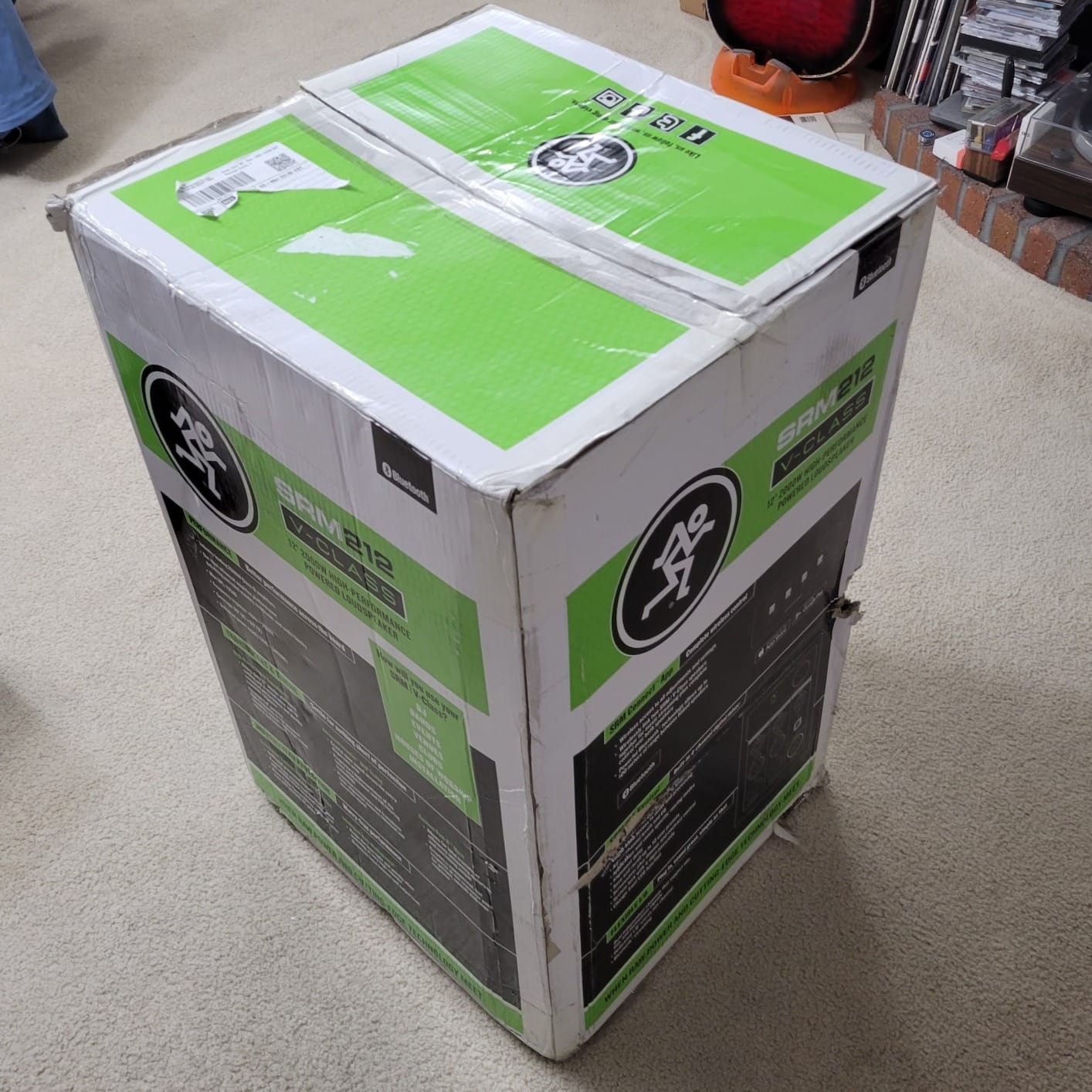
The SRM212 V-Class is the most ambitious all-in-one in this list. Onboard digital signal processing, an integrated 4-channel digital mixer and Bluetooth streaming live in the same cabinet, which means a full band could rehearse with nothing else in the van.
A 4-channel mixer changes the conversation. The cabinets above you give you two or three usable inputs. This one gives you four, which is the difference between a duo running stereo and a four-piece band running a rehearsal without a console.
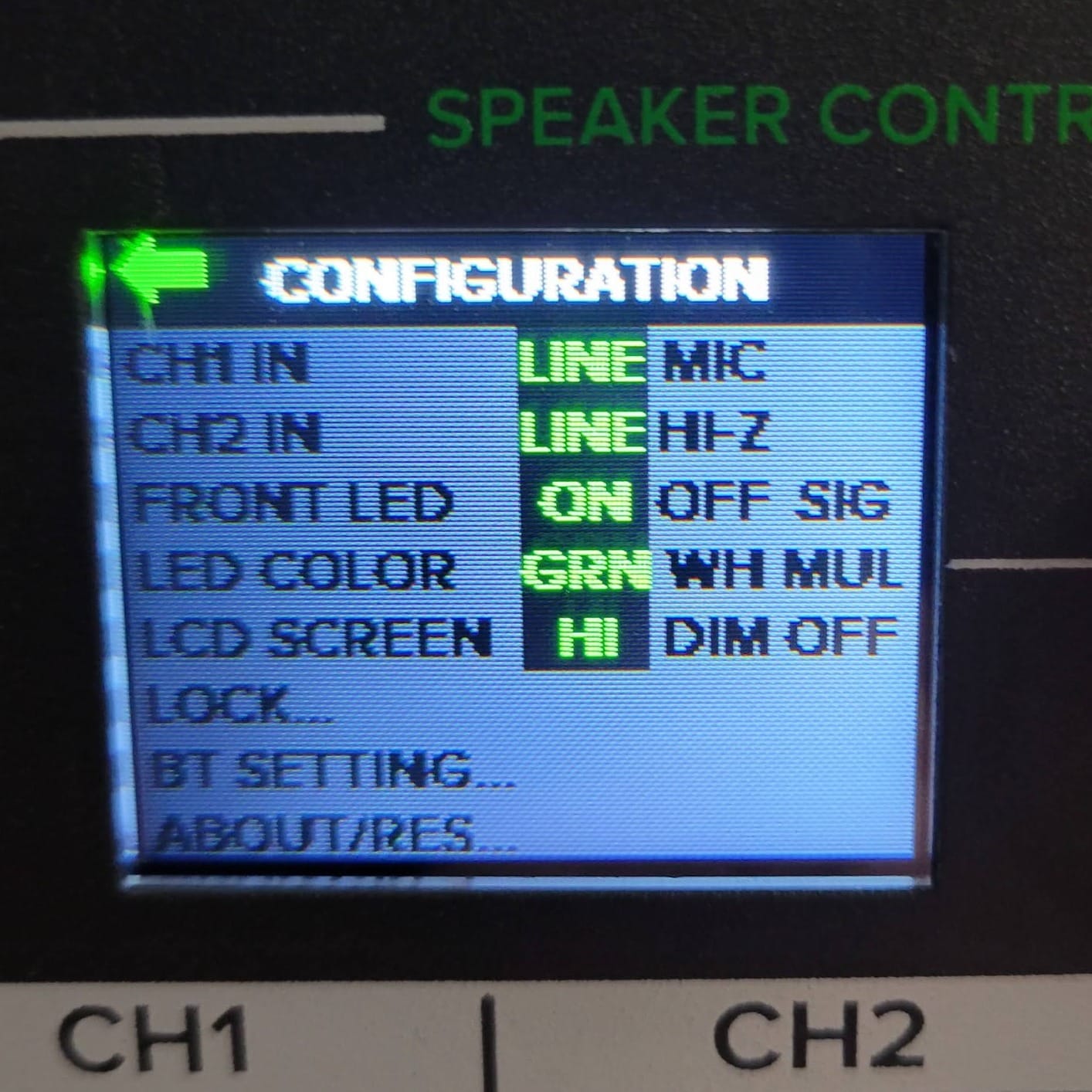
The 2000W 12-inch low-frequency driver is paired with a 1.4-inch high-frequency driver, and at 18.4 kg it is not a heavy box for that output. It also comes in 10-inch and 15-inch versions if you decide you want to move size later without changing brand.
Reviewers value the packing of features that suit bands and DJs wanting a fast setup with no external console. That is a real, specific need and this box meets it directly.
But this is also the pick with the smallest review base here, at 117 ratings, and the lowest average at 4.3 stars with a 10 percent one-star share. A weaker review signal on a pro-tier price point is a reason to audition, not a reason to skip.
Where the V-Class earns its slot
If your band has four or more sources and no console, the 4-channel onboard mixer removes a piece of gear, a set of cables and a failure point. For a rehearsed setup that travels to a different room every week, fewer boxes is a genuine win.
The Bluetooth streaming is useful for backing tracks without a DI, though the listed range of about 10 meters means the phone stays near the speaker.
Where it is the wrong choice
Bluetooth range is short and the 4.3 average with a one-star share is the weakest in this group. Several buyers note the price sits high against the measured performance, and cheaper 12-inch cabinets here carry more review weight.
At roughly 40 pounds it is also the heaviest option relative to its measured output. A band that moves gear alone will notice that every time, and the lighter 12-inch picks above deliver comparable coverage for less effort.
10. ALTO TX410 – Best budget pick for wedge and practice use
ALTO TX410 350W 10″ Powered PA Speaker
350W bi-amplified
10 inch LF plus 1 inch titanium HF
15 pounds
90 by 60 degree coverage
Pros
- Lightest and most portable cabinet here at about 15 pounds
- Full clear sound beyond what the size suggests
- Works as a wedge monitor or a small main
- Bluetooth and True Wireless Stereo for cable-free pairing
- Handles high volume when EQ is set correctly
Cons
- Only one physical combo input despite the 2-channel listing
- No phantom power for condenser microphones
- Real output is well below the headline wattage
- Included power cable is short
The TX410 is the cabinet to buy when the first question is not how loud, but how much can I carry. At 6.8 kg, or 15 pounds, it is the lightest here by a wide margin and it works as a wedge monitor on the stage floor as readily as a small main.
The 350W is bi-amplified, split 250W to the low-frequency driver and 100W to the high-frequency section, and the 1-inch titanium diaphragm compression driver sits behind a 90 by 60 degree wide-dispersion horn. That horn is wide enough to cover a small room from a single position.
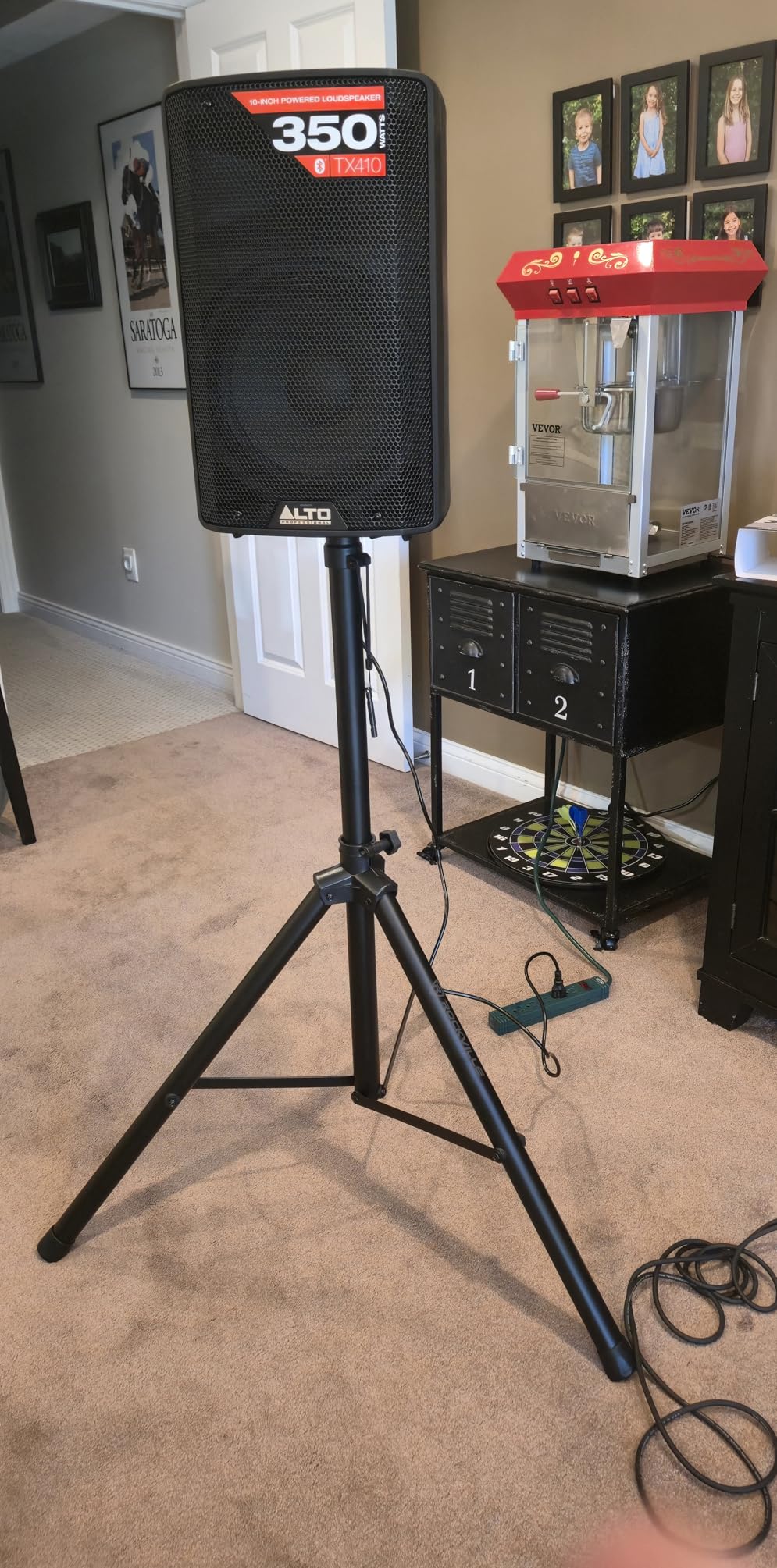
Owners consistently praise the sound quality, the low weight and the ease of the controls for what it costs, and several gigging musicians run multiple units. Bluetooth with True Wireless Stereo pairing gives cable-free stereo from a phone for a street event or a background set.
The most important thing to know before you buy is the input layout. Despite the 2-channel mixer in the listing, the cabinet provides one physical XLR and quarter-inch combo input, and the second source is Bluetooth. That will frustrate anyone planning to run a mic and an instrument at the same time.
There is also no phantom power, so a condenser vocal microphone will not work on this cabinet without an external supply. Dynamic mics are fine.
Where the TX410 makes sense
It is a wedge monitor, a practice-room box and a small-event PA. A drummer, a keyboard player or an acoustic act that needs something they can carry up three flights of stairs will find this the most usable cabinet in the list.
True Wireless Stereo pairing means two of them cover a room for a street gig or a market stall with no cable run and no mixer.
Where it falls short
Real output is well below the 350W headline claim, closer to a modest amplifier, and bass is limited for guitar monitoring. The included power cable is only 6 feet, which is rarely enough to reach a mains outlet from a stage position.
This is a practice and monitor box, not a main PA for a paid show in a room with a crowd. It earns its place as the tenth pick, not as a substitute for a bigger cabinet on a real gig.
How Many PA Speakers Does a Live Band Need?
A working band needs two mains, one per side of the stage, unless the room is small enough that a single cabinet genuinely covers it. That is the short answer, and the rest of this section is the part people get wrong.
Start with one per side. Two cabinets of equal power give you an even spread across the audience and, critically, a spare. When one speaker fails at a show, the other keeps the set going, which is the difference between a bad night and a cancelled one.
Next, decide whether you are running subs. A 10-inch or 12-inch top pair plus a sub per side gives you a much cleaner result than 15-inch tops trying to do both jobs, because each cabinet is doing one thing. TalkBass users consistently land on the same framing: 10-inch and 12-inch are lighter and pair well with a sub, while 15-inch gives deeper bass standalone.
Third, add monitors. A band with no engineer needs at least two wedges for the drummer and one for the vocal, and most of the cabinets here can sit in a wedge position on the stage floor. Our powered speaker comparison covers the practical differences between cabinets that double as monitors and those that do not.
Finally, think about mixing. A four-piece band with a vocal, two guitars, bass and drums needs more channels than any onboard mixer here provides, unless the guitars are running a DI. One channel per source into a small console, then the console into one speaker per side, is the architecture that scales.
10-Inch vs 12-Inch vs 15-Inch: The Driver Size Decision
Driver size decides low-end output, physical weight and load-in difficulty. Everything else about the comparison is secondary, so answer this question first.
Choose 10-inch when you are running a subwoofer, rehearsing in tight rooms, or moving gear alone. The 14.5 kg ALTO TS410 and the 15-pound ALTO TX410 are the practical examples, and both hand the low end to a sub when you add one.
Choose 12-inch for the widest set of band situations. The Mackie Thump212, JBL IRX112BT, Behringer B112D, QSC K12.2 and Mackie SRM212 in this list all sit here, and the 12-inch format is the most common choice in the reviews we read.
Choose 15-inch when you have no sub, when the room is larger, and when weight is not your problem. The ALTO TS415 and JBL EON715 are the two options here, and both produce genuine low-end weight from a single cabinet.
A useful sanity check that nobody else on the search results offers: the Yamaha DBR10 is a 10-inch cabinet that produces 129 dB, while a 15-inch cabinet in the same class lists 128 dB. Output is not purely a function of cone size. Amplifier quality, horn efficiency and how the box is tuned all move the number, which is why wattage and driver size alone will not settle this.
For more background on portable formats, our guide to portable PA speakers covers the same driver and cabinet decisions in a smaller footprint.
Peak Watts vs RMS Watts: How to Read a Power Claim
Wattage on a PA speaker listing is the least trustworthy number in the category, and learning to discount it will save you money and a broken cabinet.
Three terms get mixed up constantly. RMS or continuous power is what the amplifier can deliver steadily. Peak power is a short-duration maximum. PMPO is a rating method invented in the car audio world that can produce numbers several times higher than anything the amplifier will actually do into a speaker for more than a moment.
Look at the numbers in this roundup as an example. The ALTO TS415 lists 2500W. The Yamaha DBR10 lists 700W, and its own owners note that this headline figure overstates the real per-driver amplifier power. The ALTO TX410 lists 350W and its own reviewers say the real output is well below that. These are not lies so much as three different measurement conventions.
The number that actually matters is maximum SPL. The Mackie Thump212 publishes 128 dB. The Yamaha DBR10 publishes 129 dB. Those two figures are comparable across brands, and comparing 2500W to 700W is not. The other end of this roundup, the ALTO TX410 at 350W, is a practice and monitor box, and the SPL figures in the listings make that obvious without anyone having to argue about it.
The marketplace listings that advertise 8000W alongside a legitimate 2000W cabinet are using PMPO-style claims. Forums repeatedly warn buyers off those listings, and the reviews on them are correspondingly poor. Judge a listing by its max SPL, its warranty and its review count, not by the biggest number in the description.
There is also a widely repeated rule of thumb about watts per person, and it is wrong. The useful method starts at the farthest listener. Work out how loud it needs to be at the back of the room, account for the noise floor, and choose a cabinet that reaches that level with headroom left over.
Venue Size and Crowd Count: Which Speaker Size You Need
Match the cabinet to the room, not to the ambition. Here is the rough mapping we use, based on driver size and the coverage the manufacturers and owners describe.
Under 50 people, such as a living room gig or a very small bar corner, one 10-inch cabinet covers it. A single 12-inch is more than adequate and leaves headroom for a band that plays louder than they think.
50 to 150 people, which covers most bar and club support slots, one 12-inch per side is the standard configuration. The Mackie Thump212 at 128 dB and the JBL IRX112BT are both sized for this range, and the IRX112BT owners report coverage of a room around 50 feet by 125 feet from a single unit.
150 to 300 people, one 15-inch per side is the sensible starting point, or a 12-inch pair plus a sub if you already own the sub. The ALTO TS415 is built for this range and the review pattern supports it.
Outdoor gigs need more output than the same crowd size indoors, because there is no room gain from walls and ceilings and there is often wind and traffic noise. Move up one step from your indoor choice rather than doubling the cabinet count.
Beyond 300 people, a single pair of tops is pushing it for a full band with drums and bass. At that point you are looking at a second pair per side or a sub-supported system, and this roundup is at the edge of what ten tops can cover.
Inputs, Mixers and Phantom Power for a Full Band
A band needs two physical inputs per cabinet minimum, and it needs to know which of them can power a microphone.
Phantom power is the 48-volt supply a condenser microphone needs to operate. Several budget cabinets here do not provide it, including the ALTO TX410, so a condenser vocal mic simply will not work on them. Dynamic microphones need nothing. Know which microphones you own before you choose the cabinet.
The cabinets with two XLR and quarter-inch combo inputs, which is most of the 12-inch options in this list, cover a vocal and an instrument directly. Beyond that you need a mixer upstream, and the architecture is straightforward: sources into the console, console into the mains, and the mains into the speakers.
Bluetooth is for backing tracks, not for the band. Every cabinet here with Bluetooth, and that is the ALTO TS415, ALTO TS410, ALTO TX410, JBL IRX112BT, JBL EON715 and Mackie SRM212, will stream from a phone. The QSC K12.2, Yamaha DBR10, Mackie Thump212 and Behringer B112D do not, and a band that runs a console anyway will not miss it.
For direct boxes, a bass and a keyboard each need a DI to get a balanced instrument-level signal to the console. A passive guitar pickup is a different problem entirely and needs a preamp. Our powered speaker roundup covers the input layouts in more detail.
Feedback: How to Stop It Before It Starts
Feedback is a placement and gain problem before it is a product problem. No cabinet here will fix a monitor pointed into a microphone.
Start with the mains. Get them in front of and above the band, not behind and not at ear height behind the vocal mic. Every meter of separation buys you gain before feedback.
Then set gain before you set anything else. Get the signal healthy at the source, run the vocal channel fader up, and only then consider the speaker. Turning the speaker down to stop feedback throws away headroom you will want later in the set.
Use the built-in suppression as a safety net rather than a fix. The JBL IRX112BT with dbx DriveRack and the Mackie Thump212 with its feedback eliminator both give you a first line of defence in a room with hard walls, but neither should be covering for bad placement.
Wedges pointing back at the vocal mic are the single most common cause of squeal in a small room. Aiming the wedge at the floor in front of the singer solves more feedback problems than any setting on the speaker.
Renting vs Buying for a Band That Plays a Few Shows a Year
If your band plays a handful of shows a year, renting is usually the better financial decision and the better musical one. You are buying access to gear that is already the right size, maintained, and set up for the room.
Buying makes sense once you are playing regularly enough that load-in time and gear familiarity start affecting the show. A band that knows exactly how their PA behaves in a given room sounds better than a band setting unfamiliar gear up in the dark.
Used and rental gear both carry a risk worth taking seriously. Forum users warn about equipment arriving with dead drivers or a failing amplifier, so test every cabinet at full volume in the shop or during a soundcheck, not in a quiet room.
Frequently Asked Questions
What are the best powered PA speakers for live bands?
The best powered PA speakers for live bands are the ALTO TS415 for all-round output, the JBL IRX112BT for value and built-in feedback suppression, and the Mackie Thump212 for one-person load-ins. A band needs two mains, one per side of the stage, and should match the cabinet to the room: 10-inch with a sub, 12-inch for most bars and clubs, and 15-inch for larger rooms without a subwoofer.
Who makes the best powered PA speakers?
It depends on the tier and the room. QSC and JBL lead the professional tier, with the QSC K12.2 offering recallable DSP scenes and the JBL EON715 offering waveguide-controlled coverage. Mackie and Alto Professional sit in the working-musician tier, and Behringer covers the budget tier. TalkBass users generally agree the Alto TS series sounds close to far more expensive brands.
Should I buy 10 inch or 12 inch PA speakers?
Buy 12-inch for most band situations: bars, clubs and rehearsal rooms, because they balance low-end output against weight. Choose 10-inch only if you are running a subwoofer, rehearsing in a tight space, or moving gear alone every week. A 10-inch top hands the bass to the sub and gains vocal clarity at the same time.
Is a 2000W speaker loud?
Not on its own, because 2000W can mean very different things. Peak and PMPO ratings can run several times higher than the continuous power an amplifier actually delivers, which is why marketplace listings advertising 8000W appear next to legitimate 2000W cabinets. Compare maximum SPL instead: the Mackie Thump212 lists 128 dB and the Yamaha DBR10 lists 129 dB, and those figures mean comparable output.
What size PA do I need for an outdoor gig?
Move up one step from your indoor choice rather than buying more cabinets. Outdoor stages have no room gain from walls and ceilings, and wind and traffic add to the noise floor. One 12-inch per side works for a small outdoor crowd, one 15-inch per side covers a few hundred people, and beyond that you want a second pair per side or a sub-supported system.
How many PA speakers does a live band need?
Two mains, one per side of the stage, for almost any paid show, because it gives you even coverage and a spare if one fails. Add two wedge monitors for the drummer and the vocal, and route more than two sources through a small console. Bands already running subs can use lighter 10-inch or 12-inch tops, since the sub handles the low end.
What is the 83% rule for speakers?
The 83% rule comes from audio production mixing, not live PA. It means setting your source level to roughly 80 to 85 percent of available headroom so peaks do not clip. For a live band the equivalent is to set gain so your loudest passage peaks with a few dB of headroom left, rather than riding the fader up until it screams and pulling it back.
Do I need a subwoofer with a powered PA?
Only if your tops are 10-inch or 12-inch. A 15-inch top like the ALTO TS415 or JBL EON715 produces real low end on its own, and adding a sub is a luxury rather than a requirement. With a 12-inch top, a sub is the difference between a mix that disappears on a busy night and one that holds together with a full band playing.
Conclusion
Ten cabinets, and only three of them belong in a first serious band rig. The ALTO TS415 is the one we would build around, because the 15-inch driver carries a full band without a sub and the 3-channel onboard mixer deletes a piece of gear. The JBL IRX112BT is the value pick, with the largest review base in this guide and the best built-in feedback protection. The Mackie Thump212 is the one you can carry up the stairs yourself.
Match the driver size to the room before you match anything else, and read max SPL rather than wattage. Two mains, one per side, plus wedges, gets you through almost any show. For the specific models and how they handle a full band lineup, revisit our powered speaker picks when you are ready to check the current details.