
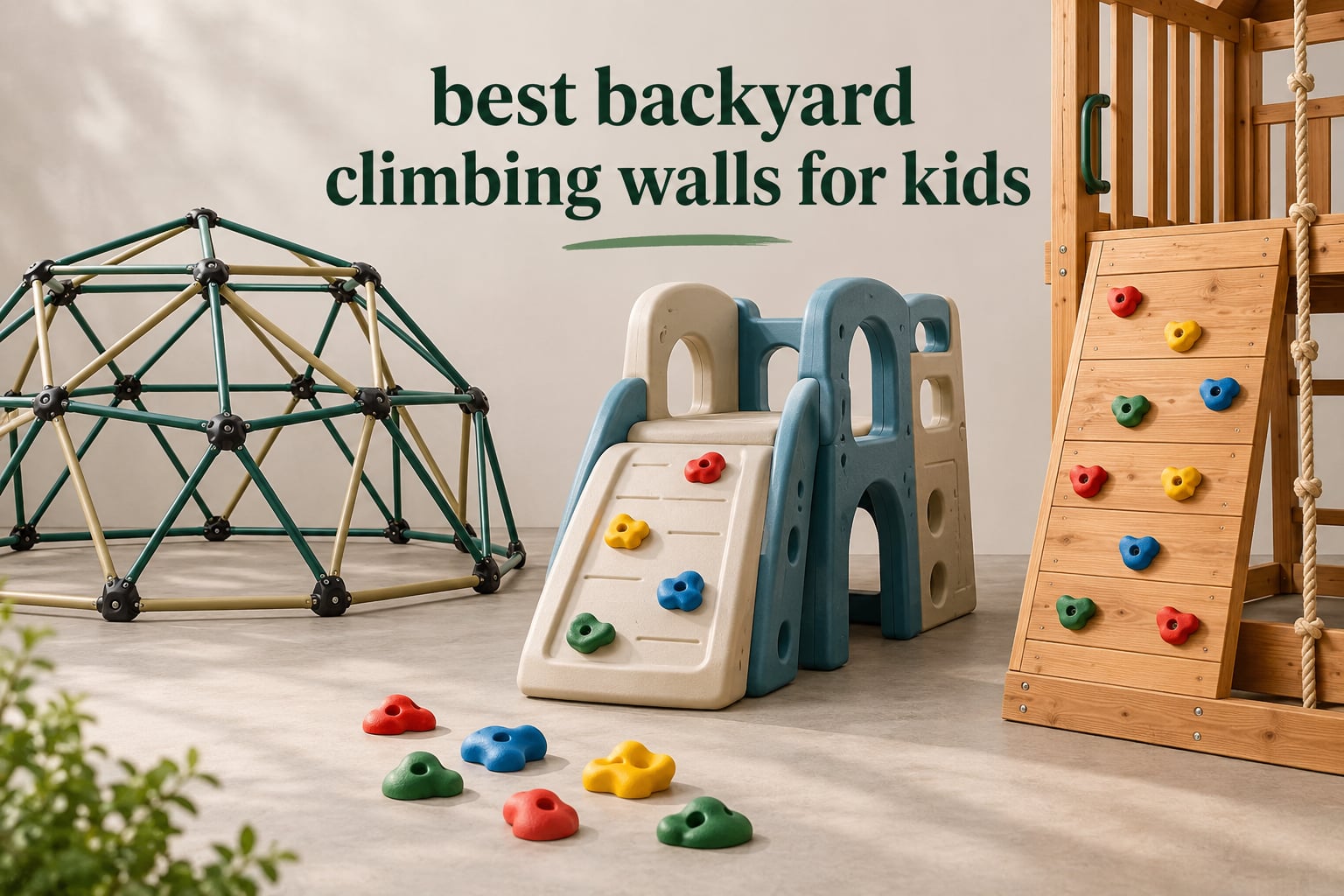
There is a stage in every toddler’s life when the kitchen cabinets stop being furniture and start being a climbing wall. One parent on r/Preschoolers described an active three-and-a-half-year-old whose park visits and bike rides had stopped being enough, and the family was hunting for something in the backyard. That moment is when most families start looking at climbing structures, and it is also the moment when the wrong purchase becomes obvious fast.
We spent weeks going through the specs, the warranty terms, the assembly complaints and the real-world review data on backyard climbing structures so you do not have to. The result is our guide to the best backyard climbing walls for kids in 2026, covering plastic climbers, galvanized steel domes, and cedar playsets with rock walls built in.
Climbing is one of the best gross motor activities a child can do. It builds grip strength, core stability, balance, and hand-eye coordination, and it demands a kind of problem-solving that screen time never does. As the r/DIY and r/climbing builders we read put it, a home wall gives that climbing instinct a legal target instead of a cabinet door.
What follows is a ranked list of twelve structures, each with an honest read on who it suits and who it does not. We also cover hold sizing for small hands, the fastener detail that decides whether a wall lasts five years or twenty-five, and the clearance rules that matter more than any brand name. If you want the short version, the Lifetime Geometric Dome Climber is our top pick and has been the best-selling shape in this category for years.
Before you go further, it helps to think about what else the kids will use the yard for. Our guides to the best backyard games for kids and the best backyard zip lines for kids cover the other two things families usually add in the same year.
Top 3 Picks for Backyard Climbing Walls in 2026


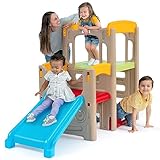
Simplay3 Young Explorers
- Indoor or outdoor use
- 180 lb max weight
- Fits a standard doorframe
Best Backyard Climbing Walls at a Glance in 2026
| Product | Specifications | Action |
|---|---|---|
| Lifetime Geometric Dome Climber |
|
Check Latest Price |
| Step2 Game Time Sports Climber |
|
Check Latest Price |
 Step2 Woodland Climber II Step2 Woodland Climber II |
|
Check Latest Price |
| Simplay3 Young Explorers Climber |
|
Check Latest Price |
 Eezy Peezy Climber with Top Eezy Peezy Climber with Top |
|
Check Latest Price |
 GIKPAL 6 ft Climbing Dome GIKPAL 6 ft Climbing Dome |
|
Check Latest Price |
 Step2 Skyward Summit Step2 Skyward Summit |
|
Check Latest Price |
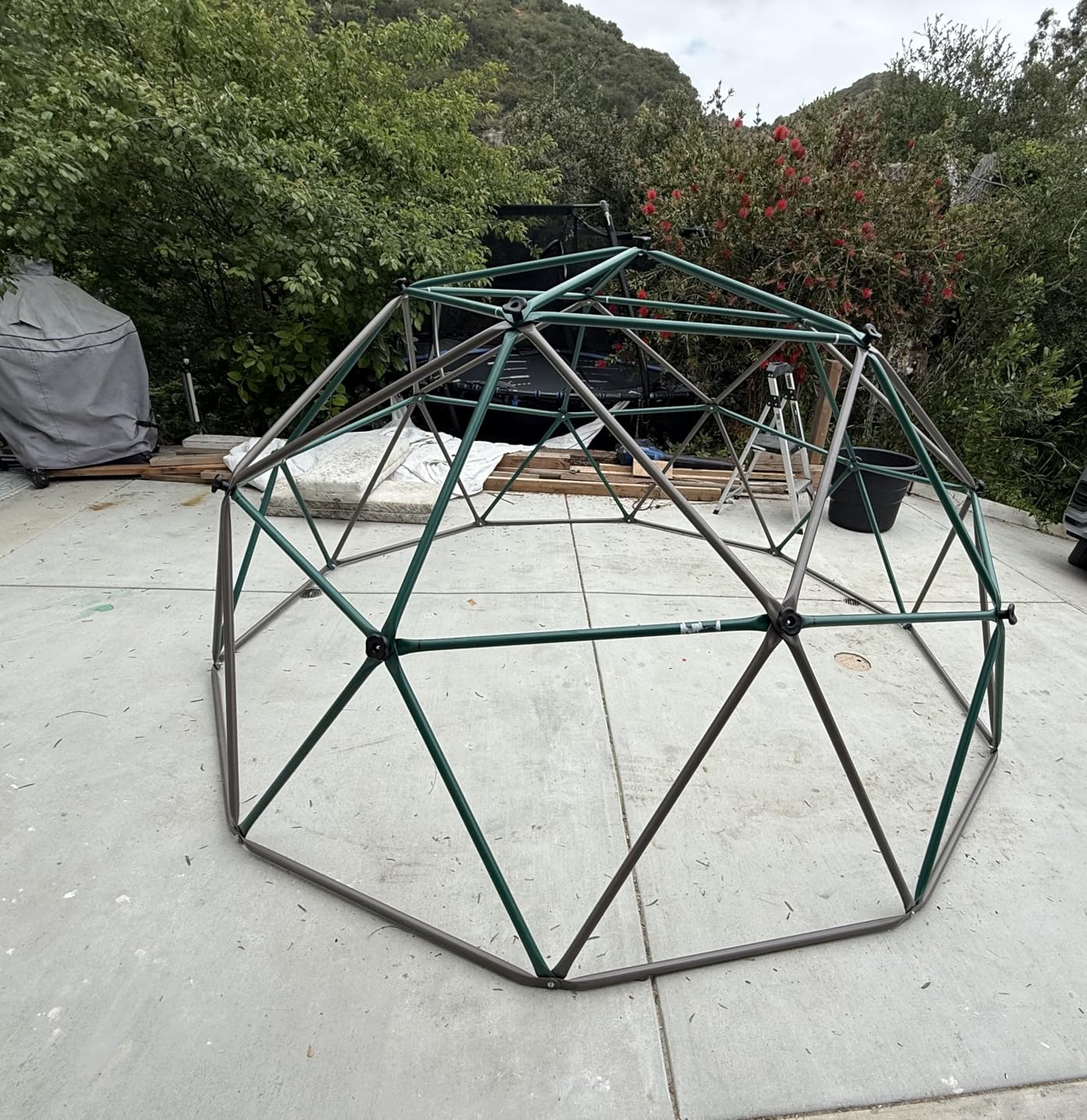
 VEVOR 10 ft Geometric Dome VEVOR 10 ft Geometric Dome |
|
Check Latest Price |
 Hapfan 10 ft Dome with Saucer Swing Hapfan 10 ft Dome with Saucer Swing |
|
Check Latest Price |
 Backyard Discovery Buckley Hill Cedar Set Backyard Discovery Buckley Hill Cedar Set |
|
Check Latest Price |
 Backyard Discovery Mount Mckinley Cedar Set Backyard Discovery Mount Mckinley Cedar Set |
|
Check Latest Price |
 TP Toys Explorer 2 Jungle Gym TP Toys Explorer 2 Jungle Gym |
|
Check Latest Price |
1. Lifetime Geometric Dome Climber – Best Overall Backyard Climbing Wall
Lifetime Geometric Dome Climber Play Center – Climbing Dome Jungle Gym
10 ft wide x 5 ft tall
Powder-coated steel
600 lb total capacity
1 year warranty
Pros
- Highest rating in our list at 4.8 stars from over 5000 reviews
- Handles up to six kids at once
- HDPE grips give secure hand and foot placement
- No staining or painting needed
Cons
- Assembly takes two to four hours
- Steel gets very hot in direct sun
- One year warranty is the shortest on this list
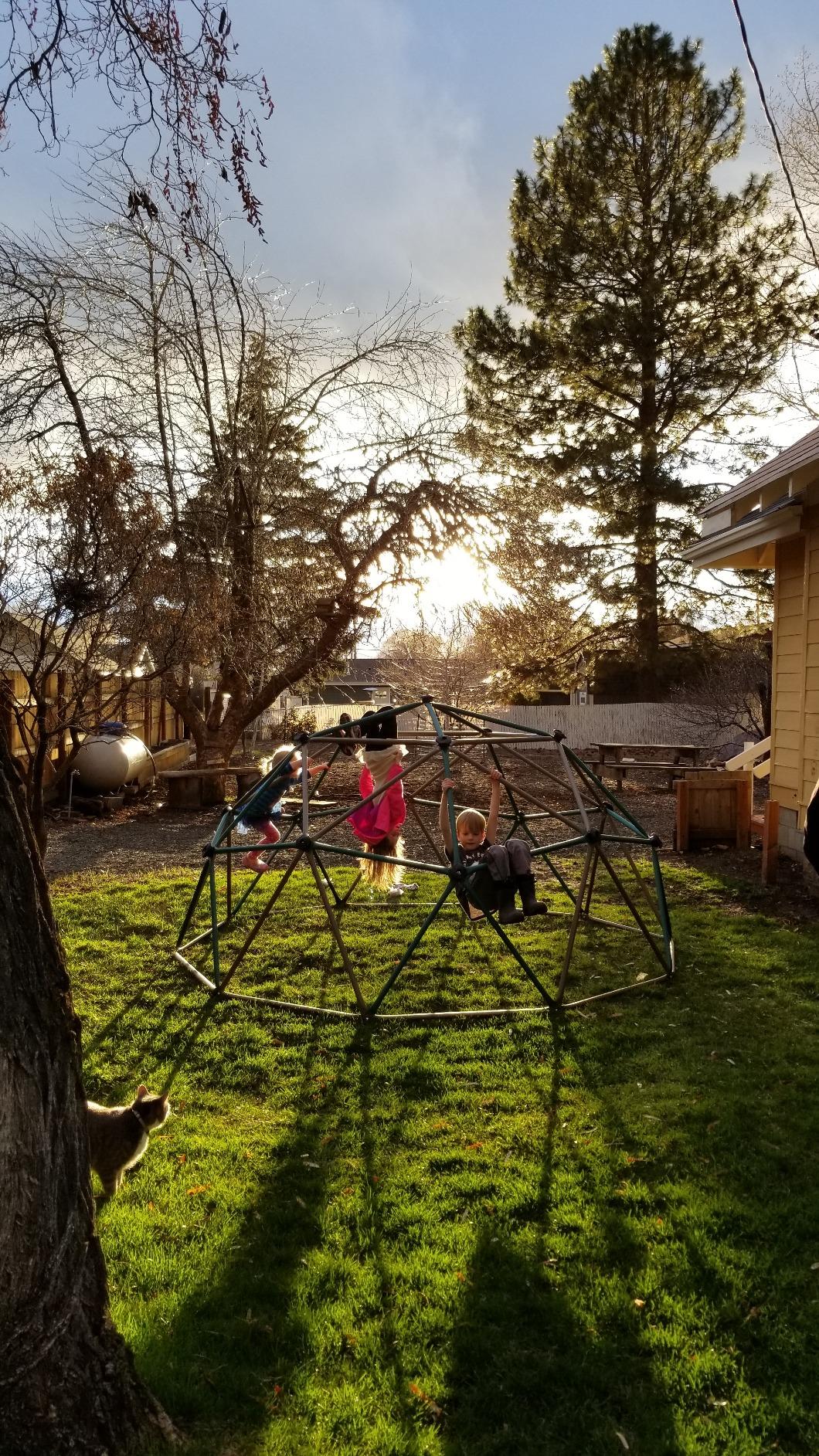
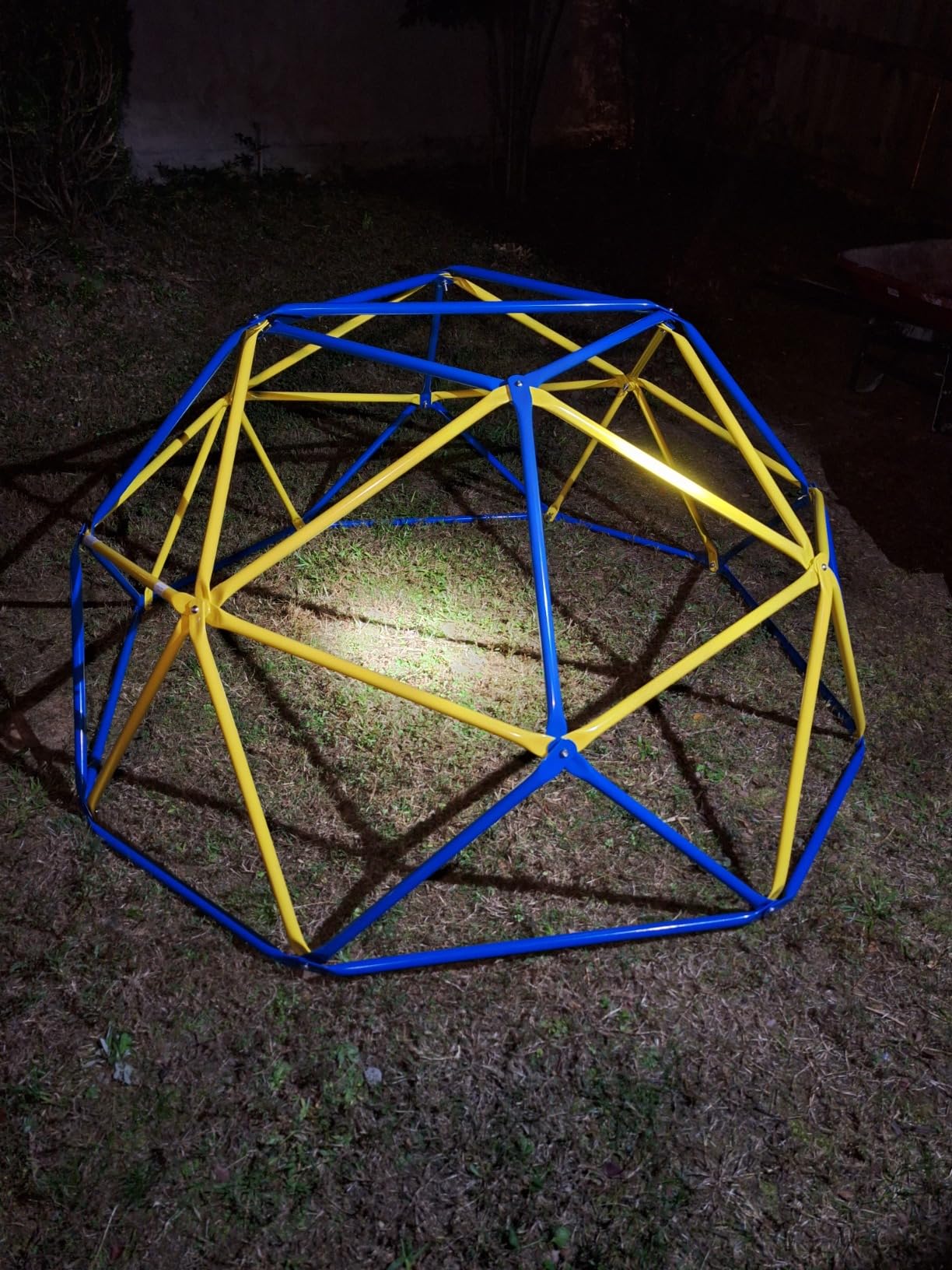
The geodesic dome is the shape most families end up with, and this is the version that has earned its reputation. It is a 10 foot wide, 5 foot tall powder-coated steel frame with HDPE climbing grips set at every junction, rated for 600 pounds total and built for ages 24 months through 10 years. The coating resists UV and keeps its color, which matters more than it sounds in a sun-exposed yard.
What sold us is how many kids it absorbs at once. Reviewers regularly report up to six children moving across it, and the structure doubles as adult exercise equipment for anyone willing to climb it. There is no deck to break, no slide to jam, and no plastic to crack in a freeze.
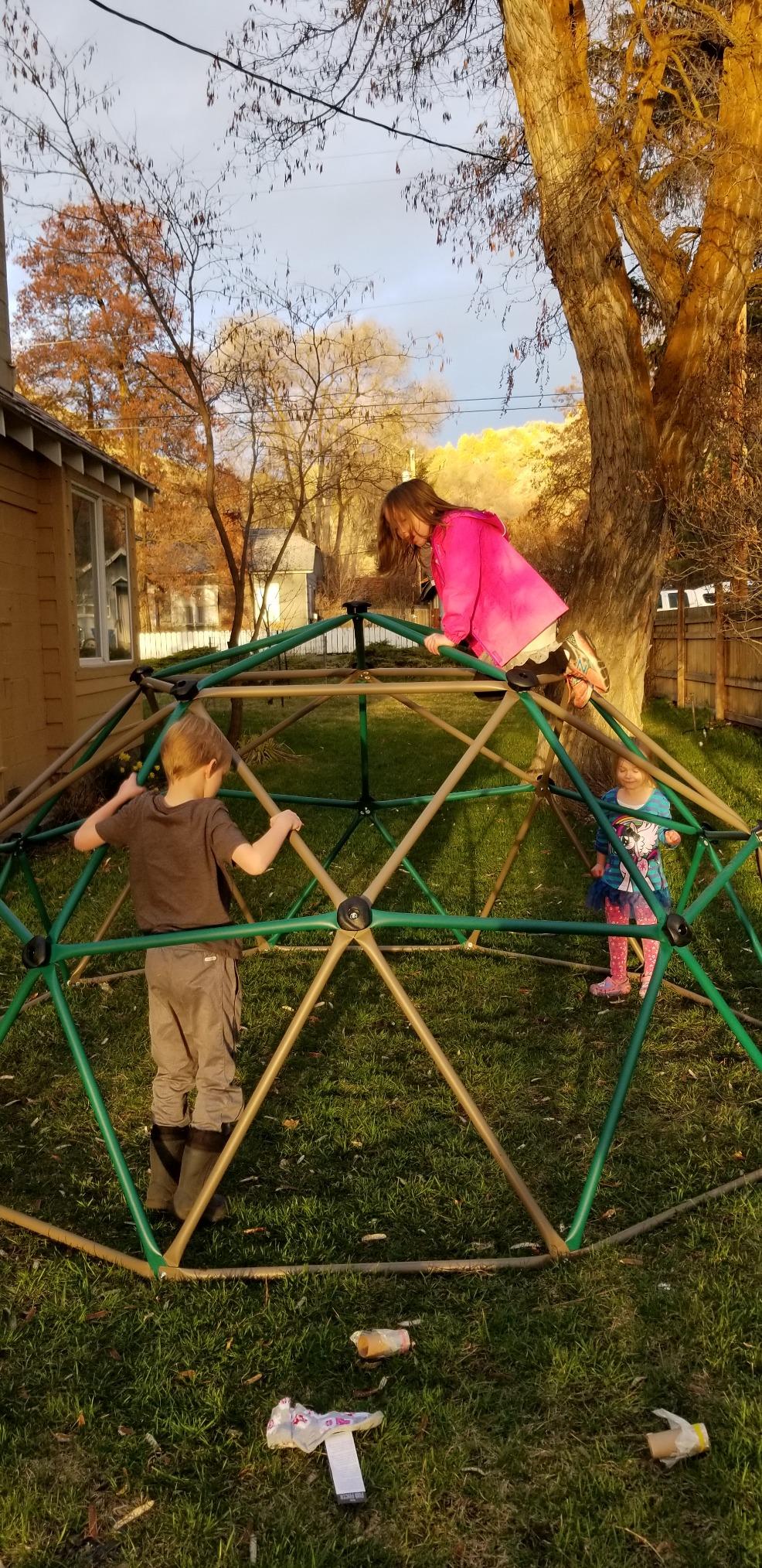
The honest downside is assembly. Owners describe two to four hours of work and confusion identifying the bolts, and a second complaint appears again and again: the steel gets very hot in direct summer sun. Put it in a spot that gets afternoon shade and the second problem largely disappears.
Who the Lifetime Dome Works Best For
Siblings and friends sharing one structure is the sweet spot here, since the 600 pound rating and the open footprint mean nobody is queueing. It also ages well, moving from a four-year-old scramble to a nine-year-old hang in a single structure.
Reviewers note the dome is heavy at 104 pounds, so treat the spot where you build it as the spot where it lives. If you rent or expect to move, that is the deciding factor.
Who Should Pick Something Else
Families with a small patio, a balcony, or a yard under about 12 feet across will find the 10 foot footprint tight once you add the clearance space around it. Toddlers under three will also find the first horizontal bar higher than most plastic climbers place it.
If your budget only stretches to one structure and you want swings as well, the dome is not a playset. It is a climbing structure, and it is very good at that one job.
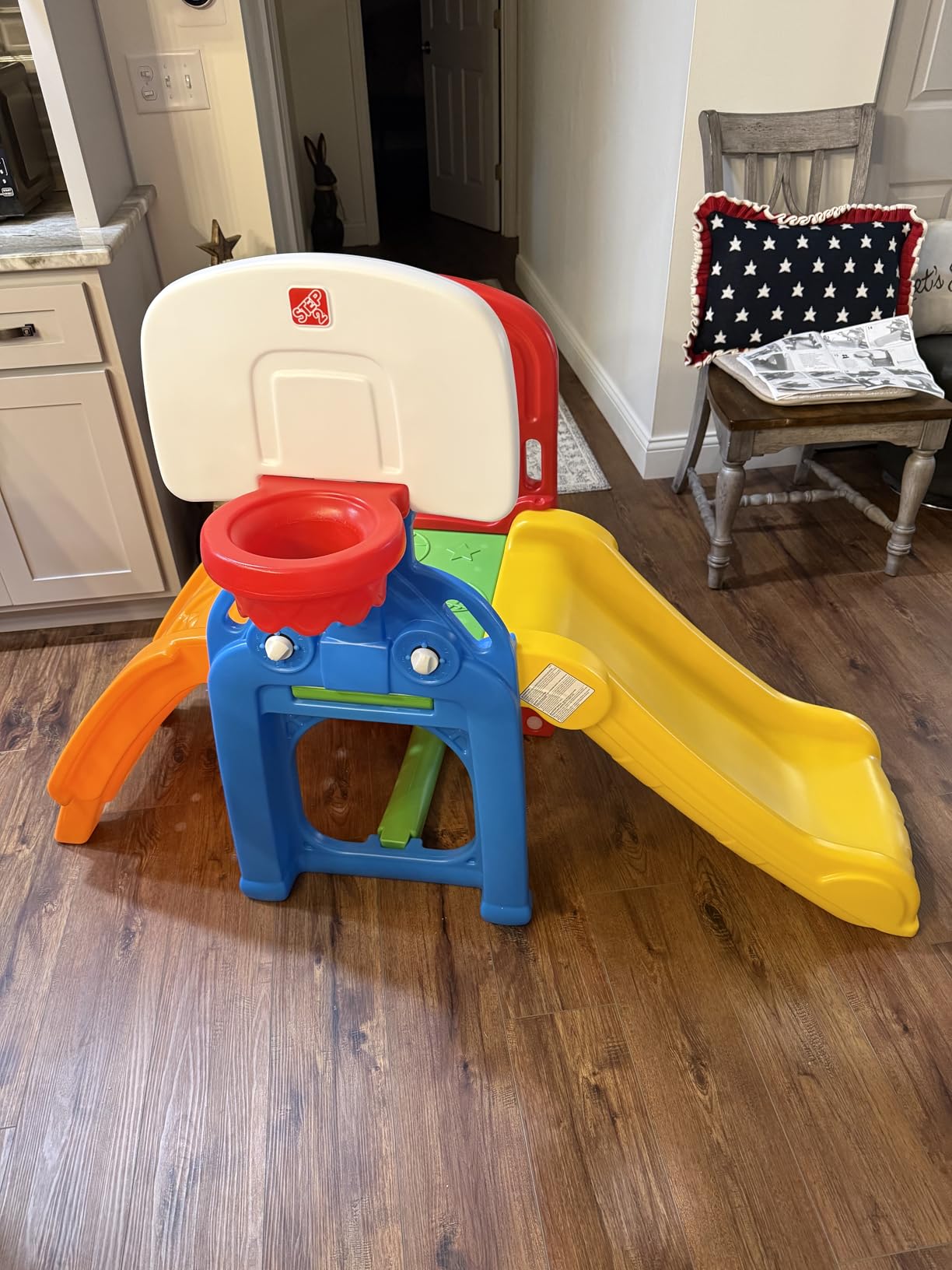
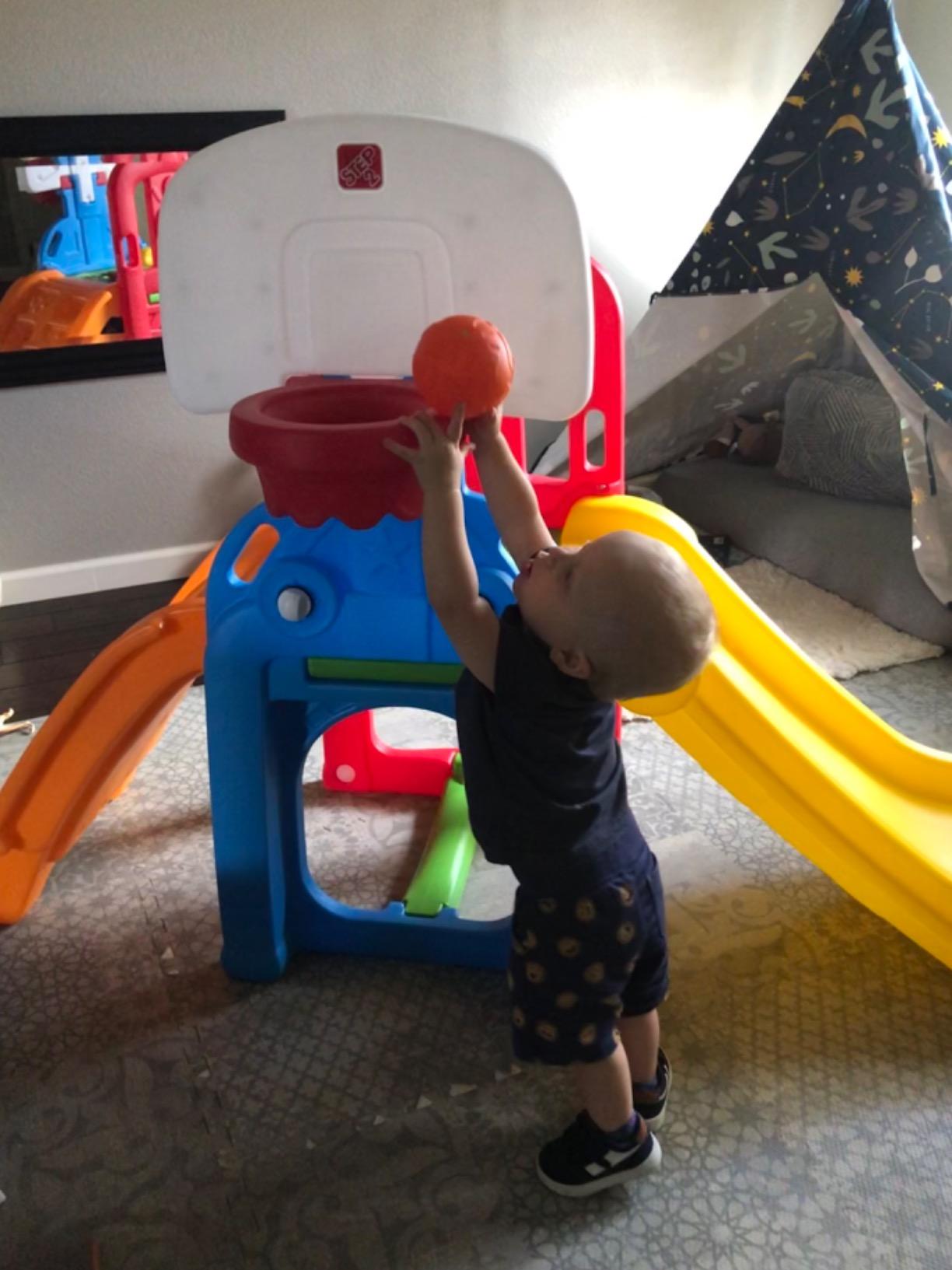
2. Step2 Game Time Sports Climber – Best for Toddlers Ages 2 to 6
Step2 Game Time Sports Climber, Kids Indoor/Outdoor Playset, Backyard Playground Set, Slide, Climbing Wall, Basketball Hoop, Outside Jungle Gym, For Toddlers 2-6 Years Old
62 x 30.5 x 42.5 inch footprint
Double-walled plastic
60 lb max weight
3 year warranty
Pros
- Low 42.5 inch height suits early climbers
- Slide and basketball hoop keep non-climbers busy
- Step2 says colors will not chip or fade
- Storage underneath for toys or hide and seek
Cons
- 60 lb max weight is the lowest capacity here
- Plastic flexes more than steel or cedar
- Older children quickly outgrow it
This is the structure that solves the cabinet problem. The summit sits at 42.5 inches, which is low enough for a two-year-old to reach the top rung with a step, and the entry steps have sure-grip rails rather than open rungs. With more than 4000 reviews averaging 4.7 stars, it is also one of the most proven plastic climbers on the market.
It occupies very little ground. At 62 by 30.5 inches, it fits beside a swing set or along a fence, and the plastic shell means a hose-down is the entire maintenance routine. The slide, basketball hoop, and goal area mean a second and third child have something to do while one climbs.
Is the 60 Pound Weight Limit a Problem?
For the stated age range of 2 to 6, it is not. Sixty pounds covers virtually every three, four, and five-year-old. The limit becomes a constraint around age eight, when a child is tall enough to reach the top but heavy enough to matter, and at that point the structure is generally too small for them anyway.
One more detail: Step2 rates this at 3 years, so it sits right at the boundary of when children start combining climbing with jumping. Supervise the early months of use.
What Parents Regret Most
Reviews point to two recurring gripes. Parents of older children note the structure becomes visibly small in a backyard shared by a four-year-old and a nine-year-old, and some mention the plastic feeling flexible compared with steel or cedar alternatives.
Check the space before ordering. A playset this size invites you to add to it later, and those expansions cost more than buying the larger structure up front.
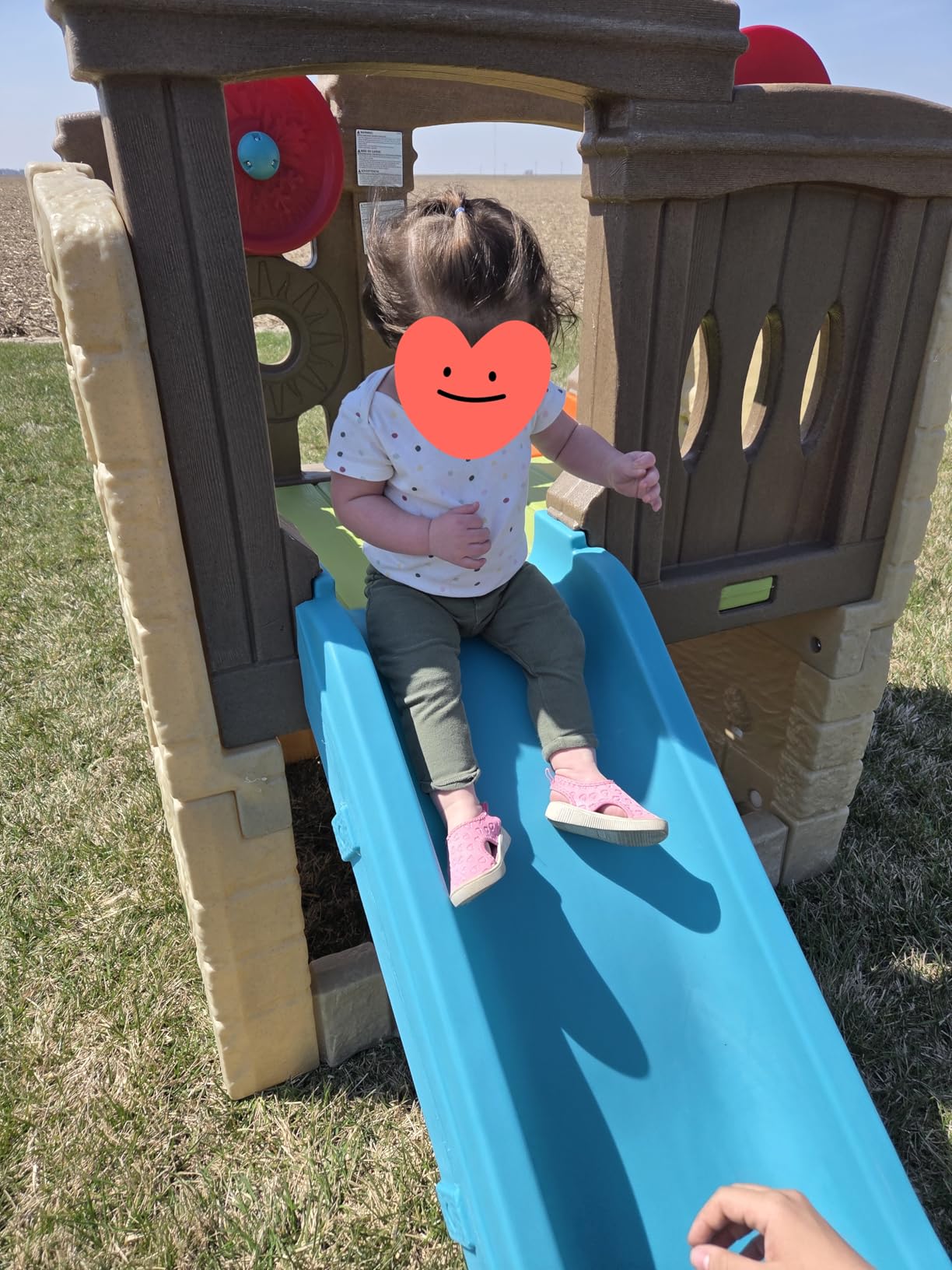
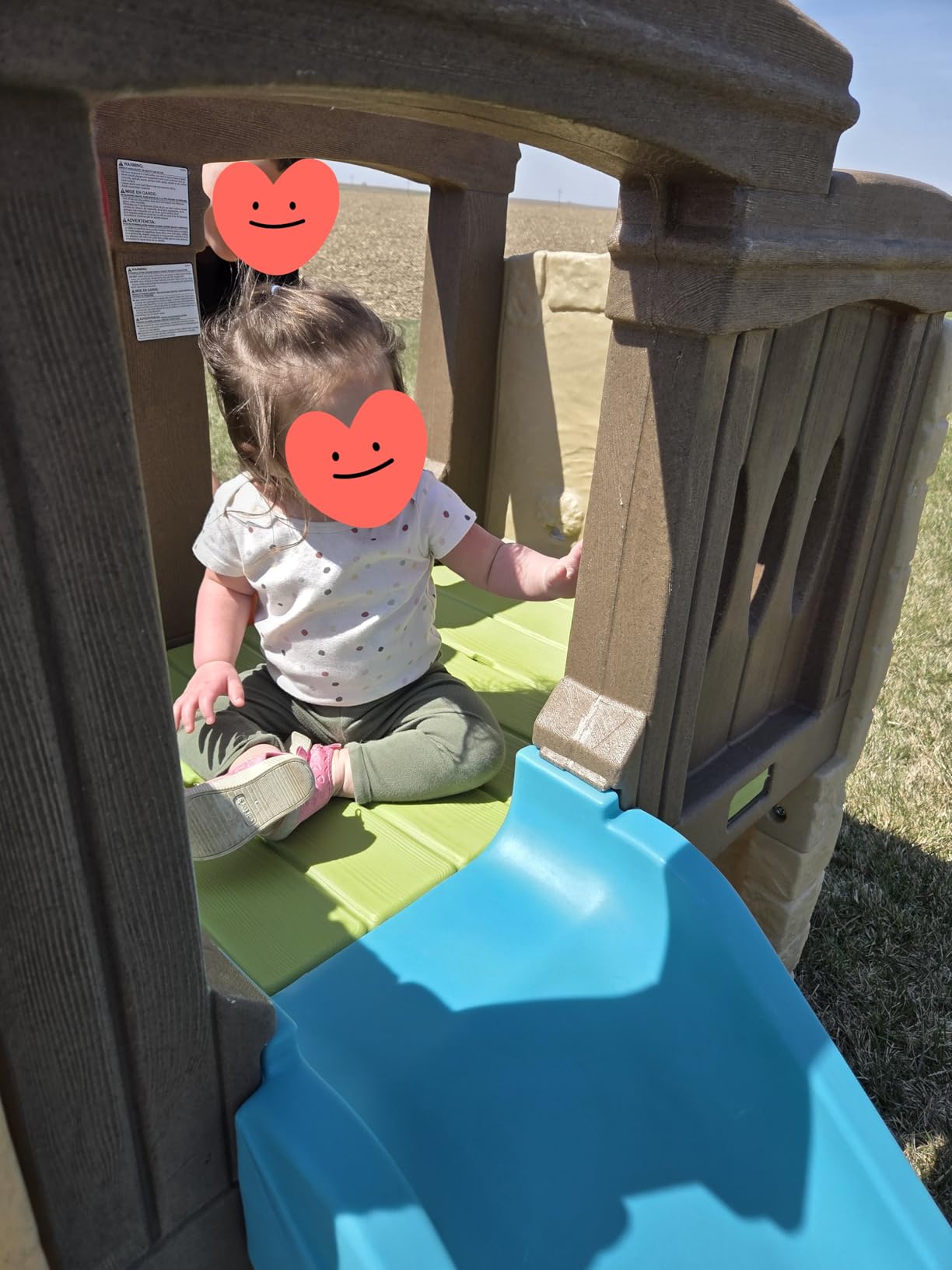
3. Step2 Woodland Climber II – Top Rated Multi-Activity Toddler Playset
Step2 Woodland Climber II Kids Playset, Ages 2 –6 Years Old, Toddler Slide and Climbing Wall, Outdoor Playground for Backyard, Sturdy Plastic Frame, Easy Set Up
75 x 47 x 53.75 inch footprint
Double-walled plastic
Ages 2-6
3 year warranty
Pros
- Roomy deck gives three or four kids space at once
- Hideout underneath adds non-climbing play
- Earthy colors and wood-grain texture blend outdoors
- Rinses clean with a hose
Cons
- Assembly is tricky and time-consuming
- Steering wheels can be hard to spin
- Costs more than simpler plastic climbers
The Woodland Climber II steps up from the simple plastic climber and puts a full playset deck at 53.75 inches. Kids climb the wall, cross the deck, work the two steering wheels, and drop down the slide, with a lower hideout underneath for storage or fort play. Step2 rates it for ages 2 through 6 and backs it with the same 3 year limited warranty as its smaller climbers.
Reviewers consistently call it sturdy, and the nature-inspired earthy palette is a genuine plus in a yard that is mostly grass and fence. At 75 by 47 inches it needs more room than the Game Time Sports Climber but far less than any playset with swings.
How the Deck Changes Play
The roomy deck is the difference that families notice. Two children can be up top at once, which removes the bottleneck that makes small climbers frustrating in a sibling pair. The hideout underneath adds a quiet space, so a two-child household can split their energy instead of competing for one ladder.
The lower hideout also doubles as toy storage, which matters more than it sounds in autumn when everything ends up under a cover.
The Assembly Question
This is where reviews get specific. Owners describe assembly as challenging and time-consuming even with two adults, and some mention the steering wheels are hard to spin. Set aside a couple of hours and build it in one go rather than trickling through it over a week.
Once assembled, the complaints fade. The plastic is double-walled and rated not to chip, fade, crack, or peel, so the maintenance story is as simple as the structure is to clean.
4. Simplay3 Young Explorers Climber – Best Compact Climbing Wall for Small Yards
Simplay3 Young Explorers Adventure Climber and Slide – Indoor Outdoor Backyard Playset for Toddlers and Kids
70 x 28.5 x 49.5 inch footprint
Weather and UV resistant
180 lb max weight
Ages 18 months to 6 years
Pros
- Narrow 28.5 inch width fits tight side yards
- Works indoors or outdoors
- Highest weight rating among the plastic climbers
- Sand platform adds a second activity
Cons
- Sand platform needs buying separately
- 52.4 lb unit weight is awkward to reposition
- Slippery when wet
This is the answer when the yard is the constraint. The Young Explorers Climber measures 70 by 28.5 by 49.5 inches, and at under three feet wide it slots against a fence or between two trees where a dome simply will not go. Simplay3 rates it from 18 months to 6 years with a 180 pound maximum weight.
It is built from double-wall plastic with rounded edges and is explicitly weather and UV resistant, which is why we put it in a roundup about outdoor walls. It also fits through a standard doorframe, so families with a garage or finished basement can use the same structure in two places across the year.
Why the Narrow Width Matters
A 10 foot dome needs roughly 20 feet of clear space once you honor the six-foot use zone on every side. This structure needs a fraction of that. Reviewers highlight how well it works in narrow side yards and on patios, and the two-tiered platform with ground level entry gives a younger child a way up without help.
At 52.4 pounds, two adults can reposition it, but it is not a one-person job. Decide on the location before you unpack the box.
Sand or Mulch Underneath
The platform is designed for a sand pit, and the sand is not included. For a proper surface you want nine inches of loose-fill material in the fall zone, or engineered wood fiber to the same depth. Loose-fill is far cheaper to add later than replacing a paved patio, so plan for it.
One practical note from reviews: the surface gets slippery when wet, so a canopy or a covered section helps in rainy seasons. Otherwise the UV rating and the American manufacturing are the reasons this one made our list.
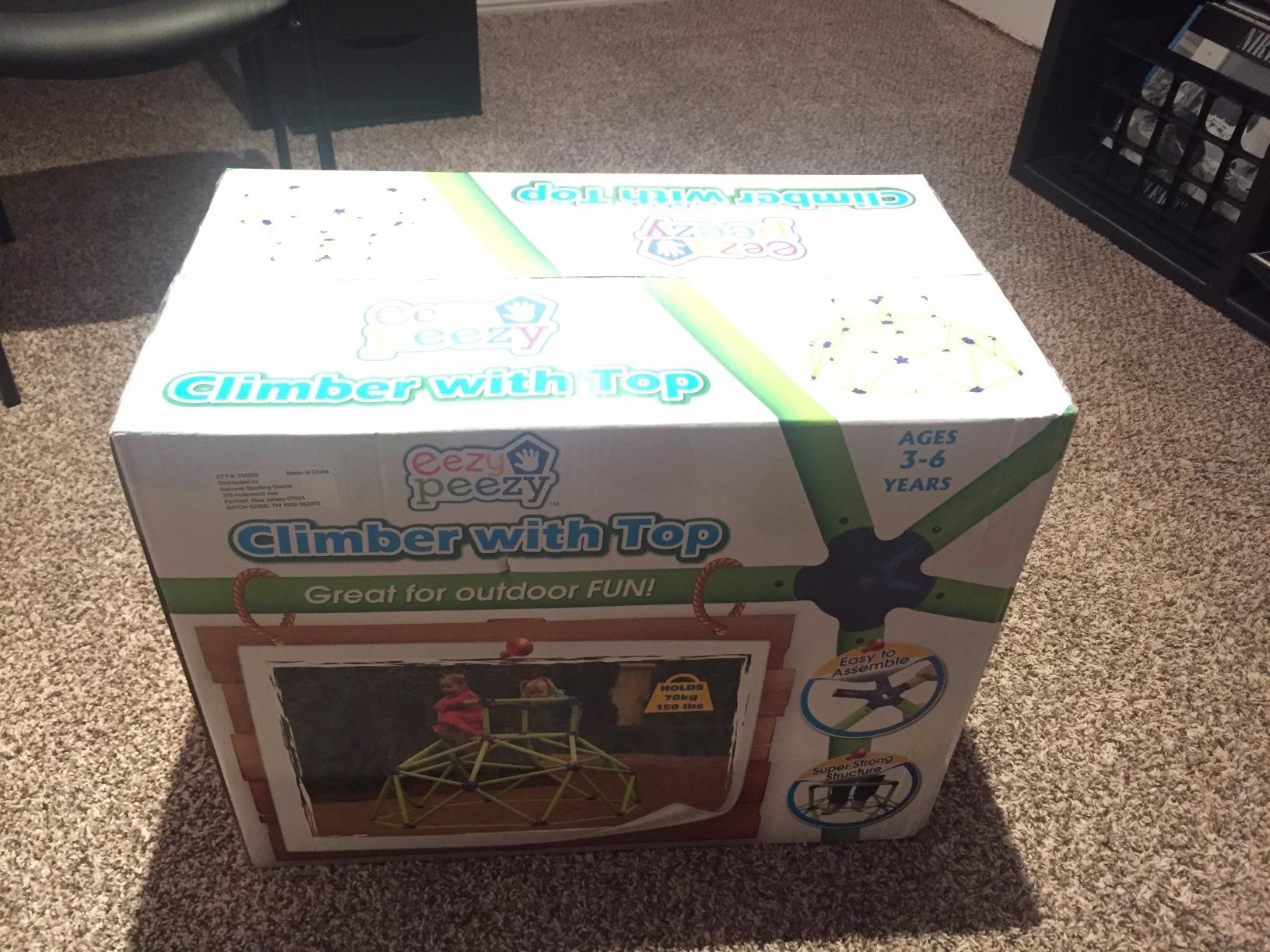
5. Eezy Peezy Climber with Top – Best Value Pick for Ages 3 to 6
Eezy Peezy Climber with Top – Active Indoor Outdoor Play Set Climbing Dome Equipment Toys – Fun for Kids Ages 3 to 6 Years Old, Green and Blue
70 x 46.6 x 65.5 inch assembled
Interlocking plastic tubes
150 lb max load
Ages 3-10
Pros
- More than 6000 reviews give a reliable read
- 27 lb weight means one adult can move it
- No tools needed for the interlocking tubes
- Works indoors on rainy days
Cons
- 150 lb max load is low
- Anchors are not included
- Only a 6 month warranty
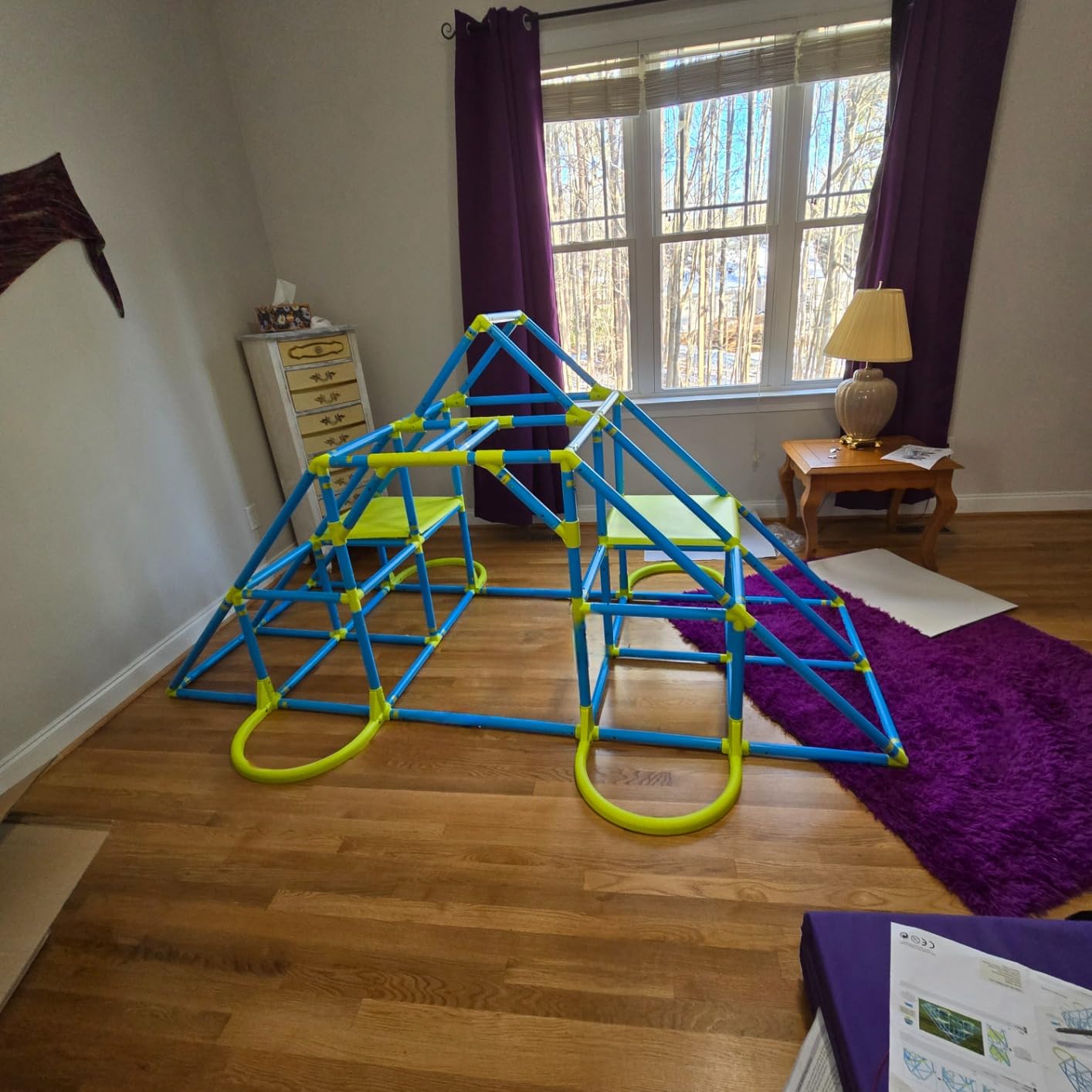
With more than 6300 reviews, the Eezy Peezy is the most reviewed structure in this guide, and that volume matters because the pattern in the reviews is very consistent. Parents like that it assembles without tools, that it weighs only 27 pounds, and that the same dome works on a patio, in a garage, or on grass.
The climbing top is a network of interlocking plastic tubes with double self-locking springs and UV protection, rated for 150 pounds and ages 3 through 10. It comes in several color variants, and the dome shape keeps the fall height short relative to a wall.
Portability Is the Real Feature
Every other dome on this list weighs 47 pounds or more. At 27 pounds, this one can be dragged to a different corner of the yard, taken inside for winter, or shifted when you need the space for something else. Families in apartments with a shared terrace report using it exactly this way.
The tube design is flexible in a good way, and the dome profile means a child at the top is only about four feet up rather than eight.
What to Watch Out For
Anchors are not included. That is the single most important thing to know before this goes on a lawn, because a light plastic dome that is not anchored can shift. Buy the ground anchors separately and fit them on assembly.
The 150 pound limit and the 6 month warranty are the tradeoffs. For a two or three-year-old household that is a fair deal; for a family with a ten-year-old who will climb hard, look at the galvanized steel domes instead.
6. GIKPAL 6 ft Climbing Dome – Budget Pick for Ages 3 to 10
Climbing Dome Jungle Gym 6ft Outdoor Playset Kids Playground Equipment
72 x 72 x 36 inch footprint
Galvanized steel
600 lb capacity
3 year warranty
Pros
- 600 lb rating on a compact 6 ft footprint
- Rust-resistant and weather-resistant steel
- Grips cover the screw heads at each junction
- Assembly gloves included
Cons
- Instructions are confusing for first-time builders
- Two people are needed to assemble
- Metal heats up in direct sun
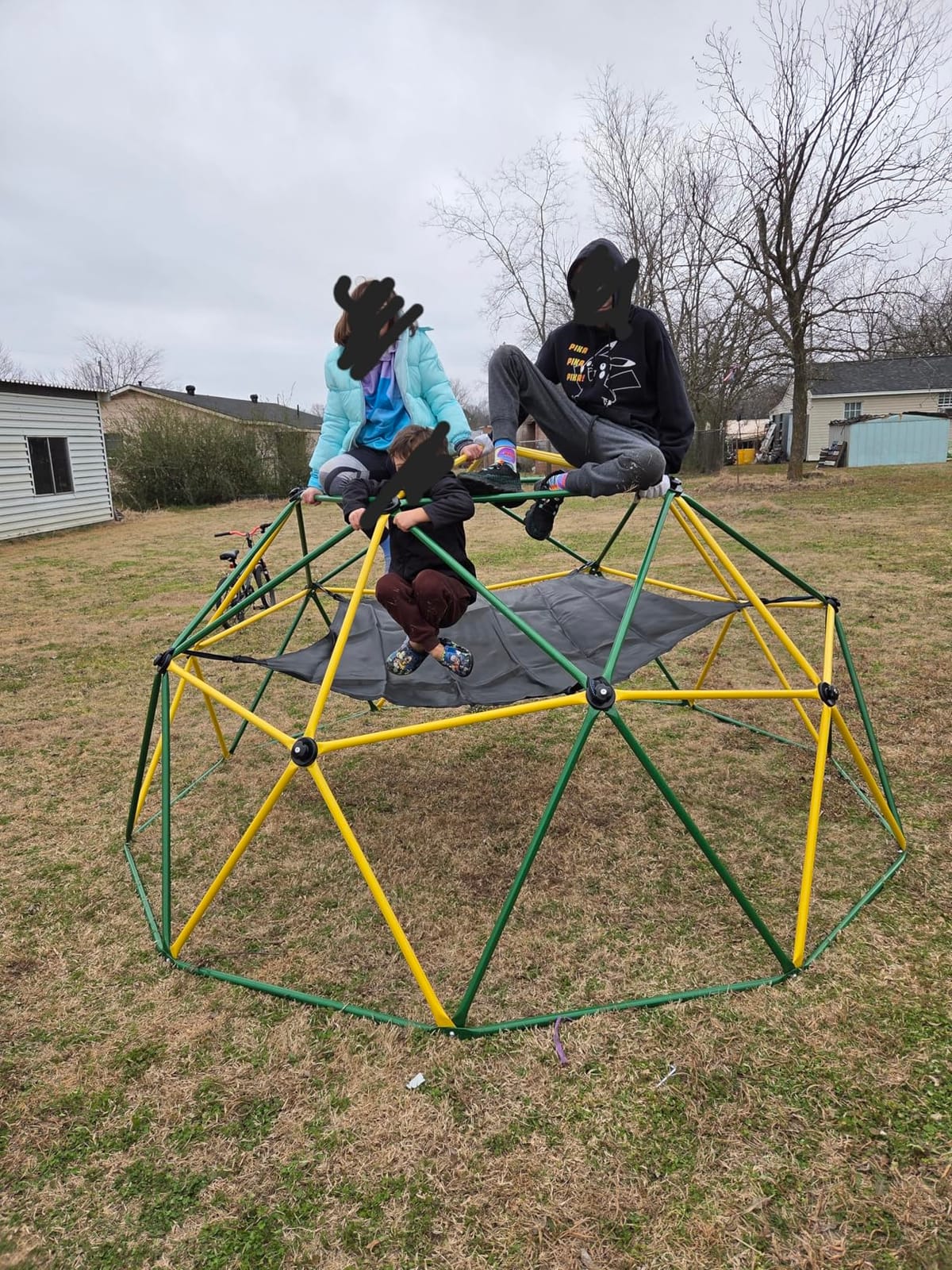
Most parents assume a dome has to be 10 feet across. This 6 foot version is the exception, at 72 by 72 by 36 inches, which makes it a genuinely compact option that still carries a 600 pound load rating for two or three children. The frame is rust-resistant and weather-resistant galvanized steel with black climbing grips, and it carries a 3 year warranty that matches the other galvanized domes on this list.
The detail we like most is at every bar junction, where a climbing grip covers the screw head. That removes a snag point that is easy to overlook on cheaper domes, and parents mention it as a reason the structure holds up.
Small Footprint, Real Capacity
The math is what makes this interesting. A 600 pound rating in a 6 foot footprint means the load is concentrated in a smaller frame, so anchor it well and check the ground anchors are tight. Several reviewers note that the structure does not flex the way plastic tubes do.
For a yard where a 10 foot dome would eat the lawn, this is the compromise that still feels sturdy under a nine-year-old.
Assembly Is the Tradeoff
Reviews are consistent on one point: the instructions are confusing. Expect to need two people, and follow the step order carefully. GIKPAL includes assembly gloves, which tells you they expect hands to get scraped during the build.
Budget for time rather than money on this one. The structure itself is a good value; the afternoon it takes to assemble is the real investment.
7. Step2 Skyward Summit – Best True Rock Climbing Wall for Ages 4 to 8
Step2 Skyward Summit for Kids, Climbing Wall Playset for Toddlers, Ages 4 –8 Years Old, Easy to Assemble Kids Outdoor Playground for Backyard
6.5 ft four-sided rock wall
100 plus sqft climbing area
300 lb max weight
Ages 4-8
Pros
- Only true vertical climbing wall in this guide
- Junior grips sized for small hands
- Four sides means four kids can climb at once
- Reviewers report 10 plus years of use
Cons
- Instructions are widely criticized
- Assembly takes two to four hours
- Cargo nets are fiddly to fit
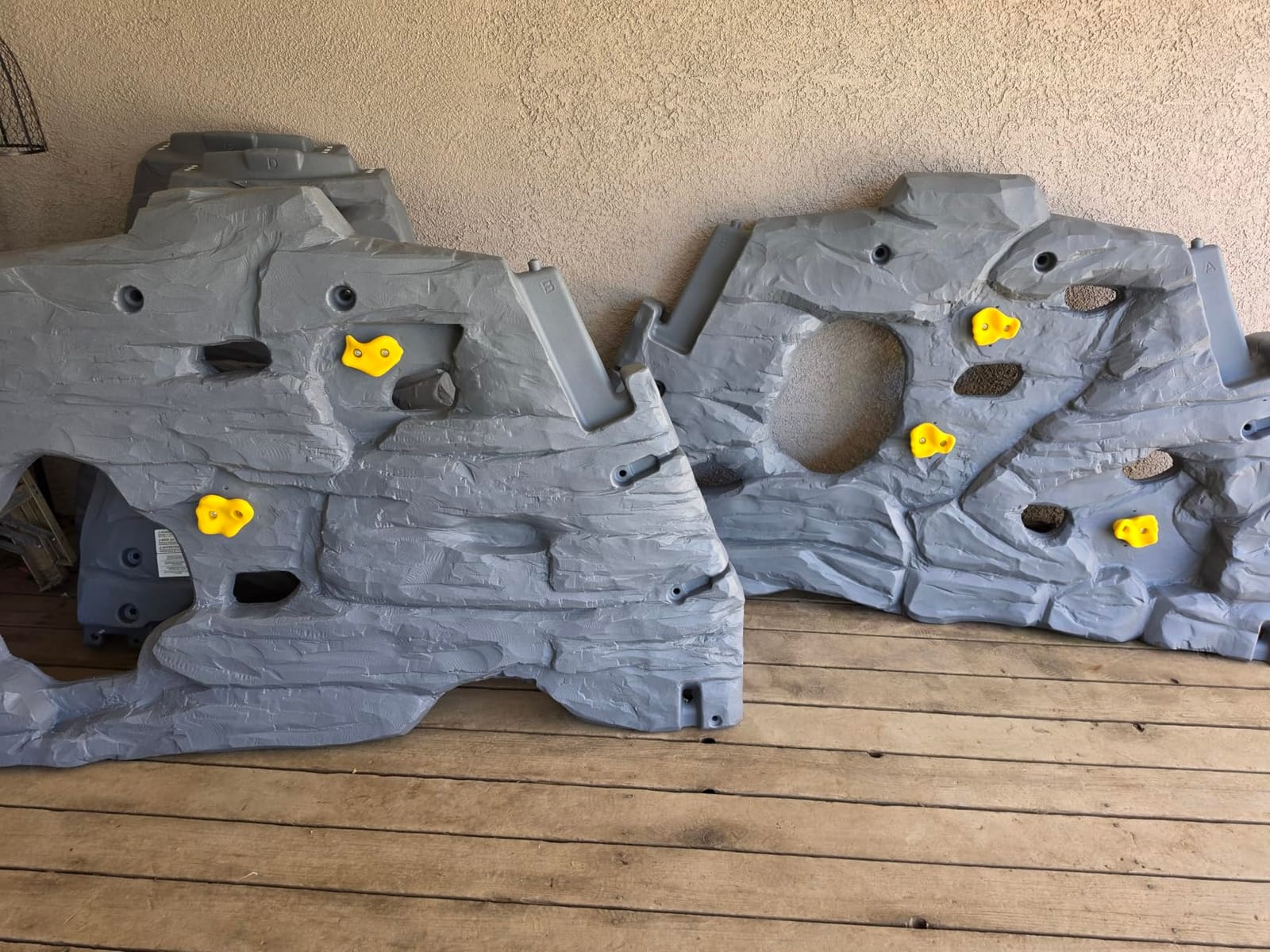
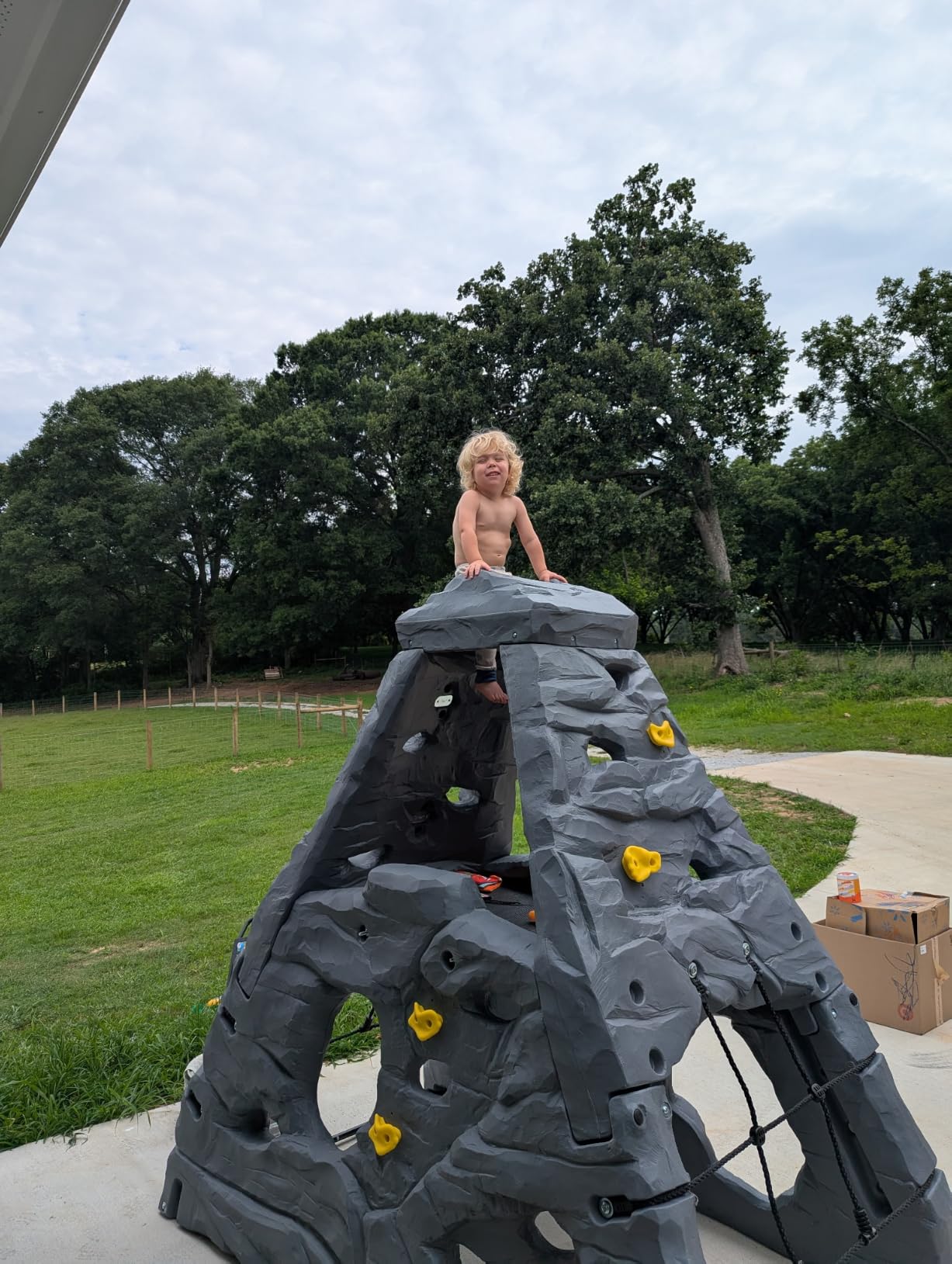
If the word wall has to be taken literally, this is the one. The Skyward Summit has a 6.5 foot four-sided rock climbing wall with over 100 square feet of climbing area, a summit platform with two cargo nets and a floor net, nine hand grips, and a rated capacity of 300 pounds for up to four children at once. Step2 rates it for ages 4 through 8.
The junior grips are the detail that separates it from the domes. Climbing is a grip-strength activity before it is a height activity, and holds sized for a seven-year-old’s hand are what make the difference between a child who climbs the wall and a child who sits on the base.
Why a Four-Sided Wall Beats a Dome
A dome lets a child go over the top and fall onto a frame. A wall lets them work a route, rest, and try again, which is a different kind of problem-solving. The 100-plus square feet of area means four kids can climb without queueing, and the top platform with cargo nets gives the wall a destination rather than a summit.
Reviewers also mention the plastic flag and the two included anchors. Take the anchors seriously, because a wall that high needs them.
Plan for a Long Build
The most consistent complaint across hundreds of reviews is the instructions. Owners describe them as very poor, and report two to four hours of assembly with some needing to modify the build. The cargo nets are the fiddliest part, so read the net section before you start.
Everything else about the reports is positive, including longevity. Multiple owners describe structures still in use after a decade, which is why it stays on this list despite being the heaviest plastic unit at 137 pounds.
8. VEVOR 10 ft Geometric Dome Climber – Best for Large Yards and Many Kids
VEVOR Climbing Dome for Kids 3 to 10 Years Old 10FT Geometric Dome Climber
10 ft diameter x 60 inch tall
Hot-dip galvanized steel
750 lb load capacity
Ages 3-10
Pros
- 750 lb rating handles four or five kids
- Includes a swing and detachable hammock
- ASTM and CPC certified
- Installation tools and video guides included
Cons
- 80 lb weight makes it hard to move
- 10 foot footprint needs a large lawn
- Assembly needs two people
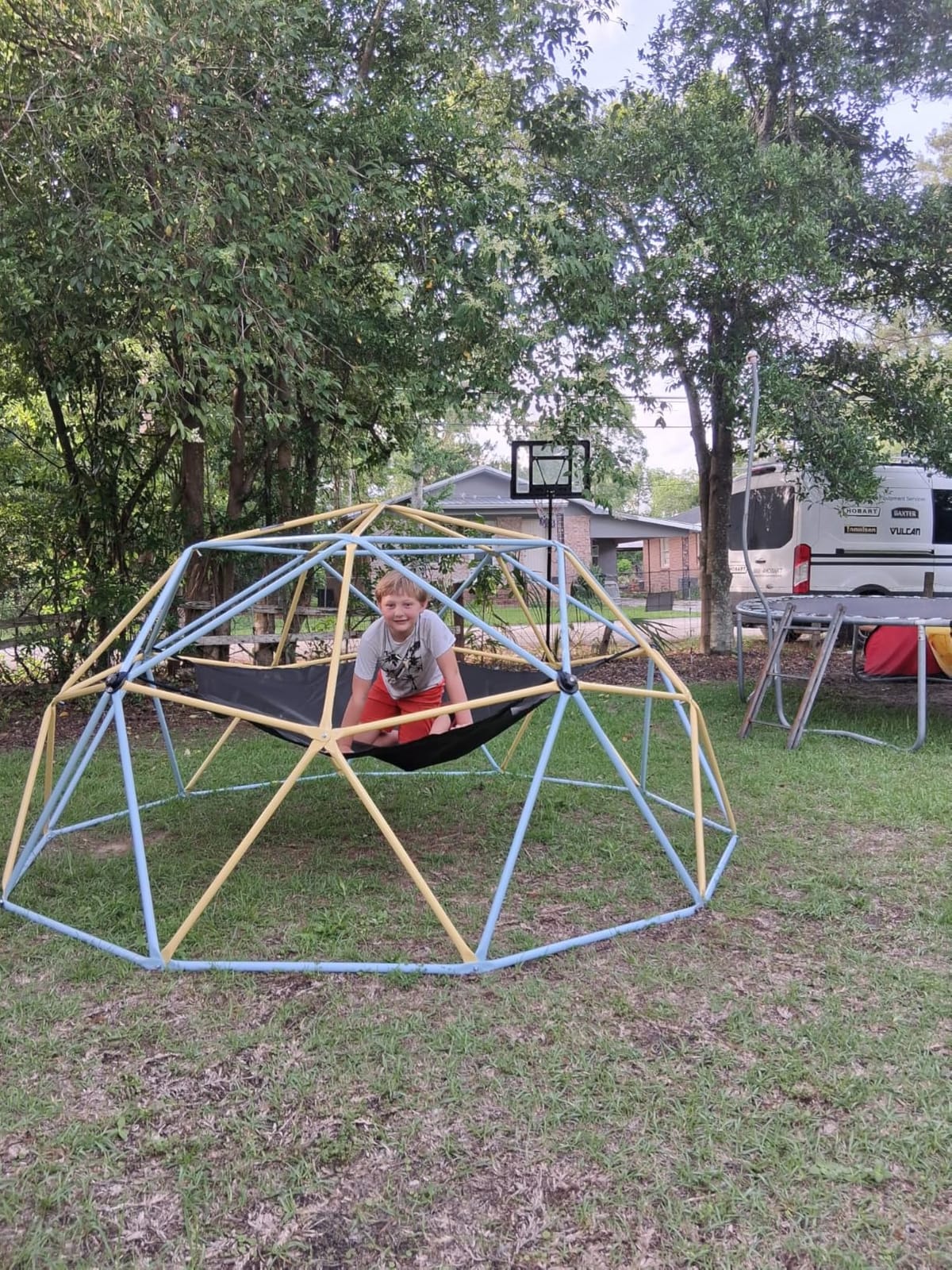
This is the dome to buy when the lawn can take it. The VEVOR 10 foot model stands 60 inches tall across a 120 by 120 inch footprint, uses thickened steel with hot-dip galvanizing and a coating, and carries a 750 pound load rating for children aged 3 to 10. It is certified to ASTM and CPC standards and comes with a swing and a detachable cushion or hammock.
The certification matters if you are near a shared yard, a daycare yard, or a street kids play on. It is also one of the few structures in this guide that combines climbing, swinging, and hanging in a single frame without needing a separate playset.
When the Extra Space Is Worth It
Four or five kids on the structure at once is the design target, and the swing and hammock additions turn it into a mixed-use play center rather than a climbing toy. If you are hosting other families regularly, that versatility is the argument for spending more.
The UV, rust, and corrosion resistance is what makes it a fair choice for a full-sun yard, and the new climbing handle design is reported as comfortable for small hands.
Size and Weight Are the Tradeoffs
An 80 pound frame that spans 10 feet is a serious object. Once it is assembled, moving it requires two adults, and the swing and hammock add more parts to install. Give the site a full 20 foot width once the use zone is accounted for.
Assembly is the least reported problem here, with installation tools, manuals, and video guides included. Families report it going together more smoothly than cheaper steel domes of the same size.
9. Hapfan 10 ft Climbing Dome with Saucer Swing – Best for Climbing and Swinging Together
Hapfan 10 ft Climbing Dome Swing Set with Saucer Swing for Kids 3-12
10 x 10 x 5 ft footprint
65 rust-resistant steel tubes
800 lbs total capacity
Ages 3-10
Pros
- Highest rated capacity in the roundup at 800 lbs
- Saucer swing rated to 400 lbs included
- Thicker tubes on the top five poles
- No additional tools required
Cons
- 10 by 10 foot footprint
- Two people recommended for assembly
- Bolt direction has to be right to work
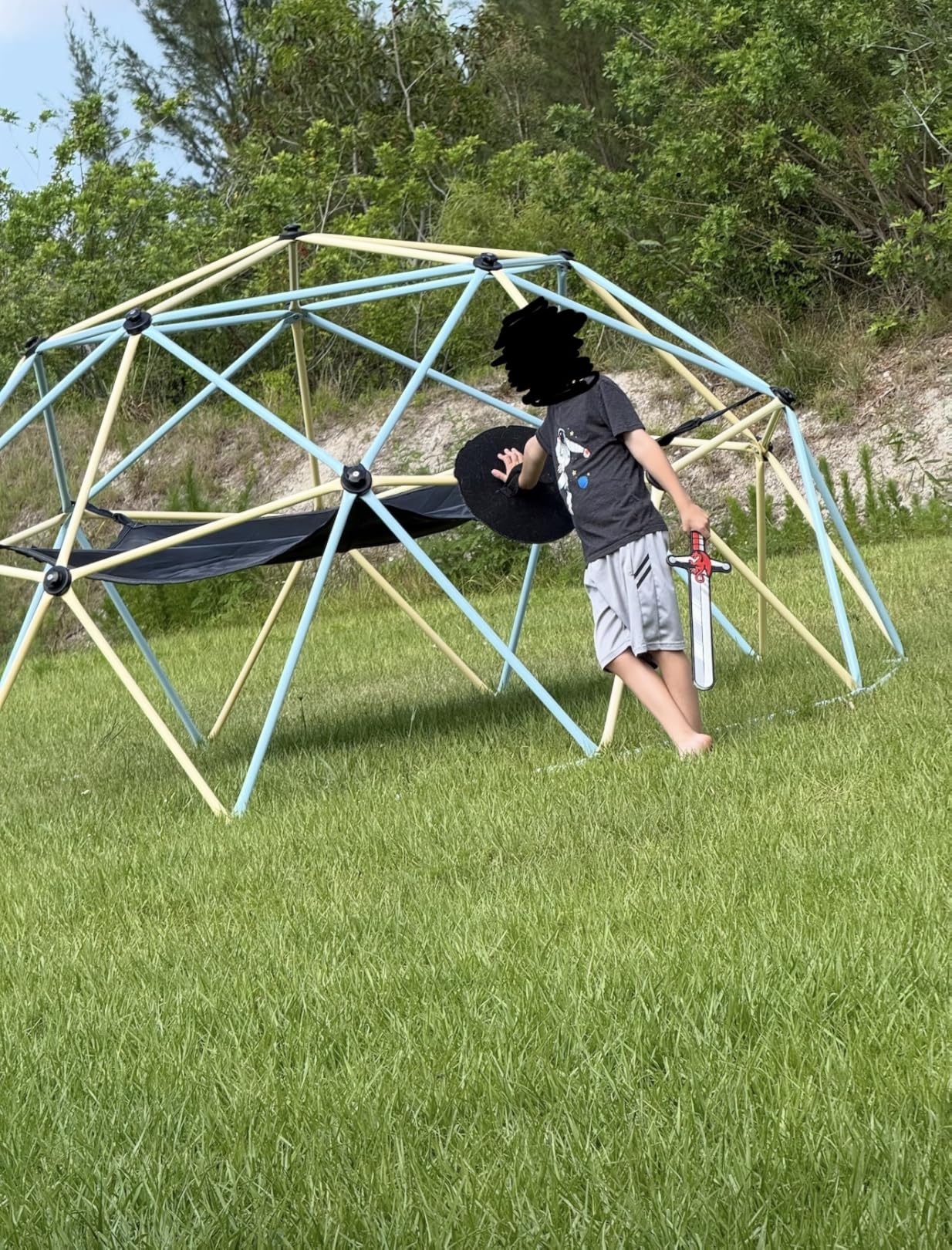
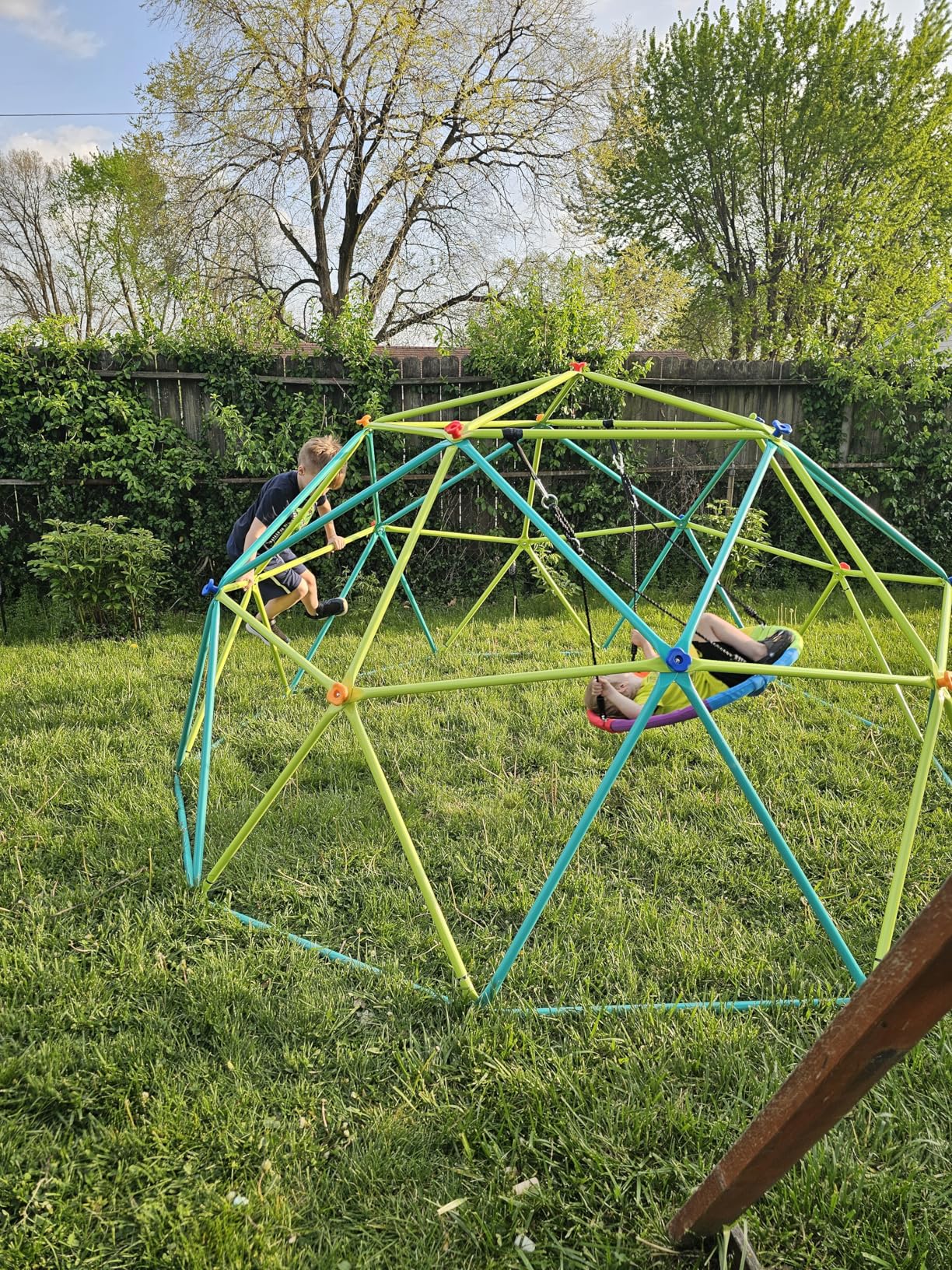
This dome prioritizes swings. It uses 65 rust-resistant steel tubes with the top five blue poles made from thicker stock, giving it an 800 pound total capacity, the highest figure in our roundup. A PP jumping mat and an Oxford fabric saucer swing rated to 400 pounds are included, and the structure is rated for ages 3 through 10.
That capacity figure is a whole-structure rating, not a per-child one. On this model the swing and the climbing frame share the load path, so a family with two heavy users on the swing at the same time as a climber is pushing toward that limit.
Swings With a Climber Built In
For families who would otherwise buy a dome and a separate swing set, this combines both in one 10 by 10 foot footprint. The saucer swing takes one large child comfortably, and the jumping mat underneath gives a soft landing for both climbing and swinging.
Owners also mention that the whole unit is movable enough to shift for mowing, which is a real advantage in spring and autumn.
Getting the Bolts Right
The single assembly warning worth repeating from reviews is that bolt direction matters. Get a tube into a socket with the bolt facing the wrong way and you will find out quickly, but the hardware is designed to be forgiving once the direction is correct.
No additional tools are required and a 3D setup video is provided, which makes this one of the more approachable large domes to put together. Budget for two adults and a clear 20 foot circle.
10. Backyard Discovery Buckley Hill Cedar Set – Best Wooden Playset with a Rock Wall
Backyard Discovery Buckley Hill Cedar Wood Swing Set with Wave Slide, Play Deck, Rock Wall Ladder, Belt Swings, Chalkboard, Canopy Roof, Outdoor Playset
107 x 123 x 92 inch footprint
100 percent cedar
5 year warranty
Ages 3-6
Pros
- Cedar resists rot better than pine or fir
- 5 year warranty is the longest in this roundup
- Rock wall ladder comes with 4 climbing holds
- Pre-cut and pre-drilled pieces speed the build
Cons
- Assembly is time-consuming
- Cedar needs periodic sealing
- Large footprint for its feature set
- Stain color varies between units
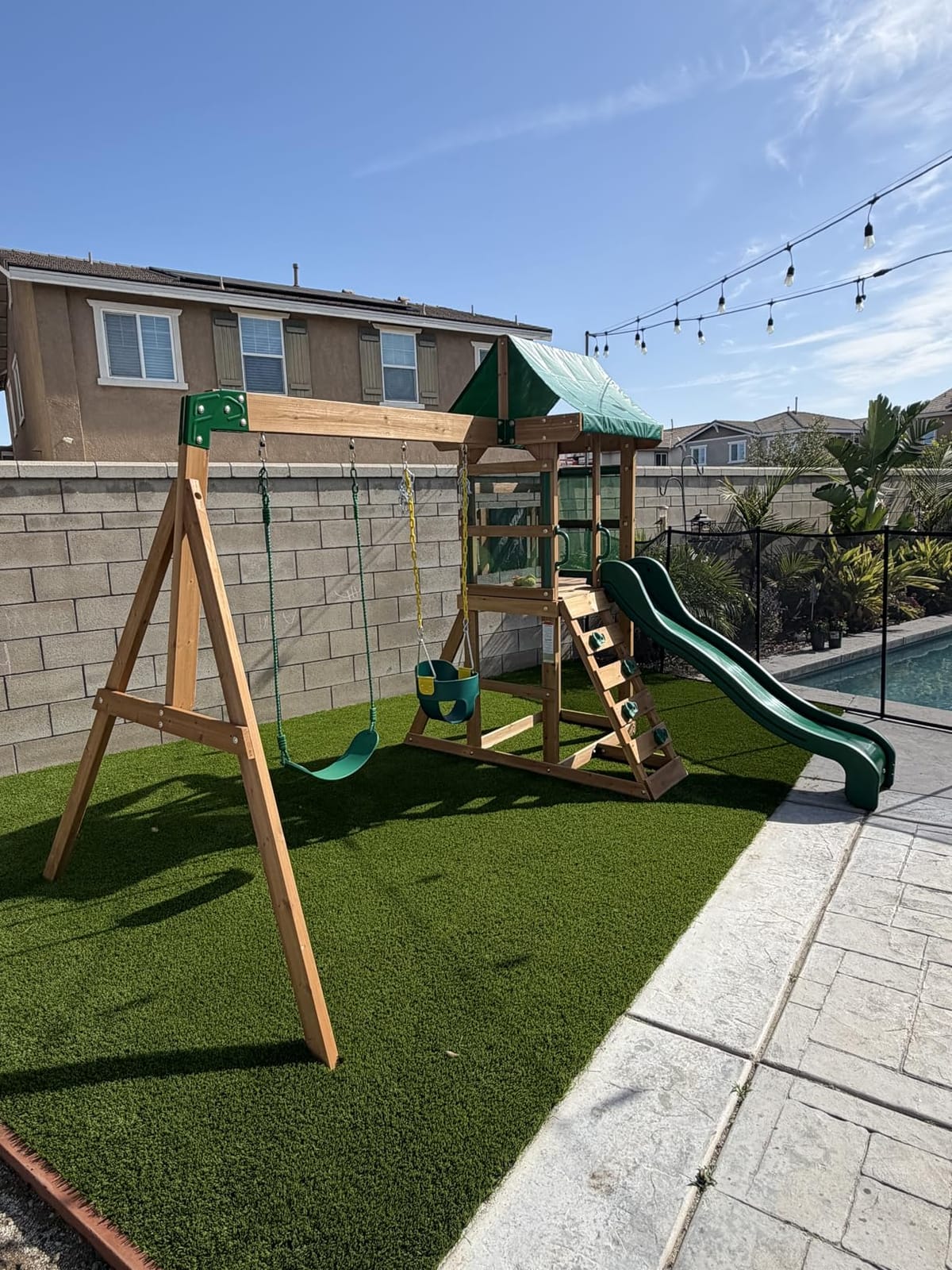
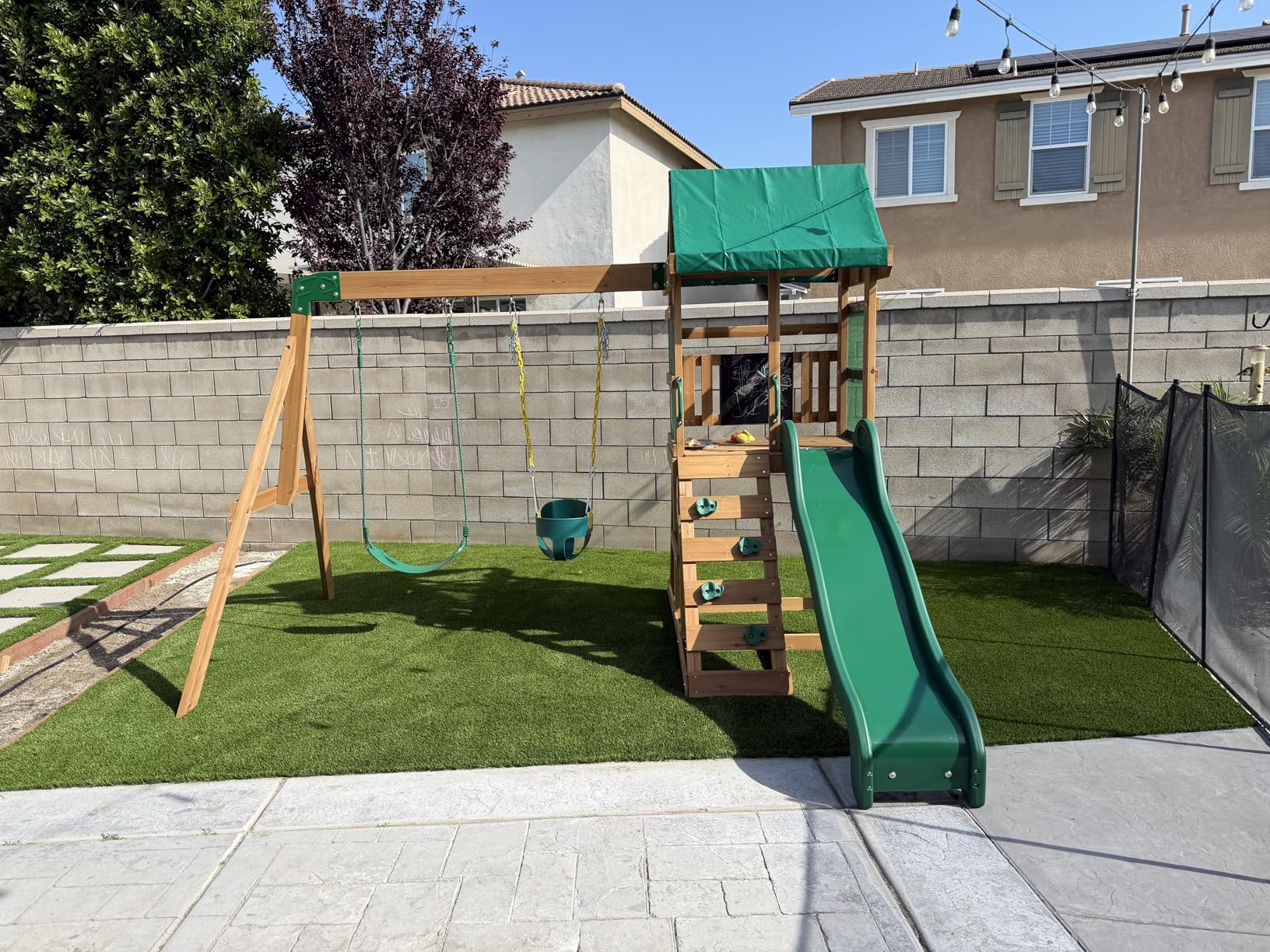
Wood changes the character of a backyard structure completely, and this cedar set is the most popular version of that shift, with over 3000 reviews. It is rated for ages 3 through 6 and covers a 107 by 123 inch footprint with a canopy roof, a raised deck, a 6 foot wave slide, two belt swings with pinch-free rope chains, and a built-in chalkboard.
The climbing element is a rock wall ladder with four climbing holds. That is fewer holds than a dedicated wall, so treat it as an access route to the deck rather than as a climbing surface in its own right. The 5 year limited warranty is the strongest coverage on this list.
What Cedar Changes About Maintenance
Cedar has natural decay resistance, which is why it is used instead of cheaper softwood in this category. It still needs attention, but not constant attention. Plan to check the stain and hardware each spring and wipe down the swing seats.
The tradeoff versus powder-coated steel is that wood needs sealing and can weather to a silver-gray tone. Families who like that patina find it pleasant; families who want the original color repaint or re-oil it every couple of seasons.
Is Four Climbing Holds Enough?
For a three-to-five-year-old getting onto a deck, yes. The holds are scaled for small hands and positioned as a ladder, and the rope chains on the swings are pinch-free, which shows the design was made with real children in mind.
If climbing is the main reason you are buying, the two cedar sets that follow have bigger rock walls. This one wins on swing variety, shade, and the fact that the pieces arrive pre-cut, pre-drilled, and pre-stained with a guided assembly app.
11. Backyard Discovery Mount Mckinley Cedar Set – Best Double Rock Wall for Big Families
Backyard Discovery Mount Mckinley Cedar Wood Swing Set with Wave Slide, Play Deck, Double Rock Wall, Rope Ladder, Web Swing, Belt Swings, Toy Telescope, Steering Wheel, Sandbox Area, Outdoor Playset
150 x 186 x 119 inch footprint
Double rock wall with 9 holds
1080 lb max weight
Ages 3-10
Pros
- Two kids can climb the double rock wall at once
- Nine holds give a real route rather than a ladder
- Up to 10 kids on the structure
- Sandbox
- telescope
- and three swing types
Cons
- 308 lb unit weight
- 150 by 186 inch footprint is enormous
- Assembly is a major project
- Sandbox sand is not included
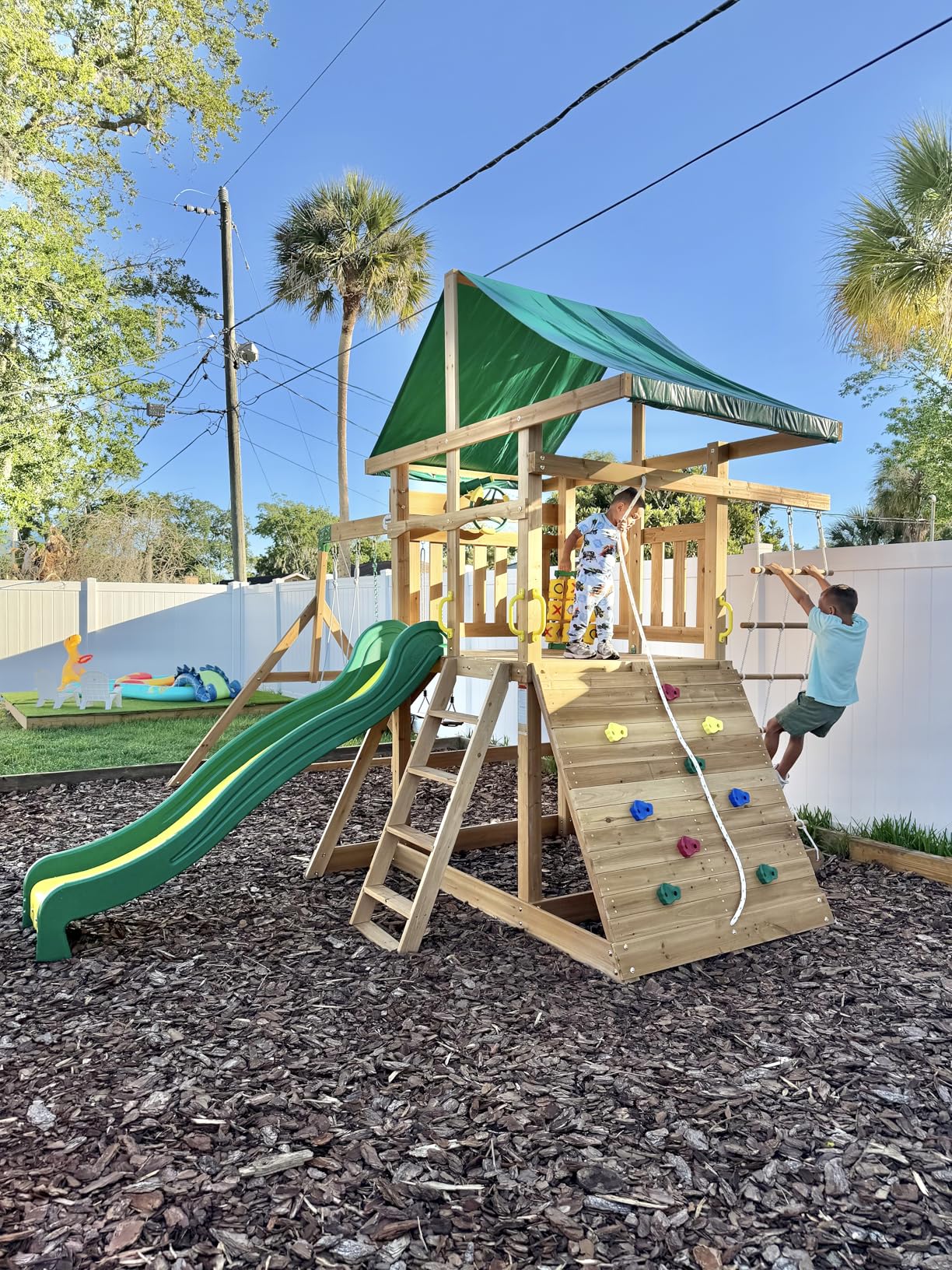
For a family that wants climbing to be the centerpiece rather than an accessory, this is the set. The Mount Mckinley is 150 by 186 inches with a 119 inch height, built entirely from cedar with a 5 year warranty, and rated for ages 3 through 10 with a 1080 pound maximum weight and room for up to 10 children.
The climbing side is a double rock climbing wall with nine holds and a rope assist, alongside a 6 foot rope ladder with wooden rungs, an 8 foot wave slide, two belt swings, a trapeze swing, a web swing, a shaded sandbox, and an upper deck with a telescope and steering wheel. Nothing about it is minimal.
Two Climbers at Once on the Rock Wall
A double rock wall is a genuine upgrade over a single face. Two children can climb independently, and with nine holds the routes have options, so an older child does not have to follow the exact path a younger one is using. The rope assist helps a nervous beginner get started.
The upper deck and sandbox extend the usable day, and the shaded sandbox is the feature that tends to keep it interesting through a summer afternoon.
Be Honest About the Project
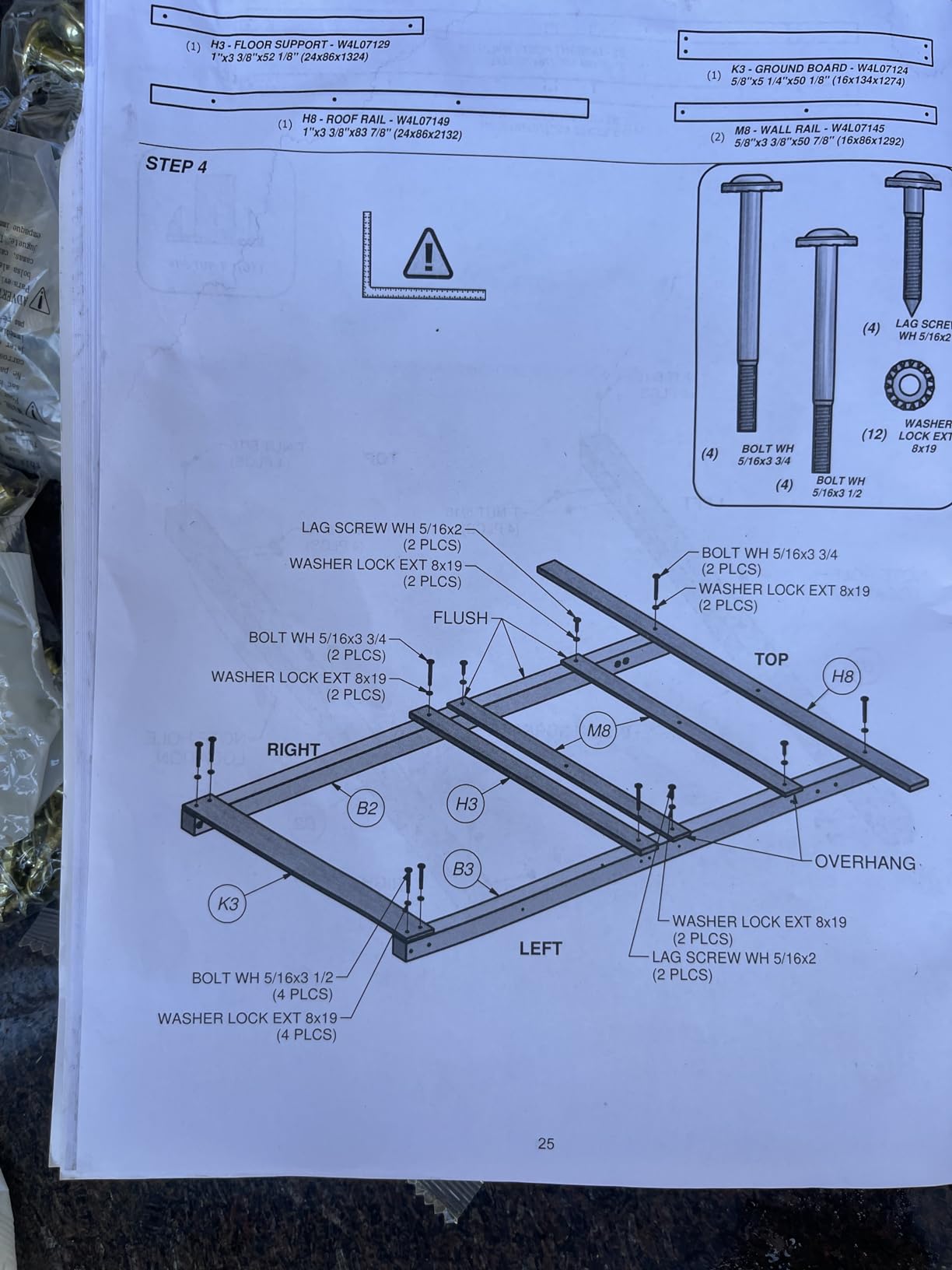
At 308 pounds, this is the heaviest item in the guide and the piece most families describe as needing professional installation. The BILT app guides the build, but reviewers still describe assembly as complex and time-consuming, and the 150 by 186 inch footprint needs a genuinely large yard.
Sand for the sandbox is not included either. Set that cost and the install day aside when you compare it to a dome, because the comparison is not close on a small yard.
12. TP Toys Explorer 2 Jungle Gym – Best Adjustable Wall That Grows with Your Child
Explorer 2 Jungle Gym Climbing Set with Adjustable Steel Frame, Weather-Resistant Canopy & Platform, Outdoor Playset and Playground Equipment for Kids Ages 3-12, 220 lbs Capacity
Frame adjusts from 22 to 47 inch
Height 53.5 to 82.5 inch
Galvanized steel
220 lb capacity
Pros
- Adjustable height is genuinely useful as kids grow
- Galvanized steel frame resists weather
- Collapses to a compact footprint when not in use
- Explorer playmat included
Cons
- 220 lb capacity is modest for older children
- Some stability concerns at full height
- Canopy may not hold in strong wind
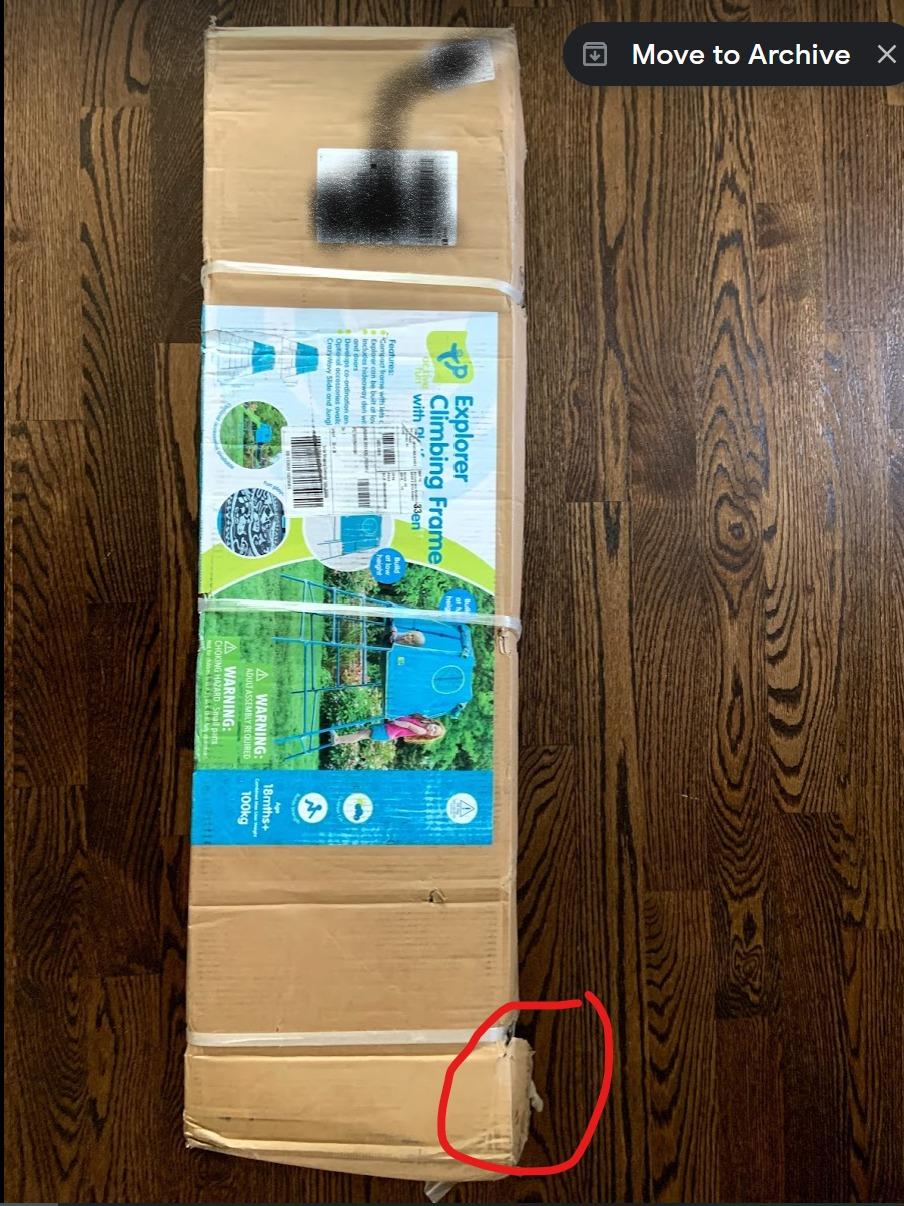
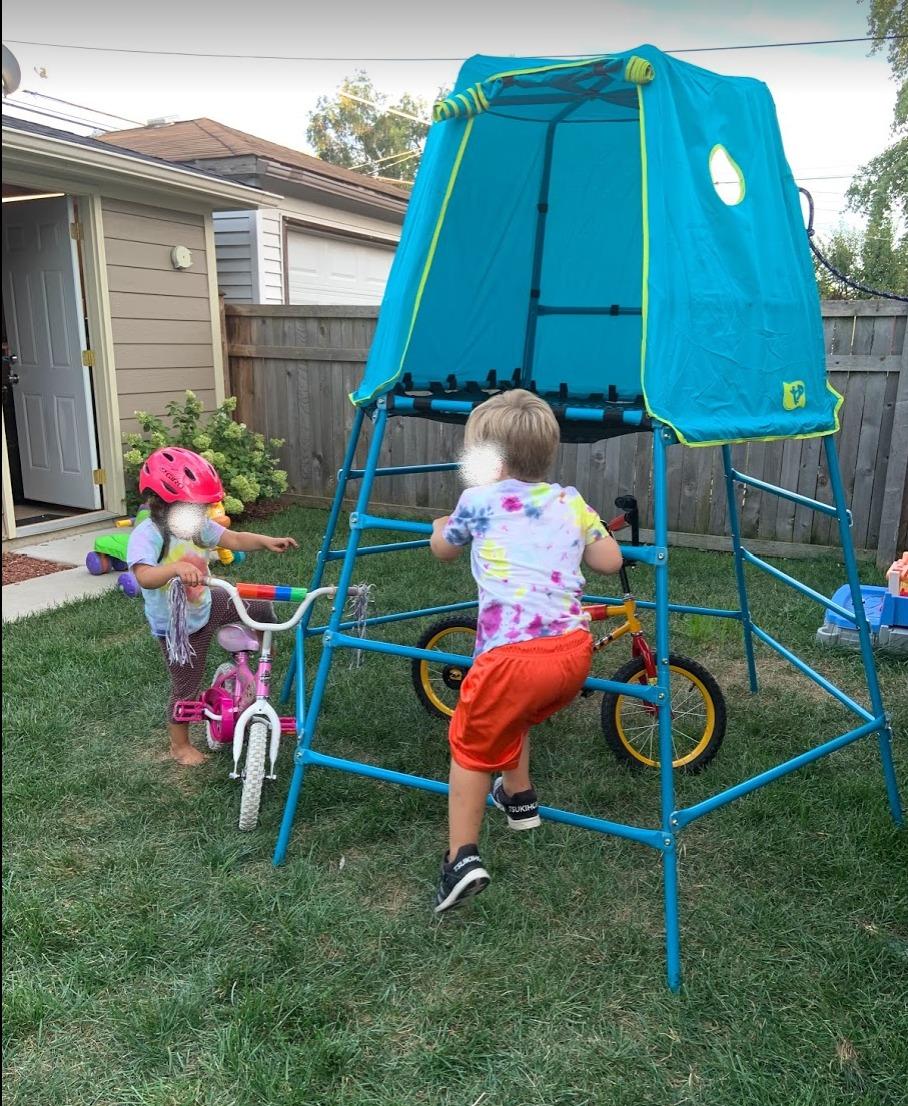
This is the only structure in the guide that changes as your child does. The Explorer 2 has an adjustable frame that expands from 22 inches to 47 inches, putting the top platform at either 53.5 or 82.5 inches, and TP Toys rates it for ages 24 months through 12 years with a 220 pound capacity and room for up to four children.
The frame is galvanized steel, and the set comes with a weather-resistant canopy, a vinyl platform, and an explorer-themed playmat. The climbing and hanging access points move with the frame, so a three-year-old uses the low setting and a nine-year-old uses the high one on the same structure.
Why Adjustable Height Beats a Fixed Frame
Fixed-height structures have a short useful life in family terms. A 22 inch frame suits a toddler and is a step for a school-age child; a 47 inch frame is a play structure for a two-year-old. Adjusting the same frame moves that window without buying anything.
It also folds down when you are not using it, which makes this a reasonable choice for a yard that has to work for other things. The playmat that comes with it softens the landing area as well as defining the play space.
Limits to Know Before You Buy
Two issues come up in reviews. Some owners report stability concerns at the full 47 inch height, so check the frame locks are fully engaged and re-check them after the first month of use. Reviewers also note the metal frame can get hot and the canopy may not hold up in strong wind.
For older children who climb hard, the 220 pound capacity is the limit that matters. Below about age eight it is not an issue.
How We Picked the Best Backyard Climbing Walls
Every structure here was judged on the same six criteria. Safety certification and load rating came first, then materials and weather resistance, then the fit for a specific age band, then real-world assembly reports from verified buyers, then warranty length, and finally how many reviews sit behind the rating. A five-star average across 300 reviews told us more than a five-star average across 30.
We weighted verified buyer complaints heavily. When hundreds of owners describe the same confusing instruction step, that is a fact about the product, not a matter of taste. The prices and the check-price buttons below are live, so compare current figures before you commit.
How to Choose a Backyard Climbing Wall for Kids
Pick the type before the brand
There are three shapes worth choosing between. A plastic climber is low, stable, and cheap, and it works best for ages 2 to 6. A steel dome is wide, sturdy, and rated for several children, and it works from about age 3 up to 10. A cedar playset with a rock wall is the most expensive option and the one that lasts a family a decade or more.
A dedicated vertical wall is the fourth shape, and it only makes sense if you want climbing to be the main event. A child can work a route on a wall in a way they cannot on a dome, but a wall needs more safety surfacing and more supervision.
Wood, plastic, or steel
Each material fails differently. Double-walled plastic will not chip, fade, crack, or peel, which is why most plastic climbers carry 3 year warranties, and it needs no maintenance at all. It flexes more under load, which matters once children are heavy.
Galvanized steel handles the most weight and sheds rain well, but it gets hot in direct sun and the powder coating can scratch. Cedar looks the best and blends into a yard naturally, and it resists rot, but it needs sealing and it weathers to gray. Is plywood good for a home rock climbing wall? It is the DIY choice, and the builders we read on r/woodworking used it because it is cheap and rigid, though the fastener detail matters more than the panel material.
Match the structure to a skill stage
Two to four is the toddler band, where the limiting factor is grip strength and hand size rather than height. Use big easy-to-hold holds, described by r/climbing users as jugs and mini jugs, and keep the best edge on every hold. A three-year-old will ignore a 6 foot structure entirely if nothing on it is graspable.
Four to six is where children start combining climbing with jumping, so look for grip rails and a lower entry. Six to nine is when route difficulty starts to matter and holds get arranged rather than scattered. Ten and up, kids are usually looking for height and endurance, which is where a wall or a tall dome earns its footprint.
How many climbing holds does a kid’s wall need?
Plan on one hold per foot of climbing surface, and never fewer than eight. Below eight, a child runs out of options and defaults to hanging from the frame. Mount McKinley style wall systems with nine holds are about the right minimum, and a wall of 100 square feet wants 20 or more. Space them so that a child’s reach always has a hold within it, and add the same number of footholds.
Check the fastener type, not the brand
This is the detail that separates a wall that lasts from one that gets rebuilt. Hold fasteners in the spike or prong style loosen and pull out, and parents on r/daddit describe spending whole weekends replacing them. Screw-in T-nut hold systems stay put, and any wall with a T-nut grid can be rearranged as a child grows.
The same principle applies to the frame. Anchoring matters more than any feature, and parents also warn that anchors at the top of a wall give false security, because a child can slip anywhere on the face, not just at the top.
Budget for the surface, not just the structure
A climbing structure needs shock-absorbing surfacing, and that material is not in the box. Nine inches of loose-fill material such as engineered wood fiber, mulch, or sand goes in the fall zone, and poured rubber surfacing costs several times more but never needs topping up.
Many families also need a seating and shade plan around the structure. Our guide to the best kids picnic tables covers the bench side of that, and backyard splash pads make sense in the same yard in a hot climate.
Look at how many kids will share it
Per-child weight capacity and total capacity are not the same number, and the confusion causes real disappointment. A 60 pound limit on a toddler climber is per child and is fine for its age range. A 600 or 800 pound figure on a dome is the total across everyone on the frame at once, which is what determines how many children can be up there together.
Backyard Climbing Wall Safety Rules Worth Knowing
Backyard climbing equipment falls under residential playground standards, and the rules are specific enough to follow without a degree in engineering. They are also the difference between a structure that gets used for a decade and one that gets taken down after a bad summer.
The first rule is the use zone, sometimes called the clearance zone. Leave at least six feet of clear space in every direction from the structure, measured from the outermost point of the equipment, with no obstacles, trees, fences, or hard surfaces inside it. The second rule is surfacing: put nine inches of loose-fill material or a tested poured surface in the entire fall zone. The third is anchoring, because a structure that shifts under a climbing child is a fall hazard even when the structure itself is sound.
The fourth rule is supervision. Adult supervision should be close enough to reach the child, and a climbing wall is not a self-supervised activity the way a sandbox is. The fifth is a monthly hardware check, tightening bolts and looking for loose or pronged holds that need replacing. The sixth is age fit, which means matching the structure to the child’s current grip strength and weight rather than to their birthday.
Two further points come from the safety concerns families raise most often. Fall height is the dominant injury mechanism, so match the top platform height to what a child can control: below 4 feet for beginners, and higher only as their climbing confidence grows. And keep wood sealed, steel coated, and plastic hosed down, because a wet surface and a failing surface are both fall surfaces in a way that dry intact ones are not.
Frequently Asked Questions
How many holds for kids climbing wall?
Plan on one climbing hold per foot of climbing surface, with a minimum of eight. A wall under 30 square feet works with 8 to 12 holds, while a 100 square foot wall wants 20 or more. Space them so a child’s reach always has a hold within it, and mount the same number of footholds. Use screw-in T-nut fasteners rather than spike or prong style, which loosen and pull out.
Is wall climbing good for kids?
Yes, and it is one of the strongest gross motor activities available. Climbing builds grip strength, core stability, balance, and hand-eye coordination, and it requires problem-solving because each route is a sequence of decisions. It also burns energy outdoors and gives the climbing instinct a safe target instead of kitchen cabinets or fences. A home structure can be matched to a child’s age so the challenge grows with them.
What are the safety rules for climbing a climbing wall?
Keep at least six feet of clear space in every direction from the structure with nothing in it, cover the whole fall zone with nine inches of loose-fill material or a poured surface, and anchor the structure so it cannot shift. Supervise within arm’s reach, check bolts and holds monthly, and replace any spike or prong style hold fasteners with screw-in T-nut types. Match the wall height to the child’s current grip strength, not their age.
What surface should be under a backyard climbing wall?
Nine inches of loose-fill material such as engineered wood fiber, mulch, or sand is the standard for residential climbing equipment, measured through the entire fall zone. Poured rubber surfacing costs several times more but never needs topping up and stays consistent in the rain. Loose fill needs checking after heavy use and topping up each spring. Do not rely on grass alone, since turf compacts and the fall zone changes with it.
Are climbing domes safe for toddlers?
Yes, when the structure is rated for their age and weight. Most domes are rated from 24 or 36 months upward, and the dome profile is forgiving because the top platform sits low and the child falls onto a frame rather than flat ground. Check the load rating against the number of children who will use it at once, since those figures are totals rather than per-child limits, and anchor the dome so it cannot shift.
Final Verdict
The Lifetime Geometric Dome Climber takes the top spot in our guide to the best backyard climbing walls for kids in 2026. It carries the highest rating and review count in the group, takes six children at once, and needs almost no maintenance once the build is behind you. Its only real weakness is the afternoon it takes to assemble.
For a family with a toddler, the Step2 Game Time Sports Climber puts a low summit within reach in a narrow footprint. For a tight side yard, the Simplay3 Young Explorers Climber is the only one here that fits through a standard doorframe. And for a big lawn and several children, the Hapfan dome adds a 400 pound saucer swing to the climbing frame.
Whatever you choose, measure the space twice, buy your surfacing material on the same order, and set aside an unhurried afternoon with a second adult. Add a set of backyard carnival games for the days the structure is rained off, and you will have a yard that keeps the climbing instinct where you want it.