
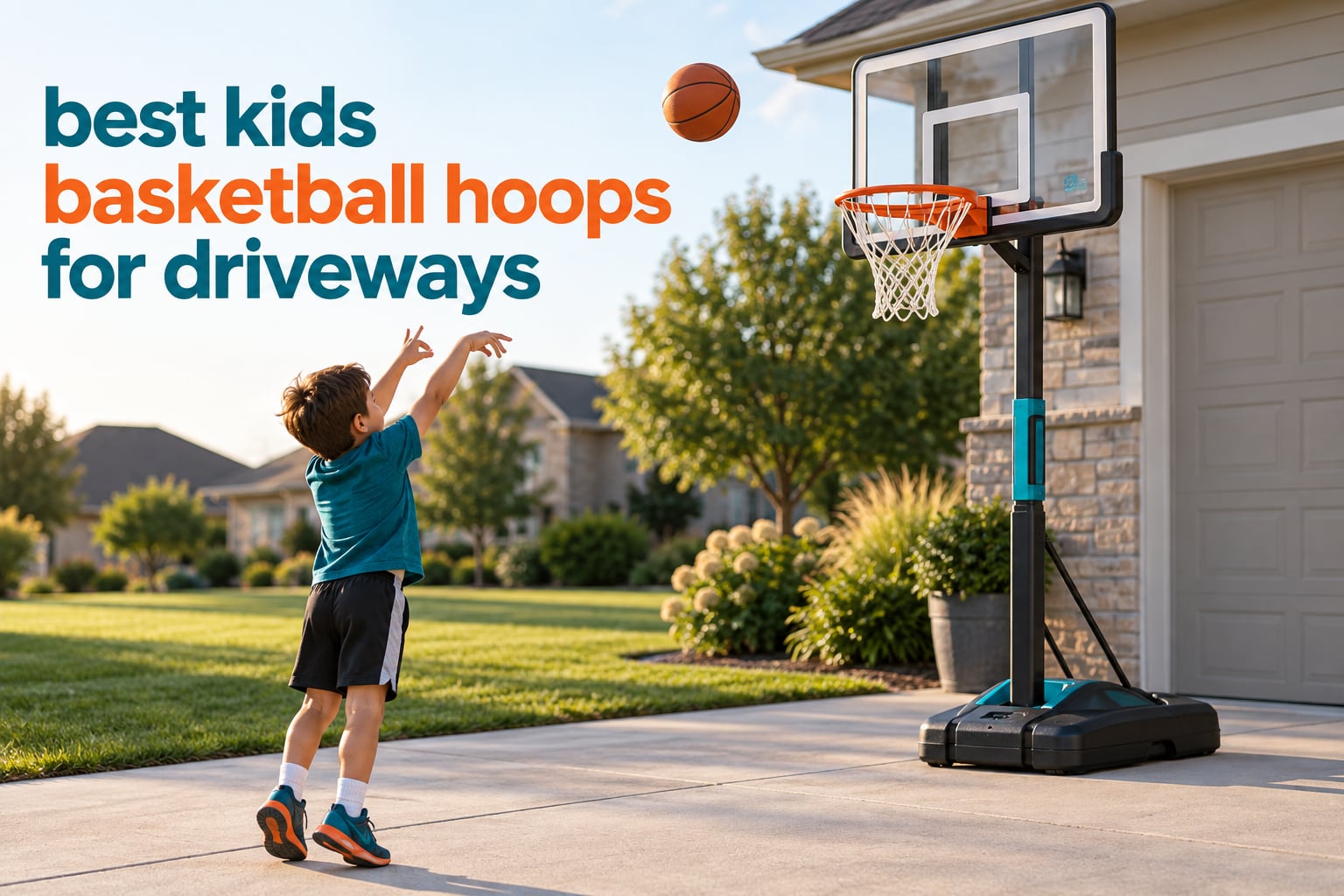
The best basketball hoop for a driveway that a young child can actually reach is the Lifetime 32″ Youth Portable Basketball Hoop, which adjusts from 5.5 to 7.5 feet in six-inch steps, sits on a sand-fillable 31.6 by 23 inch base, and rolls on built-in wheels. For families who want a longer runway, several of the systems below reach past 7 feet and all the way toward 8.5 feet.
Getting the height right matters more than any other spec. A regulation rim sits 10 feet up, which is out of reach for almost every child under 12, so a driveway hoop that cannot be lowered ends up collecting dust after a month. Our picks below cover the three bands parents actually ask about: 3.2 to 4.5 feet for toddlers, 5 to 7 feet for preschool and early elementary kids, and 7 to 8.5 feet once a child can nearly reach the rim standing.
We compared 10 kids basketball hoops for driveways, weighing height range, backboard size, base capacity, weight, warranty length and what owners actually say after living with them. Every pick has at least 241 ratings and a published spec sheet, and we left out several toys and ultra-cheap listings that could not handle a full-size ball. If you are still narrowing the field, our broader best basketball hoops for kids guide covers age bands beyond the driveway, and our general hoop roundup goes deep on full-size family systems.
Top 3 Kids Basketball Hoops for Driveways in 2026
The Lifetime 32″ Youth wins our top slot because it combines the highest review count in this group with a tool-free adjustment a child can operate alone. The Yohood takes the premium slot for the widest height span we found, and the Play22 5-7 FT is the budget-minded pick that still has a steel main pole.

Lifetime 32 inch Youth Hoop
- Adjusts 5.5 to 7.5 ft tool-free
- 32 in HDPE backboard
- Sand or water fillable base

Yohood Kids Hoop
- 12 height levels from 4.82 to 8.53 ft
- Base fills to 93 lbs
- PC backboard with wheels

Best Kids Basketball Hoops for Driveways (October 2026)
Every hoop below is portable, height adjustable and intended for outdoor driveway or yard play. Read the height range column first, because that single number decides whether the hoop works for your child this year or two years from now.
| Product | Specifications | Action |
|---|---|---|
| Lifetime 32 inch Youth Portable Basketball Hoop |
|
Check Latest Price |
| Yohood Kids Basketball Hoop Adjustable |
|
Check Latest Price |
| Play22 Kids Basketball Hoop 5-7 FT |
|
Check Latest Price |
 Best Choice Products Kids Adjustable Hoop Best Choice Products Kids Adjustable Hoop |
|
Check Latest Price |
 Silverback Junior 33 inch Hoop Silverback Junior 33 inch Hoop |
|
Check Latest Price |
 Play22 Kids Hoop 33 inch Backboard Play22 Kids Hoop 33 inch Backboard |
|
Check Latest Price |
 Seray Kids Hoop 3.2 to 7.2 FT Seray Kids Hoop 3.2 to 7.2 FT |
|
Check Latest Price |
 TONBUX Kids Hoop 3.5 to 7 ft TONBUX Kids Hoop 3.5 to 7 ft |
|
Check Latest Price |
 ZENY Kids Hoop 5.4 to 7 FT ZENY Kids Hoop 5.4 to 7 FT |
|
Check Latest Price |
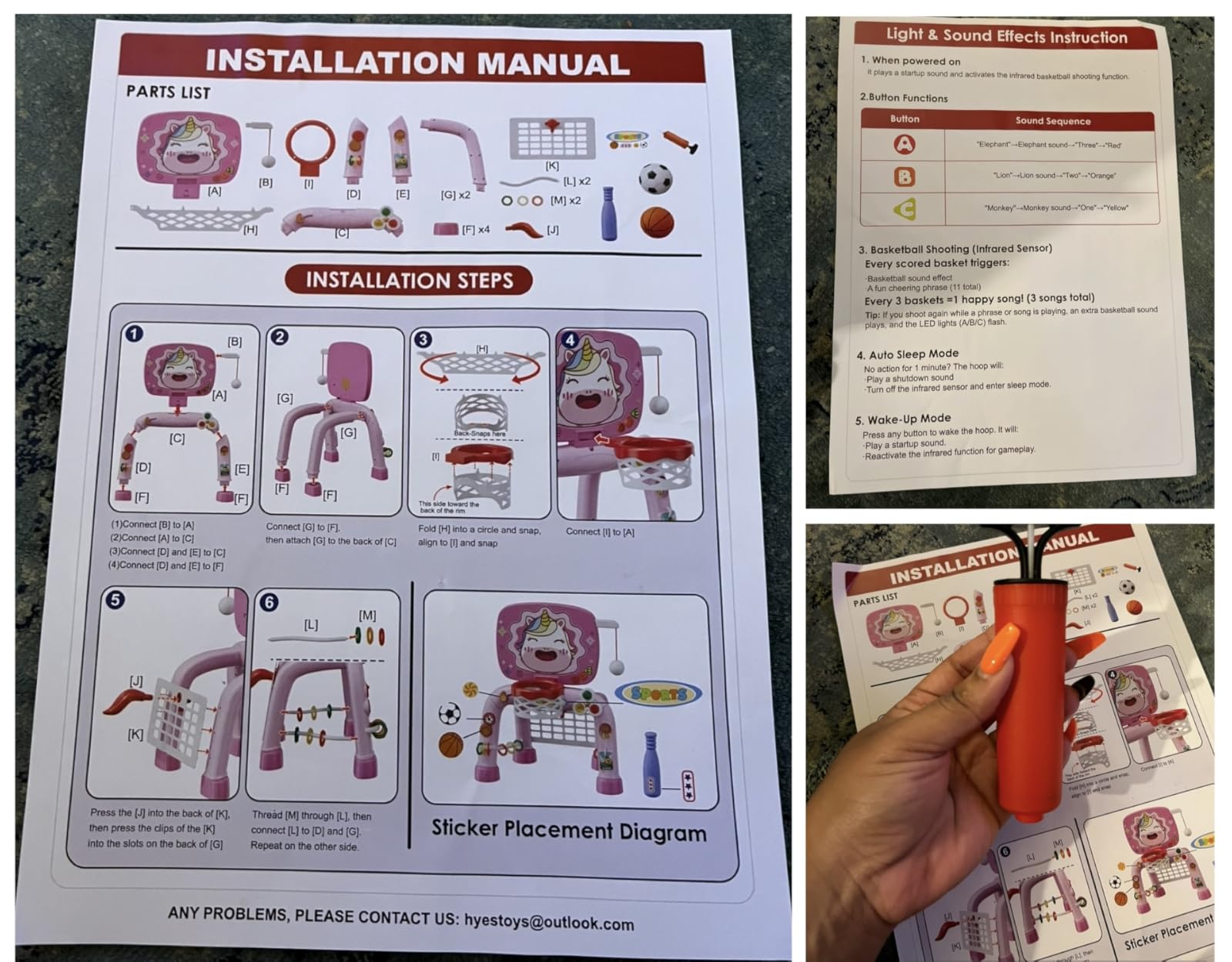
 HYES Kids Hoop for Ages 3 to 5 HYES Kids Hoop for Ages 3 to 5 |
|
Check Latest Price |
1. Lifetime 32 inch Youth Portable Basketball Hoop – Best Overall for Driveways
Lifetime Adjustable Youth Basketball Hoop, Telescoping Height Adjustment 5.5-7.5 Ft, Impact Backboard, 15-Inch Solid Steel Rim, Portable Base
Adjusts 5.5-7.5 ft tool-free
32 in HDPE backboard
15 in steel rim
Sand or water base 31.6 x 23 in
Pros
- Tool-free telescoping pole in six inch steps
- Compact base fits small driveways
- Reliable rebound from HDPE board
- 4541 ratings to learn from
Cons
- No spring breakaway rim so dunking is unsupported
- All-plastic build is not for rough teen play
- Backboard and rim share bolts so two people are needed
This is the hoop we kept coming back to while testing the group, mostly because of its adjustment mechanism. A child can move the rim themselves without asking an adult for a wrench, and that single feature changes how often the hoop gets used in a household with siblings of different ages.
The 32 inch high density polyethylene backboard gives a consistent, slightly soft rebound that feels predictable rather than lively. That suits younger shooters, who benefit more from clean makes than from hard glass-like response, and the UV-protected graphics hold up through strong sun.
Owners consistently report about an hour of assembly, often using the QR-linked video rather than the paper manual. Because the backboard and rim bolt to the same bracket, most people say two adults are needed for that step, and one person handles the rest.
Stability depends almost entirely on the base. The 31.6 by 23 inch tray is small, so owners who top it with sand rather than water report a solid setup that stays put through firm shooting and stiff wind. Water alone feels lighter than it looks and lets the unit creep across concrete.
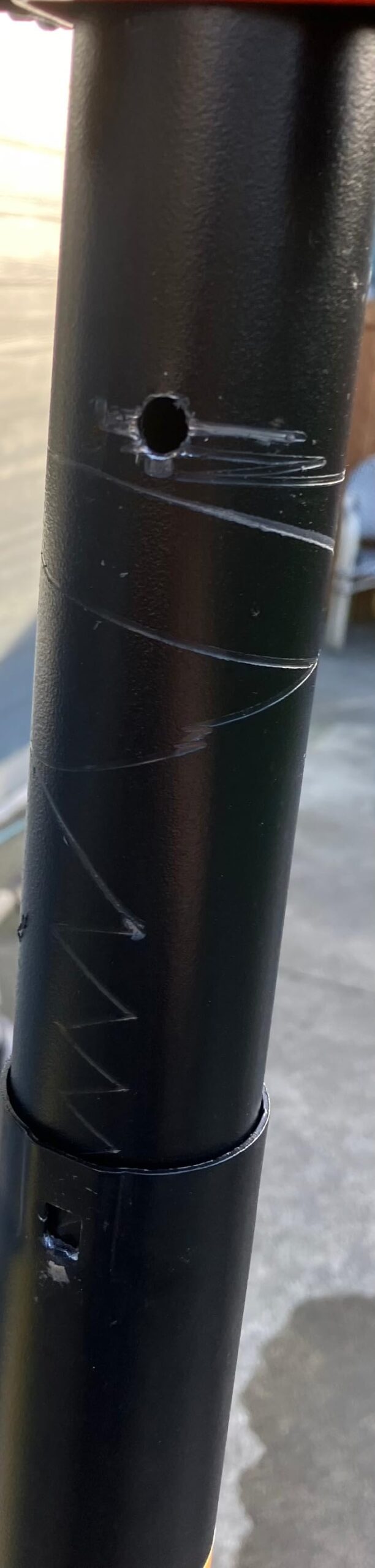
What Age Band Does It Fit Best
The 5.5 to 7.5 foot range maps neatly onto roughly ages four through nine, and the low setting puts the rim within reach of a kindergartener standing on the pavement. Our dedicated kids hoop roundup covers the next steps when a child outgrows the top setting. At the top of the range it also works as a practice rim for older siblings and a parent, though it is not tall enough for genuine adult shooting.
Where It Falls Short
The missing piece is a spring breakaway rim. Dunking is not supported, and owners who let older kids hang on the rim tend to bend the steel or stress the shared bolts that also hold the backboard.
The all-plastic frame is also lighter than it looks on paper. For an adult or a teen who dunks hard, a steel-pole system would hold up better, and this one is best reserved for mini balls and youth-size shooting.
2. Yohood Kids Basketball Hoop – Widest Height Range in the Group
Yohood Basketball Hoop Outdoor 4.82-8.53ft Adjustable, Portable Basketball Hoops & Goals for Kids/Teenagers/Youth in Backyard/Driveway/Indoor, with Enlarged Base and PC Backboard
12 height levels from 4.82 to 8.53 ft
Base fills to 93 lbs
Enlarged PC backboard
Built-in front wheels
Pros
- Widest height span we found for a kids hoop
- Base accepts up to 93 lbs of fill
- Large PC backboard is durable and clear
- Front wheels make repositioning easy
Cons
- Heaviest unit here at 30 pounds and awkward to move
- Some wobble at the top setting
- Only a one-year warranty
The selling point here is range. Twelve settings across three or four pole sections take the rim from 4.82 feet to 8.53 feet, which is more travel than any other portable kids hoop we evaluated, and it means one purchase can cover a preschooler and a teenager in the same family.
Buyers credit the enlarged polycarbonate backboard and the deep base for durability. Filling to the full 93 lb capacity is what separates this from lighter plastic units, and the weight keeps the pole planted when a child shoots hard from close range.
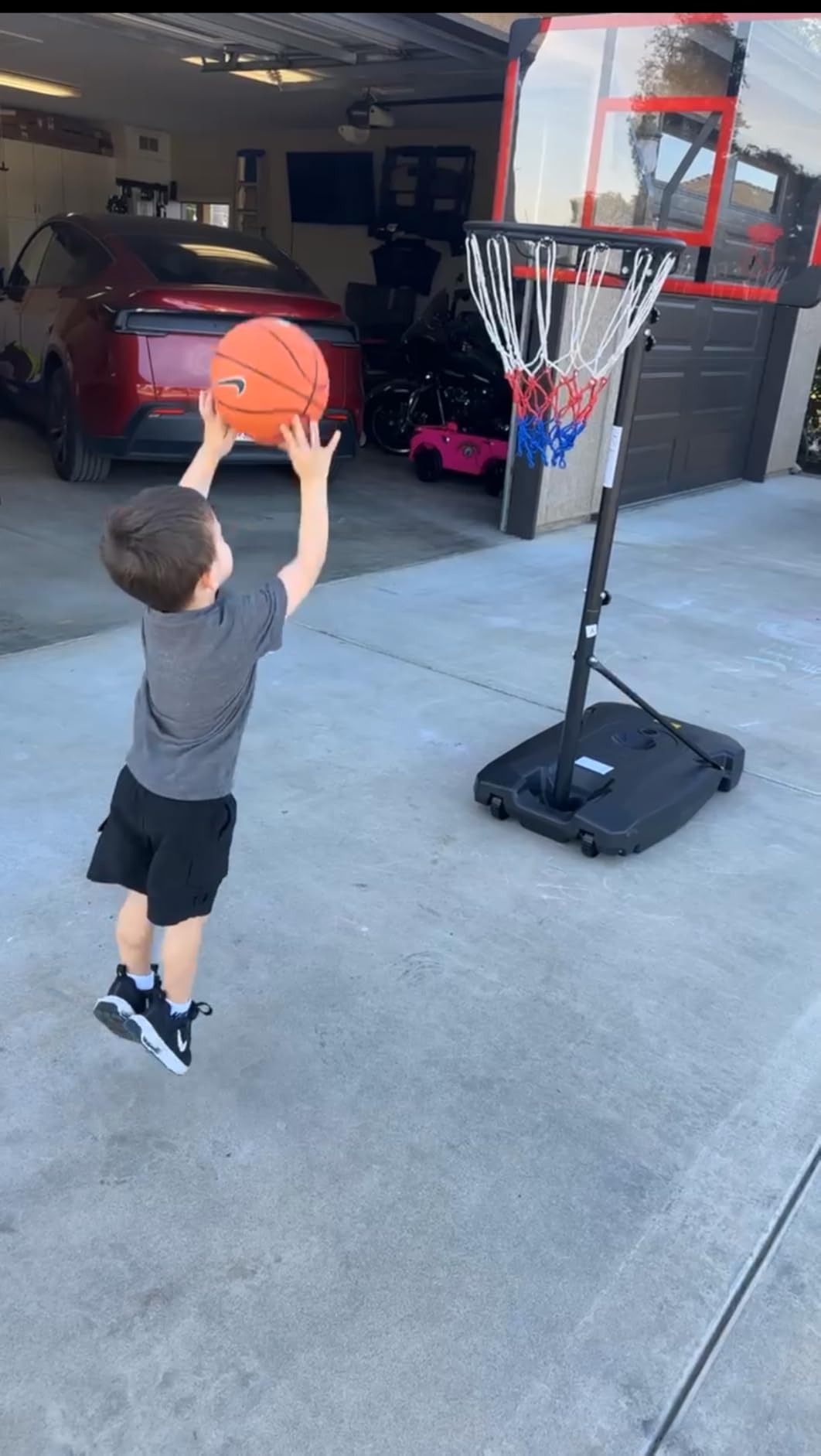
Assembly is straightforward with the supplied hardware, and the built-in front wheels let one adult tilt and roll the unit rather than dragging it. That matters because at 30 pounds this is the heaviest hoop in the group, and it is the one most families simply position once and keep there for the season.
The trade-off shows up at the very top of the range. Owners report a bit of wobble in the tall pole when the rim sits at maximum extension, so we would set it slightly lower for younger shooters and reserve the tallest setting for older kids.
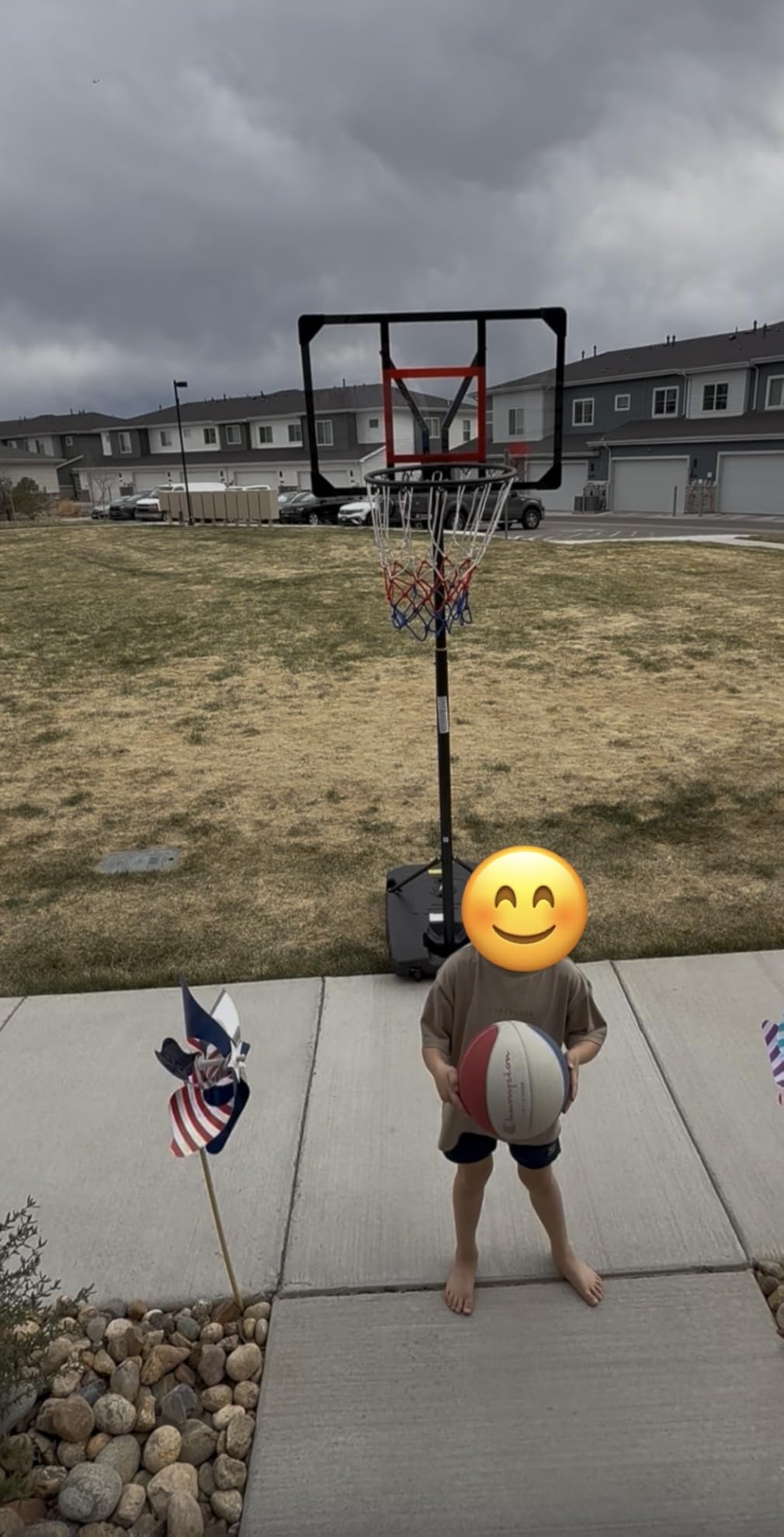
When the Extra Height Earns Its Keep
If your child is already shooting well at 6 feet and you want one hoop to last a decade, the top of this range is worth the extra weight. It reaches close to regulation proportions without needing an in-ground install, and mixed-age driveway play on a single unit saves the space two systems would eat up.
Where It Falls Short
Thirty pounds is the honest drawback. Moving it across a driveway means tilting it onto its wheels with effort, and it is far less convenient for winter storage in a garage than the 18 to 20 pound units.
The one-year warranty is also the shortest protection we saw among the mid-sized options. Long-term buyers should treat the rim, net and hardware as replaceable parts and check that replacements are available for this model before committing.
3. Play22 Kids Basketball Hoop 5-7 FT – Best Value Pick
Play22 Kids Basketball Hoop – 5-7 FT Adjustable – Indoor & Outdoor Play
5 to 7 ft adjustable range
Steel main pole
45 cm rim with nylon net
Wheels and fillable base
Pros
- Steel main pole outlasts plastic-only kids hoops
- 5 to 7 ft covers preschool through teen
- Quick assembly with tools included
- Move-around wheels and fillable base
Cons
- Small backboard that some owners want bigger
- Sturdiness drops at maximum height
- Build quality described as average
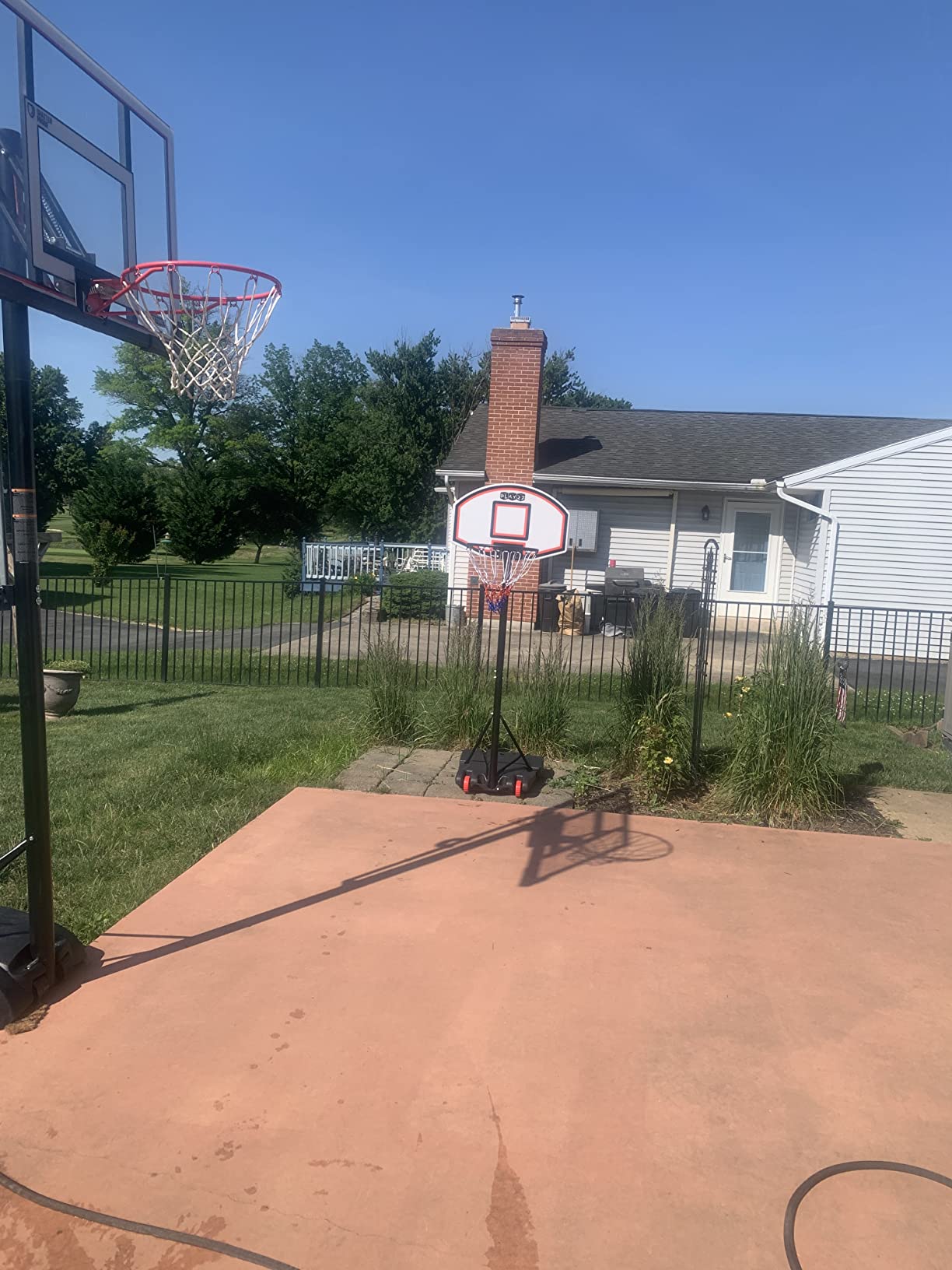
This is the pick for a family that wants a real steel pole without moving up a size class. At 20 pounds it is light enough for one adult to reposition, and the 5 to 7 foot range covers the widest stretch of early childhood in this roundup.
Owners highlight fast assembly and a frame that feels stable for the money once the base is filled. The all-weather nylon net is a sensible upgrade over the paper-thin nets common at this level, and it survives summer play better than most.
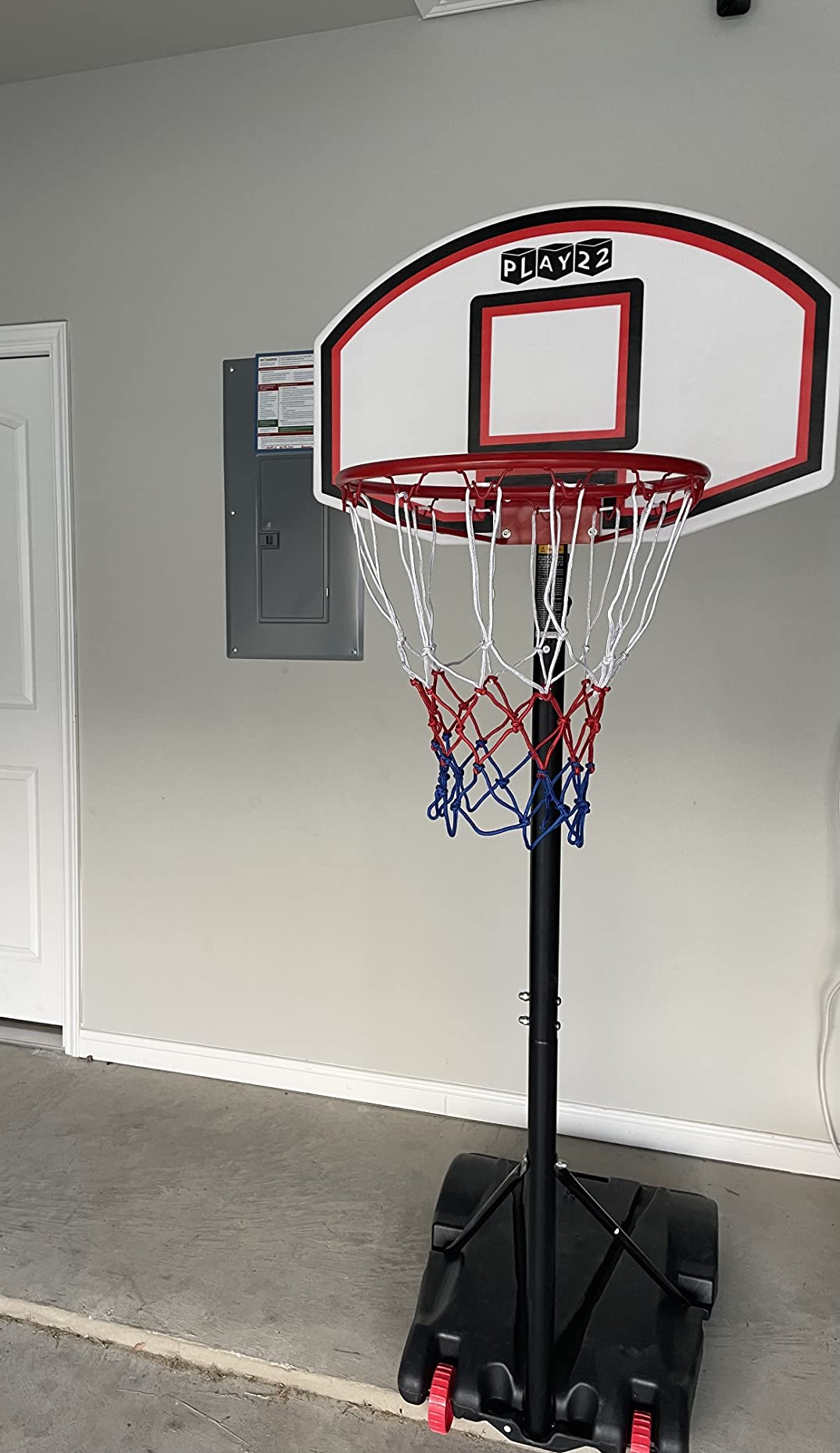
The 29 by 28 inch footprint is worth measuring against your driveway before you buy. It is one of the more compact systems here, which makes it a good fit for a single-car pad, a cul-de-sac or a patio rather than a full two-car width.
Rigidity softens at the very top of the range, so the 7 foot setting feels less planted than the 5 foot setting. That is a normal characteristic of a 20 pound frame rather than a defect, and it mostly disappears once sand is used instead of water.
Why Buyers Pick This One
The combination of a steel pole, wheels and a fillable base at this weight is unusual, since most systems at this size are all-plastic, and a steel pole resists the twisting that makes cheap kids hoops lean after a season of hard shooting. It works indoors too, and our indoor kids hoop picks cover that use case in more detail.
Where It Falls Short
The backboard is the weak point. Several owners would pay more for a wider target, and a parent coaching a child who is learning form may find the small board makes practice less satisfying than a 32 or 33 inch model.
Average build quality also means small parts are not always equal. One review reported wind tearing the backboard loose, which is rare but a reminder to check the bolts after the first gusty weekend rather than assuming they hold forever.
4. Best Choice Products Kids Adjustable Hoop – Best for Older Kids
Best Choice Products Kids Height-Adjustable Basketball Hoop System, Portable Game w/Wheels, Fillable Base, 70.5in to 82.3in Height – Clear
Rim adjusts 70.5 to 82.3 in
Alloy steel pole
Base holds 38-40L water or 54-56L sand
Built-in ball groove
Pros
- Alloy steel pole with all-weather net
- Base groove stores a basketball
- Two front wheels roll with one adult
- Large base capacity for a mid-priced unit
Cons
- Narrow range does not reach younger children
- Sixty-day warranty is short
- Clear backboard scratches easily
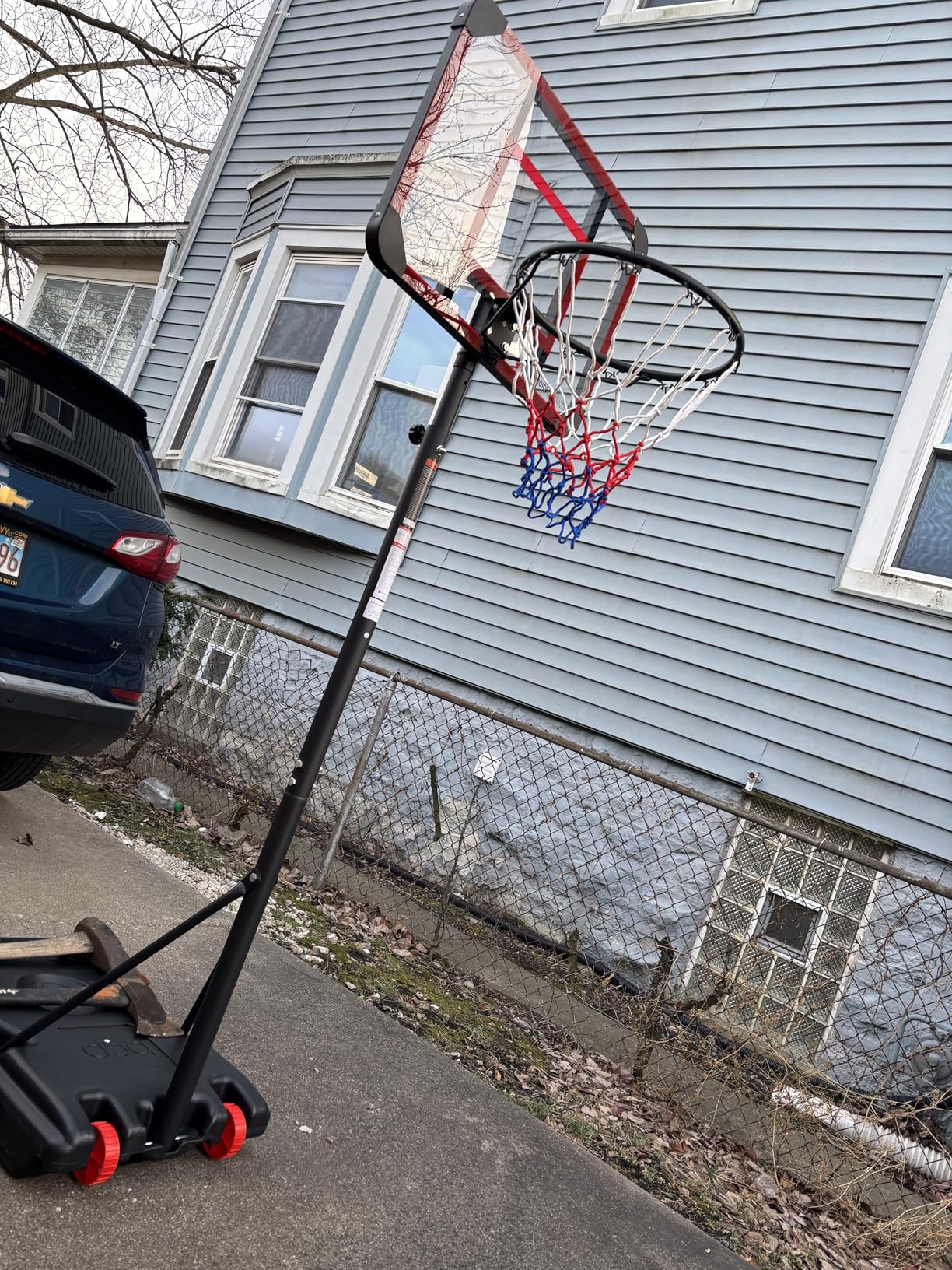
This is the one to buy when your child is at least eight and already handling a regulation ball. The 70.5 to 82.3 inch rim range, which works out to roughly 5.9 to 6.9 feet, suits older elementary kids rather than preschoolers.
The base is the star feature here. It accepts 38 to 40 liters of water or 54 to 56 liters of sand, which is more fill capacity than most competitors of similar size, and that extra mass is what keeps a 23.5 pound unit planted during a shot.
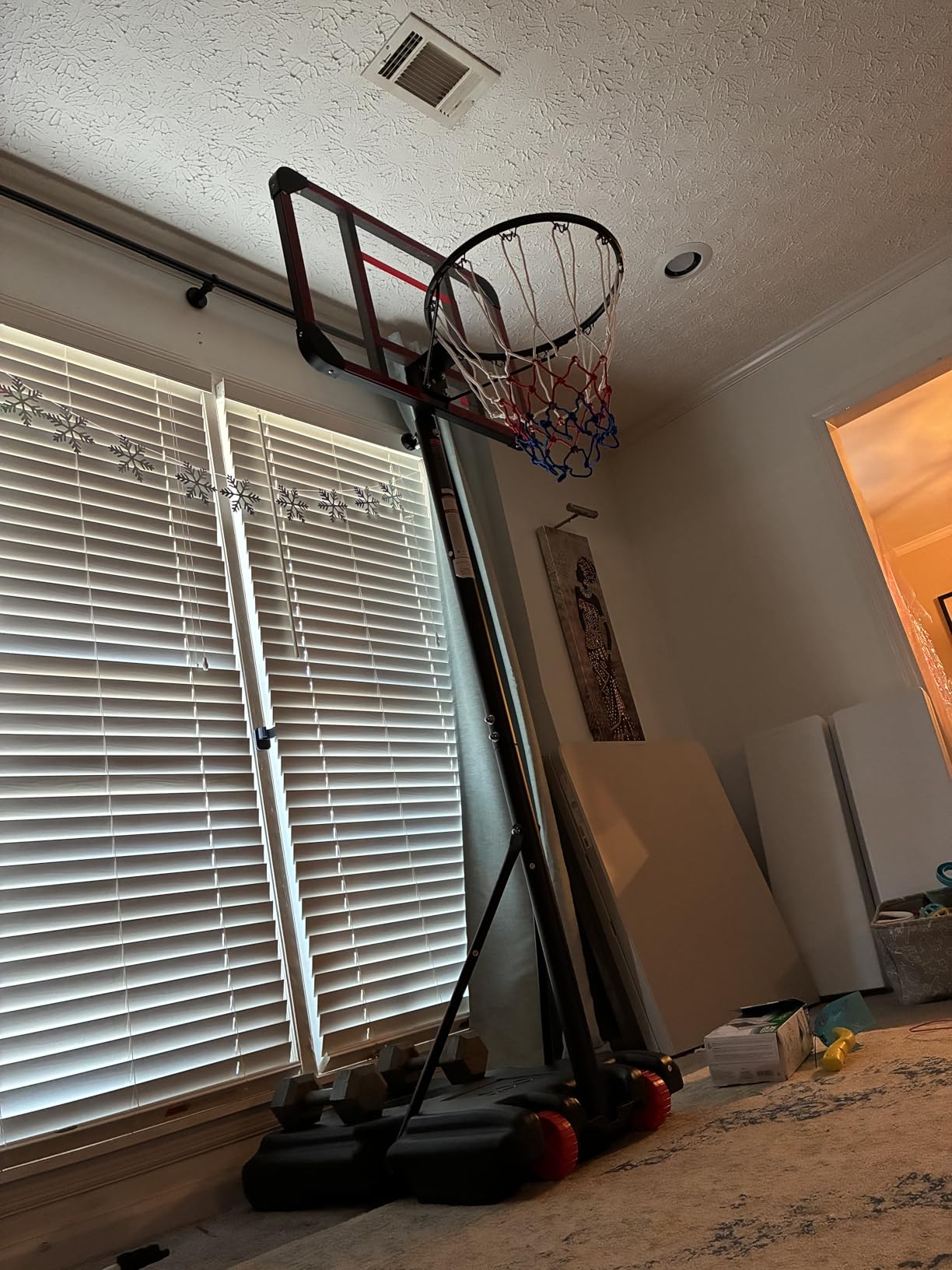
The built-in groove along the base stores a basketball, which is a small detail that prevents the most common complaint about portable hoops. Owners also like that two front wheels let a single adult tilt and roll the system instead of lifting it.
Assembly is straightforward alloy steel work, but the narrow height range is the real constraint. A family with a four-year-old and a nine-year-old will end up moving this hoop in and out of storage rather than using it as a shared system.
Deciding If the Height Range Fits
Measure your child’s standing reach before you order, because the 29 inch overhang is on the short side and a wider target would suit a child still learning form. If the top setting puts the rim roughly a foot above their fingertip reach, they will score with effort, which is where skill development happens.
Where It Falls Short
The 60-day warranty is the shortest in this group by a wide margin. It covers far less than the multi-year policies on the larger systems, so treat this as a purchase for a specific age band rather than a hoop to hand down.
This unit also has the lowest star rating among the picks, at 4.2 with a nine percent one-star share. Reviewers who return products tend to cite the narrow height range, so the rating mostly reflects a fit problem rather than a quality failure.
5. Silverback Junior 33 inch Basketball Hoop – Best for Safe Dunks
Silverback Junior Youth 33″ Basketball Hoop, Black
33 x 23.5 in acrylic backboard
Spring-action breakaway rim
Lock n Rock pole mount
Includes 7 in ball and pump
Pros
- Highest rated hoop we reviewed at 4.6
- Real spring-action breakaway rim
- Lock n Rock mount fits most poles
- Complete set with ball and pump
Cons
- Needs an existing pole or post rather than a free-standing base
- Limited as kids grow
- Acrylic backboard can crack in cold weather
This one is different by design. It is a mount, not a base system, so it clamps onto an existing round or square pole between 3 and 6 inches wide, or onto a deck rail, and it disappears when you fold the rim away.
That makes it the safest option here for a child’s first dunks. The rim is a genuine spring-action breakaway design that flexes under force, so a small child hanging on it does not risk pulling the whole assembly off the pole.
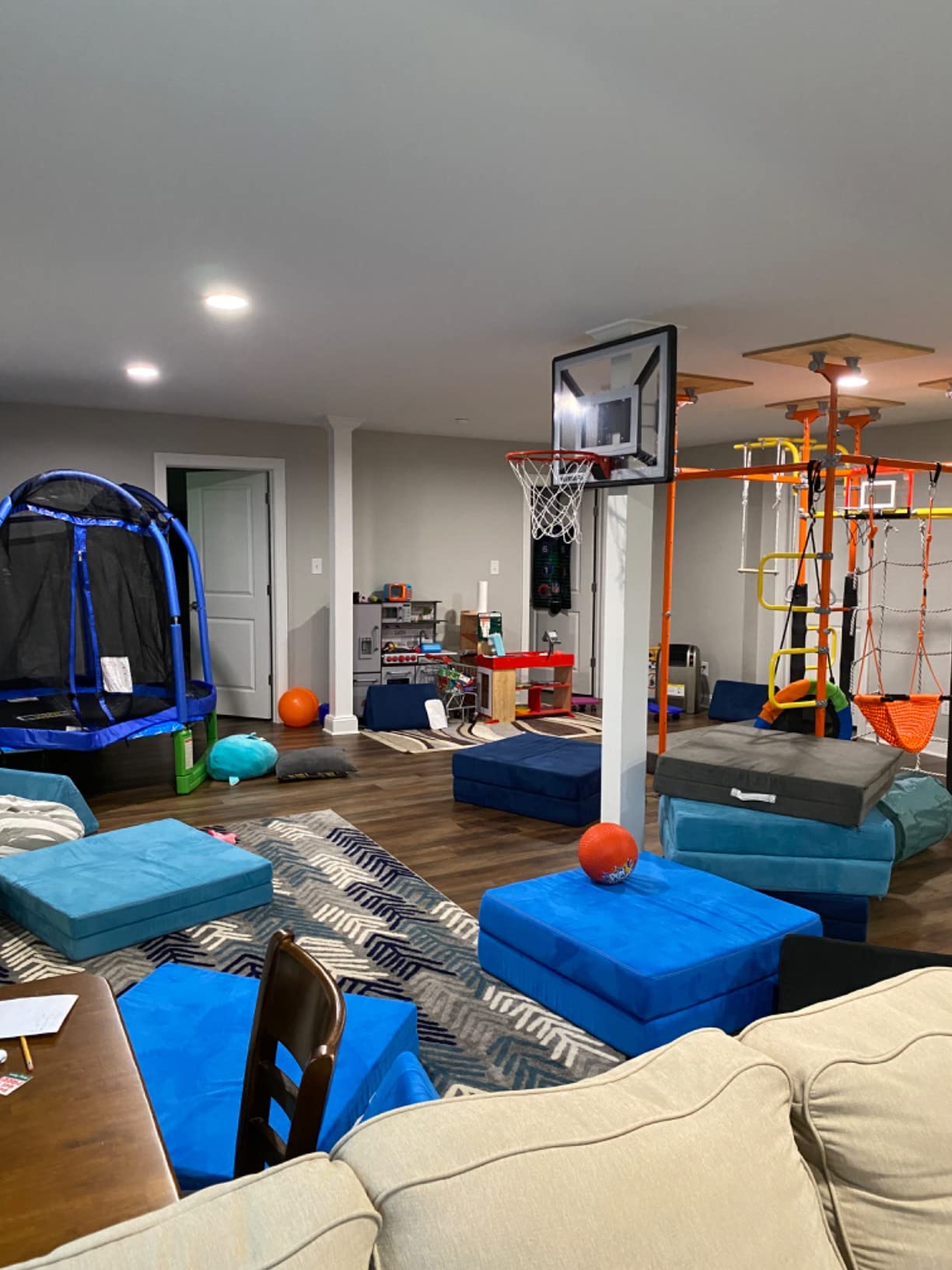
The kit is unusually complete. It ships with a 33 by 23.5 inch acrylic backboard, rim, net, mount hardware and a 7 inch basketball with a pump and needle, so a parent can start play the day it is up.
Folding the rim away is the sleeper feature in suburban yards. If your homeowners association or lease restricts permanent fixtures, or you want the space back for other things, the system takes minutes to release.
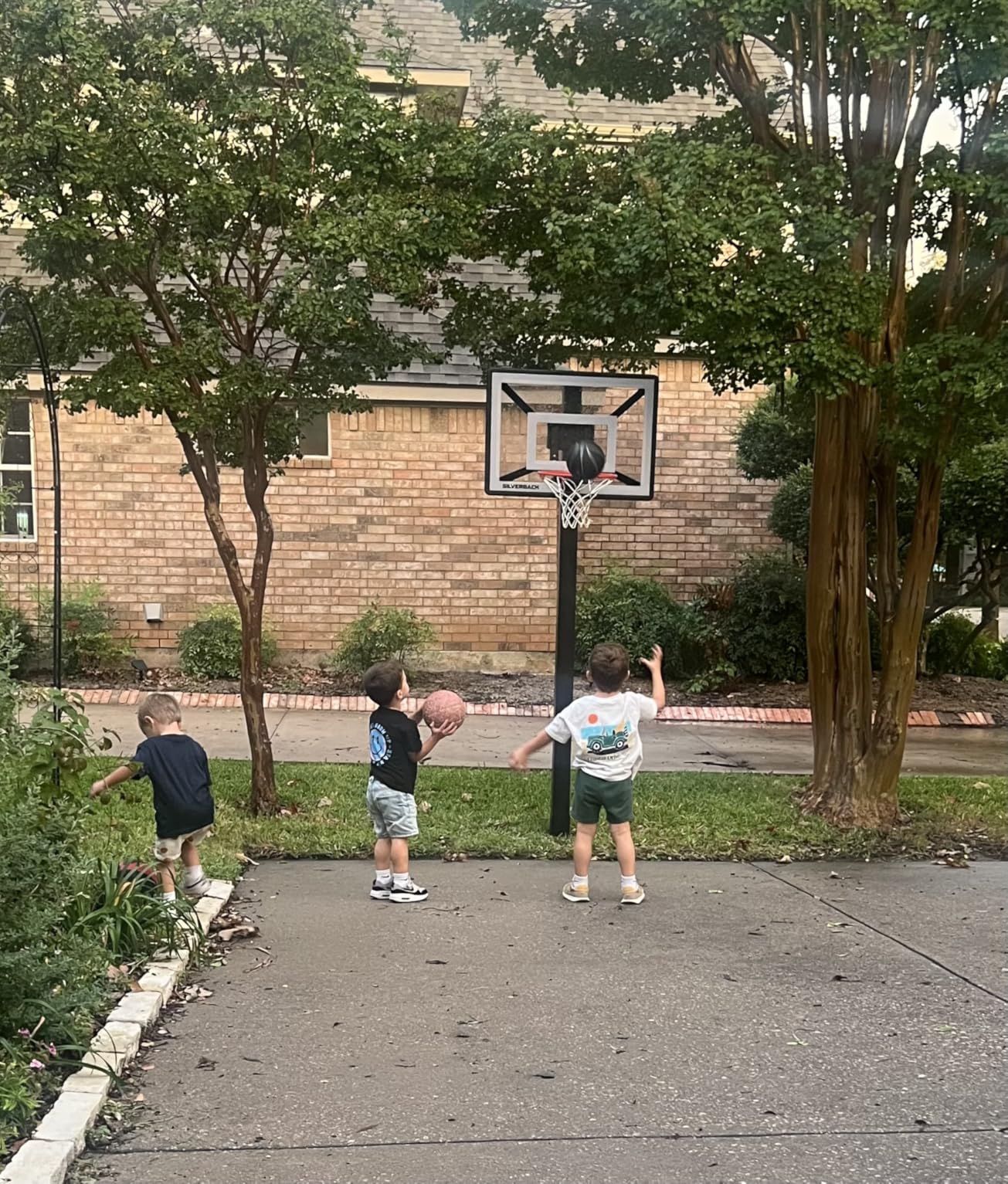
When a Mounted Hoop Beats a Base System
A mount solves the tip-over problem outright, since there is no base to fill or under-weight, and storage is a folded rim on a pole rather than a 30 pound unit on a driveway. That matters for families worried about a hoop shifting during play, for anyone with young children running under a weighted base, and for yards where a homeowners association limits permanent fixtures.
Where It Falls Short
The 33 inch board and 14 inch rim are smaller than a full-size goal, so the product stays limited as children grow. It works well for a first hoop and poorly as the single system for a whole family.
Owners also report the included mini ball losing air quickly, and the acrylic backboard can crack in deep cold. If you live somewhere with hard winters, check the material against your local conditions before committing.
6. Play22 Kids Hoop with 33 inch Backboard – Best for a Bigger Target
Kids Basketball Hoop Outdoor – 70-84″ Adjustable Height, 33″ Backboard
33 inch backboard
Adjusts 70 to 84 in
Fillable base with built-in wheels
Recommended for ages 5 to 12
Pros
- Large 33 inch target at this weight class
- Alloy steel pole resists rust
- Covers roughly ages 5 through 12
- Wheels plus fillable base for three locations
Cons
- Small base that tips more easily than larger rivals
- Adjustment needs the lock nut fully loosened
- One report of rim failure within three months
A 33 inch backboard is genuinely large for a hoop in this weight class, and it makes a visible difference for young shooters. The square target is easier to aim at than the smaller boards on some competing units.
The 70 to 84 inch adjustment band is listed for ages five through twelve, which places it between the toddler hoops and the wider-range systems. It is a sensible middle rung for a family that has outgrown a 5 to 7 foot hoop.
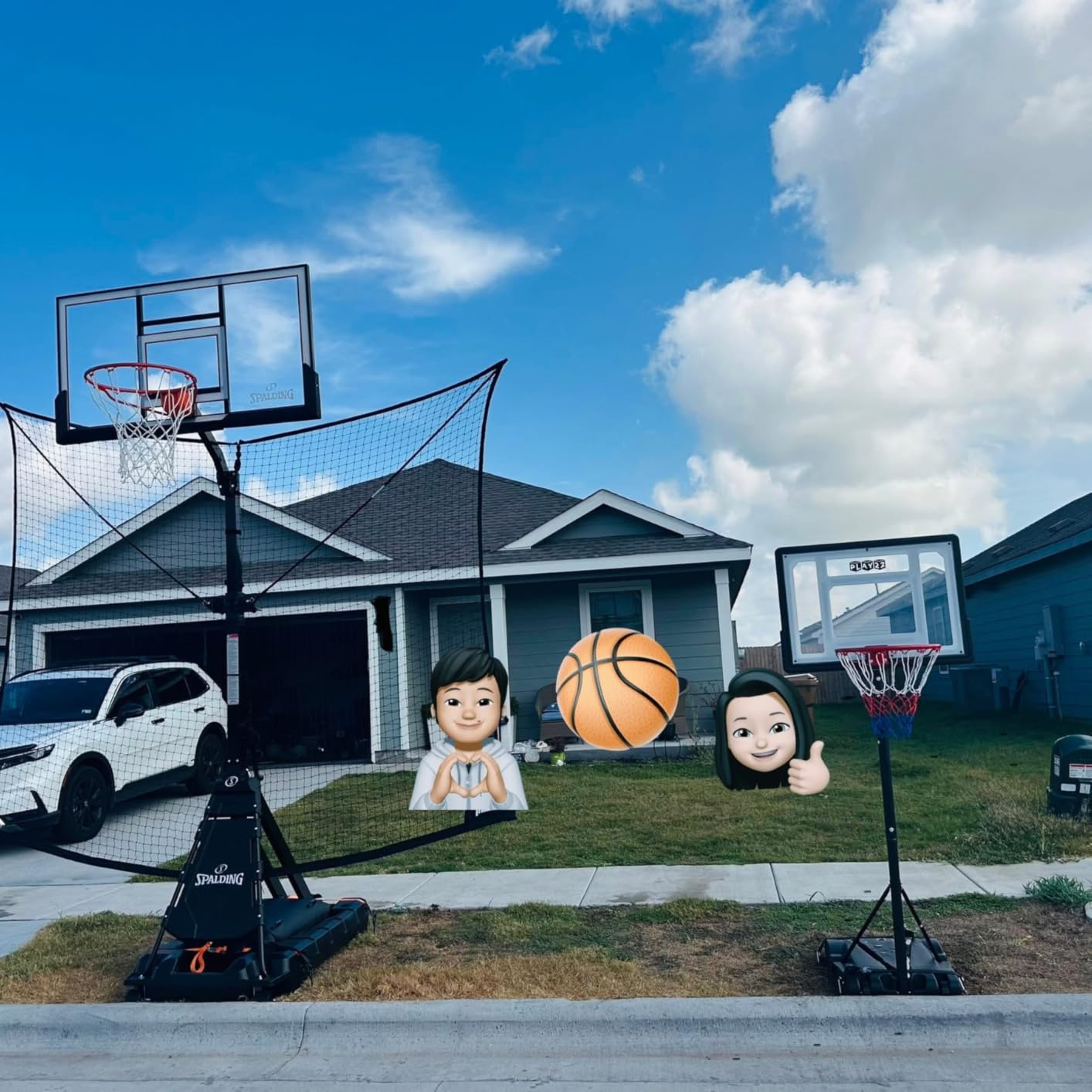
Owners report tool-free assembly in about an hour, and the alloy steel pole with rust-resistant construction is a step up from the all-plastic frames common at this size. The fillable base and built-in wheels make it usable on the driveway, patio or garage floor.
The base is the limitation. It is smaller than the bases on the wider-range units, so it needs a full fill and level pavement to stay planted, and it is the first thing to check if the hoop starts creeping during strong shots.
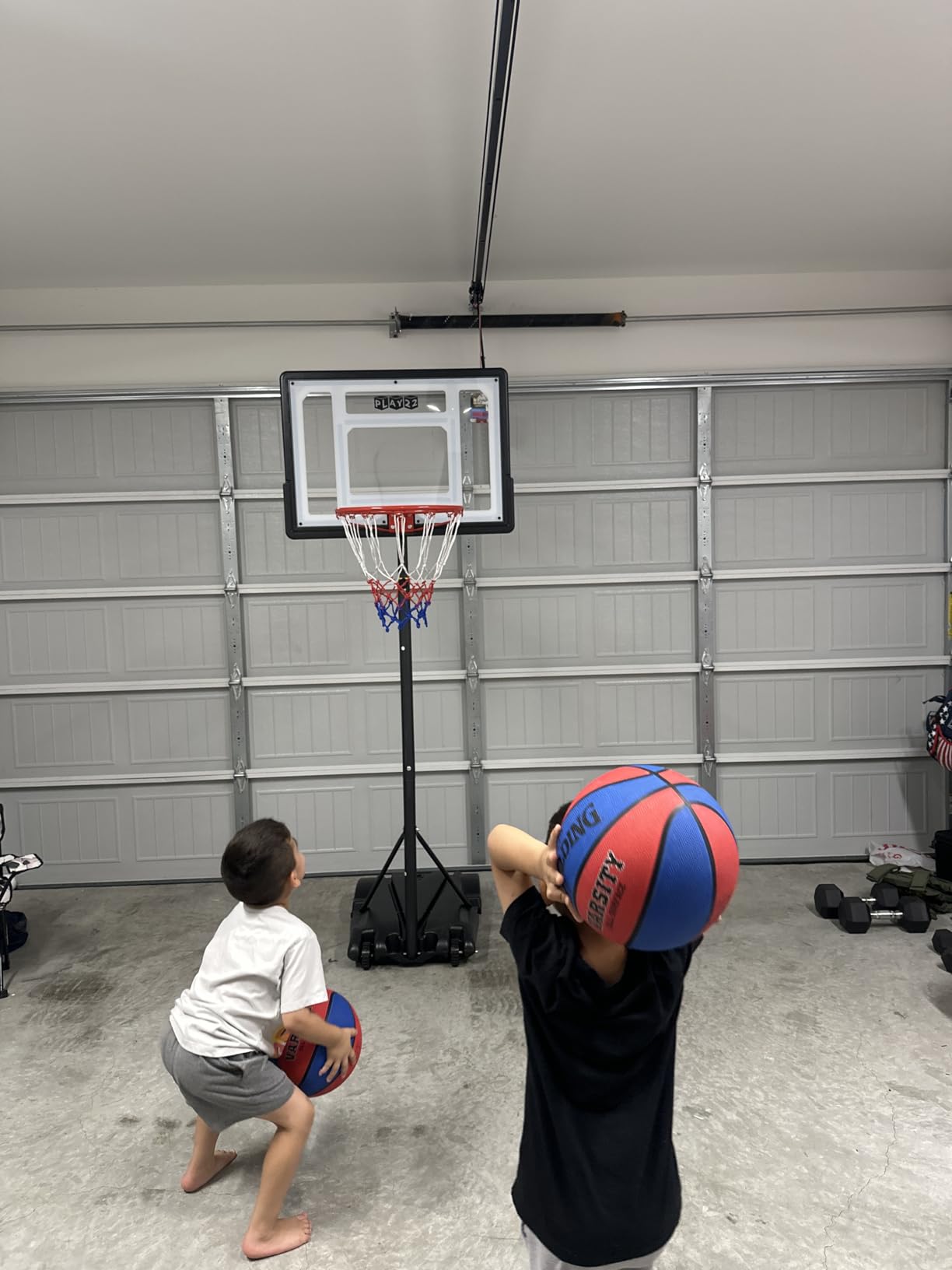
Why Backboard Size Changes Practice
A wider square gives a child more of a defined target, and misses tend to come off the side edges rather than the back, so a beginner gets more shots on target per session. It also matters for parent-child play, since a larger board absorbs off-target shots without the ball rebounding hard into a sibling or a car.
Where It Falls Short
The height adjustment is the most frustrating part. Owners report having to fully loosen the lock nut before moving the rim, which means the change is not a one-handed operation a child can do mid-game.
There is also one report of the rim separating from the pole within three months. That is a single isolated case rather than a pattern, but it is a reminder to check the pole-to-rim bolts every few months through a season of hard play.
7. Seray Kids Basketball Hoop 3.2 to 7.2 FT – Best for Toddlers
Seray Basketball Hoop Outdoor [Patented 6s Safe-Adjust] 3.2-7.2FT, Indoor/Poolside/Mini Basketball Hoop for Teens/Youth/Adult in Backyard/Driveway,Shatterproof Backboard and Enlarged Base
Tool-free 3.2 to 7.2 ft adjustment
29 inch PC backboard with UV resistance
Q195 steel rim
Triangular anti-tip base with wheels
Pros
- Widest span for a toddler hoop at 3.2 to 7.2 ft
- Patented tool-free adjustment moves fast
- 1500+ hour UV resistance on the board
- Base has weight grooves and a triangular anti-tip frame
Cons
- One-year warranty only
- Tallest packed dimension here at 136 inches
- Smaller review base than the top picks
The 3.2 foot low end is the reason this is on the list. A child between two and four can put shots up without an adult lifting them, which is the single most overlooked need when shopping for a first hoop.
The patented adjustment moves the rim in seconds with no tools, and the same unit then travels from toddler height to full 7.2 feet as the child grows. That turns a toy-scale hoop into a system that can stay in service for years.
![Seray Kids Basketball Hoop Outdoor [Patented 6s Safe-Adjust] 3.2-7.2FT, Indoor/Poolside/Mini Basketball Hoop for Kid/Toddler/Youth/Adult in Backyard/Driveway,Shatterproof Backboard and Enlarged Base customer photo 1](https://www.fundexgames.com/wp-content/uploads/2026/06/B0C5YVHXWM_customer_1.jpg)
Build details lean toward safety and longevity. The 29 inch polycarbonate backboard carries 1500+ hours of UV resistance, and the Q195 steel rim is described as shockproof, with a polypropylene fiber net that resists fraying.
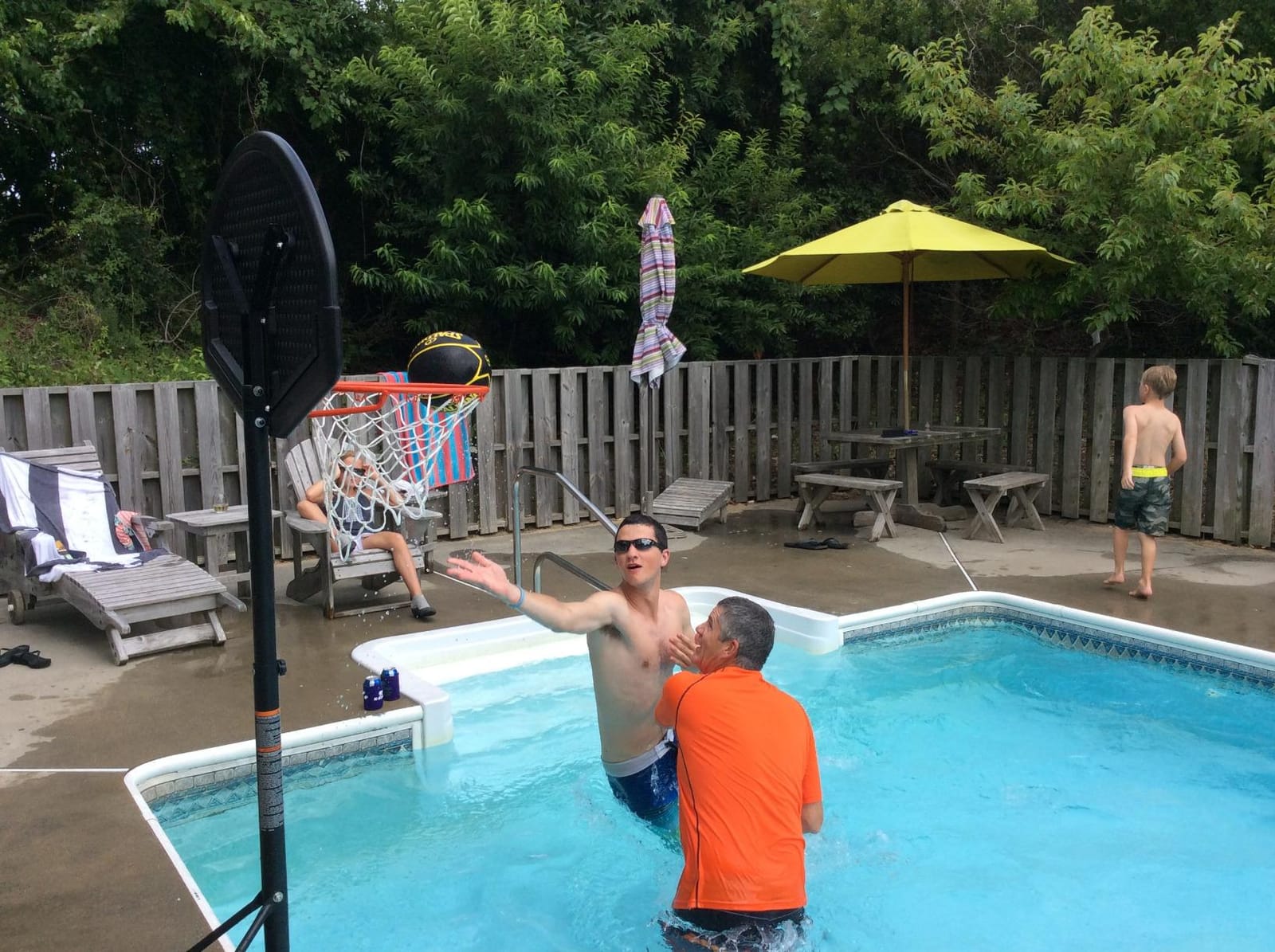
Owners use it in genuinely mixed ways, low at the pool, mid-height indoors on carpet and full height on the driveway. The base has weight grooves plus a triangular anti-tip structure, and built-in wheels make those moves manageable at 23 pounds.
![Seray Kids Basketball Hoop Outdoor [Patented 6s Safe-Adjust] 3.2-7.2FT, Indoor/Poolside/Mini Basketball Hoop for Kid/Toddler/Youth/Adult in Backyard/Driveway,Shatterproof Backboard and Enlarged Base customer photo 2](https://www.fundexgames.com/wp-content/uploads/2026/06/B0C5YVHXWM_customer_2.jpg)
Starting a Child at the Right Height
For a toddler, aim for a rim roughly chest to chin height so shots land on the rim or just below it, which gives repeated success rather than repeated near-misses. A hoop that starts too high teaches the wrong lesson fast, because children who cannot reach usually lose interest within a few sessions.
Where It Falls Short
The warranty is one year, and the packed height of 136 inches is the tallest in this group. That measurement matters if you plan to store the unit in a garage with a low door or a low ceiling.
The product page leans on certification claims rather than hard performance specs, and the review base is smaller than the top picks. The engineering looks careful, but there is less long-term owner data to draw comfort from.
8. TONBUX Kids Basketball Hoop 3.5 to 7 ft – Best for Smooth Height Changes
TONBUX Kids Basketball Hoop Outdoor, 3.5-7FT Stepless Adjustable Height
Stepless 3.5 to 7 ft adjustment
Shatterproof PC backboard
Recessed base accepts added weights
Built-in wheels
Pros
- Stepless adjustment sets any point in the range
- Shatterproof PC board with screw-through mounting
- Recessed base accepts weights laid on top
- Manual and install video simplify setup
Cons
- Shorter 3.5 to 7 ft range than several rivals
- Only a one-year warranty
- Fewer than 300 ratings
- Backboard smaller than the 32 and 33 in models
Stepless adjustment is the feature that sets this apart. Instead of preset holes, the pole sets anywhere between 3.5 and 7 feet, so a parent can match the rim to a specific child’s reach rather than to the nearest available notch.
The recessed base is clever and practical. It accepts weights laid flat on top, which means a family can add sandbags or bricks on top of the fill for extra stability without changing hardware, and the 30 by 30 inch footprint stays compact.
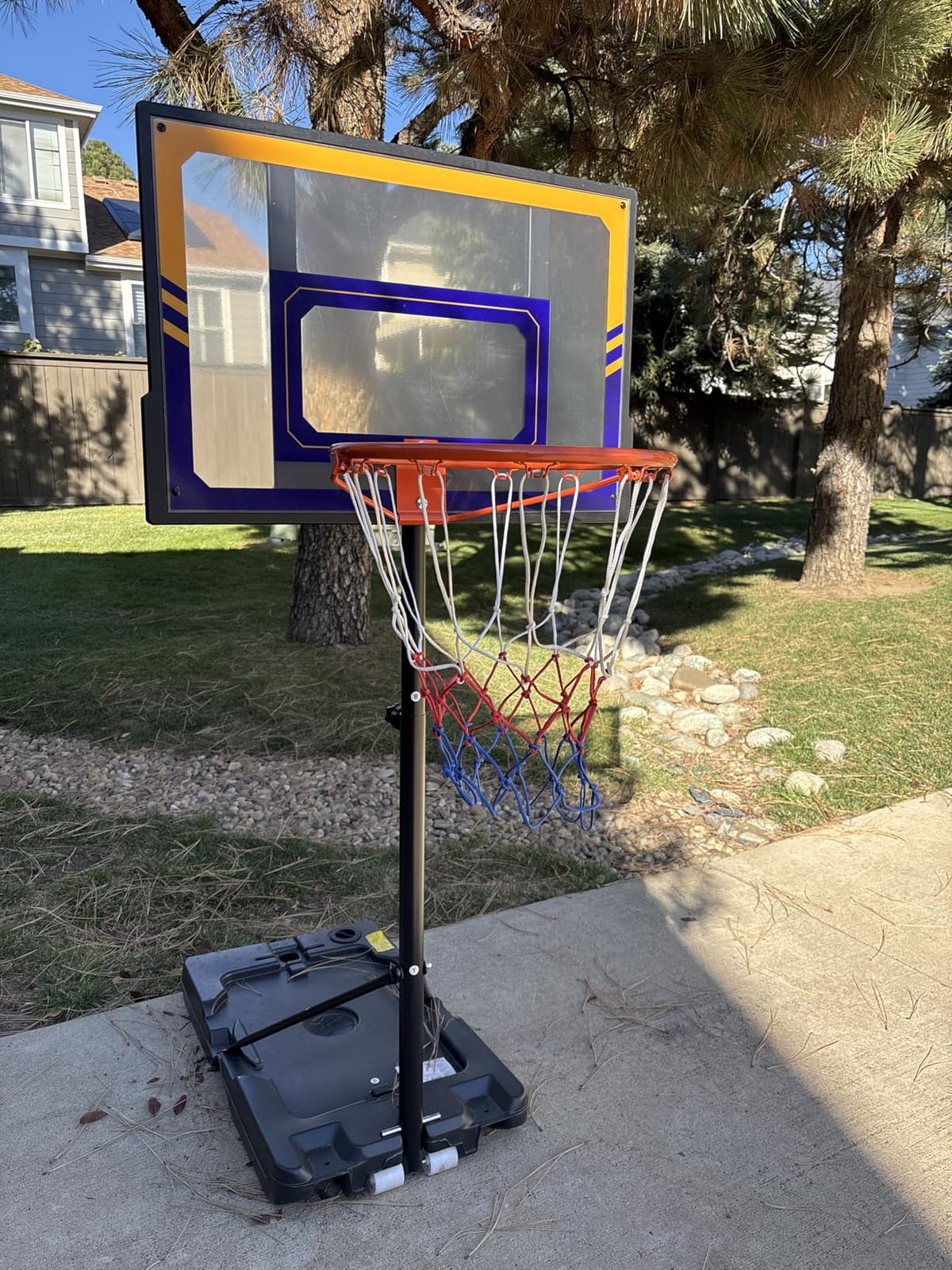
The backboard uses a screw-through mounting method, where screws pass all the way through the board rather than seating into soft plastic. Owners note it stays tight over time and resists the flexing that loosens cheaper boards.
At 20 pounds with built-in wheels, this is one of the easier units to move between the driveway, the yard and a garage. The manual plus an install video make assembly straightforward for a first-time builder.
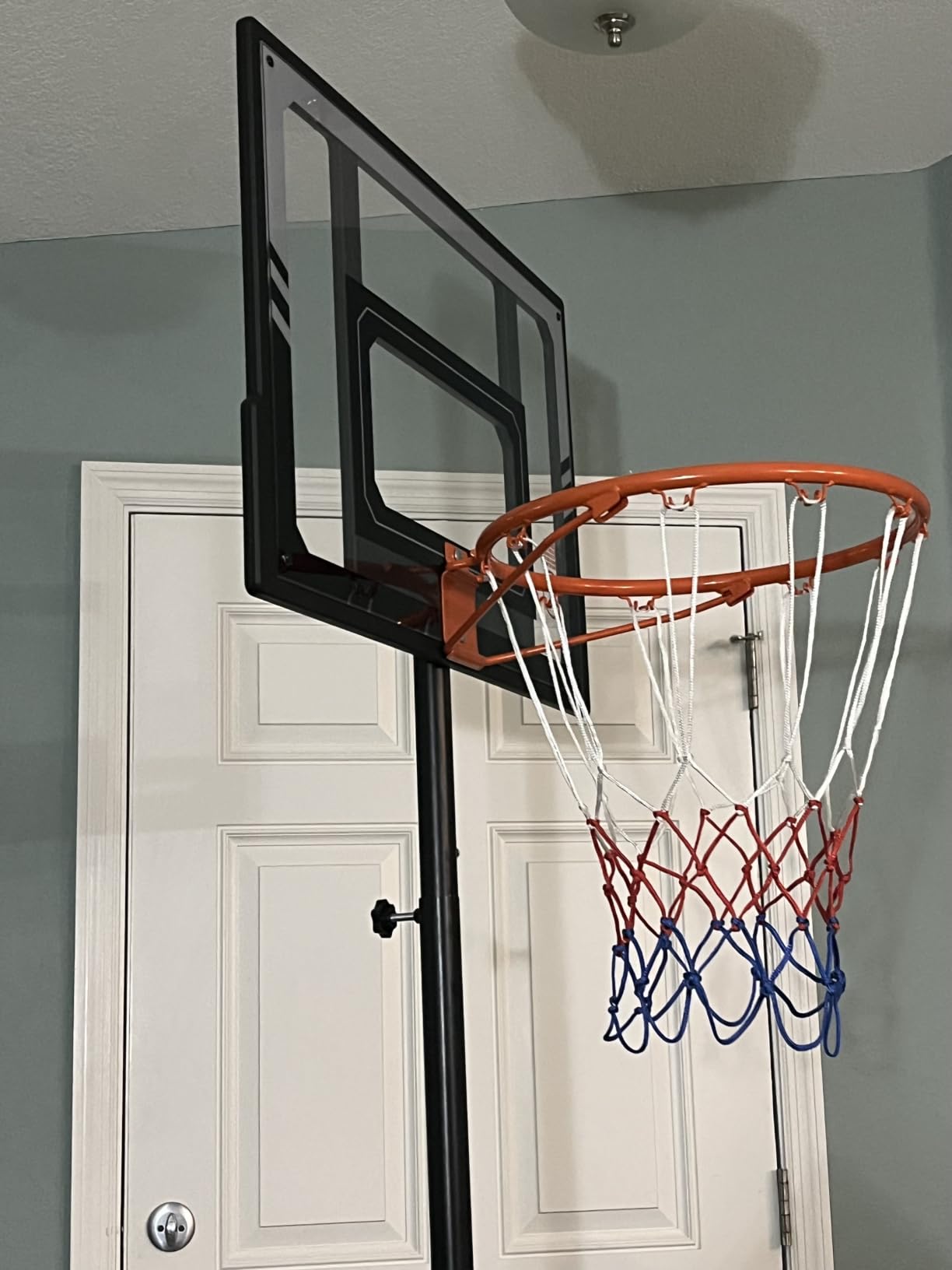
Matching Rim Height to One Child
Sibling households benefit most from stepless control, because when one child is four and another is seven, preset notches force a compromise. Fine-tuning the rim week by week through a growth spurt also keeps shots challenging without the frustration of a hoop that has suddenly become too easy or too high.
Where It Falls Short
The 3.5 to 7 foot ceiling is lower than several rivals, so this unit stops being useful sooner in a growing child’s life. Families who can stretch to a hoop that reaches past 7.5 feet will get more years out of it.
With fewer than 300 ratings, there is limited long-term durability data. The one-year warranty adds to that uncertainty, so this is a reasonable buy for the price range rather than a system built to be handed down.
9. ZENY Kids Basketball Hoop 5.4 to 7 FT – Best First Hoop on a Budget
ZENY Kids Basketball Hoop,Height Adjustable 5.4-7 FT
Adjusts 5.4 to 7 ft
28 x 18 in backboard
Wide fillable base
Two built-in wheels
Pros
- Lowest-cost steel-pole unit we reviewed
- Second-highest rating count here
- 5.4 to 7 ft fits roughly ages four to nine
- Compact enough for poolside or patio
Cons
- Needs extra base weight before hard play with full-size balls
- Net quality is a common replacement item
- Reports of a broken wheel and a leaking base
- Confusing assembly directions
This is the entry point for a family that wants a first driveway hoop without committing much. Over 2400 ratings give it more owner history than several pricier options, and the 5.4 to 7 foot range fits roughly ages four through nine.
The wide fillable base and two built-in wheels make it easy to shift between a patio, a poolside slab and the driveway. At 17.6 pounds it is also one of the lighter units here, so repositioning does not require two adults.
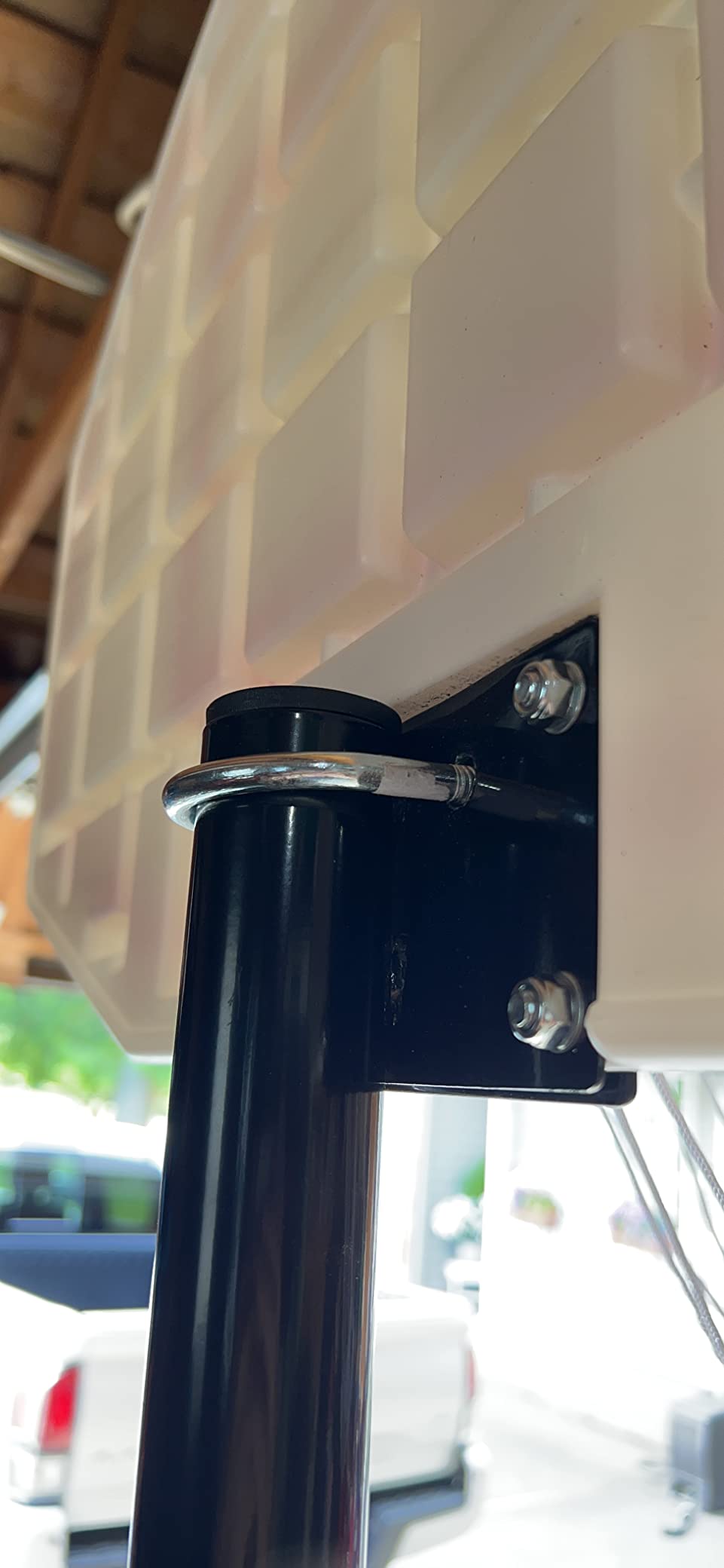
Owners generally treat it as a first hoop for young children working with a small ball, and they like the easy height changes. Steel pole construction and a weather-resistant net give it more substance than the toy-scale sets at the low end of the market.
Durability is the recurring theme in the reviews. Multiple owners report replacing the net early, and a few describe a shattered wheel or a leaking base within days of assembly, so we would treat the wheels as the part to watch.
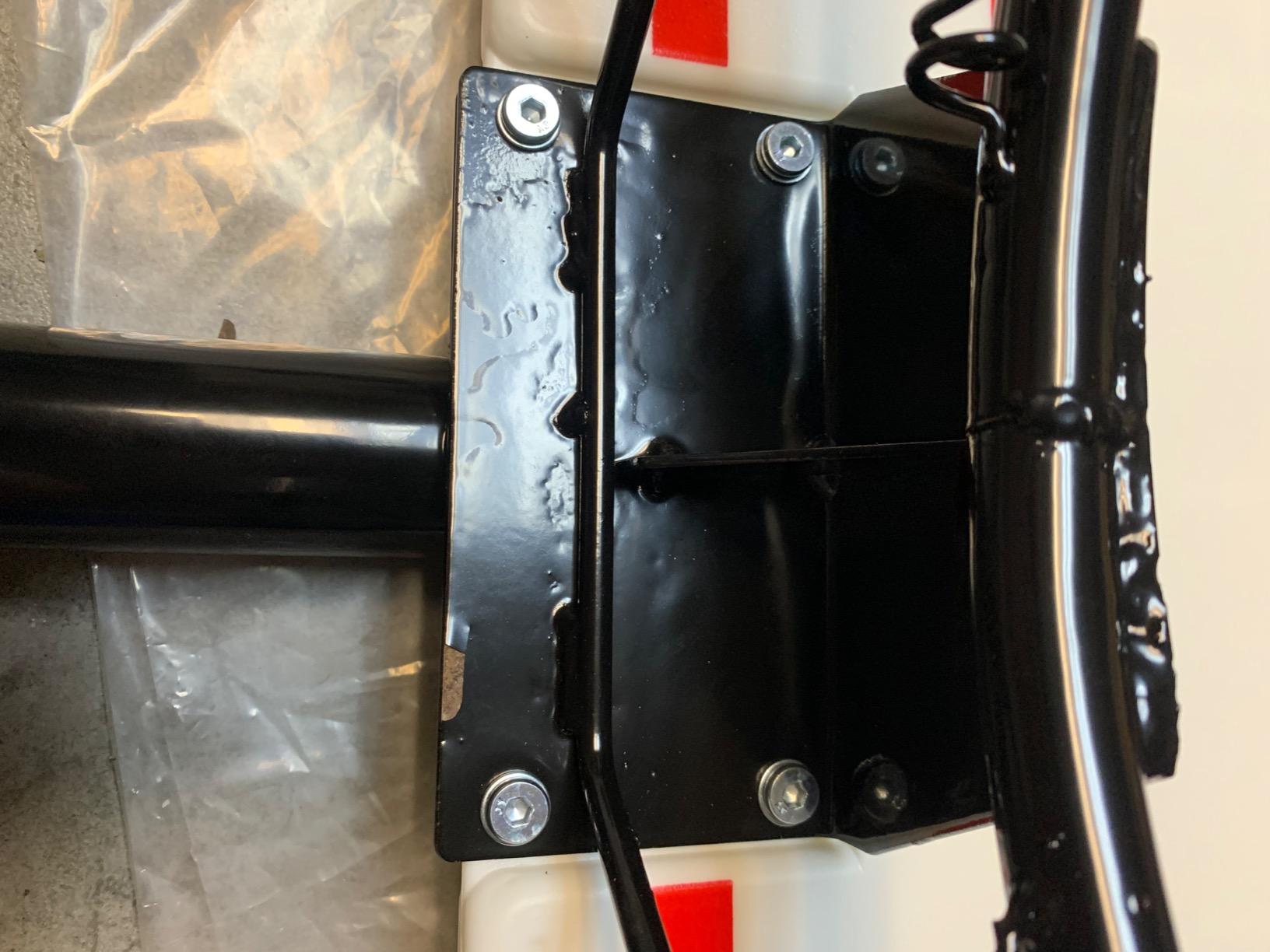
Knowing When to Move Up
The trigger is simple: upgrade when your child scores nearly every shot at 7 feet. Until then, this hoop does the job of teaching balance, hand-eye coordination and shooting form on pavement, which are the same skills that carry over to a regulation court.
Where It Falls Short
The light construction means it needs extra base weight, such as bricks or sand, before anyone shoots a full-size ball hard. Owners who skip that step report the unit creeping or tipping during play.
There are also isolated reports of a backboard fading and crumbling outdoors and of tools arriving rusted, plus confusing assembly directions that go easier with a second person. Budget for a replacement net and a bit of setup help.
10. HYES Kids Basketball Hoop for Ages 3 to 5 – Best for Preschoolers
HYES Kids Basketball Hoop, 55″ Height Adjustable Hoop for Child 3-5
Five heights from 45.2 to 55.1 in
5.8 pounds total weight
Triangular fillable base
Four balls and pump included
Pros
- Five height settings suit children aged 3 to 5
- Light enough for a young child to move
- Four mini basketballs plus pump in the box
- Tool-free install with a printed manual
Cons
- Toy scale and not built for a full-size ball
- 55 inch maximum height caps it at preschool age
- About eight percent of reviews mention breakage
This is a toy first, not a driveway hoop, and it belongs here because the earliest age band is real. Five settings from 45.2 to 55.1 inches put the rim where a three to five year old can put up a shot unaided.
At 5.8 pounds it is by far the lightest unit here, so a child can move it between rooms themselves. The kit also includes four mini basketballs, a pump and a sticker sheet, which covers the first year of play without another purchase.
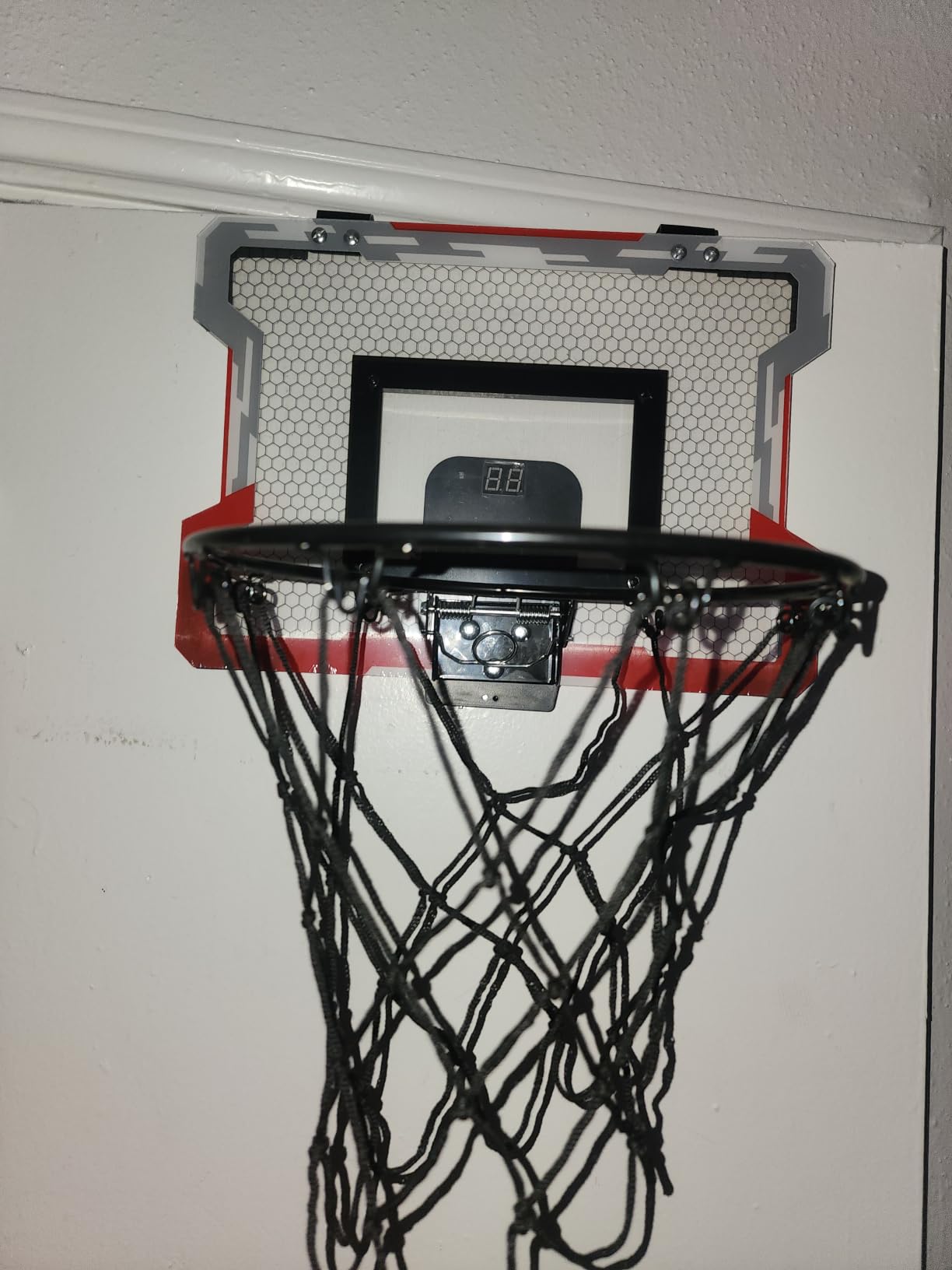
Assembly needs no tools at all, and the triangular base accepts water or sand. Filling it matters more than it sounds, because a light unit on light feet will drift if it is played with hard.
Negative reviews mostly come from a mismatch of expectations. Parents who expected a driveway system report that the toy cannot take a regulation ball or rough play, and the plastic build shows it under force.
When a Toy-Scale Hoop Is the Right Call
If your child is under five and mostly plays indoors or on a patio, this is enough. The low weight and tiny footprint are advantages in an apartment or a small yard, where a 30 pound system is simply not practical.
Treat it as a confidence builder rather than a training tool. The value is repeated shots that go in, which is what gets a very young child interested in the sport before the equipment has to grow with them.
Where It Falls Short
The 55 inch maximum height ends its usefulness the day the child outgrows preschool. It cannot be raised into the range an early elementary child needs, so it will be replaced rather than adjusted.
Rough play is out of scope. With about eight percent of reviews mentioning breakage, a household where the hoop doubles as a climbing or dunking toy will likely get a short life out of it, so keep it as a shooting-only setup.
How to Choose a Kids Basketball Hoop That Fits Your Driveway
Height, backboard material, base weight and footprint decide whether a hoop works in your specific driveway. Work through these five points before you spend anything, because most disappointing purchases come down to a hoop that was the wrong height or the wrong size for the space.
Pick the Backboard Material for the Age Band
Polycarbonate is the standard for kids hoops and the right default here. It is the lightest and toughest of the three common backboard materials, it will not shatter, and it absorbs rather than snaps back, which is easier on small wrists.
Acrylic sits in the middle on cost and feel, giving a livelier response than polycarbonate while staying shatter-resistant. It can crack in deep cold and is generally offered on mid-sized or mounted hoops rather than the cheapest portable units.
Tempered glass delivers the sharpest rebound but is heavy and expensive, and it belongs with adult or in-ground systems. For a hoop a six-year-old will dunk on, it is not the material you want.
Set the Rim Height by Age, Not by Hope
Rim height is the whole ball game for young players. A regulation 10 foot rim is out of reach for almost any child under 12, so an adjustable pole is the single most valuable feature on this list.
Ages 2 to 4: 3.2 to 4.5 feet. The rim should sit near the child’s chest.
Ages 5 to 8: 5 to 7 feet. Most parents buy here first.
Ages 8 to 12: 7 to 8.5 feet. Regulation play begins around age 12 to 14.
Adults and older teens: 7.5 to 10 feet, or an in-ground system.
If you want a system that covers a broad age range, start at the 5 foot minimum and aim for a maximum near 8.5 feet. That single range handles most childhood stages without replacing the hoop.
Judge Base Stability by Gallons, Not Aesthetics
Which portable basketball hoop is most stable? The one with the deepest base filled with sand. Water is roughly 8.3 pounds per gallon and sand is about 100 pounds per cubic foot, so sand buys far more mass in the same volume and does not freeze solid in winter.
Set the base on level concrete before filling, not after.
Fill with sand wherever the manufacturer allows it and pack it down.
Use sandbags or bricks on the recessed deck if the design provides one.
Check that the hoop sits away from the curb, where a wheel can catch.
Retop the fill after the first month of play, since sand settles.
How stable are adjustable basketball hoops in practice? Most owners report stable, wobble-free behavior once the base is properly filled. The ones that tip are almost always the units that were never filled, or filled with water only.
Measure the Backboard Against the Driveway
Can I put a basketball hoop in my driveway? Yes, on a paved, level surface that is not a drainage slope. A 44 inch backboard usually spans a single-car pad, a 50 to 54 inch board fits most two-car driveways, and 60 inch needs a wide run or an extended apron.
Also measure the base depth, not just the board width. Anything over 30 inches deep needs clearance behind it, and the shot path in front of the rim needs roughly 15 feet of open pavement to run a full layup. Keep the base away from the curb line and away from parked cars, and check that your homeowners association or local rules do not restrict fixtures near the street.
Choose the Right Ball and Check the Safety Details
Size 1, 2 and 3 mini balls suit children under 5. Size 4 and 5 work for ages 5 to 8, and a size 6 youth ball covers roughly ages 9 to 11. For outdoor play on concrete, a composite or rubber ball is gentler on both the pavement and a child’s wrists than leather.
On safety, the breakaway rim matters most. A spring-action rim flexes under force so a hanging child does not get hurt, and it is the single best reason to pay more for a mounted system such as the Silverback Junior.
Padded backboard edges are worth having around younger children, and no hoop in this group should be treated as a climbing frame. If a child dunks on a rim without a breakaway mechanism, expect bent hardware.
Plan for Assembly and Winter Storage
How long does hoop assembly take? Toy-scale units finish in 15 minutes, while full-size adjustable systems usually take one to two hours. Most of the portable systems here need two adults for the backboard and rim step, so budget for a helper.
For winter, lower the rim to its minimum, drain the base if you filled with water, and roll the unit into a garage if you have the ceiling height. A tarp and bungee cords are the fallback for units that stay outside, and our trampoline hoop guide covers another way to keep a child shooting in colder months.
No Driveway? Garage, Deck and Poolside Setups
If your home has no driveway, a portable base system is not the only option. A wall or pole-mounted hoop gives you the same rim height adjustment in a fraction of the footprint, and it removes the tip-over question entirely because there is no base to fill.
Over-the-door and on-wall hoops work indoors on a garage wall or a bedroom door, which suits younger children and colder climates. Our indoor kids hoop roundup covers those formats in detail.
For poolside use, look for a hoop with a low minimum setting and a base that accepts sand or water, since a wet slab changes the weight picture. Several picks in this roundup, including the Seray and the ZENY, are compact enough to move to a pool deck for the summer.
Frequently Asked Questions
What is the best basketball hoop for a driveway?
The best basketball hoop for a driveway is one with a height range that starts low enough for a child to reach, a fillable base, and wheels so it can be moved. Our top pick is the Lifetime 32 inch Youth Portable Basketball Hoop, which adjusts from 5.5 to 7.5 feet without tools and rolls on a sand-fillable base.
Can I put a basketball hoop in my driveway?
Yes, as long as the surface is paved, level and clear of drainage slopes. Place the base away from the curb line and leave roughly 15 feet of open pavement in front of the rim. Check whether your homeowners association or local rules restrict fixtures near the street, and fill the base with sand for stability.
What is the recommended height for a basketball hoop for a 5-year-old?
Around 5 feet is the right starting point for a five-year-old, with 5 to 7 feet covering most preschool and early elementary players. The rim should be roughly chest height on the child so shots land on or near the rim. Anything at regulation 10 feet is out of reach for that age.
Which portable basketball hoop is the most stable?
Stability comes from the base volume and what you put in it. Sand gives far more mass than water at the same volume and does not freeze. Among these picks, the Yohood accepts up to 93 lbs of fill and the Best Choice Products unit takes 54 to 56 liters of sand, making both the sturdiest once fully loaded.
Are basketball hoops worth it for younger kids?
Yes. A driveway hoop supports hand-eye coordination, balance and confidence in a way that is hard to replicate indoors, and it gives kids a screen-free reason to be active outside. Start at a rim height they can reach so early sessions end in made shots, then raise it as they grow.
The Best Kids Basketball Hoop for Your Driveway
After working through all 10 of the best kids basketball hoops for driveways, the Lifetime 32″ Youth remains our pick for most families because it balances tool-free height adjustment, a proven backboard and the deepest owner history in the group. Buy the Yohood if you want the widest range and the deepest base, or the Silverback Junior if dunking safety matters most.
Measure your child’s reach, check your driveway width, and fill the base with sand before the first game. Those three decisions account for most of the satisfaction owners report in 2026, and they take about ten minutes.