
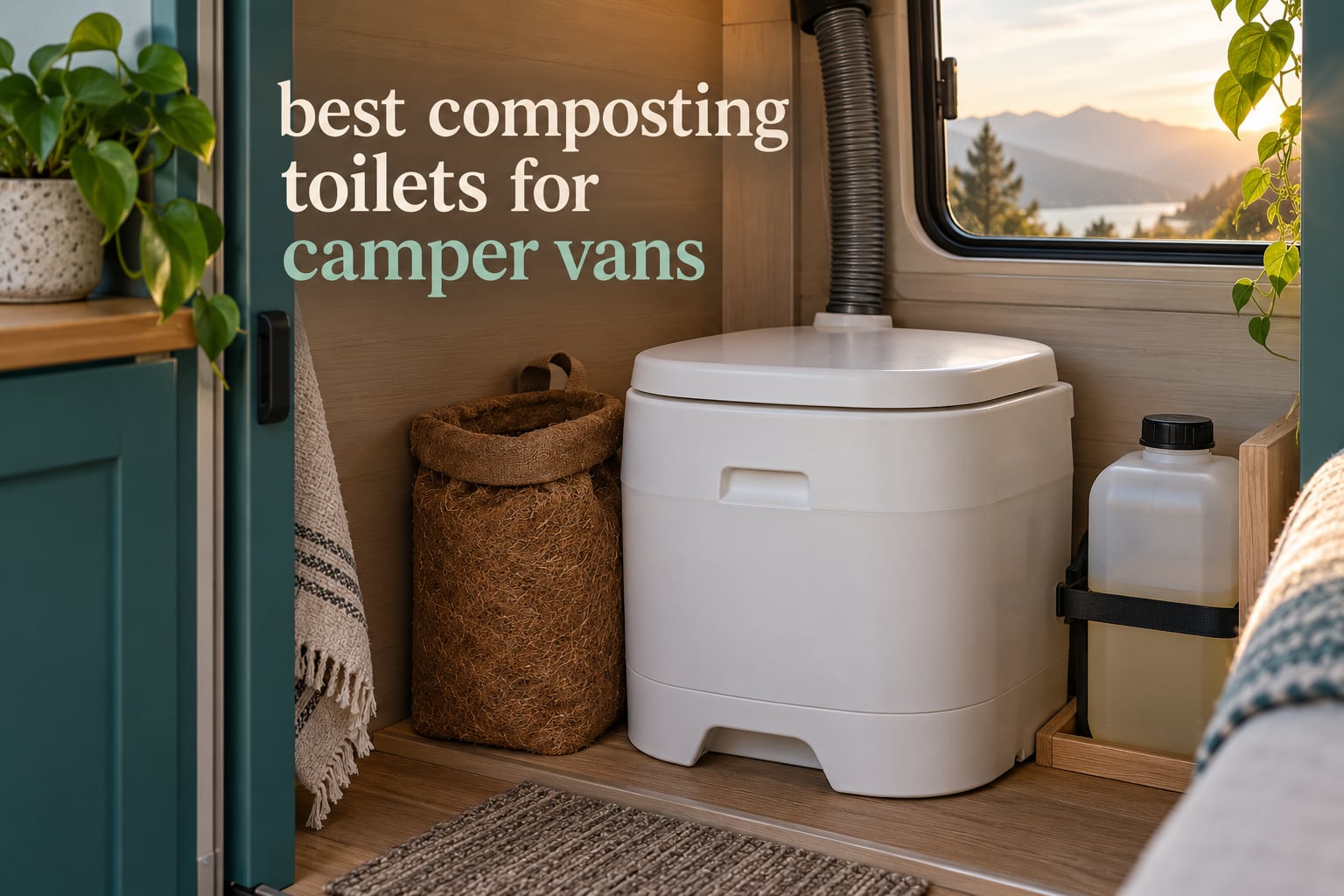
If you spend more than a few nights away from a dump station, a composting toilet for camper van use is the only toilet type that genuinely works. It needs no water, no chemicals and no holding tank, so you can park anywhere for as long as you like. We compared ten separating models across capacity, weight, footprint and real-world emptying intervals to find the right one for your build.
The short answer: the Nature’s Head Self Contained Composting Toilet is the best composting toilet for camper van full-time living because two people can go four to six weeks between emptyings and it carries the deepest review history in the group. If your van has a genuinely tight footprint, the OGO Origin trades the crank for an electric agitator in a 15 by 16 inch box. And if you only take the van out on weekends, a portable unit like the BOXIO costs a fraction of a fixed install and stows under a seat.
What follows is our full accounting of the ten most-reviewed separating toilets built for vans, boats and small off-grid spaces. Every capacity figure and interval we quote comes from the manufacturers’ own published specifications and the customer review data behind each listing, and we call out where the marketing language outruns the reality.
Table of Contents
How Composting Toilets Actually Work
A composting toilet separates urine from solid waste into two containers, and that separation is the entire reason the unit does not smell. Urine is diverted forward into a sealed bottle while solids drop back into a bin lined with a bag or dusted with an absorbent medium. Because the two streams never meet, the ammonia-and-hydrogen-sulfide reaction that makes a conventional black water tank foul your van never starts.
Most models skip the compost pile entirely and use a liner-and-cover system: a retractable cover hides the solids, a bag catches them, and the whole bag goes in the trash when full. A minority of designs add agitation. The OGO Origin mixes its bin contents with a 12V motor on a push button, while hand-crank and spider-handle designs let you turn the contents manually to speed decomposition.
Medium matters as much as geometry. Coconut coir is the common choice because it absorbs moisture without going soggy, and it keeps the bin dry enough that bacteria can work on the solids. Peat moss and wood shavings appear in some designs, and one manufacturer recommends hemp shiv for its portable bucket. Getting the ratio wrong is the single most common cause of a smelly bin.
Unlike an RV toilet, you do not keep standing water in the bowl. There is no bowl seal and no S-trap holding a water barrier against sewer gas, which means there is nothing for odor to hide behind in the first place.
Venting is the other half of the system. Most fixed models expect a vent line or an integrated fan to draw air through the unit, and a carbon filter can substitute for an external vent on smaller installs. Both approaches move air in a controlled direction so the van interior never becomes the odor source.
Top 3 Composting Toilets for Camper Vans in 2026
Our three headline picks cover the three ways van builds actually differ: a large full-time unit, a premium urine-separating system for off-grid living, and the cheapest credible entry point.
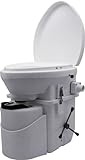
Nature’s Head Spider Handle
- 4-6 week solids interval for two
- 28 lb wall-mount unit
- 5 year warranty

Best Composting Toilets for Camper Vans at a Glance in 2026
All ten models below separate liquids from solids. The right column is where the real differences sit: how many uses you get per fill, what the unit weighs, and whether it needs a vent hole drilled through your van body.
| Product | Specifications | Action |
|---|---|---|
| Nature’s Head Self Contained Composting Toilet |
|
Check Latest Price |
 BOXIO Portable Composting Toilet BOXIO Portable Composting Toilet |
|
Check Latest Price |
| Separett Villa Urine-Separating Compost Toilet |
|
Check Latest Price |
 OGO Origin Composting Toilet OGO Origin Composting Toilet |
|
Check Latest Price |
 OGO Nomad Waterless Composting Toilet OGO Nomad Waterless Composting Toilet |
|
Check Latest Price |
 TRELINO Evo S Composting Toilet TRELINO Evo S Composting Toilet |
|
Check Latest Price |
 TROBOLO WandaGO Composting Toilet TROBOLO WandaGO Composting Toilet |
|
Check Latest Price |
 TROBOLO WandaGO Lite Composting Toilet TROBOLO WandaGO Lite Composting Toilet |
|
Check Latest Price |
 Cuddy Lite Portable Compost Toilet Cuddy Lite Portable Compost Toilet |
|
Check Latest Price |
 Thinktank Composting Toilet Thinktank Composting Toilet |
|
Check Latest Price |
What Are the Drawbacks of Composting Toilets?
Compositing works, but it is not a set-and-forget appliance. These are the six drawbacks we hear most often, and we have kept each one short because that is how van lifers actually describe them.
- Liquids bottle fills faster than you expect
- Solids usually go in the trash, not a compost pile
- Getting the medium ratio wrong causes odor
- A wet solids bin smells worse than a dry one
- Fixed installs must be planned into the build
- Full indicator maintenance is easy to forget
That last point deserves emphasis because it is the one nobody expects. The solids bin is the container you think about for weeks, but the liquids bottle is the one that actually fills in a weekend. Several owners in r/vandwellers threads describe the surprise of a full urine jug before a trip is finished, which is why we treat liquids capacity as a first-class spec below.
There is also the honesty point that most roundups skip. Nothing you carry in a van will produce finished compost by the time the bag is full. You are separating waste so it does not stink, not turning it into soil, and disposal rules still apply wherever you park.
1. Nature’s Head Self Contained Composting Toilet – Best Overall for Full-Time Van Life
Nature’s Head Self Contained Composting Toilet with Close Quarters Spider Handle Design
28 lb wall-mount unit
4-6 week solids interval for two
20.98 inch cube footprint
Pros
- 4.5 stars across 1112 reviews
- Two people full-time empty every 4-6 weeks
- Spider handle suits close quarters
- 5 year warranty with strong support
Cons
- Heavy at 28 lb in a payload-constrained van
- Bulky 20.98 inch cube footprint
- Wall mount must be planned into the build
This is the model we would put in a van that leaves the pavement for weeks at a time. It holds 4.5 stars across 1112 ratings, the deepest review pool in this comparison, and the manufacturer states that two people using it full time empty every four to six weeks with a five-minute dump.
The spider handle is the detail that separates it from older designs. Instead of a full crank handle sweeping through the space beside the unit, the handle rotates inside the housing, so it fits a cabinet where a crank would foul the door or a drawer.
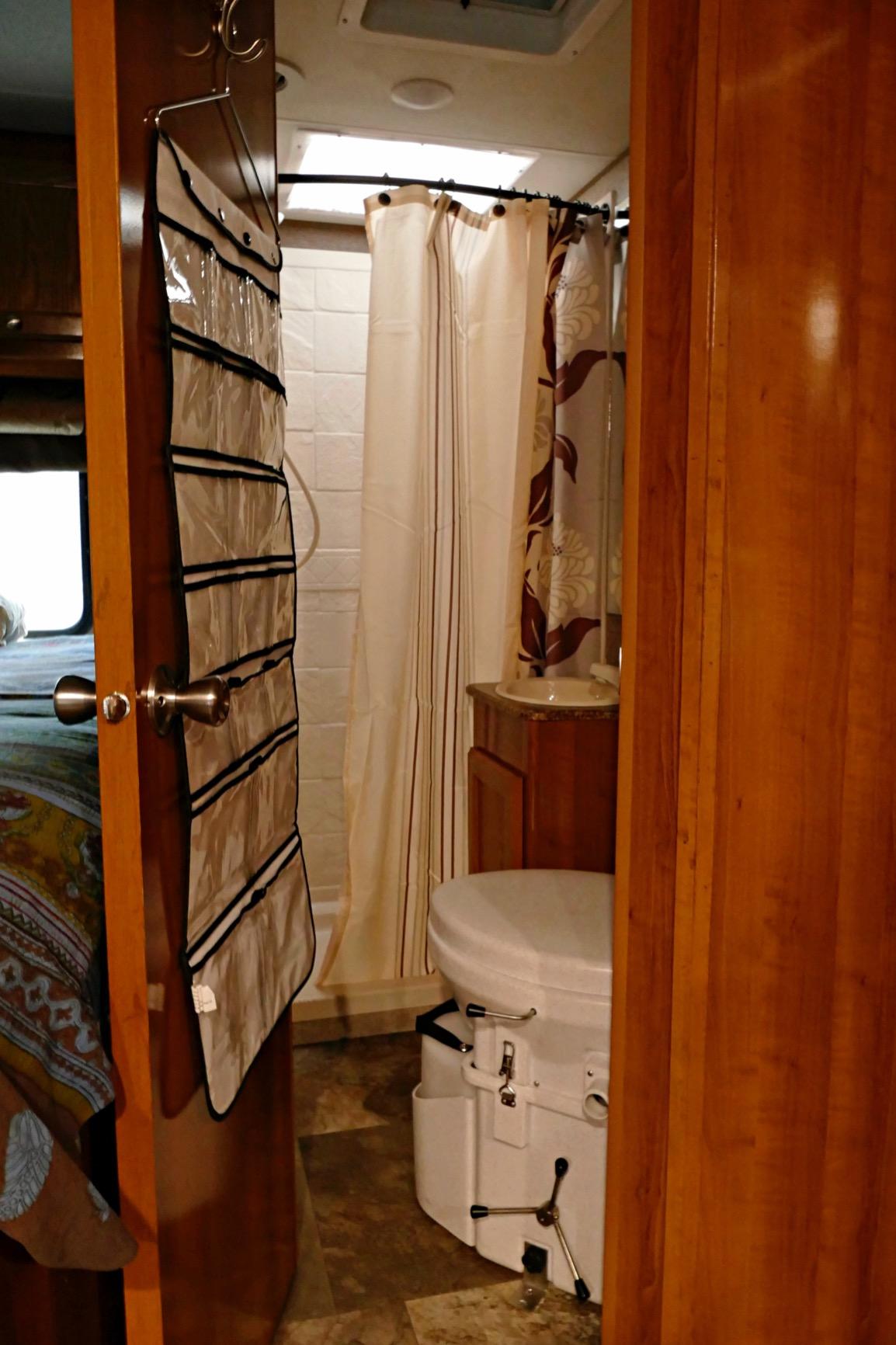
The 28 lb weight is the honest tradeoff here. On a Sprinter or Transit with a heavy build already eating your payload, that is not a trivial number to hand to a lifting frame every time you dump. Long-term owners on forums like r/RVLiving consistently report the unit staying serviceable for years with its stainless hardware intact, which offsets the mass.
The stated footprint is a 20.98 inch cube, and the cube shape does waste some corner space. If your build has a genuine under-seat cavity or an aisle-side cubby, measure before you commit, because this is a permanent fixture rather than something you slide in on a weekend.
What decides whether this fits your build
If you are building from scratch, the wall mount is a design feature rather than a limitation. You choose the cabinet, the access hatch and the vent route, and by the time the toilet goes in there is nothing awkward left to work around.
If you are retrofitting, this is the hardest install in the group. Nobody on r/Construction describes cutting a new wall cavity into a finished van lightly, and most of them recommend only adding one of these to a van that already has a planned bathroom cabinet.
Where owners report trouble
The complaints cluster on logistics rather than function. Plan for where you carry the full bin out to, because you will be doing that every month or so, and the internal support is worth planning around too.
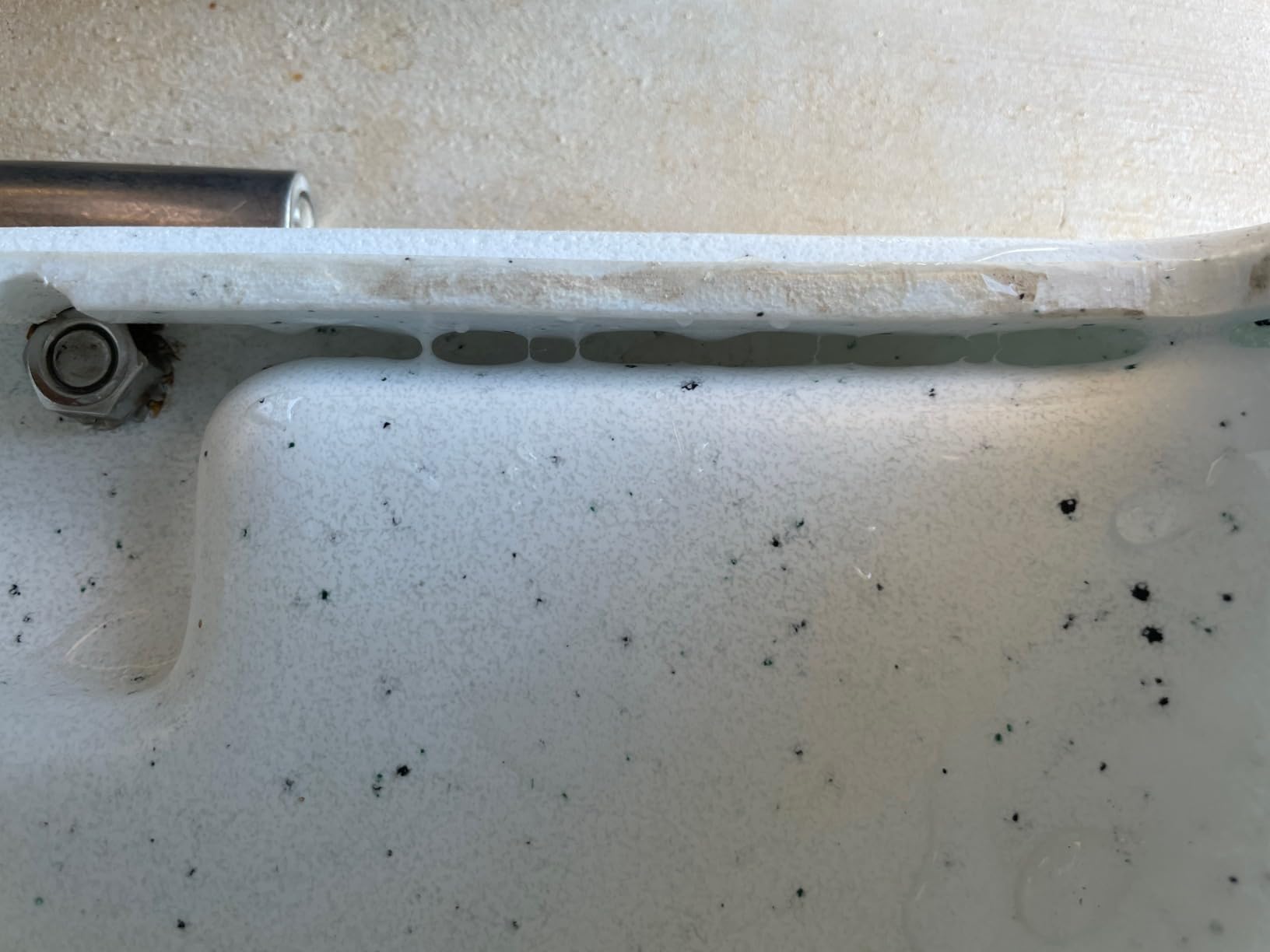
A very small minority of reviews describe condensation or splash issues during the first weeks of learning the separation habit. Those tend to resolve once people stop overfilling the liquids side of the bowl.
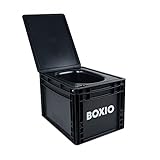
2. BOXIO Portable Composting Toilet – Best Value Dry Separation Unit
BOXIO TOILET: Portable solution for car trips, boats, hunting or outdoor adventures. Europe’s good-selling composting toilet. Compact size: 15.75″ x 11.8″ x 11″
6.2 lb portable dry toilet
5L urine canister plus bag-lined solids
8-10 uses per cycle
Pros
- Entry-level complete dry separation unit
- 5L urine canister plus bag-lined solids
- Handles 8-10 visits per emptying
- 6.2 lb and fully washable parts
- Made in Germany
Cons
- Low diverter back wall causes splash-back
- Red urine-portal stopper sold separately
- German-only instructions and video
The BOXIO is the entry-level true separation toilet we tested and the lowest rated at 3.8 stars from 920 reviews, with 14 percent of ratings at one star. That split tells the story: owners who learn the separation routine rate it five stars and keep it for years, and the ones who do not rate it harshly.
Its dry separation geometry is genuinely complete. A 5 litre urine canister sits forward and solids drop into a bag-lined bucket behind it, giving roughly 8 to 10 toilet visits per full cycle. At 6.2 lb with a 15.7 by 11.8 by 11 inch body, it slides under a bed platform or into a storage crate between trips.
The housing is rated to hold 330 lb while weighing 6.2 lb, and every part is washable, which is more than we can say for several bag-only designs. A plug, hemp litter and biodegradable bags complete the package.
Who should tolerate the design
If you can sit squarely and align with the diverter, the geometry works. The recurring complaint across multiple reviews is that the back wall of the urine portal sits too low for many women, which pushes liquid over into the solids bucket and starts the exact odor problem the unit exists to prevent.
That single issue drives most of the one-star ratings. It is also the reason the instructions and install video are German only, because the alignment step that prevents splash-back is not obvious from the English listing photos.
What you give up for the low weight
The red stopper that closes the urine portal is not included and has to be bought separately. The liquids container opening is also awkward to drain, which matters when you are emptying it in a rainstorm rather than beside a water butt.
For weekend campers who already park near facilities, the trade is easy: you accept more frequent emptying and a bag of litter in exchange for the low cost and light carry weight.
3. Separett Villa Urine-Separating Compost Toilet – Best for Off-Grid Living
Separett Villa Urine-Separating Compost Toilet
34 lb wall-mounted
26.5 inch deep
Urine-separating with no additives
Pros
- 4.5 stars from 351 reviews
- True urine-separating compost system
- No water chemicals or mixing
- Large capacity for long intervals
Cons
- Heavy at 34 lb in a payload-constrained van
- 26.5 inch depth needs a bathroom build
- Paper listed as the material type
The Separett Villa is the most genuinely urine-separating design in this comparison. Rather than funnelling liquids into a bottle you carry out, it routes them away to a drainage or collection arrangement, which is why the manufacturer can claim no additives or mixing are required.
At 4.5 stars from 351 ratings, it sits in the same tier as the Nature’s Head on rating with a smaller but still substantial pool of feedback. Owners consistently frame it as the self-sufficiency option for school-bus conversions, homesteads and cottages, and the recurring theme in reviews is genuine off-grid operation with no water consumed.
That makes it a strong pick for anyone building a fixed living space rather than a weekend rig, including converted buses where the toilet becomes a permanent fixture rather than a removable item.
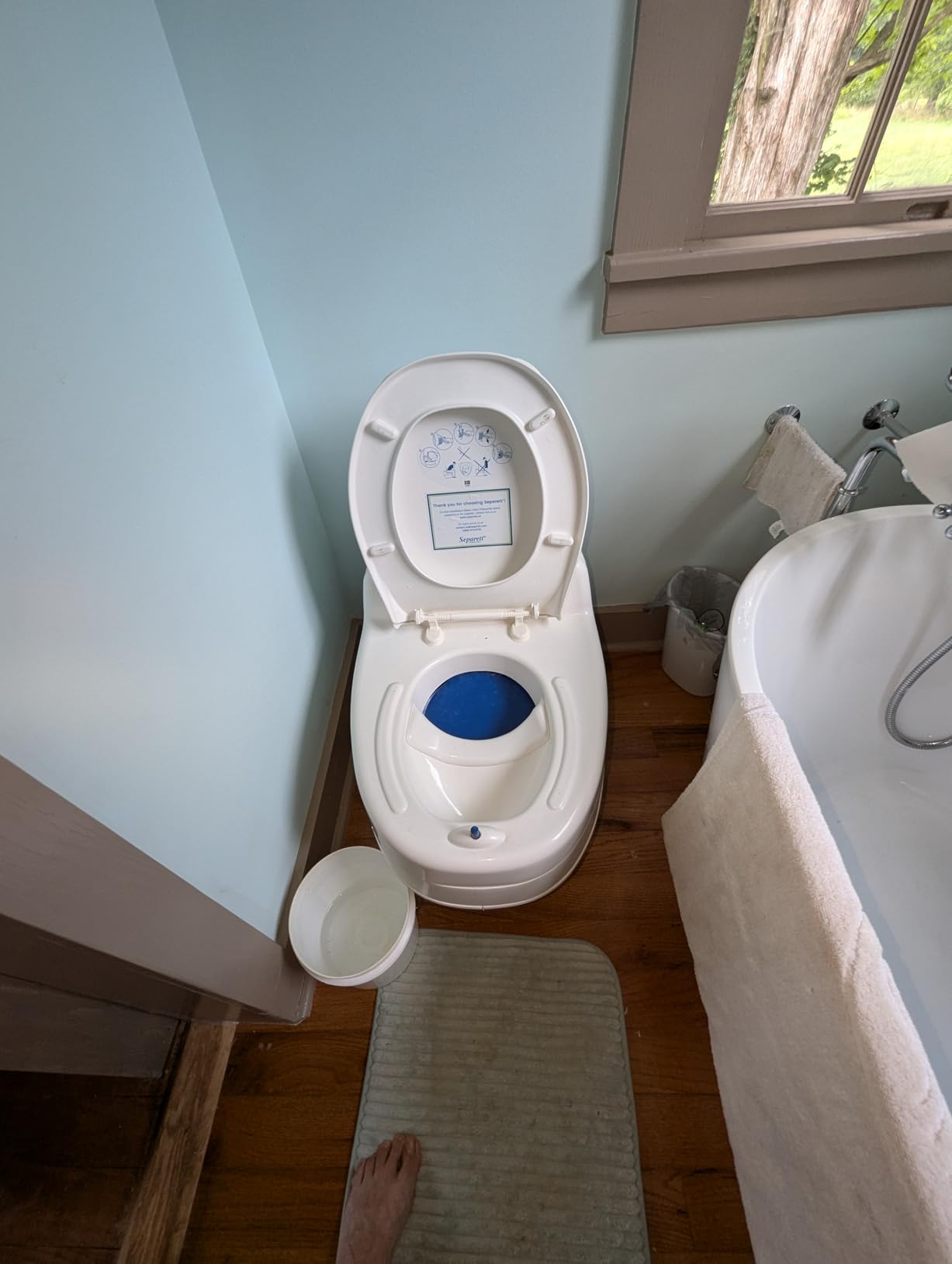
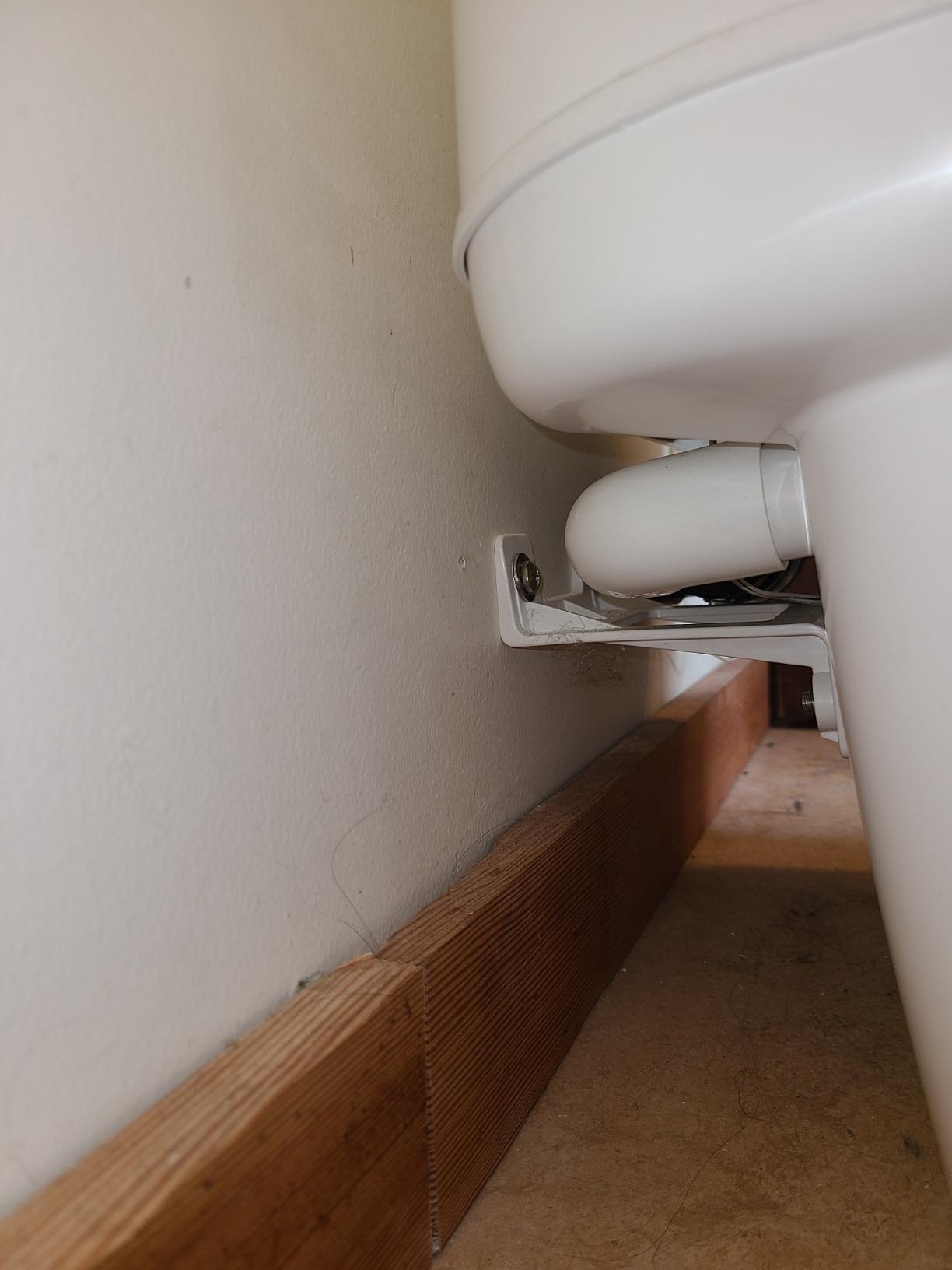
The cost is physical. At 34 lb it is the heaviest unit here, and a 26.5 inch depth is not a cabinet-friendly number. In practical terms, this is a bathroom installation, not a toilet you slip into a van corner, and the footprint should be planned before you order any cabinetry.
The listed material type is paper, which is unusual for a wet-area fixture and worth confirming with the manufacturer if you intend it to see heavy daily use. It is the one specification on this listing that reads more like a packaging description than a material callout.
When this earns its footprint
If your build is a permanent home rather than a vehicle you might resell, the depth stops being a drawback and becomes a spec you design around. A 26.5 inch cavity fits a standard residential bathroom floor plan without any adaptation.
For bus conversions and cottages the same logic holds. The fixed nature of the install also means you are not carrying it up and down steps every time you want the toilet, which is exactly what the fixed models eliminate.
What to check before ordering
Confirm how the urine side is intended to terminate in your system before you commit. A design built around drainage assumes you have somewhere for that liquid to go, which is a different requirement from carrying a jug to a dump point.
The weight also matters for a live-in vehicle. On a full-time build where payload is already tight, a 34 lb fixed fixture is worth weighing against the capacity and zero-maintenance claims you are buying it for.
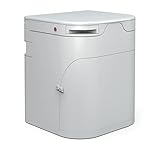
4. OGO Origin Composting Toilet – Best for Tight Builds
OGO Origin Compact Composting Toilet – 15in Footprint for Van, RV & Boat
15 x 16 inch footprint
12V electric agitator
2.4 gallon urine bottle
Pros
- Compact 15 x 16 inch fixed-install footprint
- Push-button electric agitator
- 2.4 gallon bottle with 25-30 use bin
- Quiet fan with low 12V draw
Cons
- Needs 12V wiring to function
- Solids still bagged rather than composted
- 16 percent one-star share
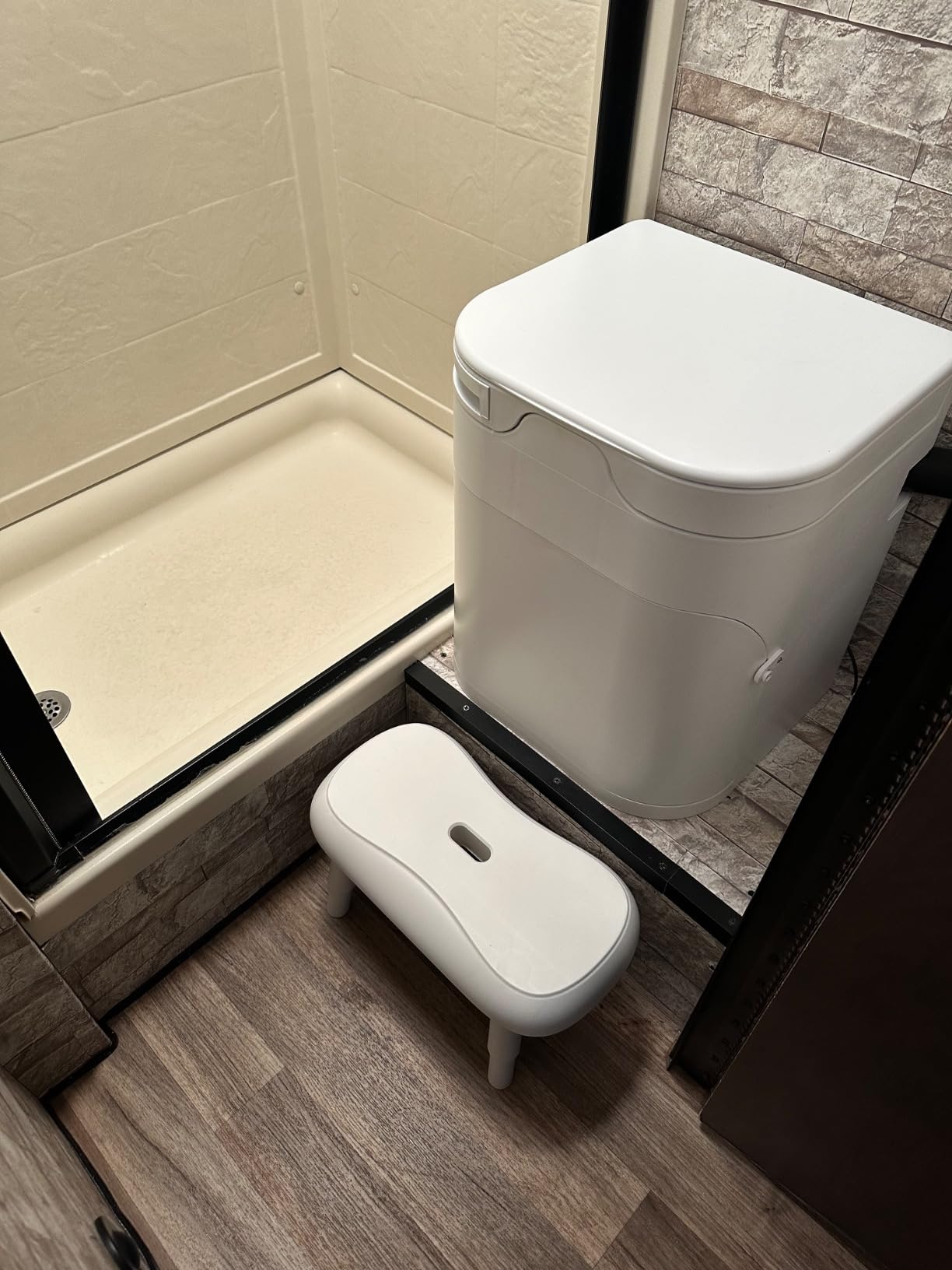
The OGO Origin solves the constraint that kills most fixed installs: floor space. Its footprint is roughly 15 by 16 inches, and the manufacturer designed it explicitly around Sprinter and Transit van floor plans where every inch of cabinet width is contested.
It also removes the crank. A 12V push-button motor mixes the solids with one tap, so there is no handle swinging through the cabinet interior, which makes a tight installation behave far better than a hand-crank unit in the same space.
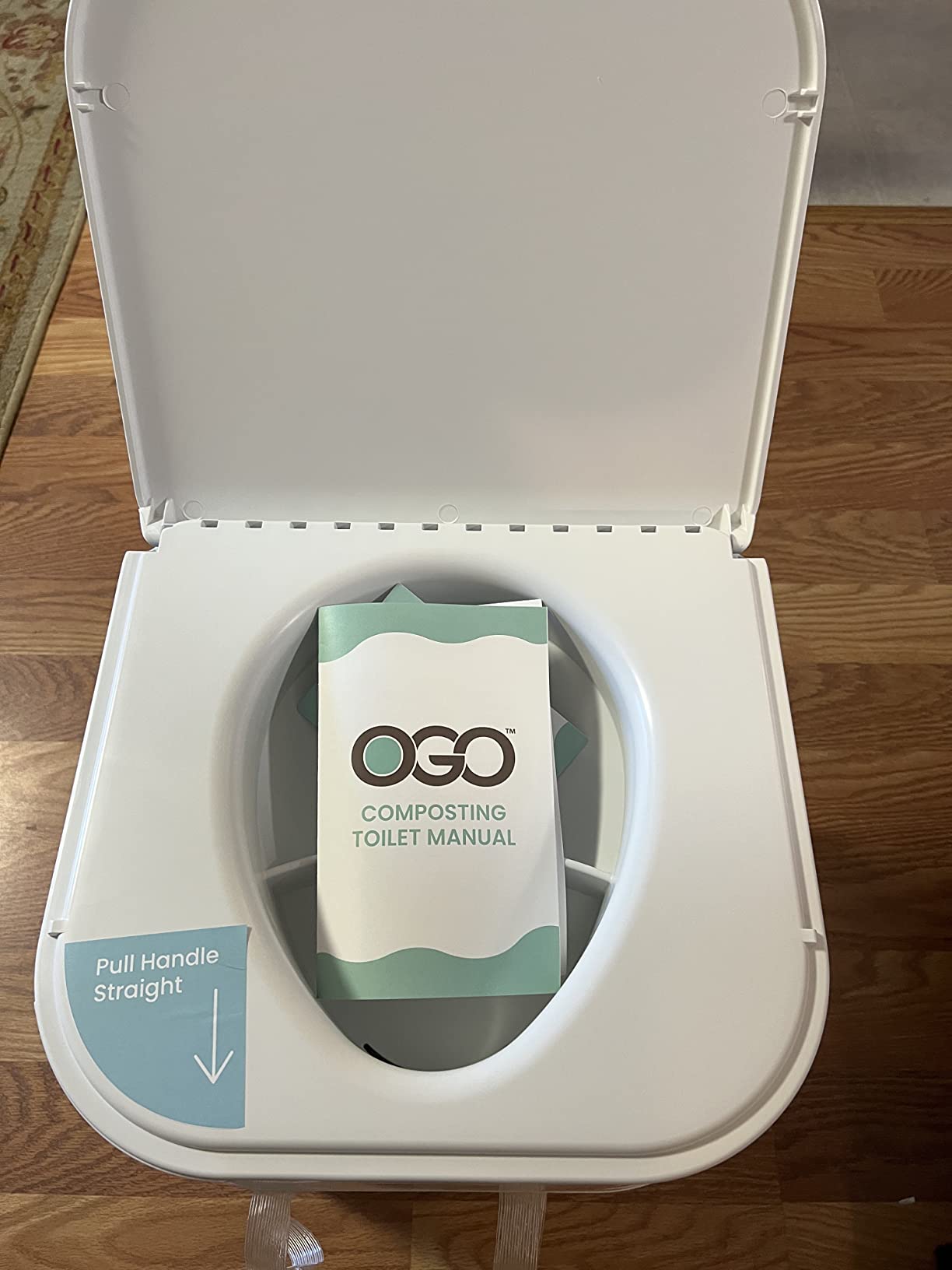
Liquids route to a 2.4 gallon bottle while solids stay dry in a rear bin rated at 25 to 30 uses, and ventilation comes from a quiet fan with a low 12V draw. Mounting screws, the power cable and a venting hose are all in the box.
At 4.0 stars from 145 ratings, the distribution tells you where the friction is. Sixty-four percent of owners rate it five stars, but 16 percent rate it one star, which is the largest negative share among the fixed installs we compared. Feedback tends to divide cleanly between people who love the space saving and people who resents the electrical requirement.
The electric agitator is a genuine convenience, but it converts a plumbing-free appliance into a 12V-dependent one. In a van with a modest battery budget, that draw has to be accounted for during the electrical design rather than discovered later.
How to fit this into a real cabinet
Measure the toe kick rather than the wall space. A 15 by 16 inch footprint still needs depth behind the unit for the fan and hose routing, and builders on r/Construction consistently warn that the vent route is what determines whether a compact toilet actually fits.
Run the 12V feed during the build while the walls are open. Adding a power cable to a finished van means opening trim panels again, which defeats most of the reason you chose a compact unit.
Where it disappoints
The solids bin still has to be emptied off-grid. The design separates and dries waste rather than composting it on site, so you are carrying out a bag of solids to a proper disposal point every time it fills.
If your route never reaches a facility and you never plan to use a cassette as a backup, that limitation shows up on exactly the trips where you most wanted independence.
5. OGO Nomad Waterless Composting Toilet – Most Versatile That Needs No Power
OGO NOMAD Self-Contained Composting Toilet – Urine-Diverting, Portable RV
12 lb free-standing
15.4 x 13 x 12.38 inch
Works with common 8 gallon bags
Pros
- No electricity plumbing or wiring needed
- 12 lb and fits a rooftop tent box
- Compost medium and bags included
- Uses widely available 8 gallon bags
Cons
- Solids bagged rather than composted
- Free-standing with no mounting or venting
- Flattest rating spread in the group
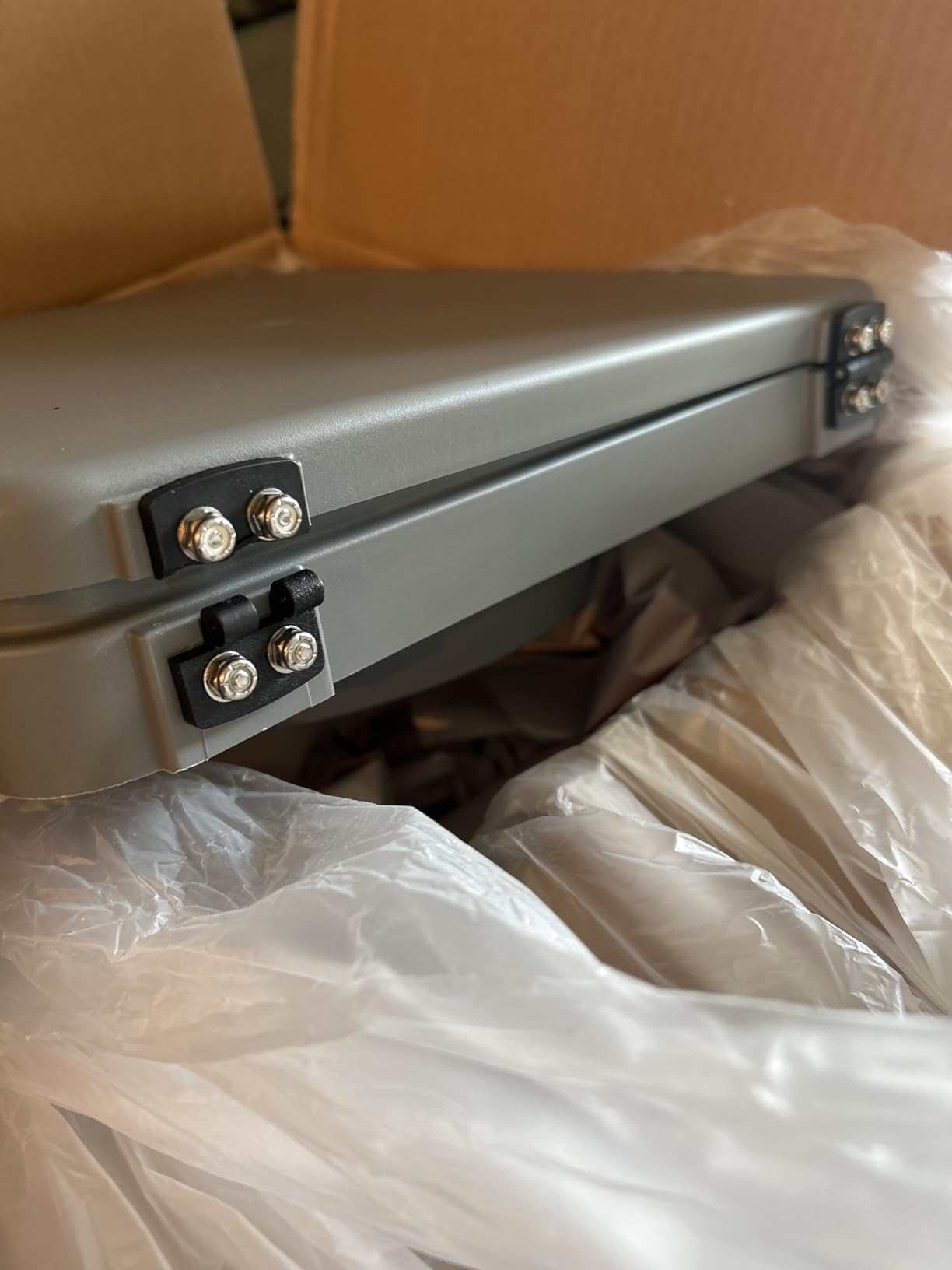
The Nomad is the pick for anyone who wants urine diversion without a single wire in the build. It is free-standing, needs no plumbing and no electricity, and at 12 lb with a 15.4 by 13 by 12.38 inch body it fits in a truck bed, a car boot or a rooftop tent box.
Its rating is 4.0 from 127 reviews, and what makes that number useful is the shape of the distribution. It is the flattest in the roundup, meaning you will find people who love it and people who find it merely acceptable, with very few polarized reactions either way.
Two compostable bags and a bag of coco coir ship in the box, so there is no separate accessories order on day one. After that it runs on standard 8 gallon bags you can buy almost anywhere, which removes the proprietary-liner problem that catches out first-time buyers.
Where it fits a van build
This is the unit to consider when the build is finished, the electrical is closed and you still want separation. Because it carries its own liner and medium, it can be introduced to an existing van without drilling anything or planning a cabinet around it.
Several owners in r/RVLiving threads use a small separation unit of this kind specifically for number one while keeping a second fixture for number two, a hybrid approach that plays to the strengths of a light, low-capacity design.
What the low capacity means
Treating it as a weekend or part-week solution sets the right expectation. A full separation bin on a long trip still has to be carried out, and the low weight makes that easier but does not make it disappear.
The lack of any venting provision is the real limitation for van use. Outdoors it is fine. Inside an enclosed van in summer heat, an unvented container is a different proposition, and owners should plan for cross-ventilation in the toilet cabinet.
6. TRELINO Evo S Composting Toilet – Best for Weekend Trips
TRELINO Composting Toilet Evo S Gray, Portable Toilet for Camping & Outdoor, Odorless, 1.2 gal & 1.6 gal Capacity, 13 x 15.4 x 11.7 inches
3.9 kg portable
1.2 gal liquid plus 1.6 gal solids
German build with 2 year warranty
Pros
- Two separately emptyable canisters
- German build with 2 year warranty
- Rated to support up to 330 lb
- Water-resistant recyclable ABS
Cons
- Membrane urine lid is fiddly to clean
- No clamp so the lid shifts while driving
- Small solids bin empties often
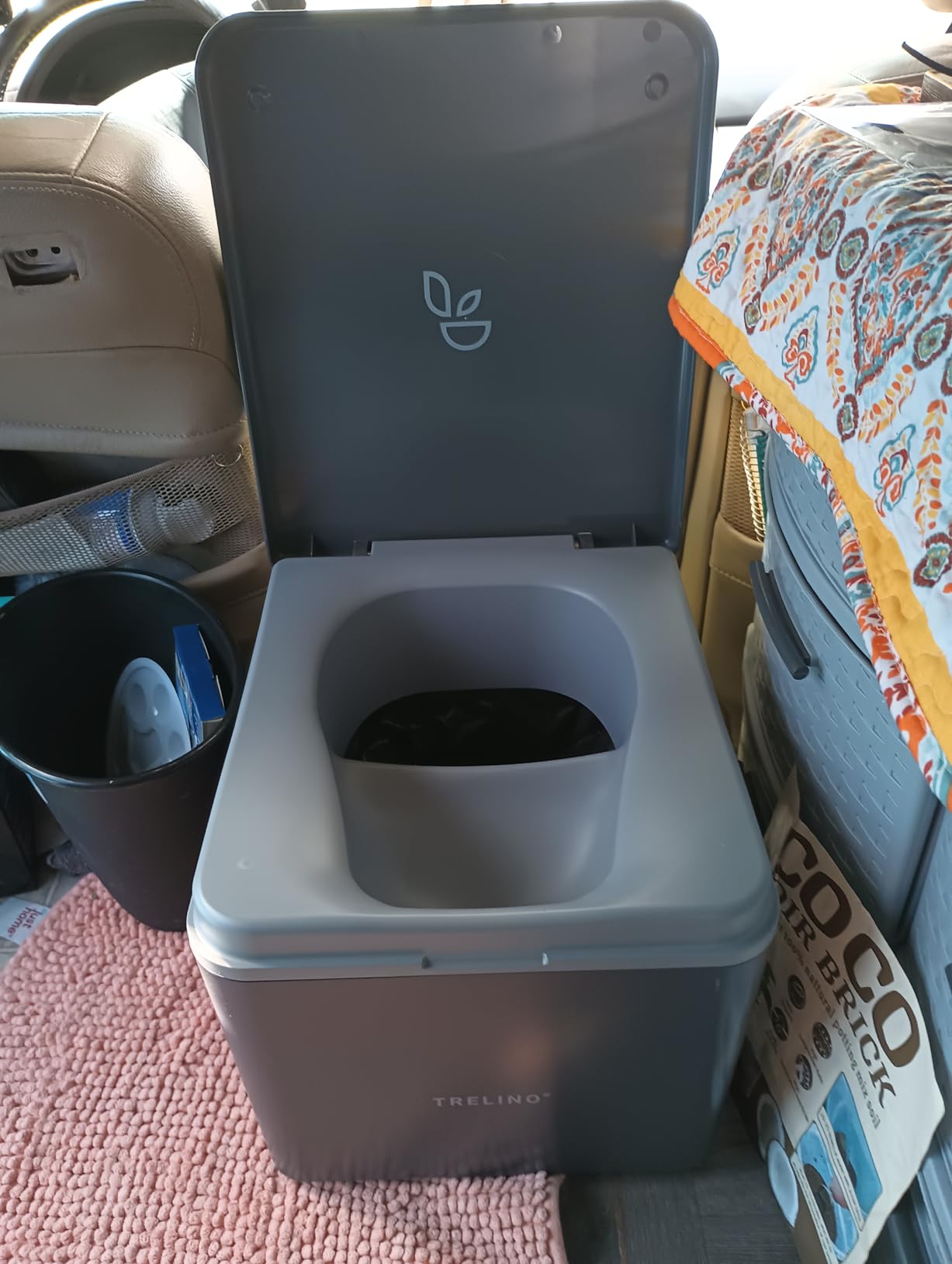
The TRELINO Evo S is a portable separating toilet with a 1.2 gallon urine canister and a 1.6 gallon solids container, each emptying independently so you can schedule them separately. The manufacturer rates the canister at 9 to 11 liquid uses and the solids bin at 6 to 8 uses per fill.
It scores 4.0 stars from 109 reviews with 65 percent at five stars. The positive thread that runs through those reviews is German manufacture and build quality, plus the fact that drying and separation keep odor down without any chemicals or water.
At 3.9 kg with a body of 15.35 by 12.99 by 11.65 inches and a 330 lb capacity rating, it is sturdy enough for adults and small enough for a van, tent or car boot. A 2 year manufacturer warranty backs it.
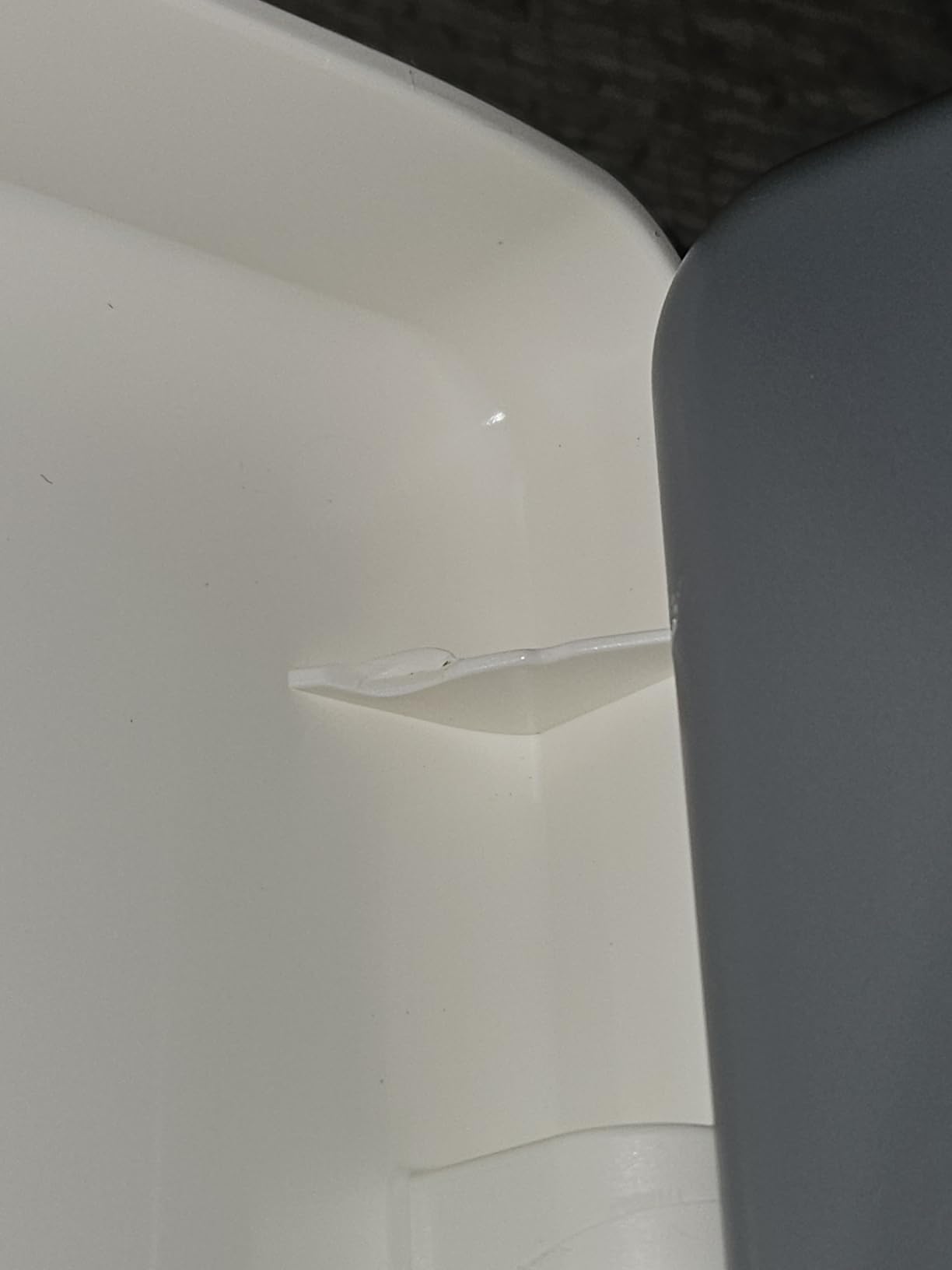
One honest note. A long-term reviewer reported persistent odor from a Trelino unit despite covers and cedar chips, and that complaint recurs in forum discussion enough that we would not call this the most reliable odor performer in the roundup. It is a design that rewards a correctly lined bag and the right medium.
When the two-canister layout helps
Because the liquids and solids canisters are separate, you can empty the jug every few days and leave the solids bin for a week, which matches how most weekend trips actually unfold. The included bag membrane closure keeps the canister sealed in the lid during travel.
That membrane is also the most-criticised part. Multiple buyers describe closing, cleaning and deodorising the sealing components as awkward, and it is where the 35 percent of ratings below five stars tend to focus.
What to secure before the van moves
There is no clamp or fastening system on the lid, so it does not stay firmly shut under acceleration. Owners who run it in a moving van generally add their own tie-down, and it is worth treating that as a required step rather than an upgrade.
The 1.6 gallon solids bin is genuinely small next to the fixed installations. For two people on a long trip, expect to empty it more often than the larger units allow.
7. TROBOLO WandaGO Composting Toilet – Best Adjustable Seat Height
TROBOLO WandaGO Composting Toilet, Portable Outdoor Camping Toilet, Urine Diverting Dry Toilet With Height Adjustment
Seat adjusts to 12.0 or 17.2 inch
10.4 lb
10-20 liquid and 8-12 solid uses
Pros
- Height-adjustable seat reaching 17.2 inch
- Only 10.4 lb so easy to carry
- Travel fastening keeps the lid shut
- Built-in urine level indicator
Cons
- Some owners dispute the odourless claim
- Opening the lid can lift the seat with it
- Riser accessory sold separately
Most portable dry toilets share one flaw: the seat sits too low for comfortable use. The WandaGO addresses it directly with an adjustable seat that sets at either 12.0 inches or 17.2 inches, and that single feature is why it stands out for taller users and anyone with limited mobility.
It holds 4.3 stars from 67 reviews with 66 percent at five stars, and the practical positives are consistent. A travel fastening system holds the lid shut in a moving van, and the built-in urine level indicator takes the guesswork out of emptying.
The SafeShell separation system adds spill protection, and the unit supports 10 to 20 liquid uses and 8 to 12 solid uses per fill. At 10.4 lb with a 15 by 13.4 by 12.4 inch footprint, it is easy to lift on and off a boat ramp or into a van.
Who the adjustable seat actually helps
Anyone who found the low-seat problem uncomfortable on another unit gets a straightforward fix here. For a traveller with knee or hip limitations, being able to raise the seat to 17.2 inches is the difference between a usable toilet and one you dread using.
That matters more than it sounds in a van, because there is no second bathroom to retreat to. If the toilet is hard to use, people avoid using it, and avoidance turns into bottles and jugs in the corner.
Where the odor story gets complicated
Several detailed reviews dispute the odourless claim, reporting that smell persists despite covers and cedar chips. The pattern in those reviews is consistent: odor control depends heavily on how well the bag is lined and what litter is used, not just on the unit itself.
The lid can also lift the seat when opened, which is an irritation rather than a failure, and the optional height riser is a separate purchase from some retailers.
8. TROBOLO WandaGO Lite Composting Toilet – Best Lightweight Travel Option
TROBOLO WandaGO Lite composting toilet, compact camping toilet for on the go, portable urine diverting dry toilet
7.9 lb free-standing
11.8 inch height
10-20 liquid and 8-12 solid uses
Pros
- Compact 7.9 lb full separation unit
- Seat attaches to the lid so nothing is stowed
- Urine level indicator included
- Firm travel fastening system
Cons
- Small seat opening for larger users
- Urine bottle will not fully drain
- Low divider wall can cause splash-over
The Lite is the smallest and lightest full separation unit we compared at 7.9 lb and 11.8 inches tall, and it is built to disappear into a storage compartment between trips. That dimensional profile is what makes it viable in a van where the BOXIO and TRELino simply will not fit.
It carries 4.3 stars from 30 ratings, the second-smallest review pool here, so treat the rating as indicative rather than conclusive. Several owners describe it as the best of several composting toilets they have owned, specifically for separation and portability.
The seat attaches to the lid, which removes the annoying routine of removing parts and finding somewhere to put them before emptying. SafeShell separation handles the fluids side, and the fastening system keeps the closed unit secure during travel.
Where the compact size bites
The small seat opening is hard for taller or larger users, and the review data mentions it specifically for men aiming while standing. If your build has room for a slightly larger unit, that extra inch of opening is the thing to spend it on.
The low divider wall between the two openings is the second limitation, and it is the same splash-over mechanism that generates complaints on other dry toilets. Learning to sit squarely and aim properly is what separates owners who rate it well from those who do not.
What to fix before regular use
The elongated rectangular urine bottle has a flat top and no nozzle, so it does not fully drain and is hard to clean. Plan a rinse routine that works with that shape rather than assuming a tipping motion will clear it.
Because the unit sits low, anyone with limited mobility will want the pedestal or step. Owners report it needing a raised platform to use away from a flat floor, so account for that height in the cabinet design.
9. Cuddy Lite Portable Compost Toilet – Best for Week-Long Trips
Cuddy Lite Portable Compost Toilet – for Camping, RVs, Campervans, Boats & Tiny Houses – LED Full Indicator, Liquid-Diverting, Separating, Solids Cover, Easy Clean – Portable & Compact
17 x 15.2 x 16.5 inch
LED full indicator
Retractable solids cover
Pros
- Solids cover hides waste completely
- LED warns before the liquids container overflows
- Removable bag-lineable solids bin
- A week-long trip needs one emptying
Cons
- Heavy listed weight of 12.3 kg for a portable
- No side handles for lifting
- 9V battery and fan plug not included
The Cuddy Lite solves the one complaint almost every dry toilet shares: you can see what is in the container. A retractable solids cover drops over the waste, and owners repeatedly single it out as the feature worth paying for on its own.
It holds 4.3 stars from 22 ratings, among the smallest samples in this comparison, with 59 percent at five stars and no two or three star ratings at all. Long-term owners report it replaced a bulkier unit in a small RV, and that a week-long trip needed only a single emptying.
The two-plate drop-zone cover gives a larger opening than most units to keep liquid out of the solids stream, and the removable bin can be bag-lined so you never touch the waste directly. The LED full indicator alerts you when the front liquids container needs emptying, powered by a standard 9V battery.
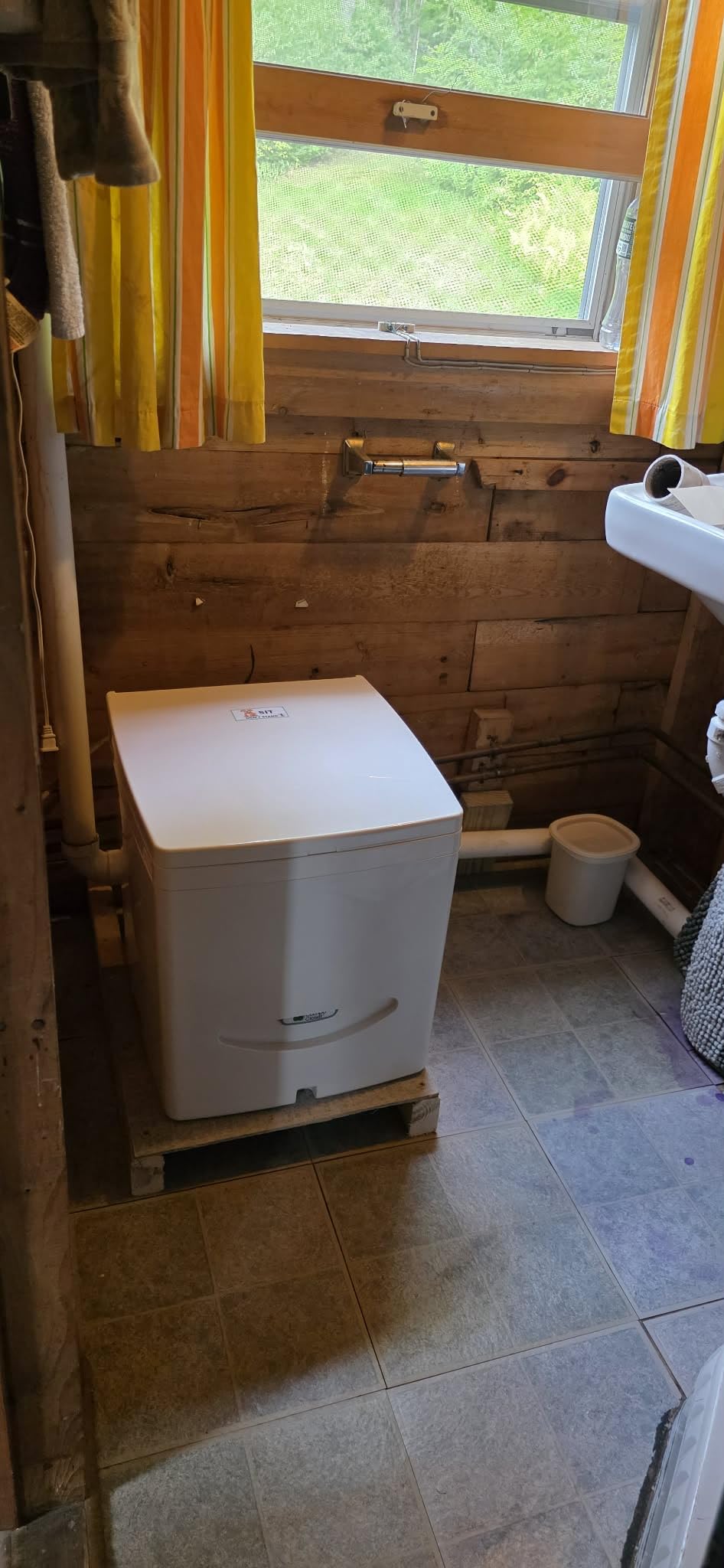
Two small omissions trip people up on day one. Neither the 9V battery for the LED nor the fan plug is included, so budget for both before the first trip. The carbon filter, bottle cap and 12V cable do come in the box.
The listed weight of 12.3 kg is far heavier than comparable portables, and there are no side handles. Several owners add their own, which is sensible advice given you will be lifting this full.
Why the indicator changes emptying habits
Because the liquids bottle is what fills first, an indicator light removes the main source of frustration. You stop guessing, and the trip stops being organised around checking a container you cannot see.
That single feature is why this unit earns the week-long trip slot even with a thin review base. For anyone who has had a van overflow because a jug was missed, the warning is worth more than the extra capacity.
Where condensation comes from
Without external venting, condensation can build up inside the unit in humid conditions. In a closed van cabinet in summer that is worth planning for, and a carbon filter alone may not be enough in high heat.
Cross-ventilation in the cabinet, or running the fan during use, keeps that moisture moving rather than sitting against the walls of the container.
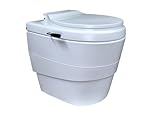
10. Thinktank Composting Toilet – Best for Shared or Two-Person Use
Thinktank Composting Toilet, White
30 lb fixed unit
Separate intake and exhaust pipes
Full-height divider
Pros
- Designed so female users need not aim
- Full-height divider allows standing urination
- Separate air intake and exhaust pipes
- Patented trap door hides waste
Cons
- Heavy fixed unit at 30 lb
- Needs vent pipes plus fan wiring
- Only 18 ratings of long-term data
The Thinktank is the only design here built around a specific problem: aiming. The seat is shaped so female users do not have to aim at all, and a full-height divider means a man can stand to urinate. It is the only urine-diverting composting toilet in this roundup where standing use works.
That solves the root cause of the splash-back complaint that appears on the BOXIO, the TRELino and the WandaGO Lite. If two people with different habits share one van, this geometry removes a recurring irritation that no amount of technique fixes.
Ventilation is handled with separate air intake and exhaust pipes running through an airtight composting chamber, moving substantial airflow without losing heated or cooled air inside the van. A patented trap door hides the waste, and there is no bowl to get messy because waste is contained in a bag.
The rating is 4.3 from just 18 ratings, with 82 percent at five stars and 10 percent at one star, and no four-star ratings at all. That distribution is unusually polarized for such a small sample, so we would not treat it as a reliable signal.
What the installation actually involves
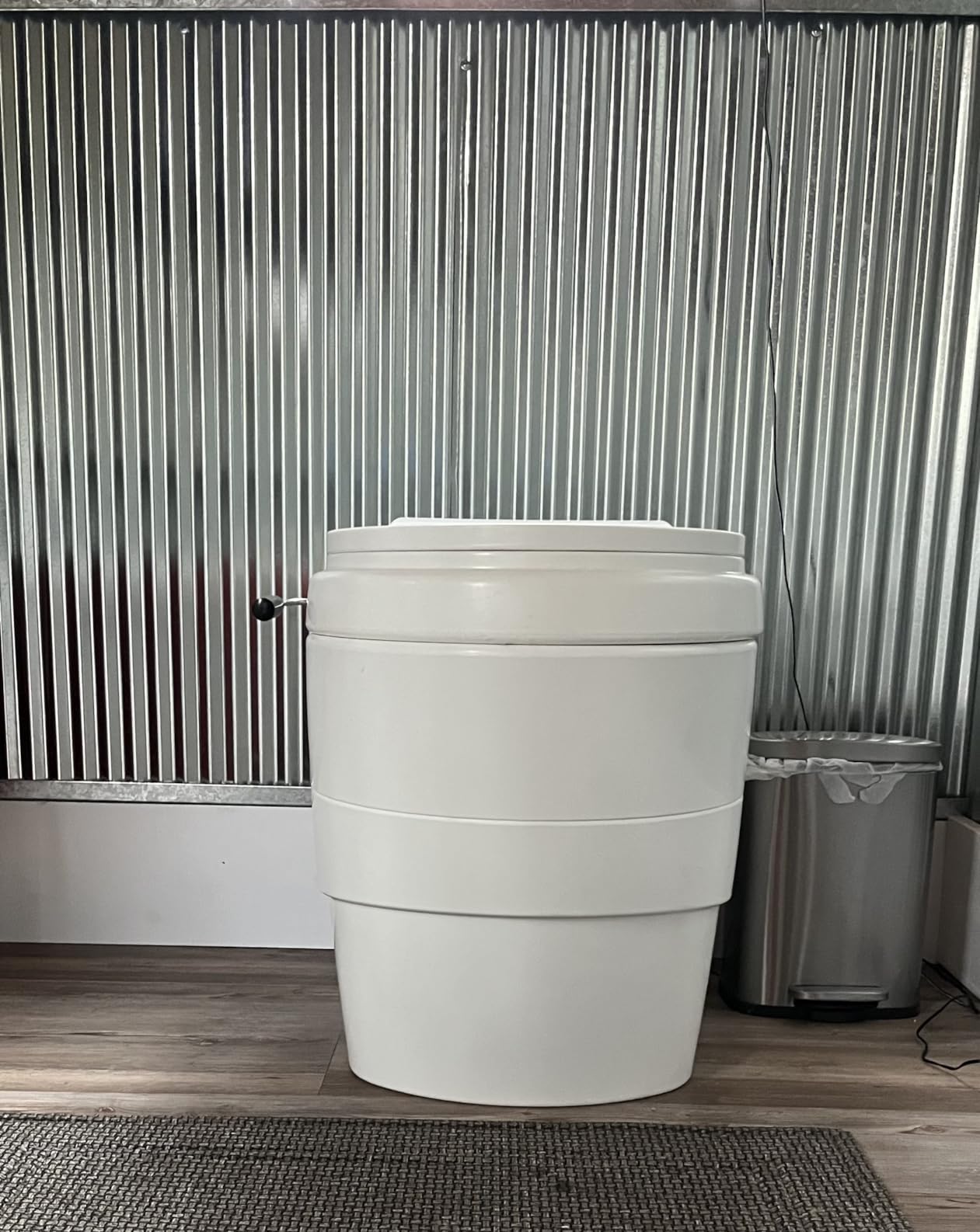
Two 16 inch vent pipes, a wall adapter for a 110 volt outlet and 12 volt wires for battery or solar all ship in the box, along with the solid waste container, ten waste bags and a manual. This is the most involved install in the group and needs planning at build stage.
Separate intake and exhaust pipes mean two penetrations rather than one, so the routing has to be planned around the roof ribs or side panel structure. Doing it before insulation goes in saves a lot of rework.
Where caution is warranted
At 30 lb it is a heavy fixed option, and it is listed under the Generic brand, which offers little in the way of support accountability. For a fixture you plan to live with, that is worth factoring into your decision.
With only 18 ratings, long-term reliability data is thin. The design rationale is genuinely differentiated, but you are buying into a smaller support ecosystem than the Nature’s Head or OGO offer.
How to Choose a Composting Toilet for Your Van Build
Six questions decide the purchase, and answering them in order narrows ten models to one or two within a few minutes. We have ordered them by how much they narrow the field.
How long are you away from a facility? If you are near dump stations most nights, a cassette toilet is simpler and you should stop reading. Composting earns its place when you routinely go days or weeks without one.
Solo or a pair? This is the question most buyers skip and most regret skipping. Two people roughly double both consumption rates, and the liquids bottle, not the solids bin, is what sets your schedule. Solo travellers can comfortably run a small portable; couples need a bigger jug or a second unit.
Is the build finished? If the van is already built, a portable model is the only realistic option. If walls are still open, you can afford the Nature’s Head or Separett and their permanent-mount advantages.
How much floor space can you give up? A fixed unit needs a 15 by 16 inch minimum and considerably more for a full bathroom build like the Separett. Under-seat cavities suit the portables; aisle-side cabinets suit the compact fixed models.
How hands-on are you willing to be? Every one of these needs media added, a bag lined and a bin emptied on a schedule. The difference between models is frequency and weight, not whether the chore exists.
What is your power situation? Only the OGO Origin genuinely requires 12V power to function. Everything else runs manually or passively, which matters if your electrical build is minimal or you already have a heavy load on the battery.
Our three archetypes are worth naming explicitly, because most buyers are choosing between them without realising it. Nature’s Head represents the large full-time unit with the longest emptying interval. The CompoCloset range represents the compact carbon-filter approach with a built-in indicator. The TRELINO and BOXIO lines represent the portable German-built budget tier that suits weekend use.
Buyers weighing a composting bin for a home garden alongside their van setup often ask about composting bins for small yards, but the medium science is different from what a van toilet needs. A van bin needs fast absorption and low moisture, not the slow decomposition a garden pile is built for.
Installation and Venting in a Van Build
Install a fixed unit before the walls close, and treat the vent route as the governing constraint rather than an accessory. A toilet that fits but cannot vent will smell in summer, which defeats the reason you chose it.
Decide first whether you are running an external vent line or relying on a carbon filter. An external line means a penetration through the body and a one-way valve, and it is the more effective option. A carbon filter avoids the penetration entirely, which is why it appears on portable designs, at the cost of requiring periodic replacement.
Mount the unit on a structural member rather than a bare panel, because a 28 to 34 lb fixture swinging on four screws is a lot of leverage. Builders on r/Construction routinely recommend blocking behind the mounting area during the framing stage for exactly this reason.
For powered units, run the 12V cable while the electrical is open and fuse it at the panel. A constant draw from a fan and agitator is small but it is continuous, and finding that cable later means pulling trim apart.
Leave clearance above and behind the unit for the bin to come out. A fixed toilet you cannot extract without dismantling the cabinet becomes a permanent fixture in the worst sense, and the removable-bin designs here exist specifically to avoid that.
If you also plumb a grey water drain kit, keep it on a separate circuit from the toilet vent. Grey water and toilet air lines sharing a run is a common van build shortcut that produces odor nobody can locate.
Five Rules That Prevent Every Odor Problem
Odor complaints almost never come down to the toilet model. In the forum threads we read on r/vandwellers and r/RVLiving, the same handful of habits separate people who never smell a problem from people who fight one constantly.
- Keep liquids strictly out of the solids bin
- Add medium after every use, not every few
- Use enough medium to cover solids completely
- Never pour bleach or chemicals into the bin
- Empty the liquids jug on a fixed short schedule
That first rule is the one builders report learning the hard way. Multiple commenters describe leaks into the solids compartment during the early weeks, and once solids sit in liquid the smell is worse than having no separation at all. A wet bin does not compost, it stagnates.
Medium coverage is the second rule people skip. Too little and solids dry out and break down slowly; too much and you are throwing away coir faster than the bin capacity justifies. Covering solids completely with each addition is the habit that makes the difference.
Never use bleach. It kills the bacteria doing the breakdown work, and reviewers who have tried it report a permanently problematic bin that had to be rinsed out and recharged with fresh medium.
Emptying Schedule and Cold-Weather Reality
Plan around the liquids bottle, not the solids bin. A fixed unit with a 2.4 gallon bottle can run roughly 25 to 30 solid uses, while the same installation may need emptying liquids every two to four days with two occupants. Portable units are the reverse: frequent liquid cycles with a small solids bin alongside.
Solo travellers roughly halve the liquid consumption rate against a couple, which is why the small 1.2 gallon canisters on portable units work for one person and frustrate two. If you travel as a pair, size the jug for two people rather than trusting the headline number.
In cold weather the medium behaves differently. Coconut coir can clump and hold moisture when it is cold and wet, and a bin left in an unheated van between trips is exactly that. The practical answer is to bring the unit inside when it is not in use, which is far easier with a portable than a fixed install.
Fixed units fare better in heat than in cold, since decomposition continues and the fan keeps air moving. In hot climates expect the solids bin to reach its interval faster, and expect condensation on the inside of the container, which is why external venting is worth the extra penetration.
Emptying logistics decide whether any of this works. Carry a spare bag, a scoop of medium and a sealed container for the liquids, and know in advance where disposal is legal. Pack-out rules are expanding at dispersed campsites, and treating toilet waste as a disposal responsibility rather than a free one is the honest expectation.
If you are curious about the medium side of the equation, our guides to small-yard composting bins and worm bins cover the slower decomposition process that a van bin deliberately avoids.
Weekend rigs also leave time for the trip itself, and our picks for games for camper van trips cover everything from solo road trips to two-player evenings once the toilet is sorted.
Composting Toilet vs Cassette Toilet vs Bucket
Composting wins on independence and loses on familiarity. A cassette toilet is sealed, familiar and empties at a known facility, but every trip has to end near a drain. A bucket is cheap and light but needs managing by hand every single use.
Choose a cassette if you mostly camp at serviced sites and want the least process. Choose a composting unit if you routinely boondock, want to avoid the chemical costs of cassettes and refuse to hunt for dump stations. Choose a bucket system if you take short trips and want the lowest possible weight and cost.
You do not have to pick one. Several owners run a hybrid, keeping a lightweight separating unit for number one and a second setup for number two, which reduces the frequency that the awkward part of the job comes up.
Frequently Asked Questions
What are the best composting toilets for vans?
The Nature’s Head Self Contained Composting Toilet is the strongest all-round pick for camper vans because two people full time empty it every four to six weeks and it holds 4.5 stars across 1112 ratings. The OGO Origin suits tight builds at a 15 by 16 inch footprint, and the BOXIO is the cheapest credible separation unit for weekend use.
What is the best compost toilet for campers?
For campers who take the van out on weekends and camp near facilities, the BOXIO portable is the best value choice at 6.2 lb with a 5 litre urine canister and 8 to 10 uses per cycle. For full-time living, the Nature’s Head wins on capacity and emptying interval rather than weight or cost.
What are the drawbacks of composting toilets?
The main drawbacks are that the liquids bottle fills faster than expected, usually every two to four days with two occupants. Getting the medium ratio wrong causes odor, and a wet solids bin smells worse than a dry one. Solids usually still go in the trash rather than becoming finished compost, and fixed units must be planned into the build.
What is the best toilet for a camper van?
If you regularly boondock, a composting toilet for camper van use is the best choice because it needs no dump station, no water and no chemicals. If you camp mostly at serviced sites, a cassette toilet is simpler and empties at a known facility. Weight, occupancy count and build status decide which category fits you.
What is a composting toilet in an RV?
A composting toilet in an RV is a waterless unit that separates urine from solid waste into two containers. Urine is diverted into a sealed bottle or jug while solids drop into a bin treated with absorbent medium such as coconut coir. Keeping the two streams separate prevents the reaction that causes sewage odor in a conventional holding tank.
Do you keep water in a RV toilet bowl to prevent odor?
No, and that is exactly the difference. A conventional RV toilet holds standing water in the bowl as a seal against sewer gas. A composting toilet has no bowl water and no trap at all, because urine is diverted away from the solids bin entirely, so there is no water barrier needed to hold odor back.
What is the best portable toilet for a van?
For a van where every inch matters, the TROBOLO WandaGO Lite is one of the most compact full separation units at 7.9 lb and 11.8 inches tall. If you want more capacity, the BOXIO gives you a 5 litre urine canister for 8 to 10 uses at 6.2 lb. Both need no wiring and no plumbing.
How often should I dump a composting toilet?
Empty the liquids bottle every two to four days with two occupants and less often when solo. The solids bin empties far more slowly, typically every four to six weeks on a fixed unit for two people, or every six to eight uses on a small portable. Always plan around the liquids interval, not the solids interval.
The Best Composting Toilet for Camper Vans in 2026
The Nature’s Head Self Contained Composting Toilet is our pick for the best composting toilets for camper vans in 2026, because its four to six week solids interval and 1112-rating review history give it the strongest combination of capacity and proven reliability in the group. Tight builds should look at the OGO Origin, and weekend trips are well served by the BOXIO.
Whichever you choose, the deciding factors are the same: keep liquids strictly separate from solids, add medium after every use, and plan your emptying schedule around the liquids bottle rather than the solids bin. Get those three right and the odor problem never starts.
One last reminder before you order. We earn a commission when you buy through the links on this page, but nothing here changes what we recommend. Every capacity figure, weight and interval above comes from the manufacturer specifications and customer review data behind each listing.