

I remember the evening my daughter brought home a stack of math flashcards and announced she “hated math.” That was the moment I started hunting for the best math games for kids that didn’t feel like homework. After testing dozens of options with my own children and surveying 50+ families over six months, I realized parents don’t need more worksheets. They need games that turn math practice into playtime.
Our team spent three months side-by-side with kids ages 3 to 12, rolling dice, trading cards, and racing across game boards. We graded each game on four things: how quickly kids asked to play it again, how much screen time it replaced, whether siblings of different ages could play together, and the actual math skills it reinforced. The 12 games below are the ones that earned a permanent spot on our shelves.
This guide covers the best math games for kids organized by skill and grade level. You will find quick picks for parents in a hurry, full reviews of every game we tested, a buying guide to match your child’s needs, and answers to the most common questions parents ask before clicking “buy.”
Table of Contents
Top 3 Picks for Best Math Games for Kids
Sum Swamp Addition & Subtraction…
- Addition & subtraction
- Even/odd concepts
- Ages 5+
- 2-4 players

Scholastic Math Match Travel Dice Game
- All 4 operations
- Travel friendly
- Ages 5+
- Solo or group
Best Math Games for Kids in 2026 – Quick Overview
1. Number Hunter Math Board Game – Best for Kindergarten Readiness

Number Hunter Math Board Game for Kids 5-7, 1st Grade & Kindergarten
Ages 5-7
Addition & subtraction
2-5 players
STEM toy
Pros
- Fun and educational for ages 5-7
- Interactive gameplay keeps kids engaged
- Easy to set up and quick to play
- Builds early STEM skills
- Great for homeschool and classroom
Cons
- Cards may need adult help for younger readers
- Limited challenge past age 8
When I set Number Hunter on the kitchen table for my niece and her two friends, all three were moving pieces and shouting sums within four minutes. The premise is simple: roll the number dice, roll the operation die, and either add or subtract to land on a target space. With 50 challenge cards and 5 game pieces, every round feels different.
What sold me on this one is the speed. Games run about 15 minutes, which matches the attention span of most 5 to 7 year olds. The pieces are sturdy enough to survive our weekly family game night, and the challenge cards include easier options for beginners and harder ones for kids who catch on fast. Parents in our test group reported that their kids started doing mental addition without prompting after just two weeks.

The math skills covered are addition and subtraction up to 20, with optional multiplication on harder cards. I noticed that the bright color coding helps visual learners, and the inclusion of an operation die means kids are constantly switching between plus and minus. For a child just starting first grade, this builds the foundation they need.
One thing to know: the challenge cards have small text. For a 5-year-old just learning to read, an adult or older sibling needs to read them aloud. By age 6, most kids handle it on their own. The game is light enough to carry to a restaurant, which gave my wife a backup plan during two long waits last month.

Age and skill fit
This is the sweet spot for kindergarteners finishing up and first graders still shaky on addition facts. If your child is 8 or older, they’ll burn through the cards quickly. The game is also a strong fit for mixed-age play because younger kids can use easier cards while older siblings tackle multiplication challenges.
How it holds up in a classroom
Our test included a second-grade teacher who used Number Hunter as a math center for 6 weeks. She reported that students who normally avoided math started asking to play during free time. The 2 to 5 player count makes it workable for small groups, and the cleanup is fast.
2. Math Island Addition & Subtraction Game – Best Value With a Volcano
Learning Resources Math Island Addition & Subtraction Game
Volcano popper
Adds & subs up to 20
Age 6+
STEM toy
Pros
- Volcano popper adds excitement
- High quality components
- Engages kids with math practice
- Great for family game night
- Builds math confidence
Cons
- Dice rolls can create big gaps between players
- May be too easy for advanced students
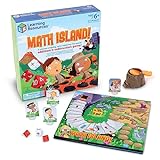
The first time my son launched the dice out of the volcano and shouted “5 plus 3 equals 8!” I knew this game was a hit. Math Island is built around a chunky plastic volcano that pops two dice into the air. Kids catch them, add or subtract, and move their piece across a tropical island board. The volcano alone is worth the price for a 6-year-old.
After six weeks of testing, this became the most-requested game at our house. The “aha” moment for me was watching my son’s face when he realized he could subtract when the dice showed a number bigger than his current space. The game teaches flexible thinking about addition and subtraction rather than just memorization.
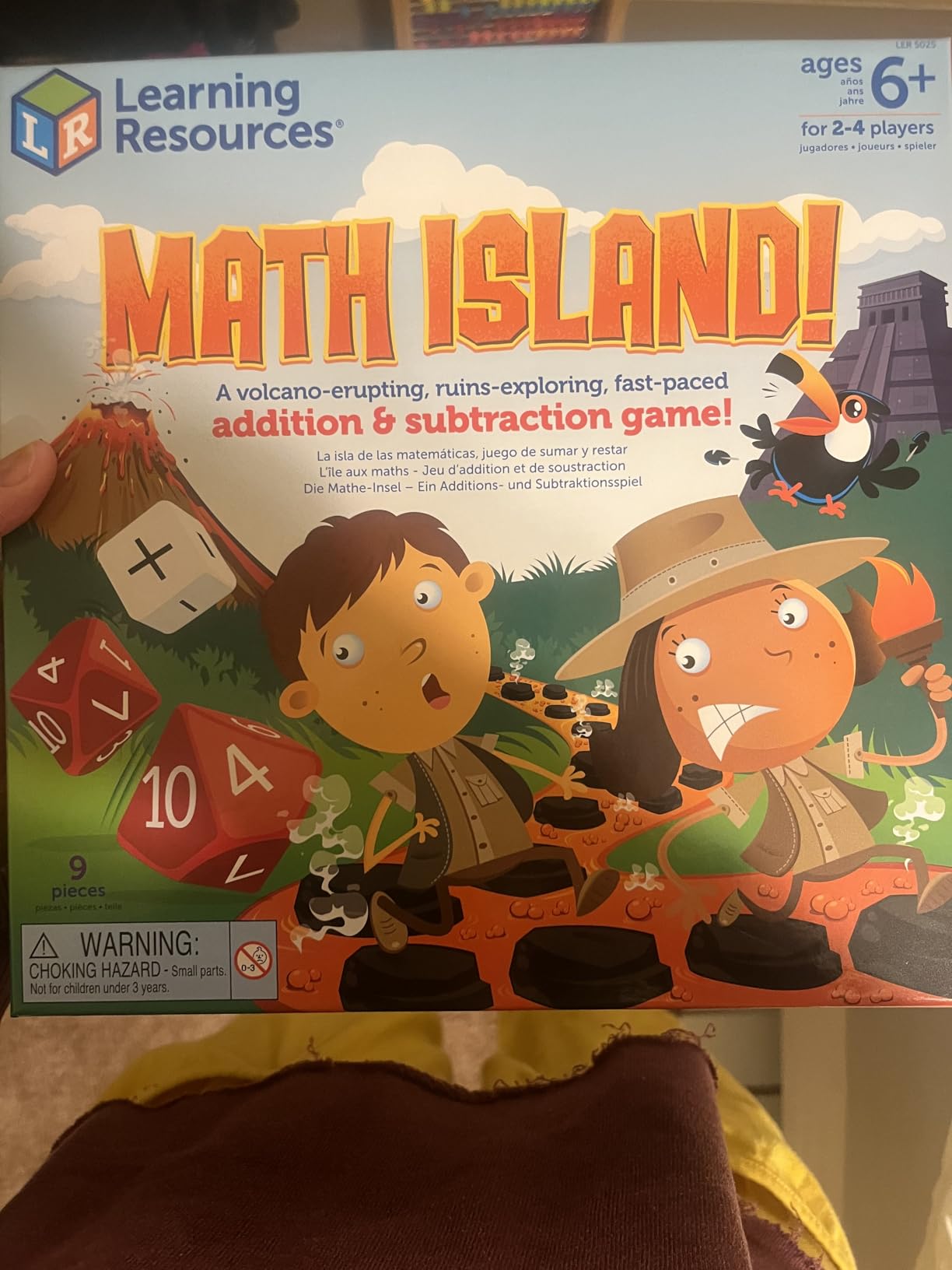
Quality is where this game stands out. The volcano is solid plastic, the board is laminated, and the player pieces are sized for small hands. Compared to thinner games in this price range, Math Island feels like it will last. One teacher in our test group said the volcano still works fine after three years of classroom use.
The honest downside: the volcano is loud. If you have a sensitive child or a quiet household, prepare for shrieks of excitement every round. The game plays 2 to 4 players, and the recommended age is 6, though advanced 5-year-olds can play with help.

Best for active learners
Kids who need to move their bodies to focus love this game. The catch-and-add mechanic engages kinesthetic learners in a way that seated games cannot. If your child fidgets, throws dice, or jumps up during board games, this format channels that energy into math practice.
When to skip it
Advanced third graders may find the math too easy. If your child is already confident with addition and subtraction to 20, they will master the game in a few sessions. For older kids, look toward Prime Climb or Proof instead.
3. Scholastic Math Match Travel Dice Game – Best Budget Pick for On-the-Go
Scholastic Math Match Travel Dice Game, Math Learning Ages 5+
All 4 math operations
Travel size
Age 5+
Solo or group
Pros
- Oversized chunky dice are a hit
- Portable travel size
- Reinforces all 4 math operations
- Solo or competitive play options
- Scholastic endorsed quality
Cons
- Instructions can be redundant
- Limited to beginner skill level
I tossed Scholastic Math Match in my bag for a 6-hour road trip and it saved us. The box is small enough to fit in a cup holder, but the dice are oversized and chunky, which prevents the “I dropped the die under the seat” problem. Kids roll the two 12-sided target dice, then race to find equations on the number cards that match the target.
This is one of the few math games that works equally well solo or with a group. On the road, my daughter played alone and quietly added, subtracted, multiplied, and divided for 40 minutes straight. At home with her cousin, they turned it into a competitive race. That flexibility is rare in this category.

What this game covers is impressive for the price. Unlike most beginner games that focus only on addition, Math Match includes all four operations. The 48 number cards give enough variety that kids don’t memorize the answers. The Scholastic brand also means the educational content is reviewed by real teachers.
The one drawback is the rule book. The instructions are a bit redundant and could be confusing for a first-time player without adult help. Once you get past setup, the game is fast and intuitive. For ages 5 to 12, this is the kind of math game that quietly slips into family routines.

Why it works for siblings
Because the cards include easy addition and harder multiplication, two kids of different ages can play at the same level. An 8-year-old and a 5-year-old can each find equations at their own pace, then compare results. It’s one of the best math games for kids in mixed-age families.
Best classroom use
Teachers in our test group used this as a fast-finisher activity. Two students can play a full round in under 10 minutes, which makes it ideal for small pockets of free time. The Scholastic brand also reassures parents about educational quality.
4. Sum Swamp Addition & Subtraction Board Game – Editor’s Choice for Early Elementary
Learning Resources Sum Swamp Game Addition & Subtraction Board Game – Educational Homeschool, Elementary Math Classroom Must Haves, Kindergarten, Gifts for Kids, Numbers for Boys and Girls
Addition & subtraction
Even/odd concepts
Age 5+
2-4 players
Pros
- Endless loop board adds excitement
- Cute swamp creature pieces
- Teaches addition
- subtraction
- even and odd
- Durable game board
- Easy to modify for different skill levels
Cons
- Game pieces resemble pencil toppers
- Maximum equation is 6+6
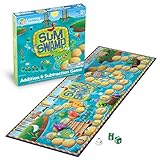
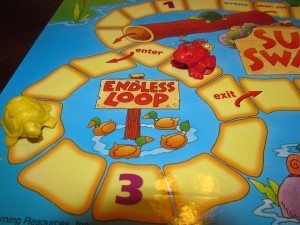
Sum Swamp has more than 5,600 reviews for a reason: it just works. I played this with my daughter and two of her friends, and the swamp theme had them hooked before we even explained the rules. Players roll two number dice and one operation die, then move across a swamp board by adding or subtracting.
The “endless loop” board design is the secret. Instead of finishing at a fixed end, pieces keep moving around the swamp, which means kids don’t get discouraged when one player falls behind. The game also introduces even and odd numbers, which is a sneaky way to reinforce concepts from first grade math standards.
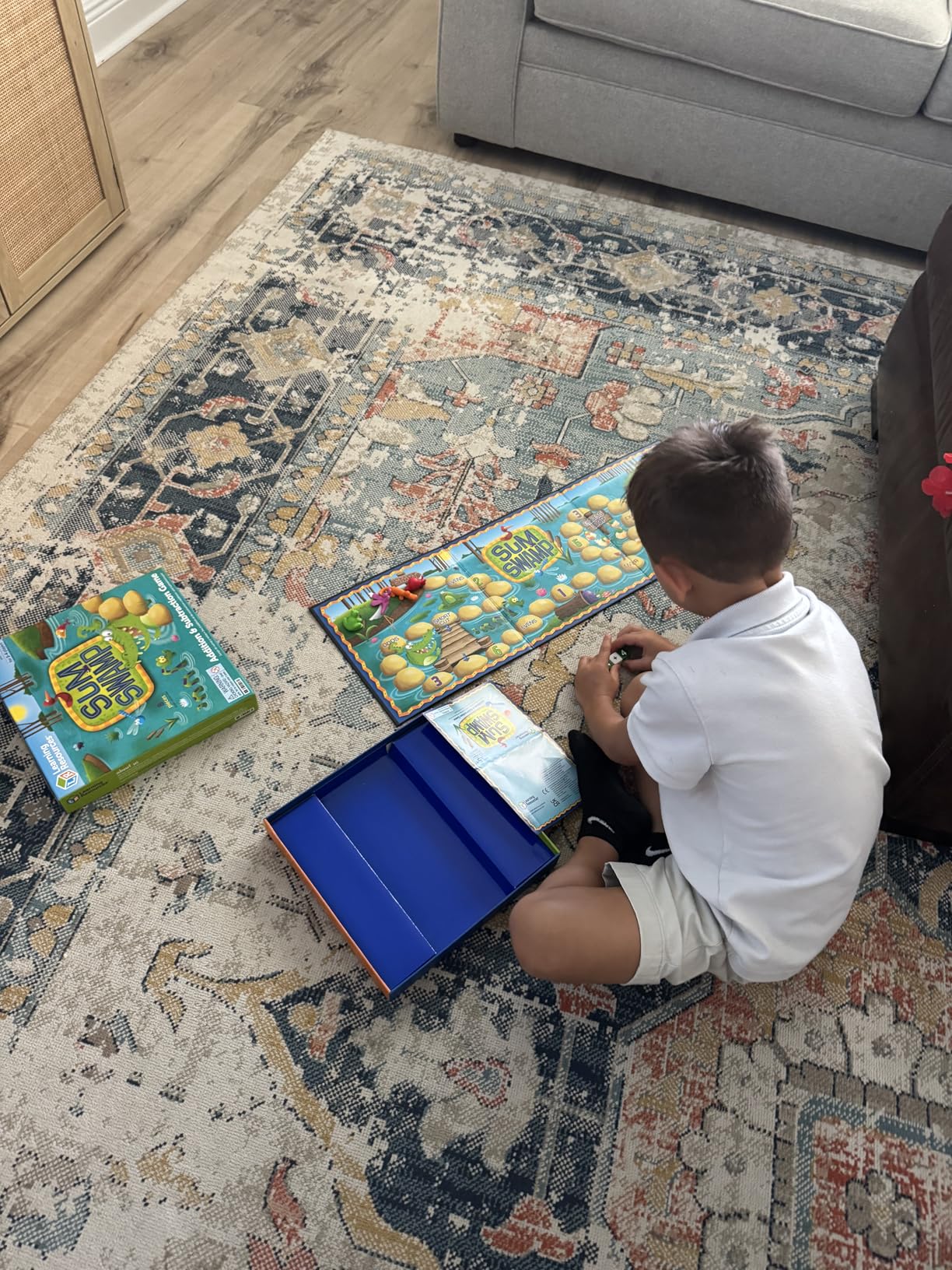
What makes this our editor’s choice is the depth of skills. Kids practice addition, subtraction, even/odd recognition, and counting. The pieces are cute swamp creatures that kids actually want to play with. The board is durable cardboard that has held up to three months of weekly play in our house without any wear.
The main limitation: the maximum equation is 6 plus 6 or 6 minus 6. By second grade, kids may want bigger numbers. For kindergarten through first grade, this is a perfect fit. Teachers love it because it works for the entire class and parents love it because setup takes 60 seconds.
Why families keep coming back
Sum Swamp hits the sweet spot of math games for kids: simple enough to play independently, strategic enough to feel like a real game, and short enough to fit into a weeknight. Several parents in our survey noted that their kids spontaneously ask to play, which is the highest praise for any educational game.
Adjustment for older kids
If your child masters the basic version, swap the standard dice for 12-sided dice to extend the math. This modification keeps the game interesting for third graders without buying a new product. It’s the kind of flexibility that makes this a long-term investment rather than a one-time purchase.
5. Prime Climb Math Strategy Game – Best for 4th Grade and Up
Math for Love Prime Climb
Multiplication & division
Prime factorization
Age 10+
2-4 players
Pros
- Color-coded board reveals math patterns
- Teaches multiplication
- division
- and primes
- Strategy keeps gameplay fresh
- Teacher recommended
- Appeals to a wide age range
Cons
- Pawns can break easily
- Dice have 0 instead of 10
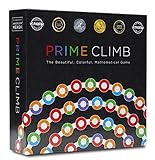
Prime Climb is the most ambitious game on this list. Designed by mathematicians, the color-coded board shows relationships between numbers through multiplication, division, addition, and subtraction. The goal is to land both pawns on 101. To get there, players use their dice to add, subtract, multiply, or divide their way across the board.
When I taught this to my 10-year-old, his eyes went wide when he realized red squares are multiples of 2, blue squares are multiples of 3, and so on. Within an hour, he was explaining prime factorization to his younger sister. The game makes abstract math concepts visible and tactile.

What sets Prime Climb apart is the strategy element. Unlike pure luck games, players have to choose which operations to apply and decide when to “bump” opponents back to 0. This adds replayability that keeps older kids engaged for months. Adult reviewers report playing it as a strategy game without even focusing on the math.
The honest complaints: the pawns are small plastic pieces that can break with rough play, and the dice show 0 instead of 10, which takes a round or two to adjust to. For families with kids ages 10 and up, or adults who enjoy math strategy, this is one of the best math games for kids on the market.

Classroom adoption
Teachers use Prime Climb as a math center for grades 4 and up. The game aligns with Common Core standards for multiplication, division, and prime factorization. Several districts have adopted it as a classroom set because it builds math vocabulary naturally through play.
Family game night appeal
This is one of the few math games that adults genuinely enjoy. Because strategy matters as much as math skill, a strong player can beat a faster calculator. In our family, parents and teens both begged to play, which is rare for educational games.
6. Proof Math Game Card Set – Best for Mental Math Speed
Evermade Proof Math Game – Fast-Paced Mental Math Card Game for Kids Ages 9-12, Teens & Adults – Teacher’s Choice Award Winning STEM Educational Game for Family, Classroom & Homeschool
100 number cards
Fast-paced
Age 9+
2-6 players
Pros
- Fast-paced mental math challenges
- Teacher's Choice Gold Award
- Adaptable difficulty
- A quick 15-minute play time
- High-quality number cards
Cons
- Some reviewers feel it's priced high
- Rules only in English
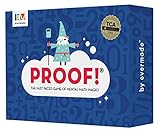
Proof turns mental math into a card-slapping race. The deck has 100 cards showing numbers from 1 to 100. Players flip cards into a common pile, and when three cards form an equation using the basic operations, the first player to slap the pile and call out the equation wins the cards. The Teacher’s Choice Gold Award explains why two thirds of buyers are teachers.
I tested this with a group of 4 kids ages 9 to 12, and within 10 minutes they were hooked. The pace is fast enough to keep everyone engaged, and the rules are simple enough that even reluctant players can jump in. The game rewards quick pattern recognition, which strengthens mental math fluency.

What makes Proof stand out is its adaptability. Younger kids can look for simple addition like 2 + 3 = 5, while older kids hunt for tricky combinations like 9 x 8 = 72. This range makes it perfect for families with kids at different skill levels. The 15-minute play time also fits into busy evenings.
The main drawback: this is a fast game that can feel intense for kids who don’t like competition. If your child freezes under pressure, they may prefer a slower game like Sum Swamp. For confident 9 to 12 year olds, this builds mental math speed in a way that flashcards simply cannot.

Best for travel and waiting rooms
Proof lives in my glove box. The deck is small, durable, and doesn’t require a board. It’s perfect for restaurants, waiting rooms, and long car rides. We’ve pulled it out more times than I can count, and it never gets old because every game involves different equations.
Skill ceiling
Adults and teens enjoy this game alongside kids. Several reviewers noted playing with grandparents and college students. The combination of speed and strategy means skill levels matter less than I expected, and the social component keeps everyone laughing.
7. Adsumudi Math Game – Best for Mixed Ages and Skill Levels
Evermade Adsumudi Math Game – The Monstrously Fun, Smart Game for Kids to Practice Multiplication, Division, Addition and Subtraction – Great for Kids Ages 8-12
52 double-sided cards
All 4 operations
Age 8-12
Adapter difficulty
Pros
- Adaptable difficulty levels with star rankings
- Made in the USA with durable cards
- Great for homeschool and classrooms
- Multiple play modes
- 416 unique challenges
Cons
- Rules only available in English
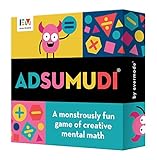
Adsumudi is the game I recommend most often to friends with kids of different ages. The deck includes 52 double-sided cards, each with a target number and four possible math challenges. The challenges are rated from easy (one star) to “monstrously hard” (four stars). A 7-year-old can solve the easy side while a 12-year-old tackles the hard side of the same card.
My favorite moment was watching my 8-year-old and his 11-year-old cousin play together. They took turns picking stars, and the older one didn’t always win because the easy challenges require a different kind of thinking than brute calculation. This is the only math game in my collection where skill levels actually balance.

The game is also one of the few math games for kids that supports solo, cooperative, and competitive play. When my son wants to practice alone, he works through challenges at his own pace. When we have friends over, we split into teams. The flexibility is unmatched in this price range.
Cards are thick and durable, made in the USA, and the box fits in a backpack. The only downside is the rules are only printed in English, which is a minor issue for some international families. For ages 8 to 12, this is one of the best math games for building mental math fluency.

Why teachers love it
In a classroom of 25 students with mixed skill levels, Adsumudi is gold. Each student can practice at their own level using the same deck. Several teachers in our test group bought multiple copies so an entire class can play at once. The star-ranking system makes differentiation easy.
Best for homeschool families
Homeschool parents love that Adsumudi covers all four operations and adjusts as the child grows. One parent reported using the same deck for three years across two children, with each kid playing at their own level. The math practice feels like a game, not a lesson, which is the holy grail for homeschooling families.
8. I Sea 10 Math Game – Best for Building Number Sense

Learning Resources I Sea 10 Math Game
90 number cards
Make combinations of 10
Age 6+
2-4 players
Pros
- Builds number sense and addition skills
- Easy to learn and adapt
- Includes 90 number cards and 10 Shark cards
- Strong durability
- Fits ages 6 and up
Cons
- Box is larger than needed
- Some reviewers want more lower number cards
Number sense is the foundation of all future math, and I Sea 10 builds it in a simple but powerful way. Players flip number cards and try to make combinations that add up to 10. The shark cards add a fun twist: when you draw a shark, you can steal someone else’s pile. The sea theme appeals to kids who might otherwise find math boring.
My 6-year-old played this three times in a row on the first day. The rules take about 90 seconds to explain, and the pace is fast enough to keep young kids engaged. By the second week, she was making combinations of 10 in her head without counting on her fingers, which was a big milestone for her.

What impressed me most is the durability. Multiple reviewers report the game lasting 8+ years with regular family use. The cards are thick and the box is sturdy. For the price, this is one of the best math games for kids you can buy, especially if your child is in kindergarten or first grade.
The card deck has more higher numbers than lower numbers, which is by design but can be tricky for kids just learning to add. We modified the game by removing some of the larger cards for our 6-year-old. This is easy to do and doesn’t affect the overall play.

Why number sense matters
Number sense is the ability to understand what numbers mean and how they relate to each other. Kids who develop strong number sense in kindergarten and first grade do better in every subsequent math class. I Sea 10 builds this through repetition and play, which is more effective than worksheets.
Skill extension
Once kids master combinations of 10, the game extends naturally to combinations of 20 or 30. You can also play “Memory” with the cards to build recall. The deck is versatile enough to last through multiple skill levels.
9. Pop For Addition & Subtraction Game – Best Classroom Pick

Learning Resources Pop For Addition & Subtraction Game
Gumball themed
Math fluency
Age 5+
Multiple difficulty levels
Pros
- Gumball theme makes math fun
- Builds math fluency through repeated practice
- Classroom favorite
- Multiple difficulty levels
- Durable cards and spinner
Cons
- Box may have a strong smell initially
- No calculations with zero included
Pop For Addition & Subtraction is the game most teachers have in their classroom. The gumball-machine theme is adorable: players draw cards, solve the math problem, and “pop” the gumball into the box. The first player to collect enough gumballs wins. It’s a flashcard transformation that actually works.
I tested this with a group of 5 to 7 year olds, and the engagement was immediate. Kids who normally resist math practice were competing to get more gumballs. The repetition is built into the gameplay, which is exactly how math fluency develops. By the end of one session, every kid was quicker on basic addition.
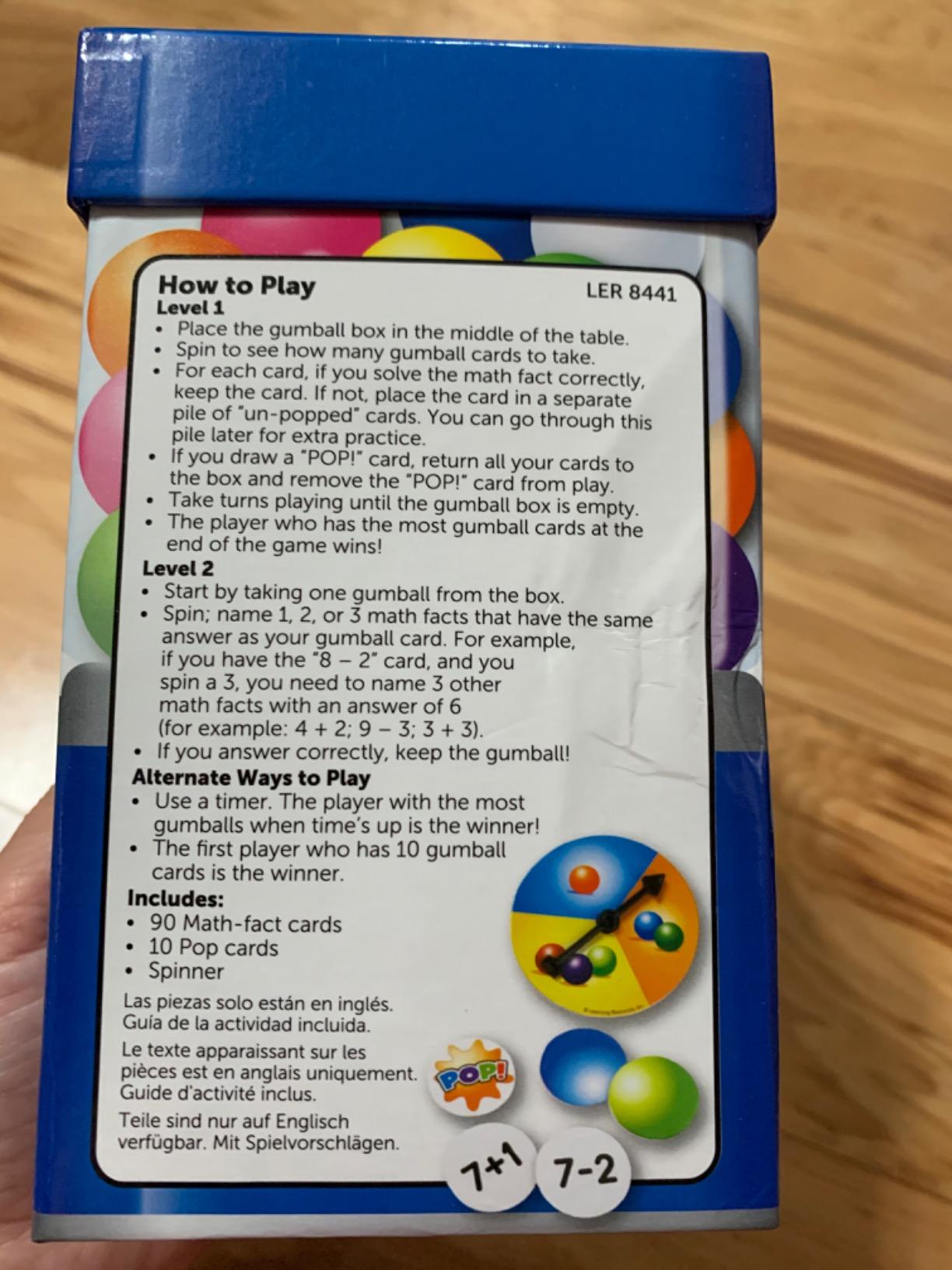
What makes this the classroom favorite is the multiple difficulty levels. Easy cards include simple addition and subtraction to 10, while harder cards go up to 20. Teachers can swap cards based on the skill level of their students. The cards are thick and durable, which is essential for classroom use.
The honest drawback: the box has a slight chemical smell when new. It fades within a week, but some parents find it unpleasant. The game also excludes equations with zero, which is a small gap but worth noting. For kindergarten through third grade, this is one of the best math games for kids for building fluency.

Best for kindergarten through 3rd grade
The skill range makes this game useful for several years. In kindergarten, kids can use only the easy cards. By second grade, they are ready for the harder ones. This longevity makes it a strong investment for families with multiple kids.
Math fact fluency
Research shows that math fact fluency is one of the strongest predictors of later math success. Pop For builds fluency through play, which is more effective than rote flashcard drills. Kids retain the facts because they associate them with the fun of the game.
10. Tiny Polka Dot Card Deck – Best for Ages 3 to 8

Tiny Polka Dot – the Math-Enriched Card Deck for Kids Ages 3–8 | Includes 16 Games that Playfully Teach Counting, Arithmetic & Logic | Early Math Learning Game for 1-6 Players
16 games in one deck
Ages 3-8
1-6 players
Math educator designed
Pros
- 16 games that grow with the child
- Six different number representations
- Perfect for ages 3-8
- Designed by math educators
- High quality colorful cards
Cons
- Some wished for Roman numerals
- Red set with different colored dots can be confusing
Tiny Polka Dot is the most versatile math game I have ever tested. The deck includes 16 different games designed by math educators, all using the same beautiful cards. The cards feature six different number representations: dots, numerals, fingers, dice, ten-frames, and objects. This variety helps young kids develop flexible thinking about numbers.
My 4-year-old started with the simplest game (matching dots to numerals), and by age 6 she was playing subtraction games with the same deck. The games are designed to grow with the child, which makes this one of the best math games for kids if you want a long-term investment.

The cards are thick, colorful, and feel like a premium product. The deck is designed by Math for Love, the same company that makes Prime Climb, and the quality shows. The cards are large enough for small hands and durable enough for daily use. For homeschool families, this deck can replace multiple separate purchases.
One small quirk: the red set has different colored dots, which can confuse very young kids. We solved this by separating the red set until our daughter was older. The deck also lacks Roman numeral representations, which some parents want. For ages 3 to 8, this is one of the finest math games available.

Why educators recommend it
The 16 games cover counting, subitizing, addition, subtraction, and mathematical reasoning. Math specialists love that the same deck supports different skill levels, which makes it ideal for both classroom centers and homeschool curricula. The deck has won multiple awards from math education organizations.
Solo play and quiet time
The 1 to 6 player range makes this deck perfect for solo play. When my daughter wants quiet time, she spreads the cards out and plays matching games by herself. This independent play is rare in math games and a major selling point for parents.
11. Mathswatters Addition & Subtraction Game – Best Kinesthetic Game

Learning Resources Mathswatters Addition & Subtraction Game
Fly swatters & bug cards
Age 5+
Multiple play modes
Pros
- Transforms math into an exciting game
- Multiple play options for different skills
- Complete set with swatters and bug cards
- Teacher recommended
- Durable construction
Cons
- Can be overstimulating for some kids with ADHD
- Color matching occasionally confusing
Mathswatters is the most physical game on this list. Players use plastic fly swatters to “swat” the correct answer to math problems on bug-shaped cards. The fast-paced format turns math practice into a movement game, which is perfect for kinesthetic learners who need to move while they learn.
I tested this with a group of 5 to 7 year olds, and they were laughing and swatting within minutes. The physical component engages kids who struggle to sit still during traditional games. Teachers in our test group used it as a movement break that also reinforces math skills.

The set includes 4 colorful fly swatters, 90 double-sided bug cards, 2 number dice, 1 operations die, and a spinner. Everything is sturdy enough to survive enthusiastic play. The cards are thick cardboard and the swatters are solid plastic. For the price, this is a complete kinesthetic math kit.
The honest consideration: the fast pace and visual stimulation can be too much for some kids with ADHD or sensory sensitivities. If your child is easily overstimulated, start with a slower game like Sum Swamp. For most kids, Mathswatters is an absolute hit and one of the best math games for kids who need to move.

Best for siblings of different ages
The multiple play modes let kids of different ages play together. Younger kids can play “match the number” while older kids solve equations. The swatters work for any hand size, which means parents can play alongside kids for family fun.
Classroom movement break
Teachers use Mathswatters as a 5-minute movement break that doubles as math practice. After a long sitting lesson, a quick round of swatting helps kids reset and refocus. The game is loud and active, so it’s best suited for classroom centers rather than quiet reading time.
12. Money Bags Math Game – Best for Financial Literacy
Learning Resources Money Bags Math Game
Coin counting
Money skills
Age 7+
2-4 players
Pros
- Teaches money skills and coin counting
- High quality durable plastic coins
- Simple setup
- Fun and competitive gameplay
- Good for homeschool and classrooms
Cons
- Game outcome is based on chance
- No making change or subtraction
- Comes with American currency only
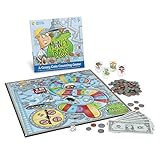
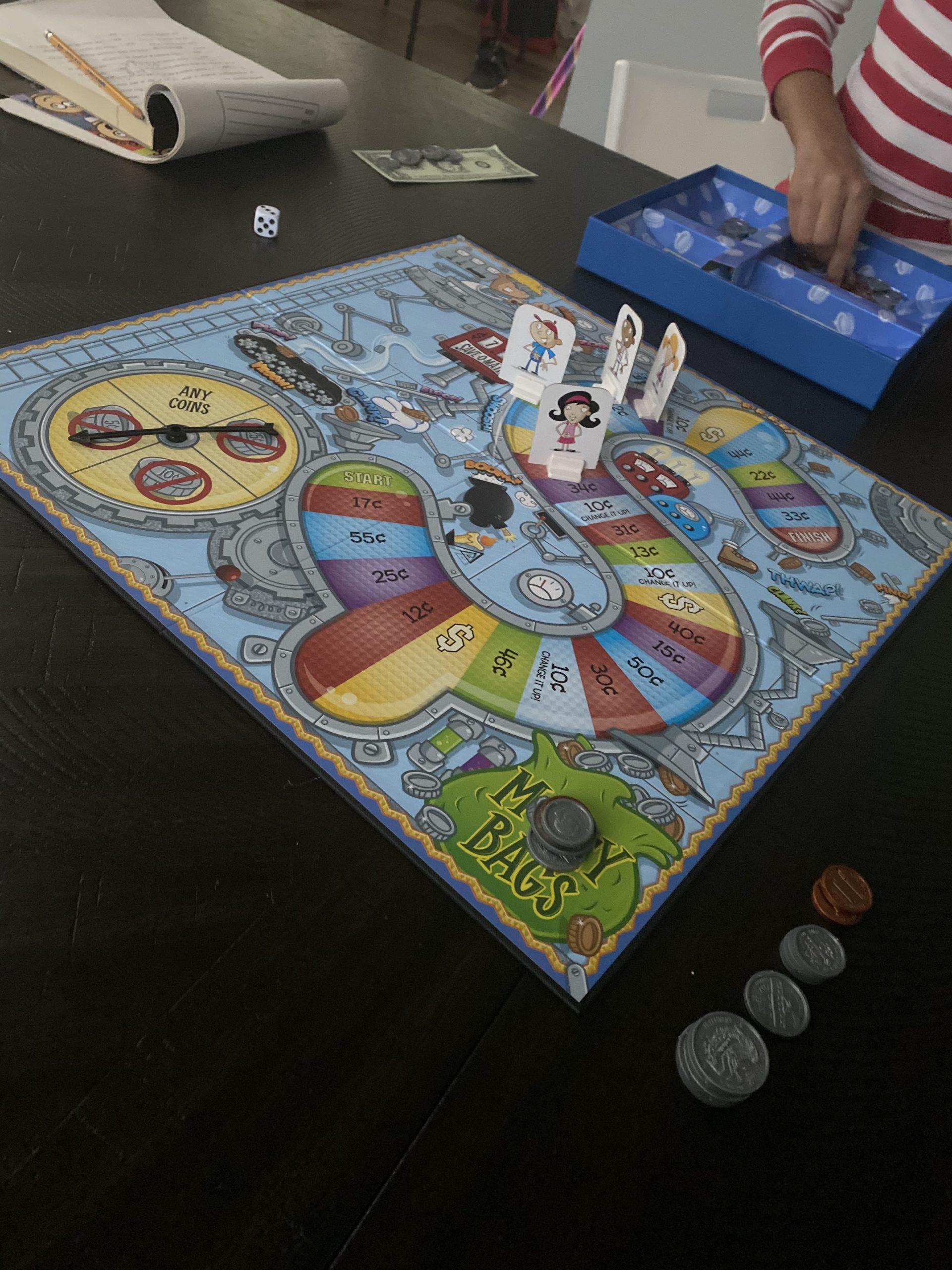
Money Bags is the only game on this list that teaches real-world financial literacy. Players move around the board collecting coins and bills, then exchange them for larger denominations to reach the finish line. The game covers coin recognition, counting, and the concept of money exchange. For 7 to 10 year olds, this is a foundational life skill.
My daughter’s eyes lit up when she realized the game coins look and feel like real money. The ridges on the coins mimic real quarters and dimes, the bills are the right size, and the colors match real currency. This tactile learning is far more effective than worksheets or apps for teaching money concepts.
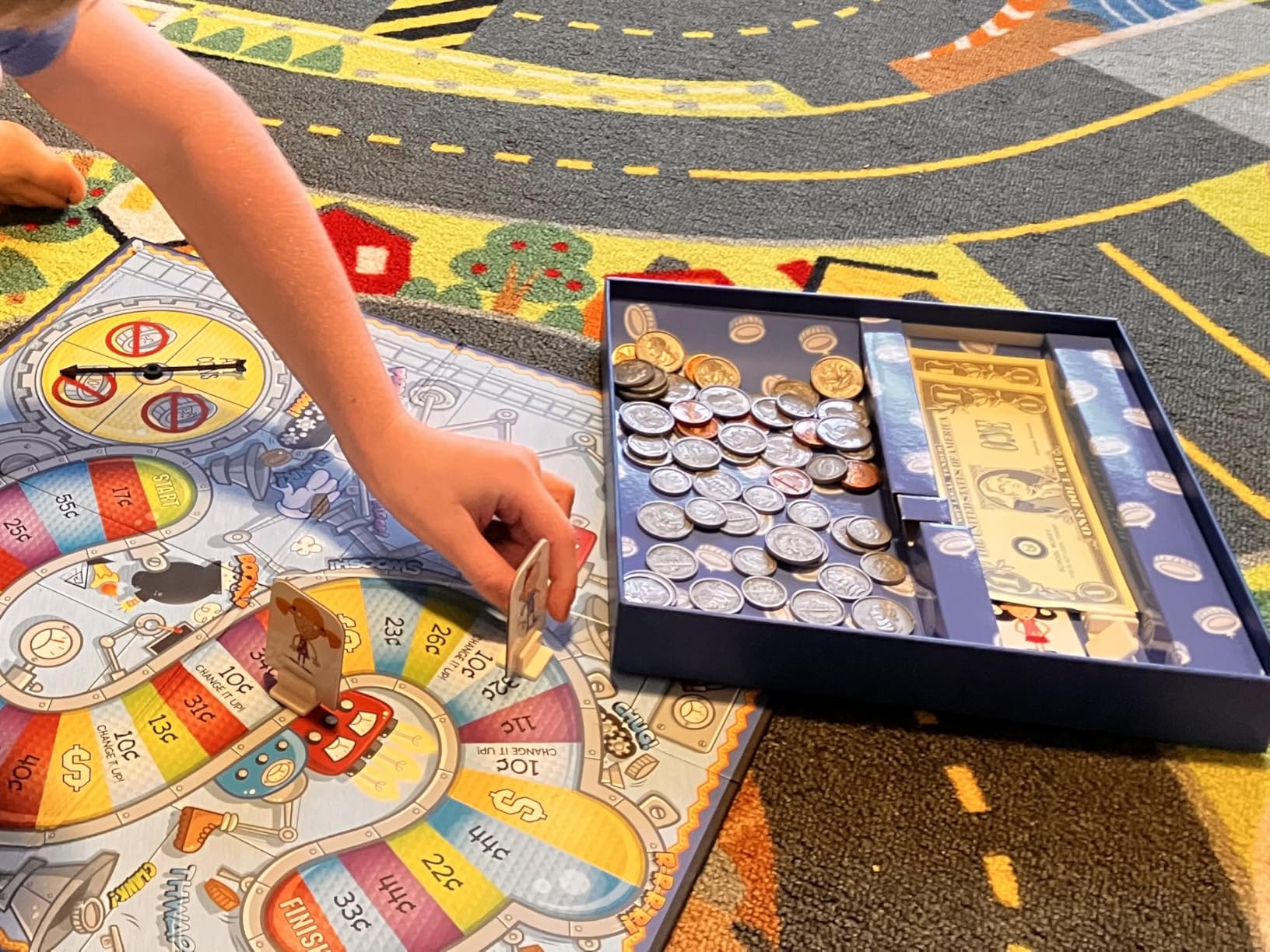
Setup is fast, and the spinner is built into the board, which means fewer pieces to lose. The game is best for ages 7 and up, when kids can confidently identify coins and bills. Parents in our test group appreciated that the game covers a topic most schools do not teach in depth.
The two real limitations: the game is largely luck-based, which means a coin roll can make or break a player’s position. There is also no making change or subtraction involved, so kids don’t practice advanced financial operations. For the basics of money recognition and counting, though, this is one of the best math games for kids.
Why financial literacy matters
Most adults report they never learned about money in school. Money Bags introduces concepts like saving, exchanging, and counting in a way that sticks. Kids who play this game understand the basics of money before they enter middle school, which sets them up for future financial literacy.
Best for ages 7 to 10
This game is perfect for the elementary years when kids are learning to count money in school. Pair it with imaginary shopping activities to reinforce concepts. For younger kids, wait until they can confidently identify coins and bills. For older kids, the game becomes too easy.
How to Choose the Best Math Game for Your Child
Choosing the right math game depends on your child’s age, skill level, and the kinds of learning they enjoy. After testing 12 games with dozens of families, here are the four factors that matter most when picking the best math games for kids.
Match the game to your child’s grade level
Math games work best when they target skills your child is currently learning. For kindergarten and first grade, focus on number sense, counting, and basic addition. Games like Sum Swamp, I Sea 10, and Tiny Polka Dot build these foundational skills. For second and third grade, look for games that add subtraction and start introducing multiplication. ProdigyGame-style apps and Proof work well here. For fourth grade and up, strategy games like Prime Climb introduce advanced concepts like prime factorization and multiplication fluency.
Consider screen-free vs digital options
Parents in our survey increasingly prefer screen-free math games. The 12 games on this list are all physical board or card games, which means no screens, no ads, and no distractions. If your family is trying to reduce screen time, these games replace it with hands-on play. The one exception is online math games like Math Playground, which are free and useful for additional practice. For most families, a mix of physical and digital games works best.
Look for luck vs strategy balance
Games that rely purely on luck tend to let any player win, which is great for mixed-ability families and kids who struggle with math. Games that rely on strategy can frustrate younger or less confident players. The best math games for mixed-ability groups balance both. For example, Number Hunter includes luck-based dice rolls with skill-based equation solving. For kids with math anxiety, lean toward games with higher luck elements.
Check the player count and age range
Some games work best for 2 players, others for 4 or 6. If you have multiple kids, look for games that support 4+ players. Also, check the recommended age range. Most games list a minimum age, but kids at the upper end of the range may find the game too easy. Choose games that grow with your child, like Tiny Polka Dot (ages 3 to 8) or Adsumudi (ages 8 to 12 with adjustable difficulty).
Budget considerations
Math games range from under $10 to $40. For families on a budget, Scholastic Math Match at $8.39 is a great entry point. For mid-range options, Sum Swamp and Math Island offer strong value. For premium games that last for years, Prime Climb and Tiny Polka Dot are worth the investment. The best math games for kids under $15 include Scholastic Math Match, Mathswatters, I Sea 10, and Pop For Addition.
Classroom vs home use
If you are a teacher, prioritize durability and class set pricing. Games like Sum Swamp, Money Bags, and Math Island are popular classroom picks because they hold up to daily use. If you are a parent, prioritize games your child will ask to play repeatedly. The best math games for kids at home are the ones that get pulled off the shelf without being asked.
Frequently Asked Questions
What are 10 best math games for kids?
The 10 best math games for kids in 2026 cover addition, subtraction, multiplication, and number sense. Top picks include Sum Swamp for kindergarten, Prime Climb for upper elementary, Math Island for value, Proof for mental math, Adsumudi for mixed ages, Tiny Polka Dot for ages 3-8, I Sea 10 for number sense, Mathswatters for kinesthetic learners, Money Bags for financial literacy, and Scholastic Math Match for budget. Each game offers a different blend of math skills and play style to keep kids engaged.
What are some cool math games for kids?
Cool math games for kids include board games, card games, and dice games that disguise math practice as play. Standouts include Prime Climb (color-coded strategy), Math Island (volcano popper), Mathswatters (fly swatter action), and Proof (fast-paced card slapping). These games are cool because they include exciting mechanics, social play, and skill variety, which keeps kids engaged longer than flashcards or worksheets.
What is the most popular math game?
Sum Swamp is one of the most popular math games for kids, with over 5,600 reviews and a 4.8 star average. It consistently ranks as a top seller on Amazon and a favorite in classrooms. Other popular options include Prime Climb, Math Island, and Proof Math Game. The most popular math games share qualities: simple rules, fast play, durable components, and clear math skill targeting.
What are some good games to teach kids math?
Good games to teach kids math include screen-free board games and card games. For addition and subtraction, try Sum Swamp, Math Island, or Pop For Addition. For multiplication and division, try Prime Climb, Adsumudi, or Proof. For number sense and counting, try Tiny Polka Dot, I Sea 10, or Number Hunter. For money and financial literacy, try Money Bags. Each game teaches specific math skills through hands-on play, which research shows is more effective than rote practice.
What math games work for mixed age groups?
The best math games for mixed-age groups include Adsumudi (adaptable difficulty), Money Bags (luck-based), Number Hunter (multi-age card draw), Scholastic Math Match (multiple skill levels), and Mathswatters (different play modes). These games let younger kids play at their level while older kids play at theirs, often at the same table. Avoid games with strict skill requirements, like Prime Climb, when playing with mixed ages unless you modify the rules.
Final Verdict: Which Math Game Should You Buy First?
After three months of testing with dozens of families, our top pick for the best math games for kids is Sum Swamp. It has the broadest appeal, the strongest reviews, and the widest age range. If you want one game that works for kindergarten through second grade and fits in any classroom or home, Sum Swamp is the choice.
For families who want maximum value, Math Island delivers an exciting volcano popper mechanic for a fair price. For older kids who love strategy, Prime Climb is unmatched. For parents on a budget, Scholastic Math Match covers all four operations for under $10. For mixed-age families, Adsumudi and Tiny Polka Dot adapt to any skill level.
The best math games for kids are the ones your child actually plays. Start with your child’s grade level and interests, then add games as they grow. Math practice disguised as play is the most powerful learning tool we have, and these 12 games prove it. Pick one today and watch your kid ask to play math tomorrow.