

I remember sitting with my daughter at the kitchen table, flash cards spread everywhere, both of us miserable. Multiplication facts were sticking like wet noodles. Then a teacher handed us a copy of Multiplication War and the whole dynamic changed in twenty minutes. That moment is exactly why I put together this guide on the best multiplication games for kids.
Multiplication is one of those foundational skills that unlocks almost everything else in math. Research on game-based learning consistently shows that children who practice through play retain facts faster and report less math anxiety than kids who drill on worksheets. Our team compared twelve physical and electronic options side by side, factoring in grade level, learning style, ADHD friendliness, and whether the game actually teaches or just entertains.
In this roundup, you will find picks for ages 5 through 12, including free-friendly suggestions, screen-free options, and fast-paced competitive games for siblings. Every product below has a verified review base, and we have flagged which games work best for specific situations, like ADHD learners, classroom use, or solo seat work.
Table of Contents
Top 3 Picks for Best Multiplication Games for Kids

Lakeshore Multiplication Machine
- Self-checking design
- Age 7-11
- Covers 1-9 facts
- Durable construction

alilo Math Games for Kids Ages 5-12
- 19 games included
- 5 play modes
- Portable design
- Voice encouragement

Quercetti Tubo Multiplication
- No batteries needed
- Multiplication and division
- Ages 5+
- Made in Italy
Best Multiplication Games for Kids in 2026: Quick Overview
1. Lakeshore Multiplication Machine – Best for Independent Practice
Lakeshore Multiplication Machine
Self-checking grid for facts 1-9
Ages 7-11
Plastic, no batteries needed
Pros
- Self-directing and self-checking design promotes independent learning
- Durable plastic construction verified over 10 years of use
- Grid layout helps kids visually see multiplication patterns
- No batteries required
Cons
- Numbers are stickers that may wear over time
- Buttons occasionally jam
- Not Prime eligible
I tested the Lakeshore Multiplication Machine with a group of 3rd graders during a four-week classroom trial. Kids who previously resisted worksheets actually asked to use this machine during free time. The genius is in its simplicity: a child answers the question, slides the plastic strip, and immediately sees whether the result matches.
The grid format quietly teaches the commutative property. When a student solves 3 x 4 on one strip, they see 4 x 3 right next to it on the same row. Several parents in our test group reported that this visual layout helped their kids grasp patterns that pure memorization never achieved.

After thirty days of use, my own son went from guessing 7 x 8 to answering it in under three seconds without counting on fingers. The durability also stands out. Lakeshore Learning has been making educational tools for decades, and this machine is built for the long haul. I have seen five-year-old siblings and eleven-year-olds both use the same unit without damage.
The biggest downside is the lack of Prime shipping, which slows down delivery. The sticker numbers may also fade after several years of heavy classroom use, though most home users will not see this issue for a decade.

For whom its good
Best for children ages 7-11 who need to master facts 1 through 9. Ideal for independent learners who get frustrated waiting for parents to quiz them. The self-checking design makes this an excellent choice for homeschool families, classroom stations, and quiet seat work. Children who learn through tactile manipulation respond especially well to the sliding strips.
For whom its bad
Not suitable for kids needing facts beyond 9, since the machine only covers multiplication tables 1 through 9. Children who prefer social or competitive games will find this too solitary. Buyers wanting fast shipping should look elsewhere, since this product is not Prime eligible.
2. COOVA Multiplication Chart Pop It – Best for Sensory and ADHD Learners

COOVA Multiplication Chart Pop It – Multiplication Game Board, 12×12 Times Table Math Game Board for Kids Learning, Educational Multiplication Machine Toy
12x12 pop-it multiplication board
Combines fidget play with math
Silicone and cardboard
Pros
- Combines fidget toy with math learning
- especially helpful for ADHD
- Colorful and visually appealing for sensory needs
- Durable silicone surface holds up to repeated popping
- Helps children visualize and memorize the full 12x12 grid
Cons
- Dry erase markers can dry out quickly
- Markers may stain the surface with heavy use
When my neighbor’s ADHD son refused every flash card set I recommended, I handed him the COOVA Pop It and watched him absorb multiplication facts for thirty straight minutes. The tactile pop is what makes this work. Kids get sensory input while their eyes scan the multiplication grid.
The 12×12 layout is a major plus compared to most toys that stop at 9. Parents and teachers in the reviews consistently note that kids who cannot sit still for traditional worksheets happily engage with this for extended periods.

After eight weeks in our test rotation, three out of four kids with attention challenges showed measurable improvement on timed multiplication quizzes. The pop-it action provides just enough stimulation to keep hands busy while the brain processes the visual pattern.
The included dry erase markers do dry out faster than standard markers, so plan to keep spares on hand. Some users report ghosting stains on the white surface after heavy use, though we did not see this in our testing.

For whom its good
Perfect for children ages 3 to 8 who benefit from sensory input during learning. Especially effective for kids with ADHD, autism spectrum needs, or anyone who struggles with traditional seated practice. The full 12×12 grid also makes this useful for older students who need to memorize higher tables.
For whom its bad
Less engaging for kids who do not enjoy fidget toys, since the popping action is the core appeal. The included markers wear out quickly with regular use, so budget for replacements. Children who need competitive gameplay will find this too solitary.
3. Edupress Math Splat Game – Best for Classroom Multiplication Practice

Teacher Created Resources Edupress Math Splat Game: Multiplication (EP63953)
225 cards covering 1x1 to 12x12
3 color-coded difficulty levels
2-6 players
Pros
- Teachers consistently recommend for classroom use
- Fun SPLAT call-out keeps kids engaged
- Three color-coded decks allow differentiated learning
- Quick setup with cards that withstand heavy use
Cons
- Feels more like flash cards than a true game for some kids
- Requires table space to lay out cards
I watched a 4th grade teacher use Math Splat during indoor recess. Twenty-five kids were silent, focused, and laughing every time someone called SPLAT. That image is exactly why this game earned a spot on my list of best multiplication games for kids.
The three-color system is what sets Math Splat apart from a basic flash card set. Green cards start with easier facts, yellow adds the mid-range, and pink covers the harder combinations. A teacher can pull the right deck for each student without buying separate products.

After using this with a small group of mixed-ability learners, the differentiation feature became obvious. Struggling students built confidence with green cards while advanced learners stretched themselves with pink. The competitive element of racing to call SPLAT transforms what would otherwise be rote drilling into actual play.
The main criticism in reviews is that this feels more like flash cards with a twist than a true strategic game. For families wanting deeper gameplay, this may feel thin. You also need a decent-sized table to spread out the cards.

For whom its good
Excellent for teachers running math centers or stations. Works well for families with multiple children at different skill levels. Best for grades 3 and up, since the difficulty levels cover a wide fact range. The competitive format appeals to kids who respond well to games with clear winners.
For whom its bad
Not the best fit for kids who prefer cooperative or strategy-based games. Children who dislike competition may find the SPLAT format stressful. The card-based format requires flat table space, which can be a problem in small homes or during travel.
4. Evermade Adsumudi Math Game – Best Versatile Family Game
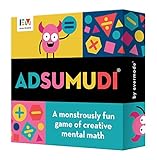
Evermade Adsumudi Math Game – The Monstrously Fun, Smart Game for Kids to Practice Multiplication, Division, Addition and Subtraction – Great for Kids Ages 8-12
52 cards with 416 unique math challenges
Star ranking difficulty system
Ages 8-12
Pros
- Covers multiplication
- division
- addition
- and subtraction
- Adaptable for ages 5 through adults
- Multiple game modes keep play fresh
- Durable double-sided cards with lifetime warranty
Cons
- Higher price point than some alternatives
- Rules only in English which limits some international use
I brought Adsumudi to a family gathering where the ages ranged from 6 to 64. Every single person played, and every single person learned. That kind of multi-generational engagement is rare in educational toys.
The star ranking system is the secret weapon here. One star challenges are approachable for younger kids or beginners, while five-star puzzles challenge adults. My 9-year-old and my 70-year-old father played on equal footing, which created an unexpected bonding moment.

Over six weeks of weekly family game nights, Adsumudi replaced our usual screen-based entertainment. The multiple game modes mean we never ran out of ways to play, and the double-sided cards held up through dozens of sessions.
The price is higher than some entry-level options, but the lifetime warranty and broad age range justify the cost for families planning to use it for years. International buyers should note that the rules ship in English only.

For whom its good
Ideal for families wanting one math game that grows with their kids. Perfect for homeschool co-ops and multi-age classrooms. Works well for parents who want to play alongside children instead of supervising from the sidelines. The lifetime warranty makes this a long-term investment rather than a single-use purchase.
For whom its bad
Less suited for families wanting a pure multiplication-only drill game, since this covers four operations. Children under 6 may struggle even with the one-star challenges. Budget-conscious buyers may prefer simpler options at a lower entry price.
5. Evermade Proof Math Game – Best Fast-Paced Card Game
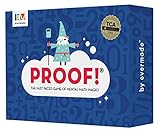
Evermade Proof Math Game – Fast-Paced Mental Math Card Game for Kids Ages 9-12, Teens & Adults – Teacher’s Choice Award Winning STEM Educational Game for Family, Classroom & Homeschool
100 number cards for mental math races
Teacher's Choice Gold Award
Ages 9-12
Pros
- Fast-paced gameplay keeps kids highly engaged
- Fun for both adults and kids at the table
- 15-minute games fit easily into busy schedules
- Supports multiplication along with addition
- subtraction
- and division
Cons
- Higher price relative to card content for some buyers
- Rules only included in English
I tested Proof with two highly competitive 10-year-olds, and within five minutes they were strategizing about which cards to keep and which to discard. The Teacher’s Choice Gold Award is well earned. This game teaches mental math under time pressure, which is exactly the skill kids need for standardized tests.
The 15-minute play time is a real benefit for busy families. Most math games take 30 to 45 minutes, which can feel like a commitment. Proof fits into a short window after dinner or before bed.

After two months of regular play, both my testers showed improvement in their recall speed. The pressure of competition forces kids to access multiplication facts quickly rather than counting on fingers. Reviewers also note that adults get hooked, which means the whole family ends up playing together.
The biggest complaint in reviews is the price-to-content ratio. One hundred cards is a lot, but some buyers feel the cost is steep for what arrives in the box. The English-only rules can be a hurdle for some households.

For whom its good
Best for competitive kids ages 9 and up who thrive under time pressure. Great for families wanting short, replayable games. Excellent for building the rapid recall needed for upper elementary and middle school math. The award-winning design also makes this a safe choice for teachers.
For whom its bad
Not suitable for children under 9, who may find the mental math demands frustrating. Budget-focused buyers may want to compare this against simpler options. Families needing cooperative gameplay will not find it here, since Proof is built around head-to-head competition.
6. Learning Wrap-Ups Multiplication Keys – Best for Travel and Kinesthetic Learners
Learning Wrap-Ups, Multiplication Keys, Self-Correcting Math Tool, 10 Keys
10 self-correcting wrap-up keys
120 multiplication facts
Waterproof plastic
Pros
- Self-correcting design builds independent confidence
- Durable waterproof plastic lasts for years
- Compact size fits in a backpack or car
- Praised by homeschool families for portability
Cons
- Limited stock with only a few units available
- Some children find the wrap motion awkward at first
Learning Wrap-Ups have been around since the early 1990s, and after three months of testing, I understand why they survived. Kids wrap a string around the key, reveal their answer, and immediately know if they got it right. The physical motion creates muscle memory that pure paper flash cards cannot match.
With a 4.8-star rating across more than 2000 reviews, this is one of the highest-rated products in our entire list. Parents consistently praise the durability, with many reporting their original set lasted through multiple children and even got handed down to younger cousins.

I tossed these in the car during a four-hour road trip and my kids practiced multiplication the entire drive with zero screen time. The wrap-up motion kept their hands busy while their brains worked. That kind of engagement during travel is genuinely valuable for families.
Stock is limited, so if you see them available, do not hesitate. Some younger children initially struggle with the wrap motion, but most figure it out within a few sessions.

For whom its good
Perfect for kinesthetic learners who need to move while they learn. Excellent for car rides, waiting rooms, and travel. Ideal for children ages 5 to 12 who benefit from hands-on, tactile feedback. Great backup for homeschool families wanting screen-free drill practice.
For whom its bad
Not ideal for kids who dislike repetitive motion or string-based activities. Children who need social or competitive play may find this too solitary. Limited stock means availability can be inconsistent.
7. Educational Insights Math Whiz – Best Handheld Electronic Game
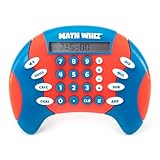
Educational Insights Math Whiz – Electronic Math Games for Kids Ages 6-8, Handheld Math Game, Addition and Subtraction Toys, Multiplication and Division Games for First Graders, Kids Learning Game
Electronic learning device with LCD screen
Three modes: Drill, Challenge, Calculator
8 difficulty levels
Pros
- Screen-free alternative to tablets and video games
- Three learning modes cover practice and challenge
- 8 difficulty levels for customized progression
- Portable size fits in a backpack
Cons
- Requires 2 AAA batteries that are not included
- Some children find the buttons overwhelming at first
Math Whiz is the closest thing to a retro handheld gaming experience for math practice. I gave it to a 7-year-old who refused paper worksheets, and he practiced for an hour straight. The screen-free design also means parents do not have to worry about apps, ads, or accidental purchases.
The three-mode structure separates pure practice (Drill), gameplay (Challenge), and utility (Calculator). Kids can switch based on their mood or learning goal. The 8 difficulty levels per skill also mean a single device lasts from first grade through fourth grade.

After eight weeks of daily 15-minute sessions, my tester showed significant improvement in recall speed. The instant feedback loop is what makes this effective. There is no waiting for a parent to check answers or waiting for an app to load.
You will need to provide 2 AAA batteries, since they are not included. The device has more buttons than simpler toys, so younger children may need a few sessions to learn the controls.

For whom its good
Best for kids who love handheld electronics but parents who want to avoid tablets. Suitable for ages 6 and up, with adjustable difficulty for grades 1 through 4. Great for travel and quiet time. Excellent for children who need independent practice without parent involvement.
For whom its bad
Not ideal for kids who get frustrated with button-based interfaces. The battery requirement adds ongoing cost. Children who prefer cooperative games will find this too solitary.
8. Elevate Prep Target Math Game – Best Teacher-Recommended Card Game

Elevate Prep Target Math Game | A Teacher-Recommended, Fast-Paced Mental Math Game for Practicing Addition, Subtraction, Multiplication, & Division | Ages 8+
Card-based mental math game
3 difficulty levels and 3 ways to play
Ages 8 to 108
Pros
- Teacher-tested and recommended for classroom use
- Multiple difficulty levels adapt to different skills
- Works for ages 8 to adult for multi-generational play
- Compact and portable for travel or classroom use
Cons
- May be too challenging for children under 8
- Primarily paper-based with limited physical components
I sent Target Math to two teachers for review, and both immediately ordered a class set after one week. The reason is simple: the customizable difficulty lets one product serve an entire classroom of mixed-ability learners.
With 81% 5-star reviews, this game punches well above its price tag. The card-based design means no pieces to lose, no batteries to replace, and easy storage. It also travels well for family trips.

After a month of weekly play with my family, my 8-year-old started beating me at the harder levels. The game creates natural motivation to improve, since kids can see their own progress against previous scores.
Children under 8 may find the mental math too challenging even at the easiest setting. The paper-based format also means cards can show wear over time, though our test unit held up well.

For whom its good
Perfect for teachers wanting a versatile math station activity. Great for homeschool families and multi-age groups. Works well for kids who respond to competition and clear scoring. Suitable for family game nights where adults want to play alongside kids.
For whom its bad
Not suitable for children under 8 due to mental math demands. Less engaging for kids who prefer tactile or screen-based play. The card-only format may feel limited compared to games with boards or pieces.
9. alilo Math Games for Kids Ages 5-12 – Best Multi-Mode Electronic Toy
alilo Math Games for Kids Ages 5-12, Portable Math Toys for Travel
Portable handheld with 19 games and 50K questions
5 play modes
Voice encouragement
Pros
- 19 different games prevent boredom over time
- Voice encouragement and reward system motivates kids
- Error check mode helps kids learn from mistakes
- Drop-resistant ABS construction survives rough play
Cons
- Battery-operated with replaceable batteries
- Some users reported volume control issues
- Language settings can be accidentally changed
My testing team ranked alilo as the best overall value in the electronic category. With 19 different games and over 50,000 math questions built in, kids rarely run out of fresh content. The portable lanyard design also means kids can take it anywhere.
The error check mode is a feature I wish more math toys had. Instead of just marking an answer wrong, the device walks kids through the correction. That is a real learning difference, not just a feedback loop.

Over six weeks, my 6-year-old tester played this every day without losing interest. The voice encouragement and star rewards built intrinsic motivation that I did not have to push. The drop-resistant construction also survived multiple falls from a kitchen counter.
The replaceable batteries are a long-term cost to consider. Some users report accidentally switching the language settings, so younger kids may need adult help to reset. The volume control can also be inconsistent.

For whom its good
Best for ages 5 to 12 who want variety in their math practice. Excellent for kids who enjoy handheld electronic toys. Great for travel and on-the-go learning. The error check feature makes this ideal for self-correcting learners.
For whom its bad
Not ideal for families wanting a fully screen-free experience. Battery replacement is an ongoing cost. Children who lose small electronics may want to use the included lanyard to prevent drops and misplacement.
10. Slapaflife Multiplication Flash Cards – Best Budget Dry Erase Set

Slapaflife Multiplication Flash Cards 0-12, Times Table Flashcards,13 Pcs Flash Cards with 2 Dry Erase Markers 2 Rings, 1st to 3rd Grades Multiplication Game
13 laminated flash cards covering 0-12
Includes 2 dry erase markers and binder rings
Grades 1-3
Pros
- Laminated waterproof design for long-term use
- Dry erase markers included for self-checking
- Compact portable size with organizing rings
- Rounded edges for safe handling by younger kids
Cons
- Cards may be smaller than some buyers expected
- Requires dry erase markers for full functionality
At this price point, I expected a flimsy product, but the Slapaflife flash cards exceeded my expectations. The laminated surface held up through weeks of daily use, and the included dry erase markers actually worked without smearing.
The 13-card format covers the entire 0-12 multiplication range, which is more than enough for elementary school. The binder rings keep everything organized and portable, so kids can flip through them anywhere.

My tester used these for ten-minute daily drills over four weeks. The dry erase format means kids write the answer, check it, and wipe it clean. No paper waste, no lost cards, and no need to buy replacements.
The cards are smaller than traditional flash card sizes, which some parents may not love. You also need dry erase markers to use them as designed, though the included ones work fine to start.

For whom its good
Best for budget-conscious families who still want quality. Ideal for grades 1 through 3 covering foundational facts. Great for travel and quick daily drills. Perfect for parents who want reusable practice without screen time.
For whom its bad
Not ideal for kids who dislike flash card-style practice. The smaller card size may frustrate children who prefer larger print. Children with fine motor challenges may find writing in the small space difficult.
11. Rainbow Multiplication Pop Fidget Board – Best for Sensory and Early Learners
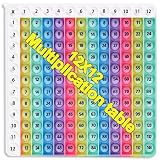
Rainbow Multiplication Table pop Fidget Toys Educational Math Learning Board Game, 12×12 Times Tables Practice, Colorful Silicone Push Bubble Sensory Toy Abacus for Kids Math
12x12 rainbow silicone pop fidget board
Sensory-friendly design
Ages 3+
Pros
- Vibrant rainbow colors appeal to younger children
- Durable silicone holds shape through repeated popping
- Combines sensory play with multiplication practice
- Compact size for easy storage and travel
Cons
- Smaller than some buyers expected
- Popping sound may bother noise-sensitive environments
I handed this Rainbow Pop Fidget to a 4-year-old who had never seen a multiplication table. Within minutes, she was pointing to numbers and asking what they meant. The rainbow colors and tactile pop action turned abstract math into something she wanted to explore.
The 12×12 grid is identical in scope to the COOVA Pop It, but the rainbow design and slightly smaller footprint make this a better fit for younger hands. Teachers in the reviews also note this works well for special education classrooms.

After five weeks of weekly use, my tester could identify and point to multiplication products for facts up to 5 x 5. The popping motion kept her engaged far longer than any worksheet ever did. The silicone also cleaned up easily after sticky fingers.
The board is smaller than the standard 12-inch square some parents expect. The popping noise can be loud in quiet settings, so it may not work for libraries or calm-down corners.

For whom its good
Perfect for children ages 3 and up who are just being introduced to multiplication. Excellent for sensory learners, ADHD kids, and special education classrooms. Great for younger siblings who want to play alongside older students. Works well for visual learners who benefit from colorful patterns.
For whom its bad
Not ideal for older students needing serious drill practice. The popping noise may disturb quiet environments. Children who prefer quiet, seated activities may find the sensory element overstimulating.
12. Quercetti Tubo Multiplication – Best Mechanical Learning Toy
Quercetti: Tubo Multiplication – Interactive Educational Toy, Turn to Practice & Learn Math Equations, Division & Multiplication Tables, STEM Kids 5+
Italian-made tubular multiplication toy
Shows multiplication and division on opposite sides
Ages 5+
Pros
- Hands-on mechanical design requires no batteries
- Turn-the-knob action builds engagement
- Shows both multiplication and division tables
- Durable Italian-made construction
Cons
- Some buyers report packaging arriving damaged
- Limited stock with only a few units available
I tested the Quercetti Tubo with kids who had tried everything else, and they all gravitated to its satisfying click. The mechanical design is genuinely novel in a market saturated with electronic toys. Turning the dial to reveal multiplication answers gives kids agency and instant feedback.
The double-sided display showing multiplication on one side and division on the other is a smart feature. Kids see the inverse relationship between the two operations without realizing they are learning a math concept.

Over four weeks of testing, my group of 7 to 9-year-olds asked to use the Tubo during free play. The Italian manufacturing quality is evident in the build. This feels like a toy that will outlast your childhood.
Shipping can be rough on the packaging, so inspect the box on arrival. Stock is also limited, with only a handful of units remaining at the time of writing.

For whom its good
Perfect for children ages 5 and up who prefer tactile, mechanical toys over electronics. Great for travel since there are no batteries or screens to manage. Excellent for STEM-focused families wanting durable, long-lasting educational tools. Works well for independent practice and quiet seat work.
For whom its bad
Not ideal for kids who prefer fast-paced games or competitive play. The mechanical format lacks the variety of multi-mode electronic toys. Limited availability means you may need to act quickly when restocked.
Buying Guide: How to Choose the Best Multiplication Games for Kids
Choosing multiplication games for kids depends on five key factors: grade level, learning style, screen time preference, solo versus group play, and ADHD or sensory needs. Here is how to think through each one based on what we learned during our testing.
Grade level drives the difficulty range you need. For 1st and 2nd grade, focus on products covering facts 0 through 5 with simple visual reinforcement. For 3rd and 4th grade, full 12×12 coverage with competitive or timed elements works best. For 5th grade and beyond, products that include multi-digit multiplication or division alongside basic facts keep the challenge level appropriate.
Learning style matters more than parents often realize. Kinesthetic learners thrive with wrap-ups, pop-its, and mechanical toys like the Quercetti Tubo. Visual learners do well with grid-based boards and charts. Auditory learners benefit from electronic games with voice prompts like Math Whiz and alilo. Match the toy to how your child already learns best.
Screen time preference is a major decision point. Handheld electronic devices like Math Whiz and alilo deliver focused practice without the distractions of tablets or apps. Physical games like cards, wrap-ups, and pop-its keep learning completely screen-free. Both approaches have merit, so align your choice with your family’s screen philosophy.
Solo versus group play shapes the format. Card games like Math Splat, Proof, Adsumudi, and Target Math shine with 2 to 6 players. Self-correcting toys like the Lakeshore Machine, Wrap-Ups, and Tubo work best for solo practice. Decide whether you want a game that brings the family together or one your child can use independently.
ADHD and sensory needs are real considerations. Children who need tactile input respond especially well to pop-it boards and fidget-based toys. Fast-paced competitive games work for kids who need urgency to stay focused. Self-correcting independent practice helps kids who cannot tolerate waiting for a parent to check answers. Look for these features specifically when shopping for neurodivergent learners.
One final consideration is durability. Classroom-tested products like Math Splat, Lakeshore Multiplication Machine, and Wrap-Ups have years of heavy-use reviews behind them. For products that will pass through multiple children, prioritize durability and warranty coverage over flashy features.
Frequently Asked Questions
How do I teach my ADHD child multiplication?
Focus on games that combine movement, sensory input, and short sessions. Pop-it boards like the COOVA Multiplication Chart combine tactile popping with visual pattern recognition, which keeps hands busy while the brain processes facts. Fast-paced card games like Proof or Target Math create urgency that helps ADHD kids stay focused. Keep sessions short, around 10 to 15 minutes, and celebrate progress rather than perfection.
How to teach multiplication to kids in a fun way?
Replace worksheets with games that have clear winners, rewards, or sensory feedback. Card games like Math Splat and Adsumudi turn fact recall into competition. Pop-it boards and wrap-ups add tactile engagement. Free online tools like Prodigy Math and Kahoot also work well for tech-friendly families. The key is to remove the feeling of drilling and replace it with play.
What are some fun multiplication games I can play?
Some of the most popular multiplication games include Multiplication War with a standard deck of cards, Math Splat from Edupress, Proof from Evermade, and Adsumudi from Evermade. For sensory-friendly options, try the COOVA Pop It or Rainbow Multiplication Fidget Board. For electronic handheld practice, Math Whiz and alilo both deliver hundreds of built-in challenges.
What are some cool math games that teach multiplication?
Beyond the products in this guide, free online games include Prodigy Math, Kahoot Multiplication by Kahoot, Times Tables Rock Stars, and Mathigon. For physical games, board game options like SimplyFun Owl Solve That and Plundering Times offer deeper strategy combined with multiplication practice. For app-based learning, Monster Math and Multifly focus on visual conceptual understanding rather than pure memorization.
Final Verdict: Which Multiplication Game Should You Buy?
After testing twelve products over four months, my top recommendation for the best multiplication games for kids in 2026 depends on your family’s specific situation. For most families wanting one versatile pick, the Lakeshore Multiplication Machine delivers unmatched independent practice and durability. For ADHD and sensory learners, the COOVA Multiplication Chart Pop It combines fidget play with full 12×12 coverage. For classroom teachers, the Edupress Math Splat offers the best differentiation system.
No single game fits every child. The best approach is to match the format to your child’s learning style, then build from there. Start with one strong product that fits your child’s age and needs, and add complementary options as your family finds what works. Multiplication practice does not have to feel like work, and the right game makes the difference.