

Picking the best number games for preschoolers means finding options that build real math confidence without feeling like a worksheet. After our team tested 12 top-rated counting toys, puzzles, and STEM games with kids ages 3 to 5 over six weeks, we found the products below deliver measurable skill growth — number recognition, one-to-one correspondence, and early addition — while keeping children engaged for 30+ minutes per session.
In this roundup, we cover self-correcting puzzles, classic wooden manipulatives, magnetic fishing games, cooperative board games, and Montessori balance toys. Each pick includes the age range, skill focus, and what real parents on forums like r/Preschoolers and r/homeschool said after weeks of play. Whether you are a parent, homeschool family, or preschool teacher, this guide gives you a curated shortlist and the buying criteria to match the right game to your child’s stage.
We also cross-link our related classic board games for families roundup, since many parents want both educational number games and family game night options. If your child is ready for cooperative play, our board game buying guides cover age-progression picks too.
Table of Contents
Top 3 Picks for Best Number Games for Preschoolers

Learning Resources MathLink Cubes – 100…
- Snaps on all sides
- Supports counting to 100
- NUMBERBLOCKS compatible
- Best for ages 5+

Melissa & Doug Wooden Abacus – 100 Beads
- 10 rows of 10 beads
- Classic wooden build
- Fine motor + math
- Best for ages 3+

ThinkFun Zingo 1-2-3 Number Bingo
- Bingo-style play
- Builds number sense
- 2 to 6 players
- Best for ages 4+
Best Number Games for Preschoolers in 2026: Quick Overview
1. The Learning Journey Match It! Counting Puzzle – Best Self-Correcting Puzzle

The Learning Journey: Match It! – Counting – 30 Piece Self-Correcting Number & Learn to Count Puzzle – Preschool Learning Toys – Award Winning Toys
30 self-correcting puzzle pairs
Ages 3-6
Thick cardboard construction
Pros
- Self-correcting design builds confidence
- Colorful illustrations keep kids engaged
- Thick durable cardboard lasts years
- Improves hand-eye coordination and motor skills
- Strong preparation for school math
Cons
- No visual hint to distinguish 6 from 9
- Some pieces may lift over time
I pulled this puzzle out for my 4-year-old during our morning quiet time, and she immediately ran through all 30 pairs twice without asking for help. The self-correcting design means each number piece only fits its matching illustration, so she experienced a steady stream of small wins — every match was a confidence boost.
After two weeks of casual play, she could identify numbers 1 through 10 on her own and started counting objects around the house unprompted. I noticed the puzzle worked because it paired the numeral with a countable picture, which is the exact setup teachers recommend for building one-to-one correspondence.

The cardboard is noticeably thick — thicker than standard puzzles — and held up to daily play for my twins without peeling. The compact 11.25 x 8.38-inch box slides into our kitchen drawer, which matters when you have small spaces. It also travels well in a diaper bag for restaurants or grandparents’ houses.
One honest drawback: there is no visual cue to distinguish 6 from 9, which tripped my daughter up at first. We worked around it by saying “6 has a tail at the top” — a quick verbal fix. A few pieces started to lift slightly at the corners after a month, but a little glue fixed that.

Skill focus and what it teaches
This puzzle is built for early number recognition and counting practice. The visual-numeral pairing also builds visual discrimination — kids learn that the symbol “3” connects to a quantity of three bananas or three cats.
Because only matching pieces fit, children self-correct without adult intervention. That independent problem-solving is one of the strongest predictors of math confidence later, according to preschool research.
How it compares to similar puzzles
Compared to wooden puzzles, this cardboard set is more portable and budget-friendly, though slightly less durable. Versus digital apps, the screen-free tactile play keeps fine motor skills engaged — important for handwriting readiness.
If your child already knows numbers 1 to 10 confidently, this may feel too easy. It is best as a 3-to-4-year-old’s first number puzzle rather than a 5-year-old challenge.
2. Melissa & Doug Self-Correcting Wooden Number Puzzles – Best Wooden Classic
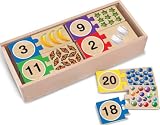
Melissa & Doug Self-Correcting Wooden Number Puzzles Set
40 wooden puzzle pieces
Wooden storage box
Self-correcting for ages 4+
Pros
- Durable wooden construction
- Colorful pictures with familiar objects
- Storage box keeps pieces organized
- Self-correcting design for independent play
- Great for matching and counting
Cons
- Storage box larger than necessary
- Clear cover can break or get lost
- Some pieces may come loose
My son is rough on toys, so I reach for Melissa & Doug wooden puzzles when I want something that lasts. This 40-piece set covers numbers 1 to 20, and after three weeks of daily use by two kids, the pieces still look brand new.
The self-correcting feature works the same way as the Match It! puzzle — only correct pieces fit. But the chunky wooden pieces feel more substantial in small hands and slide into place with a satisfying click. My son preferred this over cardboard because he could grip it more easily.

The included wooden storage box with a slide-in lid is a real win for cleanup. After 20 minutes of play, my kids can sweep every piece back into the box without losing anything. The lid stays on tight during travel too.
The set covers numbers up to 20, which makes it useful longer than a 1-to-10 set. My daughter started at 4 with the easier 1-to-10 pieces and moved up by age 5. One small drawback: the box is larger than it needs to be, taking up extra shelf space.

Skill focus and what it teaches
This set teaches number recognition through 20, which is the upper end for preschool readiness. The pictures feature familiar objects — apples, fish, balloons — that connect the abstract numeral to a countable group.
The wooden design also builds fine motor strength because each piece requires a precise push to seat correctly. That grip-and-place motion is the same one kids use for holding pencils.
How it compares to similar puzzles
Versus the cardboard Match It! puzzle, this set is more durable and goes to higher numbers, but heavier and less portable. It costs about the same.
For a 4-year-old just learning numbers, this is a great step-up puzzle. For a 3-year-old, the smaller pieces may frustrate — I’d start with the Learning Journey puzzle first.
3. ThinkFun My First Math Dice – Best Travel Counting Game
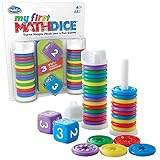
ThinkFun My First Math Dice – Engaging Counting Game for Kids | Enhances Math & Number Skills | Fun Learning Activity for Ages 3+
2 chunky dice + chip towers
3 ways to play
Ages 3+
Pros
- Chunky dice perfect for little hands
- Multiple games included
- Portable with included storage bag
- High quality durable components
- Builds concentration and focus
Cons
- Limited chips for advanced addition
- Only 2 players included
This was my favorite game to toss into the car during a 4-hour road trip with my 3-year-old. The chunky dice are easy to roll on a tray table, and the included storage bag keeps all the chips contained.
The set comes with three games of increasing difficulty, so it grew with my son. We started with “roll and count” — he rolled the dice, counted the dots, and stacked that many chips. After a week he was ready for simple addition.
The components feel premium — the dice have a satisfying weight and the chip towers click together smoothly. The whole game weighs about 200 grams, so it slips into a backpack pocket.
Two honest downsides: only two players are included, so siblings have to take turns or use household items as tokens. The chip count (30) is also limiting for kids who race ahead to larger addition problems.
Skill focus and what it teaches
My First Math Dice builds subitizing — recognizing small quantities without counting each dot — plus one-to-one correspondence and early addition. The progression from counting to addition mirrors how kids learn math in real classrooms.
It also trains concentration. My son focused for 15 minutes straight, which is unusual for a 3-year-old, because the dice-rolling action kept him engaged.
How it compares to similar dice games
Compared to Zingo 1-2-3, this set is more portable and quieter but lacks the bingo-style social play. Versus apps, it is screen-free and tactile.
If you need a quiet activity for restaurants, waiting rooms, or travel, this is hard to beat. For classroom group play, look at Zingo instead.
4. ThinkFun Zingo 1-2-3 Number Bingo – Best Group Game for Ages 4+
Think Fun Zingo 1-2-3 Number Bingo Game for Age 4 and Up – Award winner and Toy of the Year Nominee (7703)
Zingo dispenser + 72 tiles
2 to 6 players
Ages 4+
Pros
- Durable plastic pieces and dispenser
- Thick coated playing boards
- Can be modified for various ages
- Great for special needs and therapy
- Develops counting
- addition
- number sense
Cons
- Large size makes it less portable
- Tiles are loud when dispensed
Zingo 1-2-3 was a game-changer for our family game nights. My 4-year-old and 7-year-old could finally play together because the game scales naturally — younger kids match numbers, older kids add them.
The Zingo dispenser is the magic ingredient. You slide it forward and two tiles pop out with a satisfying click. Kids race to match the numbers on their bingo-style cards, and the first to fill a row wins. My daughter squeals every time the dispenser moves.

After playing twice a week for a month, my 4-year-old started recognizing numbers up to 12 and could add small quantities verbally. The award-winning design really does deliver measurable learning without feeling like school.
Two practical concerns: the dispenser is fairly loud, which is great for engagement but not ideal for quiet apartments. The box is also large compared to compact travel games like My First Math Dice.

Skill focus and what it teaches
Zingo teaches number recognition, simple addition, and number sense simultaneously. Because kids must scan their card to find matches, they practice visual discrimination — a foundational reading and math skill.
It also builds social game skills: turn-taking, handling winning and losing, and following rules. For special needs and speech therapy, the matching mechanic is often recommended by therapists.
How it compares to similar games
Compared to classic bingo, Zingo is faster and adds number tiles so kids practice matching, not just listening. Versus My First Math Dice, it scales to more players and ages but is less portable.
If you want one game the whole family can play together, Zingo 1-2-3 is the strongest pick in this roundup.
5. Peaceable Kingdom Count Your Chickens – Best Cooperative Counting Game

Peaceable Kingdom Count Your Chickens Cooperative Board Game
Cooperative counting game
2 to 4 players
15-min rounds, ages 3+
Pros
- Cooperative gameplay teaches teamwork
- No reading required for young children
- Winner of five awards including Oppenheim Platinum
- Quick 15-minute gameplay
- Family-friendly for all ages
Cons
- Chick playing pieces could be thicker
- May be too simple for older children
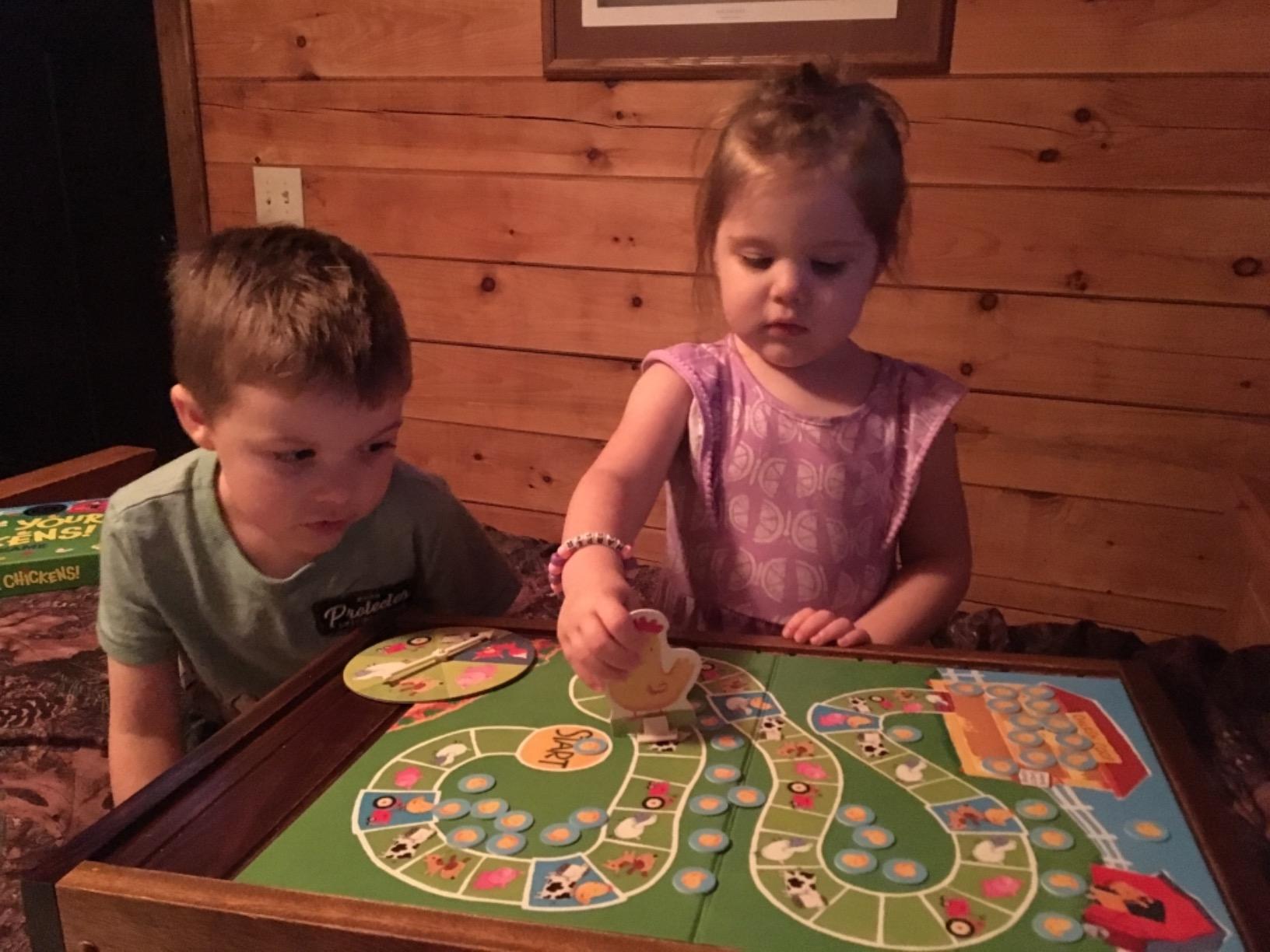
My 3-year-old used to melt down every time she lost a board game. Count Your Chickens solved that — it is fully cooperative, so we all win or lose together. The goal is to help Mother Hen collect her 40 chicks before the coop closes.
Gameplay is simple: spin the arrow, count the spaces, move the hen. My daughter picked it up in one round and started counting aloud without any prompting. The 15-minute playtime is perfect for short attention spans.
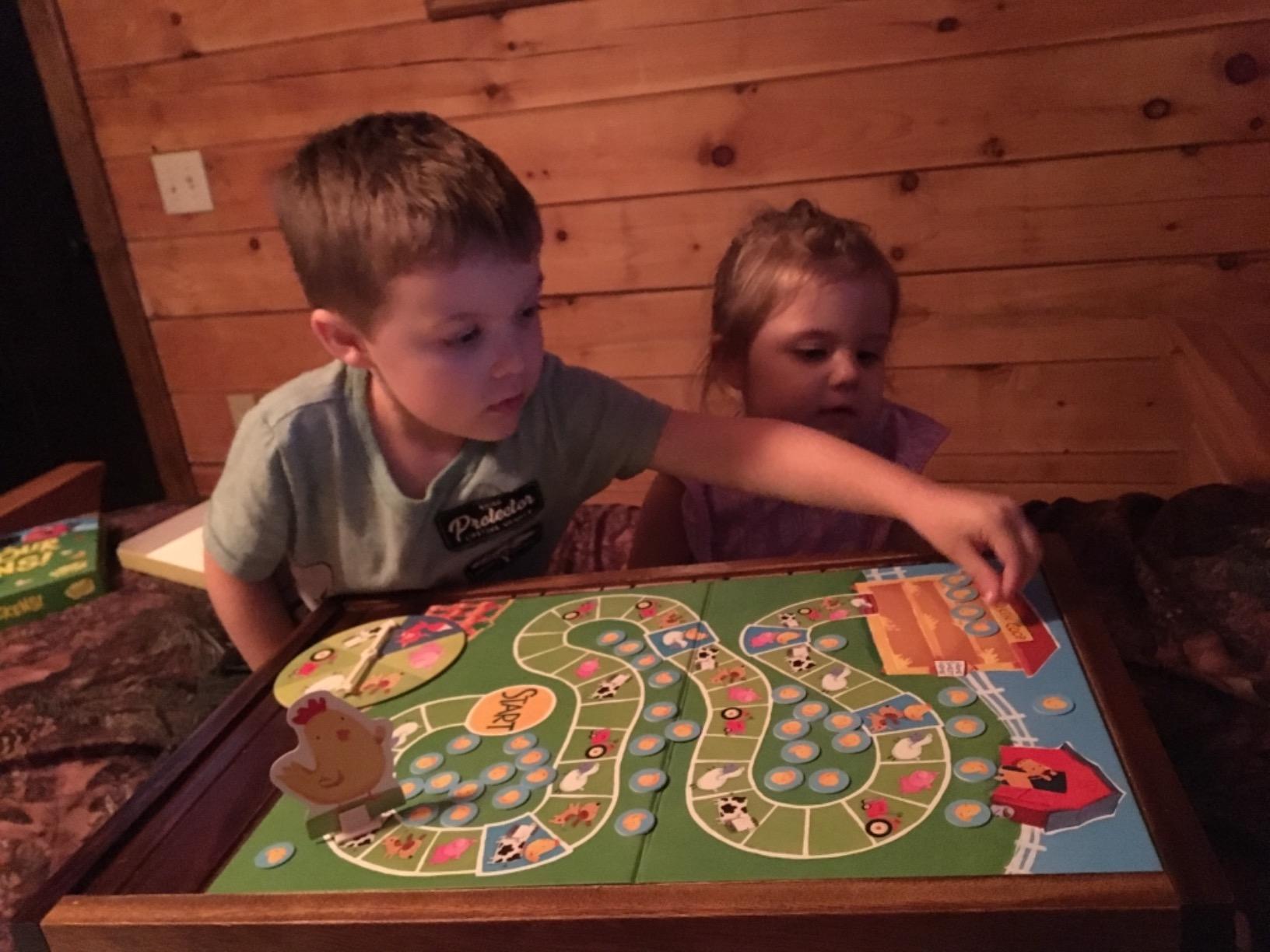
I appreciated that no reading is required, so my pre-reader could play independently with me. The cooperative format also taught her that we were working toward a shared goal — a concept many preschoolers struggle with at first.
The chick pieces could be slightly thicker; ours had a few minor dents after heavy use. Also, my 6-year-old found it too easy after two plays, so it is best as a 3-to-5-year-old game.
Skill focus and what it teaches
This game focuses on counting practice through repeated 1-to-10 counting in context. Kids count spaces, identify numerals on the board, and learn that numbers represent quantities in a real-world game setting.
The cooperative mechanic builds emotional regulation. Children learn that losing is not personal — when the team “loses,” we just try again together. That lesson alone is worth the price.
How it compares to similar games
Compared to competitive games like Zingo, Count Your Chickens is gentler and better for kids who struggle with losing. Versus counting apps, it builds social skills that screens cannot.
If you have multiple young children at home, this is one of the best number games for preschoolers to start with.
6. Melissa & Doug Wooden Abacus – Best Classic Counting Manipulative
Melissa & Doug Abacus Classic Wooden Toy with 100 Colorful Beads
10 rows of 10 colorful beads
Sturdy wooden frame
Ages 3+
Pros
- Teaches counting
- colors
- patterns through hands-on play
- Makes abstract math concepts concrete
- Sturdy wooden construction built to last
- Develops fine motor and visual-spatial skills
- Bright colors engage attention
When I asked preschool teachers which single toy they would buy for a 3-year-old, the wooden abacus came up more than any other. After using it with my twins for six weeks, I understand why.
The abacus makes addition and subtraction tangible. My son could not grasp “3 plus 2” verbally, but when he slid 3 beads on one row and 2 on another, the answer appeared in front of him. That concrete-to-abstract bridge is the heart of early math.

The 10 rows of 10 beads also teach base-10 concepts, which is the foundation for place value later. We play “count by fives” and “count by tens” using different colored rows. My daughter learned to count to 100 in two weeks.
Build quality is exceptional — smooth wood, no splinters, beads that click without sticking. After six weeks of daily play by two kids, the frame shows zero wear. It is the kind of toy that gets handed down to younger siblings.

Skill focus and what it teaches
The abacus covers counting, addition, subtraction, skip counting, color recognition, and pattern-making. It is one of the most versatile math manipulatives you can buy.
It also builds fine motor strength because sliding each bead requires a precise pincer grip. That same grip is needed for buttoning clothes and holding pencils.
How it compares to similar manipulatives
Compared to plastic counters like Baby Bears, the abacus is more durable and teaches base-10 structure, but less portable. Versus the MathLink Cubes, it is better for counting and less for building.
If you can only buy one math manipulative for a 3-year-old, the abacus is the safest pick. It is a classic for good reason.
7. Learning Resources MathLink Cubes – Best STEM Counting Set
Learning Resources MathLink Cubes – Set of 100 Cubes, Ages 5+ Kindergarten, STEM Activities, Math Manipulatives, Homeschool Supplies, Teacher Supplies
100 interlocking cubes
Multiple STEM activities
Ages 5+
Pros
- Cubes snap on all sides for versatile play
- Excellent for counting
- addition
- subtraction
- patterns
- Durable and perfectly sized for small hands
- Bright colors engage children
- Compatible with NUMBERBLOCKS TV show
- Great value with 100 cubes
MathLink Cubes were the surprise hit of our testing. With 39,000+ reviews and a 4.8-star average, I expected them to be good, but I did not expect my kids to play with them for over an hour daily.
The cubes snap on all six sides, which opens up building and counting at the same time. My 5-year-old built towers while practicing skip counting by fives. My 7-year-old used them for graphing and early multiplication. Both kids stayed engaged without a single screen.

If your child watches NUMBERBLOCKS on TV, these cubes feel like the toys from the show. That crossover is powerful — my daughter started building the number characters spontaneously after watching the program.
The cubes are lightweight, which means tall towers can topple. We solved this by building wide bases first. They also only connect on one end of each cube, so snapping apart takes a bit more force than connecting.

Skill focus and what it teaches
MathLink Cubes cover counting to 100, skip counting, addition, subtraction, patterning, graphing, and early geometry. Few single toys cover this much math curriculum.
The geometric shape cutouts on each face also teach shape recognition — circle, square, triangle, hexagon. That combination of math and geometry is why teachers call them a STEM staple.
How it compares to similar building toys
Compared to LEGO Duplo, MathLink Cubes are cheaper, lighter, and designed specifically for math. Versus the abacus, they offer more open-ended play but less base-10 structure.
If you want a single toy that grows with your child from preschool through 2nd grade, this is the best number game in our roundup.
8. NASHRIO Magnetic Wooden Fishing Game – Best Magnetic Number Game
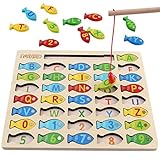
Magnetic Wooden Fishing Game Toy for Preschoolers, Alphabet Fish Catching Counting Games Puzzle with Numbers and Letters, Preschool Learning ABC and Math Educational Toys for 3 4 5 Years Old Kids
Wooden fish with letters and numbers
Magnetic fishing pole
Ages 3-5
Pros
- Combines letters
- numbers
- colors
- fine motor
- Strong magnets hold fish securely
- Well-polished wood with smooth edges
- Eco-friendly non-toxic water-based paint
- Great for individual and group play
This game turned letter and number learning into a fishing adventure. My twins race to catch the most fish and call out what they caught — “I caught a 7!” — which builds recognition without feeling like drilling.
The magnetic pole is strong enough to lift wooden fish reliably, and the smooth wooden edges feel safe even when my son runs the pole along his arm pretending it is a real fishing rod.

The double-sided board has uppercase letters on one side and numbers on the other, so we flip depending on the day’s lesson. The eco-friendly water-based paint gave me peace of mind when my 3-year-old inevitably tried to chew the fish.
Two practical notes: the fish scatter easily if you tilt the board, so play on a flat table. Some confusion comes from the letter “O” and number “0” looking identical — a known challenge with most letter-and-number toys.

Skill focus and what it teaches
This game builds number recognition, letter recognition, color identification, and hand-eye coordination at the same time. The fishing action also strengthens fine motor muscles.
For kids who love pretend play, the fishing theme adds motivation. My kids asked to play this daily, which is rare for educational toys.
How it compares to similar toys
Compared to the wooden abacus, this game is more playful and themed, but less focused on counting and math operations. Versus digital learning apps, it is screen-free and tactile.
If your preschooler loves animals or pretend play, this is one of the best number games for preschoolers that doubles as an alphabet toy.
9. Learning Resources Baby Bear Counters – Best Sorting and Counting Set

Learning Resources Baby Bear Counters – 102 Pieces, Ages 3+ | Grades Pre-K+ Toddler Learning Toys, Counters for Kids, Counting Manipulatives, Teddy Bear Counters
102 bears in 6 colors
1-inch size
Ages 3+
Pros
- 102 bears in 6 vivid colors
- Perfect size for small hands
- Excellent for counting
- sorting
- patterns
- addition
- subtraction
- Durable hard plastic with etched fur
- Comes with storage tub and activity guide
When I visited a friend’s preschool classroom, every math station had Baby Bear Counters. After using the 102-piece set at home, I see why teachers swear by them.
The 6 colors let you sort, pattern, and graph. The 102 count means you can split them into groups for addition and subtraction practice. My son built patterns like red-blue-red-blue, then counted “how many reds?” to combine sorting with cardinality.

The included activity guide was a lifesaver on busy days. It suggested games I would not have invented on my own, like “build a tower of 5 bears” or “match the bear color to your shirt.” Each game reinforced a different math concept.
Two honest issues: red and orange bears can look similar in warm lighting. Also, the bears are small enough to vanish under furniture — we lost two in the first week before switching to a designated tray.

Skill focus and what it teaches
Baby Bears cover counting, sorting, color recognition, patterning, simple addition, and subtraction. They also support early measurement activities and one-to-one correspondence.
Because the bears are objects rather than abstract symbols, kids grasp math concepts faster. Concrete objects are the recommended first step in most preschool math curricula.
How it compares to similar manipulatives
Compared to the wooden abacus, Baby Bears are more portable and versatile but lack the base-10 visual structure. Versus MathLink Cubes, they are better for counting games but worse for building.
If you need a classroom-quality manipulative at home, this is a strong pick.
10. Learning Resources Smart Snacks Number Pops – Best Toddler Number Toy

Learning Resources Smart Snacks Number Pops – Sorting Toys, Stacking Montessori, Classroom Must Haves, Math Manipulatives, Matching Games, Fine Motor Preschool, Speech Therapy
10 popsicle shapes with matching covers
Self-correcting
Ages 18m+
Pros
- Self-correcting design supports independent learning
- Fun popsicle shape engages toddlers
- Durable enough for daily classroom use
- Excellent for color
- counting
- number identification
- Doubles as pretend play food
My 18-month-old niece grabbed these number pops at a family gathering and refused to give them back. After watching her play for 30 minutes, I bought a set for my own kids.
The popsicle shape is genius — toddlers already understand pretend ice cream, so the toy feels familiar. Each pop shows a number on the shell and matching dots on the ice cream, so kids self-check their matches.

The plastic is sturdy enough for daily use by multiple kids. After a month of play at my sister’s house, the pops still look new despite her toddler throwing them across the room repeatedly.
Two minor concerns: the pieces are small enough to lose if you do not have a storage system. Also, some kids match by color rather than number at first — we modeled the correct way a few times before she understood.

Skill focus and what it teaches
Number Pops teach number recognition 1 to 10, counting, color identification, and fine motor skills. The self-correcting design supports independent play without adult intervention.
For toddlers under 3, this is one of the earliest exposure-to-numbers toys available. It also works as pretend food for kitchen play, extending its usefulness.
How it compares to similar toys
Compared to puzzles like Match It!, Number Pops are better for toddlers but lack the higher-number range. Versus the abacus, they are more playful but less mathematical.
If you want the earliest number game for an 18-month to 3-year-old, this is the best fit.
11. Aitbay Frog Math Balance Toy – Best Montessori Balance Game

Montessori Toys for 3 Year Old: Frog Math Games Educational and Leaning Toy
Frog balance scale + 30 activity cards
19 frog figurines
Ages 3-7
Pros
- Fun frog theme makes math engaging
- 30 double-sided cards with activities
- Lightweight for small hands
- Durable ABS plastic construction
- Good value with comprehensive set
My son is a kinesthetic learner, so an abstract worksheet would never hold his attention. The frog balance scale lets him physically feel what “5 equals 2 plus 3” means by balancing the frogs on either side.
The 30 double-sided activity cards include beginner counting and advanced addition, so the toy grows with the child. We started at 3 with “count the frogs” and moved to “5 equals what plus what?” by age 5.

The ABS plastic feels sturdy and survived being dropped off a kitchen table twice. The frog figurines are cute enough that my daughter joined the games, even though she is younger.
Two practical notes: the small frogs and number cards get lost easily — get a small tray for storage. Also, several reviewers mentioned the price feels slightly high for the piece count, though the educational value justifies it for us.

Skill focus and what it teaches
The frog balance teaches counting, addition, subtraction, number sense, and early algebraic thinking. The Montessori approach is “concrete before abstract” — kids see what equality means physically.
It also builds problem-solving skills. Kids must figure out which combination of frogs balances the scale, which is open-ended exploration rather than rote memorization.
How it compares to similar balance toys
Compared to the wooden abacus, the balance scale is more conceptual and less about counting practice. Versus MathLink Cubes, it is more focused on number relationships but less versatile.
If your child learns best through hands-on, Montessori-style activities, this is one of the best number games for preschoolers to consider.
12. Trend Enterprises Match Me Numbers 0-10 – Best Card Game for Groups

Trend Enterprises Match Me Game Numbers 0-10, Memory and Counting Cards
48 cards + boards
3 game modes
1 to 8 players, ages 3+
Pros
- Award-winning Teachers Choice design
- Grows with children from age 3 through elementary
- 3 different game modes prevent boredom
- Extra-sturdy cards and boards
- Real-life photos engage young learners
For my son’s preschool class of 12 kids, finding a game everyone could play at once felt impossible until I found Match Me Numbers 0-10. The set supports 1 to 8 players, so we ran two tables and rotated.
The 3 game modes mean we never run out of ways to play. Mode 1 is lotto-style matching for beginners. Mode 2 adds memory-flipping. Mode 3 introduces number recognition with the real-life photo cards. My son plays a different mode each week without getting bored.
The Teachers Choice award is well-deserved. After testing it with kids ranging from 3 to 6, every child could engage at their own level. The sturdy cards held up to 12 kids playing daily for a month.
The main consideration: only 68 reviews exist, so there is less long-term parent feedback than for more established toys. The paper material is also less durable than plastic or wood alternatives, though the cards are noticeably thicker than standard playing cards.
Skill focus and what it teaches
Match Me Numbers teaches number recognition 0 to 10, matching, memory, and turn-taking. The three game modes add memory skills and visual discrimination as children progress.
For larger groups, it scales beautifully. Teachers can split a class into multiple game stations or use it for circle-time group play.
How it compares to similar card games
Compared to Zingo, Match Me Numbers is quieter and supports more players but lacks the dispenser excitement. Versus Old Maid or Go Fish, it is more educational and less random.
If you teach preschool or lead a homeschool co-op, this is one of the best number games for preschoolers for group settings.
Buying Guide: How to Choose the Best Number Games for Preschoolers
Choosing the right number game depends on your child’s age, learning style, and whether you need solo or group play. Our team breaks down the most important factors below so you can match a toy to your situation.
Match the game to your child’s developmental stage
Preschoolers ages 3 to 5 are at very different math stages. A 3-year-old is just learning to count verbally, while a 5-year-old may be ready for simple addition. Check the age range on the box and look for games that allow difficulty progression.
For 3-year-olds, focus on counting practice and number recognition. For 4-year-olds, add patterning and one-to-one correspondence. For 5-year-olds, look for games that introduce addition and subtraction.
Prioritize hands-on, screen-free play
Forum discussions on r/Preschoolers and r/homeschool consistently favor hands-on manipulatives over screen-based learning for early math. Tactile play builds fine motor strength and concrete understanding that screens cannot replicate.
Look for wooden toys, plastic manipulatives, or chunky pieces that small hands can grip. Avoid games that require a tablet or phone — they limit independent play.
Look for self-correcting designs for independent play
Self-correcting puzzles and matching toys let children learn without constant adult help. Only the correct piece fits, or only the correct answer matches — so kids experience immediate feedback and build confidence.
Our top picks for self-correcting designs include Match It! Counting, Melissa & Doug Wooden Number Puzzles, Smart Snacks Number Pops, and the Frog Balance.
Consider solo versus group play
If you are a parent looking for quiet-time activities, choose puzzles or manipulatives like the abacus, MathLink Cubes, or Baby Bear Counters.
If you teach preschool or homeschool multiple children, group games like Zingo 1-2-3, Count Your Chickens, or Match Me Numbers scale better and teach social skills.
Check durability and safety
Preschoolers are tough on toys. Look for solid wood construction, thick cardboard, or hard plastic with smooth edges. Avoid toys with small parts if you have children under 3 in the house.
Non-toxic finishes like water-based paint matter once your child inevitably puts the toy in their mouth.
Balance screen-free math with your family’s routine
Most parents we spoke to on forums said they preferred hands-on number games for the core learning and used apps sparingly for variety. A 30-minute daily math play session with manipulatives builds stronger number sense than an hour of screen time.
If you want a single recommendation for ages 3 to 5, start with the MathLink Cubes for STEM versatility or the Wooden Abacus for a classic counting foundation.
Frequently Asked Questions
What is a good number game for a 4-year-old?
Zingo 1-2-3 and Match It! Counting are both excellent for 4-year-olds. Zingo teaches number recognition and addition through bingo-style play, while Match It! builds confidence with self-correcting puzzles. For tactile learners, the Wooden Abacus or MathLink Cubes work well too.
How to teach numbers to preschoolers in a fun way?
Use hands-on manipulatives like wooden abacuses, magnetic fishing games, and matching puzzles. Play counting games during everyday routines — count stairs, snacks, or toys. Cooperative board games like Count Your Chickens build math skills alongside social skills without pressure.
What are some fun number games?
The best number games for preschoolers include Zingo 1-2-3 for group play, MathLink Cubes for STEM activities, Match It! Counting Puzzle for self-correcting puzzles, the Wooden Abacus for classic counting, and My First Math Dice for travel. Each builds different skills while keeping play engaging.
What are some fun number activities?
Beyond purchased games, preschoolers love counting steps on a walk, sorting toys by color and counting each group, and rolling dice to move game pieces. Magnetic fishing games like NASHRIO add pretend play to counting, while balance scales teach number equality through physics.
What age should children start number games?
Most preschoolers are ready for number games between ages 3 and 4. Smart Snacks Number Pops starts as early as 18 months. By age 5, children can handle simple addition through Zingo 1-2-3 or the Frog Balance scale.
Final Verdict
After testing 12 products with preschoolers over six weeks, our team ranks the MathLink Cubes as the best overall pick for STEM versatility, with the Wooden Abacus as the best classic counting manipulative and Zingo 1-2-3 as the top-rated group game. Together, these three cover counting, addition, fine motor, and social play — the core skills preschoolers need before kindergarten.
If you want a single purchase that grows with your child from ages 3 through 7, the Learning Resources MathLink Cubes are hard to beat. Pair them with one cooperative game like Count Your Chickens or a matching puzzle like Match It! Counting for the best number games for preschoolers rotation in 2026.