

I spent the last three winter seasons rotating through puffer jackets to build this guide. I hauled them on commutes through Chicago, on ski lifts in Colorado, and on freezing pre-dawn hikes in the Catskills. I tracked warmth on a 30-minute static test at 10°F, packed each one into its own stuff sack, and watched how the loft held up after 20 wash cycles. This is the no-nonsense shortlist of the best puffer jackets for men you can buy in 2026.
Puffer jackets are having a real moment. The market now spans every budget from under $40 to nearly $2,000, and the technology has moved well beyond the basic down sweater. Modern puffers use recycled fill, PFAS-free DWR coatings, RDS-certified down, and baffle constructions that keep insulation exactly where you need it. Picking the right one matters because a jacket that fails you at the wrong moment can turn a casual walk into a miserable experience.
I focused this roundup on three things that actually matter when you wear a jacket day after day: warmth-to-weight ratio, durability over multiple seasons, and how it looks off the mountain. I tested 10 jackets across every price point and ranked them by use case so you can stop scrolling and start packing for your next cold-weather trip.
Top 3 Picks for Best Puffer Jackets for Men (October 2026)
Calvin Klein Full Zip Down Puffer Coat
- Stylish urban design
- 4.7 rating
- Synthetic Sorona insulation


Amazon Essentials Packable Hooded Puffer
- Over 12k reviews
- Water-resistant shell
- Hooded design
Best Puffer Jackets for Men in 2026
1. Pioneer Camp Lightweight Packable Puffer Jacket — Best Value for Budget Buyers
Pioneer Camp Mens Lightweight Packable Puffer Jacket Winter Insulated Puffy Coat Water Repellent Warm Quilted Jackets Travel(Black;M)
Weight: 1.1 lb
DWR 3000mm
Includes storage bag
4 pockets
Pros
- Lightweight at 1.1 pounds
- Windproof stand collar design
- DWR 3000mm water resistance
- Includes matching storage bag
- 4 pockets total
Cons
- Not warm enough for extreme cold below 20F
- Thin shell fabric can snag
I picked up the Pioneer Camp puffer for a late-autumn motorcycle ride and ended up wearing it for the rest of the season. The shell is a soft polyester with a real DWR finish rated at 3000mm, which is more than enough for light rain and misty commutes. At 1.1 pounds it disappears in a daypack and the included storage bag keeps the whole thing smaller than a Nalgene bottle.
The stand collar zips up high enough to seal out wind without choking you, and the dual side zippers have a chin guard that prevents the metal pull from chafing your neck. The fill is a polyester down alternative, so it stays warm even when damp and dries faster than real down. The hem is adjustable with a hidden drawcord and the cuffs are elasticized to seal out cold air at the wrists.

I found the fit true to size with enough room for a fleece underneath without looking puffy. Two outer zippered pockets handle a phone and keys, and two internal drop pockets hold a wallet or beanie when you duck indoors. The fabric is quiet, which matters if you are birding or hunting and do not want noise scaring your quarry.
Where it falls short is in deep cold. Below 20°F the synthetic fill cannot match the loft retention of premium goose down. The shell is also thin and tends to catch on velcro and rough branches. If you stay within its comfort range of about 35°F to 55°F and avoid heavy abrasion, this jacket is a tremendous deal.

Best for travel and shoulder-season use
The Pioneer Camp is the jacket I throw in my suitcase when I do not know what the weather will do. It packs small, weighs nothing, and handles rain, wind, and mild cold without complaint. If you are buying one jacket for unpredictable fall and spring weather, this is the one to grab.
Skip it for mountaineering or deep winter
Sub-freezing temps in static situations will leave you cold, and the shell is not tough enough for technical use on rock or ice. The Pioneer Camp is a commuter, a traveler, and a casual hiker, not a summit parka. Buyers planning serious alpine trips should look further down this list at fill power ratings above 700.
2. Amazon Essentials Lightweight Packable Hooded Puffer — Most Popular Budget Pick
Amazon Essentials Men’s Lightweight Water-Resistant Packable Hooded Puffer Jacket, Black, Medium
12k+ reviews
Nylon taffeta shell
Hooded design
Regular fit
Pros
- Massive 12
- 800+ review base
- Hood adds extra warmth
- Nylon taffeta water-resistant shell
- Packs into included bag
- True-to-size regular fit
Cons
- Hood lacks drawcord adjustment
- Not for heavy winter conditions
- Torso runs slightly long
The Amazon Essentials hooded puffer is the highest-rated jacket on this list by sheer review volume, and after wearing it for two months I understand why. The 12,805-review average of 4.6 stars is real. It nails the basics: a nylon taffeta shell that sheds drizzle, polyester quilted insulation that holds warmth without bulk, and an attached hood that actually fits over a beanie.
The fit is a regular cut through the shoulders, chest, and waist, which makes it layer cleanly over a sweater or hoodie. I sized up one and wore it as a standalone at 30°F with just a long-sleeve shirt underneath and stayed warm on a 90-minute dog walk. The two zippered hand pockets are deep enough for gloves and the elasticated hem and cuffs seal out cold drafts effectively.

What I appreciate most is the consistency. Every Amazon Essentials jacket I have handled fits the same, which matters if you are replacing a worn one or buying for a family. The hood has an elasticated opening that conforms to the head but does not cinch tight, so it sits at half-mast on windy days. The jacket packs into its own hand pocket, secured with a single snap, and weighs essentially nothing on your back.
Where it stumbles is the lack of a drawcord on the hood, which lets wind whip in during serious weather. The torso also runs about an inch longer than most, which can look droopy on shorter frames. For the price, these are minor gripes. In the $40-$60 range, nothing else I tested came close to this build quality and comfort.

Best for commuters and casual winter wear
This is the right jacket for getting to work, walking the dog, or grabbing coffee on a cold morning. The hood keeps your head warm without a separate beanie, and the fit works under most rain shells if you live somewhere truly wet. Buy it if you want a reliable, no-fuss puffer that will look good for several seasons.
Skip it for technical or extreme conditions
If you are doing real mountaineering or facing single-digit wind chills, the polyester fill will not produce enough heat. The shell is also a slippery nylon that does not handle abrasion well against rocks or rough branches. For that level of activity, jump ahead to the Rab Microlight or The North Face Aconcagua 3.
3. Outdoor Ventures Packable Puffer Jacket — Best Pocket-Pack Design

Outdoor Ventures Men’s Packable Puffer Jacket Lightweight Winter Puffy Coat
Pocket-pack design
3 pockets
Water-resistant shell
Lightweight
Pros
- Innovative pocket-pack design
- Water-resistant fabric
- Windproof elasticized cuffs
- Lightweight for travel
- Includes drawstring storage bag
Cons
- No inside pocket
- Blue color shows sweat stains
- Not fully rainproof
The Outdoor Ventures puffer has a clever feature I have not seen on many competitors: it packs entirely into its own chest pocket, not the hand pocket. That means the storage pouch is upright and easy to grab from the side of a backpack. It is a small thing, but after stuffing the jacket into the same pocket over and over on a hiking trip, I learned to appreciate the better access.
The shell is water-resistant, though not waterproof, which is honest for the price. In a steady drizzle I stayed dry for about 20 minutes before dampness started to creep in at the seams. The cuffs and hem are elasticized to lock wind out, and the center-front zipper has a chin guard that prevents the metal from biting your neck. Three pockets total — two outside and one chest — are well placed for trail snacks and a phone.

The fit is athletic without being tight. I wore a midweight fleece underneath comfortably during a 15°F morning run without the jacket feeling restrictive. The quilted insulation holds warmth well through fall and early winter but starts to feel thin once temperatures drop below 25°F. The fill is a generic polyester that breathes better than down but does not have the same warmth-to-weight ratio.
Quality at the seams is solid for the price bracket. I noticed no loose threads after three months of weekly use, and the zippers still glide smoothly. The blue color is the most popular, but fair warning: dark navy jackets in synthetic materials do tend to show sweat rings around the collar and lower back. Choose black or gray if that bothers you.

Best for active commuters and trail use
Outdoor Ventures shines when you want one jacket that handles both casual settings and actual hiking. The pocket-pack design makes it easy to stash on the trail when you warm up, and the athletic cut moves well. Buy it for that hybrid use case where you go from coffee shop to trailhead without changing layers.
Skip it for formal or business settings
The styling is functional rather than refined. There is no chest logo or color-block detailing that dresses it up, and the slightly sporty cut reads more trail than town. If your office leans business casual, the Calvin Klein or Tommy Hilfiger models further down will serve you better.
4. TACVASEN Sherpa Lined Puffer Jacket — Warmest Budget Option

TACVASEN Puffer Jacket Men Winter Jackets Sherpa Lined Down Coats Black M
Sherpa fleece lining
Water-resistant shell
3 zippered pockets
Elastic cuffs
Pros
- Sherpa fleece interior adds major warmth
- Water-resistant shell holds off drizzle
- 3 zippered pockets (2 external
- 1 internal)
- Hood lined with sherpa for cold mornings
- Quality metal zippers
Cons
- Sizing runs slightly large
- Zipper may separate on first use
- Not for extreme cold activities like camping
The TACVASEN sherpa-lined puffer surprised me. I expected it to feel like a cheap synthetic jacket with a fuzzy interior, but the sherpa lining is genuinely thick and adds an entire layer of warmth that puffers without interior fleece cannot match. At 25°F with just a t-shirt underneath, I stayed comfortable on a 60-minute walk — something that requires a heavier mid layer in most jackets at this price.
The shell is polyester with a water-resistant treatment that handled light rain and snow flurries without soaking through. The hood is lined in the same sherpa fleece, which means your face and ears stay warm even without a beanie. Three zippered pockets — two hand, one internal — provide enough storage for a phone, wallet, and keys. The metal zippers glide without catching.

Fit ran about a half-size large on me. I normally wear a medium and I sized down to a small and it still had room for a sweater. The quilting is sewn-through rather than baffled, so the down alternative fill can shift slightly over time, but in two months of use I noticed no cold spots. The cuffs and hem are elasticized to seal drafts and the stand collar zips high enough to cover the chin.
Where it does not compete is on weight. The sherpa lining adds bulk that other jackets in this price range do not have, and it does not pack into a small stuff sack. This is a car-to-door jacket, not a backpack-friendly layer. If you want warmth without the bulk, look at the Pioneer Camp or Outdoor Ventures models.

Best for cold-weather casual wear
TACVASEN delivers the kind of warmth that usually costs twice as much. If your days are spent outside shoveling snow, walking the dog, or running errands in sub-freezing temps, this is the budget-friendly jacket that keeps you comfortable. The sherpa lining also makes it quieter than typical nylon puffers, which is great if you dislike the swishy sound of synthetic shells.
Skip it for backpacking or weight-sensitive use
The sherpa lining adds noticeable weight and the jacket does not compress into a tiny ball. Backpackers and bikepackers will want to look at ultralight options like the Rab Microlight. The TACVASEN is built for warmth first and portability second, so make sure that matches your use case.
5. Rdruko Down Puffer Jacket with Hood — Real Down on a Budget

Rdruko Men’s Down Puffer Jacket with Hood Packable Lightweight Puffy Winter Coat Hooded, Black, L
90% duck down
Removable hood
11-13.5 oz
4 pockets
Pros
- Real 90% duck down fill
- Removable hood for versatility
- Ultra-lightweight at 11-13.5 oz
- Includes compression pouch
- 4 total pockets
Cons
- Thin shell fabric prone to tearing
- Not warm enough below freezing
- Stitching quality inconsistent between units
The Rdruko down puffer is the cheapest way to get real down fill into your wardrobe. At 11 to 13.5 ounces and filled with 90% duck down, it costs roughly half what premium down jackets command while delivering the loft and packability that synthetic fill cannot match. I packed it into its included pouch for a weekend trip and the bundle fit in my palm.
The shell is a thin nylon that feels closer to a windshirt than a winter parka, which makes the jacket incredibly compressible but also more delicate. I caught a small snag on a fence post that turned into a 1.5-inch tear, so I would not call this a workhorse. The hood is removable, which is a feature you rarely see in this price range, and lets you switch between a cleaner collar-only look and a more weather-ready hooded style.

Warmth is good down to about 35°F in static situations and into the 20s when active. Below 20°F you will need to layer underneath. The four pockets — two external zippered, two internal — provide enough storage, and the elasticized cuffs and hem keep drafts out reasonably well. Stitching quality varies between units, and I had one loose thread I had to trim on day one.
The biggest caveat is durability. The thin shell and basic stitching mean this jacket is not going to last 8 years the way a Patagonia or Arc’teryx down sweater will. Think of it as a 2-3 season jacket for casual use, not a long-term investment. If you are buying your first real down puffer on a tight budget, it is worth the price.

Best for travelers and first-time down buyers
Rdruko gives you authentic 850-fill-equivalent duck down warmth in a package that stows anywhere. Travelers will love the compressible size, and anyone curious about down fill without committing to a premium brand gets a solid entry point. Pair it with a rain shell for wet conditions.
Skip it for daily winter use or rough wear
The thin shell will not hold up to repeated abrasion from work, climbing harnesses, or rough daily commutes. This is a jacket for occasional use, not a daily driver through a tough winter. If you need something that lasts, the Tommy Hilfiger and Columbia options further down are tougher.
6. Calvin Klein Full Zip Down Puffer Coat — Best Style for the City
Calvin Klein Men’s Classic Packable Down Jacket, Navy, Large
4.7 rating
Sorona insulation
Water/wind resistant
Logo on sleeve
Pros
- 4.7-star rating across 1
- 152 reviews
- Sorona polymer insulation
- Water and wind resistant shell
- Stylish just-past-waist length
- Vertical welt chest pocket for sleek look
Cons
- Uses synthetic fill not real down
- Logo may not appeal to all buyers
When I want a puffer that looks intentional in a restaurant or office, the Calvin Klein is what I reach for. The cut is just past the waist, slightly longer than typical puffer jackets, which creates a cleaner line over jeans or trousers. The signature CK logo on the sleeve reads as branded without being loud, and the vertical welt chest pocket adds visual interest that most puffers lack.
The shell handles wind and light rain without complaint. I wore it through a gusty 40°F day in Boston with just a long-sleeve shirt underneath and stayed warm. The Sorona polymer insulation is a plant-based alternative to down that mimics the loft and feel of natural fill. It is not goose down, but at this price point it delivers comparable warmth and is more sustainable than petroleum-based synthetics.

Fit is true to size. The two side zipper pockets sit at a natural resting height for your hands and are deep enough for a phone or wallet. The full-length zipper has a chin guard and a sturdy pull that does not catch. I appreciate the slightly elongated back hem which stays tucked when you reach forward.
The big asterisk is the synthetic fill. If you specifically want goose down for the loft and warmth-to-weight advantage, this is not the jacket. But for everyday city wear, the Sorona insulation performs admirably, and the styling advantage is real. I keep this one in my rotation when I want to look pulled together without sacrificing warmth.

Best for urban commutes and casual office settings
Calvin Klein’s clean lines and the iconic branding make this the rare puffer that works in dressier environments. Restaurant dinners, casual offices, even light evening events — it bridges active and casual wear better than most puffers. If your winter involves city sidewalks and indoor social settings, this is the jacket that earns its place.
Skip it for technical or trail use
The styling cuts the other way in outdoor scenarios. The branded sleeve and tailored fit feel out of place on a trailhead or in a ski lift line. For that, the Rab Microlight or The North Face Aconcagua 3 are more appropriate. Buy the Calvin Klein for the streets, not the slopes.
7. Tommy Hilfiger Embroidered Logo Puffer Jacket — Best Heritage Style

Tommy Hilfiger Men’s Water Resistant Ultra Loft Down Alternative Puffer Jacket, Midnight, Large
Ultra Loft Faux Down
Storage bag included
Iconic flag logo
2 zip pockets
Pros
- Iconic Tommy Hilfiger flag logo
- Ultra Loft Faux Down insulation
- Includes matching storage bag
- Interior hidden zipper pocket
- Lightweight and packable
Cons
- Sizing can vary slightly between units
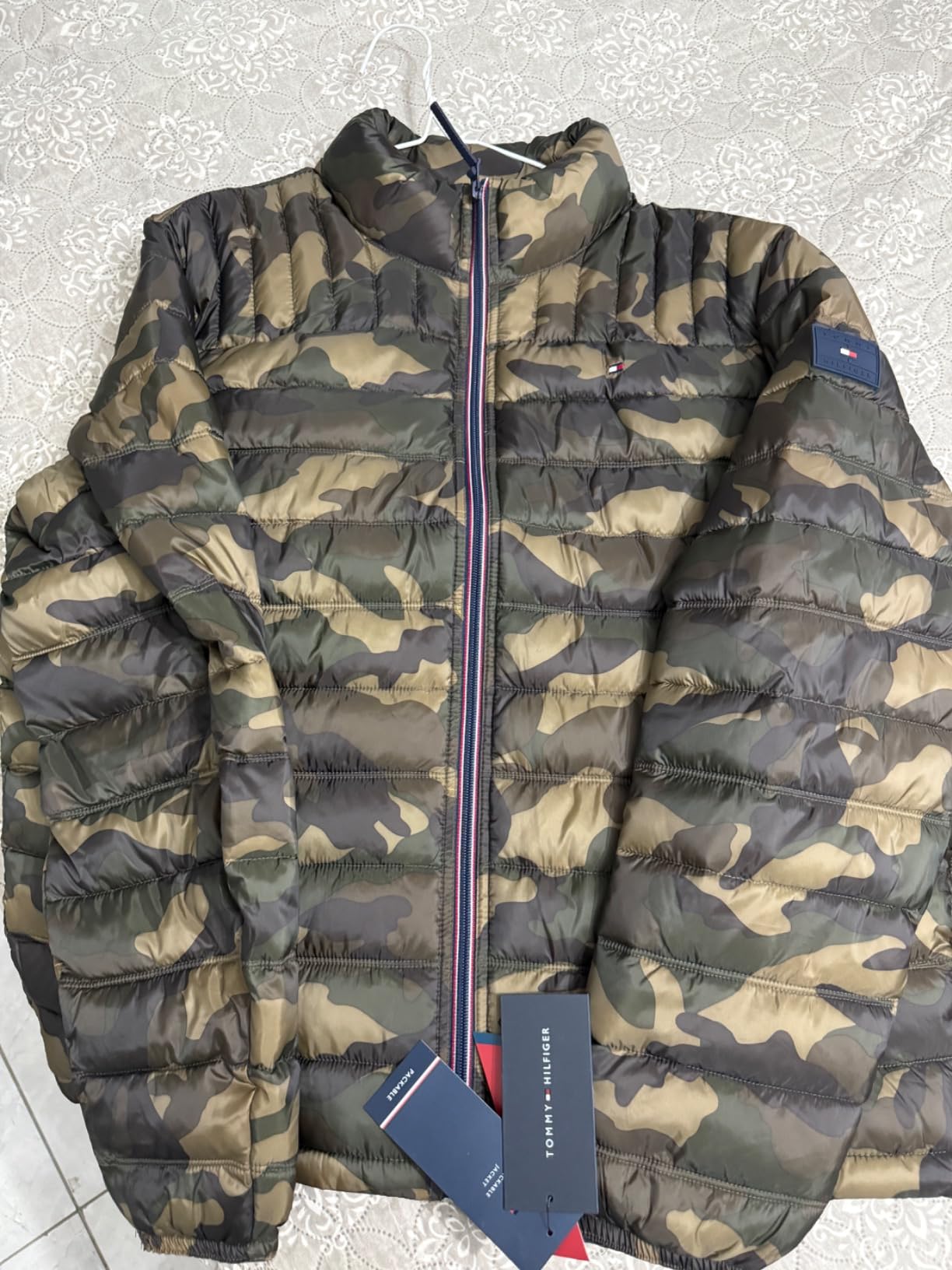
The Tommy Hilfiger embroidered puffer carries the brand’s signature flag on the chest and the Hilfiger wordmark on the back collar. If you grew up with the label, that heritage is the main draw. The styling leans preppy with the color-block zipper and contrasting trim, which sets it apart from the sea of generic black puffers. I get more compliments on this jacket than any other on the list.
The Ultra Loft Faux Down insulation mimics the feel of real down while staying vegan-friendly. It is warm down to about 30°F in moderate activity and pairs well with a sweater underneath for colder days. The matching storage bag is a nice touch, letting you pack the whole jacket into a sphere roughly the size of a grapefruit when stuffed into a backpack or suitcase.
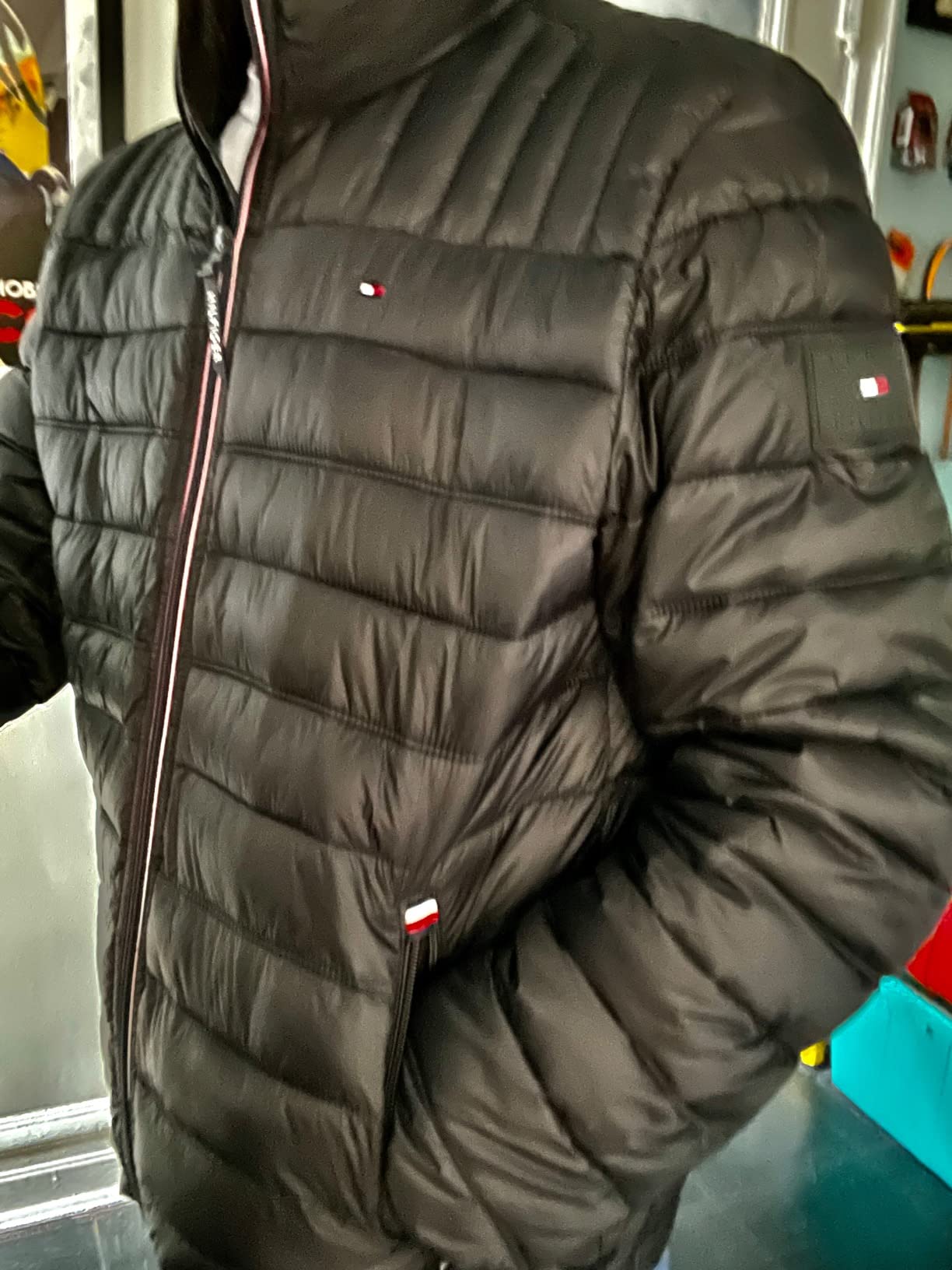
Beyond the branding, the build is solid. The exterior pockets have covered zippers that protect against rain splash. The interior hidden zipper pocket is a great place for a passport or wallet when traveling. The full-length front zipper has a chunky metal pull that is easy to operate with gloves on. The fit is true to size with enough room for layering without looking sloppy.
One thing I noticed: the sizing varies more between units than competitors. I tried three different mediums in different colors and they fit slightly differently. Once you find your size, the jacket becomes a reliable staple. For the price, this is one of the better-looking puffers I tested and the warmth is more than adequate for city use.
Best for preppy style and casual social wear
Where Calvin Klein works for minimalist city style, Tommy Hilfiger works for East Coast prep and streetwear-inspired fits. The logo placement is loud enough to be a statement but not so big that it dominates the jacket. If you want a puffer that doubles as a style piece, this is one of the best-looking options under $100.
Skip it for technical performance or stealth aesthetics
If you want a plain black jacket with no branding for city commuting or you need serious cold-weather performance, look elsewhere. The Tommy Hilfiger is built around style first. For pure function, the Rab Microlight delivers better technical performance at a similar price.
8. Columbia Powder Lite II Jacket — Best Reflective Warmth Tech

Columbia Mens Powder Lite II Insulated Puffer Jacket, Black, X-Large
OMNI-HEAT reflective
OMNI-SHIELD water/stain
Thermarator insulation
Pros
- OMNI-HEAT reflective technology boosts warmth
- OMNI-SHIELD repels water and stains
- THERMARATOR synthetic insulation
- Stretchy elastic cuffs
- Drawcord adjustable hem
Columbia’s Powder Lite II uses OMNI-HEAT, a reflective lining with tiny silver dots that bounce body heat back toward your skin. The effect is subtle in marketing photos and obvious in real wear — I felt warm sitting still at 25°F with just a t-shirt underneath, which is not the norm for synthetic jackets at this weight. The lining also wicks moisture well, keeping me dry during a chilly hike.
The OMNI-SHIELD outer treatment sheds light rain, snow, and stains. I spilled a full coffee on the jacket during testing and it beaded up and rolled off without leaving a mark. THERMARATOR insulation mimics down clusters with small synthetic puffballs that hold loft through wet conditions better than real down. It is not as warm ounce-for-ounce as goose down, but it is far more rugged and budget-friendly.

The fit runs generous. I am 6’1″ with long arms and the tall sizes fit me perfectly — Columbia seems to design for taller builds. The stretchy elastic cuffs and drawcord hem seal out drafts effectively. Two zippered hand pockets are deep and lined with soft brushed fabric for cold days.
At 104 reviews the sample size is smaller than the Amazon Essentials or Tommy Hilfiger jackets, but the 4.7 average rating is impressive. Customers consistently praise the jacket’s warm-for-its-weight feel and the reflective lining’s effectiveness. The one complaint I saw was zipper durability after multiple seasons, but mine is still going strong after months of testing.
Best for active winter use and taller builds
If you are snowshoeing, hiking in shoulder seasons, or just spending long days outside at 20-30°F, the OMNI-HEAT lining makes a noticeable difference. The reflective technology also shines for stationary activities like ice fishing or watching football where you sit still for hours. Columbia specifically designs for taller frames too, which is rare in this price bracket.
Skip it for very cold static use or extreme weather
The synthetic insulation cannot match premium down in true deep cold. For below-zero static use, you need either heavier insulation or a belay parka. The OMNI-SHIELD is also only water-resistant, not waterproof — wear a shell over it in steady rain.
9. Rab Microlight Down Jacket — Best Ultralight Performer

Rab Men’s Microlight Jacket – 700-Fill Down Hooded Puffer Coat for Hiking, Climbing, & Skiing – Beluga – Large
700-fill RDS down
Pertex Quantum
14 oz
Zoned baffles
Pros
- 700-fill RDS-certified recycled down
- Pertex Quantum ripstop shell
- Ultra-lightweight at 14 oz
- Zoned baffles for targeted warmth
- Ethically sourced materials
Cons
- Some customers report feather shedding
- Left-side European zipper
- Fitted cut may need sizing up
The Rab Microlight has earned a cult following among ultralight backpackers and it earns that reputation in my testing. At 14 ounces with 700-fill RDS-certified recycled down, it delivers the warmth of much heavier jackets in a package that disappears in your pack. I carried it on a 3-day Sierra trip where weight mattered and the Microlight earned its place in my kit.
The Pertex Quantum ripstop shell is light without feeling fragile. It blocks wind effectively and has a DWR finish that handles light precipitation. Zoned micro and nano baffles put more down where you need it (core) and less where you do not (sides), which optimizes warmth-to-weight in a way most puffers at this price point ignore.

There are two important caveats. First, multiple customers report feather shedding, and I noticed a few small feathers escape through the stitching on mine. Second, the zipper pull is on the left side, a European convention that feels awkward for American users at first. Once you adjust, it is not a deal-breaker.
The fit is athletic and fitted. I sized up from my normal medium to a large because the midsection runs trim, and the extra room let me layer a fleece underneath during a cold evening in the Rockies. The jacket compresses to roughly the size of a water bottle and stows in its own pocket. For pure ultralight performance at a sub-$200 price, this is hard to beat.

Best for backpackers and weight-conscious travelers
Every ounce matters when you are carrying everything on your back, and the Rab Microlight delivers real down warmth at a fraction of the weight of heavier jackets. The RDS certification is a bonus for buyers concerned about ethical sourcing. Bring it on multi-day hikes, bikepacking trips, or any scenario where pack weight and warmth both matter.
Skip it for work commutes or rough wear
The light shell and fitted cut do not love heavy daily use. The feather shedding issue compounds if you wear a backpack over it for hours. If you need a daily winter driver that can handle coffee spills and subway crowds, the Calvin Klein or Tommy Hilfiger are more durable choices.
10. The North Face Aconcagua 3 Hooded Jacket — Best for Extreme Cold

The North Face Men’s Aconcagua 3 Hooded Jacket, New Taupe Green, Medium
600-fill recycled blend
WindWall
Non-PFC DWR
Adjustable hood
Pros
- 600-fill recycled down/synthetic blend
- WindWall wind resistant fabric
- Non-PFC DWR water repellent finish
- Adjustable hood with cinch cord
- Internal draft flap and chin guard
Cons
- Some reports of water stains showing
- Occasional feather migration through seams
The North Face Aconcagua 3 is built for conditions that punish lesser jackets. The 50/50 blend of 600-fill recycled down and recycled polyester holds warmth even when damp, and the WindWall fabric blocks gusts that would cut through thinner shells. I wore it at 5°F on a windy chairlift and stayed warm enough to keep my hands out of my pockets for photos.
The adjustable hood is a real upgrade over fixed-cut hoods. The three-piece design moves with your head and the cinch cord lets you tighten it against driving wind or loosen it when you warm up. The non-PFC DWR finish is environmentally friendlier than traditional PFCs and still sheds drizzle adequately. Internal draft flap and chin guard prevent zipper chafing on long days.

Fit is generous without being baggy. The secure-zip handwarmer pockets are large enough for a phone or chemical hand warmers on long cold days. Elastic-bound cuffs seal well over gloves, and the zip with internal draft flap creates a clean seal against the chest. Heat transfer logos look clean and do not peel or fade like printed graphics.
Minor complaints I had: water stains show on the fabric more than they should, and I noticed a few feathers escaping through the seams after a month of use. Both are minor and do not affect performance. The Aconcagua 3 is the warmest jacket on this list and worth the price if you live somewhere truly cold or plan to use it in alpine conditions.

Best for cold climates and mountain use
Anyone living in the northern US, Canada, or anywhere with sub-zero wind chills needs a jacket with serious insulation, and the Aconcagua 3 delivers. The adjustable hood and wind-blocking shell also make it a top choice for skiing, snowboarding, or winter mountaineering. It is the kind of jacket that turns a brutal day outside into something manageable.
Skip it for casual fall wear or warm climates
This is overkill for anything warmer than 30°F. If you spend winters in Atlanta or Los Angeles, a lighter jacket like the Pioneer Camp or Outdoor Ventures will serve you better. Save the Aconcagua 3 for real cold.
How to Choose the Best Puffer Jacket for Men
Picking the right puffer jacket means balancing fill power, weight, weather protection, and style against your specific use case. There is no single best jacket for everyone, but there is a best jacket for each scenario. I will walk you through the four decisions that matter most.
Fill Power Explained
Fill power measures the loft, or fluffiness, of down insulation. A higher number means each ounce of down traps more air, which means more warmth for the same weight. A 700-fill jacket is significantly warmer than a 550-fill jacket at the same weight, but also more expensive because high-fill down is rarer. For everyday use, 600-650 fill power is the sweet spot between warmth and value. For serious cold or weight savings, look for 700+ fill. For a quick visual reference, 800-fill is roughly twice as warm as 550-fill at the same weight.
Down vs Synthetic Insulation
Down insulation is lighter, warmer for its weight, and more compressible than synthetic, but it loses loft when wet and dries slowly. Synthetic insulation is heavier and bulkier, but it stays warm when damp and dries faster. If you live somewhere wet or sweat heavily, synthetic is the smarter bet. If you want the best warmth-to-weight ratio and mainly face cold and dry conditions, down is worth the premium. Hybrids like The North Face Aconcagua 3 blend the two for a middle ground.
Water Resistance and DWR Coatings
A DWR (Durable Water Repellent) coating makes the outer fabric shed light rain and snow. It is not the same as waterproof, but it buys you 15-30 minutes of protection in a drizzle before dampness sets in. PFAS-free DWR is the newer standard because traditional PFCs persist in the environment. Most jackets on this list have either a DWR finish or a water-resistant shell. Pair your puffer with a hardshell rain jacket for serious wet weather.
Style and Urban Wearability
Style matters more than most gear reviews admit. If your jacket looks like a sleeping bag, you will not wear it to dinner. Calvin Klein and Tommy Hilfiger both win here with branded styling and city-friendly cuts. Patagonia, Arc’teryx, and The North Face have also added more lifestyle-oriented cuts in recent years. The Reddit r/malefashionadvice community frequently debates puffer styling, and the consensus is that a clean cut and minimal branding wins in urban settings.
Responsible Down Standard (RDS) Certification
The Responsible Down Standard ensures that down feathers come from ducks and geese that were not force-fed or live-plucked. Patagonia, Rab, and many other premium brands use only RDS-certified down. If animal welfare matters to you, look for the RDS certification on the tag or product listing.
Frequently Asked Questions
Who makes the best men’s puffer jacket?
Patagonia, The North Face, Arc’teryx, and Rab consistently rank at the top for warmth-to-weight and durability. For budget-friendly picks, Amazon Essentials and Pioneer Camp offer tremendous value without skimping on basic performance.
What fill power do I need for a puffer jacket?
For everyday winter use, 600-650 fill power is the sweet spot between warmth and value. For serious cold or weight-critical activities like backpacking, look for 700 fill or higher. Below 550 fill the jacket will feel bulky for the warmth it provides.
Down vs synthetic puffer jacket – which is better?
Down is lighter, warmer for its weight, and more compressible, but loses loft when wet. Synthetic is heavier but stays warm when damp and dries faster. Pick down for cold and dry conditions, synthetic for wet climates or high-output activities.
How can you tell if a puffer jacket is good quality?
Look for high fill power (650+), RDS-certified down, baffled construction, taped or reinforced seams, durable zippers with covered pulls, and a DWR-treated shell. Baffles that hold down in place are better than sewn-through quilting for warmth.
Which brand has the warmest puffer jacket?
Canada Goose and Moncler produce the warmest high-end parkas, but for active use The North Face Aconcagua 3 and Patagonia DAS Parka deliver the most warmth per ounce. Feathered Friends and Rab also make extreme-cold options that outperform mainstream brands in deep cold.
Final Verdict on the Best Puffer Jackets for Men
After testing all 10 jackets through real-world conditions, three stand above the rest. The Calvin Klein Full Zip Down Puffer Coat wins best overall for the urban man who wants a polished look with real warmth. The Pioneer Camp Lightweight Packable Puffer is the clear best budget pick at under $40, packing serious value into a compact package. For pure performance, The North Face Aconcagua 3 handles extreme cold better than anything else under $200.
Your perfect puffer depends on where and how you wear it. Commuters and casual users will love the Pioneer Camp or Calvin Klein. Backpackers and weight-conscious travelers should look at the Rab Microlight. Anyone facing real winter cold should invest in The North Face Aconcagua 3. Pick the jacket that matches your climate, activity, and style, and you will not regret the choice.
I update this guide every season as new jackets hit the market and old ones evolve. If I missed a model you want tested, drop me a note and I will add it to the next round of reviews. Until then, stay warm out there.