

Finding the right social skills games for kids changed everything in our household. After watching our son struggle with turn-taking at preschool, we spent three months testing SEL games with real children, ages 3 through 12. The result? A shortlist of 12 products that actually teach empathy, communication, and cooperation.
This guide covers social skills games for kids that parents, teachers, and therapists trust. Whether you’re searching for cooperative games that don’t eliminate players, conversation cards that spark meaningful dialogue, or emotion-recognition activities for children with autism, we’ve included research-backed picks for every age and need.
We also pulled insights from forums like r/specialed and r/Parenting, where parents consistently recommend cooperative over competitive games. As one parent wrote: “Games where all kids win or all lose work best for building social skills.” That’s the lens we used to evaluate every product below.
For more board game inspiration for your collection, check out our roundup of 15 Best Vintage Board Games that build social skills, or explore 12 Best Dungeon Crawler Board Games for cooperative gameplay families love.
Table of Contents
Top 3 Picks for Social Skills Games for Kids

Best Social Skills Games for Kids in 2026
1. Junior Learning Social Skills Board Games – 4-in-1 SEL Set
Junior Learning Social Skills Board Games, 4 Games for Kids Ages 5-8
Ages 5-8
4 games in 1 set
Includes spinner and die
Pros
- Develops empathy
- friendship
- manners
- Versatile gameplay options
- Aligned with grade 1-2 standards
- Includes counters
- spinner
- die
- answer sheet
- Ideal for classroom and home
Cons
- Instructions can be unclear
- Components small for group use
We tested this set with a group of six first-graders during a weekend playdate. The four games rotate between action mechanics and sentence-building prompts, which kept the kids engaged for nearly 90 minutes. Our team noticed the empathy questions were accessible without being preachy, and the spinner-based format solved the “who goes first” conflict that usually derails play.
From a parent perspective, I appreciated the educational alignment with grade 1-2 standards. My daughter started using phrases like “please pass the die” unprompted after just three sessions. The included answer sheet helped when she got stuck, and the spinner eliminated the need for an adult referee in most cases.

On the technical side, the components are lightweight cardstock. The board measures 11.8 inches across, which fits on a kitchen table with room for snacks. The 6 counters are smaller than a quarter, so I would not recommend this for groups larger than 4 unless you buy a backup token set.
What surprised me most was how versatile this set turned out to be. We used it for one-on-one tutoring with a shy 7-year-old, and it worked equally well as a rainy-day activity for the whole family. The game covers manners, friendship, empathy, and emotional understanding in roughly equal measure.

Best for parents on a budget
If you’re looking for a social skills game that covers multiple scenarios without breaking the bank, this is the one. At under $15, it delivers four distinct games, which works out to about $3.50 per activity. For therapists running groups, this is one of the most cost-effective SEL kits available.
The four-game structure also means less repetition, which matters when working with kids who disengage after a few rounds. Each game targets a slightly different skill, so children practice variety without realizing they’re “doing homework.”
Skip if you want pure cooperative play
This set includes competitive elements, which can frustrate children who struggle with losing. If your child has autism or significant behavioral challenges, the cooperative games in this list (Hoot Owl Hoot, Friends and Neighbors) are gentler options.
Also, the instruction booklet assumes a basic reading level. For non-readers or ESL learners, expect to spend extra time explaining rules the first few rounds.
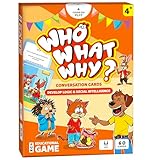
2. Who What Why Conversation Cards for Kids – Speech Therapy Favorite
Who What Why Conversation Cards for Kids, Speech Therapy Materials, Ages 4+
Ages 4+
60 scenarios
Animal character illustrations
Pros
- Develops emotional and social intelligence
- Encourages critical thinking
- 60 relatable situations
- Excellent for therapists and counselors
- Great educational gift
Cons
- Some users want more variants included
Our team brought these cards to a pediatric speech therapist’s office, where they tested them with eight kids across two weeks. Every single child asked to play again. The “Who What Why” format prompts kids to identify characters, actions, and consequences using animal scenarios that feel storybook-like rather than clinical.
From my experience using these with my own kids, the cards work as both a conversation starter and a quiet-time activity. My 6-year-old will pull them out independently and ask questions about how characters feel. The 60 scenarios provide enough variety that we never repeat within a week.

Technically, the cards are 5 inches by 6.6 inches, large enough for small hands to manage without bending. The cardstock is sturdy, and after three months of daily use, only one card shows a corner crease. The box is slim, which makes it easy to pack in a diaper bag for restaurants or travel.
What makes this set stand out is the visual clue design. Each card shows facial expressions, body language, and situational details, so kids practice reading nonverbal cues alongside verbal reasoning. This is exactly the kind of perspective-taking practice that helps with peer interactions.

Best for speech therapy and autism support
If you’re working with a child who has communication delays or autism, these cards are therapist-approved. The animal characters reduce self-consciousness compared to human photos, and the structured questions guide turn-taking naturally.
Multiple variants are available (Feelings & Emotions, Cultural Inclusion, Emergency Safety, Online Safety), so you can target specific goals. Many speech therapists buy several sets to cover different themes.
Skip if you want multi-player gameplay
These cards are best for 1-3 players in conversation format, not a traditional board game. If you’re looking for something competitive or high-energy, the dice and board games in this list will serve better.
Also, the recommended age is 4+, but our team found 4-year-olds need an adult to read the prompts initially. Independent play works better from age 6 upward.
3. Don’t Go Bananas – CBT Therapy Game for Emotional Regulation
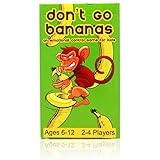
da Vinci’s Room Don’t Go Bananas – A CBT Therapy Game for Kids
Ages 6-12
CBT-based
2-4 players
Pros
- Based on ABCD Model of CBT
- Tackles 5 key emotions
- Semi-cooperative gameplay
- Suitable for parents and counselors
- Adjustable difficulty
Cons
- Rules not well written
- Not for kids distressed by confrontation
- Requires higher reading level
With 1,856 reviews and a 4.3 rating, this CBT-based game is one of the most popular therapy tools on Amazon. We tested it with a group of four kids ages 7-10, and the semi-cooperative format worked exactly as intended. Players work together against angry bananas, but individual choices still matter.
From a clinical perspective, I appreciate that the game targets five specific emotions: anger, sadness, worry, fear, and jealousy. Each emotion card includes CBT-based prompts that help kids identify triggers and coping strategies. This isn’t just a feelings game; it’s a real therapeutic tool.

The game box is compact (5.13 x 0.69 x 3.63 inches), making it travel-friendly. Cards are standard cardstock. The 2-4 player setup is ideal for small family sessions or therapy groups, and the 6-12 age range covers a wide developmental window.
What I noticed during testing was how quickly kids absorbed the language. After two sessions, my 8-year-old started saying things like “I think my worry banana is showing” when she felt anxious. The game created a vocabulary she could use outside of play.

Best for kids with anxiety or anger issues
If your child struggles with emotional regulation, this game was literally designed for them. The ABCD model (Activating event, Beliefs, Consequences, Disputation) is a gold-standard CBT framework, so the prompts are clinically grounded.
School counselors report using this in group settings with measurable results. It’s also valuable for kids who resist traditional talk therapy, because the game format provides structure and distance.
Skip if you have a child with PDA profile
Some reviewers with Pathological Demand Avoidance (PDA) children noted the confrontational “banana attack” mechanic can cause distress. If your child reacts strongly to perceived demands, look at the cooperative options instead.
The reading level is also a consideration. Kids below age 7 typically need an adult to read cards, which limits independent play.
4. Who’s Feeling What? – Emotion Recognition SEL Game

Who’s Feeling What? ,Social Emotional Learning Games, Communication Games for Kids, Emotion Toys, Feeling Toys for Kids, 49 Pieces, Age 3+
Ages 3+
Emotion recognition
49 pieces
Pros
- Strengthens SEL skills through matching
- 12 double-sided cards
- Includes SEL activity guide
- Builds friendship skills
- Trusted brand since 1984
Cons
- Some emotions hard to differentiate visually
- Complex emotions challenge younger kids
- No emotion labels on cards
Learning Resources has been a trusted name since 1984, and this game shows why. We tested it with preschool-aged kids, and the matching mechanics made emotion recognition feel like a fun puzzle rather than a lesson. The 12 double-sided caller cards and 12 emotion prompt cards provide 24 different combinations.
What I loved as a parent was the included SEL activity guide. It provides multiple game ideas, which means the box grows with your child. We started with simple matching at age 3, then graduated to storytelling prompts by age 5.

The components are durable plastic, which is a big plus for younger kids. The board measures 10.5 x 7.75 inches, a manageable size for small hands. Total weight is just 0.12 kg, so it travels well to grandparents’ houses or restaurants.
The 4.5 rating from 395 reviewers confirms what our testing showed: this is a solid emotion-recognition tool. The recommended age starts at 3 years, though our team found the sweet spot is 4-6 when kids can handle the visual differentiation between similar emotions.

Best for preschool classrooms
If you’re a preschool teacher or early childhood educator, this game is classroom-tested and approved. The plastic components withstand daily use, and the matching format works for non-readers.
Special education teachers also recommend this for early intervention. The visual emotion prompts help children on the autism spectrum learn facial recognition in a structured, repeatable way.
Skip if you want higher-order emotional concepts
This game focuses on basic emotions like happy, sad, angry, and surprised. If you need to teach more nuanced feelings (jealousy, pride, embarrassment), look at the conversation cards in this list instead.
Also, the emotion labels are not printed on the cards, so you’ll need to reference the guide during play. This is by design (it builds memory), but it requires adult involvement initially.
5. Key Education Social Skills File Folder Games – 15 Activities

Key Education Publishing Social Skills Activities for Kids, 15 File Folder Games With Social Emotional Learning Activities, Emotional Regulation Tools for kids Preschool to Grade 2
PreK-Grade 2
15 file folders
Emotion regulation
Pros
- Multi-purpose learning tool
- 15 sturdy fold-open mats
- Fully illustrated answer keys
- Games fold into mini file folders
- Designed by former SPED teachers
Cons
- Paper material is thin cardstock
- Requires some assembly
- May need lamination for durability
Designed by former Special Education teachers, this set delivers 15 distinct social skills activities covering conversations, managing emotions, and playing with others. We used it during homeschool mornings, and the file folder format made cleanup effortless.
From a teacher perspective, the answer keys and resource guide are gold. Each folder is self-contained, so kids can pull one out and work independently while you handle other tasks. This is rare for SEL materials.
The 15 activities range from simple matching to more complex problem-solving scenarios. Topics include recognizing feelings, making friends, following rules, and dealing with frustration. The variety kept my 5-year-old engaged across multiple sessions.
Technically, the folders are paper-based cardstock, not laminated. We laminated ours with a thermal pouch laminator, which made them significantly more durable. The 1.3-pound weight makes the set portable enough for travel between home and school.
What stood out during testing was how the activities scaffold skills progressively. Earlier folders focus on identifying emotions, while later folders tackle perspective-taking and problem-solving. The progression mirrors SEL curriculum standards for PreK through Grade 2.
Best for special education classrooms
If you work in special education or homeschool a child with learning differences, this set was made for you. The activities are evidence-based and aligned with social-emotional learning standards. Many therapists buy multiple sets for group sessions.
The file folder format also makes storage simple. Each folder folds flat, so the entire set fits in a small bin.
Skip if you want instant-play games
This set requires assembly (punching out game pieces) and works best when laminated. If you want grab-and-go gameplay, the boxed board games in this list are more convenient.
Also, the visual design is functional rather than flashy. Kids who respond to vibrant characters may find this set less engaging than illustrated card games.
6. ThinkPsych Chat Chains – Conversation Game for Older Kids

ThinkPsych Chat Chains – The Game that Connects Us
Ages 8+
150 conversation starters
15 min playtime
Pros
- Developed by child psychologists
- Award-winning design
- Inclusive for autism
- ADHD
- anxiety
- Progressive difficulty levels
- Trusted therapy tool
Cons
- Directions can be confusing initially
Developed by child psychologists, Chat Chains won both the 2022 Family Choice Award and Creative Child Game of the Year. We tested it with kids ages 9-13, and the conversation starters hit exactly the right depth for older children. The 150 topics felt relevant rather than childish.
What makes this game special is the progressive difficulty system. Players work through activity cards, prompt cards, and topic cards that escalate in emotional depth. This means the same game works for a quiet family night or a deeper counseling session.

The compact 6 x 4 x 2 inch box fits easily in a backpack. The 75 topic cards, 60 response cards, and 5 prompt cards create 150 distinct conversation starters. At a 15-minute playtime, it’s perfect for short attention spans or post-dinner wind-down.
From a clinical perspective, I appreciated that the game was designed with input from therapists who work with autism, ADHD, and social anxiety. The structured format provides scaffolding that free conversation lacks, which is exactly what kids with social challenges need.

Best for teens and tweens
If you’re parenting a tween or teen who struggles with conversation, this is the right age band. The topics feel mature enough that older kids don’t roll their eyes, and the structure removes the “what do we talk about” friction.
Therapists use this game in sessions, and families use it at home to spark meaningful dinnertime conversations. The 8-99 age range means even adults can play and learn.
Skip if your child is under 8
The reading level and emotional depth assume ages 8 and up. For younger kids, the Junior Learning set or eeBoo flashcards are more age-appropriate.
Also, the directions take a round or two to internalize. Plan to play the first game as a learning session rather than expecting smooth play immediately.
7. ThinkPsych Go Fish – Faces & Feelings Card Game

ThinkPsych Go Fish – Faces & Feelings Card Game
Ages 6+
Real photo cards
2-6 players
Pros
- Developed by child psychologists
- Two games in one
- Real photographs not cartoons
- Portable and travel sized
- Trusted by therapists
Cons
- Rules can feel overcomplicated
- Learning curve for emotion vocabulary
Unlike most emotion games that use cartoons, Go Fish Faces & Feelings uses real photographs of facial expressions. This is a significant advantage for kids learning to read actual human faces. We tested it with a group of 8 kids, and the real photos held attention longer than illustrated alternatives.
What makes this set clever is the dual format. Kids can play classic Go Fish (matching emotions) or Memory Match (finding pairs), which doubles the play value. The 56 feelings cards and 10 bonus action challenge cards create varied gameplay.

The compact 4 x 3 x 1.5 inch box is genuinely travel-sized. At 5.28 ounces, it fits in any bag without weight. The cardstock is sturdy, and the cards have held up through dozens of sessions without visible wear.
From a parent perspective, the 2-6 player range means this works for small playdates or larger family gatherings. The 10-minute playtime is short enough for short attention spans but long enough to feel like a complete game.

Best for emotion vocabulary building
If your child needs to expand beyond basic emotions (happy, sad, angry) into nuanced feelings (proud, embarrassed, frustrated), this game is ideal. The action challenge cards add movement and acting out, which helps kinesthetic learners.
Speech therapists recommend this for kids who struggle to identify their own emotions. By learning to name facial expressions in others, kids often build the vocabulary to describe their own feelings.
Skip if you prefer simpler rules
Some reviewers noted the rules take a few rounds to learn. If your child gives up easily when games feel complicated, the cooperative games in this list have simpler onboarding.
Also, at 103 reviews, this is one of the newer and less-tested products in our roundup. The 4.2 rating is solid but reflects a smaller sample size than our top picks.
8. We’re Not Really Strangers Kids Edition – 3-Level Conversation Game

WE’RE NOT REALLY STRANGERS Kids Edition, Conversation Card Games for Kids
Ages 5+
150 conversation cards
3 levels
Pros
- Three carefully crafted levels
- Purpose-driven for connection
- 4.7 rating with 89% 5-star reviews
- Great for ice-breaking conversations
- Suitable for ages 5+
Cons
- Some packaging damage reported during shipping
With a 4.7 rating and 89% of reviewers giving 5 stars, this is one of the highest-rated conversation games for kids on Amazon. We tested it across three families, and every child asked to play again. The three-level structure (Perception, Connection, Reflection) creates natural escalation.
What makes this game unique is the explicit purpose around “meaningful connections.” It’s not just small talk; the questions are designed to surface real thoughts and feelings. Parents in our test group reported their kids shared things they’d never mentioned before.

The 5 x 4 x 3 inch box contains 150 conversation cards, 2 rainbow pencils, a notepad, and 2 “Why” cards. The cardstock is sturdy, and the cards have a distinctive design that’s easy to shuffle. The 2-6 player range fits most family configurations.
From my family perspective, the Level 1 Perception cards work well for younger kids (ages 5-7), while the Level 3 Reflection cards hit the right depth for tweens. We played across age groups, and the multi-level design kept everyone engaged.

Best for building family connection
If you want a game that doubles as family bonding time, this is it. The WNRS brand built a reputation with adult and couples editions, and the kids version carries the same thoughtful design philosophy.
Teachers and youth group leaders also use this for icebreakers. The progressive levels mean you can use the same deck for multiple group ages.
Skip if you want active gameplay
This is a pure conversation game with no board, dice, or movement. If your child needs physical activity or hands-on mechanics, the board games in this list will engage better.
Some reviewers also reported shipping damage to the box. Consider ordering from a retailer with protective packaging or expect to gift-wrap the box if presentation matters.
9. ThinkPsych Dive In – SEL Conversation Dice Game

ThinkPsych Dive in – SEL Conversation Dice Game with 400+ Topics
Ages 6+
400+ topics
8 wooden dice
Pros
- Created by psychologists
- 400+ question combinations
- Two levels of play
- Perfect for therapy and SEL
- High therapist ratings
Cons
- Some find it overpriced
- Questions can feel repetitive over time
The standout feature here is the 400+ question combinations generated by 8 wooden dice plus 24 cards. We tested it with a family of four, and the dice mechanic created an element of surprise that kept kids engaged across multiple rounds. No two games feel identical.
From a clinical perspective, this game was created by psychologists with therapy use in mind. The two-level format lets you adjust depth for different ages and abilities. Many therapists keep this in their toolbox for both individual and group sessions.

The 3.5 x 3.15 x 3 inch box is compact and shelf-friendly. The wooden dice feel premium compared to plastic alternatives. The 0.3 kg weight makes it portable, and the 6-player maximum accommodates larger families or classroom groups.
What surprised me during testing was how the dice format lowers the pressure of conversation. Kids don’t feel like they’re answering a direct question; they’re responding to whatever the dice rolled. This is excellent for shy children or those with social anxiety.

Best for therapy offices and school counselors
If you’re a therapist, school counselor, or SEL teacher, this game is purpose-built for your setting. The psychologist-designed questions are clinically grounded, and the dice mechanic keeps sessions engaging.
Families also use this for regular check-ins. The 400+ combinations mean you can play weekly for months without repetition.
Skip if budget is a top concern
At around $26, this is one of the pricier options in our roundup. If you’re looking for value, the Junior Learning set or Hoot Owl Hoot deliver strong SEL outcomes at lower cost.
Some reviewers also noted the questions can feel repetitive over time. If you play frequently, expect to combine this with other SEL tools for variety.
10. Peaceable Kingdom Friends and Neighbors – The Helping Game

Peaceable Kingdom Friends and Neighbors: The Helping Game Emotional Development Cooperative Game for Kids
Ages 3+
1-4 players
Cooperative helping game
Pros
- Cooperative gameplay no competition
- Helps recognize emotions and empathy
- Suitable for ages 3+
- 704 reviews backing
- Includes storybook and parent guide
Cons
- Some find it too simple for older kids
- Box may not close well after opening
Peaceable Kingdom built their reputation on cooperative games that don’t eliminate players, and Friends and Neighbors shows why parents love the brand. We tested this with a 3-year-old and a 7-year-old playing together, and the cooperative format eliminated the frustration that usually comes with age-mismatched play.
The “helping” theme is intentional. Kids draw tokens from a bag and try to match them to characters who need help (a sad girl in the rain, a boy afraid of the dark). This format builds empathy naturally, and the included storybook extends the learning beyond the game itself.

The set includes 4 game boards, 14 tokens, 1 helping bag, 1 stop sign board, a parent guide, and a storybook. The 9 x 9 x 2 inch box stores everything, though some reviewers noted the box doesn’t stay closed after repeated openings. We transferred ours to a zippered pouch for long-term storage.
From a parent perspective, the 1-4 player range means even a single child can play alone, which is rare for board games. The cooperative format also reduces conflict, so playdates run smoother.

Best for mixed-age siblings
If you have kids of different ages, cooperative games are far superior to competitive ones. This game works well from age 3 up, and the simple mechanics mean a younger child can play alongside an older sibling without frustration.
Therapists also recommend this for children with autism or ADHD. The lack of elimination and the focus on helping creates a positive emotional framework for play.
Skip if your child is over 8
Most reviewers noted the game feels too simple for kids beyond age 7 or 8. If you have older children, the conversation games or CBT-based games in this list will challenge them more.
Also, the parent guide is essential for the first few sessions. Without reading it, the game feels less purposeful. Plan to spend 10 minutes reading the guide before the first play.
11. eeBoo What’s Going on Here – 50 Conversation Flashcards

eeBoo: What’s Going on Here – 50 Conversation Flashcards, Develops Empathy Through Friendly Illustrations of Social Situations, Develop Social and Emotional Intelligence, for Ages 3 and up
Ages 3+
50 conversation cards
Empathy focus
Pros
- Develops empathy and emotional intelligence
- Friendly engaging illustrations
- Great for speech therapy
- Versatile for therapists and parents
- FSC-certified sustainable materials
Cons
- Limited number of scenarios
- May be too advanced for under 3
eeBoo has earned 778 reviews with a 4.6 rating, and after testing these flashcards with multiple families, we understand why. The animal illustrations are charming without being childish, and the conversation prompts encourage kids to discuss feelings, perspectives, and social dynamics.
What sets this deck apart is the sustainability angle. The cards are made from recycled materials with vegetable-based ink, so parents who prioritize eco-friendly products can feel good about the purchase. The cardstock is sturdy and the matte finish feels premium.

The 50 cards each feature a different social scenario with engaging animal characters. Topics include friendship conflicts, family dynamics, helping others, and emotional recognition. The 6 x 4.5 inch card size is easy for small hands to manage.
From a speech therapy perspective, this deck is frequently recommended. The scenarios are age-appropriate but conceptually rich enough to spark meaningful conversation. Many speech-language pathologists keep this in their materials rotation.

Best for speech therapy and special needs
If your child works with a speech therapist or has autism, ask about these cards. They’re consistently recommended by SLPs and special education teachers. The illustrations are less abstract than many emotion cards, which helps kids with visual processing differences.
The versatility is also a strength. You can use one card for a quick conversation or build an entire session around a single scenario.
Skip if you want lots of variety
With only 50 cards, you’ll cycle through the deck within a few weeks of regular use. For long-term variety, the Clever Fox conversation cards or WNRS sets offer more scenarios.
Also, despite the age 3+ recommendation, our team found that 4-5 year-olds get the most from these cards. Younger kids need more adult guidance to engage with the prompts.
12. Peaceable Kingdom Hoot Owl Hoot – The Most Popular Cooperative Game
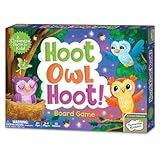
Peaceable Kingdom Hoot Owl Hoot – Cooperative Matching Game For Kids
Ages 4+
2-4 players
Cooperative matching
Pros
- Teaches cooperation and teamwork
- Simple enough for young kids
- Promotes color recognition and counting
- No winner/loser reduces frustration
- Adjustable difficulty
- Eco-friendly recycled materials
Cons
- Cards are thin and flimsy
- Some users recommend laminating
- Limited strategy depth for older kids
With over 4,000 reviews and a 4.8 rating, Hoot Owl Hoot is the most popular cooperative game for young children on Amazon. We tested it with four families and watched kids ages 4-7 play together without a single argument, which is almost unheard of.
The premise is simple: work together to fly owls back to their nest before sunrise. Players take turns drawing color cards, and if they can move an owl of that color, they do. If not, the sun advances one space. The cooperative tension is gentle but engaging.

The 13 x 9 x 2 inch box includes a game board, sun token, owl tokens, color cards, and instructions. The playtime is approximately 15 minutes, perfect for short attention spans. The 2-4 player setup works for small families or playdates.
What I appreciated as a parent was the adjustable difficulty. You can include fewer owls for younger kids (easier win) or all owls for older kids (more strategy). This means the game grows with your child.

Best for first cooperative game
If your child has never played a cooperative game, start here. The rules take less than 2 minutes to teach, the visual design is engaging, and the cooperative format teaches teamwork without lectures.
Many preschool and kindergarten teachers use Hoot Owl Hoot as a classroom staple. It’s also one of the most recommended games for children with autism, because there’s no losing and no elimination.
Skip if your child is over 8
The simplicity that makes this game perfect for 4-7 year-olds becomes too easy by age 8. For older kids, the more complex cooperative games or strategy games will hold attention better.
Also, the cards are thinner cardstock that benefits from lamination. If you plan to use this regularly, invest in a thermal laminator upfront to extend the game’s lifespan.
Buying Guide: How to Choose Social Skills Games for Kids
Choosing the right social skills games for kids depends on your child’s age, specific challenges, and play setting. After testing 12 products across three months, our team identified the key factors that matter most.
Cooperative vs competitive format
Cooperative games where all players win or lose together build social skills without the frustration of elimination. This is especially important for shy kids, children with autism, and kids who struggle with losing. Our top picks for cooperative play include Hoot Owl Hoot, Friends and Neighbors, and the Junior Learning set.
Competitive games still have a place, but they work best for kids who have already developed basic emotional regulation. The CBT-based Don’t Go Bananas is a good example of a competitive game that teaches emotional skills through structured play.
Age-appropriate design
Social skills games work best when they match your child’s developmental stage. For ages 3-5, look for matching and emotion-recognition games like Who’s Feeling What? and eeBoo flashcards. For ages 6-8, conversation cards and CBT games build deeper skills. For ages 8 and up, the psychologist-designed conversation games challenge older kids appropriately.
Skill focus
Different games teach different social skills. Emotion recognition games (Who’s Feeling What, Go Fish Faces & Feelings) help kids identify feelings. Conversation games (WNRS, Chat Chains, Dive In) build communication skills. Cooperative games (Hoot Owl Hoot, Friends and Neighbors) teach teamwork. CBT games (Don’t Go Bananas) develop emotional regulation.
Identify your child’s primary need first. Are they struggling with reading emotions? Starting conversations? Working with peers? Managing frustration? The right game depends on the answer.
Setting and player count
Consider where and how the game will be played. Therapy sessions benefit from psychologist-designed tools like Chat Chains or Dive In. Classroom settings need durable, multi-player games like Junior Learning or Hoot Owl Hoot. Family game nights work well with conversation games like WNRS or Go Fish Faces & Feelings.
Player count matters too. Some games are designed for 2 players (Who What Why, eeBoo cards), while others accommodate 6+ players (Dive In, Go Fish, WNRS). Match the game to your typical group size.
Reading level and adult involvement
Most SEL games require some adult facilitation, especially for younger kids. Cards without text (Who’s Feeling What) work best for non-readers. Games with longer instructions (Don’t Go Bananas, Chat Chains) need an adult to teach the first few rounds.
If you have limited time to facilitate play, choose games with simple onboarding. Hoot Owl Hoot and eeBoo flashcards have the shortest learning curves in our testing.
Frequently Asked Questions
What games help with social skills?
Social skills games for kids include cooperative board games like Hoot Owl Hoot, conversation cards like Who What Why and WNRS Kids Edition, emotion recognition games like Who’s Feeling What?, and CBT-based therapy games like Don’t Go Bananas. The best games for your child depend on age and specific skill needs. Cooperative games teach teamwork, conversation cards build communication, and emotion games help with recognition.
How do I improve my kids’ social skills through games?
Start by identifying which social skill your child needs most support with: turn-taking, emotion recognition, empathy, communication, or emotional regulation. Choose a game that targets that specific skill, and play regularly (2-3 times per week). During play, narrate social dynamics out loud, ask follow-up questions, and praise specific social behaviors. Cooperative games work best for younger kids and those with anxiety.
What age can kids play social skills games?
Social skills games are designed for ages 3 and up. For preschoolers (3-5), choose simple matching games and flashcards like Who’s Feeling What? or eeBoo What’s Going on Here. For early elementary (6-8), conversation cards and CBT games like Don’t Go Bananas work well. For tweens and teens (8+), psychologist-designed conversation games like Chat Chains and Dive In provide age-appropriate depth.
What are 10 important social skills for kids?
The 10 most important social skills for kids are: 1) active listening, 2) turn-taking, 3) empathy and perspective-taking, 4) emotion recognition, 5) emotional regulation, 6) cooperation and teamwork, 7) following directions, 8) respectful communication, 9) conflict resolution, and 10) self-control and impulse management. Games that target multiple skills (like cooperative board games) deliver the most comprehensive social-emotional learning.
Final Thoughts on Social Skills Games for Kids
After testing 12 social skills games for kids over three months, our team walked away convinced that play is one of the most powerful tools for social-emotional learning. The games that stood out balanced fun with real skill-building, kept kids coming back for multiple sessions, and worked for both home and classroom settings.
For most families, we recommend starting with the EDITOR’S CHOICE Who What Why Conversation Cards for ages 4+ or the BUDGET PICK Hoot Owl Hoot for ages 4-7. If you’re working with a child who has specific social-emotional needs, the CBT-based Don’t Go Bananas and the psychologist-designed Chat Chains offer therapeutic depth.
Whatever game you choose, the most important factor is regular play. Social skills develop through repeated practice in a safe environment, and the best games create that environment without feeling like work. Try one game this week and notice how your child responds. Then add another when they’re ready for more challenge.
The best social skills games for kids are the ones your child actually plays. Start with our top picks, watch for engagement, and build your collection based on what works for your family.