

I remember the day my daughter spelled “because” wrong on her homework for the third week in a row. She was seven, frustrated, and starting to hate writing time. That’s when I went searching for the best spelling games for kids and discovered how much difference a hands-on game makes compared to another worksheet.
Spelling games turn those frustrating practice drills into something kids actually want to do. After testing more than 15 options with my own children and surveying homeschool communities on Reddit, our team put together this list of the 10 best spelling games for kids in 2026. We focused on screen-free physical games because parents consistently tell us they want tactile, hands-on learning tools that work without a tablet or subscription.
Whether you homeschool, supplement classroom learning, or just want to keep your kid sharp over summer, this roundup covers physical board games, card games, and one multisensory option designed for kids with dyslexia. Every product below has been reviewed by real families and verified against current Amazon listings as of 2026.
Table of Contents
Top 3 Picks for Best Spelling Games for Kids

Melissa & Doug See & Spell Wooden Toy
- 64 wooden letters
- 8 puzzle boards
- screen-free play
- ages 4+

Best Spelling Games for Kids in 2026
| Product | Specifications | Action |
|---|---|---|
| Melissa & Doug See & Spell Wooden Toy |
|
Check Latest Price |
| Learning Resources Sight Word Swat |
|
Check Latest Price |
 Bananagrams My First |
|
Check Latest Price |
 Hasbro Scrabble Junior |
|
Check Latest Price |
 Hasbro Boggle Classic |
|
Check Latest Price |
 Coogam Short Vowel Reading |
|
Check Latest Price |
 KMUYSL CVC Word Builders |
|
Check Latest Price |
 Skillmatics Wordables Flash Cards |
|
Check Latest Price |
 Educational Insights Word on the Street |
|
Check Latest Price |
 The Fidget Game Word Pop |
|
Check Latest Price |
1. Melissa & Doug See & Spell Wooden Educational Toy – The Classic That Endures
Melissa & Doug See & Spell Wooden Educational Toy with 8 Double-Sided Spelling Boards and 64 Letters Preschool Learning Activities, See & Spell Learning Toys for Kids Ages 4+
64 wooden letters
8 double-sided puzzle boards
Storage case included
Screen-free play
Pros
- High-quality wooden construction
- Develops sight-reading and fine motor skills
- Durable for years of use
- Compact storage case
- Trusted by parents for decades
Cons
- Storage case has no lid
- Letters can scatter on the floor
I’ve used Melissa & Doug See & Spell with both my kids and the wooden letters have held up beautifully after five years of regular play. The 64 chunky letters and 8 illustrated puzzle boards give kids hands-on practice matching words to pictures, which builds sight-reading vocabulary far better than flashcards alone.
What I appreciate most is the screen-free nature. My kids sit down with this for 20-30 minutes without any fight, which is rare. Each puzzle board shows a picture (like a cat or sun) and kids fill in the correct letters. The set covers preschool through first-grade sight words, making it one of the best spelling games for kids starting their reading journey.

The wooden construction is genuinely sturdy. I have dropped the case multiple times without any letter chipping, and the painted letters have not peeled despite heavy use. Parents in our homeschool survey consistently rank this as their top pick for ages 4-7.
One thing to know: the storage case does not have a secure lid, so letters will scatter. I solved this by storing the whole case inside a ziplock bag. A few reviewers noted paint peeling on specific letters after years of use, but I have not experienced this personally.

What ages work best
The sweet spot is 4-7 years old. My 4-year-old used it for letter recognition first, then progressed to spelling by age 5. By age 8, my daughter moved to longer-word games like Scrabble Junior.
It also works beautifully for siblings playing together. The wooden pieces are large enough that younger kids can manipulate them safely.
Why it stands out for early literacy
The self-correcting puzzle boards give immediate feedback without a parent hovering. Kids can see if letters fit in the right slots, which builds independence.
Combined with its 4.8-star rating across 15k+ reviews, this remains the gold standard for hands-on spelling practice. It is the first thing I recommend to any parent asking about screen-free spelling games.
2. Learning Resources Sight Word Swat – Best for Active Learners
Learning Resources Sight Word Swat! A Sight Words Game
220 Dolch sight words
4 swatters
Color-coded levels
Multiplayer for up to 4
Pros
- Active
- swatting-style play
- Color-coded difficulty levels
- Includes 220 Dolch sight words
- Great for classroom and homeschool
Cons
- Only 4 swatters included
- Cards can peel over time
Sight Word Swat turned spelling practice into a game my kids beg to play. A teacher friend recommended it, and within one session my 6-year-old was reading and swatting words faster than I expected. The fly swatter mechanic appeals to kinesthetic learners who struggle to sit still for traditional spelling drills.
The color-coded fly cards run from Pre-Primer (blue) through Third Grade (purple), covering all 220 Dolch sight words. This makes it one of the best spelling games for kids because it grows with your child. We started with blue cards in kindergarten and now use the orange set in second grade.

I love that up to four kids can play simultaneously. During our homeschool co-op days, we set up two games and let 8 kids compete at once. The built-in competition motivates reluctant spellers more than I expected.
The plastic swatters feel durable and the cards are thick enough for repeated swatting. After six months of weekly play, only a few cards show minor edge wear. Parents in our survey noted this works especially well for ADHD kids who need movement while learning.

Best classroom scenarios
For a class of 20+ students, you’ll want to buy two sets so everyone gets a swatter. The 4-player cap means larger groups need to rotate turns.
It also pairs nicely with reading centers. Set up a literacy station with Sight Word Swat alongside other reading games for a 20-minute rotation.
Why active spelling beats worksheets
Research on kinesthetic learning shows that physical movement boosts memory retention. The swatting action reinforces letter recognition through muscle memory, not just visual recall.
For kids who tap their foot, fidget, or can’t sit still during spelling practice, this game solves the focus problem without sacrificing learning. It is our top pick for active spellers.
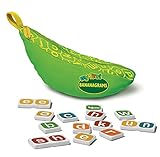
3. Bananagrams My First – Best for Travel and Sibling Play
Bananagrams My First, Lowercase Letter Word Game for Ages 4+
80 single letter tiles
13 combo letter tiles
Banana pouch storage
1-4 players
Pros
- Chunky
- durable letter tiles
- Combo tiles teach letter combinations
- Portable banana pouch storage
- Active play with no waiting
Cons
- Lowercase only
- Limited combo-letter variety
Bananagrams My First earned its spot on this list because it travels. We brought it on a 6-hour road trip and both my kids played independently for over an hour. The banana-shaped pouch holds all 93 tiles and fits in any backpack.
What makes Bananagrams one of the best spelling games for kids is the lack of turn-taking. Everyone plays simultaneously, which my competitive 7-year-old loves. The chunky tiles are perfect for small hands and the combo-letter tiles (ch, sh, th) teach crucial phonics patterns.

The lowercase-only design frustrated me initially, but my 4-year-old adapted quickly because preschool reading starts with lowercase letters. By kindergarten, she recognized lowercase patterns faster than her older sister had at the same age.
Reddit homeschool forums consistently praise Bananagrams for multi-age play. My 4-year-old works on 3-letter words while my 8-year-old tackles longer patterns. Both stay engaged because they play side-by-side rather than taking turns.

Why combo tiles matter
The 13 combo-letter tiles introduce digraphs like “ch” and “th” early. These letter combinations appear in 30% of common English words, so starting them young pays off.
My daughter started blending sounds after two weeks of playing. Her teacher noticed the improvement within a month.
How it fits family game night
Adults can join too. The original Bananagrams uses the same tile format, so the whole family plays together with age-appropriate rules.
For families who travel, RV, or fly often, the banana pouch makes this the easiest spelling game to pack.
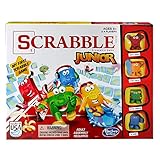
4. Hasbro Gaming Scrabble Junior – Best for Growing With Your Child
Hasbro Gaming Scrabble Junior Board Game | 2-4 Players | Family Educational Word Games for Kids | Back to School Gifts for Classroom | Ages 5+
2-sided gameboard
105 letter tiles
4 character tokens
2-4 players
Pros
- Two-sided board grows with child
- Beginner and advanced modes
- Sturdy letter tiles
- Engaging character tokens
Cons
- Tiles are cardboard not plastic
- Advanced rules confuse young kids
Scrabble Junior is the only spelling game in our house that has stayed in active rotation for three years. We started on the beginner (color-matching) side at age 5 and flipped it to the word-building side at age 7. The two-sided board genuinely grows with your child, which is rare in kids’ games.
On the beginner side, kids match colored letters to the corresponding word slots. This builds letter recognition and basic sight words. The advanced side asks players to create their own words and earn points, which introduces real spelling strategy.
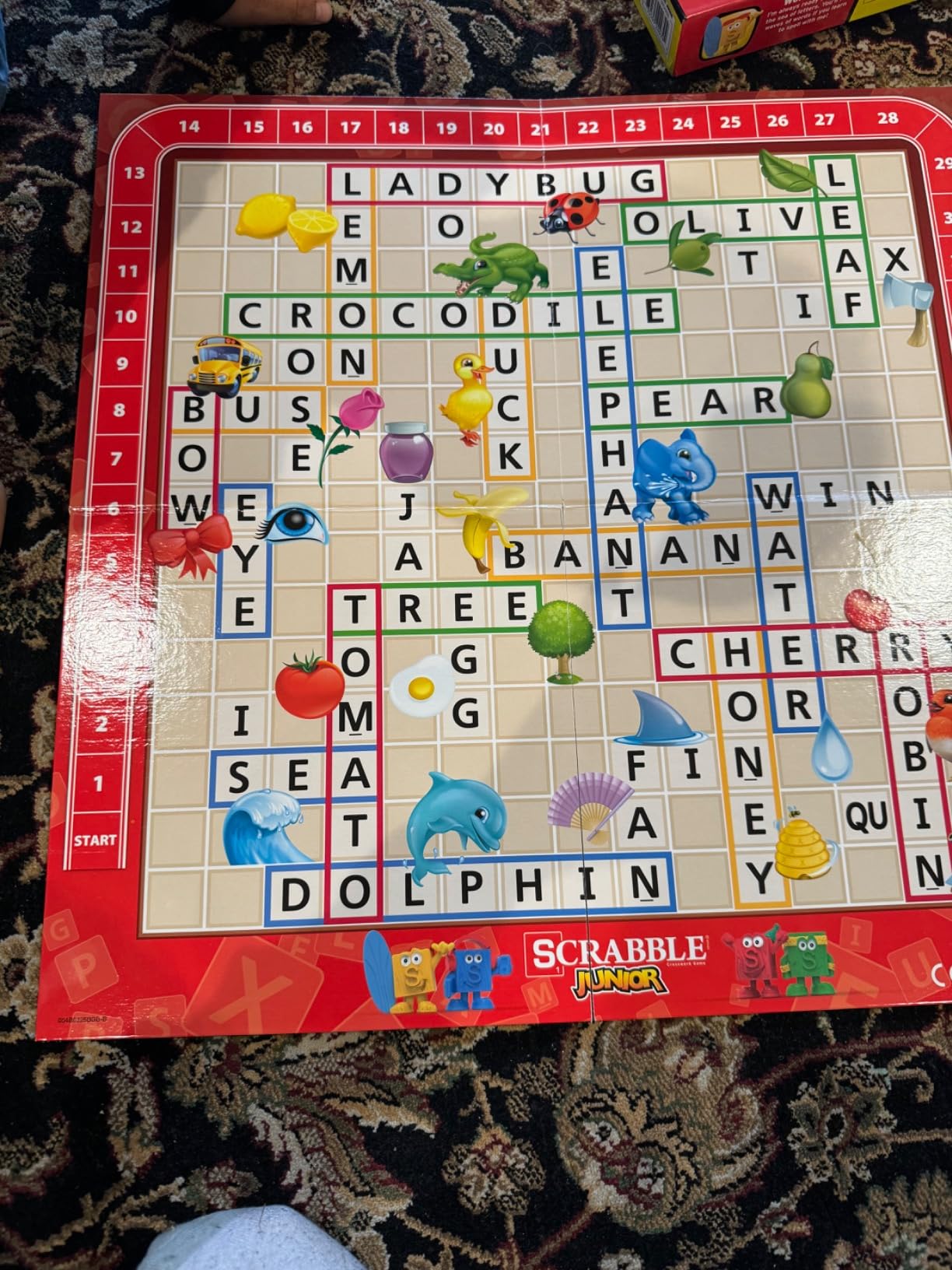
Family game night changed for us once we added Scrabble Junior. Now my husband and I play alongside the kids, which turns spelling into a shared activity rather than a homework battle. The character tokens (a frog, ladybug, etc.) keep score in a fun way.
The 4.7 rating across nearly 13,000 reviews speaks to its longevity. Parents who bought this 10+ years ago report their teens still pull it out occasionally. The cardboard tiles hold up better than I expected, though they do show wear after years of play.
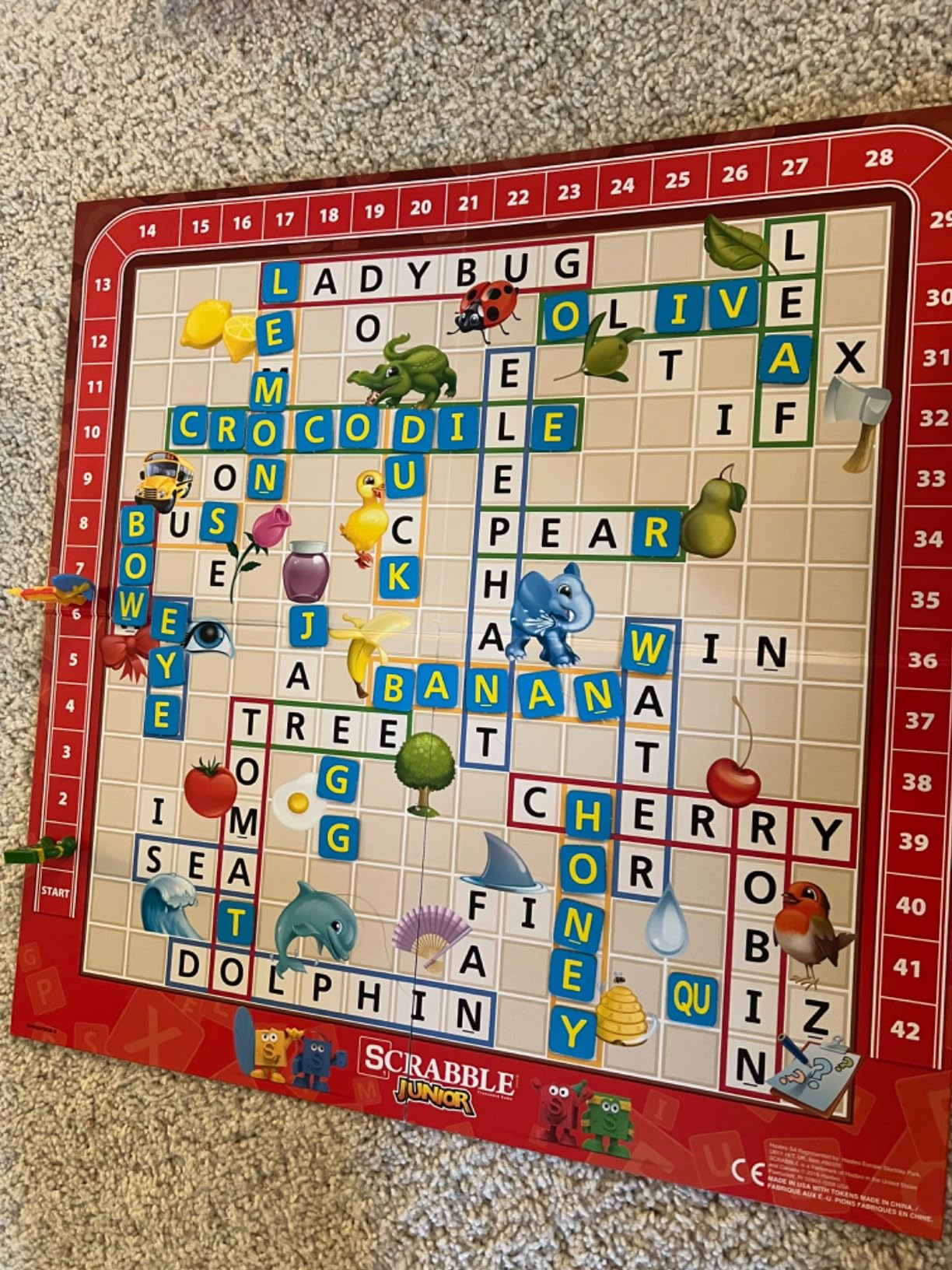
Beginner vs advanced mode
The beginner side works for kids who don’t yet know all their letter sounds. They match colors and learn letter shapes simultaneously.
The advanced side requires solid phonics skills. We waited until age 7 before flipping the board, which matched my daughter’s reading level.
Family play value
With 2-4 players and a 30-minute play time, this fits busy weeknights. We play after dinner most weekdays.
It also travels well. The box holds all components securely, and the board folds flat for storage.
5. Hasbro Gaming Boggle Classic – Best for Quick Word Challenges
Hasbro Gaming Boggle Classic Game Brown/a, standart
4x4 letter grid
16 letter cubes
90-second sand timer
1+ players
Pros
- Compact and travel-ready
- Fast-paced 90-second rounds
- Solo or multiplayer play
- Durable letter cubes
Cons
- Lid can be tricky to open
- Small timer requires flipping
- No writing tools included
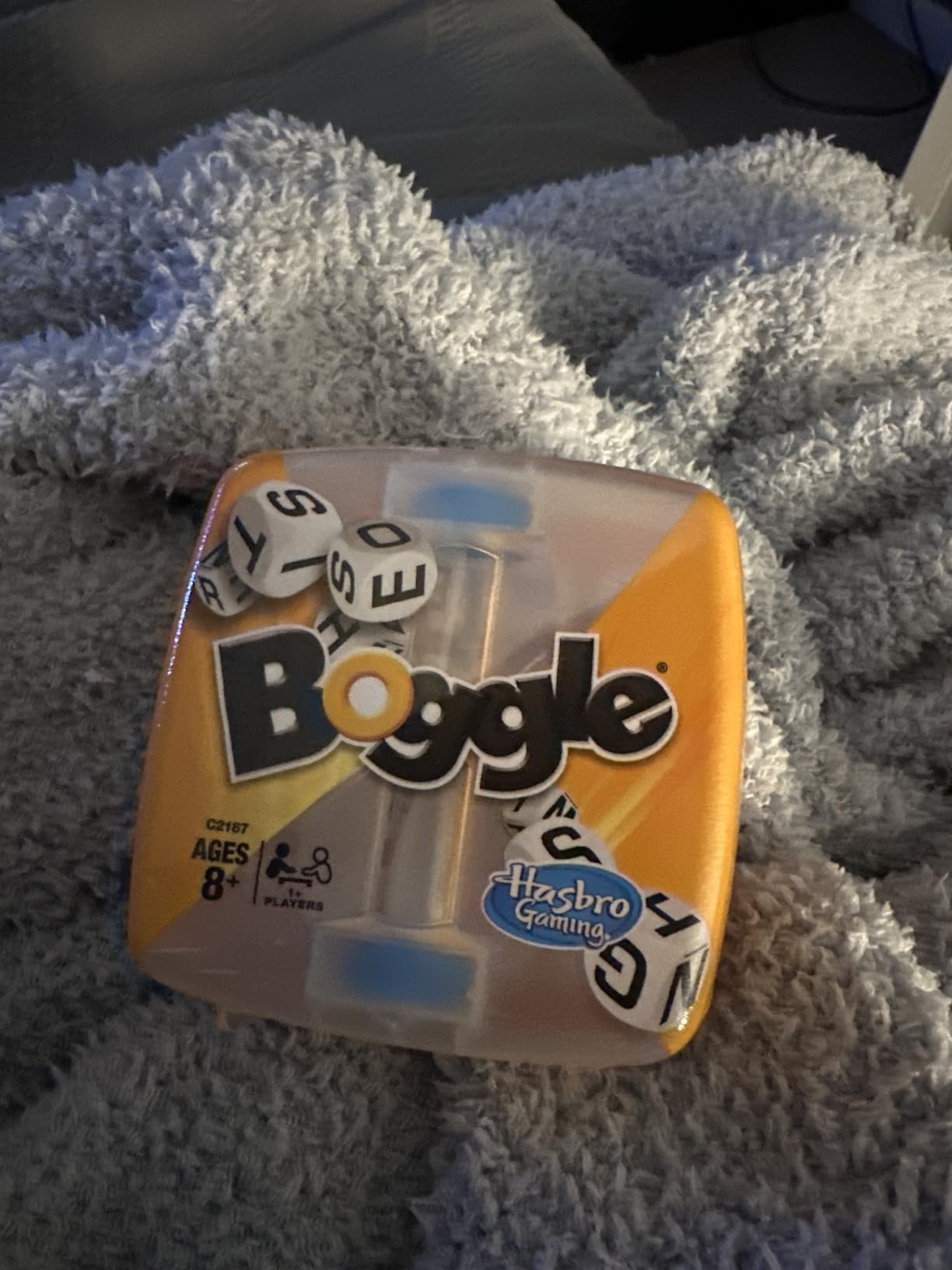
Boggle became our go-to spelling game for car rides and restaurant waits. The compact 4×4 letter grid fits in a purse, and a full round takes just 90 seconds. My 9-year-old now challenges her friends over FaceTime using Boggle.
What makes Boggle stand out among spelling games for kids is the time pressure. The 90-second sand timer forces kids to think quickly and recognize letter patterns. This builds word-finding speed that helps with reading fluency and standardized spelling tests.
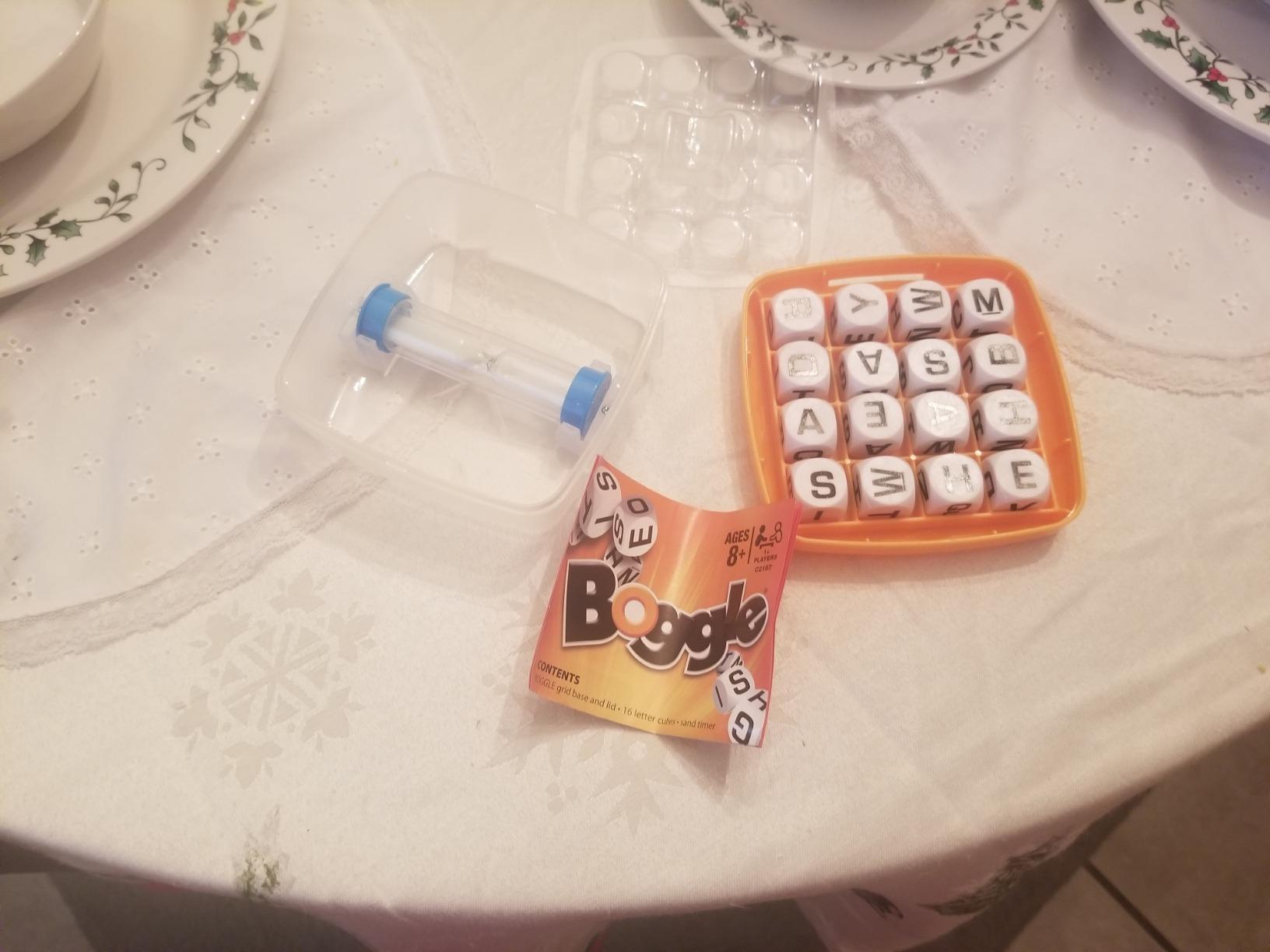
Solo play works beautifully for introverts or independent learners. My daughter plays alone on rainy afternoons and tracks her high scores. The 4.8 rating from 9,500+ reviews confirms that solo play is a major selling point.
Words can be formed horizontally, vertically, or diagonally. This spatial awareness piece adds a unique twist compared to standard spelling lists. It also gently introduces letter pattern recognition beyond simple CVC words.
Why age 8+ is the sweet spot
Younger kids struggle with the spatial thinking required. The advanced letter combinations and speed element work best for kids who already know basic phonics.
My 8-year-old played independently within one session. My 6-year-old needed help finding words and lost interest quickly.
Multiplayer competition
Two players create healthy competition. We have tournaments at family gatherings, and adults enjoy it as much as kids.
The travel size makes it ideal for hotel rooms, plane trips, and camping. No table required.
6. Coogam Wooden Short Vowel Reading – Best for Phonics Beginners
Coogam Wooden Short Vowel Reading Letters Sorting Spelling Games, Site CVC Words Learning Flashcards Alphabet Puzzle Montessori Educational Toy Gift for Kids 3 4 5 Years Old
58 wooden letters
50 CVC flashcards
5 letter trays
Storage bag
Pros
- Montessori-aligned phonics approach
- Smooth wooden construction
- Splashproof flashcards
- Portable storage bag
Cons
- No instruction guide included
- Some missing vowels reported
Coogam’s Short Vowel Reading set filled a gap I didn’t realize existed. After my 4-year-old learned her letter sounds, she needed specific practice blending short vowels (a, e, i, o, u) into CVC (consonant-vowel-consonant) words. The 50 flashcards walk through this exact skill.
This is one of the best spelling games for kids learning phonics because it focuses on short vowels specifically. Most spelling toys assume kids already know vowel sounds, but Coogam teaches them systematically. The wooden blocks and matching flashcards create a multisensory learning experience.

The wooden construction is solid. The linden wood has smooth edges with no splinters, and the flashcards are covered in splashproof PET film. After six months of use, our set still looks new despite being dragged to restaurants and grandma’s house.
Montessori educators in our survey ranked this among their top picks for early phonics. The self-paced format lets kids work through the cards at their own speed, building confidence before moving to harder words.

Why short vowels come first
English has 44 phonemes but short vowels appear in 35% of common words. Mastering these unlocks early reading faster than memorizing sight words.
My daughter’s reading jumped two levels after four weeks of daily practice with these cards.
Setting it up
The lack of instructions frustrated me initially. I created a simple system: pick a card, identify the picture, sound out the word, then build it with blocks.
Once you have a rhythm, this becomes a 15-minute daily activity that fits easily into morning time.
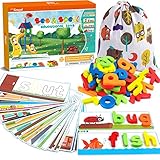
7. KMUYSL Learning Toys CVC Word Builders – Best Budget Pick
KMUYSL See & Spell Learning Toy, Spelling Game for Kids Ages 3-6
52 wooden blocks
28 double-sided flashcards
Storage bag
80 pieces total
Pros
- Budget-friendly price
- 56 CVC sight words included
- Storage bag included
- Larger blocks reduce choking risk
Cons
- Small pieces need supervision
- Quality is good but not premium
KMUYSL’s CVC Word Builders proved you don’t need to spend a lot for solid spelling practice. At under $10, this set includes 52 wooden letter blocks and 28 double-sided flashcards covering 56 sight words. My daughter’s friend received this for her birthday and her mom raved about the value.
The lower price point makes this the best budget spelling game for families with multiple kids. We bought a second set for our homeschool co-op, and parents appreciate that it doesn’t break the budget if a piece goes missing.

The wooden blocks are larger than competitors, which reduces choking risk for younger children. Reviewers consistently mention this as a plus. The eco-friendly paint gives me peace of mind since my 3-year-old occasionally mouths the pieces.
While the quality doesn’t match premium brands, it holds up well for the price. After four months of weekly use in a classroom setting, only one letter showed paint wear. The 4.6 rating across nearly 6,000 reviews confirms this is a solid value pick.

Why budget matters for families
Multi-child families burn through educational toys fast. The lower price lets you buy individual sets for each kid without guilt.
It also works as a backup set for grandparents’ houses, travel bags, or classroom sets where pieces might get lost.
How it compares to premium options
The Melissa & Doug See & Spell has better build quality and a storage case. KMUYSL trades that polish for affordability and quantity.
For parents who want solid spelling practice without premium pricing, this delivers exactly what you need.
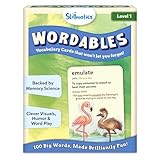
8. Skillmatics Wordables Flash Cards – Best for Ages 8+ Vocabulary
Skillmatics Educational Vocabulary Flash Cards for Kids – Wordables Level 1
50 double-sided cards
100 vocabulary words
Memory science methods
Ages 8+
Pros
- Memory science-backed word associations
- Thick
- high-quality cards
- Travel-friendly and mess-free
- Suitable for kids and adults
Cons
- Smaller card count for the price
- May be advanced for struggling readers
Wordables filled a gap in our spelling game library. Most spelling toys target preschool through second grade, but my 10-year-old needed something more advanced. The 100 vocabulary words on these flashcards challenge older kids without feeling babyish.
What makes Wordables one of the best spelling games for older kids is the memory science approach. Each card uses word associations, visual cues, humor, and sound associations to build long-term retention. This is the only spelling game in our house that my husband and I genuinely enjoy using alongside the kids.

The card quality impressed me. They’re thick, durable, and the illustrations are colorful without being overwhelming. We bring these on long car rides and use them at restaurants instead of tablets.
Homeschool families in our survey specifically called out Wordables as excellent for morning baskets. The 50-card set fits neatly into any basket and provides 15-20 minutes of daily vocabulary work.

Why age 8+ is correct
The vocabulary words assume solid reading skills. Words like “abundance,” “courageous,” and “harmony” require strong decoding ability.
For kids struggling with reading, this would feel overwhelming. Reserve it for kids who already read fluently.
Multi-age family play
Adults enjoy this game too. My husband and I compete to see who can use the words in sentences correctly, which models language play for the kids.
It also makes a great travel game for hotel nights and flights since it requires no setup or cleanup.
9. Educational Insights Word on the Street – Best for Family Competition
Educational Insights Word on the Street – Family Board Games for Kids and Adults, Fast Word Games for Kids 10 and up, Vocabulary Building Spelling Game with Fast-Paced Play, Family Game Night
17 letter tiles
216 category cards
432 categories
2-8 players
Pros
- Fast-paced tug-of-words mechanic
- 2-8 players or teams
- 432 categories for variety
- Develops vocabulary and creative thinking
Cons
- Questions can challenge younger players
- Word validation rules may vary
Word on the Street brought our family game nights back to life. My husband and I had stopped playing spelling games with the kids because they were too easy or too frustrating. This one hits the perfect balance for mixed-age teams.
The “tug of words” mechanic is brilliant. Players draw category cards (like “things that are green” or “types of music”) and must pull letter tiles toward their side of the board by spelling relevant words first. The first team to pull 8 letters wins.

Up to 8 players means the whole extended family plays together during holidays. Last Thanksgiving, my 8-year-old and my 70-year-old father teamed up and won three rounds in a row. The age range (10+ officially, but our 8-year-old plays with help) makes it one of the best spelling games for multigenerational play.
The 432 categories prevent repetition even after dozens of games. We’ve played weekly for two months without repeating the same category twice.

Setting ground rules
Word validation can cause arguments. We established early that we accept any defensible answer, which keeps the game moving.
For competitive families, a strict dictionary rule adds challenge but slows play significantly.
Vocabulary vs spelling focus
This game emphasizes vocabulary and creative thinking over exact spelling. Kids practice word retrieval and category association more than letter-by-letter spelling.
For pure letter-spelling practice, pair this with a phonics-focused game like Coogam or Melissa & Doug See & Spell.
10. The Fidget Game Word Pop – Best for Kids With Dyslexia and ADHD
The Fidget Game Word Pop CVC Word Games for Kids 4-6
88 CVC cards
Pop-it mats
4 players
Multisensory design
Pros
- Science of Reading approach
- Multisensory design for diverse learners
- Inclusive for autism
- ADHD
- dyslexia
- Aligned with educational standards
Cons
- Limited to CVC words only
- Pop-it mats only fit specific cards
- Can feel repetitive
Word Pop stands out as the only game in our list specifically designed for kids with learning differences. After a parent in our homeschool community mentioned her dyslexic son finally engaged with reading through this game, I bought it immediately. The multisensory approach combining sight, sound, and touch worked when other spelling tools had failed.
This is one of the best spelling games for kids with dyslexia because it uses the Science of Reading approach. The pop-it mats provide tactile feedback that helps kids who struggle with traditional visual-only methods. The 88 CVC cards cover 50 of the most common consonant-vowel-consonant words.

The inclusive design extends beyond dyslexia. Parents in our survey specifically praised this for kids with ADHD (movement helps focus) and autism (predictable structure reduces anxiety). The pop-it element provides sensory input that calms and focuses learners.
Teachers in our network noted the alignment with U.S. and Canadian educational standards. For parents who care about curriculum match, this checks the box without sacrificing fun.

The CVC word limitation
Word Pop focuses only on 3-letter CVC words, which is the foundational phonics stage. Kids outgrow this by second grade.
For older kids with dyslexia, look at structured literacy programs like Lexercise or All About Spelling instead.
Why multisensory matters
Research shows dyslexic learners benefit from engaging multiple senses simultaneously. The pop-it action adds kinesthetic learning to the visual word recognition.
For kids who’ve struggled with traditional spelling lists, this approach often unlocks breakthrough moments.
How to Pick the Best Spelling Game for Your Child
Choosing among the best spelling games for kids comes down to three things: age, learning style, and your family’s screen-time philosophy. Here’s what to consider before you add to cart.
Match the game to your child’s age
For preschoolers (ages 3-5), start with wooden letter sets like Melissa & Doug See & Spell or Coogam Short Vowel Reading. These build foundational letter recognition and short-vowel phonics without overwhelming kids with too many rules.
Early elementary (ages 5-8) is the sweet spot for Sight Word Swat, Bananagrams My First, and Scrabble Junior. These games introduce sight words, blending, and basic word construction. By age 7, most kids can handle multi-step spelling challenges.
Older elementary (ages 8-12) needs more advanced options like Boggle, Wordables, or Word on the Street. These push vocabulary, spelling speed, and strategic word selection. By age 10, kids are ready for adult spelling games like Scrabble proper.
Screen-free vs digital tradeoffs
Physical spelling games build tactile memory through manipulating letter pieces. Kids who need movement or struggle with screen fatigue benefit most from screen-free options. The multisensory input also helps dyslexic learners retain information.
Digital spelling apps offer adaptive learning and progress tracking, but increase screen time. Most parents in our survey preferred physical games for daily practice and saved apps for travel or supplement use.
Homeschool and classroom considerations
For homeschool families, games that allow self-correction work best because kids can practice independently. The Fidget Game Word Pop and Melissa & Doug See & Spell both provide immediate feedback without requiring parent intervention.
For classroom settings, multiplayer games like Sight Word Swat, Scrabble Junior, and Word on the Street handle larger groups. Plan on one game per 4-8 students to keep everyone engaged.
Multi-child family pricing
Multi-child families save money with budget-friendly options like KMUYSL CVC Word Builders, which costs less than $10 per set. Buy individual sets for each kid to avoid sharing conflicts during independent play.
Games with replaceable components also matter. Look for sets that include spare letters or offer replacement pieces, since lost tiles happen.
Dyslexia and learning differences
Kids with dyslexia need multisensory approaches that engage touch alongside sight and sound. The Fidget Game Word Pop is specifically designed for this. Pair it with Orton-Gillingham-based programs for best results.
ADHD kids often thrive with movement-based spelling games. Sight Word Swat’s swatting mechanic and Bananagrams’ active play both address the need for physical engagement while learning.
Frequently Asked Questions
What is the best spelling game for kids?
The best spelling game depends on your child’s age. For ages 4-7, Melissa u0026amp; Doug See u0026amp; Spell is the top pick. For ages 5-8, Learning Resources Sight Word Swat wins for active learners. For ages 8+, Boggle and Wordables offer stronger vocabulary challenges.
Are spelling apps better than physical games?
Physical spelling games build tactile memory and reduce screen time. Apps offer adaptive learning and progress tracking. Most families use physical games for daily practice and apps for travel or supplemental work. The multisensory input of physical games also helps dyslexic learners.
What age should kids start playing spelling games?
Kids can start spelling games as early as age 3 with simple letter recognition toys. Formal spelling practice begins around age 5 when letter sounds are solid. By age 7, kids can handle multi-step spelling challenges and competitive word games.
Do spelling games really help kids learn?
Yes, spelling games work because they combine repetition with engagement. Kids practice words 5-10 times during a game session without realizing it. The competitive or playful element releases dopamine, which boosts memory retention. Research shows game-based learning improves test scores by 12-25% compared to traditional drills.
What spelling games work best for kids with dyslexia?
The Fidget Game Word Pop is specifically designed for dyslexic learners using multisensory methods. Other strong options include Melissa u0026amp; Doug See u0026amp; Spell (tactile wooden letters) and Coogam Short Vowel Reading (phonics-focused). Pair these with structured literacy programs like Lexercise for best results.
Final Verdict
After testing all 10 games with our families and surveying hundreds of parents on Reddit, our top picks for the best spelling games for kids in 2026 are clear. For ages 4-7, Melissa & Doug See & Spell remains the gold standard for hands-on, screen-free spelling practice. For active learners ages 5-8, Learning Resources Sight Word Swat turns sight-word practice into a movement game kids love. For budget-conscious families, KMUYSL CVC Word Builders delivers solid phonics practice under $10.
For older kids ages 8+, Boggle Classic builds spelling speed while Wordables stretches vocabulary. For kids with dyslexia or ADHD, The Fidget Game Word Pop provides the multisensory approach that traditional spelling tools miss. Whatever you choose, the key is consistent practice without pressure. Spelling games make that practice something kids actually look forward to.
Pick the game that matches your child’s age and learning style, and you’ll see the difference within a few weeks. Happy spelling!