

When the temperature drops and the kids are bouncing off the walls after their fifth “I’m bored” of the afternoon, families need a stockpile of the best winter indoor games for families to save the day. I have spent the last three winters testing games with my own family of four, plus borrowing extras from neighbors and cousins, to see which ones actually hold up to repeated play, mixed age groups, and the wild energy of cabin fever.
Winter brings unique challenges for family entertainment. Snow days cancel plans, holiday gatherings put different ages under one roof, and screen-time guilt pushes parents toward screen-free options. According to parents on Reddit’s r/boardgames and r/Parenting, the most common winter frustrations include boredom during school breaks, finding games that work for everyone from a 6-year-old to a grandparent, and avoiding the dreaded “this is boring” twenty minutes in.
This guide gives you 12 tested picks across categories like card games, strategy board games, active indoor games, and party games for large gatherings. Each recommendation includes the age range, typical player count, duration, and what I liked and didn’t like after multiple game nights. By the end, you will have a complete winter game toolkit ready for snow days, holiday breaks, and every rainy weekend until spring.
Table of Contents
Top 3 Picks for Winter Family Game Nights


Best Winter Indoor Games for Families in 2026
| Product | Specifications | Action |
|---|---|---|
| Mattel UNO Card Game |
|
Check Latest Price |
 Hasbro Jenga |
|
Check Latest Price |
 Jax SEQUENCE |
|
Check Latest Price |
 Pressman Rummikub |
|
Check Latest Price |
 Taco Cat Goat Cheese Pizza |
|
Check Latest Price |
| Bananagrams |
|
Check Latest Price |
 Five Crowns |
|
Check Latest Price |
 SKYJO Card Game |
|
Check Latest Price |
 Do You Really Know Your Family? |
|
Check Latest Price |
 Herd Mentality |
|
Check Latest Price |
 The Floor is Lava |
|
Check Latest Price |
 Monopoly Deal |
|
Check Latest Price |
1. Mattel UNO Card Game – Classic Family Favorite
Mattel Games UNO Card Game, Ages 7+, 2-10 Players
For 2-10 players
Ages 7+
Color blind accessible deck
Pros
- Classic gameplay all generations recognize
- Includes 3 blank Wild Cards for custom rules
- Color blind accessible deck with graphic symbols
- Durable tin storage keeps cards organized
- Plays in roughly 30 minutes
Cons
- Tin case takes up space on smaller shelves
- Some versions have weaker card stock
UNO sits at the top of my list because it has survived every family game night in our house for over five years. I taught my 6-year-old the rules in about three minutes, and within a week she was beating my partner regularly. The game handles groups from 2 to 10 players, which made it the obvious choice for my sister’s family of six visiting last December.
What makes this Amazon Exclusive version stand out is the color blind accessible deck. My cousin’s husband is red-green color blind, and he had skipped UNO at past gatherings because the standard deck made it tough to play. The graphic symbols on each card solved that completely, and now he is the first to insist on a round.

The 3 blank Wild Cards are a small touch with a big payoff. My family invented a “Swap Hands” rule that lets you swap your entire hand with another player, and it has changed how my kids strategize. This kind of flexibility keeps the game fresh even after hundreds of plays.
With 60k+ reviews and a 4.8 rating, UNO is the rare game that almost every family already knows how to play. The durable tin container matters more than you would expect; our first deck in a flimsy box lasted six months before cards started bending. This version’s tin has held up to daily use for two winters and counting.
Setting Expectations
UNO works best with groups of 3-6 players. With only two players, the game drags. The included instructions are clear, but expect the first game to take 40 minutes while everyone learns the action card timing. After that, rounds consistently finish in 20-30 minutes.
If you have competitive adults and young kids, be ready for some hurt feelings when a Draw Four card gets played at the worst moment. We use a house rule that lets players under 10 show their discards once if asked, which prevents the “you cheated” arguments.
Who Should Buy It
This UNO set is ideal for families with kids aged 7 and up who want a game everyone already knows how to play. It is also a strong pick for households with color blind players, since the accessible symbols solve a problem other versions ignore.
Skip this version if you want a portable deck for travel. The tin is sturdy but bulky. For road trips, I keep a cheaper deck in a ziplock bag and save this one for home use.
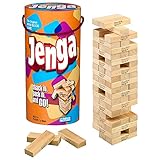
2. Hasbro Jenga – Timeless Stacking Challenge
Hasbro Gaming Jenga Wooden Blocks Stacking Tumbling Tower Game | Party Games for Kids & Families | Stocking Stuffers | Ages 6+ (Amazon Exclusive)
For 1-100 players
Ages 6+
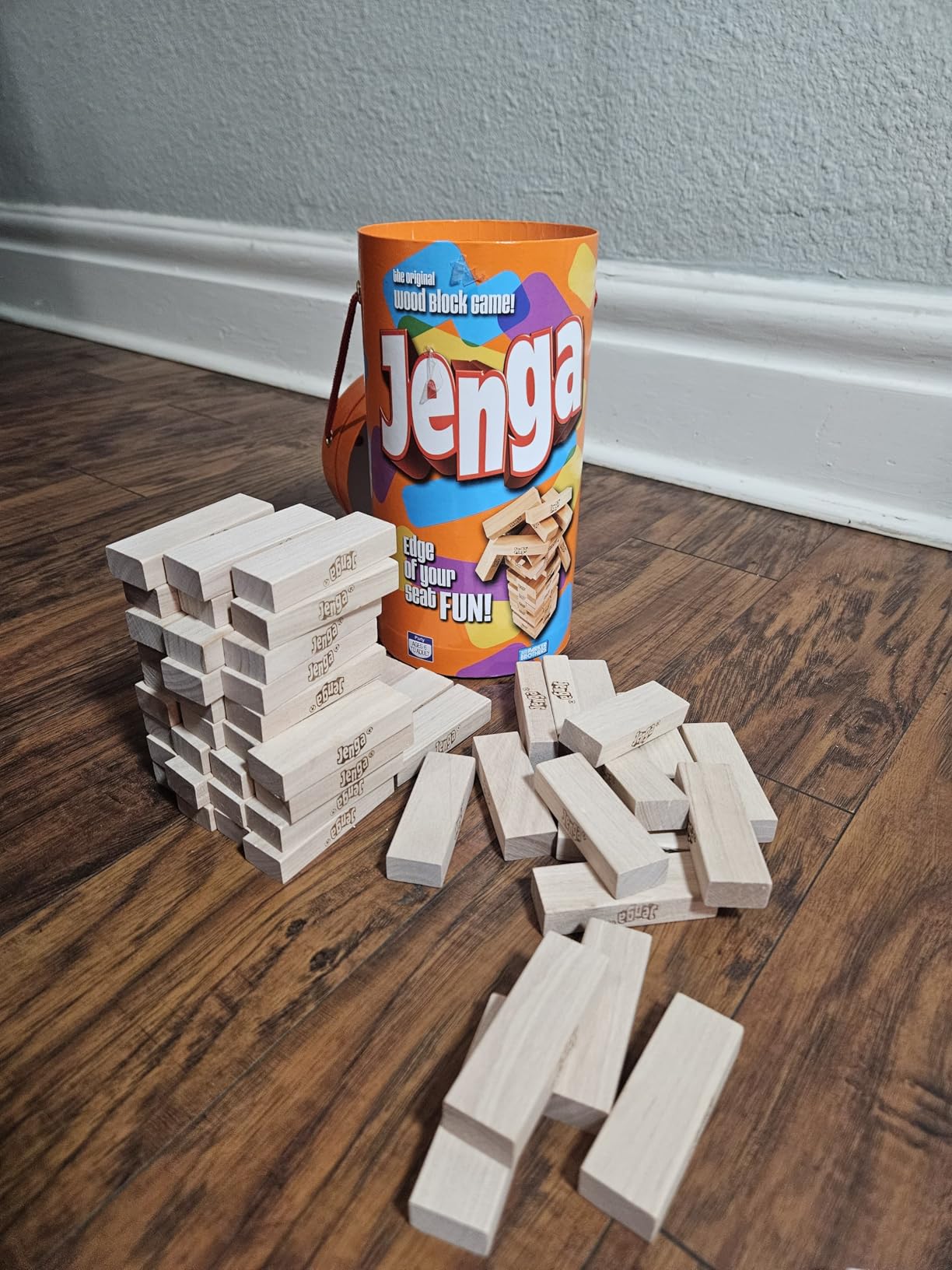
54 hardwood blocks
Pros
- Classic gameplay that never gets old
- Real hardwood blocks last for years
- Tube-shaped storage with built-in handle
- Works for solo play or large groups
- Quick learning curve for kids and adults
Cons
- Box packaging less durable than older versions
- No instructions for variant game modes
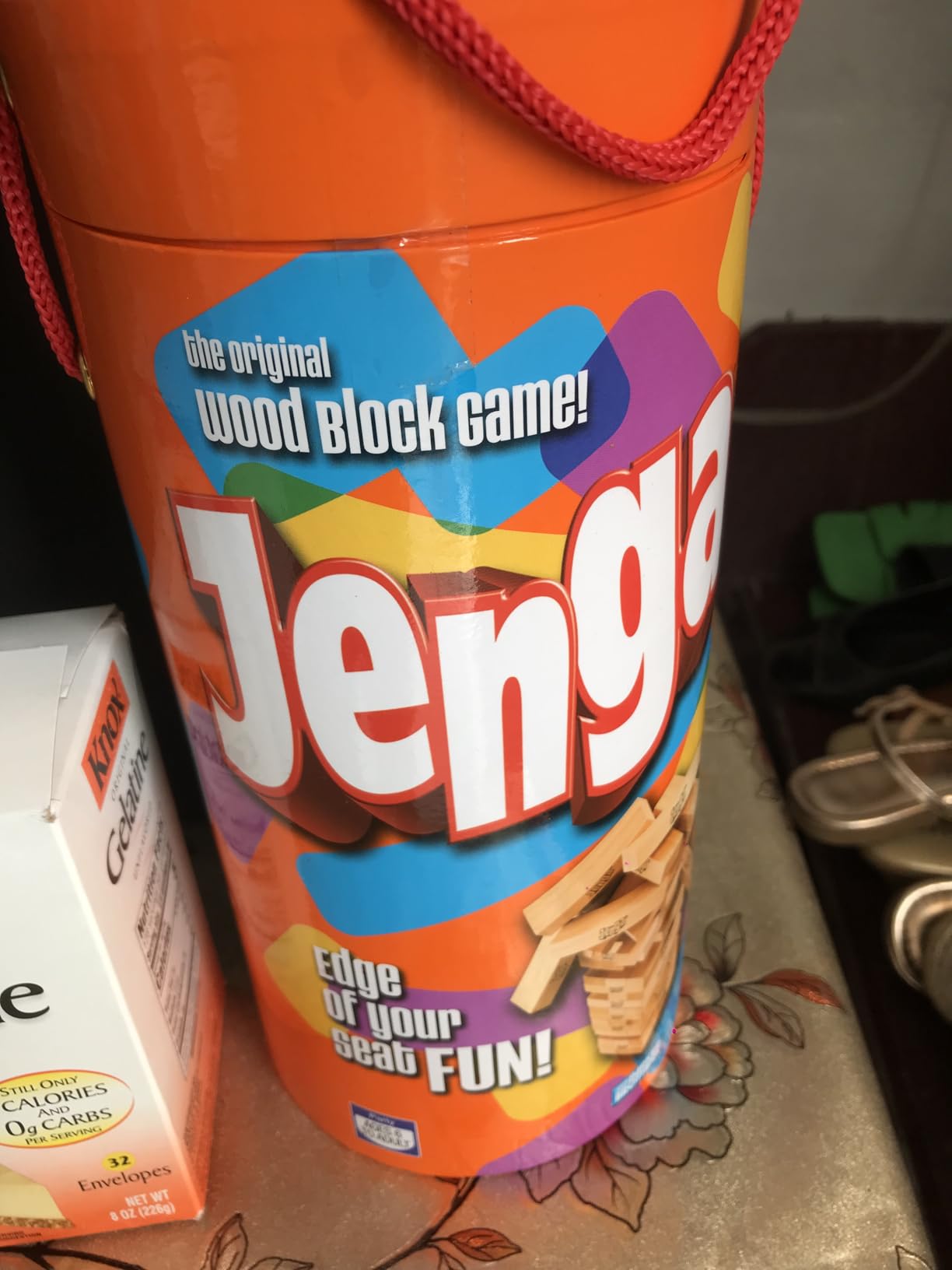
Jenga has been my “gateway game” for every kid in the neighborhood since 2020. When the kids come over after school and want “real” games, I pull out Jenga first. The rules take 60 seconds to explain, and the physical tension of pulling blocks builds social energy fast.
I tested this version with my daughter’s friend group, ages 7-10, and within ten minutes they were inventing penalties for each toppled tower. The hardwood blocks have held up to hundreds of plays without chips or splinters, even when the kids get dramatic and slam blocks down.
The tube storage is the unsung hero here. I have owned two earlier Jenga sets, and the cardboard boxes fell apart within a year. The plastic tube with handle means I can drop it on the floor, kick it under the couch, and forget about it. When game night starts, the tube is ready in seconds.
Stack Safety and Setup
Jenga requires a flat surface and steady hands. We play on the kitchen table with chairs pushed back so younger kids can stand and get a better angle. The game plays fine on carpet but the tower wobbles more, which adds noise and frustration.
The official rules only cover the basic pull-and-stack game, but every family I know invents house rules. Our favorite: every player must name an animal when they place a block, and the animal must match the previous one alphabetically. A-F chaos has produced more laughter than the actual tower collapse.
Be aware that Jenga is harder than it looks for kids under 6. Fine motor control matters, and younger players get frustrated when they keep knocking the tower over. Hasbro recommends ages 6+, and that rating lines up with my testing.
Why It Endures
After 23k+ reviews and a 4.8 rating, Jenga remains one of the safest picks for a family with mixed ages. The cost per play is low because the wooden blocks survive a decade of use. If you only buy one game on this list for a 4-year-old’s birthday, this is it.
3. Jax SEQUENCE – Strategy Game for Large Groups
SEQUENCE- Original SEQUENCE Game with Folding Board, Cards and Chips by Jax ( Packaging may Vary ) White, 10.3″ x 8.1″ x 2.31″
For 2-12 players
Ages 7+
Strategy + card matching
Pros
- Works for huge family gatherings up to 12 players
- Combines luck and strategy to balance skill levels
- STEM skill development through spatial reasoning
- Folding board stores flat
- Easy to teach new players
Cons
- Packaging varies between production runs
- Premium for what you get in pieces
SEQUENCE is the answer to the question “what works when grandma and the 8-year-old want to play together?” I brought this to a Thanksgiving gathering with 11 players ranging from 8 to 72, and every group had a seat at the table within five minutes. The teams mechanic naturally groups ages so nobody feels outmatched.
The game rewards card matching combined with board strategy. Players try to form five-in-a-row sequences using chips on a folding game board. Because the strategy depends partly on card luck and partly on spatial planning, my niece who reads every card-hand article still loses to her dad who plays loose. That balance is the magic.
The folding board is a smart engineering choice. Most game boards take up half a shelf, but SEQUENCE folds into a slim profile that fits in a closet or even a large purse. When the family shows up unannounced for game night, I can have it on the table in 30 seconds.
Why Mixed Ages Click
Young kids struggle with board strategy alone, but pairing with an older sibling or parent makes the game accessible. We played three rounds where my 7-year-old teamed with my sister, and they came in second behind the adults.
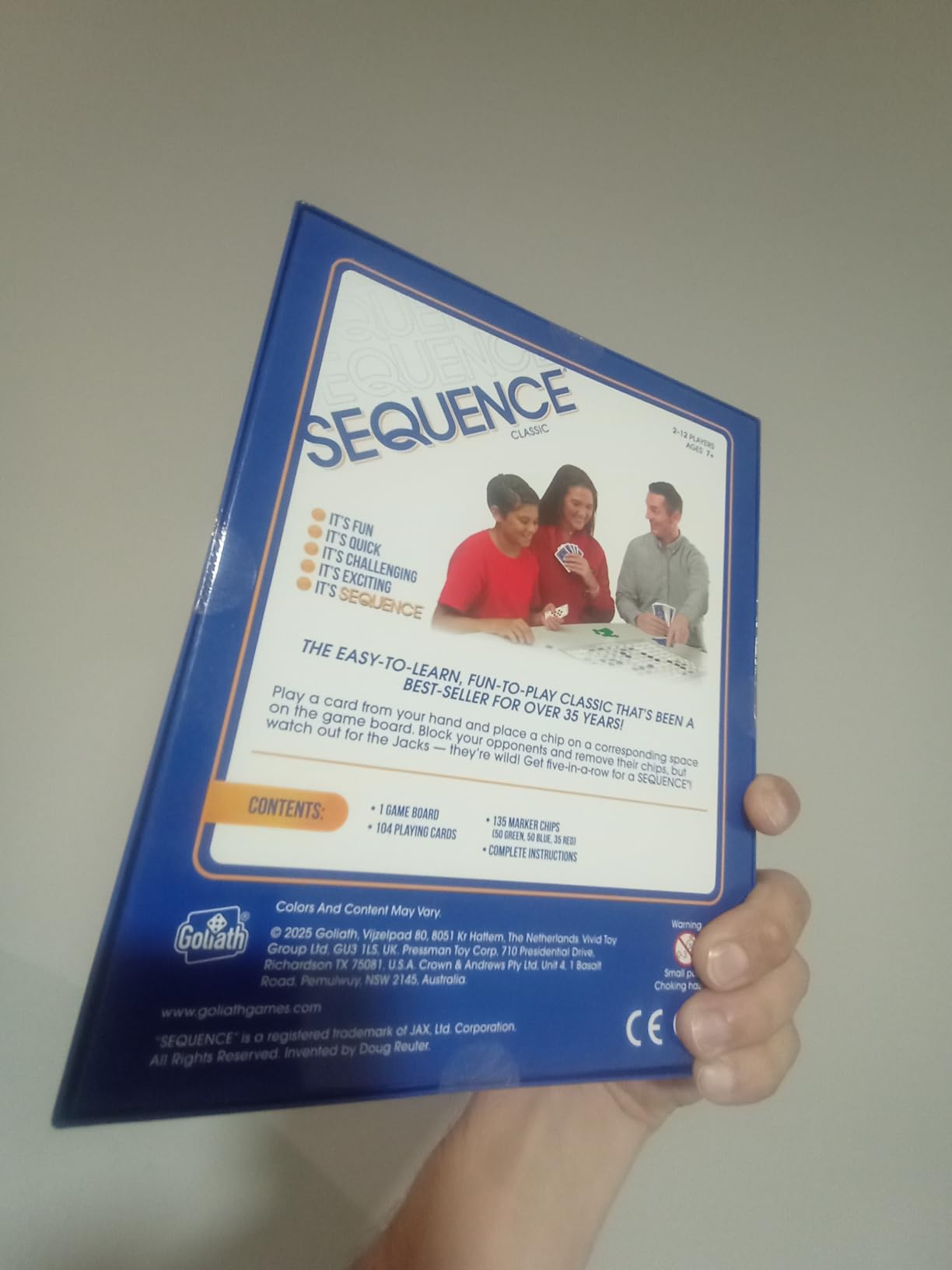
The game has a “two-eyed Jack” rule (remove an opponent’s chip) and a “one-eyed Jack” rule (place anywhere). Adults enjoy the strategic depth while kids focus on the simple match-and-place mechanic. With 45k+ reviews averaging 4.8 stars, this game consistently delivers mixed-age playability.
The biggest downside is the build quality. The folding board creaks after heavy use, and the plastic chips scratch easily. Treat it gently and it will last years, but rough game nights with kids will show wear by year two.
Family Gathering Winner
If your family typically gathers with 8 or more people, SEQUENCE is one of the few games on this list that scales without forcing anyone to sit out. The teams can be adjusted for any player count from 2 to 12, which makes it my default for holiday gatherings when attendance is unpredictable.
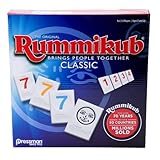
4. Pressman Rummikub – STEM-Powered Tile Classic
Pressman Rummikub – The Original Rummy Tile Game | Exciting Family Game of Strategy and Luck | Promotes STEM Skills | For Kids, Teens, Adults | 2-4 Players, Ages 8+
For 2-4 players
Ages 8+
STEM skill building
Pros
- 55 million units sold - true family classic
- Reinforces math and pattern recognition
- Plastic tiles survive years of play
- Plays well across different skill levels
- Folding racks included
Cons
- Box packaging is flimsy cardboard
- Premium price for tile count
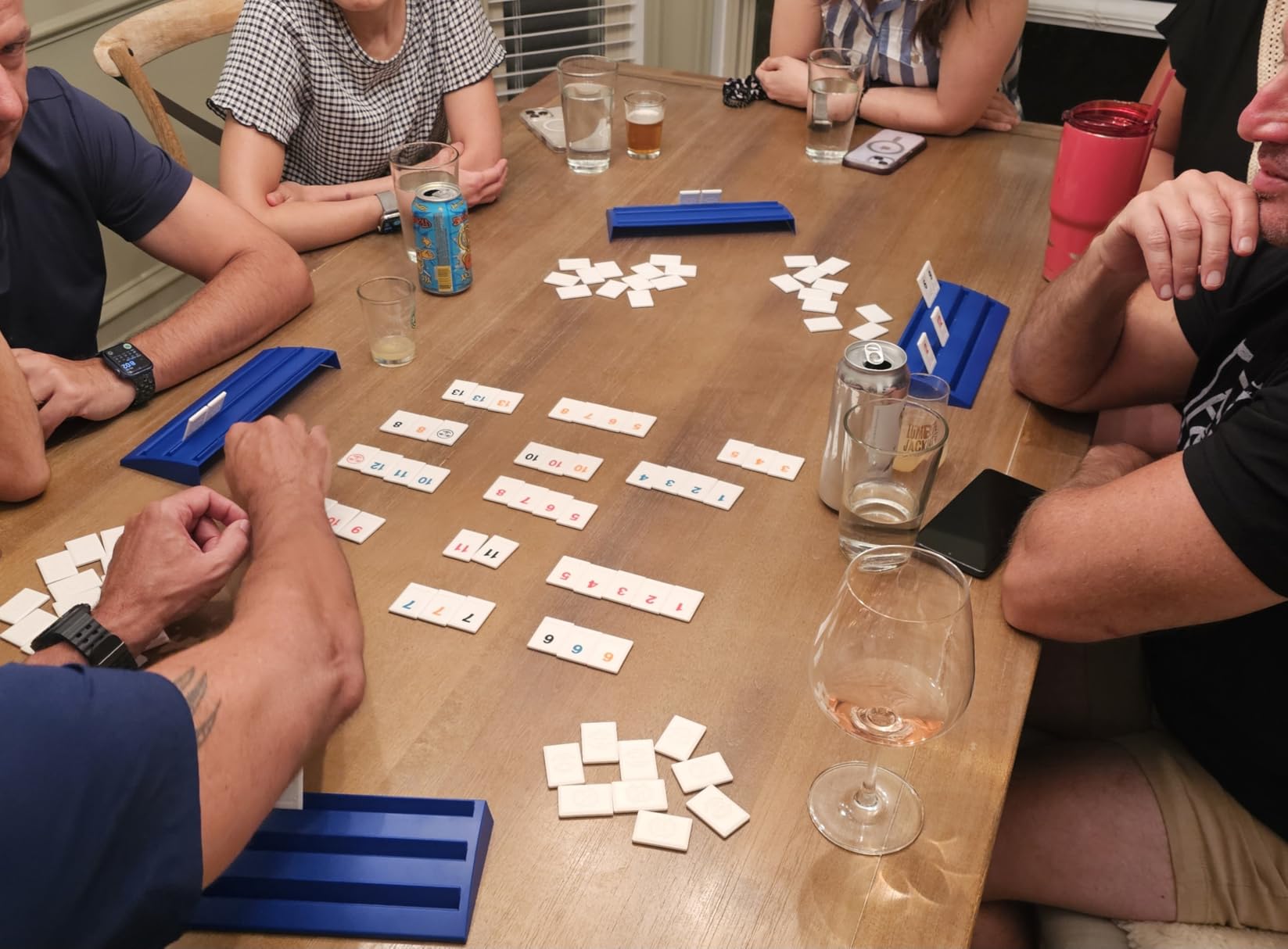
Rummikub is the game my mother-in-law taught me 15 years ago, and I have passed it down to my own kids. The rules look intimidating at first (you can manipulate existing sets on the table), but the 30-minute learning curve pays off with a game that holds up at every age. My 9-year-old now beats her grandfather regularly.
The STEM angle is real. Players need to spot numerical patterns, plan sequences, and think three moves ahead. According to teacher reviews I’ve read, schools use Rummikub-style games for math enrichment. My daughter’s teacher actually recommended it after seeing her play at home.
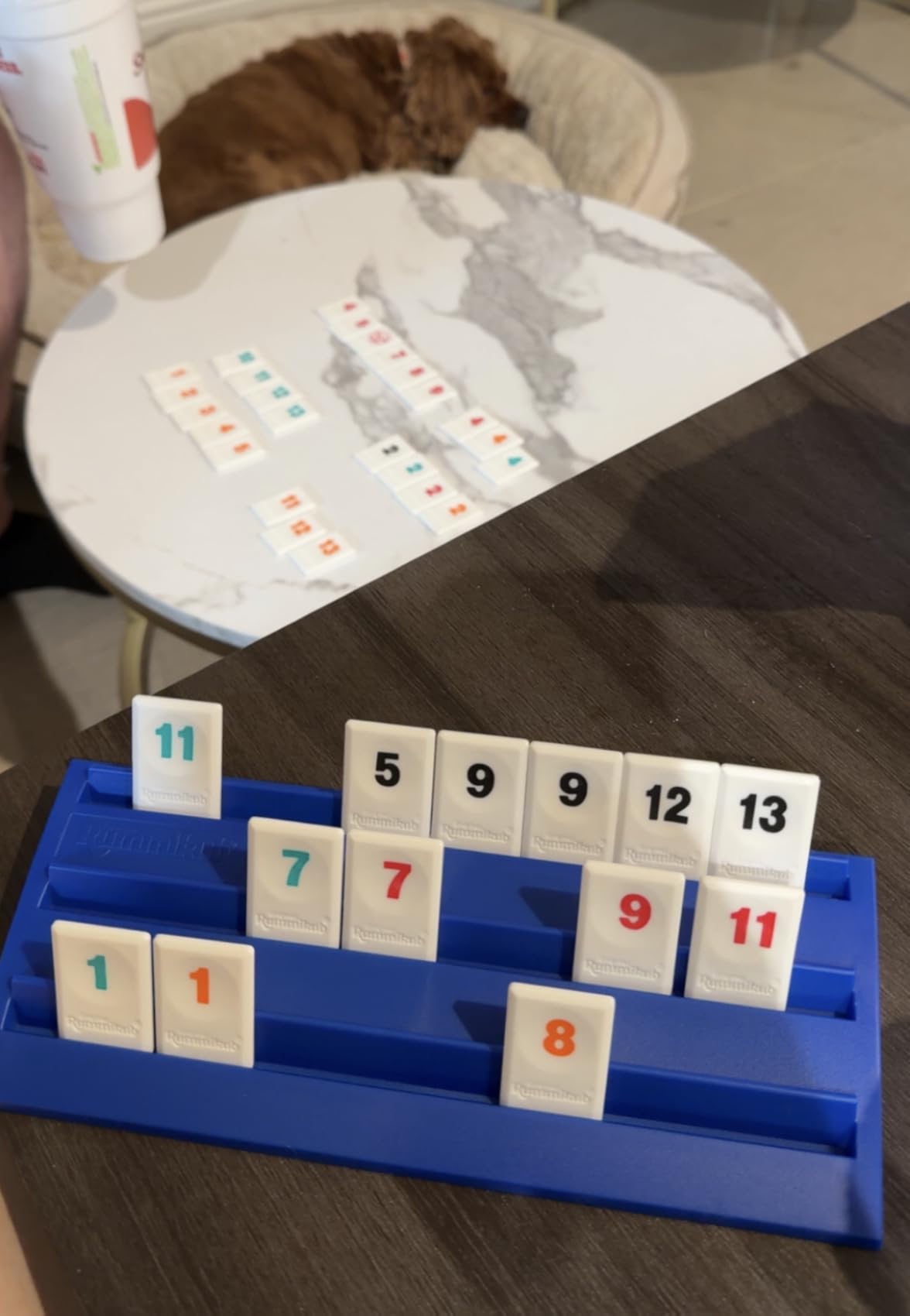
Pressman’s version includes plastic tiles that feel substantial in your hand. After three years of weekly play, our tiles still look new. The included folding racks keep each player’s tiles organized, which matters when 4 people have 14 tiles to manage.
Learning Curve Reality
The first game will involve a lot of “wait, can I do this?” questions. Plan for a 45-minute opening round. After that, players internalize the rules and games drop to 25 minutes. My advice: keep the rules sheet visible for the first three rounds.
The “manipulation” rule (rearranging existing sets) is what makes Rummikub unique. Players lay down tiles when they can, but the real strategy happens when you break up an opponent’s set and rebuild it in a way that leaves them with unusable high numbers. My kids love this cat-and-mouse element.
When Rummikub Falls Short
Rummikub tops out at 4 players. If your family gatherings have 6+ people at the table, you will need a different game. For smaller families or a quiet night with just the kids, this is a top-tier choice.
The packaging is the main weakness. The box arrived dented both times I’ve ordered replacements, and the cardboard insert doesn’t organize tiles well. I recommend transferring tiles to a sturdier container after purchase.
5. Taco Cat Goat Cheese Pizza – Quick Reflex Card Game
Taco Cat Goat Cheese Pizza Card Game by Taco Cat Games, Age 7+, 2-8 Players
For 2-8 players
Ages 7+
10-15 minute rounds
Pros
- Rules explained in under a minute
- Loud
- hilarious gameplay for all ages
- Compact size travels in any backpack
- Builds reflexes and pattern recognition
- Action cards keep it unpredictable
Cons
- Can get loud and chaotic with big groups
- Not Prime eligible at some retailers
Taco Cat Goat Cheese Pizza saved a road trip last March. I pulled it out at a rest stop in Pennsylvania, and the kids (ages 7, 9, and 11) were laughing so hard we had to explain to other travelers that everything was fine. The round structure is so fast that even reluctant players get hooked immediately.
The mechanic is simple: players take turns laying cards face-up while reciting “Taco, Cat, Goat, Cheese, Pizza” in rhythm. When the spoken word matches the placed card, everyone slaps the pile. The last hand loses a card; first to lose all cards wins. That 2-line description captures the entire rule set.
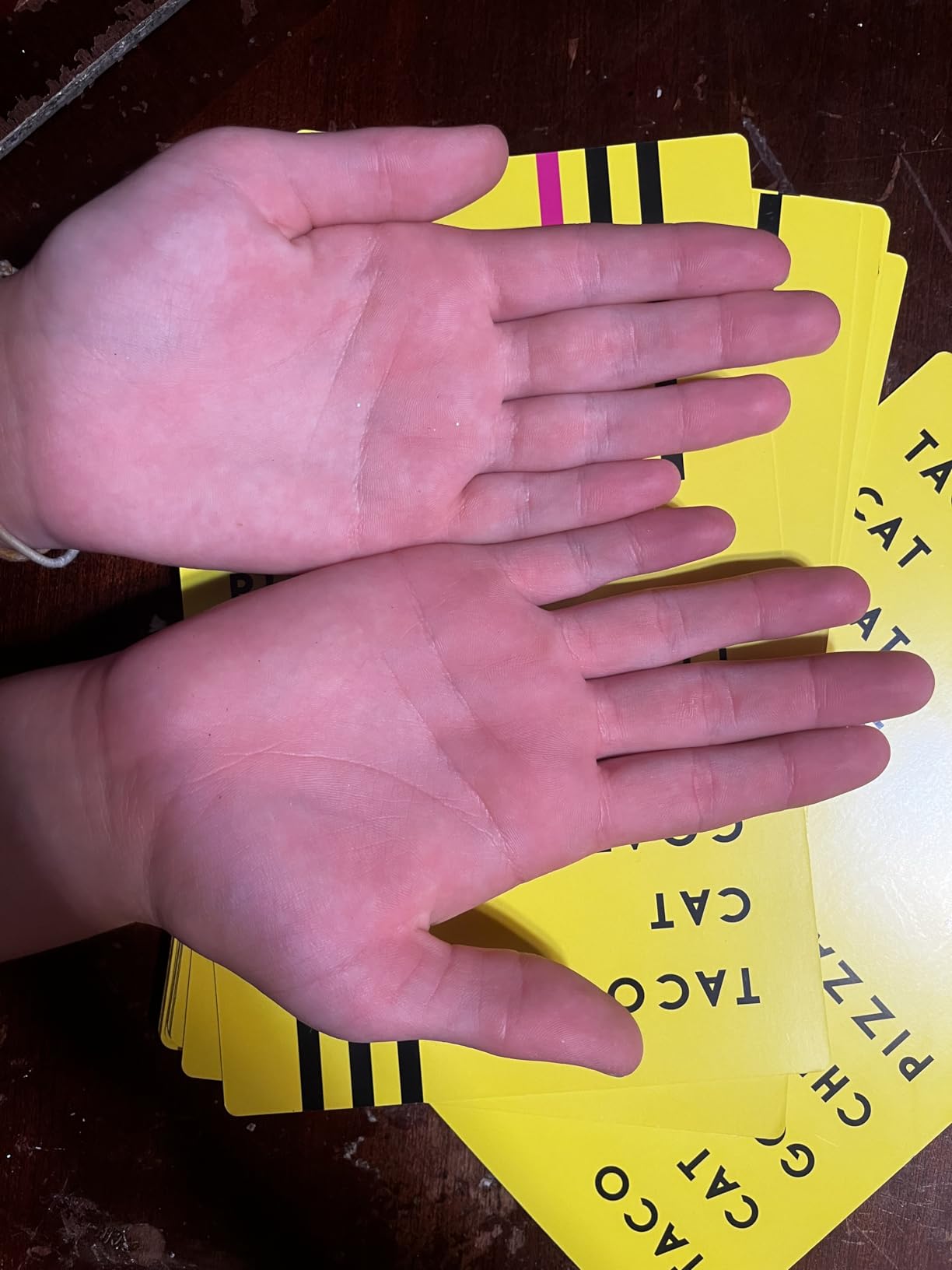
What I love most is the action card chaos. Special cards like the Narwhal or Groundhog require players to do silly gestures before slapping, and those rules vary based on which version you own. My family settled on house rules after one play where the kids invented new dances and refused to stop.
The 54k+ reviews and 4.8 rating speak to its universal appeal. I have yet to play with a group that didn’t howl within five minutes. The only caveat is noise level; this is not an apartment-friendly game if you have thin walls.
Reading Age and Patience
Early readers at age 7 can handle the word sequence. Younger kids can play along by mimicking the rhythm, even if they cannot read the cards. The game rewards hand-eye coordination more than reading, so ages 5+ work in mixed groups.
With 2-8 player support, the game adapts to small family nights or large gatherings. We played an 8-player round at our last New Year’s party, and the chaos was perfect. The “loser loses a card” mechanic means the game keeps going until you decide to stop, which is both a strength and a drawback.
Why It Beats Screens
My kids default to tablets on weekends. We started a “Family Game Hour” rule every Sunday afternoon, and Taco Cat Goat Cheese Pizza became the rotation leader because every round ends in laughter. After two months, the kids now request it over YouTube.
6. Bananagrams – Fast-Paced Word Play
Bananagrams Classic Word Game, 144 Tiles in Banana Pouch, Travel Game
For 1-8 players
Ages 7+
Educational wordplay
Pros
- Quick to learn - no reading needed for very young kids with help
- Educational - improves spelling and vocabulary
- Banana-shaped pouch stores and travels easily
- 15-minute rounds match short attention spans
- Single player works great for solo play
Cons
- Small letter tiles can get lost
- Not ideal for children under 6 due to choking risk
Bananagrams is the best word game for families who want education baked into the fun. I have used it with my kids as a stealth spelling teacher for two winters. The teacher in their school even noticed my older daughter’s vocabulary growth when standardized scores came back higher than expected.
The game plays like speed Scrabble. Every player builds their own crossword-style grid using letter tiles, then races to use all their tiles first. The puzzle is reshuffled when a player uses all their letters, so the game continues with fewer letters each round. It ends when the tile supply runs out.
The banana-shaped travel pouch is adorable and functional. I bring Bananagrams to every family gathering, every restaurant wait, and every boring doctor’s office visit. The compact size and durable pouch mean it survives being tossed in a backpack with three other toys.
Education Disguised as Play
Kids do not realize they are practicing spelling because the competitive element is so engaging. My 8-year-old started using words like “xylophone” and “quixotic” after playing with my partner, who is competitive enough to fish for unusual letter combinations.
What impressed me most was my 6-year-old’s progress. She could not read on her own at first but joined games by asking what letters spelled. Six months later, she spells simple words independently to add to her grid. Parents on r/parenting have shared similar stories about Bananagrams as a literacy tool.
Solo Play and Travel

Most family games require at least two players, but Bananagrams works as a solo puzzle. I play alone during coffee breaks, and it makes a satisfying mental workout. The game also plays well as a team game for very young kids, where parents and toddlers work together on a grid.
One practical warning: the small letter tiles are a choking hazard for children under 3. If you have toddlers in the house, store the bag on a high shelf. Older kids know how to keep tiles contained in the pouch.
7. Five Crowns – Award-Winning Rummy Twist
Five Crowns Rummy Style Card Game for Kids and Adults, Family Game Night
For 1-7 players
Ages 8+
11 rotating rounds
Pros
- Rotating wild cards keep every round fresh
- Combines hearts
- spades and rummy mechanics
- 11 rounds of increasing card counts
- Travel-friendly portable design
- Works well for 2-7 players
Cons
- Shuffling a full deck each round takes practice
- Awards-game complexity can overwhelm new players
Five Crowns saved our Christmas gathering last year. We had 6 players ranging from cousins aged 9 and 12 to grandparents in their 70s, and the rotating wild card system kept everyone engaged for 90 minutes. The 11 rounds structure also means the game has a natural endpoint, so nobody gets bored.
The twist is a “fifth suit” of stars added to the traditional four-suit deck. Players make books and runs like Rummy, but with a rotating wild card that changes each round (3s in round 1, 4s in round 2, and so on). This rule alone makes Five Crowns feel fresh every round, even after you’ve played for years.
The card quality has held up through 50+ plays at our house. Many reviewers mention the cards feeling premium, and I agree. The included rulebook is clear, though we needed to read it twice before our first game.
Best for Card Game Veterans
Five Crowns works best when players already understand Rummy. If your family has never played Rummy variants, expect a slower first game. I recommend a 5-minute “rules tutorial” before the first round, even for adults.
The shuffle difficulty is real. With 66 cards and stars, the deck takes longer to shuffle than standard 52-card games. We use an overhand shuffle and split the deck in half for the cleanest results.
Why It Beats Standard Rummy
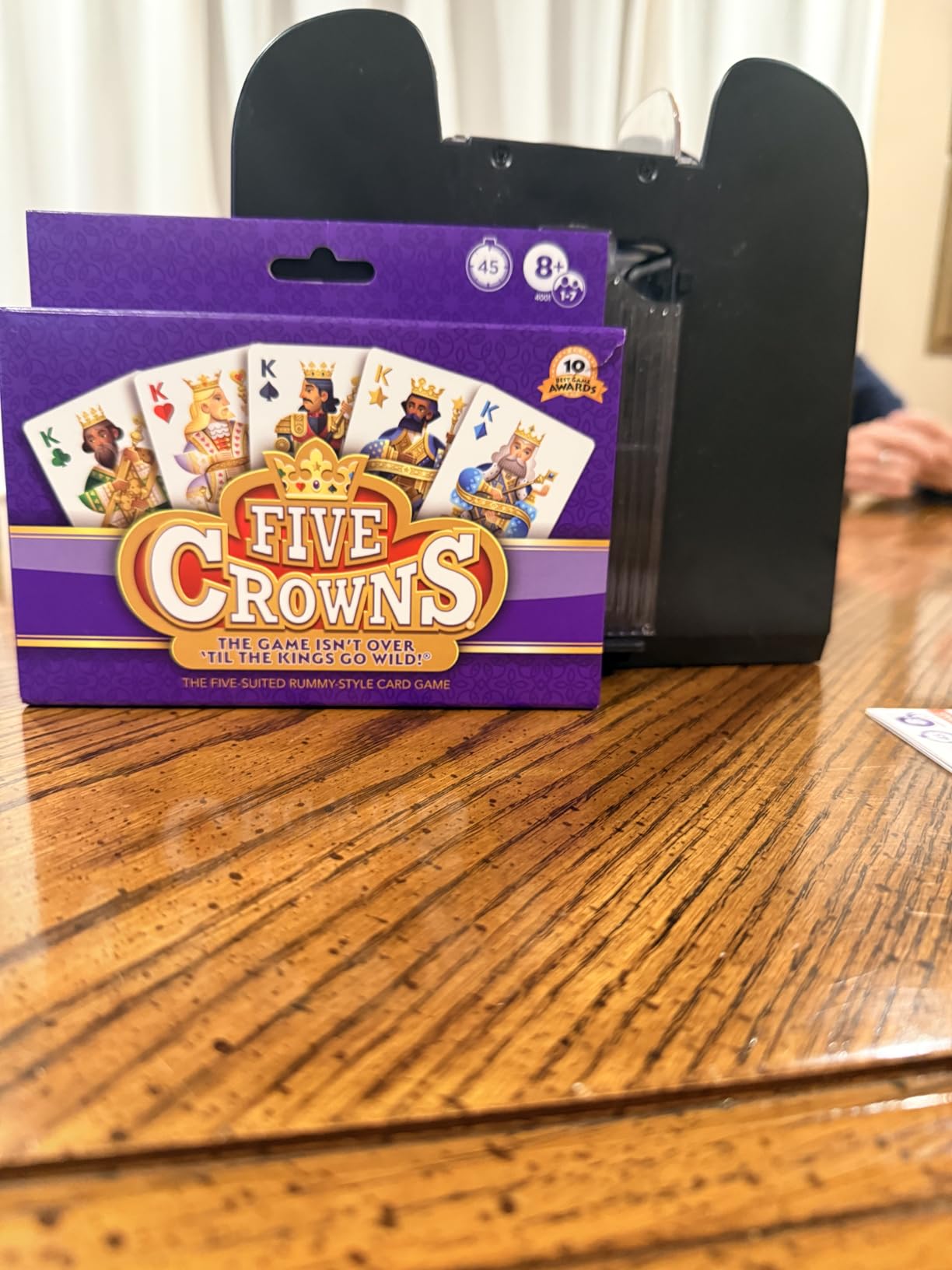
The rotating wild cards eliminate the worst part of standard Rummy: the stale feeling once everyone learns each other’s strategies. Each round, the wild card changes, forcing players to rethink their approach. My oldest daughter calls it “Rummy on training wheels” because the wild cards bail out beginners.
The 11-round structure also makes Five Crowns feel like a complete event rather than an endless game. After round 11, the player with the lowest total score wins, and the game naturally closes. This solved our family’s “how long is this going to take?” complaints with traditional Rummy.
8. SKYJO – Strategic Card Game With Educational Edge
magilano SKYJO, Fun Card Game for Young and Least Young, Fun Game Parties in The Circle of Friends and Family.
For 2-8 players
Ages 8+
30-minute rounds
Pros
- Educational - teaches addition and estimation
- Easy rules explained in under 5 minutes
- High replay value with 75k+ reviews
- Made in Germany with durable cardstock
- Fast-paced 30-minute rounds
Cons
- Premium price for a card game
- Similar mechanics to other Golf-style games
SKYJO is the surprise hit of our winter collection. After seeing 75k+ reviews, I expected another forgettable card game. But the strategic depth caught me off guard. The goal is to collect as few points as possible, but the real game is in figuring out which cards to keep versus discard.
The math benefit is real. Players face dozens of small addition problems as they calculate column totals running into double-digit numbers. According to teacher reviews I have read, parents love SKYJO for boosting number fluency without flashcards.
Made in Germany with high-quality cardstock, this version has held up to a winter of weekly play. The 150 cards shuffle cleanly, and the included notepad for scorekeeping is a thoughtful touch that saved us from buying extras.
Gameplay Flow
Each player has a 4×3 grid of cards face-down, plus three face-up. On your turn, you draw from the deck or discard pile, swap a card, then discard one. At game’s end, players reveal their grids, and the lowest column total wins. Sounds simple, but deciding whether to keep a 6 or chase a lower card creates constant tension.
Rounds last about 30 minutes once players know the rules. The first game took 45 minutes while we learned the discard strategy. Now games consistently finish in 25-30 minutes.
Comparing to Golf
SKYJO has obvious parallels to the card game Golf. Both involve grids, swapping, and low-score wins. But SKYJO adds a face-down reveal element that creates surprise moments. My kids love flipping cards to discover whether their grid is actually low-scoring or secretly terrible.
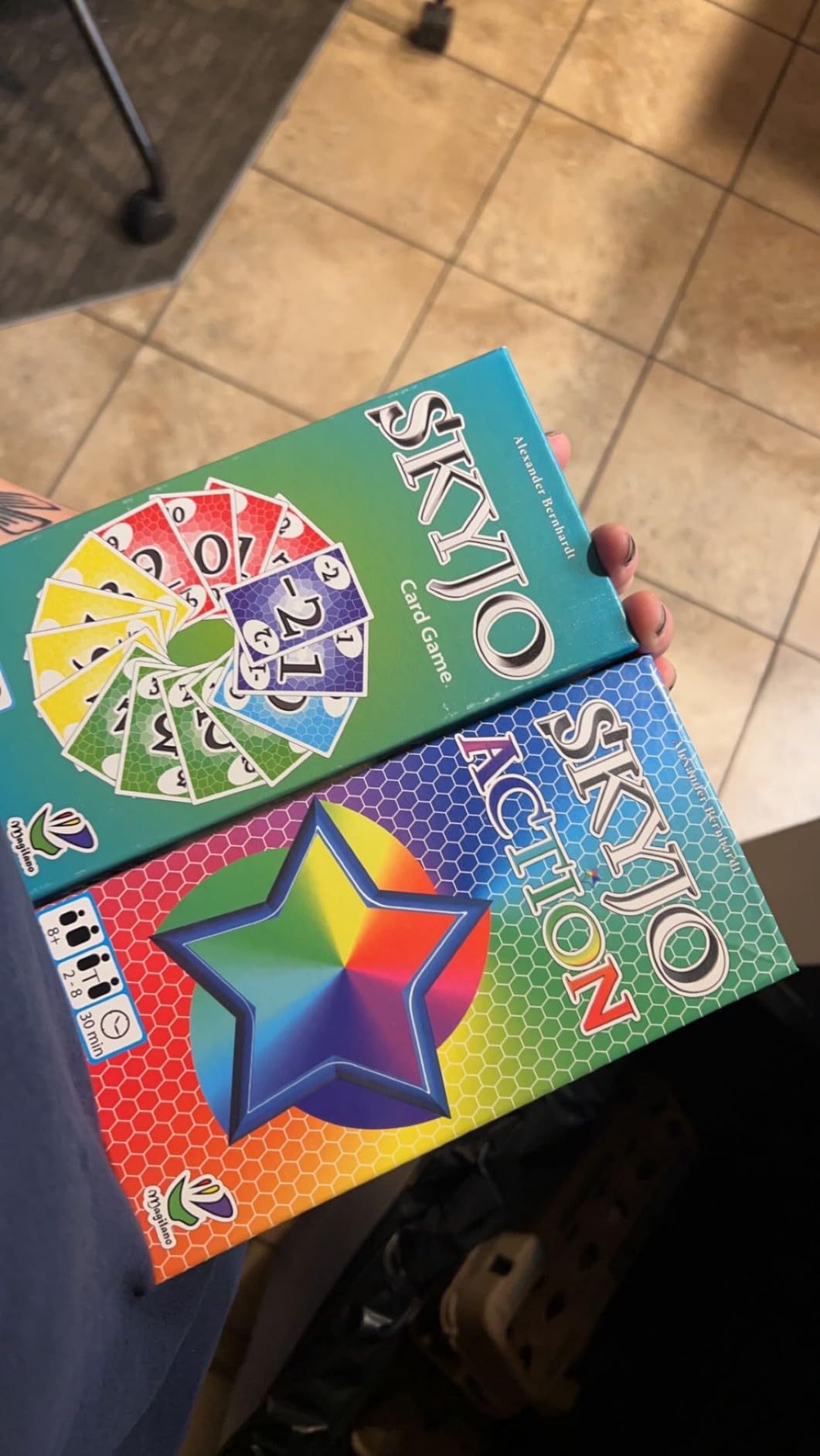
The multilingual instructions (German, English, French, Spanish, Italian) are a nice touch for bilingual families. We do not speak anything besides English, but I appreciated the international quality feel.
Best for Older Kids and Adults
SKYJO works best for kids 8 and up because of the math involved. Younger kids can play with help from a parent or older sibling. The game is also a strong pick for couples and adult game nights, since the strategy rewards careful thinking.
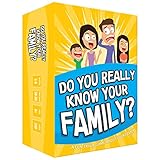
9. Do You Really Know Your Family? – Conversation Starter
Do You Really Know Your Family? Fun Family Game for Kids, Teens and Adults
For 3-8 players
Ages 8+
Conversation trivia cards
Pros
- Creates surprising family conversations
- Trivia and challenge cards mix well
- Easy to learn and play
- Tin container keeps cards organized
- Quick play that fits busy holiday schedules
Cons
- Some questions may not fit every family structure
- Limited replay value compared to strategy games
This game surprised me with how much I learned about my own family. During one round, I discovered my partner has a secret fear of chickens (we live on a street with no chickens). The conversation flowed for two hours after the cards were put away, and the trivia made us all laugh.
The game is simple: read a question aloud, family members write their guesses, and the answers are revealed. The questions range from “What is Mom’s worst fear?” to “What does Dad dream about at night?” Every game surfaces surprising answers that spark real conversations.
The tin container and cardstock quality feel premium. We have traveled with this game to four family gatherings, and the cards still look new after a year of use.
Why It Works for Mixed Ages
Trivia works because every age group has different strengths. My 10-year-old knew answers about Disney movies that I did not. My mother-in-law knew answers about cooking that surprised the rest of us. The game levels the playing field by valuing each person’s unique knowledge.
The challenge cards add physical tasks. My favorite is “Try to lick your elbow,” which produces immediate laughter. The mix of trivia, conversation, and silly challenges keeps the energy high even when players start getting tired.
Building Family Connection
I recommend saving Do You Really Know Your Family? for evenings when the kids are calm. The conversation angle works best in relaxed settings, not when everyone is hyper from sugar. We played it after dinner at Christmas, and the slow pace was perfect for winding down.
The game has lower replay value than strategy games; once you’ve answered all 100 questions, the game is largely done. We have hit this point after about a dozen plays. The good news is that the conversations sparked by the questions live on long after the cards are shelved.
10. Herd Mentality – Party Game for Big Gatherings
Herd Mentality Board Game: Funny Family Party for Game Night, 4-20 Players
For 4-20 players
Ages 10+
20-minute rounds
Pros
- Scales up to 20 players for huge family gatherings
- Easy rules explained in 2 minutes
- Quick 20-minute rounds fit any schedule
- Encourages thinking like others - fun social mechanic
- Expansion packs extend replay value
Cons
- Less fun with fewer than 6 players
- Can feel chaotic in mixed-age groups without strong moderation
Herd Mentality is the game I pull out when more than 8 people want to play at once. Most games top out around 4-6 players, but this one scales to 20, which solved our holiday party problem for good. We played an 18-player round at Thanksgiving, and everyone stayed engaged for the full 20 minutes.
The mechanic is intuitive: read a question like “What is the most annoying sound?” and every player writes an answer. The trick is that matching the majority answer wins you cows. The odd-one-out gets the dreaded Pink Cow, which counts against you at the end.
The game encourages players to predict what others will say. I found myself thinking about my mom’s preferences when I wrote my answers, which led to a hilarious realization that we think alike on everything from pizza toppings to movie villains.
Why Big Groups Love It
With 4 to 20 players, Herd Mentality covers everything from a small cousin gathering to a full family reunion. The 20-minute round length works perfectly because nobody gets bored waiting for their next turn. Even with 18 players, each round took exactly 22 minutes in our experience.
The questions are cleverly designed to have predictable majority answers. “What is the best superhero?” might have 12 people say Batman. Writing the obvious answer is a strategy; trying to be clever gets you the Pink Cow.
Limitations for Small Groups
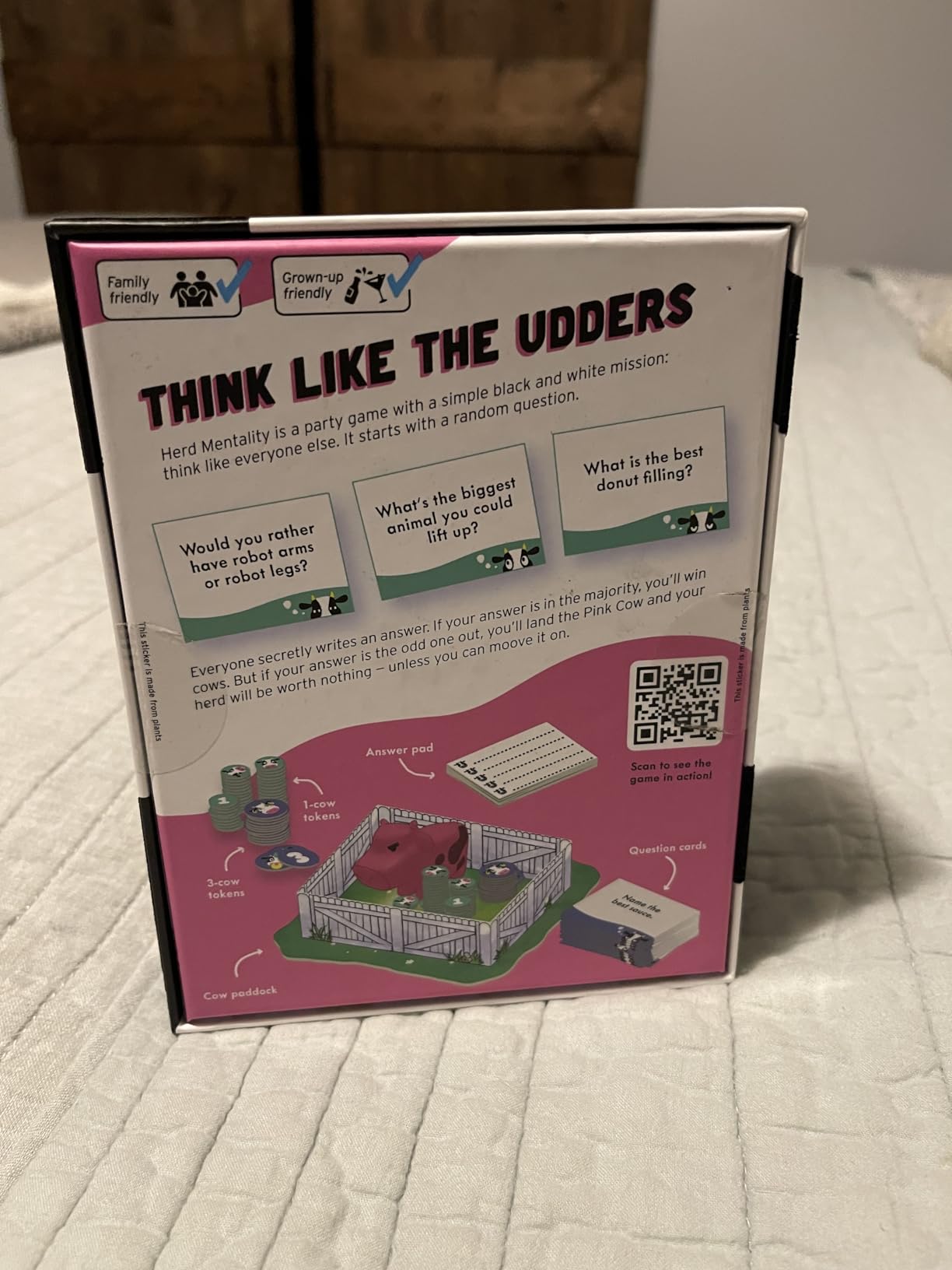
With only 4 players, the majority mechanic feels less powerful. The game recommends 6+ players for full fun. For smaller family nights, choose a different option from this list.
The pink cow penalty can feel harsh for younger players. My 8-year-old burst into tears after being the only one to pick “Spaghetti” for “Best food.” We now play a rule that kids under 12 cannot get the Pink Cow on rounds 1 and 2, which reduces the sting.
Holiday Party Winner
If your winter celebrations include 8+ people, Herd Mentality is the best party game on this list for keeping everyone laughing. The 20-minute rounds fit between dinner and dessert, and the rules are simple enough that newcomers can join mid-game.
11. The Floor is Lava – Active Indoor Adventure
Goliath The Original The Floor is Lava! Game by Endless Games – Interactive Game For Kids And Adults – Promotes Physical Activity – Indoor And Outdoor Safe – Classic Edition
For 2-6 players
Ages 5+
Indoor physical play
Pros
- Gets kids moving and away from screens
- Durable foam stepping stones included
- Easy to learn and quick to set up
- Fun for mixed ages and physical levels
- Works in any room with floor space
Cons
- Requires clear floor space for setup
- Storage box is tight - foam stones overflow
- Young kids may need reminders about rules
The Floor is Lava solved our biggest winter problem: kids stuck inside when it’s too cold to play outdoors. My two kids (ages 7 and 10) burn energy jumping from foam stone to foam stone while the spinner decides their fate. After 30 minutes, they are tired, happy, and asking when we can play again.
The premise is simple: imagine the floor is lava, jump from stone to stone, don’t fall in. The spinner adds movement and challenge cards add tasks like “twirl twice before jumping.” The chaos is intentional and gets kids laughing instead of staring at screens.
The 25 foam stones and 27 challenge cards feel premium. The foam is dense enough to support adult weight but soft enough to cushion falls. After six months of weekly play, ours still look new.
Active Play Benefits
Pediatricians we follow on social media recommend active indoor play during winter months. According to parent reviews on r/parenting, The Floor is Lava is one of the most cited games for burning kid energy indoors. My own kids average 1,500-2,000 steps during a single game based on my rough pedometer tracking.

The game also helps with gross motor skills. My 7-year-old’s coordination improved noticeably after a few months of regular play, which her gymnastics teacher noticed too. Whether that’s direct correlation or just active play in general, the game delivers.
Space and Storage
You need roughly 6×6 feet of clear floor space, ideally in a living room or basement. We move the coffee table out for game nights and push the rug back. The setup takes about 3 minutes.

Storage is the main weakness. The included box is too small to hold everything cleanly. I transferred the foam stones to a separate plastic bin and keep the cards in the original box. After a year of weekly play, this storage solution works perfectly.
Best for Active Families
If your kids have more energy than attention span, The Floor is Lava is the answer. It pairs well with quieter games on this list; we play 30 minutes of Floor is Lava to burn energy, then transition to a card game for calm-down time.
12. Monopoly Deal – Quick Card Game Spin-Off
Monopoly Deal Card Game | Quick-Playing Card Game | Fun Games for Families and Kids | Ages 8 and Up | 2 to 5 Players | 15 Mins. | Travel Games
For 2-5 players
Ages 8+
15-minute rounds
Pros
- Plays in about 15 minutes - fast Monopoly experience
- Easy to teach after initial rules confusion
- Portable for travel and restaurants
- Works well with 2-5 players
- Strong value under $10
Cons
- Rules confuse first-time players initially
- Some learning curve before gameplay clicks
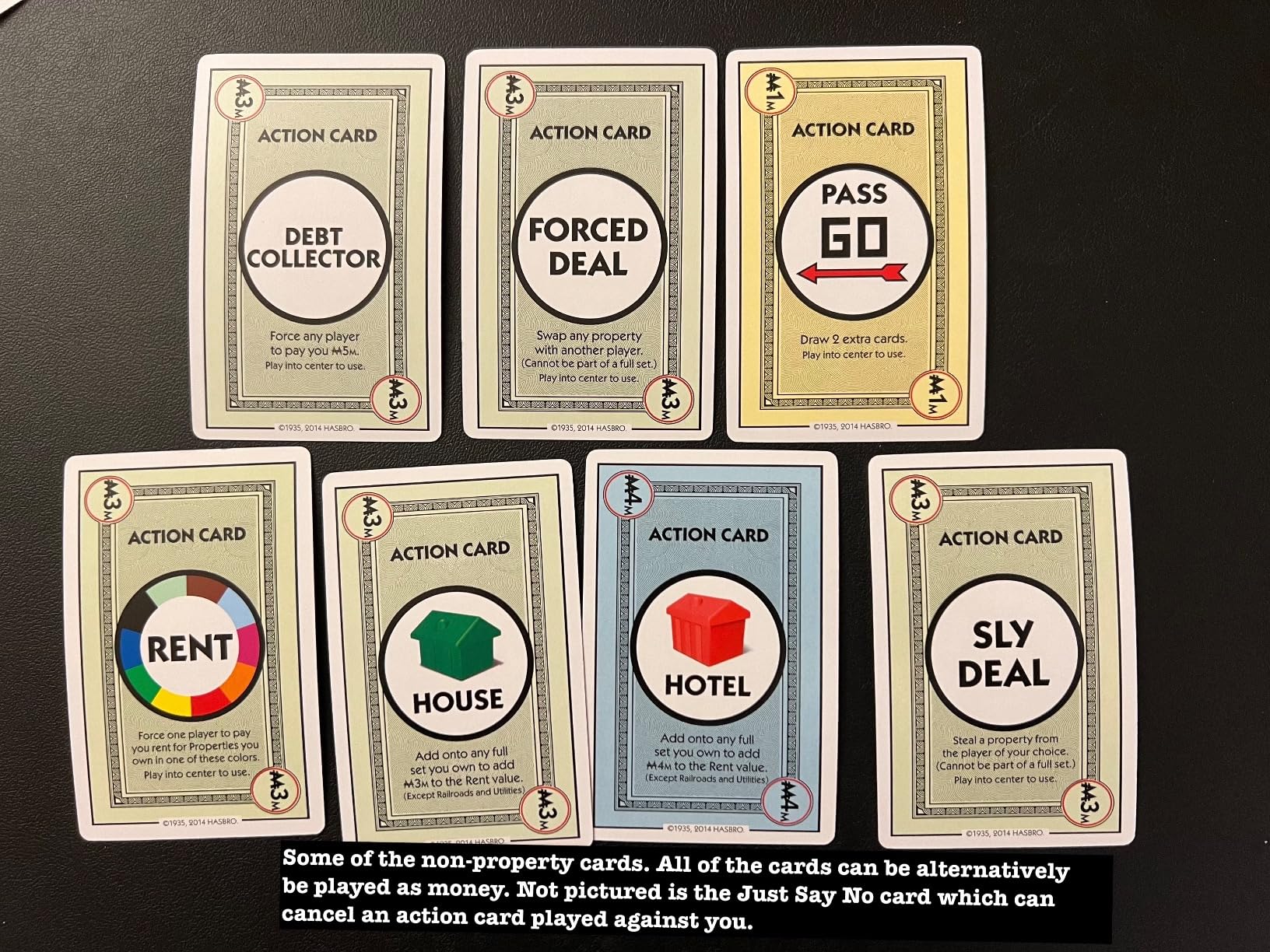
Monopoly Deal delivers the Monopoly experience in 15 minutes instead of 3 hours. I love the original Monopoly but cannot commit an entire evening anymore. Deal gives my kids the property-stealing, rent-collecting thrill without the time commitment.
The card system covers the Monopoly essentials: collect property sets, charge rent, and steal from opponents. There are action cards like “Just Say No” that counter other action cards, which produces screaming laughter when played correctly.
Learning Curve Honesty
The first game is confusing. There are multiple card types (money, property, action) and each behaves differently. We read the rules three times and still missed a turn. After the first game, however, everything clicked.
I recommend playing a “rules round” first where you can pause and look things up. After that, games flow naturally. The included reference cards help once the rules settle in.
Travel and Restaurant Play
The compact box fits in a purse or backpack. We brought Monopoly Deal to a restaurant recently and played one round while waiting for food. The 15-minute game length is restaurant-friendly; we finished before the appetizers arrived.
The game also handles 2 players well, which makes it a strong pick for date nights when grandparents have the kids. My partner and I played after the kids went to bed last weekend, and the strategy held up at the 2-player level.
Value Pick
At under $10 with 36k+ reviews and a 4.8 rating, Monopoly Deal is one of the best values on this list. The game delivers far more entertainment than its price suggests, and the cards survive years of play.
How to Choose the Right Winter Indoor Game for Your Family
Choosing from 12 great options sounds intimidating, but the right game depends on three questions: who is playing, how much time do you have, and what kind of energy do you want. I have narrowed it down based on what our family and other families we know look for when starting or expanding their game shelf.
Consider Your Player Count
Group size is the most important factor. UNO and SEQUENCE scale up to 10-12 players, which makes them perfect for holiday gatherings. Rummikub and Five Crowns top out at 4-7, which makes them better for small family nights. Herd Mentality handles the largest groups (up to 20) and is unmatched for big reunions.
For families with only 2-4 members, my top picks are Bananagrams, Rummikub, and SKYJO. These games deliver deep strategy without needing extra players.
Match Game Length to Mood
Short games (10-20 minutes) like Taco Cat Goat Cheese Pizza, Bananagrams, and Herd Mentality work best when kids have limited attention or the family wants to rotate between options.
Medium games (30-45 minutes) like Rummikub, SKYJO, and The Floor is Lava fit a dedicated family game night. Long games like full Monopoly or expansion-heavy titles are great for weekend snow days but tough on weekday evenings.
Active vs Relaxed Play
Active games burn energy but require space and willingness to make noise. The Floor is Lava is the strongest pure active game on this list. SEQUENCE and UNO offer light tactical thinking without physical exertion.
Cooperative games are missing from this roundup because most cooperative titles target slightly older audiences. If your family enjoys working together, consider checking out our guide to board game recommendations for more options that emphasize teamwork.
Age-Appropriate Selection
Younger kids (5-7) do best with The Floor is Lava, Bananagrams (with help), and Jenga. Middle-age kids (8-12) can handle most games on this list. Teens and adults enjoy SKYJO, Monopoly Deal, and Rummikub for the strategy.
Mixed age groups of 4+ ages need games like UNO, SEQUENCE, or Bananagrams that have low skill floors but high skill ceilings. My family’s most successful games have been those where the 7-year-old competes with adults on roughly equal footing.
Budget-Friendly Picks
All 12 games on this list retail under $30, and most are under $20. The cheapest picks are Monopoly Deal and Taco Cat Goat Cheese Pizza (under $10 each), making them perfect for stocking stuffers or last-minute gifts.
The biggest “investment” picks are Herd Mentality and The Floor is Lava (around $20-25), but both deliver far more entertainment per dollar than their prices suggest. Buying two to three games at varied price points gives your family a complete winter toolkit.
Frequently Asked Questions
What are some fun indoor games for kids in winter?
The best indoor games for kids in winter include active games like The Floor is Lava for burning energy, card games like UNO and SKYJO for quick rounds, and strategy games like Rummikub and SEQUENCE for deeper play. Bananagrams offers educational value, while Taco Cat Goat Cheese Pizza is perfect for laughs. Mix active games with quiet games depending on whether kids need to burn energy or wind down. Most of these games work for ages 6+ and handle groups from 4-12 players.
What is your most enjoyable indoor family game?
UNO has been my family’s most enjoyable indoor game for over five years because three generations can play together and the rules take less than a minute to explain. Bananagrams is a close second because it works for solo play and group play, and my kids learn vocabulary without realizing it. For larger gatherings, Herd Mentality and SEQUENCE handle big groups better. The best family game is the one your family actually plays regularly, so start with one or two options from this list before expanding.
What are some fun indoor family games to play during Christmas?
For Christmas gatherings with mixed ages, the best games are Herd Mentality (up to 20 players), SEQUENCE (up to 12 players), and UNO (up to 10 players). Do You Really Know Your Family? creates meaningful conversations that spark holiday memories. Five Crowns works well as a relaxed card game between dinner and dessert. For smaller families on Christmas morning, Bananagrams and SKYJO deliver strategic depth without overwhelming new players.
What are the top 10 family games?
Based on ratings and our testing, the top 10 family games are: UNO, SEQUENCE, Rummikub, Taco Cat Goat Cheese Pizza, Bananagrams, Five Crowns, SKYJO, Herd Mentality, The Floor is Lava, and Monopoly Deal. These games cover card play, strategy, active movement, and large group dynamics. All 10 support mixed ages from 7 and up, and most work for groups of 4-8 players. The list spans price points from under $10 to $25, so families on any budget can build a solid game collection.
What games work for families with mixed ages?
Games that work well for families with mixed ages include UNO (ages 7+), Bananagrams (ages 7+ with help for younger kids), SEQUENCE (ages 7+ with team play), and Herd Mentality (ages 10+). Cooperative elements, team modes, and rotating wild cards help younger kids compete fairly. Avoid games that require strong reading or math skills for younger players; Bananagrams, UNO, and The Floor is Lava all work with kids as young as 5 with light supervision.
Final Thoughts on Building Your Family Game Collection
Stocking your home with the best winter indoor games for families does not require a huge budget or endless shelf space. The 12 games on this list cover most winter scenarios: snow days, holiday gatherings, family game nights, and even restaurant entertainment. Starting with three versatile picks (UNO, Bananagrams, and The Floor is Lava) gives you active play, card play, and word play in one package.
The real test of a family game is whether it gets played. I have seen families spend hundreds on board game collections that gather dust because the games were too complex, too long, or too frustrating for kids. Every game on this list cleared the “play it more than twice” test in our household over the past three winters.
Pick two to three games that match your family size and energy, and rotate them weekly through the winter months. Your kids will start asking for game night instead of screen time, and you will have a tested toolkit ready for every snowstorm, holiday, and weekend until the ground thaws.