
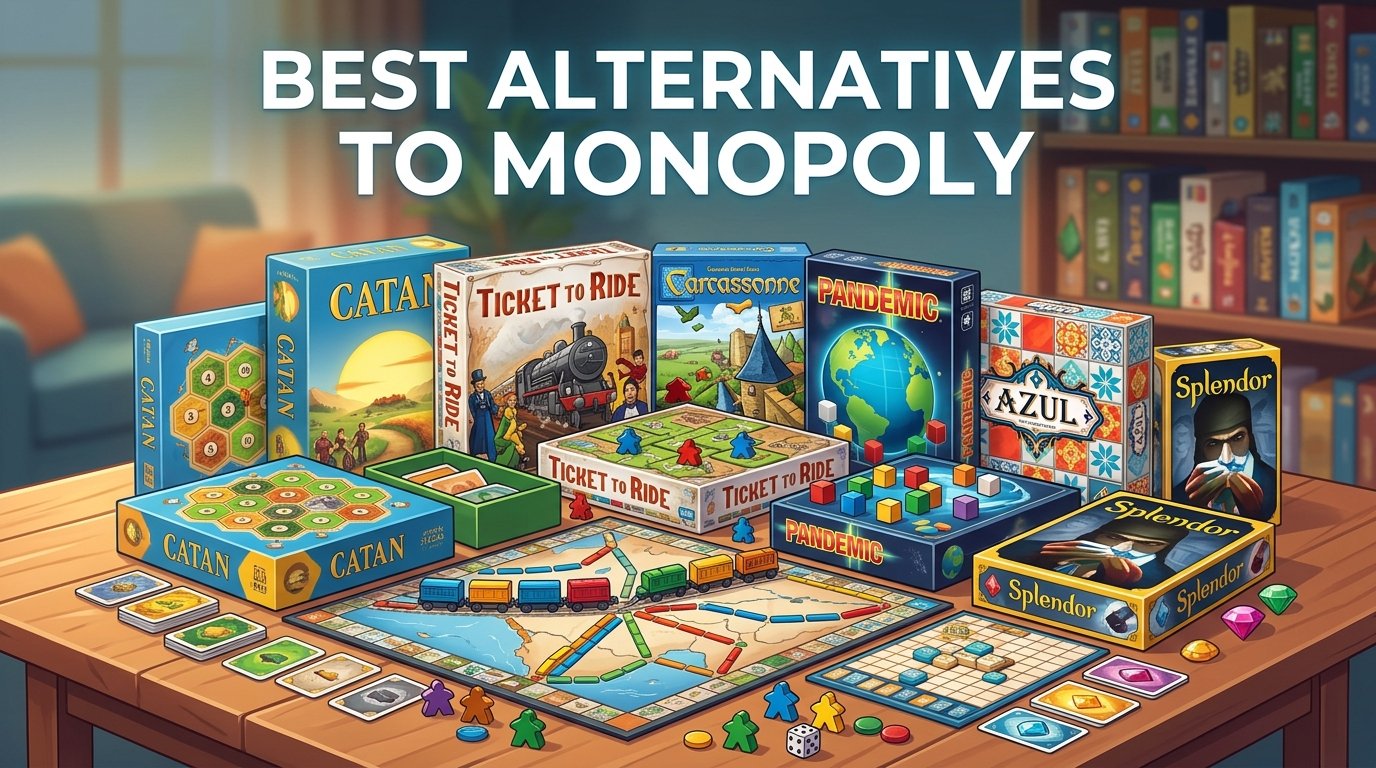
We have all been there. Someone suggests Monopoly for family game night, and three hours later half the table is bored, one person is bankrupt, and nobody is having fun anymore. Monopoly has earned its reputation for dragging on, rewarding luck over strategy, and testing relationships in ways no game should.
The good news is that board gaming has evolved dramatically since Monopoly first appeared. Modern board games offer tighter rules, faster play times, meaningful decisions on every turn, and most importantly, everyone stays engaged until the end. If you are looking for the best alternatives to Monopoly, you are in the right place.
Our team put together this guide after logging dozens of game nights with family and friends. We selected eight board games that replace everything Monopoly tries to do but does better. Whether you want classic board games like Monopoly reimagined or something completely fresh, there is a pick here for your group.
Table of Contents
Top 3 Picks for Best Alternatives to Monopoly

CATAN Board Game 6th Edition
- Trade and build strategy
- 3-4 players
- 60-90 min playtime
- Modular board

Ticket to Ride 2025 Refresh
- Cross-country train adventure
- 2-5 players
- 30-60 min playtime
- Easy to learn

Best Alternatives to Monopoly in 2026
| Product | Specifications | Action |
|---|---|---|
| CATAN Board Game 6th Edition |
|
Check Latest Price |
| Ticket to Ride 2025 Refresh |
|
Check Latest Price |
| Splendor Board Game |
|
Check Latest Price |
 Azul Board Game Azul Board Game |
|
Check Latest Price |
 Carcassonne Board Game Carcassonne Board Game |
|
Check Latest Price |
 Codenames 2nd Edition Codenames 2nd Edition |
|
Check Latest Price |
 Dominion 2nd Edition Dominion 2nd Edition |
|
Check Latest Price |
 Acquire Strategy Board Game Acquire Strategy Board Game |
|
Check Latest Price |
1. CATAN Board Game (6th Edition) – Trade, Build, and Settle
CATAN Board Game (6th Edition) Trade, Build & Settle in the Classic Strategy Game for Family, Kids & Adults, Ages 10+, 3-4 Players, 60-90 Min Playtime
Strategy resource trading game
3-4 players
Ages 10+
60-90 min playtime
Modular hexagonal board
Pros
- Modular board offers endless replayability
- Strategic resource management and trading
- Perfect for family game nights
- Engaging competition throughout
Cons
- Robber mechanic can disrupt gameplay
- Requires exactly 3-4 players for best experience
CATAN is the game that launched the modern board game revolution, and the 6th Edition brings refined components and updated rules to the table. You settle an uninhabited island by gathering resources like brick, wood, wheat, ore, and sheep. Then you trade with opponents, build roads and cities, and race to reach 10 victory points before anyone else.
I have played CATAN more than 50 times, and the magic is in the trading. Every turn involves negotiation with other players, which means nobody is sitting idle waiting for their chance. The modular hexagonal board rearranges every game, so no two sessions ever feel the same.
With nearly 40,000 reviews and a 4.8-star rating, CATAN has earned its place as one of the most beloved strategy games ever made. It captures the property-building thrill of Monopoly but adds genuine strategic depth and meaningful player interaction from turn one.
The 6th Edition includes 19 terrain hexes, 96 wooden player pieces in four colors, 120 cards, and a full ruleset. Setup takes about 10 minutes, and games typically run 60 to 90 minutes depending on how much your group likes to negotiate.
What Makes CATAN Better Than Monopoly
CATAN replaces Monopoly’s roll-and-move luck fest with active decision-making. You choose where to build, what to trade, and which development cards to pursue. The robber adds tension without eliminating players, so everyone stays in the game until someone wins.
The trading mechanic means you are constantly engaged with other players rather than waiting for your turn. This single change eliminates the boredom that makes Monopoly drag on for hours.
2. Ticket to Ride (2025 Refresh) – A Cross-Country Train Adventure
Asmodee Ticket to Ride Board Game (2025 Refresh) – A Cross-Country Train Adventure for Friends and Family, Strategy Game for Kids & Adults, Ages 8+, 2-5 Players, 30-60 Minute Playtime
Route building train strategy game
2-5 players
Ages 8+
30-60 min playtime
2025 refreshed edition
Pros
- Easy to learn hard to master
- Beautiful miniature train components
- Multiple ways to win
- Perfect balance of accessibility and strategy
Cons
- Cards can be small and hard to hold
- Limited direct player conflict
Ticket to Ride is the gold standard for gateway board games. The 2025 Refresh edition updates the components while keeping the same beloved gameplay. You collect colored train cards and claim railway routes across North America, connecting cities to complete your destination tickets.
Our team introduced Ticket to Ride to several friends who had never played a modern board game, and every single one was hooked within 10 minutes. The rules fit on a single page, but the strategic decisions about which routes to claim and when to block opponents create genuine tension.
The game comes with a giant map board, 225 plastic trains in five colors, 110 train cards, and 33 destination tickets. With a 4.9-star rating across more than 27,000 reviews, it is one of the highest-rated family board games on the market.
Play time runs 30 to 60 minutes for 2 to 5 players ages 8 and up. That means you can finish a full game in less time than it takes to set up and start a round of Monopoly.
How Ticket to Ride Compares to Monopoly
Ticket to Ride delivers the same territorial expansion feeling as Monopoly but with tighter rules and a guaranteed finish time. Nobody gets eliminated, and the scoring at the end keeps everyone invested until the final move.
The 2025 Refresh edition features improved components and updated art that make the game feel premium on the table. It is the kind of game you will pull out again and again because every session plays differently based on which destination tickets you draw.
3. Splendor – Gem Trading and Engine-Building Strategy
Asmodee Splendor Gem Trading Strategy Board Game, 2-4 Players
Engine building gem trading game
2-4 players
Ages 10+
30 min playtime
90 development cards
Pros
- Fast to learn deep to master
- Elegant engine-building mechanics
- Scales beautifully across player counts
- Short 30-minute playtime
Cons
- Cards can show wear over time
- Theme may feel dry to some players
Splendor is one of the most elegant board games I have ever played. You collect gem tokens to purchase development cards, which in turn make future purchases cheaper. The goal is to build an economic engine powerful enough to attract noble patrons and reach 15 prestige points.
The brilliance of Splendor is how the game transforms over its 30-minute playtime. Early on you scrape together gems one at a time. By the end, your engine is humming and you are buying powerful cards for free because of discounts you have accumulated.
With a 4.9-star rating from nearly 15,000 reviewers, Splendor is celebrated for its depth-to-complexity ratio. The rules take five minutes to explain, but the strategic decisions about timing, card reservation, and noble attraction create endless replayability.
The game includes 40 heavy plastic gem tokens, 90 development cards, and 10 noble tiles. The chunky gem tokens feel fantastic in your hand and add a tactile satisfaction that Monopoly’s paper money simply cannot match.
Why Splendor Replaces Monopoly Perfectly
Splendor captures the resource accumulation and economic strategy that people enjoy about Monopoly but condenses it into a tight 30-minute experience. Every decision matters, and there is no downtime waiting for other players to finish their turns.
The game also scales beautifully from 2 to 4 players, making it ideal for couples or small family groups. If you want a strategy game that respects your time, Splendor is hard to beat.
4. Azul – Mosaic Pattern Placement and Award-Winning Strategy
Azul Mosaic Tile-Placement Strategy Board Game, 2-4 Players, 30-45 Min
Tile placement mosaic strategy game
2-4 players
Ages 8+
30-45 min playtime
2018 Spiel des Jahres winner
Pros
- Award-winning 2018 Spiel des Jahres
- Beautiful mosaic tile art
- Perfect for 2-player duels
- Easy rules with deep strategic complexity
Cons
- Tile pieces can be small
- Draft-and-deny can feel aggressive
Azul won the 2018 Spiel des Jahres, which is essentially the Academy Award of board games. Inspired by Portuguese mosaic tiles called azulejos, you draft colorful resin tiles from shared factory displays and place them on your player board to build a stunning mosaic wall.
The first time I played Azul, I was struck by how a game with such simple rules could create such agonizing decisions. When you take tiles from a factory display, you must take all tiles of one color, and any leftover tiles slide to the center for everyone to fight over.
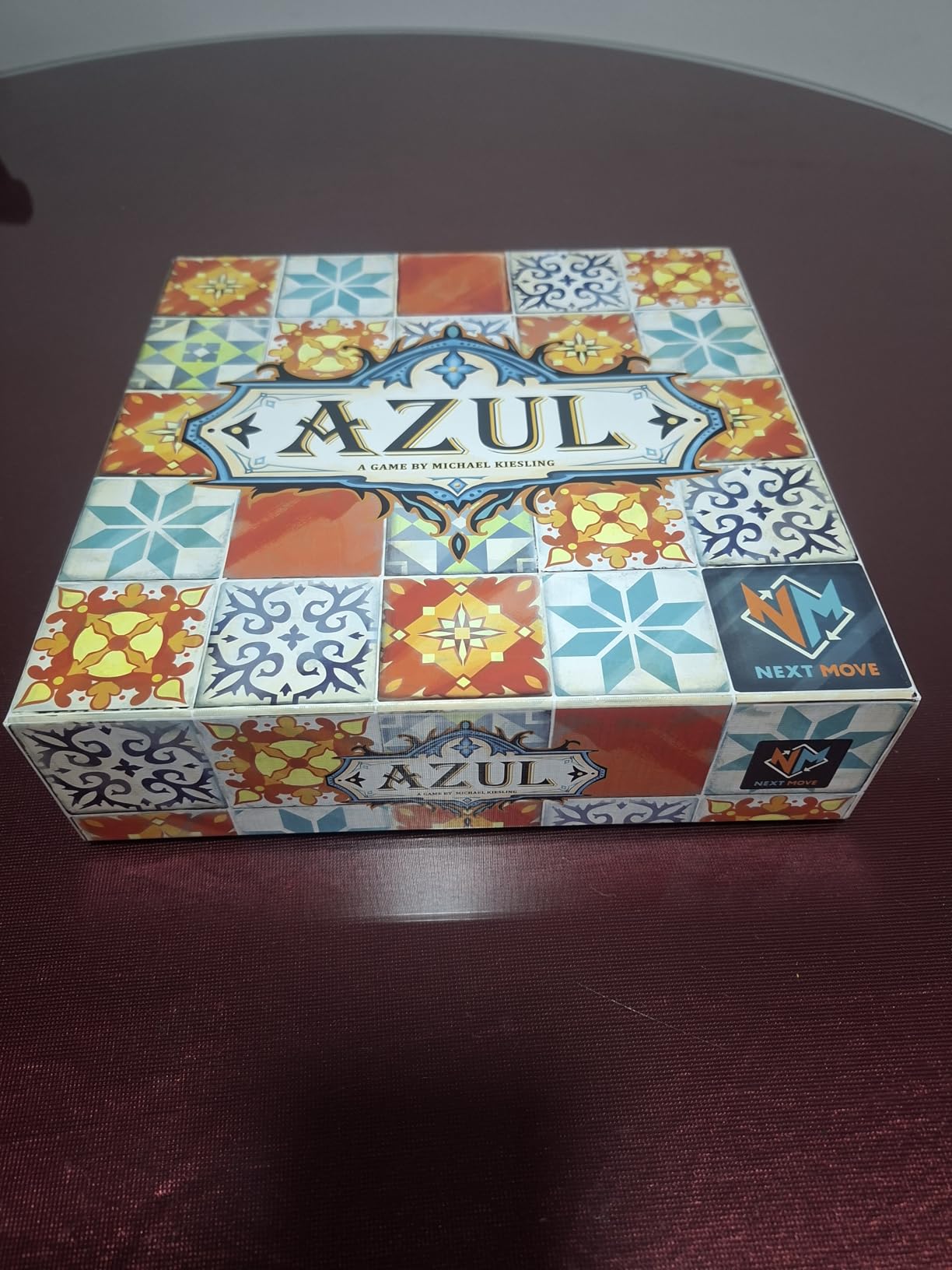
Azul really shines as a two-player duel. The draft-and-deny mechanic lets you deliberately take tiles your opponent needs, creating a layer of psychological warfare that Monopoly never achieves. With 2 to 4 players and a 30 to 45 minute playtime, it fits easily into any game night.
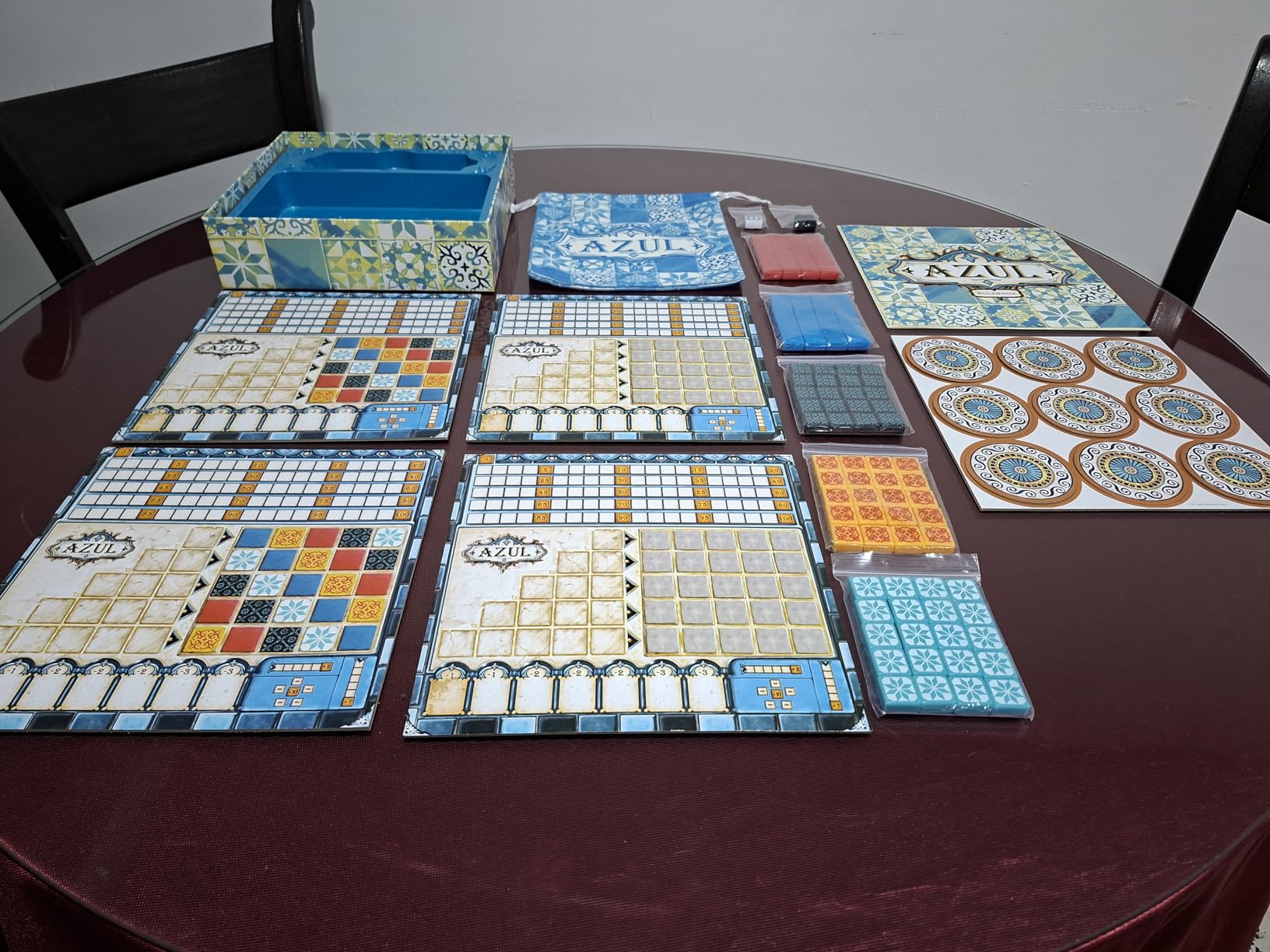
The components are gorgeous. You get 100 resin tiles, 4 player boards, 9 factory displays, and scoring markers. The tactile click of placing tiles on your board is genuinely satisfying in a way that paper money and plastic houses are not.
With over 16,000 reviews and a 4.8-star rating, Azul has proven its staying power. It is the kind of game that looks intimidating on the shelf but teaches in under five minutes.
What Group Size Works Best for Azul
Azul plays best with 2 or 3 players where the draft-and-deny tension is highest. With 4 players the game becomes more chaotic and the strategic control diminishes slightly, but it remains thoroughly enjoyable.
If you primarily play games as a couple, Azul is one of the best two-player board games on the market. The head-to-head mind games rival any competitive card game.
How Difficult Is Azul to Learn
Azul takes about 5 minutes to learn. The core loop is draft tiles, place them on pattern lines, then transfer completed rows to your mosaic wall. The strategic depth emerges from deciding which tiles to draft, when to complete patterns, and how to deny opponents.
Anyone who can play Monopoly can play Azul. The rules are simpler, the playtime is shorter, and the decisions are far more interesting.
5. Carcassonne – Classic Tile Placement Medieval Adventure
Carcassonne Tile Placement Strategy Board Game, 2-5 Players, 35 Min
Tile placement medieval strategy game
2-5 players
Ages 7+
35 min playtime
2001 Spiel des Jahres winner
Pros
- Winner of 2001 Spiel des Jahres
- Intuitive rules with strategic depth
- Endlessly replayable with randomized tiles
- Perfect gateway game for all ages
Cons
- Base game may feel limited without expansions
- Farmer scoring can confuse new players
Carcassonne is a tile-laying game where you build a medieval landscape one tile at a time. Each turn you draw a tile, place it on the table to extend roads, cities, fields, or monasteries, and then optionally place a meeple to claim that feature for points.
Winner of the 2001 Spiel des Jahres, Carcassonne has sold millions of copies and remains a cornerstone of modern board gaming. The board literally does not exist until you start playing, which means every single game creates a unique map.
I love Carcassonne because there is no downtime. When it is not your turn, you are watching the board grow, planning your next move, and calculating whether to place your meeple as a knight, thief, farmer, or monk. The decisions feel weighty even though the rules are simple.
With a 4.8-star rating from over 11,000 reviewers, Carcassonne works for ages 7 and up. It plays in about 35 minutes with 2 to 5 players, making it one of the most accessible games on this list. The base game even includes two mini-expansions, The Abbot and The River, right in the box.
Is Carcassonne Good for Younger Players
Carcassonne is one of the best board games for children ages 7 and up. The tile placement is visual and tactile, so kids grasp the concept immediately. Strategy develops naturally over repeated plays without needing complex rule explanations.
For families with mixed age ranges, Carcassonne bridges the gap beautifully. Adults can play strategically while younger players enjoy the puzzle-piece satisfaction of building the map.
Expansion Value for Carcassonne
Carcassonne has one of the richest expansion libraries in board gaming. The base game provides plenty of replay value, but expansions like Inns and Cathedrals or Traders and Builders add new mechanics and tiles that keep the game fresh for years.
If you want maximum content in one purchase, look at the Carcassonne Big Box, which bundles the base game with several top expansions at a significant discount compared to buying them individually.
6. Codenames (2nd Edition) – The Top Secret Word Association Party Game
CGE Codenames Board Game (2nd Edition)
Word association team party game
4-8+ players
Team based competition
High replayability
2nd edition refresh
Pros
- Creative word association mechanics
- High-stakes assassin tile tension
- Encourages creative thinking
- Scales to large groups easily
Cons
- Requires at least 4 players for optimal experience
- Spymaster role needs strong vocabulary
Codenames is the best party game I have ever played, period. Two teams compete to identify their secret agents from a grid of 25 word cards. Each team has a spymaster who knows which words belong to which team and gives one-word clues to help teammates guess correctly.
The genius of Codenames is how it rewards creative thinking. A spymaster might say “Ocean, 3” to link the words Whale, Shark, and Pirate. But if a teammate guesses Tentacle instead, they might accidentally reveal the assassin card and lose the game instantly.
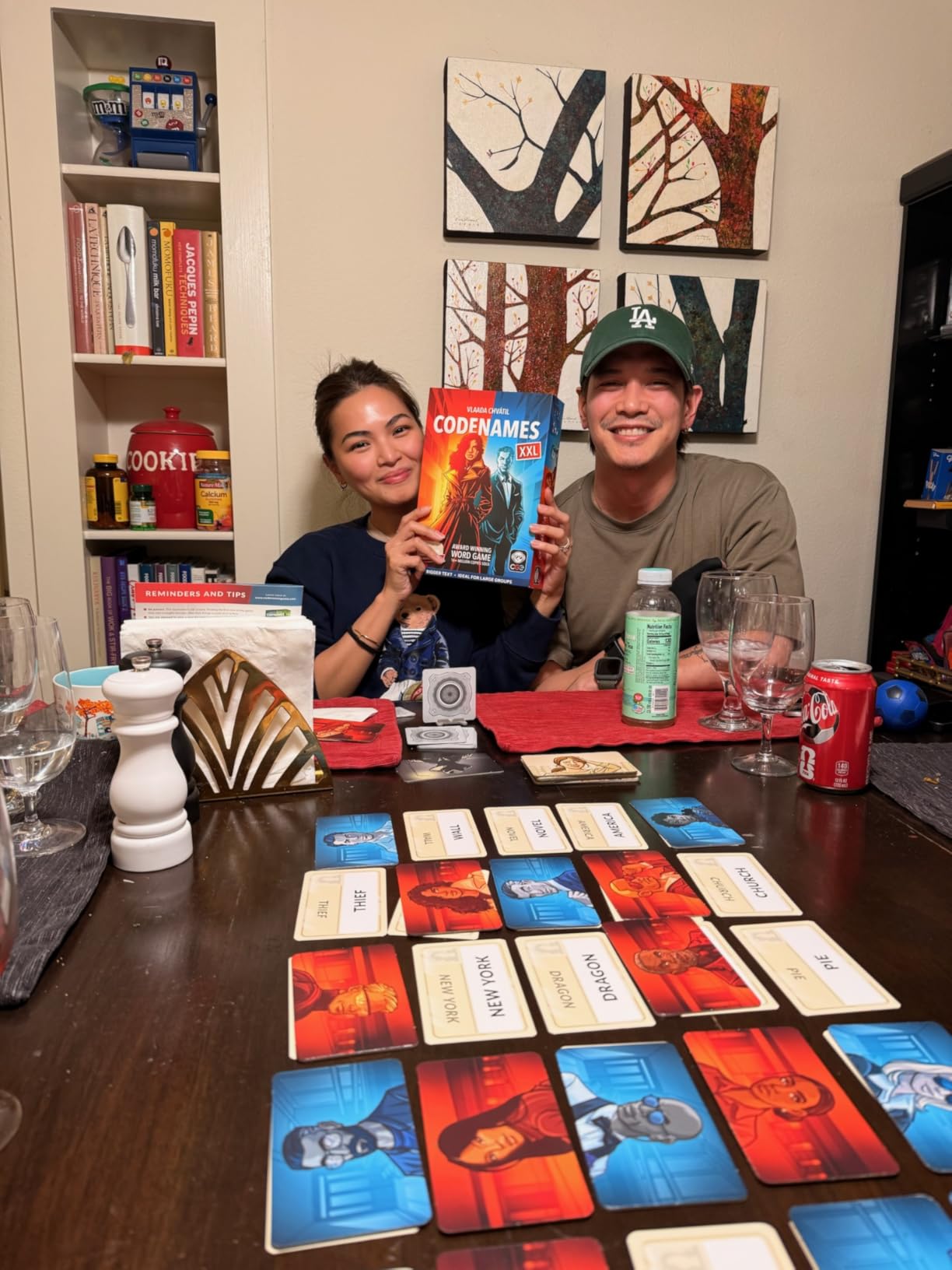
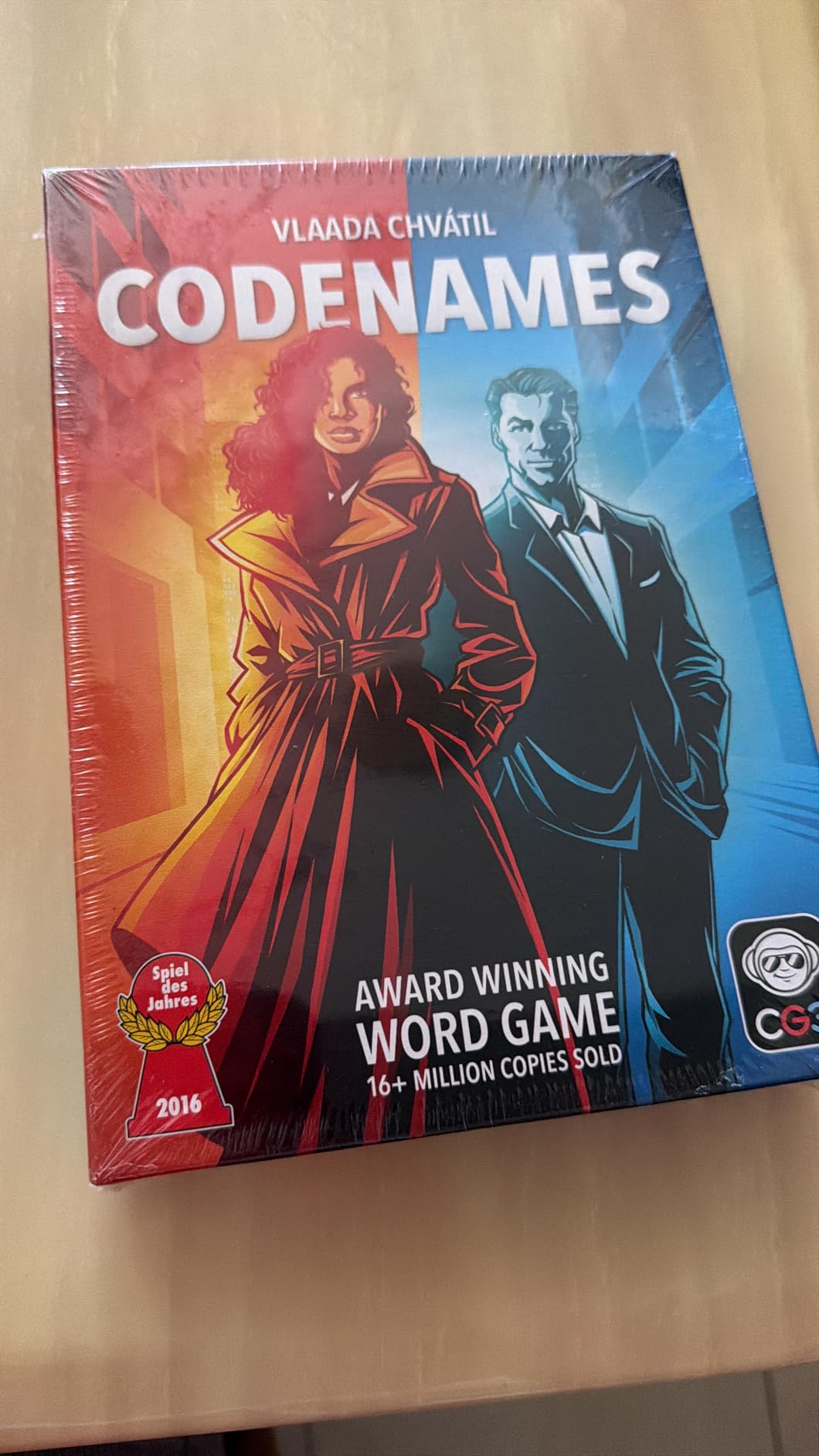
The 2nd Edition features revised words, refreshed artwork, a better insert, and a streamlined rulebook. With nearly 29,000 reviews and a 4.8-star rating, Codenames is one of the most popular party games ever created.
Unlike Monopoly, which can drag for hours and eliminate players, Codenames keeps everyone engaged. Even when it is not your turn, you are puzzling over clues and debating guesses with your team. Games typically last 15 to 30 minutes, so you can play multiple rounds in one sitting.
How Many Players Work Best for Codenames
Codenames officially supports 4 to 8 or more players, but it truly shines with 6 to 10 people divided into two teams. Larger groups make the clue-giving and guessing more chaotic and entertaining. The spymaster role rotates each round so everyone gets a turn.
For smaller groups, you can play a 2-player variant where one person acts as spymaster for both teams while the other guesses. It works but loses the team dynamic that makes the game special.
Can You Play Codenames with Mixed Age Groups
Codenames works well with mixed ages as long as younger players can read the word cards. Teenagers and adults will get the most out of the creative clue-giving, but kids as young as 10 can participate as guessers if the spymaster keeps clues accessible.
The assassin tile mechanic adds tension that keeps adults engaged while the simple word-matching keeps the game approachable for younger players. It is a rare party game that genuinely works for all ages.
7. Dominion (2nd Edition) – The Original Deck-Building Game
Rio Grande Games Dominion 2nd Edition Deck Building Strategy Card Game for 2-4 Players, Ages 13 Plus
Deck building strategy card game
2-4 players
Ages 13+
30 min playtime
2009 Spiel des Jahres winner
Pros
- The original deckbuilding game defined the genre
- Fast 20-30 minute games
- Award-winning 2009 Spiel des Jahres
- Millions of card combinations
Cons
- Base game may feel limited for experienced deck builders
- Requires card shuffling between turns
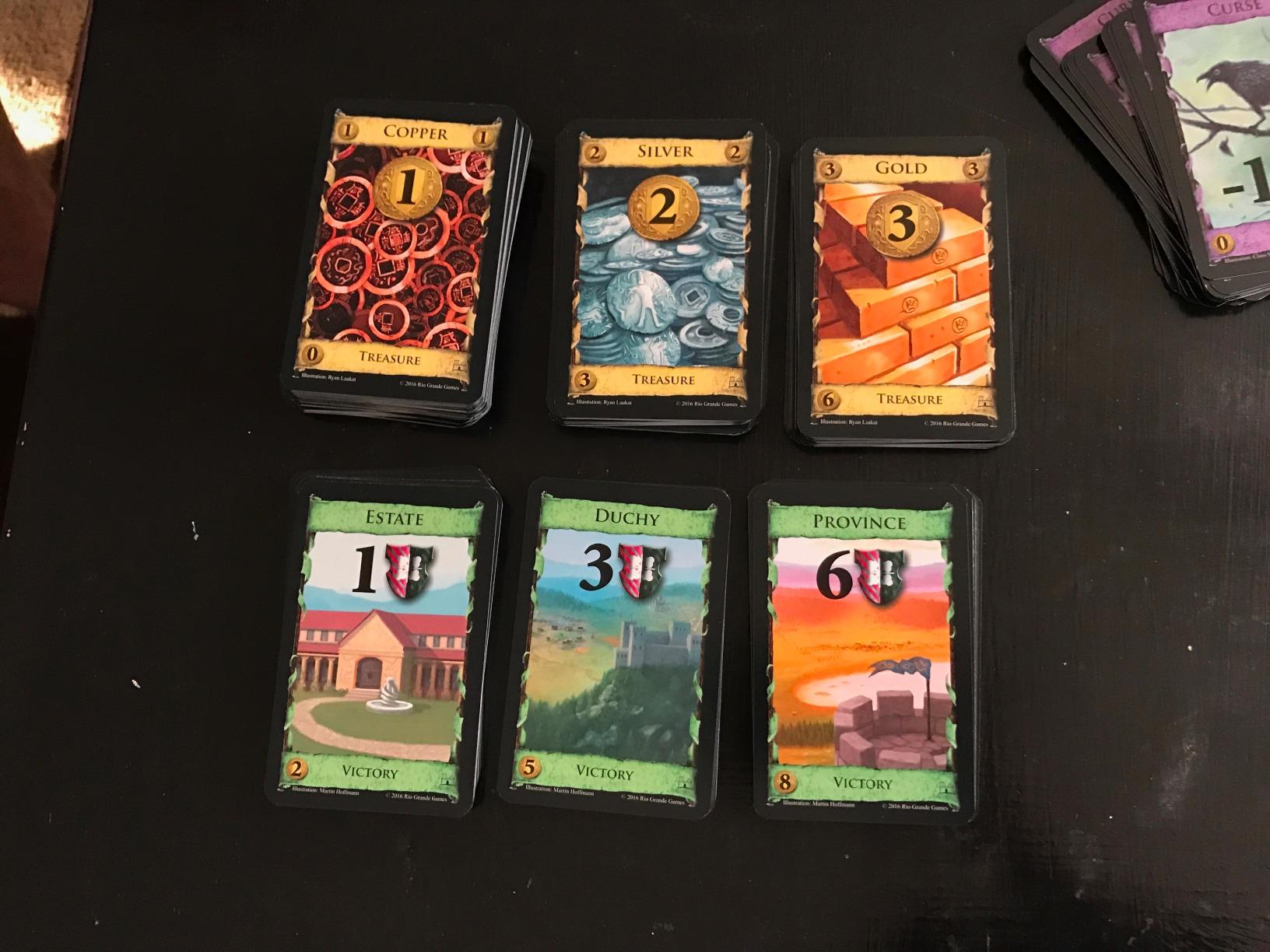
Dominion invented the deck-building genre, and the 2nd Edition refines the formula that started it all. You start with a humble deck of 10 cards and expand it over the course of the game by hiring minions, gaining treasure, and constructing powerful buildings.
The brilliance is that your deck is your engine. Every card you buy changes what you can do on future turns, so the strategic decisions compound throughout the game. With millions of possible card combinations across the kingdom cards, no two games of Dominion are ever identical.
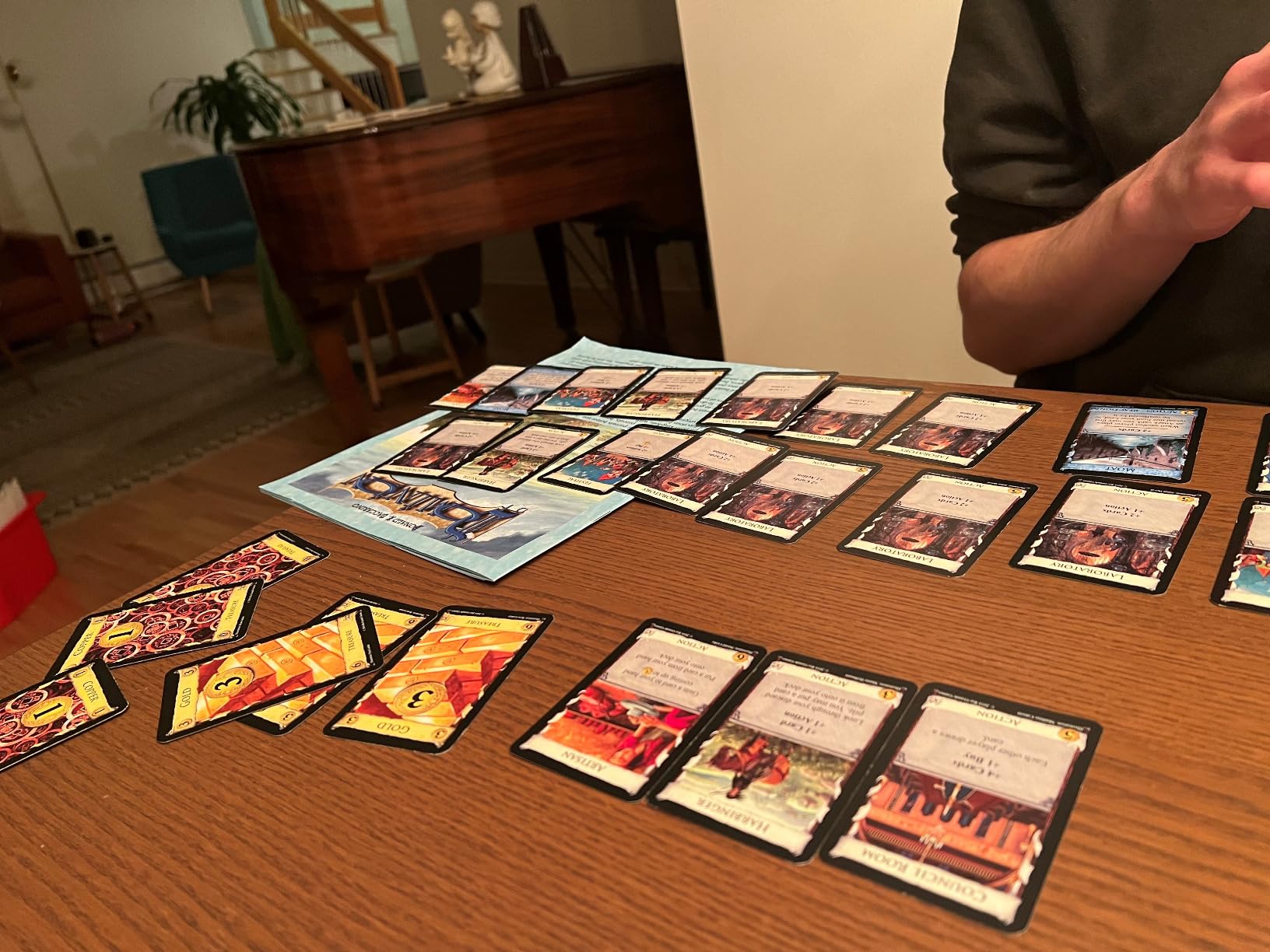
Winner of the 2009 Spiel des Jahres, Dominion plays in 20 to 30 minutes with 2 to 4 players ages 13 and up. The 2nd Edition includes updated card text, revised artwork, and six new kingdom cards that replace less popular cards from the original printing.
With a 4.9-star rating from over 3,600 reviews, Dominion has a smaller but extremely passionate fan base. Players praise the elegant mechanics, the strategic depth, and the way the game teaches resource management and planning naturally.
What Makes Dominion Different From Monopoly
Dominion replaces Monopoly’s static board with a dynamic card system where every decision shapes your capabilities going forward. There is no player elimination, no hours-long grind, and no luck-based dice rolls determining your fate on every turn.
The game also handles expansions brilliantly. Each Dominion expansion adds new kingdom cards that fundamentally change the strategies available, giving the game near-infinite replayability for dedicated players.
Is Dominion Good for New Board Gamers
Dominion is an excellent entry point into deck-building games. The core mechanic of playing cards, buying new cards, and drawing through your deck is intuitive once you see it in action. A practice round teaches the system in about 10 minutes.
The age recommendation of 13 and up reflects the strategic thinking required rather than any inappropriate content. Younger players who enjoy card games like Uno or Pokemon can pick up Dominion with some guidance.
8. Acquire – Strategic Real Estate Tycoon Board Game
Renegade Game Studios Acquire Board Game – Classic Strategy & Tycoon Modes
Real estate stock trading strategy game
2-6 players
Ages 12+
90 min playtime
Classic and Tycoon modes
Pros
- Strategic gameplay and negotiation as tycoon
- Manipulate construction and negotiate mergers
- Updated board design with improved components
- Classic and Tycoon game modes
Cons
- Longer 90-minute playtime may not suit all groups
- Steeper learning curve than other picks
Acquire is the closest game on this list to the actual experience of Monopoly, which makes sense given it was designed by legendary game designer Sid Sackson. You compete as a real estate tycoon, manipulating construction, negotiating mergers, and trading stocks to build your fortune.
The Classic Edition from Renegade Game Studios updates the original with an improved 9×12 grid board, legible building tiles, and two game modes. Classic Mode preserves the original rules, while Tycoon Mode adds new strategic layers for experienced players.
I recommend Acquire specifically for players who love the business and negotiation aspects of Monopoly but want deeper strategy. You place building tiles on a grid to create and grow hotel chains. When two chains meet, a merger occurs and shareholders cash out based on majority and minority holdings.
The game includes 108 building tiles, 175 stock cards, 155 paper money bills, headquarters buildings, and stockholder info cards. With 2 to 6 players and a 90-minute playtime, Acquire fills the same niche as a long Monopoly session but with infinitely better mechanics.
For Whom Is Acquire the Right Choice
Acquire is ideal for groups who genuinely enjoy the financial wheeling and dealing of Monopoly. If you love negotiating trades, calculating stock values, and outmaneuvering opponents through business strategy, Acquire delivers that experience with mechanical elegance.
It works best with 4 to 6 players who appreciate strategic depth and are willing to invest 90 minutes in a single session. The Tycoon Mode adds even more decision points for groups that master the Classic rules.
How Acquire Compares to Monopoly Directly
Acquire shares Monopoly’s real estate and investment themes but eliminates luck-based movement and player elimination. Instead of rolling dice to move around a board, you choose where to place building tiles. Instead of going bankrupt and watching from the sidelines, every player remains active until the final scoring.
The stock trading mechanic adds a layer of financial strategy that Monopoly’s property purchasing cannot match. You can profit from chains other players build by holding minority stock, creating dynamic alliances and rivalries throughout the game.
How to Choose the Right Monopoly Alternative
Every group is different, so the best alternatives to Monopoly depend on who you play with and what you enjoy. Here is what our team considers when recommending board games to friends and family.
Player Count and Group Size
If you typically play as a couple, Azul, Splendor, and Dominion are your best bets. They all play beautifully with 2 players and scale well to 3 or 4. For larger family gatherings, Codenames handles 8 or more players with ease, while Carcassonne and Ticket to Ride accommodate up to 5.
CATAN requires exactly 3 to 4 players unless you buy the expansion, so plan accordingly. Acquire flexes from 2 to 6 players, making it one of the most flexible options on this list for varying group sizes.
Play Time Expectations
Splendor, Carcassonne, and Dominion all finish in 30 to 35 minutes, which is perfect for weeknight game sessions. Ticket to Ride and Azul run 30 to 60 minutes. CATAN typically takes 60 to 90 minutes, and Acquire runs about 90 minutes.
Compare these to a typical Monopoly session that forum users report lasting 3 to 6 hours with house rules. Every game on this list respects your time and finishes when it should.
Learning Curve and Complexity
Ticket to Ride and Carcassonne are the easiest games to teach. New players understand the rules within 5 to 10 minutes and can make meaningful decisions immediately. Azul and Splendor are similarly accessible with slightly more strategic depth.
CATAN and Codenames take one full playthrough to fully grasp. Dominion and Acquire have the steepest learning curves but reward the investment with deeper strategic play over repeated sessions.
Game Mechanics Compared to Monopoly
For the trading and negotiation feel of Monopoly, CATAN and Acquire are your closest matches. For territory control and expansion, Ticket to Ride and Carcassonne deliver that satisfaction with tighter rules.
For resource management and economic strategy, Splendor and Dominion build engines that feel rewarding without the randomness of dice. For pure social fun, Codenames replaces Monopoly’s competitive tension with team-based creative thinking.
Family Friendliness and Age Range
Carcassonne works for ages 7 and up, the lowest age threshold on this list. Ticket to Ride and Azul suit ages 8 and up. CATAN and Splendor recommend ages 10 and up. Codenames works for teens, while Dominion and Acquire are best for ages 12 to 13 and up.
All eight games work for family game night, but the best choice depends on the youngest player at your table.
FAQs
What is the #1 board game in the world?
CATAN is widely considered the #1 modern board game in the world, with nearly 40,000 Amazon reviews and a 4.8-star rating. It launched the modern board gaming movement and has sold over 40 million copies worldwide since its original release.
Which is better, Catan or Monopoly?
Catan is generally considered better than Monopoly by board game enthusiasts. Catan offers active trading every turn, strategic decision-making, a modular board for replayability, and a guaranteed finish time of 60 to 90 minutes. Monopoly relies heavily on dice luck, eliminates players early, and can drag on for hours.
What is similar to a Monopoly?
The best alternatives to Monopoly are CATAN for trading and building, Acquire for real estate and stock strategy, Ticket to Ride for territorial expansion, and Splendor for resource management. Each replaces a different aspect of Monopoly with tighter rules and more engaging gameplay.
Why does Monopoly take so long?
Monopoly takes long because of its player elimination mechanic, luck-based dice movement, and common house rules like Free Parking jackpots that inject extra money into the game. These factors prevent the game from reaching a natural conclusion, often stretching sessions to 3 to 6 hours.
What is the Spiel des Jahres?
The Spiel des Jahres is the German Game of the Year award, considered the most prestigious award in board gaming. Games like Azul (2018), Dominion (2009), and Carcassonne (2001) have won this award, which signals exceptional quality and accessibility for family play.
Final Thoughts on the Best Alternatives to Monopoly
Modern board games have solved every problem Monopoly creates. Faster play times, meaningful decisions every turn, no player elimination, and genuine strategic depth are all standard features in the games on this list. The best alternatives to Monopoly deliver everything you want from a family game night without the frustration.
Our top recommendation is CATAN for its perfect blend of trading, building, and competition. Ticket to Ride wins for accessibility and value, while Splendor takes the crown for elegant strategy in a short playtime. For the full Monopoly replacement experience with business and negotiation, Acquire is the closest thematic match.
Pick any game from this list and your next game night will be shorter, more strategic, and more fun than Monopoly ever was. Your family and friends will thank you.