
Clue has been a fixture on family game night tables since 1949, and there is something timeless about narrowing down suspects, weapons, and rooms through careful deduction. But after your hundredth game of Colonel Mustard in the library with the candlestick, even the most loyal fans start craving something fresh. The good news is that the world of mystery board games has exploded with brilliant modern designs that capture the same whodunit thrill while fixing Clue’s biggest weaknesses.
We spent weeks playing through the best games like Clue to find titles that deliver genuine deduction, social bluffing, and crime-solving excitement. Our team compared player counts, age ranges, complexity levels, and replayability to build a list that works for families, party groups, couples, and serious strategy gamers alike. Whether you want a cooperative murder mystery or a cutthroat social deduction battle, there is a Clue alternative here for your table.
If you love the classics but want to explore more options, you might also enjoy our roundup of the best vintage board games for nostalgic game night picks. Below, we break down the 12 best games like Clue available in 2026, with detailed reviews, pros and cons, and recommendations for who each game suits best.
Table of Contents
Top 3 Picks for Best Games Like Clue

Best Games Like Clue in 2026
| Product | Specifications | Action |
|---|---|---|
| Deception: Murder in Hong Kong |
|
Check Latest Price |
 Mysterium Park Mysterium Park |
|
Check Latest Price |
 Clue Master Detective Clue Master Detective |
|
Check Latest Price |
 Outfoxed Outfoxed |
|
Check Latest Price |
 Spy Alley Spy Alley |
|
Check Latest Price |
 13 Dead End Drive 13 Dead End Drive |
|
Check Latest Price |
 Sherlock Holmes Consulting Detective Sherlock Holmes Consulting Detective |
|
Check Latest Price |
 Decrypto Decrypto |
|
Check Latest Price |
 Rear Window Rear Window |
|
Check Latest Price |
 Scotland Yard Scotland Yard |
|
Check Latest Price |
 Chronicles of Crime Chronicles of Crime |
|
Check Latest Price |
 Murdle Board Game Murdle Board Game |
|
Check Latest Price |
1. Deception: Murder in Hong Kong – Social Deduction at Its Best
Grey Fox Games Deception: Murder in Hong Kong Board Game | Social Deduction | 4-12 Players | 20 Minutes
4-12 players
20 min rounds
Social deduction
Ages 14+
Pros
- Engaging secret role gameplay
- Versatile 4-12 player count
- Quick 20-minute rounds
- High replayability
- Accessible for beginners and veterans
Cons
- Small parts may pose choking hazard for young children
Deception: Murder in Hong Kong grabbed our attention from the very first round and never let go. The premise is brilliant: one player is the murderer, one is the forensic scientist who knows the truth but can only communicate through abstract clues, and everyone else is an investigator trying to crack the case. It captures everything great about Clue’s deduction loop and adds a layer of social deception that makes every session feel electric.
I played this with a group of eight at a recent game night, and the room was loud within five minutes. Players were accusing each other, debating weapon choices, and second-guessing every statement. The forensic scientist gives clues about the murder weapon, location, and cause of death using illustrated cards, and the investigators must piece together which clues point to the actual murder items in front of each player.
What makes Deception superior to classic Clue is the elimination of dice rolling and movement mechanics. Every moment is pure deduction and social reading. The 20-minute playtime means you can easily fit in three or four rounds in an evening, and with numerous role combinations, no two sessions feel the same.
The components are clean and functional, with role cards, clue cards, and scene tiles that organize neatly into the box. At 2,576 reviews and a 4.8-star rating, the community clearly agrees this is one of the best games like Clue for parties and larger gatherings.
Who Should Play This Game
Deception shines brightest with groups of 6 or more who enjoy bluffing, debate, and social interaction. It is perfect for party nights, office gatherings, and any group that loves games like The Resistance or Werewolf but wants a more structured deduction puzzle at its core.
Replayability and Long-Term Value
With dozens of role combinations and an ever-changing roster of murder weapons and locations, Deception stays fresh game after game. The expansion packs add even more roles and clue cards if your group eventually wants variety beyond the base set.
2. Mysterium Park – Cooperative Ghost Mystery
Asmodee Mysterium Park Board Game – Uncover Dark Secrets in a Charming Carnival Setting, Cooperative Mystery for Kids & Adults, Ages 10+, 2-7 Players, 28 Minute Playtime
2-7 players
28 min playtime
Cooperative
Carnival theme
Pros
- Stunning abstract artwork
- Quick setup and gameplay
- Non-language dependent
- Great packaging
- Fun cooperative family game
Cons
- Components pop out during travel
- Better with 4+ players
- Ghost role challenging for younger players
Mysterium Park takes the deduction framework of Clue and flips it into a fully cooperative experience where everyone works together instead of competing. One player takes the role of a ghost who cannot speak, communicating only through surreal illustrated vision cards. The other players are psychics who must interpret these dreamlike images to identify the correct suspect, location, and weapon before time runs out.
I brought this to a family gathering and it was an instant hit. The artwork on the vision cards is genuinely beautiful, and interpreting abstract imagery sparks some of the most entertaining conversations you will ever have around a game table. Someone sees a flock of birds and thinks it points to the suspect with feathers. Someone else thinks it means the knife because birds migrate in V shapes like a blade. Both arguments are completely valid, and that tension is what makes Mysterium Park so addictive.
The carnival setting gives the game a distinct personality compared to the original Mysterium, and the shorter 28-minute playtime makes it far more approachable for weeknight sessions. Setup is quick, the rules click within one round, and the non-language-dependent gameplay means anyone can play regardless of reading level.
As one of the best games like Clue for families, Mysterium Park earns its Best Value badge through sheer quality per dollar. With 1,115 reviews and a 4.7-star average, players consistently praise the cooperative dynamics and gorgeous production.
Who Should Play This Game
Mysterium Park is ideal for families with kids aged 10 and up, creative thinkers who enjoy interpretation games, and groups that prefer working together rather than competing. Play it with at least 4 people for the best experience.
How It Compares to Original Mysterium
Mysterium Park is a standalone game that streamlines the original Mysterium into a faster, more accessible format. It drops the hour-long playtime and complex board for a tighter carnival-themed experience that hits the table more often.
3. Clue Master Detective – The Ultimate Clue Expansion
Clue Master Detective, Largest Clue Game Ever, by Winning Moves Games USA
3-10 players
45-60 min playtime
Expanded Clue
More suspects and rooms
Pros
- Super-sized version with more weapons and rooms
- Up to 10 players
- Premium brass-toned metal weapons
- Classic Clue gameplay with Snoop spaces
- Great for large gatherings
Cons
- Small parts may pose choking hazard for young children
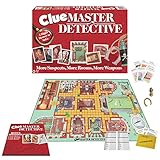
Clue Master Detective is exactly what it sounds like: Clue scaled up to be bigger, bolder, and more devious. First introduced in the 1980s, this super-sized version adds more weapons, more rooms, more suspects, and more mayhem to the classic formula you already know. If you love Clue but want a deeper, more challenging experience without learning entirely new rules, this is the natural upgrade.
Our team tested this with a group of 8 players, and the larger board and expanded suspect roster completely changed the deduction dynamic. With 12 possible locations instead of 9 and additional suspects beyond the original six, the elimination process takes longer and rewards players who pay close attention to every suggestion made. The addition of Snoop Spaces on the board lets you peek at an opponent’s card, adding a strategic layer that classic Clue lacks.
The premium components deserve special mention. The oversized brass-toned metal weapons feel weighty and satisfying, and the tri-fold board is substantial. This is a game that looks impressive on the table and holds up to years of play.
With 2,776 reviews and a 4.8-star rating, Clue Master Detective is the highest-rated game on our list. It supports up to 10 players, making it one of the few deduction games that genuinely works for large groups.
Who Should Play This Game
This is the perfect pick for Clue purists who want more of the same gameplay but with added depth and complexity. It is also excellent for large family gatherings and parties where 6 or more people want to play a deduction game together.
What Makes It Different from Standard Clue
Beyond the expanded roster, Snoop Spaces are the key innovation. These 9 spaces on the board let you look at one card from an opponent’s hand, accelerating the deduction process and adding a push-your-luck element to movement decisions.
4. Outfoxed – The Best Clue Alternative for Young Kids
OUTFOXED, A CLASSIC WHO DUNNIT GAME FOR PRESCHOOLERS, 4 players
2-4 players
20 min playtime
Cooperative
Ages 5+
Pros
- Cooperative gameplay with no sore losers
- Teaches teamwork and deduction
- Quick setup and easy rules
- Boosts logic and memory skills
- Great for ages 4-8
Cons
- Still luck-based with dice rolls
- Cards feel thin and may bend easily
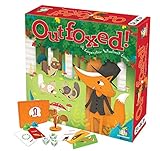
Outfoxed is the game I recommend to every parent who asks me for a Clue-like experience their young children can actually enjoy. Designed for ages 5 and up, this cooperative whodunit has players working together to identify which fox stole a pie before the thief escapes. It uses the same deductive elimination mechanic as Clue but wraps it in a friendly, colorful package that kids immediately understand.
I played this with my 6-year-old niece, and she was engaged from the first dice roll. The game includes a clever suspect decoder device where you insert two cards to check whether a suspect was at the scene. If the decoder reveals a suspect was wearing glasses, you can eliminate suspects without glasses from your list. It teaches real deductive reasoning in a way that feels like play rather than a lesson.
The cooperative nature means no one gets eliminated and no one feels bad about losing. Everyone wins or loses together, which makes it perfect for mixed-age groups where older siblings might otherwise dominate a competitive game. The 20-minute playtime is also ideal for short attention spans.
With an impressive 7,428 reviews and a 4.8-star rating, Outfoxed ranks among the top 50 board games on Amazon. It is one of the best games like Clue for families with young children who want to develop logic skills without the murder theme.
Who Should Play This Game
Outfoxed is built for families with children aged 4 to 8 who want a gentle introduction to deduction games. It also works well for mixed-age groups where cooperative play keeps younger kids engaged alongside older siblings or parents.
Educational Value Beyond Entertainment
The game explicitly develops cooperative skills, deductive reasoning, and visual discrimination. The elimination mechanic teaches logical thinking, while the cooperative structure builds communication and teamwork abilities that competitive games often skip.
5. Spy Alley – Mensa-Approved Bluffing and Deduction
Spy Alley – Mensa Award-Winning Strategy Game – Social Deduction & Bluffing Board Game – Family Game Night Fun – Ages 8+ for 2-6 Players
2-6 players
45 min playtime
Social deduction
Ages 8+
Pros
- Mensa Award-winning strategy game
- High replayability for all ages
- Perfect for gatherings
- Over 30 years of family enjoyment
- Cooperative and competitive elements
Cons
- Requires assembly of some components
- May be too complex for very young children
Spy Alley has been a hidden identity classic for over 30 years, and it won a Mensa Best Mind Game award for good reason. Each player is secretly assigned a nationality and must collect items from their assigned country while trying to figure out which country their opponents belong to. Catch an opponent in the wrong country’s store at the wrong time, and you can accuse them and eliminate them from the game.
The bluffing tension in Spy Alley is fantastic. I found myself deliberately buying items from countries I did not belong to, just to throw off suspicion. The problem is that buying items from other countries costs money and slows your progress, so every misleading purchase is a calculated risk. This push-and-pull between advancing your own goal and misleading opponents creates moments of genuine suspense.
What makes Spy Alley one of the best games like Clue is the combination of deduction and social reading. Like Clue, you are narrowing down possibilities based on observed behavior. Unlike Clue, the behavior you observe is your opponents’ purchasing decisions and movements, not suggestions about weapons and rooms.
With 2,363 reviews and a 4.6-star rating, Spy Alley has proven its staying power. The 45-minute playtime and 2-6 player range make it a flexible option for family game nights and small gatherings.
Who Should Play This Game
Spy Alley is perfect for families with kids aged 8 and up who enjoy bluffing and social deduction. It works especially well for groups of 4 to 6 players who like competitive interaction and strategic decision-making.
What the Mensa Award Means for Gameplay
The Mensa Best Mind Game designation signals genuine strategic depth. The game rewards careful observation, memory, and calculated risk-taking rather than luck, making it a satisfying mental challenge for adults and bright kids alike.
6. 13 Dead End Drive – Classic Mystery With Trap Mechanics
Winning Moves 13 Dead End Drive, Game of Mystery & Foul Play
2-4 players
Bluffing gameplay
Trap mechanics
Ages 8+
Pros
- Good mix of chance and skill
- Multi-player fun for all ages
- Bluffing and deception gameplay
- Classic game with updated components
- Never the same game twice
Cons
- Some assembly required when first opening
- Chandelier can be sticky and difficult to release
13 Dead End Drive is the bluffing mystery game from the 1990s that Winning Moves has brought back with updated components. The premise is deliciously dark: Aunt Agatha has died and left a fortune to whoever is visiting her mansion when her will is read. Players control multiple characters and secretly want specific characters to survive, while trying to eliminate others using the mansion’s trap mechanics.
The 3D mansion board is loaded with traps that players can trigger to eliminate opponent characters. The fireplace, chandelier, bookcase, and statue all spring into action when conditions are met, and the slapstick humor of watching a character get bowled over by a toppling statue never gets old. I played this with a group that grew up with the original, and the nostalgia factor was immediate.
Beneath the goofy trap mechanics is a genuine bluffing game where players hide their true objectives. Each player has secret character cards that determine who they want to win, and you must advance your characters while pretending to help others. It is a different flavor of deduction than Clue, but the mystery-solving DNA is clearly there.
With 2,794 reviews and a 4.8-star rating, 13 Dead End Drive clearly resonates with players who want a lighter, more chaotic mystery experience. The 2-4 player count and moderate playtime make it a solid choice for family game nights.
Who Should Play This Game
This is a great pick for families with kids aged 8 and up who enjoy physical board game elements and slapstick humor. It also appeals to adults who remember the original 1990s version and want to share a piece of their childhood with a new generation.
How the Trap System Works
Each trap on the board activates when specific dice rolls and character positions align. The chandelier drops, the fireplace blasts, and the bookcase tumbles, eliminating any character caught in the wrong spot. Timing trap activations to eliminate opponents while protecting your own characters is the core strategic challenge.
7. Sherlock Holmes Consulting Detective – Deep Narrative Mystery
Asmodee Sherlock Holmes Consulting Detective – The Thames Murders & Other Cases Board Game – Captivating Mystery Game for Kids & Adults, Ages 14+, 1-8 Players, 90 Min Playtime
1-8 players
90 min playtime
Cooperative
Victorian London
Pros
- 10 thrilling cases in Victorian London
- Cooperative or solo play
- Unique narrative game structure
- Fully revised from the Ystari version
- Tests real deductive skills
Cons
- Low stock availability
- May be too challenging for younger players
Sherlock Holmes Consulting Detective is the most immersive mystery game on this list, and it is about as far from traditional Clue as you can get while still being a deduction game. There is no board movement and no dice. Instead, you get a map of Victorian London, a directory of locations and characters, a case booklet, and a newspaper. Your job is to solve each murder by following leads, reading interviews, and piecing together clues across multiple sources.
I played the first case with three friends over the course of two hours, and the experience was closer to reading a great detective novel than playing a traditional board game. You choose which locations to visit, which characters to interview, and which leads to follow. Visit too many locations and your score suffers because Sherlock solved it more efficiently. Visit too few and you miss critical evidence.
The deduction in this game is real and substantive. You are not eliminating cards from a finite set like in Clue. You are synthesizing information from interviews, newspaper articles, and crime scene descriptions to form conclusions about motive, opportunity, and method. The cases are genuinely challenging and satisfying to crack.
With 1,896 reviews and a 4.6-star rating, Sherlock Holmes Consulting Detective is a favorite among serious mystery fans. The 10 included cases provide many hours of gameplay, and the cooperative format means everyone contributes to the investigation.
Who Should Play This Game
This game is perfect for adults and teens aged 14 and up who love detective fiction, narrative games, and deep intellectual challenges. It also works brilliantly as a solo experience for those who enjoy reading and puzzle-solving.
How the Case System Works
Each case presents a crime scenario that you investigate by visiting locations on the map. Each location has a corresponding entry in the case booklet that describes what you find and who you can interview. The newspaper included with each case often contains hidden clues that connect to the mystery, rewarding players who read carefully.
8. Decrypto – Word-Based Deduction Party Game
Decrypto | Deduction Party Game | #2 Party Game on BoardGameGeek | Great for Teens and Adults | Ages 12+ | 3 to 8 Players | 15 Minutes
3-8 players
15 min playtime
Word deduction
Ages 12+
Pros
- Transmit secret codes without interception
- Strong player interaction with no downtime
- Highly addictive gameplay
- Anaglyph visual effects
- Quick 15-minute rounds
Cons
- Requires careful listening and focus throughout
Decrypto is the number two ranked party game on BoardGameGeek, and it brings a completely different flavor of deduction to the table. Each team has four secret keyword cards displayed behind a screen. One team member must give clues to help their teammates guess the correct code, but the clues must be subtle enough that the opposing team cannot figure out the keywords.
The deduction in Decrypto is layered. Your teammates are trying to understand your clues while the opposing team is simultaneously trying to crack your keyword set by analyzing patterns across multiple rounds. I was amazed at how quickly our group got invested in the meta-game of choosing clues that were obvious enough for our team but opaque enough to confuse opponents.
What makes Decrypto one of the best games like Clue is the elimination process. As the opposing team collects more data from your clues across rounds, they narrow down your possible keywords just like Clue players narrow down suspects. The tension builds as both teams race to crack each other’s codes before the game ends.
With a 4.8-star rating from 587 reviews, Decrypto is a hit with groups that love word games and social deduction. The 15-minute playtime means you can play multiple rounds in one sitting.
Who Should Play This Game
Decrypto is ideal for teens and adults aged 12 and up who enjoy wordplay, creative thinking, and team-based competition. It works best with 4 to 8 players divided into two teams.
Why It Ranks So High on BoardGameGeek
The combination of elegant rules, deep strategic clue-giving, and virtually no downtime between turns makes Decrypto endlessly replayable. Every game generates a fresh set of keywords and clue-giving challenges, so the deduction puzzle never repeats.
9. Rear Window – Hitchcock-Themed Deduction
Funko Games Rear Window Game
3-5 players
40 min playtime
Hitchcock theme
Deduction
Pros
- Rich details and beautiful artwork
- Works well with 3-5 players
- Fast-paced with endless outcomes
- Similar to Mysterium
- Great social deduction game
Cons
- Rules can take a while to figure out
- Box quality could be better
- Some sticky tabs left residue
Rear Window brings Alfred Hitchcock’s classic film to the game table with a deduction experience that fans of mystery cinema will adore. One player is the Director, silently playing out scenes from the apartment complex across the courtyard. The other players are Watchers who must deduce whether a murder actually occurred based on the clues the Director reveals through illustrated cards.
The art design transports you directly into 1950s suspense, and the Director/Watcher mechanic creates a unique dynamic where players are never quite sure if they are chasing a real murder or a red herring. I played as the Director in our first session, and the experience of watching players debate whether each clue was meaningful was genuinely thrilling.
What places Rear Window among the best games like Clue is the deduction framework. Players must evaluate evidence, form theories, and revise their conclusions as new information emerges. The difference is that the evidence comes through visual storytelling rather than card elimination, making the experience feel more cinematic and immersive.
With 594 reviews and a 4.6-star rating, Rear Window has found an enthusiastic audience among mystery lovers and film buffs. The 40-minute playtime and 3-5 player range make it a flexible option for medium-sized groups.
Who Should Play This Game
Rear Window is perfect for ages 13 and up who enjoy suspense, film noir aesthetics, and deduction games with a strong narrative thread. It is especially rewarding for fans of the original Hitchcock film, though prior knowledge of the movie is not required to enjoy the game.
The Director and Watcher Dynamic
The Director controls what clues are revealed and when, creating an information asymmetry that drives the deduction. Watchers must decide which clues to investigate further and which to dismiss, creating genuine suspense as the story unfolds over the 40-minute playtime.
10. Scotland Yard – Cooperative Chase Through London
Ravensburger Scotland Yard – 27514 – Family Strategy Board Games for Kids and Adults Age 8 Years Up – 2 to 6 Players
2-6 players
45 min playtime
Cooperative chase
Ages 8+
Pros
- Classic hide-and-seek with Mister X
- Travel by taxi bus and underground
- Cooperative gameplay
- Suitable for ages 8 and up
- Develops strategic thinking
Cons
- Lower review count may indicate newer product
Scotland Yard is a beloved cooperative deduction game where one player takes the role of the elusive Mister X, moving secretly through London while the other players work together as detectives to track and capture him. The detectives can see each other’s positions on the board, but Mister X’s location is hidden except for periodic reveals that give the detectives just enough information to plan their pursuit.
The deduction element in Scotland Yard is spatial and logical rather than card-based. As Mister X, I found that choosing which transportation tickets to play was a constant bluffing exercise. Playing a taxi ticket suggests one possible location, while an underground ticket opens up a much wider range of possibilities. The detectives must reason about where Mister X could possibly be based on ticket usage and the periodic location reveals.
This game captures the same satisfaction as Clue’s elimination process but applies it to a moving target on a map. Every turn narrows down the possibilities, and the cooperative dynamic means the detective players are constantly discussing strategy and debating which direction to pursue.
Scotland Yard is a Ravensburger production, which means quality components and clear rulebooks. With a 4.6-star rating and ages 8 and up designation, it is one of the best games like Clue for families who want a cooperative deduction experience.
Who Should Play This Game
Scotland Yard is great for families with kids aged 8 and up who enjoy cooperative gameplay and spatial reasoning. It works well with 3 to 6 players, with one person volunteering to be the elusive Mister X.
The Mister X Hidden Movement System
Mister X records their moves secretly on a travel log, only revealing their position at specific intervals marked on the board. The detectives must use logic and the transportation tickets Mister X plays to narrow down possible locations, creating a tense deduction puzzle that evolves with every turn.
11. Chronicles of Crime – App-Powered Detective Experience
Chronicles of Crime
1-4 players
90 min playtime
App integrated
Cooperative
Pros
- Innovative smartphone app integration
- Cooperative experience with friends
- Multiple scenarios with unique storylines
- High replayability
- Dynamic storytelling
Cons
- No warranty provided
Chronicles of Crime blends traditional board game components with a free smartphone app to create one of the most immersive detective experiences available. You and your teammates are investigators solving crimes in a near-future city, examining crime scenes through your phone, questioning suspects, and following leads across location boards spread on the table.
The app integration is what sets this game apart from every other title on this list. When you scan a location card or character card with your phone, the app shows you a 360-degree crime scene to examine or launches a dialogue tree with a suspect. I was genuinely surprised by how well the physical and digital elements worked together to create a seamless investigative experience.
The deduction in Chronicles of Crime is open-ended and narrative-driven. There is no card elimination grid like in Clue. Instead, you synthesize information from interviews, evidence, and crime scene observations to form theories about who committed each crime and why. The game supports multiple scenarios, and additional case packs are available as expansions.
With 1,679 reviews and a 4.5-star rating, Chronicles of Crime has built a strong following among players who want a deeper, more technologically integrated mystery experience. The cooperative format and 1-4 player range make it flexible for solo play or small group sessions.
Who Should Play This Game
Chronicles of Crime is ideal for teens and adults aged 14 and up who enjoy technology-enhanced gaming and narrative-driven mysteries. It works well for solo investigators or small groups who want to collaborate on complex cases.
How the App Integration Works
The free app uses your phone’s camera to scan QR codes on location boards, character cards, and evidence items. Each scan triggers contextual content ranging from 360-degree crime scene views to branching dialogue sequences. The app tracks your progress, manages the story, and scores your performance at the end of each case.
12. Murdle Board Game – Logic Grid Deduction on a Budget
Endless Games Murdle Board Game | Based on the Crime Puzzle Book | Murder Mystery Game for 2-4 Players, Ages 12+
2-4 players
20 min playtime
Logic grid
Ages 12+
Pros
- Based on best-selling crime puzzle book
- Different mystery every time
- Uses logic grid and deductive reasoning
- Includes all necessary components
- Quick 20-minute gameplay
Cons
- Lower rating at 4.3 stars
- Some components may be small
Murdle brings the logic puzzle format of the popular crime puzzle book series to the board game table. Players use a logic grid to correlate suspects, weapons, locations, and verdicts, eliminating possibilities with each new piece of evidence until only the correct solution remains. If you have ever enjoyed a logic puzzle in a magazine, this game captures that satisfaction in a multiplayer format.
The structure will feel instantly familiar to Clue fans. Discovery cards reveal evidence that lets you cross possibilities off your logic grid, and the first player to correctly identify the murderer, weapon, and location wins. What makes Murdle different is the explicit logic grid format, which makes the deduction process visual and systematic rather than relying on memory alone.
I tested this with a group of three, and the 20-minute playtime kept the energy high throughout. Each game presents a different mystery, and the 100 included note sheets mean you will get many plays before needing to resupply. The privacy screens prevent opponents from seeing your grid, adding a competitive element as everyone races to solve the case first.
At its affordable price point, Murdle is one of the best games like Clue for players on a budget. With 263 reviews and a 4.3-star rating, it is a solid choice for casual game nights and a great introduction to logic-based deduction for ages 12 and up.
Who Should Play This Game
Murdle is perfect for ages 12 and up who enjoy logic puzzles, Sudoku-style elimination, and competitive deduction. It is an excellent budget option for casual game nights and a great entry point for players new to the deduction genre.
How the Logic Grid System Works
Each player receives a note sheet with a grid that cross-references suspects, weapons, locations, and verdicts. As Discovery Cards are revealed, players mark off impossible combinations on their grids. The first player to fill in the correct solution on their grid and make a successful accusation wins the round.
Buying Guide: How to Choose the Best Games Like Clue
Choosing the right Clue alternative depends on your group size, age range, and the type of deduction experience you want. After testing all 12 games on this list, I can offer some specific guidance to help you pick the perfect match for your game night.
The first decision is cooperative versus competitive. If your group prefers working together, Mysterium Park, Scotland Yard, Sherlock Holmes Consulting Detective, and Chronicles of Crime all offer excellent cooperative deduction. For competitive play, Deception, Spy Alley, Decrypto, and Murdle deliver satisfying social and logical deduction challenges.
Player count matters enormously. For large groups of 8 or more, Deception supports up to 12 players and Clue Master Detective handles up to 10. For intimate 2-player sessions, Sherlock Holmes Consulting Detective and Chronicles of Crime both play well with smaller groups or even solo. Most other games on this list work best with 4 to 6 players.
Age range is another key factor. Outfoxed is the clear winner for young children aged 5 and up, with its cooperative structure and gentle pie-stealing fox theme. Scotland Yard and 13 Dead End Drive work well for ages 8 and up. For teens and adults, Deception, Sherlock Holmes Consulting Detective, and Chronicles of Crime offer the depth and complexity that experienced gamers crave.
Replayability should factor into your decision too. Games with randomised setups like Deception, Mysterium Park, and Murdle offer high replay value because each session presents a unique puzzle. Games like Sherlock Holmes Consulting Detective have fixed cases that you can only solve once, though the 10 included cases provide many hours of gameplay before you run out.
If you are interested in exploring more tabletop options beyond mystery games, our best vintage board games guide covers additional classics worth adding to your collection. For the best games like Clue specifically, consider the type of deduction you enjoy most: card elimination, social bluffing, logic puzzles, or narrative investigation. Each game on this list emphasizes a different style.
Finally, consider complexity and learning curve. Deception and Murdle can be taught in under 10 minutes and played in 20. Sherlock Holmes Consulting Detective and Chronicles of Crime require more time investment upfront but reward you with deeper, more immersive experiences. Match the complexity to your group’s patience and experience level.
FAQs
What is similar to Clue?
The best games like Clue include Deception: Murder in Hong Kong for social deduction, Mysterium Park for cooperative mystery, Clue Master Detective for an expanded Clue experience, and Sherlock Holmes Consulting Detective for deep narrative investigation. Each captures Clue’s deduction core while adding modern mechanics.
What board games are similar to Clue?
Board games similar to Clue include Spy Alley for bluffing, Decrypto for word-based deduction, Scotland Yard for cooperative pursuit, Outfoxed for young children, and Murdle for logic grid puzzles. All feature deduction and mystery-solving mechanics.
What is the nice version of Clue?
The nicest family-friendly version of Clue is Outfoxed, a cooperative whodunit for ages 5 and up where players work together to catch a pie-stealing fox. It teaches deduction skills without any murder theme, making it perfect for young children.
Are there cooperative games like Clue?
Yes, several cooperative games like Clue exist. Mysterium Park, Scotland Yard, Sherlock Holmes Consulting Detective, and Chronicles of Crime all feature cooperative gameplay where players work together to solve mysteries through deduction and teamwork.
What is the best Clue alternative for adults?
For adults, the best Clue alternatives are Deception: Murder in Hong Kong for social deduction parties, Sherlock Holmes Consulting Detective for deep narrative mystery, and Chronicles of Crime for app-integrated detective work. All offer significantly more depth than standard Clue.
Final Thoughts on the Best Games Like Clue in 2026
Finding the best games like Clue comes down to understanding what you love about the original and what you want to change. For social deduction and party excitement, Deception: Murder in Hong Kong is our top pick. For cooperative family fun, Mysterium Park delivers beautiful artwork and accessible gameplay. For budget-friendly logic puzzles, Murdle offers incredible value.
The mystery and deduction genre has evolved dramatically since Clue first appeared in 1949, and the 12 games on this list represent the best of what modern board game design has to offer. Whether you want a quick 15-minute party game or a 90-minute narrative investigation, there is a Clue alternative here that will keep your group engaged for many game nights to come.