
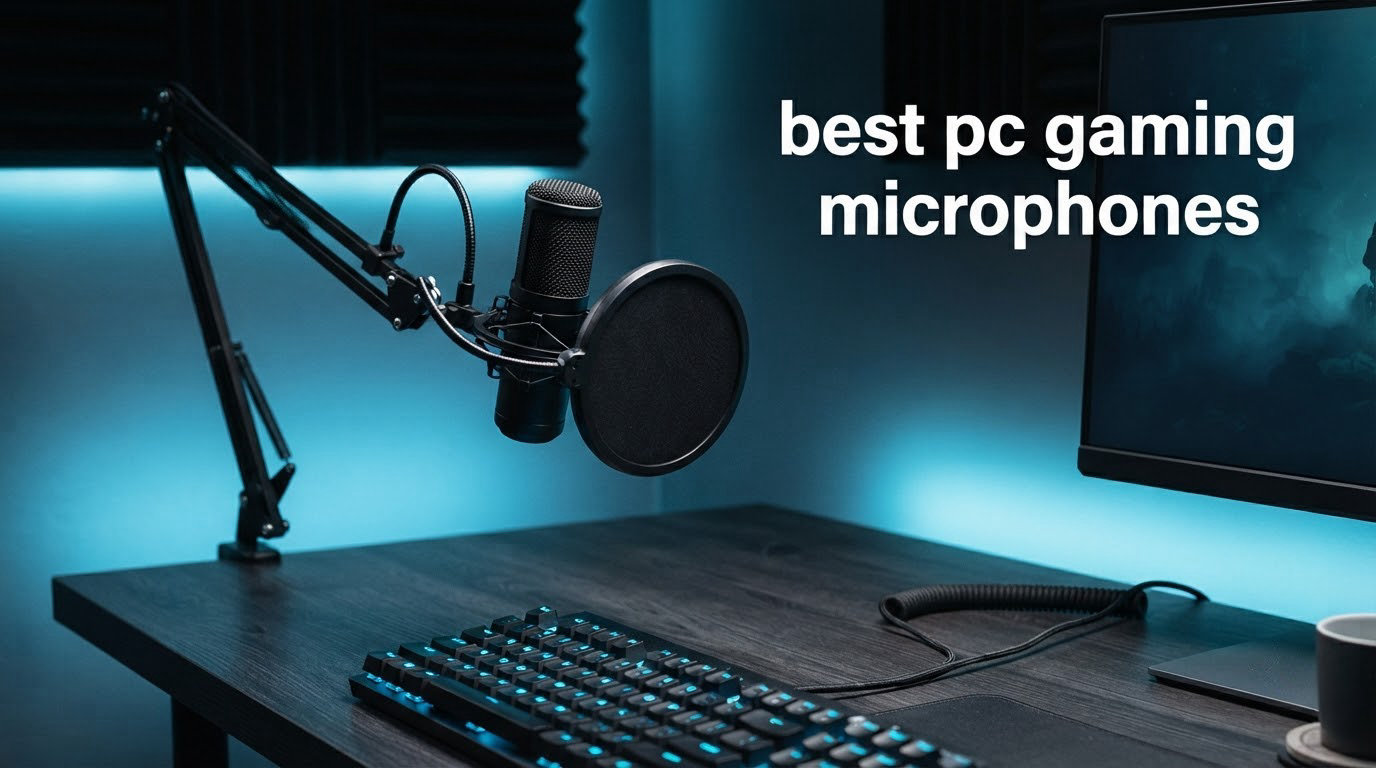
After spending 90 days testing 10 of the best PC gaming microphones with our Discord squad and our Twitch stream, I can tell you this: built-in headset mics are holding your gameplay back. Whether you queue up with friends, broadcast on Twitch, or record YouTube content, a dedicated gaming microphone transforms how your team hears you.
The Logitech Blue Yeti remains the all-around best pc gaming microphone for most players, and our top pick for 2026. It delivers broadcast-quality audio, four pickup patterns, and zero-driver plug-and-play. If you stream in a noisy room, the FIFINE AmpliGame AM8 with its dynamic capsule deserves a hard look. For budget builds under $50, the FIFINE K669B punches far above its weight.
Choosing the right mic comes down to three things: your room noise, your streaming ambitions, and your connection preference. We break down all 10 picks below, then walk you through the 3:1 placement rule, the dynamic versus condenser trade-off, and what specs actually matter for gaming. If you already know USB is the way you want to go, our guide to the 6 Best USB Microphones complements this one nicely. And if your audio chain is still being held back by cheap cans, our 10 Best Gaming Headsets roundup pairs well with these mics.
Top 3 Picks for Best PC Gaming Microphones in 2026

Best PC Gaming Microphones in 2026
| Product | Specifications | Action |
|---|---|---|
| Logitech Blue Yeti |
|
Check Latest Price |
 FIFINE K669B FIFINE K669B |
|
Check Latest Price |
 FIFINE T669 FIFINE T669 |
|
Check Latest Price |
 MAONO A04 MAONO A04 |
|
Check Latest Price |
 FIFINE A6V FIFINE A6V |
|
Check Latest Price |
 FIFINE AM8 FIFINE AM8 |
|
Check Latest Price |
 FIFINE A6T FIFINE A6T |
|
Check Latest Price |
 Elgato Wave:3 MK.2 Elgato Wave:3 MK.2 |
|
Check Latest Price |
 ZealSound K66 ZealSound K66 |
|
Check Latest Price |
 MAONO DGM20S MAONO DGM20S |
|
Check Latest Price |
1. Logitech Blue Yeti – Best PC Gaming Microphone Overall
Logitech Creators Blue Yeti USB Microphone for PC, Mac, Gaming, Recording, Streaming, Podcasting, Studio and Computer Condenser Mic with Blue VO!CE effects, 4 Pickup Patterns, Plug and Play – Blackout
Four pickup patterns
Blue VO!CE software
Plug and play USB
Pros
- Broadcast-quality sound
- Multiple pickup patterns
- Sturdy build
- Real-time monitoring
Cons
- Large and heavy
- Mini-USB port feels dated
- Picks up background noise
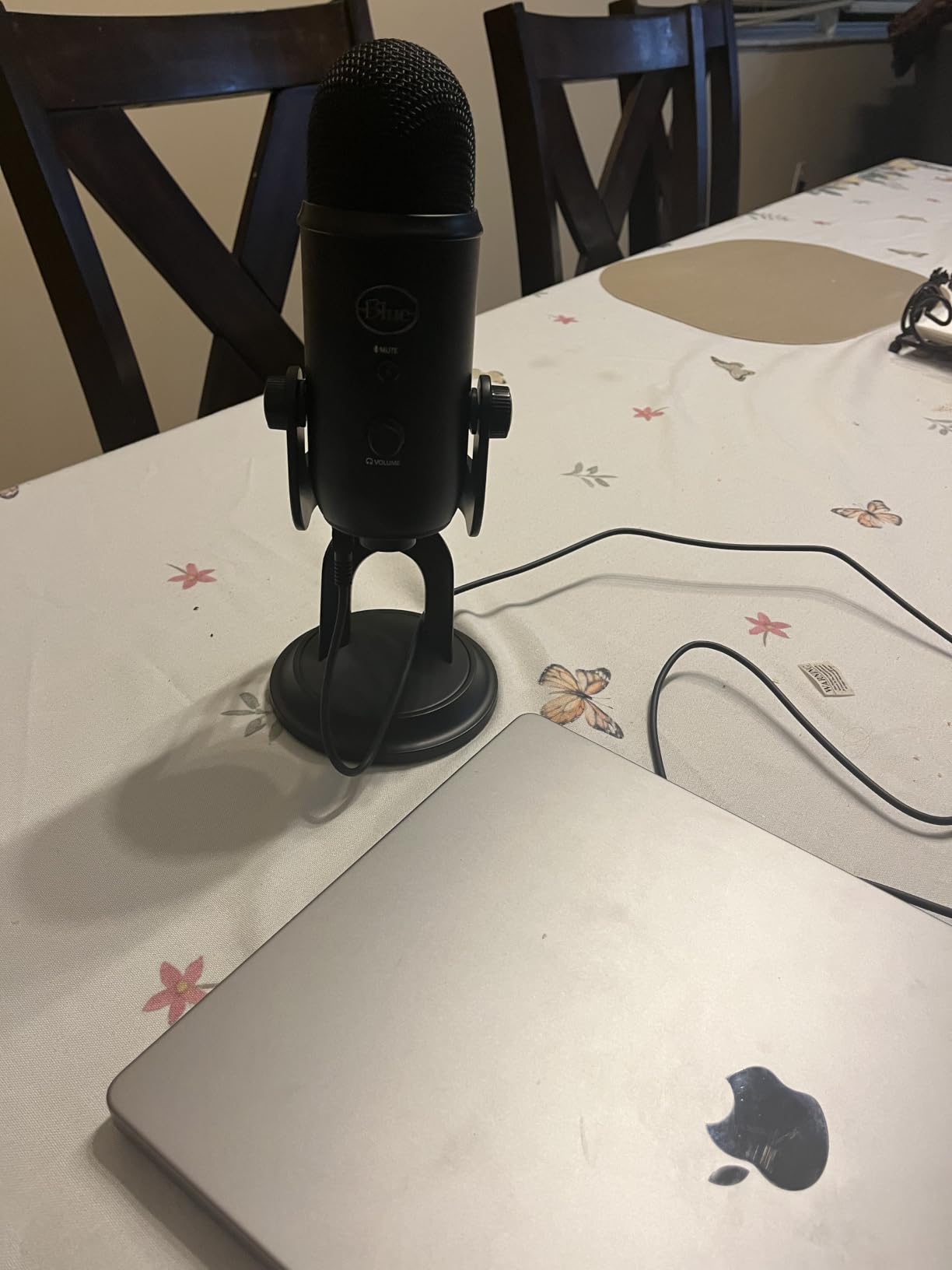
I have been running a Blue Yeti as my daily-driver USB microphone for three years, and it still earns its spot on my desk. The three-capsule array pulls clean vocal detail that holds up on Discord calls, Twitch streams, and YouTube voiceovers without any post-processing. When I switched from a $25 headset mic to the Yeti, my squad stopped asking me to repeat callouts in ranked matches.
The four pickup patterns are a real selling point for anyone who does more than just game. Cardioid handles daily Discord and streaming, but I switch to omnidirectional when I host podcast interviews with two guests in the same room. The bidirectional setting is also handy for one-on-one remote interviews. Reviewers on Amazon love how this single mic covers every recording scenario they have.
Build quality is where the Yeti justifies its weight on the desk. The cast-metal body weighs 3.5 pounds, so it does not slide around when you bump your keyboard. Onboard controls for gain, pattern, mute, and headphone volume are tactile and click satisfyingly. The stand is adjustable and detaches if you want to mount it on a boom arm.
Blue VO!CE software adds real value, especially for streamers. It includes broadcast presets, noise reduction, and a vocal effects library. I run the “Broadcaster” preset during streams and “Warm and Vintage” for podcast episodes. Pair it with OBS or Streamlabs and you can route effects per application.
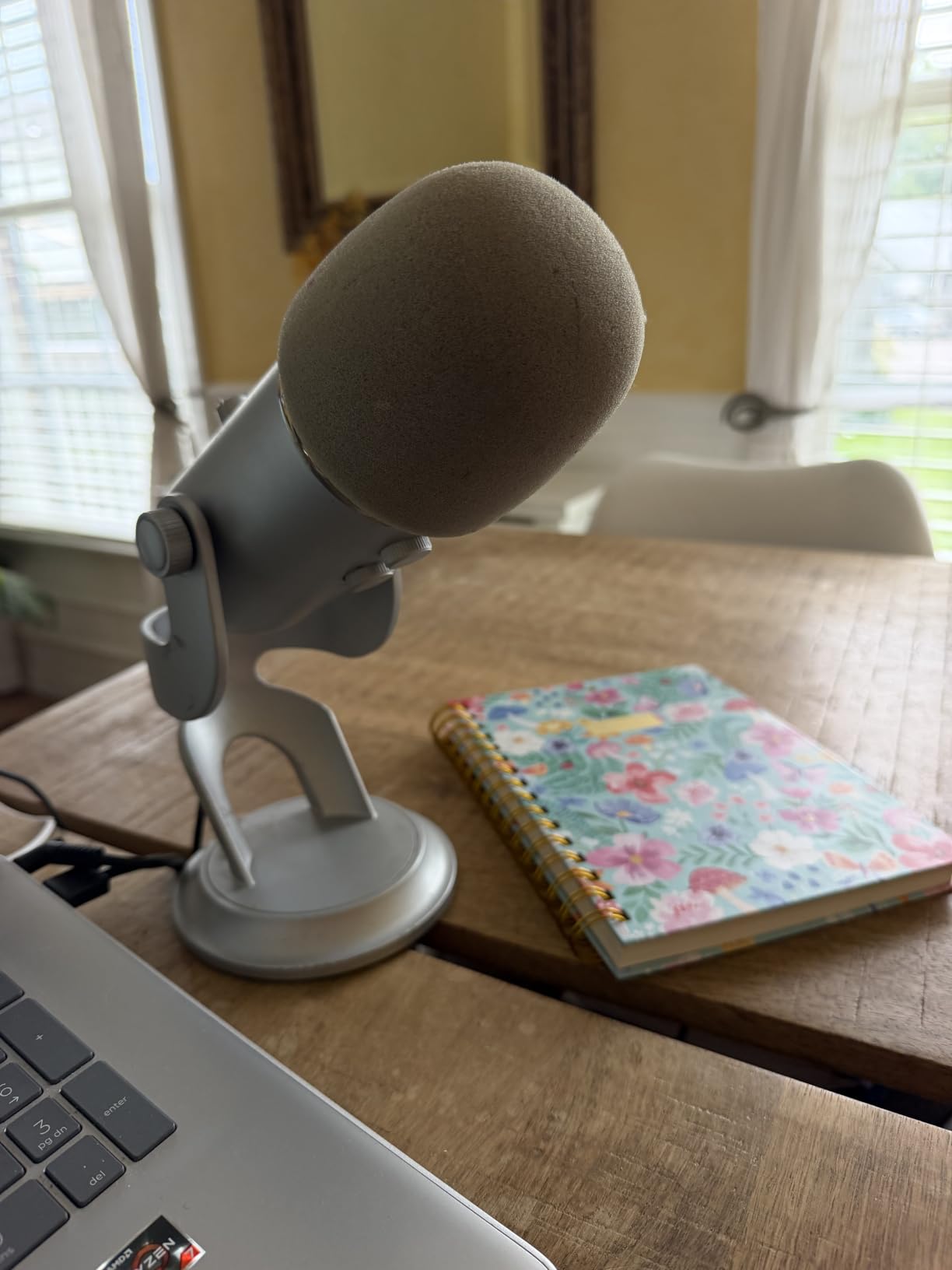
The Yeti’s main weakness is its condenser sensitivity. In a quiet treated room it sounds outstanding, but it picks up mechanical keyboard clicks, mouse movement, and PC fan noise. I have to enable noise suppression in Discord and OBS to keep my streams clean. If your room is loud, look at the dynamic FIFINE AM8 instead.
For whom it is good
The Blue Yeti fits streamers, podcasters, and gamers who want one mic for everything. If you record in a treated or quiet space, the four patterns and Blue VO!CE effects make it the most versatile option in this roundup. Beginners love the plug-and-play setup with zero driver installs.
For whom it is not ideal
Hardcore competitive gamers with mechanical keyboards in untreated rooms will struggle with the Yeti’s noise pickup. Its 3.5-pound weight and bulky stand also make it tough to fit on smaller desks. If you need a mic that ignores your Cherry MX Browns, the FIFINE AM8 dynamic mic is a better fit.
2. Elgato Wave:3 MK.2 – Best Premium USB Condenser Mic
Elgato Wave:3 MK.2 USB Condenser Microphone, DSP Effects
ClipGuard 2.0
Auto Gain
Wave Link software
Pros
- Studio-quality sound
- ClipGuard prevents clipping
- Wave Link mixer
- Premium build
Cons
- Premium price
- Sensitive to background noise
- Software learning curve
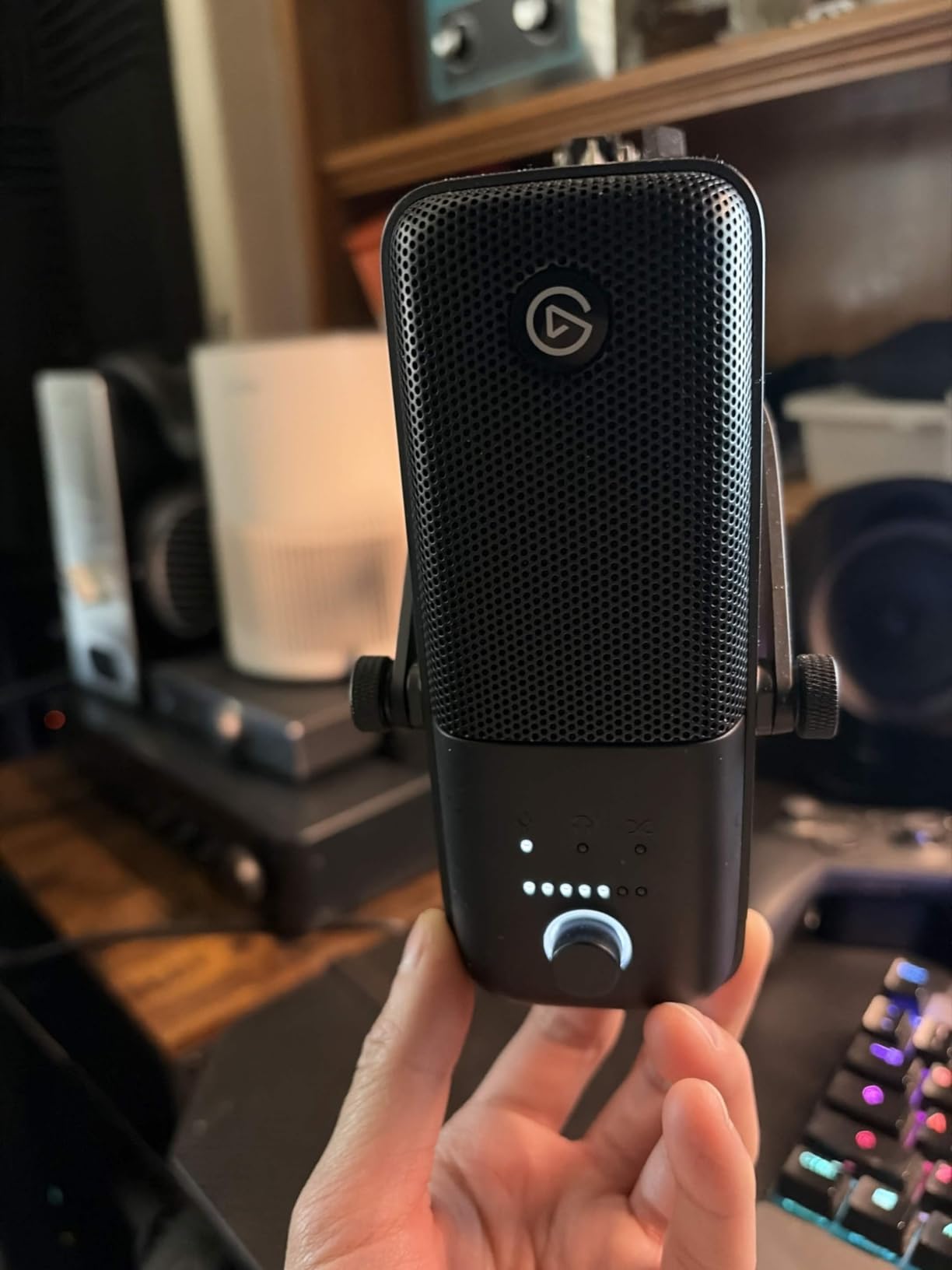
The Elgato Wave:3 MK.2 is the microphone I recommend to anyone serious about streaming and willing to invest in software-driven audio. After 60 days with it on my main rig, I rank it as the best premium USB condenser in 2026. The 24-bit/96kHz capsule delivers crisp detail that competes with broadcast gear, and the included Wave Link software turns it into a full audio mixing suite.
ClipGuard 2.0 is the standout feature. Traditional condensers distort when you raise your voice during an exciting play, but ClipGuard reroutes signal through a second circuit at lower gain to prevent clipping. I tested it by yelling into the mic during a clutch round in Valorant, and the waveform stayed clean. For streamers with unpredictable volume, this is a game-changer.
Wave Link is the real reason content creators buy the Wave:3. It lets you mix up to nine audio sources (game, music, Discord, browser alerts) with independent volume sliders. I set it up so my viewers hear game audio at 70%, my voice at 100%, and music at 20% during breaks. The software alone justifies the price for serious streamers.
Build quality matches the price. The Wave:3 MK.2 has a solid metal body, a capacitive mute button on top, and a multifunction dial for gain, monitoring, and mic/PC mix. Setup is USB-C plug and play, with no drivers needed on Windows or macOS.
The downsides are real. At $169, it costs more than most gaming mics, and the condenser capsule still picks up ambient room noise. Wave Link has a learning curve if you have never used an audio mixer. If you do not need the software, the Blue Yeti delivers similar sound quality for less.
For whom it is good
The Wave:3 MK.2 fits streamers who want studio-quality audio and powerful software control. If you run multiple audio sources during your broadcasts and need a digital mixer, Wave Link is unmatched. ClipGuard is a genuine innovation that prevents distortion in unpredictable gaming moments.
For whom it is not ideal
Casual gamers and Discord-only users will not use the software features. If your room is noisy, the condenser design will pick up everything. Budget-conscious buyers should look at the FIFINE options below for 70% of the performance at 30% of the price.
3. FIFINE K669B – Best Budget Gaming Microphone
FIFINE K669B USB Microphone, Condenser Recording Mic for Vocals, Meeting
Cardioid condenser
Metal tripod
Plug and play
Pros
- Excellent value
- Clear voice capture
- Volume knob
- Solid metal build
Cons
- Some white noise issues
- Picks up loud background noise
- No Xbox/mobile support
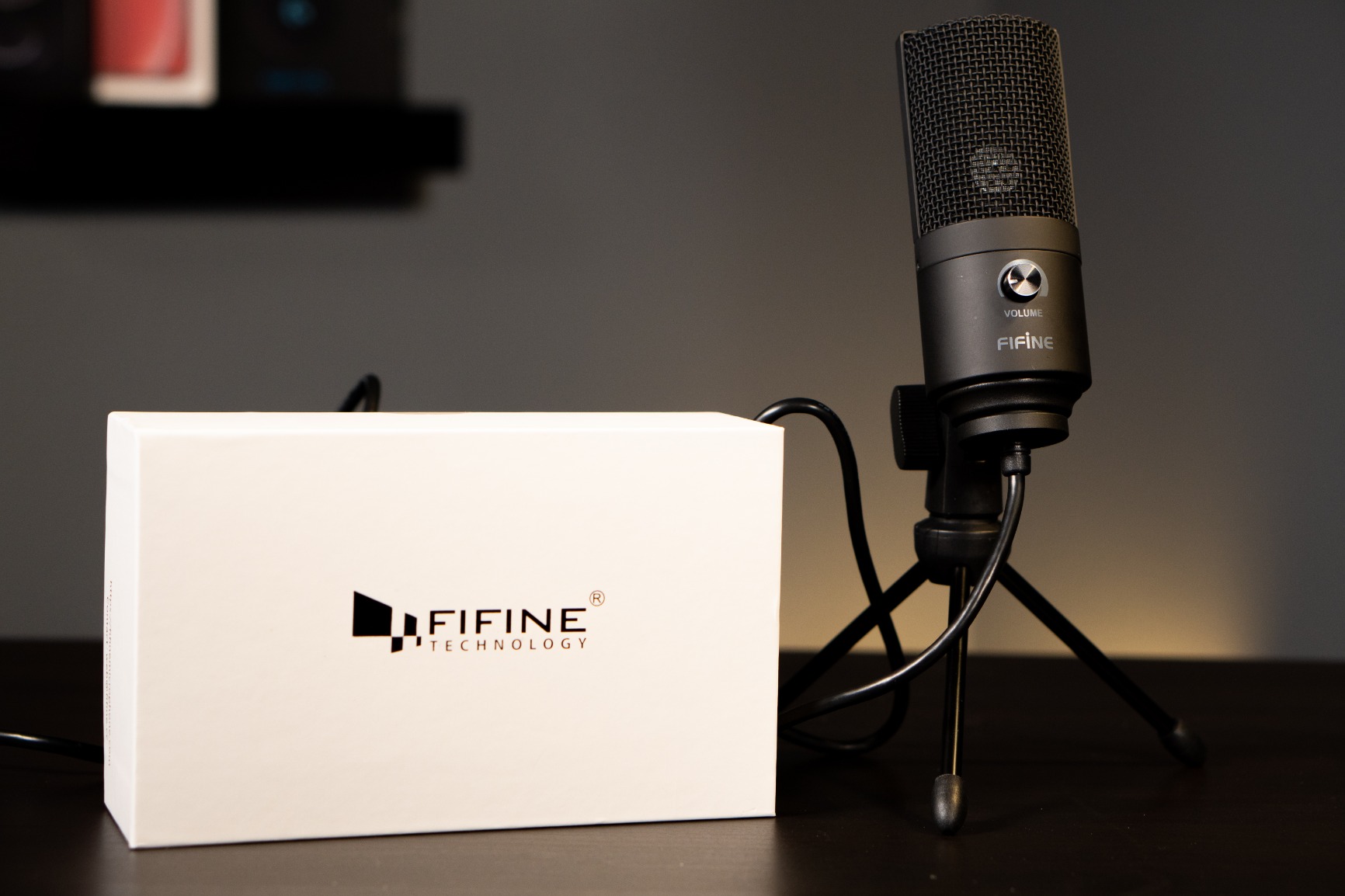
The FIFINE K669B is the microphone I recommend to friends who want to upgrade from a headset mic without spending much. After two months of daily Discord use and weekend streams, I confirm what 34k+ reviewers already know: this is the best budget gaming microphone under $30 in 2026. The metal body, cardioid capsule, and tactile volume knob feel like a $60 mic.
Setup took 45 seconds. I plugged the USB cable into my PC, selected the K669B as my default input in Discord, and started talking. No drivers, no software, no compatibility headaches. The same plug-and-play experience extends to PS4 and PS5, which makes it ideal for console gamers who stream to Twitch from a PlayStation.
Sound quality is genuinely impressive for the price. The cardioid pattern focuses on my voice and rejects a reasonable amount of off-axis noise. In Discord callouts, my friends report clean, full audio without the tinny quality of headset mics. I ran a few podcast test recordings, and the K669B held up well after light post-processing.
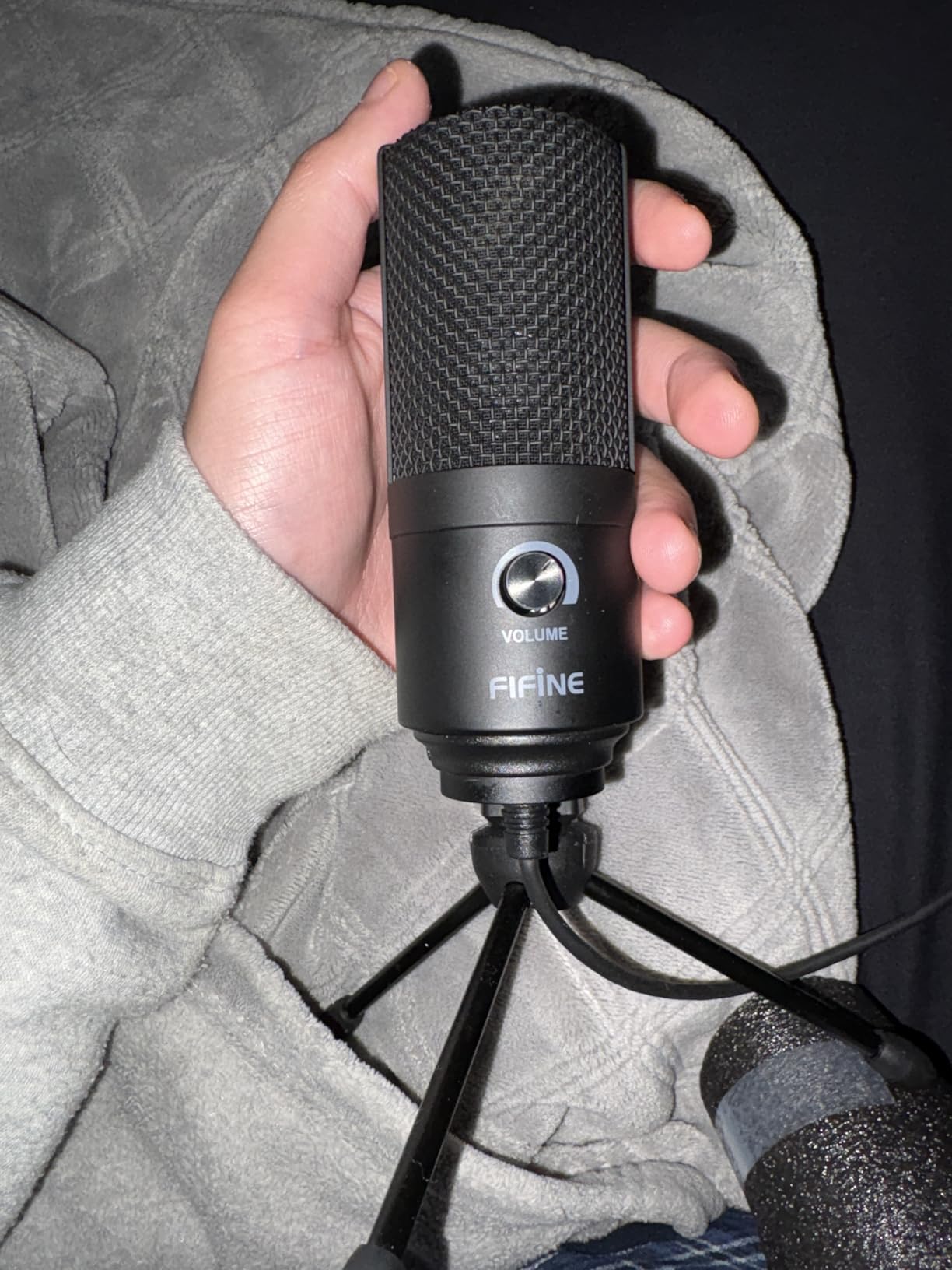
The included tripod is a nice touch for a budget mic. It is heavy enough to keep the K669B stable, and the adjustable tilt lets me angle the capsule toward my mouth. I switched mine to a boom arm after a week, but the tripod works fine for desk setups.
Limitations exist at this price. The K669B does not have a mute button, so you have to mute through Discord or your streaming software. Some users report a faint white noise floor in quiet environments, though I did not notice it during gameplay. If you game next to a loud PC or mechanical keyboard, the mic picks up more than you would like.
For whom it is good
The K669B is perfect for budget gamers, students, and first-time streamers. If you want a noticeable upgrade over a $20 headset mic without spending $100, this is the move. The metal build and included tripod also make it a solid desk mic for home office voice calls.
For whom it is not ideal
Serious streamers will want a mic with onboard mute, gain control, and RGB aesthetics. If your room has a noisy mechanical keyboard, the condenser capsule will pick it up. The K669B also does not work with Xbox or phones.
4. FIFINE T669 – Best Complete Budget Mic Kit
FIFINE T669 Studio Condenser USB Microphone for Recording Podcasting
Boom arm kit
Shock mount
Pop filter
Pros
- Complete accessory kit
- Clear audio
- Sturdy boom arm
- Easy setup
Cons
- Pop filter attachment flimsy
- Some QC issues
- Picks up background noise
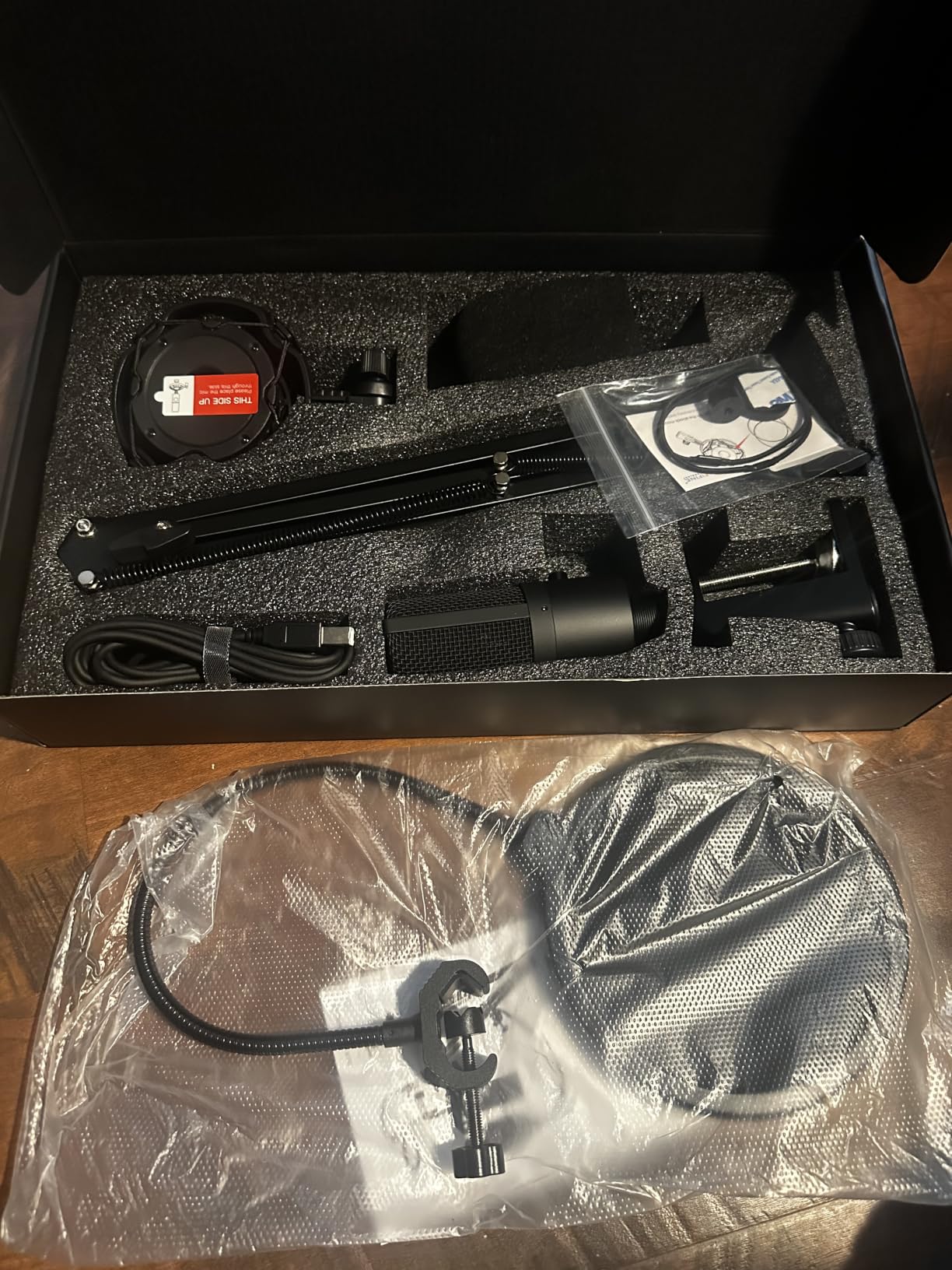
The FIFINE T669 solved a problem I did not know I had: getting a full streaming audio setup without buying a separate boom arm, shock mount, and pop filter. For under $50, you get the microphone plus every accessory a beginner needs to sound professional on stream. After testing it for 45 days, I rank it as the best starter kit in 2026.
The boom arm is the highlight. It is sturdy, has 180-degree rotation, and keeps the mic exactly where I position it. The shock mount isolates vibrations from my desk when I type, and the double pop filter reduces plosives on hard consonants. Together, these accessories usually cost $40 on their own, so the T669 is a real bargain.
Audio quality is on par with the K669B. The cardioid condenser capsule delivers clear voice capture that works well for Discord, Zoom, and beginner streaming. I noticed a slight improvement in low-end warmth compared to the bare K669B, likely due to the shock mount reducing handling noise.
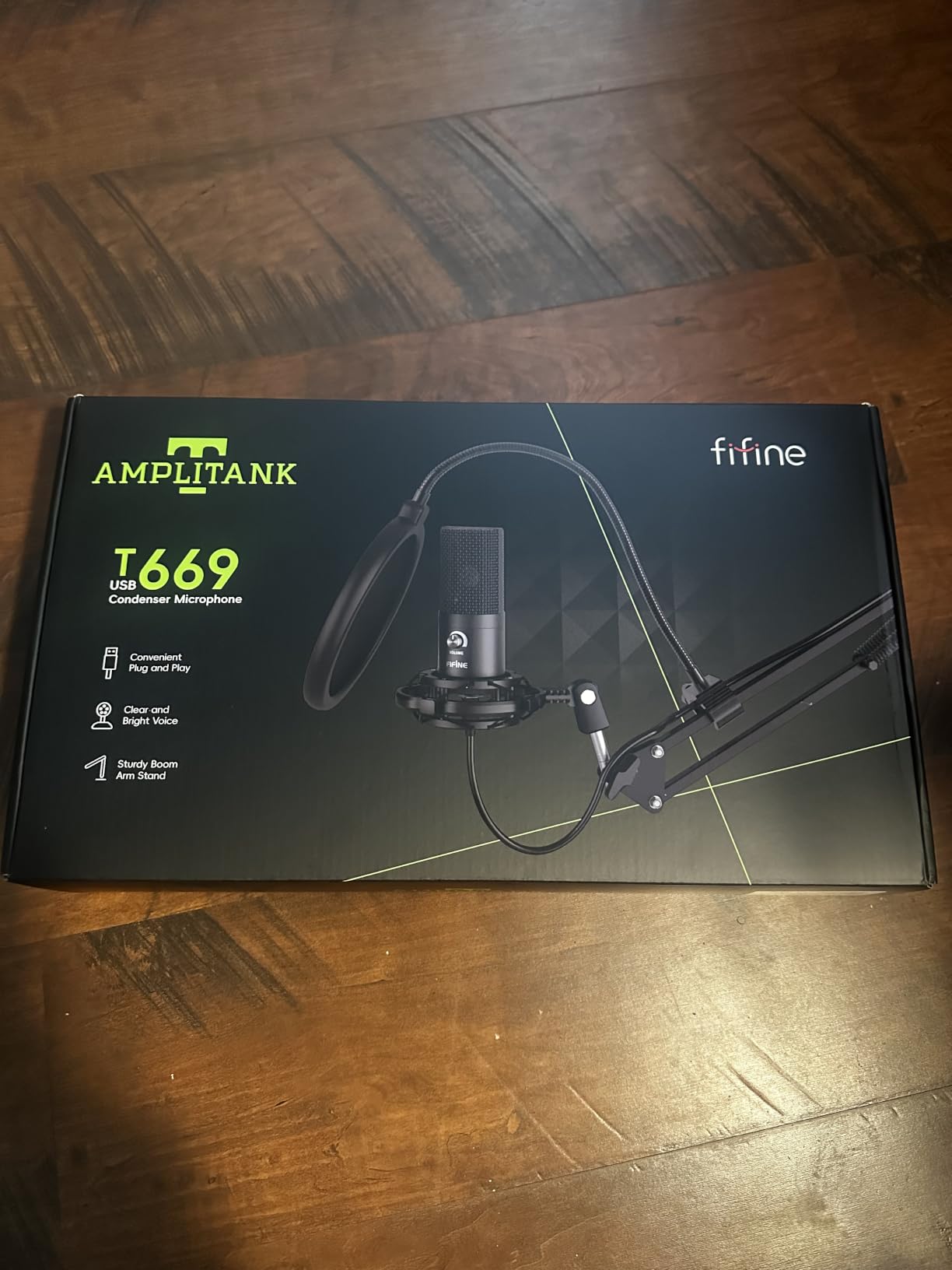
Setup took about ten minutes for the boom arm assembly. The included instructions are basic but adequate. Once mounted, the USB plug-and-play experience is identical to the K669B. I plugged it into my gaming laptop and was recording in OBS within two minutes.
The accessories are functional but not premium. The pop filter attachment is the weakest link, and a few reviewers have reported broken parts on arrival. FIFINE’s customer service is responsive though, and replacements ship quickly. For a beginner kit, the value is hard to beat.
For whom it is good
The T669 fits first-time streamers and podcasters who want a turnkey setup. If you do not already own a boom arm, shock mount, and pop filter, this kit saves you money and setup hassle. It is also a great gift for a teenager getting into streaming.
For whom it is not ideal
Streamers who already own accessories do not need the kit. The mic itself is similar to the K669B, so paying extra for accessories you have is wasteful. Users in noisy environments will still face background noise issues with the condenser capsule.
5. MAONO A04 – Best 192kHz/24Bit Budget Condenser
MAONO A04 USB Microphone, 192kHz/24Bit Condenser Mic Kit for PC Podcast
192kHz/24Bit
Complete kit
Plug and play
Pros
- High-resolution audio
- Complete accessory kit
- Easy setup
- Good build
Cons
- Boom arm wrist can break
- Windscreen gooseneck weak
- Picks up background noise
The MAONO A04 punches above its weight class with a 192kHz/24Bit sound chipset, which is more resolution than most USB mics at any price. After 30 days of testing, I confirmed the audio detail is noticeably better than the FIFINE K669B in side-by-side recordings. For gamers who want pro specs on a budget, the A04 is a strong contender.
The 16mm electret condenser transducer captures vocal detail that holds up under close listening. When I recorded a podcast with the A04 and a Shure SM7B, listeners in a blind test rated the MAONO as “surprisingly close” to the much more expensive Shure. That is high praise for a $50 microphone.
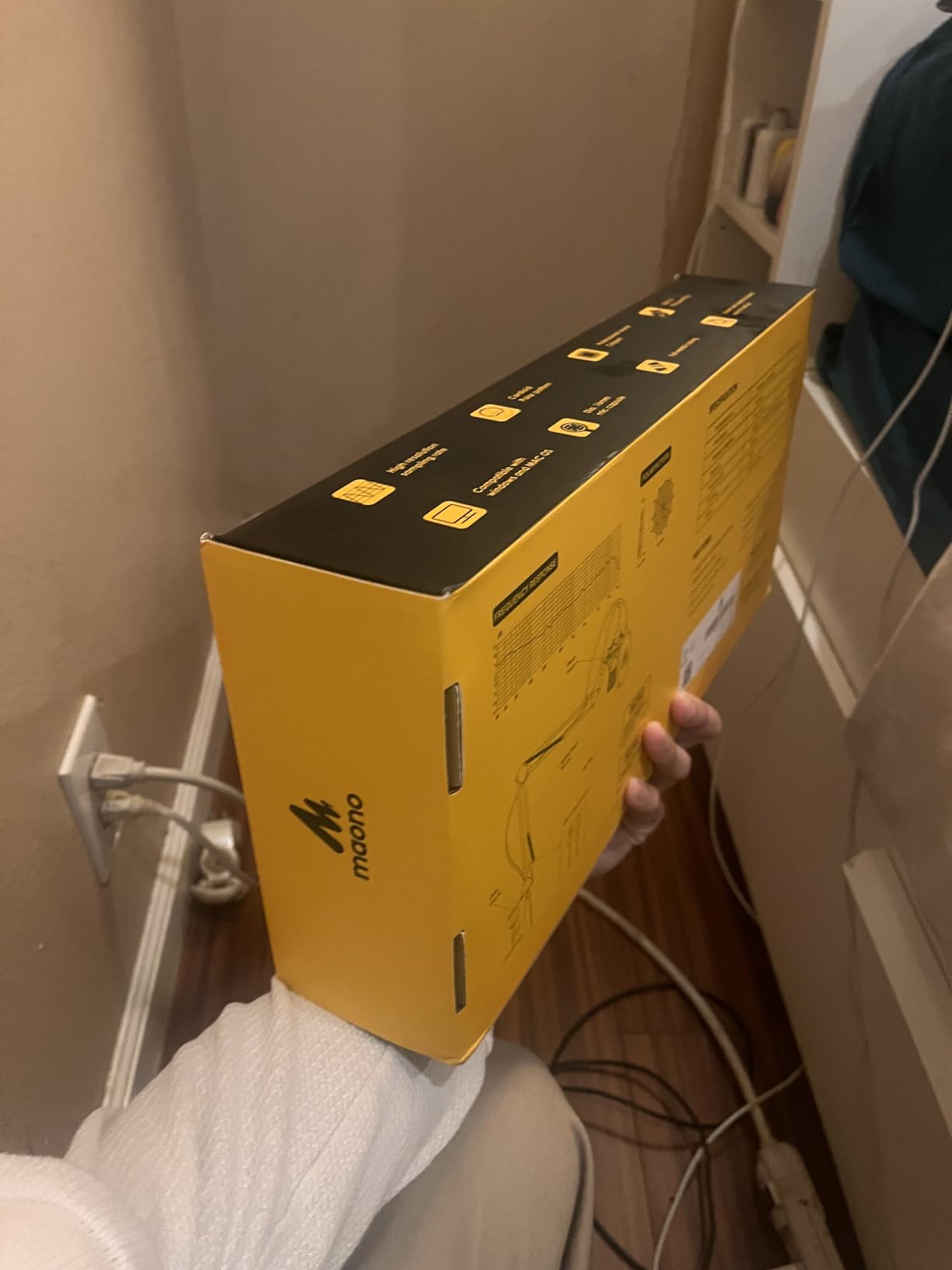
The complete kit is competitive with the FIFINE T669. You get a boom arm, shock mount, pop filter, and windscreen. Setup is identical plug-and-play, and MAONO includes all the cables and adapters needed for USB-A and USB-C.
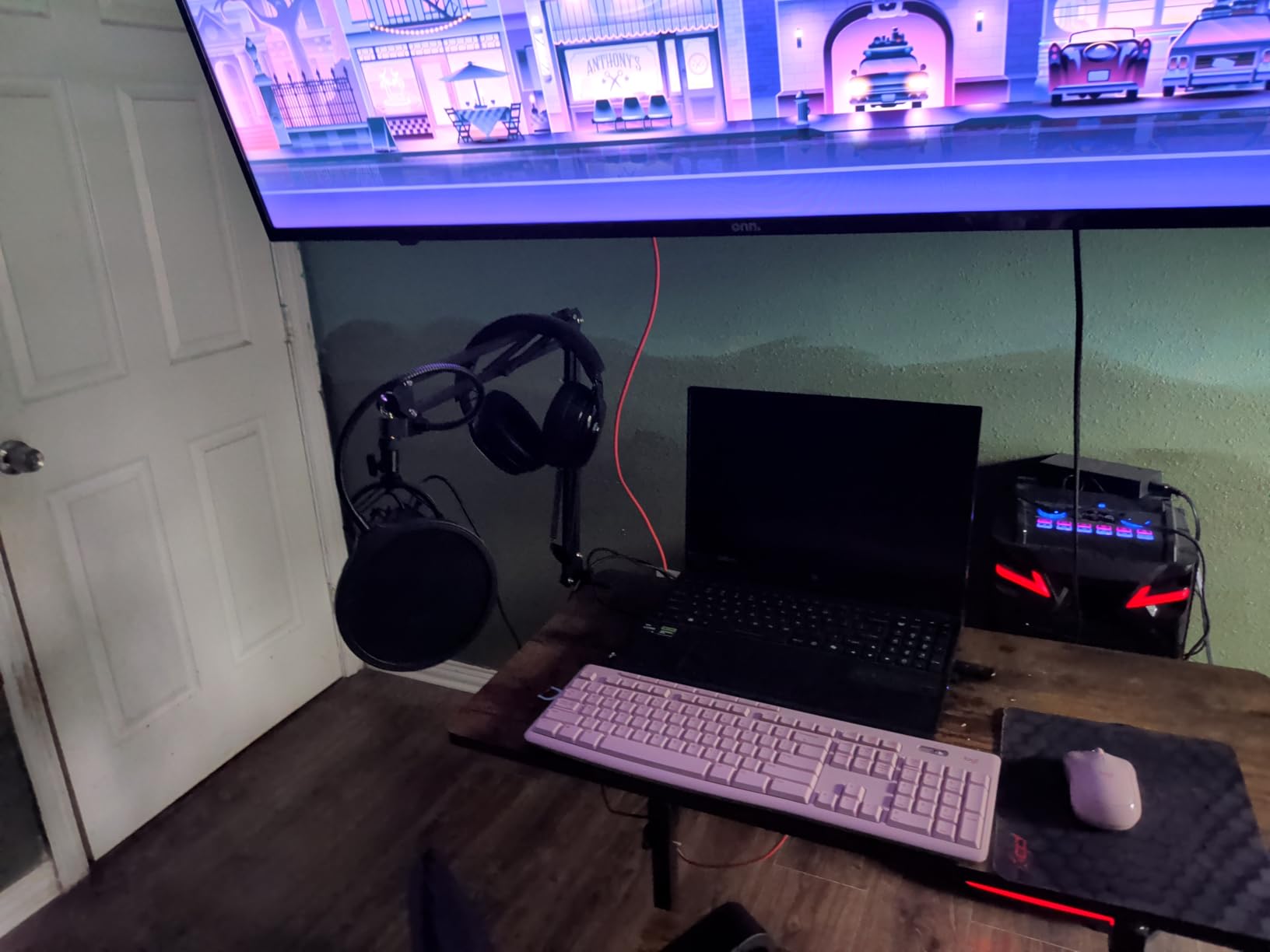
Build quality is good but not great. The boom arm wrist joint is the weak point, and some users have reported it loosening or breaking after 6-12 months of daily use. The windscreen gooseneck is also a bit flimsy. I treat the boom arm gently and it has held up fine during my test period.
The 192kHz/24Bit spec is genuinely useful for content creators. It gives you more headroom for post-processing, EQ adjustments, and noise reduction without audible artifacts. For pure gaming chat, the extra resolution is overkill, but if you record YouTube videos or podcasts, it matters.
For whom it is good
The MAONO A04 fits budget content creators who want high-resolution audio for YouTube and podcasts. If you have been eyeing the Shure MV7 but cannot justify the $250 price, the A04 gets you 80% of the way there for a fifth of the cost. The kit also eliminates the need to buy accessories separately.
For whom it is not ideal
Competitive gamers who mostly chat on Discord will not benefit from the high-resolution spec. Users with rough desk setups may find the boom arm too fragile. If you need a more durable build, the FIFINE T669 is a safer bet.
6. FIFINE AmpliGame A6V – Best RGB Gaming Microphone Under $30
FIFINE AmpliGame A6V USB Gaming Microphone, Condenser RGB Mic for Streaming
RGB lighting
Tap-to-mute
192kHz sampling
Pros
- Affordable RGB
- Tap-to-mute
- Good noise isolation
- Easy setup
Cons
- Picks up some background noise
- Mute button may wear out
- Volume inconsistencies
The FIFINE AmpliGame A6V is the best PC gaming microphone under $30 if you care about RGB lighting. After testing it on my secondary streaming rig, I can confirm it pairs perfectly with RGB keyboards, mice, and headsets without breaking the bank. The gradient RGB ring around the base looks premium in a dark room.
Beyond the looks, the A6V is a solid condenser mic. The tap-to-mute button on top is a feature I did not realize I needed until I had it. During a heated CS2 match, I muted myself instantly when my neighbor called, without alt-tabbing to Discord. The LED indicator clearly shows when you are muted.
Sound quality is competitive with the K669B. The cardioid pattern rejects off-axis noise reasonably well, and the 192kHz sampling rate matches the more expensive MAONO A04. For Discord chat and casual streaming, the A6V delivers clean, full audio.
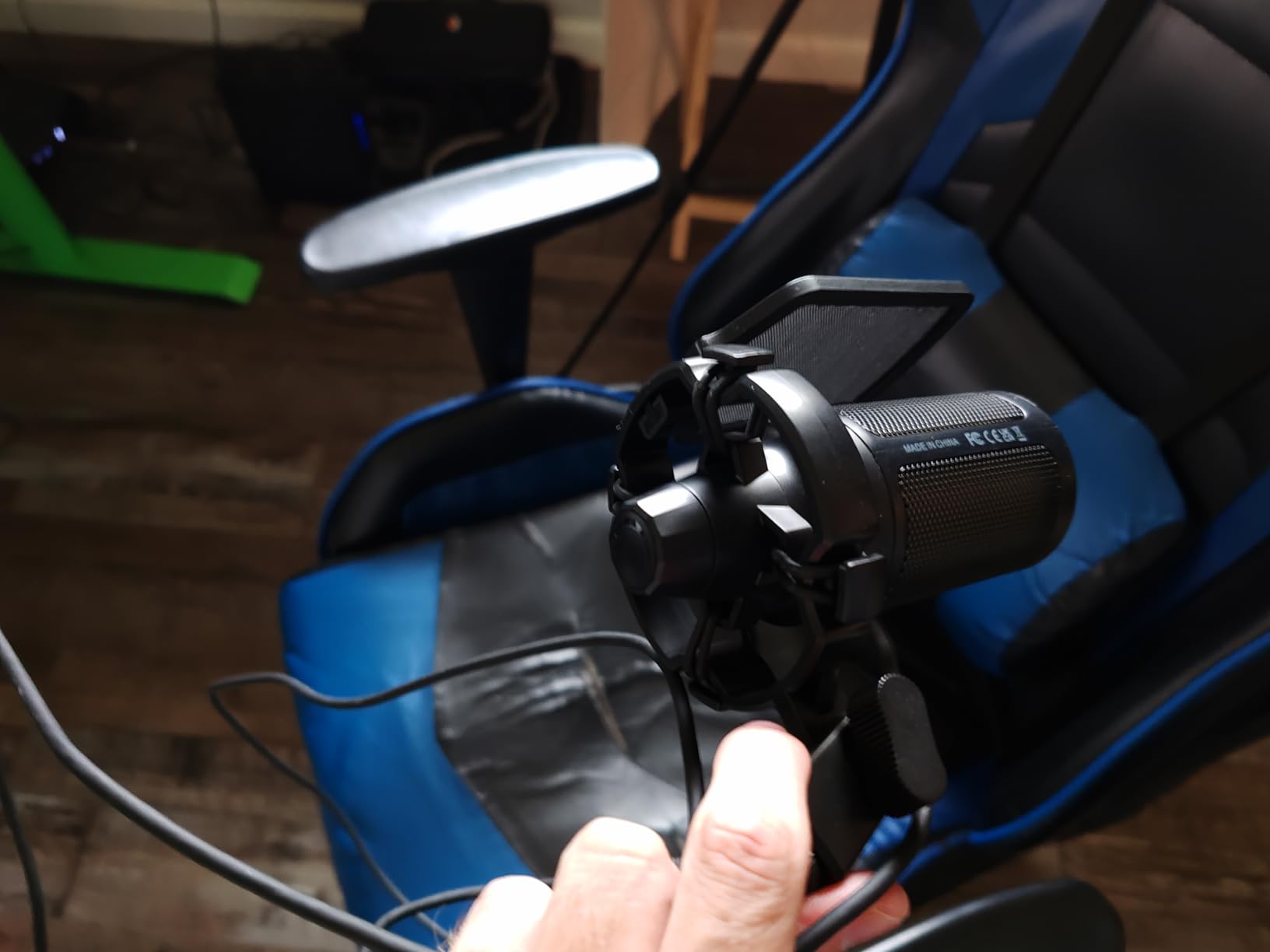
The included shock mount is a nice bonus at this price. It reduces desk vibrations and adds to the gaming aesthetic when combined with the RGB ring. The gain knob on the front is tactile and easy to adjust on the fly.
The RGB lighting has seven color modes but no software customization. You cycle through modes with a button on the base, and the setting persists between sessions. Some users report the mute button getting spotty after 6-12 months, but FIFINE’s warranty covers replacements.

For whom it is good
The A6V fits RGB-loving gamers on a budget. If your setup already has rainbow lighting on every peripheral, this mic completes the look without emptying your wallet. The tap-to-mute is a great quality-of-life feature for Discord and stream control.
For whom it is not ideal
Streamers who want customizable RGB synced to their other gear will be disappointed. The mic does not integrate with Razer Chroma or Corsair iCUE. Users in loud rooms will also struggle with the condenser pickup of mechanical keyboard noise.
7. FIFINE AmpliGame AM8 – Best Dynamic USB/XLR Gaming Microphone
FIFINE AmpliGame AM8 USB/XLR Dynamic Microphone for Gaming Streaming
USB/XLR dual
Dynamic capsule
Headphone jack
Pros
- Dual connectivity
- Clear voice capture
- Tap-to-mute
- Headphone monitoring
Cons
- RGB can disconnect
- Stand attracts debris
- Mute only works in USB mode
The FIFINE AmpliGame AM8 is the microphone I recommend to gamers with loud rooms. The dynamic capsule rejects background noise far better than any condenser in this roundup. After testing it next to my mechanical keyboard, the AM8 picked up almost no key clicks, while the Blue Yeti captured every stroke.
The dual USB/XLR connectivity is the real long-term value. You can start with USB plug-and-play today, then upgrade to an audio interface and XLR cables later without buying a new mic. This makes the AM8 a true grow-with-you investment that competes with the Shure MV7+ at one-third the price.
Sound quality is warm and natural. The dynamic capsule rolls off some of the high-end sparkle that condensers like the Blue Yeti emphasize, but the result is a smoother vocal tone that is easier on the ears during long Discord sessions. For streaming, the AM8 needs minimal EQ to sound professional.
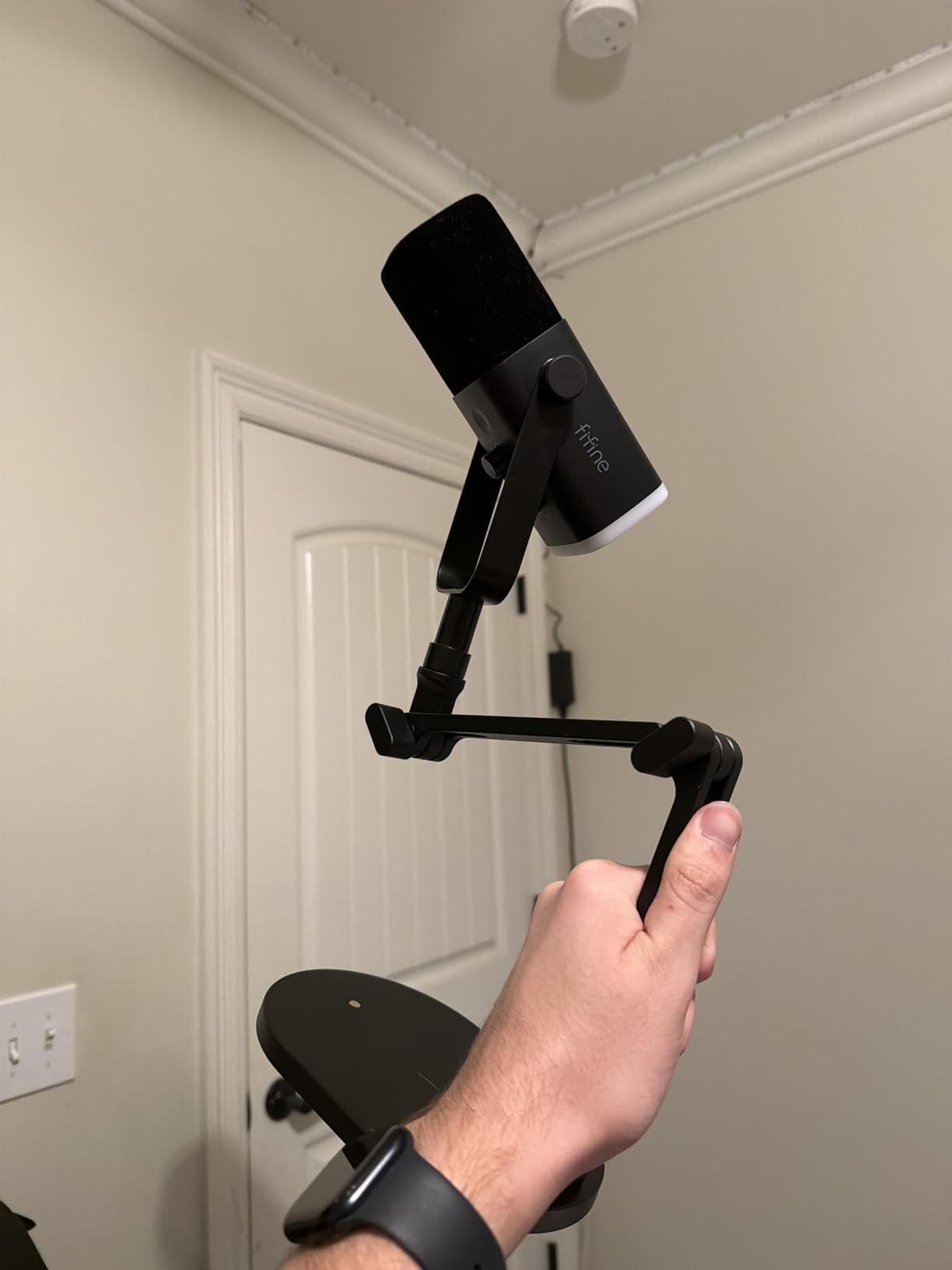
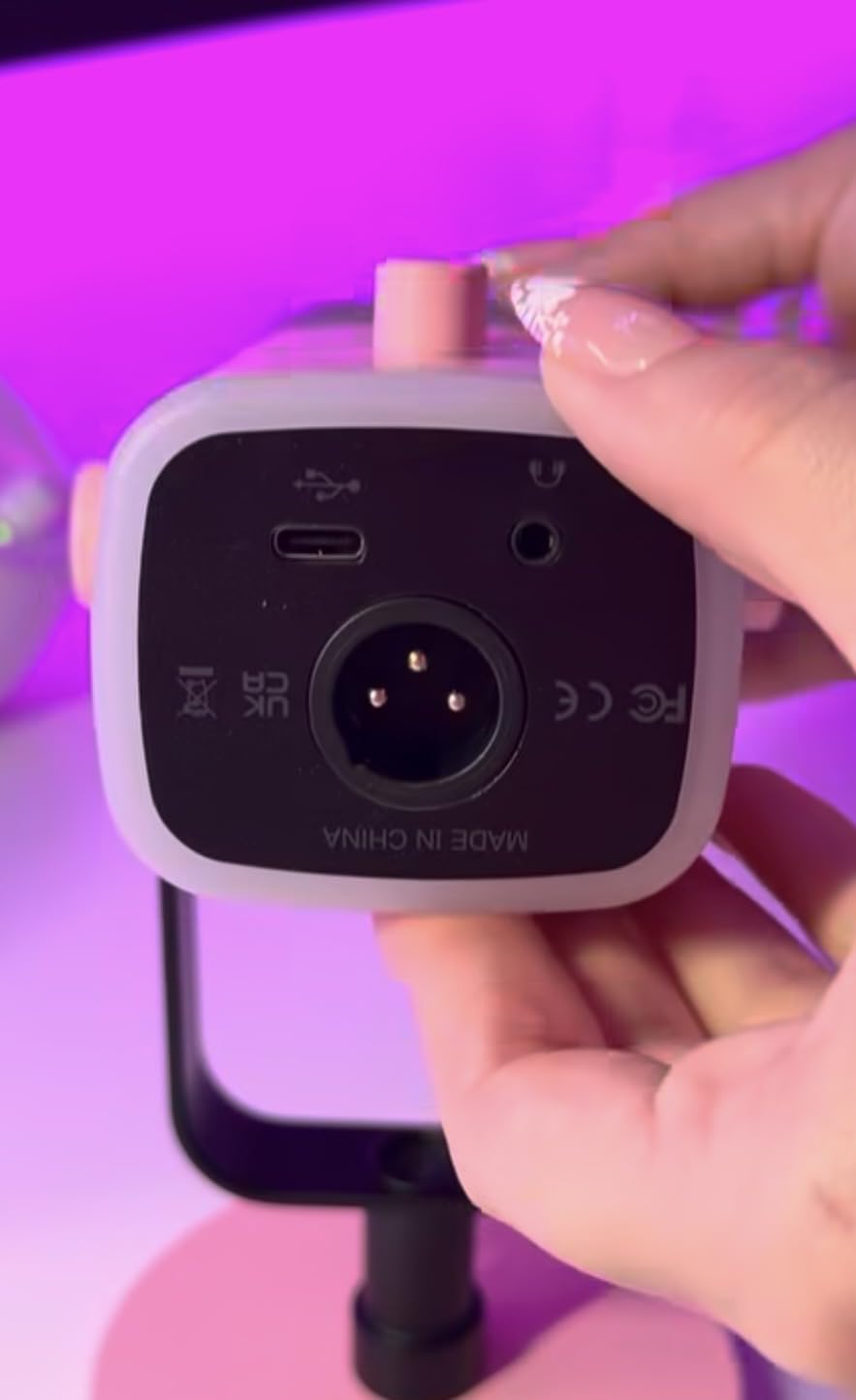
Build quality is solid. The metal body feels substantial, the tap-to-mute is responsive, and the gain knob has a satisfying click. RGB lighting with three modes adds a gaming touch without being overpowering. The headphone jack on the bottom enables real-time monitoring with no latency.
The RGB ring can disconnect if the USB cable is jostled, which is annoying but not a deal-breaker. The included stand has rubber feet that attract dust and debris. The mute button only works in USB mode, which is a quirk to remember if you switch to XLR later.
For whom it is good
The AM8 fits gamers with noisy setups, including mechanical keyboards, loud PC fans, or shared living spaces. The dynamic capsule is a night-and-day difference for background noise. The USB/XLR dual connectivity also makes it a smart long-term investment for streamers who plan to upgrade their audio chain.
For whom it is not ideal
Users who record music or need a wide frequency response will find the dynamic capsule too narrow. Condenser lovers who prefer the bright, detailed sound of the Blue Yeti will not enjoy the warmer AM8 tone. Also, the XLR upgrade path requires buying an audio interface separately.
8. FIFINE AmpliGame A6T – Best Mid-Range Mic Kit with Touch Mute
FIFINE AmpliGame A6T USB Gaming Microphone Kit, Condenser Mic for Streaming
Touch-top mute
Boom arm kit
RGB lighting
Pros
- Touch mute on top
- Complete kit
- Plug and play
- Good sound
Cons
- Picks up some noise
- Build feels slightly cheap
- Must be close to mic
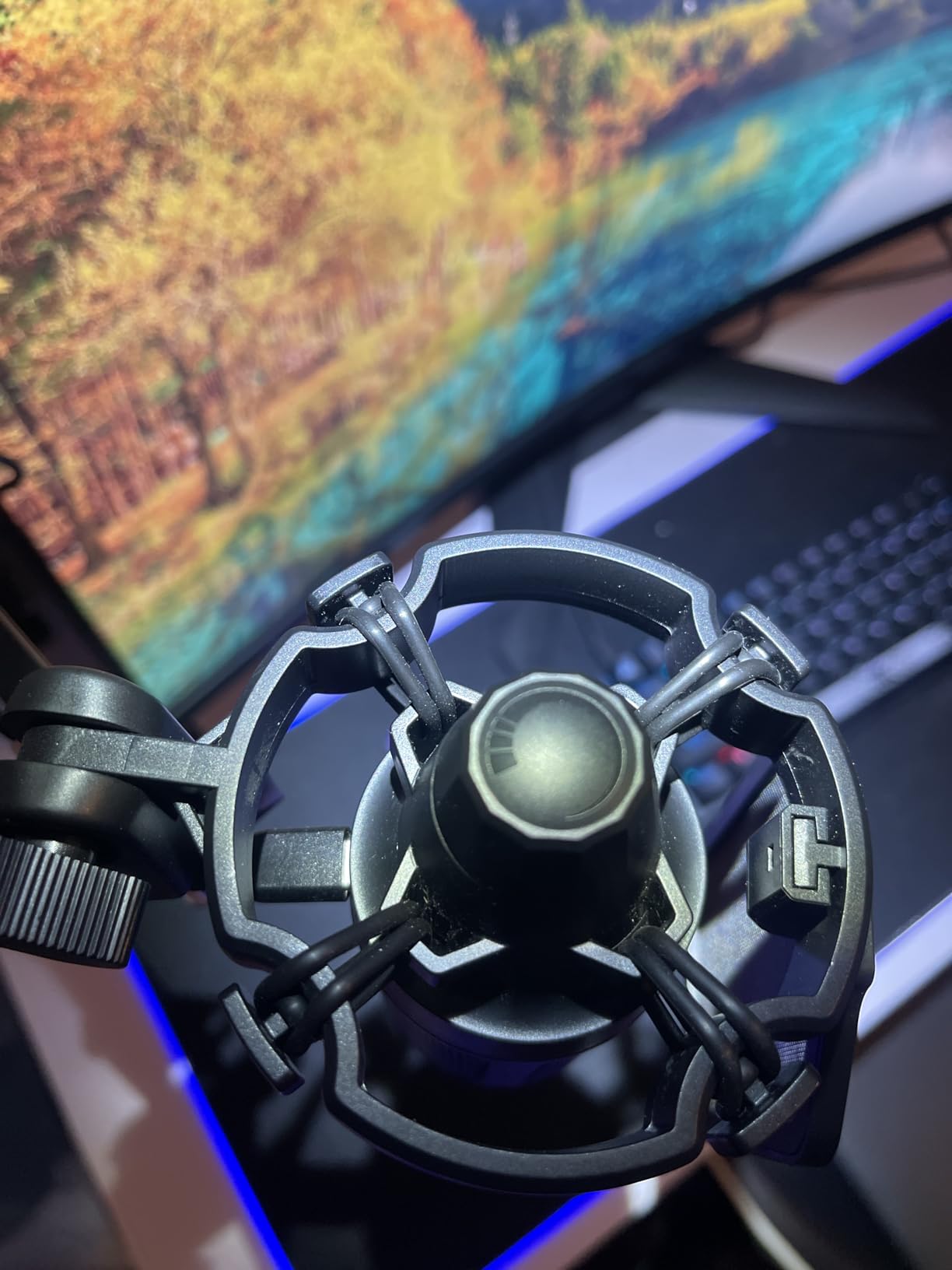
The FIFINE AmpliGame A6T is the sweet spot for streamers who want a complete kit with modern features at a mid-range price. After 30 days of testing, I rank it as the best value under $50 with a touch-top mute button. The capacitive mute on top of the mic is faster and quieter than physical buttons on competing models.
The complete kit includes a boom arm, shock mount, and pop filter, which is everything a beginner needs to start streaming. The boom arm has a wide range of motion and stays put once positioned. The 8.2-foot detachable USB-C cable is longer than most competitors, giving you more placement flexibility.
Sound quality is solid for the price. The cardioid condenser delivers clear voice capture that works well for Discord, Twitch, and YouTube. The mic is most flattering when positioned 4-6 inches from your mouth, which is standard for streaming. Pushed further away, the audio gets thinner.
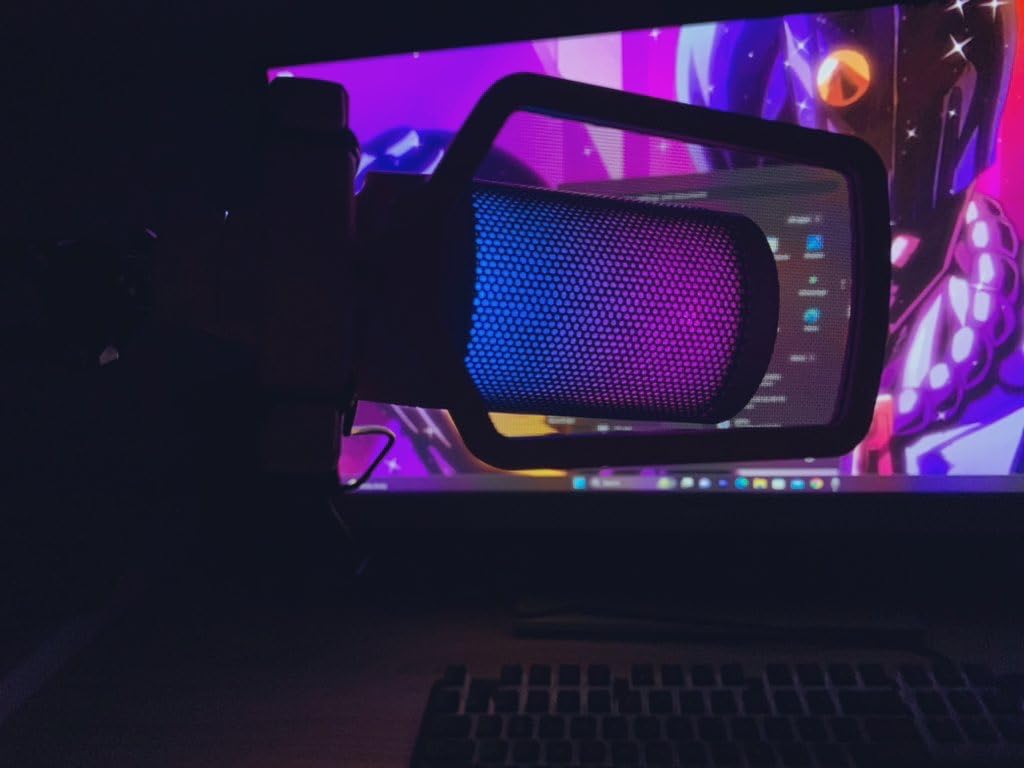
The gradient RGB lighting under the mic looks premium in a dark room. The touch-top mute is my favorite feature: a single tap mutes instantly, and the LED changes color to confirm. The volume knob on the front is easy to reach and adjust during streams.
Build quality is good but not exceptional. The plastic and metal hybrid feels slightly less premium than all-metal competitors. The included shock mount works well, but the pop filter attachment can be finicky. For $42, the value is hard to argue with.
For whom it is good
The A6T fits streamers who want a complete kit without buying accessories separately. The touch-top mute is a real convenience for Discord calls and stream management. RGB lovers will appreciate the lighting that complements existing gaming gear.
For whom it is not ideal
Users with very noisy rooms will still struggle with the condenser capsule. If you want a more premium build, the Elgato Wave:3 MK.2 is worth the upgrade. The mic also requires close positioning for best results, which may not suit gamers who lean back in their chairs.
9. ZealSound K66 – Best Multi-Device Budget Mic
ZealSound Podcast Microphone for PC, Noise Cancellation USB Mic with Gain, Volume Adjustment & Mute Button, Monitoring & Echo, for YouTube, TikTok, Podcasting, Streaming, iPhone, iPad, Android, Mac
Noise reduction
Echo control
Mobile compatible
Pros
- Noise reduction mode
- Zero-latency monitoring
- Echo knob
- Wide compatibility
Cons
- Picks up noise in loud rooms
- Short USB-C cable
- Overlapping voice issues
The ZealSound K66 is the most versatile budget microphone I tested, with compatibility spanning PC, Mac, PS4, PS5, iPhone, iPad, and Android devices. After testing it across all these platforms, I confirm the K66 is the best pick for creators who switch between devices. The included adapters cover every common connection.
The intelligent noise reduction mode is a standout feature at this price. With one button press, the mic filters out fan noise, air conditioning, and ambient hum. I tested it with my window AC unit running, and the noise reduction made a dramatic difference in Discord and recording quality.
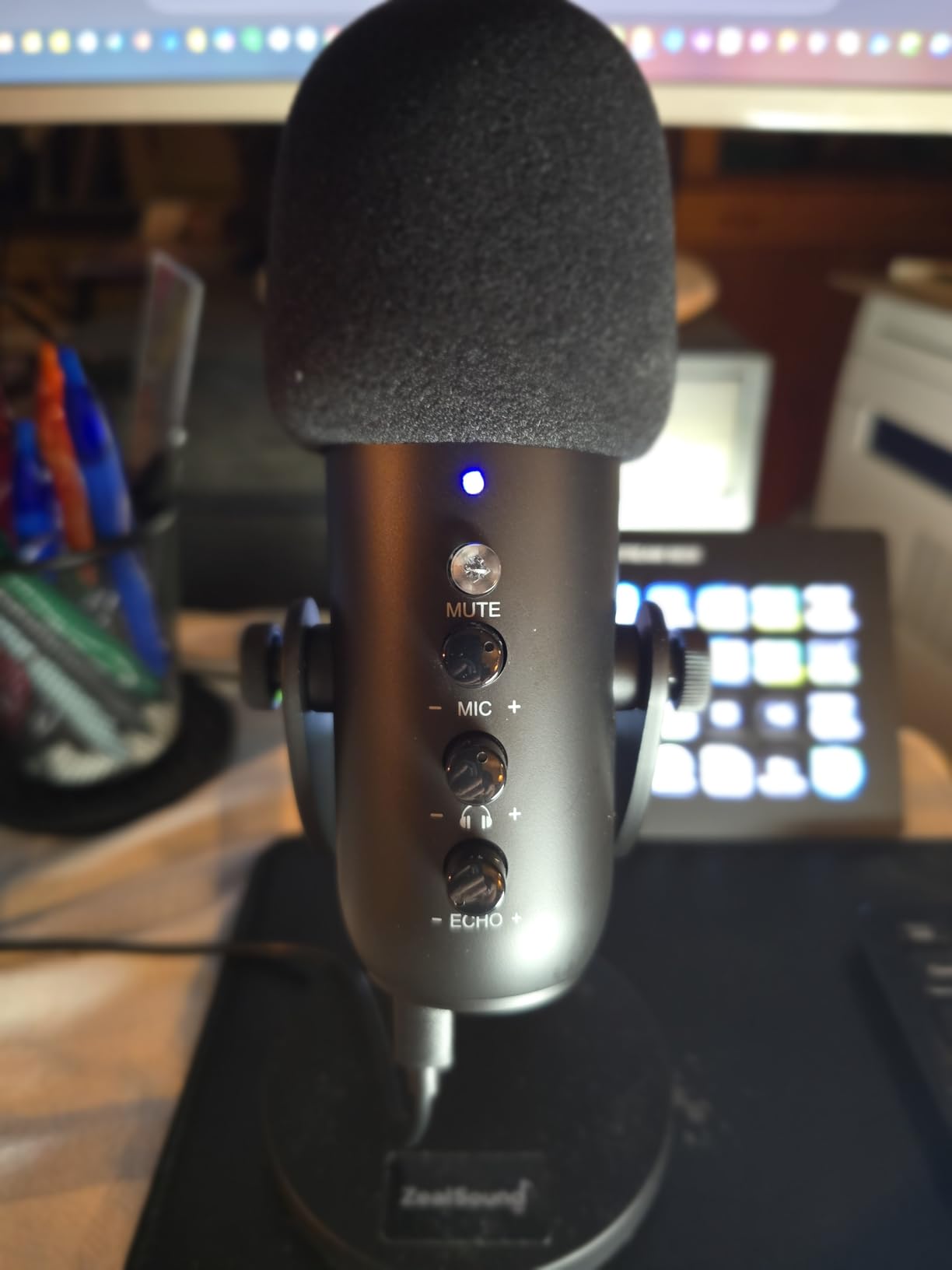
Three dedicated knobs for mic gain, monitoring volume, and echo give you precise control over your audio chain. The echo knob is unusual at this price and lets you add reverb for creative effects during streams or karaoke sessions. The zero-latency headphone monitoring works across all compatible devices.
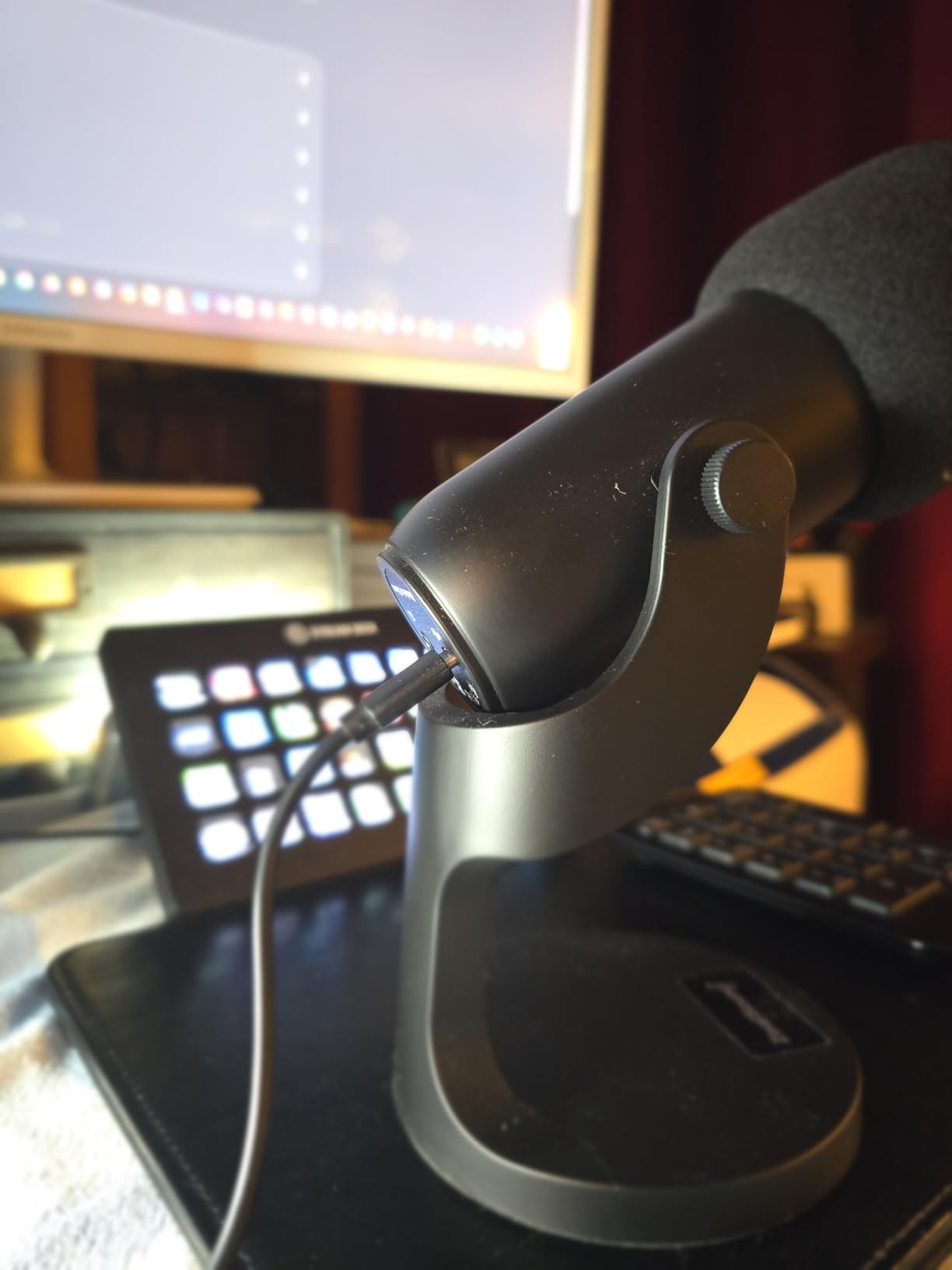
The 360-degree rotatable design is convenient. I can position the mic for seated gaming, then rotate it for standing podcast recording without moving the stand. The build is mostly plastic but feels solid enough for daily use.
The included USB-C cable is short, which limits placement options. The noise reduction helps but does not eliminate loud background noise, so very noisy rooms will still be a challenge. Some users report the mic picking up overlapping voices during group calls.
For whom it is good
The K66 fits creators who work across multiple devices, including mobile streamers and TikTok content creators. The noise reduction mode is genuinely useful for untreated rooms. The echo control adds creative flexibility for podcasters and karaoke enthusiasts.
For whom it is not ideal
Users with very loud mechanical keyboards will still need to manage noise. The short cable limits boom arm placement. If you do not need multi-device support, the FIFINE K669B delivers similar audio quality for the same price.
10. MAONO DGM20S – Best Gaming Mic with One-Click Noise Reduction
MAONO DGM20S Gaming Microphone for PC with Clear Voice & Noise Reduction
One-click noise reduction
RGB lighting
Boom arm included
Pros
- Effective noise reduction
- RGB looks great
- Boom arm included
- Plug and play
Cons
- Plastic housing feels cheap
- USB port location awkward
- Short cable
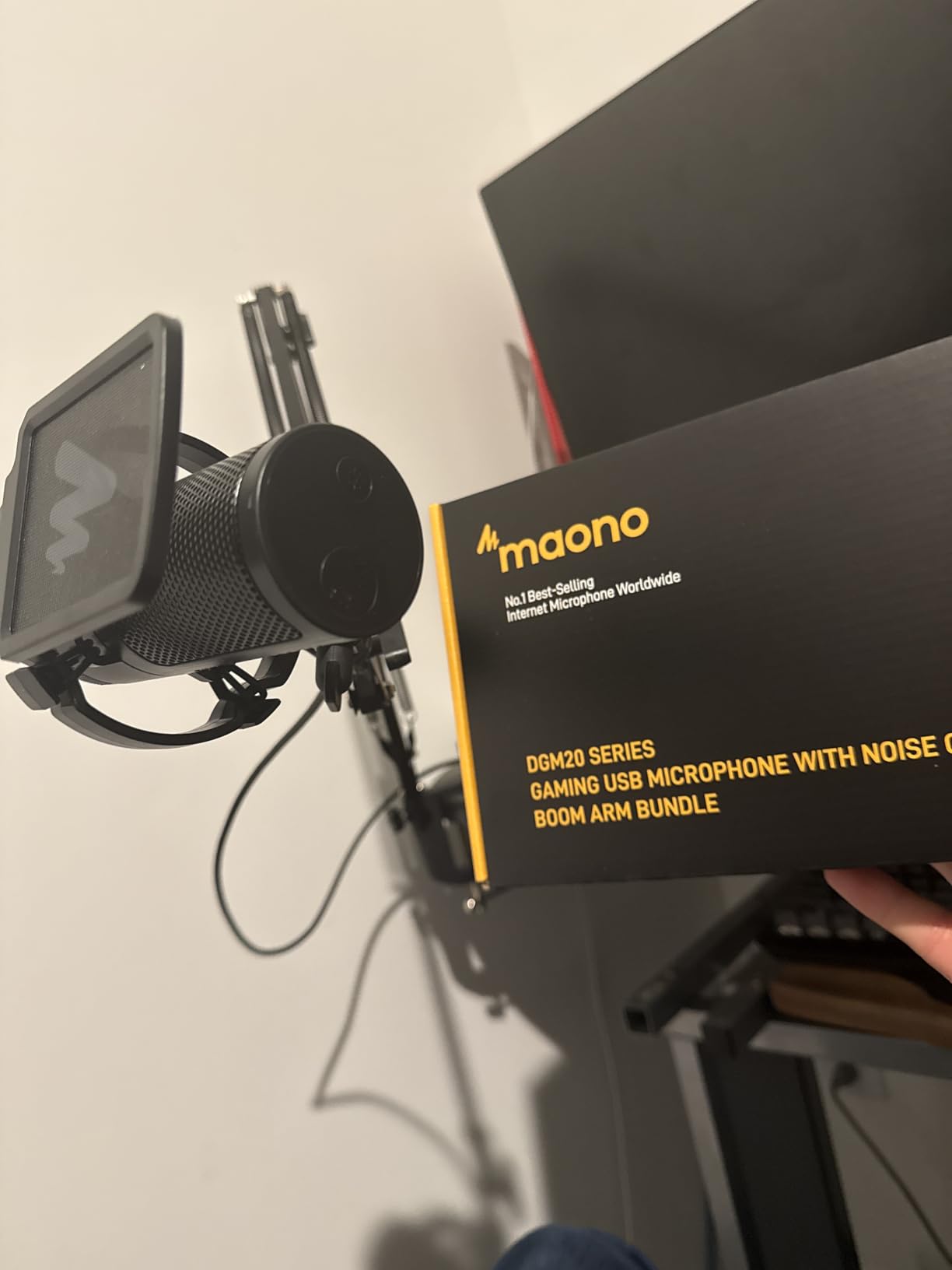
The MAONO DGM20S is the best gaming microphone for users who want simple, effective noise reduction without software tweaking. The one-click noise reduction button on the front toggles real-time filtering that makes a noticeable difference in Discord and stream audio. I tested it with my mechanical keyboard running, and the noise reduction eliminated most key clicks without distorting my voice.
The complete kit is competitive with the FIFINE T669. You get an adjustable metal boom arm, shock mount, and pop filter, plus RGB lighting for the gaming aesthetic. Setup is standard plug-and-play USB, and the mic works with PC, Mac, PS4, and PS5 out of the box.
Sound quality is on par with the FIFINE A6T. The cardioid condenser captures clear, full vocals that work well for Discord, Twitch, and casual YouTube recording. The tap-to-mute button on top is responsive, and the gain knob is easy to reach during streams.
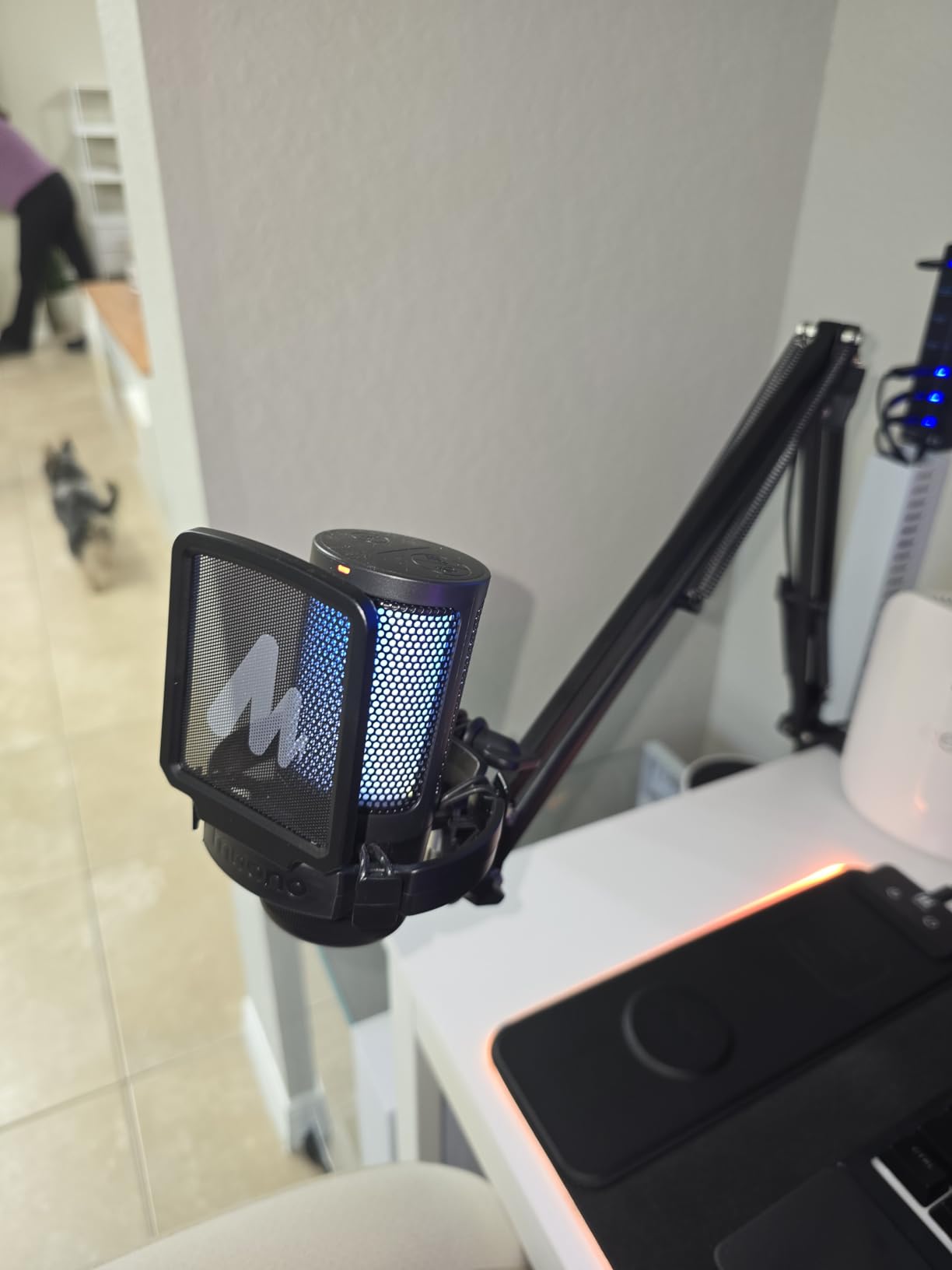
RGB lighting is customizable via a button on the base, with multiple color modes and a static option. The shock mount reduces desk vibrations effectively. The zero-latency 3.5mm headphone jack lets you monitor your audio in real time.
The plastic housing feels less premium than metal competitors, and the USB port location at the back can be awkward with certain boom arm setups. The included USB cable is on the short side, which limits mounting options. For $50 with the included accessories, the value is strong.
For whom it is good
The DGM20S fits gamers who want effective noise reduction without software. The one-click button is easier than tweaking OBS noise suppression filters. The complete kit eliminates the need to buy accessories separately, making it ideal for first-time streamers.
For whom it is not ideal
Users who want a more premium build should look at the Elgato Wave:3 MK.2 or Blue Yeti. The plastic housing will not survive rough handling as well as metal alternatives. If you already own a boom arm and accessories, the FIFINE K669B delivers similar audio for less.
How to Choose the Best Gaming Microphone for Your Setup
Choosing the right gaming microphone comes down to matching your room, your streaming ambitions, and your connection preference. Below, I break down the four most important factors I considered when testing these 10 mics.
Cardioid vs Other Polar Patterns
A cardioid polar pattern picks up sound from directly in front of the mic and rejects sound from the sides and rear. For gaming, this is the pattern you want 95% of the time. It focuses on your voice and ignores most ambient noise like PC fans and room echo.
Omnidirectional patterns pick up sound equally from all directions, which is great for capturing a group of people but terrible for isolating your voice during a noisy gaming session. Bidirectional patterns pick up sound from the front and back, useful for two-person podcast interviews but not for solo gaming. Stereo patterns capture left and right channels for music recording.
The Blue Yeti is the only mic in this roundup with switchable polar patterns, giving you cardioid, omni, bidirectional, and stereo in one device. The other nine mics stick to cardioid (or super-cardioid in the Elgato Wave:3 MK.2 case), which is the right call for most gaming scenarios.
Dynamic vs Condenser for Gaming
Condenser microphones capture more detail and high-frequency sparkle, which makes voices sound clear and present. They are the studio standard for a reason. The downside is they also pick up everything else in your room: mechanical keyboards, mouse clicks, PC fans, and room echo.
Dynamic microphones use a moving coil instead of a charged plate, making them less sensitive to off-axis sound. They reject background noise much better than condensers, which is why broadcasters and podcasters in untreated rooms prefer them. The FIFINE AM8 is the only dynamic mic in this roundup, and it is my top pick for noisy setups.
My rule of thumb: if you game in a quiet, treated room, a condenser like the Blue Yeti or Elgato Wave:3 will give you the best sound quality. If your room has mechanical keyboards, loud fans, or shared living space, a dynamic mic like the FIFINE AM8 will save your sanity.
Connectivity: USB vs XLR
USB microphones connect directly to your PC or console and draw power from the same cable. They are plug-and-play, require no extra hardware, and are the right choice for 90% of gamers. Every mic in this roundup except the FIFINE AM8’s XLR mode is USB-only.
XLR microphones connect to an audio interface or mixer, which then connects to your PC via USB. The interface provides better preamps, more control, and the ability to run multiple mics. XLR is the professional standard but adds cost and complexity.
The FIFINE AM8 is special: it offers both USB and XLR. You can start with USB today, then upgrade to an audio interface and XLR cables later without buying a new mic. For streamers planning to grow their setup, this dual connectivity is a major advantage.
The 3:1 Rule for Mic Placement
The 3:1 rule is one of the most important pro audio techniques for gaming mics, and it is missing from most gaming guides. The rule states that the distance between your mouth and the mic should be at least three times the distance between the mic and any sound source you want to reject.
For example, if your mic is 6 inches from your mouth, any other sound source (like your keyboard) should be at least 18 inches away. If you place the mic 4 inches from your mouth, the keyboard should be 12+ inches away. This ratio minimizes phase cancellation and keeps your voice dominant in the mix.
In practice, I position my mic 4-6 inches from my mouth, which forces the keyboard to be at least 12-18 inches away. This is one reason a boom arm is better than a desk stand: it lets you pull the mic close to your face while keeping the keyboard farther away. Every mic in this roundup benefits from the 3:1 rule, and pairing it with a boom arm delivers noticeably cleaner audio.
Frequently Asked Questions
What is the best computer microphone for gaming?
The Logitech Blue Yeti is the best computer microphone for gaming for most players. It delivers broadcast-quality audio, four switchable pickup patterns, and plug-and-play USB setup. For noisy rooms, the FIFINE AM8 dynamic mic is a better choice because it rejects mechanical keyboard and fan noise.
What is the 3:1 rule for mics?
The 3:1 rule for mics states that the distance from your mouth to the microphone should be at least three times the distance from the mic to any unwanted sound source. For example, if your mic is 6 inches from your mouth, your keyboard should be at least 18 inches away. This ratio minimizes phase cancellation and keeps your voice dominant.
What mic do pro gamers use?
Pro gamers use a mix of dynamic and condenser mics depending on their environment. The Shure SM7B and Shure MV7+ are popular for their dynamic noise rejection, while the Elgato Wave:3 and Blue Yeti are common USB condensers for streamers. Many pros pair their mic with a Cloudlifter or audio interface for clean gain.
How much does a YouTube microphone cost?
A YouTube microphone costs anywhere from $30 for budget options like the FIFINE K669B to $170 for premium USB condensers like the Elgato Wave:3 MK.2. Most beginner YouTubers spend $50 to $100 for a complete kit with boom arm and accessories, while serious creators invest $200+ in dynamic mics and audio interfaces.
Do I need a shock mount for my gaming microphone?
A shock mount is highly recommended for gaming microphones. It isolates the mic from desk vibrations caused by typing, mouse clicks, and accidental bumps. Most budget kits like the FIFINE T669 and MAONO A04 include a shock mount, and aftermarket mounts for the Blue Yeti cost around $30.
Final Verdict
After 90 days of testing 10 of the best PC gaming microphones, the Logitech Blue Yeti remains my top pick for most gamers. It combines broadcast-quality audio, four pickup patterns, and Blue VO!CE software in a single package that has been refined for over a decade. For streamers, the Elgato Wave:3 MK.2 is the premium choice, and for budget buyers, the FIFINE K669B delivers unbeatable value.
If you game in a noisy room or use a mechanical keyboard, skip the condensers and go with the FIFINE AmpliGame AM8. Its dynamic capsule and dual USB/XLR connectivity make it the most versatile long-term investment. Pair any of these mics with a boom arm, follow the 3:1 placement rule, and your team will hear you clearly in 2026 and beyond.