
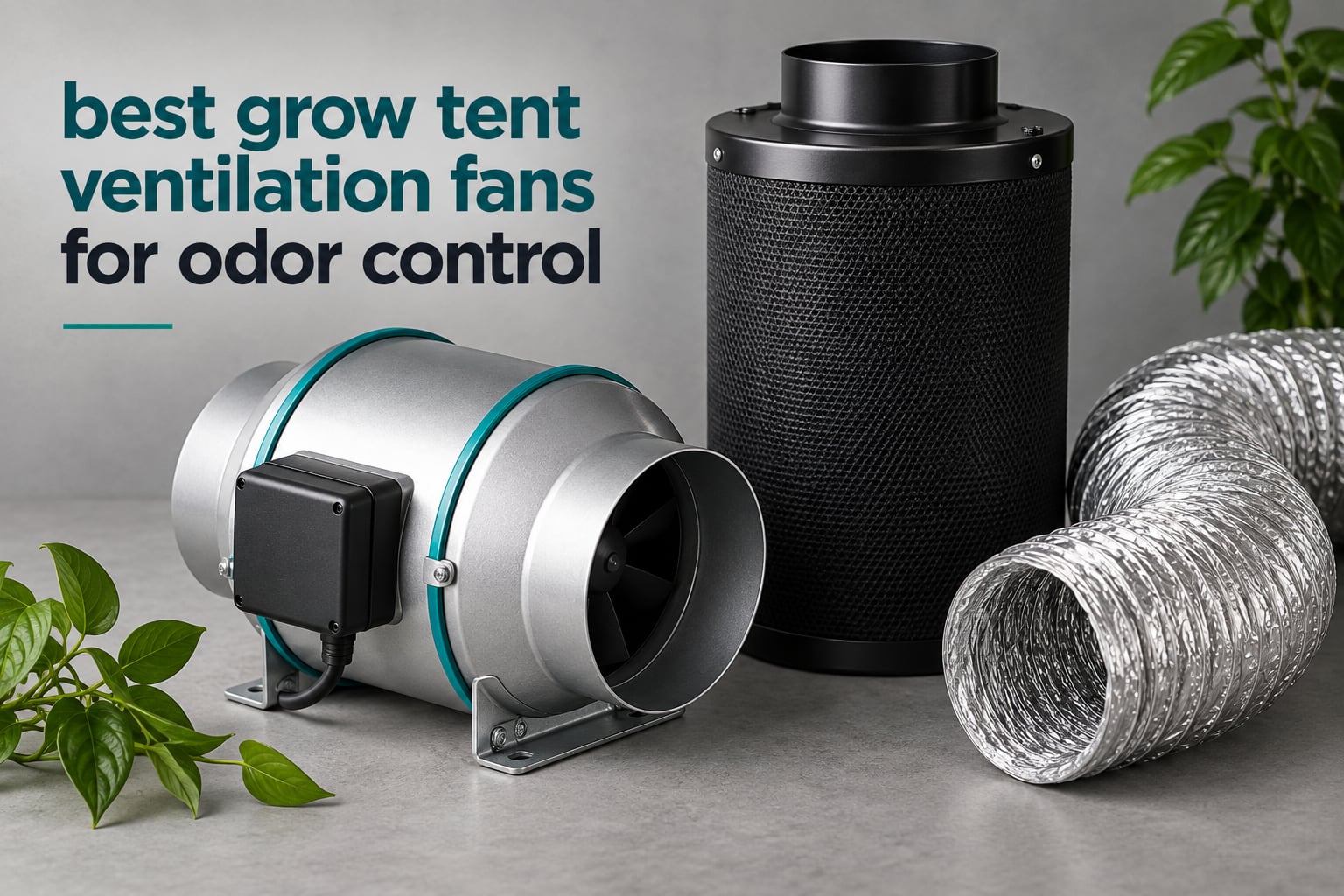
Odor is the fastest way to give away a grow. A tent may block light and hold humidity, but the fabric shell does nothing about volatile compounds escaping from the flower room, and by week six of flower those compounds are exactly what a neighbor, a landlord or a roommate can smell through a closed door.
That is why the single most important piece of hardware in a small indoor setup is the exhaust fan and carbon filter combination. The fan creates negative pressure so scented air can only leave through one path, and the activated carbon filter on that path traps the terpene load before it reaches the rest of the building. Get the pairing wrong and you either get noise complaints or odor escape, usually both.
The sizing rule matters more than any brand name, so here it is once: exchange the entire air volume of your tent every 1 to 3 minutes, and match the fan flange to the carbon filter flange. For a 2x2x5 foot tent that is roughly 20 cubic feet, so 130 to 200 CFM of real airflow clears the room in about a minute. This roundup covers the 10 grow tent ventilation fans for odor control that actually pair a fan with a carbon filter, rated from 130 CFM to 402 CFM and from 26 dB to 34 dB.
Our top pick is the VIVOSUN 4 inch Inline Fan, Carbon Filter and 8 ft Duct kit. It has the deepest review history in the group at more than 2500 ratings, a 190 CFM fan matched to a 1200+ IAV activated carbon bed, and aluminum ducting that resists the heat inside a flower room. If you want something quieter or smarter, the alternatives below cover those cases.
We looked at published CFM, published dBA figures, carbon bed thickness and IAV ratings, controller type, ducting length and the recurring complaints in the review data. We did not measure airflow ourselves, and we say so plainly: every CFM number below is the manufacturer’s rating, and a carbon filter is a static-pressure load that pulls real airflow below the free-air figure.
Top 3 Grow Tent Ventilation Fans for Odor Control in 2026

VIVOSUN 4 inch Inline Fan Kit
- 190 CFM inline fan
- 4 inch activated carbon filter
- 1200+ RC 412 carbon
- 8 ft aluminum ducting

VIVOSUN T4 Air Filtration Kit
- 210 CFM at 28 dBA
- 10 speed PWM controller
- 38 mm carbon bed
- 5 piece kit

AC Infinity 4 inch Kit
- 165 CFM CLOUDLINE fan
- 29 dBA
- 25 ft four layer ducting
- 38 mm carbon bed
The VIVOSUN 4 inch combo wins on evidence rather than novelty: it is the only kit here with review counts in the thousands, and the complaints about it are consistent and fixable rather than fundamental. The T4 kit adds the control resolution that the original lacks. The AC Infinity kit trades raw airflow for the quietest, best-finished hardware here.
Best Grow Tent Ventilation Fans for Odor Control: Full Comparison in 2026
| Product | Specifications | Action |
|---|---|---|
| VIVOSUN 4 inch Inline Fan Kit |
|
Check Latest Price |
 VIVOSUN 6 inch Inline Fan Kit VIVOSUN 6 inch Inline Fan Kit |
|
Check Latest Price |
| VIVOSUN T4 Air Filtration Kit |
|
Check Latest Price |
 Spider Farmer 4 inch Filtration Kit Spider Farmer 4 inch Filtration Kit |
|
Check Latest Price |
| AC Infinity 4 inch Filtration Kit |
|
Check Latest Price |
 Hon and Guan 4 inch Filtration Kit Hon and Guan 4 inch Filtration Kit |
|
Check Latest Price |
 MELONFARM Built in Fan Kit MELONFARM Built in Fan Kit |
|
Check Latest Price |
 iPower 4 inch 195 CFM Kit iPower 4 inch 195 CFM Kit |
|
Check Latest Price |
 MELONFARM 4 inch Tall Filter Kit MELONFARM 4 inch Tall Filter Kit |
|
Check Latest Price |
 iPower 6 inch WiFi Smart Kit iPower 6 inch WiFi Smart Kit |
|
Check Latest Price |
Two numbers deserve a note before the individual reviews. First, every airflow figure in this table is a free-air rating taken with no filter attached, and adding a loaded carbon filter typically costs 20 to 40 percent of that number. Second, the dBA ratings are published by each brand and are not measured on the same rig, so treat the spread as useful and the exact ordering as approximate. If absolute quietness decides your purchase, see our noise section further down.
1. VIVOSUN 4 inch Inline Fan, Carbon Filter and 8 ft Duct Kit
VIVOSUN 4″ Inline Fan, Carbon Filter & 8ft Duct, Circulate air, Reduce Odor
190 CFM inline fan
4 inch carbon filter with 1200+ RC 412
8 ft aluminum ducting
3 blades, 15 watts
Pros
- All-in-one kit needs nothing extra
- Deepest review history in the group
- Aluminum ducting handles tent heat
- Lightweight body fits tight spaces
Cons
- Audible on higher settings
- Vibration through the mounting bracket
- Only two hose clamps in the box
This is the kit we keep coming back to because the numbers match the use case almost exactly. The 190 CFM fan covers a 2×2 tent with room to spare, and the carbon bed uses 1200+ RC 412 Australia Virgin activated carbon, which is the media grade most of the premium kits here also use.
Owners report that odor control holds up in a closed room, which is the only real test that matters. At 15 watts the fan is also the least demanding unit in the group to run continuously, and at 2500 ratings we have a far clearer picture of its long-term behavior than we do for anything else in this list.
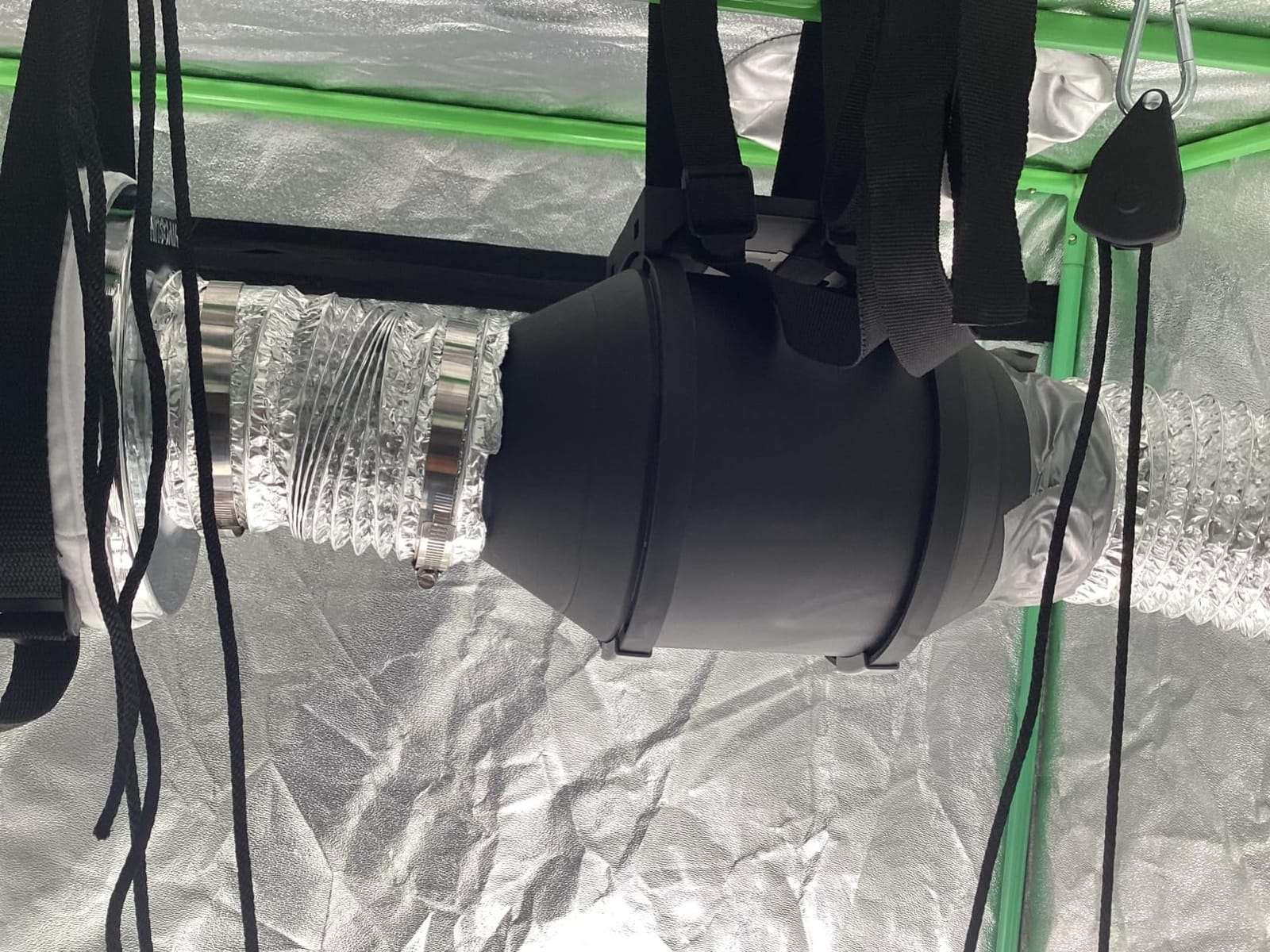
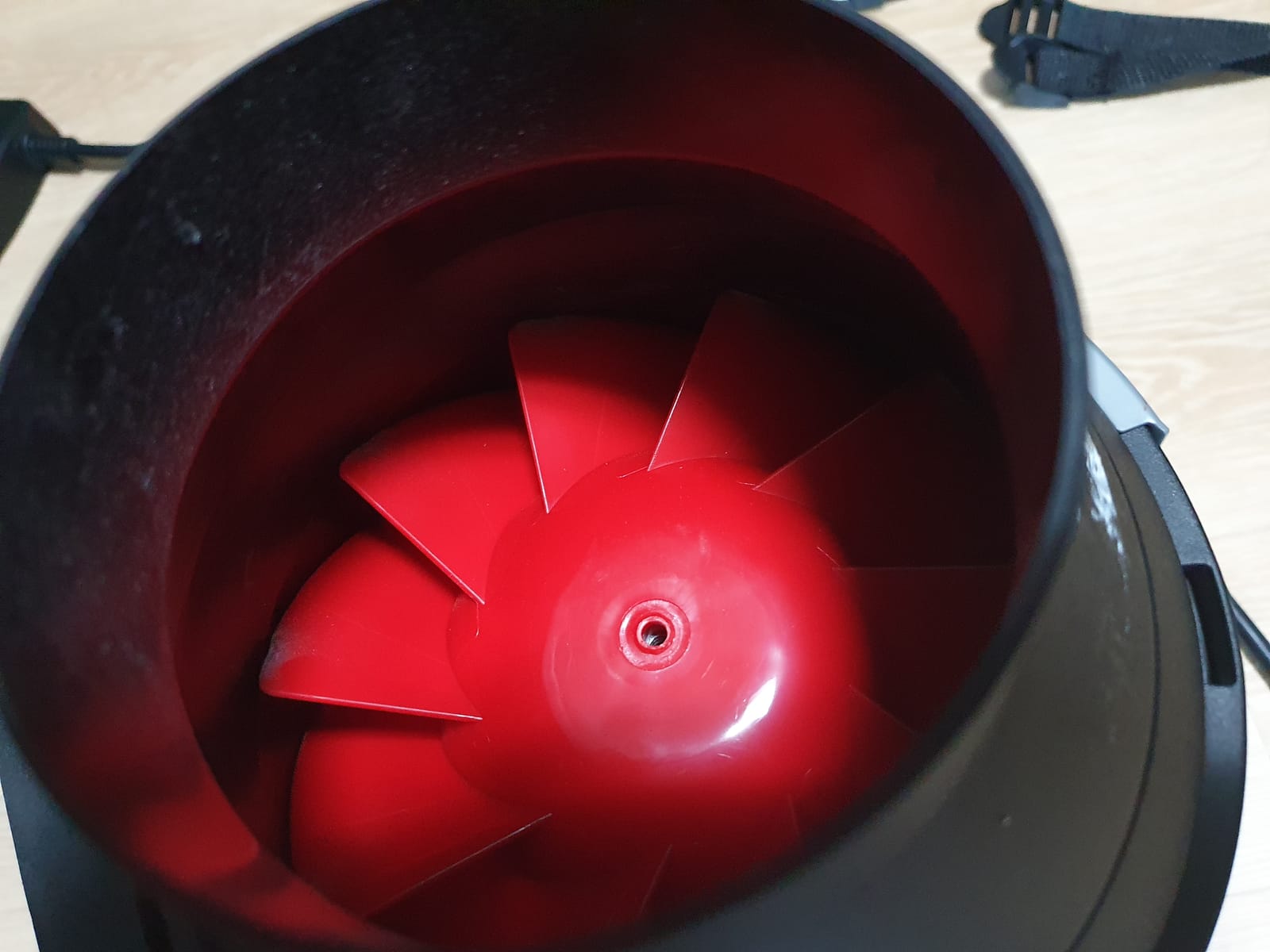
The weaknesses are consistent and mostly external. The fan is audible at the top two of its settings, and the impeller can transmit vibration through the supplied bracket, which you can feel through the tent poles if the fan is mounted rigidly.
The kit also ships with only two hose clamps, so a third connection needs another clamp. That is a two-minute fix, but budget for it the first time you assemble the run.
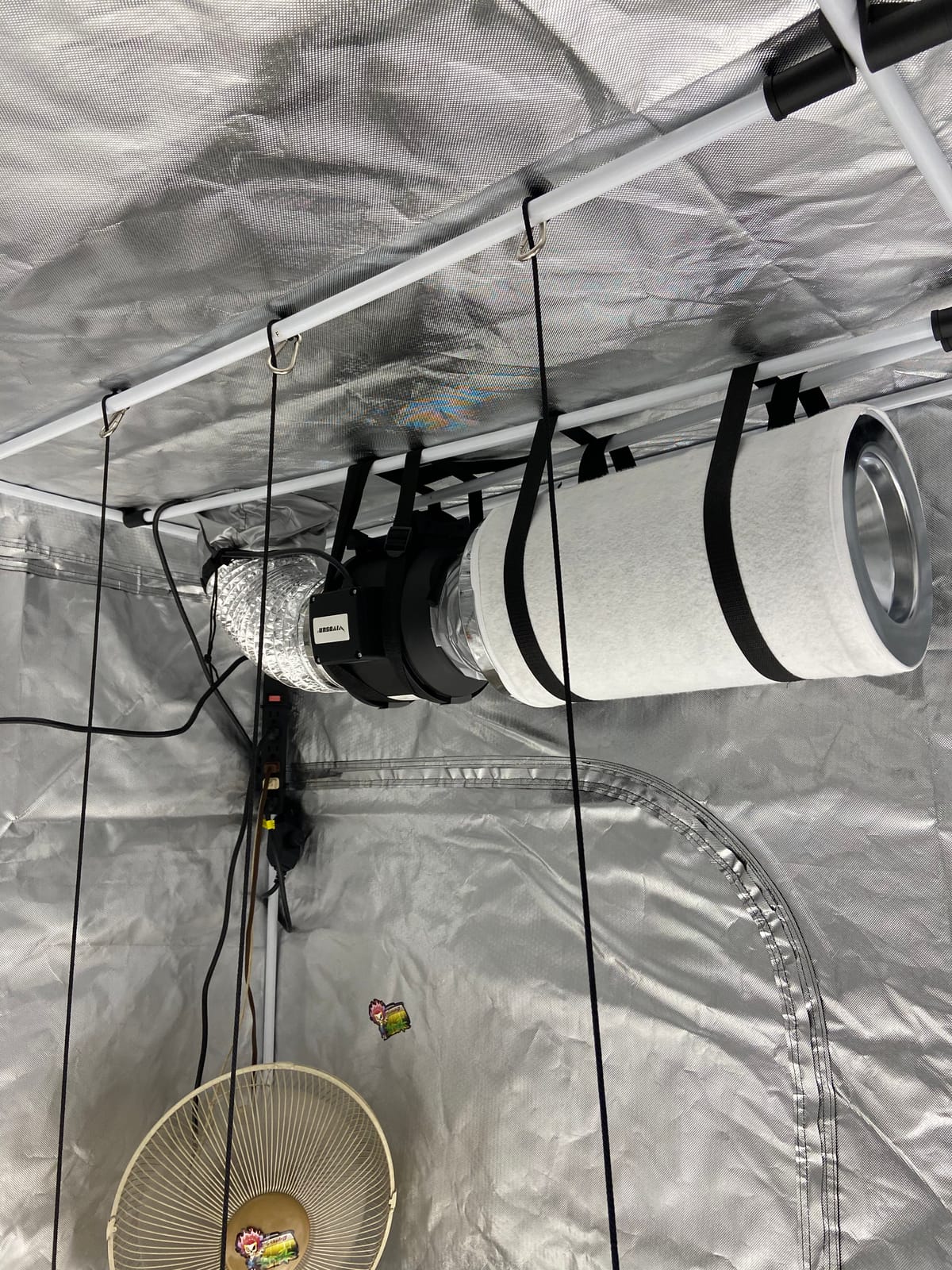
Will the carbon filter outlast a full grow cycle?
With a washable pre-filter catching dust ahead of the carbon, most owners report odor control holding through a complete cycle rather than fading in the final weeks. The pre-filter is the piece people skip, and it is the piece that decides whether the carbon gets a chance to keep scrubbing.
Is it quiet enough for a bedroom?
Not at full speed. In a quiet room the higher settings read as a steady hum, and the vibration is the more irritating part because it travels through structure. If silence is the deciding factor, choose a kit with a digital controller and run it below maximum.
2. VIVOSUN 6 inch Inline Fan Kit with 16 ft of Ducting
VIVOSUN 6″ Inline Fan, Carbon Filter& 16ft Duct, Circulate air, Reduce Odor
390 CFM inline fan
6 inch carbon filter
16 ft aluminum ducting
3 speeds at 34 dB
Pros
- 390 CFM clears a 2x4 tent fast
- Negative pressure holds temp and humidity
- 16 ft of ducting for long runs
- Three year owners report the filter still performs
Cons
- Noticeable hum even on low speed
- Impeller vibration through bracket
- Two hose clamps only
- Can pull tent walls inward
Step up to 6 inch ducting when your tent is a 2×4 or larger, and this is the kit that covers it in one box. The 390 CFM rating is more than double the 4 inch kits here, and the 16 ft of aluminum ducting means you can reach a window or a distant exhaust path without buying extra length.
Owners who run terp-heavy cultivars point to this as the kit that keeps smell inside the tent, and the three-speed button control is simple enough to adjust without pulling the tent open.
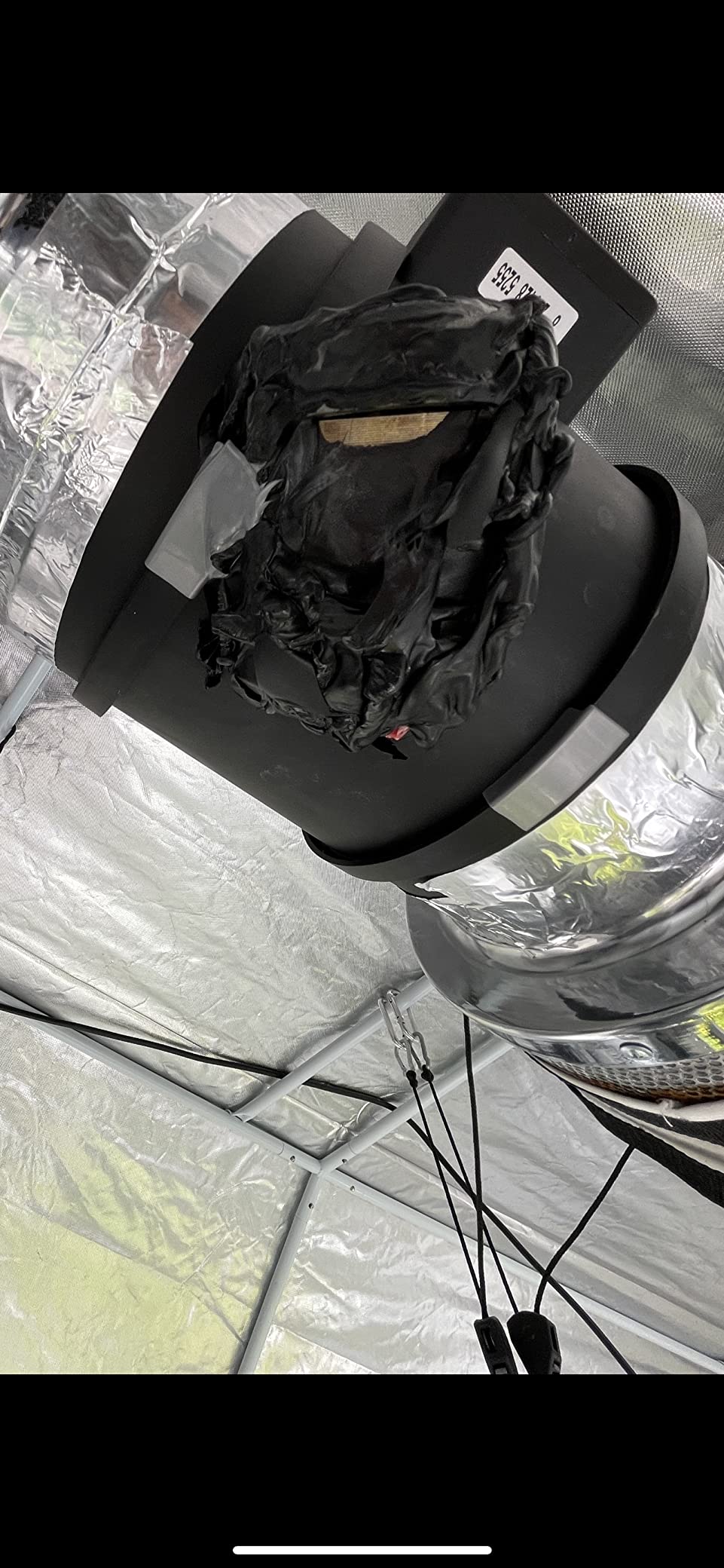
Noise is the recurring theme in the reviews here, described as a noticeable hum even in a quiet room. The impeller imbalance is a related issue, and at higher speeds some owners report the tent walls pulling inward, which is a sign you need a proper intake rather than a stronger exhaust.
At 70 watts this draws roughly three times what the 4 inch kits pull, so it is a real load to run around the clock. Buyers who care about noise more than throughput should stay with the 4 inch options.
Do I need an intake fan to go with it?
Yes, for a 2×4 and above. At 390 CFM the fan will pull hard enough to collapse soft tent walls, and a collapsed wall starves the intake and kills airflow. One intake port or sock per 4 inch of exhaust usually restores the balance.
Is 6 inch worth it over 4 inch for a small tent?
No. In a 2×2 tent a 6 inch system moves air you do not need, runs louder, draws far more power and pushes scent through a much larger volume of ducting. Match the duct diameter to the tent rather than buying the biggest fan you can find.
3. VIVOSUN T4 Air Filtration Kit with 10 Speed PWM Controller
VIVOSUN T4 Air Filtration Kit, Inline Fan, Controller, Carbon Filter, Duct
210 CFM inline fan
28 dBA
10 speed PWM controller
38 mm carbon bed, 5 pieces
Pros
- Ten PWM speeds with memory recall
- Three on off cycle modes
- Quiet at 28 dBA
- 38 mm carbon bed
- Includes rope hangers
Cons
- Corded controller limits mounting spots
- Settings need relearning per tent
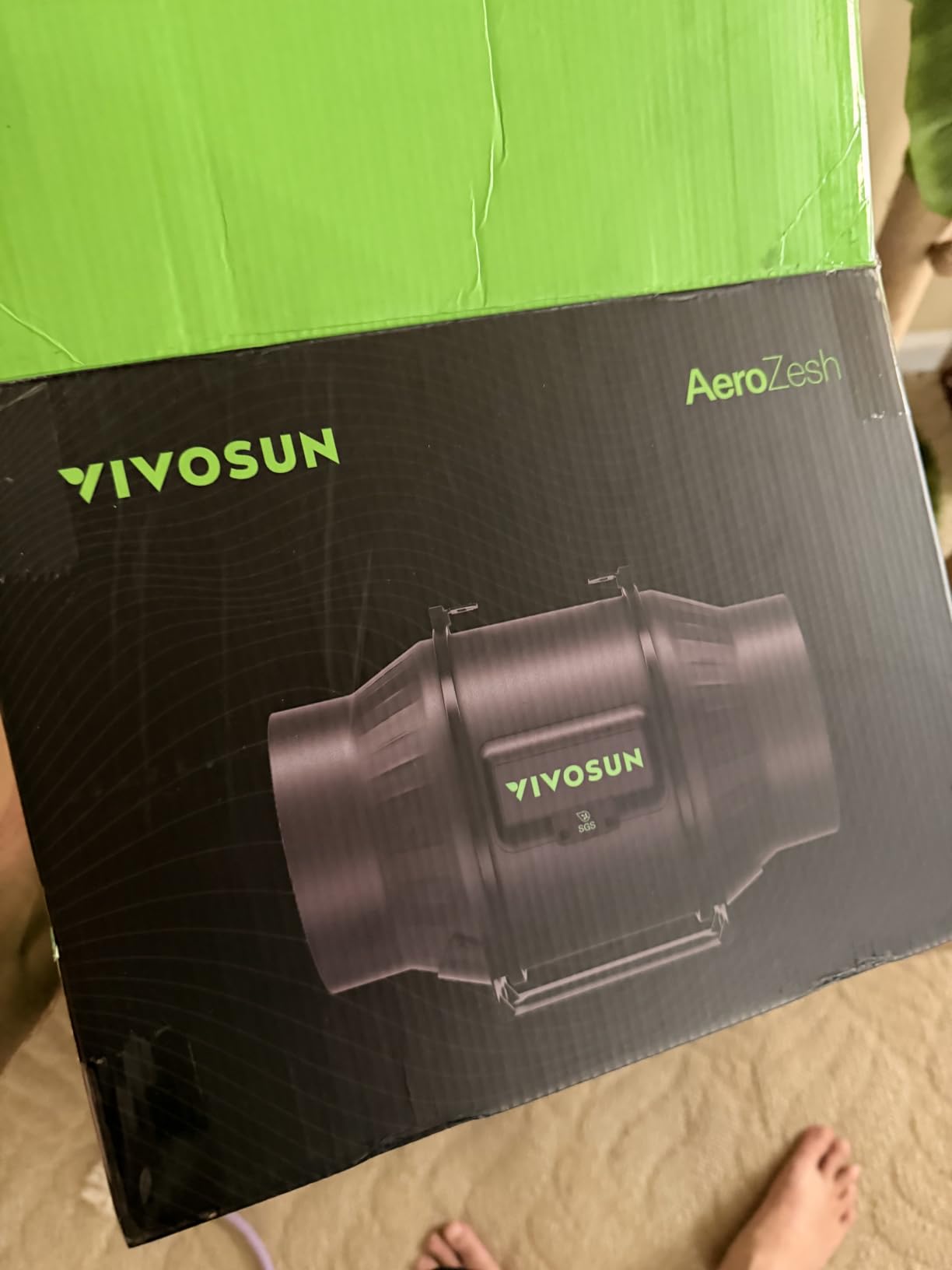
Where the first kit gives you a fixed three-button fan, this one gives you a controller with ten PWM speeds, a backup memory recall and three on off cycle modes. That control resolution is what lets you run the fan quietly through the day and push it harder during the last weeks of flower, when the odor load peaks.
The 210 CFM airflow and 28 dBA rating put it between the loud 4 inch kits and the premium hardware. The carbon bed is 38 mm thick with 1200+ IAV Australia Virgin charcoal, and the kit includes rope hangers for quick tent assembly.
The practical constraint is the corded controller. Because the controller has to reach an outlet, the fan can only be mounted where a cable can get to it, which in a large tent can rule out the ideal position near the top of the enclosure.
Owners also note that the ten speed range takes some getting used to, since the useful operating band is a small slice of the dial and the settings need resetting when you move to a different tent size. Eighty one percent of ratings are five star, which tells you most people settle in quickly.
Can this replace a separate intake fan?
No. The controller regulates exhaust speed, it does not create an intake path. You still want passive intake ports or one small intake fan so the tent holds negative pressure instead of pulling its own fabric into the duct.
Is a speed controller worth paying for?
If you plan to run a tent in an apartment or a shared wall, yes. A controller is what lets you hold odor control at 3 AM without running the fan flat out, and running lower also means lower noise and lower power draw. It is the cheapest upgrade in the whole category.
4. Spider Farmer 4 inch Air Filtration Kit with RJ12 Controller
Spider Farmer 4 Inch Air Filtration Kit with RJ12 Speed Controller
205 CFM brushless EC fan
26.8 dB
13 ft double layer ducting
RJ12 controller, 38 mm carbon
Pros
- Brushless EC motor is efficient and quiet
- 13 ft of reinforced ducting
- Heavy stainless flanges
- Filter mounts straight to the fan
Cons
- Ducting narrower than the flanges
- Some early motor failures
- Replacement units arrived dirty
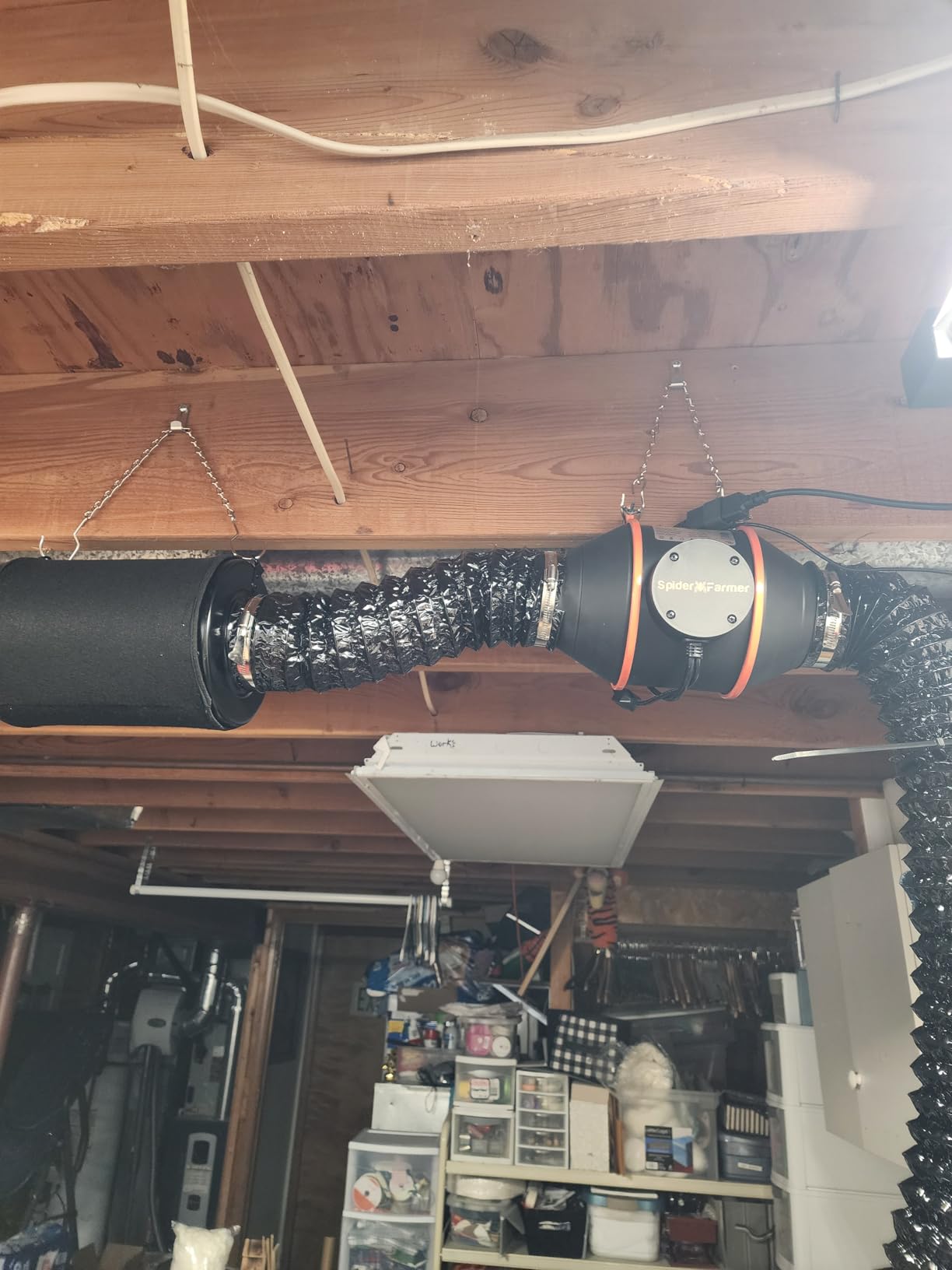
The Spider Farmer kit is the one to look at when your exhaust path is long. Thirteen feet of double layer aluminum and PVC ducting with steel wire reinforcement is the longest run in this group apart from the AC Infinity kit, and reinforced construction is what keeps a long run from resonating and turning into a whooshing noise source.
Under the ducting is a brushless EC motor rated at 205 CFM and 26.8 dB. Lightweight ABS blades are claimed to raise airflow by 40 percent, and the RJ12 interface means the fan can pair with the same controller and power strip ecosystem rather than a proprietary remote.
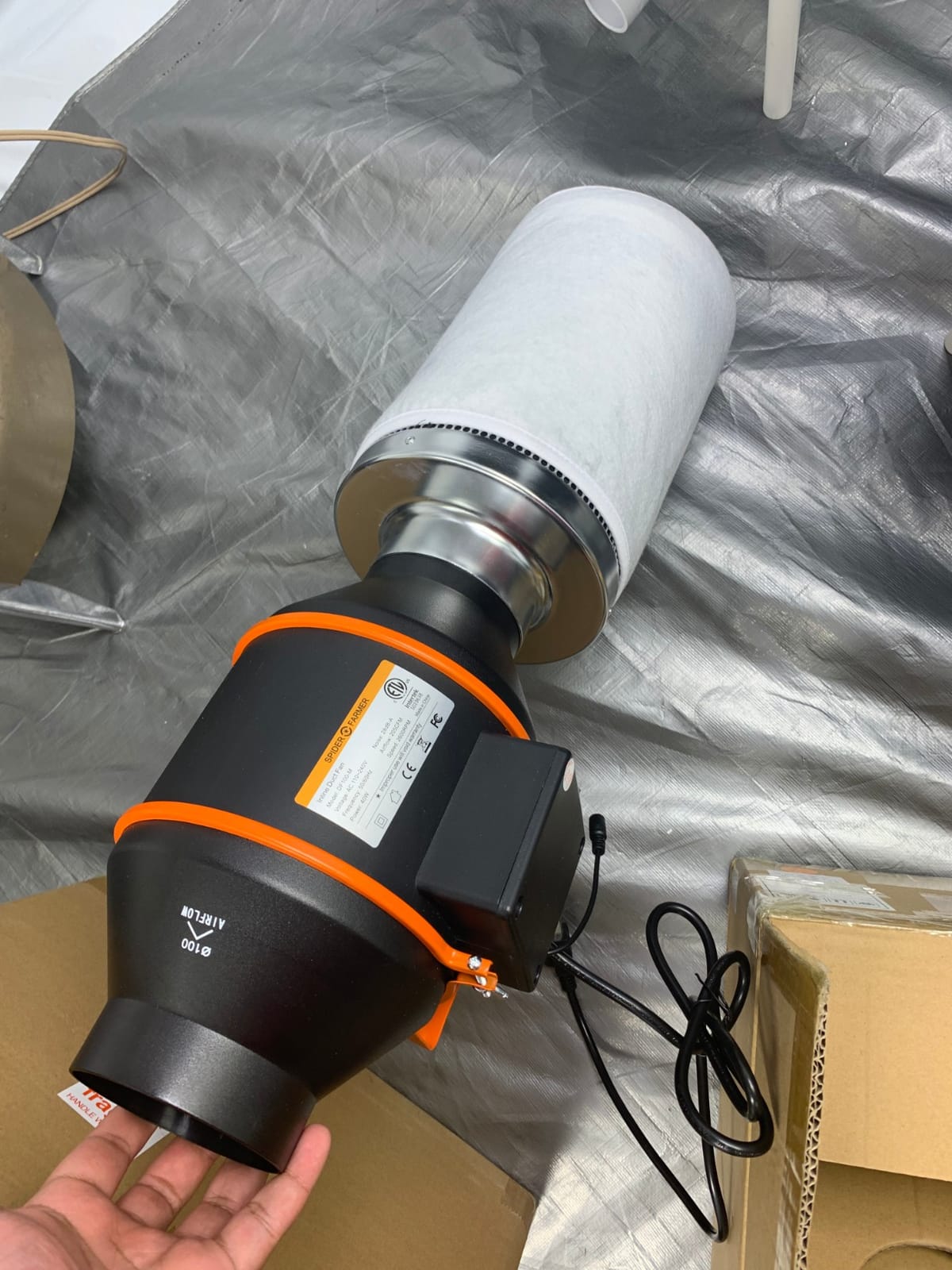
The most repeated complaint is a dimensional one. The supplied ducting is narrower than the fan and filter openings, so cutting it to length and getting it to seal under the clamps is fiddly, and a poor seal here leaks scented air straight back into the room instead of through the carbon.
There are also reports of motors burning out early on a small number of units, and replacement fans arriving dirty. Customer service response is described as fast, but a small percentage of early failures is worth factoring into your choice if you are relying on this for an unattended grow.
Is the ducting diameter mismatch a real problem?
It is manageable but real. The fix is to warm the duct end, cut it square with a sharp blade and clamp it hard onto the flange, then check for leakage by feeling along the joint. Budget fifteen minutes and a spare clamp rather than assuming a perfect seal out of the box.
Does the EC motor matter for odor control?
Indirectly, yes. A brushless EC motor holds its rated speed as static pressure rises, so the fan keeps pushing air through a loading carbon bed instead of slowing down as the filter fills. That is why a 205 CFM fan with a filter can still outperform a nominally larger fan with a weaker motor.
5. AC Infinity 4 inch Air Filtration Kit with Speed Controller
AC Infinity Air Filtration Kit 4” with Speed Controller
165 CFM CLOUDLINE EC fan
29 dBA
25 ft four layer ducting
38 mm carbon bed with prefilter
Pros
- Highest rating in the group at 4.8
- Very quiet at low and mid speeds
- Controller remembers the last setting
- 25 ft of four layer ducting
Cons
- Lowest airflow of the 4 inch kits
- Noise climbs on upper speeds
- Highest price of the 4 inch kits
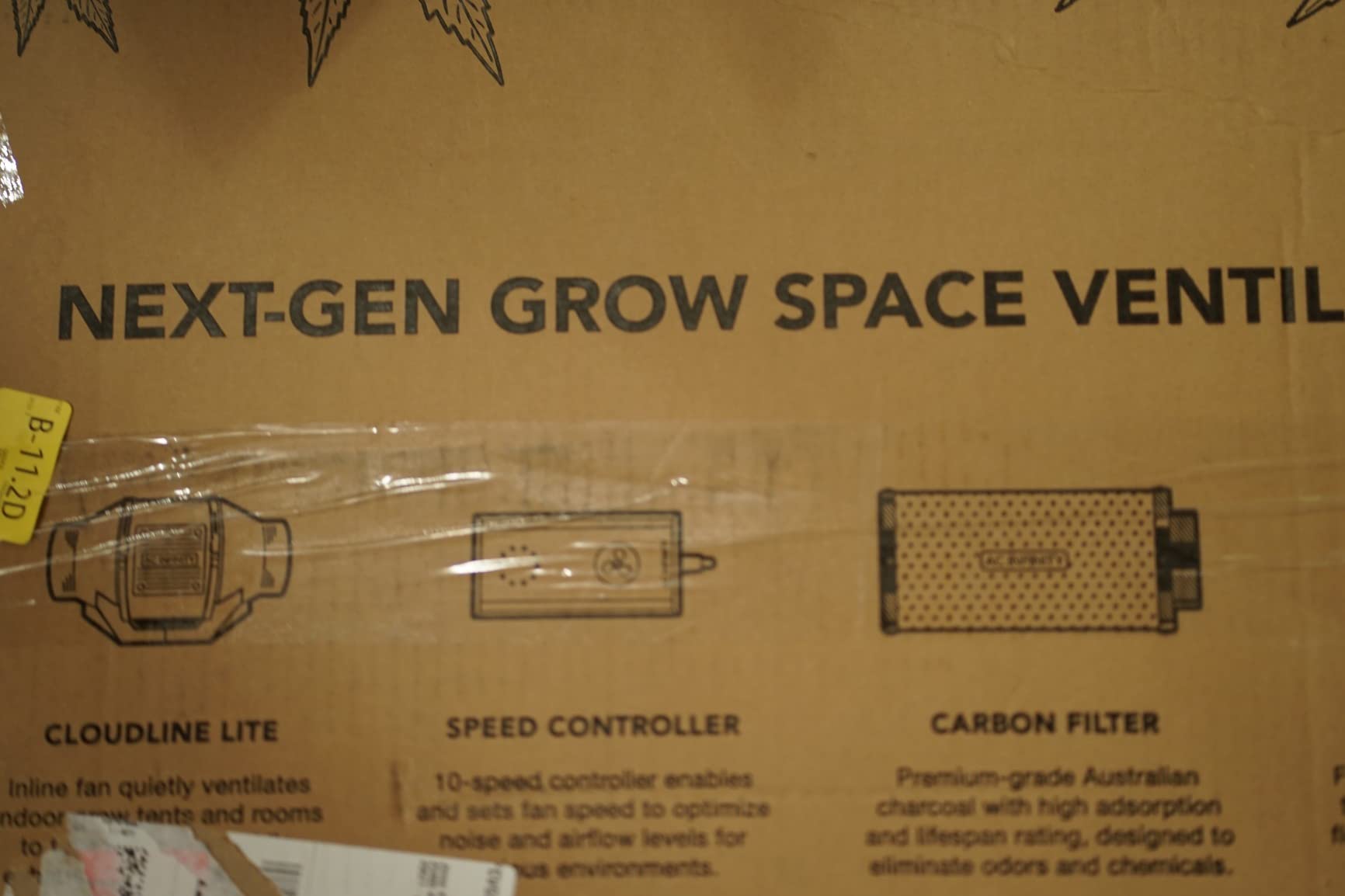
This is the hardware that feels like it was designed rather than assembled. The CLOUDLINE inline fan uses an EC motor with a digital 10-speed controller, and the carbon filter uses 1200+ IAV activated charcoal with a prefilter cloth, giving a 38 mm bed on a 4 inch flange.
Owners describe it as quieter than a bathroom extractor while moving several times the air, and several report eliminating strong smells in an apartment on the lowest speed. The controller remembering its last setting matters more than it sounds, because it means the system can run behind a wall switch without losing your airflow setting.
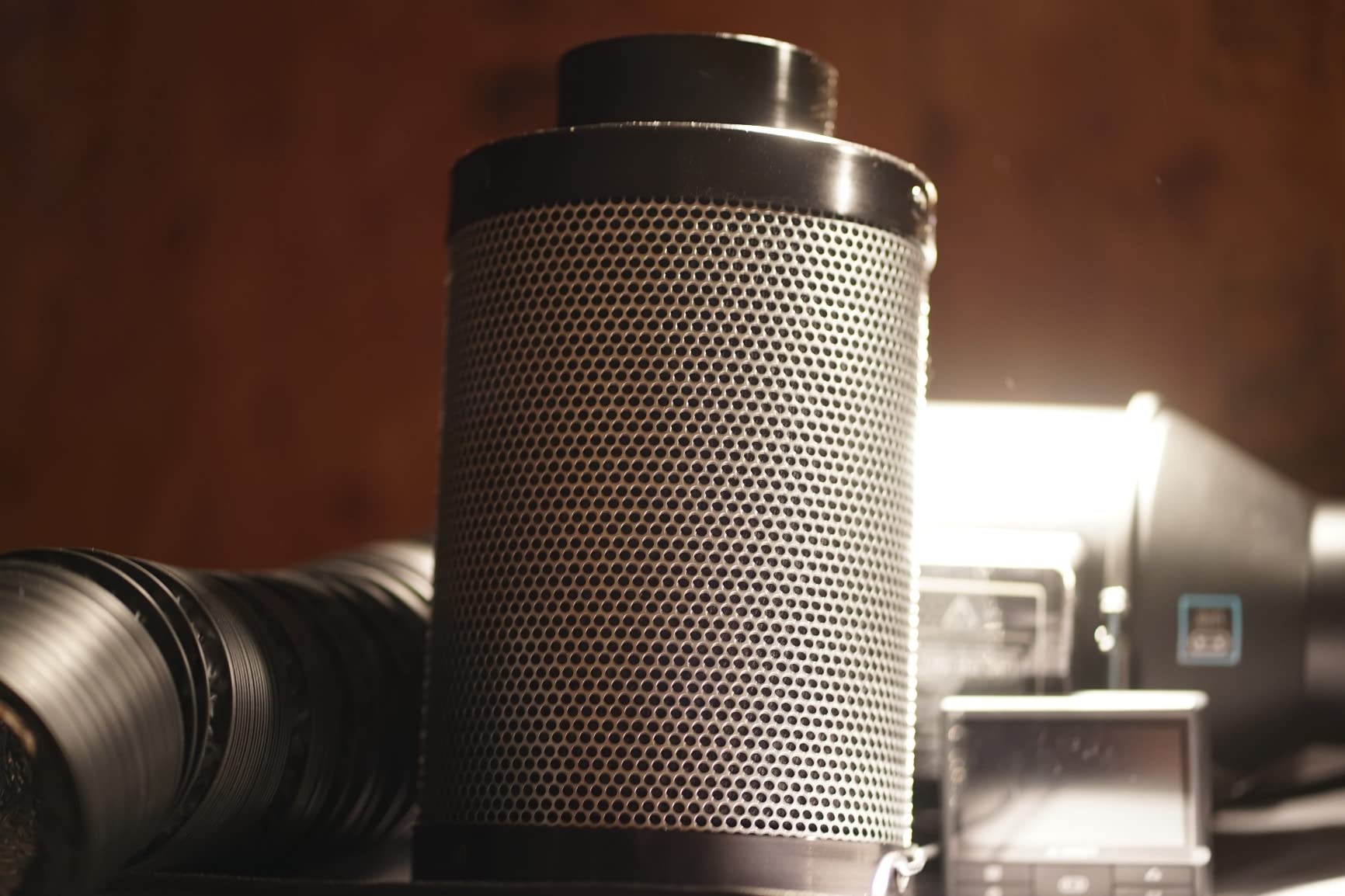
Twenty five feet of four layer flexible ducting is the longest supplied run here, and it makes long or awkward exhaust paths easy. It also integrates with other AC Infinity controllers and UIS cables, so it slots into a broader automated setup if you expand later.
The tradeoff is airflow and cost. At 165 CFM this is the lowest rated fan among the 4 inch kits, which suits a 2×2 and even a small 2×4 but means the filter becomes the bottleneck in a larger space. Noise also becomes noticeable as you climb the speed range.
Can this handle a 2×4 tent?
Barely, and only with careful ducting. A 2x4x5 tent is about 40 cubic feet, so 165 CFM gives roughly a 15 second air exchange, which meets the low end of the exchange rule. Keep duct runs short and straight, and the carbon bed will keep up for a moderate strain.
Is it worth paying more for build quality?
For an unattended or noise sensitive setup, yes. Smooth speed control, a motor that holds speed under load and ducting that does not resonate are all things you notice daily for a full grow cycle. If the budget is tight, the same job is done more cheaply with an iPower or VIVOSUN kit.
6. Hon and Guan 4 inch Air Filtration Kit
Hon&Guan 4″ Air Filtration Kit: 4 Inch Inline Duct Fan with Speed Controller, 10″ High Carbon Filter, 8 Ft Ducting & Rubber Coupler, Ventilation System for Grow Tents, Indoor Gardening, Hydroponics
130 CFM inline fan
26 dB
10 inch carbon filter
speed controller and rubber coupler
Pros
- Very quiet at 26 dB
- Lowest airflow suits small tents
- Three layer foil and PET ducting resists punctures
- Speed controller included
Cons
- 130 CFM is low for anything bigger
- RC 48 carbon is lighter media than RC 412
This is the kit for a closet, a small tent or a quiet corner of a room where noise matters more than throughput. At 26 dB and 130 CFM it is one of the quietest options in the group, and the included speed controller lets you trade a little airflow for a lot less sound.
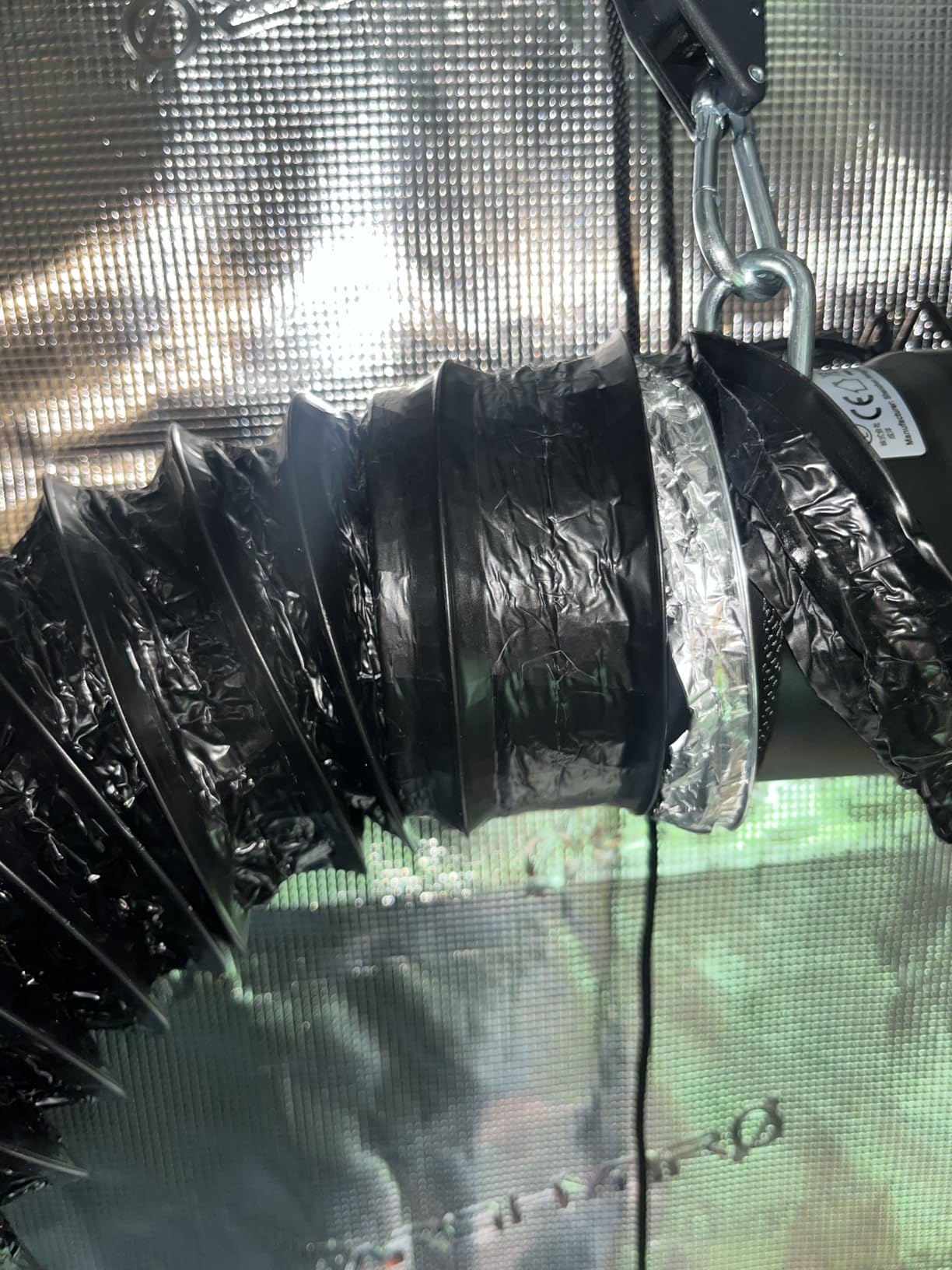
The carbon filter is a 10 inch body with a 38 mm bed of RC 48 activated carbon at 1200+ IAV. The ducting is a three layer build of two aluminum foil layers around a PET core with a steel wire helix, which is the construction that resists pin holes during a tight install.
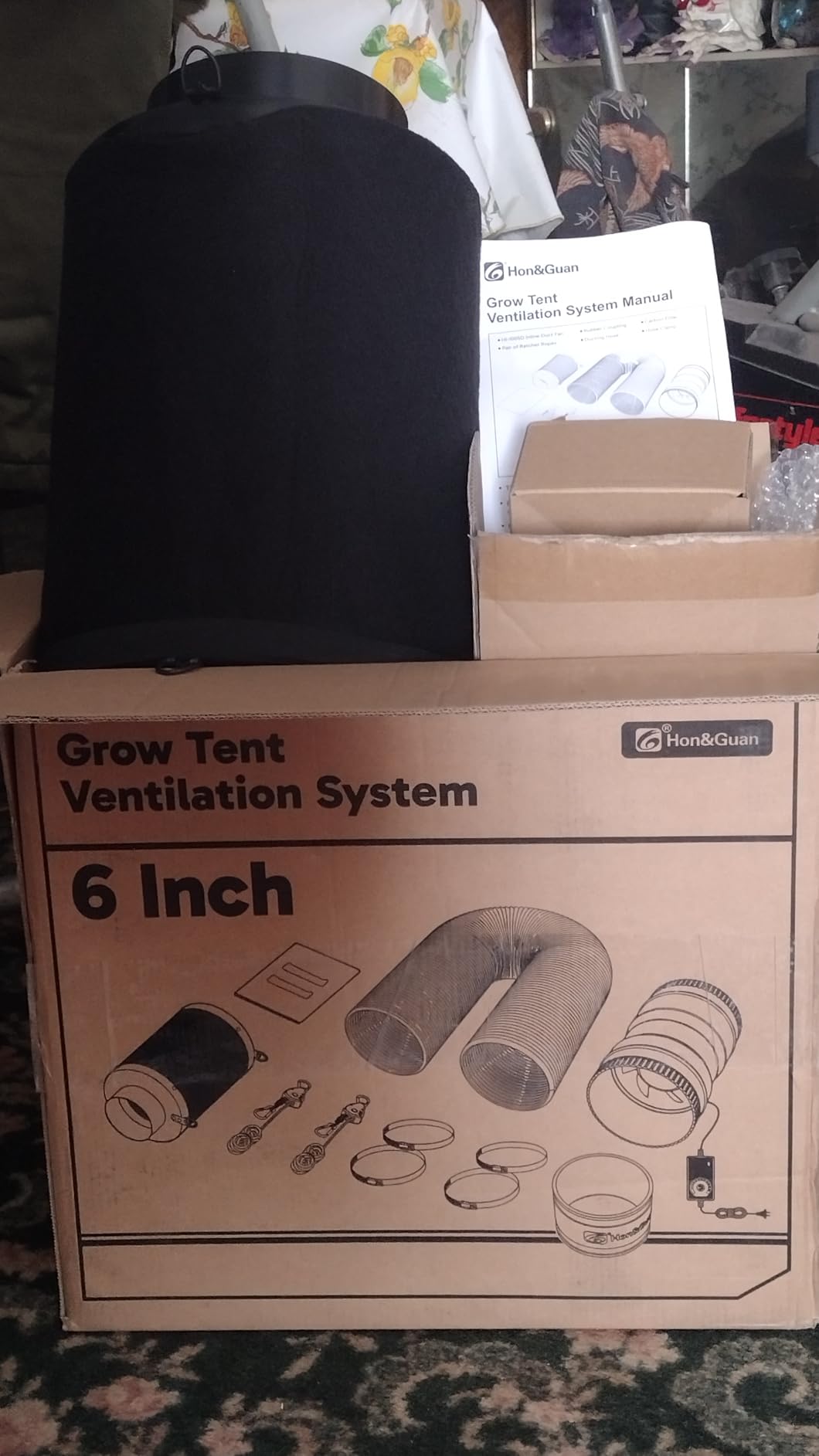
The airflow ceiling is the honest limit. At 130 CFM free air, a loaded filter will push meaningfully less through, and that is below what a 2×4 tent needs in summer heat. The kit also includes a rubber coupler, which is a small detail that makes sealing the joint between fan and filter easier than tape alone.
Reviewers rate odor control as effective within its size class, and the recurring note is simply that anything larger than a small tent is a stretch. Buyers like the quiet operation and the complete package.
Is 130 CFM enough for a 2×2 tent?
Yes, comfortably. A 2x2x5 tent holds about 20 cubic feet, so 130 CFM exchanges the air in roughly nine seconds at free-air rating, or closer to fifteen with a loaded filter. That is well inside the 1 to 3 minute rule and it will move heat as well as odor.
Does lighter carbon media mean worse odor control?
It means less capacity per unit of volume, not worse chemistry. RC 48 at 1200+ IAV in a 38 mm bed is a legitimate media, but a terp-heavy cultivar will load it faster than an RC 412 bed of the same thickness, so plan on a shorter service interval before you notice a difference in the hallway.
7. MELONFARM 4 inch Air Filtration Kit with Built in Fan
MELONFARM Air Filtration Kit 4″, Built-in 14cm Fan Low Nois Carbon Filter with 12-Speed Controller, 8′ Ducting, Cooling & Ventilation System for Grow Tents, Indoor Gardening, Hydroponics 4“x12.6″
Fan built into the filter body
265 CFM
12 speed controller
removable prefilter cloth
Pros
- Single compact unit
- easy to position
- Strong airflow for a 4 inch system
- Works as intake or exhaust
- Prefilter cloth blocks 99 percent of particles
Cons
- Louder than separate fan setups
- Some units arrive with a damaged fan
- Odor control weaker than airflow suggests
The design idea here is simple and effective: the 14 cm fan is built into the carbon filter body, so the whole system is one short cylinder rather than a fan, a filter and a length of duct between them. In a small tent where every inch of vertical space counts, that is a genuine advantage.
Reviewers are consistently surprised by the airflow. Several report it moving more air than a separate 4 inch fan setup, and the 12-speed controller gives unusually fine control over the noise to airflow trade-off. It can be flipped for either intake or exhaust duty.
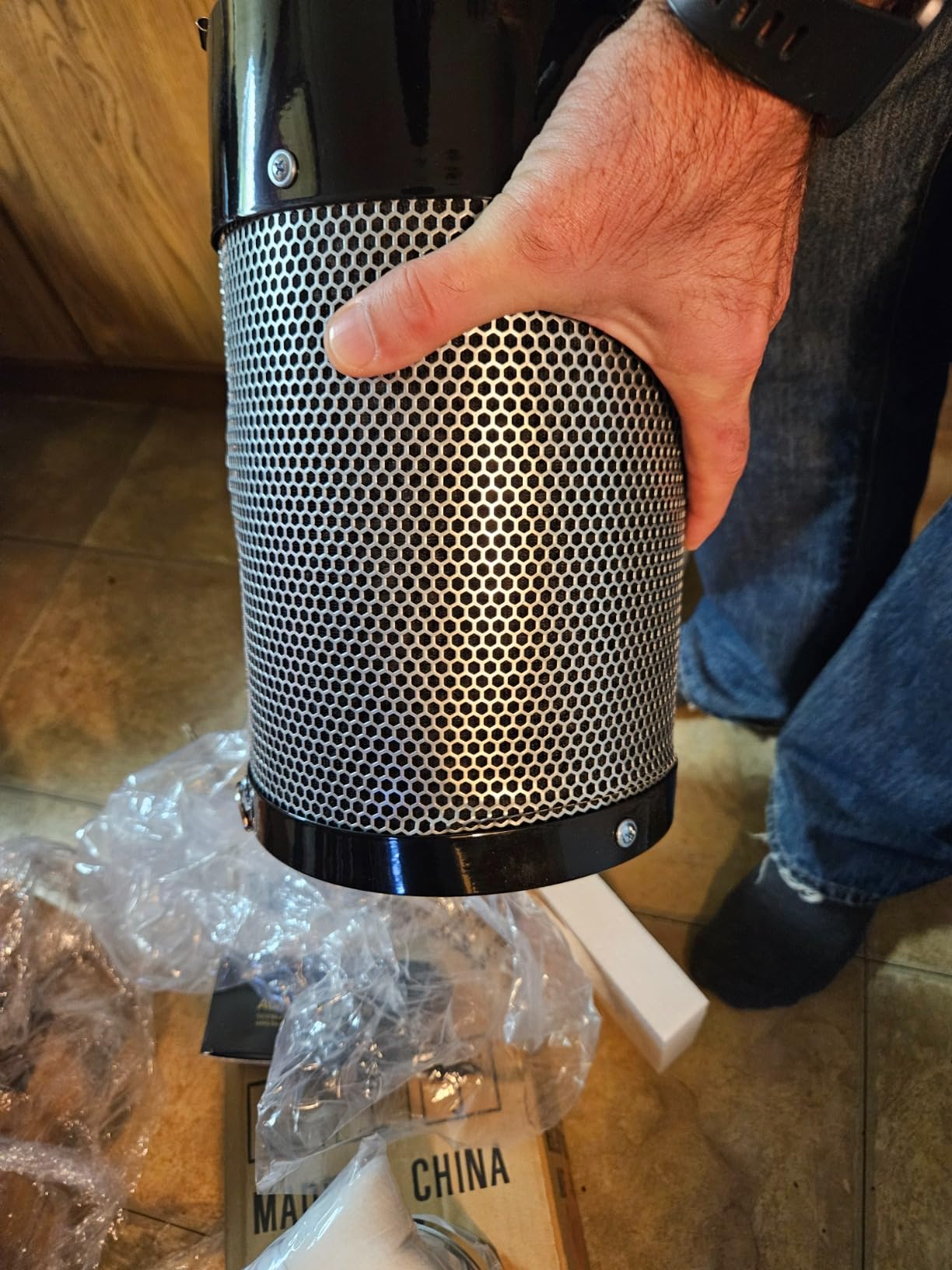
Noise is the dividing line. Because the impeller sits inside the filter housing, the airflow path is tighter and the unit gets louder than an equivalent separate fan, particularly on high settings and on long curved duct runs. A number of owners report covering the unit with fabric to quiet it, which is exactly the wrong move for odor control.
Odor performance also splits opinions. A minority of buyers say the scrubbing is weaker than the airflow figures imply, and a few units arrive with a damaged fan. At 4.3 with 7 percent one-star ratings, this is the most polarizing kit in the group.
Why does airflow look higher than the rated CFM?
There are two different published numbers and they are not the same thing. The listing cites 260 CFM in one place and 265 CFM in another, and either way a fan rated that high on a 4 inch flange will deliver far less through a loaded carbon bed. Treat the figure as a free-air number and judge the result by smell, not by the label.
Is a built in fan easier to install than a separate one?
Fewer connections means fewer leak points, so yes for a small tent. There is one joint to seal instead of three, and no bracket to mount. In a large tent, though, you give up the ability to position the filter at the very top of the enclosure, which is usually where you want the carbon bed.
8. iPower 4 inch 195 CFM Inline Fan and Carbon Filter Kit
iPower 4 Inch 195 CFM Inline Fan Circulation Vent Blower, Air Carbon Filter and 8 Feet Flexible Ducting for Grow Tent Ventilation, Exhaust, HVAC Heating Cooling
195 CFM inline fan
30 dB on 28 watts
50 mm RC 412 carbon bed
8 ft four layer ducting
Pros
- Lowest cost complete kit here
- 195 CFM on only 28 watts
- Thick 50 mm carbon bed
- Removes heat as well as odor
Cons
- No speed controller in this configuration
- Airflow is fixed once installed
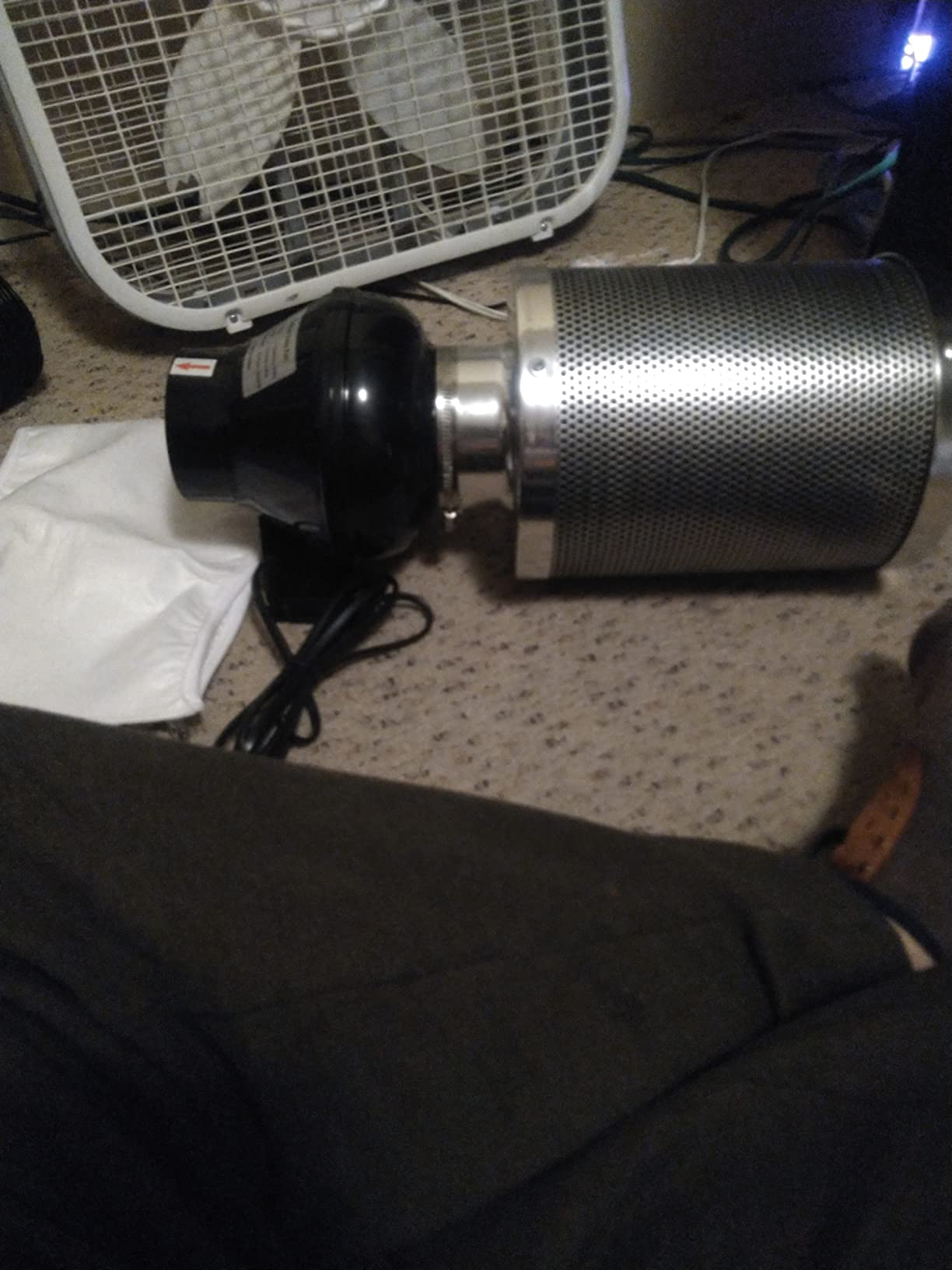
The iPower 4 inch kit is the value pick: fan, carbon filter, 8 ft of four layer ducting and two clamps in one box, with a 50 mm carbon bed that is thicker than anything else in this roundup. For a first grow or a spare tent, the cost of entry is hard to beat.
At 195 CFM and 28 watts it is efficient, and the 30 dB rating is respectable. The carbon filter is Australian RC412 activated carbon at 1050+ IAV, and the ducting is rated from minus 22 to 212 degrees, which matters in a tent that heats up in summer.
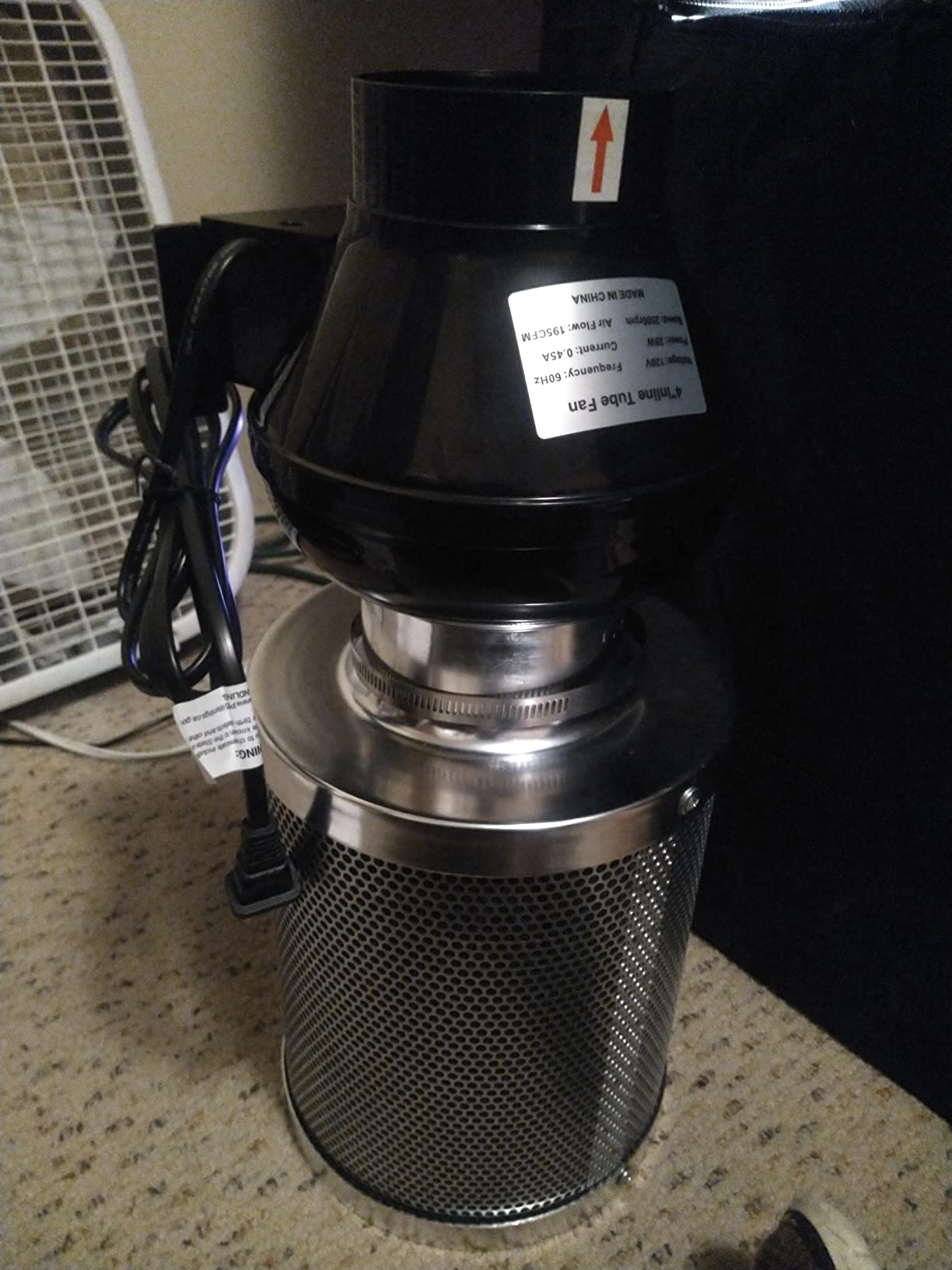
The one real gap is control. This configuration does not include a speed controller, so airflow is fixed once installed. That is fine for a straightforward setup, but it means you cannot drop the noise at night or push harder during peak flower without adding hardware.
Budget buyers rate the thick carbon layer and the low noise as the standouts. Ordering lead time is the other consideration in the reviews, so if you are starting a cycle, plan the arrival around the grow rather than around the tent setup.
Can I add a speed controller later?
Usually, yes. A standard inline speed controller works with a fan of this style, and adding one is the single best improvement you can make to this kit. It turns a fixed 195 CFM blower into something you can quiet down at night and open up during the hottest hours.
Is a 50 mm carbon bed better than a 38 mm bed?
For a same-size filter, yes, meaningfully. Bed depth is the main determinant of how much activated carbon mass a filter holds, and more mass means more total capacity before the scrubbing performance falls off. That is why this budget kit holds up longer per cycle than several pricier 38 mm options.
9. MELONFARM 4 inch Air Filtration Kit with 12 inch Carbon Filter
MELONFARM Air Filtration Kit, 4″ 190 CFM Inline Duct Fan with Speed Controller, 12″ High Carbon Filter, 8 Ft Ducting & Rubber Coupler, Air Cooling and Filtration Kit for Grow Tent, Hydroponics
190 CFM inline fan
26 dB
speed controller
12 inch RC 412 carbon filter
Pros
- 26 dB with 190 CFM is a strong balance
- Speed controller included
- RC 412 charcoal at 1200+ IAV
- Hangers included for fast install
Cons
- Rubber coupler sometimes missing from the box
- Some orders arrive incomplete with parts missing
- Fan can arrive dusty from carbon residue
This is the MELONFARM separate-fan version, and it takes a different position from the built in unit above. The 190 CFM fan sits on its own inline, paired with a 12 inch tall carbon filter using RC 412 Australia Virgin charcoal at 1200+ IAV, plus 8 ft of ducting and a speed controller.
The headline number is 26 dB at 190 CFM, which is a better noise to output balance than most of the 4 inch kits in this roundup. The controller lets you sit at a low setting through the day and only push the fan when the tent runs hot.
How does it handle terp heavy cultivars?
It handles them adequately rather than impressively. RC 412 in a 12 inch body is a respectable amount of carbon, but terp-heavy strains load a bed fast, so expect to shorten the service interval and treat an odor gel in the room as extra insurance rather than as the primary defense.
What holds this kit back is packaging rather than hardware. A number of reviews mention orders arriving without the rubber coupler pictured in the kit contents, and some orders missing the fan, ducting or harness entirely. The fan also sometimes arrives carrying dust or debris from the carbon filter.
Pre-filter material and a few components are described as budget grade, and the controller cord is short for routing outside a tent. None of that is disqualifying, but it is a kit you should inspect carefully on arrival.
Is this quiet enough to run at night?
At the lower controller settings, yes. That is the real benefit of the digital speed control here: you do not have to choose between full speed and full stop, so you can hold moderate odor control overnight and ramp up when the room needs it.
10. iPower 6 inch Smart Inline Fan Kit with WiFi and App Control
iPower GLFANXSETINLECWIFI6D8C 6 Inch Inline Duct Ventilation Fan, Carbon Filter, 8 Feet Ducting With Temperature Humidity App Via WiFi and Alexa Voice Control, for Hydroponics/Grow Tent, Black
402 CFM 6 inch fan
34 dB
app, remote and Alexa control
temperature and humidity probe
Pros
- Highest airflow in the group at 402 CFM
- App and voice control with timer and auto modes
- Bundled temperature and humidity probe
- Reversible 16 inch filter flange
Cons
- Most expensive kit here
- 34 dB is louder than the 4 inch kits
- App setup adds complexity
- Only 32 ratings of history
This is the only kit here that automates itself. The 6 inch fan pushes 402 CFM and comes with an app, a remote and Alexa voice control, running on off, timer and auto programming modes with a corded sensor probe for temperature and humidity.
The filter is a 16 inch reversible flange body with a 50 mm bed of Australian RC412 carbon at 1050+ IAV and a pre-filter included, rated at 400 CFM. Ducting is 8 ft fully extended and rated from 0 to 185 degrees.
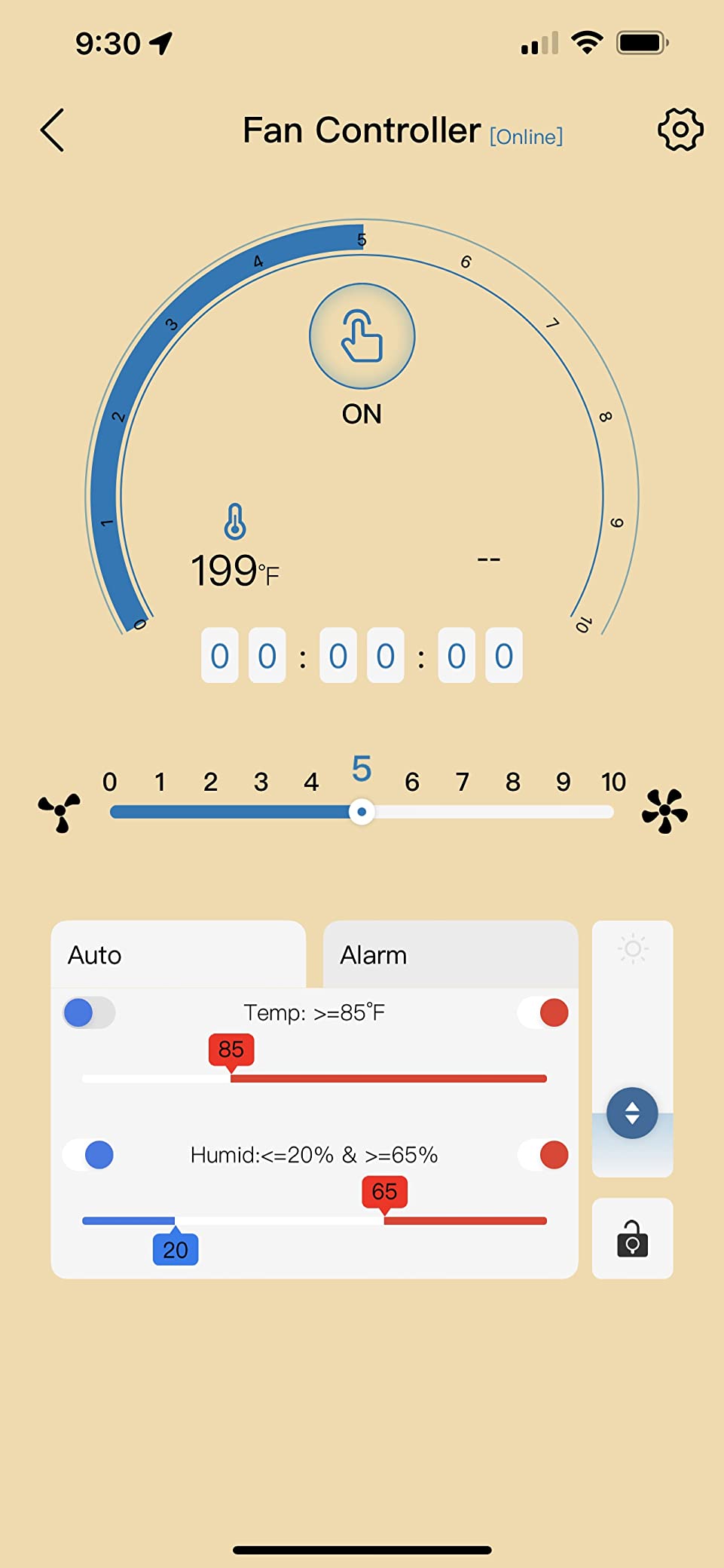
The automation is the reason to buy it. Set a target temperature and humidity, and the fan responds to the probe without you walking into the tent, which is a genuine quality of life gain for anyone running cycles while away.
The costs are real too. It is the most expensive kit in the group, 34 dB is louder than every 4 inch option, and 70 watts is a meaningful constant load. With only 32 ratings, the long term reliability picture is thin compared with the thousands of ratings behind the top pick.
Do I still need a separate controller?
No, the smart controller is included and handles on off, timer and auto programming along with voice control. What you cannot do is mix it with a different brand ecosystem the way you can with RJ12 or UIS based systems, so plan around one app if you go this route.
Is a 6 inch system overkill for a 2×4?
For odor control, no, it is appropriate, and it gives you real headroom for summer heat. The tradeoff is noise and power, and 34 dB is a level you notice in a quiet apartment. In a detached room or a garage it is a non-issue.
How to Size CFM for Your Grow Tent
Here is the arithmetic, in one quotable rule: divide the volume of your tent in cubic feet by one minute, and buy a fan rated at that number or a little above it. The exchange time you are aiming for is 1 to 3 minutes. A tent that exchanges its air once per minute has almost no odor residence time, and one that takes three minutes is still comfortably in range for most strains.
Work out the volume by multiplying tent width by depth by height in feet. A 2×2 tent at 5 feet tall is 20 cubic feet, so 130 to 200 CFM covers it. A 2×4 at 5 feet is 40 cubic feet, so you want 190 to 250 CFM as a floor. A 4×4 at 5 feet is 80 cubic feet, which pushes you toward 300 CFM and a 6 inch system.
Then apply the static pressure reality check. The CFM on the box is measured with an open inlet. A carbon filter is a resistance, and once loaded with dust and moisture it resists more, so plan on 20 to 40 percent less real airflow than the rating. This is exactly why we lean toward a fan rated slightly above the calculated minimum rather than exactly at it.
Duct diameter has to match the fan flange, and a longer duct run costs you airflow with every bend and every foot. Short, straight, large-diameter runs are the cheapest performance upgrade available. Metal ducting also resonates audibly at high speed, so insulated or foil-faced flexible ducting is quieter for a given airflow, though it adds length and therefore some resistance.
Finally, decide how you want to control speed. A fixed-speed fan is fine if your tent is small and your heat load is predictable. A speed controller is worth paying for in any shared-wall situation, and a temperature and humidity controller is worth it if you are away from the tent regularly. For remote and app-based control at distance, the remote control roundup covers a few ways to keep hands-off systems tidy.
Carbon Filter Pairing and the 12-18 Month Replacement Schedule
Match the fan flange to the filter flange and nothing else. Mixing a 4 inch fan to a 6 inch filter leaks air around the gap, and that leaked air bypasses the carbon entirely, which is the most common way a good filter ends up doing nothing.
Bed depth is the next variable, and it is the best proxy for how much activated carbon the filter holds. The 50 mm beds in the iPower kits hold more mass than the 38 mm beds used by most of the others, and the 50 mm layer is why the budget kit outlasts some of its pricier neighbors per cycle.
Plan on replacing carbon every 12 to 18 months, and shorter for terp-heavy cultivars. High humidity inside the tent also degrades scrubbing performance, so keeping relative humidity in check is odor control work, not just mold prevention. A pre-filter cloth that you can remove and wash extends filter life more than anything else, because it keeps dust out of the bed.
Finally, be honest about the ceiling here. No carbon filter removes 100 percent of odor. A gel absorber in the room, a sealed intake and a quiet fan running at the right speed are all part of the same system.
How to Cut Grow Tent Fan Noise Without Losing Airflow
Mount the fan so it does not touch structure. Rigid mounting transfers motor vibration straight into tent poles and then into the floor, and that low rumble is far more audible through a wall than the fan itself. Bungee cords or a short rubber isolation mount between the fan and the bracket kill most of it.
Choose the ducting material deliberately. Metal ducting is the loudest option, especially at high speed, because it rings. Insulated or foil-faced flexible ducting dampens that resonance, and the cost is a longer, tighter run with slightly more static pressure.
Run the fan below maximum whenever you can. Speed controllers exist for this reason, and the relationship between speed and noise is not linear in the way people expect, which is why the kits with digital control feel so much quieter in practice than their peak ratings suggest.
Keep duct runs short and straight, and add a muffler section if noise is still the deciding factor. An inline fan that is quiet on the bench is often not quiet once it is loaded and ducted, so judge every kit installed rather than in isolation.
How to Install a Grow Tent Ventilation Fan for Maximum Odor Control
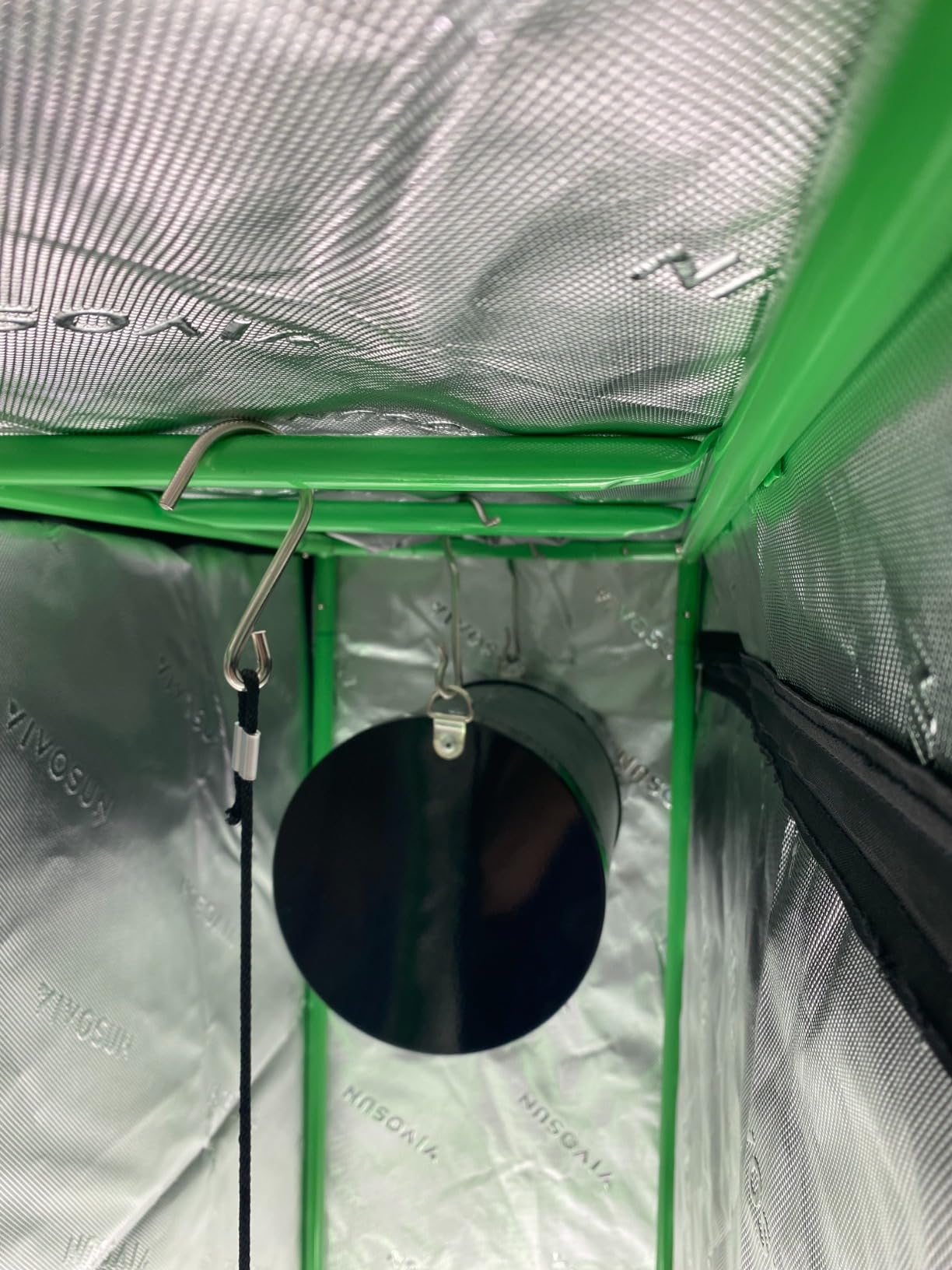
Hang the carbon filter at the top of the tent on the exhaust side. Warm air rises, and you want the hottest, most odor-laden air passing through the bed.
Run the intake path before the exhaust path. A sealed duct run with no intake makes the fan fight the tent fabric and airflow drops.
Add passive intake ports or one small intake fan, one per 4 inch of exhaust, so the tent holds negative pressure and the walls do not pull inward.
Mount the fan on the outside of the tent wherever the duct length and the outlet allow. This shortens the duct run and cuts noise, and it keeps the fan’s heat out of the tent.
Seal every joint. Clamp duct to flange firmly, and do not rely on tape alone at a carbon filter connection, because air that bypasses the bed carries the full odor load with it.
Fit the pre-filter cloth and set a reminder to wash it every few weeks during a cycle.
Once installed, verify the setup rather than assuming it works. A tissue held at the intake port should pull inward, which confirms negative pressure, and the room outside the tent should have no detectable odor after ten minutes at the door crack.
Frequently Asked Questions
What is the best ventilation system for a grow tent?
A complete system is one inline duct fan pulling air through an activated carbon filter, a matched intake path, and a speed controller. Put the fan on the exhaust side, hang the filter at the top of the tent, and supply at least one intake port per 4 inch of exhaust so the tent holds negative pressure. That combination, not the fan alone, is what keeps odor inside.
What are the best fans for grow tents?
The best options here are the VIVOSUN 4 inch combo at 190 CFM for small tents, the VIVOSUN T4 kit at 210 CFM and 28 dBA for speed control, the VIVOSUN 6 inch kit at 390 CFM for 2×4 tents, and the AC Infinity 4 inch kit at 165 CFM and 29 dBA for quiet, well built hardware. Match the duct diameter to the tent, not to ambition.
Should I keep the vents in my grow tent open or closed?
Close the vents on the exhaust side and keep the intake side open. Sealed extraction forces all outgoing air through the carbon bed, while an open intake lets fresh air in without mixing with scented air. Vents left open on both sides dilute the exhaust and let odor escape unfiltered, which defeats the purpose of the filter entirely.
Should I put a fan in my grow tent?
Yes, unless you are growing in a sealed closet with no odor escape route. A fan does two jobs at once: it moves heat out of the canopy area and it pulls scented air through carbon before it leaves the tent. Without extraction, air goes stagnant, humidity climbs, and mold risk rises along with the odor problem.
What is the best silent extractor fan for a grow tent?
The quietest results in this roundup come from the Hon and Guan 4 inch kit at 26 dB and the MELONFARM 4 inch kit at 190 CFM and 26 dB, both of which include a speed controller so you can run below maximum. The AC Infinity kit at 29 dBA is the quietest of the premium built options, and all three are far quieter in a tent than their peak ratings suggest.
Which inline fan is the quietest?
By published rating the Hon and Guan 4 inch kit is quietest at 26 dB, followed by the MELONFARM 4 inch kit also at 26 dB, the VIVOSUN T4 at 28 dBA, the AC Infinity 4 inch kit at 29 dBA, and the iPower 4 inch kit at 30 dB. These brands do not test on identical rigs, so treat the spread as directionally useful rather than exact.
How many CFM for a grow tent?
Divide your tent volume in cubic feet by one minute. A 2×2 tent at 5 feet tall holds about 20 cubic feet, so 130 to 200 CFM is right. A 2×4 at 5 feet holds about 40 cubic feet, so aim for 190 to 250 CFM minimum. Remember that a loaded carbon filter cuts real airflow by 20 to 40 percent below the free-air rating.
How long does a carbon filter last in a grow tent?
Plan on 12 to 18 months for a typical cycle load, and shorter for terp-heavy cultivars or a tent that runs warm and humid. A washable pre-filter cloth is the single biggest extender, because it keeps dust out of the carbon bed. Replace the filter when odor starts to reappear rather than on a fixed date.
Final Verdict: Which Grow Tent Ventilation Fan Should You Buy?
For most people reading this, the best grow tent ventilation fans for odor control choice is the VIVOSUN 4 inch combo. The 190 CFM fan suits a 2×2 tent, the carbon bed is the same 1200+ RC 412 grade the premium kits use, and more than 2500 ratings mean its weaknesses are documented rather than discovered. Add a speed controller and an extra hose clamp and it is a complete setup.
Buy the VIVOSUN T4 kit instead if you want ten speeds and three cycle modes, since that control is what keeps a shared-wall setup quiet overnight. Buy the 6 inch VIVOSUN kit for a 2×4 or for summer heat, and the iPower WiFi kit only if you want the tent to manage its own airflow while you are away. The iPower 4 inch kit remains the cheapest way to get a thick 50 mm carbon bed working, provided you add a controller yourself.
Whichever you choose, the accessories decide the outcome more than the brand: matched flanges, a sealed duct run, passive intake, a washable pre-filter and a reminder to replace carbon every 12 to 18 months. If odor is still an issue elsewhere in the house, our room odor eliminator guide covers the non-grow side of a stealth setup, and the pet odor roundup covers porous materials in the same rooms.