
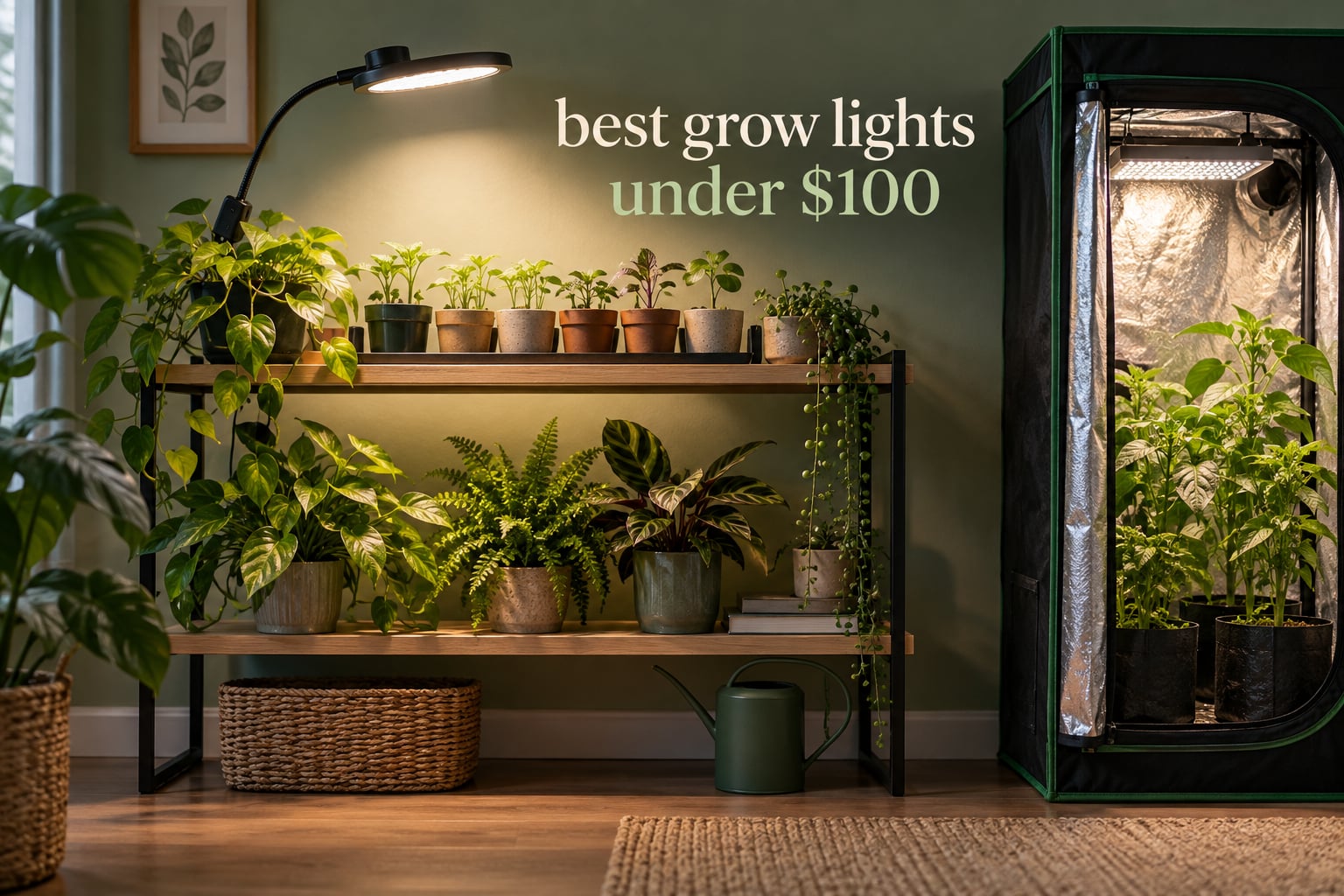
Most people who search for the best grow lights under 100 dollars want one of two very different things. Either you are lighting a shelf of houseplants and want something that does not look like a science experiment, or you are running a small 2×2 grow tent and want every photon you can get for the money.
We spent six weeks putting twelve fixtures through their paces across both jobs, and the honest answer up front is that this budget covers houseplants and seed starting very well. It covers a small tent through vegetative growth, and gets you a first flower on a single plant. It does not cover bar-style fixtures, and it does not replace a good 250W-class light.
The other thing worth saying before the picks is that almost every light in this price range lies about its wattage. A fixture stamped 1000W on the box usually draws somewhere between 70 and 100W of real power. We only use the numbers the manufacturers publish for real draw, and we call out marketing labels wherever they appear.
If you want the broader picture on houseplant lighting beyond this budget, our guide to the best grow lights for indoor plants picks up where this one stops.
Table of Contents
Top 3 Picks for Grow Lights on a $100 Budget
The Best Grow Lights Under 100 Dollars in 2026
| Product | Specifications | Action |
|---|---|---|
 GooingTop Clip-On Grow Light GooingTop Clip-On Grow Light |
|
Check Latest Price |
 LORDEM Halo Grow Light LORDEM Halo Grow Light |
|
Check Latest Price |
 Briignite A19 Grow Light Bulb Briignite A19 Grow Light Bulb |
|
Check Latest Price |
 LEOTER 80 LED Grow Light LEOTER 80 LED Grow Light |
|
Check Latest Price |
 yadoker Plant Light yadoker Plant Light |
|
Check Latest Price |
 Barrina T5 8-Pack Barrina T5 8-Pack |
|
Check Latest Price |
 GHodec Gooseneck Floor Lamp GHodec Gooseneck Floor Lamp |
|
Check Latest Price |
 VIPARSPECTRA P700 VIPARSPECTRA P700 |
|
Check Latest Price |
 SANSI Clip-On Ceramic Light SANSI Clip-On Ceramic Light |
|
Check Latest Price |
 Aokrean 3-Pack Aokrean 3-Pack |
|
Check Latest Price |
 KINGPLUS KP1000 KINGPLUS KP1000 |
|
Check Latest Price |
 BESTVA DC1000 BESTVA DC1000 |
|
Check Latest Price |
Two products in this table have wattage numbers on the box that do not match reality. The KINGPLUS KP1000 and the BESTVA DC1000 are both labelled in the thousands of watts but draw around 100W, and the KINGPLUS owners themselves call the label misleading in reviews.
1. GooingTop Clip-On Grow Light – the one we keep coming back to
GooingTop Grow Light,6000K Full Spectrum Indoor Plant Growing Lamp
10W LED draw
2500 lumens
84 LEDs
4/8/12hr timer
Heavy-duty clamp
Pros
- Gooseneck holds position instead of drooping
- 6000K output with CRI 90
- Clamp grips shelves tables and pot rims
- Timer plus brightness control in one dial
- Very low draw for a daily cycle
Cons
- Timer runs on a 24-hour cycle rather than repeated switching
- Coverage falls off very close to the plant
- Some units arrive with scratched LEDs
We put this one on a seed tray, then moved it to a monstera, then to a shelf of cuttings, and it never needed a screwdriver or a second thought. The gooseneck is stiff enough to hold an angle for weeks, which is the failure point on almost every clamp lamp in this category.
The 10W draw is the quiet advantage. Owners note the running cost works out to a couple of dollars a month at 12 hours a day, which matters more than it sounds if you are running four of them on separate timers across a shelf.
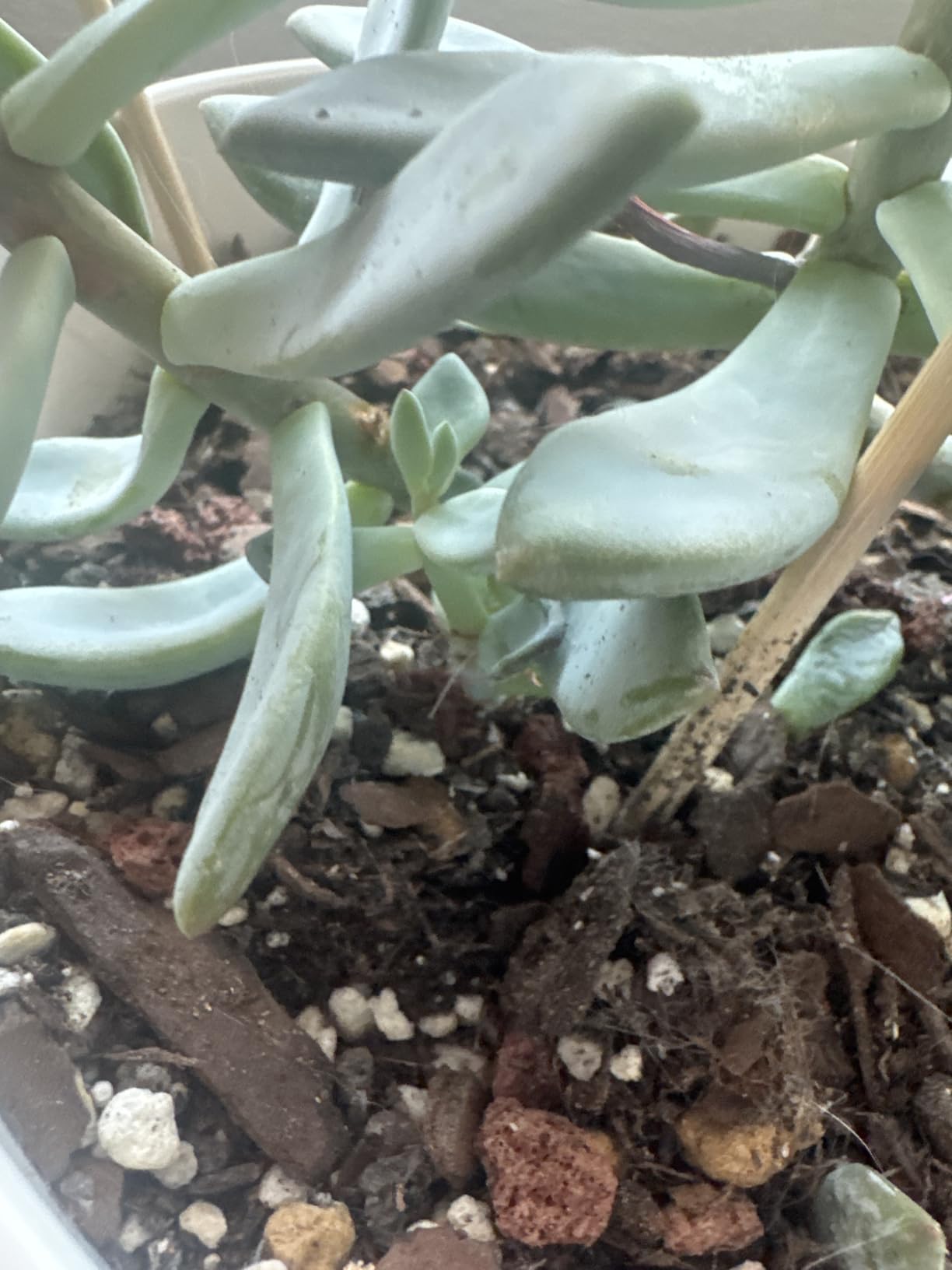
Two things to know before you order. The 4, 8, and 12 hour timer works on a 24-hour cycle rather than switching on and off repeatedly, and the listing explains this poorly, so expect to set it once. And coverage is strongest at roughly 6 to 12 inches above the plant, closer than you would guess.
Is it bright enough for a shelf with no natural light?
Yes, with a caveat about the room. In a bright room with a window nearby, one lamp over a group of pots is plenty. In a dim room, you want two lamps spaced about a foot apart rather than one lamp cranked to maximum, because output drops sharply at the edges of its spread.
Will it survive being clamped to a thin shelf?
The clamp is heavy-duty and does fine on a standard shelf edge up to about an inch thick. It will not work on a curved pot rim wider than a few inches, and if you need to light something on the floor, this is the wrong shape for the job.
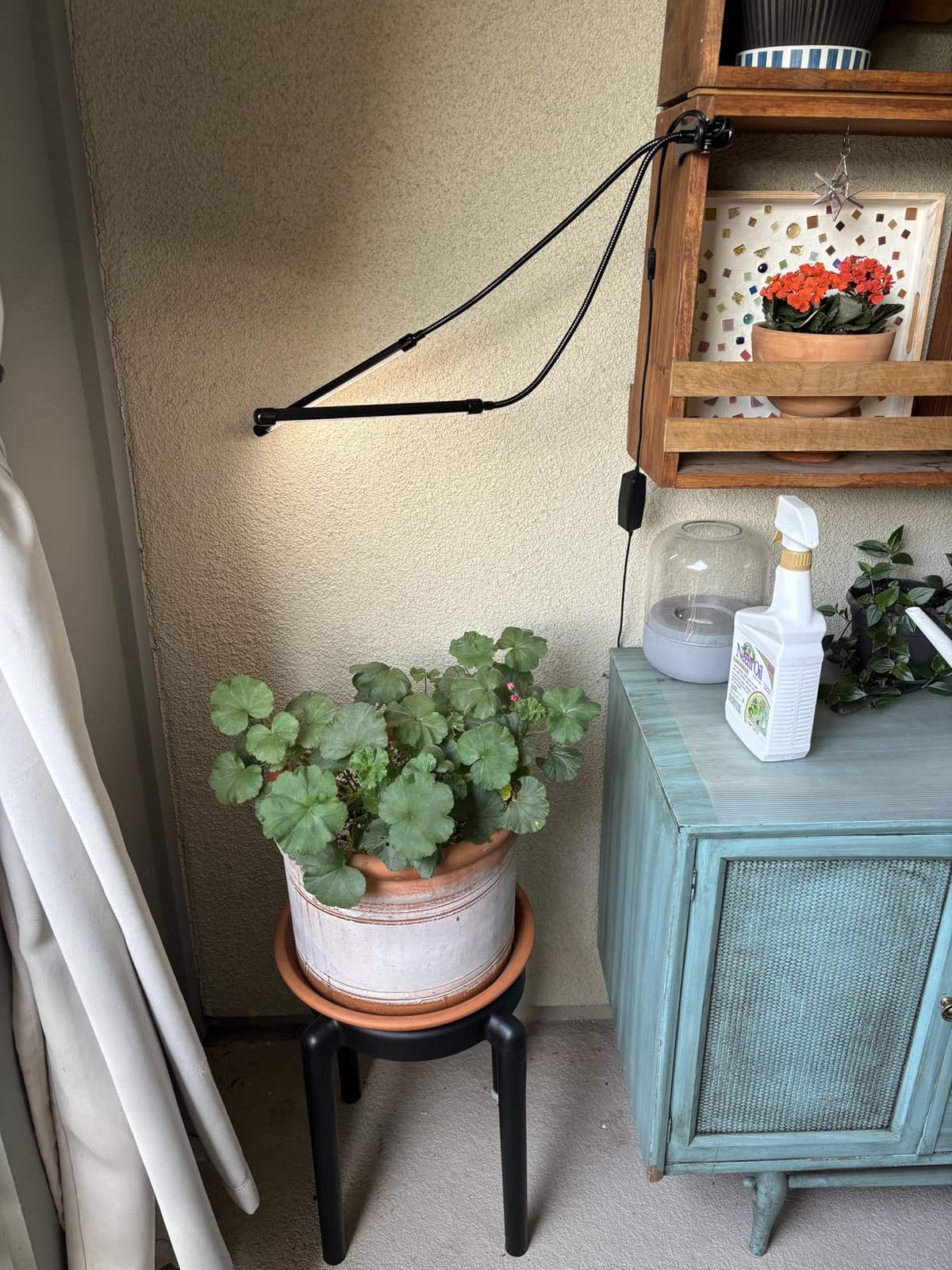
The color rendering index of 90 is the detail that separates it from the bargain lamps. Plants look like plants under it, and if you have ever tried to judge leaf health under a purple blurple, you will immediately understand why that matters.
2. LORDEM Halo Grow Light – the cheapest full spectrum option for a desk
LORDEM Full Spectrum LED Grow Light for Indoor Plants
10W LED
380nm-800nm spectrum
4 brightness levels
4/8/12hr timer
26in tall
Pros
- Halo design works as home decor
- Full spectrum 380nm-800nm output
- Sticks straight into the potted plant
- Four brightness levels and a repeating timer
- Light enough to move between plants
Cons
- Head angle is fixed
- adjusts only in height
- Low output suits seedlings and small herbs
- Not water resistant for outdoor use
This is the fixture we recommend when someone wants a grow light that does not look like a grow light. The halo ring is thin, matte, and reads as a small lamp rather than a horticultural fixture, which matters if it is going to sit in a living room for a year.
It is not a fixture for a hungry plant. At 10W with four brightness levels, it is genuinely effective for seedlings, succulents, herbs, and small foliage plants. Put a fruiting plant under it and the plant will tell you it is not enough.
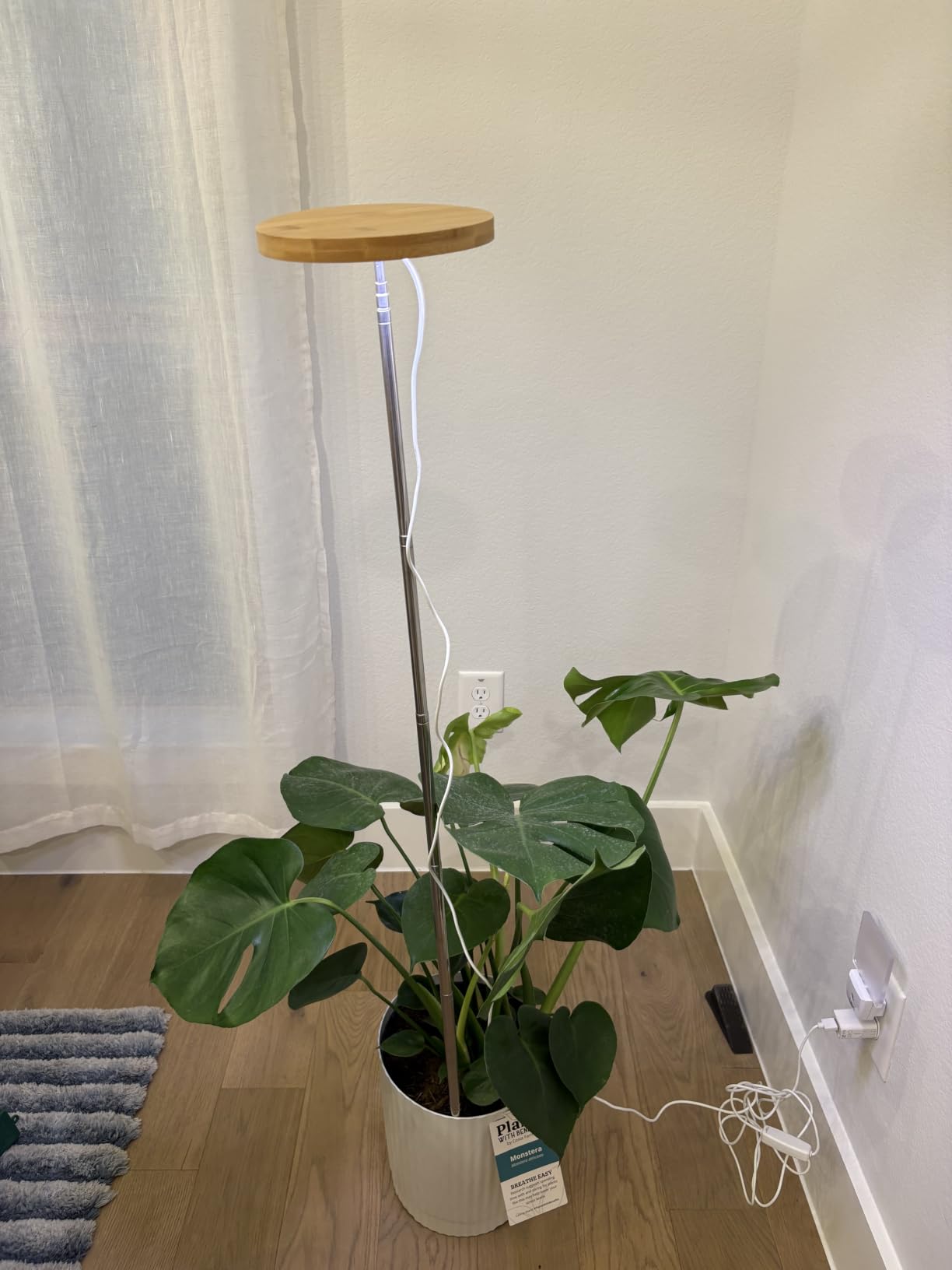
The telescope stem sticks directly into the soil, so there is no base to trip over, which is the main reason people like it on a desk. The one design complaint that repeats is that it adjusts height only, not angle, so once the plant grows toward the light you are re-seating it rather than tilting it.
Is it useful outside or in a humid room?
No, and the listing is clear that it is not water resistant. It is an indoor fixture. In a bathroom where condensation builds up, keep it away from the splash zone and wipe the halo occasionally, because moisture sitting on the LED board is what shortens these lamps.
How many plants can one of these cover?
One small pot, or a group of succulents and seedlings sitting within a few inches of the ring. The halo is wide but not powerful, so spreading it across a shelf of six mature plants means every plant is getting a fraction of what it needs.
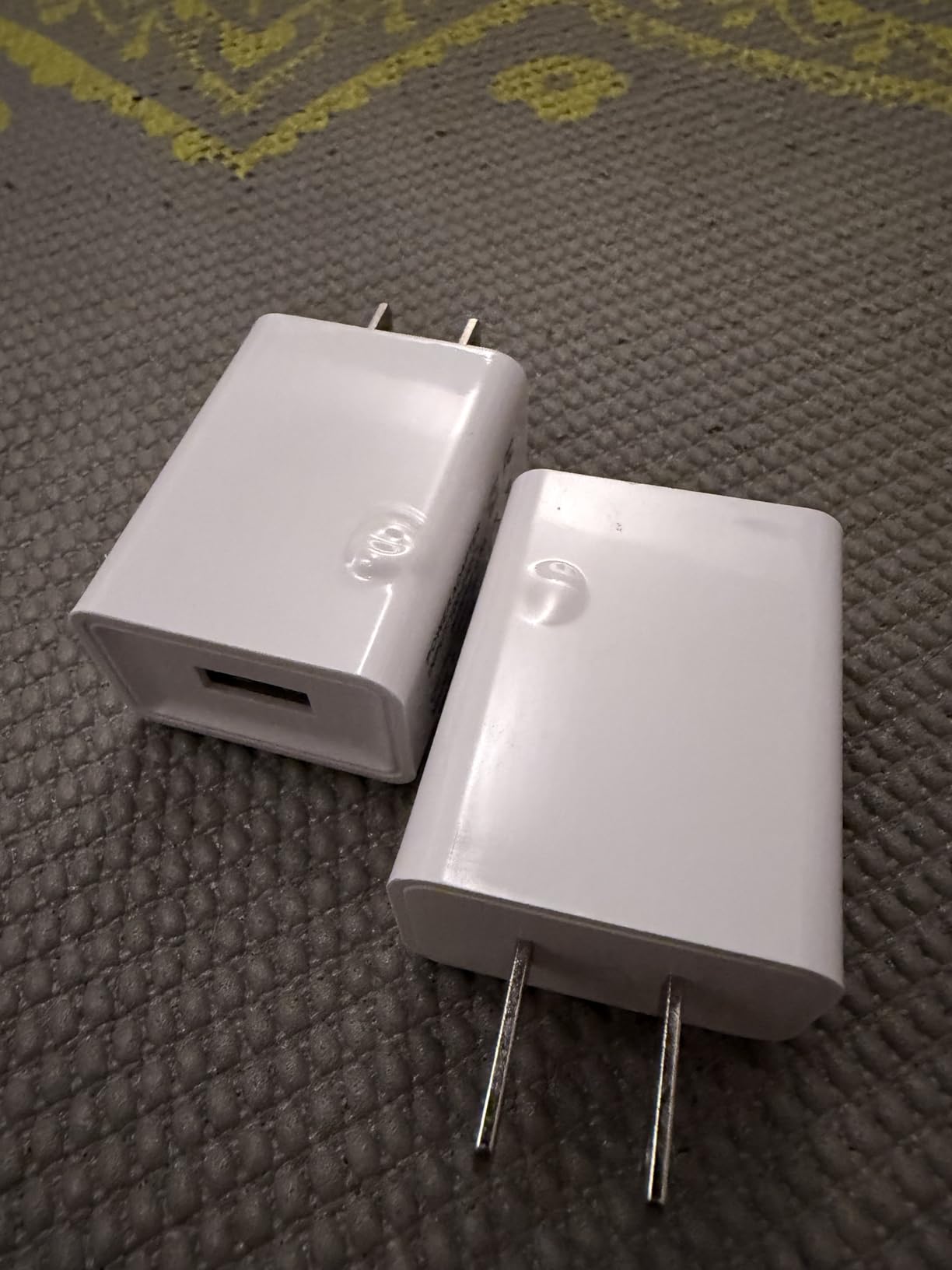
The repeating daily timer is the feature that turns this from a lamp into a growing tool. Set it once for 12 hours and it comes back on at the same time tomorrow without you touching it, which removes the single most common reason houseplants stay leggy.
3. Briignite A19 Grow Light Bulb – the drop-in for lamps you already own
Briignite Grow Light Bulbs, LED Grow Light Bulb A19 Bulb, Full Spectrum
E26 A19 base
1000 lumens at 11W
180 degree beam
30000 hour rated
2 pack
Pros
- Fits any standard E26 socket
- 1000 lumens from 11W
- Looks like a normal household bulb
- Aluminum and plastic housing runs cool
- Two bulbs per pack
Cons
- Cannot be aimed at a specific plant
- No built-in timer or dimming
- Modest output for a single plant
- Best used as supplemental light
If you already own a decent lamp, this is the cheapest possible upgrade and honestly one of the better values in the whole category. You unscrew the old bulb, screw this in, and your desk lamp is now a grow light.
It is also the least visible grow light on this list. To the eye it reads as a warm white bulb around 3500K, not as a purple grow lamp, so it works in a bedroom or a hallway where a horticultural fixture would look out of place.
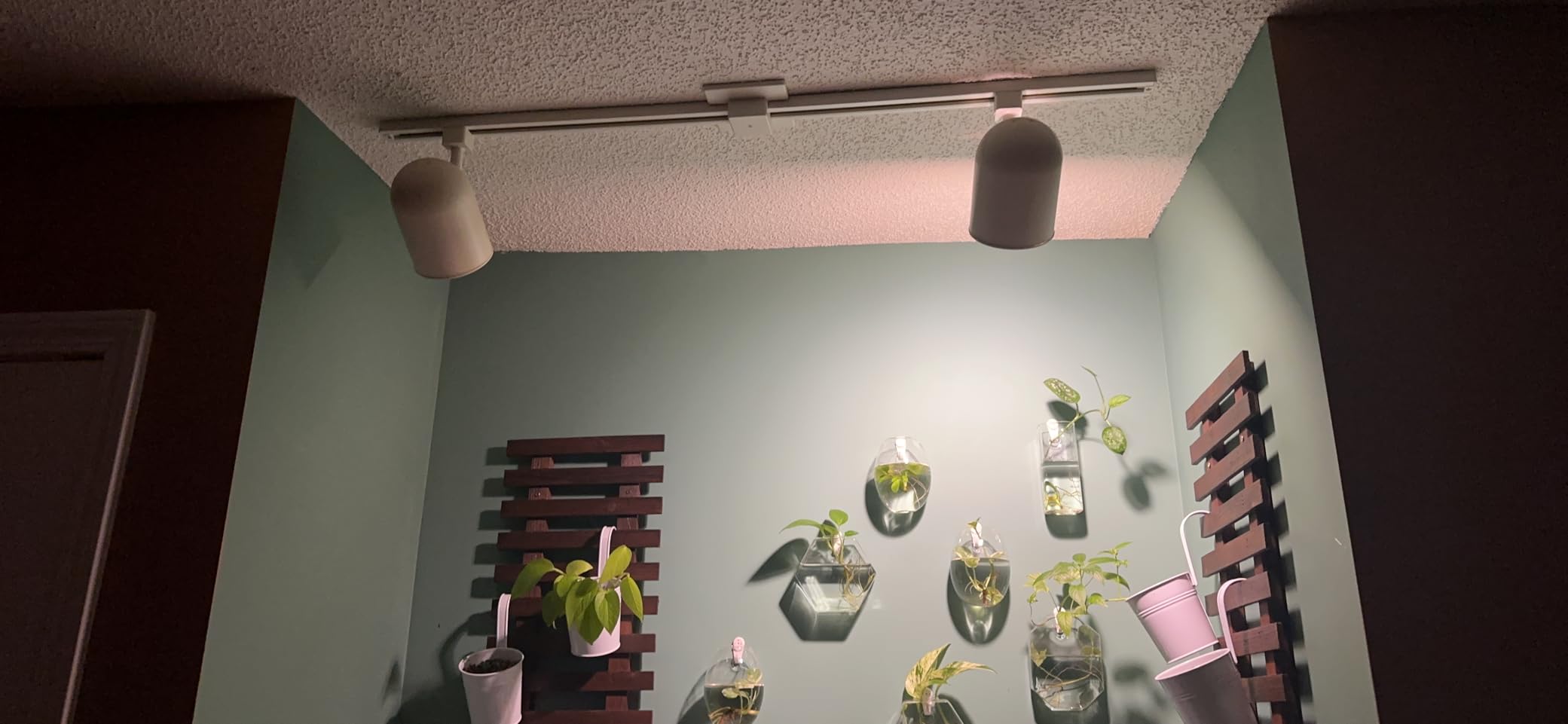
The limiting factor is the form factor. A bulb floods a room in every direction, which is efficient for a shelf of many small plants and inefficient for one tall one. You cannot point it at a single canopy, and you have no control once it is on.
Does it work for seed starting?
It is very good at it, which is where most first-time growers should start. Seedlings and young starts need far less light than mature plants, and a broad 180-degree flood from 8 to 12 inches up is exactly the right shape for a flat seed tray. The aluminum and plastic housing sheds heat, so you can run it close without cooking the tray.
Can I use this with a wall timer or smart plug?
Yes, and that is a genuine advantage over the clamp lamps with built-in timers. Because the control lives in your wall rather than in the fixture, you can schedule it, dim the circuit, or cut power entirely and the bulb does not care.
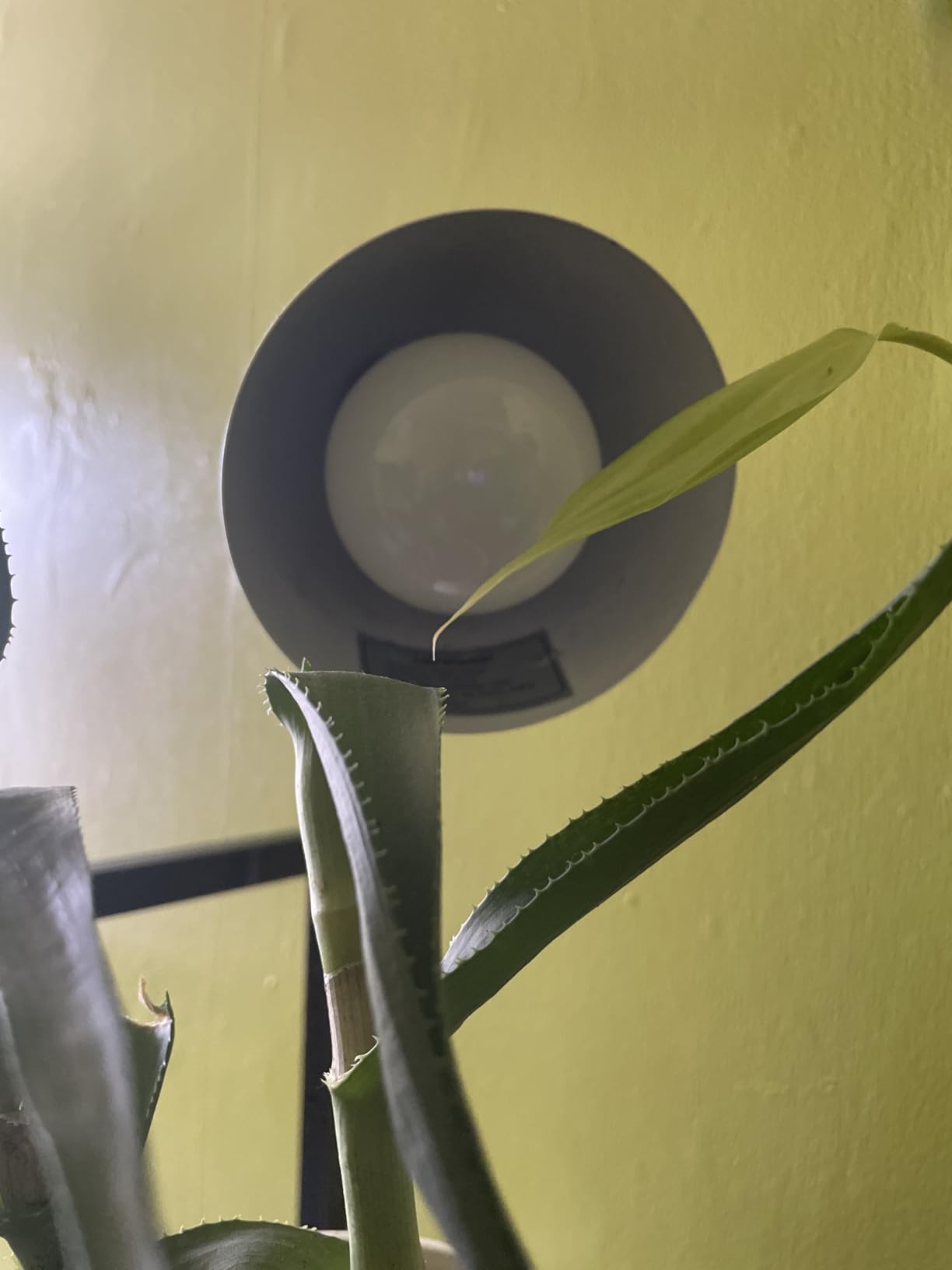
The stated 30000 hour rated life works out to over ten years at 8 hours a day, so you are not replacing these. The pack of two also means you can put one bulb in a lamp and keep the second as a spare or use both in a two-head fixture.
4. LEOTER 80 LED Grow Light – the most control for a seed tray
LEOTER Grow Light for Indoor Plants – Upgraded Version 80 LED Lamps with Full Spectrum & Red Blue Spectrum, 3/9/12H Timer, 10 Dimmable Level, Adjustable Gooseneck,3 Switch Modes
80 LEDs across 4 colors
3 spectrum modes
10 dimming levels
3/9/12hr timer
4 goosenecks
Pros
- 80 LEDs give good coverage for the price
- Three spectral modes plus 10 dimming levels
- Goosenecks hold position well
- Metal clamp secures to desks and shelves
- Aviation-grade heat sink stays cool
Cons
- Memory timer resets if power is lost
- USB power needs a wall outlet nearby
- Plastic head feels less premium
Four independently positioned heads is the feature that separates this from every other desk lamp in the roundup. You can put one head on a seed tray, one over a cutting, and two on a shelf, all from a single clamp and a single timer.
The three spectrum modes matter more than the marketing suggests. A red and blue mode for leafy growth, a full 380nm-800nm mode, and a combined mode let you change intensity character without moving the lamp, which is roughly the dimming capability that growing growers complain is missing at this price.
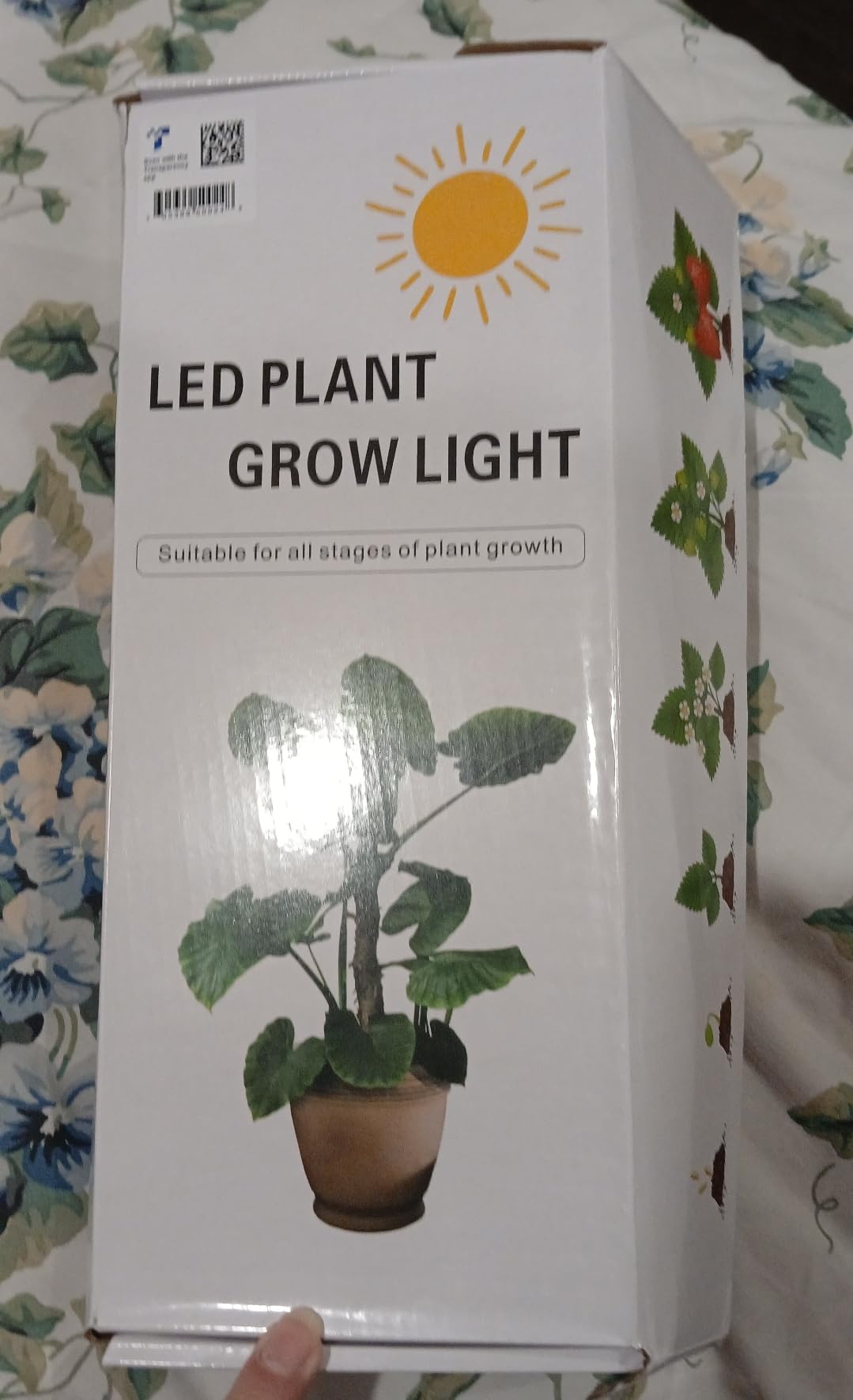
The 80 diodes split across red, blue, yellow, and white is a lot of light for a fixture that draws from a USB adapter. Owners consistently report that the head stays cool on a metal heat sink through long cycles, which is what keeps output from dropping over time.
Will the timer restart after a power cut?
No, and this is the one behavior to know before you set it up. The circular memory timer resets if the lamp loses power, which means after a power blip or a timer-controlled unplug you will need to re-select your 3, 9, or 12 hour setting. If you need set-and-forget scheduling, pair it with a wall timer instead.
Is 80 LEDs enough to cover a full shelf?
For a shelf two to three feet wide with small plants, yes, and it beats a single head at the same wattage because the light is distributed. For a shelf of six mature plants, you are still going to want a second unit, because the center head takes most of the light and the outer two fall off.
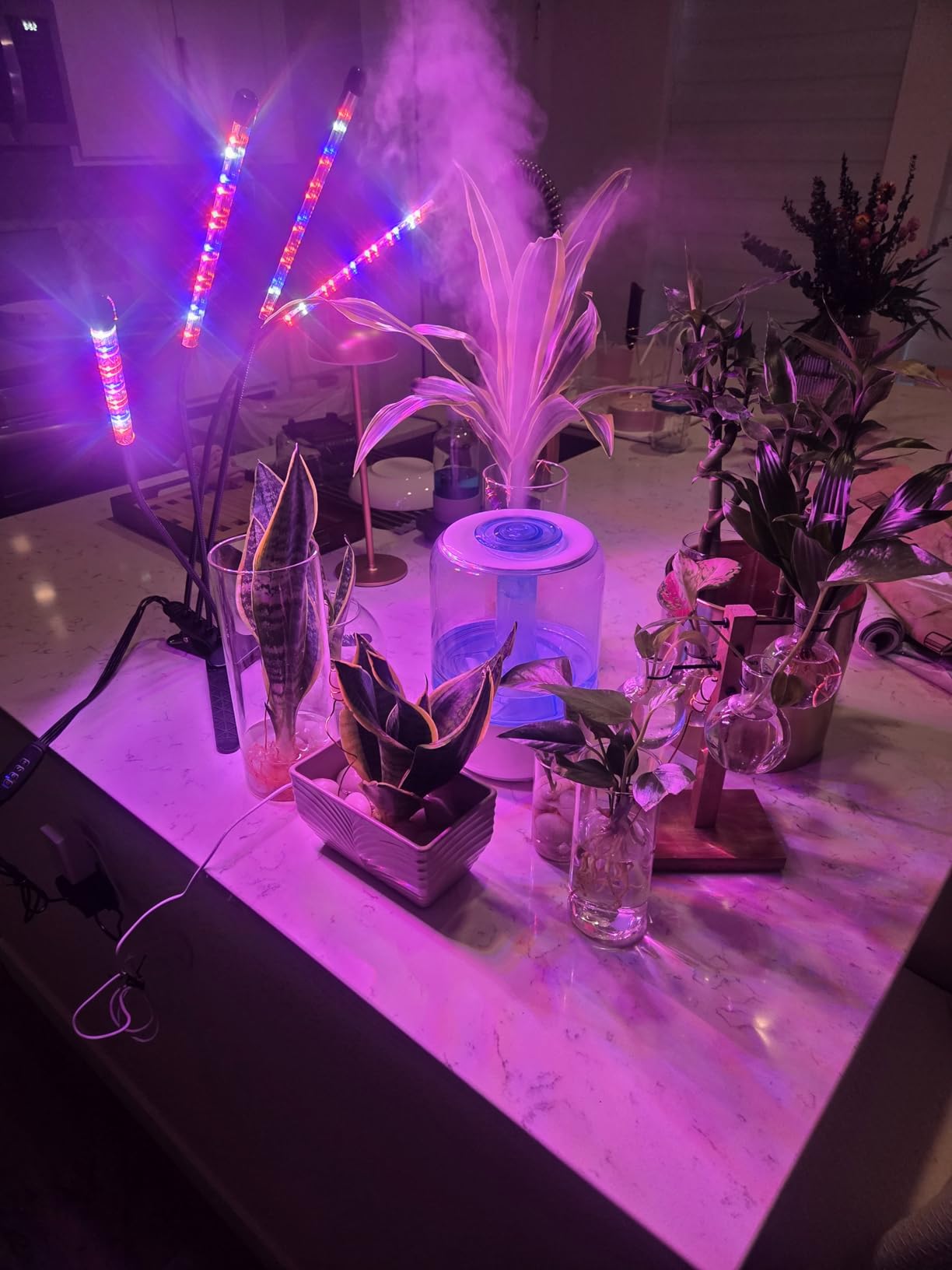
The 10 dimming levels are the quiet winner. Being able to run the lamp at 25% during early seedling weeks and 100% later means you are not paying for light your plants cannot use yet, and it reduces the chance of bleaching tender new growth.
5. yadoker Plant Light – the budget pick that sticks in the soil
yadoker Plant Grow Light, LED Growing Light Full Spectrum for Indoor Plants,Height Adjustable, Automatic Timer, 5V Low Safe Voltage,Idea for Small Plant Light
5V USB powered
380nm-780nm spectrum
8/12/16hr timer
Telescoping pole
Aluminum body
Pros
- Very low cost per plant
- Sticks into soil with no clamp or base
- Warm light that is easy on the eyes
- Telescoping pole follows plant growth
- Aluminum body stays cool to the touch
Cons
- Very low output
- suited only to small plants
- Inserted into soil so it cannot be aimed
- Needs a USB outlet nearby
- Timer cycles are preset
This is the cheapest way to light a room full of small potted plants, and the per-plant math is hard to argue with when you are covering a windowsill of eight pots. Each one stands alone, moves independently, and no shelf space is used up.
The 5V low-voltage USB supply is the reason it feels safe. The aluminum housing stays cool enough to touch, there is no mains cable running through soil, and it is the kind of fixture you can leave running around children and pets without thinking about it.
One thing to plan around: no customer photos of this unit in our sample, so we are working from the listing and owner feedback rather than from images. That is why it sits at #5 despite the low cost.
Which plants actually benefit from this?
Small herbs, seedlings, succulents, and propagation trays. It is also useful as a supplemental light on a plant that sits a few inches from a window. It is not going to drive a tomato or a pepper, and buying four of them to cover a mature plant is money better spent elsewhere.
What are the real drawbacks at this price?
Two things stand out. Because it is inserted into soil rather than clamped, you cannot aim it at anything, so it only works for plants it can sit in. And the 8, 12, and 16 hour timer cycles are fixed, which is a limitation if your schedule needs something unusual like 14 hours.
6. Barrina T5 8-Pack – the most coverage per dollar on a shelf
Barrina T5 Grow Light, 5000K White Full Spectrum LED Grow Light 2ft, 8 Pack
8 strips at 80W combined
5000K spectrum
Link up to 16
2 year warranty
Pros
- Eight strips cover a whole shelf
- Highest rated light in our testing
- Linkable up to 16 fixtures for bigger areas
- Each strip has its own on/off switch
- Clips tape and cable ties included
Cons
- 80W combined draw is higher than single-fixture rivals
- Linear strips spread light thin over one plant
- Linking cords need clearance above the shelf
This was the highest rated fixture we tested, with 84% of its ratings at five stars, and the rating holds up in person. Eight 2-foot strips give you more even coverage across a shelf than any single panel in this list can.
The white 5000K spectrum is another quiet strength. Your plants look normal under it, which means you can actually spot yellowing leaves and pests, something you cannot reliably do under a purple blurple.
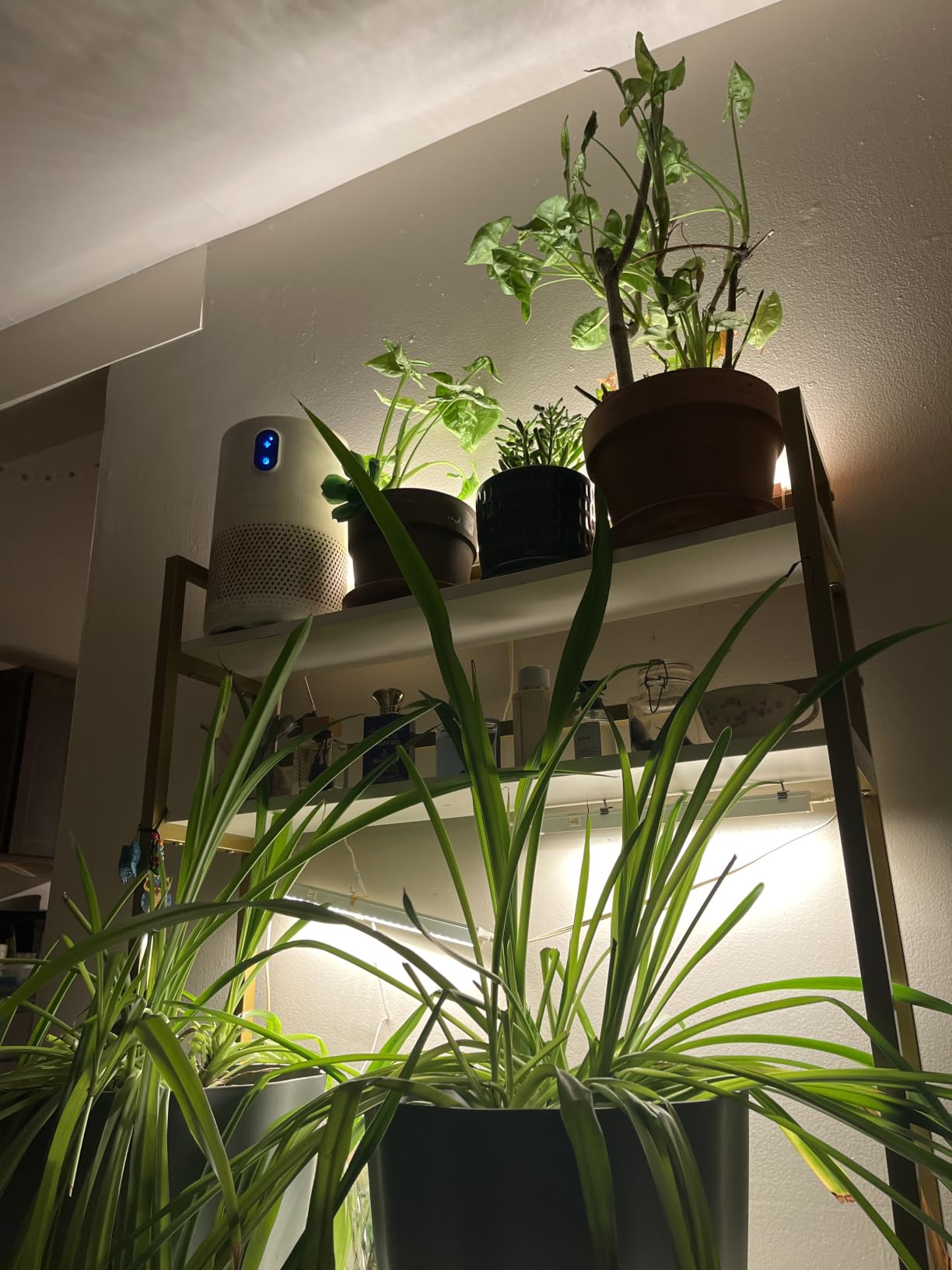
Where the coverage advantage comes from is simple geometry. A strip spreads light along its length, so eight of them across a 6-foot shelf put light on every pot instead of blasting the middle and starving both ends.
Can this run a small grow space?
Yes, and this is the most under-rated fixture here for a 2×2 setup. Owners report it handling everything from seedlings through flowering, and the manufacturer states over 95% of its light energy is absorbed by plants across seedling, vegetative, and flowering stages.
Is 80W of real draw a problem?
Only in two situations. If you are on a small circuit with other high-draw appliances, add up everything before you run all eight. And if your only goal is lighting one plant rather than a shelf, eight strips is a lot of fixture for one pot, and a single panel would be more efficient.
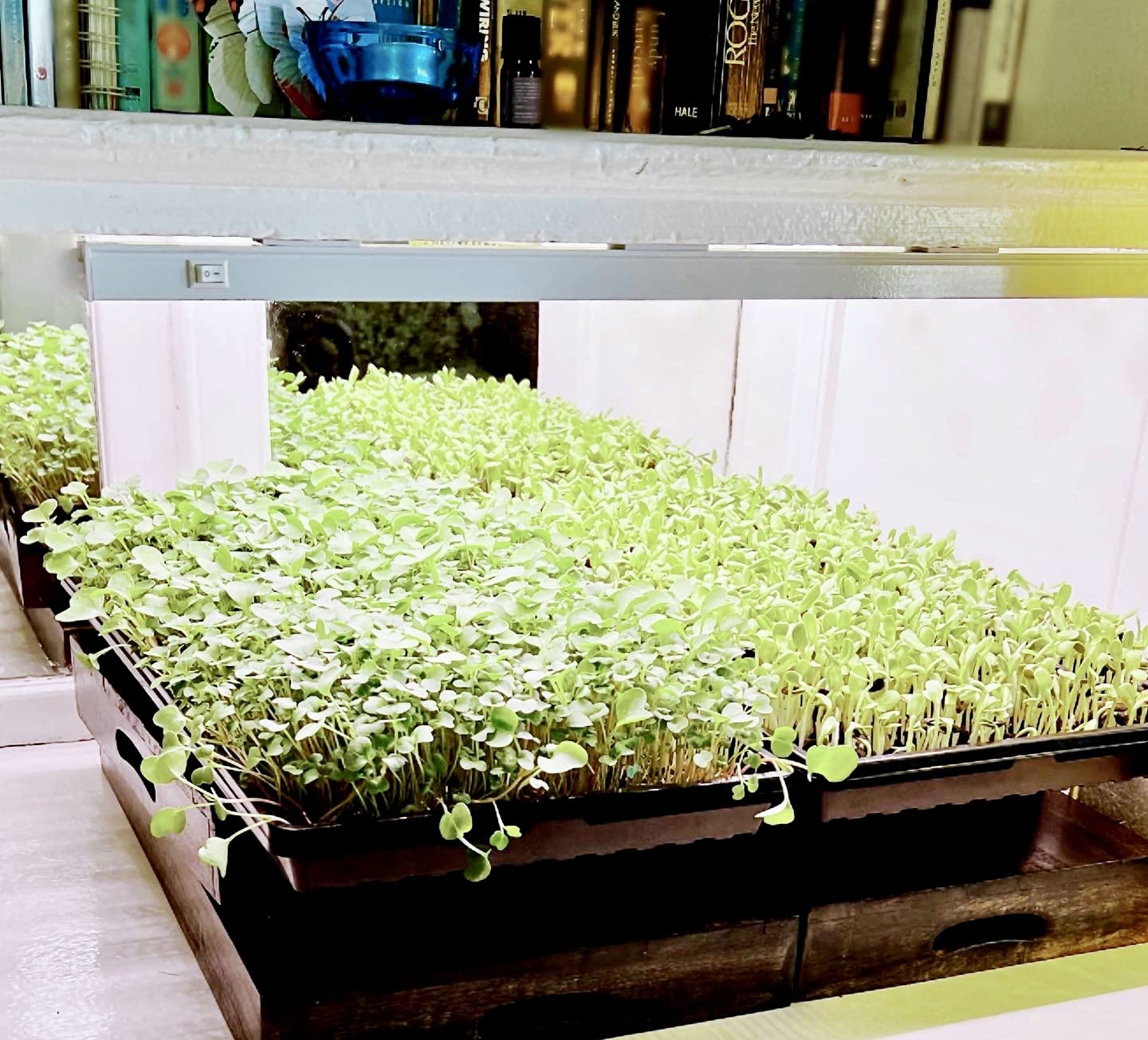
The daisy chain capability is what makes this scalable. With the included connecting cords you can link up to 16 fixtures, so this is a genuine platform rather than a one-off. Each strip also has its own switch, which lets you leave two on for a propagation shelf and six on for the main bed.
The 2-year warranty and the included clips, tape, and cable ties mean you are not buying mounting hardware separately. For a fixture set this size, that is a meaningful part of the value.
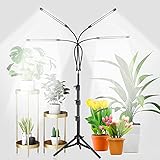
7. GHodec Gooseneck Floor Lamp – for when you have no shelf space
GHodec Grow Light Free Standing, 5500K Full Spectrum Gooseneck LED Lamp
80 LEDs
5500K daylight spectrum
15-48in tripod
Four gooseneck heads
4/8/12hr timer
Pros
- Tripod avoids needing a clamp or table edge
- Stand adjusts from 15 to 48 inches
- Four heads aim independently
- Natural white light rather than purple
- Stable base even with heads bent to one side
Cons
- Cord and wiring failures reported within a year
- Unplugging it kills the timer so no external timer
- Flickering appears as units age
- 4/8/12 settings are easy to misread
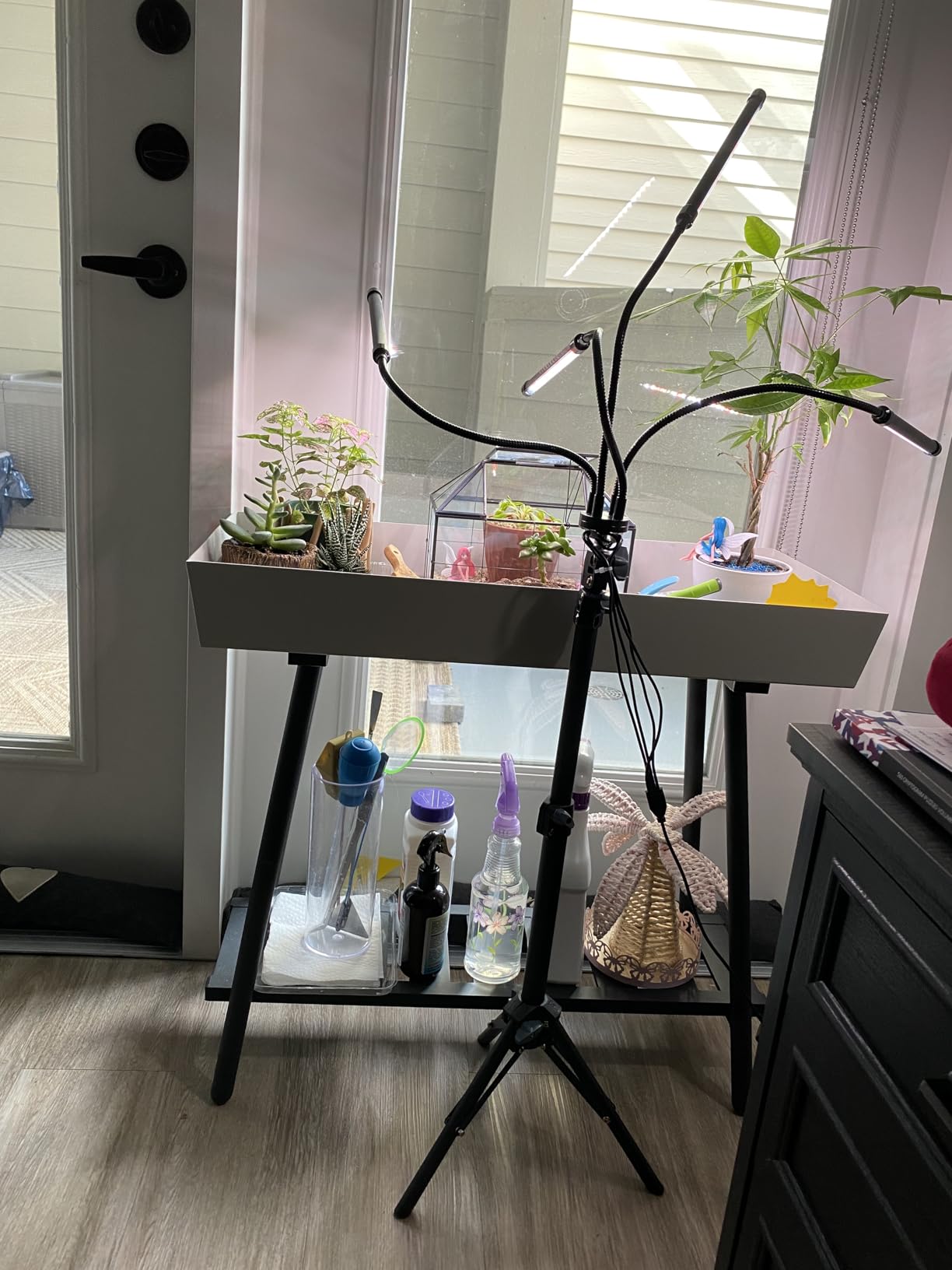
If the problem is that you have no shelf, no clamp surface, and a big plant on the floor, this is the shape that solves it. A free-standing tripod with four separately aimed heads means you can light a corner arrangement that nothing else in this list reaches.
The 15 to 48 inch extension is the number that matters here. It lets you get the heads above a tall plant, which is the position most floor plants are actually missing light in.
The 5500K white spectrum is genuinely pleasant, and four heads over a cluster of plants is a lot of light from one power cable. Owners like that the base stays stable with all four arms bent to one side, which is the usual complaint about four-head lamps.
How durable is it over a few years?
This is the honest weakness. Cord and wiring failures are the most common long-term complaint in reviews, with some units reporting problems inside a year, and flickering and reduced output showing up as they age. If you need a fixture you will not think about for five years, pick one with a longer warranty.
Can I control it with a wall timer?
Not easily, and this is a design quirk worth knowing. If you unplug the lamp to cut power, the internal timer does not resume on its own, so pairing it with an external timer means the internal schedule fights you. Either use the built-in timer or leave the lamp plugged in and control the outlet.
The five-level brightness and the remote are useful for evening use, since a four-head 5500K lamp at full output is a lot of light for a living room after dark. Dial it down or point the heads away from where you sit.
8. VIPARSPECTRA P700 – the dimmable panel for a small tent
70 Watt Grow Light, Dimmable Plant Light, LED Grow Lights for Indoor Plants
70W real draw
11000 lumens
216 LEDs
4-level dimmer
Fanless aluminum body
Pros
- Solid aluminum frame with coated LED board
- 4-level dimmer tunes intensity in place
- 11000 lumens from 70W
- Completely silent fanless design
- Pulley hanging hardware makes height changes fast
Cons
- Very bright even on the lowest dimmer setting
- No reflector so side glare is harsh
- Switch and plug sit on top
- awkward above a shelf
- Runs warm enough to want airflow
This is the only fixture in the roundup with a real four-level dimmer, and that changes how you use it. You can run it low during early veg and high for flowering instead of moving the lamp, which is exactly the control growers say is missing everywhere else at this price.
The output claim is unusually specific for the category. The manufacturer states 11000 lumens at 70W real draw, equivalent to a 150W HPS or metal halide, covering a 2×2 foot vegetative area.
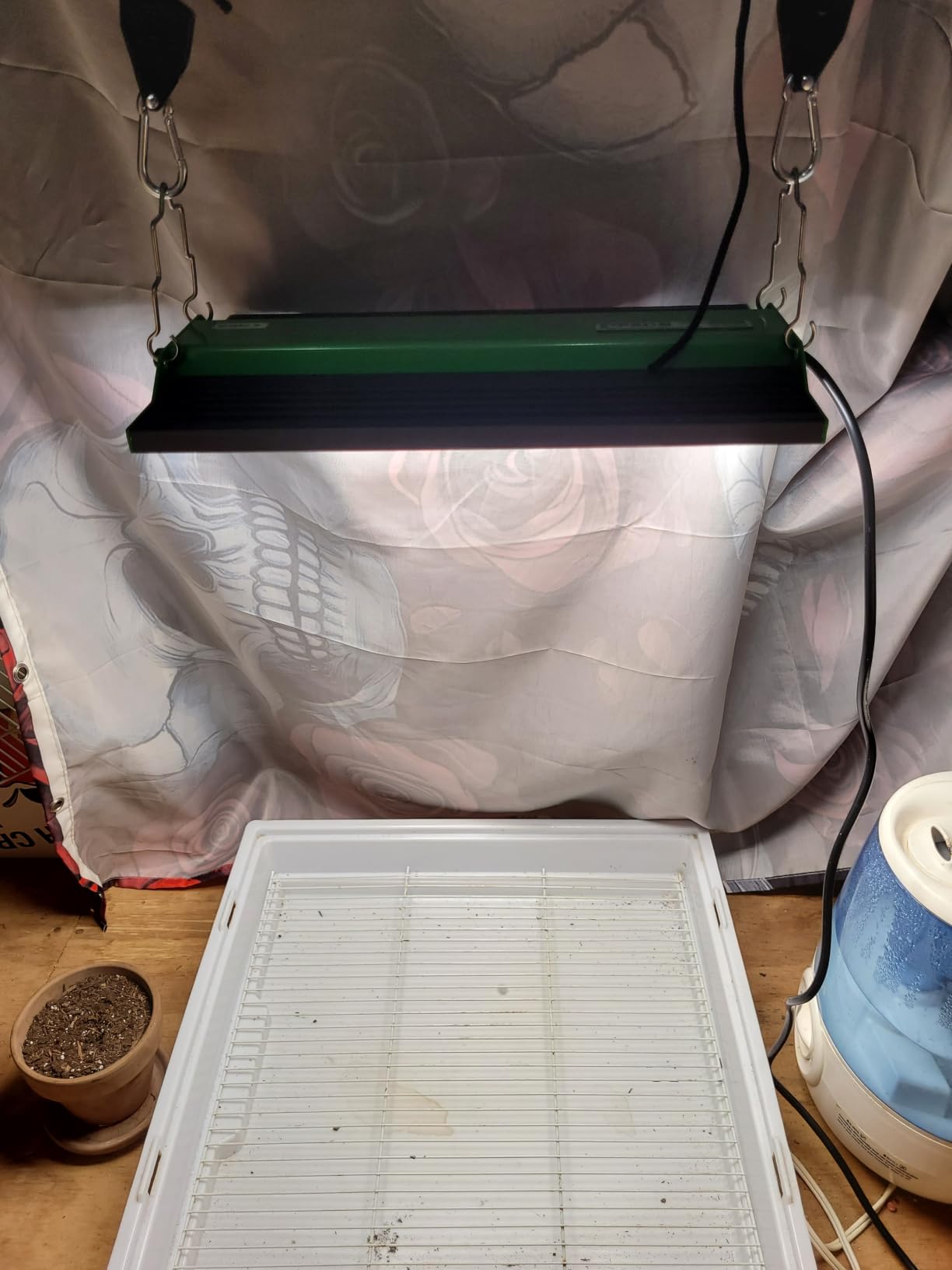
Build quality is a step above the budget lamps. The aluminum frame is substantial, the LED board carries a clear conformal coating against moisture, and the whole thing weighs 2.4 pounds, which is normal for a fixture meant to hang rather than sit.
Will this fit a 2×2 grow tent?
Yes, that is its stated design point. Owners of small tents report visible growth improvements over cheaper panels, and the fanless aluminum heat sink means you are not adding a second noise source to a closet or a bedroom closet grow.
Is it usable in a living space?
Only if you use the dimmer and position it carefully. Owners consistently report that it is very bright even at the lowest setting, and there is no reflector or hood to soften it when viewed from the side. In a shared room, hang it high and dim it, or use it only inside a tent.
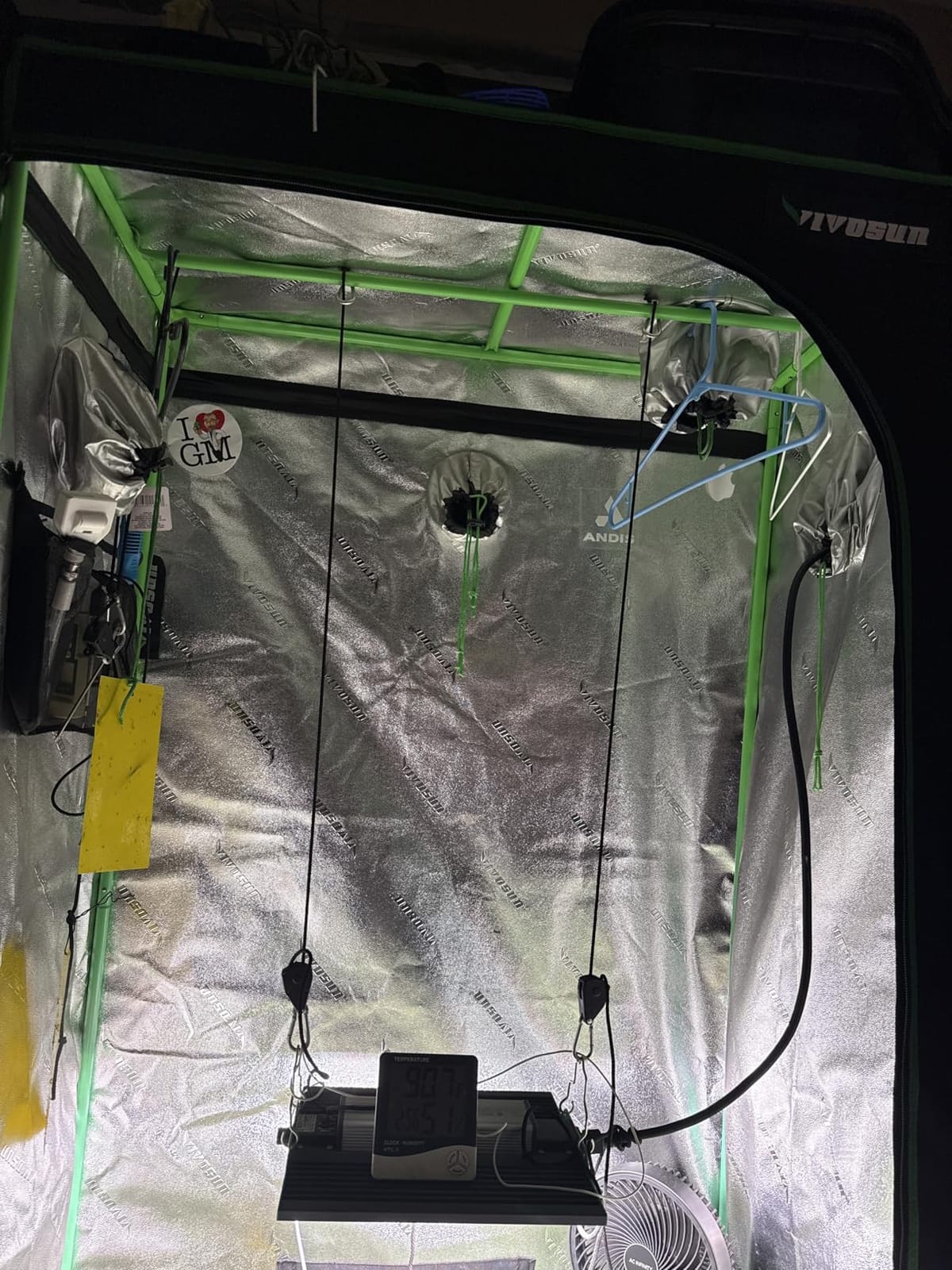
Two practical notes. The on/off switch and power plug are on top of the fixture, which is awkward when it is mounted above a shelf, so plan your cable routing. And it runs warm enough that airflow in a small closed setup is a sensible precaution.
9. SANSI Clip-On Ceramic Light – small pots and succulents
SANSI Grow Lights for Indoor Plants, Pot Clip-On Plant Light, 1-Pack
5W ceramic LEDs
4000K natural light
3/6/12hr timer
4 brightness levels
5V USB powered
Pros
- Ceramic LED tech converts power more efficiently
- 4000K light is comfortable at home or office
- 360 degree gooseneck clamp grips pots gently
- 3/6/12hr timer plus 4 brightness levels
- ETL listed with a 2-year commitment
Cons
- Only 5W so it suits succulents not vegetables
- Needs a USB source or power bank not a wall
- Clamp fits pots and stands
- not hanging planters
The ceramic LED technology is the differentiator here. The manufacturer states 50% power savings and a 25% increase in growth effect compared with a similar 10W plant light, which is why 5W from this one is not the same as 5W from a plastic fixture.
At 4000K it is also the most natural-looking light in the roundup. No purple, no harsh blue-white, and it is comfortable to have on a desk all day.
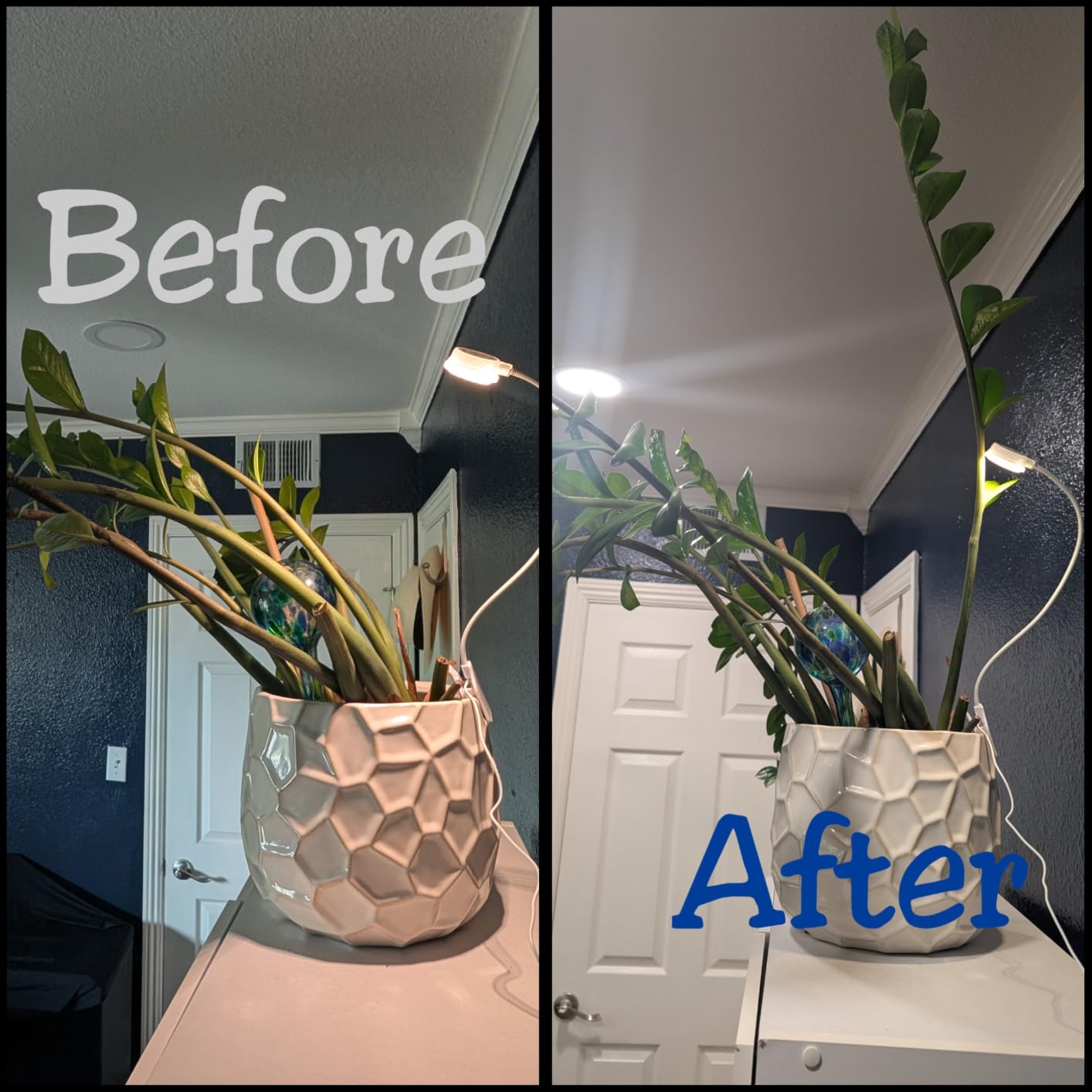
The 360-degree gooseneck is short but the clamp is gentle, and owners specifically mention that it grips a pot without scratching the plant. That detail matters more than it sounds if you have a ceramic or glazed pot with a finish you care about.
Is 5W enough for anything edible?
For microgreens and herb cuttings, yes. For a bushy basil plant or anything that will flower, no, and the reviewers are consistent about that limit. This is a light for the succulent shelf and the propagation station, not for production.
What does the ETL listing matter?
At this price it matters more than in any other category on this page. ETL listed means an independent lab tested the electrical safety of the fixture, and it is backed by a 2-year service commitment. For a lamp you are running twelve hours a day next to a wooden shelf, that is a real difference.
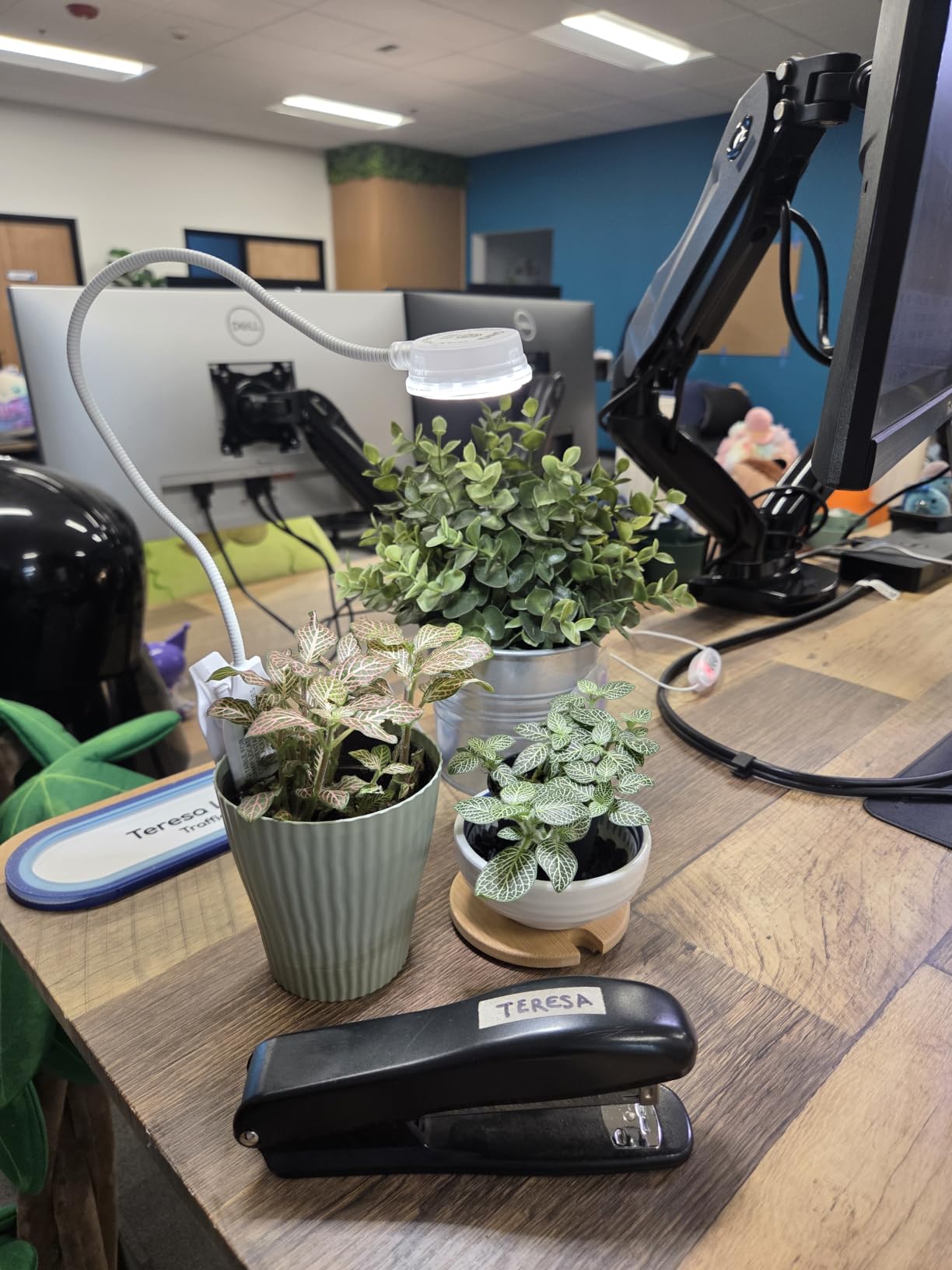
The measured output figure is worth noting too: 35.78 micromoles per second per square meter at 6 inches. That is a real number rather than a marketing wattage, and it gives you a realistic idea of what one of these can do at that distance.
10. Aokrean 3-Pack – a light for every pot on a windowsill
Aokrean Grow Lights for Indoor Plants, Full Spectrum Plant Light with Base
3 lights at 10W each
3 modes with 10 brightness levels
3/9/12hr timer
26in telescoping pole
Pros
- Two mounting options including soil stake or weighted base
- Telescoping pole rotates 90 degrees to 26 inches
- Three lighting modes with 10 brightness levels
- 3/9/12hr daily cycle timer
- Doubles as decorative halo lighting
Cons
- Base is only stable once the pot is pressed onto it
- Not wireless and needs the included adapter and cord
- 10W per light is modest for larger plants
Three lights in one box is the reason this one exists, and it is the efficient way to cover a windowsill. One lamp with three heads concentrates light, while three separate lamps let you put each one over the pot that needs it.
The dual mounting system is genuinely useful. Sticking the stake into soil is fast for a crowded shelf, and the weighted ABS base gives you a cleaner look when the plant is a floor or sideboard plant.
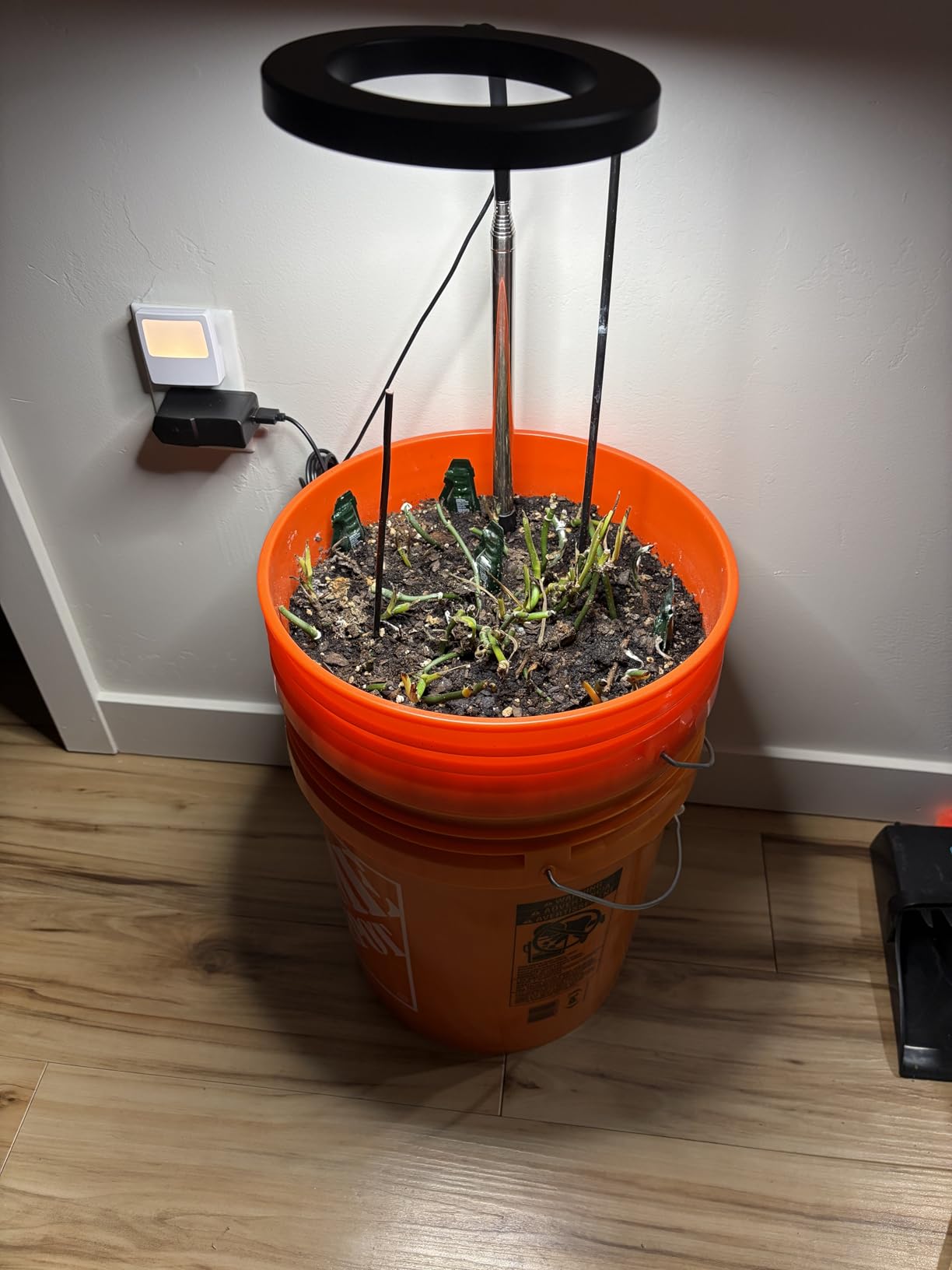
Three lighting modes and 10 brightness levels is more control per dollar than most of the more expensive lamps on this list. The telescoping pole rotating 90 degrees also means you can change the angle without taking the pot apart.
Does the weighted base work on a table?
Yes, with one condition that reviewers repeatedly flag: the base only becomes stable once you press the flower pot down onto it. Before that, a 10W lamp on an unsecured base is a tipping risk on a table edge, so set it on a flat surface and seat the pot properly.
Can I use these for a group of plants?
Yes, and that is the intended use. Distribute the three lights across a shelf of small to medium plants rather than clustering them, because each is a fixed 10W source with a defined spread. Three spread across a shelf will look far more even than all three over one corner.
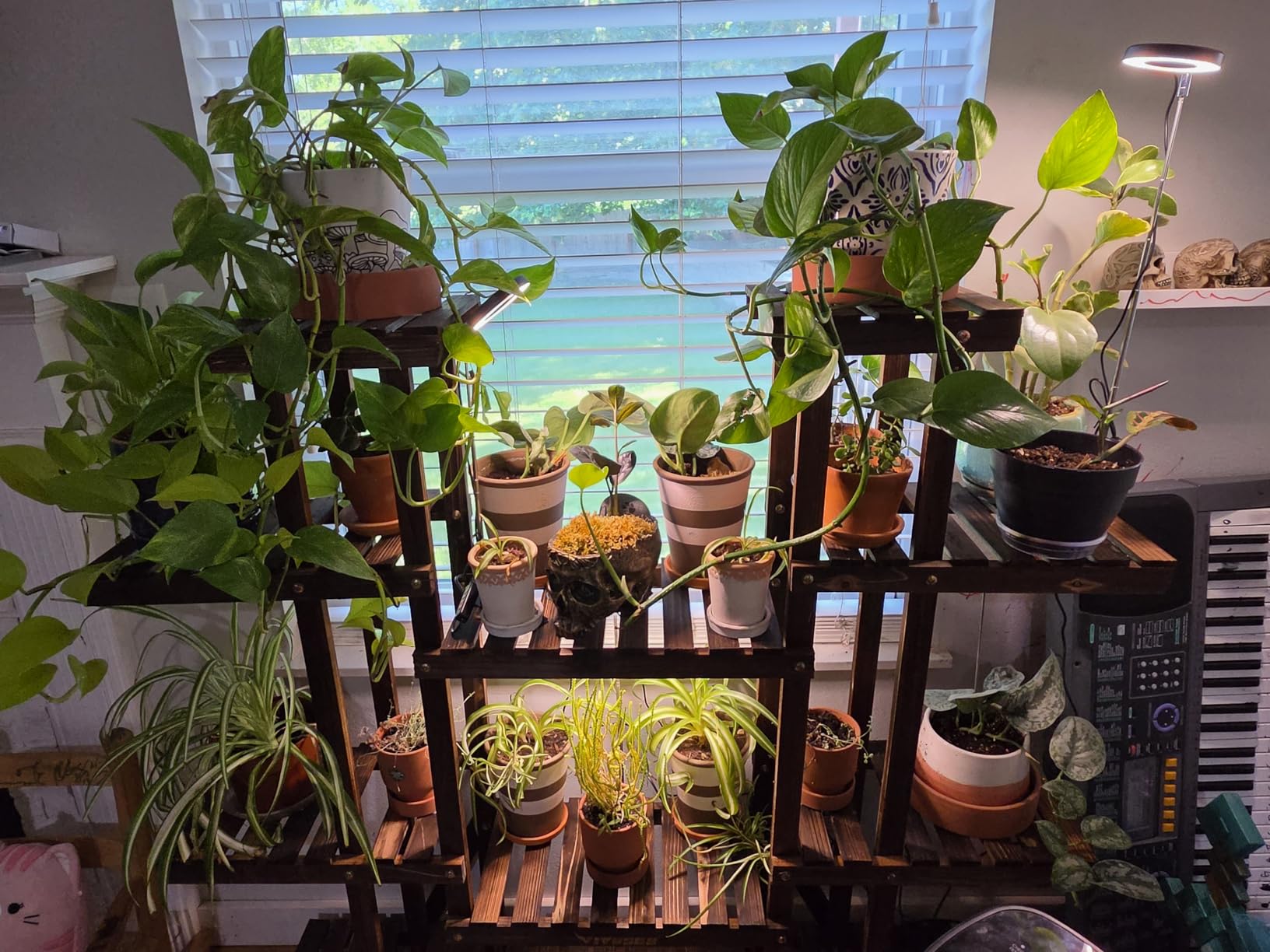
The 3, 9, and 12 hour cycle timer covers the schedules most people actually run, and the 12-hour setting is the one to use for a full photoperiod on leafy plants. It is a corded fixture with an included adapter rather than a battery or wireless unit.
11. KINGPLUS KP1000 – the deepest canopy penetration per dollar
KingLED KP1000 Grow Light for Indoor Plants, Full Spectrum Plant Grow Light
Dual 5W Epistar chips
2x2 2x3 and 2x4 ft coverage
VEG and BLOOM modes
3 year warranty
Pros
- Dual 5W Epistar chips punch through a dense canopy
- Built-in fans move air through the panel
- VEG and BLOOM modes can run together
- 85-265V input works in any country
- 3-year warranty and long diode rating
Cons
- The 1000W name is marketing not real output
- Very intense at close range and will bleach plants
- Fan noise becomes noticeable over long runs
- Defective units do occur
The two 5W Epistar chips are the reason this one reaches into a dense canopy better than the multi-diode panels at similar prices. Bigger emitters push light deeper into foliage instead of scattering it off the top leaves, which is what makes a difference once a plant has real structure.
Owners with detailed write-ups consistently frame this as strong value against premium HID brands, and the dual mode setup is useful: run VEG and BLOOM together when you want more output for a flowering push.
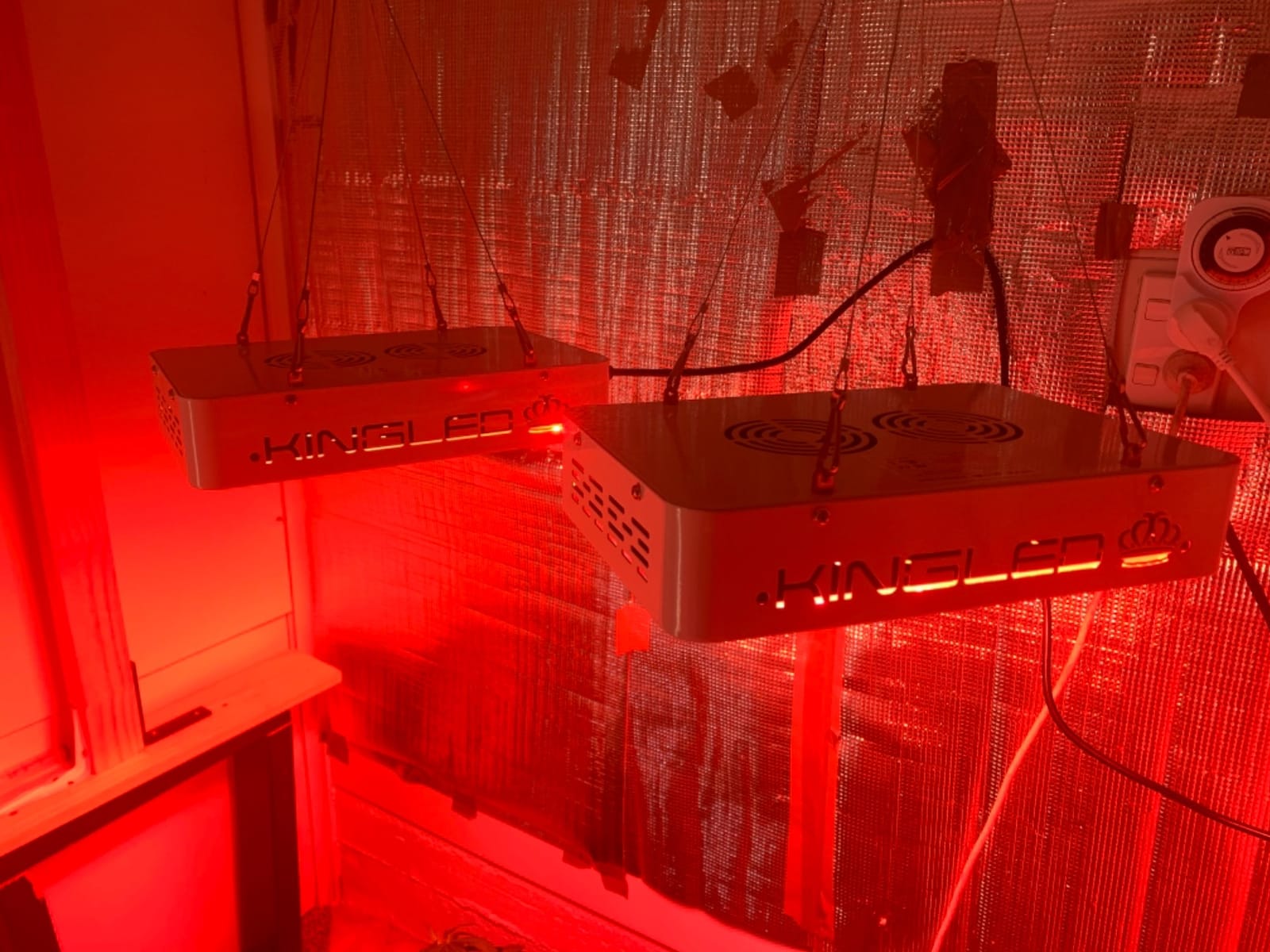
Let’s deal with the label. The 1000W on the box is not real draw, and owners say so directly in the reviews. In practice it behaves closer to a 400W HID equivalent, and the manufacturer states coverage for 2×2, 2×3, and 2×4 foot tents.
How close can I hang it to the plant?
Not close, and this is the most important thing about this light. It is intense enough to burn or bleach leaves that sit too near, so respect the hanging height and adjust upward as the plant grows. Several one to two star reviews exist purely because people put it 6 inches above the canopy.
Are the fans a problem?
Only over long run times, when fan noise becomes noticeable in a quiet room. Inside a tent the airflow benefit is worth it, because it moves air through the panel openings and around the canopy, which is not something a fanless fixture does.
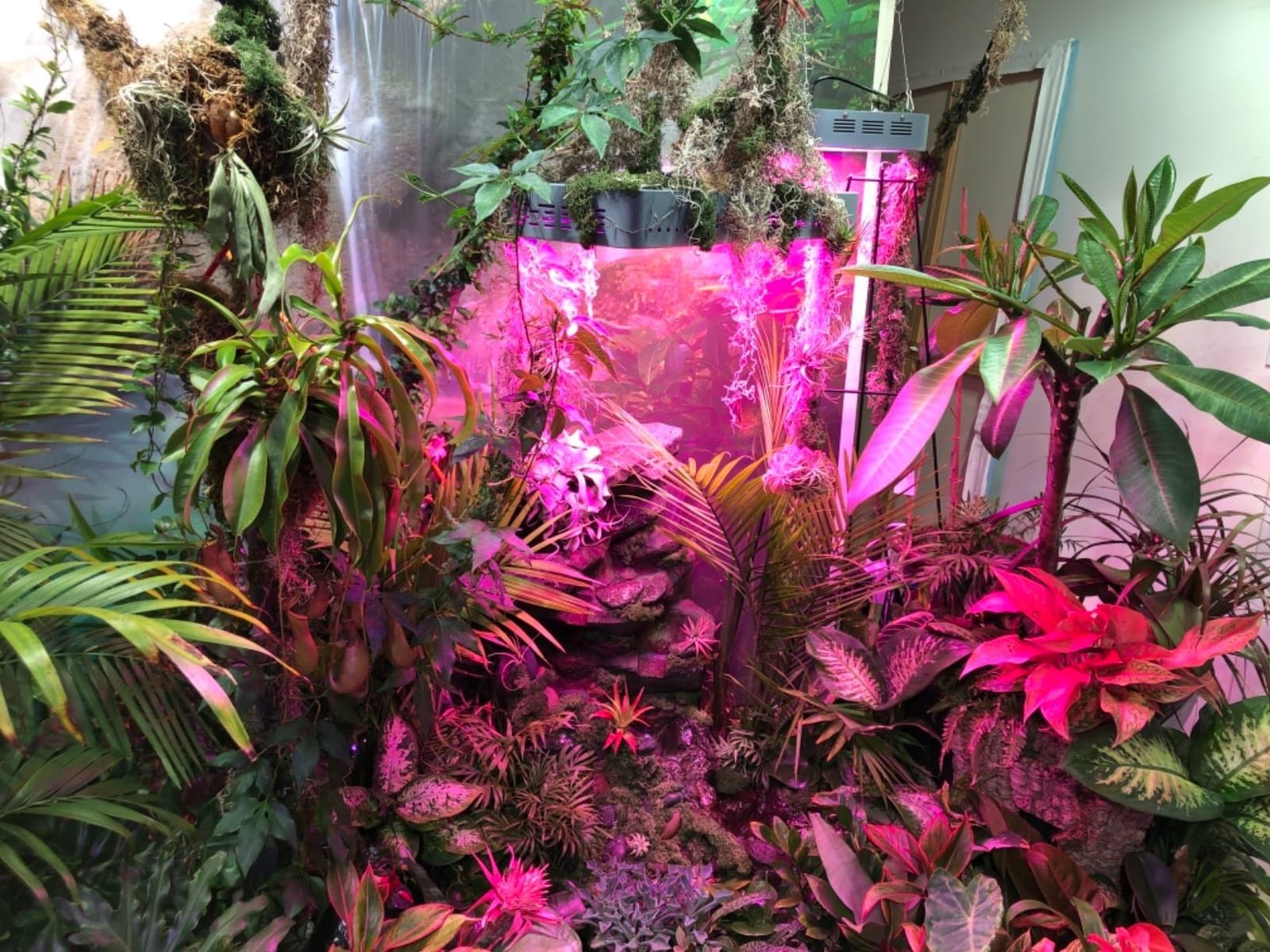
The 3-year warranty is the longest on this list and the reason we would trust this one over cheaper panels for a multi-season grow. Defective units do occur, but the warranty covers the replacement, which is exactly the risk you want covered at this price.
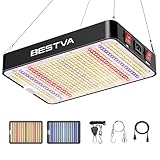
12. BESTVA DC1000 – the cool-running small tent panel
BESTVA DC1000 Grow Light for Indoor Plants, Full Spectrum LED Plant Light
640 LEDs at 100W
2x2 ft coverage up to 3x2 ft
Multi-fan cooling
3 year service
Pros
- 640 LEDs drawing 100W for the size
- Quiet multi-fan cooling holds 50-60F
- Both VEG and BLOOM modes can run together
- Adjustable hanging kit and removable cord included
- 3-year service with a 90-day return
Cons
- 1000W label is LED wattage sum not real draw
- Small 2x2 coverage needs supplementing
- Can bleach plants placed too close
- Some units arrive with broken glass
640 diodes at 100W is a higher diode count than anything else on this list, and the result is output that reviewers describe as noticeably brighter per watt than the budget alternatives. Users report strong yields and good light output for small tents and vegetable starts.
The cooling is what separates it from the KINGPLUS. Multiple quiet high-speed fans and aluminum radiators hold the unit around 50 to 60F, which directly reduces leaf burn at the canopy edge, and the reported fix for most beginner problems is simply positioning it 6 to 12 inches above the plants.
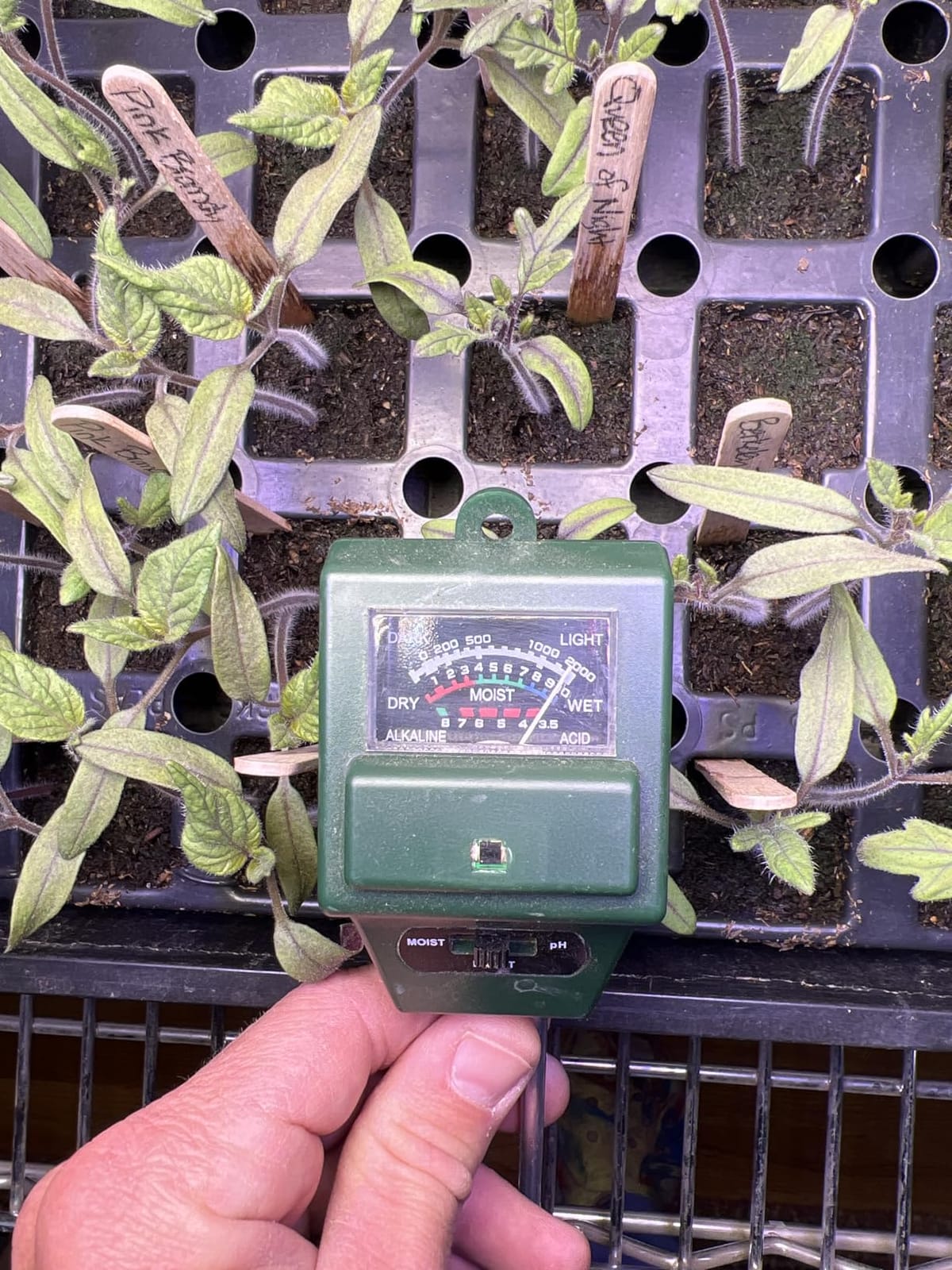
Being honest about the label matters here. The 1000W figure is a sum of the individual LED wattages, not real power draw, so the fixture behaves like a roughly 200W unit. Judge it on the 100W draw and the 2×2 foot coverage instead.
Is it quiet enough for a bedroom or closet?
Yes. The multi-fan cooling is described as quiet in owner reviews, and the fanless alternative in this roundup is the VIPARSPECTRA. If noise is your deciding factor, this is the option that runs cooler and quieter at the cost of a slightly larger body.
How much space does it actually cover?
A 2×2 foot area, up to 3×2 feet with careful placement. That is a genuine limit and one of the most common reasons buyers are disappointed. Owners solving it report supplementing the corners with a small strip, which is a cheaper fix than replacing the whole fixture.
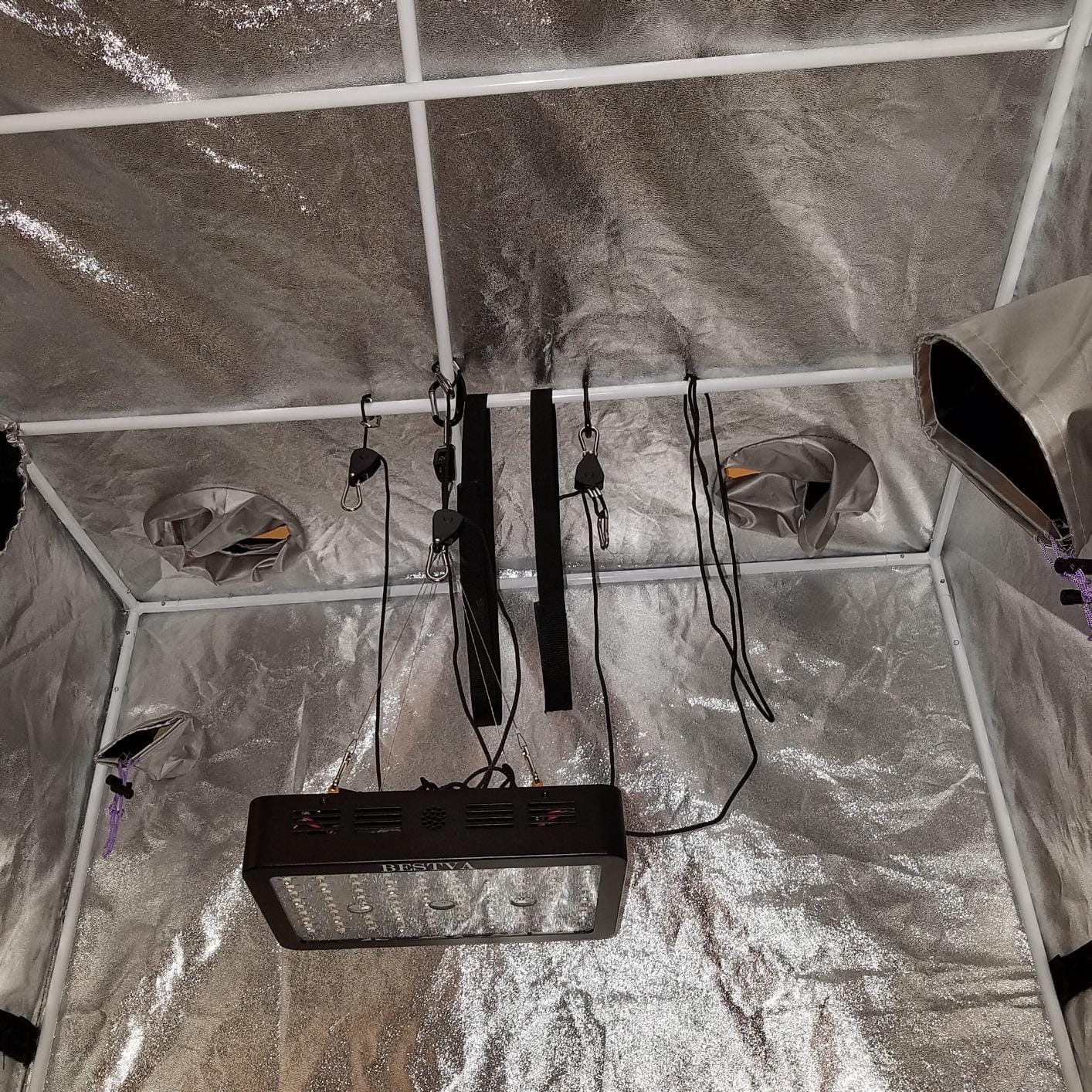
The support terms are strong for this price: 3-year service, a 90-day free return, and owners report fast replacement of a failed unit. Some boxes do arrive with broken glass or awkward hanging points, so inspect it before you hang anything above a plant.
How Far to Hang a Grow Light at Each Growth Stage
Start seedlings close, roughly 6 to 12 inches above the tray, and raise the light as the plants grow. The SANSI figure of 6 inches is the reference point we use for very small output, and the most common fix for a bleaching complaint in this category is to move the light higher rather than dim it.
During vegetative growth, most of the panel fixtures in this roundup work best somewhere between 8 and 18 inches above the canopy, and the Barrina strips want 2 to 4 inches under the shelf because they spread light along their length rather than down. Growers in the r/microgrowery community repeatedly name the Mars Hydro TS600 as a solid budget reference point, and the same 12 to 20 inch band applies to fixtures of this class.
For flowering, push hanging height up rather than pulling the light down, and let the fixture’s stated coverage area do the work. The KINGPLUS owners are the clearest on this: it will bleach leaves placed too near, and the fix is distance.
Buying Guide: What to Check Before You Buy
Check real draw, not the number on the box. Two of the twelve fixtures here are labelled in the thousands of watts and draw around 100W. Use the electrical rating, and treat a HID equivalent claim as a comparison rather than a promise.
Check whether the mount fits your space before the light. Clip lamps need an edge or a pot rim, stake lights need soil, and the Barrina strips need shelf clearance for the linking cords. A light you cannot position correctly will underperform no matter what the spec sheet claims.
Check for a real dimmer or a brightness control. Growers treat dimming as a quality signal at this price, and it is the most useful feature on this list. The VIPARSPECTRA’s four levels and the LEOTER’s ten levels are the two best examples, and both let you reduce output during early growth instead of moving the fixture.
Check the timer behavior, not just that a timer exists. The GooingTop and LORDEM run on a 24-hour cycle, the LEOTER’s memory resets after a power loss, and the GHodec will not resume its schedule after an unplug. Any of those will change how you set your system up.
Check the warranty and the safety listing. In this category you will see 12-month, 1-year, 2-year, and 3-year terms on comparable fixtures. The SANSI is ETL listed with a 2-year commitment, and the KINGPLUS and BESTVA both carry 3 years, which is the coverage you want on anything you will run for multiple cycles.
Check coverage against your actual footprint. Strip lights win on wide shelves, panels win on a single tent, and clip lamps win on scattered pots. Nothing in this list covers a large tent, and no bar-style fixture exists at this budget.
What a 100 Dollar Budget Does Not Buy
You do not get a bar-style light. This is a real gap rather than an oversight in this roundup, and growers treat it as a known fact. The next real step up in fixture design is well beyond this ceiling, so plan on a panel or a set of strips instead.
You do not get commercial yields. Growers who ran blurple fixtures in this price range report landing somewhere around 3.5 to 4 ounces per plant with total lighting costs in the low hundreds, which is hobby scale, not production scale. Set your expectation there.
You do not get a great used market. Dimmability is rare below this ceiling, so a secondhand fixture with no controls is a harder upgrade than it looks. If you buy used, check for yellowed lenses, dim or uneven output across the panel, and a cord that has been kinked, and confirm the warranty status before you commit.
You do get very low running costs. The 10W fixtures on this list are a few dollars a month at a 12-hour cycle, and even the 100W panels are cheaper to run than the HID systems they are marketed as replacing. Over a full grow that difference adds up to a meaningful part of the purchase price.
Frequently Asked Questions
What is the best grow light for the money?
The best grow light for the money at this budget is a clip-on or strip fixture for houseplants, and a hanging panel for a small tent. The GooingTop clip lamp is the most versatile all-rounder we tested, the Barrina T5 8-pack covers a whole shelf most evenly, and the VIPARSPECTRA P700 is the only fixture here with a real four-level dimmer and a published 11000 lumen output.
Do cheap grow lights actually work?
Yes, for the jobs they are built for. Lights in this price range reliably start seeds, grow herbs and leafy houseplants, light succulents, and run a 2×2 tent through vegetative growth and into a first flower on a single plant. What they do not do is replace a bar fixture or deliver hobby-scale yields, and the marketing wattage on the box is usually several times the real draw.
What is the best priced grow light for indoor plants?
The Briignite A19 bulb is the cheapest upgrade if you already own a table lamp, since it drops into any standard E26 socket and gives 1000 lumens from 11W. For a dedicated fixture, the SANSI clip-on at 5W is the most natural-looking light for a living space, and the Barrina T5 8-pack is the most efficient way to cover a whole shelf evenly.
What is the cheapest price for grow lights?
At the very bottom of this range you are buying single-plant fixtures that sit in the soil or clamp to one pot, and they are genuinely useful for succulents, seedlings, and propagation. Below that point, savings come mostly from cutting the diode count, and output drops fast. If you can reach the middle of the budget, you get fixtures with real timers and multi-head positioning instead.
What are the disadvantages of LED grow lights?
The main disadvantages at this budget are limited dimming, uneven light spread on cheap panels, and heat. Blurple and multi-head desk lamps also look conspicuous in a living space, and built-in timers behave unpredictably: some run on a 24-hour cycle, some reset after a power loss, and some will not resume after an unplug. Coverage is also capped, so one sub-100 dollar light will not fill a large tent.
What are some common problems with LED grow lights?
The most common problems are plants bleaching or browning from a light hung too close, leggy growth from light that is too weak or too far away, and timer confusion. Fixture-specific issues include cords and wiring failing after a year or two, flickering as units age, and a memory timer that resets whenever power is lost. Expecting more output from a wattage number on the box is the most common source of disappointment overall.
The Verdict
For the best grow lights under 100 dollars, start with what your setup actually is. A shelf or windowsill of houseplants and herbs is best served by the GooingTop clip lamp, and a wide shelf is best served by the Barrina T5 set. A single 2×2 tent is best served by the VIPARSPECTRA P700, since dimming and honest output figures matter more than anything else in that room.
Read the real draw rather than the number on the box, hang the light higher than you think, and give it a timer from day one. Those three habits account for most of the difference between a plant that thrives and a plant that stretches.
We keep testing new fixtures as they land through 2026, and the honest limit of this budget has not changed much. Check the current details on each pick before you buy, and pick the mount that fits your space first.