

Ask ten apartment residents what to buy and you get ten different grills, most of which they were never allowed to light in the first place. The honest answer to what is the best grill for an apartment balcony is not a single product but a filtered one: a grill you can legally cook on, small enough to clear the railing, light enough to carry up two flights of stairs, and gentle enough on smoke that the neighbours never file a complaint. That filter does most of the work before any brand name enters the conversation.
This guide ranks 10 of the best portable grills for apartment balconies available now, grouped the way the rules actually group them. First come the fully electric models, which is where most multi-family buildings point you. Then the propane tabletops, which work well and are frequently restricted. Finally the small charcoal units, which deliver the best flavour and are the most commonly prohibited. Each pick carries its real cooking area in square inches, its weight, its power draw or burner output, and an honest note on who it will frustrate.
I spent several weeks reading owner reviews on the ten models below and cross-checking every specification against the manufacturer listing, and updated the whole list for 2026. The single most useful thing I found is that the grill you want and the grill you are permitted to use are rarely the same thing. So we start with the rule, not the shopping.
Table of Contents
Can you even grill on an apartment balcony? Check the rule before you buy
The short version: most multi-family buildings in the United States prohibit charcoal and gas grills on an elevated balcony, and a decent number also prohibit grills on a patio. Electric cooking appliances are the commonly permitted exception, though your specific building may still restrict them. The governing language in adopted fire codes such as the International Fire Code, section 308.1.4, and the NFPA 1 Fire Code treats a balcony as part of the building, which means the standard ten-foot clearance from structures that applies in a yard does not exist for you.
That clearance rule is the detail most roundups skip. A grill you would be legally fine with at the bottom of a parking lot fails it entirely if you set it on a fifth-floor balcony, because the balcony itself counts as part of the structure. A few buildings carve out narrow exceptions, and one complex described in a long-running bbq-brethren thread explicitly allows a small camping grill with a 1-lb propane tank on the balcony, which shows written permission is achievable and worth asking for.
Can you have an electric grill on an apartment balcony?
Usually yes, and it is the only tier most residents can buy without a conversation with management. An electric grill has no fuel, no pilot light and no combustion, so it is not an open-flame cooking device under the code language. Some buildings additionally require a listed or certified appliance for anything plugged into a balcony circuit, so check whether the model carries a listing mark before you buy.
The catch is power. A typical apartment living room or kitchen circuit is a 15-amp, 120-volt branch circuit, which comfortably handles a 1200W to 1600W grill. Anything above that competes with a space heater or a hair dryer on the same circuit, which is how you end up resetting a breaker in front of guests.
Can I use a propane grill on my balcony?
Only where the lease, the HOA bylaws and your local code all allow it, and that combination is uncommon on an elevated balcony. Propane burns an open flame, and a canister sitting on a balcony slab puts a fuel container on a surface directly above the unit below you. That is the combination most fire codes and most building managers decline to accept, regardless of grill size.
If you are genuinely permitted, a tabletop propane grill is a fine performer. A 1-lb canister typically runs one to an hour and a half at medium heat, which covers a two-person meal and little more, so plan on refilling mid-cook for anything larger.
Does a grill count as an open flame?
Yes, if it burns gas, charcoal, wood or pellets. The code term is an open-flame cooking device, and hibachi, tabletop charcoal and portable gas grills all fall inside it. There is no size threshold that exempts a small grill, which is the single most persistent myth in apartment grill discussions, and a landlord who says the rule does not apply below a certain size is describing a house rule rather than the code.
Electric contact grills sit outside that definition. A grill that plugs into a wall has no combustion and no flame, which is why every unit in the first half of this list is electric.
What to do if you get a warning
Talk to building management before you argue. Show them the model, ask for the rule in writing, and offer the electric alternative. A resident who replaces a charcoal grill with a listed electric unit usually gets an apology rather than a second notice, because the problem for management is the fire and smoke liability, not you personally.
If you have already been reported, one thread on r/Apartmentliving describes a tenant facing exactly this after a small charcoal grill was used late at night and smoke reached an adjoining unit. The recurring lesson across that discussion was that the reporting was as much about timing and quantity of smoke as about the fuel itself.
Top 3 portable grills for apartment balconies in 2026
If you want a short answer instead of a full read: the George Foreman 15-serving electric grill with its removable stand is the model we would put on the most balconies, the Ninja Sizzle handles searing and griddling better than anything else in the electric category, and the Charbroil Grill2Go X200 is the pick to make when your building has explicitly allowed a propane cylinder.
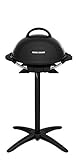
George Foreman 15-Serving Electric Grill
- 1500W fully electric
- Removable stand
- 5 heat settings
- Fat-removing nonstick plate

Ninja Sizzle 14-inch Grill and Griddle
- 500F max temperature
- Interchangeable plates
- Mesh lid cuts smoke
- 1450W

Charbroil Grill2Go X200 Portable Gas Grill
- 200 sq. in. cooking area
- Corrugated plate grate
- Cast-aluminum firebox
- Push-button ignition
All 10 picks at a glance in 2026
The table below lists every model in the guide with its fuel type and the two or three specifications that decide whether it belongs on a balcony. Read the legal column honestly against your own lease before anything else.
| Product | Specifications | Action |
|---|---|---|
| George Foreman 15-Serving Electric Grill |
|
Check Latest Price |
| Ninja Sizzle 14-inch Grill and Griddle |
|
Check Latest Price |
| Charbroil Grill2Go X200 Portable Gas Grill |
|
Check Latest Price |
 Elite Gourmet EMG6505G Indoor Electric Grill Elite Gourmet EMG6505G Indoor Electric Grill |
|
Check Latest Price |
 Cuisinart 2-in-1 Outdoor Electric Grill Cuisinart 2-in-1 Outdoor Electric Grill |
|
Check Latest Price |
 Techwood 1600W Electric Grill with Stand Techwood 1600W Electric Grill with Stand |
|
Check Latest Price |
 Royal Gourmet GT1001 Stainless Grill Royal Gourmet GT1001 Stainless Grill |
|
Check Latest Price |
 Charbroil Portable Convective Propane Grill Charbroil Portable Convective Propane Grill |
|
Check Latest Price |
 Cuisinart 14-inch Tabletop Charcoal Grill Cuisinart 14-inch Tabletop Charcoal Grill |
|
Check Latest Price |
 Gas One 14-inch Portable Charcoal Grill Gas One 14-inch Portable Charcoal Grill |
|
Check Latest Price |
1. George Foreman 15-Serving Electric Grill with Stand – the one that fits the most balconies
George Foreman Indoor/Outdoor Electric Grill with Stand, 15-Serving
1500W
Fully electric
5 heat settings
Removable stand
8.7 lbs
Pros
- Fully electric with no propane or charcoal restrictions
- Removable stand moves it from patio to counter
- Nonstick plate wipes clean with a damp cloth
- Tool-free assembly
- 3-year limited warranty
Cons
- Lid is not hinged so it must be set aside to check food
- Contact-grill format only and not a flat top
- Teflon-style coating needs gentle cleaning
This is the grill I would hand to someone who has never owned a balcony grill before, because it solves the three problems that stop most people. It is fully electric, so it is the tier most buildings permit. The stand detaches, so it works on a folding balcony table in the day and a kitchen counter at night. And at 8.7 pounds it is one of the few models in this guide you can actually carry up a stairwell without a second trip.
Owners consistently report that it cooks evenly, holds heat well and that the nonstick surface wipes clean without a scrubber. The fat-removing slope is a small design touch that genuinely reduces how much rendered fat ends up under the food, which matters more on a balcony than the price tag suggests, because a small grill that drips grease over a railing is a complaint waiting to happen.
The 1500W element takes roughly ten minutes to preheat according to the manufacturer, and five heat settings cover everything from a slow chicken to a hot sear. The oiled metal frame and aluminium construction are light enough to move one-handed while it is hot, which is a real safety point on a shared balcony deck.
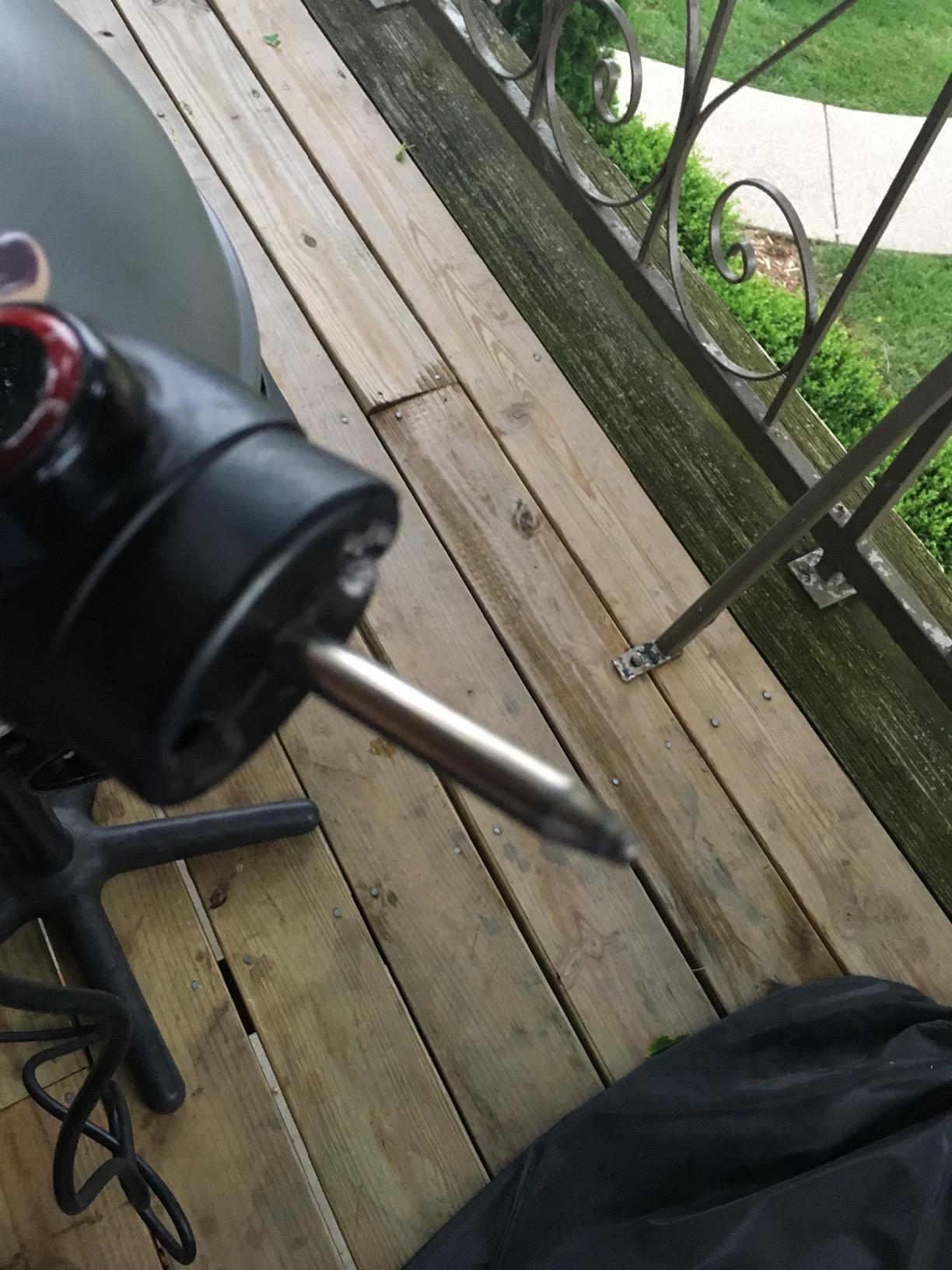
There are trade-offs and they are consistent across reviews. The lid is not hinged, so lifting it means picking it up and setting it down somewhere, and on a crowded balcony that is an awkward thing to do with a hot, greasy hand. The plate is a ridged contact surface, so you are making marks on both sides of the food and you cannot stir-fry or press a smash burger on it. The nonstick coating also needs a soft cloth rather than a wire brush.
What you are getting for the money
A 15-serving contact grill with five heat settings and a stand, which sounds like marketing language until you compare it to the alternatives. The nearest electric competitor with a comparable footprint is roughly half the cooking capacity, and the models with a larger plate tend to be heavier and taller than most balcony tables can take.
The removable stand is the feature that makes it balcony-specific rather than kitchen-specific. Detach it and the grill body is small enough to live in a cabinet, which solves the storage problem better than any cover or wall hook we looked at.
Where it falls short
If you want grill marks that read as charcoal marks, or if you plan to cook for more than four people in one sitting, the plate size becomes the limiting factor rather than the wattage. And if your building bans grills outright rather than only open flames, no electric model helps you and the conversation has to be about cooking methods that are not grills at all.
A small minority of buyers on earlier production reported overheating plug components or coating flaking, with manufacturer replacements provided. It is worth keeping the receipt for the length of the three-year limited warranty.
2. Ninja Sizzle 14-inch Indoor Grill and Griddle – the electric one that actually sears
Ninja® Sizzle™ Indoor Grill & Griddle, 14”, 500°F, Grey/Silver, GR101
1450W
Reaches 500F
Swappable grill and griddle plates
7.8 lbs
Pros
- Highest heat ceiling of the electric models at 500F
- Interchangeable grill and griddle plates
- Perforated mesh lid noticeably reduces smoke
- Edge-to-edge heating with no hot spots
- Dishwasher-safe plates and lid
Cons
- Bulky deep-well body needs counter depth
- Needs 10-15 minutes of preheat
- Fully electric so no charcoal smoke flavor
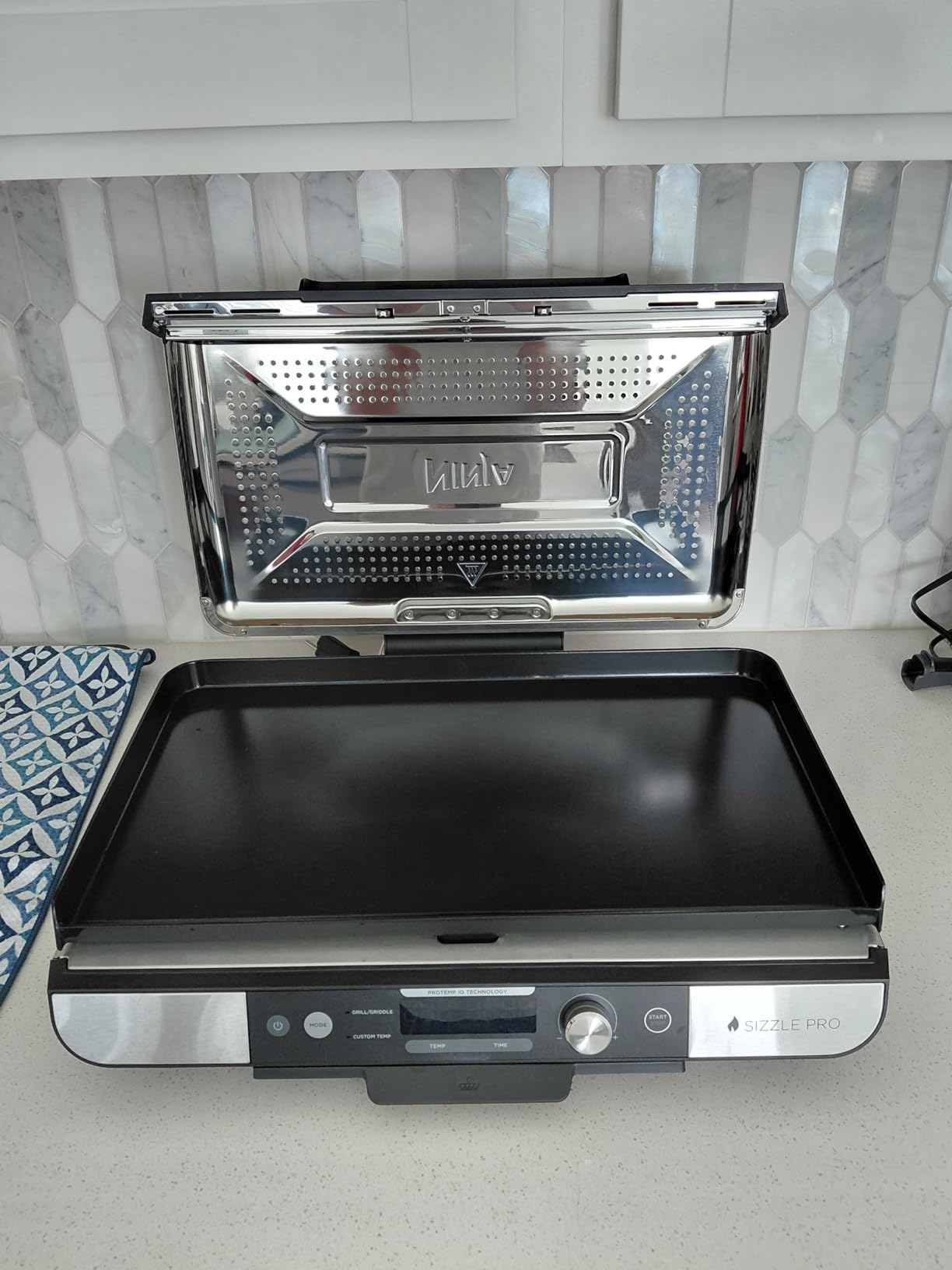
The complaint we heard most often about cheap electric grills is that they warm food rather than cook it. The Ninja Sizzle answers that with a 500-degree maximum and a plate system that swaps between a ridged grill plate and a flat griddle top, which means the same appliance handles a seared steak and a batch of smashed burgers without two separate devices fighting for counter space.
The perforated mesh lid is the underrated part. It vents moisture and splatter rather than trapping it, which is why owners describe this as an indoor unit that survives a balcony. Smoke output is low enough that the difference between cooking on a balcony and cooking in a small kitchen is much smaller here than with any other electric model in the list.

Edge-to-edge heating means no cold ring around the perimeter, so you do not have to rotate burgers to keep them even. At 1450W it sits comfortably inside a standard 15-amp apartment circuit, though owners do note that a lightly loaded outdoor circuit can still trip if it shares a run with other equipment.
The specification to plan around is bulk. The deep-well body is 14.72 inches deep by 15.16 inches wide and 6.1 inches tall, which is countertop appliance territory rather than tabletop grill territory. If your balcony has a narrow folding table, measure the top first.
Why it beats the cheaper electric options
Two numbers do the work: 500F maximum and 1450W. Most competing electric contact grills top out between 400F and 450F, and that gap is the difference between a browned exterior and a genuine sear. The dishwasher-safe removable plates and lid are the second advantage, because grease that goes into a dishwasher does not go into your balcony sink.
It is also the only model here that handles a no-smoke cooking method properly. If your building has banned grills rather than flames, a griddle plate is a defensible argument to make to management.
Where it falls short
Buyers consistently flag the preheat time of 10 to 15 minutes, which is a real cost on a weeknight when you get home at seven. The bulk is the other recurring theme, and it means this is a unit you own rather than a unit you store in a hook.
No electric grill of this size produces charcoal smoke flavour, and the griddle plate is for smash burgers and fried eggs rather than slow-roasted vegetables. If flavour is the point of grilling for you, this is the wrong category regardless of the heat number.
3. Charbroil Grill2Go X200 Portable Gas Grill – the best small propane grill for cooking for four
Charbroil Grill2Go X200 Portable Gas Grill, Dark Grey – 25409200
200 sq. in.
Corrugated infrared grate
Cast-aluminum firebox
24 lbs
Pros
- Corrugated plate grate so small foods never fall through
- Excellent heat retention for searing
- Cast-aluminum firebox resists rust
- Arrives fully assembled
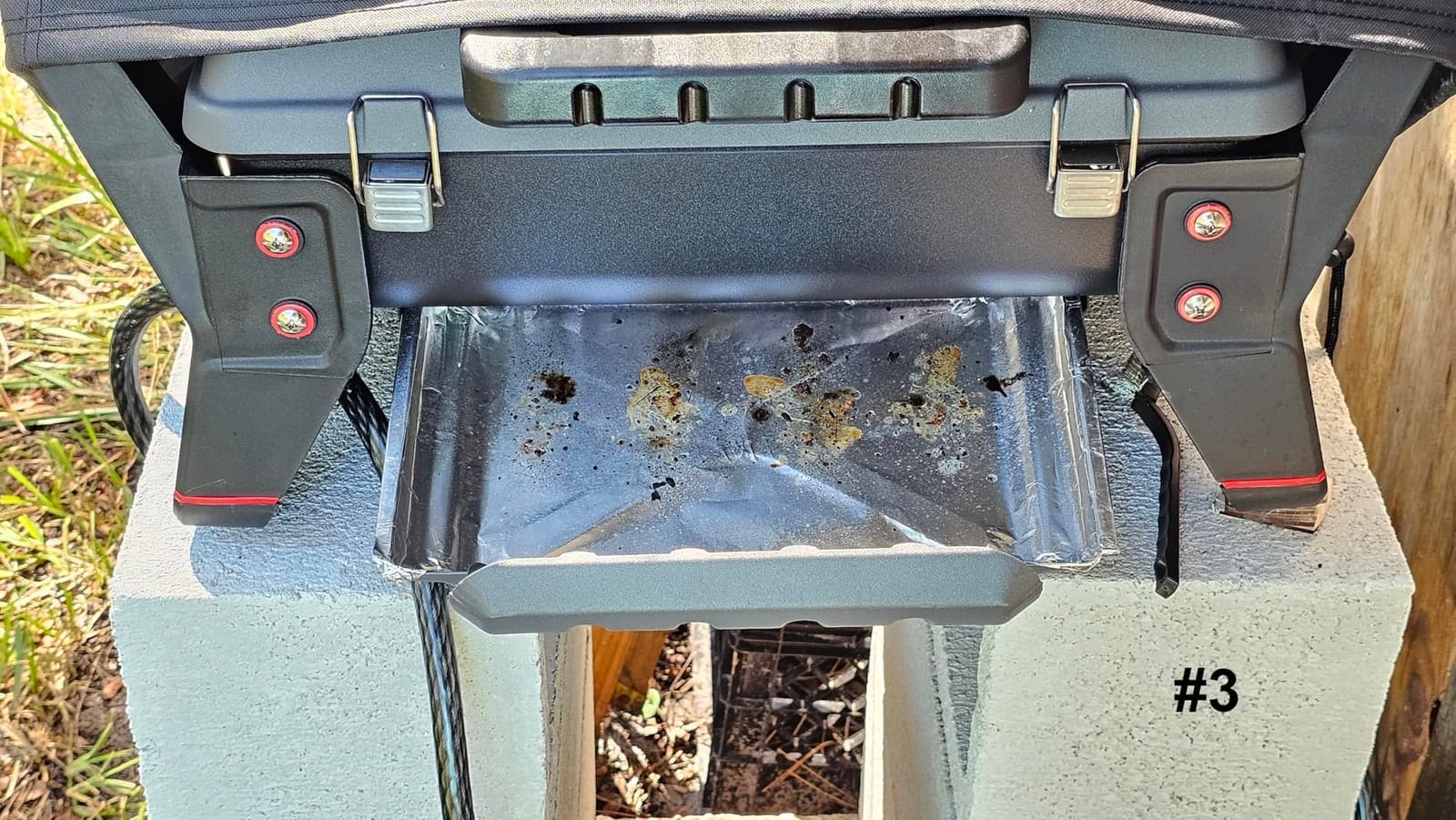
- Front-access drip pan keeps the plate clean
Cons
- Runs hot and will scorch food if unattended
- Included regulator is often criticised
- Heaviest model here at 24 lbs
Read that first line again: check your lease before you consider this. A propane grill is an open-flame cooking device and an elevated balcony is part of the structure under most adopted fire codes, so this pick is for residents who have written permission or live in a ground-level patio or courtyard.
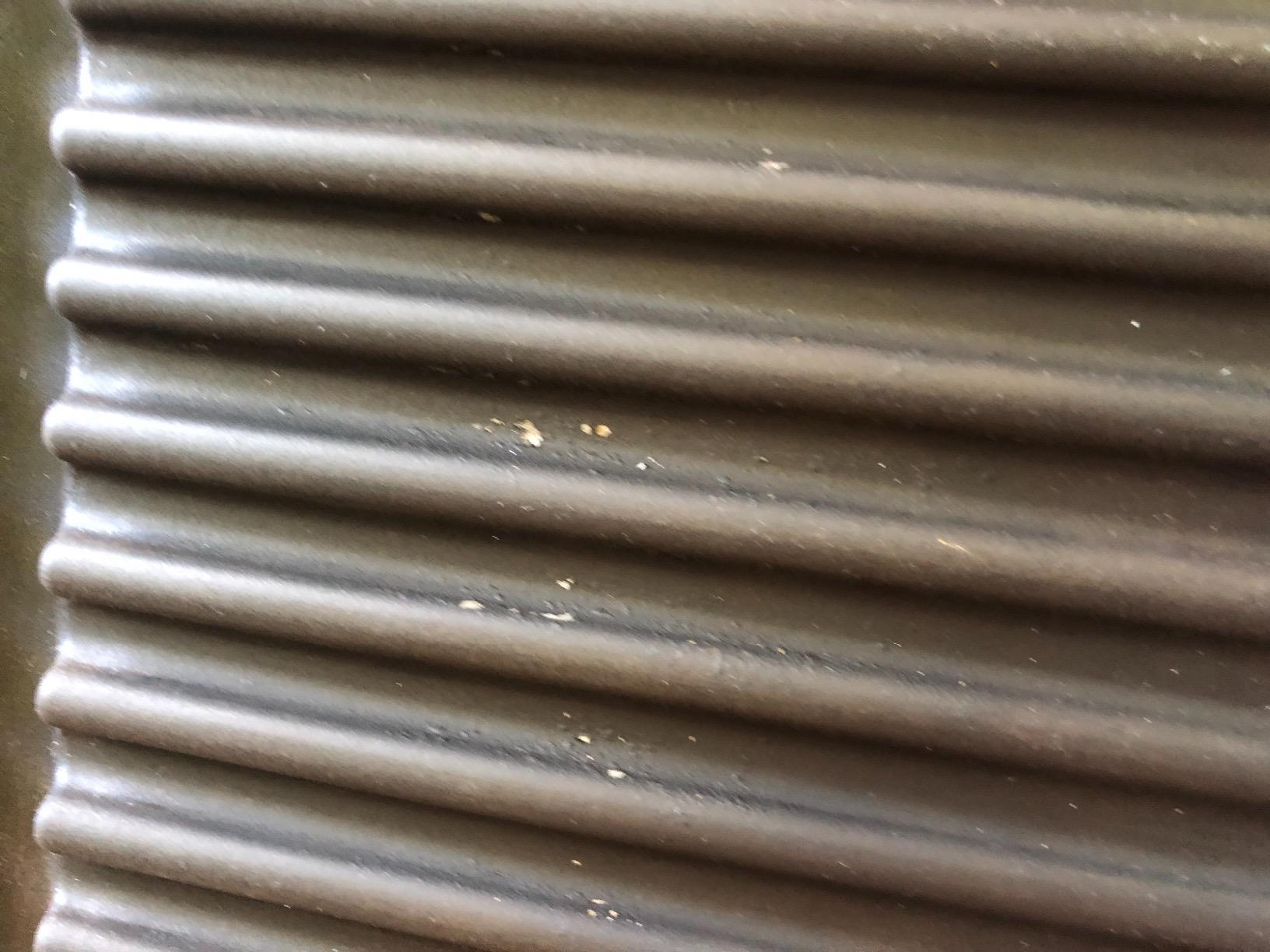
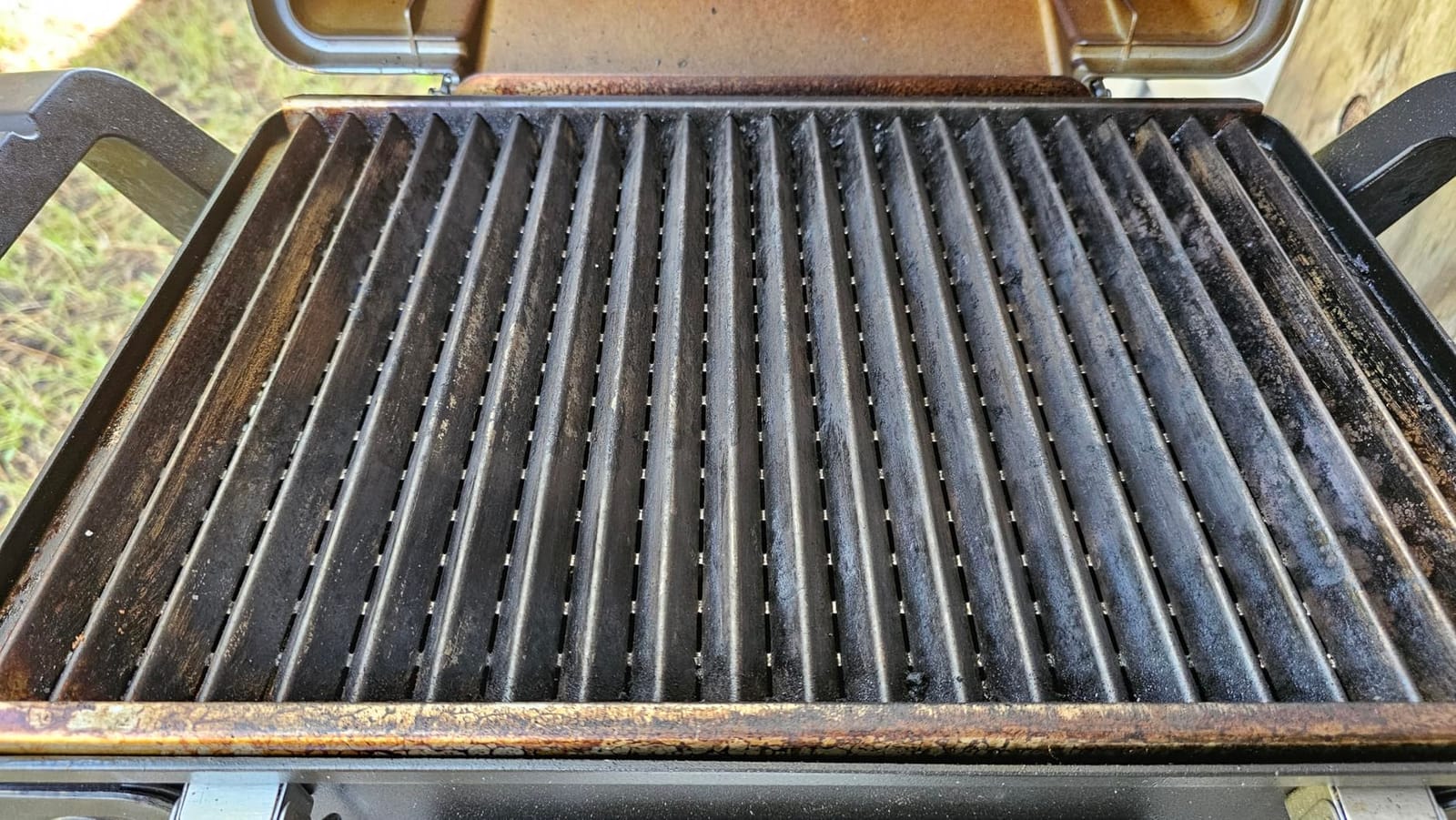
Assuming you have that permission, this is the most capable small gas grill we looked at. The 200-square-inch cooking area handles up to eight burgers or a proper meal for four, which is the point at which most compact propane grills start to feel cramped. The corrugated infrared plate grate has no gaps, so cherry tomatoes, onion slices and small shrimp do not disappear into the burners.
Push-button ignition is more reliable than a piezo lighter in wind, which matters on an exposed balcony where a wind-shielded lighter is hard to hold. The cast-aluminium firebox and lid will not develop the surface rust that makes a painted steel grill look abandoned after one season outdoors, and a five-year warranty on the burner and lid is the longest in this group.
The honest drawback is weight. At 24 pounds this is not a grill you carry up two flights with a canister in your other hand, and it is the heaviest model in the guide. The second is heat: it runs hotter than most buyers expect, and experienced grillers describe the learning curve as watching it rather than walking away from it.
When a gas grill earns its place
Three situations justify the fuel. You are cooking for four or more, you want a real sear that electric cannot reach, and you have confirmed the rule. On a balcony with three people and a weeknight menu of burgers, an electric contact grill is faster and simpler.
Owners who switch from a cheap tabletopper report the plate grate and heat retention as the noticeable upgrades, and the front-access drip pan is a detail you will appreciate every time you clean up in a small space.
What you need to plan for
Buy a replacement regulator before the first cook. The bundled one is the most common complaint in reviews, and several owners add an adapter to run from a larger cylinder for longer cook times. You also need a genuinely outdoor-rated surface, a drip pan beneath the grill, and a full cool-down before you move it back inside.
If your balcony is above another unit, consider how the smell travels. Propane cooking is less smoky than charcoal but the fat still carries, and a front-access pan only helps if you empty it the same evening.
4. Elite Gourmet EMG6505G Indoor Electric Grill – the cheapest way to grill at all
Elite Gourmet EMG6505G Indoor Electric BBQ Grill, Non-Stick, 12″
1200W
12-inch nonstick plate
Up to 450F
Dishwasher-safe parts
Pros
- All parts dishwasher safe for fast cleanup
- Circular element heats fast and evenly
- 12-inch plate fits several burgers or ribs
- Cool-touch handles reduce burn risk
- Compact 650 g footprint
Cons
- No legs or stand so it is countertop only
- Indoor-style appliance that many building rules exclude
- Smaller plate than stand-mounted electric grills
We are including this one with a clear caveat: it is an indoor appliance, and plenty of building rules exclude indoor cooking equipment from balcony use even when they permit listed electric grills. Check before you buy, and treat it as the option for a kitchen, a permitted balcony, or a fire-code-free building where cooking indoors is your only option.
For what it is, it does the basic job unusually well. The circular heating element is the design point that matters here, because it spreads heat across the 12-inch plate evenly instead of running hot in the middle, and 1200W is well inside a normal apartment circuit with room to spare on the same outlet as a kettle.
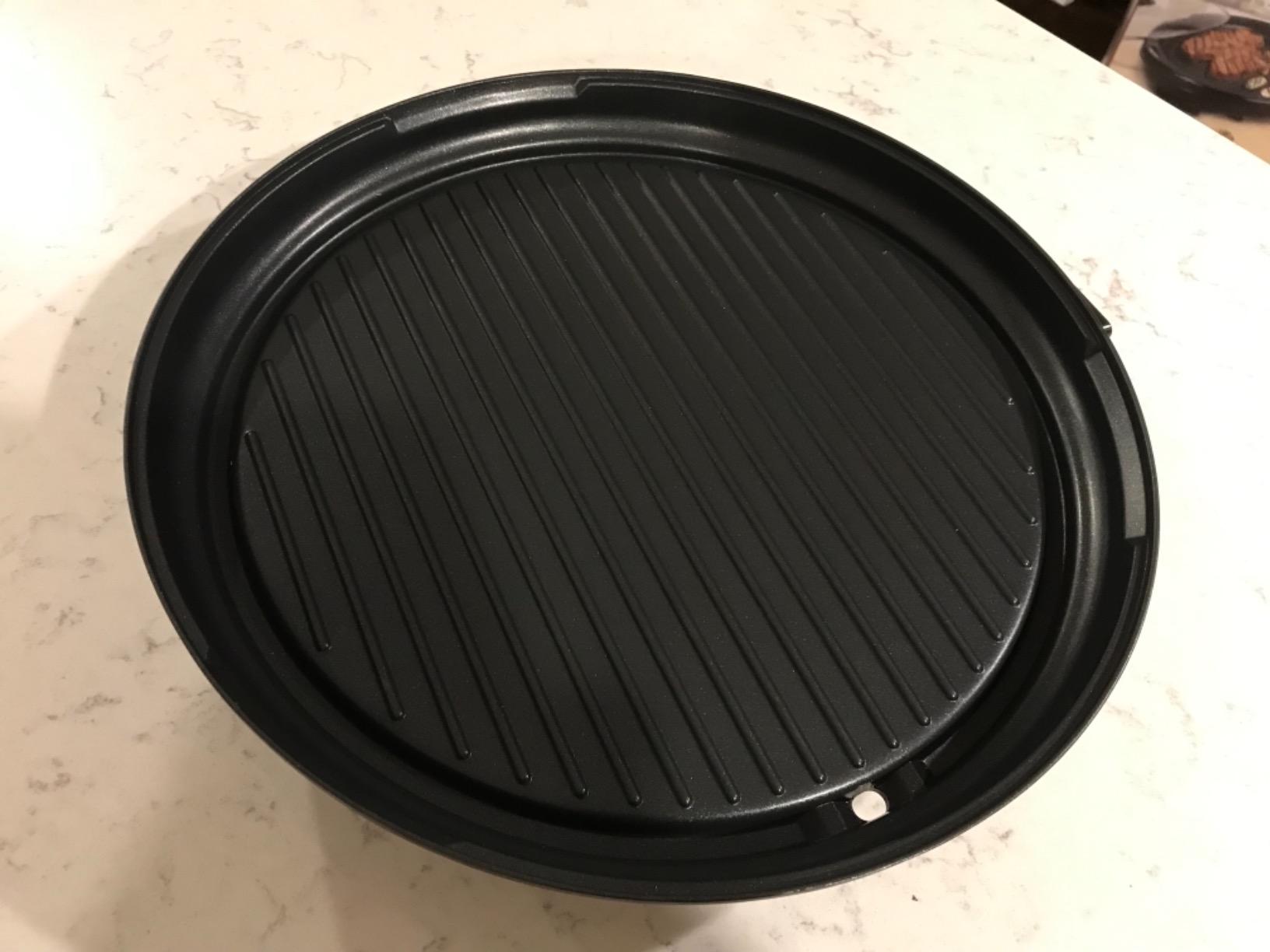
Five settings take the plate up to 450 degrees, which is short of a true sear but more than enough for burgers, ribs, fillets and vegetables. Every part detaches and goes in the dishwasher, and the 650-gram weight means you can carry it to a permitted patio table with one hand while holding a drink in the other.
What you give up is height. There are no legs and no stand, so it cooks flat on a counter or a table, which means you are leaning over it rather than standing at it. The tempered glass lid is a nice touch for catching heat but not for holding a high temperature, so timing matters more on this plate than on a grill with a domed lid.

Why people keep buying it
The review volume here is one of the highest in the guide, and the reason is consistent: nothing else at this level of simplicity breaks down into a dishwasher. Owners mention weeknight burgers, quick cooks on a weeknight and a plate that wipes or rinses clean rather than needing a degreaser.
Cool-touch handles reduce the burn risk that matters when you are cooking on a low table with a railing instead of a proper work surface. For a two-person household that wants grilled food twice a week and does not want an appliance taking a drawer, that is a rational setup.
Where it falls short
There is no indirect zone, so everything cooks over direct heat, and the flat plate means no grill marks unless the ridges are built into it. The one-year warranty is the shortest in the guide, and the review data shows a small number of buyers replacing units after the thermostat or element underperformed.
The more important limitation is regulatory rather than practical. If your building bans indoor appliances outdoors, this model is a kitchen grill, and the legality section above is the one to read before assuming otherwise.
5. Cuisinart 2-in-1 Outdoor Electric Grill – the most cooking area without fuel
Cuisinart Electric Grill, Indoor/Outdoor, Compact, Portable, Nonstick
240 sq. in.
1500W
5 settings to 550F
20 lbs
Pros
- Largest electric cooking surface in the lineup
- Removable stand for outdoor or tabletop use
- Five settings with a probe reaching 550F
- Central grease channel feeds a collection cup
- Tool-free assembly in under 10 minutes
Cons
- 20 lbs and a 39-inch standing height
- Large stand footprint for a small balcony
- Needs a grounded outdoor outlet
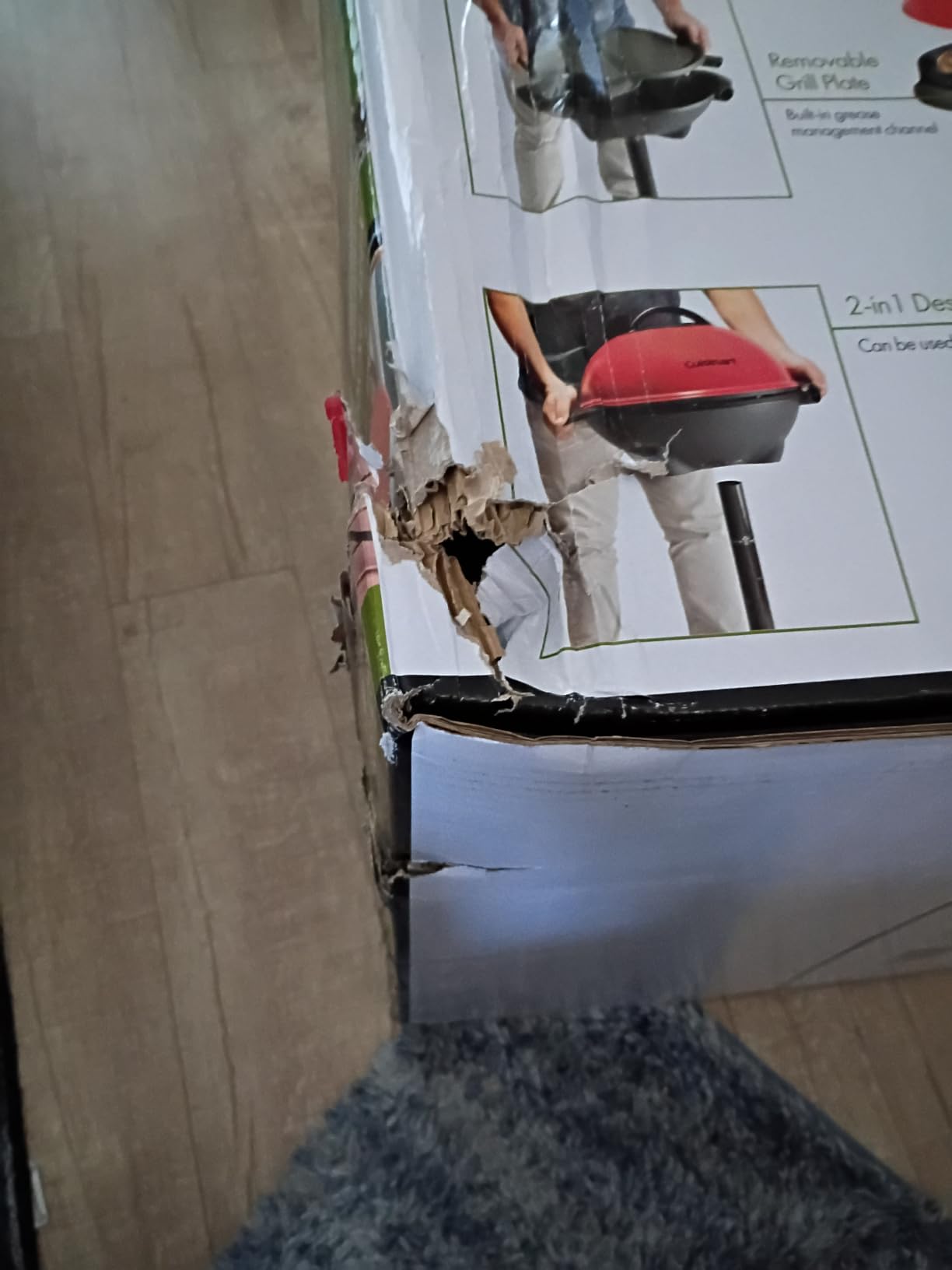
This is the answer when you want the cooking area of a real grill without a fuel canister anywhere near the building. At 240 square inches of nonstick surface it is the largest electric cooking area in this guide, and the five heat settings run from 350 to 550 degrees with a temperature probe that sits in the food, which is closer to how a gas grill behaves than most plug-in models get.
The 2-in-1 design is genuinely useful in an apartment. On the stand it is a balcony grill; off the stand it is a large countertop grill, so the appliance earns its counter space in winter even if you only use the balcony half of the year.
The central grease channel that feeds a collection cup is the balcony-specific detail. Instead of fat running off the plate into a pan under your feet, it drains to a cup you remove and empty, which is a meaningful difference when your grill sits six inches from a railing and forty feet above a neighbour’s window.
A six-foot cord gives you placement flexibility that the short leads on most competitors do not, and a three-year limited warranty is joint best in this group.
Where the extra square inches earn their keep
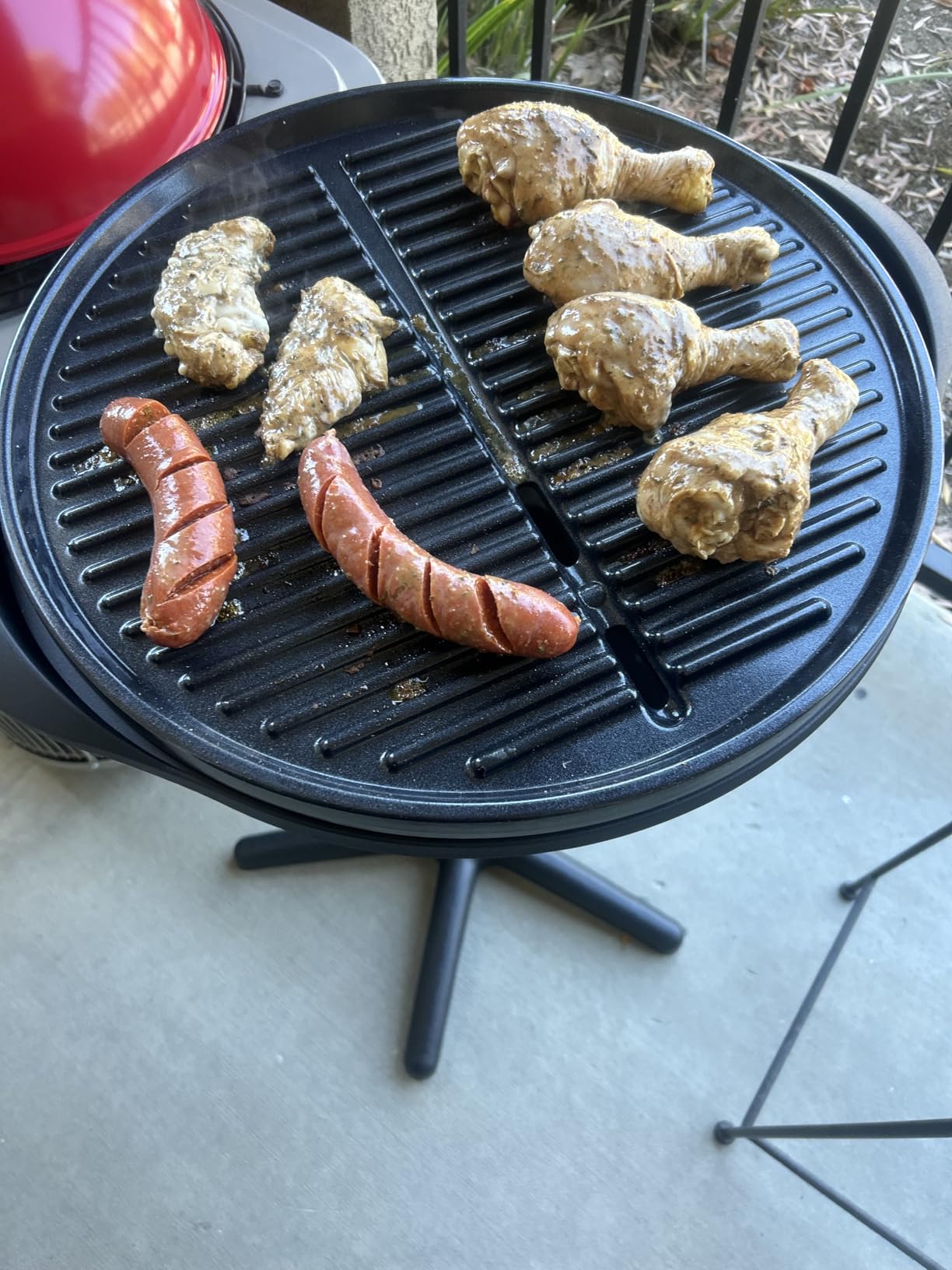
Cooking area is the number that decides whether two people can cook a real meal. At 240 square inches you can run a main and a side at the same time on one level, which is exactly the complaint owners of 100-square-inch grills raise: everything has to go on sequentially or the food sits and dries.
Because it is electric, it is in the tier most buildings permit, and 1500W means a grounded outdoor outlet rather than a heavy-duty circuit.
Where it falls short
Size is the deal breaker on many balconies. At 20 pounds and a 39-inch standing height, this is more patio than apartment balcony, and several owners say so directly in reviews. If your ceiling clearance above the table is limited or your balcony is genuinely tiny, the footprint will rule it out before the cooking area helps.
It is also a contact surface, not a flat top, so there is no griddle mode and no charcoal smoke flavour. Buy it for volume and convenience, not for flavour.
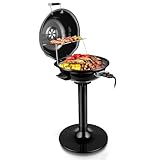
6. Techwood 1600W Electric Grill with Removable Stand – cast iron grates in a small footprint
Electric Grill, Techwood Indoor/Outdoor Electric BBQ Grill, 1600W Portable Removable Stand Grill with Adjustable Heat & Drip Tray, Double Layer Design for Party, Patio & Backyard (Black)
1600W
240 sq. in.
Porcelain-coated cast iron
Double-layer rack
Pros
- Compact 16-inch-wide footprint for small balconies
- Fully electric with no flare-ups
- Cast iron grates give a flavour owners compare to charcoal
- Two-rack setup cooks a main and a side together
- 1600W heats faster than lower-wattage rivals
Cons
- Upper rack sits very close to the lower rack
- Tedious disassembly for cleaning
- Some buyers report element failure within months
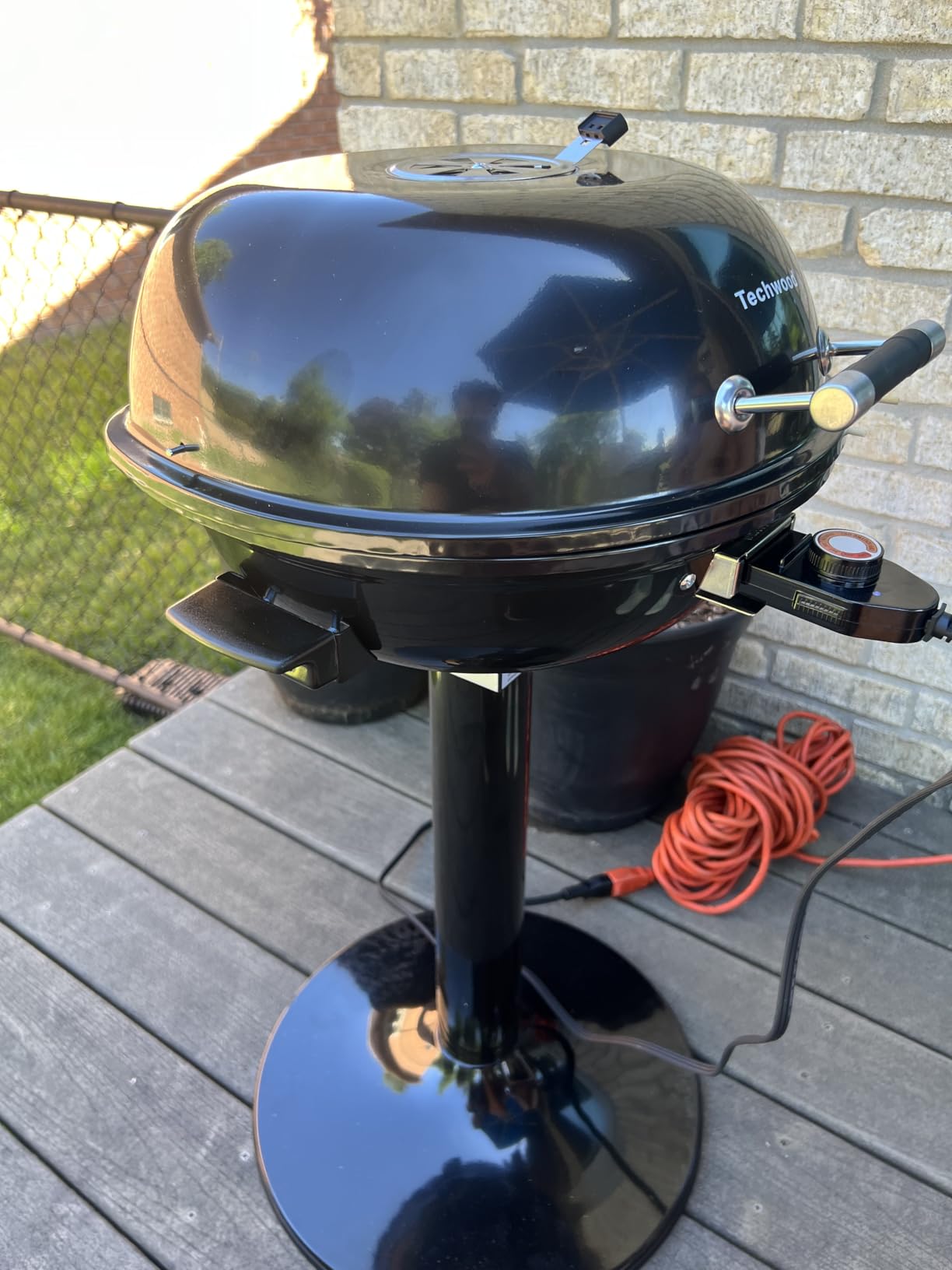
The reason to look at this one over a cheaper electric grill is the grate material. Porcelain-coated cast iron holds and radiates heat the way thin pressed steel never does, and owners of this model describe the cooking result as closer to charcoal than any other plug-in grill in the guide manages.
It is also genuinely compact at 16 inches wide and 18 inches tall, which is narrower than the Cuisinart 2-in-1 and much narrower than most stand-mounted grills. That footprint matters when a balcony table is the only flat surface you have and you still need elbow room on either side.
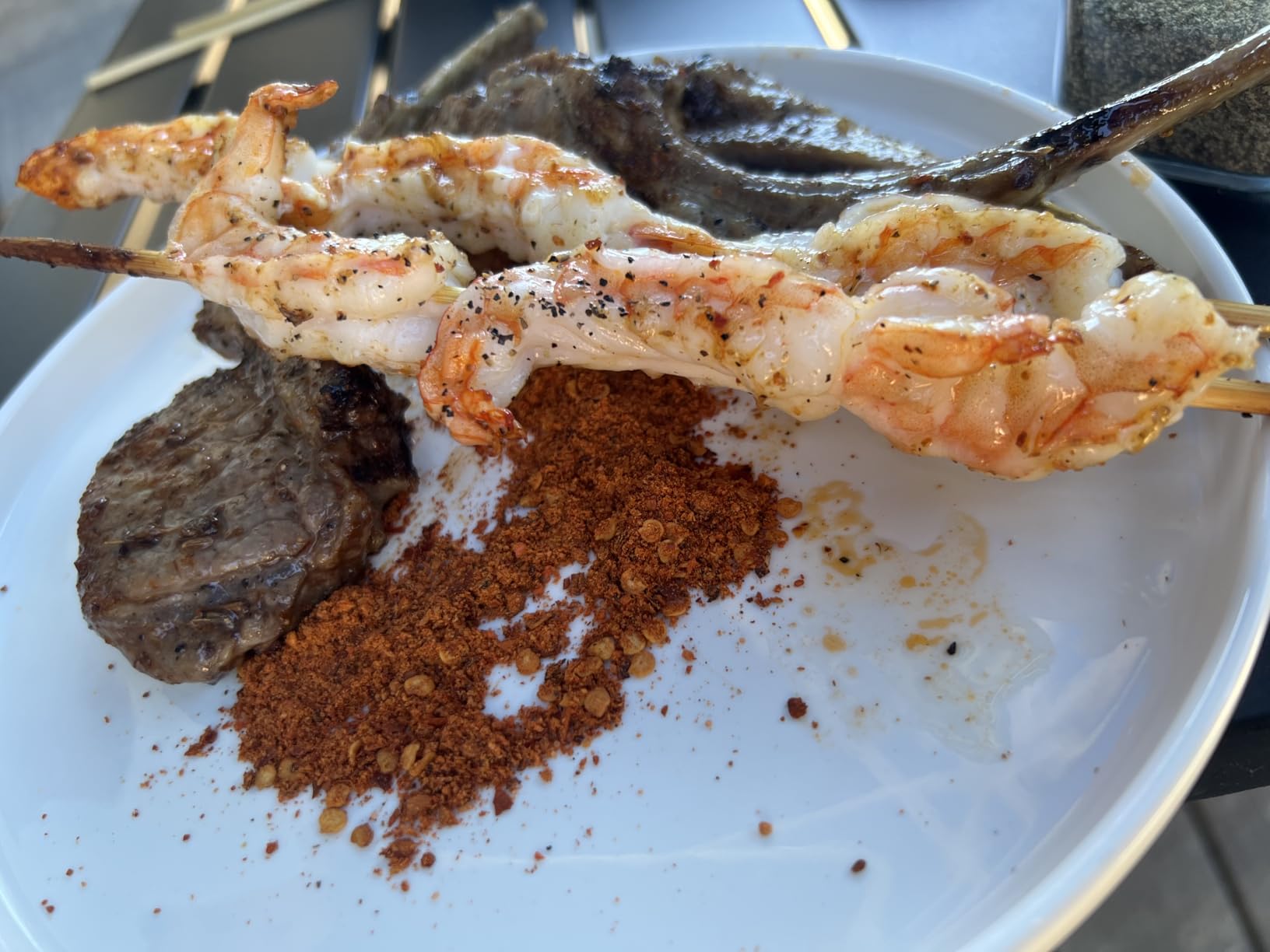
At 1600W it heats faster than the 1200W and 1500W competitors, and the double-layer rack design lets you cook a main on the lower rack and a side above it, provided you leave the lid open for the upper rack. The interlocking hood and bowl with adjustable temperature control and a probe is a more considered design than the price suggests.
The venting system is a real feature on a balcony because it dissipates heat upward instead of trapping it under the hood, and a vented hood means the underside of the lid stays cooler to touch when you lift it.
Where the cast iron changes the cooking
Cast iron has thermal mass. That is the technical phrase for why a cast iron grate browns a steak in a way that thin steel cannot, and why owners of this grill mention browning and flavour before they mention anything else. At 240 square inches it also has more cooking surface than most electric units in the guide.
The fully electric design means no propane, no charcoal and no flare-ups, which is the point on a balcony where a grease fire is a liability you cannot control.
Where it falls short
The double-layer design has a cost. The upper rack sits very close to the lower rack when the hood closes, so upper-rack cooking needs the lid open and needs watching. Cleaning requires disassembly, and owners describe that as tedious enough that it changes how often they cook on it.
The lowest reviews report heating element failure within months, and the review data is the thinnest of the electric group. It is a 12-month promise, the shortest warranty here. Buy it for the grates and the compact width, not for the support network.
7. Royal Gourmet GT1001 Stainless Steel Portable Grill – the most surface area on fold-down legs
Royal Gourmet GT1001 Stainless Steel Portable Grill with Folding Legs
285 sq. in. total
10000 BTU burner
Folding legs
17.8 lbs
Pros
- Largest cooking area among the portable gas grills here
- All-stainless construction resists rust
- Folding legs and a latching lid make it genuinely portable
- Lid-mounted temperature gauge
- Large removable stainless grease tray
Cons
- 17.8 lbs is heavy for a portable grill
- Warming rack reduces direct grilling space
- 10000 BTU burner has little searing headroom
Same caveat as the other propane models: this one needs permission. Assuming you have it, the GT1001 solves a specific problem that the other gas grills here create, which is that a grill left on a balcony collecting rain and salt air will start showing rust on a painted or powder-coated frame within a season or two.
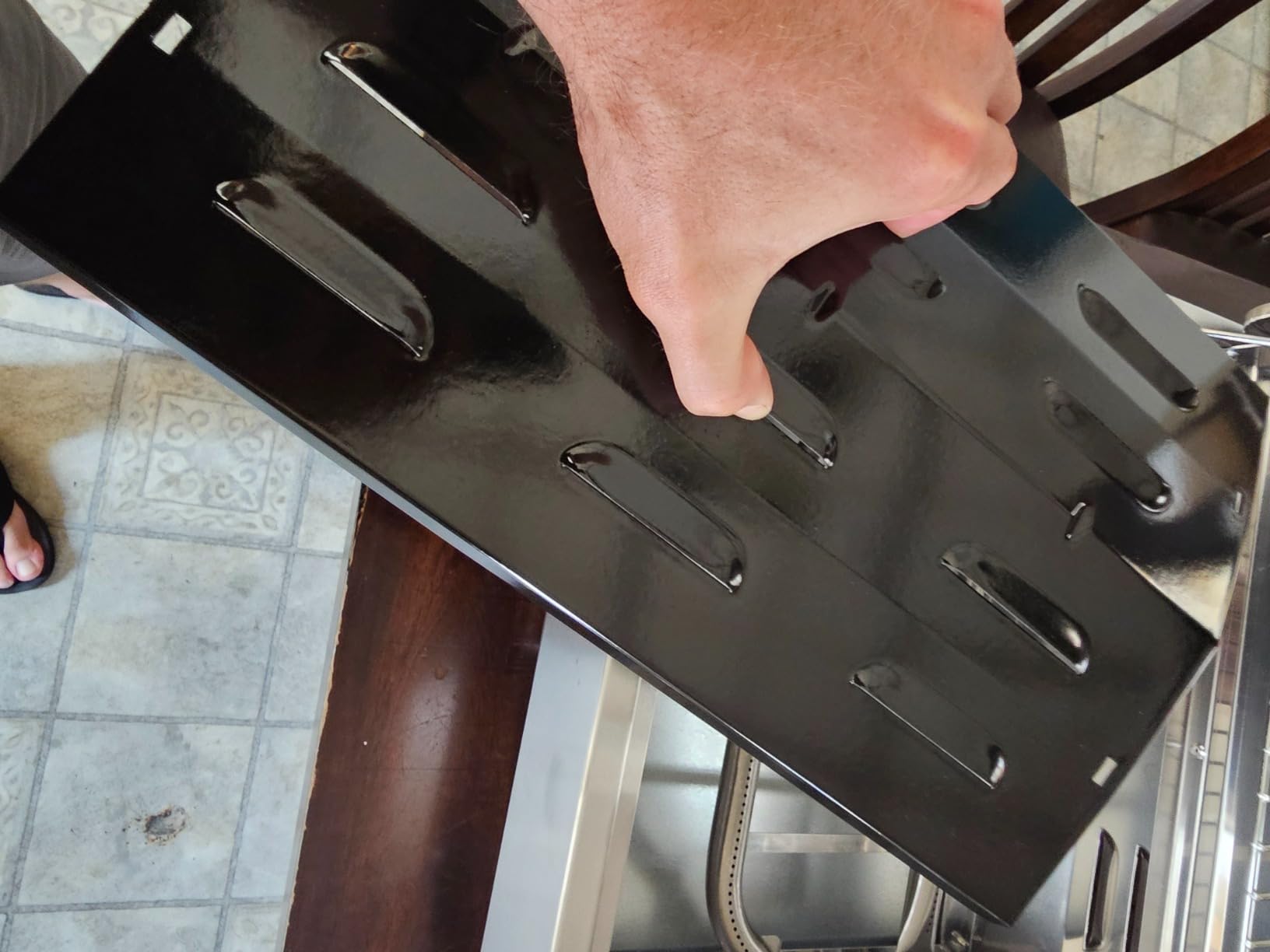
Everything structural here is stainless steel, including the frame, the lid and the U-shaped tubular burner, and that is why owners describe it as the one that outlasts the others. It folds down to a flat, latched shape and stores against a wall or in a closet without needing a cover.
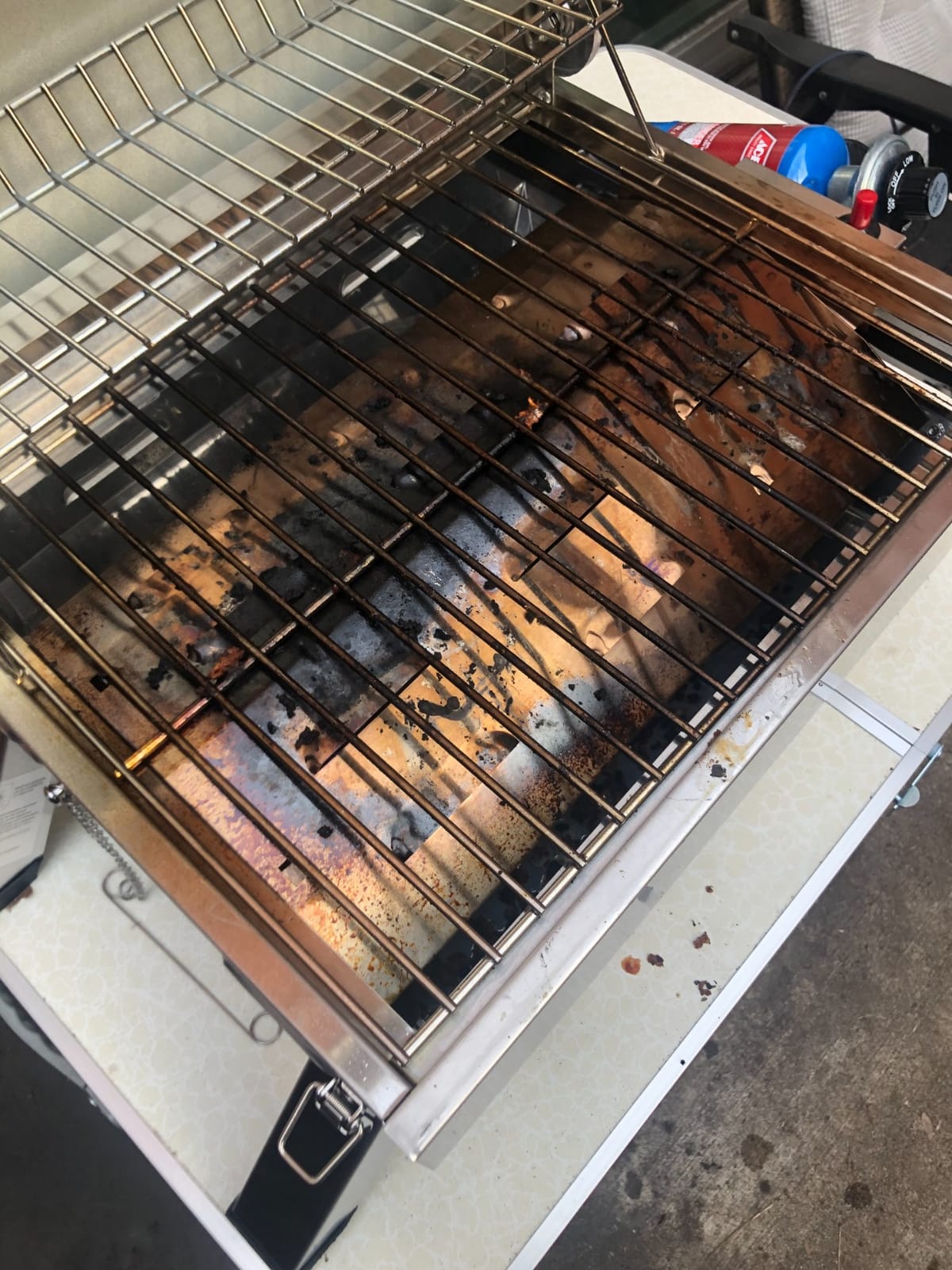
The 285-square-inch total is the largest cooking area of any portable gas grill in this guide, split between 214 square inches of grate and a 71-square-inch warming rack. That warming rack is genuinely useful for holding finished burgers or keeping bread warm while the main cooks, but it does reduce the direct cooking surface, so plan for 214 as your real number.
The lid-mounted temperature gauge is more useful than it sounds on a small burner, because a 10,000 BTU U-shaped burner does not recover temperature instantly when you open the lid to flip.
Why stainless matters more than BTU on a balcony
A balcony grill lives outdoors. Rain, humidity and cooking salt attack painted steel quickly, and a grill that looks rusted after one summer gets replaced, not maintained. Stainless is the material answer to that, and the removable large grease tray is the cleaning answer: pull it out, empty it, put it back.
For a resident cooking for four regularly, 214 square inches of direct grate plus a warming rack beats 190 square inches on a lighter frame, because the extra surface means you are not cooking in two rounds.
Where it falls short
At 17.8 pounds it is heavy for a grill whose selling point is portability, and the 27-inch width is wide for a folding balcony table. The 10,000 BTU burner has little headroom above what it takes to hold a steady medium heat, so if searing is your priority the Charbroil X200 above is the better gas option.
It also needs basic assembly before the first use, and the warranty is one year, which is the shortest among the stainless options.
8. Charbroil Portable Convective Propane Grill – the dependable small burner for two
Charbroil Portable Convective 1-Burner Propane Gas Grill – 465133010
190 sq. in.
11000 BTU
Folding legs
11 lbs
Pros
- Heats fast for a single-burner design
- Folding legs keep the footprint small
- Porcelain-coated grates clean easily
- Stainless steel handles stay cool
- Long-standing design with a large installed base
Cons
- 190 sq. in. is tight for more than two or three people
- Single burner means no two-zone cooking
- Lightweight frame feels unstable when loaded
This is the grill most people picture when they say a small propane grill, and its longevity is part of the case. It has been sold for years in this exact form, which means replacement parts, instructions and troubleshooting advice all exist, and that matters more in an apartment than in a yard.
At 11 pounds it is one of the few gas grills in this guide you can carry up stairs with a full canister, and the folding legs drop it to a height that clears most folding balcony tables. The 11,000 BTU burner reaches cooking temperature quickly, which is the main advantage over the Royal Gourmet above.
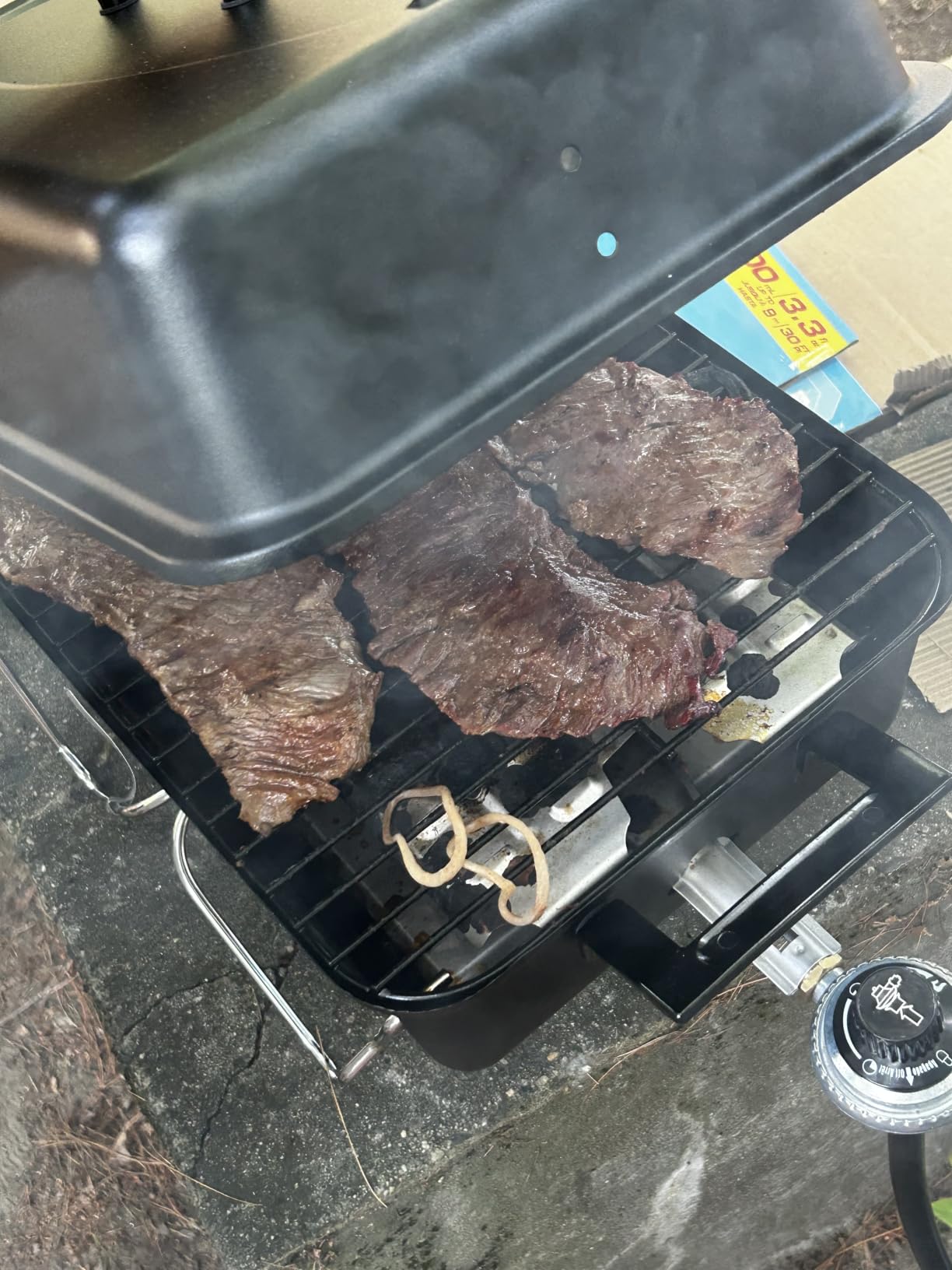
Porcelain-coated grates resist rust and wipe clean, and the stainless steel handles stay cool to the touch, which matters when you are moving a hot grill with one hand and a pan in the other on a deck with a railing.
Warranty is one year overall with 90 days on the burner, grate and lid, so treat the grate and burner as consumables over a few seasons rather than permanent.
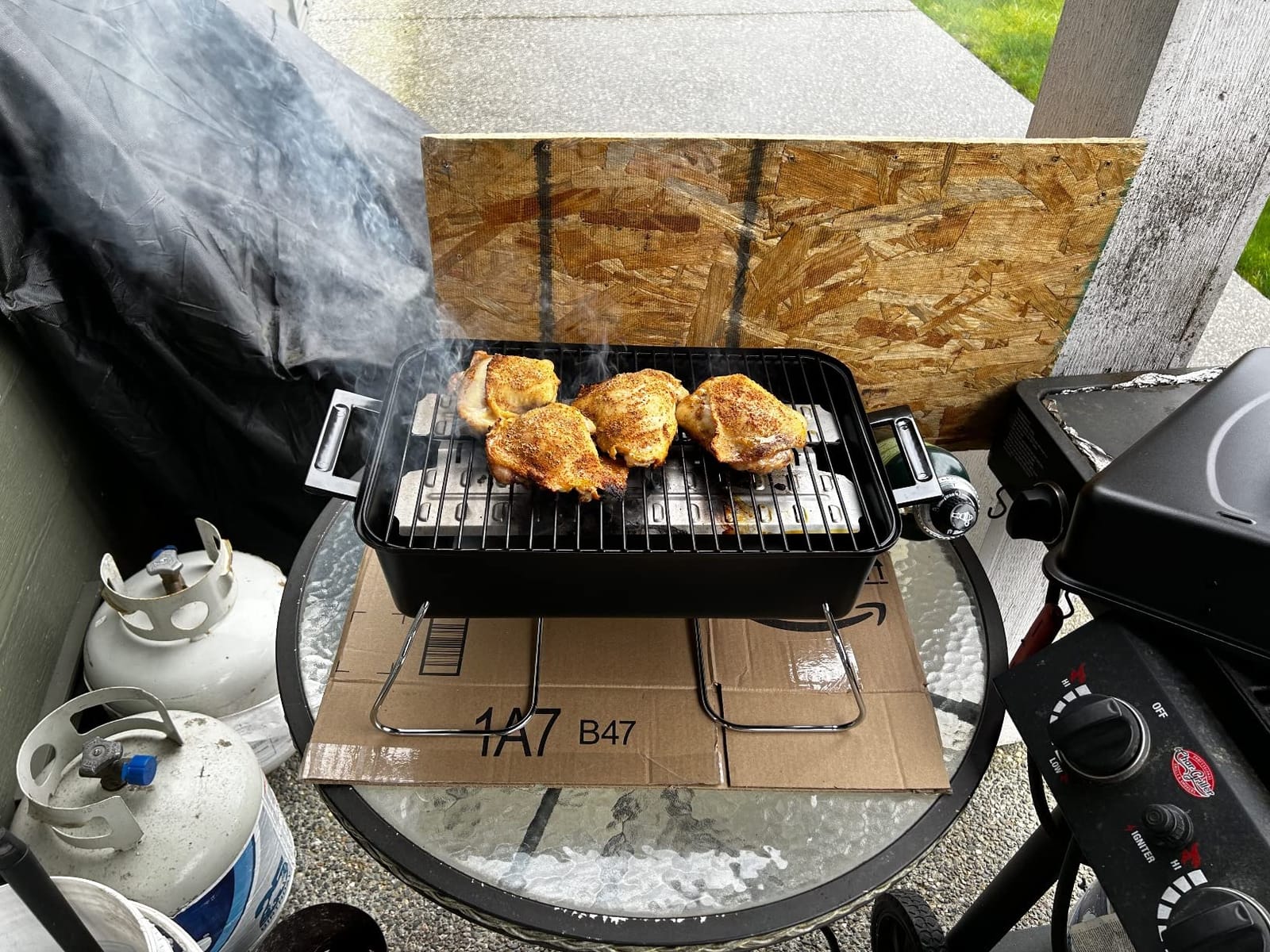
What 190 square inches actually gets you
For two people this is enough. Two steaks, or six to eight burgers, or a tray of vegetables alongside, all in one round. For a household of four it is a single-round grill at best, and owners consistently describe it that way in reviews.
The single-burner layout is the same strength and the same limitation. There is no second burner to create an indirect zone, so you cannot push food to the side and cook slowly with indirect heat. For weeknight burgers that is irrelevant; for a rack of ribs it is the wall.
Where it falls short
The lightweight frame is the recurring complaint, along with a grate that moves under load on uneven surfaces. A balcony table that flexes when you lean on it can make a small grill with folding legs tip, so put it on a level surface and do not rest a heavy pan on the edge.
It also needs a propane cylinder and a suitable outdoor surface, and at 24 inches wide it is wider than the tabletop electric options. If you have not confirmed that your building permits propane, stop reading and check.
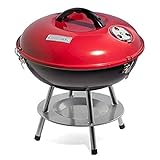
9. Cuisinart 14-inch Tabletop Charcoal Grill – the flavour option for permitted spaces
Cuisinart Charcoal Grill, Portable Tabletop Design, Locking Lid, 14″
196 sq. in. grate
Charcoal fuel
About 4 lbs
14-inch body
Pros
- Genuine charcoal flavour at a very low outlay
- Extremely light and easy to carry
- Three lid locks keep coals secure in transit
- Dual vents and adjustable grate levels give decent heat control
- Ash catcher speeds cleanup
Cons
- Cooking grate sits loosely and can shift over the coals
- Small coal capacity loses heat quickly
- Closing the lid with vents open can extinguish the fire
Nothing on this list produces the flavour of charcoal, and if flavour is why you want to grill, this is the honest answer. It is also the tier most apartment buildings prohibit most firmly, so this pick is realistically for a ground-floor patio, a courtyard, or a resident with explicit written permission.
At 196 square inches with adjustable grate levels and dual vents, it is a more serious cooker than its weight suggests. The 14-inch body at roughly four pounds is genuinely easy to carry up stairs, and three lid locks mean the coals stay put if you move it from the table to the kitchen counter.
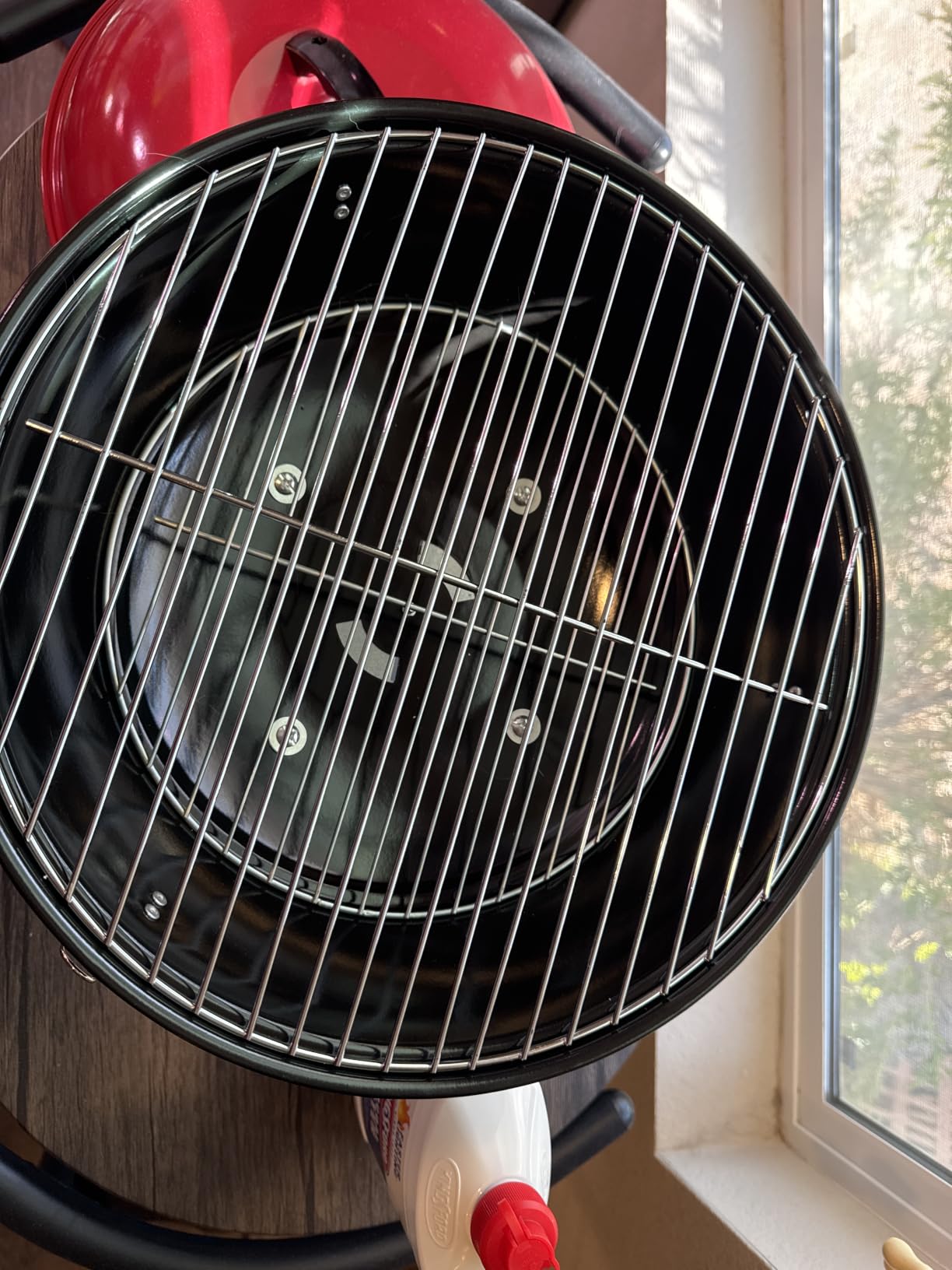
The enamel-coated firebox and the ash catcher base are the practical features. A catcher means ash does not end up on your balcony floor and blown through the railing, which is one of the most common ways charcoal grilling on an upper floor becomes a problem.
Warranty is 90 days, the shortest in the guide, so treat this as a seasonal patio grill rather than a long-term balcony investment.
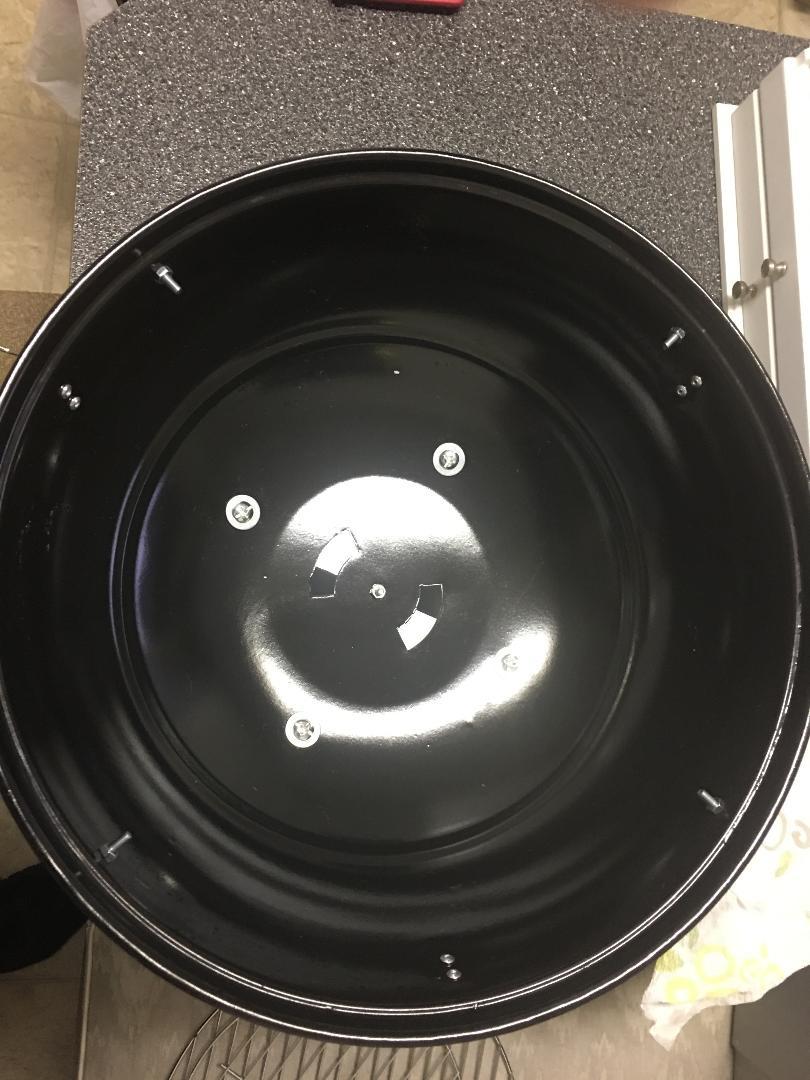
When charcoal is the right call
If you have a ground-level patio, a shared courtyard, or a building whose rules permit it, charcoal is the only fuel here that gives you smoke flavour and a genuine high-heat sear without electricity. The 196-square-inch grate is enough for two to three people, which is the realistic limit.
It is also the fuel to avoid if you are above anyone. For more on that trade-off, our guide to the best portable charcoal grills covers the format properly.
Where it falls short
The grate is the deal breaker and it comes up in most reviews. It sits loosely in the frame and can shift, which risks food dropping into the coals, and several owners fix it with a screw or a nut-and-bolt shim. If you are buying this, plan to do the same.
Heat retention is the other limitation, since a small coal bed cools fast once the lid is closed and the cast iron has not yet built up. Owners in colder weather also report the thin gauge feeling flimsy and warping. If you want charcoal flavour and a durable build, the gas picks above are the compromise; if you want the lowest-cost path to real charcoal flavour, this is it.
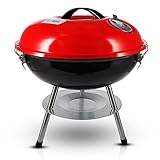
10. Gas One 14-inch Portable Charcoal Grill – the smallest cooking area here, for the smallest balconies
Gas One – 14-inch Portable Barbecue Grill with 3-Point Locking Lid for Heat Preservation – Dual Venting System – Small Charcoal Grill for Backyard, Camping, Boat
150 sq. in.
Charcoal fuel
About 4 lbs
14.5-inch body
Pros
- Smallest footprint in the guide
- Three-point locking lid makes carrying safe and mess-free
- Dual vents give reasonable airflow and heat control
- Light and easy to move
- Ash catcher keeps cleanup local
Cons
- 150 sq. in. is the smallest cooking area here
- Thin metal dents easily and can warp
- Uncontrolled smoke output
This is the pick for a balcony where nothing else will physically fit, and it fills a gap the rest of this list leaves open. At 14.5 inches square and about four pounds, it is the smallest cooker in the guide, and the three-point locking lid doubles as a carry handle so you can move it hot coals and all without losing them.
Same permission caveat as the Cuisinart above, and it applies with more force. A 150-square-inch cooking area is two steaks or a handful of skewers, and owners treat it as a grill for two that happens to be the budget option.
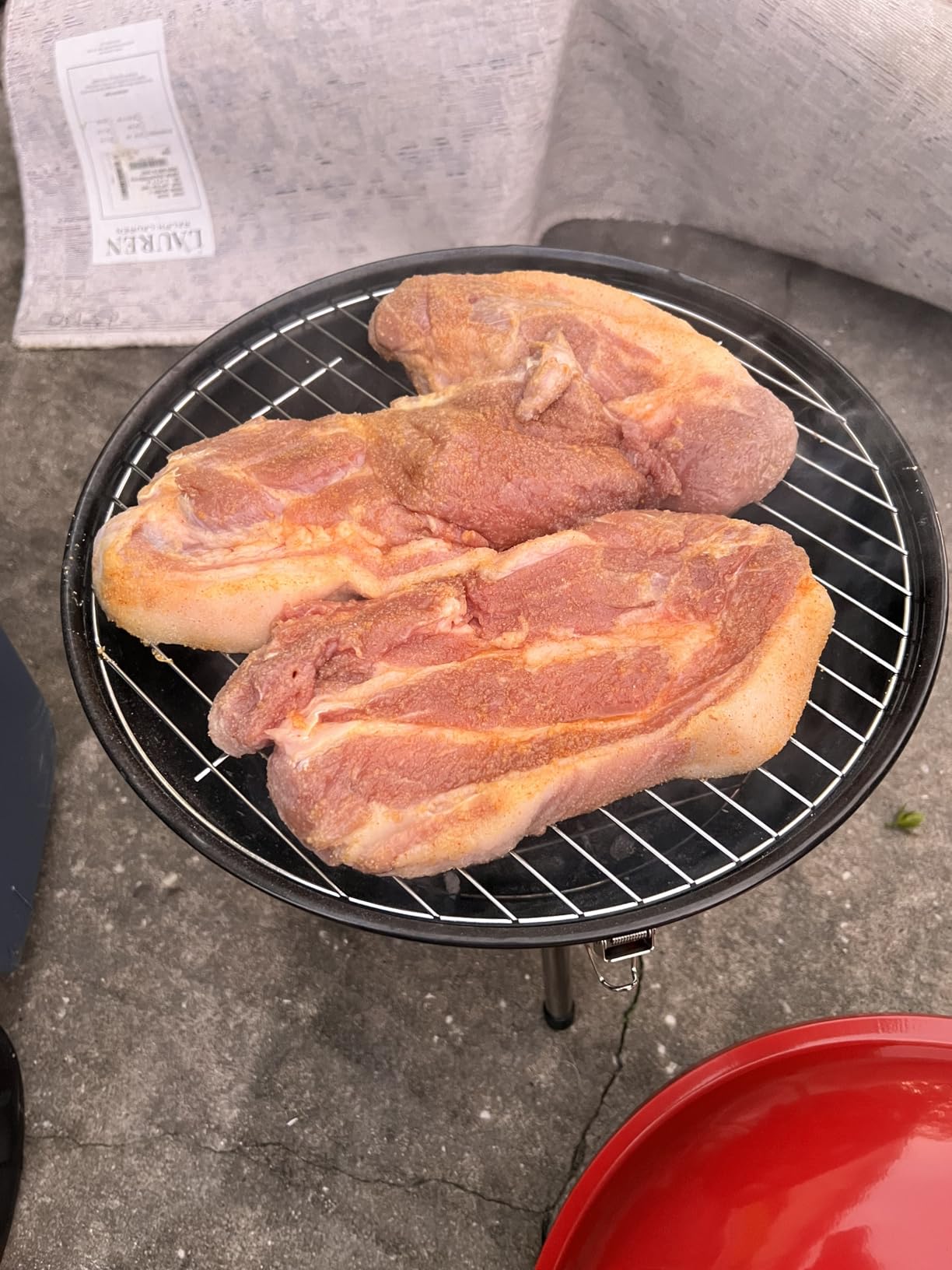
The dual venting system maintains airflow, which is what keeps a grill this small from smouldering out the moment you close the lid, and the ash catcher sits beneath the firebox to keep residue off the balcony floor. A warming rack is included, which on a grill this size is arguably a luxury.
It is also worth noting that this and the Cuisinart are the two models here most often recommended for patios, porches, boats and small outdoor spaces, which is the same use case as an apartment balcony minus the legal question.
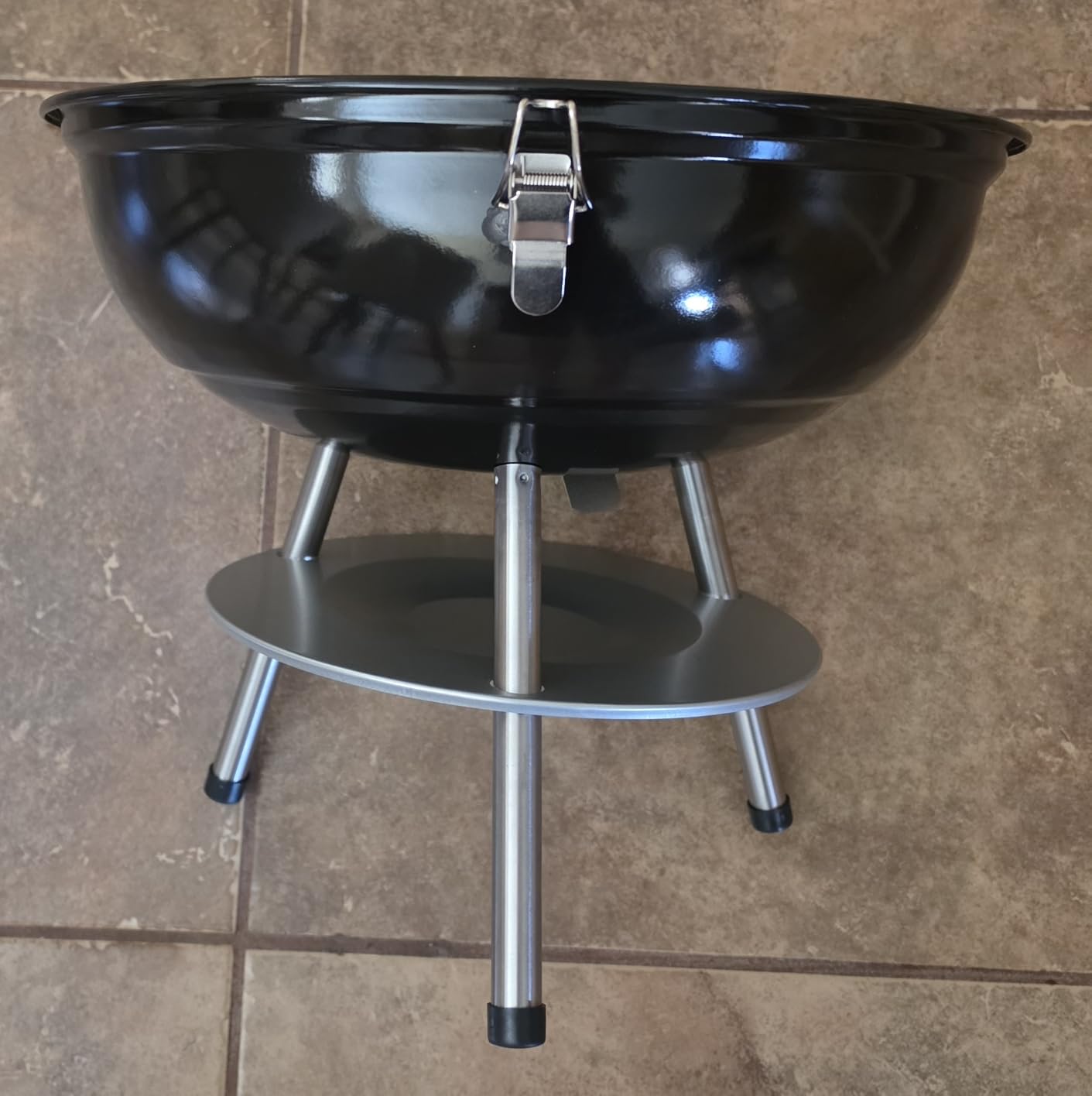
What 150 square inches means in practice
Two people, one course, no sides that need a second round. That is the honest limit and any listing that calls it a four-serving grill is describing marketing rather than geometry. Our guide to hibachi grills covers the same small-format thinking in more detail.
The locking lid is the feature that actually earns the badge. On a balcony you will move the grill more often than a backyard cook moves theirs, and a lid that secures coals across the full top means you are not tipping a tray of hot charcoal into the stairwell.
Where it falls short
Thin-gauge metal is the consistent complaint, along with denting and warping under high heat. The smoke output is entirely uncontrolled, which on an elevated balcony is not a minor issue, and charcoal has to be lit separately, so there is a ten-minute setup before the ten-minute cook.
The one-year warranty is better than the Cuisinart’s 90 days and worse than the rest. If the smallest footprint is your binding constraint, this is the model; if you have a few more inches, step up.
Electric, propane or charcoal: pick the fuel your balcony can take
Start with the rule, not the flavour preference. If your lease or HOA bylaws prohibit open-flame cooking devices on balconies, the fuel decision is already made for you and the answer is electric. If they prohibit grills outright, the decision is to have a conversation with management, and the frequently asked questions below cover what to say.
Electric: the default for most apartment buildings
Electric is the only tier most buildings permit, which makes it the largest block in this list for a reason. There is no fuel, no combustion, no canister on a slab above another unit, and no 10-foot clearance problem because there is no flame. The trade is heat ceiling and flavour: most electric models top out between 400F and 500F, and none of them produce smoke.
For most balcony cooking that is a fine trade. Burgers, chicken, sausages, fish, vegetables and smash burgers on a griddle plate cover the realistic weeknight menu, and the low smoke output is what keeps a balcony cook from becoming a dispute.
Propane: the performance tier, if you are permitted
Propane gives you genuine high-heat searing and a cooking area approaching 200 to 300 square inches, which is where cooking for four becomes a single round rather than two. The cost is a fuel container on an elevated surface, which is precisely what most fire codes and building managers decline to accept.
If you are permitted, the practical questions are the burner output, the grate material and the weight. Our picks for the best portable grills for camping and tailgating share this fuel, and the same grill that works on a picnic table will often serve a permitted patio.
Charcoal: the flavour tier, rarely permitted
Charcoal is the only fuel here that produces smoke flavour, and it is also the most commonly prohibited, because it is a sustained open flame producing smoke on a surface above other people’s homes. The 196 and 150 square inch units in this list are practical on a ground-level patio or a permitted courtyard and impractical above a third floor.
Every balcony grilling thread we read made the same point eventually: people rarely get in trouble for the grill itself, they get in trouble for the smoke at the wrong hour.
How to choose a grill for a small outdoor space
Ignore the serving claims. A manufacturer telling you a grill serves six is describing a table of people eating over two hours, not six steaks in one round. The number that matters is cooking area in square inches, and the planning figure is roughly 40 to 50 square inches per person for a single round of cooking.
That gives a workable guide. Under 100 square inches is a grill for one hungry person. Between 100 and 200 covers two to three. Between 200 and 300 is a genuine meal for four. Above 300 you are cooking for six or more, which is a different category of problem on a balcony.
Check the wattage against your circuit
A standard apartment branch circuit is 15 amps at 120 volts, which is 1800 watts of available capacity before you account for anything else on the run. A 1200W to 1600W electric grill fits comfortably with a few hundred watts of headroom. Anything heavier, or a grill sharing an outlet with a space heater, is a breaker you will reset mid-cook.
This is the most overlooked constraint in every balcony roundup we read, and it eliminates more electric grills than space does.
Measure the clearance, not just the footprint
The grill has to clear the railing, and you have to be able to open the hood without hitting a soffit or a balcony above you. Measure the height from the table to the ceiling and to any overhead structure, then measure the table depth with the lid fully open. A grill that fits the table perfectly and whose hood cannot open is not a fit.
For propane and charcoal, add the rule that most codes impose: a fixed ten-foot clearance from any structure, which on an elevated balcony means the balcony counts. There is no configuration of a 14-inch charcoal grill that satisfies that on a fourth-floor balcony.
Plan for wind and for storage in the same decision
Wind was raised more often than any other practical failure in owner discussions. A small grill with a light frame loses heat to moving air, so a lid that fits properly and a burner with enough output matter more on an exposed balcony than a thermostat does. A folding-leg model with a latching lid also stores small, which is the constraint that decides where it lives between cooks.
Finally, check the weight against your own stairs and your own hands. A grill you cannot move from the balcony to a storage closet is one you will leave out there, and a grill left out there through a wet winter is a grill that rusts or warps.
Smoke, smell and the neighbours
Almost nobody gets in trouble for a grill that is legal. People get in trouble for smoke at the wrong time, drifting toward an open window, and for a neighbour who decides the situation is not something they should have to tolerate. That is a social problem, and it is the actual reason most balcony grilling attempts end quietly.
Position first. Cook with the wind at your back so smoke travels away from the building rather than up the face of it, and avoid the hours when neighbours are on their balconies in the evening. A balcony that shares a wall with three other units has a wind direction, and finding it is a five-minute job that saves the whole season.
Keep the lid on. Every unit in the electric half of this list exists partly because a closed hood contains the majority of the moisture and splatter that becomes visible smoke. A grill with a mesh lid such as the Ninja Sizzle manages that better than one without, which is the single most useful smoke feature on the page.
Manage grease in real time. Drip pans catch, they do not evaporate, and a pan full of fat that sits on a balcony railing through the night is exactly the kind of thing that generates a conversation you do not want. Empty it the same evening, every time. For ash, wet it down thoroughly before disposal and never put warm ash into apartment trash where a smoke alarm can be triggered.
And if a neighbour does complain, treat it as information rather than an attack. Moving the grill further from their window, cooking earlier, and offering to switch to the electric model are the moves that end complaints. The forum consensus is that almost nobody escalates a first polite conversation.
Storing a grill on a tiny balcony
Storage is the constraint that decides between otherwise equivalent grills. The best balcony storage is a grill that folds flat, latches shut, and can be carried with one hand. Every propane model in this list except the Royal Gourmet folds down in some form, and the Royal Gourmet folds down while staying wide.
For the electric models, the removable stand is the storage answer. A grill body that detaches from its stand fits in a cabinet, which matters more than a weather cover, because a cover protects a grill that stays outdoors and a balcony in a humid city is not really outdoors.
Wall hooks and under-table storage work for the small charcoal units, provided the grill is completely cool and the coals are long cold. Metal left warm on a hook overnight is how a fire alarm gets triggered in a building where grilling was never the problem.
For anything that stays out there, treat rust prevention as an active task rather than a passive one. Empty the ash catcher, wipe grease off the lid and the grease tray, and dry the grate after every cook. A grill that lives on a balcony and gets wiped down outlives a better grill that does not.
How we chose these 10
Every pick in this list was checked against its manufacturer listing for the specifications quoted here: cooking area in square inches, wattage or burner output, weight, dimensions and warranty. Where a manufacturer does not publish a figure, such as the weight of the Techwood, we say so rather than estimating.
Ratings and review counts are the current figures from the product listings, and we weighted them because a 4.6 average across 18,000 owners tells you something different from a 4.3 across 700. We excluded marketing serving claims in favour of square inches, because the serving number is the single most misleading figure on a grill page.
Legal framing follows the International Fire Code and the NFPA 1 Fire Code treatment of open-flame cooking devices and the ten-foot clearance requirement, with the honest caveat that local adoption and your lease are what actually decide the outcome. We did not contact building managers or fire officials, so treat the code discussion as a filter to apply, not as permission.
Where we recommend a propane or charcoal model, we are recommending a grill, not advising you to break a term. Confirm the rule, in writing if you can, before you buy.
Frequently Asked Questions
What is the best grill for an apartment balcony?
A fully electric grill is the safest answer for most apartment residents, because most multi-family buildings prohibit open-flame cooking devices on an elevated balcony. Among the electric picks, the George Foreman 15-serving grill with its removable stand is the most versatile, and the Ninja Sizzle 14-inch is the strongest when you want a real sear and a griddle plate.
Can you have an electric grill on an apartment balcony?
Usually yes. An electric grill has no fuel, no pilot and no flame, so it is not an open-flame cooking device under the code language that most buildings rely on. Some buildings additionally require a listed appliance for anything used outdoors, and a 1200W to 1600W model is the safe range for a normal 15-amp apartment circuit.
Can I use a propane grill on my balcony?
Only where your lease, HOA bylaws and local code all allow it, which is uncommon on an elevated balcony. A propane grill is an open flame and the canister sits on a surface above the unit below you. If you are permitted, expect a 1-lb canister to last roughly one to an hour and a half at medium heat.
Is grilling allowed on balconies?
It depends entirely on your building and your local code. Most multi-family buildings in the United States prohibit charcoal and gas grills on an elevated balcony, and a number also restrict grills on patios, because fire codes treat the balcony as part of the structure and the usual ten-foot clearance then cannot be met. Electric cooking appliances are the commonly permitted exception.
How much cooking area do I need for two people?
Roughly 40 to 50 square inches per person for a single round of cooking. That means 80 to 100 square inches for two, 100 to 200 for two to three people, and 200 to 300 for a genuine meal for four. Ignore the serves six claim on a product page and look at the square inches instead.
The bottom line for balcony grilling
The best portable grills for apartment balconies in 2026 are the ones your building lets you light, and that filter runs before any spec sheet. Start with the fully electric models, because they are the tier most residents can actually use, and choose on cooking area in square inches and on whether the stand detaches for storage.
Our pick is the George Foreman 15-serving electric grill with its removable stand: it is the most capable unit that still clears a typical balcony table, weighs under nine pounds, and solves the storage problem better than anything else in the guide. If you want a harder sear, step up to the Ninja Sizzle. If your building has explicitly allowed propane, the Charbroil Grill2Go X200 is the gas grill worth owning.
One last thing. Read your lease before you buy, not after the first complaint, and ask management in writing. It takes a single email and it converts an argument into a permission.