
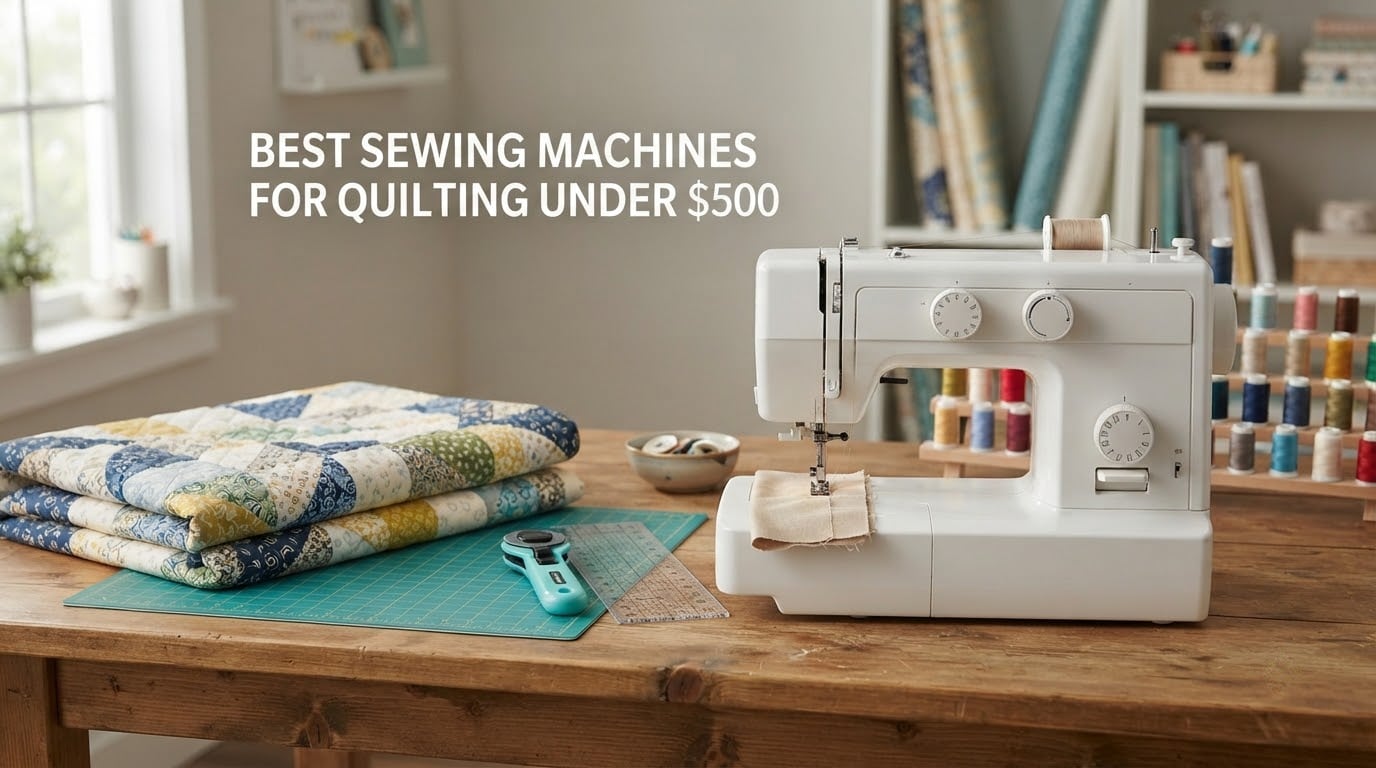
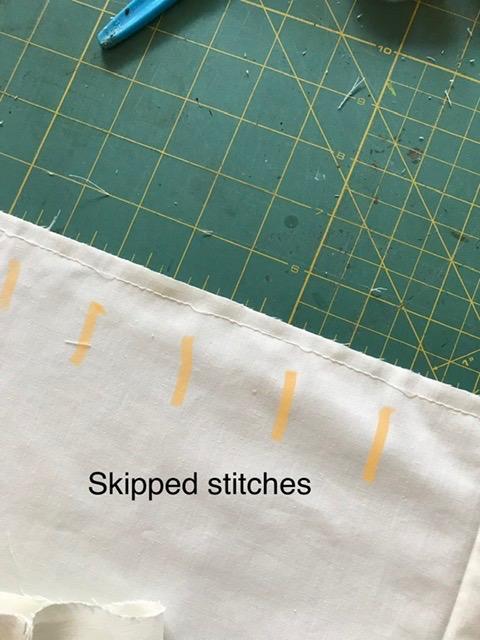
Quilting punishes a sewing machine in ways garment sewing never does. You push three layers of cotton, batting and backing through the feed dogs at once, you work right up to the edge of a bulky quilt sandwich, and you need the machine to advance every layer at exactly the same speed. Get any of that wrong and you get puckering, skipped stitches and a basted quilt that took half a day to sew and another half to unpick.
That is why the best sewing machines for quilting under 500 dollars are not the machines with the longest stitch lists. Our team worked through ten of them, logged the box contents, and judged every pick on the same four things: throat space, feed system, motor torque and which presser feet actually arrive in the carton. Every machine below stays under our ceiling, and none of them quote a price here, because street prices move daily. Use the check-price buttons to see the current figure.
One correction worth making early: most machines advertised for quilting ship without a walking foot and without a free-motion foot. That single fact generates more returns in this category than any other. We call it out for every pick below, and we leaned on long-term owner reports from r/quilting and Sewing Pattern Review to fill the gaps. If you want the short version, the best quilting machines roundup covers the higher tiers that sit above this budget.
Top 3 Picks for the Best Sewing Machines for Quilting on a Budget in 2026
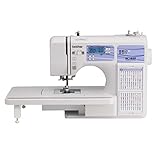

Throat space is the horizontal distance from the needle to the machine body, and it is the first number to check because you cannot add it later. The Brother HC1850 and XR9550 package a wide table; the Janome JW8100 adds an extra-wide extension table; the EverSewn Charlotte quotes its sewing space at 6.5 inches. For the rest, check the listing, because most budget manufacturers never print the figure.
best sewing machines for quilting in 2026
| Product | Specifications | Action |
|---|---|---|
| Brother HC1850 |
|
Check Latest Price |
 Brother XR9550 Brother XR9550 |
|
Check Latest Price |
| Janome JW8100 |
|
Check Latest Price |
 Brother XR3774 Brother XR3774 |
|
Check Latest Price |
 Singer 4432 Singer 4432 |
|
Check Latest Price |
 Singer 6380 Singer 6380 |
|
Check Latest Price |
 Singer Heavy Duty 4523 Singer Heavy Duty 4523 |
|
Check Latest Price |
 Janome MOD-50 Janome MOD-50 |
|
Check Latest Price |
 Janome Arctic Crystal Janome Arctic Crystal |
|
Check Latest Price |
 EverSewn Charlotte EverSewn Charlotte |
|
Check Latest Price |
Two columns in that table deserve more attention than the rest. The wide table and extension table rows decide whether a quilt fits flat beside the needle. The foot column decides whether you can quilt a sandwich on day one or spend your first weekend shopping for accessories. Prices were checked for this roundup in September 2026 and change frequently.
1. Brother HC1850 Is the Most Complete Quilting Machine in This Budget
Brother HC1850 Sewing and Quilting Machine, 185 Built-in Stitches, LCD Display, 8 Included Feet
185 built-in stitches
LCD screen
Wide table
8 presser feet
25-year warranty
Pros
- Wide table and 8 included feet cover most quilting foot needs
- Backlit LCD makes stitch selection fast
- 25-year limited warranty with free lifetime support
- Advanced needle threader speeds setup
Cons
- 120V US specification voids the warranty outside the US
- Light 10.1 lb body can shift under a bulky quilt sandwich
The Brother HC1850 is the machine I recommend to people who want to buy once. It arrives with a wide table, eight presser feet and an accessory pouch, so the walking foot and darning foot questions that trip up most budget buyers simply do not apply here. Owner reports consistently describe it as a dependable first quilting machine that threads quickly and makes stitch selection obvious through the backlit screen.
At 10.1 pounds it is the second-lightest machine here, which is exactly why quilters who take it to classes and sew-alongs like it. The trade-off shows up once a full quilt sandwich is spread across the table, because a body that light can creep when you push hard through multiple layers. Our general advice on the lightest machines in this list: pair them with a non-slip pad under the base.
What makes this the editor’s choice is not the stitch count, it is the combination of a 25-year limited warranty, free lifetime technical support and a carton that already contains the quilting hardware. A machine you can call about for the next two decades is worth more than one with two extra decorative stitches and a two-year warranty. Long-term owners on quilting forums repeatedly back the Brother line for exactly this reason, and Sewing Pattern Review regulars make the same argument about larger Brother models.
The only specification to read carefully is the power input. This machine is built for 120V North American use, and using it elsewhere voids the warranty. Check your voltage before you order rather than after it arrives.
Check the wide table fits your quilting space
The wide table is the reason this machine earns its place. It gives you a flat surface beside the needle for blocks, borders and rows that would bunch on a bare bed plate. Measure the table against your sewing desk first, because the assembly needs clearance behind and beside the machine.
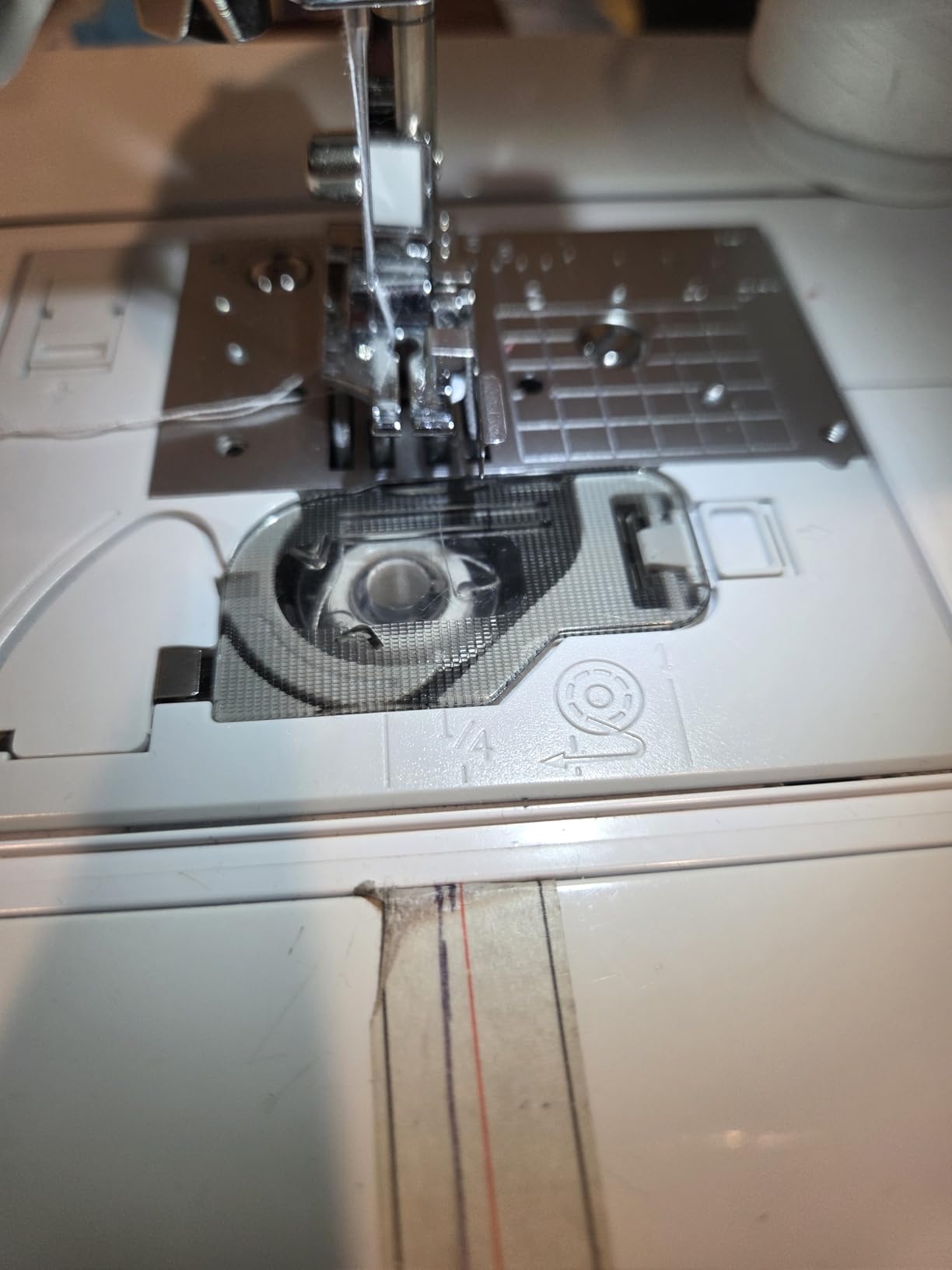
For straight-line quilting and piecing, the eight included feet mean you can start the same afternoon the machine arrives. Add a 1/4 inch foot for accurate piecing before you cut a whole stack of patches, and check that the walking foot is in the box rather than assuming it.
Know when you will outgrow it
Buyers who quilt heavily report eventually wanting more speed control, more power and more throat clearance, and that point arrives faster for someone quilting a bed-size quilt than for someone finishing table runners. Until then, the combination of table, feet and warranty is hard to beat at this price.
The realistic upgrade path is a used long-arm later, not a bigger new machine now. Start here, learn what your quilt actually needs, and buy once you know whether you want ruler work, dense stippling or straight rows. Our general sewing machine roundup is a good place to compare the non-quilting side of each class.
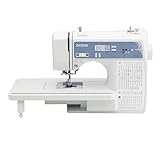
2. Brother XR9550 Gives You a Wide Table and a Hard Cover for Less
Brother XR9550 Computerized Sewing and Quilting Machine 165 Stitches
165 built-in stitches
Wide table
Hard cover
8 feet
LCD
Pros
- Wide table plus 8 sewing and quilting feet in the box
- Protective hard cover is unusual at this price
- Intuitive LCD speeds setting changes
- 25-year warranty with free lifetime support
Cons
- 120V US sale specification voids warranty elsewhere
- Light 10.1 lb body can wander under heavy layers
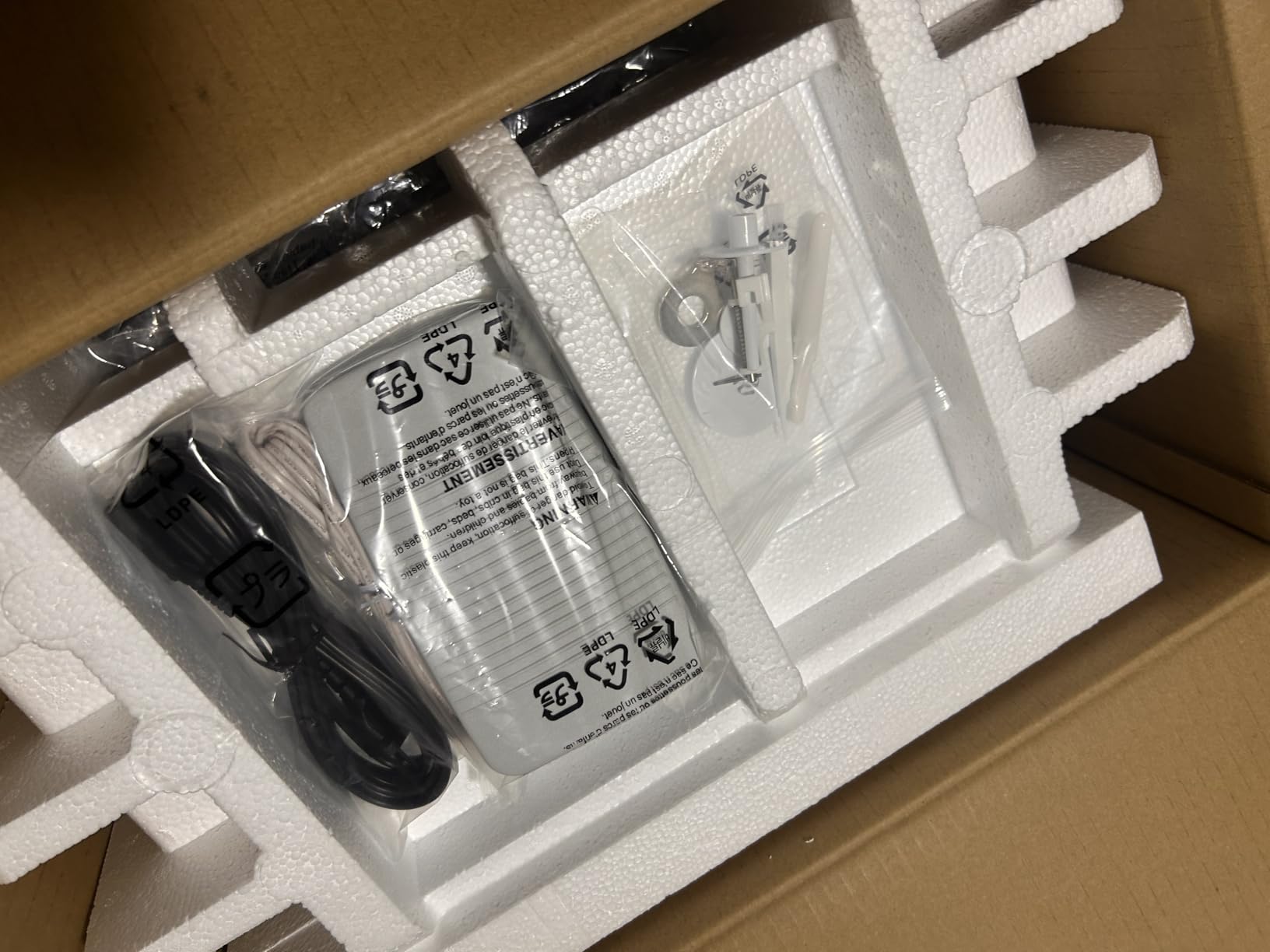
The Brother XR9550 is the value pick in this roundup because it ships with a hard cover. Almost nothing else in this price bracket does, and a foam-packaged machine that lives in a closet is a machine you will not use. Alongside the cover you get a wide table, eight sewing and quilting feet, an eyelet punch and a twin needle.
Owner feedback is unusually consistent for a machine at this level: people bought it to get more capability than an entry-level mechanical machine, and they found the LCD screen and computerized selection fast enough that they stopped memorizing stitch patterns. It ranks near the top of the Sewing Machines category, which tells you how many people have bought one.
Like the HC1850, it is a 10.1 pound machine. That is a genuine strength if you haul it to a guild meeting and a genuine weakness under a large quilt, so the felt-pad trick is worth learning before your first long session. Quilters on forums flag lightweight bodies as the first thing that moves when the layers get thick.
The 25-year limited warranty is the other quiet advantage. It is longer than the coverage that comes with most metal-frame mechanical machines in this class, and Brother backs it with free technical support for the life of the machine rather than a fixed term.
Decide between this and the HC1850 first
Both machines share the wide table, the eight feet and the LCD. The HC1850 carries more stitch options and a different support package; the XR9550 adds the hard cover. If you travel with your machine, the cover wins. If you want the larger library and the accessory pouch, take the HC1850.
Skip either one if your quilting involves a large quilt bulk that needs more room than a wide table gives. A wide table flattens the fabric beside the needle, but it does not create a deep throat, and no machine in this list solves that problem.
Verify the voltage before ordering
The machine is specified for 120V use in the US, and operation outside that specification voids the warranty. That is the only caveat owners raise with any regularity, which is a good sign for a model with thousands of reviews behind it.
If you want a second machine rather than an upgrade, think about what the other one is for. A serger handles seam finishes and a machine with a bigger throat handles bulky work; the serger comparison is worth reading before you decide.
3. Janome JW8100 Is the Best Flat Surface for Quilt-as-You-Go
Janome JW8100 Fully-Featured Computerized Sewing Machine with 100 Stitches, 7 Buttonholes, Hard Cover, Extension Table and 22 Accessories
Extra-wide extension table
Even feed foot
1/4 inch foot
7-piece feed dogs
Pros
- 7-piece feed dog system moves layers without dragging
- Extension table plus even feed foot ships in the box
- Uses standard class 15 bobbins
- Speed slider and needle up/down for precise work
Cons
- No deep throat limits very large quilts
- Work light is dimmer than some owners want
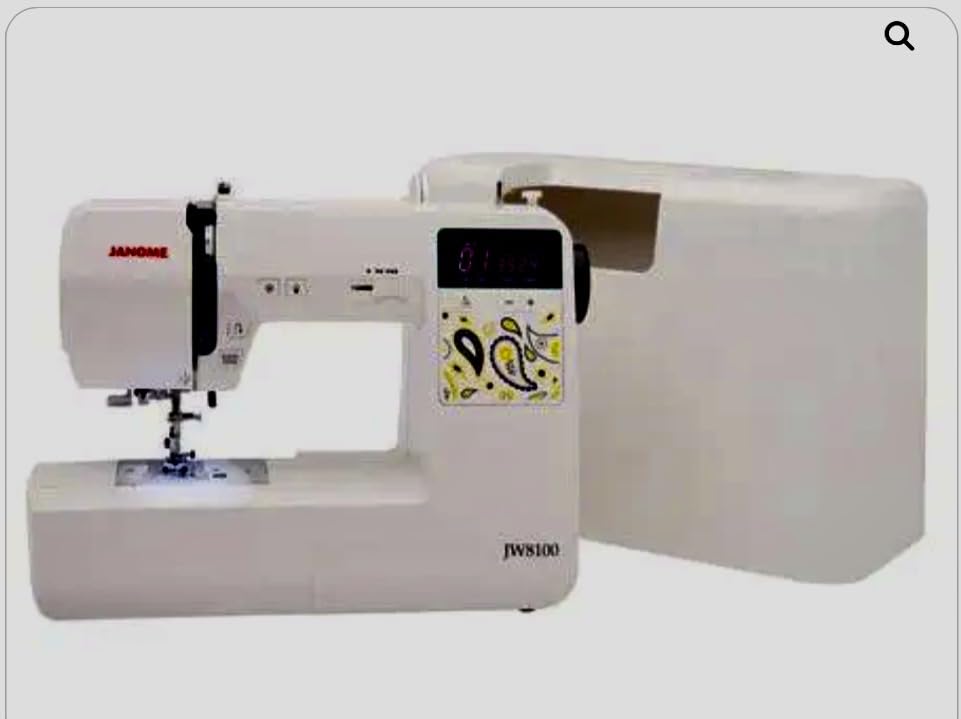
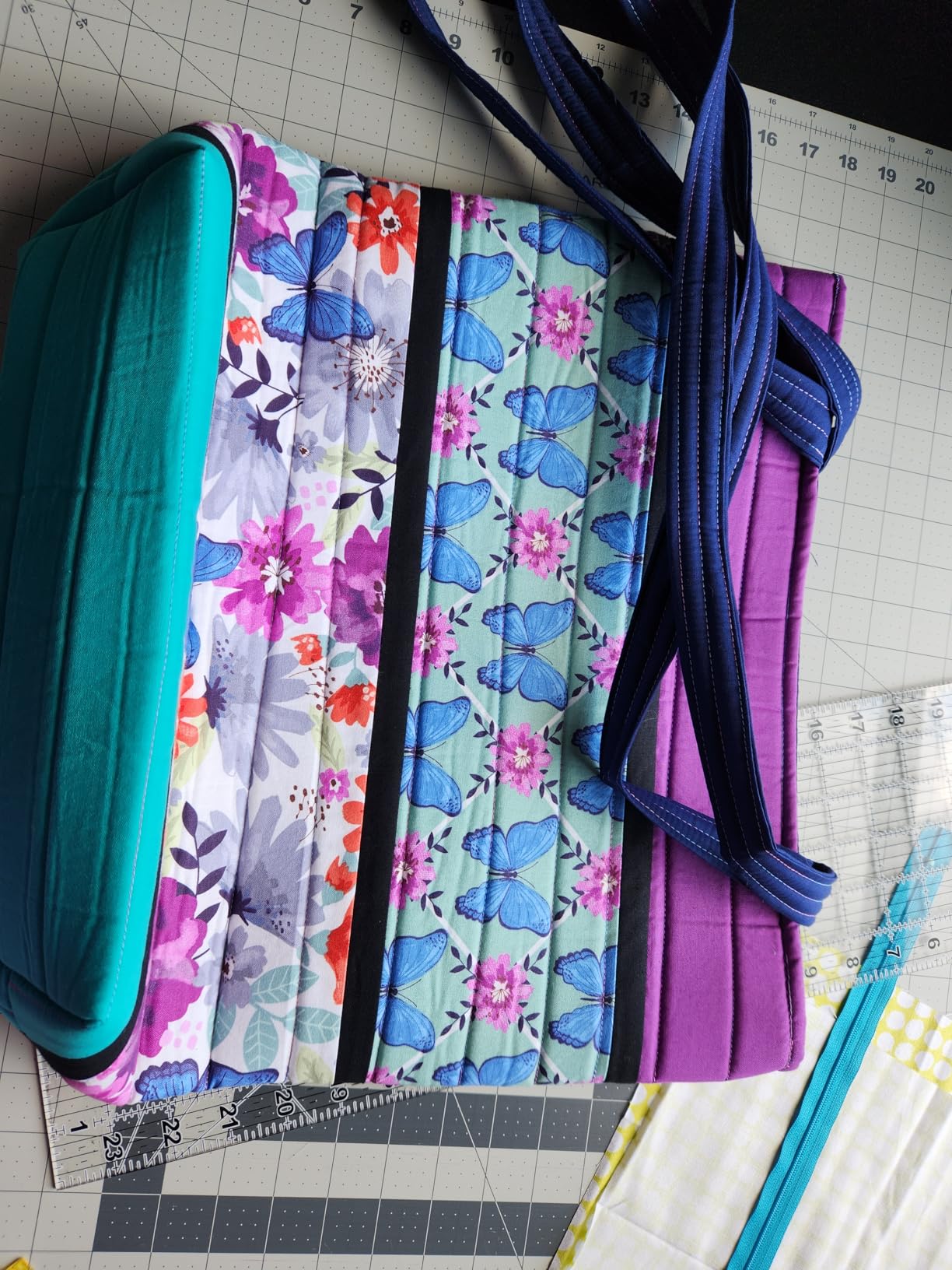
The Janome JW8100 is the machine to look at if quilt-as-you-go frustrates you. QAYG means quilting as you piece, so the bulk you are working around is always beside the needle, and the extra-wide extension table gives you the flattest surface in this roundup. Sewing groups describe QAYG as a pain on machines with a small throat, and this is the direct answer to that complaint.
Owners describe it as quiet and rock-solid, and they compare Janome build quality favorably to Brother and Singer. The 7-piece feed dog system is the mechanical reason it tracks well through layered fabric, and the included even feed foot means you are not shopping for a walking foot on day one.
It also uses standard class 15 bobbins instead of proprietary ones, which is a small detail that saves money and hassle for years. The LCD screen carries a start/stop button and a speed control slider, and needle up/down lets you pivot at a corner without hunting for a wheel. Both features matter more to beginners than stitch counts do.
Twenty-two accessories are in the carton, including a quarter inch foot, a hard cover and a pin cushion. That is the most complete package here, which is why we call this the QAYG pick rather than an overall winner: the throat is not deep, so an oversized quilt still crowds the needle.
Check whether the extra-wide table fits your desk
The table is the reason to buy this machine and the first thing to measure. A wide extension table needs a desk that can take the extra footprint, and it needs to be supported so it does not flex when you push a bulky sandwich across it.
If the table will not fit, a machine with a plain wide table is a better buy than a cramped extension table. For pattern work alongside your quilting, our beginner pattern guide is a natural companion read.
Know the two reported limits
The lack of a deep throat is the limitation owners mention most, and it is real for anyone quilting a king-size top in sections. The work light is also dimmer than some owners would like, so add a task lamp if you sew at night.
Specialty decorative stitches such as the star pattern can produce poor results, which matters only if decorative quilting is part of your plan. Straight rows, stippling and piecing are what this machine is built for.
4. Brother XR3774 Ships With the Walking Foot Already in the Box
Brother XR3774 Sewing and Quilting Machine 37 Stitches
37 built-in stitches
Walking foot included
Darning plate
Automatic needle threader
Pros
- Walking foot
- darning plate and hemming feet included
- Wide table adds real working space
- Automatic needle threader and drop-in bobbin
- Light enough to carry to classes
Cons
- Speed control is limited for experienced quilters
- Extension table legs are flimsy
- Some owners report skipped zigzag stitches
The Brother XR3774 answers the most common budget-quilting complaint directly: the walking foot, darning plate, blind stitch and hemming feet all arrive in the box. Most rivals at this price ship a generic zigzag foot and a darning plate you have to buy separately, so this carton alone can save you a trip to the accessory shelf.
It has 37 built-in stitches including a 1-step buttonhole, an automatic needle threader and a jam-resistant drop-in top bobbin. Owners with no quilting experience report clean, consistent stitching on cotton, denim and bulky quilt layers, and the wide table handles blocks and larger pieces comfortably.
At 15 pounds it is heavier and steadier than the two Brother computerized models above, which is a quiet advantage on a full quilt sandwich. The tradeoff is that you get fewer convenience features: no LCD, no alphanumeric library, and a speed control that experienced quilters eventually outgrow.
One practical note before you buy: it requires Brother SA156 bobbins, and third-party equivalents are not interchangeable. That is a small ongoing cost and a small annoyance, and it is the single most common complaint about proprietary bobbins in general.
Know the darning plate situation
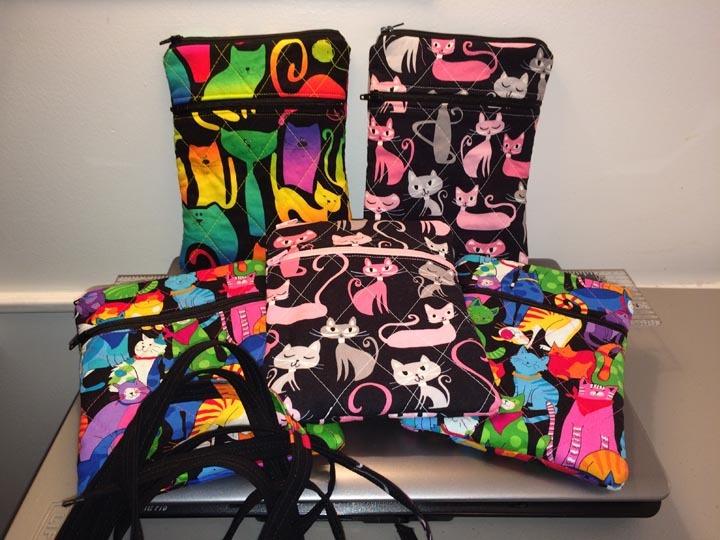
The darning plate in the box gives you free-motion capability, because dropping the feed dogs and covering them with the plate is what lets the quilt move freely in any direction. A machine without a plate cannot do this without a separate purchase, which is why we check for it on every pick here.
The darning plate is small, so it suits stippling and small free-motion areas. It does not give you a wide free-motion field, and a machine with a lower feed force handles dense quilting more comfortably.
Plan for the table leg
Several owners report the extension table legs being flimsy, and some have broken. Sit the table on a firm surface rather than cantilevering it, and retighten the fittings every few sessions.
The dust cover that comes instead of a carrying case is a minor issue. If you plan to sew at guild meetings, buy a case separately. The 1-year limited warranty is shorter than the computerized Brothers, so treat this as a first machine rather than a keeper.
5. Singer 4432 Is the Powerhouse for Garments and Thick Layers
SINGER® 4432 (Black) High Speed Heavy Duty Sewing Machine + Accessory Kit
32 stitches
1100 stitches per minute
Metal frame
110 applications
Pros
- Motor 60 percent stronger than standard
- Handles denim canvas and thick layers
- Utility stitch library beyond novelty stitches
- Works for garments bags and quilting
Cons
- Darning plate sold separately
- Short foot pedal cord cannot be extended
- Bobbin compartment blocked in a drop-down table
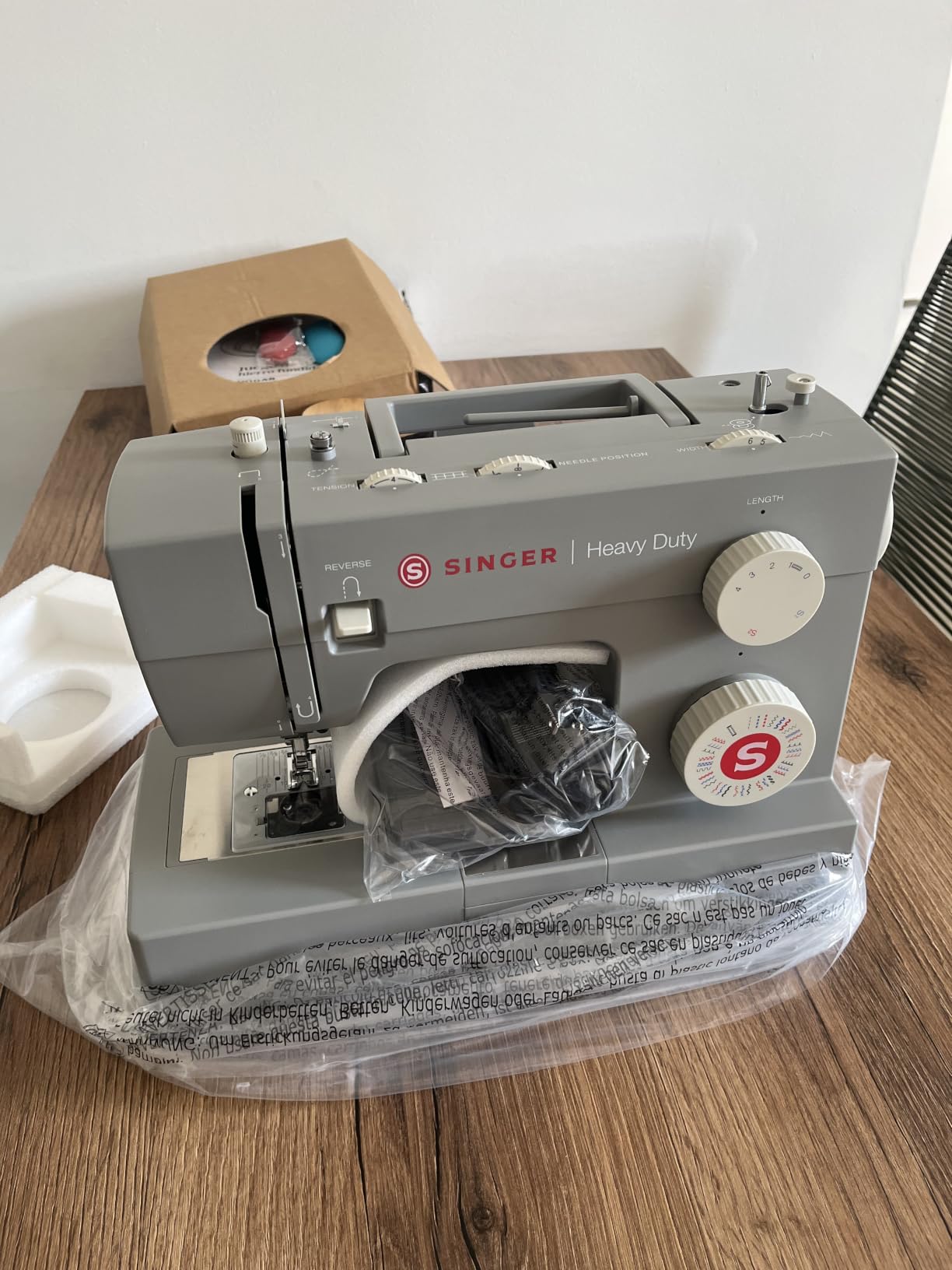
The Singer 4432 is the highest-volume seller in this roundup by a wide margin, and owners treat it as a sturdy second machine rather than a quilting specialist. The motor is 60 percent stronger than standard and runs up to 1100 stitches per minute, which is why it pushes through denim, canvas and multiple thick layers without drama.
It is a mechanical machine with a metal internal frame, so the controls can be adjusted mid-stitch and there is no LCD to learn. Thirty-two stitches deliver 110 applications, and the library leans toward utility work rather than decoration, which is what you want on bag straps, bindings and garment seams.
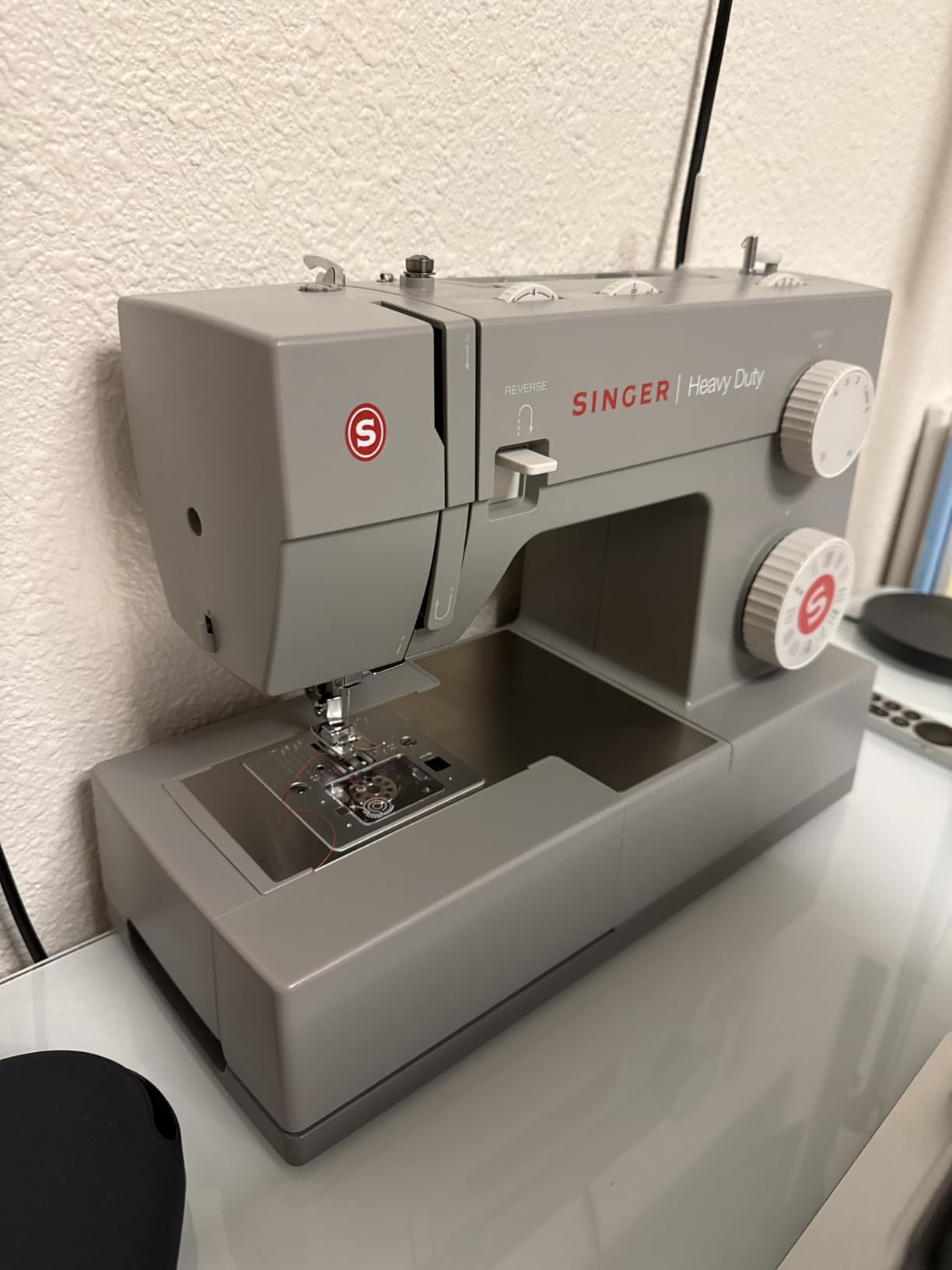
For quilting specifically, read the carton before you order. The darning plate is sold separately, and the bobbin compartment is not accessible when the machine sits in a lowered drop-down table. Both are deal-breakers for some quilters and irrelevant to others, depending on how you work.
The short foot pedal cord is the most common ergonomic complaint, and it cannot be extended. Owners in quilting groups who work at a fixed table often solve it with an anti-fatigue mat and a stable chair rather than a pedal extension, since the cord is fixed at the machine end.
Decide whether you need a second machine
Plenty of quilters buy this as machine number two, using a computerized model for piecing and decoration and the Singer for heavy layers and garment work. If you own nothing, it is a strong first machine too, at 14.6 pounds with a genuinely metal frame.
The threading is manual and the needle threader is awkward, so budget extra time for the first few seams. There is no printed instruction booklet, so download the manual before you start.
Watch the drop-down table question
If you use a sewing cabinet, the inaccessible bobbin compartment is a real friction point every time you change thread colors. Test the machine on a table you already own before committing to a cabinet cutout.
Some owners report inconsistent pedal speed response and needle alignment issues on their units, while the vast majority describe a dependable machine. Inspect the machine on arrival and keep the packaging until you have sewn a full seam.
6. Singer 6380 Packs Nine Feet, an Extension Table and Drop Feed
SINGER® 6380 Heavy Duty Sewing Machine with Extension Table, Accessory Kit
Extension table
Drop feed lever
9 presser feet
Stainless steel bedplate
Pros
- Nine included presser feet is the largest bundle in this class
- Extension table and clearance plate are quilting specific
- Drop feed lever supports free-motion quilting
- Metal frame and steel bedplate aid stability
Cons
- No LCD screen or automatic thread cutter
- Notable share of one-star reviews
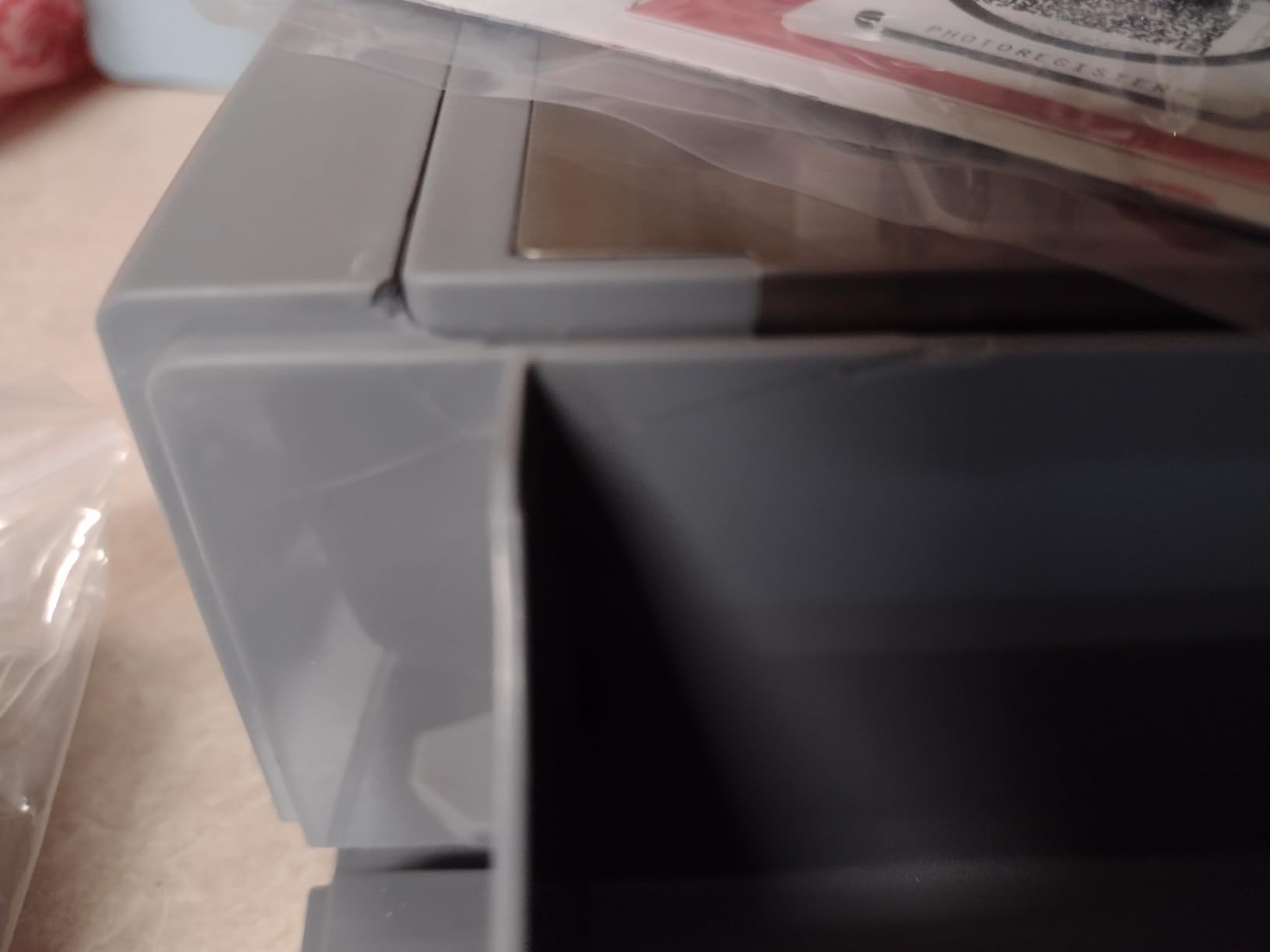
The Singer 6380 is the accessory champion: nine presser feet, an extension table, a clearance plate, heavy-duty needles, an edge and quilting guide, four bobbins and a soft cover. For a quilter who wants to try every foot before buying more, that carton removes most of the guesswork.
It also has a drop feed lever, which is the switch you need before any free-motion quilting, and a stainless steel bedplate that helps fabric glide instead of catching. The motor is 50 percent stronger than standard and reaches 1100 stitches per minute, with 32 stitches delivering 110 applications and width adjustment up to 6mm.
What it does not have is anything computerized. There is no LCD screen and no automatic thread cutter, so you set stitches with dials and cut threads by hand. For some quilters that is a relief; for anyone who wants needle up/down or a start/stop button, it is a limitation.
Owner feedback is more mixed than the rating alone suggests, with a notable share of one-star reviews from people who felt the mechanical execution did not match the heavy-duty branding. Test the machine in person if you can, and check whether a nearby dealer will service it.
Check the clearance plate is a feature not a gimmick
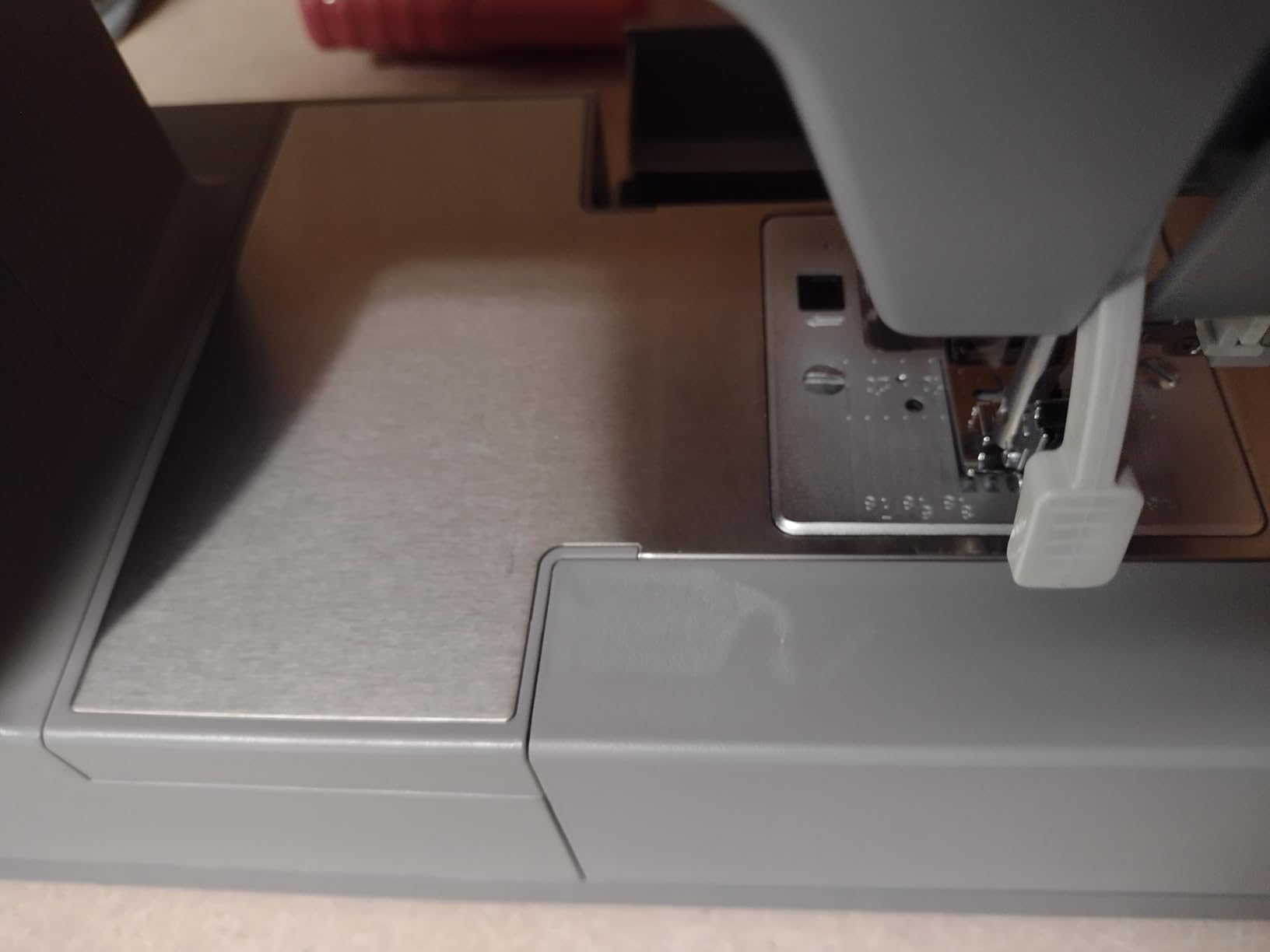
The clearance plate raises the foot for thick seams and lets you sew over a previous row without the plate catching. For quilting rows joined at an angle it is genuinely useful, and it is the detail most buyers in this price band do not get.
Before you commit, confirm the drop feed lever is reachable from your seating position. On a heavy mechanical machine in a deep table, the lever and the power switch can end up in awkward places.
Weigh the missing computer features
Without a screen you are turning dials by feel, which is slower when you switch stitch styles often. If you sew mostly in one or two stitch types, that barely registers.
The 14.6 pound metal frame is stable and heavy enough to stay put under pressure, which helps with bulky quilts. Pair it with a walking foot and a free-motion foot, both sold separately, and it handles serious layering.
7. Singer Heavy Duty 4523 Offers Drop Feed on a Full Metal Frame
SINGER® Heavy Duty 4523™ Next Evolution Sewing Machine with Accessories
Full metal interior frame
Drop feed
1000 stitches per minute
Steel bedplate
Pros
- Full metal interior frame resists flex under load
- Drop feed supports free-motion quilting and thread painting
- Speed control up to 1000 stitches per minute
- Stainless steel bedplate
Cons
- Some owners report bobbin tangling and early stopping
- No printed documentation available
The Singer Heavy Duty 4523 is the pick if your quilting involves thick batting, upholstery-weight fabric or a densely packed sandwich. At 17 pounds it is the heaviest machine here, and the full metal interior frame means the bed does not flex when you push hard through layers.
It has a drop feed lever, so free-motion quilting, monogramming and thread painting are all on the table, and the speed control tops out at 1000 stitches per minute with fine control on curves. The stainless steel bedplate and a top drop-in bobbin with a clear cover round out a mechanical package that is refreshingly simple to learn.
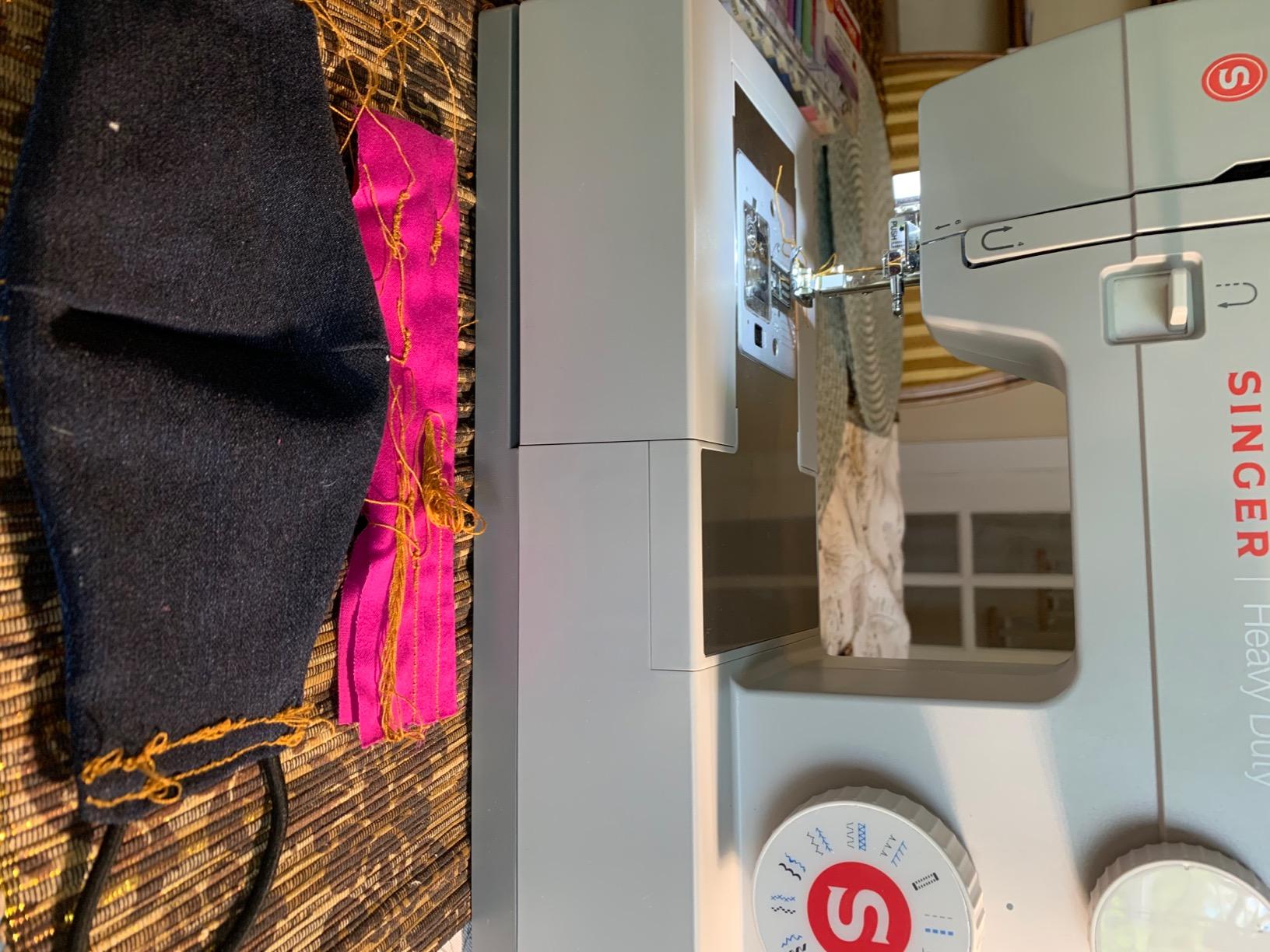
Twenty-three stitches deliver 97 applications, and the included feet cover all-purpose, buttonhole, zipper and blind hem work plus an edge and quilting guide. There is no walking foot in the box, so budget for that if you plan to quilt a sandwich on this machine.
Two caveats from owner reports are worth weighing. A minority of reviewers report bobbin tension tangling and the machine stopping after a few months, and a separate group questions whether the heavy-duty label holds on layered upholstery-weight fabrics. It still performs well on garments and cushions in most accounts.
Check your sewing surface can take the weight
At 17 pounds this machine is not a sit-and-sew portable. Make sure your table is solid enough and that you can move it alone when you need to, because most people move it in two trips or not at all.
The upside of the mass is stability. A machine that does not creep or vibrate under a thick sandwich saves you from the bunching that makes dense quilting frustrating on a lighter frame.
Read the bobbin complaints before you buy
Bobbin tension is the most reported mechanical issue, and it is usually a threading or tension-dial adjustment rather than a fault. Ask a dealer to demonstrate winding and tensioning the bobbin before you take the machine home.
The documentation is thin, with several owners unable to find an online manual. Confirm that a manual exists for your region before buying, and plan on a first session spent threading carefully.
8. Janome MOD-50 Is Built Around a 7-Piece Feed Dog System
Janome MOD-50 Computerized Sewing Machine with 50 Built-In Stitches, 3 One-Step Buttonholes, Drop Feed and Accessories
50 built-in stitches
7-piece feed dogs
Drop feed
Needle up/down
Pros
- Neat consistent stitching on light and heavy fabrics
- Light enough to move and store
- Drop feed supports quilting once a foot is added
- Backlit LCD with navigation keys
Cons
- Very few presser feet and no walking foot included
- Noisy and clunky next to larger Janome models
- Struggles with thicker materials and can stall
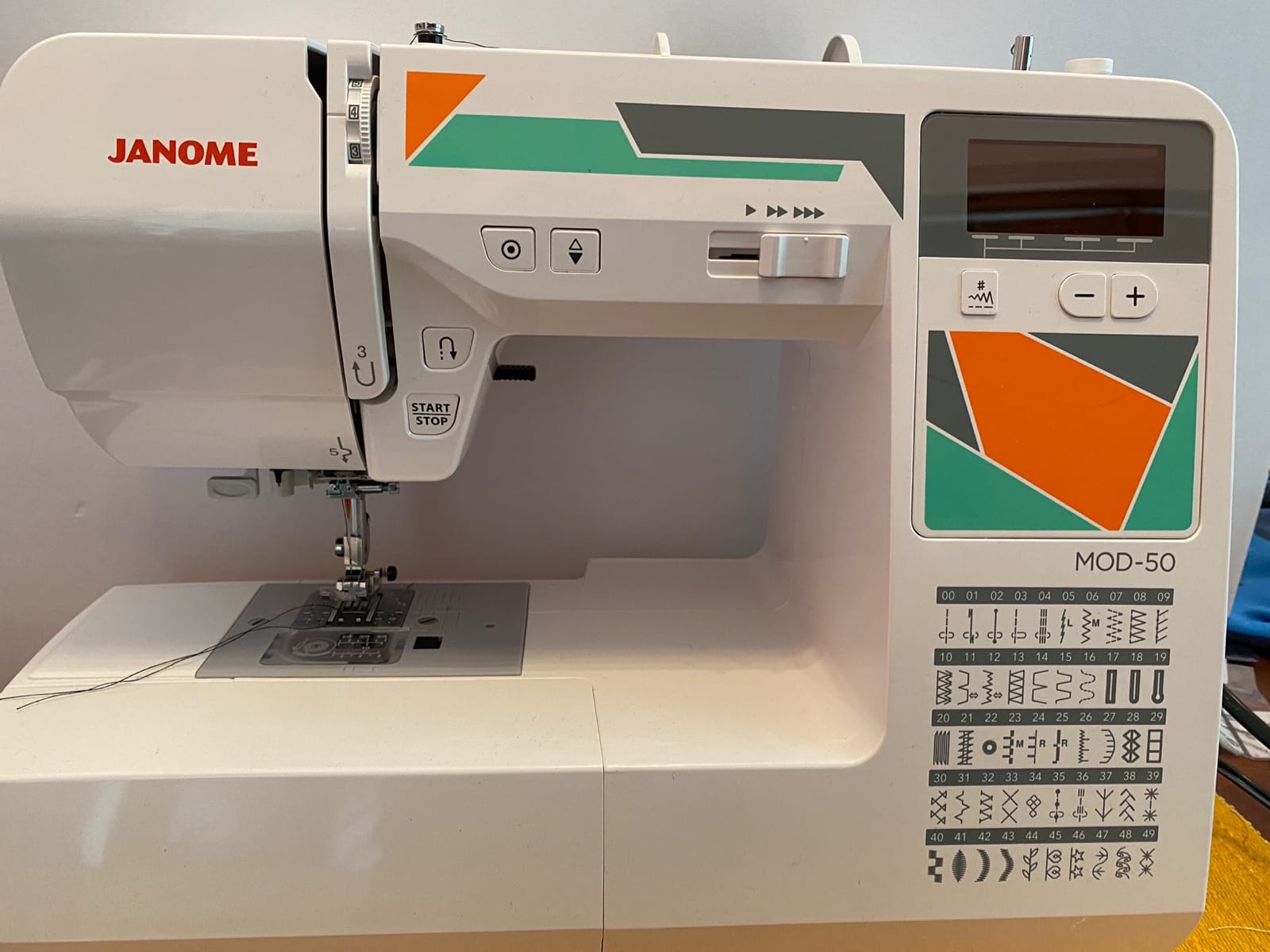
The Janome MOD-50 is the pick for patchwork piecing on a tight budget, and the reason is mechanical. Its 7-piece feed dog system moves small pieces evenly, and with a 1/4 inch foot many owners report it handles quilt piecing well despite being an entry-level machine.
You also get a backlit LCD with navigation keys, a start/stop button, reverse, a locking stitch, needle up/down, a free arm and drop feed. Those are the controls that make a machine pleasant to learn on, and the drop feed means you can add a free-motion foot later instead of being locked out of it.
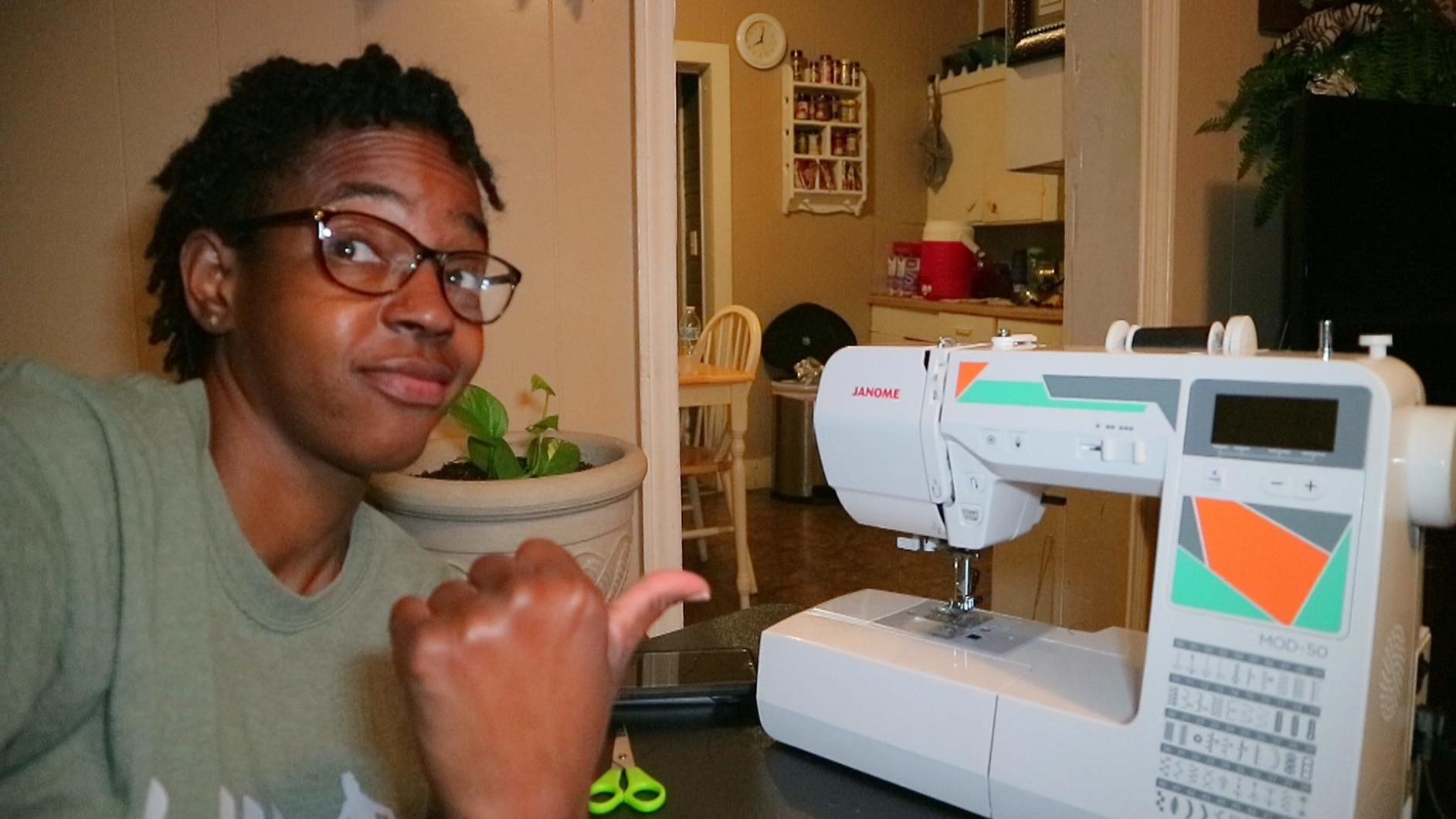
The critical caveat is the accessory list. Very few presser feet are included and no walking foot comes in the box, and some owners find the buttonhole-related feet difficult to use. The extension table is really the accessory storage compartment, not a quilting surface, so plan the budget for a walking foot, a quarter inch foot and a darning foot.
Sentiment is genuinely mixed. Some owners like the light 12.7 pound body for carrying to classes, and others describe it as noisy and clunky next to larger Janome models, with trouble on thick fabrics and occasional stalling on heavy seams.
Count the accessories you need to buy
Add a walking foot, a 1/4 inch foot and a free-motion foot to your shopping list before you order. Once those are on hand, the machine does the fundamentals well enough for piecing and light quilting rows.
If you quilt sandwiched layers regularly, choose a machine with the even feed foot in the carton instead. The 25-year limited warranty on mechanical parts is a genuine plus and longer than most rivals in this tier.
Judge the interface honestly
The computerized interface is not intuitive for a complete beginner, and the navigation keys take practice. If you are buying your first machine and want nothing to learn, a purely mechanical model will frustrate you less.
It is specified for 120V North American use only. Needle up/down and the speed controls are the features that will matter most once you start teaching someone else to use it.
9. Janome Arctic Crystal Is Light Enough to Carry to Class
Janome Arctic Crystal Easy-to-Use Sewing Machine with Interior Metal Frame, Bobbin Diagram, Tutorial Videos, Made with Beginners in Mind for Garments, Patchwork, Light Quilting
Interior metal frame
Darning plate included
12 lb body
15 stitches
Pros
- Very easy to learn for complete beginners
- Metal frame and metal bobbin case feel sturdy
- Compact and light for classes and retreats
- Sews denim and several layers without trouble
Cons
- Front-loading bobbin is unfamiliar to some owners
- Plastic thread holders can snap
- English-only instructions and noisier before servicing
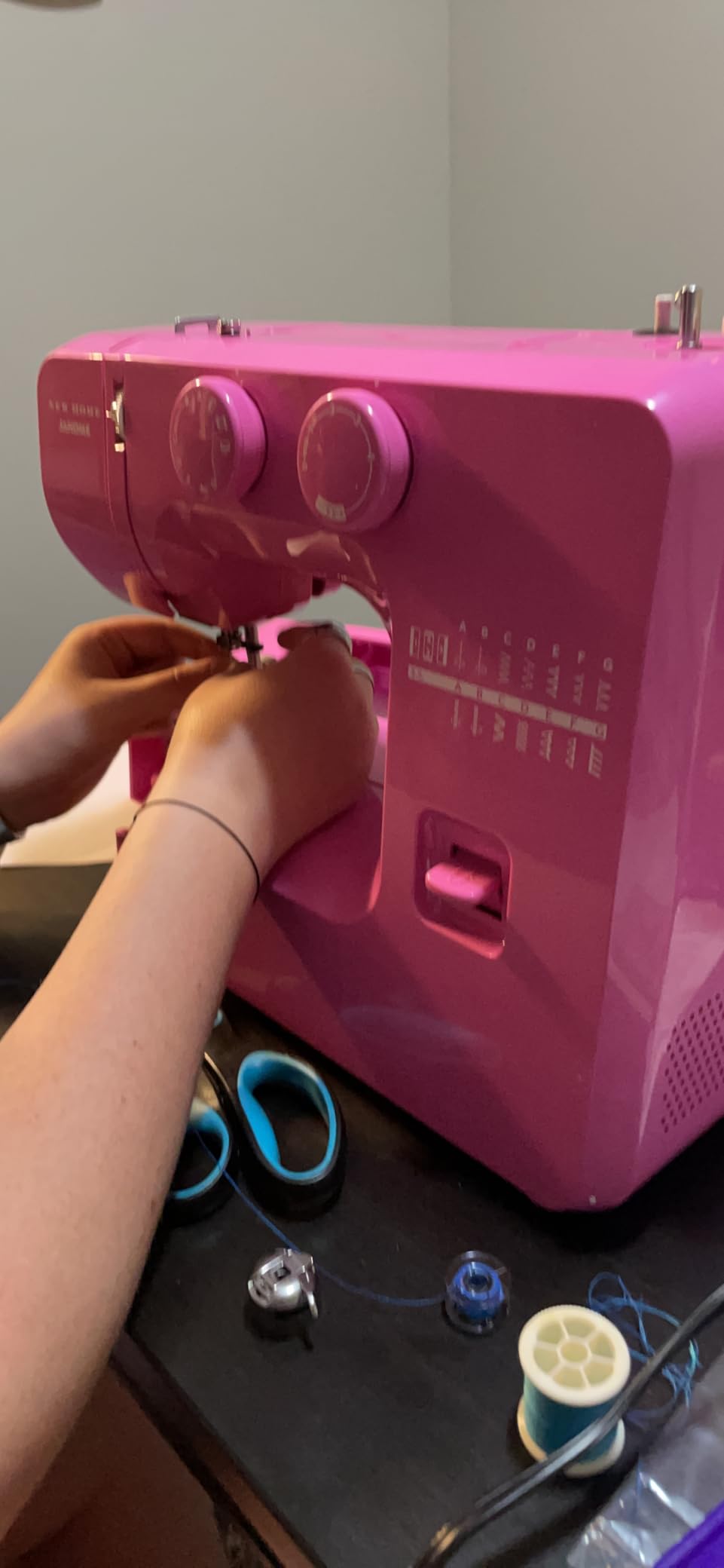
The Janome Arctic Crystal is the lightest serious machine here at 12 pounds, and that is the entire pitch. Owners take it to classes, retreats and sew-alongs because it is easy to carry, easy to store and genuinely simple to operate, with 15 stitches and a 4-step buttonhole.
It is not a lightweight machine in the flimsy sense. The interior metal frame and metal bobbin case give it more stability than machines at twice the price, and it sews through denim and several layers without complaint. A darning plate is included, so free-motion quilting is possible out of the box.
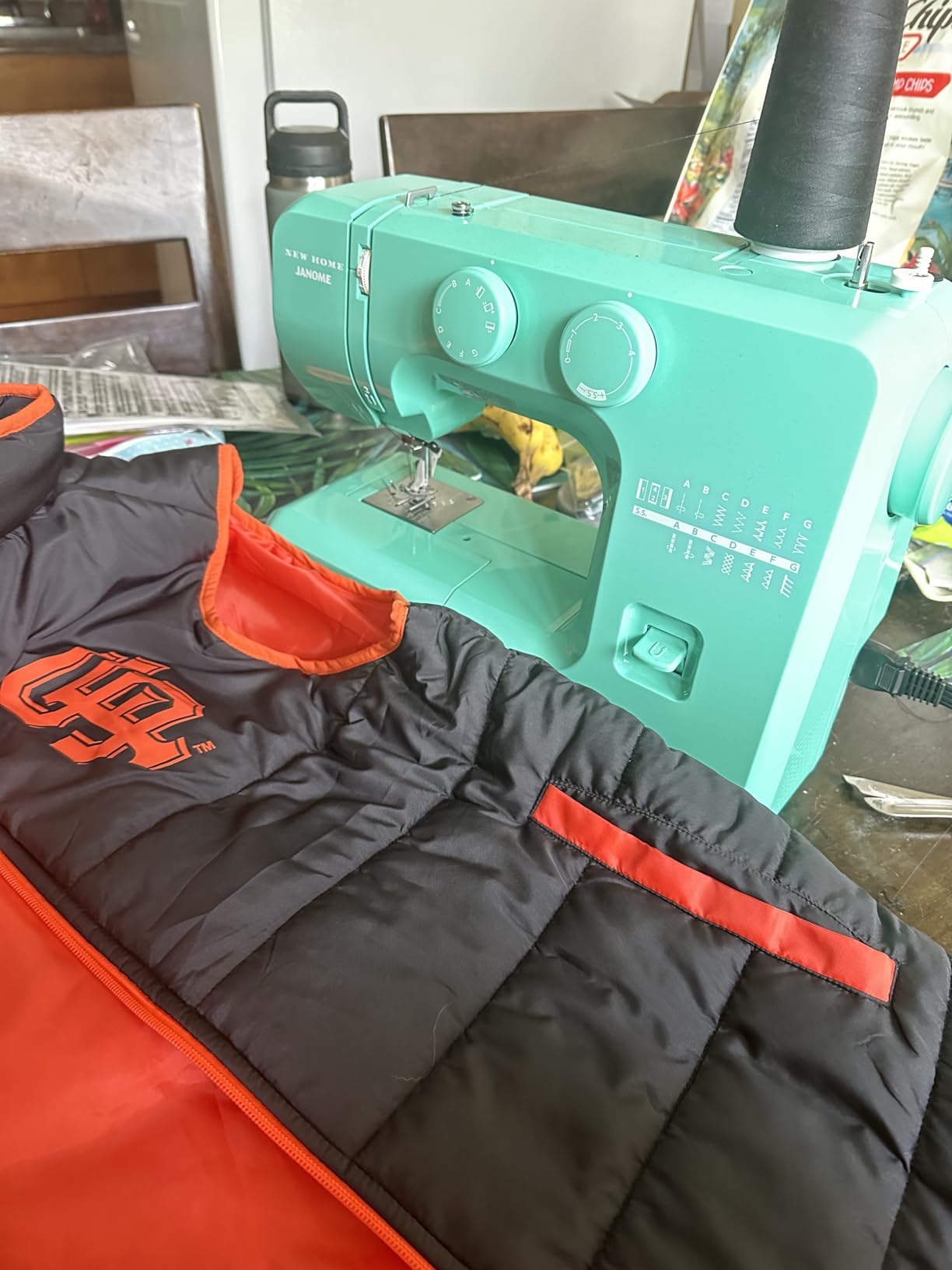
Multiple reviewers report buying more than one, which is about as strong a loyalty signal as this category produces. Owners with no prior sewing experience say they were producing professional hems within a single session, and the bright work light and printed threading diagrams inside the bobbin housing are small details that matter more to a beginner than any stitch library.
The extra-high presser foot lift and snap-on feet help with thick quilt layers, and the 3-piece feed dog with free-arm design keeps fabric moving evenly. It is a light-quilting and patchwork machine, not a sandwich machine, and treating it that way keeps you out of trouble.
Know the one system change that trips people up
The front-loading bobbin is different from the top-drop style most new machines use, and owners coming from a computerized machine need a few minutes to adapt. Watch one loading video before your first session and the frustration disappears.
Only four presser feet are included and there is no walking foot, so if you plan to quilt a sandwich, add that to the list. The darning plate covers free-motion work in the meantime.
Plan one servicing visit early on
Some buyers find it noisier than expected until the machine has been lubricated and serviced. A single early service visit resolves most of that and keeps the metal frame running the way owners describe.
Two minor notes: the instructions are English only, and some owners find the plastic thread holders snap, particularly on refurbished machines. The color finish also reads as cheaper in person than in photos for some buyers, so see it before committing.
10. EverSewn Charlotte Has a Feed Dog Drop and a 6.5 Inch Sewing Space
EverSewn Charlotte: 80-Stitch Computerized Sewing Machine, Professional Quilting & Free Motion Features – Beginner to Expert
Feed dog drop
6.5 inch sewing space
Fingertip speed control
70 stitches
Pros
- Feed dog drop gives real free-motion quilting capability
- Fingertip speed control suits slow precise work
- Seven presser feet and an edge guide in the box
- LED stitch panel makes selection simple
Cons
- Only 70 stitches against 100 to 185 on rivals
- About 700 stitches per minute is slower than heavy models
- No extension table for quilt bulk
The EverSewn Charlotte is the most explicitly quilting-focused machine in this list, and the only one that publishes its sewing space: 6.5 inches. That measurement sits beside the needle where a quilter feels it, and together with the feed dog drop it gives you genuine free-motion quilting rather than a token gesture.
Fingertip speed control is the sleeper feature for quilting. Slow, controlled stitching is what keeps a stipple pattern even, and the adjustable speed slider plus start/stop button let you work at a pace that suits dense areas. Seven presser feet and an edge and quilting guide ship in the box, along with three bobbins and three needles.
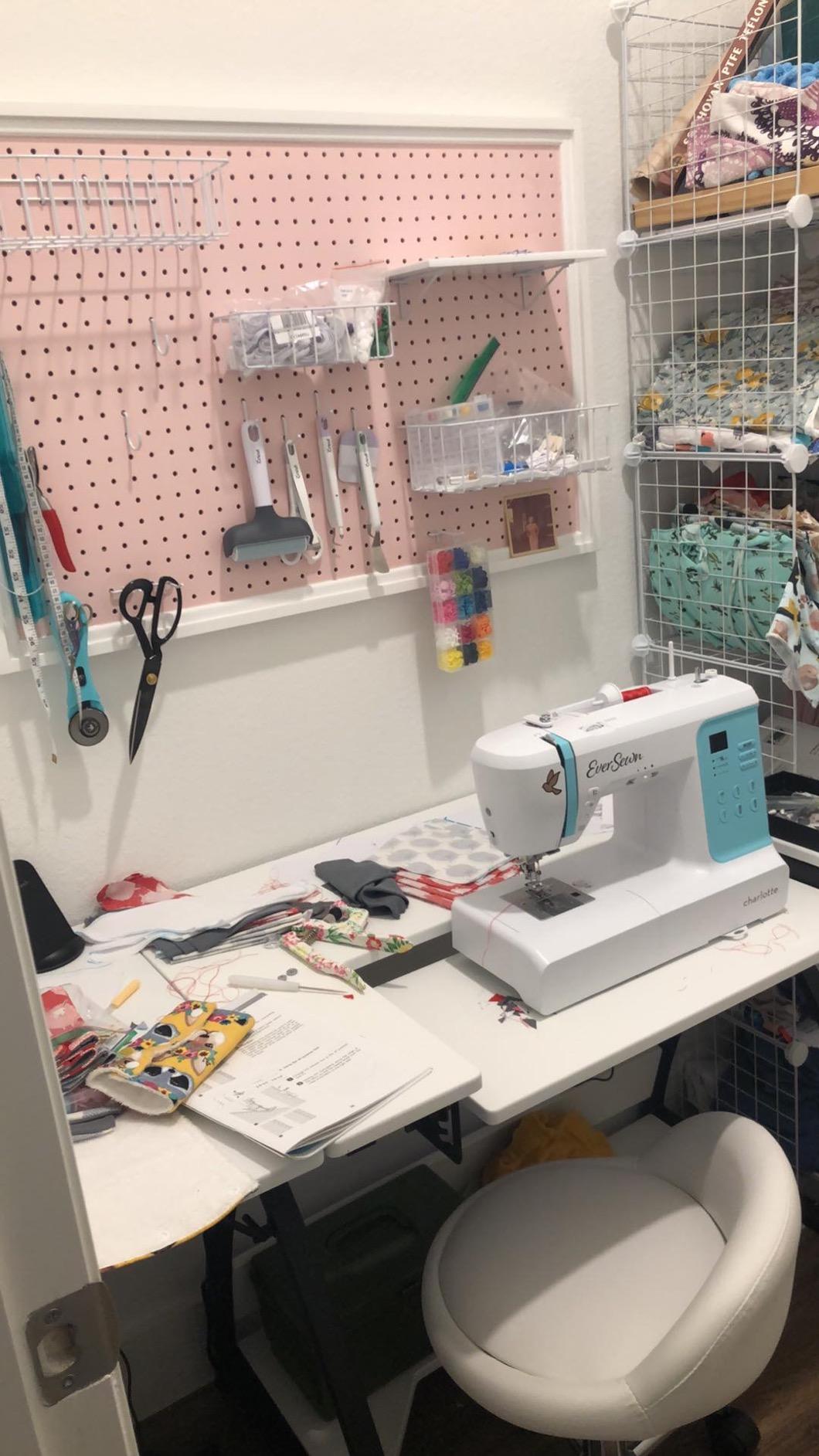
The trade-offs are real. It runs 70 stitches with a 7mm maximum width, against 100 to 185 on the computerized machines here, and it tops out around 700 stitches per minute, which is slow for long straight quilting rows. There is no extension table, so bulky quilt sections have nowhere to go.
Owner volume is the smallest in this roundup, and the share of one-star reviews is wider than the machines with thousands of reviews. That usually means the machine does what it claims but falls short of expectations set by the computerized models.
Check that 6.5 inch figure against your work
Most manufacturers never publish throat space, so a stated number is worth reading carefully. 6.5 inches of sewing space is generous next to a typical small-arm machine, and it is the single best-reason-to-buy argument this product has.
It will not solve a king-size quilt bulk. If your quilting is stippling, appliqué, small blocks and table runners, the space is more than enough, and free-motion work is where this machine genuinely earns its place.
Weigh the review volume before you commit
With the fewest owner reports here, you have less long-term evidence to lean on than with the Brother and Singer models. Ask a dealer about servicing and about the warranty terms in your region before buying.
The LED stitch panel and automatic needle threader make the first sessions easy, and the drop-in bobbin with a clear cover plate means you can see the bobbin while sewing. At 16 pounds it is stable without being awkward to move.
How to Choose: Five Features That Decide a Quilting Machine
Throat space decides how much quilt fits beside the needle, and it is the one thing you cannot upgrade later. A walking foot, even-feed foot or dual-feed foot grips the top layer so all three layers advance together. Drop feed dogs lower the feed so a free-motion foot can let the quilt move in any direction. Needle up/down lets you pivot at a corner without a hand wheel. And motor torque is what keeps the needle from stalling when the layers get thick.
The difference between a regular sewing machine and a quilting sewing machine is mostly about how the three layers of a quilt sandwich are controlled. A regular machine has a smaller throat, a single feed dog row and a standard presser foot, which is fine for garments and frustrating for batting. A quilting machine adds throat space, a stronger feed system, a lower presser foot pressure and compatible even-feed and free-motion feet.
Is Janome or Bernina better? At this budget you are choosing between Janome and the Brother and Singer value machines, because Bernina’s entry models sit above this ceiling. Janome builds heavier metal bodies and uses standard class 15 bobbins, and quilters on forums frequently compare its build quality favorably. Brother leads on included accessories and warranty length. Singer leads on motor power and price.
The best quilting sewing machine on a budget depends on which band you are in. In the entry tier, a machine with a metal frame and an included darning plate covers piecing, patchwork and light quilting rows. In the mid tier, prioritize a wide table and eight or more included feet, because that is where the accessory savings live. In the upper tier, prioritize a feed system that moves heavy layers without dragging and a frame heavy enough not to walk across the table.
One more filter that costs nothing: check whether a local dealer will service the model. Quilters raise the dealer versus online question constantly, and the honest answer is that a machine with free lifetime technical support and a long warranty is fine to buy online, while a machine you cannot get serviced locally is a risk. Keep the packaging until you have sewn a full seam, and run a test strip of all three layers before you start a quilt.
Where a Used Machine Buys You More
A used machine is how most quilters reach hardware that new money cannot reach at this budget. On Sewing Pattern Review, long-term owners repeatedly endorse the Brother PQ1500 series, often bought second hand and put on a quilting frame. The feed force, throat space and needle penetration of that class are simply not available new below this ceiling.
Quilters on r/quilting name the Juki TL2000-Qi, with its 9-inch throat, as the upgrade goal, and also point out that the same budget buys a used long-arm if you are patient. Buying used means cleaning it, replacing the needle and a service visit before the first quilt, so budget both time and money for that.
The community consensus we heard most often on r/quilting is a simple rule: choose the biggest throat your budget allows. That advice is exactly right, and it is why every pick above states what it does and does not give you in the way of workspace.
What You Cannot Get on This Budget
No machine under this ceiling has a 9-inch throat. That is the specification that separates a home quilting machine from a mid-arm quilting machine, and it is the reason the Juki TL2000-Qi sits above this budget as a new purchase.
There is also no true dual feed system, which is the fabric-marching alternative to a walking foot and does not depend on a foot presser height setting. And no computerized long arm appears in this range, which means no automatic thread cutter, no large color screen and no computerized pattern memory to work from.
Free-motion capability is available here, but it depends on the feed dog drop and on buying a darning foot. Across the ten machines above, only some include a walking foot, and only two include a darning plate. Budget roughly the cost of those accessories into any budget you set, because the head of the machine is rarely the whole cost.
Frequently Asked Questions
What is the best quilting sewing machine on a budget?
The Brother HC1850 is our pick for most people: it arrives with a wide table, eight presser feet and a 25-year limited warranty, so nothing essential is missing from the box. If quilt-as-you-go is your priority, the Janome JW8100 has the flattest extension table here. If you want the least expensive start, the Janome Arctic Crystal covers piecing and light quilting.
What is the difference between a regular sewing machine and a quilting sewing machine?
A quilting machine gives you more throat space beside the needle, a stronger multi-piece feed system, lower presser foot pressure and compatible even-feed and free-motion feet. Those four things keep batting, top and backing moving together through a quilt sandwich. A regular machine can sew a straight seam, but it shifts and bunches when you push multiple thick layers.
What sewing machine do most quilters use?
The brands that come up most often in quilting communities are Brother, Janome, Singer and Baby Lock, with Bernina at the premium end. Under this budget you are choosing between Brother’s value machines, Janome’s metal-framed models and Singer’s heavy-duty mechanical lines. On r/quilting the most repeated advice is simple: choose the biggest throat your budget allows.
Can I use a regular sewing machine for quilting?
Yes, for piecing, top assembly and light quilting rows, provided you have a walking foot or even-feed foot and a 1/4 inch foot. Free-motion quilting needs a feed dog drop, and a small throat makes bulky sections awkward. Many quilters start on a regular machine and move up once they know whether they want dense stippling, ruler work or long straight rows.
What is the best sewing machine for a beginner who wants to learn quilting?
The Janome MOD-50 and the Brother XR3774 are the most beginner-friendly picks here, because both have an automatic needle threader and a straightforward stitch list, and the XR3774 ships with a walking foot and darning plate. The Janome Arctic Crystal is even simpler, though it has fewer stitches. Buy the simplest machine that includes the feet you need for quilting.
The Verdict: Which One Should You Buy
Buy the Brother HC1850 if you want the least friction in this price range: wide table, eight feet, backlit screen, 25-year warranty and free lifetime support. Buy the Brother XR9550 if the hard cover and slightly lower entry point matter more to you. Buy the Janome JW8100 if you quilt as you piece and want the flattest table available.
Whatever you choose, buy the feet. A walking foot, a 1/4 inch foot and a darning foot are the difference between quilting on day one and quilting after a month of waiting, and no machine on this list changes that. If you want to see the higher end of the market, read our quilting machine guide, and check the current figures on each machine before you commit.