
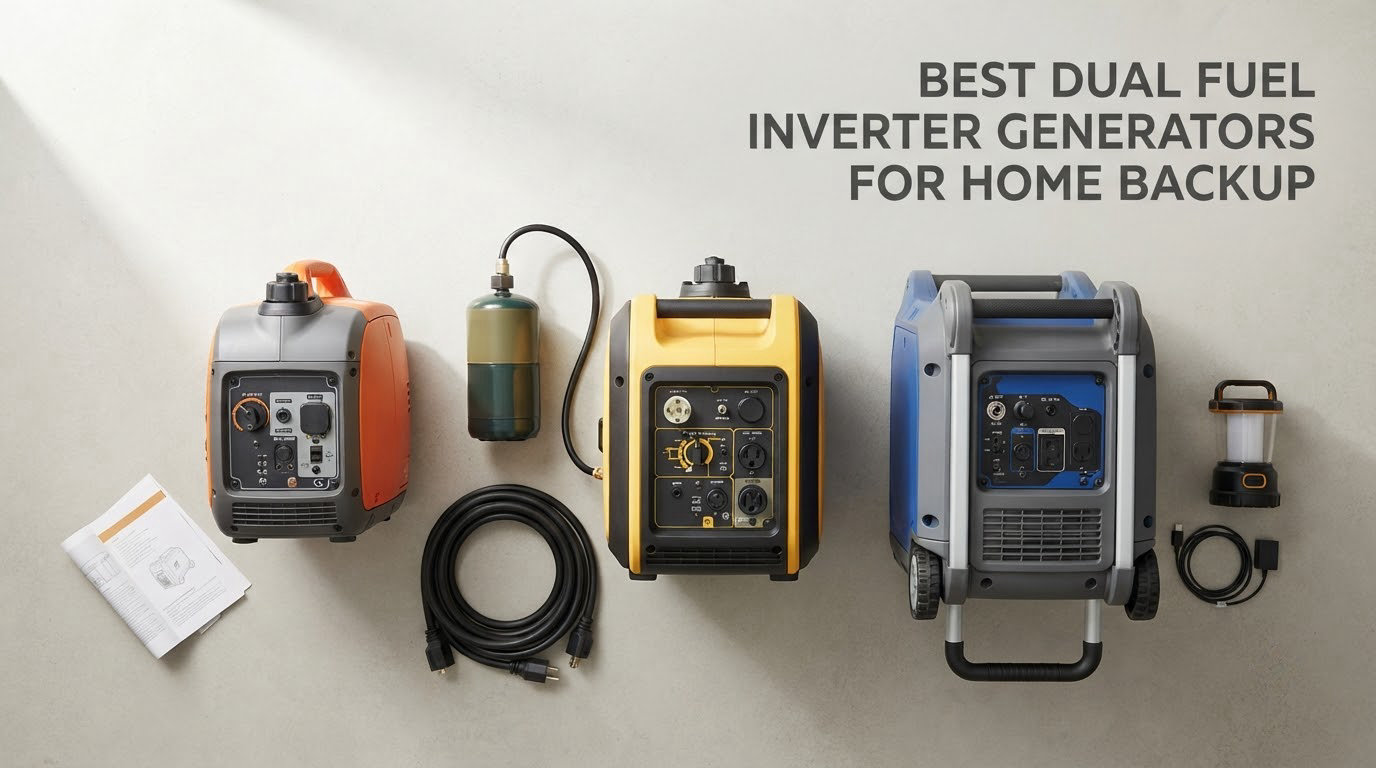
Outages rarely wait for a convenient weekend, and the generator you buy in July is the one you need in January. After going through the current crop of dual fuel inverter generators on the market and reading owner feedback on each, the Westinghouse iGen5000DF is the one I keep coming back to for most homes: 3900 running watts at under 3% total harmonic distortion, a measured 52 dBA in Economy Mode, and remote key fob start.
That shortlist is the whole point of this guide. The best dual fuel inverter generators for home backup are not the biggest or the loudest machines on the market. They are the units that produce genuinely clean power, start without a struggle in cold weather, and keep running on fuel that will not spoil while it sits in your garage. Every pick below is a true inverter unit with a published THD figure, which is the filter most competing roundups skip.
What separates a dual fuel inverter generator from everything else is a combination of two features that solve different problems. Inverter technology cleans up the power so your refrigerator, router, home office and medical equipment are safe to run. Dual fuel capability means you can switch to propane, which stores indefinitely, and never open a can of gasoline that has been sitting since last winter. If you want the broader picture on inverter units first, our inverter generator guide covers the technology in more depth, and our portable generator picks for home cover the non-inverter side.
Over the next few thousand words I break down all ten units by wattage class, publish running watts for gasoline and propane separately, explain the propane derating math that catches first-time buyers out mid-outage, and tell you plainly which homes each machine is right for and which ones should skip it.
Top 3 Dual Fuel Inverter Generators for Home Backup in 2026

Westinghouse iGen5000DF
- 3900 running watts under 3% THD
- 52 dBA in Economy Mode
- 18 hour runtime on a 3.4 gallon tank
- remote key fob start

Champion 4000W Dual Fuel Inverter
- 3000 running watts on gas and 2700 on propane
- up to 25 hours on a 20 lb propane tank
- 51.8 pounds
- three year warranty

PowerSmart 3800W Dual Fuel Inverter
- 3300 running watts on gas and 3100 on propane
- 59 dBA at 25 percent load
- six outlets including a 30A twist lock
The Westinghouse wins on the combination that matters most: it has the highest rating and the largest review base of any unit in this roundup, and it is also the quietest. The Champion 4000 is the value pick if you care most about propane runtime and you need to lift the machine yourself. The PowerSmart 3800 does the most for the least money and is the one I recommend to a first-time buyer on a tight budget.
Best Dual Fuel Inverter Generators (October 2026)
| Product | Specifications | Action |
|---|---|---|
| Westinghouse iGen5000DF |
|
Check Latest Price |
| Champion 4000W Dual Fuel Inverter |
|
Check Latest Price |
| PowerSmart 3800W Dual Fuel Inverter |
|
Check Latest Price |
 Champion 4250W Open Frame Inverter Champion 4250W Open Frame Inverter |
|
Check Latest Price |
 Westinghouse iGen12000DFc Westinghouse iGen12000DFc |
|
Check Latest Price |
 Champion 4500W Electric Start Inverter Champion 4500W Electric Start Inverter |
|
Check Latest Price |
 WEN DF680iX WEN DF680iX |
|
Check Latest Price |
 WEN DF360iX WEN DF360iX |
|
Check Latest Price |
 WEN DF480iX WEN DF480iX |
|
Check Latest Price |
 AIVOLT 11250W 50A Inverter AIVOLT 11250W 50A Inverter |
|
Check Latest Price |
Two numbers in that table deserve attention before you read further. First, look at the propane column against the gasoline column on every row: the loss ranges from about 6% to about 15% depending on the model. Second, look at the weights. There is a 172-pound spread between the lightest and heaviest machine here, and that difference decides whether one person can move the generator to the garage before a storm or whether you need a second pair of hands.
The Honest Disadvantages of Dual Fuel
A dual fuel generator costs more than a single-fuel machine, needs more parts to service, and produces less power on propane than on gasoline. That is the honest short version, and it is worth understanding before you spend anything, because a wattage shortfall discovered during a storm is a bad way to find out.
Here is the breakdown, drawn from how the ten units in this roundup actually behave. Every point below applies to real models above, not to a generic list.
Output drops when you switch to propane. Why it happens: propane carries less energy per unit volume than gasoline, so manufacturers rate the same engine lower on LP. How to work around it: size your generator on its propane running wattage, not the headline number.
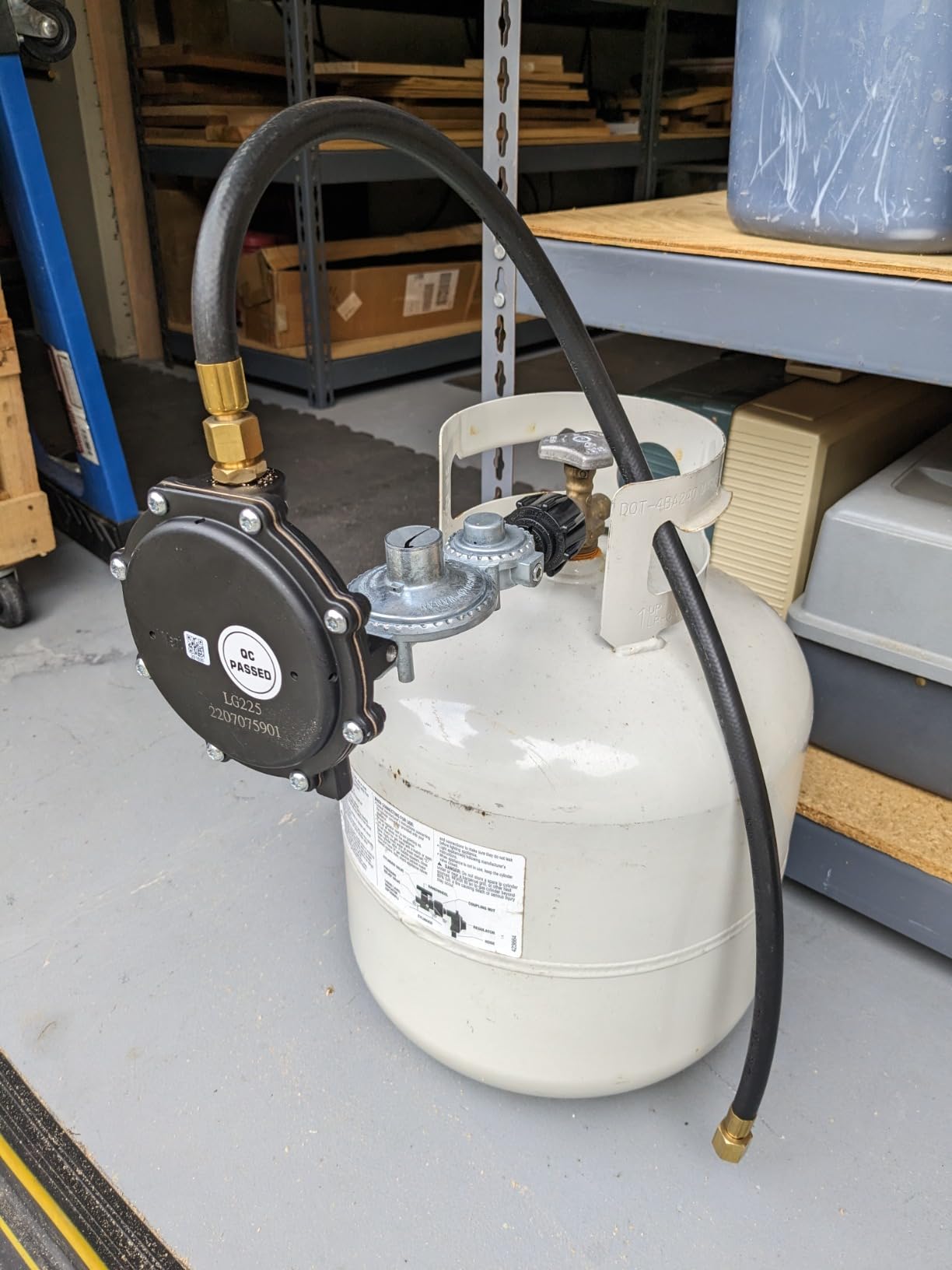
Two fuel systems means more to maintain. The carburetor, fuel lines, regulator and the LPG connector all age independently. Work around it by following the same service schedule for both systems rather than treating propane as the free option.
It is heavier than a gas-only unit of the same size. The LPG tank cradle, hose and regulator add real weight, and it shows most on the mid-size models here.
The propane tank is not included. You are buying the connection hardware, not the fuel. Budget for cylinders separately and store them upright outdoors.
Switching fuel mid-run needs a warm engine. Owners report a cold unit will not always take a fuel change cleanly. Let it run for a few minutes first.
It costs more up front than a comparable single-fuel inverter. The dual fuel hardware, the second fuel plumbing and the extra documentation all show up in the sticker.
None of that makes dual fuel a bad buy. If your outages are short and frequent, the propane path is a convenience. If you are dealing with a multi-day outage, it is the difference between a generator that is still running on day four and one that is not.
1. Westinghouse iGen5000DF – The Best All-Round Dual Fuel Inverter Generator
Westinghouse 5000 Peak Watt Super Quiet Dual Fuel Portable Inverter Generator, Remote Electric Start, Gas & Propane Powered, RV Ready 30A Outlet, Parallel Capable, Blue/Black
3900 running watts
under 3% THD
as low as 52 dBA
104.7 pounds
3.4 gallon tank
Pros
- Quietest measured noise figure in this roundup at 52 dBA in Economy Mode
- 3900 rated watts at under 3% THD for sensitive electronics
- Remote key fob start with electric and recoil backup
- 18 hour runtime on a 3.4 gallon tank
- LED data center showing fuel level output voltage and lifetime hours
Cons
- Heavy at 104.7 pounds for a portable unit
- Remote start needs a separate 12V battery connection charged beforehand
- Parallel capability requires an additional parallel kit
This is the unit I would put in the garage of a typical three-bedroom house without hesitating. It delivers 3900 rated watts at less than 3% THD, which means the refrigerator, the internet router, a home office and a gas furnace ignition circuit can all run at the same time without drama. Peak output is 5000 watts, which gives motors like a sump pump the headroom they need to start.
Noise is where it pulls away from the field. Westinghouse rates it as low as 52 dBA, and that is the lowest published figure among the ten machines here. Economy Mode throttles the engine down when your load is light, so a fridge-and-lights night is not the same volume as running the whole essential-loads list.
What you get for that money in features is unusually complete for this class. There are five outlets total: a 5-20R household duplex, an RV-ready TT-30R 30 amp receptacle and two USB ports. The LED data center rotates through fuel level, power output, remaining run time, voltage and lifetime hours, which saves you guessing whether a weekly run actually happened.
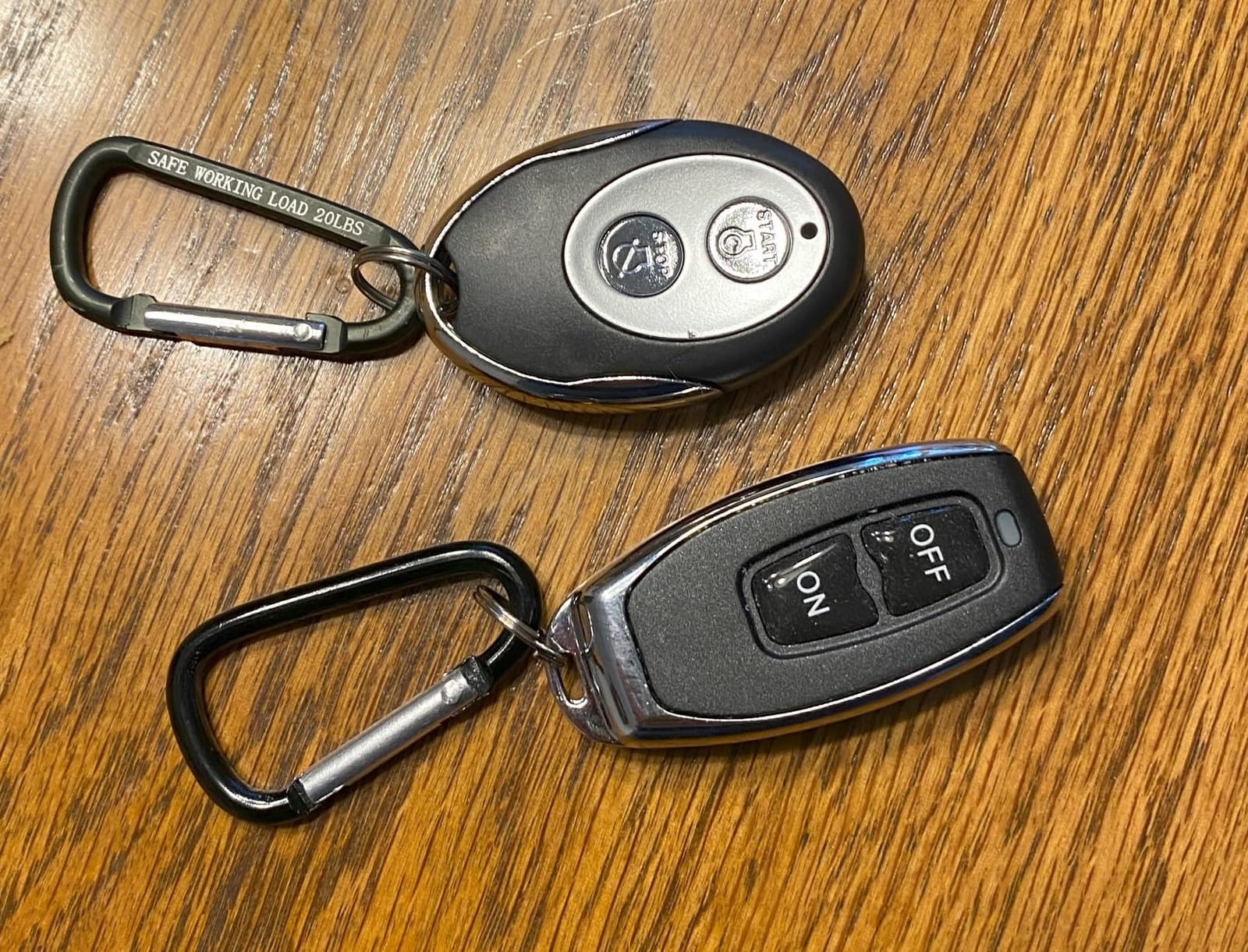
Start-up is remote. A key fob is in the box along with a battery charger, so you can start it from inside during a storm rather than walking out in the rain. Recoil start remains as a backup, and the unit is EPA compliant and factory tested with a three year limited warranty on service, labor and parts.
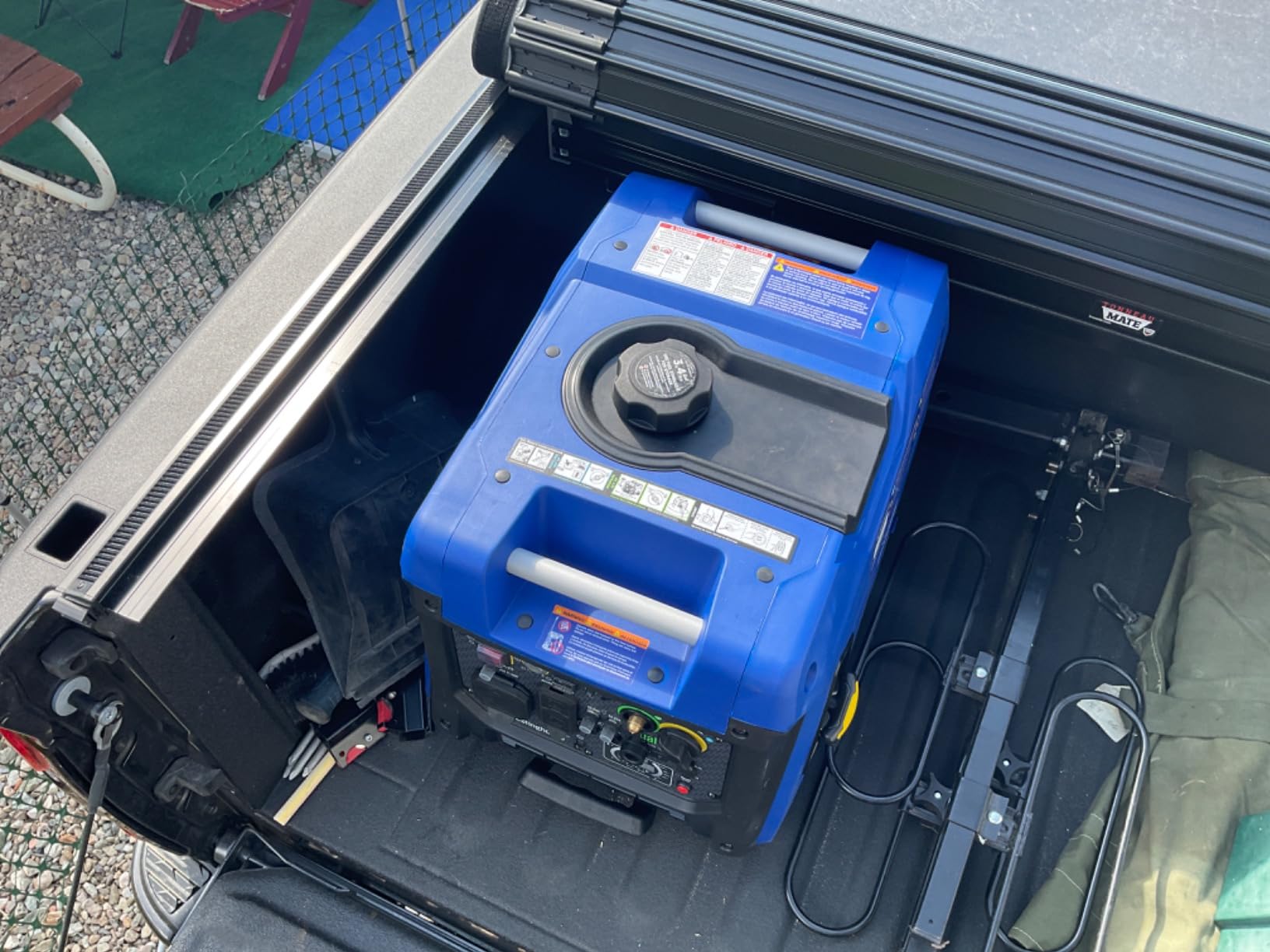
What the iGen5000DF handles well in a real outage
The 3.4 gallon tank is the reason this unit earns its slot for most homes. At a quarter load you get roughly 18 hours, which comfortably covers an overnight outage and most of the next day without a refuel trip. The 5-20R duplex outlets are the ones you will actually use day to day, and the TT-30R covers a portable AC unit or an RV if you need it.
For a medical device or an oxygen concentrator, the under 3% THD specification is the detail that matters most, and reviewers single it out repeatedly. If you are running a CPAP machine, a home oxygen unit or a network rack, this is the class of clean output those devices expect.
Where it falls short for certain buyers
Weight is the real limitation. At 104.7 pounds it is a two-hand lift and a bad candidate for a truck bed solo. If your plan is to grab it and go, look at the 49-pound WEN later in this list instead.
The remote start also needs planning. The key fob only works once the included 12V battery is connected and charged, so the first thing to do after unboxing is wire it up and confirm the start signal. Parallel operation, which would let you double output with a second matching inverter, requires buying a separate parallel kit.
2. Champion 4000W Dual Fuel Inverter – The Best Value Pick
Champion 4000-Watt Dual Fuel RV Ready Portable Inverter Generator
3000 running watts on gas
2700 on propane
up to 25 hours on propane
51.8 pounds
Pros
- Up to 25 hours of run time on a standard propane tank
- Clean inverter output under 3% THD for electronics
- CO Shield carbon monoxide auto shutoff
- Lightweight at 51.8 pounds with an easy carry handle
- Overload indicator with a simple red button reset
Cons
- Loud at higher loads around 64 dBA and up to 70 dBA at full output
- Output drops to about 2700 running watts on propane
- Recoil start only with no electric or remote start
The Champion 4000 is the machine to buy when propane is your primary fuel and you want the longest possible run from a set of cylinders. It delivers 3000 running watts on gasoline and 2700 on propane, with 4000 and the lower propane equivalent available for starting loads. Owners regularly report 25 hours on a standard 20 pound propane tank, which is the best propane endurance of any unit in this roundup.
It is also the easiest to move. At 51.8 pounds with a conventional carry handle, one person can lift it into a car trunk or onto a porch without planning the lift first. That matters more than raw wattage for a lot of households, because a generator you cannot move is a generator you will not use.
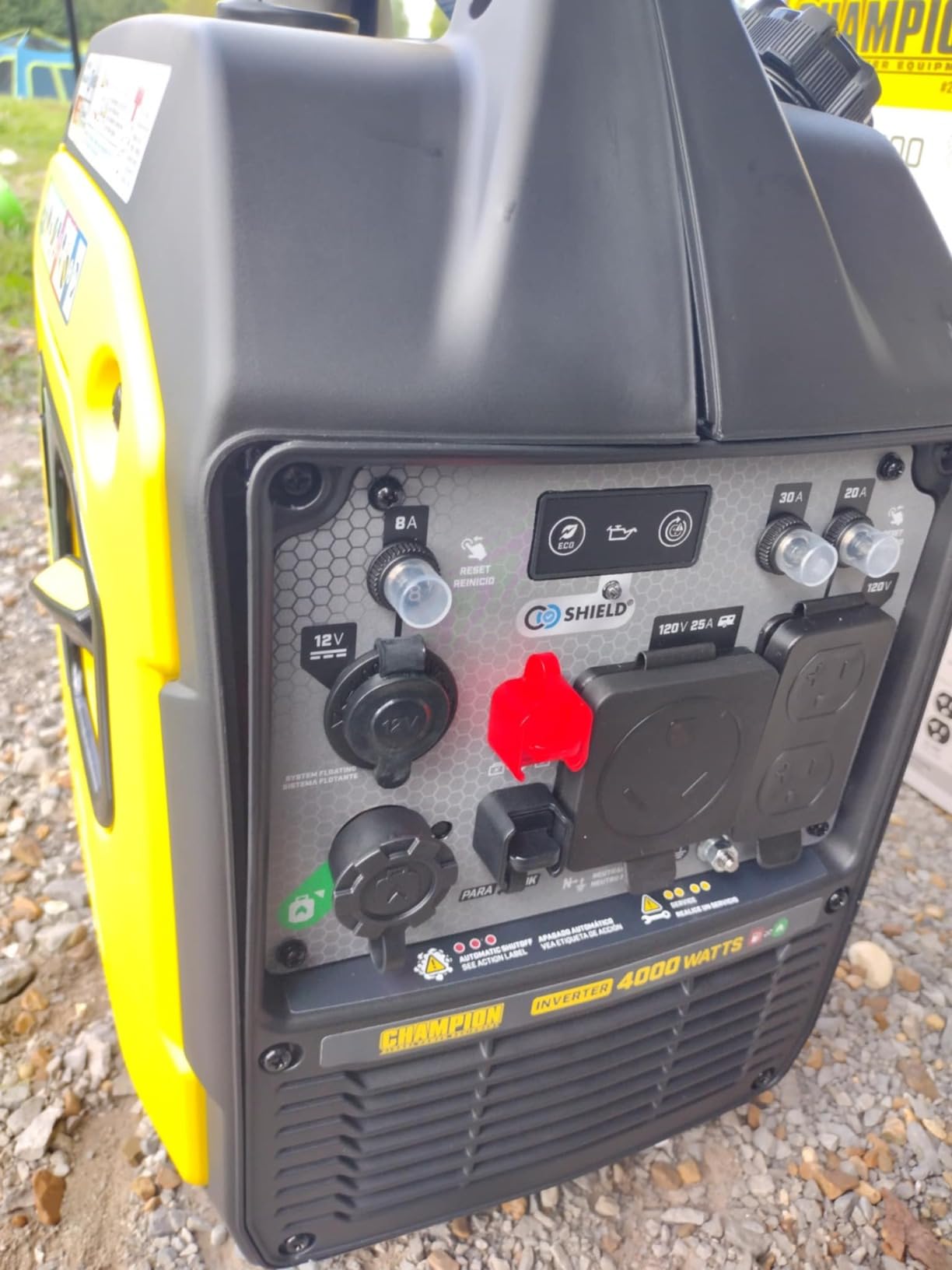
Safety is handled properly. CO Shield shuts the unit down automatically when carbon monoxide climbs, and the inverter output stays under 3% THD so laptops, televisions, routers and refrigerators run without risk. The outlet set includes a 120V 25A TT-30R, a 120V 20A household duplex with clean power, a 12V automotive outlet and parallel connections. A three year limited warranty comes with free lifetime technical support.
It runs out of the box on either fuel with no modification, which is a genuine convenience compared with units that need a conversion step. That said, owners do note that propane behavior can be temperamental on a brand new unit until it has been broken in on gasoline first.
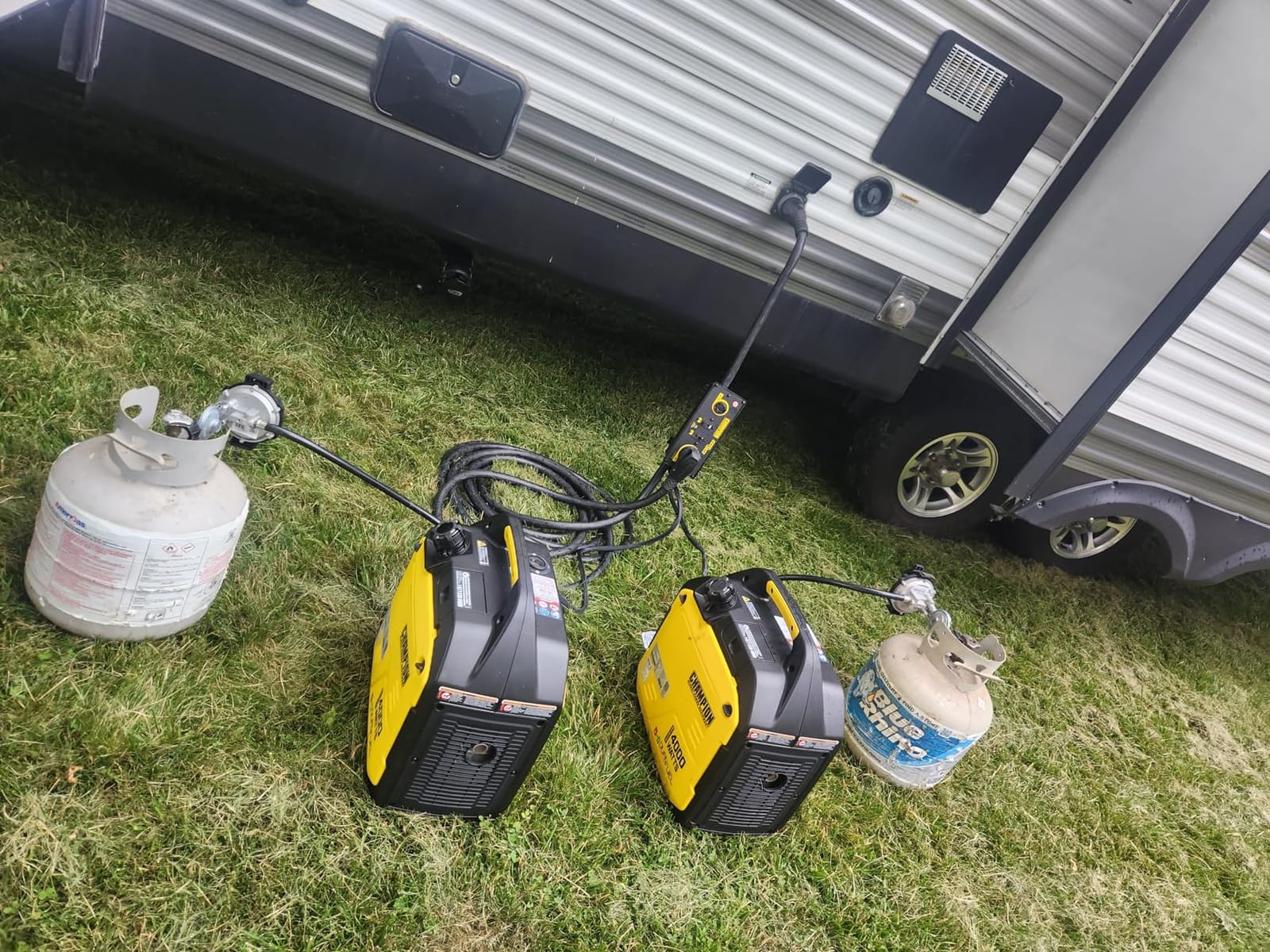
Why propane runtime matters more than most buyers expect
Cylinders are the limiting factor in a long outage, not tank capacity. When a regional storm hits, everyone wants propane at once, and exchanges slow down. A unit that stretches one 20 pound cylinder through a full day changes your planning from fuel logistics into a solved problem. The Champion does that better than anything else here.
For a home running a refrigerator, a freezer, internet, lighting and a gas furnace, 2700 propane running watts is genuinely workable. It will not start a central air conditioner, but it covers the essential-loads list with room to spare.
Where it falls short for certain buyers
Noise is the trade-off. The published figure is 64 dBA at 23 feet, and owners report closer to 70 dBA when the engine is working hard. That is fine in a rural yard and noticeable next to a bedroom window in a tight neighborhood. If quiet is your top priority, the Westinghouse in the previous section is the answer.
It is recoil start only. There is no electric start and no remote fob on this model, so every start means a pull cord. The 1.54 gallon gasoline tank also limits gasoline endurance to roughly 8 to 10 hours under real load, which is another reason to plan around propane.
3. PowerSmart 3800W Dual Fuel Inverter – The Best Budget Pick
PowerSmart 3800 Watt Dual Fuel Inverter Generator for Camping or Home Use
3300 running watts on gas
3100 on propane
59 dBA at 25 percent load
50.7 pounds
Pros
- Well reviewed with 1125 ratings behind it
- 59 dBA at 25 percent load in Eco Mode
- Up to 24 hours on a 20 lb propane tank
- Six outlets including a 30A twist lock and USB ports
- Overload short circuit CO and low oil shutdown protection
Cons
- Small 1.3 gallon fuel tank means frequent refills on gasoline
- Access panels and the oil change door need a Phillips screwdriver
- Customer support is difficult to reach for warranty service
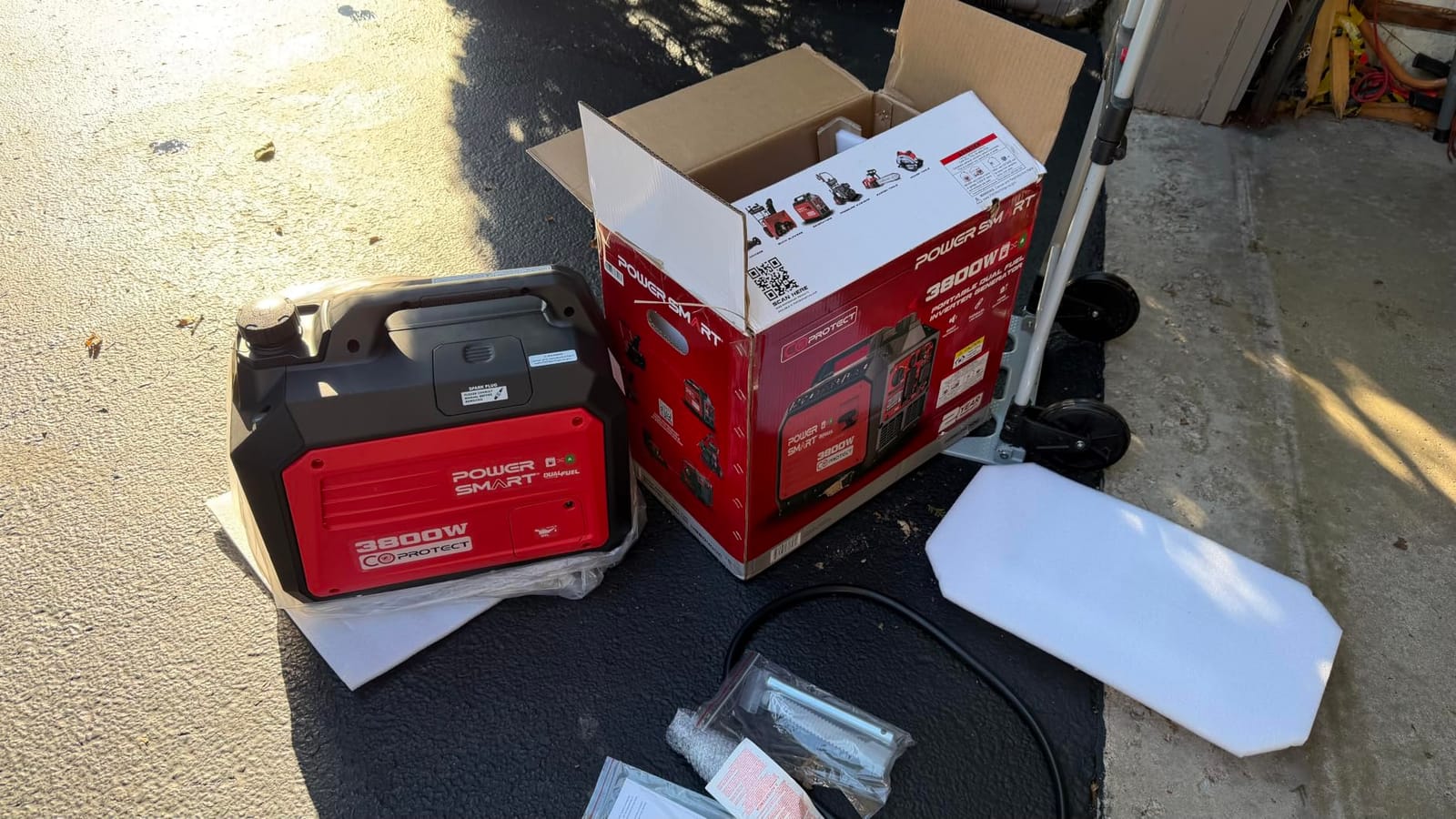
The PowerSmart 3800 does something none of the other nine do at this level: it pairs 3300 running watts on gasoline and 3100 on propane with a full safety package and six outlets, at the entry price band. That combination makes it the pick for a first-time buyer who wants a real dual fuel inverter without stretching into a mid-size machine.
Its review count and rating distribution back that up, with 1125 reviews behind it and 78% of those ratings sitting at five stars. Owners frame it consistently as more features than the money suggests, which is a fair summary of a unit that includes a 30A twist lock, GFCI protection and dual USB charging.
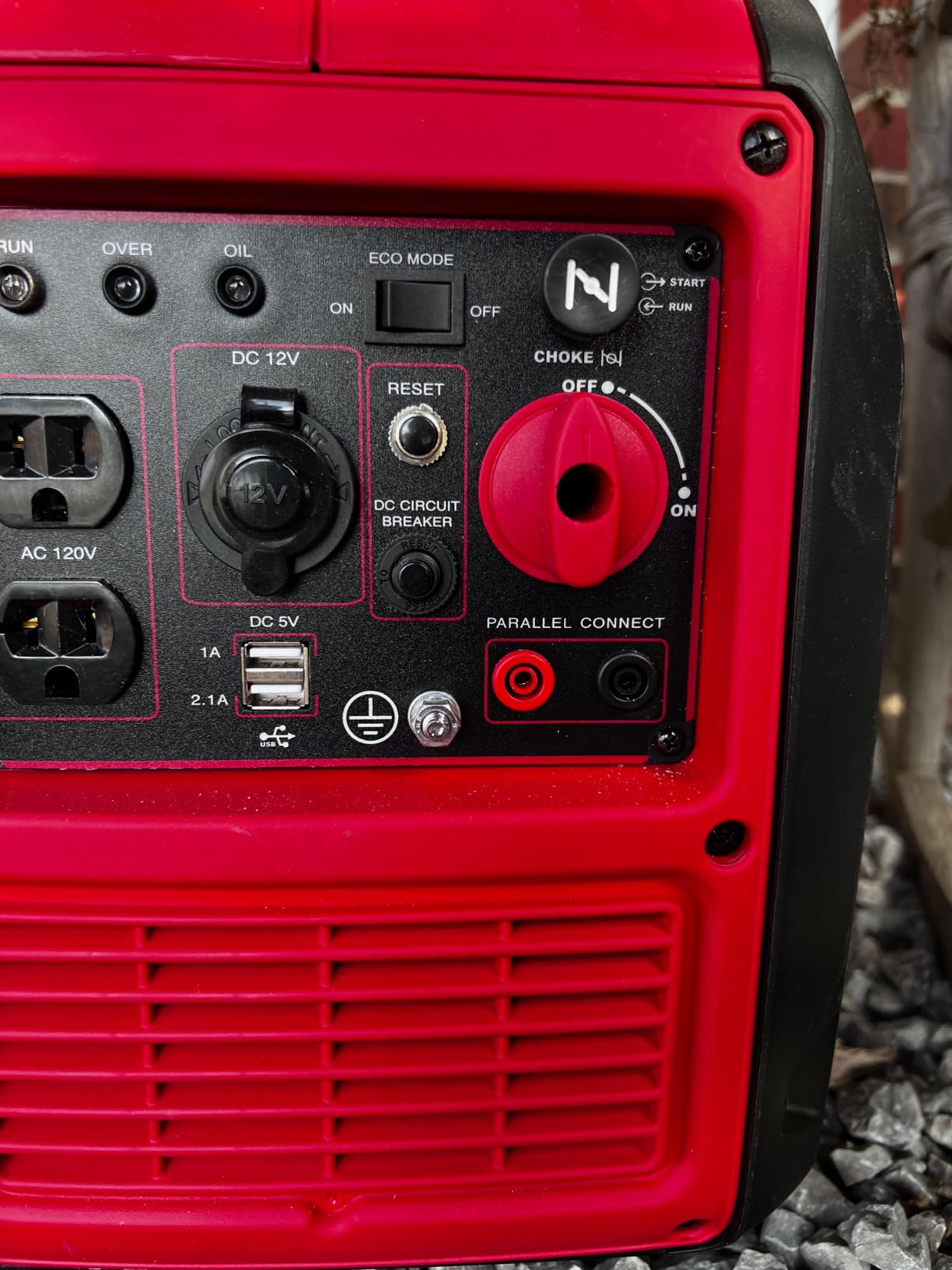
Power is clean, rated under 3% THD with stable voltage and amperage under load, so sensitive electronics are not the concern here. The control panel display reports output, load and remaining runtime, which is more instrumentation than most machines at this size offer.
It starts easily on the first or second pull once you add oil, and the engine is a 149cc four stroke. Certification covers ANSI/PGMA G300, ANSI/UL2201 and EPA standards, and it carries a two year limited warranty with free lifetime technical support.
When this is the right amount of generator
3100 propane running watts covers the essential-loads tier: refrigerator, freezer, internet, lighting, a sump pump and a gas furnace. It also handles a CPAP or oxygen concentrator without concern given the THD spec. Certified to ANSI/PGMA G300 and UL2201, it is the pick when your priority list stops before you reach central air conditioning.
At 50.7 pounds it is one of the two easiest machines here to carry, and 59 dBA at 25% load in Eco Mode keeps it inside the range most neighbors will accept.
Where it falls short for certain buyers
The 1.3 gallon gasoline tank is the biggest practical annoyance. On gasoline you get about 8 hours at quarter load, which means refilling through a long evening. Owners who want fewer fuel stops should run it on propane, where up to 24 hours per 20 pound cylinder is achievable.
Two smaller frictions are worth knowing. The access panels and the oil change door require a Phillips screwdriver, and reaching them on a dark porch in rain is not fun. Support has also been difficult to reach for warranty service, which is a real risk on a brand with a smaller service footprint than Westinghouse or Champion.
4. Champion 4250W Open Frame Inverter – The Longest Gasoline Runtime Here
Champion 4250-Watt Dual Fuel Portable Open Frame Inverter Generator, CARB
3500 running watts
22 hours on a 4 gallon tank
224cc 4 stroke
79 pounds
Pros
- 22 hour run time on a 4 gallon tank for the longest gasoline endurance here
- Digital hybrid design runs about 50 percent quieter than a traditional Champion 3500W
- Inverter output below 3% THD for electronics
- Parallel ready with a ParaLINK kit
- Three year warranty with free lifetime support
Cons
- Open frame leaves the engine exposed to wet and dusty conditions
- Heaviest of the portable units here at 79 pounds with a 27.9 inch footprint
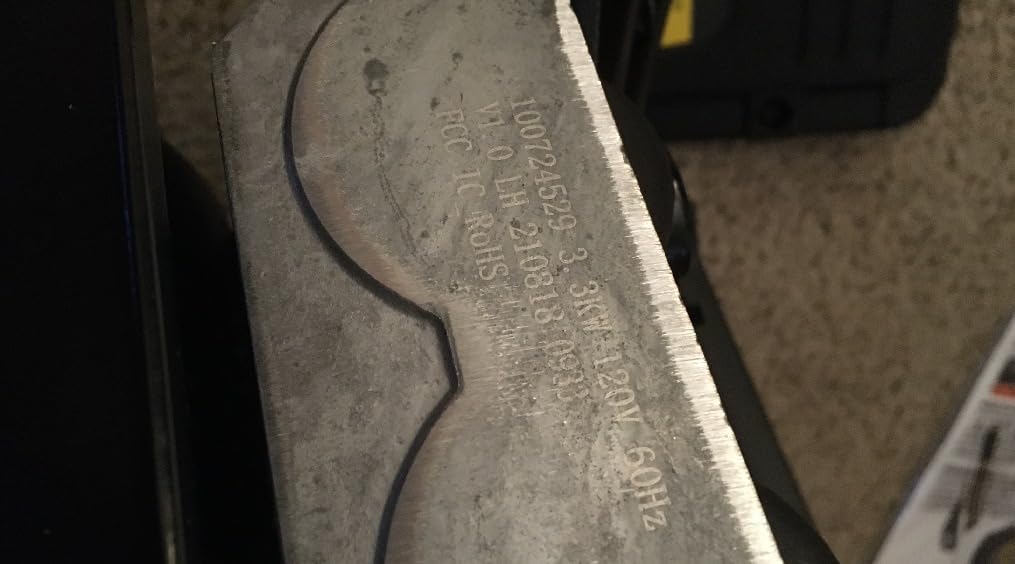
The Champion 4250 solves a narrow problem very well: long gasoline run time in a small package. It holds 3500 running watts and 22 hours on a 4 gallon tank, the best gasoline endurance of any unit in this roundup. If you would rather not manage propane logistics at all and want to fill one tank and forget about it, this is the machine.
The digital hybrid design throttles engine speed to match demand through Economy Mode, which extends engine life and cuts fuel burn compared with a fixed speed conventional unit of the same class. Inverter output stays below 3% THD, so electronics are safe.
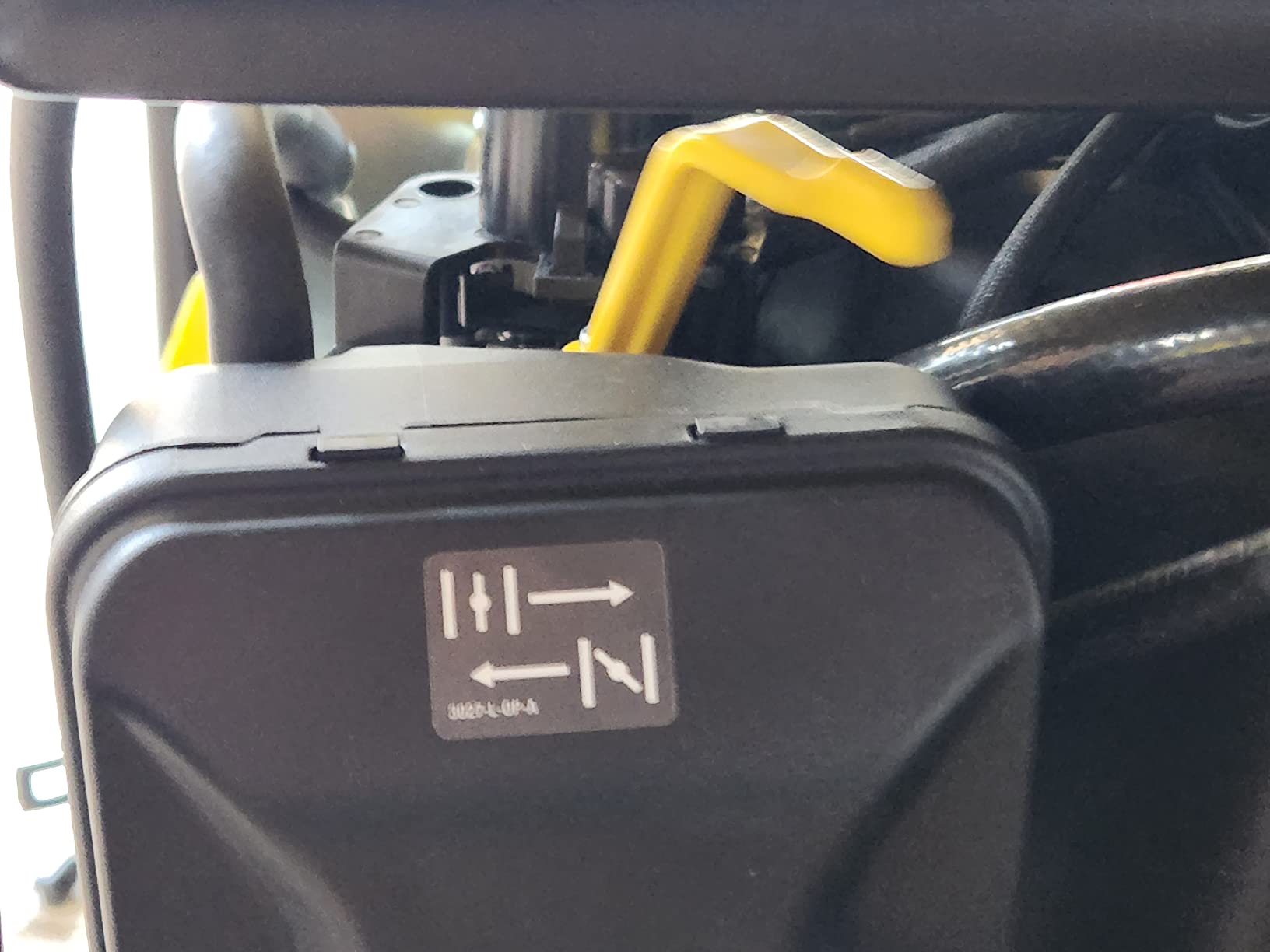
Outlet coverage is sensible for a travel trailer or a small home circuit: a 120V 30A RV outlet, two 120V 20A household outlets and a 12V DC outlet with a dual USB adapter. It is parallel ready through an optional ParaLINK kit, so two units can share load if you outgrow one.
This is a CARB compliant model with a 224cc four stroke engine and a three year limited warranty backed by free lifetime technical support.
Who benefits most from the open frame design
Enclosed frames are quieter and better sealed, which is why they cost more. If your generator lives in a dry garage or a shed with a hard floor and you care most about runtime per gallon, the open frame is a reasonable trade. 3500 running watts also covers a larger essential-loads list than the 3000W class, including a small window air conditioner.
For a homeowner whose outages are typically overnight and who prefers gasoline handling, 22 hours removes the middle-of-the-night refuel entirely.
Where it falls short for certain buyers
The open frame is exposed by design. Rain, dust, mud and debris reach the engine and electrical parts directly, so this is a poor choice for a yard without cover or for a coastal property where salt spray is a factor.
It is also the heaviest of the portable units here at 79 pounds, with a footprint 27.9 inches long. Noise is published at 64 dBA, which puts it mid-pack. If your priority is quiet or lightweight, this is not the machine.
5. Westinghouse iGen12000DFc – The Whole-Home Pick
Westinghouse 12000 Peak Watt Dual Fuel Portable Inverter Generator, Remote Electric Start, Transfer Switch Ready, Gas and Propane Powered, Low THD – Safe for Electronics, Parallel Capable, CO Sensor
9000 running watts on gas
8100 on propane
50A 14-50R outlet
187.4 pounds
Pros
- Only unit here with 9000 running watts on gasoline and a 50A outlet
- Both the 50A and 30A twist lock outlets are transfer switch or interlock ready
- 12000 peak on gas and 11000 peak on propane for extended outages
- LED data center with fuel level output runtime and lifetime hours
- Comes with regulator kit oil funnel battery charger and key fob
Cons
- Very heavy at 187.4 pounds and requiring two people or wheel assistance
- Over 30 inches long and 26 inches tall
- Lowest review count in this roundup at 194 reviews
This is the only unit in the roundup that can genuinely back up most of a house, and it is the reason we included a 12000-watt class at all. It produces 9000 running watts on gasoline and 8100 on propane, with 12000 and 11000 peak, and both figures are published rather than estimated.
The connection hardware is what separates it from the portable class. It carries a 120/240V 14-50R 50 amp outlet and a 120V/240V L14-30R 30 amp twist lock, and both are transfer switch or interlock kit ready. That means an electrician can wire it to your panel, which is the difference between powering a handful of circuits and powering the house.
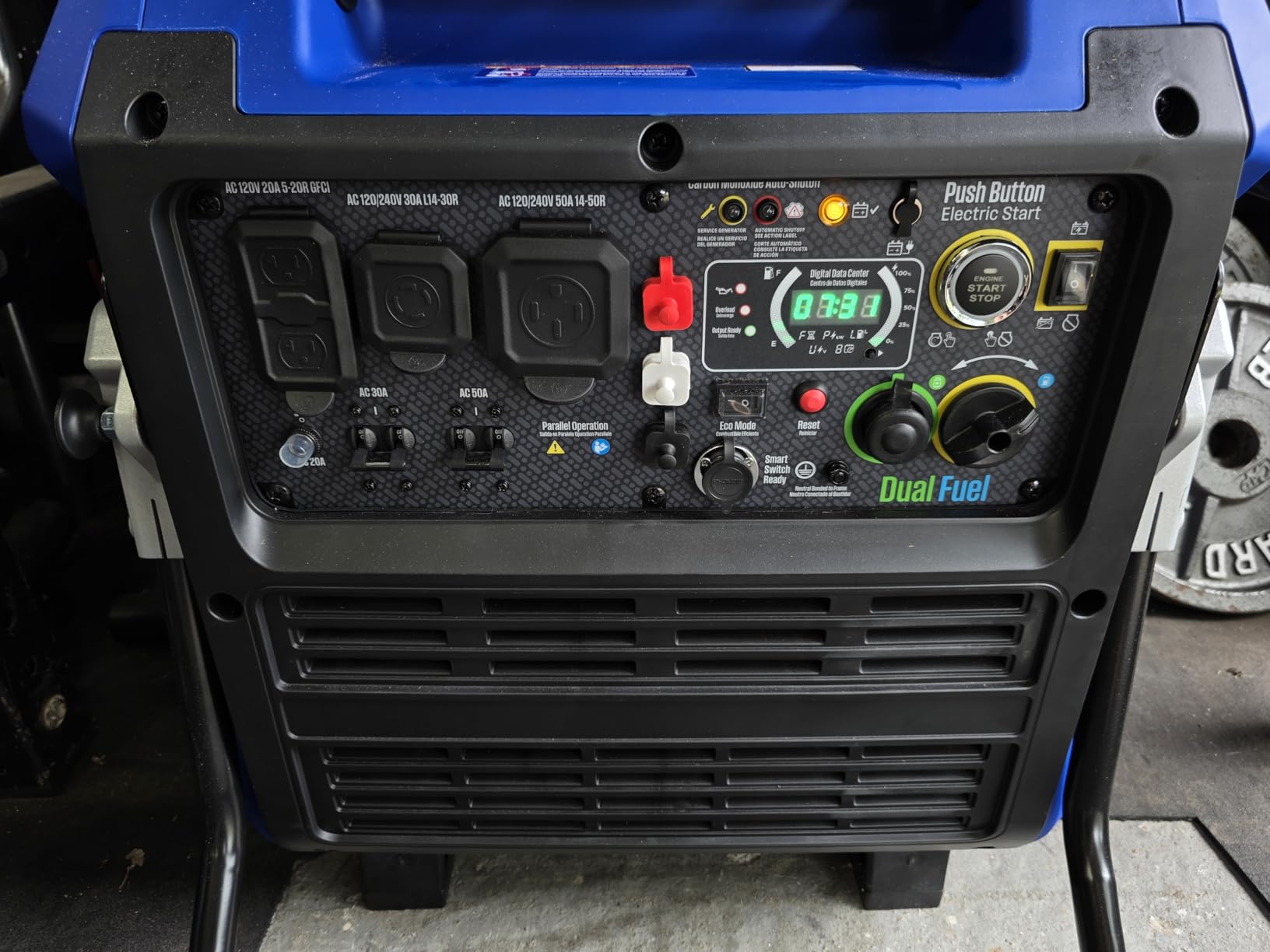
Despite its size it is quiet for the class, rated as low as 64 dBA, because Eco Mode, insulation and mufflers hold the engine speed to what the load demands. A heavy duty 457cc four stroke OHV engine runs up to 19 hours at 25% load on a 7.9 gallon fuel tank, and low oil shutdown plus a CO sensor are standard.
THD is 3% or less, so sensitive electronics remain safe, and the LED data center mirrors the display on the smaller iGen5000DF. A remote start key fob, battery, 12V charger, propane regulator kit, oil, funnel and tool kit all ship in the box.
What this wattage class actually unlocks
At 8100 propane running watts you can run central air conditioning alongside a refrigerator, well pump, electric water heater, internet and lighting in a mid-sized home. That is the tier where a sump pump, a gas furnace with a blower and a refrigerator stop being a compromise.
It is also parallel ready, so output can be doubled with a matching unit rather than replaced with something larger. Westinghouse backs it with a three year limited warranty and a stated three year spare part availability commitment.
Where it falls short for certain buyers
Weight is the dominant factor. At 187.4 pounds with a footprint over 30 inches long and 26 inches tall, this needs two people and a plan for where it lives permanently. Do not buy it for emergency use from a garage shelf.
Review volume is the other caution. At 194 reviews it has the thinnest long-term data in this roundup, and 9% of its ratings are one star, the second highest share among the Westinghouse and Champion units here. The specification sheet is excellent; the durability record is not yet long.
6. Champion 4500W Electric Start Inverter – Best for Effortless Starting
Champion 4500-Watt Electric Start Dual Fuel Portable Inverter Generator
3500 running watts on gas
3150 on propane
61 dBA
electric start with power meter
Pros
- Electric start with an Intelligauge power meter for voltage frequency and hours
- Quietest of the Champion units listed at 61 dBA
- 14 hours on gasoline and up to 21 hours on propane
- Parallel ready and owners report even load sharing between two units
- Reported to run a trailer air conditioner plus lights and a 12V fridge
Cons
- Heaviest Champion portable model here at 99.2 pounds
- Propane output drops to 3150 running watts
- CO sensor can shut the unit down in enclosed or poorly ventilated setups
Everything about the Champion 4500 is about reducing effort. Electric start means no pull cord in the rain, the EZ Start dial simplifies the sequence, and the Intelligauge power meter tracks voltage, frequency and operating hours on a display you can read at a glance. For an older homeowner or anyone with a back that should not be yanking a cord, that is worth more than extra peak watts.
Power is 3500 running watts on gasoline and 3150 on propane, with 4500 starting watts. Run time is 14 hours on gasoline and up to 21 hours on propane, and noise is published at 61 dBA, the quietest Champion in this group.
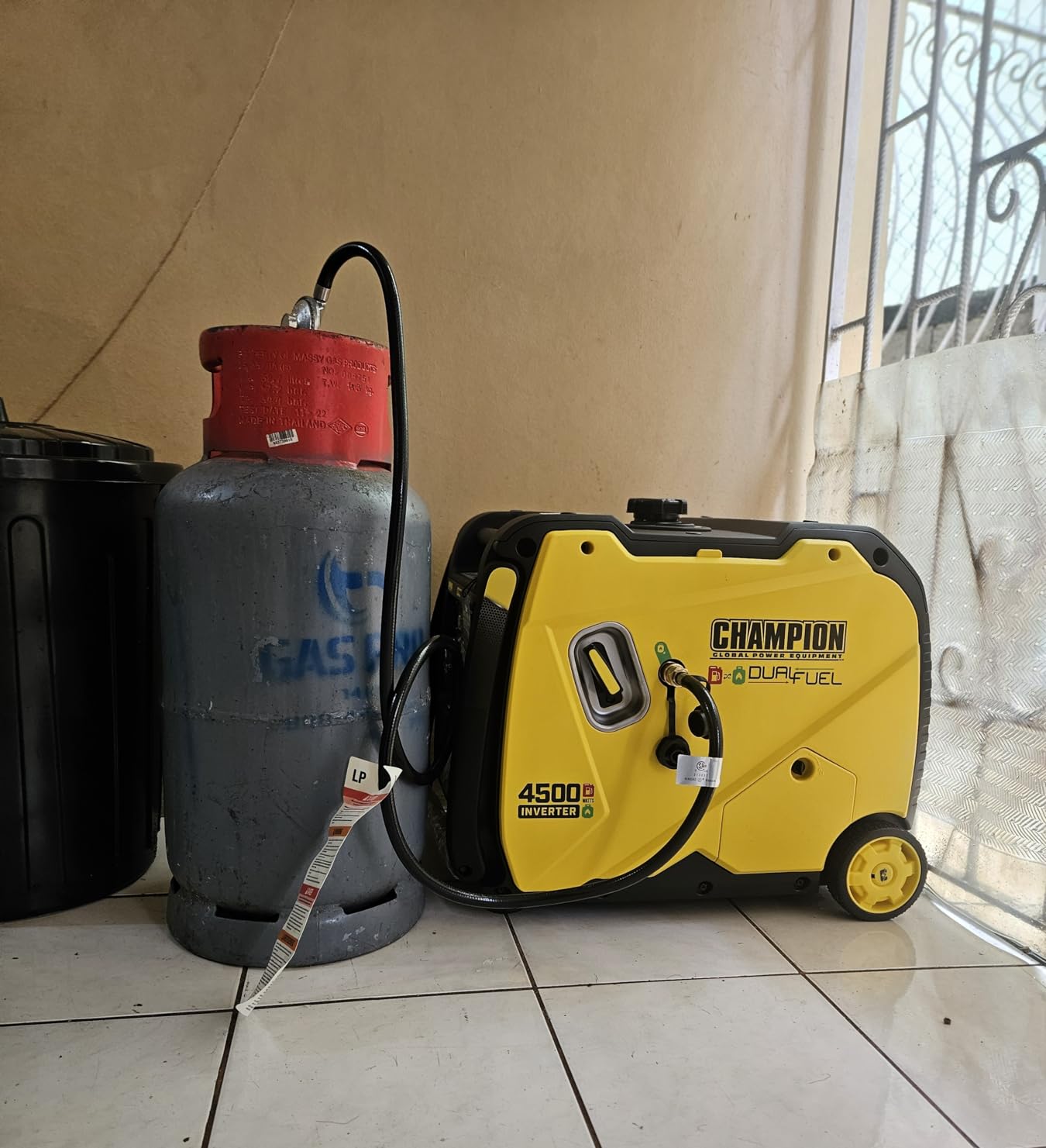
It is parallel ready through an optional kit, and owners report two units share load evenly when linked. The 212cc four stroke engine includes CO Shield auto shutoff and cold start technology, and the unit carries a three year limited warranty with free lifetime technical support.
Owners running it in real scenarios report handling a trailer air conditioner, lighting and a 12V fridge without strain, which is a fair description of what 3500 watts covers in practice.
Why electric start changes daily use
Pull cord starting is where a backup generator gets abandoned. A unit that needs five pulls after sitting for a month is a unit people stop testing, and an untested generator is exactly the one that fails when the grid goes down. Electric start plus a monthly test run is the cheapest insurance in this list.
3150 propane running watts also covers a slightly larger essential-loads list than the 3000W class, including a small window air conditioner, which is why this is the mid-size Champion pick over the 4000W model.
Where it falls short for certain buyers
At 99.2 pounds it is the heaviest Champion portable model here and an awkward single-person load. If moving the machine without help is part of your plan, the WEN DF360iX later in this list handles that job better.
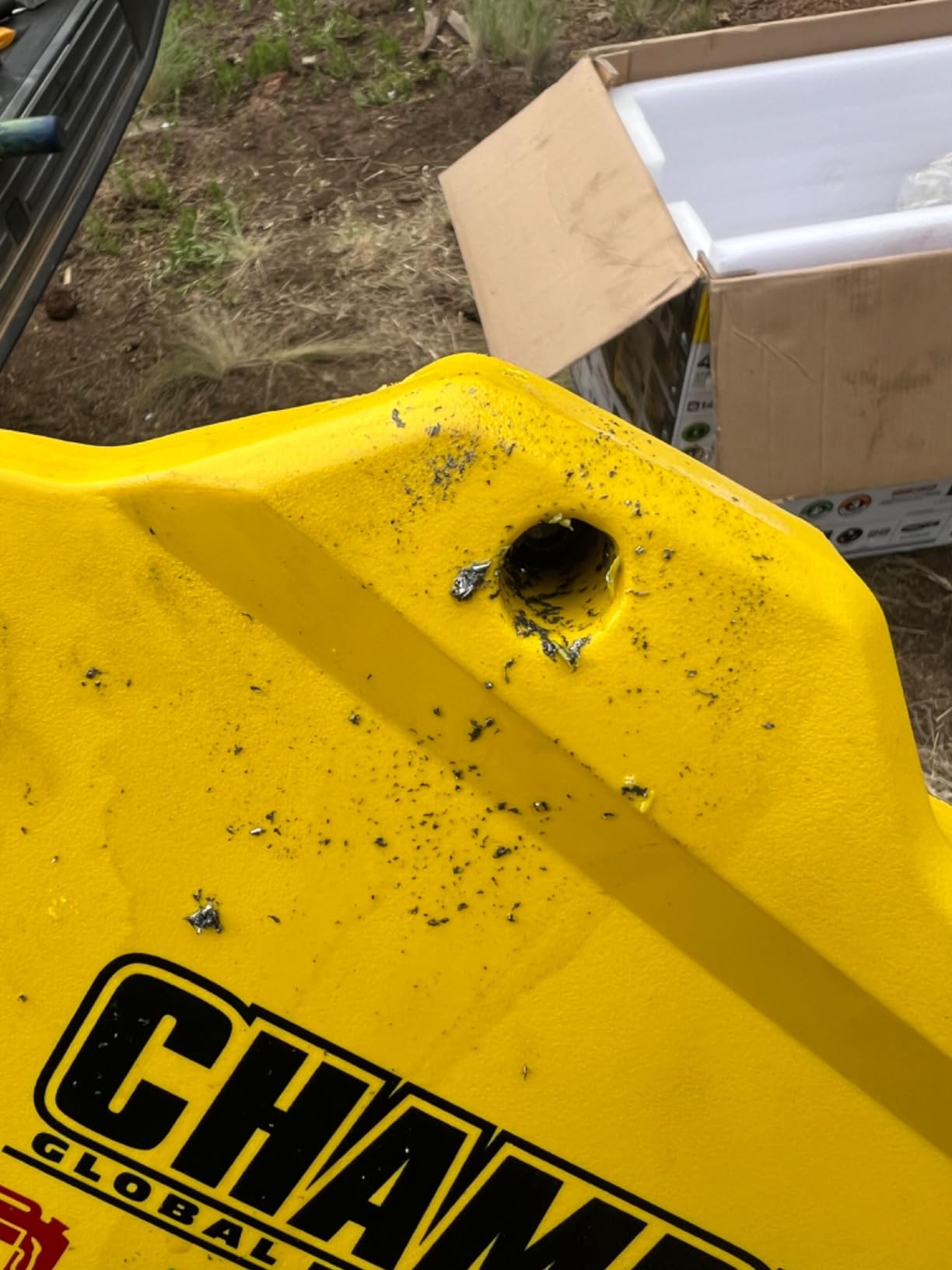
Two real cautions. The CO sensor can shut the unit down in enclosed or poorly ventilated setups such as a truck bed, which catches people out when they are trying to run it from a pickup during a storm. And 8% of reviews are one star, with reports of oil burning at low usage and hard starting. Warranty service has also been reported as requiring an in-person workshop visit, so check what that means where you live.
7. WEN DF680iX – The Only Bonded-Neutral 240V Dual Fuel Inverter Here
WEN 6800-Watt Dual Fuel RV-Ready Electric Start Portable Inverter Generator with Fuel Shut Off and CO Watchdog for Electric Vehicle Backup (DF680iX)
5100 running watts on gas
4500 on propane
240V bonded neutral
99.2 pounds
Pros
- Bonded-neutral 240V output supports low power Level 2 charging for electric vehicles
- Electric start plus recoil backup for straightforward cold weather starts
- WEN Watchdog CO shutdown sensor as standard
- Fuel shutoff drains the carburetor to reduce varnish buildup
- Onboard wheels and a telescoping pull handle
- eight outlets including L14-30R and TT-30R
Cons
- Loud under heavy load especially at full output
- Only two 120V household receptacles
- 99.2 pounds is difficult for one person to lift
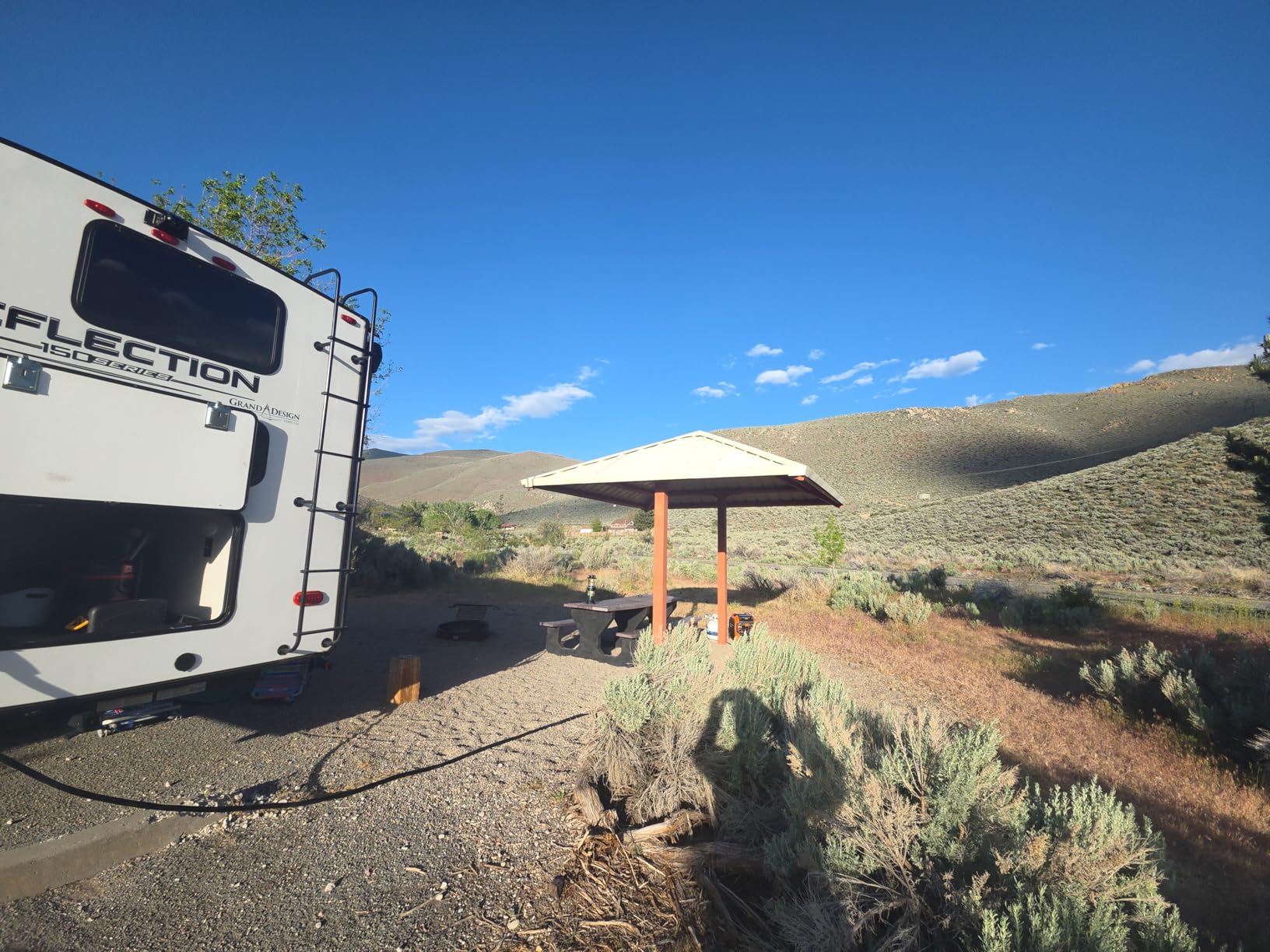
Almost every portable dual fuel inverter in this roundup is 120 volt only, which is a real limitation for a house. The WEN DF680iX is the exception. It produces bonded-neutral 240V output through an L14-30R receptacle, which means it can deliver low power Level 2 charging for a battery or hybrid electric vehicle during an outage. No other unit on this list does that.
On power it delivers 5100 running watts on gasoline and 4500 on propane, with 6800 and 6000 starting watts. That sits between the essential-loads and whole-home classes and covers a gas furnace blower, a refrigerator, well pump and lighting at the same time.
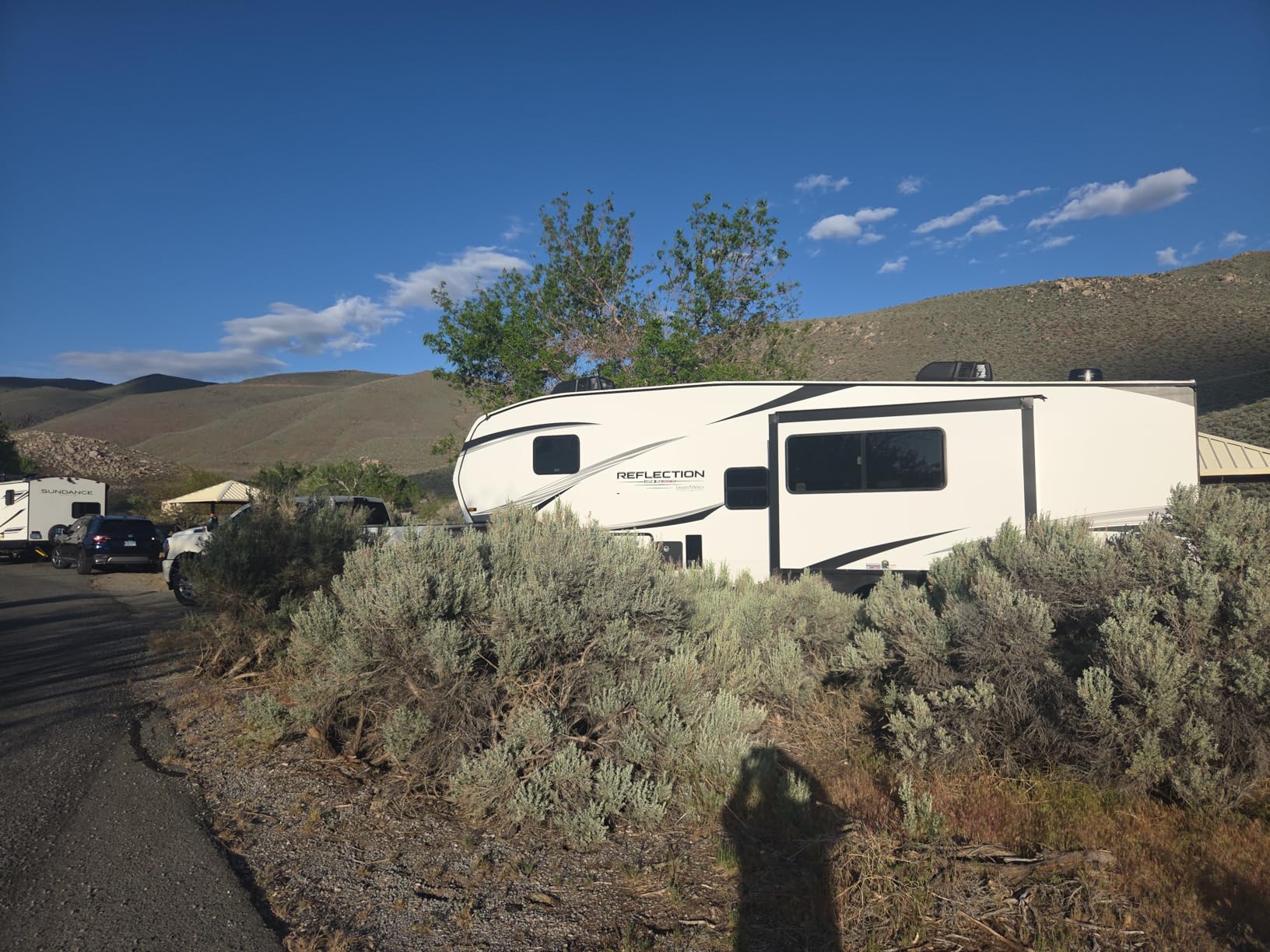
The safety and convenience features are well chosen. The WEN Watchdog CO shutdown sensor cuts power when carbon monoxide climbs, and the fuel shutoff drains the carburetor before stopping, which is one of the single most effective anti-varnish measures a portable generator can have. Electric start with recoil backup makes cold starts straightforward.
There are eight outlets in total: one L14-30R 120V/240V, two three-prong 120V receptacles, one TT-30R RV outlet, one 12V DC receptacle and two 5V USB ports, plus a voltage selector switch, tool-free LPG quick connector and a six foot regulator hose. Wheels and a telescoping pull handle are standard, and the warranty runs three years.
When 240V output is the deciding feature
Most household circuits run on 120V, and a refrigerator, television, router and most lamps never touch 240V. But a gas furnace with a blower, an electric water heater, a well pump, a clothes dryer and a central air conditioner all live on 240V. If any of those are in your backup plan, a 120V-only unit means extension cords and a lot of frustration.
This is also the machine to buy if you own a hybrid or battery electric vehicle and want a partial charge during an extended outage rather than a dead car sitting in the driveway.
Where it falls short for certain buyers
Only two 120V household receptacles is stingy for a machine this size. Most competitors at comparable wattage give you three or four, so you will be plugging a power strip into one outlet more often than you would like.
Noise is the other issue. Owners describe it as quiet at light load and loud under heavy load, and the unit gets noticeably louder at full output. The 2.9 gallon tank yields about 6 hours, so long outages push you toward propane. A small number of units have also developed surging and no-spark starting trouble after extended overnight runs, and WEN support has been slow to respond on warranty issues.
8. WEN DF360iX – The Lightest Unit You Can Carry With One Hand
WEN Quiet and Lightweight 3600-Watt Dual Fuel RV-Ready Portable Inverter Generator with Fuel Shut Off and CO Watchdog (DF360iX)
2900 running watts on gas
2600 on propane
49 pounds
seven outlets
Pros
- Lightest full-featured dual fuel unit here at 49 pounds
- Starts reliably in cold weather including below 40 degrees
- CO Watchdog sensor with automatic shutdown
- Fuel shutoff drains the carburetor for cleaner storage
- Owners report running a 10800 BTU camper air conditioner with fridge and microwave
- Three year warranty
Cons
- Louder than premium class at the same output because the 149cc engine revs higher
- Non-standard LPG quick connector will not accept standard fittings
- Actual gasoline runtime under air conditioner load closer to 4 to 6 hours
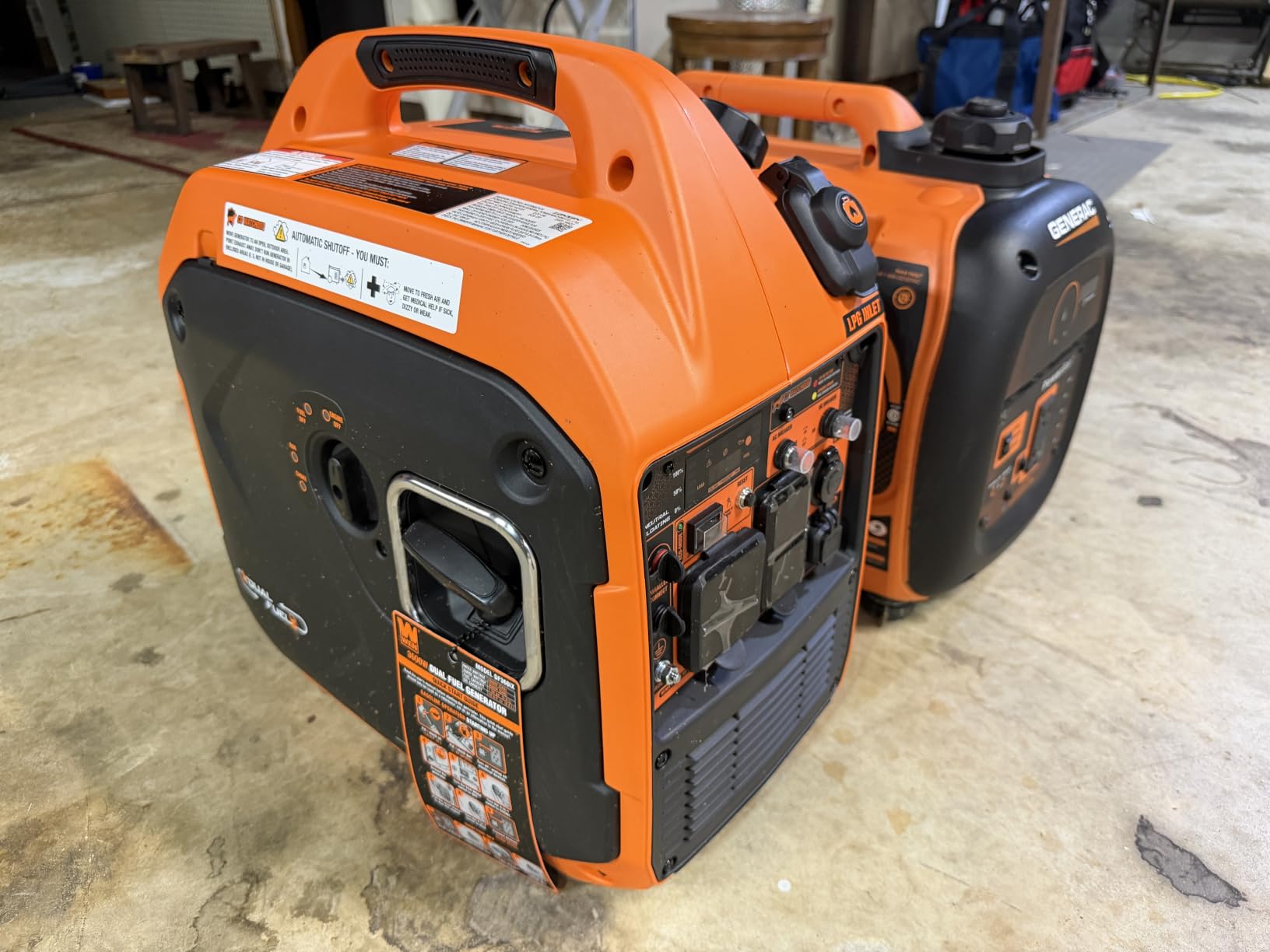
At 49 pounds, the WEN DF360iX is the only unit here you can genuinely pick up with one hand and carry to the car. That single fact changes who buys it. If you are an older homeowner, live alone, or plan to move the generator between a garage and a covered porch by yourself, portability is not a nice-to-have, it is the deciding feature.
Power is 2900 running watts on gasoline and 2600 on propane, with 3600 and 3500 starting watts. That covers a refrigerator, a freezer, internet, lighting, a gas furnace ignition and a modest amount of lighting load, which is the essential tier and nothing beyond it.
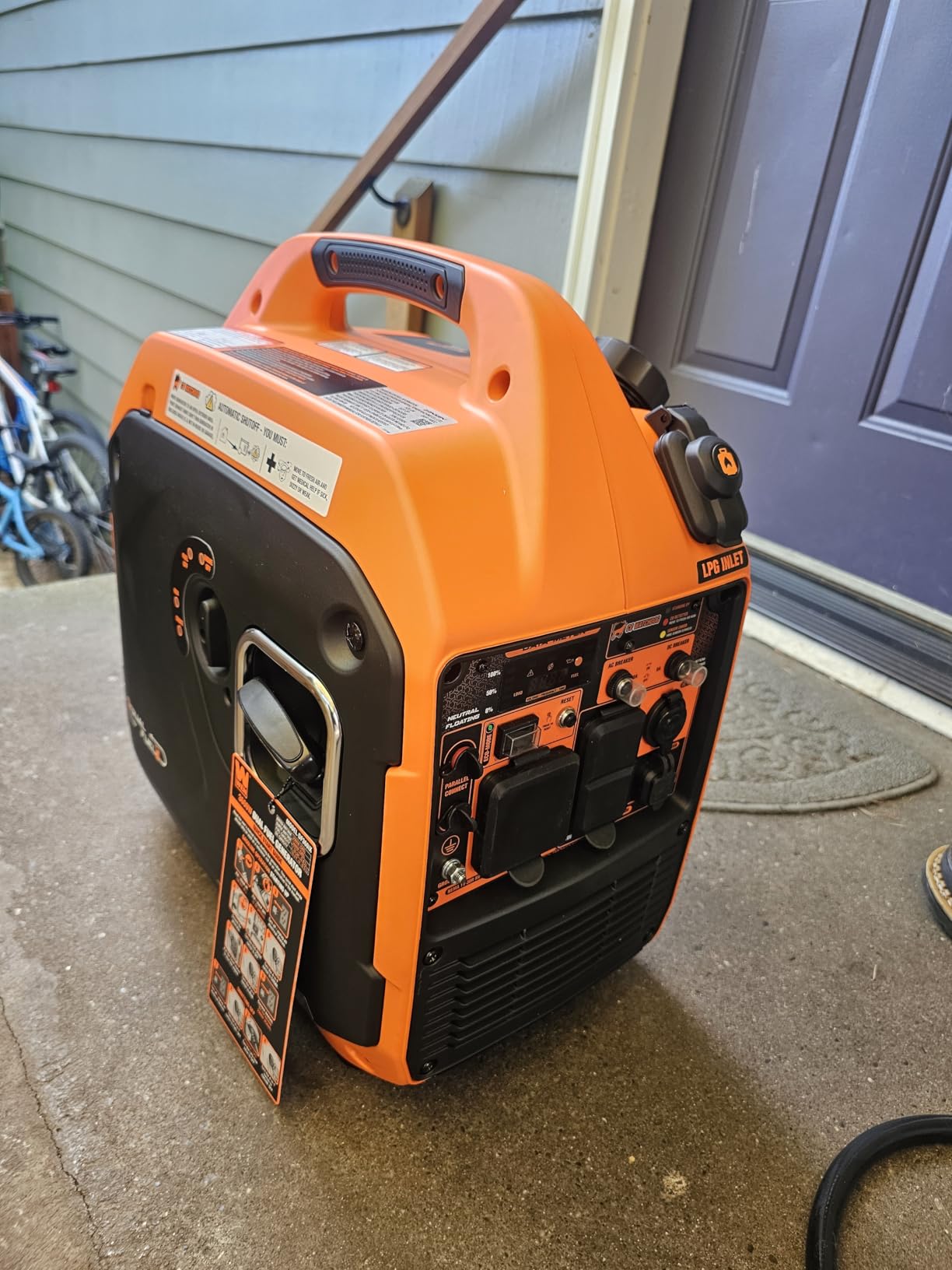
Owner feedback on this one is the most detailed in the roundup, and it is consistently positive on two points people rarely get. First, cold starting is reliable, including below 40 degrees, which matters more in a January outage than any headline wattage figure. Second, the inverter output is clean enough for laptops, phones and other sensitive electronics without concern.
There are seven outlets: two three-prong 120V receptacles, one TT-30R RV outlet, one 12V DC receptacle and two 5V USB ports. The WEN Watchdog CO shutdown sensor and the fuel shutoff are both standard, and the warranty runs three years.
Why the owner feedback on this model is so useful
Reviewers report running a 10800 BTU camper air conditioner alongside a refrigerator, microwave and hot water heater on this unit, which tells you more about real capacity than any spec sheet. It also holds its own as a travel trailer companion, where the 49 pound weight is the whole reason to choose it.
Because it is 120V only, keep your expectations honest: no furnace blower, no water heater, no dryer. This is the essential-loads and travel tool.
Where it falls short for certain buyers
The 149cc engine has to rev higher to deliver its rated output, so it is louder than premium class machines at the same wattage. If your generator runs next to a bedroom window, that is a real trade.
Two specifics are worth planning around. The included LPG quick connector is non-standard, so standard quick-connect fittings will not snap into it, which matters if you want to plumb it to a larger tank. And actual gasoline runtime under air conditioner load lands closer to 4 to 6 hours than the headline figure. Some units also need many pull-cord attempts to prime and start on a first run.
9. WEN DF480iX – The Best Mid-Size Four-Stroke
WEN Quiet and Lightweight 4800-Watt Dual Fuel RV-Ready Electric Start Portable Inverter Generator with Fuel Shut Off and CO Watchdog (DF480iX)
4000 rated watts on both fuels
224cc 4 stroke
78.5 pounds
four household outlets
Pros
- 4000 rated watts on both gasoline and propane
- Electric start with a battery that starts on the first press
- Four 120V household receptacles for less power strip clutter
- Wheels and a telescoping pull handle for moving across grass
- Reported to run a 32 foot RV trailer on propane for 15 hours
Cons
- Small 1.9 gallon tank pushes you toward propane for longer runs
- Battery access panel is very difficult to reassemble
- Wheels rattle during operation and add noise
The WEN DF480iX solves a problem the other mid-size units here do not: it holds 4000 rated watts on both gasoline and propane. Where most competitors in this class lose meaningful output when you switch to LP, this one is rated at 4000 either way, with 4800 surge on gasoline and 4320 on propane. If propane is your primary fuel, that consistency is worth more than a bigger number on the gasoline spec.
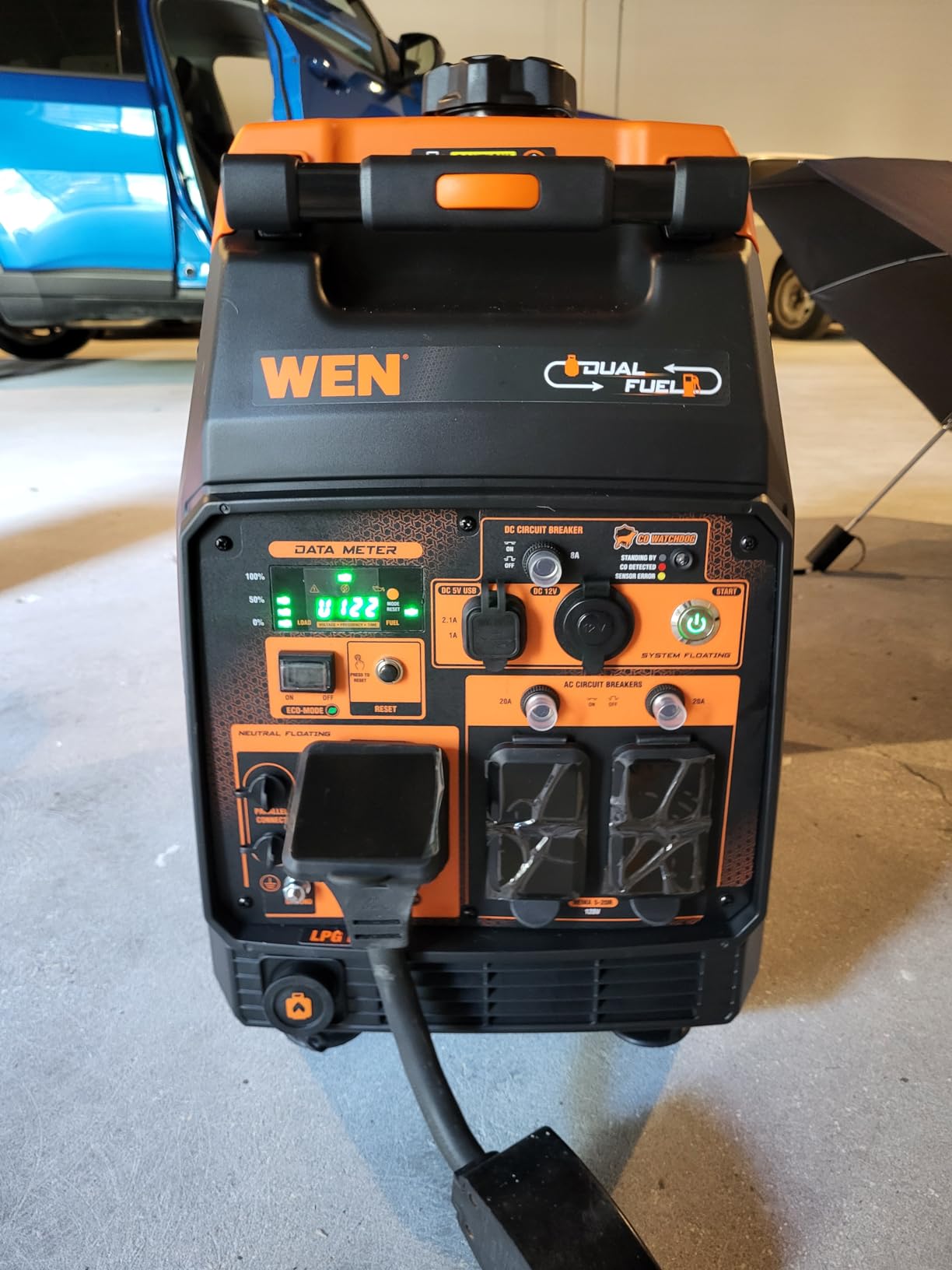
It is also the only mid-size unit in this roundup with four household receptacles, which reduces power-strip clutter. Wheels and a telescoping pull handle make it easy to roll across grass and into a garage, and the electric start battery fires reliably on the first press in owner reports.
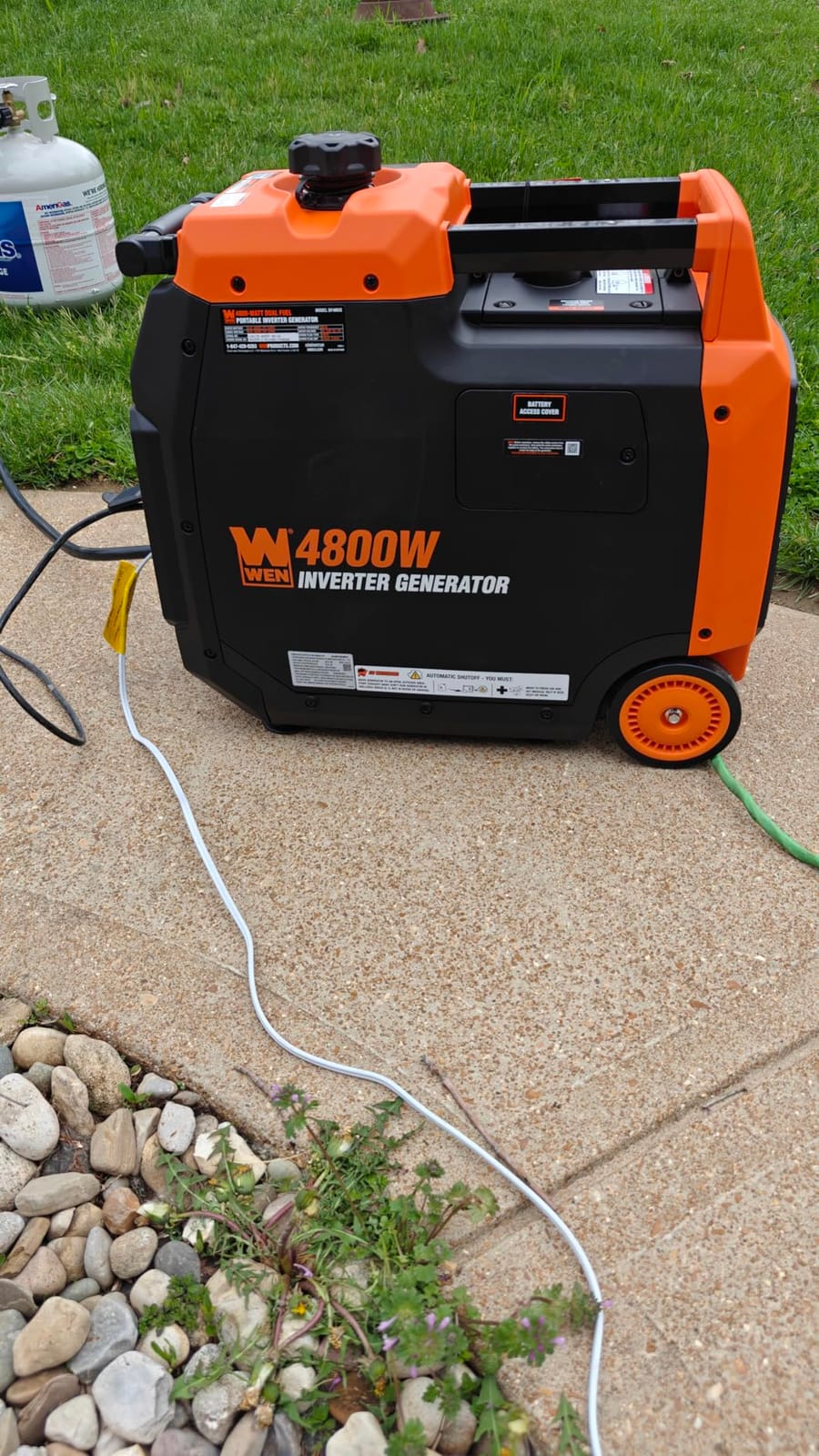
The 224cc four stroke engine is a sound choice for longevity compared with the smaller displacement units in this roundup. Fuel shutoff, the WEN Watchdog CO sensor and a three year warranty are all included, and the inverter output is safe for laptops, phones and household electronics.
Owners report running an entire 32 foot RV trailer on propane for 15 hours, and the fuel economy is a further argument for that fuel. Quiet enough to talk over at half load, it is also noticeably quieter than neighboring non-inverter machines.
Where 4000 watts on both fuels earns its place
This is the sweet spot for a home that wants more than essential loads without stepping up to a 50A installation. At 4000 watts you can run a refrigerator, freezer, internet, lighting, a gas furnace and a small window air conditioner, and you are not dependent on gasoline supply to do it.
It also suits a household that wants the run time of propane without buying a much larger machine. Fifteen hours on a trailer draw is close to a full day on a typical essential-loads profile.
Where it falls short for certain buyers
The 1.9 gallon gasoline tank is small, and combined with no automatic switchover between fuels it pushes you toward propane for anything longer than a few hours. Know which fuel you are running before the outage.
Setup is fiddly. Access panels must be removed to add oil and connect the battery, and the battery access panel is very difficult to reassemble, which is the single most common complaint in owner feedback. Wheels rattle during operation and add noise. A few owners also report small oil drips from the dipstick thread o-ring after service, and one reported internal valvetrain failure with no replacement parts available.
10. AIVOLT 11250W 50A Inverter – The Most Starting Power, With a Rating Caveat
AIVOLT 11250W Dual Fuel Inverter Generator 50A for Home Backup
9000 running watts on gas
8540 on propane
60 dBA at 25 percent load
221 pounds
Pros
- 11250 starting watts and 9000 running watts on gasoline
- 50 amp outlet plus ATS compatibility for connecting to a home panel
- Remote fob start from up to 80 feet with push button and recoil backup
- Quiet at 60 dBA at 25 percent load at 23 feet
- 100 percent copper windings for conductivity and heat management
- CO auto shutoff plus low oil and overload protection
Cons
- Lowest average rating here at 4.1 stars with 12 percent one star ratings
- Heaviest unit in the group at 221 pounds
- Only a 2 year warranty and engine oil is not included
The AIVOLT 11250W has the highest starting wattage of anything in this roundup, at 11250 on gasoline and 10570 on propane, with 9000 running watts on gas and 8540 on LP. If your home has a hard starting load such as a well pump plus central air, that headroom is genuinely useful.
It is also the quietest of the large units, rated 60 dBA at 23 feet at 25% load, which is a genuinely useful specification for a machine that runs all night. Remote fob start reaches up to 80 feet, with push button and recoil backup behind it.
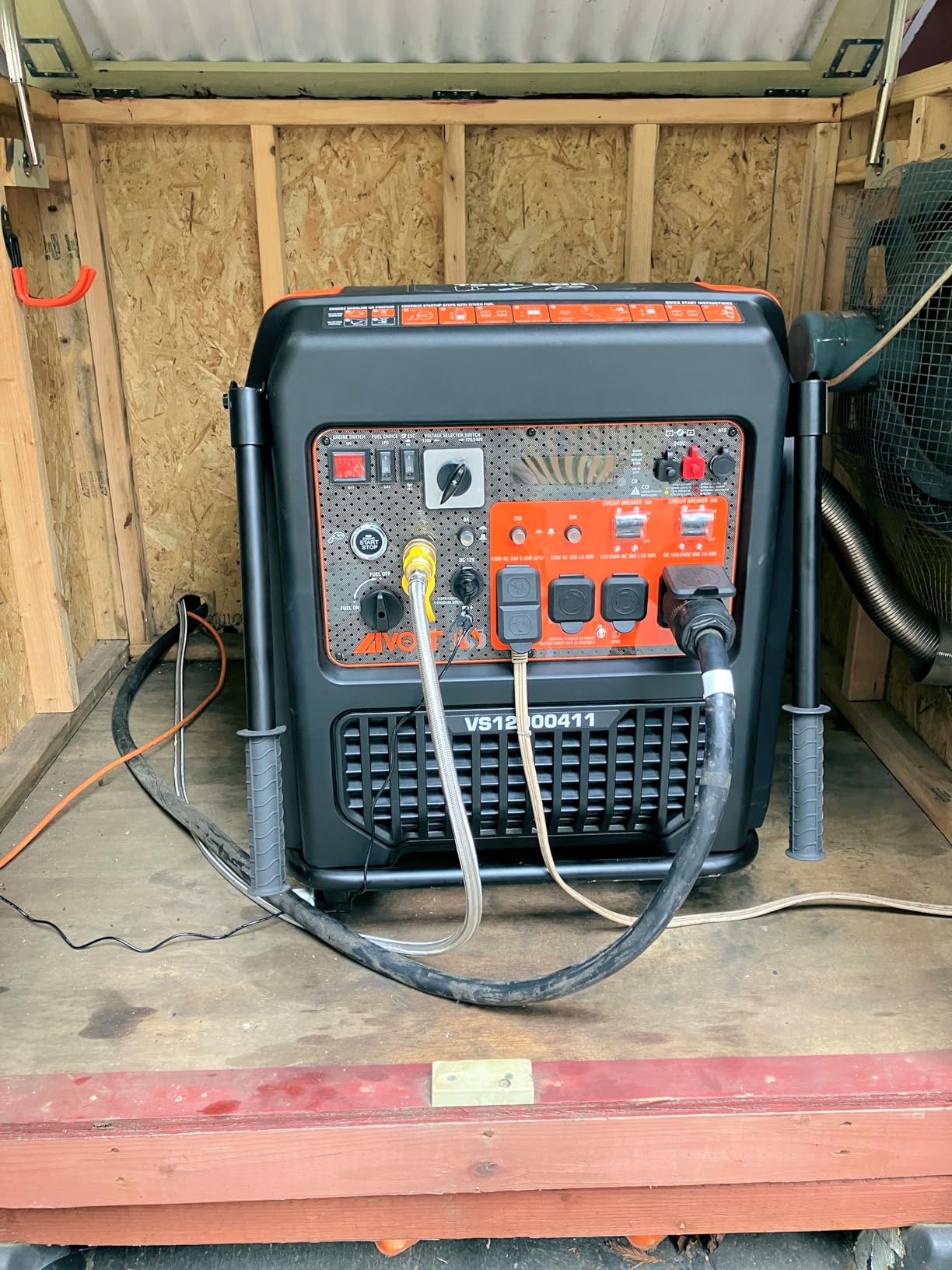
Installation is the selling point. The heavy duty 50 amp outlet is ATS compatible for connecting to a home circuit panel, and the motor is built with 100 percent copper windings for conductivity and heat management. The kit includes the remote fob, an LPG hose with regulator, a charger, a funnel, a spark plug wrench and a screwdriver.
Runtime is up to 19 hours on a single 7.1 gallon tank, and the safety package covers CO auto shutoff, low oil protection and overload protection.
Why starting watts matter as much as running watts
Running watts are what your appliances draw continuously. Starting watts are what a motor needs for a few seconds to get going, and a well pump or central air compressor that cannot start will trip the overload protection and stop the whole unit. When two large motors can start at the same time, you can size a smaller generator than the sum of the nameplates suggests.
At 8540 propane running watts, this is a genuine whole-home machine, and the ATS compatibility means it can be wired into your panel rather than powering a few extension cords.
Where it falls short for certain buyers
The rating deserves a clear explanation rather than a hedge. At 4.1 stars with 12% of ratings at one star and only 63% at five stars, this is the widest distribution in the roundup, and it is the lowest average score of the ten. It has the most reviews of any 50A dual fuel inverter here at 1359, so the pattern is well documented rather than a handful of outliers.
It is also the heaviest unit in the group at 221 pounds, which is a planning problem before it is a lifting problem. The warranty is two years, shorter than the three years most competitors carry, and engine oil is not included, so it will not run until you add it. Set your expectations accordingly, and if reliability through a long outage is the priority rather than maximum wattage, the Westinghouse iGen12000DFc in section five is the better bet.
How to Size a Dual Fuel Inverter Generator for Your Home
Size on propane running watts, then add 25% headroom. This is the single rule that prevents an expensive mistake, because the gasoline figure on the box is the number most people size against, and propane is the fuel you will run on when the gas stations are crowded.
Here is a realistic starting wattage picture for the loads people actually care about. These are planning figures, not measurements, and your own equipment may differ.
Refrigerator and freezer. Roughly 300 to 800 watts running for the fridge, and add a separate allowance for a chest freezer. Compressors cycle, so do not size right at the nameplate.
Gas furnace. The ignition circuit is tiny, but a blower motor on a 240V furnace pulls roughly 400 to 800 watts and has a much higher starting surge.
Sump pump. Around 300 to 600 watts running with a surge that can be several times that. A sump pump failing during a storm is a structural water problem, so give it priority.
Well pump. Typically 500 to 1000 watts with a high starting surge. This is the load that most often trips an undersized inverter.
Central air conditioner. Anywhere from 2000 to 5000 watts depending on size, and this single load can consume a whole mid-size generator on its own.
Internet, router and modem. Under 50 watts combined, but the highest priority per watt of anything on this list.
Lighting and televisions. LED lighting is trivial; a television, receivers and game consoles together can run 300 to 500 watts.
Microwave. Around 1200 watts, and worth remembering that microwaves and toasters are pure resistive loads that do not start softly.
Window air conditioner. Roughly 1000 to 1500 watts, which is the most realistic way to get cooling on a smaller unit.
Add your numbers, apply the propane derate, and you have your target. If the total lands under 3000 propane running watts you are in the essential-loads tier covered by the PowerSmart, the Champion 4000 and the WEN DF360iX. Between 4000 and 6000 you need a mid-size unit like the Champion 4250, the WEN DF480iX or the WEN DF680iX. Above 8000 you are looking at the Westinghouse iGen12000DFc or the AIVOLT, and you should be pricing an installation.
Propane Derating: Why Running Watts Drop on LP
Propane delivers less energy per unit of volume than gasoline, so every manufacturer rates the same engine lower when it runs on LPG. This is not a defect and not a marketing trick. It is physics, and it is the reason a generator that measures 3500 running watts on gas may measure 3150 on propane.
Here is the derate across the ten units in this roundup, using the published figures.
Westinghouse iGen5000DF: rated 3900 on gasoline, propane figure not published separately.
Champion 4000W: 3000 on gasoline, 2700 on propane, a 10% reduction.
PowerSmart 3800W: 3300 on gasoline, 3100 on propane, a 6% reduction.
Champion 4250W: rated 3500, with no separate propane figure published.
Westinghouse iGen12000DFc: 9000 on gasoline, 8100 on propane, a 10% reduction.
Champion 4500W: 3500 on gasoline, 3150 on propane, a 10% reduction.
WEN DF680iX: 5100 on gasoline, 4500 on propane, a 12% reduction.
WEN DF360iX: 2900 on gasoline, 2600 on propane, a 10% reduction.
WEN DF480iX: 4000 rated on both fuels, the smallest loss in the group.
AIVOLT 11250W: 9000 on gasoline, 8540 on propane, a 5% reduction.
The pattern is consistent. Most manufacturers take 10% off, a few are harsher, and one holds rated output on both fuels. If you size against a 3500 watt gasoline figure, you should assume 3150 on propane and then add your own 25% headroom for motor starting.
Gasoline vs Propane: Which Fuel Carries the Outage
Propane stores indefinitely and gasoline does not, so for outages measured in days rather than hours, propane is the safer fuel. Owners in outage-focused forums consistently make this point, and it is the core reason dual fuel exists as a category rather than a convenience feature.
Gasoline wins on refill logistics. You can find a gallon in any town with a hardware store, while propane cylinders compete with everyone else during a regional emergency. A dual fuel unit gives you both: gasoline for a two-hour outage where refilling is easy, propane for a multi-day event where shelf life matters more.
Owners also report reliable cold weather starting on propane on modern units with cold start technology, which addresses the most common winter concern. The caveat is that a cold engine should be allowed to warm up before you switch fuels, otherwise the change can behave unpredictably.
One question comes up constantly in forums: running a generator off a large stationary propane tank rather than portable cylinders. It is possible, but it involves regulators, a licensed installer and local code. Treat the included hose and regulator as a cylinder connection, not a permanent fuel line.
Inverter vs Conventional and What THD Actually Means
Total harmonic distortion measures how far the generator’s output waveform deviates from a clean sine wave. A conventional generator runs its engine at a fixed speed and typically produces THD in the 5% to 10% range. An inverter generator rectifies the raw AC to DC and flips it back to a clean sine wave, which is how every unit in this roundup lands under 3%.
Why that matters at home: electronics interpret harmonic distortion as heat and electrical noise. Motors and heating loads barely care. A home office, a router, a television, a CPAP machine or an oxygen concentrator does. If you plan to run anything with a circuit board into the house, inverter technology is not a nice upgrade, it is the requirement.
The second inverter benefit is variable speed operation. Economy Mode slows the engine to match demand, which cuts fuel burn and noise at light load. That is where the 52 dBA figure on the Westinghouse iGen5000DF comes from. A conventional generator at the same 3900 watts runs wide open all the time, so it is louder and thirstier for the same result.
If you want the wider comparison, our general generator guide covers conventional and inverter units side by side.
Noise: What the dB Number Means at Home
The quietest dual fuel inverter in this roundup is the Westinghouse iGen5000DF at 52 dBA, measured in Economy Mode. That is the number to beat if noise is your top constraint.
Always read the load condition attached to a dB figure. A generator measured at 25% load in Economy Mode can be 10 to 15 dB louder at full rated output. The Champion 4000 is published at 64 dBA and owners report up to 70 dBA under hard load. The Champion 4500 sits at 61 dBA, the WEN DF480iX and Champion 4250 around the mid 60s, and the Westinghouse iGen12000DFc as low as 64 dBA for a much larger machine.
For reference, a normal conversation sits near 60 dBA and a refrigerator hums around 40. Below about 60 dBA you can hold a conversation beside the running unit, which is the practical threshold most neighbors will accept. Many campgrounds use 60 dBA at 7 feet as their cutoff, so an RV owner should read that number first.
Placement matters as much as the machine. Concrete and bare ground reflect; grass, shrubs and a fence on the far side of the unit from your house absorb. Point the exhaust away from doors, windows and vents, and never run a unit beside an open window to keep your own rooms quiet.
CO Safety and the 20-Foot Rule
Run any generator outdoors, at least 20 feet from your home, with the exhaust pointed away from doors, windows and vents. Never run one inside a house, garage, basement, shed, basement stairwell or enclosed porch, even with the door open. Carbon monoxide is odorless and colorless, and the majority of generator deaths trace back to indoor or near-indoor placement.
Always operate outdoors, on a dry surface, at least 20 feet from the building.
Point the exhaust away from every door, window and air intake.
Never run in a garage, carport, shed, basement or enclosed porch, even with the door wide open.
Keep the CO sensor protection active. Every unit in this roundup has automatic CO shutdown, and you should test it rather than disable it.
Never sleep in a house being powered by a generator, even with a transfer switch installed.
Keep children and pets away from the running unit, and never refuel it while the engine is hot or running.
One recurring surprise: the CO sensor is doing its job when a unit shuts down in a truck bed or a partially sheltered porch. That is the sensor working correctly, not a malfunction. Move the generator to open ground and restart it.
Transfer Switch, Interlock Kit, and Wiring It In
Extension cords into the house are the most common and most dangerous shortcut, and they are also the reason many people think they do not need any installation at all. A transfer switch or an interlock kit is what makes a generator a backup system rather than a temporary power source.
A transfer switch moves the whole load to the generator when it starts, and hands control back to the grid when it stops. An interlock kit prevents the grid and the generator from ever being connected at the same time, which is a code requirement for installing a generator connection on your panel. Both work. The switch is more convenient and more expensive; the interlock is cheaper and requires careful manual sequencing.
For the units in this roundup, only the Westinghouse iGen12000DFc has both its 50A and 30A outlets described as transfer switch or interlock ready. The WEN DF680iX has an L14-30R suitable for a 30A connection. The AIVOLT 11250W has a 50A outlet and is ATS compatible. Everything else on this list is a 120V portable unit intended for a handful of circuits and selected appliances.
Have a licensed electrician do the panel work. Back-feeding a panel without an interlock is illegal, dangerous and the fastest way to void a warranty. If you have a solar-plus-battery system, size the generator for the battery inverter’s surge requirements and check compatibility before buying.
First Run and Monthly Maintenance Checklist
Almost every portable generator arrives with the oil drained for shipping. Running one without adding oil will damage the engine in minutes, and doing it can void the warranty. Fill the oil first, every time, and read the manual’s oil specification.
On the first run, work through this in order:
Add the recommended engine oil to the correct level before any start attempt.
Connect the battery and confirm electric or remote start works, if the unit has it.
Check the propane connection with a soapy-water solution before first use, and confirm the regulator is seated.
Run on gasoline for 30 to 60 minutes at moderate load to break in the engine before you rely on propane.
Check every outlet with a known-good load, and confirm the output display shows the voltage you expect.
Record the runtime at 25% and 50% load so you have real numbers for your own home, not the spec sheet.
Then keep a monthly rhythm: run it for 20 minutes under load with no devices connected, check the oil level, inspect the air filter, and look at the spark plug. Before storage, run the fuel through the carburetor or use a stabilizer, store propane cylinders upright and outdoors, and never store a generator with a propane cylinder attached in an enclosed space.
When a Battery Power Station Is the Better Answer
A generator is the wrong tool for some outages, and admitting it is more useful than defending every pick. A battery power station in the 2 to 4 kW class covers a refrigerator, internet, lighting, a laptop and a television for many hours with zero noise, zero exhaust and no fuel to store. For apartments, for homes that cannot run anything outdoors, and for anyone running only electronics, it is often the better buy.
What a battery power station cannot do is start a motor indefinitely. A well pump, a furnace blower, central air and a power tool all draw more than most units can hold. A generator starts and runs until the fuel runs out; a battery stops when the charge does.
The common-sense answer for many households is both. Battery for the electronics, generator for the motors, which is also the setup that gets the best value out of any generator on this list.
Frequently Asked Questions
What is the disadvantage of a dual fuel generator?
The main disadvantages are a higher purchase price, a 10 to 15 percent reduction in output when running on propane, more weight from the added fuel plumbing, and two fuel systems to maintain. Switching fuels mid-run also needs a warm engine. None of these are deal breakers for a multi-day outage, because propane stores indefinitely while gasoline does not.
Which dual fuel generator is the quietest?
The Westinghouse iGen5000DF is the quietest unit in this roundup, rated as low as 52 dBA in Economy Mode. Always read the load condition attached to any dB figure, because most machines are 10 to 15 dB louder at full rated output. The Champion 4500 follows at 61 dBA and the Champion 4000 and 4250 sit around 64 dBA.
Does a dual fuel generator run quieter on propane?
Only marginally, and not enough to plan around. Propane burns more completely and the exhaust note differs slightly, but perceived quietness is dominated by the model and the load on the engine, not the fuel. The real acoustic difference comes from inverter Eco Mode throttling the engine down when demand is light.
What is the 20/20/20 rule for generators?
Run the generator outdoors, at least 20 feet from the house, with the exhaust pointed away from doors, windows and vents. Never operate it inside a house, garage, basement, shed or enclosed porch, even with the door open. Keep the built-in CO sensor protection active and never sleep in a house being powered by a running generator.
Who makes the most reliable inverter generators?
Westinghouse and Champion carry the strongest track records in this group, with three year warranties, cast iron cylinder sleeves, factory testing and free lifetime technical support. WEN delivers the best output per dollar with the same three year coverage. Service network matters more than engine specification, so check that parts and warranty support exist where you live before choosing on paper specs.
Final Verdict: Which Dual Fuel Inverter Generator Should You Buy?
The Westinghouse iGen5000DF is our pick for the best dual fuel inverter generators for home backup in 2026, and it wins on the combination that actually matters: the highest rating in this roundup at 4.7 stars across 1676 reviews, the quietest published noise figure at 52 dBA, clean under 3% THD power, remote start, and an 18 hour gasoline runtime from a 3.4 gallon tank. For a typical three-bedroom house running essential loads, it is the unit we would buy without hesitating.
Buy the Champion 4000 instead if propane runtime and easy lifting matter more than anything else. Buy the PowerSmart 3800 if you are outfitting a home for the first time on a limited budget. Buy the WEN DF360iX if you are moving it alone. Buy the Champion 4500 if you would rather press a button than pull a cord. Buy the WEN DF680iX if you need 240V for a furnace blower, a water heater or an EV. Buy the WEN DF480iX if you want 4000 watts on both fuels and four household outlets. And if you genuinely want to power the house, look at the Westinghouse iGen12000DFc with an electrician, not an extension cord.
Whichever one you choose, do three things before the storm season: fill the oil, run it for half an hour under load, and buy the propane cylinders. That short list does more for your odds than any specification on the box.