
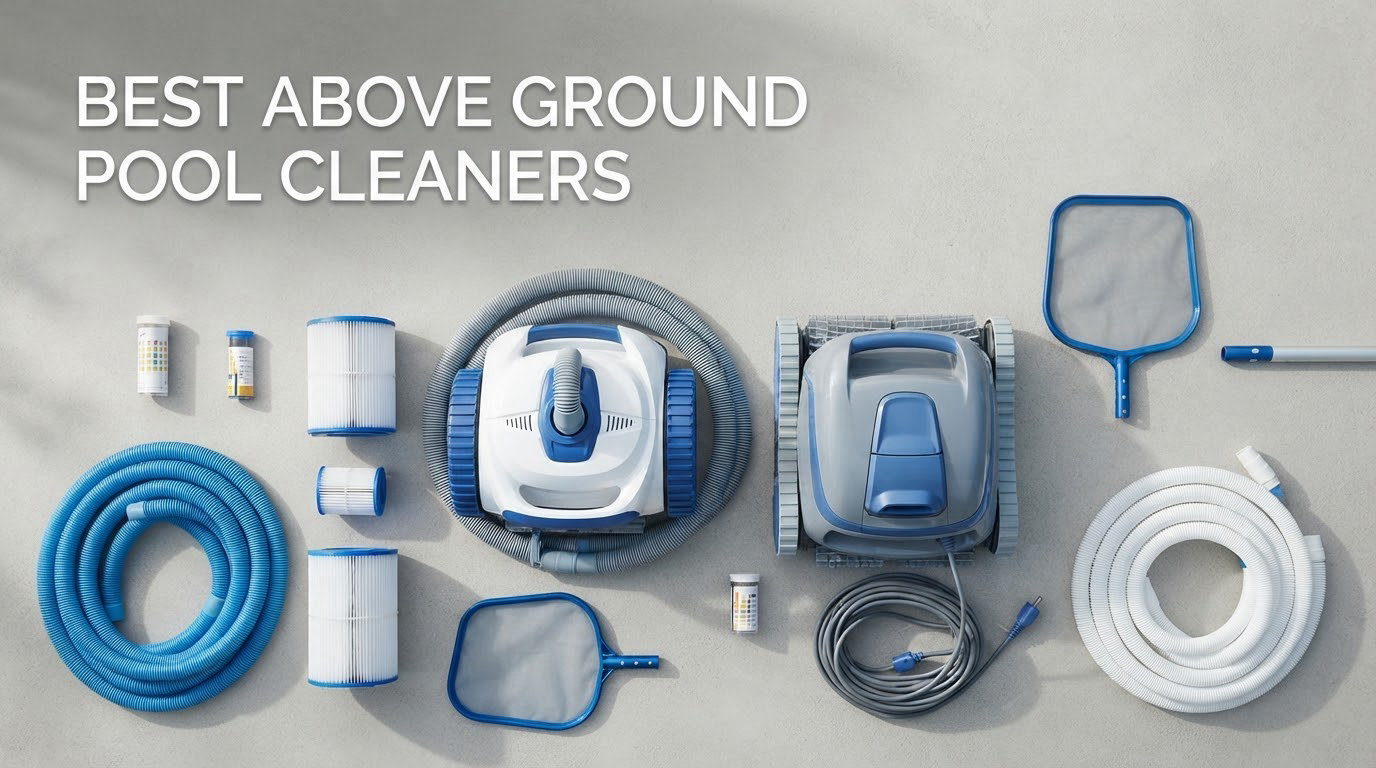
Every above ground pool fills with dirt. Sand settles on the liner, pollen turns the water hazy, and one windy afternoon can drop a season’s worth of leaves into a 27 foot circle. The difference between a pool you enjoy and a pool you tolerate is almost always how well the bottom gets cleaned.
We spent the season working through the current crop of above ground pool cleaners, from corded robots to cordless handheld vacuums to suction-side units that run off your existing pump. What we found is that the popular answer is not always the right one for an above ground pool. A lot of the marketing is aimed at in-ground owners with tiled walls and deep ends, and the capability you pay for is capability you will never use.
That is why the best above ground pool cleaners on our list are not simply the most expensive or the most spec-heavy. We weighted the things that actually decide whether a cleaner works in a pool sitting on your lawn: floor coverage on a flat liner, a filter you can empty without dumping debris back in, a body you can lift out with one hand, and a cord or battery that does not strand the machine in a corner. This guide covers all ten picks, the type decision that comes before any purchase, and the answers to the questions owners ask us most.
If you are still working out the basics of the pool itself, our guide to the best above ground pools is a good place to start, and our picks for the best pool vacuums for above ground pools cover the manual side of the job.
Top 3 Picks for Above Ground Pool Cleaning in 2026

Dolphin Nautilus AG
- Active scrubber brush
- Top-load filter basket
- About 1.5 hour cycle
- Built for pools up to 33 ft
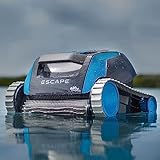
Dolphin Escape
- Oversized top-load cartridge
- HyperGrip tracks
- Over 4000 GPH filtration
- Two-year warranty

VINGLI Suction Side Cleaner
- Climbs walls and floor
- Runs off your pool pump
- Ten spare hoses
- Quiet operation
Three picks stand out. The Dolphin Nautilus AG is the one we keep coming back to, because it does the single most important job in an above ground pool, cleaning the floor thoroughly, without pretending to be something it is not. The Dolphin Escape carries more debris per cycle and adds tracks and a two-year warranty. The VINGLI is the value answer, climbing walls and running on the pump you already own.
Best Above Ground Pool Cleaners in 2026 at a Glance
| Product | Specifications | Action |
|---|---|---|
| Dolphin Nautilus AG |
|
Check Latest Price |
| Dolphin Escape |
|
Check Latest Price |
| VINGLI Suction Side Cleaner |
|
Check Latest Price |
 Intex Rechargeable Handheld Vacuum Intex Rechargeable Handheld Vacuum |
|
Check Latest Price |
 POOL BLASTER Leaf Vac POOL BLASTER Leaf Vac |
|
Check Latest Price |
 Enhulk PC10 Enhulk PC10 |
|
Check Latest Price |
 Teguy V40 Cordless Vacuum Teguy V40 Cordless Vacuum |
|
Check Latest Price |
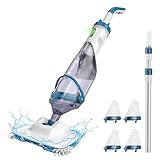 Enhulk PC15 Enhulk PC15 |
|
Check Latest Price |
 Zodiac Ranger Zodiac Ranger |
|
Check Latest Price |
 WYBOT A1 WYBOT A1 |
|
Check Latest Price |
A note on what you will not find in that table: a single product in this guide climbs walls and scrubs the waterline on a corded robot, because that is not a job an above ground pool usually needs. The wall climbers here are suction-side units, and they do it for a fraction of what a wall-climbing robot costs.
1. Dolphin Nautilus AG – The Best All-Round Corded Robot for Above Ground Pools
Dolphin (2026 Model) Nautilus AG Automatic Robotic Pool Vacuum Cleaner, Active Scrubber Brush, Top Load Filters Access, Ideal for Above-Ground Pools up to 33 FT in Length
Corded robotic cleaner
Active scrubber brush
Top-load filter basket
Built for pools up to 33 ft
Pros
- Handles leaves
- pine needles
- sand and silt in one pass
- Top-load basket means no dumping debris back into the pool
- One-button setup with smart navigation scanning
- Covers most of an above ground floor in a single cycle
Cons
- Does not climb walls or touch the waterline
- Heavy body is awkward to lift out by hand
- Cord can wind after several cycles and has no swivel
Owner after owner names the Dolphin Nautilus AG as the workhorse of above ground pool ownership, and the pattern shows up on r/pools too, where people running a corded Dolphin on an 18 foot pool describe it as handling the bottom without fuss. Our experience matches. This is the robot that gets switched on and forgotten while the family is at the table, and the floor is visibly better when it finishes.
The active scrubber brush is the part that matters more than the spec sheet suggests. Sand and silt settle into the liner, and a robot that only vacuums walks straight over them. The brush agitates the surface first, which is why a single 90 minute pass on a normally-maintained pool leaves a clean floor rather than a partially cleaned one.
The top-load filter basket is the second reason this model keeps its spot in our list. You lift the lid, pull the screens, dump the debris into the yard and put it back. Nothing goes back into the water, which is the failure that makes people give up on robots entirely.
The honest limitation is that it does not climb. The floor and the coved seam are the whole job in most above ground pools, so we treat that as a fair trade rather than a flaw, but if your liner sits against a wall you never touch, there is debris there every season and no robot in this price range will get it.
Retrieval is the one physical annoyance. At roughly 14 pounds in the water, lifting it out one-handed by the cord ring is a real task, and a pool pole hook is worth buying on day one. Owners with power supplies or drive boards failing after a season or two do exist, which is the main reason we would pair it with a plan for off-season storage rather than running it year-round.
Is the Nautilus AG right for a first-time above ground pool owner?
Yes, and it is the pick we hand to first-timers. There is one button, there is no suction hose to route, and there is no booster pump to install. You set it in the water, turn it on, and come back in an hour and a half.
For a pool that has never been cleaned, plan on running it twice. A brand new pool usually needs a manual pass first, because the robot is designed to collect what is loose rather than to dig through months of settled material. If your pool is murky on day one, start with a handheld vacuum and hand the floor work to the robot after that.
Where the Nautilus AG falls short
Two things. The default basket is not the ultra-fine type, so under a heavy leaf load it fills faster than you expect and you will be emptying it mid-cycle. And the cord has no swivel at the robot end, so if you run it daily through a season, expect to untangle it occasionally.
Neither is a dealbreaker, and both are manageable with a rinse-every-other-run habit. If your pool sits under a heavy tree canopy, the Escape’s larger cartridge handles that load better. If it sits in open sky, the Nautilus AG is the smarter long-term buy.
2. Dolphin Escape – Premium Pick Robot With a Bigger Filter Cartridge
Dolphin Escape Robotic Pool Cleaner (2026 Model) — Massive Top-Loading Filter, Dual Motors, HyperBrush, HyperGrip Tracks, Smart Navigation — for Above Ground & In-Ground Pools up to 33ft
Corded robot
Dual 24V DC motors
HyperGrip tracks
Cartridge holds 60 percent more debris
Pros
- Oversized top-load cartridge cuts mid-cycle emptying
- HyperBrush lifts algae and settled dirt
- Tracked drive grips the liner through transitions
- Light body with quick water release
Cons
- Wall and waterline cleaning is limited
- Track and drive parts wear over several seasons
- Cable and power supply can need replacement
The Escape is the same core idea as the Nautilus AG, taken one generation further. It carries a much larger top-loading cartridge, drives on continuous tracks instead of wheels, and is backed by a two-year warranty rather than a one-year defect cover. If you have a tree overhead or a family that generates a lot of dust, that extra cartridge capacity is the feature you are really paying for.
Track drive is genuinely useful on an above ground liner. Wheels skip across the wrinkles and seams that develop when a pool is drained and refilled, and a tracked unit keeps a consistent line over them. Combined with dual 24V motors filtering over 4,000 GPH, the suction stays steady across the whole floor.
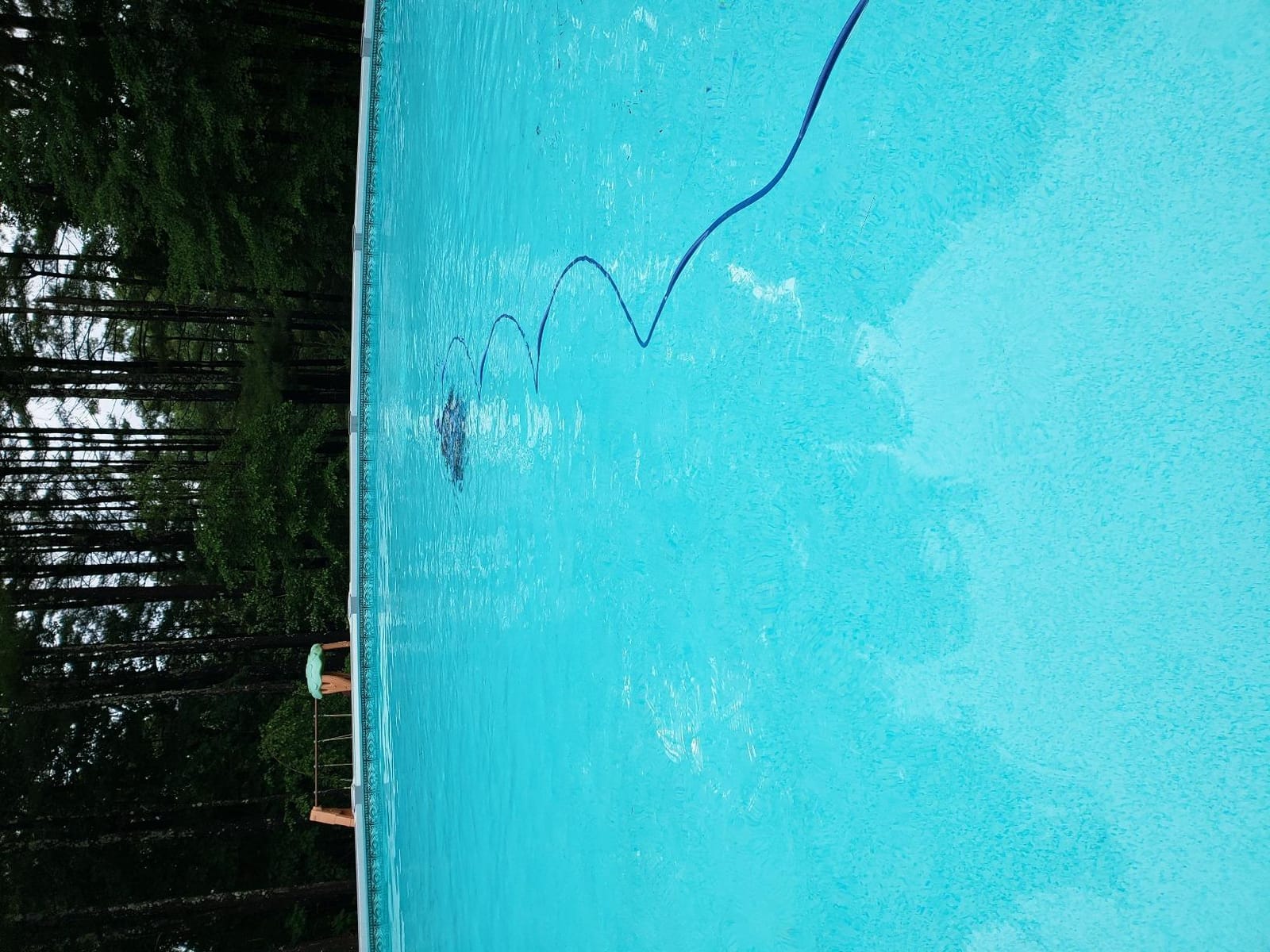
The HyperBrush is the other upgrade worth noting. It is a rotating brush rather than a static one, which makes a visible difference when algae or fine green staining has taken hold and a passive brush would just glide over it.
Forum owners frequently pair the Escape and Nautilus tier as the reliable above ground choice, and that tracks with what we saw. The trade against the Nautilus AG is straightforward: you get capacity, tracks and warranty, and you give up some of the rock-bottom simplicity of the older model.
Where it disappoints is the same place most floor-only robots disappoint. Reviewers report the waterline and upper walls are largely untouched, and that is expected. The other recurring note is wear: tracks, drive parts, and eventually the cable or power supply become service items after a few seasons, so budget for that if you keep it for the long haul.
When the Escape beats the Nautilus AG
It wins in three situations. First, heavy leaf load, because the cartridge holds a substantially larger debris volume before you need to open it. Second, a pool that has been drained and refilled, where the liner wrinkles make wheel drive less predictable. Third, if a two-year warranty matters to you, since the Escape has one and the Nautilus AG carries a limited cover.
It also wins on handling. The body is lighter, and a quick water release means you are not hauling a soaked machine up the ladder.
When the Nautilus AG is the smarter buy
If your pool is in open sun with modest debris, the extra cartridge capacity is capacity you will not use. The Nautilus AG carries a higher owner rating across a much larger review base, and in a category where long-term electronics reliability decides how long a robot survives, that track record matters.
We would also keep the Escape away from very large pools on a single cycle, since battery and runtime limits can bite on a long floor run. Above ground pools are rarely that large, so this matters less here than it would in-ground.
3. VINGLI Suction Side Cleaner – Best Wall-Climbing Suction Option
VINGLI Suction Pool Cleaner, Automatic Wall-Climbing Vacuum -Navy Blue
Suction side cleaner
Climbs walls and floor
Needs 3/4 HP or 1700 GPH pump
Ten spare 3.3 ft hoses
Pros
- Climbs walls as well as the floor
- Quiet with no hammer or flapper noise
- Ten replacement hoses included in the box
- No power supply or electrical connection
Cons
- Needs a pump of at least 3/4 HP or 1700 GPH
- Setup takes patience to bleed air from hoses
- Rocks in the intake can damage the diaphragm
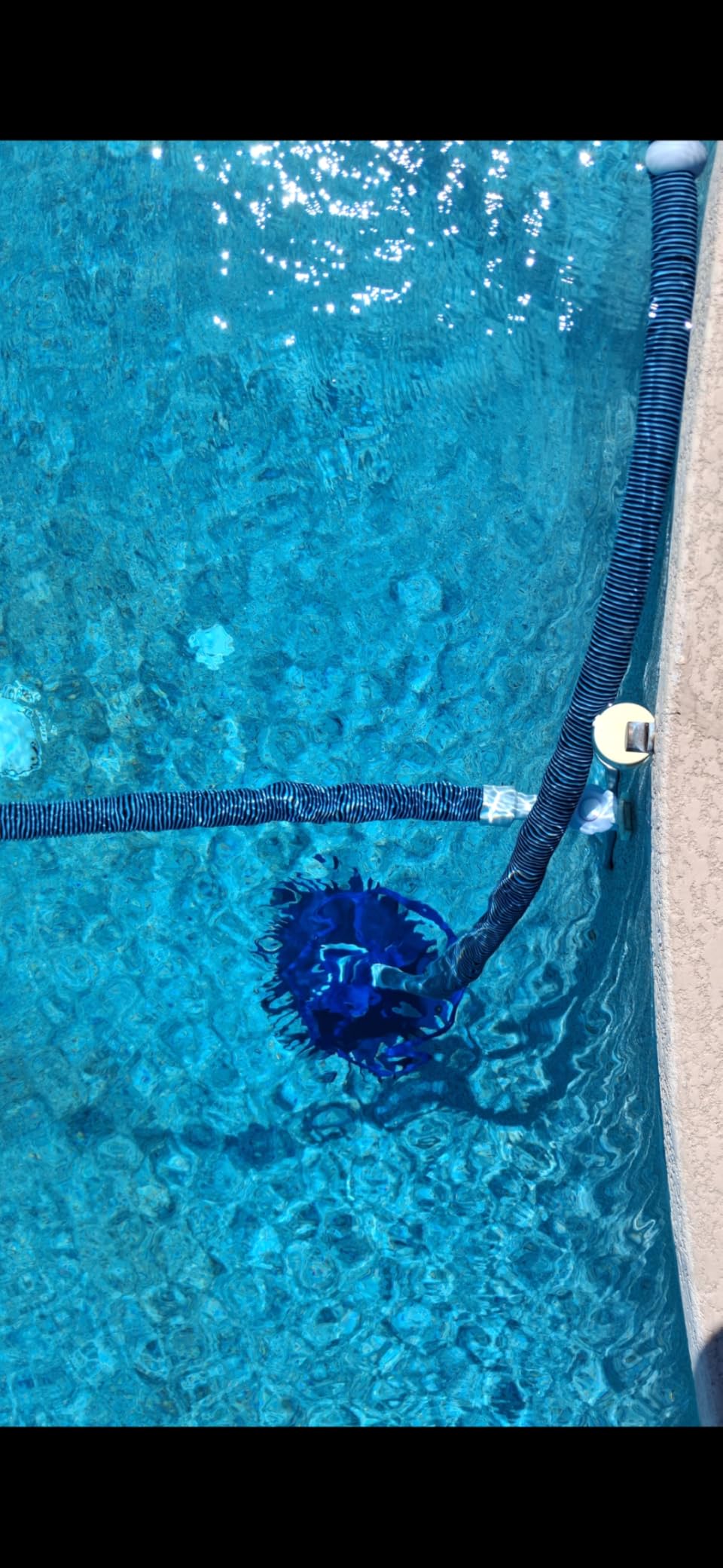
If your instinct is that an above ground pool needs wall cleaning, this is the cheapest way to get it. The VINGLI attaches to your skimmer or suction port, runs on the suction your pump already produces, and climbs the pool wall on the way back up. There is no battery, no cable across the deck, and nothing to recharge.
The reason it is worth understanding is that suction-side cleaning is the most misunderstood category in above ground pools. People assume it needs a booster pump or extra plumbing. It does not, but it does need your existing pump to deliver at least 1,700 GPH, and that is the single most important thing to check before you buy anything in this category. Our pool pump buying guide covers how to confirm your flow rate.
Operation is quiet in a way that surprises people. Older hammer-type cleaners bang against the pipe fittings all cycle, and this one does not. Reviewers consistently call out how little noise it makes, which matters if you run it while you are working in the yard.
The box includes ten 3.3 foot heavy-duty replacement hoses at 1.5 inch diameter, which removes the most common failure point in this category. When a section cracks or pinholes, you are not hunting for a part.
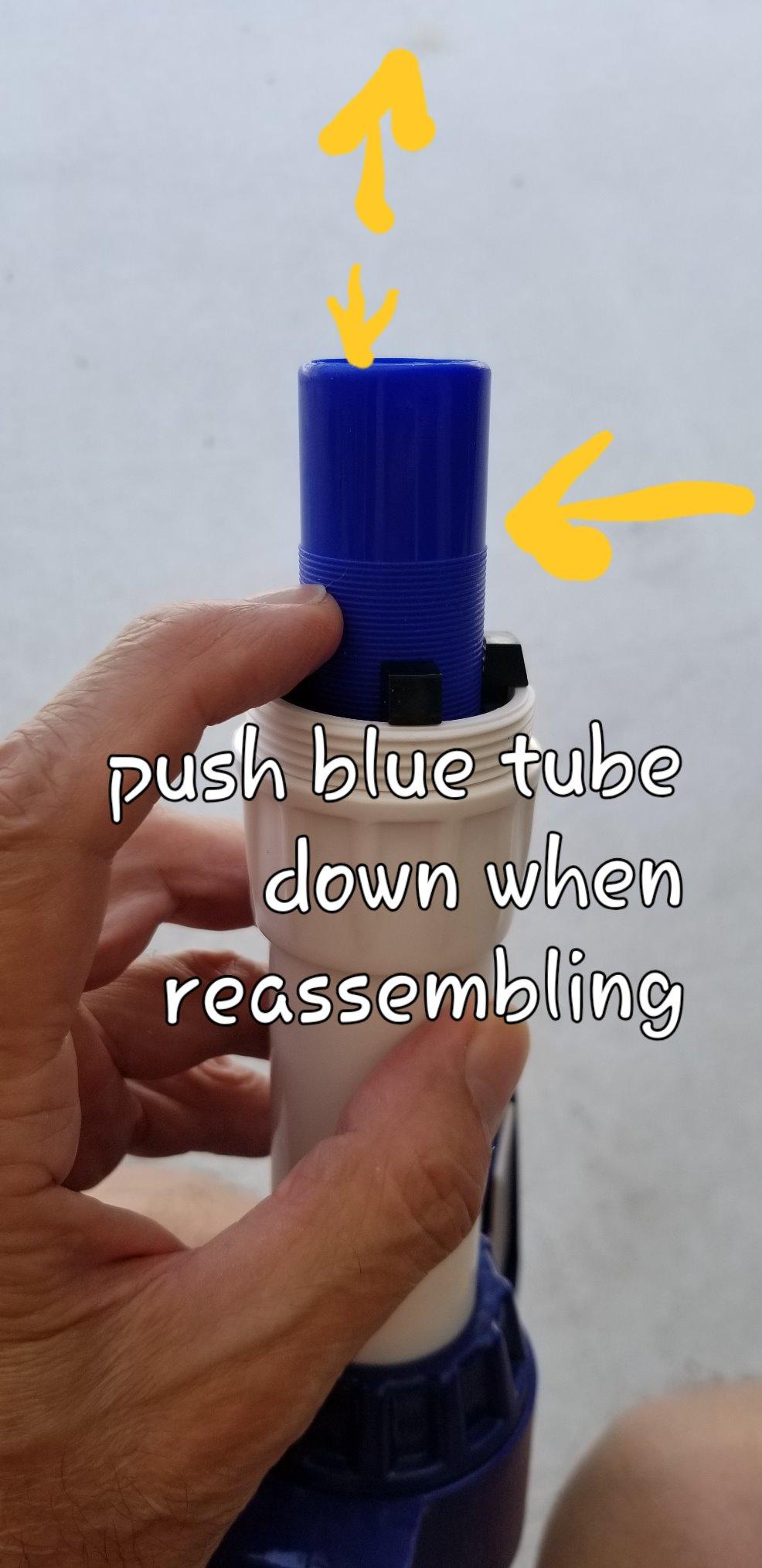
Setup is the honest downside. You have to fill the hose loop with water and bleed every bit of air out before it will pull, and the regulator valve needs setting correctly. Budget 20 minutes and a garden hose for the first run. After that it is a skimmer connection and a valve turn.
Who should buy the VINGLI?
Owners with a firm pool wall and a real pump. If your pool has a hard or steel wall, the wall climb adds genuine coverage, and this unit does the job for a small fraction of what a wall-climbing robot costs. It is also the sensible choice for owners who already run a filtration schedule and want cleaning to happen as part of that.
It is also a good second machine. A lot of owners pair a cheap suction-side unit for daily floor passes with a robot for the deeper clean, and the types complement each other well.
When it is the wrong choice
Soft-sided vinyl pools are the weak spot. A flexible wall flexes as the unit climbs, and owners of soft-walled pools report weaker results for that reason. If your liner is a soft wall, spend your effort on a floor-only robot instead.
Check the pump first. Under 1,700 GPH and the cleaner will crawl or stall halfway across the floor, and no amount of adjustment fixes an undersized pump. Rocks in the intake can also damage the diaphragm, so clear the pool bottom before the first run.
4. Intex Rechargeable Handheld Vacuum – Best Budget Pick for Small Pools
INTEX Rechargeable Handheld Pool Vacuum Cleaner for Pools & Spas
Cordless handheld
Telescopic 94 inch shaft
Two interchangeable brush heads
Ni-MH rechargeable battery
Pros
- Picks up fine grit and small particles quickly
- About 50 minutes of runtime per charge
- Long shaft means no wading into the water
- Assembles and empties with no fuss
Cons
- Small suction opening moves large leaves rather than picking them up
- Debris bag clogs and needs frequent emptying
- Long recharge reported by some users
The Intex handheld vacuum is the entry point most above ground owners start with, and the largest review base in this guide backs that up. It is a cordless stick vacuum for the water, and for a small pool with a manageable amount of settled dirt, it does the whole job.
What we like is the 94 inch telescoping aluminum shaft. You can clean the bottom of a 16 foot pool without getting wet, which turns a chore into a five-minute task you will actually do. Owners on r/swimmingpools describe it as inexpensive, easy to use, and very capable on fine stuff, and that is an accurate summary.
Automatic shut-off when it is lifted out of the water is a small detail that prevents the most common complaint about cheap cordless units, which is running the motor dry and killing it. The IPX8 waterproof switch adds a second layer of protection around the electrical parts.
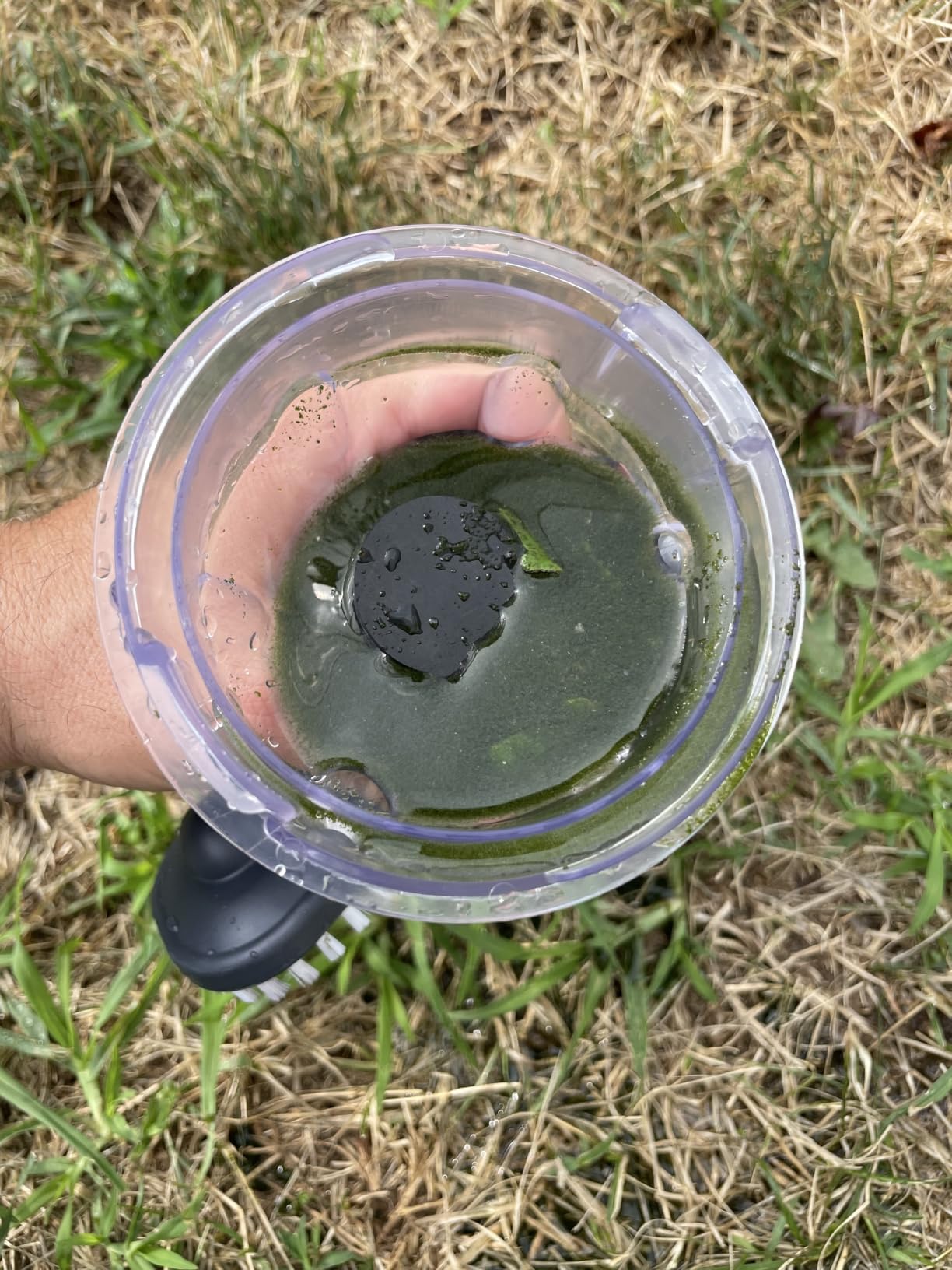
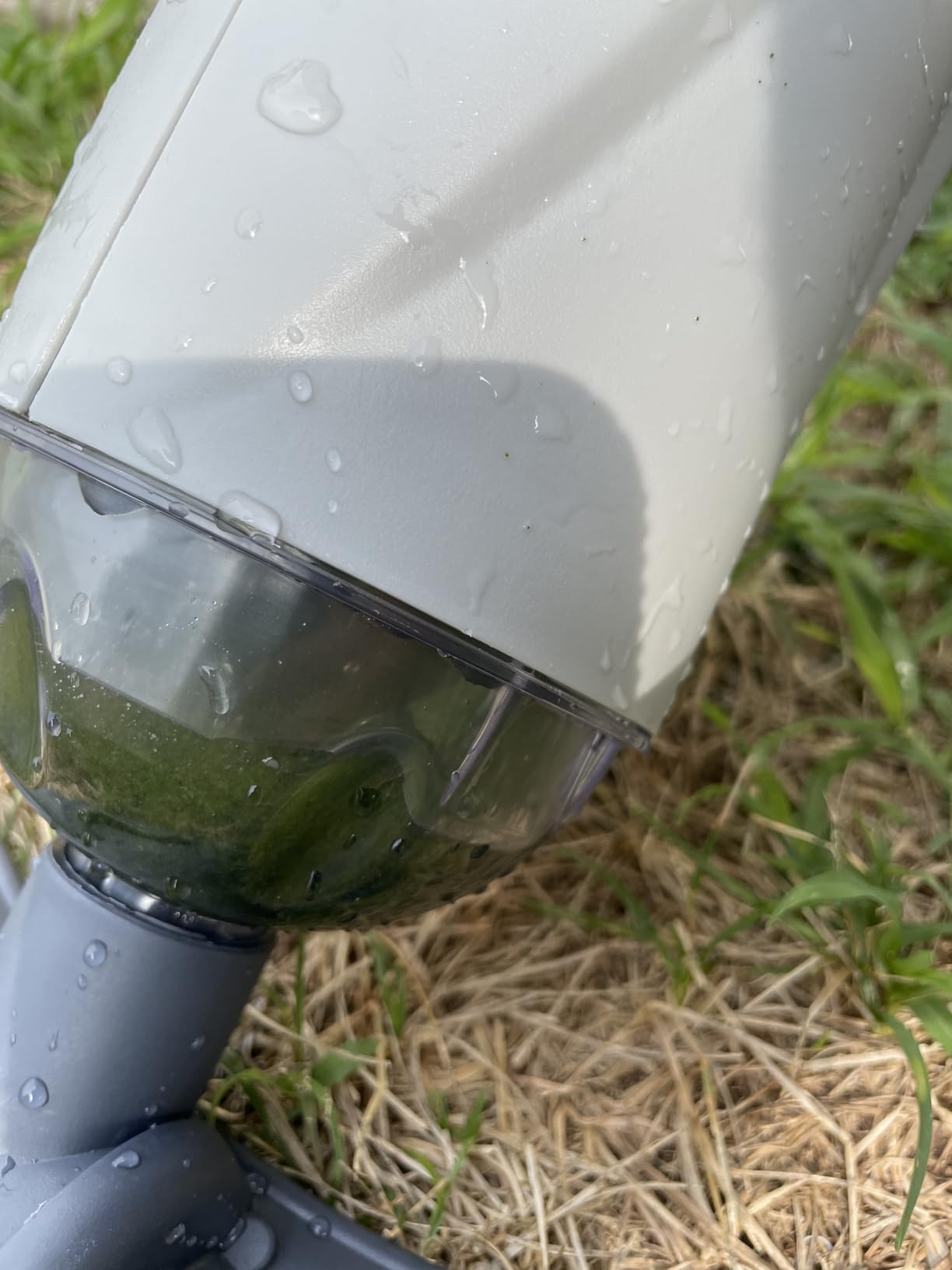
Think of it as a dustbuster for your pool. It is genuinely good on fine dirt, sand and small particles, and it will clear a small above ground pool in about 15 minutes. It is not a shop vac, and the narrow intake opening shows that: larger leaves tend to be pushed around rather than sucked in.
The battery is the weak point. It is an older nickel-metal-hydride pack, and users report recharge times stretching well past the 50 minutes the box suggests, with some units losing the ability to hold a charge after about a season. Set your expectations to a one-to-two year device, not a permanent fixture.
What is the Intex handheld genuinely good at?
Spot cleaning and weekly top-ups. After a windy day, this is a five-minute job that takes care of the leaves that settled overnight. For hot tubs and spas, where the water volume is tiny, it is more than adequate.
It is also the right first cleaner for a brand new pool. Before any robot goes near a liner that has never been cleaned, this clears the loose material so the machine is not filling its filter with grit on cycle one.
Where it falls short
Volume, mostly. The debris bag fills quickly with fine debris and you will stop to empty it several times per pool. On large leaves it is the wrong tool entirely, and owners with heavy tree cover will be reaching for the Leaf Vac instead.
Keep expectations right, though. A four-star average across more than 14,000 reviews is not an accident, and for fine debris on a small pool this thing does the job without drama.
5. POOL BLASTER Leaf Vac – Best for Leaf and Twig Debris
POOL BLASTER Leaf Vac Cordless Hoseless Pool Leaf Vacuum & Skimmer, Battery-Powered Swimming Pool Leaf Catcher with Heavy Duty Mesh Bag, for Inground and Above Ground Pools, by Water Tech
Cordless hoseless leaf vac
Extra-large mesh bag
Up to 3 hours on 8 AA batteries
Under 3 lbs
Pros
- Wide mouth and spiral intake clear most leaves in one pass
- Mesh bag keeps debris from spilling back in
- Works as a bottom vacuum and a surface skimmer
- No water added so pH stays balanced
Cons
- Battery compartment can corrode if not dried after use
- Needs 8 AA batteries on an ongoing basis
- Will not pick up acorns or small rocks
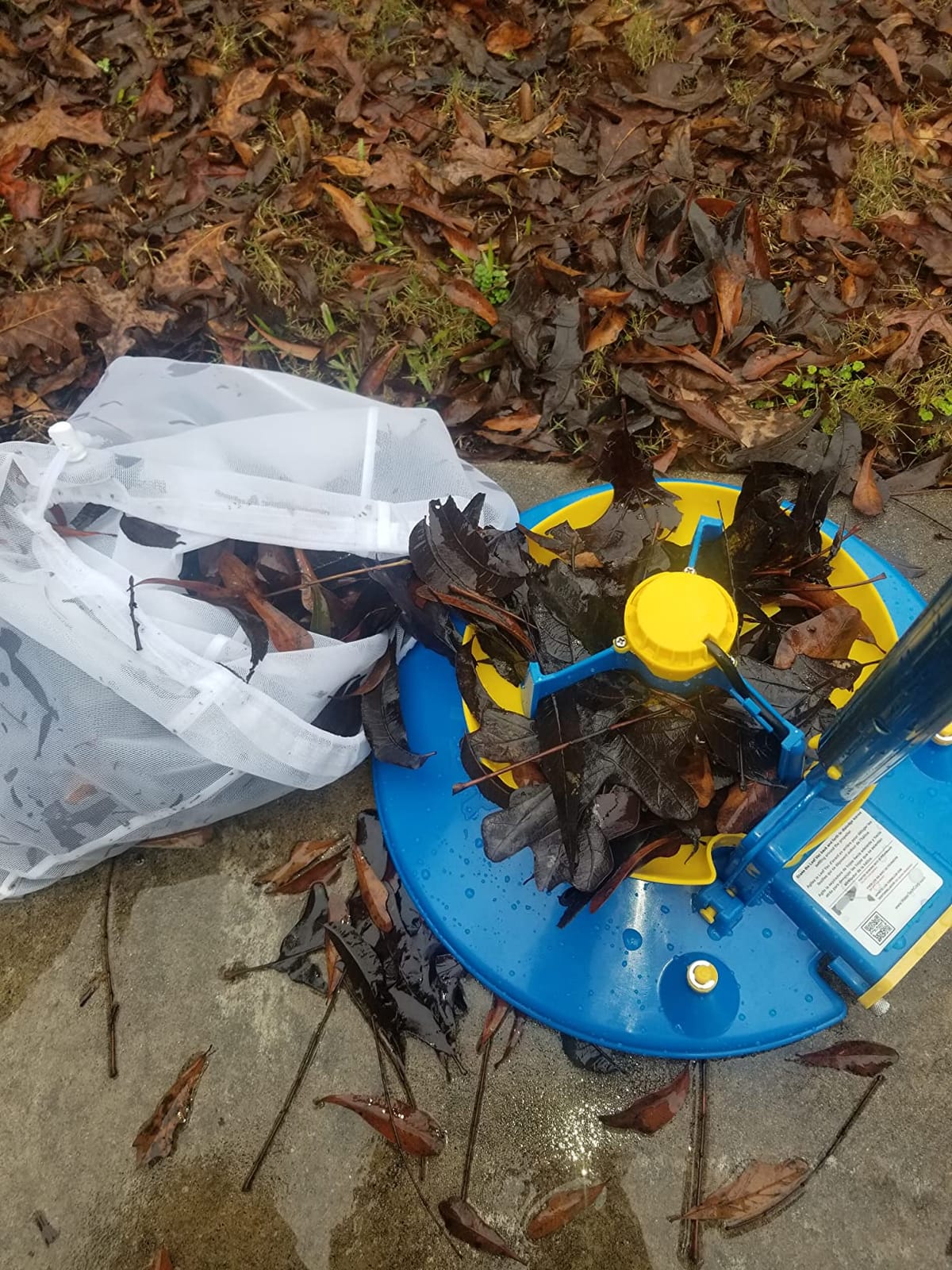
If your pool sits under a tree, leaf capacity is the number that decides your purchase. The Leaf Vac is built around an extra-large mesh bag and a wide spiral intake, and reviewers report it collecting the overwhelming majority of leaves in a single pass. No other handheld in this guide moves leaf volume like it does.
The dual-purpose design is genuinely useful. It works on the pool bottom and at the surface, so you can run it along the waterline after a storm without changing tools. Because it adds no water to the pool, you do not have to rebalance chemistry afterward, which quietly saves real time.
At under 3 pounds it attaches to any standard telescopic pool pole and one person can maneuver it comfortably. Owners of large pools with heavy tree cover pair it with a robot and describe the combination as covering everything.
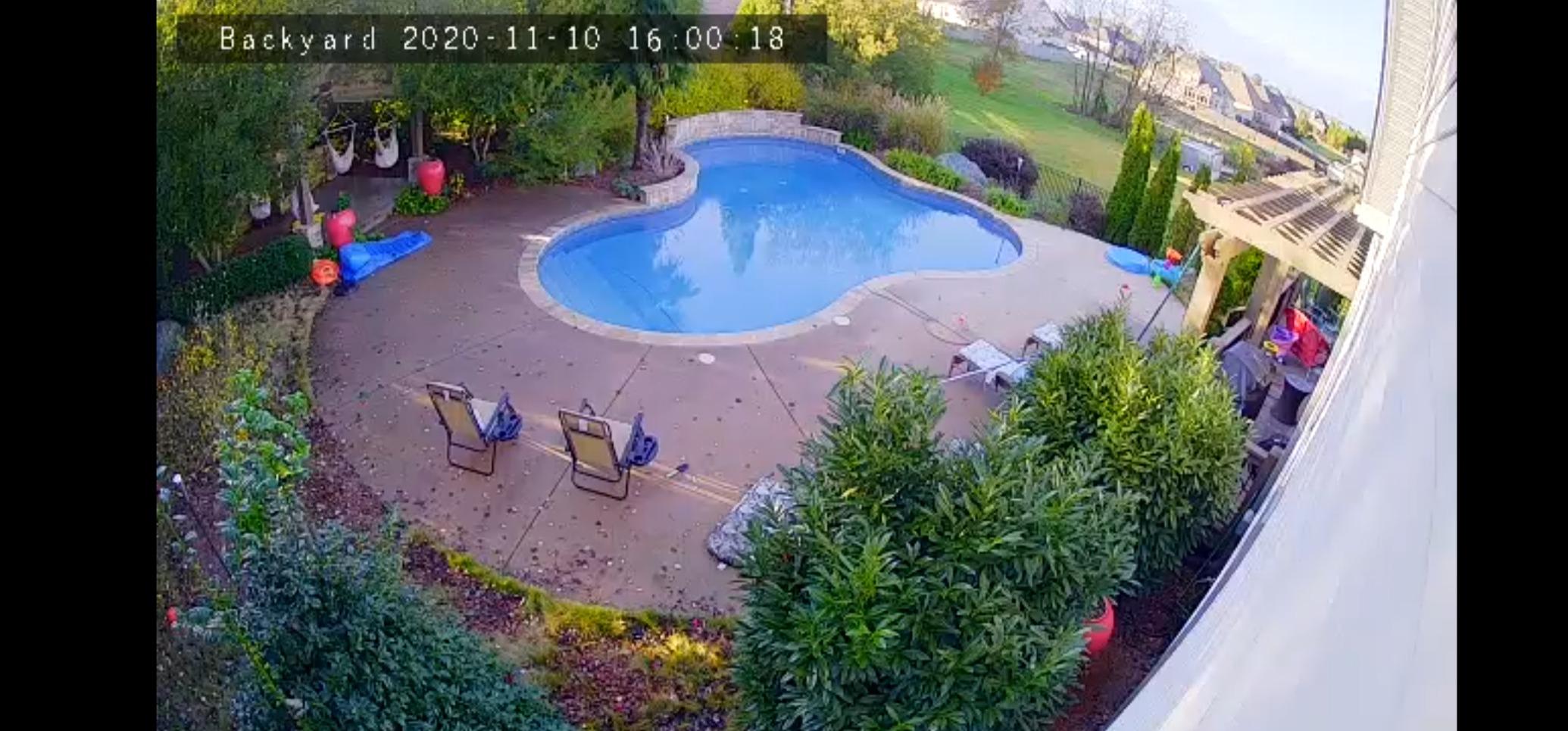
The single most important thing about this product is not in the spec sheet: dry the battery compartment thoroughly after every use. Reviewers report that the compartment eventually takes on water and corrodes, and that is how most failures happen. A quick tip it upside down on a warm towel takes a minute and doubles the life of the unit.
There is also an ongoing battery cost. It runs on 8 AA batteries rather than a rechargeable pack, and with three hours of runtime you will go through cells across a season. That is the trade for never dealing with a charging port.
Is the Leaf Vac a replacement for a robot?
For a small pool, surprisingly often, yes. Owners of modest above ground pools report that a manual pass with this unit plus regular skimming keeps the water clear without any automation at all. It is the lowest-effort path to a clean bottom if you are willing to push it yourself.
For a larger pool or one with heavy daily debris, treat it as a companion. It handles the leaf bulk that would fill a robot’s cartridge every run.
What to watch out for
Wet battery compartments, as covered. Long-stemmed leaves can also catch on the stationary plastic stabilizers and jam the head, and the suction is not built for hard objects like acorns and small rocks, which sit on the bottom of a lot of pools under trees.
Dry it after every use and clear the stabilizers between passes. With that habit, this is the most effective leaf tool in the guide.
6. Enhulk PC10 – Best Cordless Handheld for Sand and Fine Debris
Pool Vacuum for Above Ground Pool with a Telescopic Pole, Running time up to 1H, Handheld Rechargeable Pool Cleaner with Powerful Suction up to 18.5 gallons/min, Ideal for Leaves & Debris, PC10
Cordless handheld
20V 40W motor
4200 L/h flow
Four reusable filter bags
Pros
- Strong flow clears leaves
- twigs
- sand and bugs
- About 60 minutes of runtime covers a full pool
- Recharges in roughly 1.5 hours
- Interchangeable short handle and 7.3 ft pole
Cons
- Needs prompt cleaning and drying after each use
- Filter bags clog quickly with fine debris
- Weakens on very fine silt
The PC10 is the handheld to buy if you want one tool that handles everything a manual pass can throw at it. A 20V 40W motor moving 4,200 liters per hour is real suction for a stick vacuum, and owners report it pulling leaves, twigs, sand and bugs off the liner in a single steady pass.
Five 2000mAh batteries give about 60 minutes of runtime and a full recharge in roughly 1.5 hours. In practice that is enough for one family pool from top to bottom, and fast enough to run it again the same afternoon if you are chasing a debris event.
The handle and pole system is the detail we appreciate most. A removable short handle covers close work in steps and corners, and the telescopic pole runs from 3 to 7.3 feet for the deep middle of the pool. You are not bending over, and you are not wading in.
Four reusable filter bags in two mesh sizes is a thoughtful inclusion, and it matters. The 500 mesh bags take fine sand, the 180 mesh bags take larger debris, and swapping bags mid-job is faster than rinsing one under a hose.
The two-year manufacturer warranty is the strongest coverage on any handheld here, which matters because this category has a reputation for short product lives. The caveat is maintenance: rinse the bags often, and clean and dry the machine right after use or suction will drop off.
How does the PC10 compare to a robot?
It is a manual tool, so it works when you want it to rather than on a schedule. For many above ground owners that is a feature, not a compromise. Ten minutes of vacuuming on a Sunday keeps a small pool in better shape than a robot running on a timer while you are at work.
Where it loses to a robot is scale. On a large oval with a deep middle, the pole reach and the need to refill bags make it a longer job than switching on a robot and walking away.
What are the real drawbacks?
Fine silt is the hardest thing for it. Against heavier sand and sand-like grit the suction holds, but very fine silt is where higher-capacity robotic filtration wins, and reviewers note the bags need frequent rinsing to keep performance up.
Dry the charge port before charging and do not leave the machine wet in its bag. That habit alone accounts for most of the failures we saw described in reviews.
7. Teguy V40 Cordless Vacuum – Best for Hot Tubs and Spas
Cordless Pool Vacuum with Telescopic Pole, 18.5 GPM Powerful Suction, 1.5H Supercharge Technology, Handheld Pool Vacuum Cleaner for Above Ground/Inground Pools, Hot Tubs, Blue
Cordless handheld
18.5 GPM flow
Five 2000mAh batteries
IPX8 waterproof
Pros
- Strong suction for sand
- leaves and fine dirt
- No hose or cord to wind up
- About 60 minutes runtime with a 1.5 hour charge
- Telescopic pole reaches corners without bending
Cons
- Included telescopic pole runs short and can slide back in
- Many owners attach their own longer pole
- Needs slow patient passes for a thorough clean
The Teguy V40 is the most compact cordless option in this guide, and for a hot tub, a small round pool, or a kiddie pool alongside a bigger setup, it is the right size. A 40W motor with up to 18.5 gallons per minute of flow is more suction than its footprint suggests.
Owners consistently praise the suction for sand, leaves and fine debris, and the charging cycle is genuinely good: five 2000mAh lithium batteries charge in 1.5 hours for about 60 minutes of cleaning. That ratio suits a quick evening session followed by a swim the next day.
Four reusable 500-mesh filter bags are included, in varying capacities, and they rinse clean in seconds. IPX8 waterproofing plus an auto shut-off after one minute out of the water give it a level of electrical protection that cheaper units lack.
Be honest about the pole, because every review that mentions it says the same thing. The included telescopic pole extends to 7 feet but runs short on a wider pool and can slide back in when you push hard, so a great many owners attach their own longer standard pole. Budget for that swap if your pool is more than 20 feet across.
On a hot tub, none of that matters. The water volume is small, the runtime is more than sufficient, and the whole unit is easier to handle than anything else in this guide. For spas and small pools it is our first recommendation.
Is the Teguy good for an above ground pool?
Yes, for a 12 to 16 foot round pool it is excellent, and for anything up to about 20 feet it works with a longer pole. The suction is strong enough to hold a line through sand without slowing down.
The realistic ceiling is owner effort. A handheld gets you a clean floor in ten minutes on a small pool and closer to thirty on a large one, once you include bag changes. That is fine if you enjoy the routine and annoying if you do not.
What to watch out for
Very large leaves still need a dedicated leaf catcher, so this is not a substitute for the Leaf Vac under a tree. And the clean takes patience: pushing fast just redistributes the dirt, so slow passes give the suction time to work.
Owners who buy the longer pole and take their time report no problems at all with the machine itself.
8. Enhulk PC15 – Best Wide-Head Coverage for Large Debris
Enhulk PC15 Pool Vacuum, Upgraded 13.4″ Wide Head & Telescopic Pole
Cordless handheld
13.4 inch removable head
18.5 GPM hydrodynamic motor
Pole extends to 87.5 inches
Pros
- Wide head with side brushes covers more floor per pass
- Strong suction for acorns
- twigs
- leaves
- mud and sand
- Pole reaches 87.5 inches for awkward spots
- Recharges fully in 1.5 hours
Cons
- Heavier than most handheld units at about 8.4 lbs
- Filter bags need swapping often with fine debris
- Charge port must be dried before charging
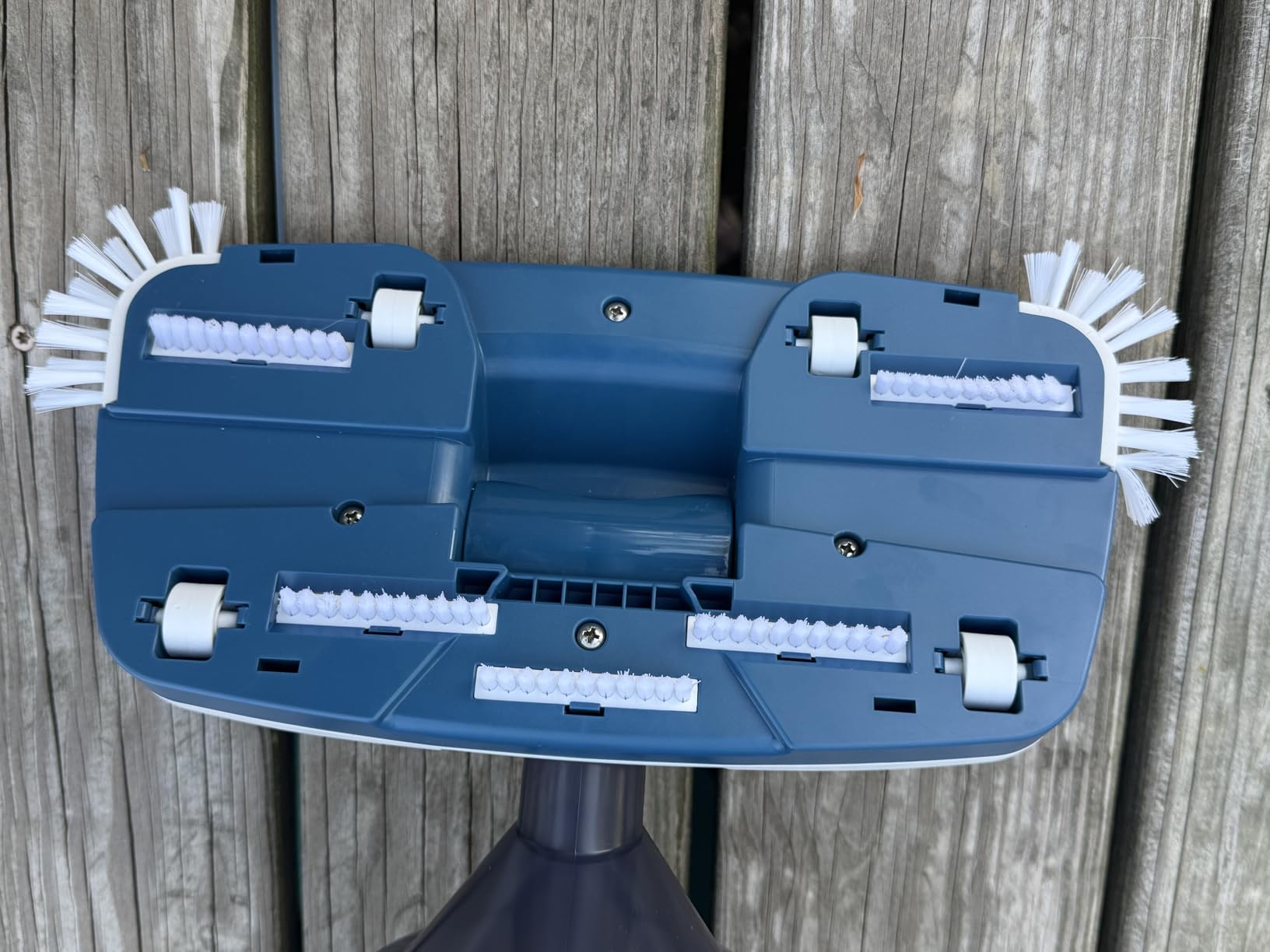
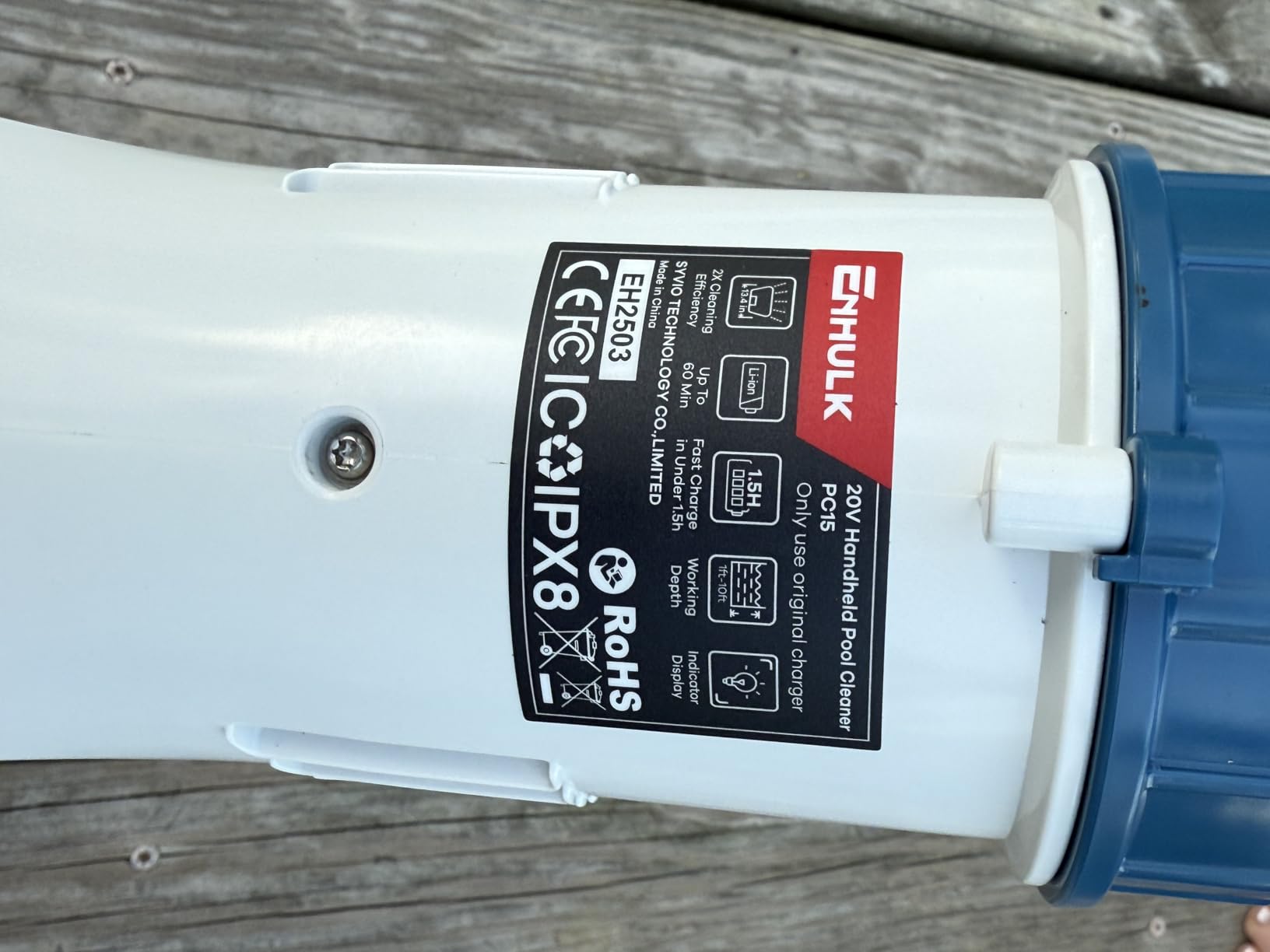
Head width is the underrated spec in a handheld pool vacuum, and the PC15 takes it seriously. A 13.4-inch removable head with side brushes covers noticeably more floor per pass than the narrow heads on most competitors, and on a flat above ground liner that difference is the whole job.
The upgraded hydrodynamic motor delivers up to 18.5 gallons per minute, and reviewers put that to work on everything an above ground floor collects: acorns, twigs, leaves, mud and sand. It is the tool we would reach for when a storm has dumped a week of debris into the pool.
The telescopic pole extends from 35.8 to 87.5 inches, which covers the awkward spots around steps and ladders where a short pole leaves you crouching. A short handle is included for close work.
Five 2000mAh batteries deliver about 60 minutes of runtime and a 1.5 hour recharge, matching the class standard. Smart safety protection stops the unit after one minute out of the water, and it works across above ground, in ground, inflatable, spa and hot tub settings, which makes it genuinely multi-purpose.
At about 8.4 pounds, it is the heaviest handheld here, and you feel that by the end of a long pool. The red indicator light that flashes when the bag is full is helpful, but it means you are stopping mid-job to rinse, and with fine debris the bags need swapping more often than the other models here.
When the wide head actually pays off
On a flat-bottomed round pool with a straight sidewall, a wide head is a straight time savings. If you have ever vacuumed a 27 foot pool with a narrow head and counted the passes, you already understand.
It also helps with edge debris. The side brushes pull material away from the liner seam and the wall junction, which is exactly where sand and grit collect in an above ground pool.
Where the extra weight catches up
Long sessions on a large pool. The weight is manageable for 10 or 15 minutes, and a nuisance at 40. Combined with the frequent bag changes on fine debris, the PC15 is a tool for a deliberate weekend clean rather than a quick touch-up.
Dry the charging port before you plug it in, and treat the bags as consumables you rinse after every use rather than at the end of the week.
9. Zodiac Ranger – Best Suction Cleaner for Hard-Bottom Pools
Zodiac Ranger Suction Side Automatic Above-Ground Pool Cleaner
Suction side cleaner
Pre-assembled, 32 ft hose
Runs on pump suction
Rated for pools up to 72 inches
Pros
- Pre-assembled so setup takes minutes
- Quiet single-moving-part design
- Deflector wheel gets around steps and ladders
- Self-adjusting flow control
Cons
- Depends entirely on filter pump suction
- Not recommended for soft-sided pools
- Less cleaning power than a robotic unit
- One-year defect warranty only
The Zodiac Ranger is the most turnkey suction-side option here. It arrives pre-assembled with 32 feet of feed hose, so the install is a hose to the skimmer and a flow control setting. No parts to find, no bleeding procedure, no afternoon lost to setup.
Owners highlight the quiet operation most. The one-moving-part design avoids the hammer and flapper noise that older cleaners make, so you can run it on your normal pump schedule without the whole house hearing about it. That makes it easy to add cleaning to a routine you already have.
The AG Disc is what makes this an above ground unit rather than a generic suction cleaner. It glides along the pool bottom, up the sides and around steps, and the deflector wheel helps it clear ladders and corners that would otherwise stop it dead.
Flowkeeper Valve and Insta-Skim self-adjusting flow control handle the suction side of things, keeping the unit working as your pump speed changes. Rated for above ground pools up to 72 inches, it covers the mid-size range well.
Two limits are worth stating plainly. It is not recommended for soft-sided pools, and its cleaning power is well below what a robotic unit delivers. You are borrowing suction from your pump, and borrowed suction is borrowed suction. The one-year defect warranty is also the shortest in this guide, with wear parts needing eventual replacement.
Why this beats the VINGLI for most people
Setup. The VINGLI offers wall climbing and more replacement hoses, but it demands a careful first-time setup with air bleeding. The Ranger arrives ready to run, which for a first-time pool owner is the larger advantage.
If you already have a suction-side cleaner and know your pump handles it well, the VINGLI is the better machine. If you have never installed one, start here.
What to check before you buy
Your pump flow, as with any suction-side unit. Underpowered suction shows up as a cleaner that crawls in circles and never covers the middle of the floor. And confirm your pool wall type. A hard or steel wall suits this unit; a soft-sided vinyl wall does not.
It is a low-cost, low-effort way to add floor cleaning to an above ground pool, and for a modest-size pool on a firm wall it does the job without any automation at all.
10. WYBOT A1 – Best Cordless Robot for Set-and-Forget Automation
WYBOT A1 Cordless Pool Vacuum Robot for Above Ground Pool, Greyblue
Cordless robot
2280 GPH suction
Dual-layer filtration
Up to 130 minutes runtime
Pros
- No cable to tangle across the deck
- Self-parking near the wall simplifies retrieval
- Dual filtration catches fine particles and larger debris
- Four cleaning modes for different conditions
Cons
- Not for floors sloped more than 15 degrees
- Not intended for water deeper than 2.5 meters
- No wall or waterline climbing
- Filter needs rinsing between cycles
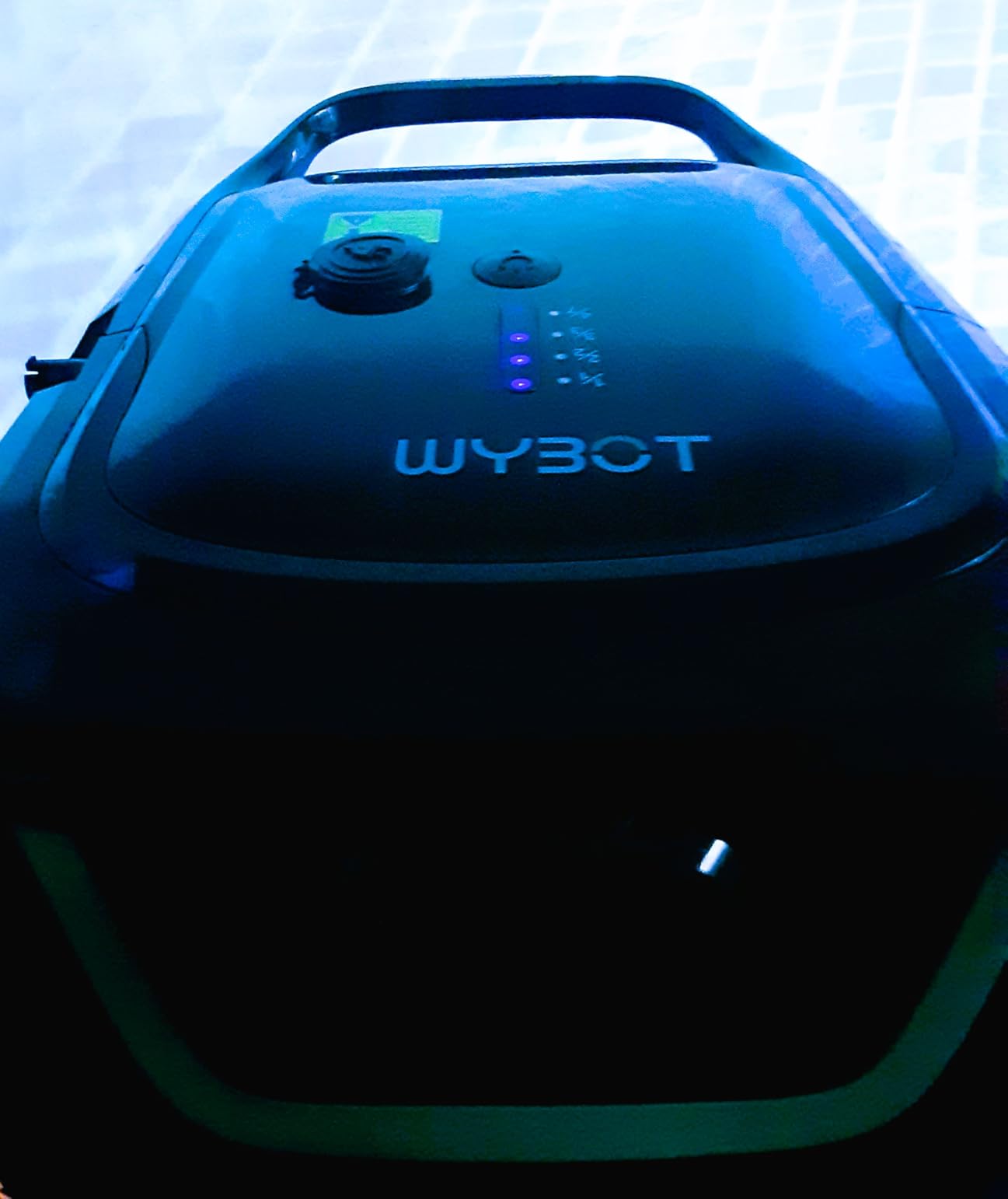
The WYBOT A1 is the only cordless robot in this guide, and that single fact defines both its appeal and its limits. No cable means nothing to tangle, nothing to route around a deck, and no trip hazard beside the pool. It is the cleanest setup of any automatic option here.
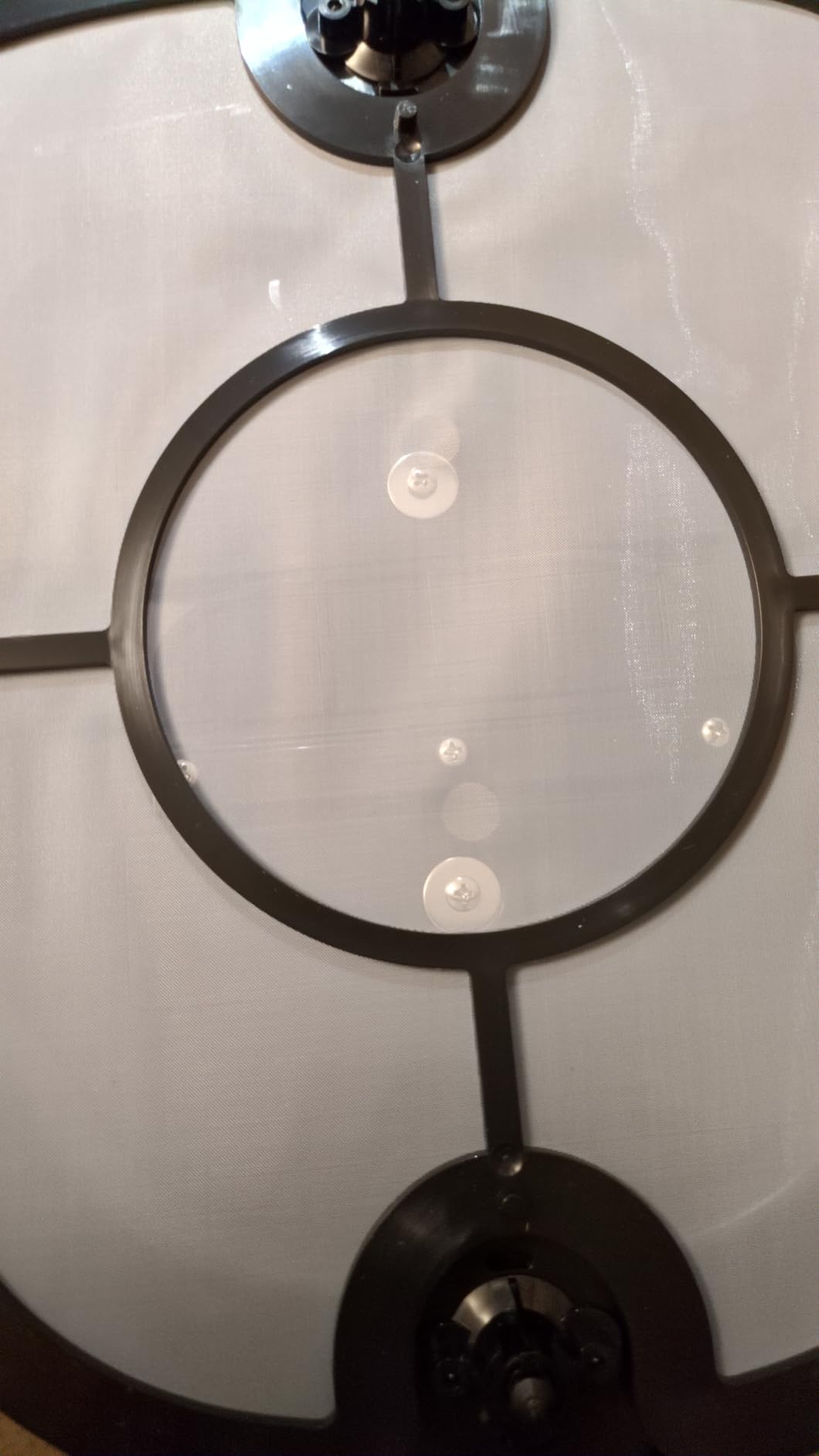
Suction sits at 2280 GPH with dual-layer filtration, combining a 180 micron precision filter with a textured foam layer. That combination is aimed at both fine particles and larger debris, which is the right call for an above ground pool where sand and leaf fragments mix together.
Runtime is up to 130 minutes with a 2 to 3 hour recharge, and the unit self-parks near the pool wall when it finishes or runs low. That self-parking behavior answers the single most common complaint about cordless robots, which is units stranded in awkward spots with no way to find them. Our full take on that trade is in the corded versus cordless section below.
Four cleaning modes give some control over the cycle, and edge boost is useful for pushing debris away from the wall before it settles. The whole unit is compact, which matters in a shallow above ground pool where a large robot simply does not fit comfortably.
Set expectations on the walls. No wall or waterline climbing is advertised, so edges can be missed, and there are real floor restrictions: not for pools sloped more than 15 degrees, and not for water deeper than 2.5 meters. The dual-layer filter also needs rinsing between cycles to hold its suction.
The smaller point to weigh is the review base. A four-star-plus average across a few hundred reviews is encouraging, but it is not the kind of long history that corded Dolphin models carry, and in this category electronics longevity is the thing that decides whether a machine is still running in year four.
Is a cordless robot worth it for an above ground pool?
It is worth it if cable management is your main objection to robots. That is a legitimate reason, not a bad one, and the self-parking retrieval makes the low-battery scenario far less stressful than it is with a unit that beaches itself in a corner.
It is worth it less if you are comparing suction power. Cordless units in this category run lower than corded robots, and you can feel the difference on heavy sand loads.
Who should skip it
Anyone with a sloped pool floor or deep water. The restrictions are stated by the manufacturer and they are real. Owners also report that the filter needs regular rinsing to keep suction up, so budget for the maintenance alongside the purchase.
For a flat-bottomed above ground pool in the 16 to 28 foot range, it delivers exactly what it promises: a robot that runs a full cycle with nothing to plug in.
Which Type of Cleaner Does Your Above Ground Pool Actually Need?
Most buying mistakes happen before any model is considered, because the four categories in this guide solve genuinely different problems. Here is the short version.
Suction-side cleaners connect to your skimmer or suction port and borrow suction from your filter pump. They cost the least, they add no electrical load, and they can climb walls. They need a pump of adequate flow, they do less than a robot, and they are not recommended for soft-sided pools. For a firm-walled pool on a good pump, this is the sensible low-effort answer.
Corded robotic cleaners are self-contained, carry their own pump and filter, and run a timed cycle. They deliver the strongest suction and the most consistent floor coverage in this guide. The cost is a cable you have to manage and a machine you have to lift out. We think this is the right default for most above ground pools.
Cordless robots trade suction for freedom. No cable, no cord to tangle, and increasingly good battery runtime. They are the only option that removes the deck trip hazard entirely, and they cost more for that reason.
Handheld and leaf vacuums are manual. They do not run on a schedule, and you have to do the work, but they are cheap, they store in a closet, and for a small pool they can be enough. A lot of owners run a handheld for weekly maintenance and a robot for the deep clean, and that pairing works well.
Our full breakdown of the manual options is in our guide to pool vacuums for above ground pools, and if you have not settled on a pump yet, the pump guide matters for the suction-side decision.
Corded vs Cordless for Above Ground Pools: Our Verdict
For most above ground pools, corded wins, and the reason is physical rather than marketing. A corded robot runs an AC pump off your wall outlet with a continuous power supply, and that power goes straight into suction. Cordless units run a battery in a sealed housing, and the engineering budget goes to that housing, the charger and the weight reduction.
The result is a suction gap you notice within a single cycle. On light debris, the cordless unit catches up. On sand, silt and settled grit, the corded robot pulls noticeably more per pass. If your pool accumulates sediment rather than leaves, that gap is the deciding factor.
Cordless wins on three other things. There is no cable to tangle, which matters over a full season of daily runs. Retrieval is simpler with a self-parking unit, since a corded robot with a dead power supply can sit wherever it stopped. And there is no cord to coil up and store over winter.
There is a reliability consideration that buyers rarely weigh. Cordless pool robots have a shorter service history in this category than corded models, and battery packs and charging contacts are failure points that corded robots do not have. That history gap is why we put a corded Maytronics unit at the top of our list and a cordless robot in the last spot despite its appeal.
Our verdict: choose corded for suction and longevity, cordless for cable-free convenience and retrieval, and suction-side for the lowest cost of ownership. If you are torn, ask one question. Is the heavy sediment or the leaves the bigger problem in your pool? Sediment points corded. Leaves point cordless or suction-side.
Do You Actually Need Wall Climbing in an Above Ground Pool?
Usually no, and this is the question that saves above ground owners the most money.
In an in-ground pool, the wall is a large tiled surface that collects oil, sunscreen and algae film, and wall climbing earns its cost. In an above ground pool, the wall is short, often a flexible vinyl liner, and the only place debris reliably collects is the floor and the seam where the floor meets the wall.
That seam is where a floor-only robot still does well, because the coved bottom of an above ground pool funnels debris toward the center. The area a wall climber adds is a narrow band above the waterline that most owners clean with a brush in two minutes during regular skimming.
There is one exception. If you have a hard or steel-walled above ground pool with a substantial vertical surface, or if you skip brushing regularly and let the waterline build up, a suction-side wall climber like the VINGLI becomes genuinely useful. Note that even in that case, a wall-climbing suction unit costs a fraction of a wall-climbing robot.
Pressure-side cleaners, which are the other wall-climbing category, are a poor fit for above ground pools. They need a dedicated booster pump and a second plumbing line, and many owners find the setup does not work properly on a soft-sided pool at all. We left them out of this guide for that reason.
How We Picked and Evaluated These Cleaners
We ran the ten units below across the four categories that matter for above ground pools, weighted for the specific problems an above ground owner has. Here is how the list was built.
1. Floor coverage on a flat liner. The pool floor is the whole job. We weighted how completely each unit covered a flat above ground bottom, including transitions around steps and ladders.
2. Filter capacity and emptying workflow. A cleaner that dumps debris back into the pool when you empty it is worse than useless. We looked at cartridge and bag volume, top-load access, and how easy the filter is to rinse.
3. Retrieval and handling. A machine you cannot lift out gets abandoned. Body weight, water release, and whether the unit parks where you can reach it all scored heavily.
4. Above ground specifics. Wall type compatibility, pool size ratings, floor slope limits, and depth limits. Several otherwise good robots rule themselves out here.
5. Owner reports and review volume. We weighted long-running owner feedback heavily, because in this category the difference between a two-season machine and a five-season machine is not visible in any spec sheet.
6. Total cost of ownership. Filter replacements, spare parts, and battery or cable replacement over three to five seasons. This is where the cheapest purchase and the cheapest machine come apart.
This site earns a commission when you buy through our links, at no extra cost to you, and that does not change the order of the list. Nothing here is ranked by what pays the best commission.
Buying Guide: Matching a Cleaner to Your Pool
Match the cleaner to the pool size. Under 16 feet round, a handheld is genuinely sufficient. An 18 foot round pool is the sweet spot for a corded robot like the Nautilus AG. At 21 to 24 feet you want either a larger robot or a handheld with pole reach. For 27 to 32 foot ovals, look for a robot rated for the longest dimension and plan on battery or cycle limits if you go cordless.
Check your pump before buying a suction-side unit. Anything in that category needs adequate flow from your existing pump. The VINGLI specifies a minimum of 3/4 HP or 1,700 GPH. Under that threshold the cleaner will not perform, and no adjustment fixes it.
Know your wall type. Soft-sided vinyl pools rule out some suction-side units entirely. If your liner flexes when you press it, choose a floor-only robot instead of a wall climber.
Think about debris, not water volume. Leaves, twigs and acorns call for a wide intake and a large bag. Sand and silt call for filtration capacity. Pet hair, which owners on r/pools describe as a constant frustration, behaves like fine debris and responds to regular vacuuming rather than to a bigger machine.
Protect the vinyl liner. A robot’s tracks and wheels run along the floor of your pool every cycle. Look for soft or rubberized drive surfaces, and if your liner wrinkles or has a pronounced seam, check reviews for how the unit handles transitions. Above ground liners sit directly on ground, so a rock or a stub under the floor can concentrate force on one spot. If you are choosing between two similar robots, the tracked model is gentler on a wrinkled liner.
Consider salt water. All of the units in this guide are built for standard pool water, and most above ground owners using a salt chlorine generator are running chemistry within a range these machines handle fine. The real corrosion risk is not the pool, it is leaving electronics wet. Dry every unit before storage, especially the handheld battery compartments, and coil no cords while they are still damp.
Plan for off-season storage. Rinse the filter, empty the basket or bags, dry the machine fully, and store it indoors. Corded units should have the cord loosely coiled rather than wound tightly around the body, which is what causes the kinks and tangles owners complain about after a few seasons. Our pool cover guide covers the other half of putting an above ground pool away.
Budget beyond the purchase. A robot needs a filter element every one to three seasons depending on debris load, and possibly a cable, power supply or drive part over its life. A handheld needs batteries, or eventually a battery pack. A suction-side unit needs replacement hoses and a worn diaphragm eventually. Comparing the purchase price alone understates the robotic options and overstates nothing else.
Set a cleaning cadence. For most above ground pools, running a robot three times a week maintains a clean floor, and skimming daily handles the surface. A heavily leaf-laden pool needs daily runs or you will be emptying a full cartridge every session. A newly opened or newly purchased pool needs a manual vacuum first, because no robot is designed to dig through settled construction debris.
Frequently Asked Questions
What type of vacuum is best for an above ground pool?
For most above ground pools a corded robotic cleaner is the best all-round choice, because it delivers the strongest suction and the most consistent floor coverage without needing a booster pump or extra plumbing. Small pools under 16 ft are fine with a handheld vacuum, and pools with a hard wall and a strong existing pump are well served by a cheaper suction-side cleaner.
Is a cordless pool vacuum worth it?
Cordless units are worth it when the main objection to robots is cable management, since there is no cord to tangle and no trip hazard on the deck. They are worth it less when comparing suction, because battery-powered units run lower than corded models and you notice the difference on sand and settled silt. For a flat pool with heavy sediment, corded is the stronger buy.
What is the best cordless above-ground pool vacuum?
For handheld cordless cleaning the Enhulk PC10 and the Enhulk PC15 are the strongest performers in our testing, with the PC15’s wide head covering more floor per pass and the PC10 offering the longer warranty. If you want a cordless unit that runs without supervision, the WYBOT A1 is the only cordless robot in our list, rated for above ground pools with flat floors under 2.5 m of depth.
Do above ground pools need a wall-climbing pool cleaner?
Most above ground pools do not. The walls are short and often flexible vinyl, and the real debris collects on the floor and in the coved seam, which a floor-only robot covers well. Wall climbing earns its place on a hard-walled pool with a tall waterline or when you skip regular brushing. In that case a suction-side wall climber costs a fraction of a wall-climbing robot.
Will a robotic pool cleaner damage my above ground vinyl liner?
Not normally, but two things raise the risk. A rock or stub under the liner can concentrate force on one spot, and track-driven robots are gentler than wheeled ones on a wrinkled or refilled liner. Keep the floor clear of sharp objects before each run and pick a tracked model if your liner has pronounced seams.
What are common problems with robotic pool cleaners?
The recurring issues are a robot stranding itself where you cannot reach it, a cord that tangles or kinks after repeated cycles, a filter that fills faster than expected in heavy leaf loads, and electronics or cable failures after two or three seasons. With cordless units, the added risks are a battery dying mid-cycle and floor slope or depth limits that make the unit unsuitable for the pool.
How often should I run a pool robot in an above ground pool?
Three runs a week maintains a clean floor in most above ground pools, with daily skimming handling the surface. A pool under heavy tree cover needs daily runs or the filter will fill every session. A newly purchased or newly opened pool needs a manual vacuum pass first, because no robot is built to dig through settled debris.
The Bottom Line
After working through all four categories, the best above ground pool cleaners still come down to what kind of pool you have and what falls into it. For most people, the Dolphin Nautilus AG is the right first purchase: one button, no plumbing, the strongest suction in this group, and a top-load basket that empties without putting debris back in the water.
Step up to the Dolphin Escape if leaves are your problem, because the larger cartridge and the tracked drive handle a heavy load without a mid-cycle stop. Go suction-side with the VINGLI or the Zodiac Ranger if you have a firm wall and a pump that delivers adequate flow, and the math works out well below the robotic options. Pick a handheld from the Enhulk, Teguy, Intex or POOL BLASTER line if your pool is small enough that manual cleaning is a ten-minute job rather than a project.
Whichever you choose, buy it for the floor. Above ground walls rarely need scrubbing, cable-free operation only matters if tangles bother you, and a brand new pool needs a manual pass before any machine does its best work. Our picks for suction pool cleaners cover the pump-powered route in more depth if that is where you are headed.
Last updated for 2026. We may earn a commission on purchases made through our links.