
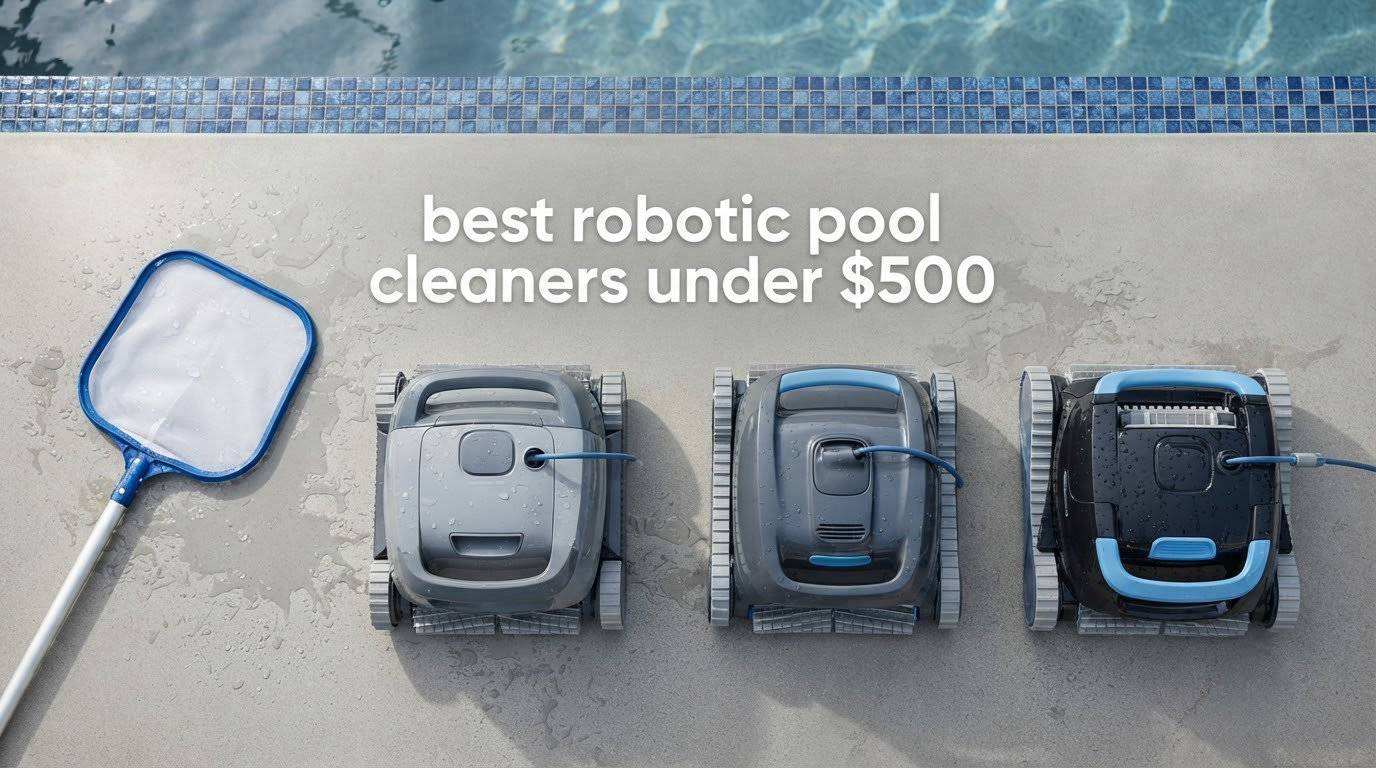
The WYBOT C2 is the best robotic pool cleaner in the budget tier for most people: it scrubs walls and the waterline, runs up to 180 minutes, covers pools up to 2,152 sq. ft., and carries the highest owner rating in this group of ten. Every robot below sits under the 500 dollar mark, and every one of them is cordless, which is now the default at this price rather than a compromise.
That last point is the big change. A few years ago, a cordless pool robot meant a weak little floor sweeper with a 45-minute battery. Today the same money buys 4,800 GPH of suction, track or four-wheel drive, and dual filtration fine enough to catch silt. You are giving up warranty length, filtration refinement and some durability, not the core job of cleaning your floor.
Three questions decide your purchase before any brand name does: is your pool above-ground or in-ground, how many square feet is it, and how patient are you with a 2.5 to 4 hour charge time. Get those three answers straight and half the list below disappears. Our [full robotic pool cleaner test roundup](https://www.fundexgames.com/best-robotic-pool-cleaners/) covers the category end to end if you want the whole picture instead of the budget tier.
We checked spec sheets against owner reviews for each model below, and we kept the complaints in. Where a robot is floor-only, we say so. Where a runtime figure looks optimistic, we say that too. Specs and ratings reflect the data as checked at publication and change as brands revise hardware.
Top 3 Budget Pool Robots for 2026
WYBOT C2 Cordless Pool Robot
- Up to 2152 sq ft coverage
- 10μm plus 180μm dual filter
- Wall and waterline scrubbing
- 180 min runtime

WYBOT C1 Cordless Pool Robot
- 1618 sq ft max coverage
- Triple-motor wall climbing
- App control and scheduling
- 160 min runtime

AIPER Seagull Pro ZT6002
- 80 gallons per minute
- Four-wheel-drive wall climbing
- 150 min runtime
- Two-year protection
The C2 leads because it is the only robot in this group that pairs genuine wall and waterline cleaning with a fine 10-micron filter, and it does it inside the 500 dollar ceiling. The C1 is the safer, more proven buy with a thousand owner reviews behind it. The Seagull Pro is the pick if your floor slopes hard or you are chasing a wall-climbing spec on a budget.
Other scenarios worth naming before you scroll: the Beatbot Sora 10 has the longest runtime and biggest basket in the group, the Seauto SAT25 handles leaf loads better than anything else here, and the BRINBO S2 is the cheapest way to stop hand-skimming a small above-ground pool. Our [cordless pool robot roundup](https://www.fundexgames.com/best-cordless-robotic-pool-cleaners/) goes deeper on how cordless units actually perform cycle to cycle.
Best Robotic Pool Cleaners Under $500 (October 2026)
| Product | Specifications | Action |
|---|---|---|
| WYBOT C2 Cordless Pool Robot |
|
Check Latest Price |
| WYBOT C1 Cordless Pool Robot |
|
Check Latest Price |
| AIPER Seagull Pro ZT6002 |
|
Check Latest Price |
 Beatbot Sora 10 Pool Robot Beatbot Sora 10 Pool Robot |
|
Check Latest Price |
 Seauto SAT25 Pool Robot Seauto SAT25 Pool Robot |
|
Check Latest Price |
 BOTLIFE PC10 Pool Robot BOTLIFE PC10 Pool Robot |
|
Check Latest Price |
 WYBOT A1 Pool Robot WYBOT A1 Pool Robot |
|
Check Latest Price |
 AIPER Seagull SE Pool Robot AIPER Seagull SE Pool Robot |
|
Check Latest Price |
 AIPER Scuba SE Pool Robot AIPER Scuba SE Pool Robot |
|
Check Latest Price |
 BRINBO S2 Pool Robot BRINBO S2 Pool Robot |
|
Check Latest Price |
Five of these ten climb walls and work the waterline. The other five are floor-only machines aimed squarely at flat-bottom above-ground pools, and for that job a floor-only design is not a downgrade. It is a lighter, cheaper, longer-running robot with fewer ways to fail.
1. WYBOT C2 Cordless Pool Robot for In-Ground Pools up to 2,152 sq. ft. — Best Overall
Wybot C2 Cordless Pool Vacuum for Inground Pools, Robotic Pool Cleaner
Up to 180 min runtime
Covers 2152 sq ft
10μm plus 180μm dual filter
App control with auto parking
Pros
- Highest owner rating in this group
- Wall and waterline scrubbing
- Generous 3 liter debris capacity
- Seven cleaning modes
- Program the app before submerging
Cons
- Full recharge takes about 3.5 hours
- Bluetooth link drops underwater
- May need multiple passes on heavy debris
Owners describe the C2 as the model that finally closes the gap between budget and mid-tier. Three brushless motors deliver enough suction to lift sand, leaves and calcium off an in-ground floor, and roughly three quarters of its reviews are five stars. The gyroscope-based path planning keeps it off the walls it has already done, which is where cheaper robots waste half their cycle.
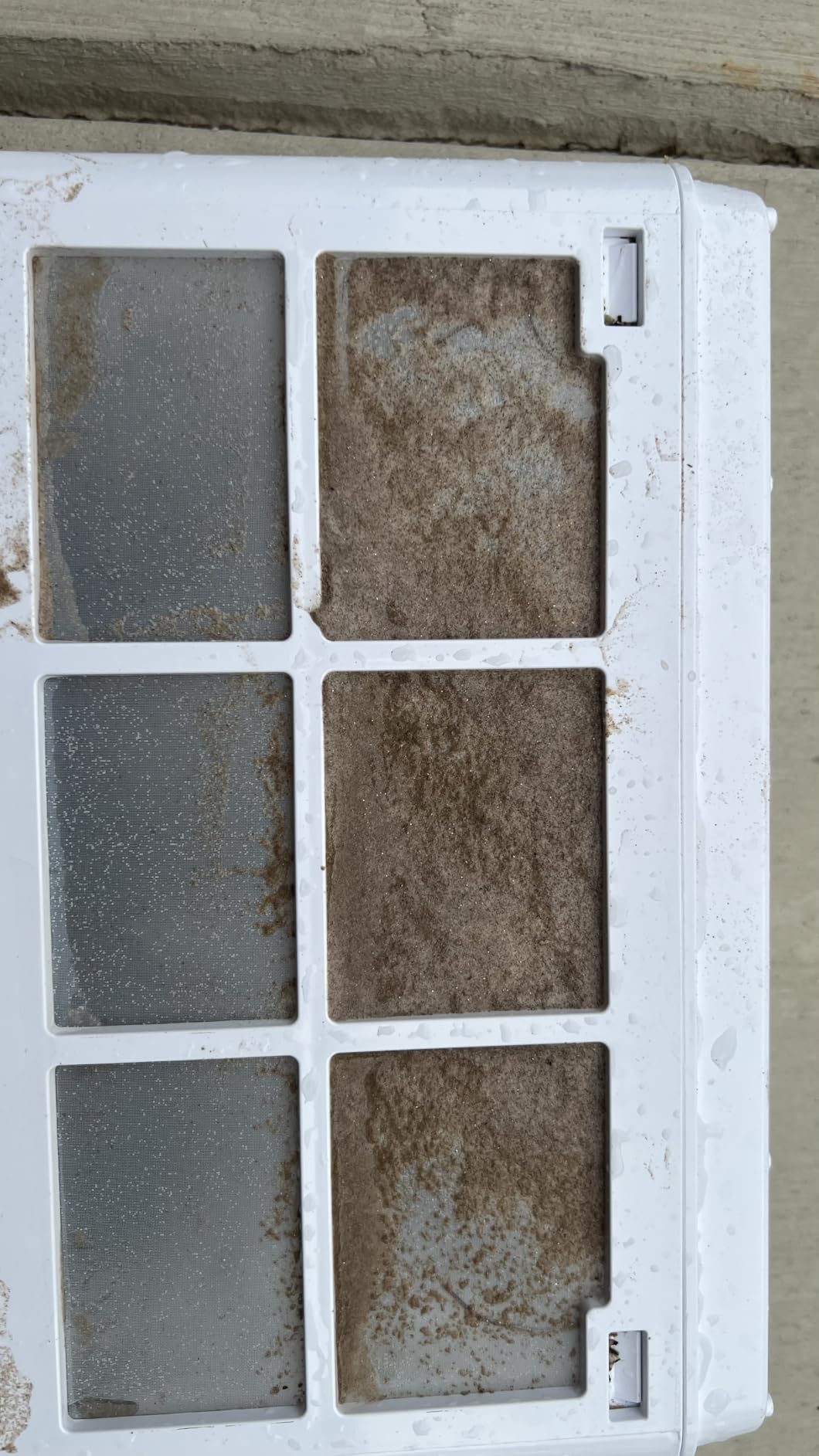
The dual filtration is the sleeper feature. A 180-micron primary screen takes the bulk debris and a 10-micron secondary stage catches the fine sediment that leaves a floor looking grubby. That second stage needs rinsing more often, and it is the main ongoing cost of ownership with this robot.
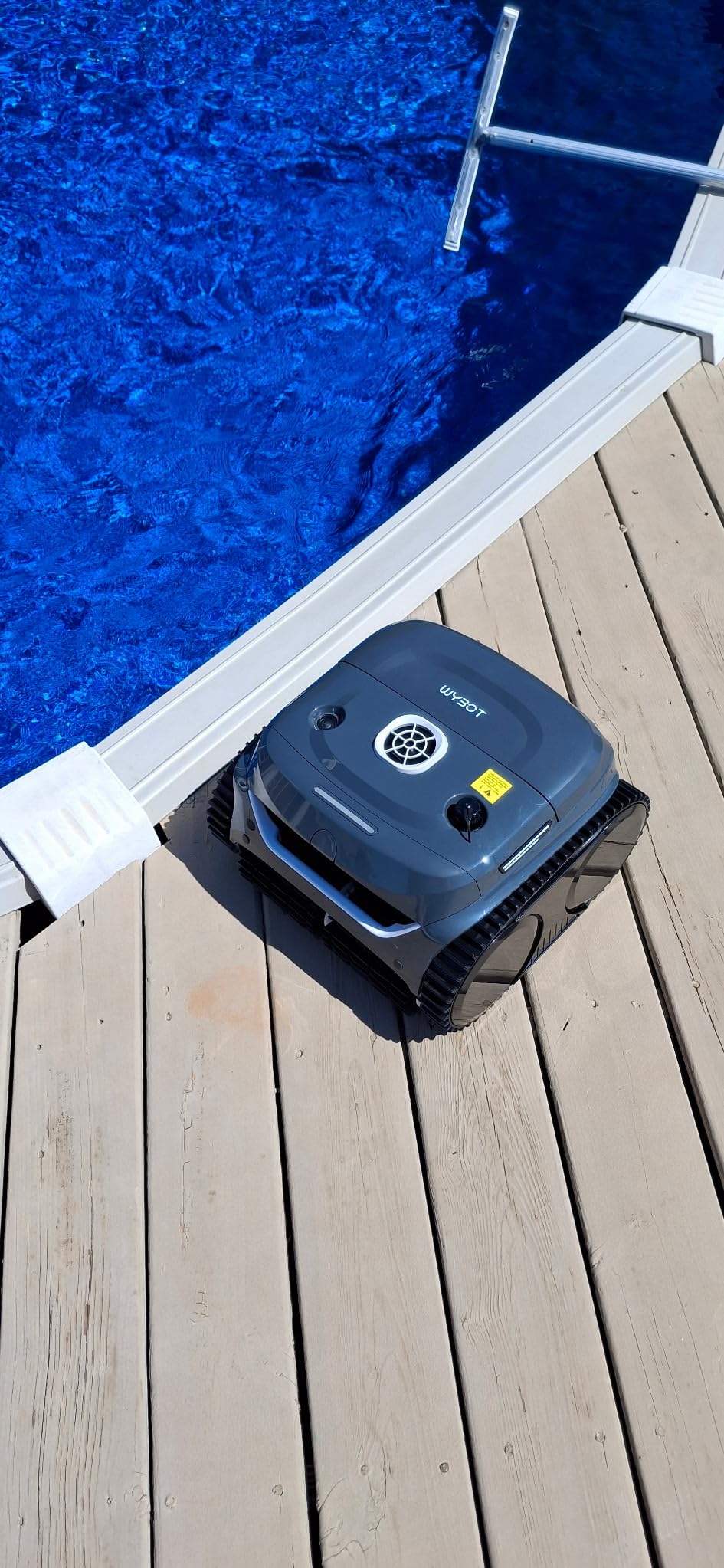
Two things catch people out. The app link does not work while the unit is underwater, so you program the cycle first and then drop it in. And the three-and-a-half-hour recharge means a second deep clean the same afternoon is not happening, so treat it as a once-a-day robot rather than a twice-a-day one.
At 18.4 by 16.9 by 12.4 inches it is a full-size machine, and the 3 liter canister is big enough that you are not emptying it mid-cycle on a normal week. If your pool is larger than 2,152 sq. ft. or you want a longer run, the Sora 10 below is the alternative.
Is the WYBOT C2 right for a pool with a deep end
Yes, provided the transition is not a sheer drop. Wall climbing is a core function here rather than an add-on, and the waterline scrub is where this robot separates itself from the floor-only crowd. Owners running deeper in-ground pools report it working the cove and steps without stalling.
The limit is time rather than capability. A deep pool with a long swim lane eats into the 180-minute window, and if you need a second pass you are waiting on the charger. For pools at or below the rated 2,152 sq. ft. and 9.86 ft depth, one cycle is genuinely enough for a week of debris.
Where the C2 disappoints owners
The 3.5-hour charge is the most repeated complaint, and it is a design choice rather than a defect. It also means you cannot top up mid-session, so a clean that stalls at low battery in a large pool waits for the next morning.
On heavy leaf weeks, several buyers report needing a second cycle because a single pass through dense debris fills the fine filter. There are also reports of the robot needing a couple of retries on complicated geometry with deep steps. Neither is a dealbreaker, both are worth knowing if you have a messy yard.
2. WYBOT C1 Cordless Pool Robot for In-Ground Pools up to 1,618 sq. ft. — Most Reviewed
WYBOT C1 Cordless Robotic Pool Vacuum for Inground Pools, Professional
Covers 1618 sq ft
160 min runtime
Triple-motor drive
App scheduling with OTA updates
Pros
- Largest owner base in this roundup
- Climbs walls and scrubs the waterline
- Handles pet hair and calcium
- Large basket pops out for rinsing
Cons
- Proprietary charging plug
- Bluetooth drops while submerged
- Fine debris in wrinkled liner divots
With more than a thousand reviews, the C1 is the most proven machine on this list and the one most owners are actually keeping past the first season. Its triple-motor system climbs slopes up to 45 degrees and covers floor, walls, waterline and steps in one four-in-one cycle. That slope figure is the highest climbing claim in the group.
Reviewers single out debris pickup more than anything else. Leaves, pet hair and calcium deposits all come up in the same breath, and the large debris basket lifts straight out and rinses with a hose. The gyroscope N-path and S-path routines are what stop the random wandering you get from cheaper designs.
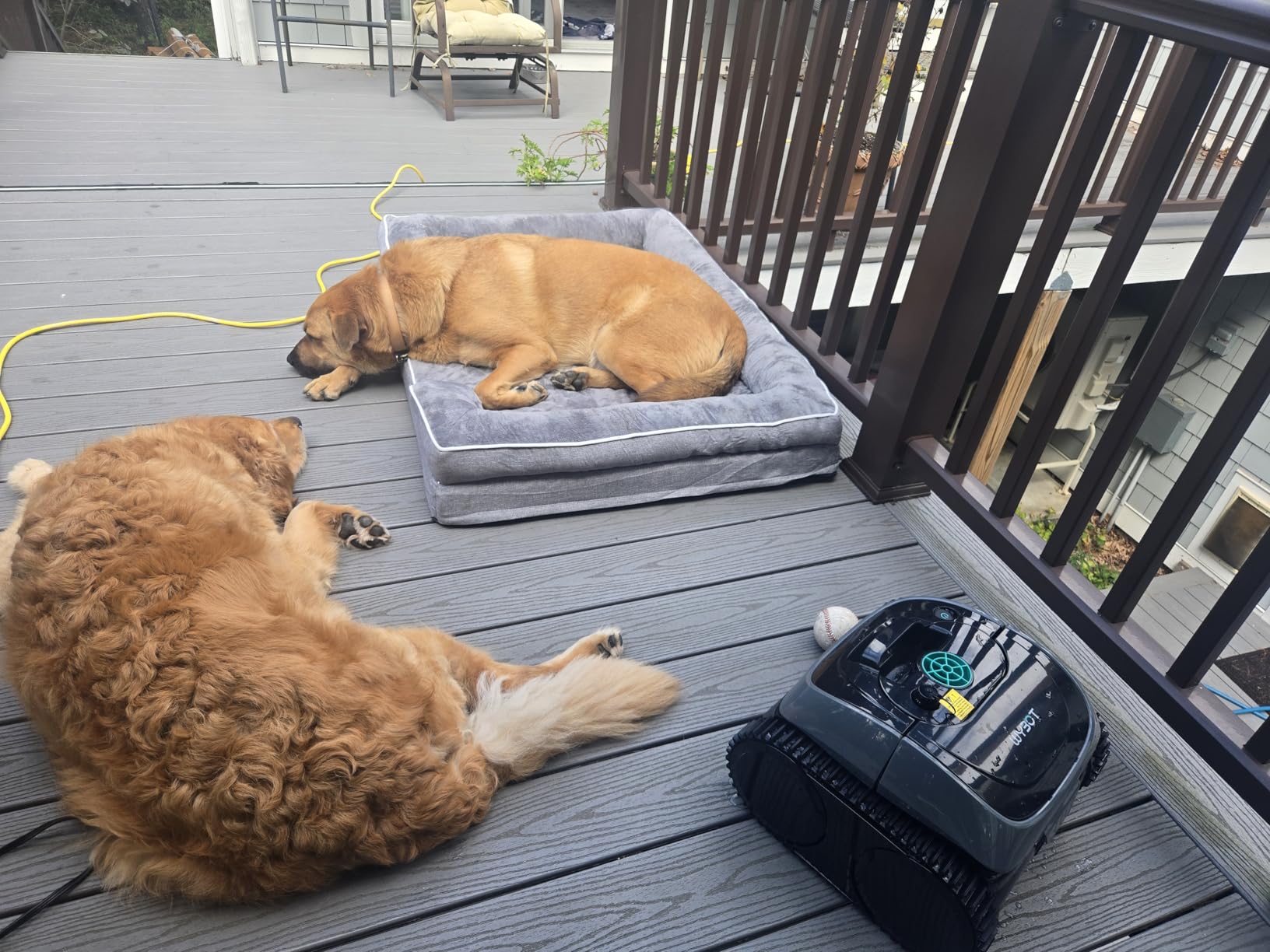
Two practical notes. The charging connector is proprietary rather than a standard USB fitting, so lose it and you are ordering a replacement from the brand. And the app connection drops while the robot is submerged, which means every scheduling change has to happen before launch. Owners running r/pools threads treat that as an annoyance rather than a fault.
There is one wrinkle worth researching before you buy. Forum research on this model found a B2B Renew channel listing showing a 4.9 rating across 949 reviews while third-party listings of the same unit show ratings closer to 3.2 and 3.4. Rating variance across channels is real with budget cordless brands, so buy from a seller with a clear return path.
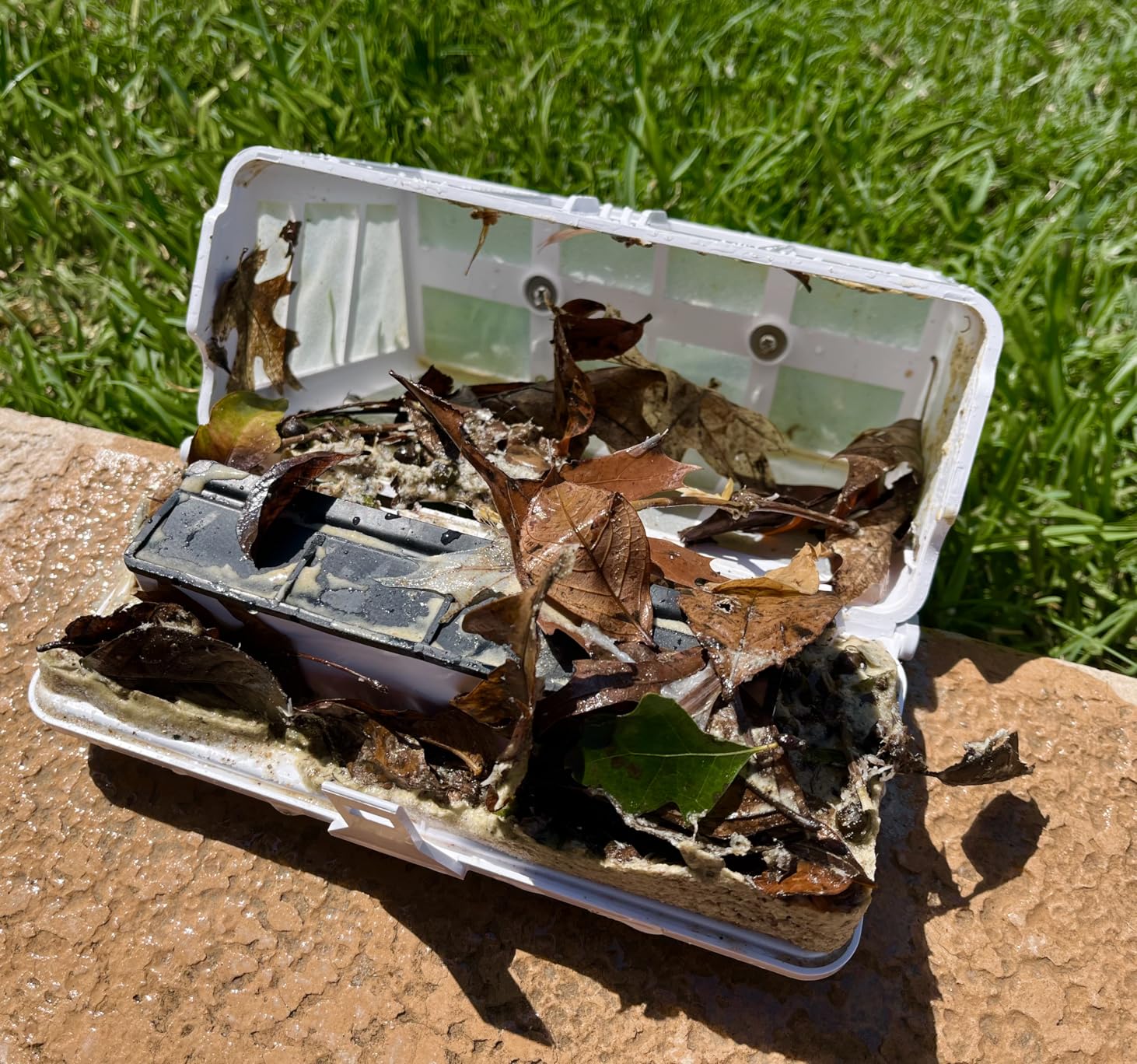
Does the C1 handle a vinyl liner with wrinkles
Partly. It handles the walls and slope well, but owners with heavily wrinkled liners report it leaving fine micro-debris in the divots where the floor puckers. Pattern-based coverage is good, but no robot in this price range can physically reach a crease it drives over rather than into.
For a standard liner with minor waviness this is a non-issue. If your floor is badly wrinkled and silt is your main complaint, budget for a manual vacuum pass first and use the robot for the daily leaf and sand load. That is the realistic division of labour at this tier.
What you should know before choosing it
The charge cycle is long, which limits back-to-back deep cleans, and some owners on earlier units reported battery or support issues. WYBOT also lists a two-year manufacturer warranty, though support response times are described as slow by some reviewers.
Its 4.0 average is the lowest in this roundup despite the huge review count, which tells you something real: a lot of buyers are perfectly happy and a smaller group is not. The most common themes behind the lower scores are battery complaints and the app connection, not cleaning power.
3. AIPER Seagull Pro ZT6002 Cordless Robot for In-Ground Pools up to 1,600 sq. ft. — Best for Sloped Floors
AIPER Seagull Pro Cordless Robotic Pool Cleaner with Hook, WavePath Navigation, Wall-Climbing, Quad-Motor, 150 mins Runtime for Inground Pools up to 1,600 sq.ft, ZT6002
150 min runtime
Filters 80 gallons per minute
7800mAh battery
Weights 7.5 lb
Pros
- Strong four-motor suction
- Four-wheel-drive wall climbing
- Two-year product protection
- Retrieval hook included
Cons
- Heavy at 7.5 lb with a bulky battery pack
- Three to four hour recharge
- Bulky to lift from the water
The Seagull Pro is the most mechanically serious machine here for one reason: four motors and four-wheel drive. Owners on sloped and uneven in-ground floors rate it well above the pack for grip, and the 80-gallon-per-minute flow rate moves real volume of water rather than just pulling at a few leaves.
Floor, wall and auto modes are all present, and the WavePath routine covers the waterline without a separate setup. Two years of product protection with two-year spare part availability is a genuine advantage in this category, where parts support is often the first thing to disappear.
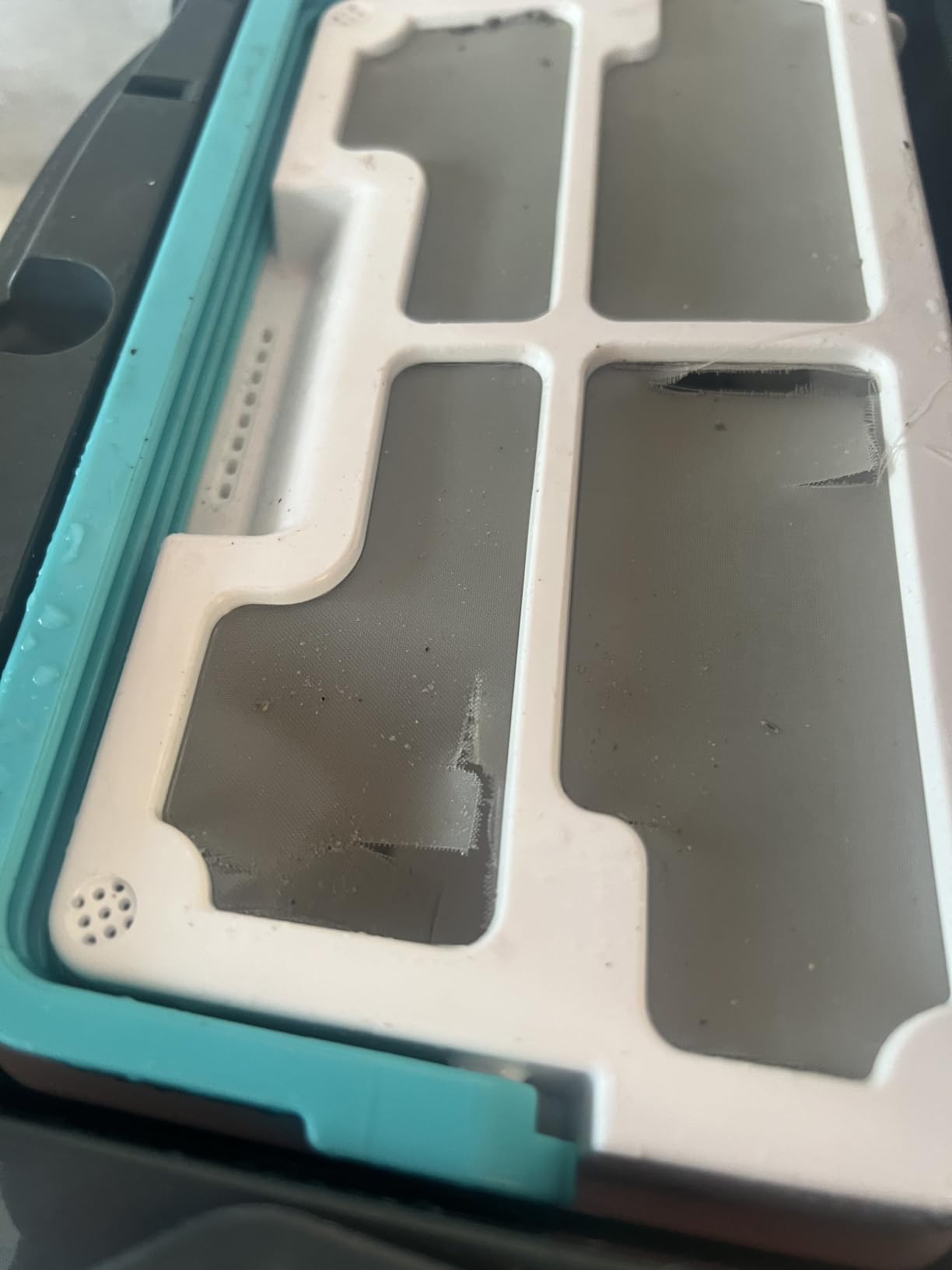
It is also the heaviest robot we tested in this group, at 7.5 pounds with a 7800mAh pack rated at 196 watt-hours. That weight buys grip, but it also means a two-handed lift out of the water every time. If you have mobility issues, factor that in before the specs.
Before buying, do your own research on this specific model. Forum reports have raised burn and fire concerns with the Seagull Pro line, and a CPSC burn and fire hazard recall has affected the Aiper Elite Pro. That does not make this unit a problem, but you should make the decision knowing the brand’s safety history rather than discovering it later.
Is the Seagull Pro better than the WYBOT C2 on walls
Both climb walls and both scrub the waterline. The Seagull Pro leans on mechanical grip with four-wheel drive, while the C2 leans on path planning and stronger fine filtration. If your pool has a pronounced slope or steps to negotiate, the four-wheel drive is the deciding factor.
On a flat in-ground floor the difference narrows quickly and the C2’s 180-minute runtime and 10-micron filter pull ahead. Pick the Seagull Pro for terrain, pick the C2 for coverage area and filtration.
Which pool owner should skip it
If you have a small above-ground pool, this is far more machine than you need, and the weight and charge time work against you. The two AIPER units further down are lighter, cheaper and purpose-built for that job.
Owners on their second summer with Aiper products generally report continued satisfaction, and the Scuba series in particular comes up often in community recommendations for small pools. Just verify the safety record yourself and keep the recall information in your purchase decision.
4. Beatbot Sora 10 Cordless Robot for Pools up to 3,229 sq. ft. — Best for Longest Runtime
Beatbot Sora 10 Cordless Pool Vacuum Robot for Inground & Above Ground Pools, 6800 GPH Suction, Floor/Wall/Waterline/Shallow Area Cleaning, Waterline Parking, 300 Mins Runtime Royal Blue
300 min runtime
Covers 3229 sq ft
6800 GPH suction
5L debris basket
Pros
- Longest runtime and largest coverage in the group
- Four-zone cleaning down to 12 inch shelves
- Reliable app over Wi-Fi and Bluetooth
- Two-year protection
Cons
- Waterline parking is inconsistent
- Weighs 10.5 kg which is heavy to lift
- Navigation misses corners and stairs
The Sora 10 is the specification outlier: 6,800 GPH of suction, a 7,310mAh battery, up to 300 minutes of runtime and coverage to 3,229 sq. ft. Nothing else in the budget tier comes close on paper, and the HydroBalance internal structure is designed to resist the clogging that limits cheaper units.
Four-zone cleaning is the differentiator, including shallow areas as shallow as 12 inches, which covers sun shelves and wading edges that floor-only robots ignore. The 5 liter basket holds roughly 650 leaves and rinses out easily, and the unit is saltwater-safe under 5000 ppm with corrosion-resistant parts.
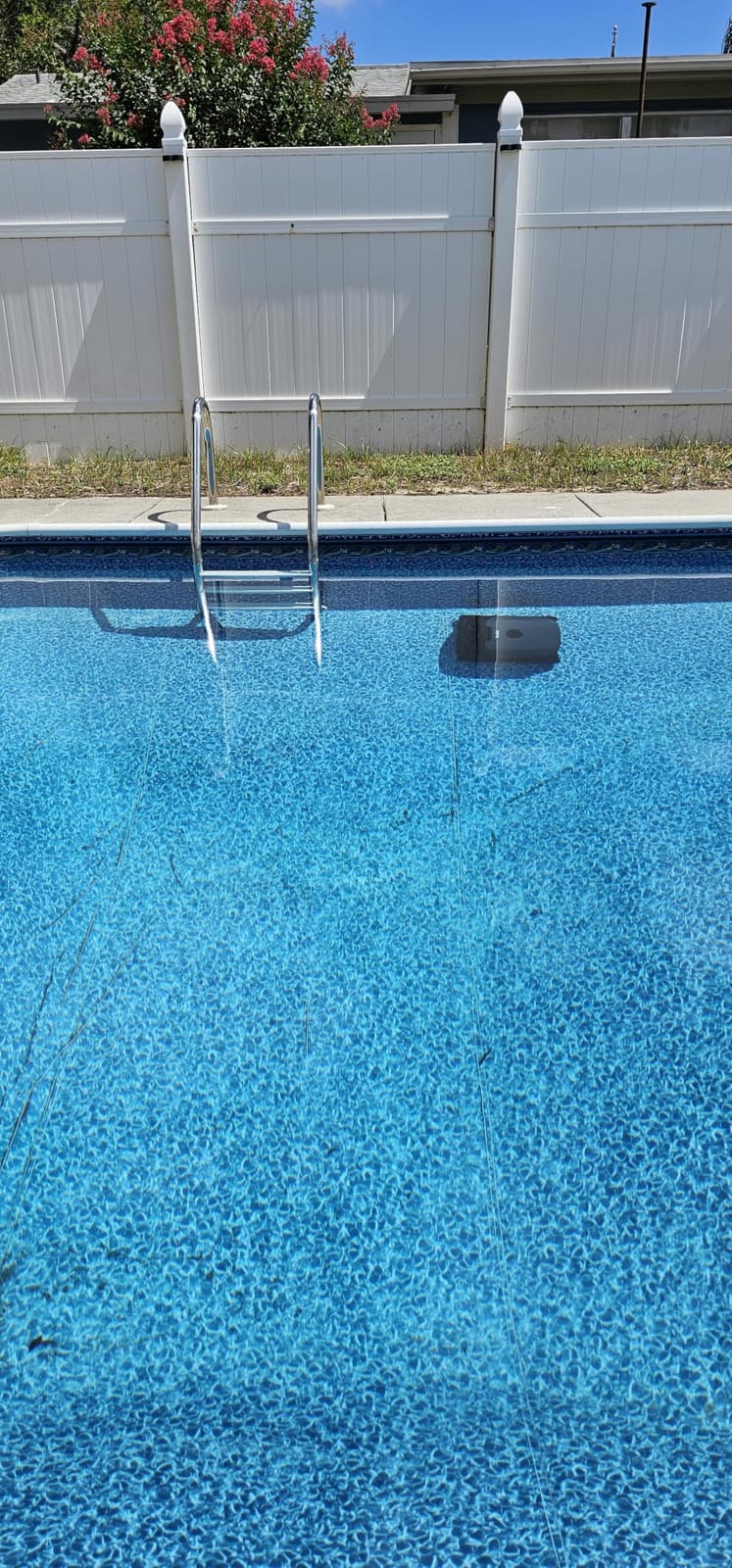
App control works over both Wi-Fi and Bluetooth with over-the-air updates, and that connectivity is described as reliable rather than the connection drops owners complain about elsewhere. Reviewers rate the build as premium-feeling, with roughly 79 percent of ratings at five stars.
Two things undercut the headline numbers. Waterline parking is inconsistent, so the robot often finishes mid-pool and needs fishing out with a hook. And navigation leaves gaps in curved corners, on sun shelves and around stairs, which is exactly where the four-zone claim is supposed to shine.
Who gets the most out of the Sora 10
Large pools. If you are cleaning anything over 1,800 sq. ft., the 300-minute runtime means one launch finishes the job, and the alternative is a shorter robot running two cycles while you wait on a charger. The 5 litre basket also means leaf-heavy yards do not need a mid-cycle empty.
It is also the right pick for shallow-entry pools, sun shelves and Baja-style waterline steps, because the shallow zone mode is something none of the other nine units here can do.
Where owners get frustrated
Retrieval is the main complaint. The parking feature is supposed to hold position at the waterline for 10 minutes at cycle end, and owners report it frequently landing elsewhere. Plan on having the hook in your hand before the cycle finishes.
At 10.5 kg this is by far the heaviest unit in the roundup, and it is a two-hand lift out of the water. Owners also report the top lid feeling flimsy, the shell scratching easily, and the robot occasionally flipping onto its back and needing to be re-submerged.
5. Seauto SAT25 Cordless Robot for In-Ground and Above-Ground Pools up to 2,150 sq. ft. — Best for Leafy Pools
[2026 Release] Automatic Robotic Pool Vacuum for Inground & Above Ground Pools, Wall Climbing Pool Vacuum Cleaner, Cleans Floor, Walls, Waterline, Drain & Skimmer up to 2150 Sq. Ft., 190 Min
4800 GPH suction
190 min runtime
Covers 2150 sq ft
Track drive to 40 degrees
Pros
- Handles large palm fronds and heavy leaf loads
- Track drive handles slopes and uneven floors
- Floor wall and full-coverage modes
- Sonar navigation across three surface types
Cons
- Catches on drains ladders and steps
- Does not surface when finished
- Some battery charging failures reported
- Vendor support described as weak
The SAT25 is the leaf specialist of this list. Its 4,800 GPH suction from dual brushless motors running at 3,200 RPM is aimed squarely at oversized debris, and reviewers specifically call out its ability to swallow whole palm fronds, which is a genuine test rather than a marketing line.
Track drive handles slopes up to 40 degrees and uneven floors better than wheeled competitors, and 2.0 sonar navigation maps across tile, vinyl and concrete. At 190 minutes of runtime across up to 2,150 sq. ft., it is the second-longest run in the group.
![[2026 Release] Automatic Robotic Pool Vacuum for Inground & Above Ground Pools, Wall Climbing Pool Vacuum Cleaner, Cleans Floor, Walls, Waterline, Drain & Skimmer up to 2150 Sq. Ft., 190 Min customer photo 1](https://www.fundexgames.com/wp-content/uploads/2026/09/B0GK8Q2J7M_customer_1.jpg)
Independent testing of the sibling SAT20 measured roughly 95 percent floor coverage and about 40 percent wall coverage, which tells you what to expect from this design philosophy: an outstanding floor clean with modest wall work. If the waterline is your priority, look at the top two instead.
There is a practical snag to know about. Raised floor drains, pool ladders and the area behind steps catch the tracks, and the unit does not rise to the surface when it finishes, so retrieval needs the included hook. A smaller number of owners also report battery charging failure within the first couple of months.
![[2026 Release] Automatic Robotic Pool Vacuum for Inground & Above Ground Pools, Wall Climbing Pool Vacuum Cleaner, Cleans Floor, Walls, Waterline, Drain & Skimmer up to 2150 Sq. Ft., 190 Min customer photo 2](https://www.fundexgames.com/wp-content/uploads/2026/09/B0GK8Q2J7M_customer_2.jpg)
Is this the right robot for a yard with trees over the pool
Yes. If your debris is large, wet and clumped rather than fine dust, suction volume matters more than filtration finesse, and this has the highest sustained flow of the mid-tier units here. The track drive also handles the uneven floors and deep-end transitions that come with older in-ground pools.
One caution: it is listed under the Lodoba brand with Seauto as the manufacturer, which is worth noting when you go looking for warranty service or spare parts. Buyers in this category who value parts availability tend to prefer the brands with an established service network.
Where the value falls short
Vendor support is the weak point, with reports of slow or absent customer service when battery problems come up. On a machine that has a known snag list, thin support is a real cost even when the purchase price is fair.
It also charges in 2.5 to 3 hours, so a second deep clean the same day is unlikely. The wall coverage number, roughly 40 percent in testing, means you will still be scrubbing the waterline by hand if that band is your main worry.
6. BOTLIFE PC10 Cordless Robot for In-Ground Pools up to 1,830 sq. ft. — Best for Compact In-Ground Pools
BOTLIFE PC10 Cordless Robotic Pool Vacuum for Inground & Above Ground Pools
5000 GPH suction
120 min runtime
Covers 1830 sq ft
4L top-load basket
Pros
- High suction from dual drive motors and brushes
- Top-load basket rinses with a hose
- S-path floor and N-path wall routines
- Full pool floor-only and wall-only modes
Cons
- 120 min runtime is short for the class
- Climbing limited to 30 degree slopes
- Multiple cycles on heavy debris
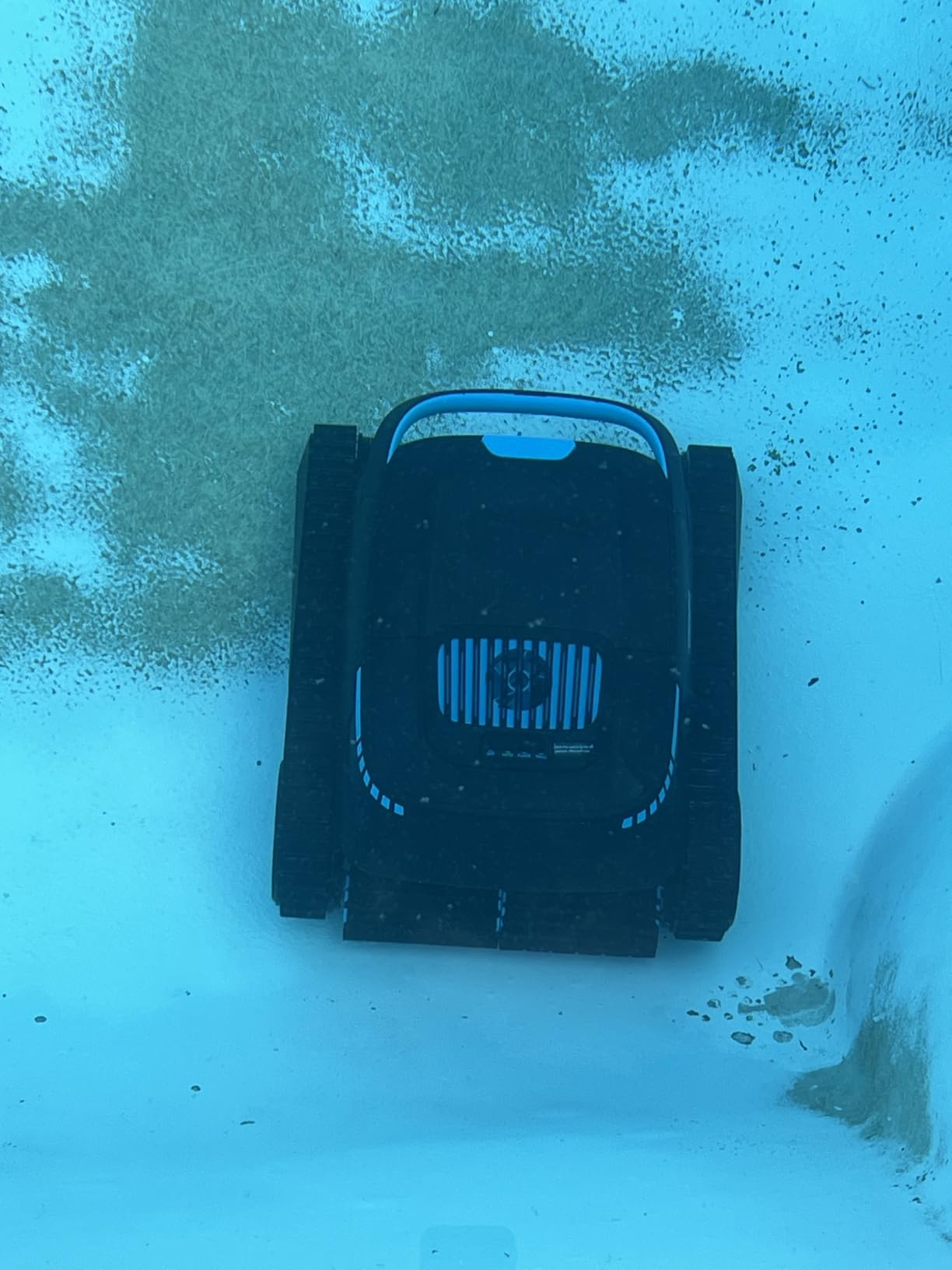
The PC10 is the compact in-ground pick, and its 4.5 owner rating with 73 percent five stars is the second strongest in this roundup. The 5,000 GPH figure comes from dual drive motors, a dedicated pump and two active brushes, which is a lot of hardware for a machine in this tier.
Coverage is complete in a single pass: floor, wall and waterline. The S-path floor and N-path wall routines replace random wandering with a planned route, and the 4 litre top-load basket lifts straight out for hose rinsing, which is the single biggest quality-of-life feature on any pool robot.
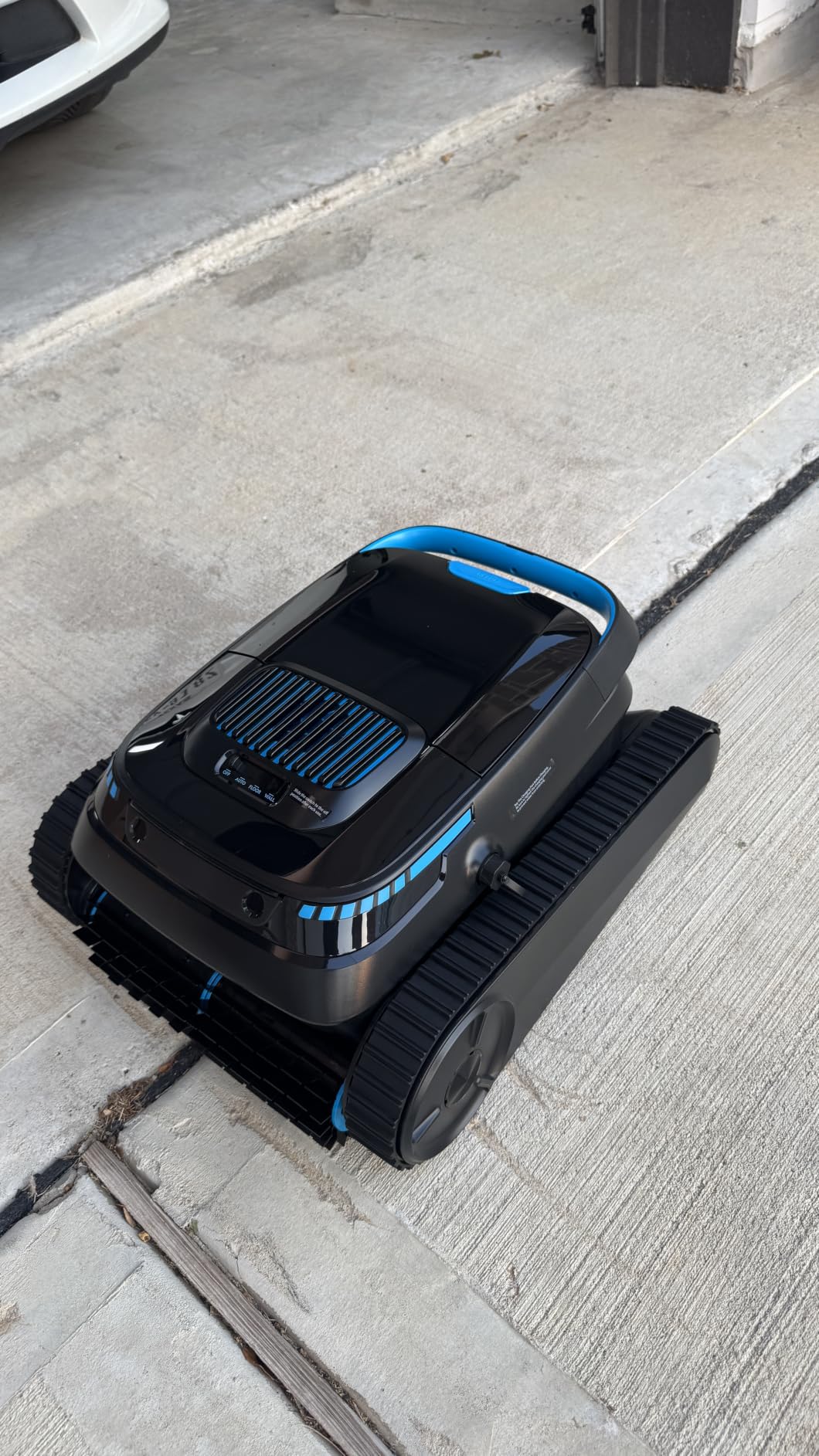
The 150-micron mesh in that basket keeps dirt contained without the clouding you get from ultra-fine filters, and the three modes let you run floor-only on a quick top-up or full pool when you have time. Self-parking at the pool edge saves you the swim at the end of every cycle.
The honest limit is runtime. At 120 minutes it is the second-shortest of the wall-climbing units here, and combined with a 2 to 3 hour recharge it means this is a once-a-day robot. Some owners also report needing a second cycle on heavily debris-laden pools, and climbing is limited to slopes of 30 degrees.
Do you need the app to run the PC10
No. Control is by touch, so a single press starts a cycle and the machine runs its programmed route. That makes it a good pick for anyone who does not want another app on their phone, or who has been disappointed by Bluetooth links that drop once the unit is underwater.
It also means there is no scheduling. If you want set-and-forget operation while you are away, the C1 or the C2 handle that better. If you just want to press a button and walk away for two hours, the PC10 does that cleanly.
Which pool is a poor match
A large or steep pool. Thirty degrees of slope capability is the tightest limit among the wall-climbing units here, and 120 minutes will not cover a 2,000 sq. ft. pool in one pass with any margin. For a compact in-ground pool at or under about 1,800 sq. ft. with a gentle floor, it is a strong fit.
Owners report the hose-rinse cleanup works well, which keeps the top-load basket from becoming a chore. Just plan on a full basket rinse after every heavy run, otherwise suction drops fast on the next cycle.
7. WYBOT A1 Cordless Robot for Above-Ground Pools up to 1,100 sq. ft. — Best for Wide Above-Ground Coverage
WYBOT A1 Cordless Pool Vacuum Robot for Above Ground Pool, Greyblue
130 min runtime
Covers 1100 sq ft
2280 GPH suction
Dual-layer filtration
Pros
- Widest above-ground coverage of the budget units
- 2280 GPH suction lifts sand and leaves
- Four modes including an edge clean
- Self-parks near the wall
Cons
- Not for slopes over 15 degrees
- Limited wall and waterline scrubbing
- Two and a half hour recharge
The A1 covers more above-ground pool than anything else at this tier, at up to 1,100 sq. ft. That matters because most budget robots are rated for 860 sq. ft., which is roughly a 24 foot round pool. If your above-ground is a rectangle or an oval with a long straight run, the A1 reaches the ends.
Suction is 2,280 GPH, which owners say is enough to lift leaves, sand and fine debris off a flat liner. The dual-layer filtration pairs a 180-micron filter with a textured foam layer, and four cleaning modes include an edge-cleaning behaviour that helps along the perimeter where debris collects.
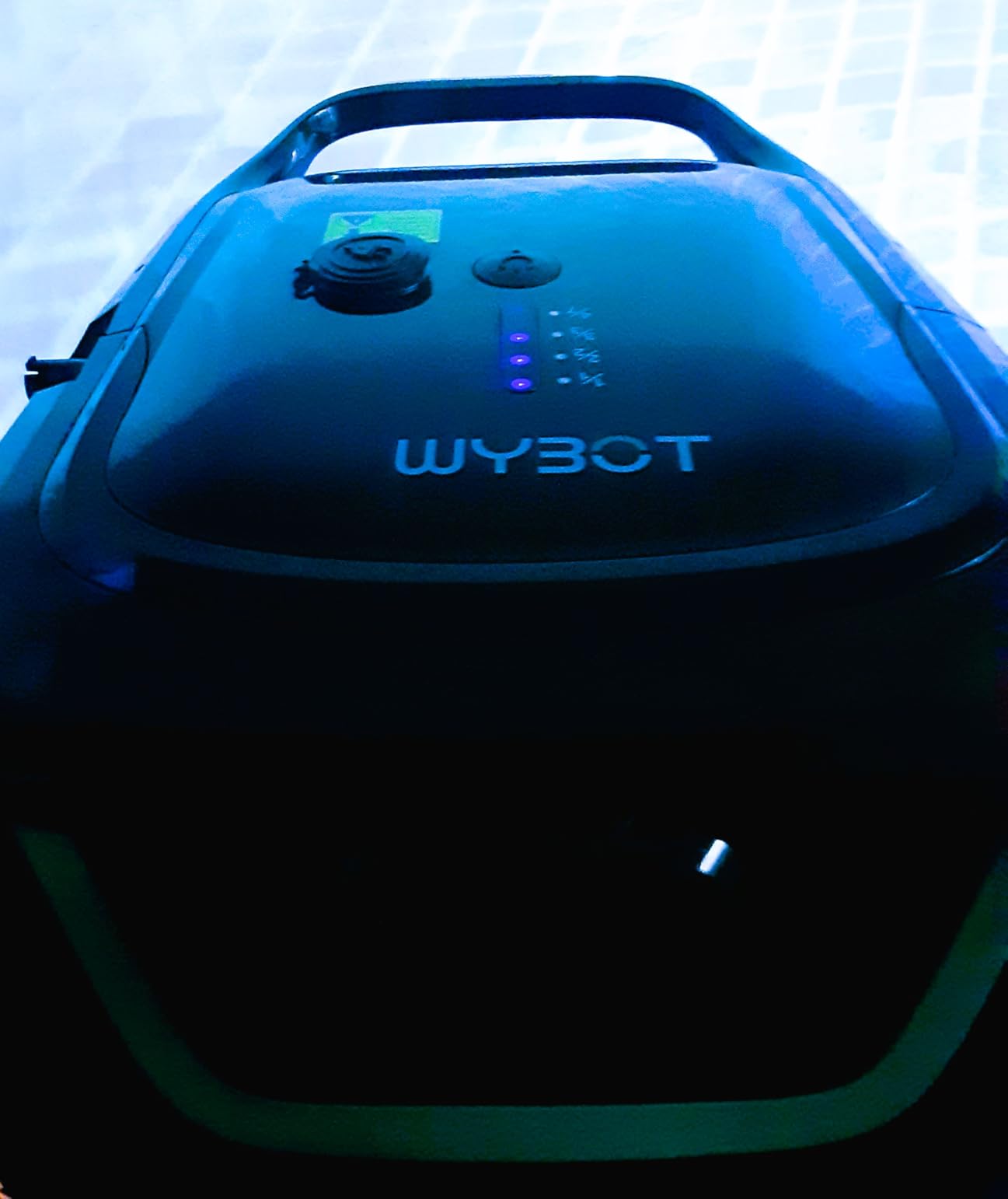
At up to 130 minutes of runtime it outlasts every other above-ground unit on this list. It self-parks near the wall for retrieval, and owners on r/AboveGroundPools threads running cheap cordless units around the clock report strong satisfaction on smaller pools, which this is designed for.
Know the constraints before you commit. It is not intended for pools with slopes over 15 degrees or heavily wrinkled bottoms, and wall and waterline scrubbing is limited. A full recharge takes about two and a half hours, which is manageable for daily use but rules out same-day doubles.
Is 1,100 sq. ft. realistic for an above-ground pool
It is realistic on a flat floor with a clean liner, which is exactly what most above-ground pools have. The coverage figure assumes the robot can move freely across the floor rather than fighting wrinkles or a slope, and that is the whole ballgame on a vinyl liner pool.
Measure your pool before trusting the number. A 30 by 36 frame pool is 1,080 sq. ft. and sits right at the limit, while a 16 by 32 is about 512 sq. ft. and would be served by any of the cheaper units. Bigger is not better if the battery dies at 80 percent.
Why pick this over the cheaper above-ground units
Three reasons: coverage area, suction and runtime. The Scuba SE and the Seagull SE are strong machines, but both cap out at 860 sq. ft. and under 100 minutes, which means a second cycle on a mid-size pool.
The trade is that you give up wall coverage entirely and slope tolerance. For a flat above-ground pool that is the right call. For anything with a deep end or a sloping floor, move up to one of the wall-climbing units earlier in this list.
8. AIPER Seagull SE Cordless Robot for Above-Ground Pools up to 860 sq. ft. — Best With a Chemical Dispenser
2026 AIPER Seagull SE Cordless Robotic Pool Vacuum for Above Ground Pools
1320 GPH suction
100 min runtime
Covers 860 sq ft
Weights 7.5 lb
Pros
- Built-in chemical dispenser for water purification
- Self-parks at the wall with included hook
- Lightweight with fast water drainage
- Four-color LED status indicators
Cons
- Floor only with no wall scrubbing
- Runs a random pattern with no sensors
- Flat mesh lets fine sediment blow back out
- Plastic lid latches reported snapping off
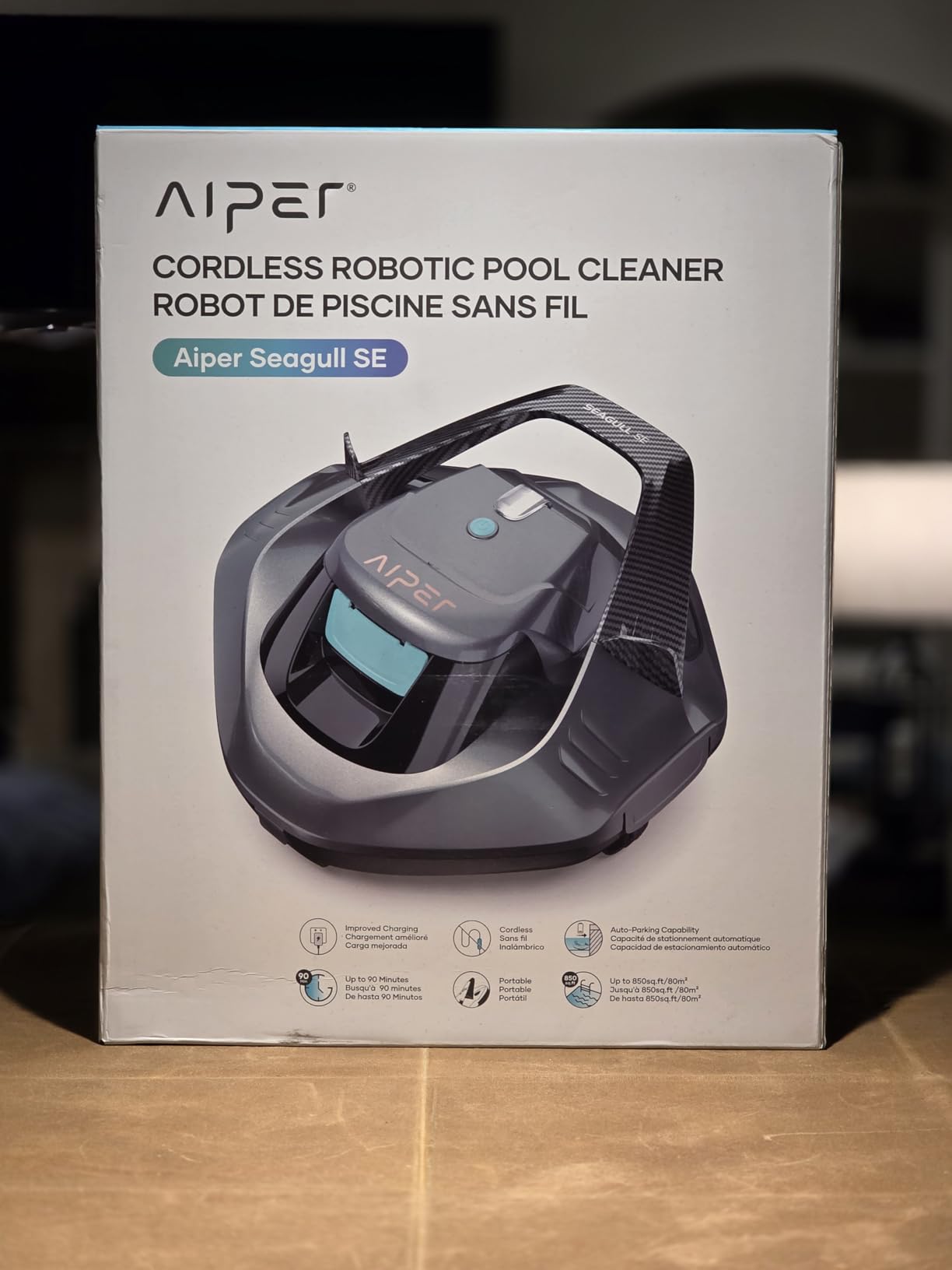
The Seagull SE is the only unit here with a built-in chemical dispenser, which releases treatment as it moves and is genuinely useful on a pool nobody wants to visit for a chemical top-up. Suction of 1,320 GPH is modest next to the leaders but handles sand, dirt and algae on a flat above-ground floor.
It runs up to 100 minutes on flat pools up to 860 sq. ft., self-parks at the wall for retrieval with the included hook, and drains water fast so it stores without carrying a pool’s worth of weight around. Four-color LED indicators show status at a glance, and there is a one-year warranty.
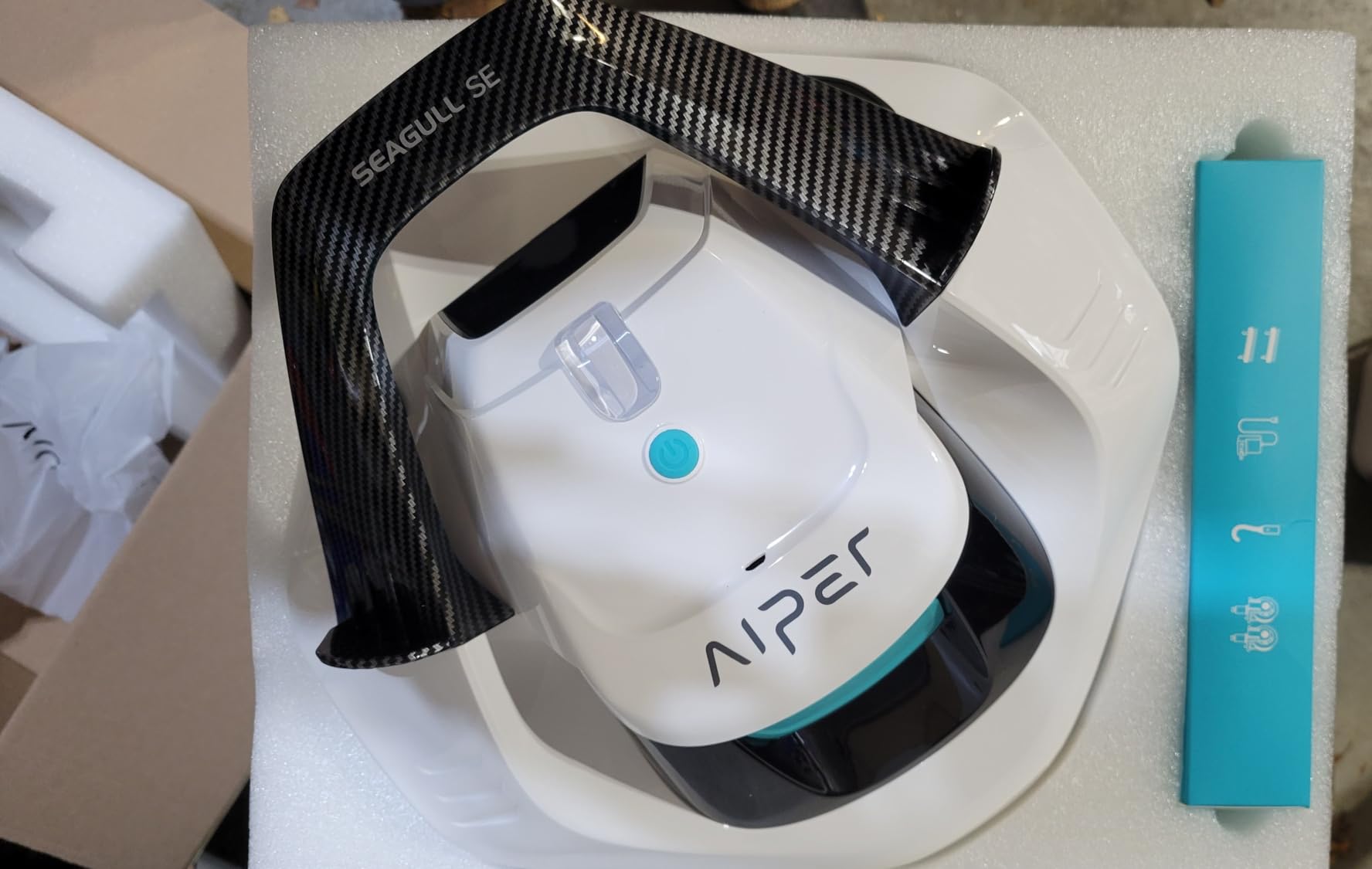
Buyers treat it as a capable budget option rather than a compromise, with suction, self-parking and one-touch operation doing most of the praise. The form factor is 13.4 by 13.2 by 6.8 inches, which is small enough for a pool closet shelf.
The limitations are structural. It is floor-only with no wall or waterline work, and it moves in a random pattern with no mapping or sensors, so coverage on anything but a small flat floor is uneven. The flat mesh filter also lets fine sediment blow back out and clogs quickly on silt-heavy pools.
Do you still need to add pool chemicals by hand
Mostly yes. The built-in dispenser meters out treatment during the cycle, but a robotic cleaner is not a dosing system and it does not replace balancing or shocking. Use the dispenser for steady top-ups between service visits rather than as your primary chemical plan.
Be careful with dosing anyway. Running the dispenser on a pool that already has balanced chemistry can push levels higher than intended, so set the dose from your water test results rather than from the pool volume alone.
What to watch out for with this model
The recurring complaint is the plastic locking tabs on the lid. Owners report them snapping off, and on a sealed unit a missing latch can mean the machine is no longer watertight, which effectively ends its life. Check the tabs each time you open it.
The random navigation pattern is the other issue. On a small flat pool that is acceptable. On a rectangular pool with a deep end or steps, expect to move it by hand to cover the sections it missed.
9. AIPER Scuba SE Cordless Robot for Above-Ground Pools up to 860 sq. ft. — Best for Daily Above-Ground Maintenance
2026 Aiper Scuba SE Cordless Pool Vacuum Robot for Above Ground Pool
1820 GPH suction
90 min runtime
Covers 860 sq ft
Battery weight 190 g
Pros
- Suction picks up leaves sand and everyday debris
- Two cleaning modes on a short button press
- Self-parks at the pool edge with audio alerts
- Lightweight and compact for storage
- One-year warranty
Cons
- Floor only with no wall coverage
- Only 90 minutes of runtime
- Random pattern leaves spots on larger pools
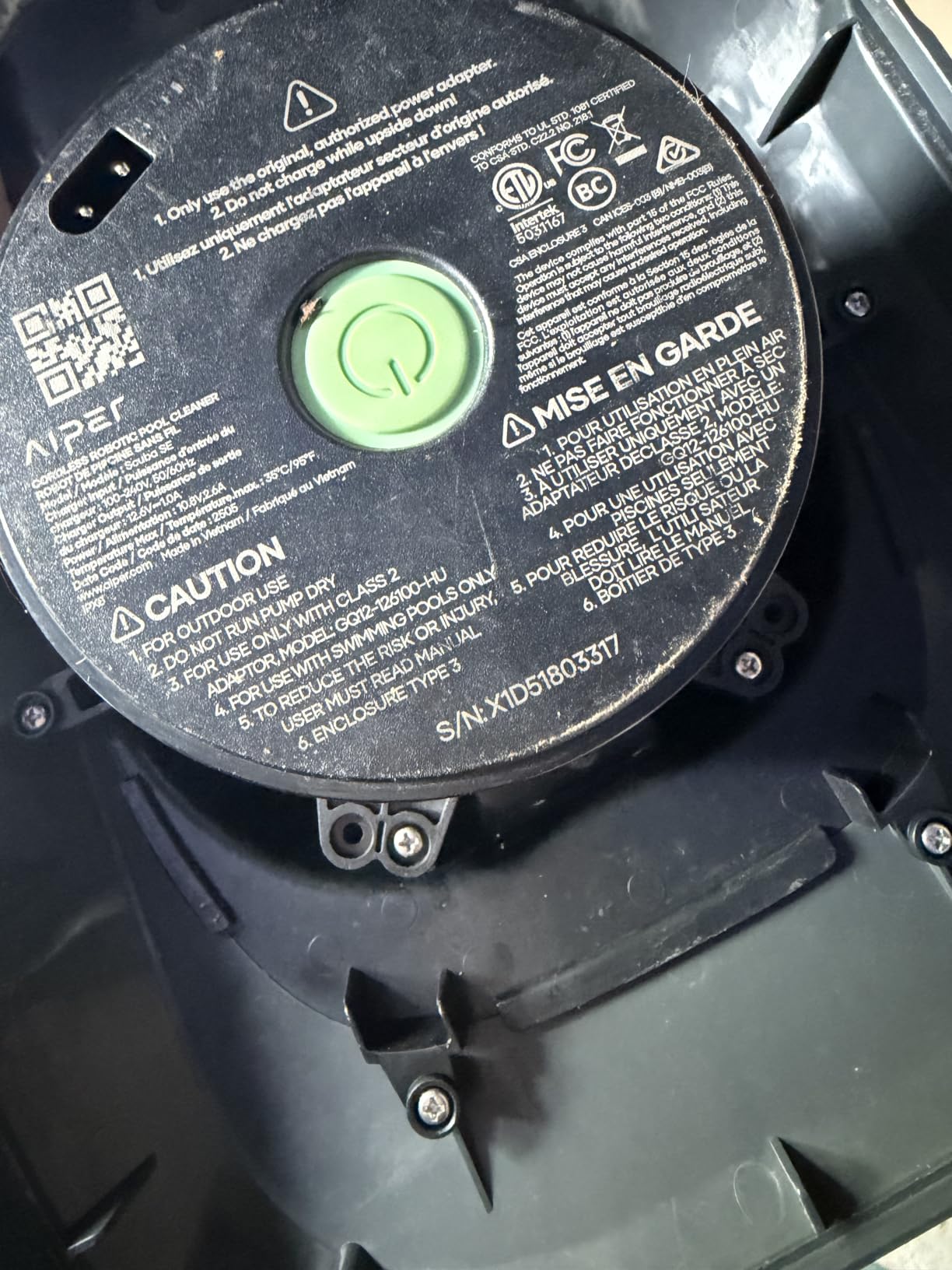
The Scuba SE is the daily-driver budget machine. At 1,820 GPH it has more suction than the Seagull SE despite being the cheaper of the two, and it is small enough at 13.7 by 13.2 by 6.8 inches to live in a pool closet. Aiper owners on their second summer frequently name the Scuba series specifically as the one that kept going.
Two cleaning modes are toggled with a short button press, so a quick daily run and a longer deep clean are both one press away. When the battery runs low it self-parks at the pool edge, and an audio alert system tells you what it is doing without needing an app.
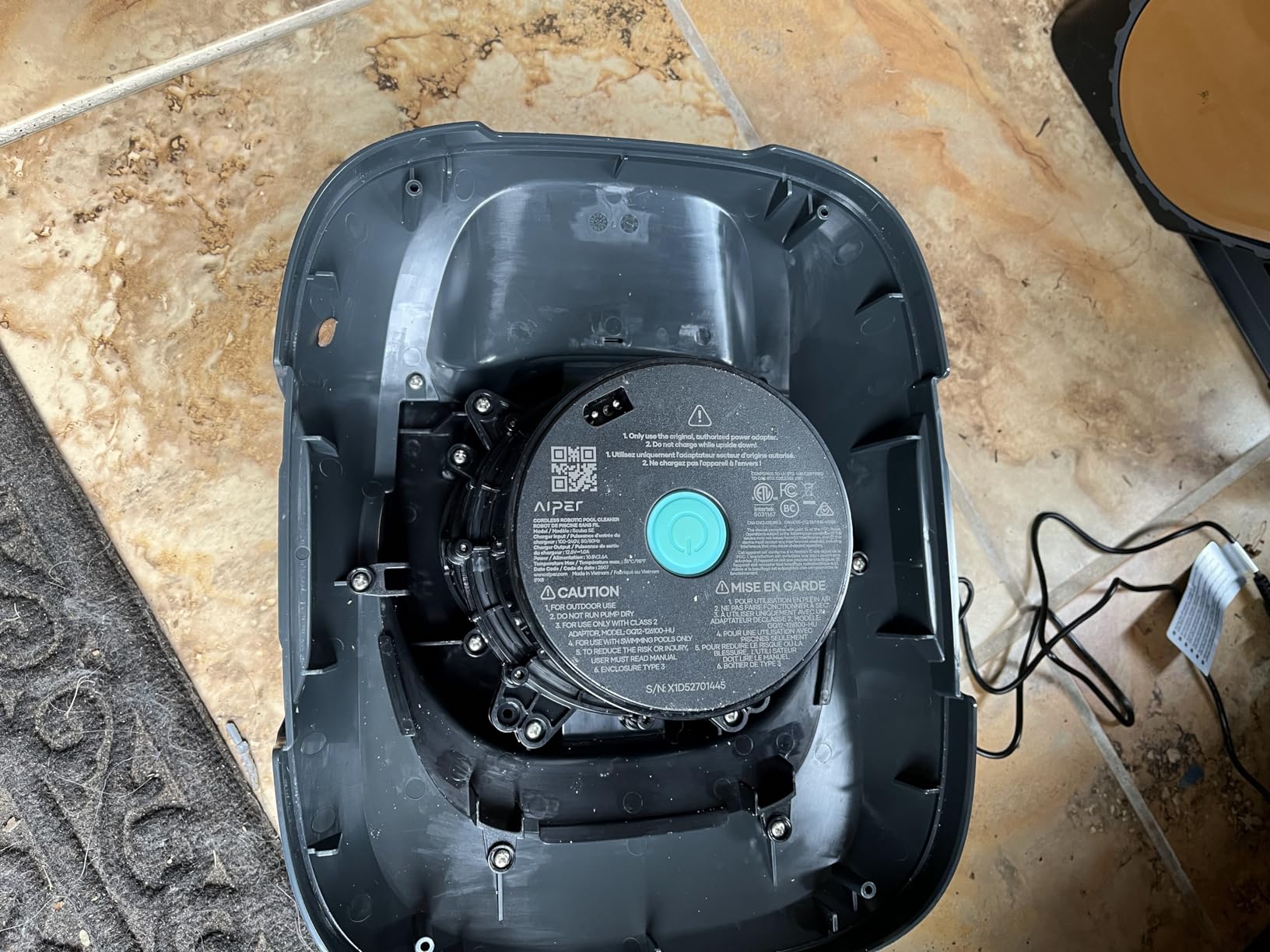
It is cordless with no cable to tangle, which on an above-ground pool with a ladder and a power supply is a bigger deal than it sounds. There is a one-year warranty, and the battery pack weighs 190 grams, the lightest handling weight in this roundup.
At 90 minutes and 860 sq. ft., it is sized for a small above-ground pool rather than a large one. Larger pools need a second cycle, and the random coverage pattern tends to leave spots when there is more floor to cover.
Is this enough for a 16 by 32 above-ground pool
Yes, comfortably. A 16 by 32 frame pool is about 512 sq. ft., which leaves real headroom against the 860 sq. ft. rating, and 90 minutes is enough to make two passes over a floor that size. The 19 gallon-per-minute gap between its suction and the Seagull SE’s is felt on leaf days.
It gets tight at 18 by 36, which is 648 sq. ft. and a longer swim lane. The coverage rating still fits, but the random pattern means you will likely want a second run to catch the far end.
Scuba SE or Seagull SE for a small above-ground pool
Scuba SE if you want more suction, lighter handling and dual cleaning modes. Seagull SE if you want the built-in chemical dispenser, a longer 100-minute runtime and four-color LED indicators instead of audio alerts.
They are close, and both sit at the low end of this roundup. Either is a sensible buy for a small flat pool where wall cleaning is irrelevant because the walls are only a few feet tall.
10. BRINBO S2 Cordless Robot for Above-Ground Pools up to 861 sq. ft. — Best for Small Flat-Bottom Pools
S2 Pool Vacuum Robot for Above Ground Pools, 90-Min Runtime, 861 Sq.Ft Coverage, Cordless Operation, Efficient Cleaning Performance, Dual-Layer Filtration, Panda Black
90 min runtime
Covers 861 sq ft
Dual-layer filtration
Battery weight 161 g
Pros
- Cheapest route to automated above-ground cleaning
- Lightest handling weight in the roundup
- Foam layer catches sediment and algae
- Easy to rinse clean after each cycle
Cons
- Floor only with no wall scrubbing
- Foam filter clogs fast with sand
- Self-parking is inconsistent
- Struggles with branches and large clumps
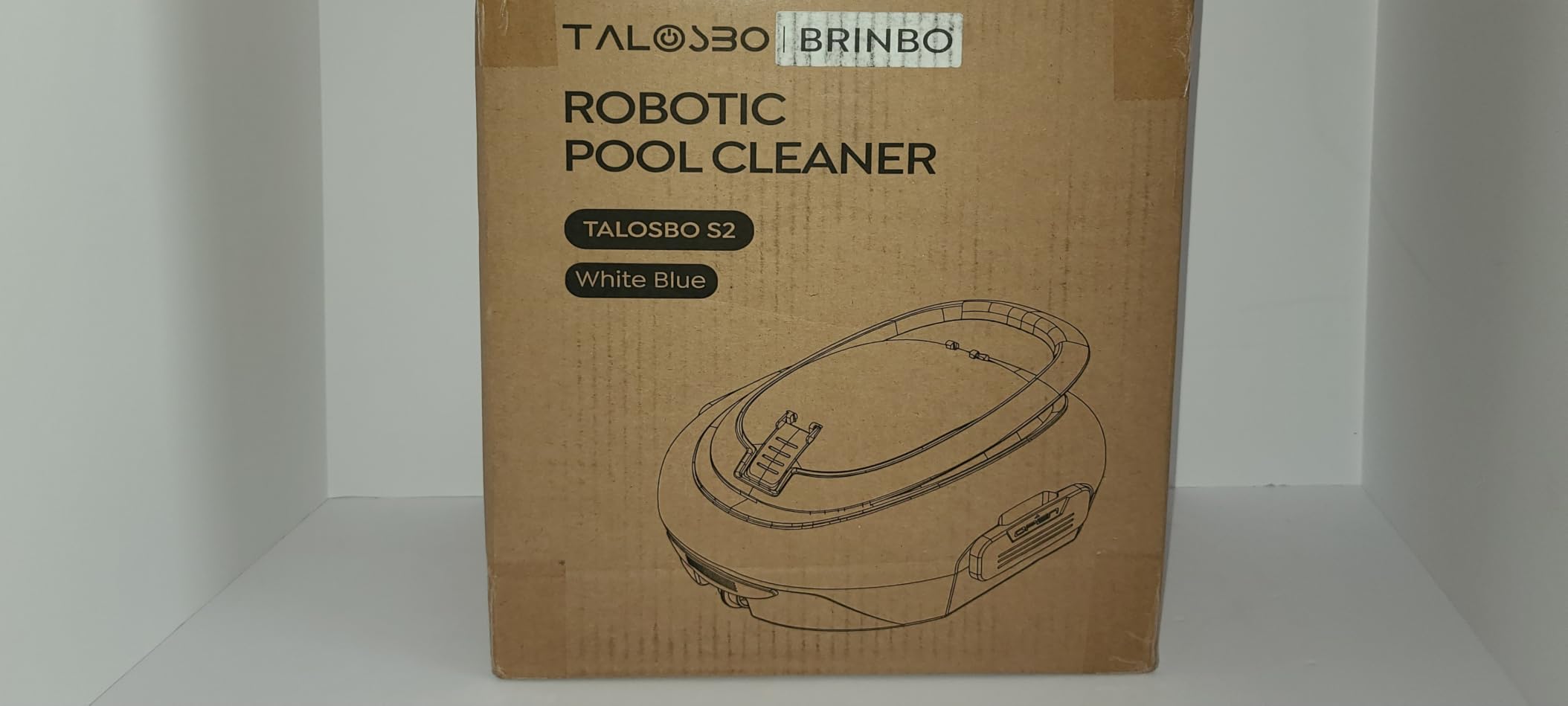
The S2 is the cheapest way to stop hand-skimming a small above-ground pool, and its 4.4 rating is the highest of the three entry-level units here. Dual-layer filtration pairs a 180-micron screen with a foam layer that catches fine sediment and green algae, which is the specific thing that makes above-ground water look dirty.
Operation is pure drop-in. There is no cable to tangle, no button sequence and no app, and at 161 grams of battery weight it is the easiest machine here to lift out and rinse. Owners running cheap cordless units daily report the battery still holding up well past 90 days.
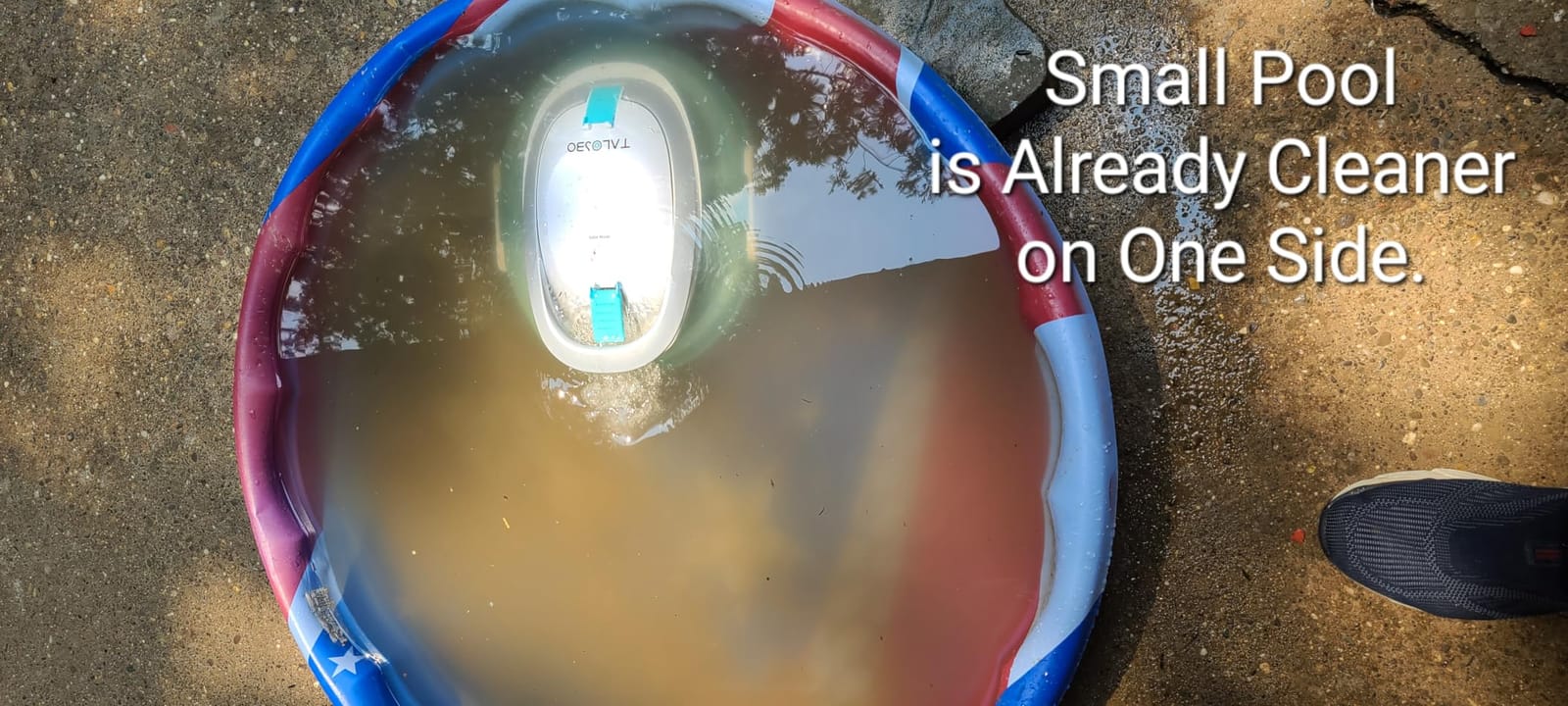
Its self-parking at the pool edge should make retrieval easy, and when it works it does. Coverage is up to 861 sq. ft., which matches a round pool of about 30 feet or a mid-size rectangular frame pool, and it suits flat-bottom pools specifically.
Two honest limits. The foam filter clogs quickly with sand and needs emptying mid-clean, which is the main ongoing chore with this robot. And self-parking is inconsistent, so the unit sometimes finishes in the middle of the pool instead of at the wall. It also uses a proprietary power connector rather than USB-C.
Is a budget robot better than a skimmer for a small pool
For a small above-ground pool, yes, and the reason is timing. A skimmer works when you are standing there watching it. A robot runs on a schedule, works overnight, and pulls debris that never reaches the surface at all. The trade is that you trade away wall and waterline coverage, which matters far less on a pool with 4 foot walls.
Surface skimmers are a different device, not a substitute. A skimmer catches floating leaves and nothing else, while this robot pulls settled sand and debris off the floor where skimmers never reach.
Who should not buy the S2
Anyone with a deep, sloped or irregular pool, and anyone with trees dropping large debris. It is floor-only, struggles with branches and large clumps, and the foam filter will need attention every time the pool gets sandy.
It is also the machine here most exposed to the no-name risk that forum research keeps raising: lesser-known brands failing within a season or two with no warranty and no parts. If that risk is unacceptable to you, spend up on the A1 or one of the in-ground units and buy a brand with an established service network.
What You Give Up Under 500 Dollars
Being straight about this saves you a return. The first thing you lose is warranty length. The two-year coverage on the C1, the Seagull Pro and the Sora 10 is the best available here, and several cheaper units carry one year or less. Longer warranties only appear above this price band.
The second loss is filtration refinement. A 10-micron stage like the C2’s is at the practical floor of what is available at this price, and reaching finer means spending more. Fine filters also cost more to replace and clog faster, so budget for a spare rather than assuming the first one lasts a season.
The third loss is charging convenience. Every cordless robot in this roundup needs 2.5 to 4 hours on the dock, and none of them can top up mid-cycle. Above this tier, self-docking and faster turnaround exist, and they change how you use the machine more than any other single feature.
Durability is the fourth. Reviews mention scratched shells, flimsy lids, snapping latch tabs and, on one unit, battery charging failure within months. If you want a robot that survives ten seasons with parts available, the price band above this one is where that starts.
Corded vs Cordless: Which One Suits Your Pool
Corded robots never stop for a battery and generally deliver steadier suction, but the cable has to reach your pool, and above-ground setups with a ladder and no nearby outlet are often the reason people went cordless in the first place. Every robot in this roundup is cordless, which tells you where the category has gone.
Choose cordless when the outlet is far, when the pool is above-ground and awkward to reach, or when you want a clean that runs while you are not home. Choose corded if you have a large in-ground pool near a powered outlet and you want uninterrupted runtime.
The honest trade: cordless costs you charging downtime, and some budget units struggle with phone control once submerged. Corded costs you cable management, tangles and installation. For most home pools in this price range, the cordless route is less friction.
How to Match a Robot to Your Pool
Start with pool type. Above-ground and flat-bottom means a floor-only machine like the S2, Scuba SE or Seagull SE is a complete solution rather than a compromise. In-ground with walls, steps or a waterline band means you need a wall-climbing unit, which pushes you to the C2, C1, Seagull Pro, Sora 10, SAT25 or PC10.
Next, size it. Measure the pool’s length and multiply by its average width for square footage, then leave yourself a 20 percent margin below the robot’s rating. If your pool is 1,500 sq. ft., do not buy a robot rated to exactly 1,500. The rating assumes ideal conditions and a clean filter.
Then match runtime to size. A pool under 900 sq. ft. needs roughly 90 to 130 minutes. Between 900 and 1,800 sq. ft. needs 150 to 190 minutes. Above 1,800 sq. ft. needs 200 minutes or more, or a plan for two cycles with a full charge between them.
Check the pool shape. Sloped floors, deep ends, curved corners and steps defeat simple pattern-based cleaning. The C1’s 45 degree climbing claim and the SAT25’s track drive are the two strongest answers in this group. Owners with skateboard-bowl-style slopes report the floor-only units stalling or getting stuck.
Finally, look at the filter against your debris. Fine pollen and silt need a foam or ultra-fine stage such as the C2’s 10-micron filter. Large leaves and fronds need suction volume, which points to the Sora 10 or the SAT25. A flat mesh filter will clog and blow sediment back out within a single cycle.
Look at support before you look at features. Owners consistently value a brand with real warranty service and available replacement parts more than headline specs, and that is where no-name budget robots fall down. Filter cartridges, tracks and latches are all consumables you will eventually need.
Frequently Asked Questions
What is the best robotic pool cleaner for the money?
The WYBOT C2 is our top pick in the budget tier. It is one of the few models at this price that scrubs walls and the waterline rather than just the floor, its 10-micron plus 180-micron dual filter catches both leaves and fine silt, and it covers pools up to 2,152 sq. ft. on a single 180-minute cycle. If you have a small above-ground pool instead, the AIPER Scuba SE does the job for far less.
What is the best budget robotic pool cleaner?
It depends on your pool type rather than on any single brand. For a small flat above-ground pool the BRINBO S2 or the AIPER Scuba SE are the best budget robotic pool cleaners, since wall climbing is irrelevant when the walls are four feet tall. For an in-ground pool you need wall and waterline coverage, and the WYBOT C2 or WYBOT C1 are the stronger buys.
Is Polaris or Dolphin better?
Neither brand appears in this budget roundup, which is worth knowing before you start comparing. At this price you are choosing between WYBOT, AIPER, Beatbot, Seauto, BOTLIFE and BRINBO, and the deciding factors are coverage area, runtime and whether the brand offers real parts support. Dolphin and Polaris both build excellent machines, but their in-pool robots generally sit in a higher price band.
What is the average lifespan of a robotic pool cleaner?
A well-supported cordless robot in this tier commonly runs three to five seasons before the battery pack or drive components give out, and budget no-name units sometimes fail within one or two. Battery runtime is usually the first thing to decline. A two-year warranty with two-year spare part availability, as offered on the Seagull Pro, is the strongest long-term signal you can get at this price.
What is the difference between a corded and cordless pool robot?
A corded robot runs continuously from a poolside outlet and never stops for a battery, but the cable has to reach your pool and can tangle. A cordless robot carries a lithium-ion pack, runs for a set runtime, then needs two and a half to four hours on its dock. Cordless is the better fit for above-ground pools and pools far from an outlet; corded suits large in-ground pools near power.
Are robotic pool cleaners worth the money?
For most home pools, yes. A robot does in one to three hours what takes you an hour of manual vacuuming, and it does it on a schedule rather than when you happen to have free time. Below 500 dollars you give up warranty length, fine filtration and build quality, but the core job of cleaning the floor and lifting leaves is done properly by the machines above.
If you want the wider category beyond this price band, our [complete pool cleaner guide](https://www.fundexgames.com/best-pool-cleaners/) compares robotic, [suction-side](https://www.fundexgames.com/best-suction-pool-cleaners/) and [pressure-side](https://www.fundexgames.com/best-pressure-side-pool-cleaners/) units against each other.
Our Verdict on the Best Budget Pool Robots
The WYBOT C2 is the best robotic pool cleaner in the budget tier overall, and it takes the top spot here on the strength of wall coverage, fine dual filtration and a 180-minute runtime across the largest pool of any in-ground unit we looked at. If you want the same cleaning with a much larger owner base behind it, the WYBOT C1 is the proven alternative.
For a large or leaf-heavy pool, the Beatbot Sora 10 wins on suction, basket size and 300 minutes of runtime. For slopes and uneven floors, the AIPER Seagull Pro. For a small above-ground pool, the AIPER Scuba SE or the BRINBO S2, and neither needs a second thought.
Check the pool type, the square footage and how long you are willing to wait on a charger, and the right robot in this list becomes obvious in about a minute.