
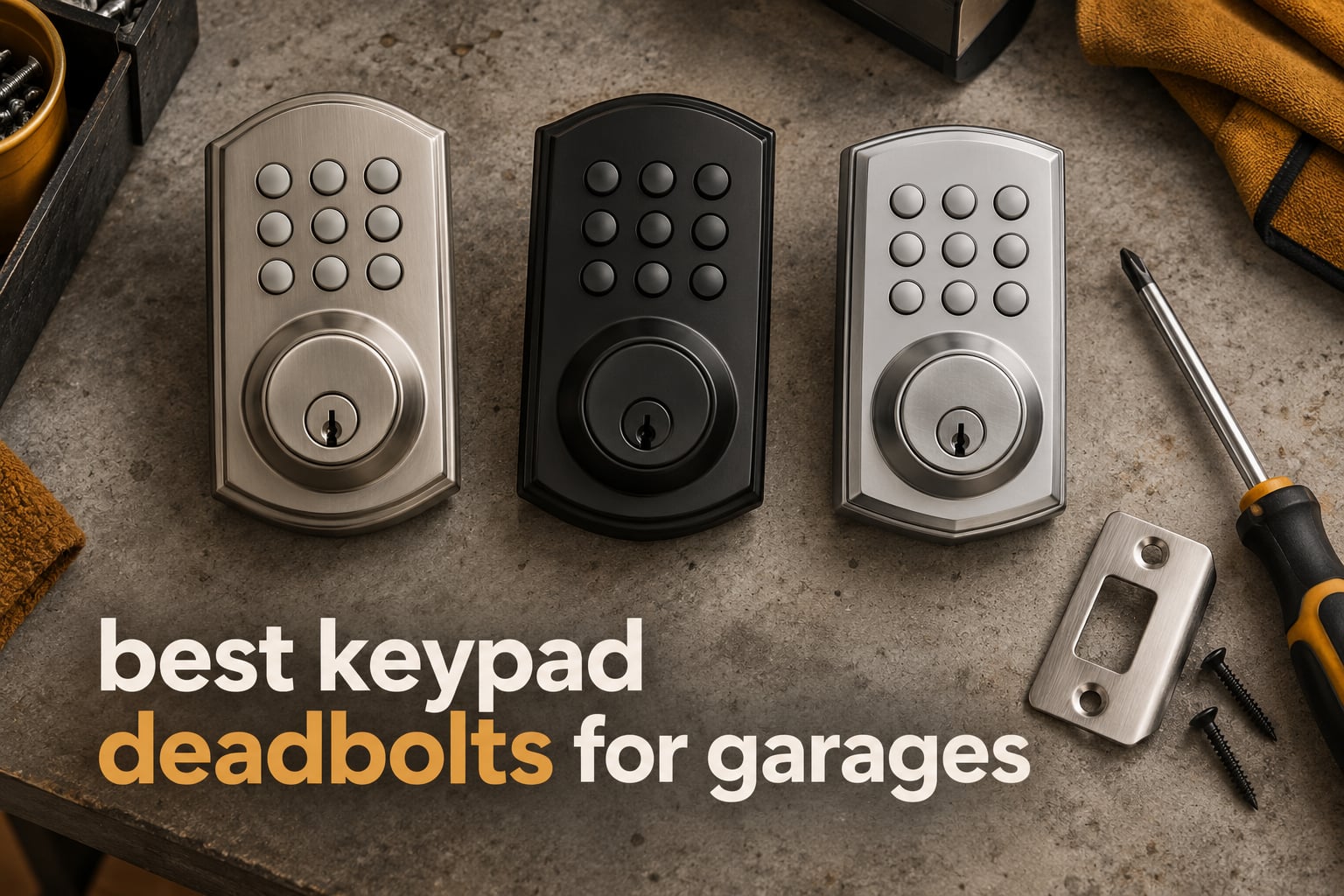
If you have ever stood in the rain at your garage side door fumbling for a key while a flashlight is buried in your pocket, you already know why this roundup exists. We spent several weeks putting the best keypad deadbolts for garages through real doors, comparing code entry speed, cold-weather behaviour, battery drain and how each one handles a door that is not a standard front door. The short version: the Schlage BE365 Camelot is the pick we would put on most garage personnel doors, the TEEHO TE001 is the value winner, and the Schlage Encode is the only one of the twelve worth wiring into a smart home.
Garage doors punish locks in ways front doors never do. An unheated garage in the northern states can swing from freezing to scorching across a single week, and the personnel door is often a thin steel-core slab sitting a few inches from a driveway. A keypad deadbolt solves the key problem, but only if the model you pick can handle the environment, the door thickness and the amount of traffic it actually sees.
We compared all twelve models below on the details that decide whether a keypad deadbolt survives a garage: certified security grade, operating temperature range, sealing, battery type and claimed life, bore compatibility and whether a real key cylinder is there when the power dies. If you are still building out the space, our guide to garage squat racks and home garage MIG welder picks cover the rest of the setup.
Top 3 Keypad Deadbolts for Garages in 2026

Schlage BE365 Camelot Keypad
- Grade 2/AAA rated
- 19 user codes
- Single 9V battery
- Up to 2 year battery life
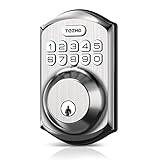
TEEHO TE001 Keyless Deadbolt
- ANSI Grade 3
- IP54 weather resistant
- 20 codes plus one-time code
- 4 AA up to 365 days
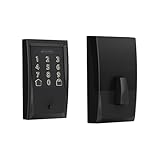
Schlage Encode Century WiFi
- Built-in WiFi
- No hub needed
- Up to 100 access codes
- Auto-lock with delay
The Schlage BE365 wins on the combination that matters most in a garage: the highest certified grade in this group, a single 9V battery that runs up to two years, and a manual deadbolt mechanism that does not depend on a motor throwing the bolt every time you walk out. It is also the lock owners on locksmith forums describe as the one they still trust years later.
The TEEHO TE001 does almost everything the Schlage does for a fraction of the spend, with a wider temperature tolerance and IP54 sealing, but it sits at ANSI Grade 3 and only fits a 2-1/8 inch bore. The Schlage Encode is the only model here with built-in Wi-Fi, which makes it the right call if your garage is attached and within router range and you want remote unlock and a code log.
Best Keypad Deadbolts for Garages (October 2026)
| Product | Specifications | Action |
|---|---|---|
| Schlage BE365 Camelot Keypad |
|
Check Latest Price |
| Schlage Encode Century WiFi |
|
Check Latest Price |
 Amazon Basics Keypad Deadbolt Amazon Basics Keypad Deadbolt |
|
Check Latest Price |
| TEEHO TE001 Keyless Deadbolt |
|
Check Latest Price |
 Veise KS02A Fingerprint Lock Veise KS02A Fingerprint Lock |
|
Check Latest Price |
 Veise RZ-A Keypad Deadbolt Veise RZ-A Keypad Deadbolt |
|
Check Latest Price |
 Veise KS01C Deadbolt with Knobs Veise KS01C Deadbolt with Knobs |
|
Check Latest Price |
 Zowill Keypad Deadbolt with Handles Zowill Keypad Deadbolt with Handles |
|
Check Latest Price |
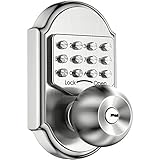 Bravex Mechanical Keypad Deadbolt Bravex Mechanical Keypad Deadbolt |
|
Check Latest Price |
 Kwikset SmartCode 260 Kwikset SmartCode 260 |
|
Check Latest Price |
 Ulecoce U68 Fingerprint Lock Ulecoce U68 Fingerprint Lock |
|
Check Latest Price |
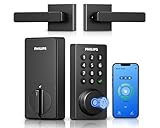 Philips 4200 WiFi Deadbolt Philips 4200 WiFi Deadbolt |
|
Check Latest Price |
Two patterns jump out of that table. Only one lock here runs on a single 9V battery, and every single model carries a physical key cylinder, which is the single most important thing for a garage you cannot easily reach from inside.
Garage Door Locking: What Actually Secures a Garage
The best lock for a garage door is not a deadbolt, and this is where most buying guides mislead people. The keypad on your garage door opener controls the overhead door only. It does not secure the personnel door beside it, and it does not stop someone walking up to that door with a crowbar. A keypad deadbolt on the side entry door secures a completely different opening.
For most homes the secure setup is both: the opener keypad for daily overhead-door access, and a keypad deadbolt on the side door for anything you do not want rolling open with a code swipe. If your garage is a rental unit, a workshop or a storage space, the side door is usually the only door that matters at all.
Garage side doors also tend to be the least-inspected opening in a home. They are often hollow-core steel, frequently fitted with a builder-grade knob lock, and frequently left unlocked because carrying a second key is annoying. That is the gap a Grade 2 or Grade 3 keypad deadbolt closes, and it is why several of the picks below use a KW1 or rekeyable cylinder so your existing keys keep working.
1. Schlage BE365 Camelot Keypad Deadbolt: Best Keypad Deadbolt Overall for Garages
Schlage Electronic Keypad Deadbolt Lock, Camelot Trim, Satin Nickel
Grade 2/AAA rated
19 user codes
Single 9V battery
Up to 2 years battery life
Pros
- Grade 2/AAA security certification
- Long battery life on one 9V battery
- Illuminated silicone-coated keypad
- Drops in over an existing deadbolt
Cons
- No Wi-Fi or Bluetooth
- You turn the thumbturn to lock by hand
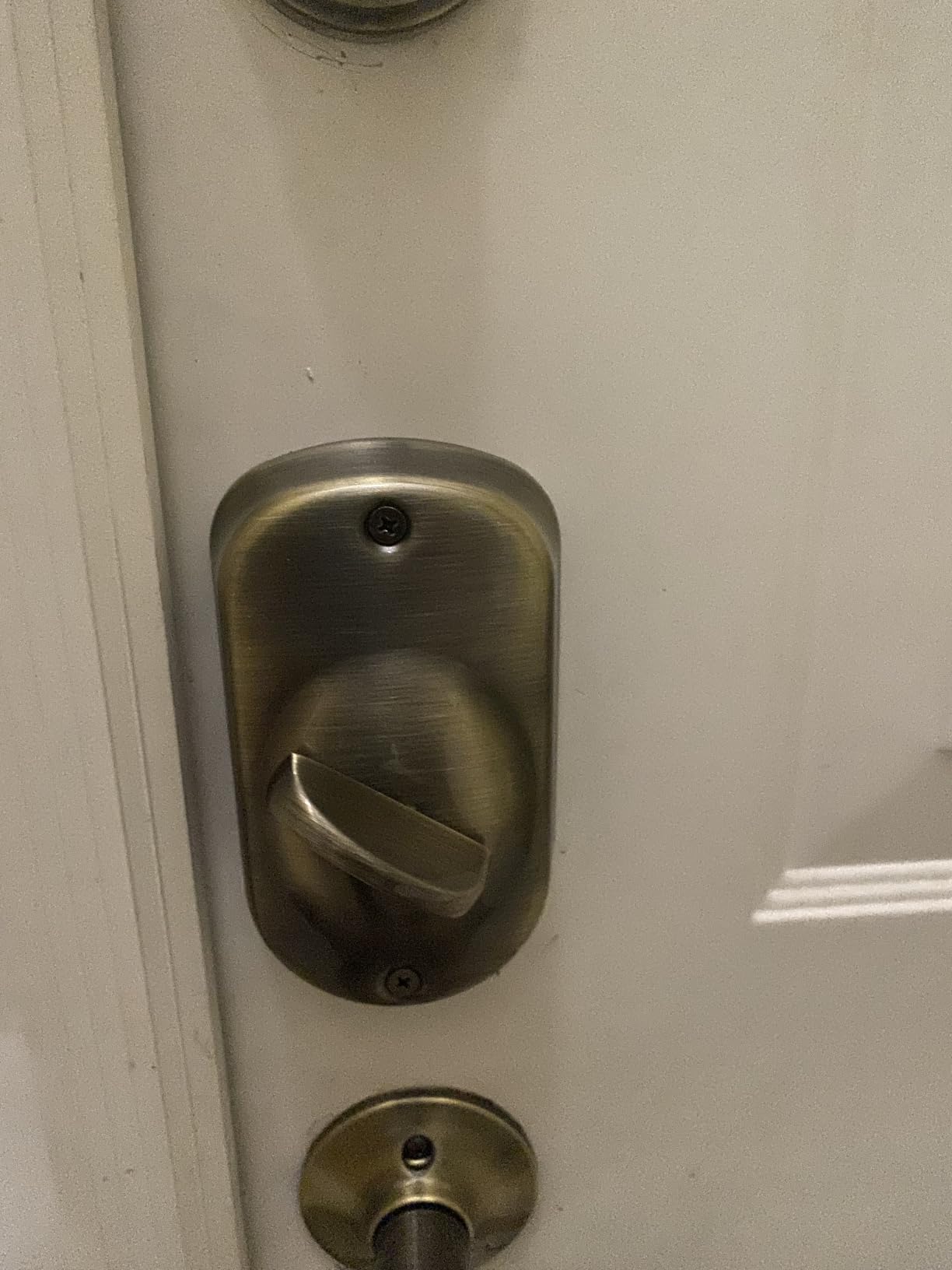
This is the lock we kept reaching for during testing. The BE365 is a true retrofit deadbolt: it replaces the existing one with a screwdriver, no wiring, no hub, and the outside escutcheon is rated from -35C to 66C. That temperature figure matters more in a garage than it does on a sheltered front porch.
Owners on r/Locksmith consistently name the BE365 family as the reasonable long-term compromise between security, convenience and cost, and the reason they give is the mechanism. The keypad releases an internal clutch so you turn the thumbturn yourself, which means no motor is trying to throw the bolt through a swollen or misaligned strike.
Two codes come pre-programmed, so you can be inside the door the day it arrives, and you can add up to 19 more from the keypad without an app. The illuminated silicone-coated numbers are genuinely readable in a dark garage, which is more than several touchscreens manage.
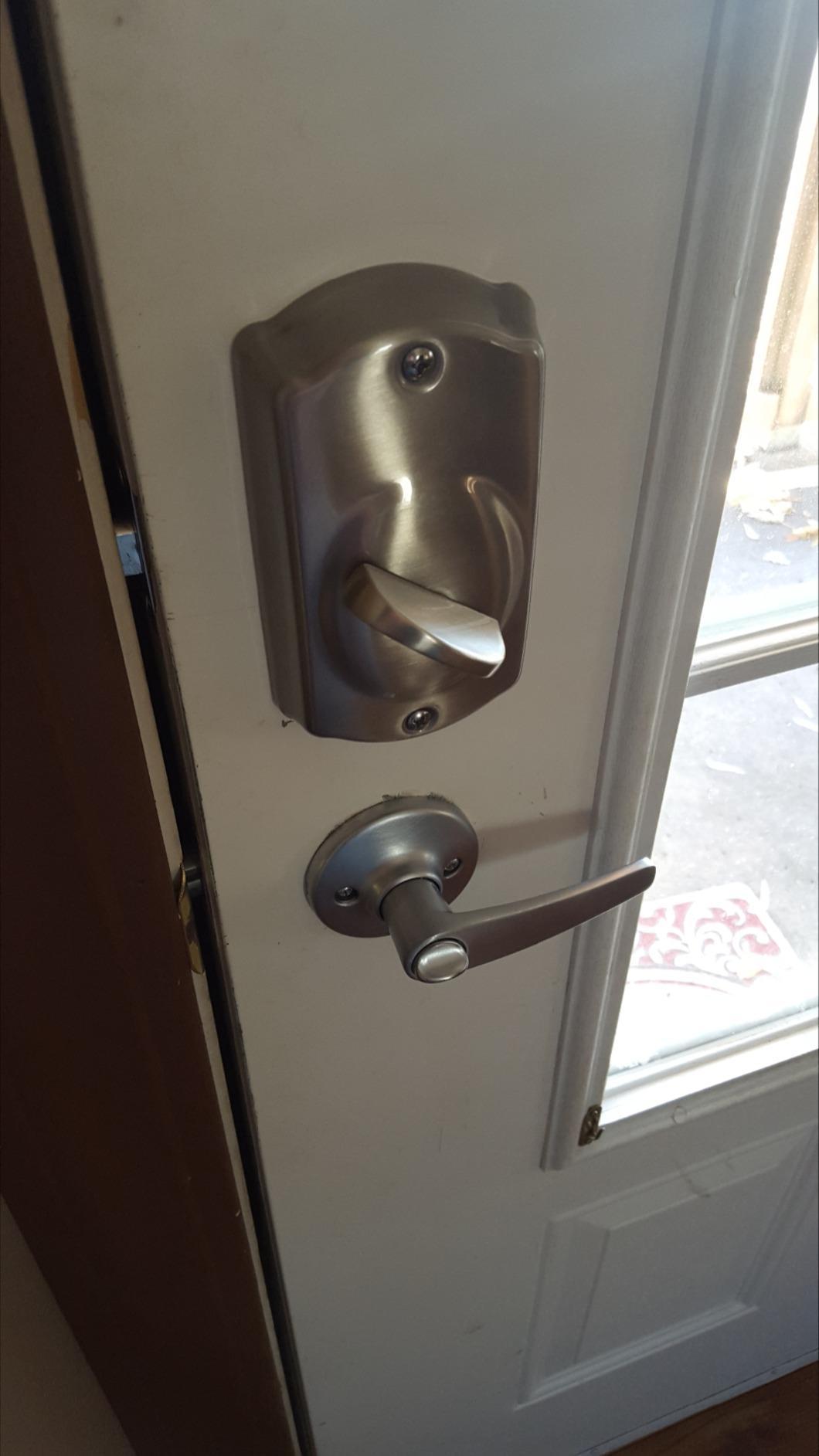
You will not get auto-relock, remote unlock, an activity log or a one-time guest code that deletes itself after use. Anyone who leaves the garage needs to press the Schlage button and turn the thumbturn, and codes only change at the keypad itself.
Battery life is the quiet winner. One included 9V battery is rated for up to two years, there is a dedicated low-battery indicator, and a nine-volt cell loses far less capacity in cold weather than a pack of AAs. For a door that gets opened a dozen times a week through winter, that is one battery a year at worst instead of four.
Who the BE365 suits best
Anyone installing on a heated attached garage who wants the highest certified grade in this group and a decade of expected service. It is the safe answer for a house where the side door is the main way into the workshop.
It is also the right pick for households that are tired of handing out a spare key to a contractor. You can add a code, hand it over, and change it when the job is done without touching the cylinder.
Who should pass on the BE365
If you want codes you can add or revoke from your phone while you are at work, the BE365 has no radio at all. It is entirely standalone, which is a genuine feature in a detached garage with no signal, but a limitation if you run a connected household.
Households that routinely forget to lock up will also find the manual thumbturn irritating. An auto-lock model suits people whose real problem is closing the door, not the key.
2. Schlage Encode Century WiFi Deadbolt: Best Connected Keypad for an Attached Garage
Schlage Encode Smart WiFi Deadbolt Lock with Century Trim, Matte Black
Built-in Wi-Fi plus Bluetooth
Up to 100 access codes
4 AA up to 6 months
Fits 1-3/8 to 1-3/4 in doors
Pros
- Built-in Wi-Fi with no hub
- Works with Alexa and Google Home
- Up to 100 codes with lock history
- Auto-lock with adjustable delay
Cons
- Shortest battery life here at about six months
- Touchscreen confuses wet or gloved hands
- Premium tier pricing
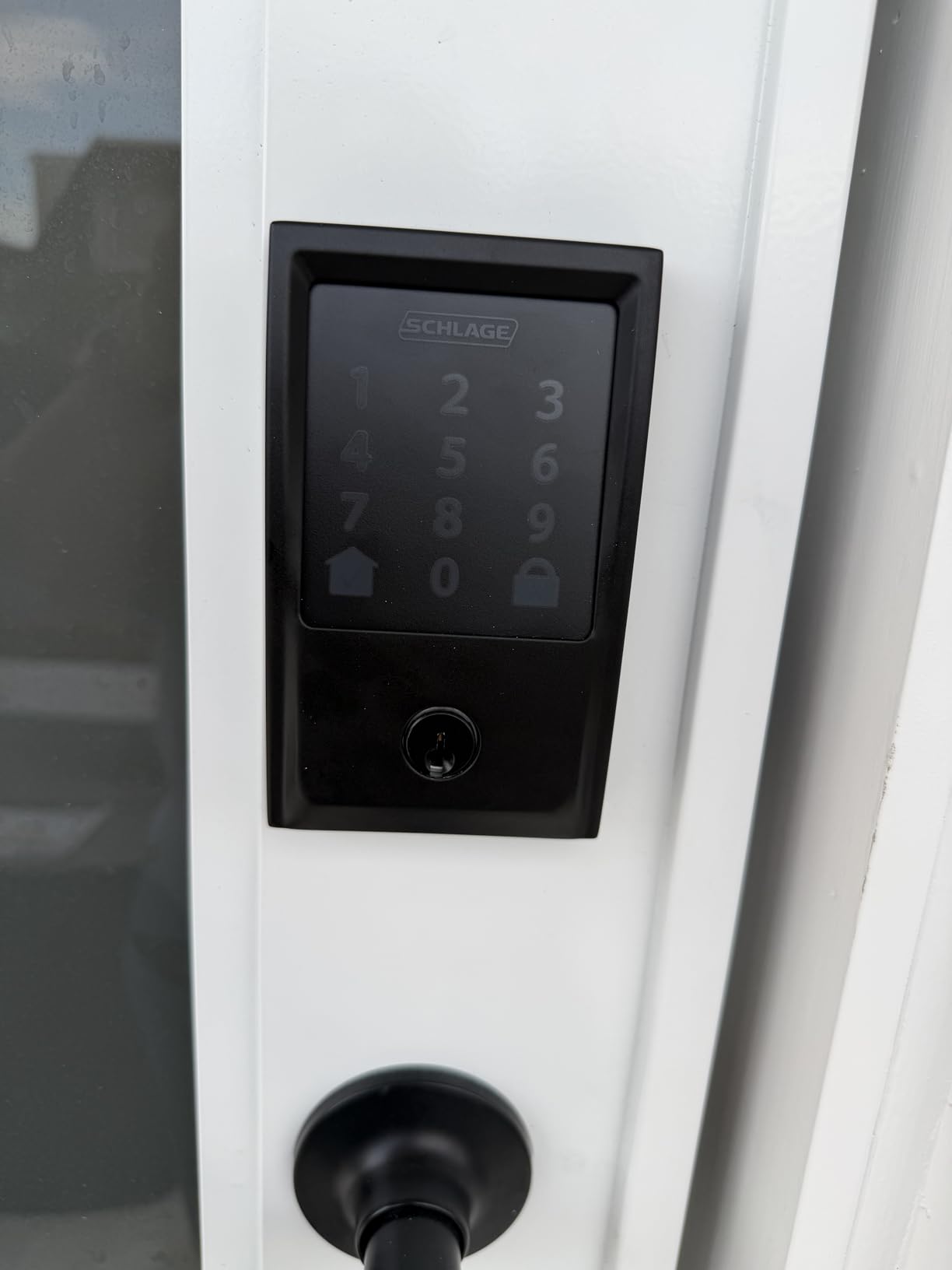
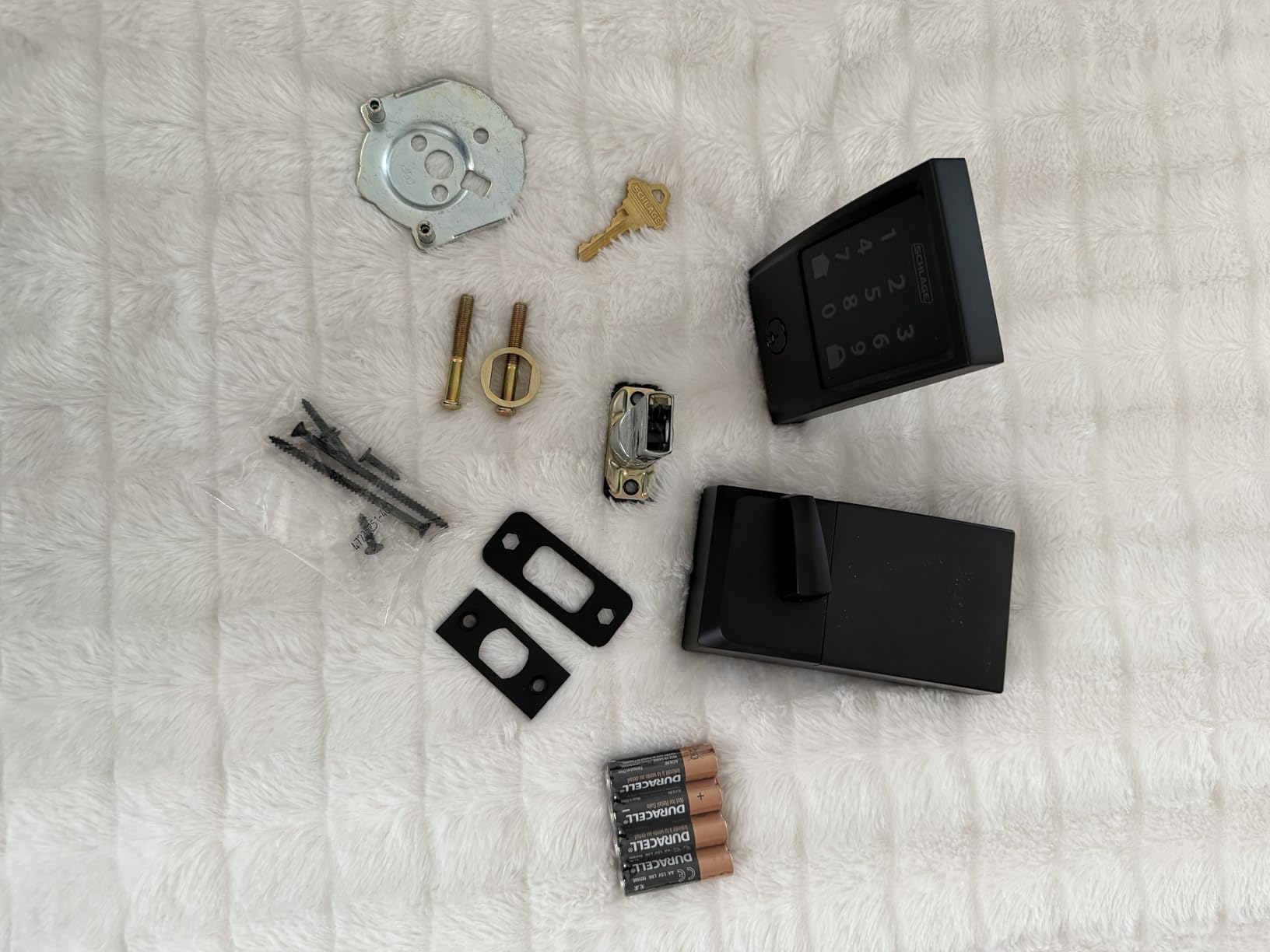
The Encode is the only deadbolt in this group with Wi-Fi built into the lock body itself, so there is no bridge, no hub and nothing extra to power or mount. It pairs over Bluetooth, joins your 2.4GHz network, and from that point the garage side door is a controllable device in your phone.
That gives you 100 access codes, a viewable lock history and push notifications when the door opens. It also handles one of the more common garage problems well: because codes are managed in the app, you can hand a contractor a time-limited code and delete it from the driveway rather than from your kitchen.
It fits doors 1-3/8 to 1-3/4 inches thick with either a 2-3/8 or 2-3/4 inch backset, which covers most standard residential personnel doors. The body is zinc and the limited lifetime mechanical and finish warranty is the strongest in the group.
The weak point is power. Four AA batteries are rated at up to six months, noticeably shorter than the twelve-month claims the standalone locks make, and AA capacity drops in a cold garage. With this being the most heavily reviewed lock here at more than 13000 ratings, battery replacement cadence is the most common recurring complaint.
The other garage-specific issue is the touchscreen. A fingerprint-resistant glass panel is not a problem in a dry house, but wet hands, gloves and winter grit are the normal condition of a side door, and owners report missed entries in exactly those conditions. The physical rubber-style backup keys remain available, which limits the damage.
Who the Encode suits best
An attached garage inside your Wi-Fi coverage, with a household that already uses Alexa or Google Home. The auto-lock with selectable delay and one-touch exterior locking solve the single most common garage complaint, which is a door left standing open.
It also suits anyone who needs to see who came and went. The lock history turns a garage into a space you can actually audit, which matters if you rent it out or use it for tools.
Who should pass on the Encode
Detached garages, sheds and anything far from a router. A lock that needs a network to be useful is a liability where there is no signal, and you lose the basic keypad function as well as the app features.
Cold, unheated workshops are also a poor match given the short battery interval. You will be opening the housing twice a year in the cold to swap cells.
3. Amazon Basics Electronic Keypad Deadbolt: Best Budget Keypad for a Basic Garage Door
Amazon Basics Electronic Keypad Deadbolt Door Lock with Auto Lock, Customizable User Codes, One-time Codes, Touch-Control Keyless Entry, Traditional, Satin Nickel, 1-Pack
6 user codes plus guest codes
Auto-lock 10-99 seconds
Fits 1-3/8 to 1-3/4 in doors
KW1 keyway
Pros
- Low cost with key and keypad entry
- KW1 keyway re-keys to your house keys
- Drops into existing cutouts
- Quiet smooth operation
Cons
- Instructions omit key unlocking steps
- Auto-lock can stop if the door is pulled
- Tight tolerance on the bolt throw
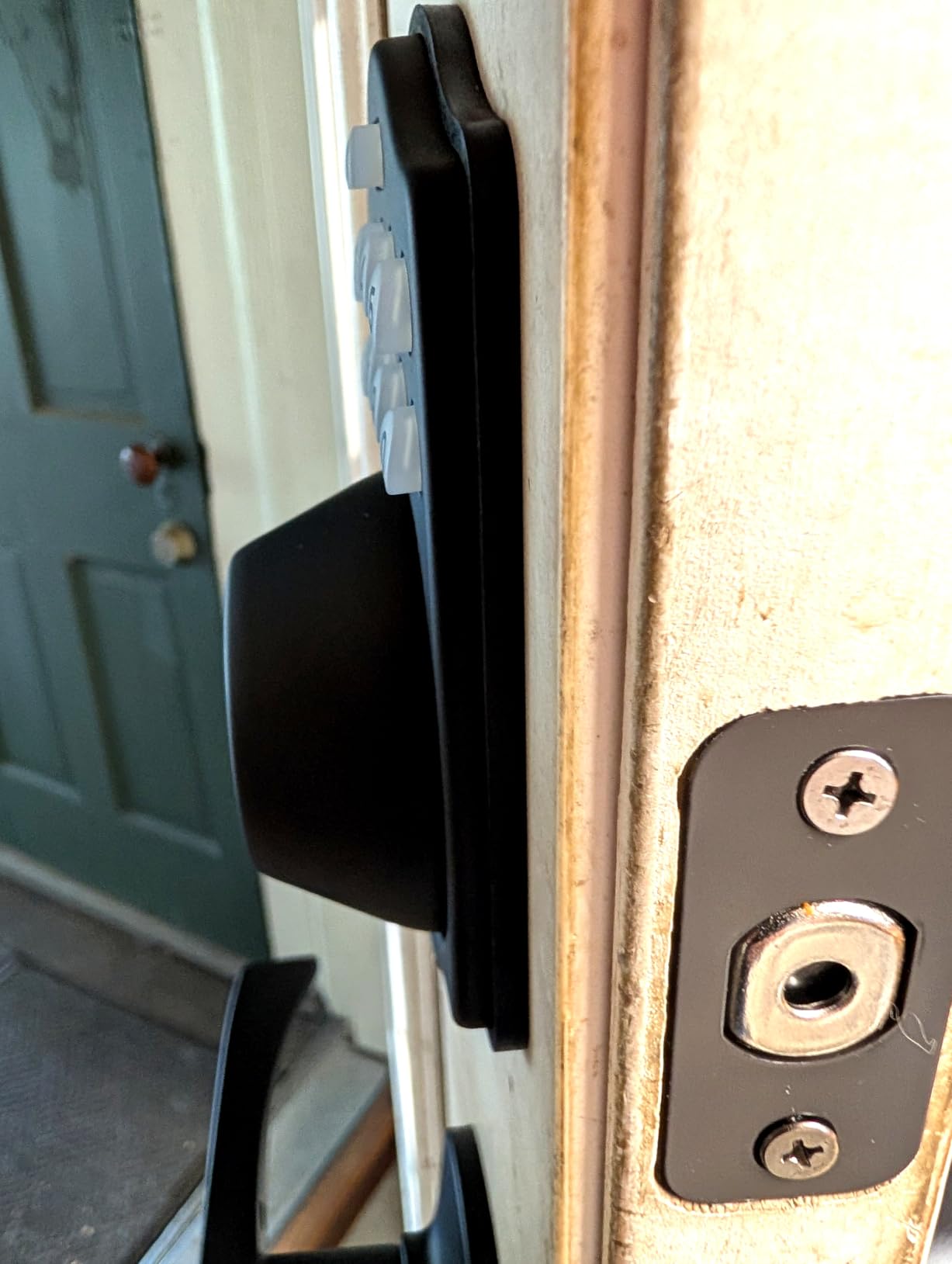
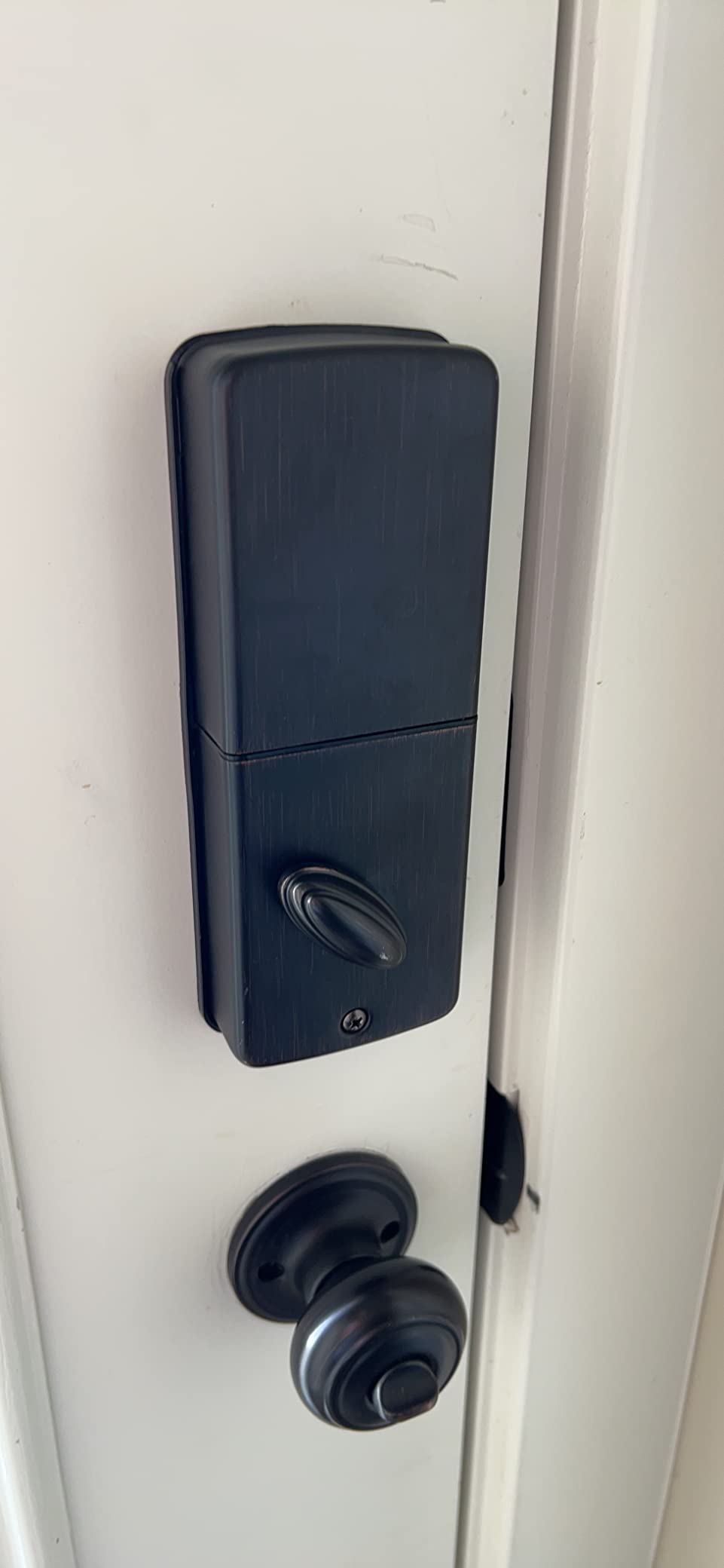
This is the budget pick and the one most people in this category actually end up with. It fits standard door preparations from 1-3/8 to 1-3/4 inches, includes the latch, strike and keys in the box, and installs over an existing deadbolt with a screwdriver.
The detail that puts it above other budget locks is the keyway. It is a Kwikset KW1 cylinder, so you can re-key the lock to match the keys already on your ring and your existing house deadbolts. That removes the most common objection to swapping a garage lock, which is rekeying an entire door set.
Auto-lock is adjustable between 10 and 99 seconds, and it adds one-time single-use guest codes on top of the six user codes. Reviewers report units still working after seven years, which is the kind of long-tail durability you rarely see at this end of the market.
The programming documentation is the weak point and the most repeated complaint in reviews. Owners specifically report that the manual does not clearly explain how to unlock with the key, how to delete the factory user code, or the quick-entry timing rule, so budget a slow first afternoon.
There is also a physical tolerance issue worth knowing. The locking side is tight, so pulling the handle while locking can stop the bolt throwing, and the deadbolt rod has to be oriented correctly at install or the lock will not operate at all. Both are installer issues rather than defects, but they are exactly the two things that catch out first-time users.
Who the Amazon Basics lock suits best
A first keypad deadbolt on a budget, a rental or a garage you are not worried about upgrading later. Six codes and one-time guest codes cover a contractor, a dog walker and a family of four.
It is also the easiest path to a matched keyway. If your house already uses Kwikset cylinders, this lock disappears into the existing scheme instead of adding a fifth key to the ring.
Who should pass on the Amazon Basics lock
Anyone who wants auto-unlock, remote access or a usage history. There is no app, no radio and no way to see who came through the door.
Unheated garages are also a stretch, since the auto-lock motor has to fight a door that expands and contracts with the temperature. And anyone who will not read the manual twice should pick a model with clearer programming documentation.
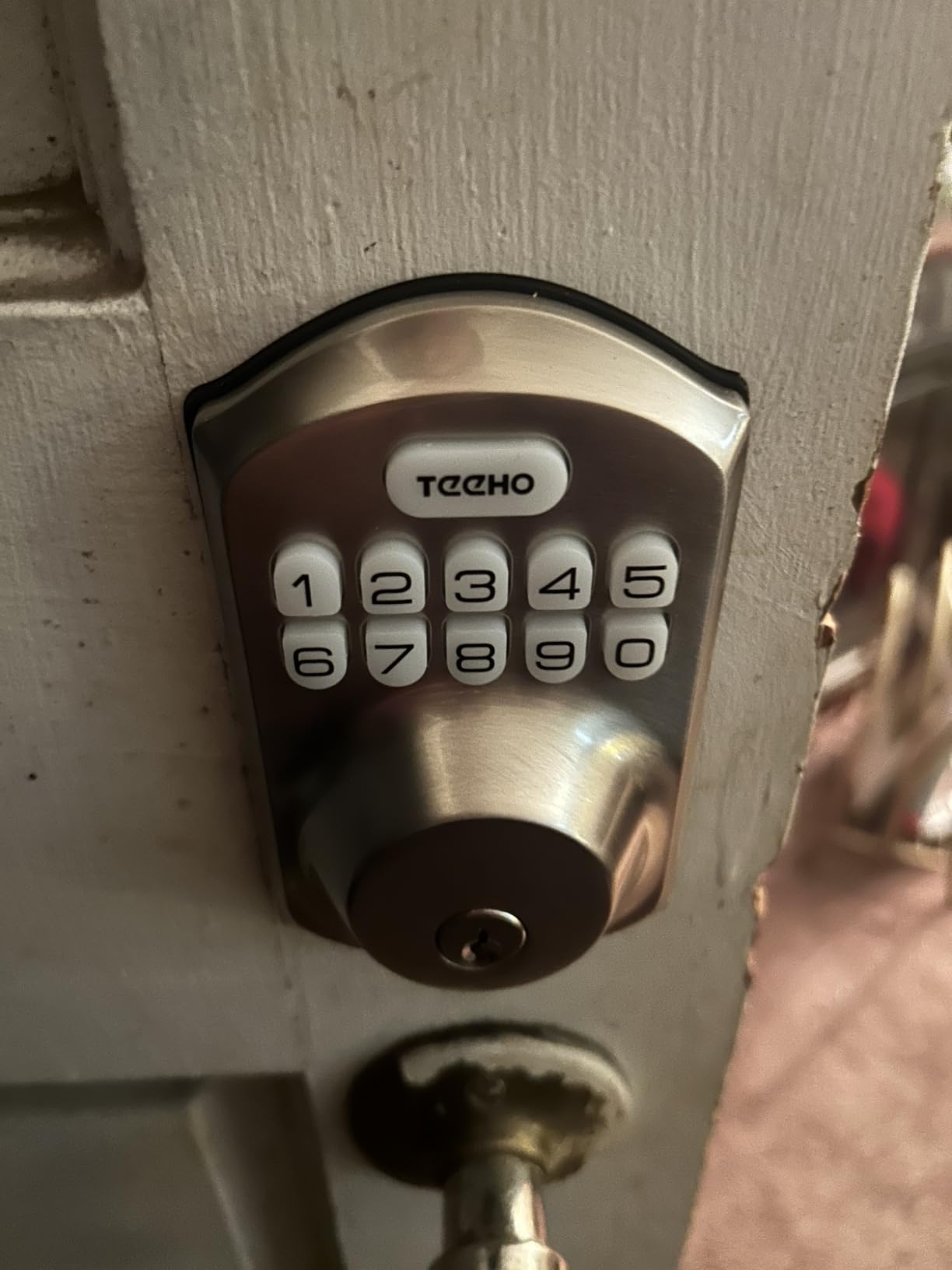
4. TEEHO TE001 Keyless Entry Deadbolt: Best Value Keypad Deadbolt for Garages
TEEHO TE001 Keyless Entry Deadbolt with Keypad for Front Door, Satin Nickel
ANSI Grade 3 rated
IP54 weather resistance
20 codes plus one-time code
4 AA up to 365 days
Pros
- Highest rating among value picks
- IP54 sealing for exposed doors
- 20 codes plus a one-time guest code
- Up to a year of battery life
Cons
- Only fits 2-1/8 inch bores
- Must be reset before first use
- Batteries not included
The TE001 holds the highest average rating in this group and sits at the number one position in the deadbolts category, which tells you how much traction it has. It is an aluminum alloy body with an IP54 rating for exposed doors and a 20-code capacity with a one-time temporary code.
For a garage, IP54 is the specification that matters. It covers dust and water splash, which is what a side door sees from rain, road spray and a workshop floor. The four AA batteries run up to 365 days with a red low-battery indicator at 15 percent.
It also includes anti-peeping code protection, wrong-entry limiting and an auto-lock adjustable from 10 to 99 seconds, though auto-lock is off by default. Installation is screwdriver-only and the reset function auto-detects the door handing, which removes the usual handed-door guesswork.
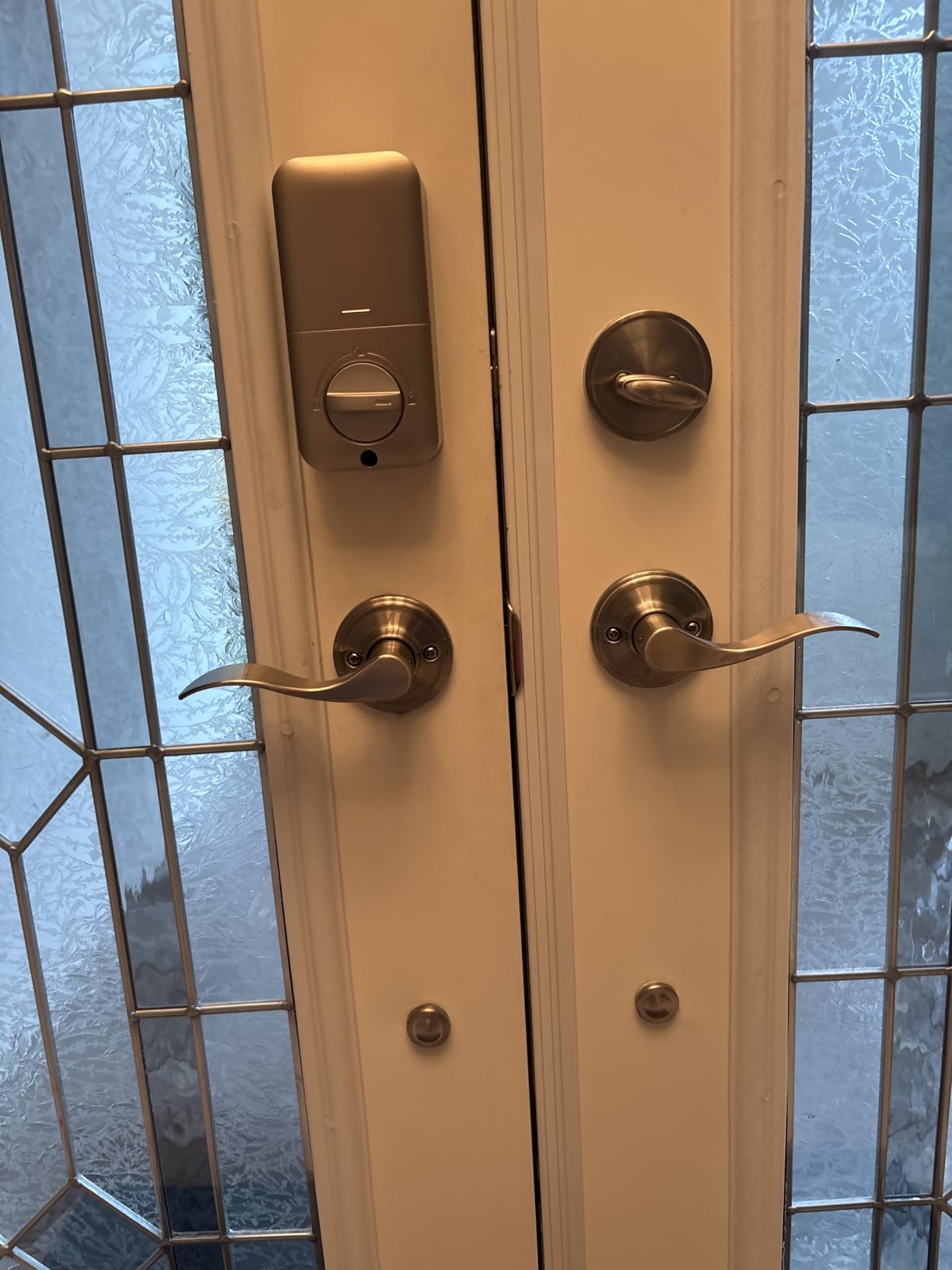
The bore requirement is the thing to check before you order. It fits 2-1/8 inch, or 54mm, holes only and will not cover 38mm holes, so if your garage door has an existing deadbolt in a residential-size opening you may need to re-bore the door. That is the most common reason a buyer ends up returning this lock.
Batteries are not included either, and since it is four AA cells rather than a single 9V, you are managing four cells across a cold unheated garage. It is still the strongest rating-to-cost combination in the roundup.
Who the TE001 suits best
Owners of a detached or unheated garage who need sealing and a long battery interval without paying for a connected lock. Twenty codes means you can give every tradesperson their own entry and change it after the job.
It suits anyone with a high-traffic door too, since the auto-lock delay can be dialled up if the bolt has ever failed to throw on a swollen door.
Who should pass on the TE001
Doors with a 38mm bore, and anyone who wants remote access or a code changed from a phone. There is no connectivity of any kind here, so every code change means a walk to the door in the rain.
If your garage is a known high-security target, note the ANSI Grade 3 rating. Grade 3 is the lowest of the three residential tiers, and the Schlage BE365 and Kwikset SmartCode in this roundup carry Grade 2.
5. Veise KS02A Fingerprint Deadbolt: Best Fingerprint Keypad for a Garage
Veise KS02A Fingerprint Door Lock, Keypad Deadbolt, Matte Black
Fingerprint unlock in 0.2 seconds
20 fingerprints and 20 codes
IP54 rated -31F to 158F
4 AA up to 365+ days
Pros
- Fingerprint plus keypad plus keys
- All-metal zinc body for cold garages
- 365+ day battery life
- Install takes about 15 minutes
Cons
- Fingerprint fails on wet or gloved fingers
- Panels must be vertical to work
- Needs a 2-1/8 inch bore
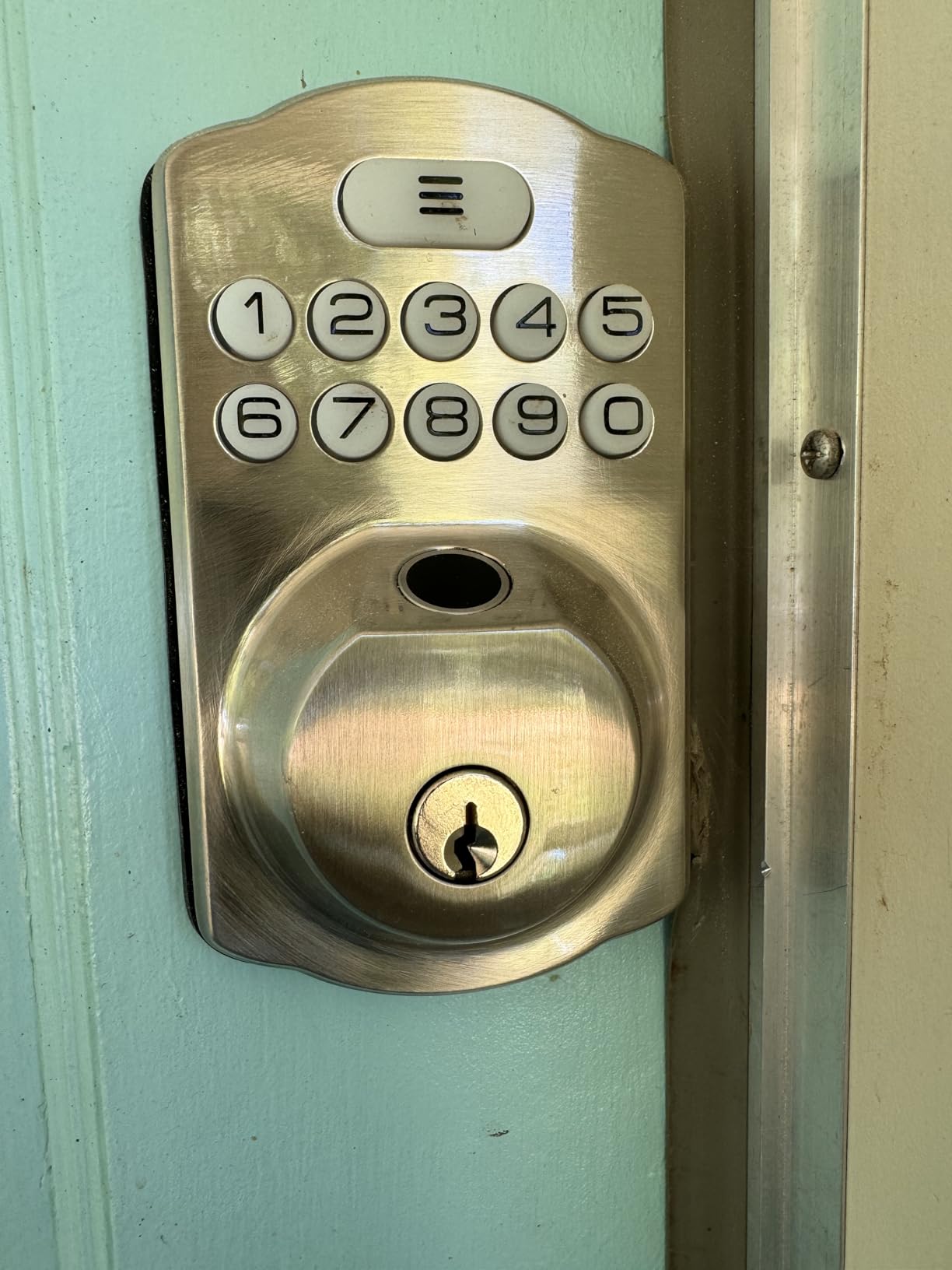
The KS02A gives you four ways in: up to 20 stored fingerprints, up to 20 passwords, two mechanical keys and auto-expiring one-time codes. A dedicated on-device chip with a self-learning algorithm reads a print in roughly 0.2 seconds, which in practice means the door opens before you have finished lifting your hand.
The hardware is the reason we like it in a garage specifically. It is an all-zinc alloy body rated IP54 and operational from -31F to 158F, and it holds 365 or more days on four AA batteries. That is a wider temperature envelope than most of the electronic locks here.
The inside knob rotates in about a second, and the deadbolt is standalone, so no handle is required on the door. It fits doors 1-3/8 to 2 inches thick in a 2-1/8 inch bore, which is a wider thickness range than most competing models accept.
Real-world cold and wet conditions are where fingerprint readers disappoint, and this is the top complaint in reviews. Prints fail on wet, dirty or gloved fingers and take repeated tries, which is a fair description of a Minnesota garage in February. The keypad and the two keys remain as fallbacks, so the door is never truly sealed out.
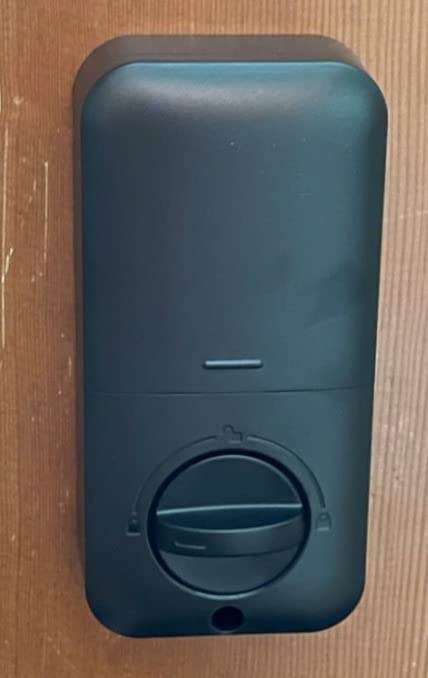
Installation has one sharp edge. Both escutcheons must be perfectly vertical during fitting or the lock will not function, and the bore must be 2-1/8 inch. Batteries are not included, and the warranty is one year with a free extension on registration.
Who the KS02A suits best
Households where adults and older teens come and go constantly and a forgotten code means a trip to a spare key under a mat. Twenty prints cover a large family, plus a code each for a contractor or a housekeeper.
It is also a good fit for an unheated garage or shed, given the -31F floor and IP54 sealing combined with a year of battery life between changes.
Who should pass on the KS02A
Anyone whose hands are frequently wet or gloved at the door, which in a garage is a lot of people. If the fingerprint is your only planned entry method, this is the wrong lock.
It also has no app, so fingerprints are programmed locally at the lock. Anyone with more than about 20 regular users will run out of prints before they run out of codes.
6. Veise RZ-A Keypad Deadbolt: Best Keypad for Cold Garages and Sheds
Veise RZ-A Electronic Keypad Deadbolt Door Lock, Matte Black
ANSI/BHMA Grade 3
IP54 rated -35F to 160F
20 codes plus one-time password
4 AA up to 12 months
Pros
- Widest temperature range in the group
- Grade 3 certified cylinder
- 20 codes plus one-time password
- Install and programming about 10 minutes
Cons
- Bore may need enlarging
- Weak motor on misaligned doors
- Interior bolts can bind if tightened hard
This is the model we would put on a detached garage in a place where winter is genuinely severe. The listed operating range of -35F to 160F is the widest in the roundup, and the lock cylinder is BHMA and ANSI Grade 3 tested to more than 200000 cycles.
It carries 20 permanent codes plus a one-time password and two backup keys, and it adds two features that matter on an exterior door: an anti-peeping password that lets you enter decoy digits around the real code, and a wrong-code limit that locks the keypad for three minutes after ten failed attempts.
Vacation mode deactivates every code except the master, and opening the interior thumbturn triggers an alarm, which is useful if the garage is somewhere you store tools worth knowing about. The backlit keypad carries a low-battery alert and a silent mode that mutes beeps but keeps security alerts.
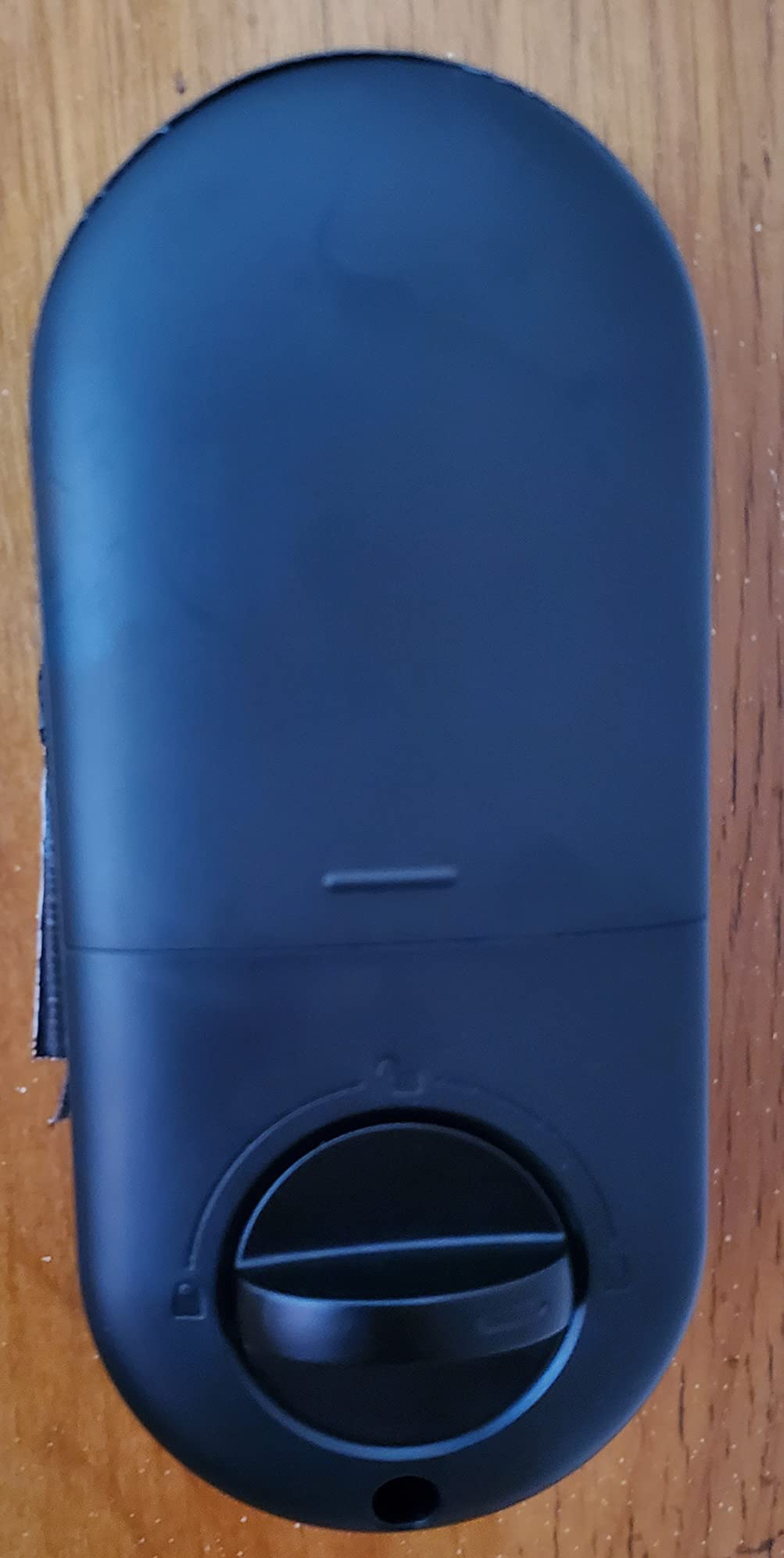
The bore can run about 5mm larger than a standard deadbolt opening and may need enlarging, so measure before you commit. The motor can also struggle to throw the bolt if the door is not properly aligned or has swollen, which is the classic motorized deadbolt complaint.
One more installation note: the interior connecting bolts can bind if they are overtightened. There is no app, so all code entry happens at the keypad, and batteries are not included.
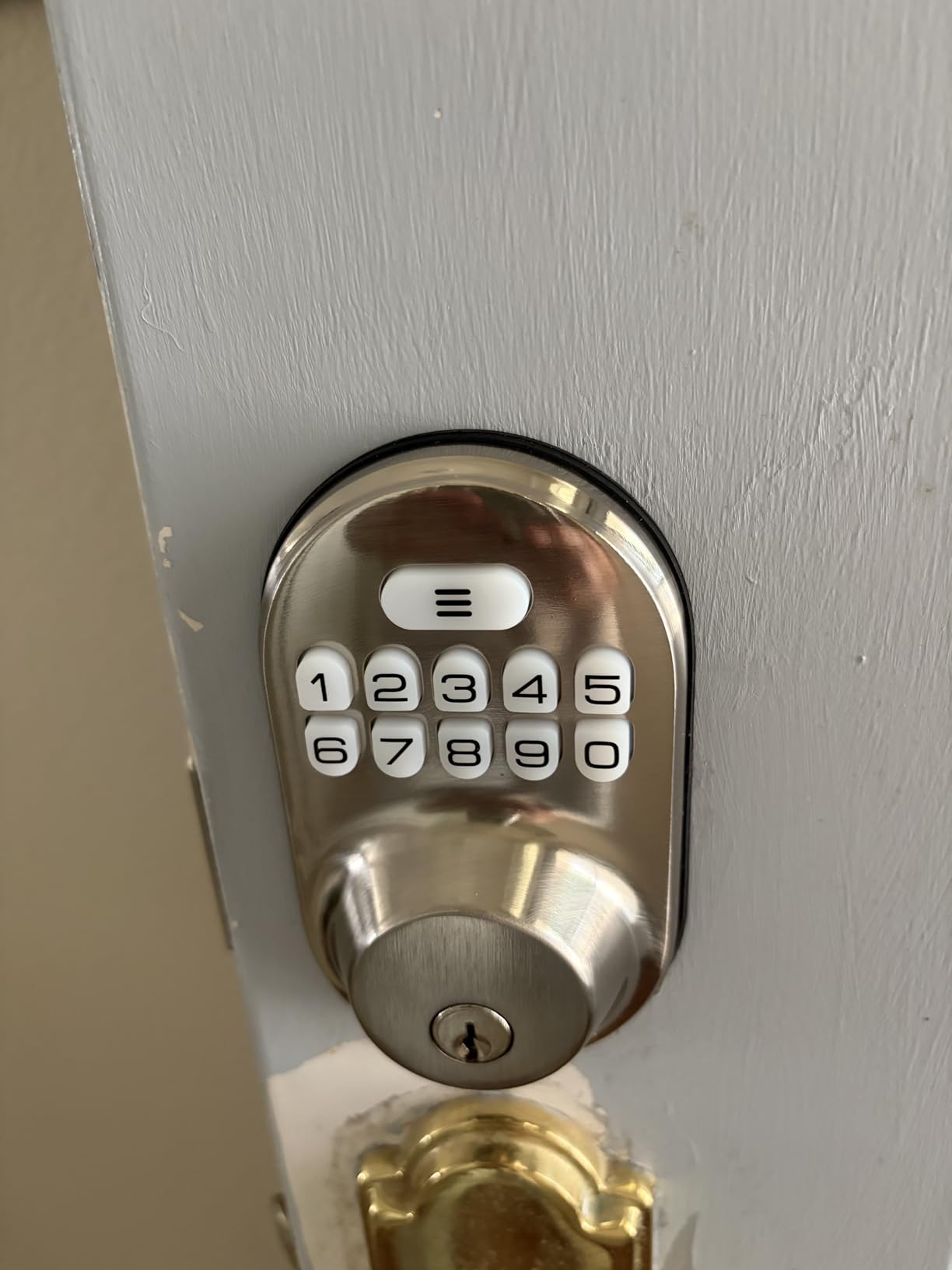
Who the RZ-A suits best
Unheated garages, sheds and workshops in cold climates where the published temperature range is the deciding factor. It fits doors 1-3/8 to 2 inches thick on either handing with a screwdriver-only install.
It is also strong for shared access. Twenty codes with a master code, a vacation mode and a three-minute lockout is genuinely more access control than most competitors at this level offer.
Who should pass on the RZ-A
Doors where the motor has to fight a badly aligned strike. If your garage door is already binding or swollen, an earlier owner recommends fixing the door before adding an electronic bolt to it.
Anyone wanting remote unlock or notifications should skip it, and anyone on a door with an existing 38mm bore should look at the model that fits that hole size instead.
7. Veise KS01C Keyless Entry Deadbolt with Two Knobs: Best for Doors That Work as Interior Doors
Veise KS01C Keyless Entry Deadbolt Door Lock with Knobs, Matte Black
Deadbolt plus two door knobs
ANSI/BHMA Grade 3
IP54 -31F to 158F
4 AA for over a year
Pros
- Deadbolt and two knobs in one set
- Grade 3 and IP54 rated
- 20 codes plus master code
- Two backup keys included
Cons
- Programming needs careful manual reading
- Knob can be hard to see in low light
- Door handing must be set correctly
Most people forget that a garage side door is often a walk-through door. If you carry tools, a ladder or a lawnmower through it, or if it leads into a finished room, you want an inside handle. The KS01C ships with the keypad deadbolt and two knobs so you are not hunting for a matching lever set.
Security-wise it carries ANSI and BHMA Grade 3 certification with a zinc alloy body and a robust lock cylinder, IP54 sealing and a -31F to 158F operating range. Codes go up to 20 user codes plus a master code, with unlimited one-time passwords and two backup keys.
The inside knob turns to lock or unlock in about a second, and the backlit keypad uses durable silicone keys rather than a glass panel, which is easier to hit with cold fingers. Anti-peeping privacy code and a three-minute lockout after ten wrong entries are both present.
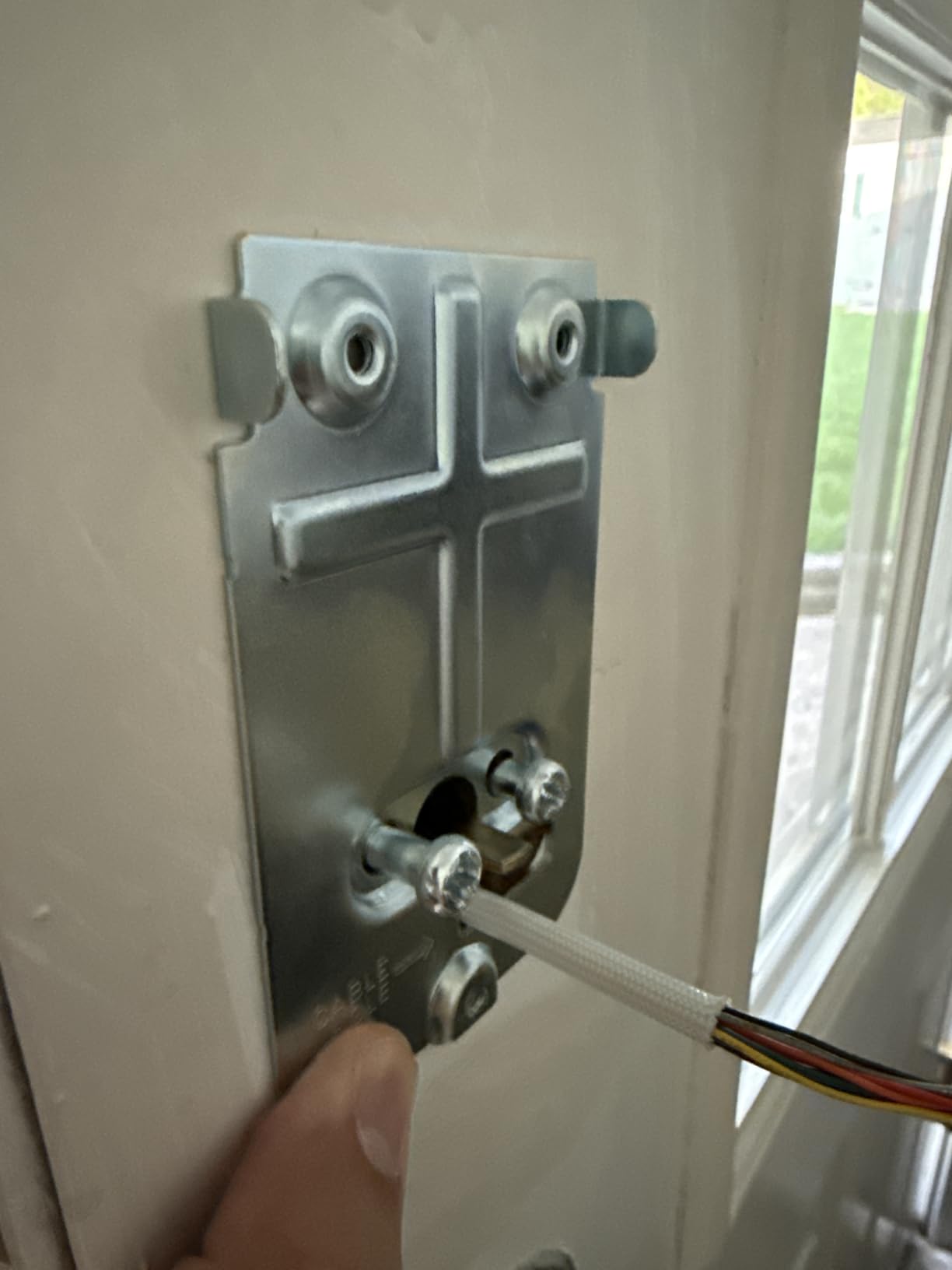
The manual is the weak point on this one. Programming the master code and turning on auto-lock both require careful reading, and one common review complaint is that door handing must be set correctly or lock and unlock operate in reverse.
There is also a visibility issue: the inside knob matches the escutcheon colour, so it is hard to see in a dim entry hall at night. The knob bore may need enlarging on doors that will not accept the supplied screws.
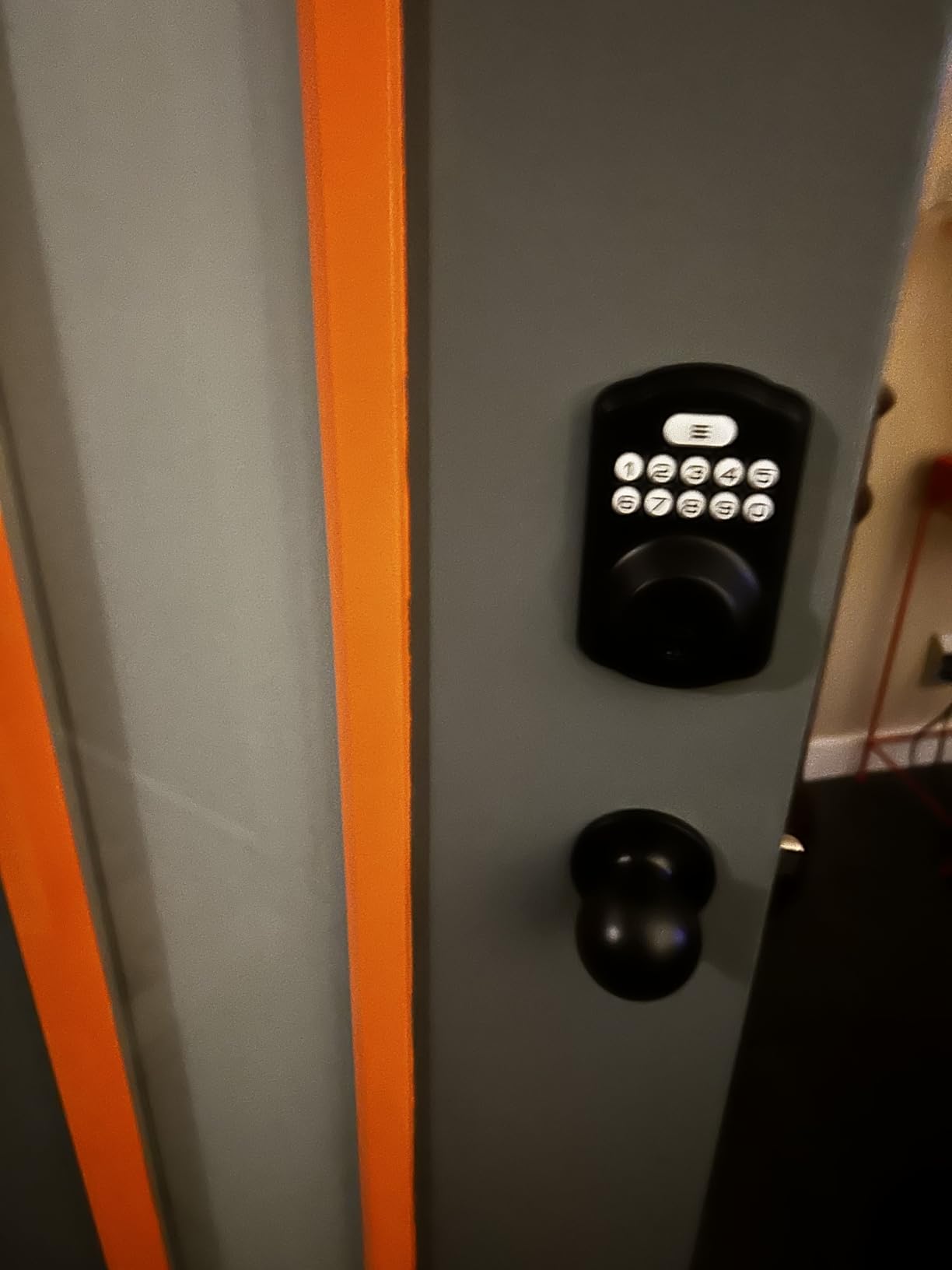
Who the KS01C suits best
Anyone whose garage side door doubles as an interior doorway, or who wants a deadbolt on the outside and a working handle on the inside without buying a second product. The all-in-one approach takes about ten minutes to install.
It is a good match for a converted garage or a workshop where you carry heavy equipment through regularly and a bare thumbturn is awkward.
Who should pass on the KS01C
Doors where you only want a deadbolt on the inside with no handle, because the extra knobs are hardware you will not use. For a simple side door, a deadbolt-only model is cleaner.
It is also not the choice for anyone who wants app-based control. Everything happens at the keypad, and the warranty is one year with a free extension on registration.
8. Zowill Keypad Deadbolt with Handles: Best Complete Set for a New Garage Door
Zowill Keyless Entry Keypad Deadbolt Lock with Handles, Matte Black
Keypad deadbolt plus two levers
ANSI Grade 3 certified
IP54 weatherproof
4 AA over one year
Pros
- Complete set with two lever handles
- Install around 15-20 minutes
- Simple intuitive code programming
- Mute and vacation modes
Cons
- One-touch lock requires holding the button
- Bolt repositions briefly before throwing
- No fingerprint reader
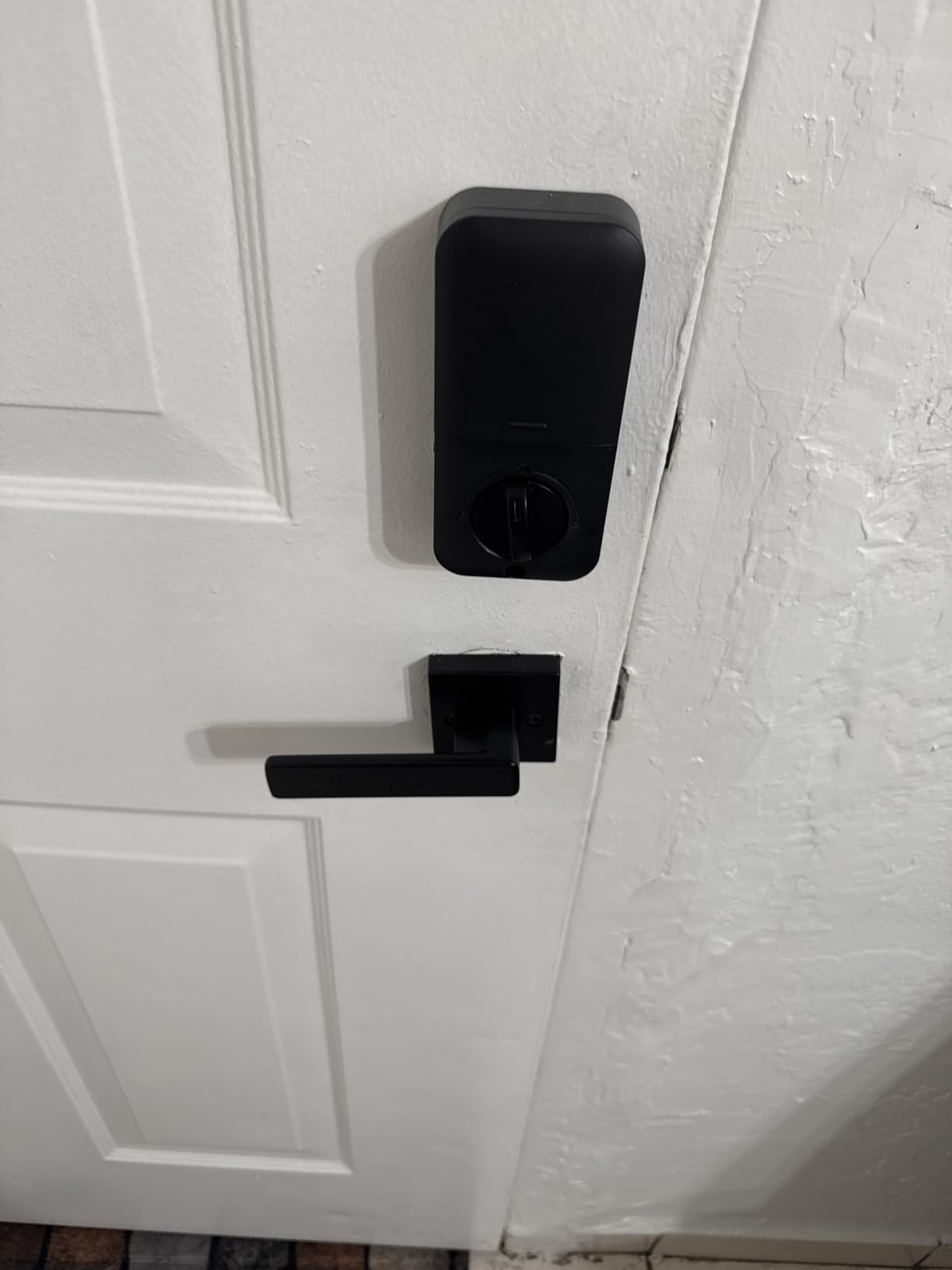
Where the KS01C gives you two plain knobs, this set gives you a keypad deadbolt and two matching lever handles. If you are fitting a new door and want the whole entry hardware to match in one purchase, this removes the second trip to the hardware store.
It carries ANSI Grade 3 certification tested to 100000 usage cycles and 2000N of appearance pressure, plus an IP54 weatherproof rating. Twenty user codes, one-time codes and two backup keys cover a shared-access situation, and the backlit keypad carries mute and vacation modes.
Four AA batteries last over a year with a low battery alert, and the auto-lock delay is adjustable from 10 to 99 seconds with a one-touch lock as well. Reviewers consistently praise the finish and the programming as straightforward, which is not something you can say for most budget keypad locks.
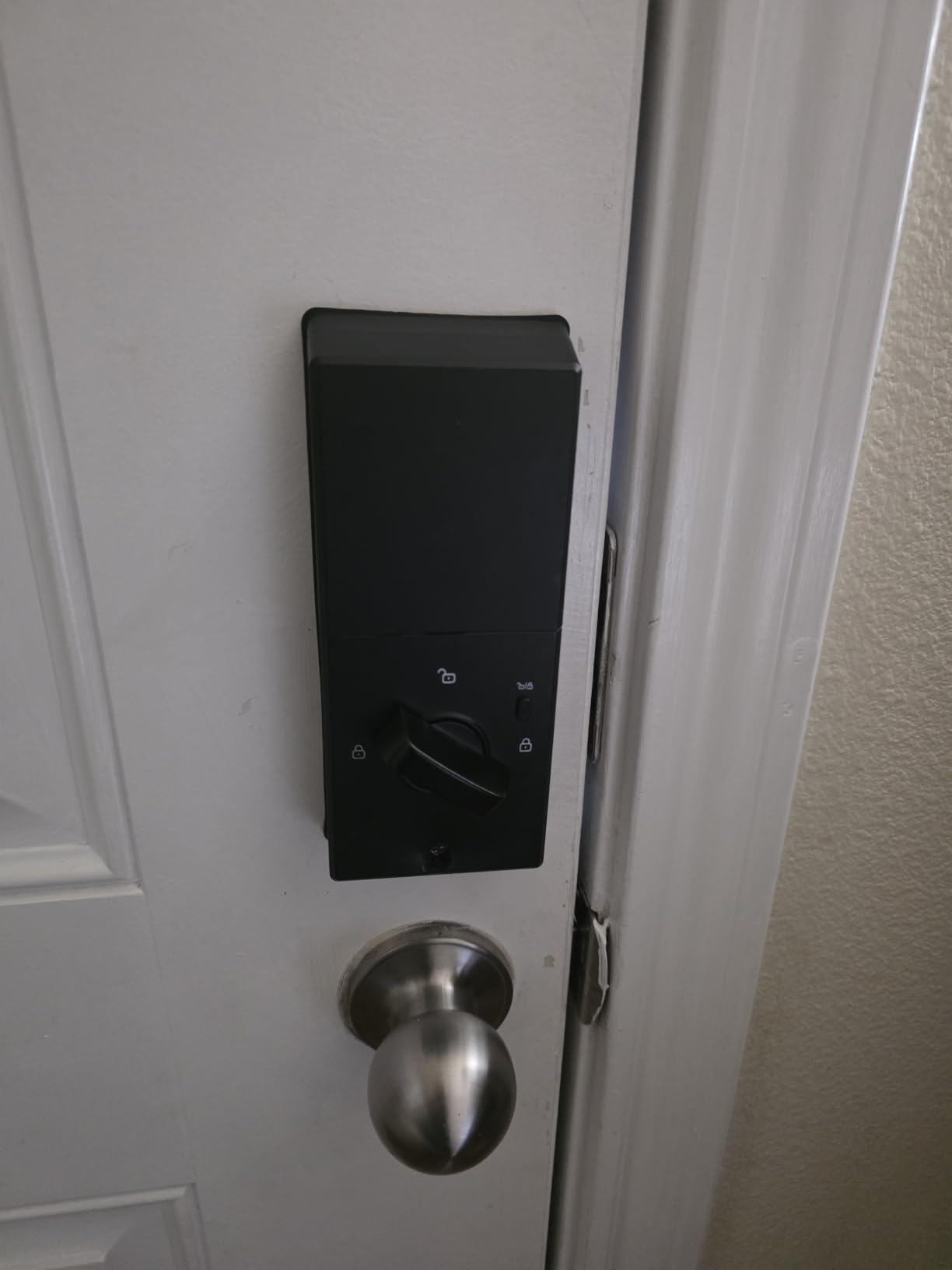
The one-touch lock needs a held button rather than a single press, which feels slower than competitors when you are carrying a toolbox. The bolt also runs a short repositioning motion before it actuates, so neither lock nor unlock is instant.
Some door thicknesses required owners to order a new mounting screw, so check the screw length against your door before you start. There is no fingerprint reader despite how the category is often marketed.
Who the Zowill set suits best
New garage door installs and replacements where a matched handle set is part of the job anyway. The set includes the deadbolt, two lever handles, two standard keys, a latch and a strike plate.
Mute mode is genuinely useful here, since a keypad that beeps in a garage at 6am is a nuisance for early-start households, and the backlit keypad handles a dark entry.
Who should pass on the Zowill set
Doors where you already have good lever hardware, since the included handles would be wasted. If you only need a deadbolt, the simpler bare deadbolt models are a better fit.
Anyone expecting biometric entry or app control will not find either here. It is a well-made mechanical keypad lock with extra hardware, not a connected device.
9. Bravex 100% Mechanical Keypad Deadbolt: Best Battery-Free Lock for a Garage
Bravex Keyless Entry Keypad Deadbolt Door Lock 304 Stainless Steel Sabbath Lock 100% Mechanical Shabbos Lock- No Risk of Low Power
100 percent mechanical operation
304 stainless steel body
4-8 digit code any entry order
Fits 1.38 to 1.96 in doors
Pros
- No batteries so no lockout risk
- 304 stainless steel resists prying
- Code works in any entry order
- Handles any door swing direction
Cons
- No auto-lock so relocking is manual
- No one-time codes or access logs
- Marketed for observance use cases
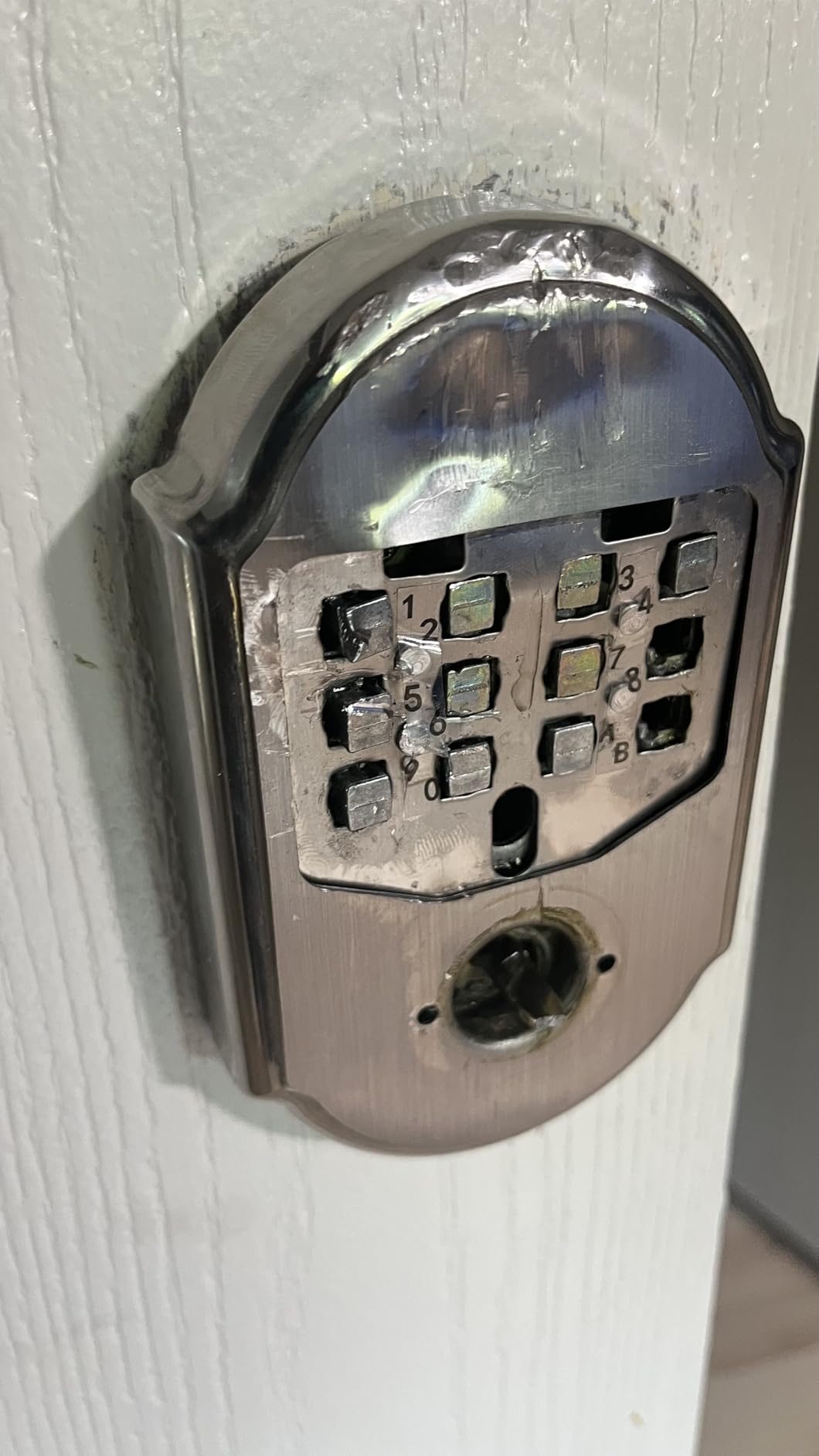
Everything else in this roundup needs batteries, and batteries are the number one complaint in garage lock forums. This one has none. It is a fully mechanical push-button lock with a 304 stainless steel deadbolt body, a passcode or a key to operate, and no electronics anywhere in the chain.
The code is 4 to 8 digits with no repeats, and it works in any entry order, so nobody has to remember which digits go first. It fits standard prepared doors up to a 2-1/8 inch bore and 1.38 to 1.96 inch thickness, on either door handing and either swing direction.
Locksmiths recommend exactly this approach when battery reliability is the deciding factor. The reasoning is simple: a lock with no power source cannot fail because of a power source, and in an unheated garage at minus 20 degrees that is worth a great deal.
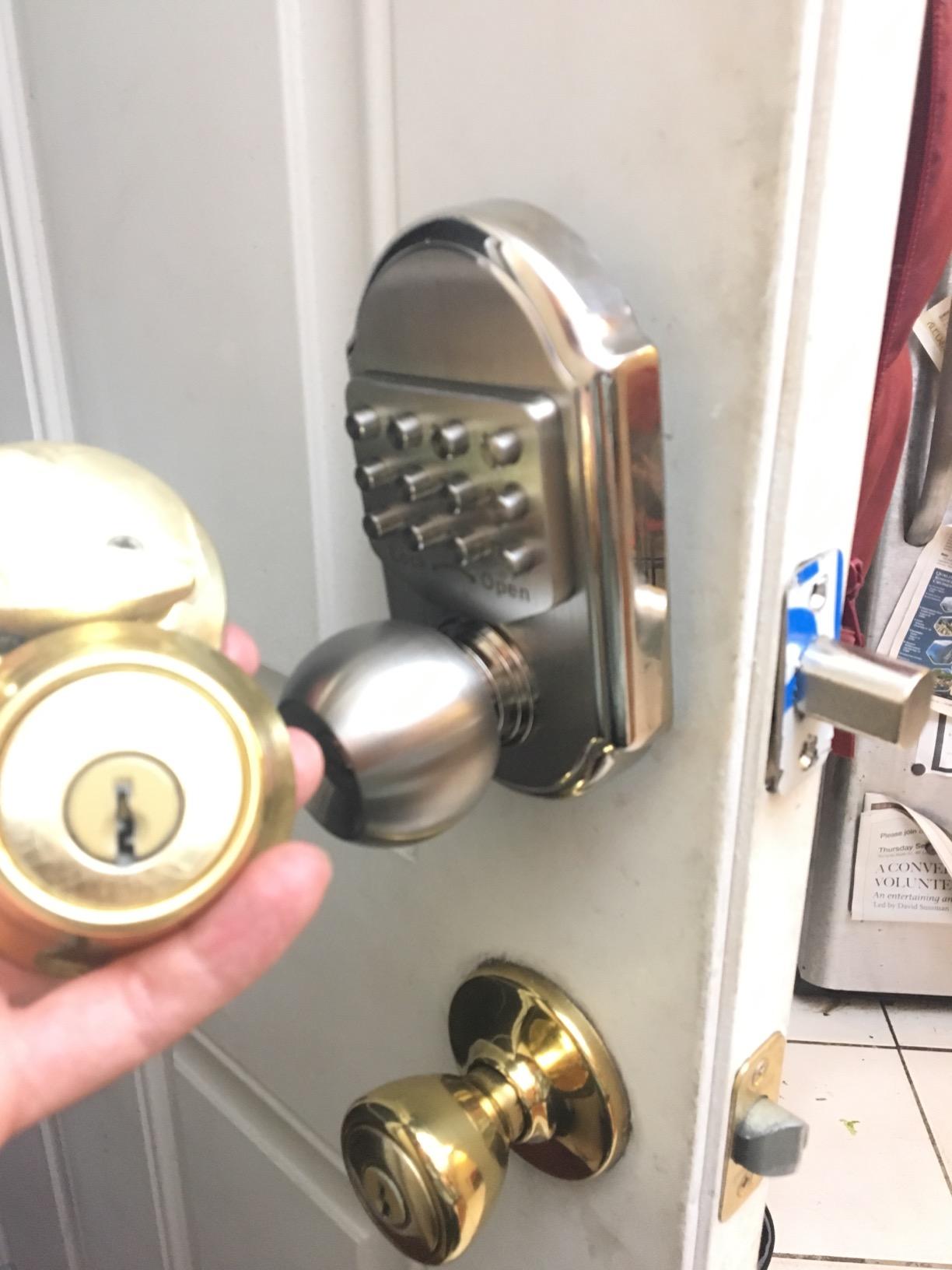
The trade-offs are real. It does not auto-lock, so you must manually re-lock or re-set the code every time, and you get no one-time codes, no scheduling, no activity log and no notifications. There is also no way to give someone temporary access and take it back afterwards.
Its listed use cases skew toward gate and room locks rather than primary entry doors, and it is marketed around Sabbath and holiday observance, which narrows who it is aimed at. If you need revocable contractor access, this is not the tool.
Who the Bravex suits best
Sheds, gate-side doors, workshops and any garage entry where the door is opened rarely and battery anxiety is the deciding factor. The stainless body also handles unheated conditions without a battery spec sheet.
It suits anyone who wants one code for the household rather than a code per person, and who is fine re-locking by hand each time.
Who should pass on the Bravex
Households that need to grant and revoke access remotely, and anyone whose main goal is to stop the door being left open. Without auto-lock, a garage door in winter is a door that is regularly left unlocked.
It is also a poor primary entry lock for a house where the garage is the target, because there is no record of who came through and no attempt limiting after repeated wrong codes.
10. Kwikset SmartCode 260: Best Keypad for Rekeying to Your Existing Keys
Kwikset SmartCode 260 Keyless Entry Electronic Keypad Deadbolt Door Lock
Grade 2 BHMA certified
Up to 50 user codes
SmartKey self re-keying
4 AA for 12 months
Pros
- Grade 2 BHMA certification
- SmartKey re-keys to your house keys
- 50 user codes plus 10 one-time codes
- 12 month battery life
Cons
- Written instructions are hard to follow
- Programming feels non-intuitive
- One report of internal bolt binding
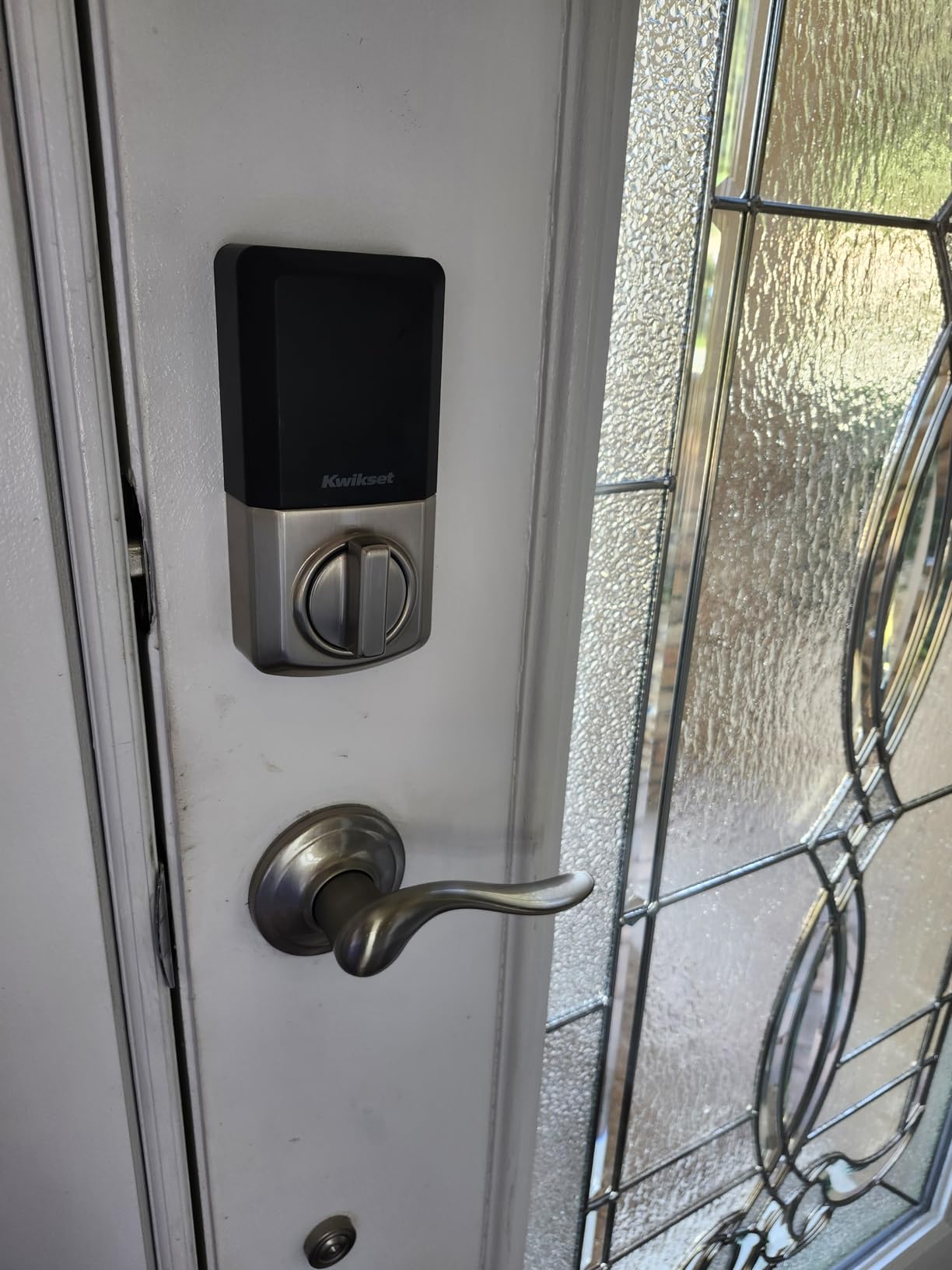
The SmartCode 260 is the answer if your house already runs on Kwikset cylinders and you do not want a new key. SmartKey lets you re-key the lock to any KW1 key yourself in seconds, so your garage door joins your existing keyway instead of creating a fifth key to track.
It is also the second-highest certified lock here. Grade 2 BHMA certification covers security, durability and finish, and Kwikset rates it up to 2.5 times stronger than a Grade 3 set. That puts it in the same tier as the Schlage BE365.
Code capacity is the standout number: up to 50 user codes and 10 one-time codes, with a single programming code. Auto-lock intervals can be set to 30 seconds, 1, 3, 5 or 10 minutes, and an intrusion alert locks the keypad for a minute after three wrong entries.
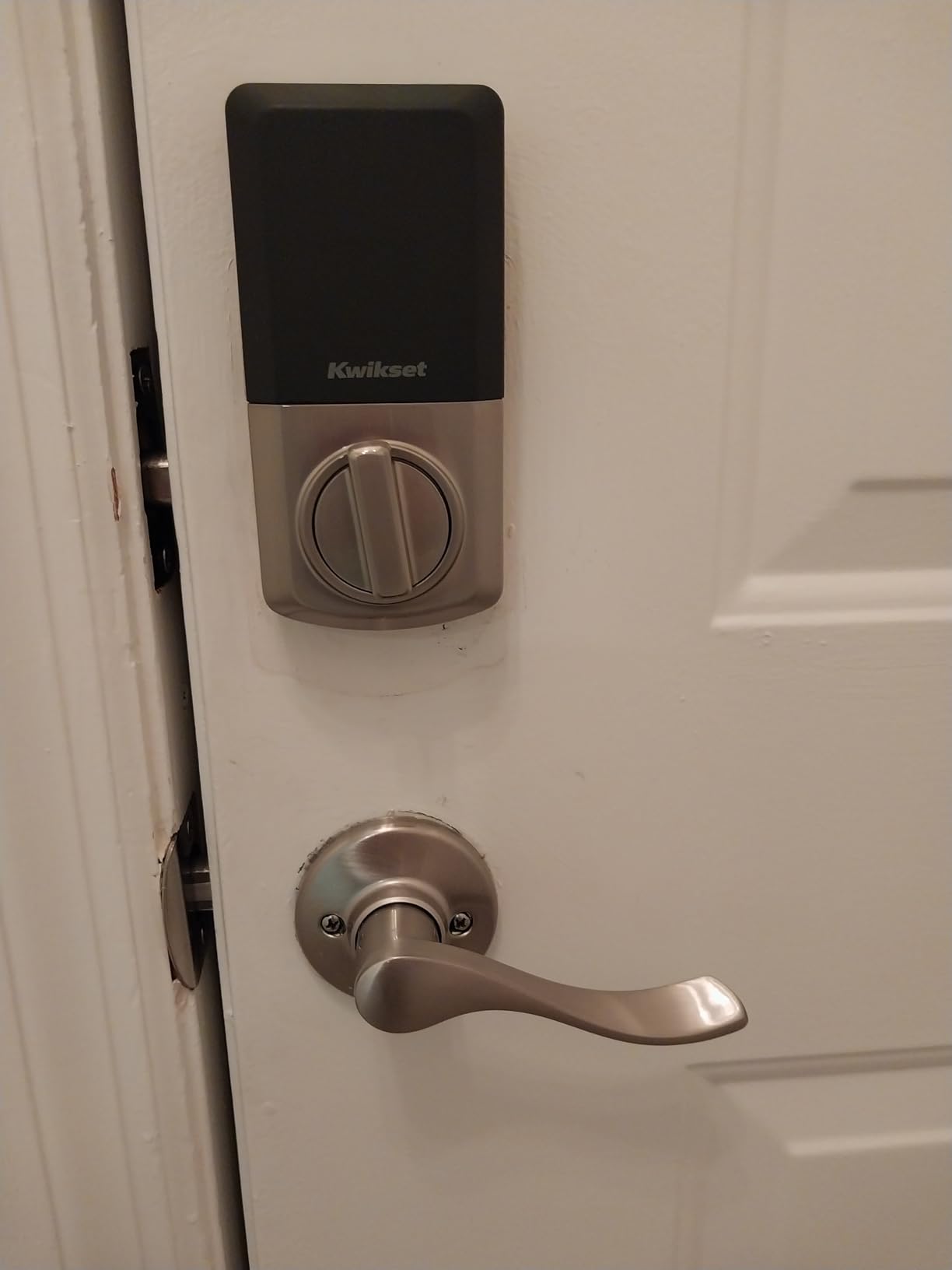
The written instructions are difficult to follow and do not explain how to change the door handing, and programming feels non-intuitive even though it is well documented. The BILT 3D interactive install guide is the route most owners recommend, so have your phone ready during the install.
There is one durability report describing the deadbolt binding internally every few weeks until the lock is opened and repositioned. A separate practical note: with auto-lock on, you need to remove a battery to leave the door open for an extended period, which matters if you are using the garage as a workspace.
Who the SmartCode 260 suits best
Households already on Kwikset keys, landlords and HOA situations where rekeying to a common keyway is a genuine convenience. It means one key opens the front door and the garage side door.
Large families and shared houses are well served by 50 user codes, and the intrusion alert and vacation mode give more control than most standalone locks at this tier.
Who should pass on the SmartCode 260
Anyone who wants remote unlock, app management or notifications. There is no connectivity, and a Microban-treated keypad does not help in cold or wet conditions the way rubber keys or a physical key override do.
It is also not the pick for a door with a non-standard bore, since the strike and cross bore must match a standard residential deadbolt preparation.
11. Ulecoce U68 Fingerprint Keypad Lock: Best for Large Households and Many Users
Ulecoce U68 Fingerprint Keypad Deadbolt with Knob Set, Matte Black
Fingerprint unlock in 0.3 seconds
Up to 512 code and print entries
App control with access logs
5 backup keys included
Pros
- Largest capacity at 512 entries
- App control with real-time access logs
- Five physical backup keys included
- IP54 weather resistant
Cons
- Bluetooth limits code changes to about 5 meters
- Voice assistants need a separate gateway
- Auto-lock timing catches people out
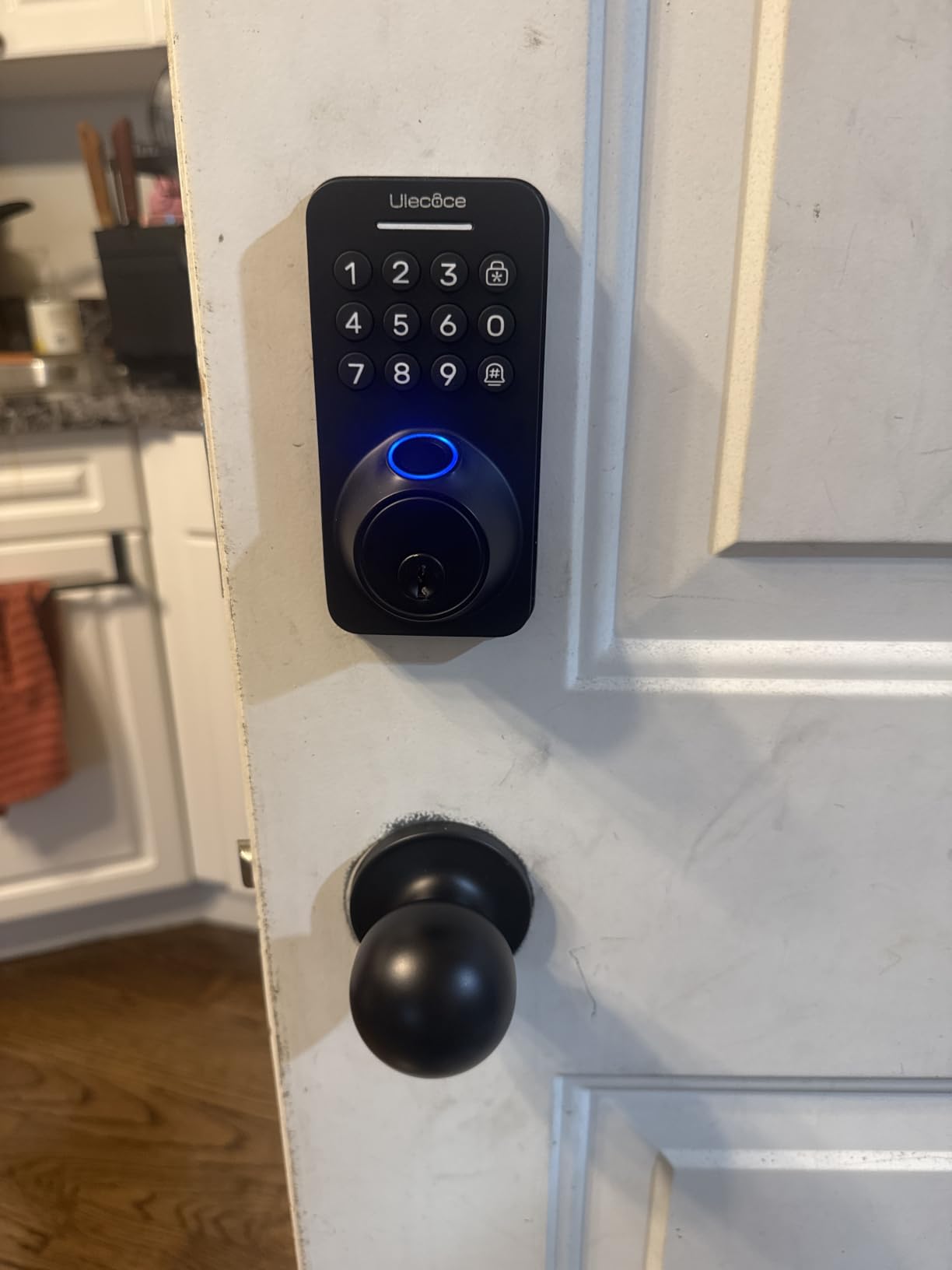
Where every other fingerprint lock here tops out around 20 prints, the Ulecoce U68 stores up to 512 fingerprint and keypad entries. For a big house, a shared rental, a small business workshop or a house with a contractor rotation, that ceiling is the reason to look at it.
Fingerprint recognition runs in as little as 0.3 seconds and unlocks within a second at a 99.99 percent rate using a self-learning algorithm. The app adds temporary passwords, remote unlock, real-time access logs and password management, which is a real feature rather than a marketing line.
It includes five backup keys and two door knobs for inside use, auto-lock adjustable from 5 to 60 seconds with one-touch lock buttons on both sides, and an IP54 weather-resistant build. The warranty is three years, the longest in this group.
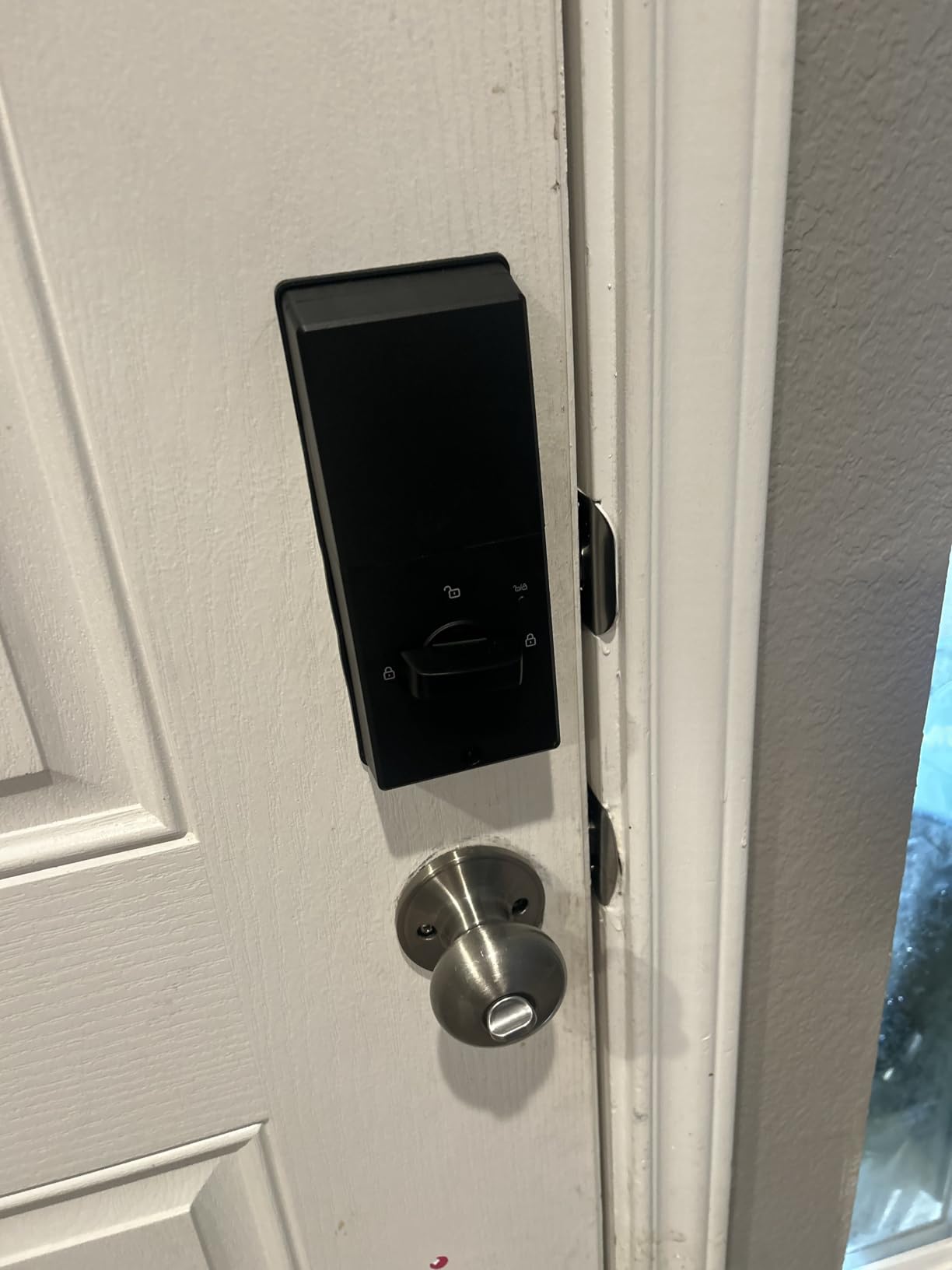
The important catch is that the app-based features run over Bluetooth, not Wi-Fi. Creating or changing codes has to happen within about 5 meters of the lock, which means walking out to the garage with your phone every time you add someone. That is a meaningfully different experience from the Schlage Encode or the Philips.
Alexa and Google Assistant support requires a separately purchased gateway, and the auto-lock is short by default, so the door has to be pulled fully shut or it will lock while still standing open. One review also notes the connector between the two escutcheons was hard to press together during setup.
Who the Ulecoce U68 suits best
Large households, multi-generational homes and small shared buildings where the number of people needing entry is the main constraint. Twenty fingerprints is not enough for some families; several hundred is comfortable.
Anyone who wants an access log to answer the question of who came into the garage, and who can accept walking out to the door to manage codes.
Who should pass on the Ulecoce U68
Detached garages and anyone who needs codes managed from the office. Bluetooth range of about 5 meters is a hard limit, not a setting, and it makes the app features far less useful than a Wi-Fi lock.
It is also not for doors with a non-standard bore or thickness outside the standard range, and the fingerprint reader shares the same wet-hand sensitivity as the other biometric models here.
12. Philips 4200 WiFi Keypad Deadbolt with Handle: Best App-Controlled Lock for a Garage Near the Router
Philips WiFi Keypad Deadbolt with Handle, Built-in WiFi, APP Remote Control
Built-in 2.4GHz WiFi
0.3 second fingerprint unlock
Auto-lock 0 to 180 seconds
Fits 1-3/8 to 1-3/4 in doors
Pros
- Connects to WiFi with no hub
- App control with access history
- Matching door levers included
- Auto-lock delay finely adjustable
Cons
- Must sit within about 33 ft of the router
- Only fits 1-3/8 to 1-3/4 in doors
- Alkaline batteries only
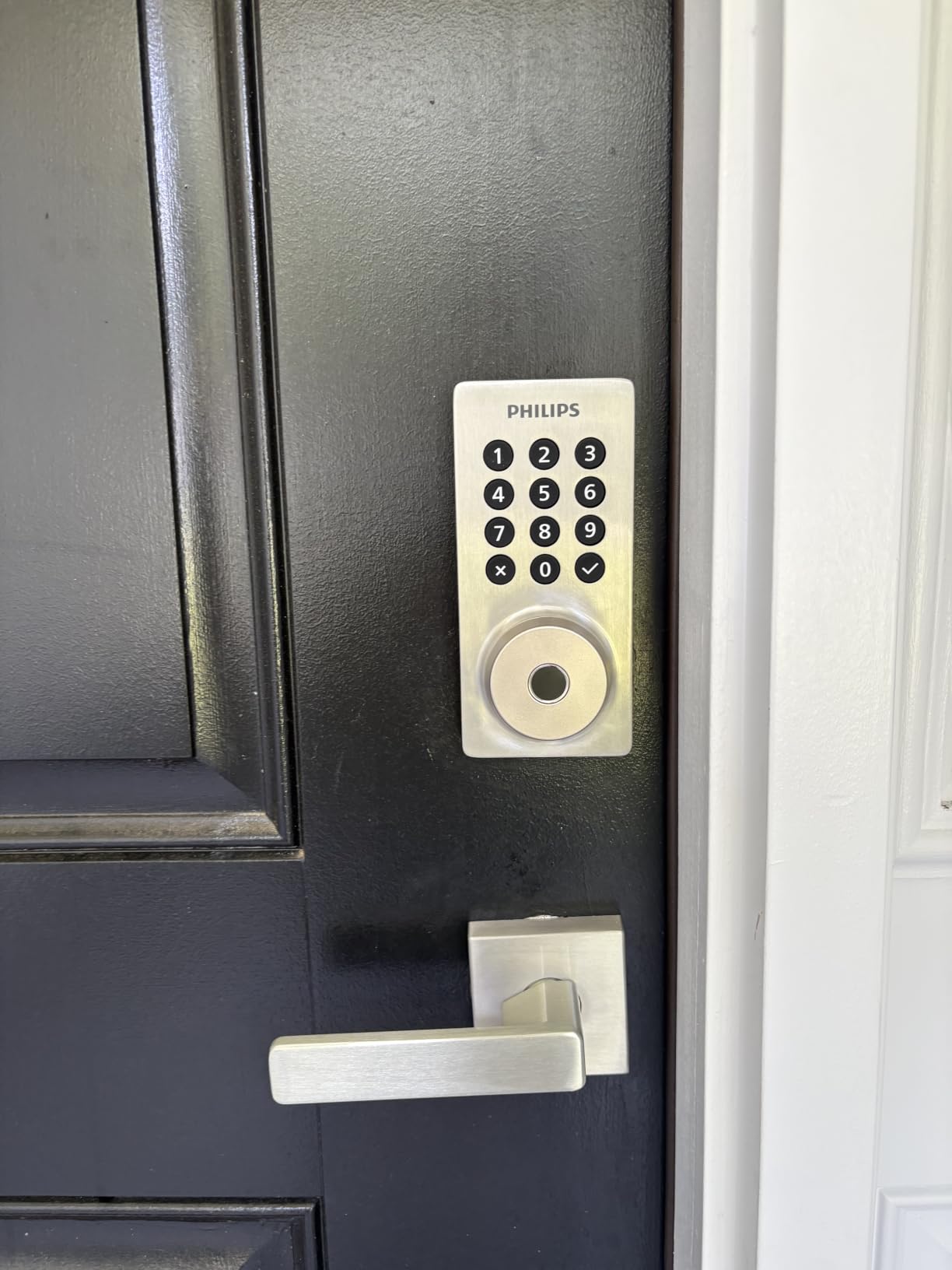
The Philips 4200 connects straight to a 2.4GHz network with no hub or bridge, and the app handles remote lock and unlock, code and fingerprint management, status checks and access history. It supports permanent, one-time, periodic and recurring PIN codes, which is the most flexible code scheduling in this roundup.
Fingerprints unlock in about 0.3 seconds and several can be stored, and Alexa plus Google Assistant are supported. The auto-lock delay is adjustable from 0 to 180 seconds and is set in the app, and matching door levers are included so the set is complete.
Battery life is up to six months with a low-battery alert, which is a shorter interval than the standalone 4-AA locks manage. One important constraint: it takes 1.5V alkaline batteries only, so rechargeable or lithium cells will not work.
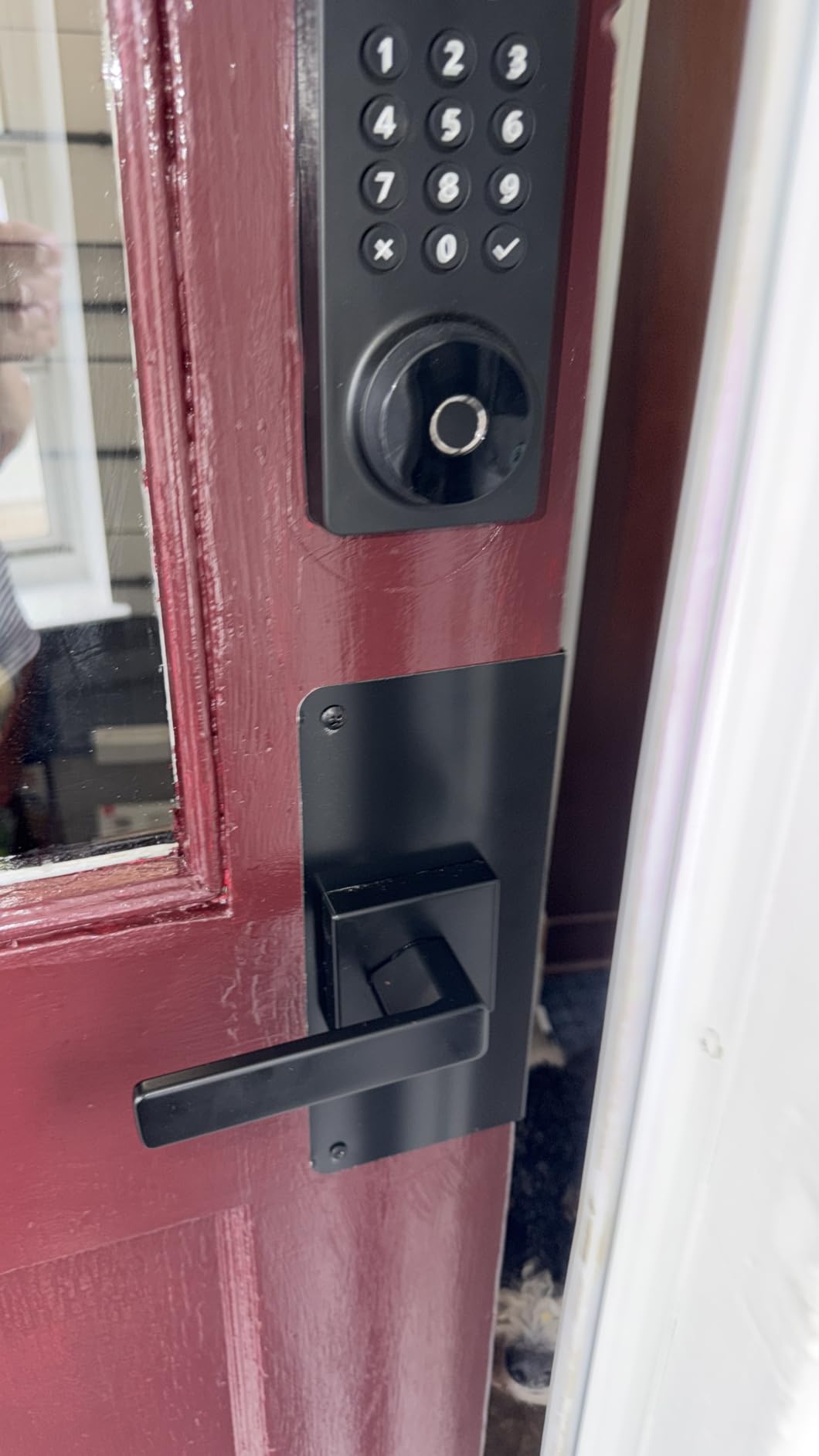
Range is the number to check. The lock should sit within about 33 ft of the router for a stable connection, which is a real constraint in a detached garage or a long driveway where the router is inside the house. Door thickness is also limited to 1-3/8 to 1-3/4 inches.
The door ships configured for a right-opening door, and changing to the other direction needs a reset procedure after install. Overtightening the screws can also cause difficulty locking or unlocking, so snug is the target.
Who the Philips 4200 suits best
Attached garages within about 33 ft of the main router, and households already running Alexa or Google Home. Recurring and periodic codes are useful for a cleaner, a dog walker or a short-let arrangement that repeats weekly.
It is a good pick if you want a fingerprint, a keypad and an app as three independent ways in, and if the included lever handles suit the door.
Who should pass on the Philips 4200
Detached buildings, sheds and anything beyond the router range, because a smart lock with an unstable connection is worse than a good standalone keypad. Thick doors over 1-3/4 inches also fall outside the fit range.
Anyone planning to use rechargeable or lithium cells should pick a model that accepts them, since this one is alkaline-only and mixing cell types is a common cause of low-battery warnings.
How to Choose a Keypad Deadbolt for a Garage
The decision order matters here. Decide first whether you need connectivity at all, then confirm the lock will physically fit your door and your climate, and only then compare features. Most returns in this category are fitting problems, not preference problems.
Standalone keypad or connected smart deadbolt
This is the first fork in the road, and for a garage the answer is often standalone. A lock with no radio cannot fail to connect, cannot lose its network link after a router reboot and cannot leave you locked out because a hub went offline. It also means codes are added at the keypad by hand, which is slower for a large household but never unavailable.
Connected models earn their place when your garage is attached, inside Wi-Fi range, and you want remote unlock, notifications and a lock history. The Schlage Encode has built-in Wi-Fi with no hub, and the Philips 4200 does the same on 2.4GHz. The Ulecoce U68 looks connected but runs on Bluetooth, so treat it as a near-field app rather than a remote one.
Our broader picks on front-door hardware are covered in our guides to the best smart deadbolts and the best keypad door locks, both of which apply to sheltered entries rather than garages.
Cold weather, battery life and lockout prevention
Battery anxiety is the single most repeated complaint about keypad locks in garages, and the forum consensus is that unheated spaces drain cells far faster than the printed spec suggests. Two things reduce the problem: a single 9V battery rather than four AAs, and a lock with a physical key cylinder so a dead battery is an inconvenience rather than an emergency.
The Schlage BE365 runs on one included 9V for up to two years, and its outside escutcheon is rated from -35C to 66C. The Veise RZ-A has the widest published range here at -35F to 160F, and the Veise KS02A is close behind at -31F to 158F with 365+ days on four AA.
For lockout prevention, make three checks before you walk away from the install. Confirm the key cylinder works from outside with a code-entered lock. Confirm the interior thumbturn or knob works without a code. And note which model uses a backup contact, because the Philips unit accepts alkaline cells only and the Veise and TEEHO models do not include batteries in the box.
Security grades, key override and rekeying
ANSI and BHMA Grade 1 is the highest residential rating, Grade 2 is a strong second and Grade 3 is the entry tier. Most of the locks here are Grade 3; the Schlage BE365 and the Kwikset SmartCode 260 are the two Grade 2 models, and the Schlage Encode carries BHMA certification as well. For a garage that is attached to a house, Grade 2 is the sensible floor.
Key override is non-negotiable in our view. Every product in this roundup includes at least one physical key, and the Schlage Encode ships with one as well. Keyless-only smart locks exist and we do not recommend them for a garage you cannot reach from inside.
Rekeying is where the Kwikset and KW1 locks stand apart. The Kwikset SmartCode 260 uses SmartKey to re-key to any KW1 key, and the Amazon Basics lock uses the same keyway, so both can be matched to existing house keys. If your house already runs on one brand of cylinder, matching it saves you rekeying a whole door set. If you do not already own a matched set, our test-and-rekey walkthrough is worth reading before you buy.
Door thickness and bore size: measure before you buy
Many garage side doors are 1-3/8 inches thick rather than the standard 1-3/4 inch residential thickness, which is the single most common reason a deadbolt will not fit. Measure the door thickness and the bore diameter before you order anything.
Bore sizes split the group. The TEEHO TE001 and the Veise KS02A fit a 2-1/8 inch, or 54mm, bore only and will not cover 38mm holes, so an existing residential deadbolt opening may need re-boring. The Veise RZ-A bore can run roughly 5mm larger than standard and may need enlarging. The Schlage Encode and Amazon Basics fit the standard 1-3/8 to 1-3/4 inch preparation.
Backset matters too. The Schlage Encode takes either a 2-3/8 or a 2-3/4 inch backset, which covers most standard doors. Measure from the edge of the door to the centre of the bore before you commit to any model.
Smart home compatibility in a garage
Matter and Thread are worth mentioning but neither is a deciding factor in this roundup, because none of these twelve locks lists them. What matters is which network each lock joins: the Schlage Encode and the Philips 4200 join Wi-Fi directly and need no extra hardware, while the Ulecoce U68 needs a separately sold gateway for voice assistants.
Also think about whether your garage door opener is a separate system. A keypad deadbolt on the personnel door does not control the overhead door, and the overhead door keypad does not lock the side entry. If you want the two linked, that is a hub and automation question rather than a lock question, and it is worth settling before you pick a keypad.
Installing a Keypad Deadbolt on a Garage Side Door
Most of the locks here are retrofit, meaning a screwdriver and about 15 to 30 minutes, provided your door already has a standard deadbolt opening. Here is the order that avoids the problems owners actually report.
1. Measure the door thickness, the bore diameter and the backset, and compare them against the lock’s fit range before you remove anything.
2. Check the door swing and the existing strike alignment. A swollen or binding door that a mechanical bolt handles fine can make a motorized deadbolt hang up repeatedly.
3. Remove the old deadbolt, keep the existing strike plate if it is solid, and check that the new spindle and connecting bolts will pass through the door.
4. Fit the new latch and confirm the bolt extends smoothly with the door closed before you mount the escutcheons.
5. Mount the inside and outside escutcheons, keeping both perfectly vertical. Two models here will not function at all if the panels are tilted at this step.
6. Tighten the screws snug rather than hard, since overtightening is a reported cause of bolts binding or failing to throw.
7. Install the batteries, then change the default programming code and delete the factory user code before you use it.
8. Program your own codes, then test the key override and the interior thumbturn from inside the garage with the door open.
9. Fit long security screws through the strike plate into the door frame stud if your door has one, which materially changes how long the lock resists a kick-in.
10. Test the door swinging and latching several times. If a motorized model struggles, adjust the strike rather than the motor.
Call a locksmith rather than forcing it if the bore has to be enlarged, if the door is warped enough that the strike cannot be made to line up, or if you are cutting into a steel-core garage door. Those three situations turn a 20 minute job into a repair, and a shop will usually do both in one visit. If the lock is going on a rental, check with the landlord first, since cylinder standards are often specified in the lease.
Frequently Asked Questions
Which keypad deadbolt is the most reliable?
In this roundup the most reliable pick for a garage is the Schlage BE365 Camelot. It carries Grade 2 and BHMA AAA certification, runs on a single 9V battery rated for up to two years, and uses a manual deadbolt mechanism where the keypad only releases the lock rather than driving a motor. That design means a swollen or misaligned strike cannot cause a jam. Owners on locksmith forums routinely report the BE365 family still running after a decade. The Kwikset SmartCode 260 is the closest alternative, also Grade 2 certified, with 50 user codes and 12 months on four AA batteries.
Is Schlage or Kwikset better for a garage keypad deadbolt?
For a garage, Schlage is the better overall choice because of the BE365 and Encode: higher certified grade, wider operating temperature on the outside escutcheon, and a mechanical deadbolt that resists motor jamming. Kwikset wins on one specific feature, SmartKey self re-keying, which lets the SmartCode 260 match your existing KW1 house keys in seconds instead of rekeying a whole door set. If you already run Kwikset cylinders throughout the house and want one key everywhere, the SmartCode 260 is the more practical choice. If you are starting fresh on a side door, the Schlage BE365 is the pick.
What are the disadvantages of keypad door locks?
The main drawbacks are battery dependence, fitting constraints and the loss of manual features. Batteries fail, and in an unheated garage they drain faster than the printed specification suggests, so a physical key cylinder matters more here than on a front door. Several models are limited to a 2-1/8 inch bore and will not fit a 38mm opening without re-boring, and the Schlage Encode and Philips models are limited to doors between 1-3/8 and 1-3/4 inches thick. Touchscreen keypads miss entries with wet or gloved hands, and fingerprint readers fail in cold and wet conditions. Standalone models also have no remote access, no lock history and no way to revoke a code remotely.
What is the best lock for a garage door?
A garage has two separate openings that need different hardware. The overhead door is secured by a rolling code opener system, where the best protection is a quality opener with a rolling code keypad rather than a deadbolt. The personnel side door needs an ANSI or BHMA Grade 2 or 3 deadbolt, and a keypad deadbolt is the best upgrade there because it removes hidden-key risk and allows revocable codes for contractors. Most home breaches that look like garage entries come through that side door, not the overhead one. If you can only replace one thing, replace the side door lock.
Do keypad deadbolts work in cold weather garages?
They do, but model choice matters. The Schlage BE365 outside escutcheon is rated from -35C to 66C, the Veise RZ-A operates from -35F to 160F and the Veise KS02A from -31F to 158F, so all three are specified for unheated spaces. Cold reduces battery capacity, which is why a single 9V battery beats four AAs in freezing conditions, and why the fully mechanical Bravex lock has an appeal for the coldest locations. Fingerprint readers are the feature most likely to fail in the cold, so keep a physical key with any biometric model.
The Bottom Line on the Best Keypad Deadbolts for Garages
After working through all twelve, the Schlage BE365 Camelot is the keypad deadbolt we would put on a garage personnel door. It holds the highest certified grade in the group, runs on one 9V battery for up to two years, works in sub-zero temperatures outside and has a key cylinder for when things go wrong. It is also the model owners describe as still going after a decade of service.
Buy the TEEHO TE001 if you want the most capability per dollar and can confirm your door has a 2-1/8 inch bore. Buy the Schlage Encode only if your garage is attached and inside Wi-Fi range, and only if remote unlock and a code log are worth the shorter battery interval. For the coldest detached garages, the Veise RZ-A has the widest published temperature range, and for a garage where battery failure is simply unacceptable, the Bravex mechanical lock removes the problem entirely.
Whichever you choose, measure the door before you order, confirm the physical key works from outside, and confirm the interior thumbturn works before you close the door for the first time. Those three checks prevent almost every lockout we hear about.