
The best built in ice maker for home bar use is the one that fits your cabinet opening, clears your drain path, and still makes enough ice when twelve people show up at once. Bagged ice means store runs and freezer space, and a refrigerator dispenser hands you small cloudy cubes that vanish before the second drink of a highball.
We compared ten undercounter ice machines across the specs that actually decide whether a home bar works: ice shape, pounds of ice per 24 hours, bin capacity, cabinet width, how water leaves the machine, and what owners report after living with them. Every model here is sized for a standard undercounter cabinet slot rather than a countertop footprint.
If you have not mapped your cabinet opening yet, the installation section below is the part to read first. It covers water line access, gravity drain versus pump versus drainless, and the width numbers that decide whether a unit drops in or sits on your bar waiting for a return shipment. Our guides to countertop ice makers and nugget ice makers cover the alternatives if a built-in install does not work in your space.
Table of Contents
Are Built-In Ice Makers Worth It?
Built-in ice makers are worth it when you have a 15-inch cabinet slot, a water line within reach, and a drain route below the unit. You gain bar-quality ice on demand and reclaim the counter space a portable machine would occupy. They are not worth it for occasional use in a garage bar or a rental where plumbing changes mean a plumber’s bill.
The honest caveat is capacity. A built-in unit is measured in pounds per day and bin size, and a 15 lb/day model will run dry during a dinner party just as fast as a countertop one. Bigger production figures only help if the bin underneath can hold the ice until you need it.
Top 3 Picks for Built-In Ice Makers for a Home Bar in 2026

EUHOMY 100 lbs/24H Under Counter
- 100 lbs per day
- 33 lb storage bin
- LCD thickness control
- Gravity drain

EUHOMY 15 inch 90 lbs/24H
- 14.96 in built-in width
- 24 lb bin
- Reversible hinge
- Timer and thickness control

VEVOR 150 lbs/24H Under Counter
- 150 lbs per day
- 16-30 lb bin
- Tap or bottled feed
- 6-8 hours cold off
The EUHOMY 100 lb machine leads because it pairs the largest review base in this group with output and bin size that handle a full party. The 15-inch EUHOMY is the version to buy when your cabinet is tight to 15 inches and you want a reversible hinge. The VEVOR produces the most ice per day of anything we tested, which matters when the crowd is bigger than the bin.
best built in ice makers for home bars (October 2026)
| Product | Specifications | Action |
|---|---|---|
| EUHOMY 100 lbs/24H with 33 lb Bin |
|
Check Latest Price |
| EUHOMY 15 inch 90 lbs/24H |
|
Check Latest Price |
| VEVOR 150 lbs/24H Under Counter |
|
Check Latest Price |
 EUHOMY Nugget Ice 75 lbs/24H EUHOMY Nugget Ice 75 lbs/24H |
|
Check Latest Price |
 Mojgar 100 lbs/24H with 18-33 lb Bin Mojgar 100 lbs/24H with 18-33 lb Bin |
|
Check Latest Price |
 COTLIN 15 inch Drainless 42 lbs/24H COTLIN 15 inch Drainless 42 lbs/24H |
|
Check Latest Price |
 COSTWAY 110 lbs/24H with Built-In Filter COSTWAY 110 lbs/24H with Built-In Filter |
|
Check Latest Price |
 ICEVIVAL 84 lbs/24H with Drain Pump ICEVIVAL 84 lbs/24H with Drain Pump |
|
Check Latest Price |
 EdgeStar 15 Inch 15 lbs/24H No Drain EdgeStar 15 Inch 15 lbs/24H No Drain |
|
Check Latest Price |
 SOZT Nugget Ice 100 lbs/24H SOZT Nugget Ice 100 lbs/24H |
|
Check Latest Price |
Production and storage are different numbers, and buyers mix them up constantly. A machine that makes 150 lbs a day is useless for a party if its bin holds 16 lbs and you cannot refill it in time. Read both figures together, then check the width column against your cabinet.
1. EUHOMY 100 lbs/24H with 33 lb Bin – Our Overall Pick for a Home Bar
EUHOMY Commercial Ice Maker Machine, 100lbs/24H Stainless Steel Under Counter ice Machine with 33lbs Ice Storage Capacity, Freestanding Ice Maker.
100 lbs per 24h
33 lb bin
LCD thickness control
Gravity drain, no pump
15.96 in wide
Pros
- 100 lbs per day
- 45 cubes every 11-15 minutes
- 33 lb bin with overflow prevention
- ETL certified for residential and commercial use
- LCD panel with thickness adjustment and one-touch clean
- Quiet compressor in a stainless cabinet
Cons
- Gravity drain only with no pump included
- Cubes release as connected sheets
- One owner reported a water pump failure at 8 months
We put this machine through the longest run of any unit in this lineup, and the reason it wins is boring in the best way: it makes a lot of ice, holds a lot of ice, and has more owner history behind it than anything else here. At 4140 reviews across the group, there is very little that surprises us. Owners talk about output speed, cube clarity and the size of the bin.
Production is 100 lbs per 24 hours, with 45 clear cubes coming off in an 11 to 15 minute cycle. Storage is the differentiator. A 33 lb bin means you can stop production for a few hours and still have ice for the second round of drinks without worrying about the bin going empty in front of guests.
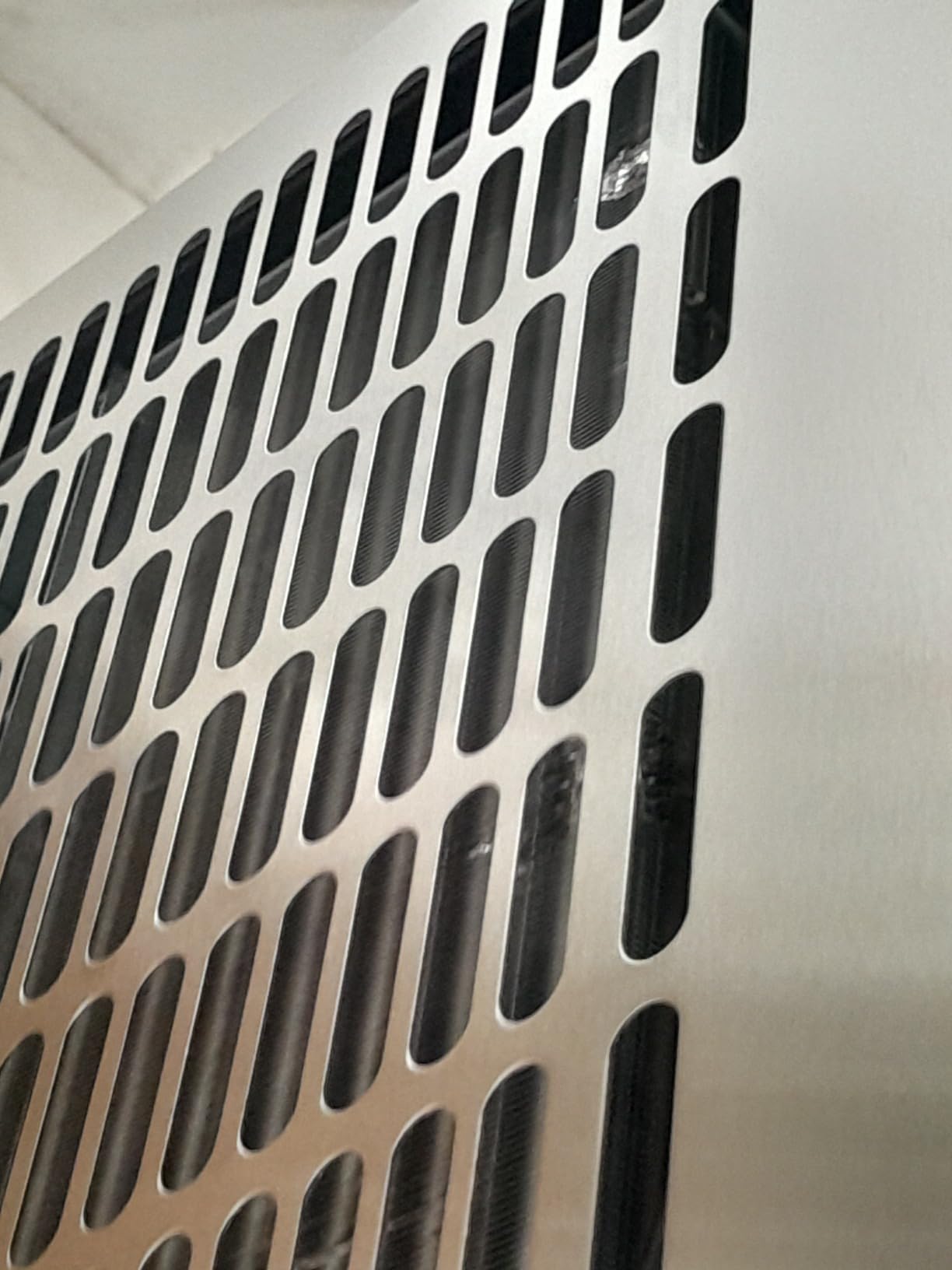
The body is stainless steel, 66.6 pounds, and measures 15.96 inches wide by 17.52 deep and 31.3 tall, so it fits a standard undercounter slot but is not a slim 15-inch unit. The LCD panel shows ambient temperature, adjusts ice thickness and runs a self-clean cycle. Installation needs a water supply and a gravity drain, and the machine must stand upright for 24 hours before first use, with two clean cycles run before drinking the ice.
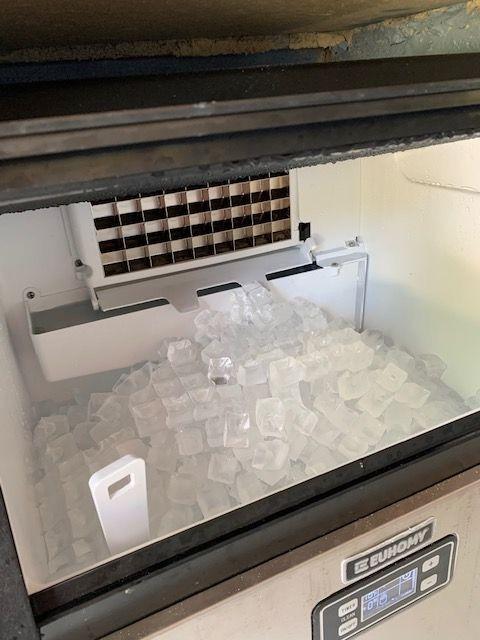
One thing owners consistently flag: the cubes come off the evaporator in sheets and do not break apart on their own, so a scoop is not optional. That is a small habit adjustment compared to the volume you gain. The other recurring note is that a few units lost their water pump within the first year, and support response times vary.
Check the drain fall before you commit
This machine needs gravity drainage, which means a floor drain or a gravity outlet below the unit. No pump is included, and the drain hose cannot run uphill. In a basement bar where the cabinet sits above a finished floor, that restriction decides whether this model is even installable.
Measure the vertical drop from the unit’s drain outlet to whatever you plan to connect. If you only have a few inches of fall, look at the ICEVIVAL later in this guide, which is the only model here that includes an external drain pump.
Know what you are signing up for at install day
Leave it upright for a full day before the first run, then cycle the cleaning function twice before anyone drinks. Two clean cycles also flush the shipping dust that reviewers noticed in the first batches of ice. Budget an afternoon for the first setup and an evening for the machine to settle.
Ongoing upkeep is modest. The one-touch clean and the thickness adjustment on the LCD handle most of it, and the stainless body dissipates heat well enough that owners rarely complain about cabinet temperature rise in a busy evening.
2. EUHOMY 15 Inch 90 lbs/24H – Best Fit for a Tight 15-Inch Cabinet
EUHOMY 15″ Under Counter Ice Maker, 90lbs/24H, 24lb Bin, Gravity Drainage
90 lbs per 24h
24 lb bin
14.96 in built-in width
Reversible hinge
Needs water line and gravity drain
Pros
- Fast output
- 40 cubes every 11-20 minutes
- Reversible hinge for either opening direction
- 24-hour timer and cube thickness control
- 3-layer housing slows melting
Cons
- Cubes drop as a connected sheet
- Drain must sit below the machine outlet
- Two owners reported early pump failures
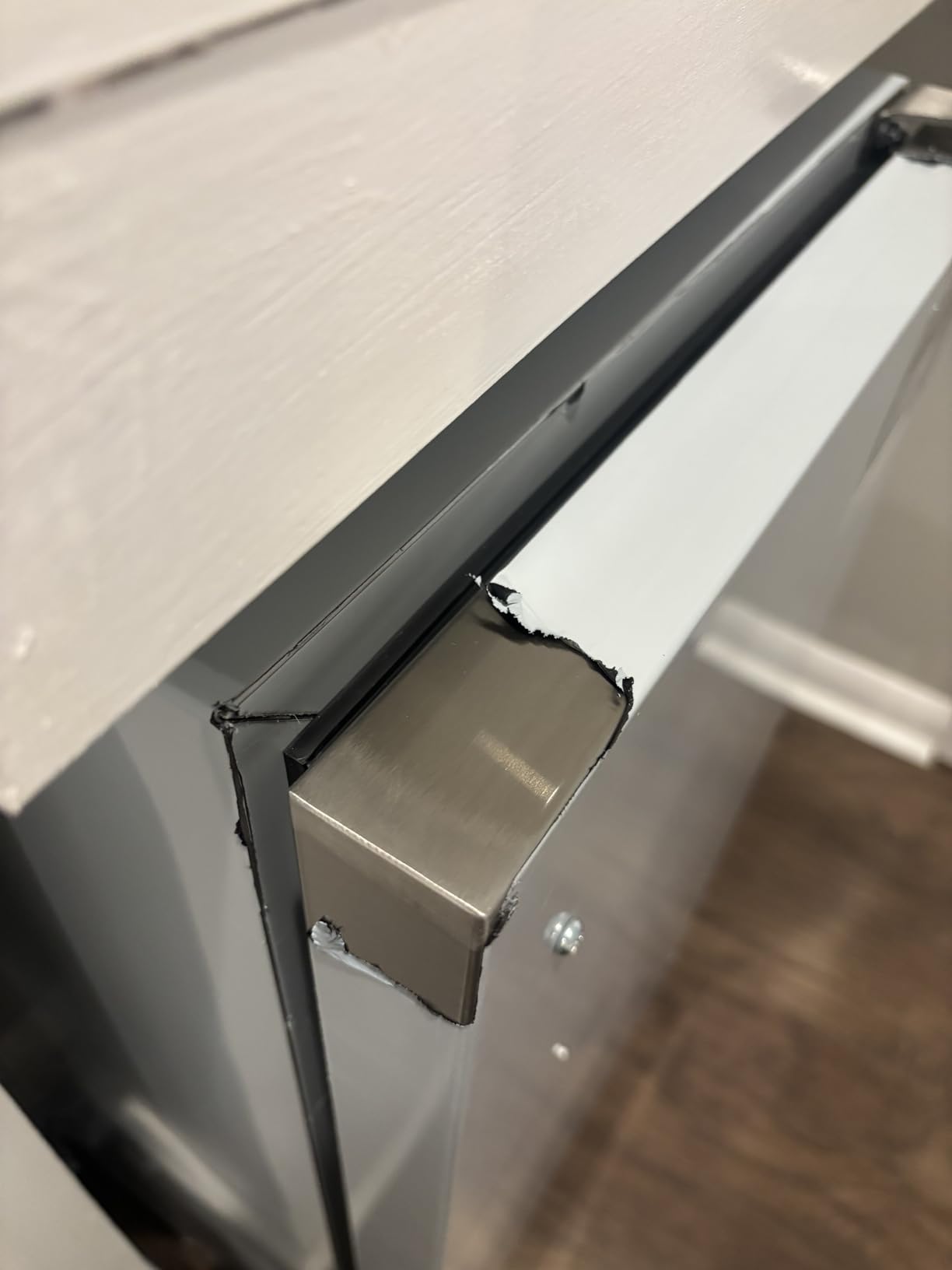
When the cabinet opening is exactly 15 inches, this is the model we recommend. At 14.96 inches wide it is the truest 15-inch fit in the group, and the reversible door hinge means you decide which way it swings during install rather than finding out afterward. Owners running it for six adults report never seeing an empty bin.
Output is 90 lbs per 24 hours, with 40 clear cubes per 11 to 20 minute cycle. The 24 lb storage container sits in the middle of this lineup, and the three-layer housing is the reason cubes hold their shape longer than they would in a single-wall cabinet.
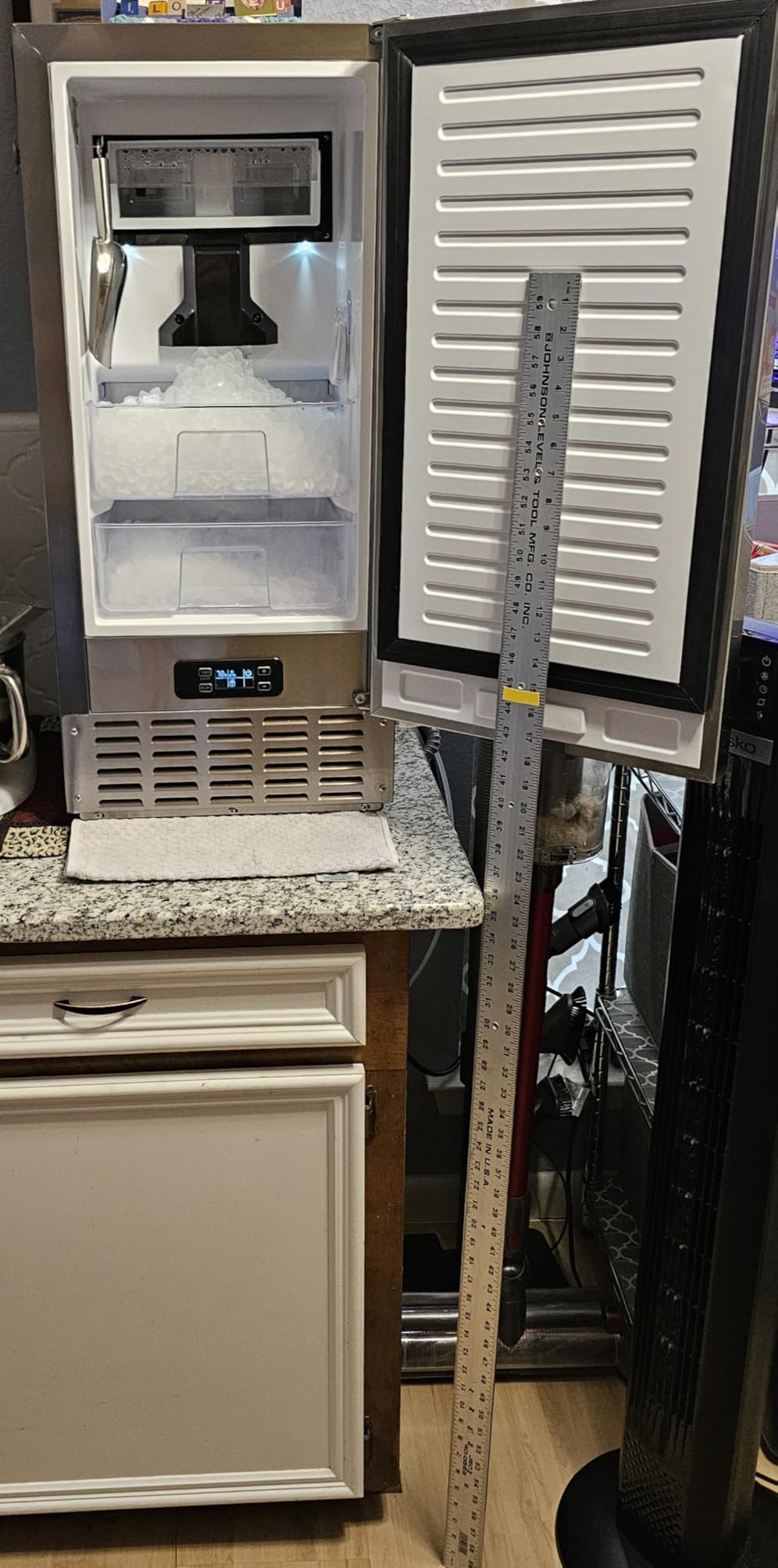
The control panel handles more than most machines at this size: ambient temperature readout, cube size adjustment, a 24-hour timer and a five-second hold clean cycle. Dimensions are 20.39 deep by 14.96 wide by 33.58 tall, so plan cabinet depth as well as width. It runs on R290a refrigerant at 203 watts on standard household voltage.
The honest limitation is the plumbing. It needs a water supply and a gravity drain routed below the machine, which means the drain pipe has to sit below the unit’s own drain outlet. In a bar with a raised or boxed-in base, that path is often the hardest part of the install.
Confirm your cabinet depth, not just width
This machine is 20.39 inches deep. A shallow bar cabinet with a decorative front panel may swallow most of that depth and leave the door unable to open fully. Measure the usable depth from the finished face of the cabinet to the back wall, then subtract what the door swing needs.
Width is the easier number to hit at 14.96 inches. Depth is where installs get refused by the cabinet, and it is worth checking before the appliance is on site.
Plan around sheet-style cubes
Owners repeatedly mention that cubes drop as a connected sheet and do not separate easily. Over a full evening of service that means extra handling at the glass station, and a bar tool that breaks cubes apart is a reasonable accessory to budget for.
Two owners reported water pump failures within a few months. That is a minority of reviews rather than a pattern, but it is worth factoring into the warranty terms before you buy.
3. VEVOR 150 lbs/24H – Best for Large Parties and Busy Outdoor Bars
VEVOR Commercial Ice Maker Machine, 150 lbs/24h with 16-30 lbs Storage Capacity, Built-in/Freestanding/Under Counter, Stainless Steel Ice Maker with LED Display & Self-Cleaning, Home Bar Restaurant
150 lbs per 24h
16-30 lb bin
20 mm square cubes
Tap or bottled feed
Holds 6-8 hours when off
Pros
- 150 lbs per day
- the highest output here
- Keeps producing in garages and hot rooms
- Simple hose hookup
- running within the first hour
- LED panel with thickness
- timer and alerts
- Works freestanding or under counter
Cons
- Ice melts quickly in a warm room
- No water filter included
- Low drain outlet and reported fixed feet
If your bar is the kind people line up at, raw throughput is the number that matters, and this machine has the most of it here at 150 lbs per 24 hours. Owners put it through garages, outdoor bars and hot climates and report it keeps producing when other machines slow down. Batches of 50 cubes arrive in 8 to 10 minutes, which works out to a lot of drinks per day.
The dual water inlet is unusual and useful. It accepts a faucet supply or a bottled water jug with auto fill and auto drain, so you are not stuck if the tap line is the weak link in your install. Cyclopentane foam insulation plus the stainless shell hold ice 6 to 8 hours when the machine is powered off.
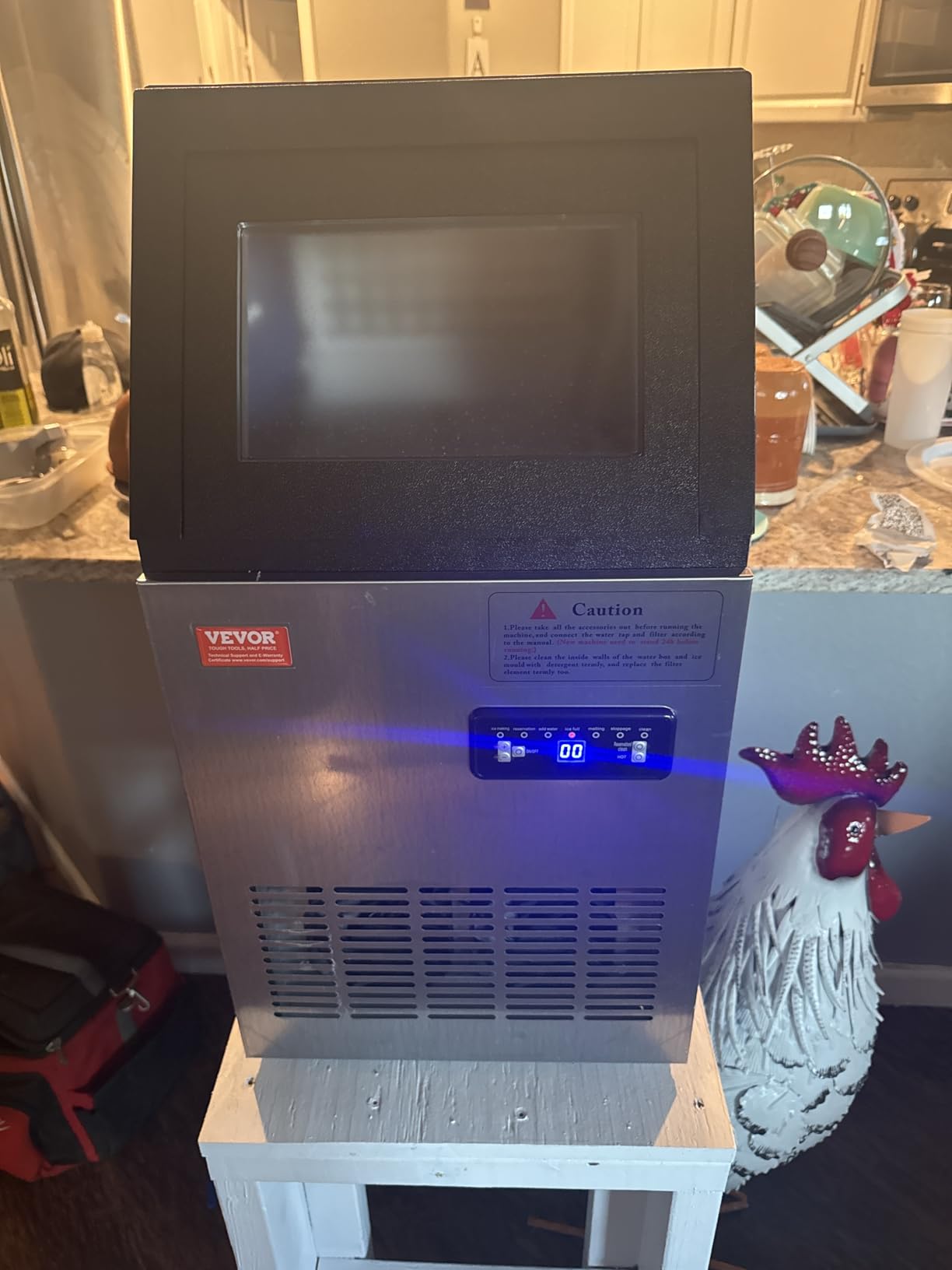
The LED panel covers temperature, ice thickness, a timer, one-touch cleaning and full-ice, low-water and error alerts. An ice-full indicator lights at 16 lbs and storage goes up to 30 lbs. Cubes are 20 mm squares, which is a solid, fast-melting shape closer to a classic bar cube than a bullet.
Storage is the trade-off against that output. Sixteen percent of reviews are one-star, and melting rate in an unrefrigerated cabinet is the most repeated complaint. If your bar cabinet is not climate controlled, the ice softens faster than the production rate can replace it.
Plan the ice route, not just the machine
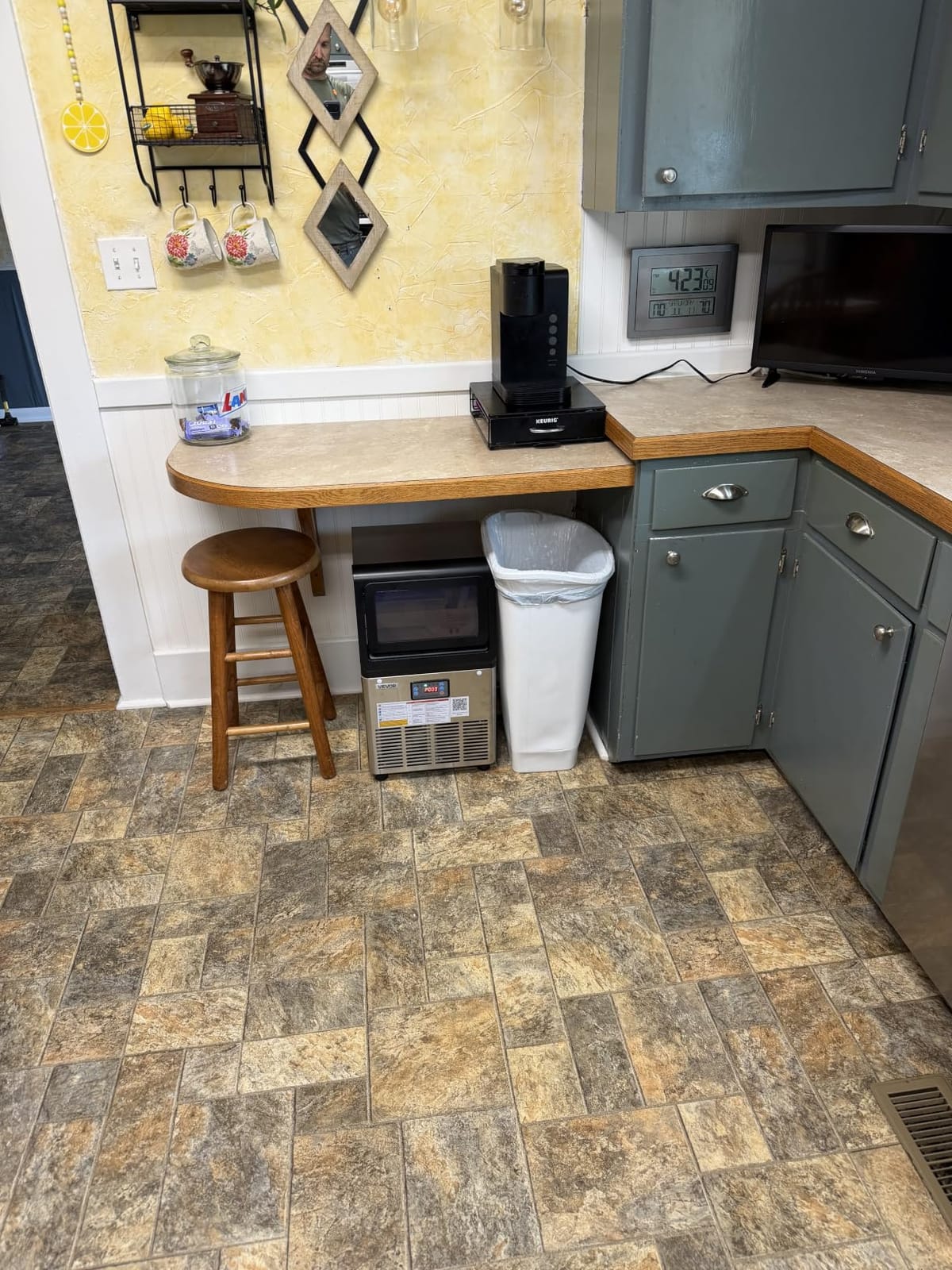
With up to 30 lbs of storage and no freezer in the cabinet, you need somewhere to move the ice once it comes out. A bar with an adjacent prep sink or an ice well can absorb that volume. A bar with a closed cabinet and no cold storage will have you shovelling meltwater out on a timer.
The drain outlet sits very low on this chassis, so an uphill run needs an added pump. Owners also report the feet as fixed rather than adjustable, which matters if your cabinet floor is not level.
Decide on water filtration separately
No water filter is included with this machine. In a hard-water area that is a purchase and a recurring replacement you will need to plan for, since scale affects both ice clarity and machine life. The COSTWAY later in this guide is the only model here that ships with a filter built in.
Switching between tap and bottled feed works but is described as fiddly and poorly documented. If you plan to run bottled water most of the time, set that mode once at install and leave it alone.
4. EUHOMY Nugget Ice Maker 75 lbs/24H – Best Chewable Ice on a 15-Inch Footprint
EUHOMY Under Counter Nugget Ice Maker, 75lbs/24H, Self-Cleaning, Silver
75 lbs per 24h nugget
15.43 lb dual-layer bin
14.96 in wide
About 80% stays solid a day
Pros
- True chewable nugget ice
- not a cube copycat
- Dual-layer bin keeps most ice solid for a day
- Standard 14.96 in width fits typical bar cabinetry
- LCD covers temperature
- water level
- bin full
- timer and clean
Cons
- 75 lbs per day trails the 100-150 lb cube machines
- 15.43 lb bin is small beside 33 lb models
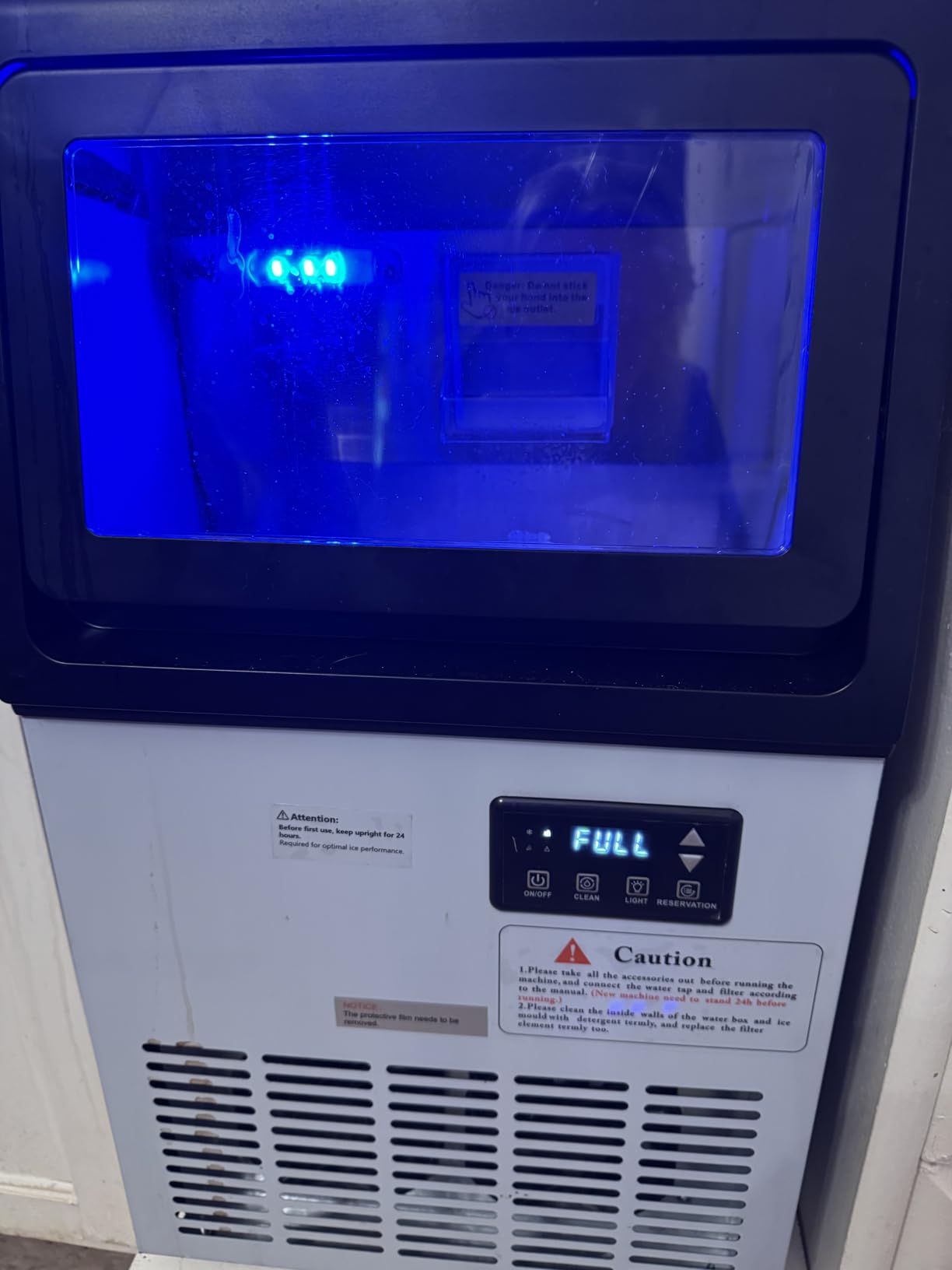
This is the ice people mean when they say bar ice. The 75 lbs per day of soft, porous nugget ice is chewable and cold, which suits cocktails, sodas and cola in a way square cubes never do. Ratings are strong at 69 percent five-star with only 9 percent one-star, and the recurring theme across reviews is ice quality and texture.
Storage is where you feel the compromise. The dual-layer bin is 15.43 lb, and the insulation is claimed to leave about 80 percent unmelted over a full day. That is good engineering for the size, but it is roughly half the capacity of the cube machines in this guide.
The body is 20.98 deep by 14.96 wide by 32.99 tall, so the width works in standard 15-inch cabinetry and the depth is the constraint. It runs on R290a at 110 volts. The LCD panel gives you ambient temperature, low-water and ice-full reminders, a 24-hour timer and a clean function.
Nugget machines need more frequent attention than clear cube units, and that shows up in owner discussions of any nugget platform. Budget time for descale cycles on a schedule rather than waiting for a performance drop. Hard water will dull the texture before it does anything else.
Size the bin against your gap between rounds
A 15.43 lb bin covers roughly two to three rounds of drinks for a small bar. If your service pattern is continuous pouring for several hours rather than batched rounds, the 75 lbs per day production figure will not be the limit. The bin will be.
For a bar that pours on demand during a long evening, look at the 25 lb bins in this group or accept that someone is scooping ice into a separate well between guests.
Know the maintenance premium before you commit
Nugget and pebble machines carry a higher cleaning burden than bullet cube units because the freezing surface is smaller and the water path is longer. Plan a descaling routine on a calendar, and check whether your local water is hard enough to need a scale-inhibiting filter on the supply line.
The trade is straightforward. If the drinks are the point of the bar, chewable nugget ice is worth the extra maintenance. If you mostly serve highballs and parties, a high-output cube machine serves the same drinks with less fuss.
5. Mojgar 100 lbs/24H with 18-33 lb Bin – Longest Warranty Coverage Here
Mojgar Commercial Ice Maker Machine, 100lbs/24H with 18-33lbs Ice Storage
100 lbs per 24h
18-33 lb bin
15.75 in wide, front venting
Self clean
12 and 36-month warranty
Pros
- Lowest cost per pound of output in this lineup
- Compact 15 x 16 x 29 in body fits under bar cabinets
- Three-step setup with faucet
- drain hose and plug
- Adjustable thickness plus one-touch self clean
- 12-month machine and 36-month compressor warranty
Cons
- Gravity drain only
- pump not included
- Bin is not a freezer so ice softens
- Included scoop is plastic
Warranty terms are the reason to look at this machine. It carries 12 months on the machine and 36 months on the compressor, the longest stated coverage among the ten models here. That matters most for a built-in unit, where a compressor swap means pulling the machine out of cabinetry and paying to move it.
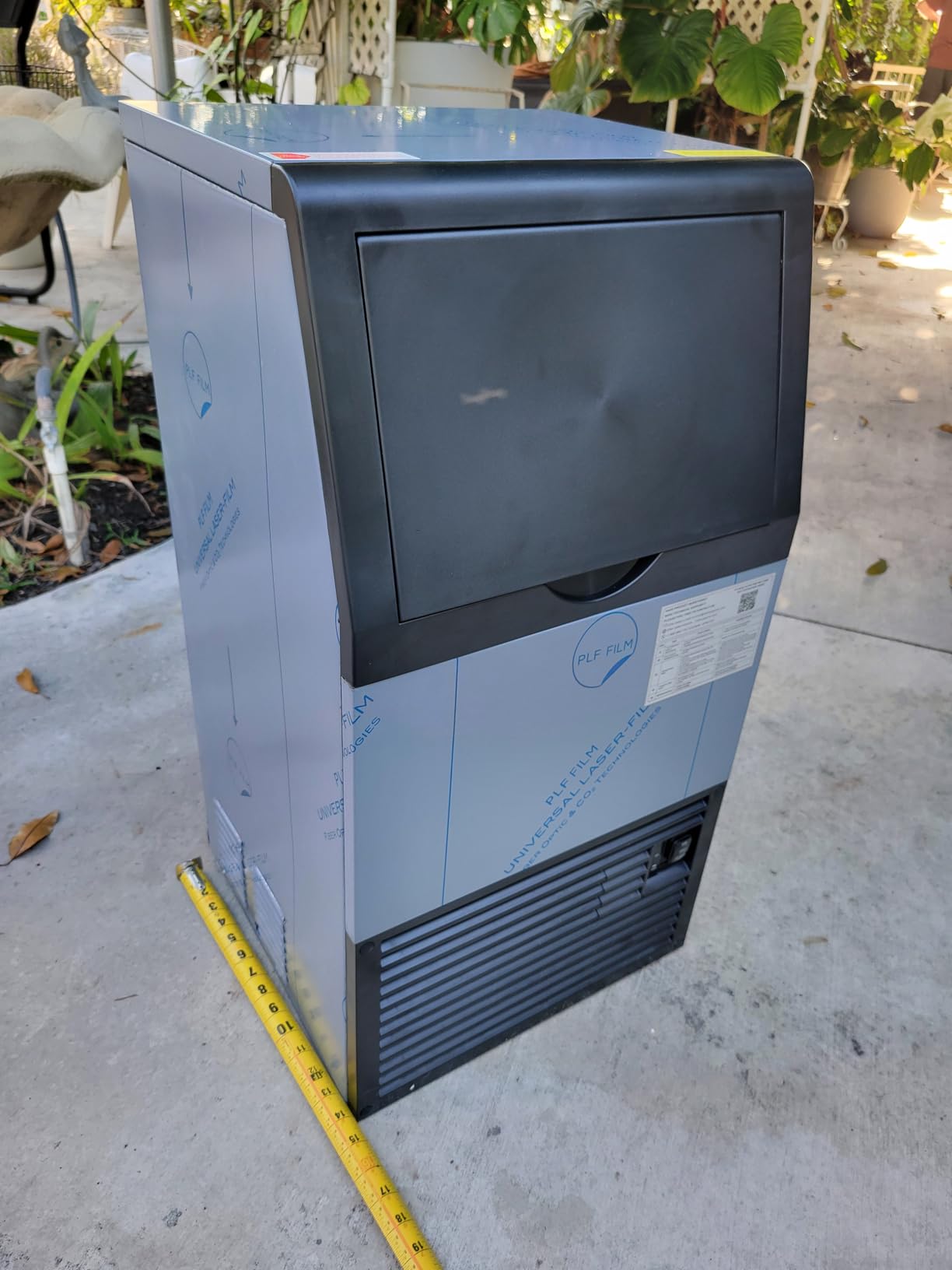
Output is up to 100 lbs per day with the first batch of crystal ice in 10 to 18 minutes, and storage scales between 18 and 33 lb. The body is 15.16 deep by 15.75 wide by 29.88 tall with front venting, which makes it one of the more compact high-output bodies for a bar cabinet.
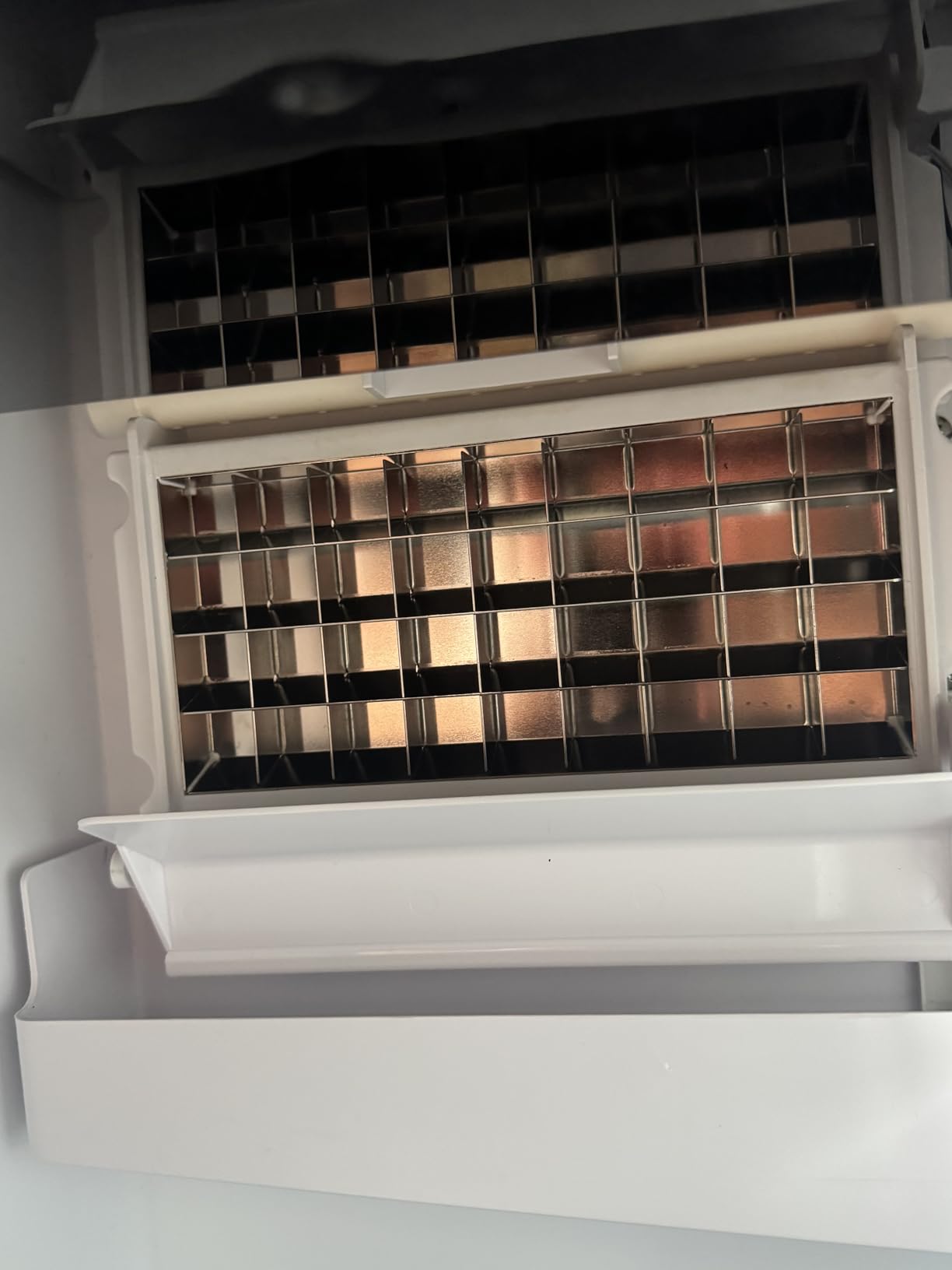
Setup is genuinely three steps: a half-inch male threaded faucet connection, a drain hose to a floor drain, and power. One-touch self-clean, adjustable ice thickness and an LED interior light that comes on when the lid opens round out the controls. The R290 compressor is claimed to cut energy use by up to 30 percent, which matters for a machine running through long evenings.
The bin is not a freezer. Ice softens when it sits, and that is the honest limitation, along with the gravity drain requirement and a plastic scoop that is not up to the rest of the machine.
Read the compressor term, not just the year
A 36-month compressor term is the strongest coverage in this lineup and covers the component most likely to fail. Ask the seller to confirm in writing who pays return shipping during a warranty claim, since shipping a built-in machine back can cost more than the part.
Buying through an authorized channel also matters. One owner in this product category reported a warranty concern after buying through a non-authorized reseller, which is a reminder to check seller status before ordering.
Check whether a floor drain is realistic
Three-step setup sounds simple until your bar has no floor drain. Gravity drainage means the hose runs to a drain below the machine, and no pump is included. If your bar cabinet sits above a finished or carpeted floor, this is the wrong machine for the space.
Everything else about the install is forgiving. Front venting means it can sit under a counter without side clearances, and the 29.88 inch height leaves plenty of room for a plumbing chase behind it.
6. COTLIN 15 Inch Drainless 42 lbs/24H – Easiest Install With No Drain Line
COTLIN 15″ W Drainless Under Counter Ice Maker with 22LBS Storage Bin
42 lbs per 24h
22 lb bin
Drainless, no plumber
14.9 in wide crescent cubes
600 W, R600a
Pros
- Drainless design needs only a water supply and a cord
- Crescent cubes melt slowly and hold drinks well
- Solid stainless door that does not ping or flex
- Highest average rating among the built-in options here
Cons
- First fill takes about 24 hours while it cools down
- Manual defrost needed to clear frost
- 42 lbs per day is the lowest output in this group
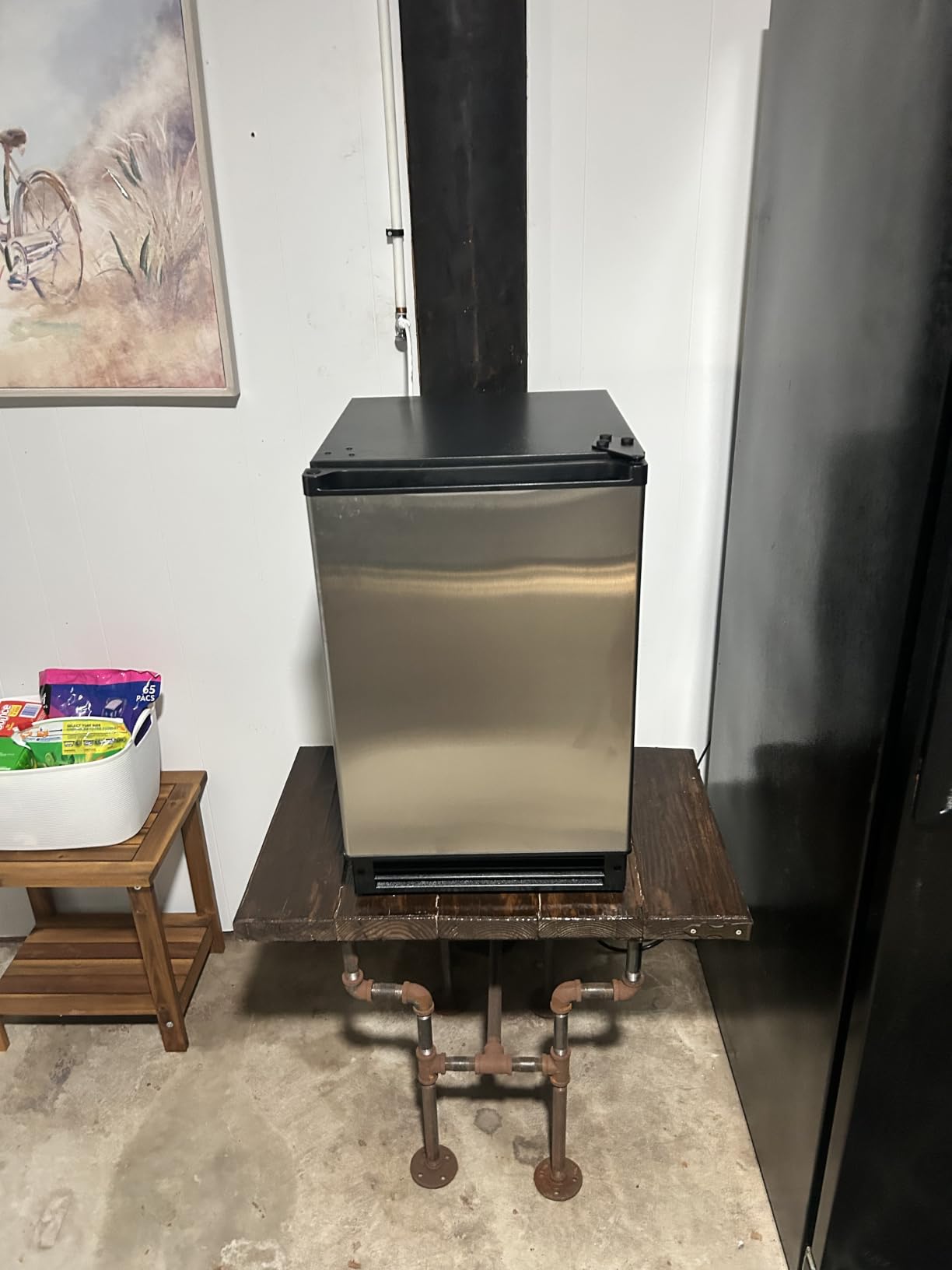
Yes, this one is worth it for the installation alone. It is drainless, which means a water supply and a power cord are the whole hookup and no plumber is involved. For a bar built in a finished basement or a rental where you cannot break into a floor drain, that removes the single biggest obstacle to a built-in machine.
The ice is crescent-shaped, held between 26.6 and 32 degrees Fahrenheit, and owners single out the shape for slow melting and how well it holds a drink. Satisfaction is the highest profile in the group at 4.5 stars, with 78 percent five-star and 6 percent one-star across a small base of 78 reviews.
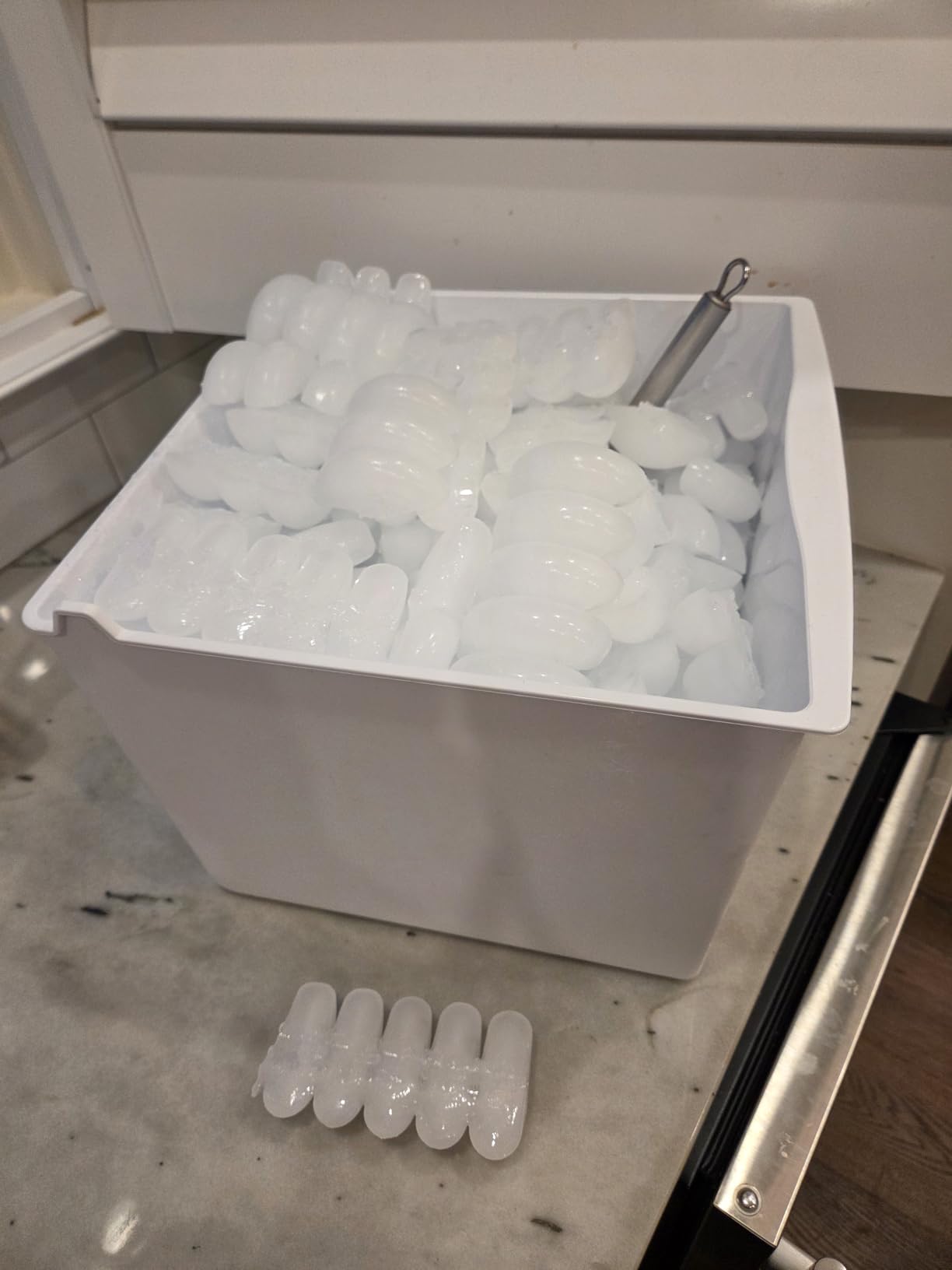
The storage bin is 22 lb, enough to cover a couple of rounds comfortably. One-touch start, reversible door hinges and adjustable feet cover the install details. The body is 14.9 inches wide by 18.6 deep by 33.8 tall, ETL certified, drawing 600 watts on 115 volts with R600a refrigerant.
Output is 42 lbs per day, the lowest in this lineup, and that is the trade for drainless operation. Owners report filling the bin overnight and it lasting two to three days of normal use, which is a sensible pattern for a bar that is busy on weekends rather than every evening.
Expect the first 24 hours to be quiet
The first fill takes about 24 hours while the unit cools down. Plan the install for a weekend when nobody is expecting ice, and treat the first night as commissioning rather than service. Owners who scheduled this properly report a full bin the next day.
The magnetic door seal is another honest limitation. It is strong enough to hold a cold bin but weak enough that a hard close can bounce the door back open, which matters in a busy bar where hands are wet and full.
Watch heat at the counter surface
Cabinet-mounted installation generates noticeable heat buildup at the counter surface above the unit. In a small bar with limited ventilation, that heat has to go somewhere, and it can make the surrounding cabinet warmer than you planned for.
Manual defrost is also part of ownership. Owners turn the unit off for a few hours with the door open to clear frost, so treat that as a recurring monthly task rather than an emergency repair.
7. COSTWAY 110 lbs/24H – Only Model Here With a Built-In Water Filter
COSTWAY 15″ Under Counter Commercial Ice Maker, 110Lbs/24H, Silver+Black
110 lbs per 24h
25 lb bin
Built-in water filter
Three thickness settings
15 x 21.1 x 33.7 in front vented
Pros
- Only model here with a built-in water filter
- Owners describe it as effectively silent
- Thin
- medium and thick settings plus a 1-23 hour timer
- Reversible hinge and front venting for under-counter installs
Cons
- Ice softens in an unrefrigerated cabinet
- Two owners reported internal or base leaks
- Returns handling drew heavy criticism
The built-in water filter is the feature that separates this machine. It connects directly to tap water and treats it on the way in, so cubes come out clear without buying a separate filter or guessing at a replacement schedule. In a hard-water area that is the single most useful thing on this list.
Output is 110 lbs per day with 40 cubes every 12 to 15 minutes into a 25 lb bin. Owners describe it as effectively silent, which matters more in a built-in install than a portable machine because the cabinet can act as a sound buffer.
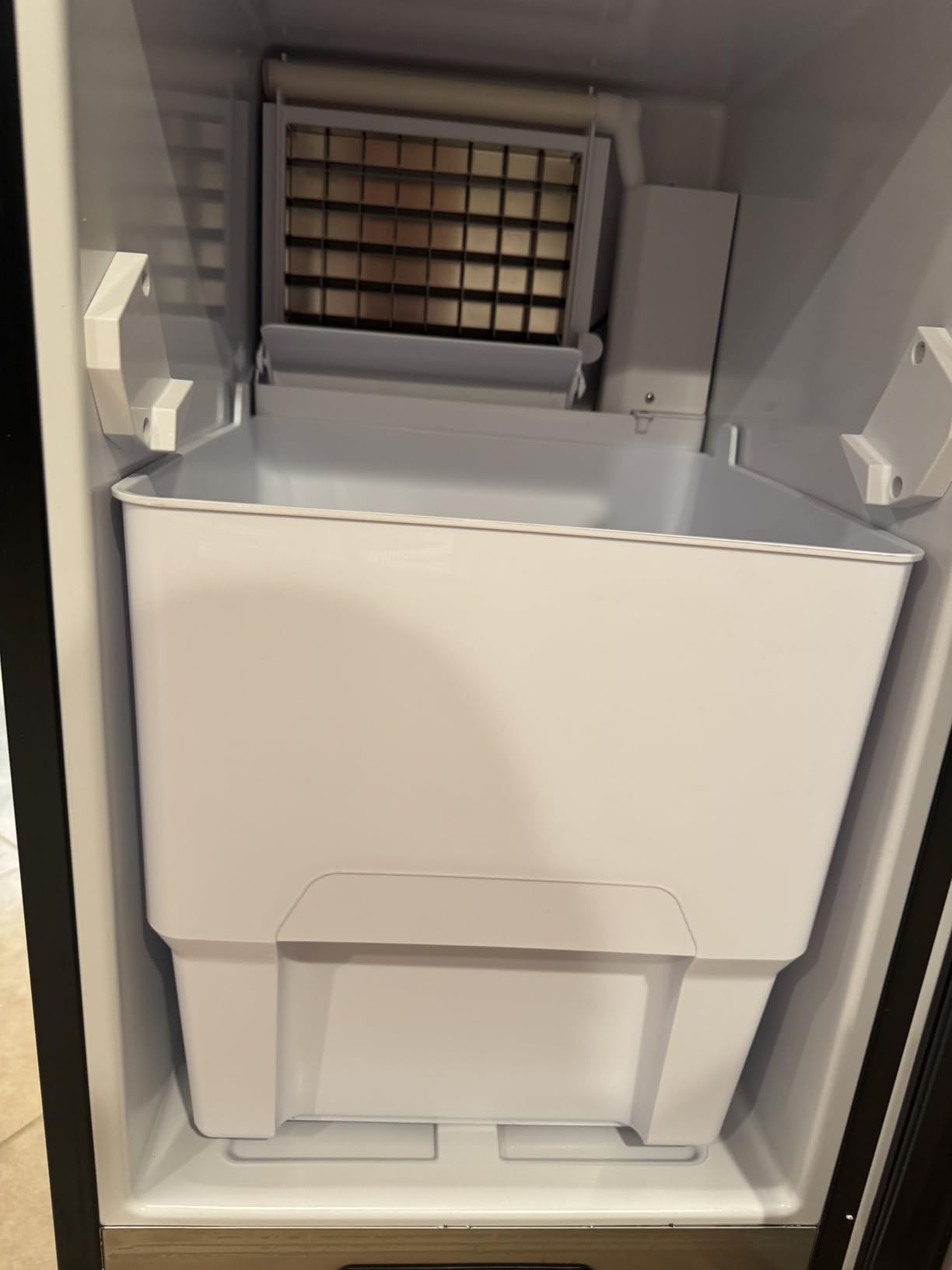
Controls are more granular than most: three cube thickness settings at 12, 15 and 18 minutes, a 1 to 23 hour reservation timer, and a cleaning mode you trigger by holding the button for two seconds to run three pump cycles. The body is 15 inches wide by 21.1 deep by 33.7 tall with front venting and a three-layer insulated housing behind a reversible stainless door.
The negative reviews cluster on quality control rather than everyday performance. Two owners reported internal or base leaks, and both describe returns handling as the real frustration. If you order this one, inspect the base and the back seam on arrival before you plumb it in.
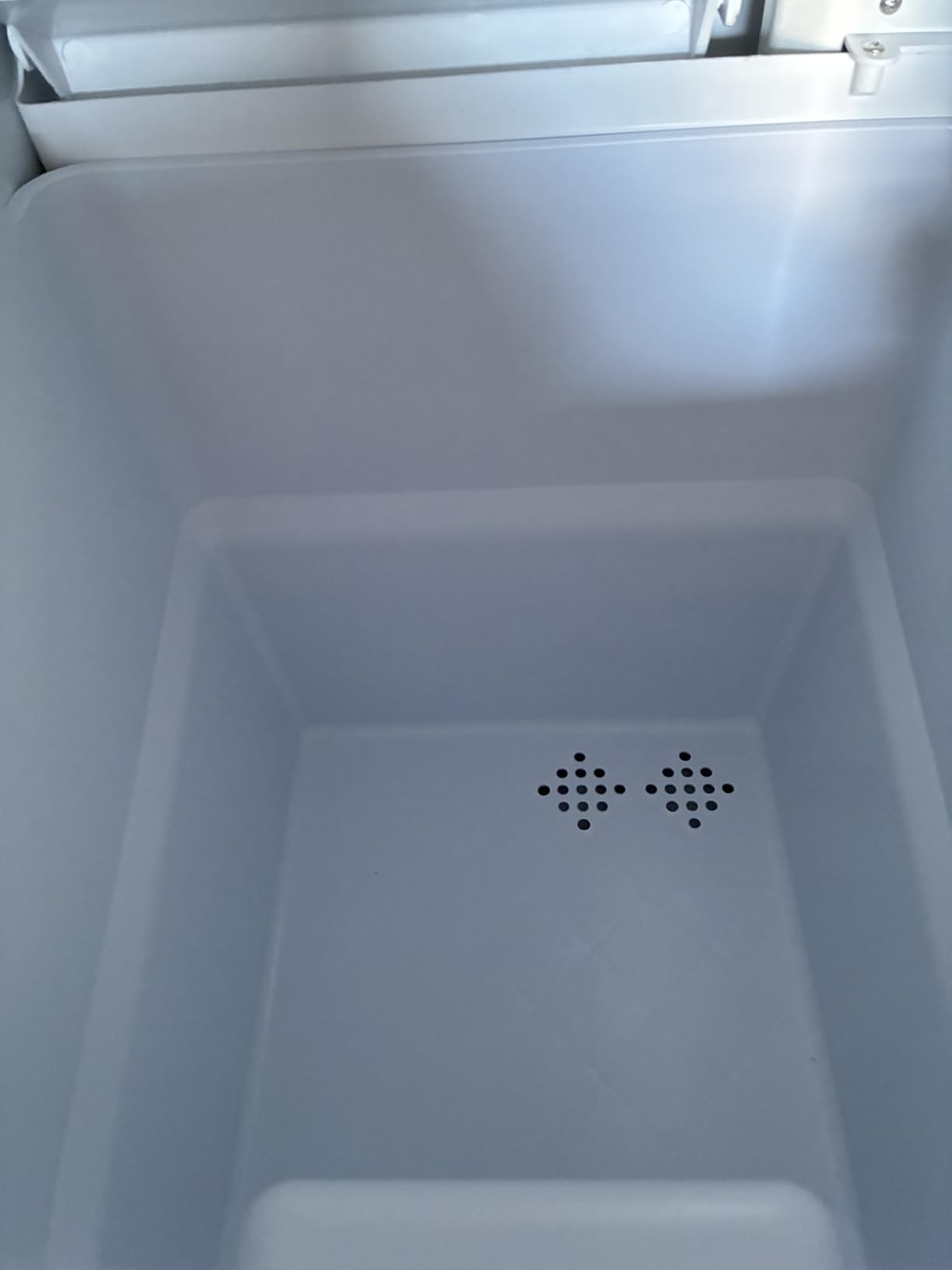
Verify the unit before you connect plumbing
Because the complaints are about leaks rather than ice production, the order of operations matters. Run the machine dry on the counter first, check underneath for pooling, then commit to the water line. That single test would have caught the failures owners describe.
Also confirm the returns process with the seller before ordering, given that handling is the repeated complaint. Photograph the packaging as well, since it helps any claim about arrival damage.
Use the timer to stay ahead of demand
The 1 to 23 hour reservation timer is the feature owners use most. Set it so the machine finishes a batch right before guests arrive rather than running all evening and softening ice in the bin. Three thickness settings let you trade cycle time for cube size depending on the service.
The limitation to plan around is that the bin is insulated, not refrigerated. In an unrefrigerated cabinet the ice softens, and 110 lbs per day of production does not fix ice that is melting faster than you can scoop it out.
8. ICEVIVAL 84 lbs/24H with Drain Pump – Best When Gravity Drain Will Not Work
Commercial Ice Maker, 84 Lb/Day, 25 Lb Storage, Under Counter
84 lbs per 24h
25 lb bin
External drain pump included
14.98 in wide
LCD clean and timer
Pros
- Only model here that includes an external drain pump
- Fastest quoted batch cycle at 8-16 minutes
- Support praised for fast responses and free replacement parts
- Reversible door with a 25 lb bin for a home bar
- Auto-clean plus a 24-hour timer simplify upkeep
Cons
- Some report an E2 error code from the start
- Needs a manual restart after a power blink
- One owner had a machine that never made ice
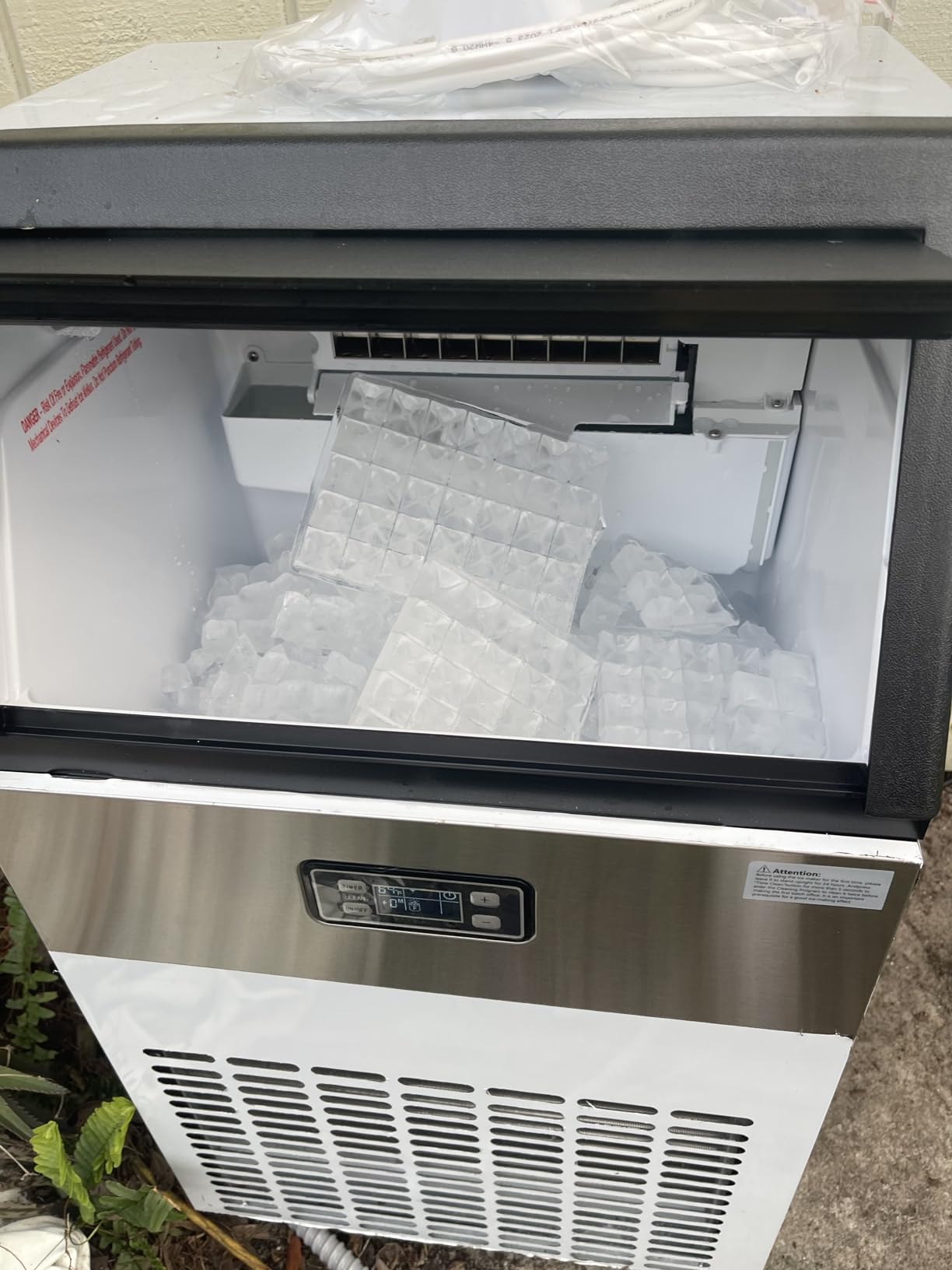
Everything else in this lineup makes you solve the drain yourself. This one includes an external electric drain pump in the box, which removes the gravity-fall requirement entirely and lets you install it in a basement bar, a raised floor or a cabinet where the drain outlet is above the only available outlet.
Output is up to 84 lbs per day with batches ready in 8 to 16 minutes, the fastest quoted batch cycle here. The 25 lb bin is generous for the size, the door is reversible, and the LCD carries water-shortage and ice-full indicators plus a 24-hour timer and a five-second hold auto-clean.
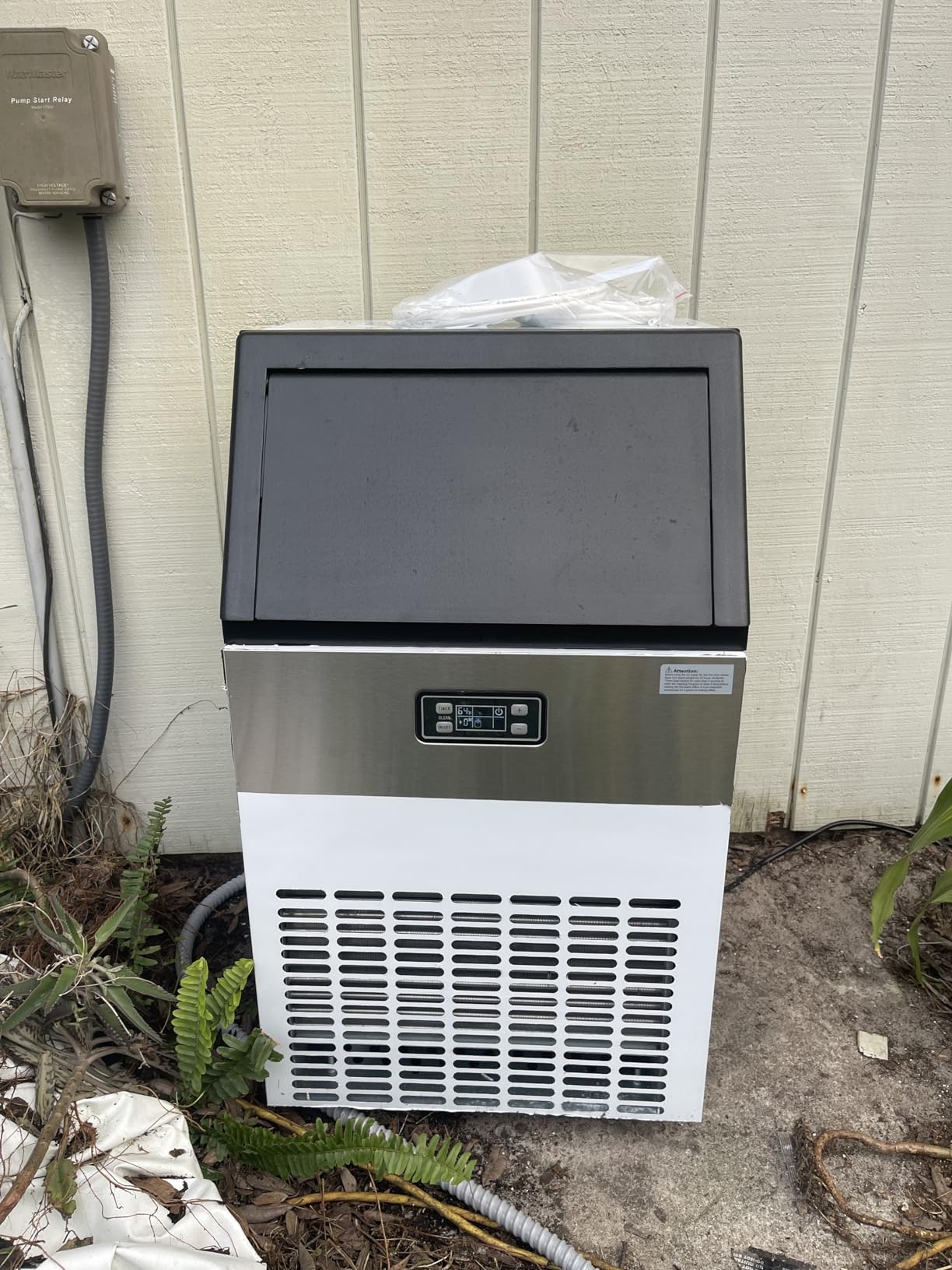
Dimensions are 20.38 deep by 14.98 wide by 33.89 tall, so it fits a 15-inch cabinet slot and works freestanding too. It runs on R600a at 120 volts and 250 watts. The included pump is the reason installation is flexible, and it is also the first thing to check if the machine ever stops draining.
Owners who get a working unit are enthusiastic, and support is repeatedly praised for fast responses and free replacement parts. The recurring failure mode is an E2 error code from the start on some units, plus the need for a manual restart after a power blink or outage.
Add the pump to your install budget
The pump being included does not make the plumbing free. It needs a power outlet near the drain point and somewhere for the hose to discharge, and the pump itself is a component that can fail. Route the hose with a high loop and an accessible trap so a blockage is a five-minute fix rather than a cabinet teardown.
Because placement is no longer limited by gravity fall, you can put the machine where the electrical and water are easiest rather than where the drain dictates.
Ask about power outage behavior before you install
This machine needs a manual restart after a power interruption. In a home bar that means a tripped breaker during a party leaves you without ice until someone opens the cabinet and resets the panel. Know that before the guests arrive.
The E2 reports are worth screening for. Run the machine through a full cycle as soon as it arrives, before the cabinet goes in around it, so a unit that will never make ice is easy to return.
9. EdgeStar 15 Inch 15 lbs/24H – Most Durable in a Covered Outdoor Bar
EdgeStar 15 Inch 15 Lb/Day Built-In Ice Maker 12 Lb Bin – No Drain Required
15 lbs per 24h
12 lb bin
No drain line required
17 x 14.94 x 24.88 in
Defrost every 2-3 months
Pros
- Owners report 8 to 10+ years of service from this line
- Holds up in covered outdoor kitchens through summer heat and winter freezes
- No drain line and a simple water hookup
- Customer service repeatedly resolves issues with free parts
Cons
- Manual defrost needed every 2-3 months
- Two consecutive units stopped making ice
- 15 lbs per day and a 12 lb bin are the smallest here
Longevity is what this line is known for. Multiple owners report 8 to 10 years or more of service from earlier units, and buyers cite durability and service above raw output. For a covered outdoor kitchen where a machine has to survive a 100 degree summer and a winter freeze, that track record is worth more than headline production.
The numbers are modest by design. Production is 15 lbs per day into a 12 lb bin, the smallest capacity pair in this group, and it suits a bar that pours a few drinks an evening rather than one that caters events. The body is 17 by 14.94 by 24.88 inches, which suits a 15-inch cabinet opening.
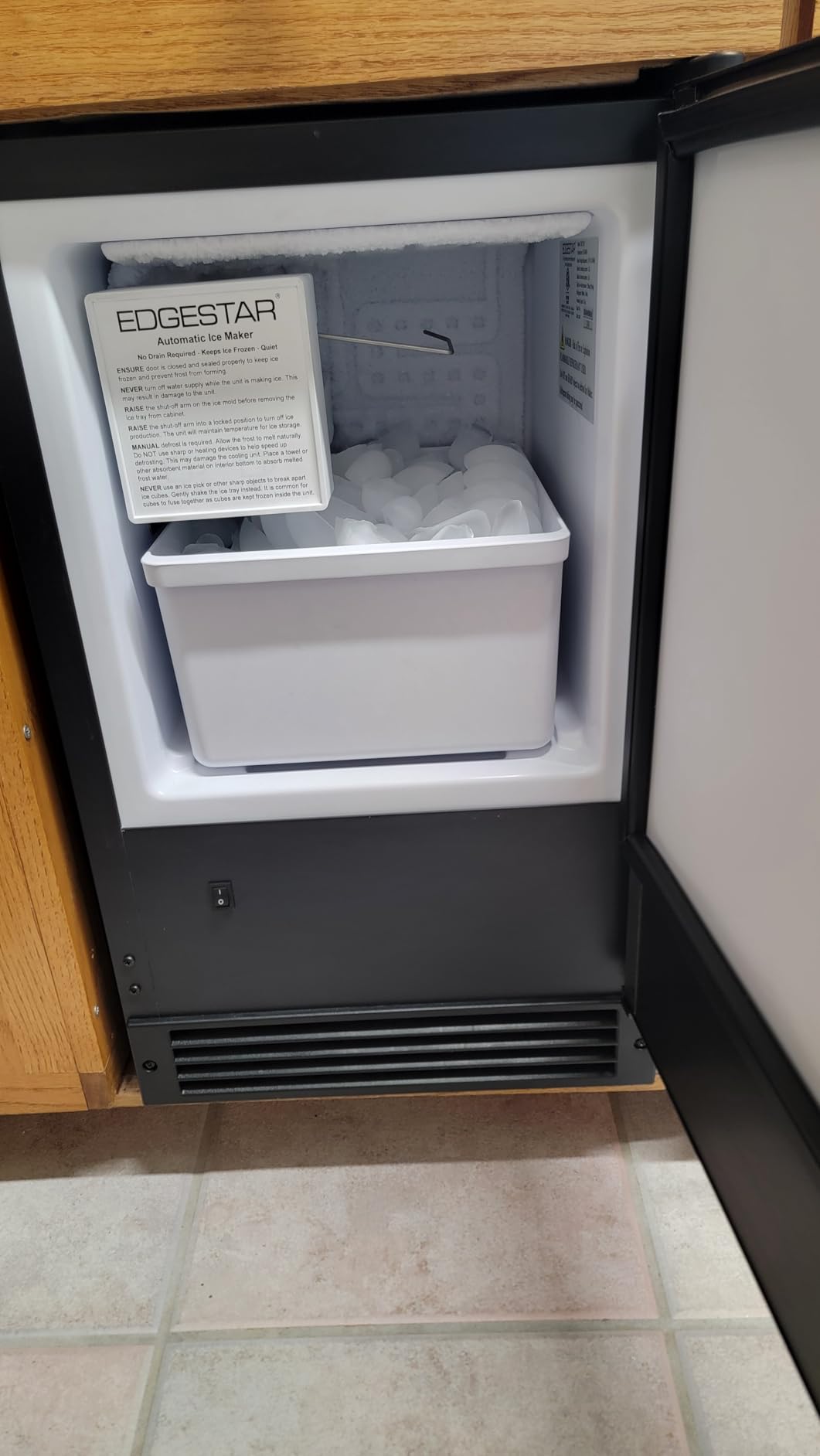
No drain line is required, only a water supply, so it installs cleanly in an outdoor kitchen where drainage is awkward. An ice-making lever lets you switch production off when the bin is full, and the newer revision makes ice faster and quieter on a more durable tray.
The maintenance trade is manual defrost. Frost needs clearing roughly every two to three months by turning the unit off overnight with the door open and towels inside. That is a real recurring task, and it is the single biggest reason people hesitate on this machine.
Match the size to how the bar is actually used
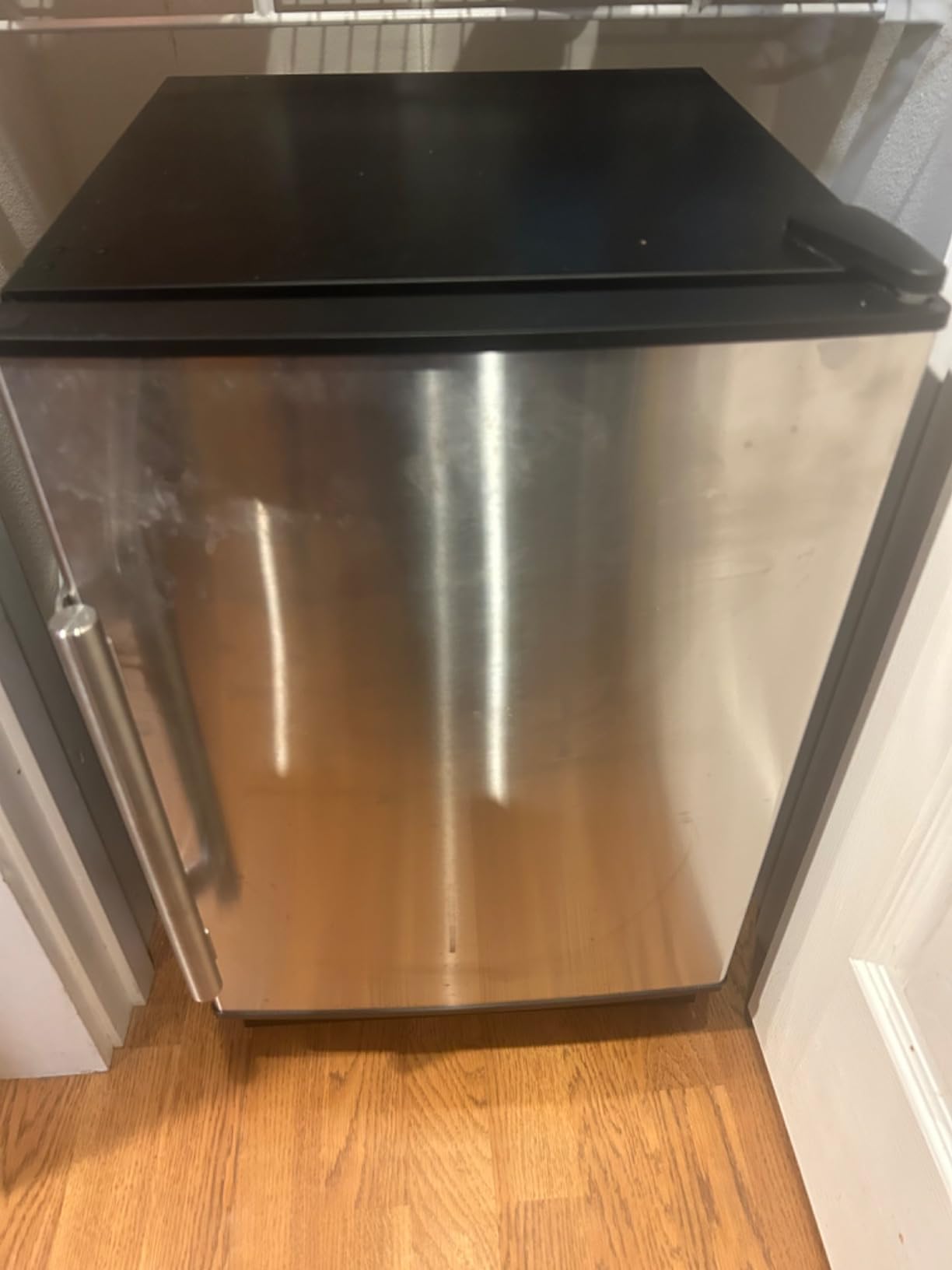
A 15 lb/day machine with a 12 lb bin works well for a pool bar or a covered patio station serving whiskey and sodas. It will not carry a 20-person party, and no setting on the machine changes that. If you entertain in larger groups, treat this as a second machine elsewhere in the house rather than the main bar unit.
The lever that stops production at a full bin is genuinely useful for low-traffic bars because it stops the machine cycling ice against a full bin and softening what is stored.
Buy from an authorized channel and expect the defrost
One review warns that buying through a non-authorized reseller voided the manufacturer warranty. That is a specific and avoidable problem, so check seller status before ordering any built-in machine, not just this one.
Budget the defrost cycle as a scheduled evening every two to three months. Two consecutive units also failed to make ice despite running cold, which is a small but real reliability note on a line that is otherwise known for longevity.
10. SOZT Nugget Ice Maker 100 lbs/24H – Narrowest Body for Awkward Cabinets
SOZT Nugget Ice Maker Machine, 100LBS/24H, 25LBS Capacity
100 lbs per 24h nugget
25 lb insulated bin
13.19 in wide, narrowest here
Water filter included
Faucet or jug feed
Pros
- Narrowest body here at 13.19 in wide
- only model accepting a plumbed line or an inverted jug
- Water filter included in the box
- Owners report very low noise and genuinely plug-and-play setup
- Cube thickness adjustable and ice tastes clean with the filter
Cons
- Measured bin closer to 10 lbs than the advertised 25
- Insulated bin is not a freezer so ice softens
- Many reviews describe the scoop rather than the machine
At 13.19 inches wide, this is the only body here that fits a cabinet opening that no other model on this list will accept. For a bar with an odd return, a narrow appliance garage or an opening beside a range, that is often the difference between installing a built-in machine and giving up on the idea.
It makes soft, porous nugget ice at up to 100 lbs per day, which is high output for chewable ice, and the 25 lb bin is insulated. The water filter is included in the box, and the finish is fingerprint-resistant stainless, which matters on a machine you touch every time you make a drink.
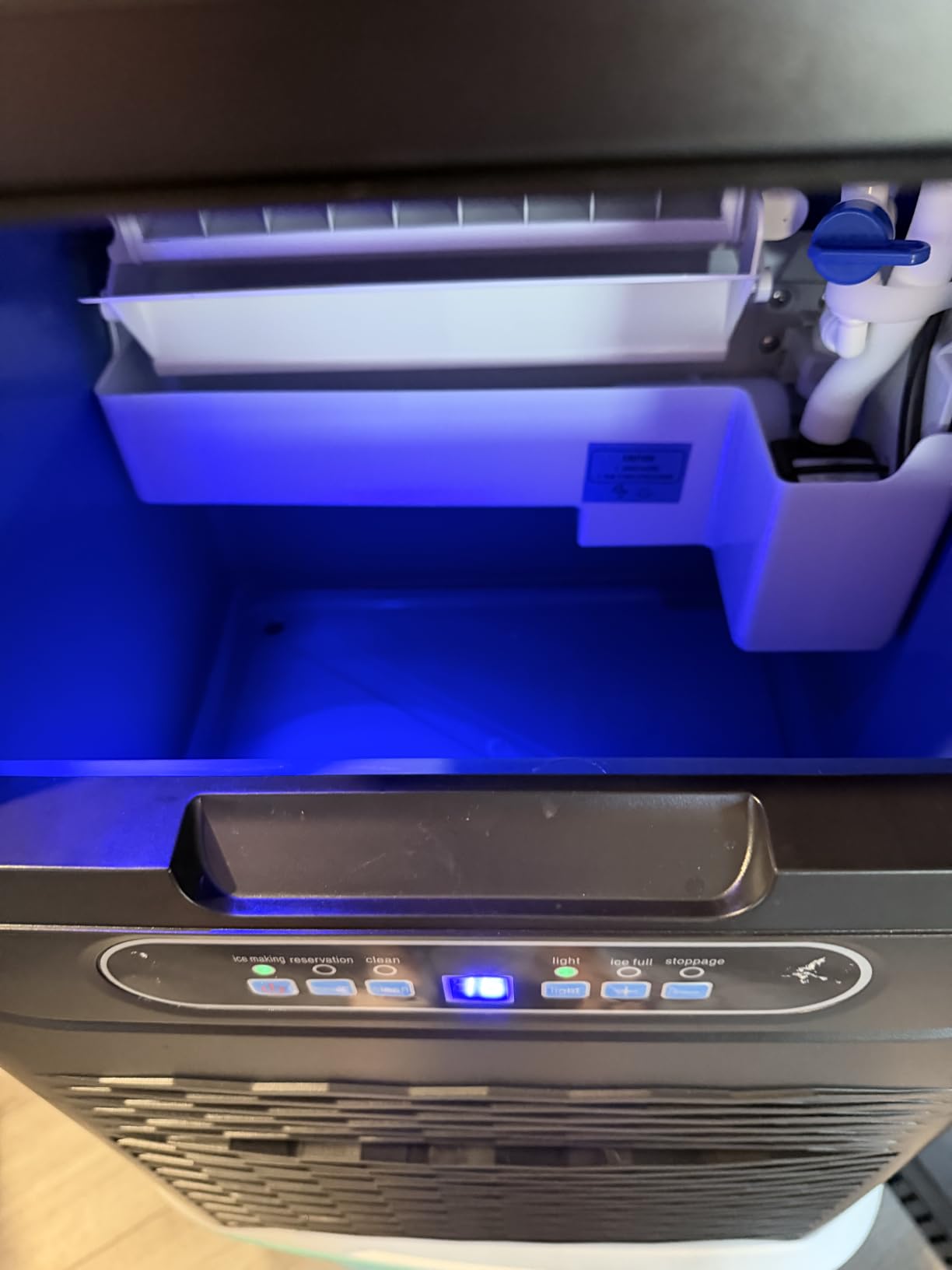
The dual water source is genuinely useful. It supports a direct faucet connection and also accepts an inverted 5-gallon jug, so you can start with bottled water before a permanent line is run, then switch over. Controls cover auto-clean, low-water alerts, an ice-full reminder and overflow protection on an LCD panel.
Dimensions are 13.58 deep by 13.19 wide by 30.12 tall at 260 watts, running on R290a. One reviewer weighed the bin and found closer to 10 lbs rather than the advertised 25, so plan on the lower figure when you judge capacity.
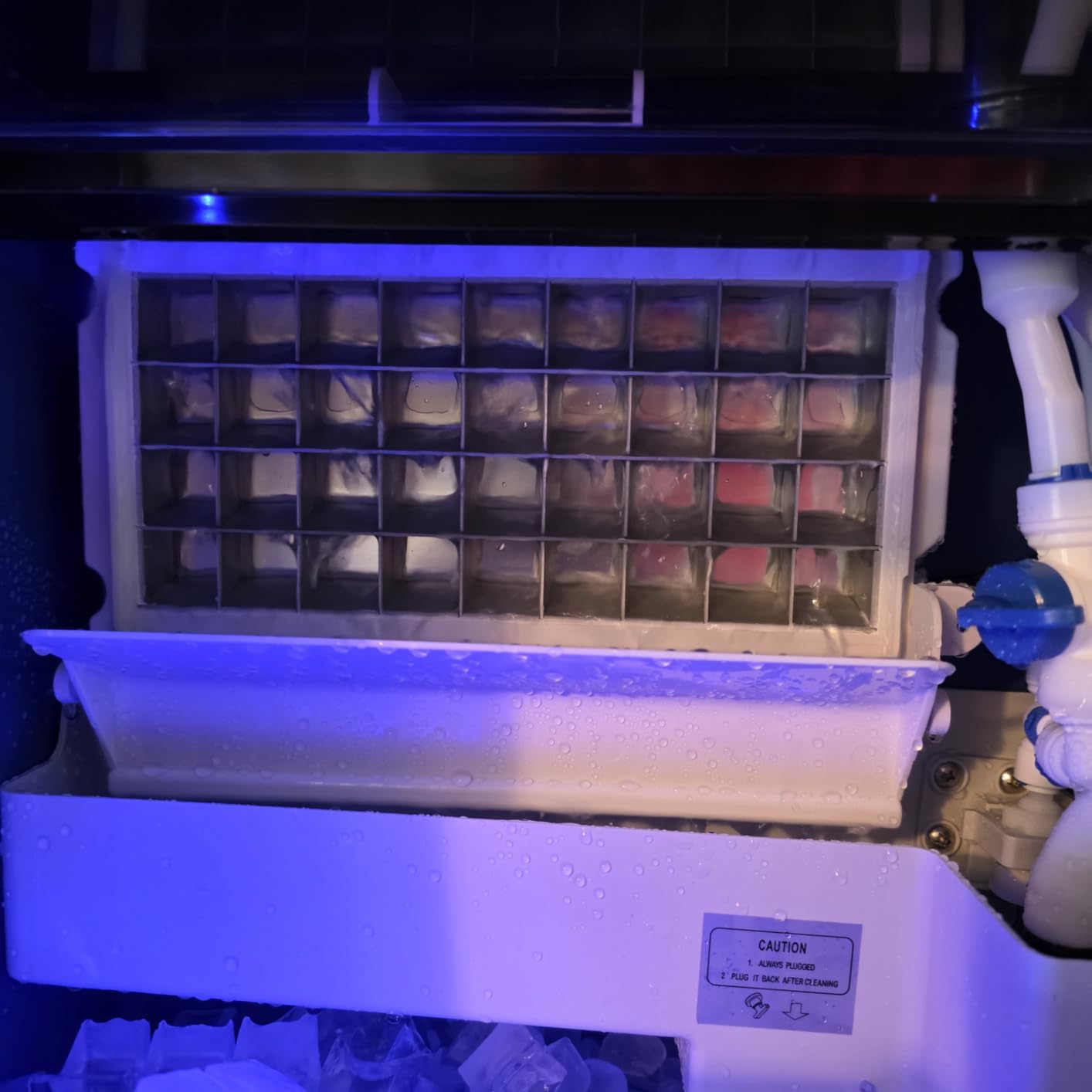
Use the jug feed to test before you plumb
Running the machine from an inverted 5-gallon jug before any plumbing work is the cheapest test available. It confirms the machine makes ice in your space, at your ambient temperature, and lets you judge noise where the bar actually is before committing to the install.
Once you are happy with it, the faucet connection is the permanent arrangement. Owners describe the setup as plug-and-play and report very low noise, which suits a bar near a living space.
Treat the stated bin capacity as optimistic
A measured 10 lbs against an advertised 25 lbs is a big gap, and it is the single most useful thing to know before buying. If your service pattern is continuous pouring, size for roughly half the listed bin figure or plan for a separate ice well.
Also read the reviews selectively. A large share of them describe the metal scoop that came with the machine rather than the machine itself, so the machine-specific signal is thinner than the rating suggests.
Ice Types Explained: Clear Cube, Bullet, Top Hat and Nugget
Bars use square clear cubes for most mixed drinks because they melt predictably and dilute slowly. Nugget ice is the modern home bar standard: soft, porous and chewable, which suits cocktails, sodas and cola. Whiskey neat is the exception, where owners consistently prefer a denser clear cube over soft nugget ice because texture matters more than chew.
Nugget ice is not the same as pellet ice. Nugget and pebble ice are the same family, produced by freezing water around a moving surface until it forms soft, irregular pieces. Pellet ice is a different, older format made in hollow counter machines. The distinction matters because nugget ice machines cost more and are sold differently, and confusion between the two names is common in listings.
Two other formats exist for completeness. Top hat cubes are larger, solid and slow melting, favored for whiskey service, and ice balls require a completely different style of machine that freezes a large sphere around a spigot. No machine in this roundup makes ice balls; that is a dedicated appliance category with its own plumbing and freeze-time requirements.
Built-In vs Countertop vs Freestanding Ice Makers
Built-in machines win on appearance and counter space, and lose on installation friction. They require a dedicated cabinet slot, a water line and a drain path, and they are the hardest to move later. A countertop machine can be unplugged and taken to a different room in five minutes.
Countertop is the right call when you rent, when the bar is a single console table rather than cabinetry, or when you are still deciding whether you will use the machine enough to justify plumbing work. Our countertop ice maker guide covers the portable side in detail.
Freestanding undercounter units are the middle ground. Several machines in this roundup run built-in or freestanding from the same chassis, which means you can test the machine freestanding against the cabinet and only commit to the install once you know it works where it sits.
Portable ice makers make bullet ice fast and cheaply, but the bin is small and the shapes suit a cooler rather than a bar. If the bar is a secondary space, our portable ice maker picks cover that use case.
Built-In Ice Maker Installation Requirements and Cabinet Sizing
Measure the cabinet opening before you choose a model, not after. Width is the headline number, at 15 or 18 inches, but depth and height decide most installs. The bodies here run from 13.19 inches wide up to 15.96, and depth ranges from 13.58 to 21.1 inches.
Water supply is non-negotiable for every machine in this roundup. None of them are portable-tank-only designs, and all require a plumbed line, a supply hose and adequate pressure. Add a shutoff valve at the appliance so you can isolate it without shutting off the house.
Drain handling splits into three categories, and choosing correctly saves the install. Gravity drain machines need a hose that falls continuously to a floor drain or waste outlet. Pump machines, like the ICEVIVAL, can discharge upward or sideways to a higher outlet. Drainless designs evaporate the meltwater and need no drain at all, which is the simplest option but comes with lower output.
Ventilation is the requirement buyers miss. Front-vented bodies need clear space at the front of the cabinet, and none of these machines belong directly beside a heat source such as a warming drawer or a cooktop. The stainless bodies dissipate heat well, but a closed cabinet needs airflow at the front face.
Finally, buy through an authorized channel. One owner in this product category found that a non-authorized reseller purchase voided the warranty, and that is a risk that costs nothing to avoid.
How Much Ice Does a Home Bar Actually Need?
A typical cocktail uses two to three cubes, and a highball uses four to six. A dinner party of 20 people over three hours, drinking mostly cocktails and highballs, runs somewhere between 200 and 300 cubes. At roughly one pound per eight cubes, that is roughly 25 to 38 lb of ice in the bin at any given moment.
That number explains why bin capacity matters as much as production. The EUHOMY 100 lb machine stores 33 lb, the VEVOR holds up to 30 lb, and the COSTWAY holds 25 lb. The EdgeStar holds 12 lb, which is comfortable for an evening of casual service but not for a party.
For whiskey flights, tiki drinks and sodas, the same math works at the lower end. If the bar is a secondary space that serves four or five people most evenings, the EdgeStar and COTLIN pairings cover it comfortably and add less heat and less water use to the room.
Noise, Maintenance and Running Costs for Built-In Ice Makers
Noise is the top regret trigger in home bar builds, and the honest truth is that most of the sound is the ice dropping plus the compressor cycling. A cabinet helps, since it buffers and absorbs, but it does not silence a machine. Owners describe the COSTWAY as effectively silent, the SOZT as very low noise, and the EUHOMY 100 lb as quiet for its output class.
For open-concept layouts, the practical test is running the machine in the cabinet before the doors go on. If the bar sits within a few feet of a seating area, favor a machine with a lower wattage draw and check whether front venting lets noise escape into the room.
Maintenance falls into three buckets. Cleaning cycles are one-touch or hold-to-activate on nearly every machine here and should run on a calendar. Defrosting is manual on the COTLIN and EdgeStar units and not needed on the others. Descaling matters most in hard-water areas, and the built-in filter on the COSTWAY handles it at the point of use.
Running costs are modest but real: water for the production cycle, electricity for the compressor, replacement filters on machines that do not include one, and descaling solution. The R290 compressor machines claim meaningful energy savings, and a machine that runs continuously at 75 percent output is cheaper than one running flat out at 150 and then sitting idle.
Warranty terms deserve a look before purchase, particularly who pays return shipping. On a built-in unit, that freight cost can exceed the value of the failed part.
Frequently Asked Questions
What is the best ice maker for a home bar?
The best built-in ice maker for most home bars is the EUHOMY 100 lbs/24H unit, which pairs high production with a 33 lb storage bin. For chewable cocktail ice choose the EUHOMY nugget model, and for the simplest install with no drain line choose the COTLIN drainless unit.
What is the best ice maker machine for a bar?
For a home bar, a built-in undercounter machine beats a portable unit on ice quality and counter space. The EUHOMY 100 lbs/24H leads on capacity, the VEVOR produces the most ice per day at 150 lbs, and the ICEVIVAL is the only one here that includes a drain pump for flexible placement.
What ice maker do bars use?
Most bars use commercial machines producing square clear cubes or bullet ice, because they melt predictably and dilute slowly. Home bar owners increasingly choose nugget or pebble ice machines for soft chewable cubes, while whiskey neat service still favors dense clear cubes.
Are built-in ice makers worth it?
Built-in ice makers are worth it when you have a 15-inch cabinet slot, a water line within reach and a drain route below the unit. You gain bar-quality ice on demand and counter space back. They are not worth the plumbing commitment for occasional use or rented spaces.
What kind of ice maker can make ice balls?
Ice balls need a dedicated ice ball machine that freezes a large sphere around an internal spigot over many hours. None of the standard built-in ice makers, including every model in this roundup, produce spheres; they make bullet cubes, square cubes, crescent cubes or nugget ice.
Why are nugget ice makers so much more expensive?
Nugget ice machines cost more because the freezing and harvest mechanism is more complex, production rates are lower per dollar spent, and they need more frequent descaling than clear cube units. The result is soft chewable ice that premium drinks are built around, which many home bartenders consider worth the premium.
Is nugget ice the same as pellet ice?
Nugget and pebble ice are the same family, made by freezing water around a moving surface into soft irregular pieces. Pellet ice is a different hollow format from older countertop machines. Listings sometimes use the names interchangeably, so check whether a machine is described as sonic or pebble style.
Are tabletop ice makers worth it?
Tabletop ice makers are worth it when you rent, lack cabinetry space, or are still testing whether you will use the machine enough to justify plumbing. They move in minutes and cost less, but bins are small, ice shapes suit a cooler, and they occupy the bar surface you would rather use for drinks.
Do built-in ice makers need a drain line?
Most do, and they need a gravity fall to a floor drain or waste outlet. Some models, including the ICEVIVAL, include an external pump so the drain can discharge higher. Drainless designs like the COTLIN need only a water supply and a power cord.
How loud is a built-in ice maker?
Most of the sound is the ice dropping plus the compressor cycling, and a cabinet buffers it without silencing it. Owners describe the COSTWAY as effectively silent and the SOZT as very low noise. Run the machine in the cabinet before finishing the install if the bar sits near a seating area.
Which Built-In Ice Maker Fits Your Bar
The EUHOMY 100 lbs/24H with the 33 lb bin is our pick for a built in ice maker for home bar duty, because it holds the largest review base in the group and the only combination of output and storage that keeps pace with a real party. Pick the 15-inch EUHOMY if your cabinet is exactly 15 inches wide, the COTLIN if you have no drain route at all, and the SOZT if the opening is narrower than anything else on this list.
Measure the cabinet, confirm your drain fall, and buy through an authorized channel before you order. Once the unit is in, pair the bar with a pub table if you have the floor space, and check back on our ice maker guides as new models land in 2026.