
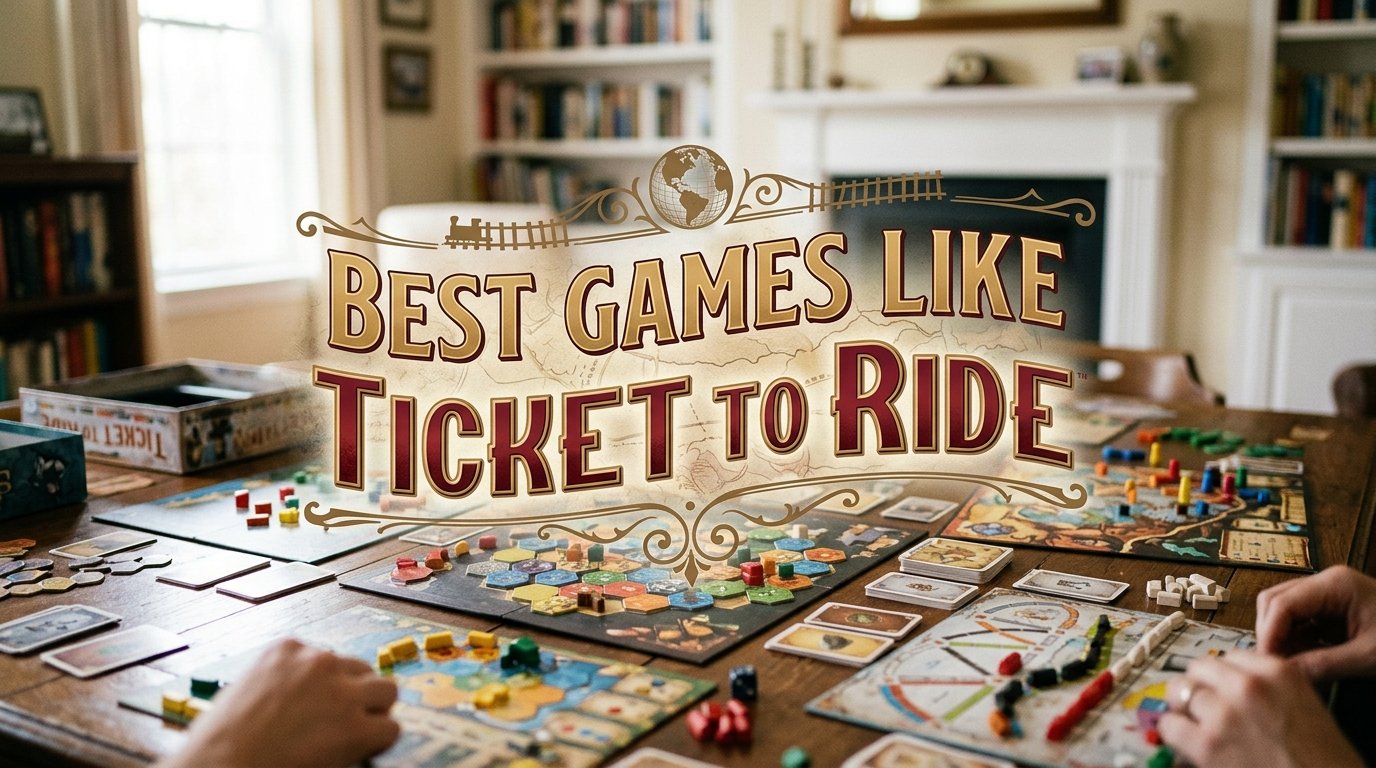
If you have played Ticket to Ride enough times that every route feels familiar, you are probably searching for something fresh. The best games like Ticket to Ride capture that same magic of simple rules, satisfying decisions, and a playtime that fits a weeknight. After testing dozens of board games over the past year, our team narrowed down the 12 options that scratch that same itch.
Ticket to Ride works because it is a gateway game, meaning it teaches modern board gaming in under ten minutes while still rewarding smart play. It blends route building, set collection, and just enough player interaction to keep things tense. Finding alternatives that balance accessibility with depth is harder than it sounds.
We organized these picks by what matters most to Ticket to Ride fans: easy-to-learn rules, light strategy, and broad appeal across families, couples, and casual groups. If you enjoy exploring other genres too, you might also appreciate our classic board game picks for timeless options that never get old.
Top 3 Picks for Best Games Like Ticket to Ride in 2026

Best Games Like Ticket to Ride in 2026
| Product | Specifications | Action |
|---|---|---|
| CATAN 6th Edition |
|
Check Latest Price |
 Azul Azul |
|
Check Latest Price |
 Carcassonne Carcassonne |
|
Check Latest Price |
 Splendor Splendor |
|
Check Latest Price |
 Cascadia Cascadia |
|
Check Latest Price |
 Wingspan Wingspan |
|
Check Latest Price |
 The Quest for El Dorado The Quest for El Dorado |
|
Check Latest Price |
 Trekking The National Parks Trekking The National Parks |
|
Check Latest Price |
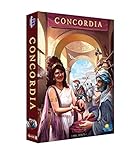 Concordia Concordia |
|
Check Latest Price |
 7 Wonders 7 Wonders |
|
Check Latest Price |
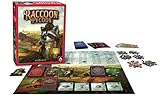 Raccoon Tycoon Raccoon Tycoon |
|
Check Latest Price |
 Kingdomino Kingdomino |
|
Check Latest Price |
1. CATAN 6th Edition – The Classic Trade and Build Strategy Game
CATAN Board Game (6th Edition) Trade, Build & Settle in the Classic Strategy Game for Family, Kids & Adults, Ages 10+, 3-4 Players, 60-90 Min Playtime
3-4 Players
Ages 10+
60-90 Min Playtime
Modular Hexagonal Board
Pros
- Modular board means no two games play the same
- Excellent trading and resource management mechanics
- Strong family appeal for game nights
- Highly rated with nearly 40k reviews
- Digital PDF rulebook included
Cons
- Base game only supports 3-4 players no 2-player mode
- Longer playtime than typical gateway games
When our game group needed something with more teeth than Ticket to Ride but still accessible to newcomers, CATAN was the natural next step. The modular hexagonal board means the island changes every session, keeping the strategic decisions fresh even after dozens of plays.
The core loop feels familiar if you like Ticket to Ride. You gather resources, make trades with other players, and build your way to victory points. Where TTR uses route claiming, CATAN uses settlement building and road construction. Both reward planning ahead and adapting to what opponents do.
Trading is where CATAN shines brightest. The negotiation aspect adds a social layer that Ticket to Ride lacks. Every turn involves table talk, deal-making, and sometimes creative persuasion. Our group found that players who love the friendly competition in TTR adapt quickly to the more interactive trading dynamic here.
With nearly 40,000 reviews and a 4.8-star rating, CATAN has earned its reputation. The 6th Edition refreshes the components with cleaner artwork and a digital PDF rulebook for quick reference. It sits at number five in Amazon’s entire board game category for good reason.
How It Compares to Ticket to Ride
CATAN sits one notch above Ticket to Ride in complexity but shares the same gateway DNA. Both games teach in under fifteen minutes and reward strategic thinking without overwhelming new players. The main difference is that CATAN adds active trading and resource management, giving it a more interactive edge.
If you want something that feels like a natural graduation from Ticket to Ride, this is the obvious choice. The 60 to 90 minute playtime is longer, so plan for a slightly more committed game night.
Best Player Count and Group Type
CATAN works best with exactly 4 players where the board feels balanced and trading stays active. With 3 players the board opens up too much, and 2 players is not supported in the base game without variant rules.
Families with kids ages 10 and up will find this approachable, though younger children may need help with the resource management decisions. Adults who enjoy negotiation-heavy games will get the most mileage out of it.
2. Azul – Award-Winning Tile Placement Strategy
Azul Mosaic Tile-Placement Strategy Board Game, 2-4 Players, 30-45 Min
2-4 Players
Ages 8+
30-45 Min Playtime
2018 Spiel des Jahres Winner
Pros
- Beautiful resin mosaic tiles with premium component quality
- Easy rules with deep strategic tile-placement gameplay
- Quick 30-45 minute playtime for couples and families
- Scales excellently from 2-4 players
- No direct confrontation for a satisfying puzzle experience
Cons
- Some wish tiles were made of wood rather than resin
- Rule book could be clearer for new players
Azul replaced Ticket to Ride as our go-to weeknight game for months. The tactile pleasure of pulling resin tiles from factory displays and placing them into pattern rows is oddly addictive. Every turn presents a meaningful puzzle without ever feeling stressful.
The connection to Ticket to Ride comes through the set collection mechanic. In TTR you collect train cards in matching colors to claim routes. In Azul you collect matching tiles to complete pattern rows on your player board. Both games reward planning which sets you need and managing what you take versus what you leave for opponents.
What sets Azul apart is how visual and tactile it feels. The resin tiles clink satisfyingly when placed, and watching your mosaic wall fill in over the course of the game delivers a genuine sense of accomplishment. Our group found it more relaxing than competitive, even though the scoring can get cutthroat.
Winning the 2018 Spiel des Jahres cemented Azul as a modern classic. With over 16,000 reviews at 4.8 stars, the community consensus backs up the critical acclaim. The 30 to 45 minute playtime makes it perfect for couples or families who want a complete strategy experience without committing an entire evening.
How It Compares to Ticket to Ride
Azul matches Ticket to Ride in weight and accessibility almost exactly. Both teach in five minutes and offer surprising strategic depth once you start playing seriously. The difference is that Azul removes the map and route-building in favor of a personal puzzle on your own board.
If you enjoy the card-collection decisions in TTR but want something with less direct blocking, Azul is the perfect alternative. It works beautifully as a two-player game, which is something TTR struggles with at certain player counts.
Component Quality and Replayability
The resin tiles are thick, weighty, and satisfying to handle. Each of the five colors has a distinct pattern that helps colorblind players distinguish them. The factory displays and player boards are sturdy and well-designed for repeated play.
Replayability comes from the random tile draws and the drafting decisions they create. No two games play the same, and the scoring rewards multiple strategic paths. After 50-plus plays, our group still finds fresh decisions every session.
3. Carcassonne – The Tile-Laying Medieval Classic
Carcassonne Tile Placement Strategy Board Game, 2-5 Players, 35 Min
2-5 Players
Ages 7+
35 Min Playtime
2001 Spiel des Jahres Winner
Pros
- Classic tile-laying gameplay with intuitive rules and genuine depth
- Award-winning with millions of copies sold
- Includes The River and The Abbot mini-expansions
- Highly accessible for ages 7 and up
- Randomized tile draws create a unique map every time
Cons
- Some tiles may not be pre-cut well
- Meeple placement and scoring rules can overwhelm new players at first
Carcassonne is the game we recommend most often to families who love Ticket to Ride and want something with a similar feel. Instead of claiming train routes, you place tiles to build medieval landscapes with cities, roads, monasteries, and fields. Then you deploy wooden meeples to score those features.
The appeal for TTR fans is immediate. Both games involve building something visible on the table that grows more impressive as the game progresses. Both reward thinking a few turns ahead. Both take about 30 to 45 minutes and work for a wide age range.
What makes Carcassonne special is how the board literally changes shape as you play. Every tile placement matters because it affects what can connect to what. Our group loves the tension of deciding when to commit a meeple to a feature versus saving it for a better opportunity later.
Winning the 2001 Spiel des Jahres, Carcassonne has sold millions of copies worldwide. This edition includes The River and The Abbot mini-expansions, which add welcome variety without complicating the rules. The 11,000-plus reviews at 4.8 stars speak to its lasting appeal.
How It Compares to Ticket to Ride
Carcassonne is lighter than Ticket to Ride in terms of planning depth but offers more spatial decision-making. Where TTR has you managing a hand of cards, Carcassonne has you managing a small supply of meeples. Both games reward knowing when to commit resources and when to wait.
The map-building aspect scratches the same itch as route claiming in TTR. Watching the landscape grow turn by turn delivers the same satisfaction as completing a long route across the board.
Age Range and Family Suitability
The ages 7 and up rating is accurate. Younger children grasp the tile-placement rules quickly, though the farmer scoring at game end can confuse first-time players. We recommend playing a few practice rounds before introducing the full scoring rules to kids.
For families who play Ticket to Ride with children, Carcassonne is the most natural companion purchase. The shorter playtime and simpler turn structure make it even more kid-friendly than TTR.
4. Splendor – Gem Trading Engine Builder
Asmodee Splendor Gem Trading Strategy Board Game, 2-4 Players
2-4 Players
Ages 10+
30 Min Playtime
Engine-Building Strategy
Pros
- Exceptionally high rating at 4.9 stars with 93 percent five-star reviews
- Fast to learn with deep strategic gameplay
- Elegant gem token collection mechanics
- Scales beautifully from 2-4 players
- Expandable with Splendor Duel and Marvel variants
Cons
- Limited complexity may not satisfy very experienced gamers seeking deeper strategy
Splendor earns the highest rating in our entire lineup at 4.9 stars across nearly 15,000 reviews. The game tasks you with collecting gem tokens to purchase development cards, which in turn make future purchases cheaper. It is pure engine-building distilled into a 30-minute package.
The Ticket to Ride connection is strong here. Both games involve collecting sets of resources from a shared pool and converting them into permanent board state. In TTR you collect train cards to claim routes. In Splendor you collect gem tokens to buy development cards that generate ongoing value.
Our group found Splendor particularly satisfying as a two-player game. The turn structure moves quickly, and watching your engine of discounted purchases grow over the course of the game creates a genuine sense of momentum. By the final turns, you are chaining together powerful combos that feel earned.
The 30-minute playtime is perfect for weeknights when you want strategy without commitment. Splendor is one of the few games that genuinely works as well with 2 players as with 4, making it a flexible addition to any collection.
How It Compares to Ticket to Ride
Splendor replaces the map-based route building of Ticket to Ride with a personal engine of development cards. The set-collection decisions feel similar, but the strategy is more about long-term efficiency than spatial positioning. Both games sit squarely in the gateway weight class.
If you enjoy the card-drawing decisions in TTR but want something with less direct player conflict, Splendor delivers. The interaction comes from racing to buy the cards you both want rather than from blocking routes.
Learning Curve and Setup Time
The rules take about five minutes to explain fully. Players draw gem tokens, reserve cards, or purchase development cards on their turn. That is the entire ruleset, yet the strategic depth emerges naturally from those simple choices.
Setup takes under three minutes. Lay out the development cards in three rows, place the noble tiles, and distribute starting gem tokens. The fast setup and teardown make Splendor one of the most played games in our collection.
5. Cascadia – Nature-Themed Spatial Puzzle
Cascadia, Award-Winning Cozy Nature Board Game Set in the Pacific Northwest
1-4 Players
Ages 10+
30 Min Playtime
2022 Spiel des Jahres Winner
Pros
- Spiel des Jahres 2022 winner
- Spatial puzzle with beautiful Pacific Northwest theme
- Easy to teach in 2 minutes plays in 15-30 minutes
- Deluxe wooden wildlife tokens and high-quality components
- Solo play mode included
Cons
- Smaller review count compared to established classics
- May be too light for gamers seeking heavy strategy
Cascadia won the 2022 Spiel des Jahres and immediately earned a permanent spot on our table. You build a personal landscape of habitat tiles and wildlife tokens, trying to create the best environment for bears, salmon, foxes, elk, and hawks. It plays in under 30 minutes and supports solo play.
The Ticket to Ride connection comes through the dual-layer decision-making. In Cascadia you draft both a habitat tile and a wildlife token each turn, choosing from a shared market. This mirrors the TTR experience of choosing which train cards to draw from the face-up display.
What sets Cascadia apart is how peaceful it feels. There is no direct conflict, no attacking other players, and no rushing. Each person builds their own ecosystem and scores based on how well they matched wildlife placement patterns. Our group found it deeply satisfying as a relaxing evening game.
The deluxe wooden wildlife tokens are a highlight. Each animal is distinct and beautifully sculpted. The habitat tiles feature gorgeous photography-style artwork of mountains, forests, prairies, wetlands, and rivers. With a 4.9-star rating from over 2,200 reviews, Cascadia is quickly building the same legacy as the games it joined on the Spiel des Jahres list.
How It Compares to Ticket to Ride
Cascadia replaces competitive route building with personal puzzle building. Both games use a shared draft mechanic for selecting resources, but Cascadia removes all direct interaction. You are competing for score rather than for board position.
If the peaceful, low-conflict aspects of Ticket to Ride appeal to you, Cascadia takes that philosophy even further. It is ideal for couples and families who prefer parallel puzzle-solving over aggressive competition.
Solo Play and Family Variant
The included solo mode works well and offers a genuine challenge. You compete against a target score that scales based on the wildlife scoring cards in play. Our team found the solo mode engaging enough for repeat plays.
The family variant scoring card simplifies the wildlife scoring rules, making the game accessible for younger players or complete beginners. This thoughtful inclusion means Cascadia works for the same age range as Ticket to Ride.
6. Wingspan – Relaxing Bird Collection Strategy
Stonemaier Games: Wingspan by Elizabeth Hargrave
1-5 Players
Ages 14+
70 Min Playtime
2019 Kennerspiel des Jahres Winner
Pros
- Stunningly beautiful bird illustrations by acclaimed artists
- Award-winning engine-building gameplay
- 170 unique bird cards for high replayability
- Solo play supported with Automa system
- Relaxing low-conflict gameplay for couples and families
- Only 6-minute setup time
Cons
- Highest price point in this lineup at $55
- Some may find the bird theme too niche
- Can feel repetitive after many plays
Wingspan swept the board gaming world when it released, winning the 2019 Kennerspiel des Jahres and accumulating over 17,000 reviews at 4.8 stars. You collect bird cards, gather food tokens, lay eggs, and build an engine of avian habitats across three distinct environments.
The set-collection mechanic connects directly to Ticket to Ride. Both games reward gathering specific resources and converting them into point-scoring opportunities. Where TTR uses colored train cards, Wingspan uses food tokens and bird cards with unique abilities that chain together.
Our team was struck by how relaxing Wingspan feels despite its strategic depth. There is minimal direct conflict, and each player builds their own tableau of birds. The game rewards efficiency and planning rather than aggression. The custom birdfeeder dice tower and colorful egg miniatures add tactile charm that elevates the experience.
The 170 unique bird cards mean every game presents different combinations and strategic paths. Based on real bird species with scientifically accurate illustrations, the educational component is genuine without being heavy-handed. The six-minute setup time with the included organizing tray is remarkably fast for a game of this scope.
How It Compares to Ticket to Ride
Wingspan is slightly heavier than Ticket to Ride but shares the gateway accessibility. Both reward engine thinking, though Wingspan makes the engine more explicit through bird card abilities that trigger when activated. If TTR is your baseline, Wingspan is a natural step up in complexity.
The longer 70-minute playtime is the main difference. Wingspan asks for more commitment than a quick round of Ticket to Ride, but the payoff in strategic satisfaction is worth it.
Theme and Artwork Quality
The bird illustrations by Natalia Rojas, Ana Maria Martinez Jaramillo, and Beth Sobel are genuinely stunning. Each of the 170 cards is a work of art. Even players skeptical of the bird theme found themselves drawn in by the visual quality.
The component quality matches the artwork. The egg miniatures come in five colors, the food tokens are custom-shaped, and the dice tower birdfeeder adds a playful physical element. This is a game that looks beautiful on the table.
7. The Quest for El Dorado – Deck-Building Race Game
Ravensburger The Quest for El Dorado – Exciting Strategy Board Game | Suitable for Kids & Adults | Designed for 2-4 Players | Inclusive of Mini Expansion
2-4 Players
Ages 10+
60 Min Playtime
Deck-Building Strategy
Pros
- Over 100000 possible board layouts for endless replayability
- Deck-building mechanic adds depth and variety
- Refreshed 2023 edition with new art by Vincent Dutrait
- Includes mini expansion for added content
- Designed by Reiner Knizia
Cons
- Smaller review count of 354 compared to other titles
- May be challenging for first-time board game players
The Quest for El Dorado takes the deck-building genre and applies it to a racing game. You start with a basic deck of expedition cards and buy better cards as you traverse terrain tiles toward the golden city. The modular board means over 100,000 possible layouts, keeping the game fresh indefinitely.
For Ticket to Ride fans, the connection is in the journey. Both games are about getting from point A to point B across a map. El Dorado replaces route claiming with terrain traversal powered by your growing deck of cards. The racing element adds urgency that keeps every turn meaningful.
Designed by legendary game designer Reiner Knizia, the 2023 refreshed edition features new artwork by Vincent Dutrait and includes a mini expansion. Our group found the deck-building progression deeply satisfying. Watching your starting deck transform into a lean, efficient racing machine over the course of the game delivers genuine payoff.
The 60-minute playtime and 2 to 4 player range make this a versatile choice for game nights. While the review count is smaller than some titles on this list at 354, the 4.5-star rating reflects a game that earns its fans through quality design rather than mass marketing.
How It Compares to Ticket to Ride
El Dorado shares the cross-the-map objective of Ticket to Ride but adds the deck-building layer. Instead of collecting train cards from a static pool, you are constantly improving your personal deck. This creates a satisfying progression arc that TTR does not have.
If you enjoy the route-completion satisfaction in TTR and want to add a deck-building dimension, El Dorado is the bridge game that connects those mechanics.
Strategic Depth and Replayability
The modular board ensures genuine replayability. You arrange terrain tiles and strips differently each game, and the positioning of blockades and cave tokens changes the optimal path. Our group has played dozens of times and never encountered the same strategic puzzle twice.
The deck-building decisions add another layer. You must balance buying movement cards, terrain-specific cards, and special ability cards. The meta-strategy of which cards to add and which to remove creates interesting long-term planning decisions.
8. Trekking The National Parks – Family Travel Adventure
Underdog Games Trekking The National Parks – Award-Winning Family Board Game for Kids Ages 12+ – Easy to Learn, Fun Activities for 1-5 Players, Great for Family Bonding & for National Parks Lovers
1-5 Players
Ages 10+
30-60 Min Playtime
Award-Winning Educational Game
Pros
- Easy to learn rules with multiple strategic paths
- Beautiful artwork and premium wooden components
- Educational focus on US National Parks and geography
- Award-winning with over 500000 copies sold
- Includes solo play mode
Cons
- Large board may overhang smaller tables
- Initial rulebook can be slightly confusing
- Map is horizontally compressed
Trekking The National Parks is the most direct thematic cousin to Ticket to Ride on this list. Instead of claiming train routes, you travel across a map of the United States visiting national parks. The travel and movement mechanics will feel instantly familiar to TTR players.
Our team tested this with families who love Ticket to Ride, and the response was universally positive. Kids especially enjoyed learning about real national parks while playing. The educational component is woven into the gameplay naturally, never feeling forced or preachy.
The game uses area control, card drafting, and piece movement mechanics. You collect colored tokens to claim parks, similar to how you collect colored train cards to claim routes in TTR. The parallels are strong enough that many reviewers explicitly call Trekking an excellent substitute for TTR.
With over 500,000 copies sold and awards from Mensa Select and Parents’ Choice, Trekking has proven its broad appeal. The 9,600-plus reviews at 4.7 stars confirm that families keep coming back to it. The 3rd Edition includes upgraded artwork and a new solo mode.
How It Compares to Ticket to Ride
Trekking is the closest thematic match to Ticket to Ride. Both involve moving pieces across a map of real geography, collecting colored resources, and completing objectives. The complexity level is nearly identical, making this an easy swap for TTR fans.
The main difference is the educational angle. Trekking teaches about national parks, geography, and planning. If you want a game that doubles as a learning experience for kids, this is the stronger choice over TTR.
Solo Mode and Player Flexibility
The included solo mode in the 3rd Edition provides a genuine single-player challenge. You race against an automated opponent to claim parks before they do. Our solo testers found it engaging and well-balanced.
The 1 to 5 player range makes Trekking one of the most flexible games on this list. It works well at every player count, which is something even Ticket to Ride cannot claim at the extremes.
9. Concordia – Roman Empire Economic Strategy
Rio Grande Games Concordia: Strategy Board Game, Economic Development, 2-5 Players, 90 Minutes
2-5 Players
Ages 12+
90 Min Playtime
Roman Empire Economic Strategy
Pros
- Exceptionally simple rules with deeply layered strategic gameplay
- Fast turns with constant interesting decisions
- Card-drafting mechanic with Roman Empire theme
- End-game scoring keeps all players competitive
- Can be taught in under 10 minutes
Cons
- Box is considered ugly and awkwardly sized
- Limited variety in card actions
- May feel complex for absolute beginners
- 90 minute playtime is longer than most gateway games
Concordia is the thinking person’s Ticket to Ride. Set in the Roman Empire, you trade goods, establish trading houses, and travel across ancient Italy. The genius is in the card-driven action system where every card you play stays available for retrieval, creating a constantly evolving decision tree.
Our team found Concordia to be the most rewarding game on this list for repeated play. The end-game scoring system means nobody knows who is winning until the final tally. This keeps everyone engaged throughout the full 90 minutes, which is a remarkable achievement.
The connection to Ticket to Ride is in the movement and network building. You travel across a map establishing houses in cities, similar to claiming routes in TTR. But Concordia adds economic resource management and a sophisticated card system that elevates the strategic depth considerably.
Multiple reviewers describe Concordia as a mix of Catan, Ticket to Ride, and 7 Wonders. That description is accurate. It takes the best elements of each and combines them into something that feels fresh and perfectly balanced. The 4.7-star rating from 688 reviews reflects a dedicated following.
How It Compares to Ticket to Ride
Concordia is heavier than Ticket to Ride but shares the map-based network building. The key difference is the action card system. Instead of choosing from two simple actions like TTR, you play cards from your hand that determine what you do, and managing those cards is the heart of the strategy.
If you are ready to graduate from TTR to something with more strategic depth, Concordia is the ideal next step. It rewards repeated play in ways that TTR cannot match.
Scoring System and Game Length
The end-game scoring is Concordia’s signature feature. You score based on which god cards you have collected, and different gods score different categories. This means your strategy throughout the game determines how you are scored, creating enormous strategic variety.
The 90-minute playtime is the longest on this list. Plan accordingly and make sure your group is ready for a more committed session. The depth of decision-making makes the time investment worthwhile for serious strategy fans.
10. 7 Wonders – Fast Civilization Card Drafting
Asmodee 7 Wonders Board Game (New Edition) – Lead Your Civilization to Prosperity, Strategy Game for Kids and Adults, Ages 10+, 3-7 Players, 30 Minute Playtime
3-7 Players
Ages 10+
30 Min Playtime
Card-Drafting Civilization Game
Pros
- Fast-paced gameplay averaging only 30 minutes
- Supports 3-7 players excellent for large groups
- Simultaneous card-drafting keeps everyone engaged
- High replayability with multiple ages and expansions
- Beautiful artwork and well-designed components
Cons
- Requires minimum 3 players does not work well with 2
- Some complexity in explaining military and chain mechanics
- Rules can overwhelm absolute beginners
7 Wonders solves a problem that plagues many board games: scaling to large groups. It supports 3 to 7 players in just 30 minutes thanks to simultaneous card drafting. Everyone plays at once, passing hands of cards and selecting what to build each turn.
For Ticket to Ride fans, 7 Wonders offers a different flavor of set collection. Instead of collecting train cards, you draft civilization cards across three ages. The satisfaction of building your ancient wonder and watching your tableau grow mirrors the route-completion feeling in TTR.
Our group found 7 Wonders particularly valuable for larger gatherings. Most gateway games cap at 4 or 5 players, but 7 Wonders handles up to 7 without adding downtime. The simultaneous play means a 7-player game takes roughly the same time as a 3-player game.
With 3,200 reviews at 4.8 stars and a reputation as one of the most respected board games worldwide, 7 Wonders has earned its place in any collection. The New Edition from Asmodee features updated artwork and improved component quality over the original release.
How It Compares to Ticket to Ride
7 Wonders replaces the spatial map of Ticket to Ride with personal tableau building. The set-collection decisions feel similar, but there is no shared board to fight over. Instead, you draft from passing hands of cards, which creates a different kind of interaction.
If you love TTR but need a game for groups larger than 5 players, 7 Wonders is your best option. It fills the gateway weight class perfectly while accommodating bigger gatherings.
Group Size and Learning Curve
The 3 to 7 player range is the standout feature. No other game on this list scales as well to large groups while maintaining a 30-minute playtime. The simultaneous drafting eliminates the downtime that kills large-group game sessions.
The rules take about 15 minutes to teach including the military conflict and science scoring. New players need one full game to grasp the strategy, but the quick playtime means that learning game does not feel like wasted time.
11. Raccoon Tycoon – Set Collection Economic Game
Raccoon Tycoon – Gateway Strategy Board Game for Adults and Family | Fast, Fun, Economic and Set-Collecting Competitive Game | 2-5 Players | Ages 8 and Up | 60-90 Minutes | By Forbidden Games
2-5 Players
Ages 8+
60-90 Min Playtime
Economic Set Collection
Pros
- Easy to learn rules teachable in 10 minutes
- Beautiful watercolor artwork and component quality
- Near limitless replayability
- Excellent for teaching supply and demand concepts
- Great balance of strategy and luck
Cons
- Does not play well with only 2 players best with 3-5
- Some note it feels more like a bidding game than pure strategy
- Victory point card mechanic can feel odd
Raccoon Tycoon brings the economic strategy of set collection to a family-friendly package. You produce commodities, manipulate prices, and buy buildings and railroads to score victory points. The watercolor artwork by Annie Stegg gives the game a storybook quality that appeals across age ranges.
The set-collection mechanic connects directly to Ticket to Ride. In both games you gather matching resources from a shared supply and convert them into scoring opportunities. Raccoon Tycoon adds the economic layer of price manipulation, where producing goods affects their market value.
Our team appreciated how Raccoon Tycoon teaches supply and demand concepts naturally through gameplay. Kids grasp the economic principles without realizing they are learning. The game balances strategy and luck well, making it accessible for ages 8 and up while still engaging for adults.
The 4.7-star rating from 692 reviews reflects a game that has found a loyal audience. The railroad theme specifically echoes Ticket to Ride, making this an easy recommendation for TTR fans who want an economic twist on familiar mechanics.
How It Compares to Ticket to Ride
Raccoon Tycoon shares the set-collection DNA of Ticket to Ride but adds economic depth through price manipulation. Where TTR has you collecting cards to claim static routes, Raccoon Tycoon has you producing commodities whose value changes based on supply.
If you want something that feels like Ticket to Ride with an added economic puzzle layer, this is a strong choice. The railroad cards specifically echo the TTR theme.
Player Count and Family Appeal
Raccoon Tycoon works best with 3 to 5 players. With only 2 players the market dynamics lose tension and the game feels less satisfying. Plan for a group of at least 3 for the best experience.
The ages 8 and up rating makes this one of the most family-accessible games on this list. The artwork and theme appeal to children while the economic decisions keep adults engaged. It is an excellent choice for mixed-age family game nights.
12. Kingdomino – Quick Kingdom Building Game
Blue Orange Games Kingdomino Award Winning Family Strategy Board Game, 2-4 players
2-4 Players
Ages 8+
15 Min Playtime
Award-Winning Tile Placement
Pros
- Extremely high satisfaction at 4.8 stars from nearly 7000 reviews
- Award-winning family strategy game
- Easy to learn and quick to play at 15 minutes
- Excellent for 2-player abstract strategy
- Compact and portable great for travel
- Strong best-seller ranking in board games
Cons
- Some note the game can feel light for serious strategy gamers
- Component quality is good but basic compared to premium games
- Games end quickly leaving players wanting more
Kingdomino is the fastest game on this list, clocking in at just 15 minutes. You draft domino-style tiles and connect them to your growing kingdom, matching terrain types to create the largest scoring territories. It is elegant, quick, and endlessly replayable.
The drafting mechanic connects directly to Ticket to Ride. In both games you choose from a face-up display of options, and the order of selection is determined by strategic positioning. Kingdomino uses a clever turn-order system where picking better tiles means picking later in the next round.
Our group found Kingdomino perfect for quick sessions between longer games. The 15-minute playtime means you can play three rounds in under an hour. The rules are simple enough for ages 8 and up, yet the spatial puzzle of fitting tiles into a 5 by 5 grid offers genuine strategic depth.
With nearly 7,000 reviews at 4.8 stars and a top-200 ranking in Amazon’s board game category, Kingdomino has proven its mass appeal. The budget-friendly price makes it the most affordable entry on this list, offering exceptional value for a Spiel des Jahres-nominated game.
How It Compares to Ticket to Ride
Kingdomino is lighter than Ticket to Ride but shares the draft-from-a-shared-display mechanic. The spatial puzzle of tile placement replaces the route-claiming of TTR. Both reward thinking about what opponents might take and planning accordingly.
If you want a quick filler game that captures the drafting decisions of TTR in a fraction of the time, Kingdomino delivers. It is the ideal travel companion or between-games option.
Portability and Quick Sessions
The compact box measures just 2 by 7.9 by 7.9 inches, making Kingdomino one of the most portable strategy games available. It travels easily and sets up in under a minute. The 48 domino tiles and 4 castles pack neatly into a small footprint.
The 15-minute playtime makes Kingdomino the perfect game for situations where a full session is not possible. Lunch breaks, waiting for players to arrive, or winding down before bed all become opportunities for a quick kingdom-building session.
Buying Guide: How to Choose the Best Games Like Ticket to Ride
Choosing the right Ticket to Ride alternative depends on what you love most about the original. Our team broke down the key factors that matter most when shopping for similar games, drawing from community discussions and our own testing experience.
If you want to explore even more options beyond this list, check out our strategy board game roundups for additional curated recommendations across different genres.
Consider the Core Mechanics You Enjoy
Ticket to Ride blends three mechanics: route building, set collection, and card drafting. If you love the route-building aspect, games like Carcassonne and Cascadia offer tile-based map building. If set collection is your thing, Splendor and Azul focus on that mechanic almost exclusively.
For players who want deck building, The Quest for El Dorado and Concordia layer that mechanic onto map-based gameplay. Understanding which specific mechanic draws you to TTR helps narrow the field quickly.
Match the Player Count
This is where many buyers go wrong. Ticket to Ride officially supports 2 to 5 players, but it shines at 3 to 4. When choosing an alternative, check the optimal player count rather than the listed range.
For 2-player sessions, Azul, Splendor, Cascadia, and Kingdomino are excellent choices. For larger groups of 5 or more, 7 Wonders and Trekking The National Parks handle the numbers gracefully. Raccoon Tycoon and CATAN need at least 3 players to shine.
Weight and Complexity Level
Gateway games like Ticket to Ride sit at a specific complexity sweet spot. They are easy to learn but offer meaningful decisions. The games on this list range from Kingdomino at the lightest end to Concordia at the heaviest.
If you want something equally light, stick with Carcassonne, Azul, Splendor, Cascadia, or Kingdomino. For a step up in complexity, look at CATAN, Wingspan, or The Quest for El Dorado. For the deepest strategy, Concordia is the clear choice.
Theme Preference
Theme matters more than many players admit. Ticket to Ride fans tend to enjoy travel and geography themes, which makes Trekking The National Parks the most natural thematic match. For medieval themes, Carcassonne and Kingdomino deliver beautifully.
If you prefer nature themes, Cascadia and Wingspan offer gorgeous visual experiences. For economic themes, Splendor, Raccoon Tycoon, and Concordia provide satisfying resource management gameplay.
Playtime Considerations
Most TTR sessions run 45 to 60 minutes. If you want games in that range, Azul, Carcassonne, Cascadia, and Splendor fit perfectly. For shorter games under 30 minutes, Kingdomino and 7 Wonders are ideal.
For longer committed sessions, CATAN, Wingspan, Concordia, and Raccoon Tycoon offer 60 to 90 minute experiences with deeper strategic payoff. Match the playtime to your group’s available time and attention span.
FAQs
What is the best game if you like Ticket to Ride?
The best overall game if you like Ticket to Ride is CATAN, which adds trading and resource management to similar gateway-game accessibility. For a closer mechanical match, Azul and Carcassonne replicate the set-collection and map-building feel of TTR at the same complexity level.
What games have similar mechanics to Ticket to Ride?
Games with similar mechanics include Carcassonne for tile-laying map building, Azul and Splendor for set collection, The Quest for El Dorado for cross-the-map racing, and Trekking The National Parks for travel-themed movement and objective completion.
Which game is better, Catan or Ticket to Ride?
Catan offers deeper strategy through trading and resource management, while Ticket to Ride is simpler and faster to teach. Catan is better for groups who want more interaction and decision depth. Ticket to Ride is better for casual players and families who want a quick, accessible experience.
Is Catan or Ticket to Ride better for families?
Ticket to Ride is generally better for families with younger children because it supports 2 players and has simpler rules. Catan requires at least 3 players and involves more complex trading decisions. For families with kids under 10, TTR or Kingdomino are the stronger choices.
What is considered the best Ticket to Ride game?
Ticket to Ride: Europe is widely considered the best version because it adds tunnels, ferries, and train stations that improve on the original map. For the base experience, the original USA map remains the most accessible entry point for new players.
Conclusion: Finding Your Next Favorite Game
Finding the best games like Ticket to Ride comes down to identifying what you love most about the original and matching that to the right alternative. Our team tested all 12 games on this list extensively, and each one earns its place for different reasons.
CATAN remains our editor’s choice for players ready to step up in complexity. Azul delivers the best value with its award-winning tile placement and near-perfect 4.9-star rating. Kingdomino wins the budget pick with incredible gameplay in a 15-minute package.
For families, Trekking The National Parks and Cascadia offer educational themes kids love. For couples, Splendor and Azul shine as tight two-player experiences. For large groups, 7 Wonders handles up to 7 players in 30 minutes flat.
Every game on this list shares the gateway philosophy that made Ticket to Ride a household name: simple rules, satisfying decisions, and broad appeal. Pick the one that matches your group and play style, and you will have a new favorite for your 2026 game nights and beyond.