
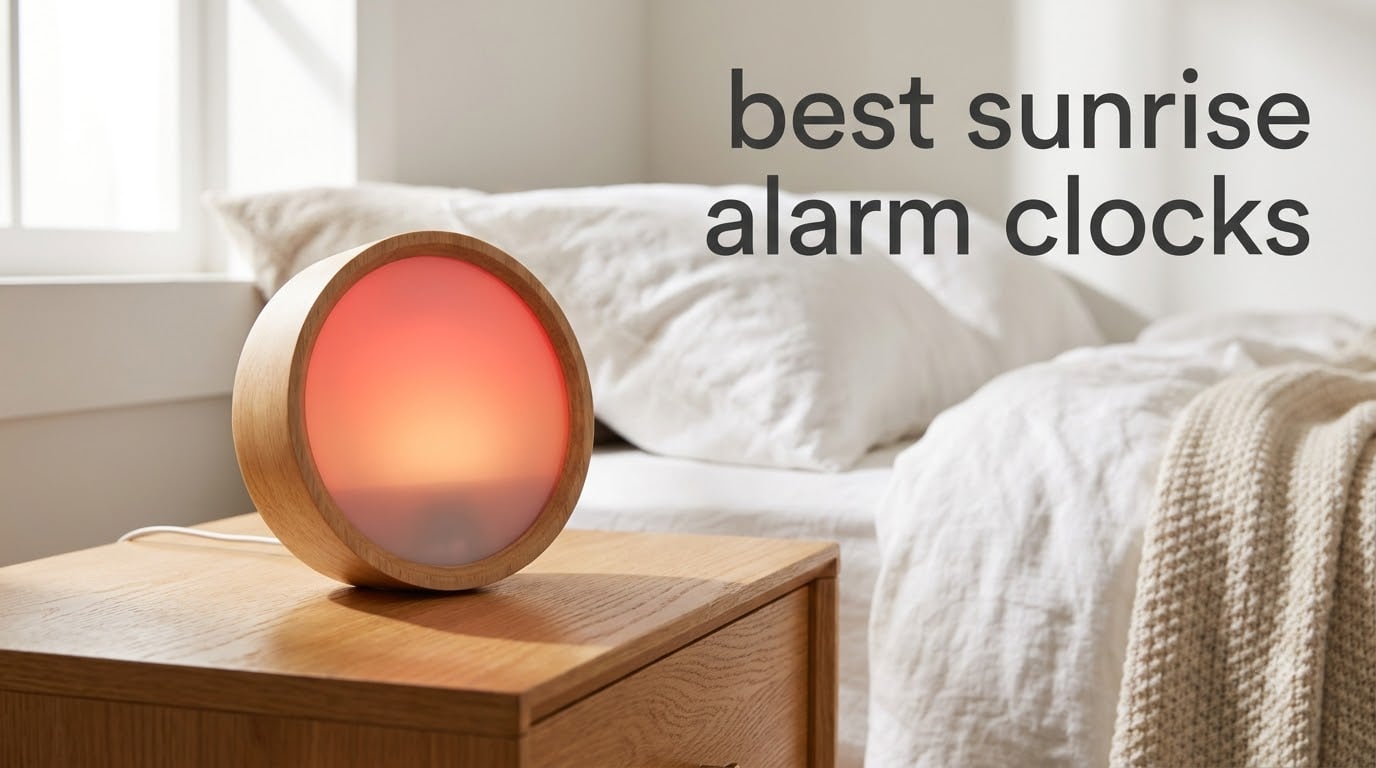
I will never forget the first morning I woke up to a sunrise alarm clock instead of the blaring buzzer I had used for fifteen years. Instead of jolting awake with my heart racing, my eyes opened naturally as a warm glow filled the room. That single morning changed how I think about mornings entirely.
If you are searching for the best sunrise alarm clocks in 2026, you probably already suspect that your phone alarm is doing you no favors. Sunrise alarm clocks, also called wake-up lights or dawn simulators, gradually increase light intensity over 10 to 60 minutes before your alarm time. This simulated sunrise signals to your circadian rhythm that dawn is arriving, which suppresses melatonin production and eases you out of sleep with less grogginess.
Our team spent weeks comparing eight of the most popular sunrise alarm clocks on the market, from the clinically tested Philips SmartSleep to budget-friendly options under $40. We looked at light quality, sound options, ease of use, and overall value. Some of these clocks impressed us with smooth color transitions from deep red to bright white. Others stood out for their white noise libraries, Bluetooth speakers, or app-controlled routines.
Throughout this guide, we break down each model with hands-on observations, real customer feedback, and specific recommendations for who should buy what. Whether you need a dawn simulator for dark winter mornings, a natural wake-up light for a windowless bedroom, or a light therapy alarm clock to help with seasonal affective disorder, we have you covered.
Table of Contents
Top 3 Picks for the Best Sunrise Alarm Clocks
Out of the eight sunrise alarm clocks we tested, three stood out clearly above the rest. The Philips SmartSleep HF3520 earns our Editor’s Choice for its clinically proven sunrise simulation and smooth color transitions. The JALL Full-Screen Wake Up Light takes Best Value for packing 25 natural sounds and a Bluetooth speaker into a sub-$35 package. And the Odokee Sunrise Alarm Clock earns Budget Pick for delivering Hatch-like features without a subscription.
Philips SmartSleep HF3520 Wake-Up Light
- Clinically tested sunrise simulation
- Colored sunrise and sunset
- 20 brightness reading lamp
- 5 natural sounds and FM radio

JALL Full-Screen Wake Up Light
- Full-screen sunrise simulation
- 25 natural sleep sounds
- 17 dimmable colors
- 5W Bluetooth speaker

Odokee Sunrise Alarm Clock
- 25 sleep sounds
- 12 color night light
- Bluetooth audio streaming
- 0-100% dimmable display
Best Sunrise Alarm Clocks in 2026
Below is a side-by-side comparison of all eight sunrise alarm clocks we reviewed. Each model brings different strengths, from budget-friendly dawn simulators to premium wake-up lights with app connectivity. Use this table to quickly compare features before diving into the individual reviews.
| Product | Specifications | Action |
|---|---|---|
| Philips SmartSleep HF3520 |
|
Check Latest Price |
| JALL Full-Screen Wake Up Light |
|
Check Latest Price |
 Philips SmartSleep HF3650 Philips SmartSleep HF3650 |
|
Check Latest Price |
| Odokee Sunrise Alarm Clock |
|
Check Latest Price |
 REACHER Wood Grain Sunrise Clock REACHER Wood Grain Sunrise Clock |
|
Check Latest Price |
 Hatch Restore 3 Hatch Restore 3 |
|
Check Latest Price |
 Dreamegg Sunrise 1 Dreamegg Sunrise 1 |
|
Check Latest Price |
 Vivilumens Sunrise Alarm Clock Vivilumens Sunrise Alarm Clock |
|
Check Latest Price |
1. Philips SmartSleep Wake-Up Light HF3520 – Clinically Tested Sunrise Simulation
Philips SmartSleep Wake-up Light, Colored Sunrise and Sunset Simulation, 5 Natural Sounds, FM Radio & Reading Lamp, Tap Snooze, HF3520/60
Colored sunrise and sunset simulation
5 natural wake-up sounds
FM radio
20 brightness reading lamp settings
Auto-dimmable display
Tap snooze
Pros
- Clinically proven effectiveness
- Smooth color transitions from red to white
- Auto-dimming display
- Tap snooze is convenient
- Two alarm settings for weekday and weekend
- Doubles as bedside reading lamp
Cons
- Controls can be confusing in the dark
- No Bluetooth or app connectivity
- Plastic feel for the price
- No sound option for sunset mode
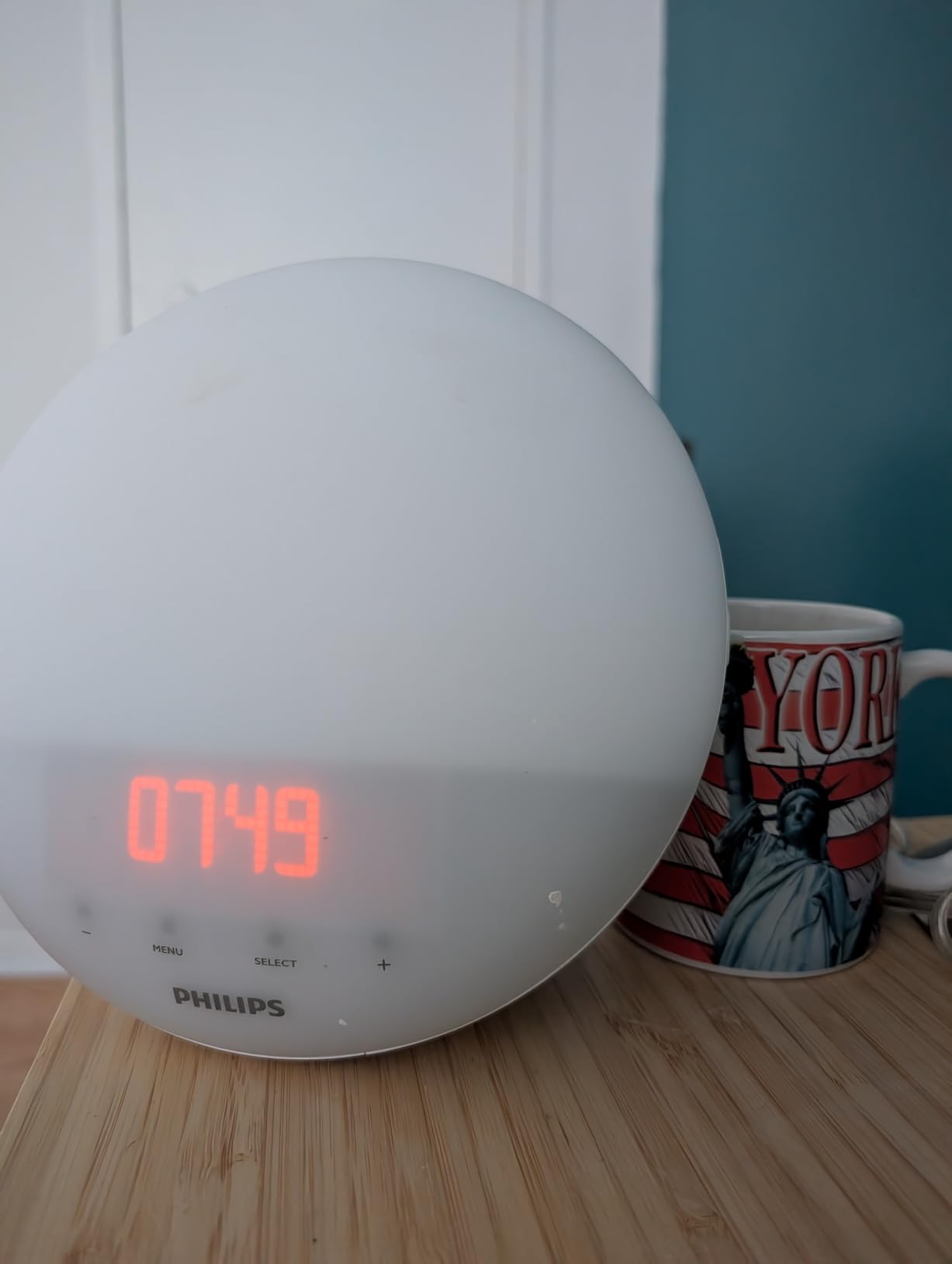
The Philips SmartSleep HF3520 is the sunrise alarm clock that most sleep experts actually recommend. Philips has been refining this technology for over a decade, and the HF3520 represents their best attempt at mimicking a natural sunrise with clinically studied results. The light transitions through a color spectrum from deep red, to warm orange, to bright yellow-white over 30 minutes before your alarm goes off.
I found the color transitions to be noticeably smoother than on any budget wake-up light I tested. Where cheaper models jump in brightness steps, the HF3520 glows gradually in a way that genuinely feels like watching a sunrise through a window. That smooth gradient is the single biggest reason this model earns our Editor’s Choice among the best sunrise alarm clocks available.
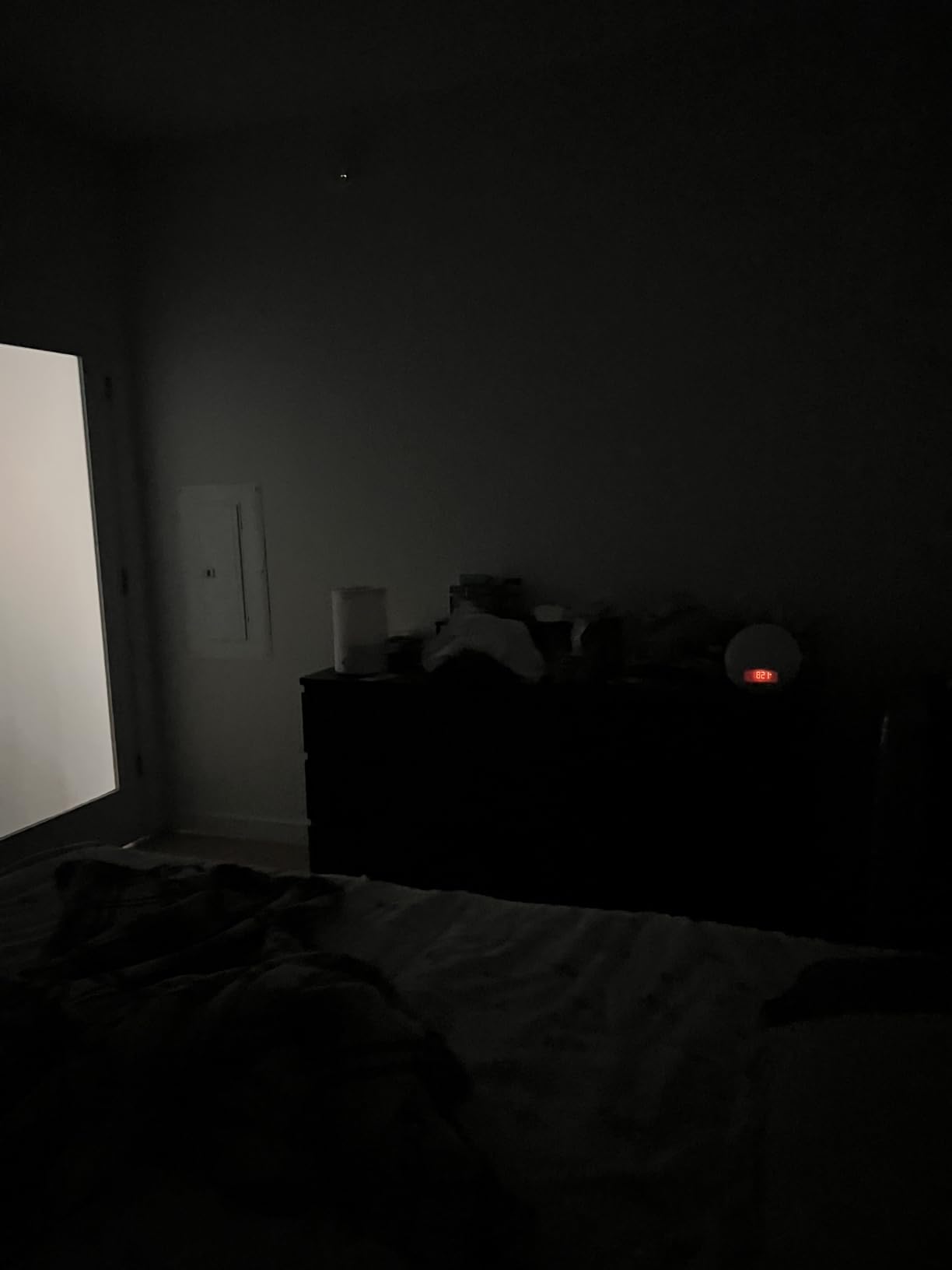
The sunset simulation works similarly in reverse, dimming gradually to help you wind down. You can choose from five natural wake-up sounds, or wake to FM radio. The tap-to-snooze feature means you just tap the top of the unit instead of hunting for a button. The auto-dimming display also deserves praise, as it adjusts its own brightness based on ambient light.
Where this clock frustrates is the button layout. Several Reddit users on r/sleep echoed my experience: the controls feel cluttered and hard to navigate in the dark. At this price point, the lack of Bluetooth or app connectivity feels like a gap. And while the plastic body looks clean enough on a nightstand, the build quality does not quite match the premium cost.
Brightness and Light Quality
The HF3520 reaches a maximum of about 300 lux at full brightness, which is bright enough to read by. With 20 brightness settings for the reading lamp mode, you have fine-grained control over light intensity. The color temperature shifts naturally from roughly 2000K warm red at the start of the simulation to a cooler white at full sunrise, closely mimicking how real daylight changes at dawn.
For people who care about the science, this color progression is what separates a good dawn simulator from a cheap one. The warm-to-cool transition is what your circadian rhythm evolved to respond to, which is why clinical studies have validated Philips wake-up lights specifically.
Who Should Buy This Model
This clock is the best choice if you want the most scientifically backed sunrise simulation available without committing to an app ecosystem or subscription. It suits people who are serious about light therapy, those who struggle with dark winter mornings, and anyone who wants a reading lamp that doubles as a wake-up light.
It is less ideal if you want smart features, Bluetooth audio, or app-controlled routines. If you need dual alarms with separate weekday and weekend schedules, the HF3520 does support that, though setting it up requires patience with those buttons.
2. JALL Full-Screen Wake Up Light – Best Budget Sunrise Alarm Clock
JALL Full-Screen Wake Up Light Sunrise Alarm Clocks for Bedrooms, White Noise Machine for Heavy Sleepers, 25 Natural Sounds, Dual Alarms, FM Radio, 17 Dimmable Colors, Bluetooth Speaker
Full-screen sunrise simulation
25 natural sleep sounds
17 dimmable colors
5W Bluetooth speaker
Dual alarms
FM radio
Auto-sync time via Bluetooth
Pros
- Sunrise simulation works effectively
- 25 natural sounds and white noise options
- Dual alarms for weekday and weekend
- Bluetooth speaker for streaming
- 17 color lighting effects
- Display can be dimmed completely
- Auto-syncs time via Bluetooth
Cons
- Light transition not very smooth
- Cannot turn off sound completely on alarms
- Speaker quality is tinny
- Plastic feel may seem cheap
The JALL Full-Screen Wake Up Light is the best-selling sunrise alarm clock on Amazon, and after testing it, I can see why. For well under $40, you get a full-screen dawn simulator, 25 natural sounds, a Bluetooth speaker, FM radio, and 17 color options. That feature list would have cost over $100 a few years ago.
The full-screen design means the entire front face of the clock lights up during the sunrise simulation, covering a wider area than competitors that use a smaller light panel. For heavy sleepers, that broader light coverage can make a real difference in actually waking you up. JALL specifically markets this clock for heavy sleepers, and the larger light surface area is part of why it works.
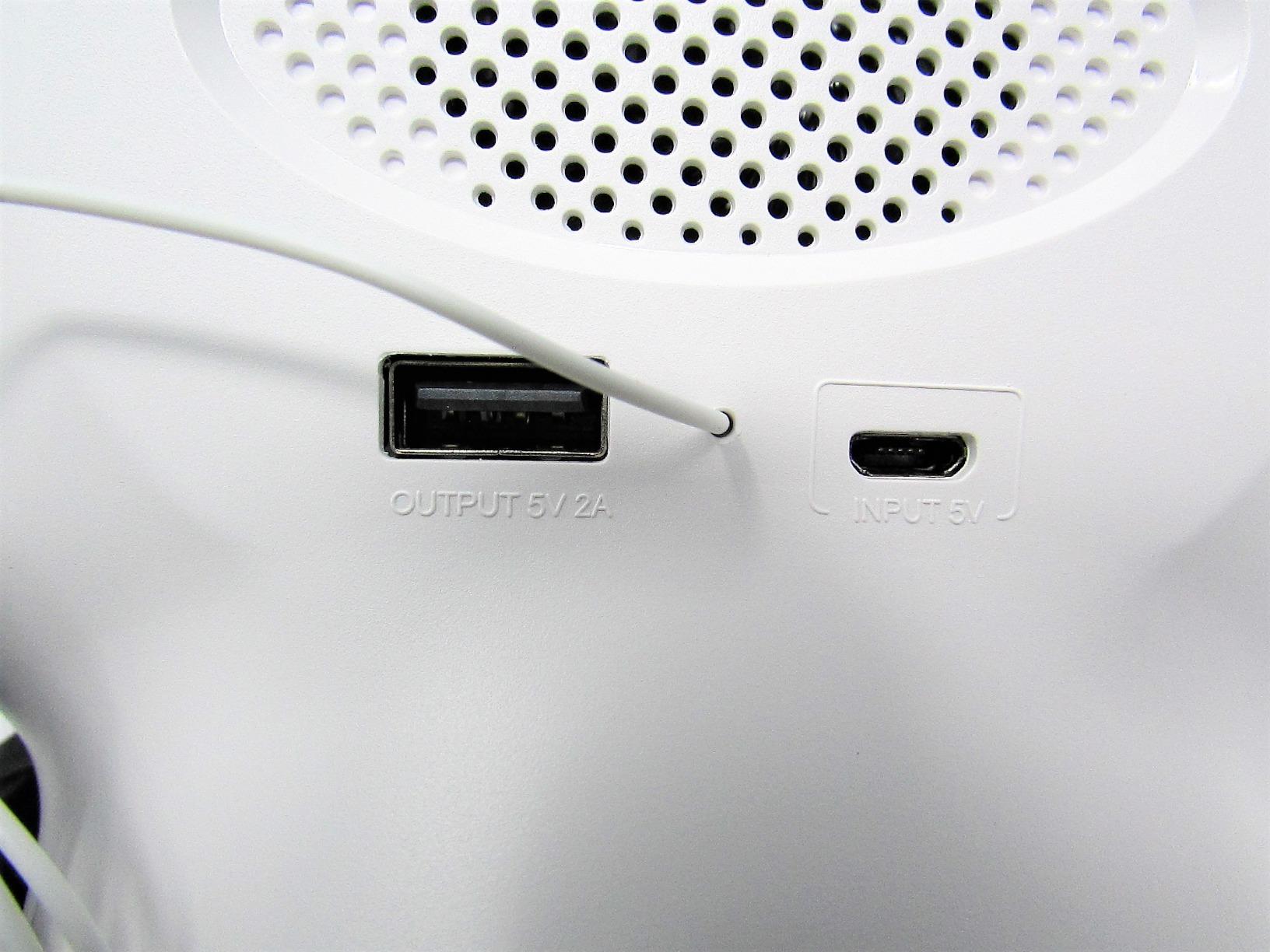
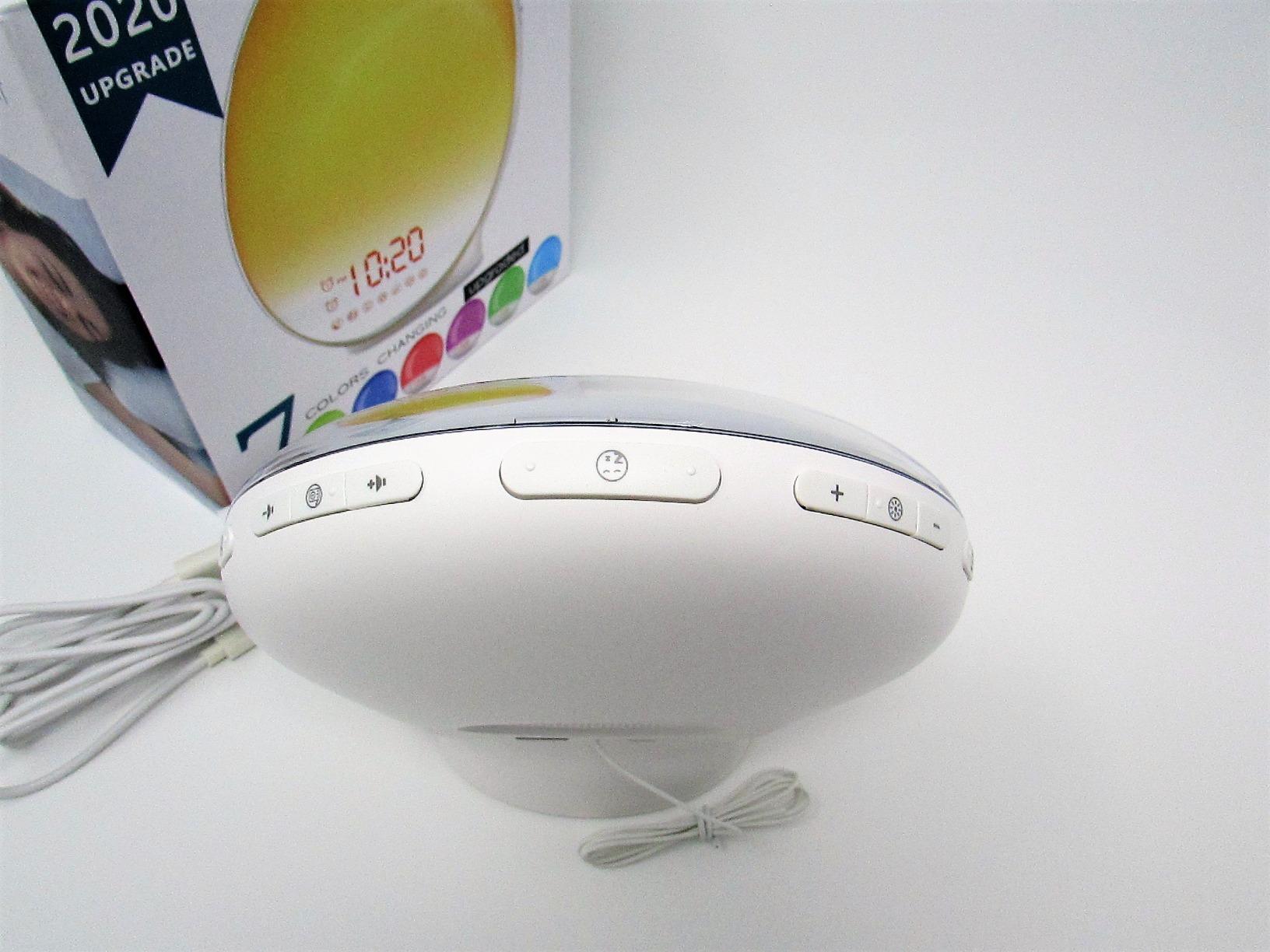
I appreciated the dual alarm feature, which lets you set one time for weekdays and another for weekends. The 17 dimmable colors go beyond the standard sunrise palette, so you can use this as an ambient mood light too. The Bluetooth speaker is a nice bonus, though the 5W output is best suited for podcasts or gentle music rather than filling a room with bass.
The main weakness compared to the Philips HF3520 is the light transition quality. The brightness increase feels less smooth, stepping up in noticeable increments rather than the seamless gradient that Philips achieves. The alarm sounds also cannot be turned off completely if you want a light-only wake-up. And the speaker, while functional, has a tinny quality that becomes obvious at higher volumes.
Sounds and Connectivity Options
With 25 natural sleep sounds including birdsong, ocean waves, rain, and white noise, the JALL gives you plenty of options for both falling asleep and waking up. The FM radio covers 76 to 108 MHz, which is a wider band than most clock radios. The Bluetooth speaker auto-syncs the time from your phone, which means you never have to manually set the clock after a power outage.
The music-rhythm mode, which cycles through 9 RGB colors in time with music from the Bluetooth speaker, is a fun touch for parties or kids’ rooms, though not particularly useful for sleep.
Who Should Buy This Model
This is the best sunrise alarm clock for anyone on a tight budget who still wants a full feature set. If you want white noise, multiple colors, a Bluetooth speaker, and dual alarms all in one device, the JALL delivers more features per dollar than anything else we tested.
It is especially good for students, first apartment setups, or anyone who wants to try a dawn simulator without a big investment. Just keep in mind that the light quality and build feel reflect the budget price point.
3. Hatch Restore 3 – Premium Sunrise Alarm Clock With App Control
Hatch Restore 3 | Science-Backed Sleep Audio, Circadian Lighting (Putty)
80+ sleep sounds
Smart light with sunrise alarm
Hatch Sleep app control
Customizable light and audio routines
Screen-free bedtime design
Hatch+ subscription optional
Pros
- Sunrise alarm helps wake up naturally
- 80+ sleep sounds and white noise options
- Customizable light colors and soundscapes
- Screen-free bedtime routine
- Beautiful minimal design
- Great sound quality for meditations and audiobooks
Cons
- Requires subscription for full content access
- App interface can be difficult to use
- No visible clock by default
- Manual volume adjustment needed each night
The Hatch Restore 3 is the sunrise alarm clock that thinks it is a sleep wellness platform. Instead of buttons on the device itself, you control nearly everything through the Hatch Sleep app on your phone. You can create custom bedtime routines that pair gradual sunset lighting with meditation sounds, white noise, or sleep stories, then program a sunrise alarm that gradually brightens before your wake time.
The design is striking. The Restore 3 looks more like a piece of modern home decor than an alarm clock. Its minimal, putty-colored body sits unobtrusively on a nightstand, and the light emanates from behind a fabric-covered front panel. There is no visible clock display by default, which is intentional. Hatch designed this to be screen-free to reduce blue light exposure before bed.
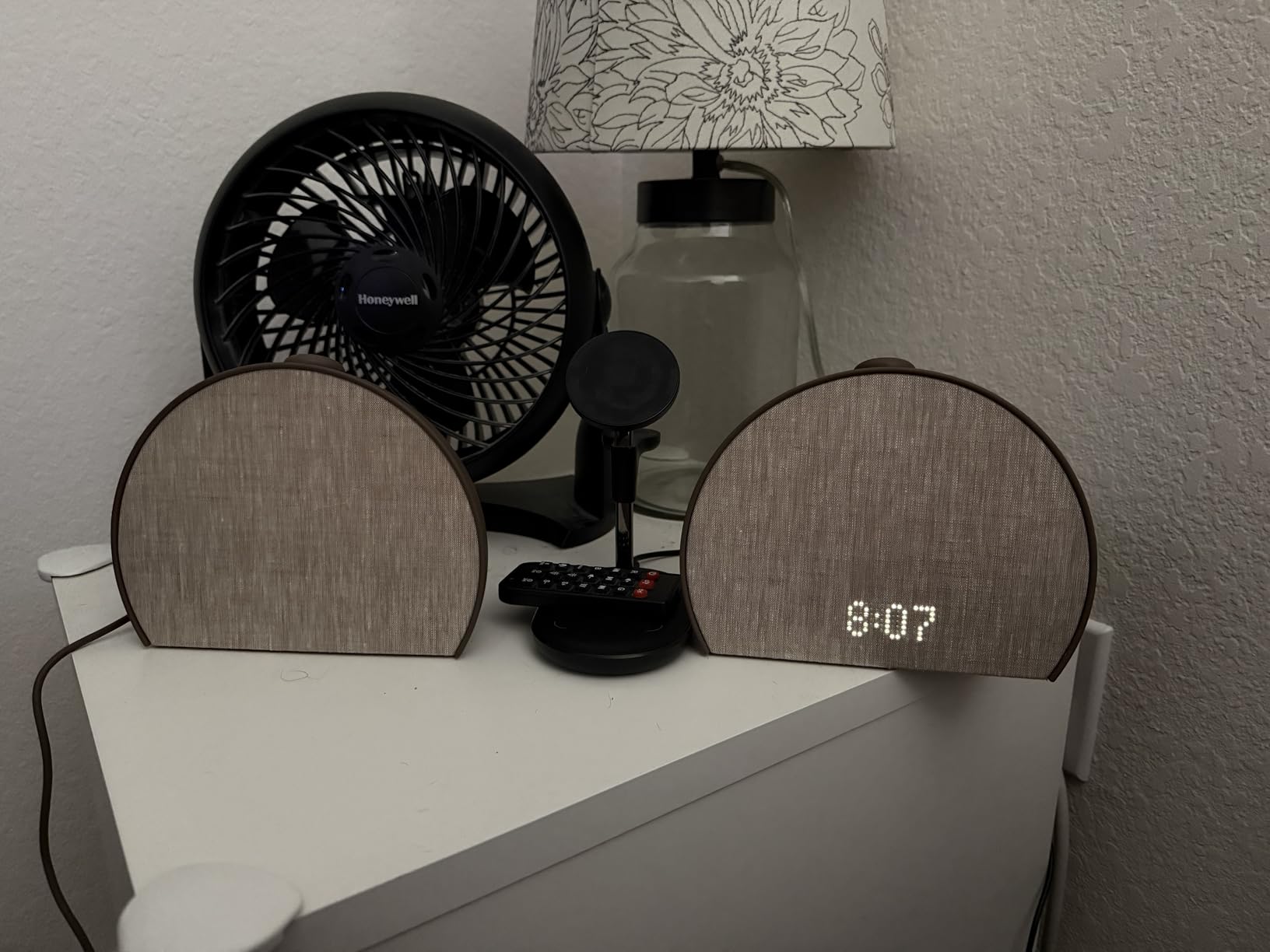
One verified purchaser named Paola summed up the experience perfectly in her review: the sunset feature changed how she winds down at night, and waking up to gradually brightening light instead of a blaring alarm made her mornings feel less jarring. She reported feeling more refreshed and less groggy, which is exactly what a good sunrise alarm should accomplish.
The catch that comes up again and again in Reddit threads on r/sleephackers and r/productivity is the Hatch+ subscription. While the basic sunrise alarm and some sounds work without a subscription, the full library of 80+ sleep sounds, meditations, and sleep stories requires a Hatch+ membership at $5.99 per month or $59.99 per year. A 30-day free trial softens the blow, but many users resent paying an ongoing fee for an alarm clock they already bought.
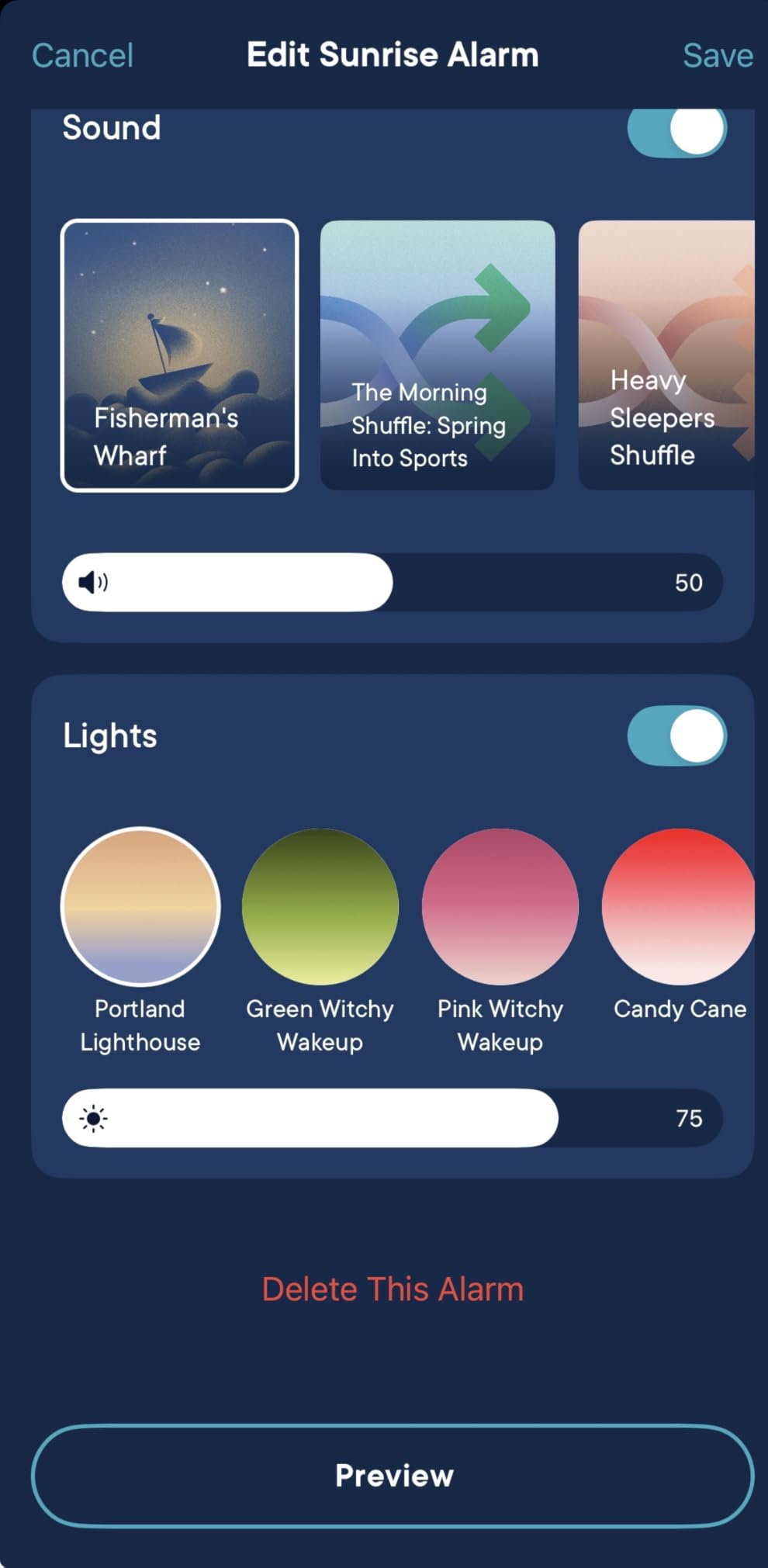
App Experience and Subscription Value
The Hatch Sleep app lets you design multi-step bedtime routines, like dimming the light over 15 minutes while playing rain sounds, then switching to white noise for the rest of the night. You can also set morning routines that pair the sunrise with specific sounds. The app is powerful, but users frequently report that the interface is clunky and sometimes difficult to navigate.
If you are weighing the subscription cost, consider what you actually need. The sunrise alarm and basic sounds work without paying anything. The subscription adds meditation content, expanded soundscapes, and sleep stories. Whether that content is worth $60 per year depends on how much you value guided wind-down routines.
Who Should Buy This Model
The Hatch Restore 3 is ideal if you want a complete sleep ecosystem, not just an alarm clock. It suits people who already use meditation apps, those who want a screen-free bedroom, and anyone who values beautiful design alongside function.
It is not the right choice if you want a simple set-and-forget clock, if you dislike app-based controls, or if you are opposed to subscription models. For a Hatch-like experience without the subscription, the Odokee further down this list is worth a look.
4. Philips SmartSleep HF3650 – Best for RelaxBreathe and Sleep Routines
PHILIPS SmartSleep Sleep and Wake-Up Light, Simulated Sunrise and Sunset, Multiple Lights and Sounds, RelaxBreathe to Sleep, HF3650/60
Personalized sunrise and sunset profiles
RelaxBreathe light-guided breathing
FM radio and Bluetooth speaker
Phone charging dock
Power backup battery
Auto-dimming display
Pros
- Smooth sunrise simulation with correct light frequencies
- RelaxBreathe feature helps wind-down routine
- Multiple light and sound options
- Good quality natural alarm sounds
- Battery backup for power loss
- Higher quality than cheaper alternatives
Cons
- No app connectivity despite high price
- Limited sunset sounds only rain and ocean
- Aux port is outdated
- Cannot program different alarms for weekdays
- Menu navigation can be confusing
The Philips SmartSleep HF3650 is the premium sibling of the HF3520, and it adds several features aimed at people who want a complete sleep routine device, not just a wake-up light. The standout addition is RelaxBreathe, a light-guided breathing exercise that uses pulsing light to help you slow your breathing and fall asleep faster.
I found RelaxBreathe genuinely useful for winding down. You follow the light as it slowly brightens and dims, matching your breathing to the rhythm. After about ten minutes, the breathing guide fades and the sunset simulation takes over, gradually dimming the room into darkness. For people who struggle with racing thoughts at bedtime, this combination can be surprisingly effective.
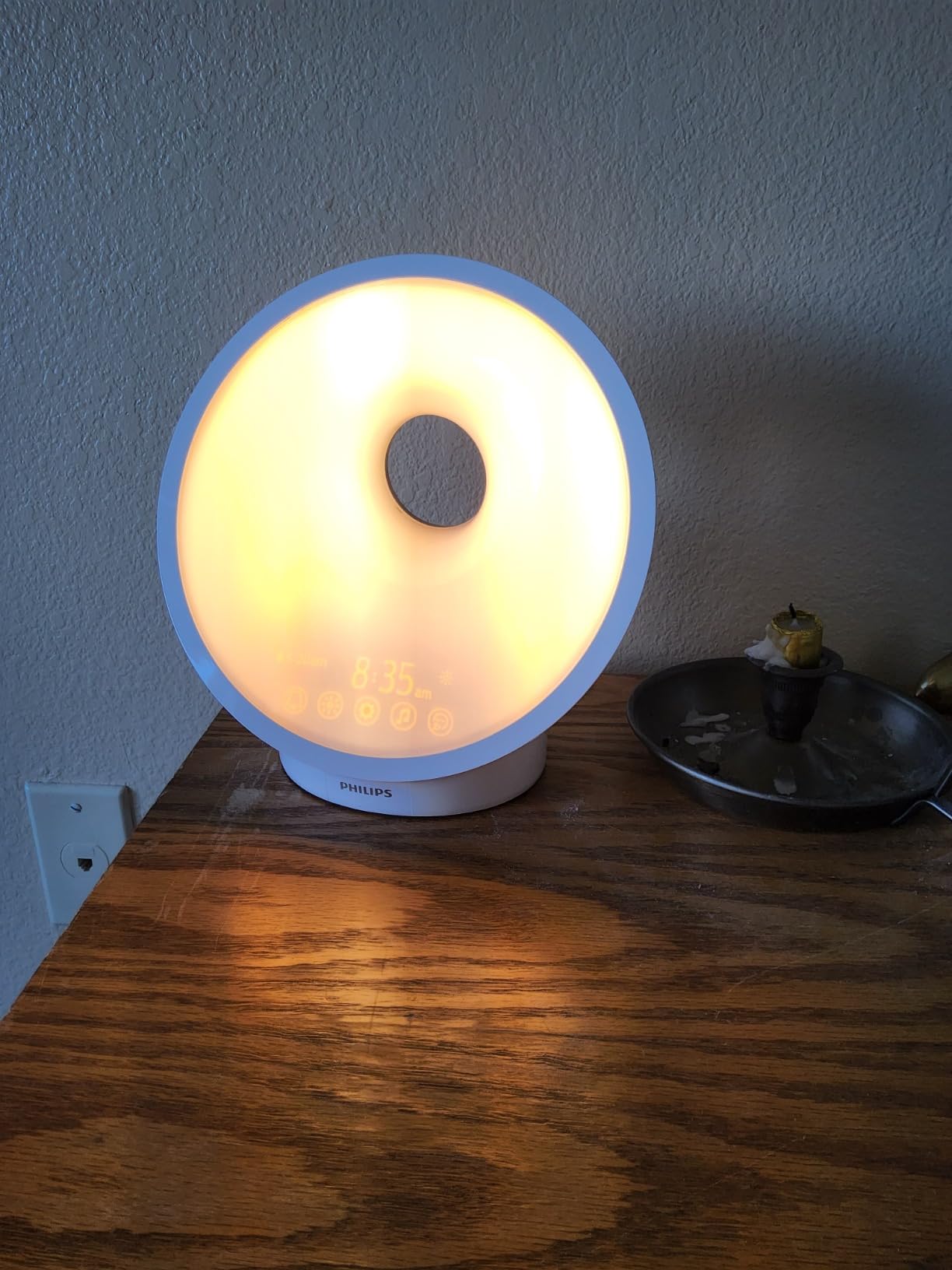
The sunrise simulation on the HF3650 matches the same smooth color transitions that make the HF3520 so effective. The light uses frequencies that Philips has tuned to align with how your circadian rhythm responds to morning light. This is the same technology that has been validated in clinical sleep studies.
The HF3650 also includes a built-in phone charging dock, which is a thoughtful touch that eliminates the need for a separate charging cable on your nightstand. The battery backup means your alarm still fires even during a power outage. Bluetooth speaker functionality lets you stream audio from your phone.
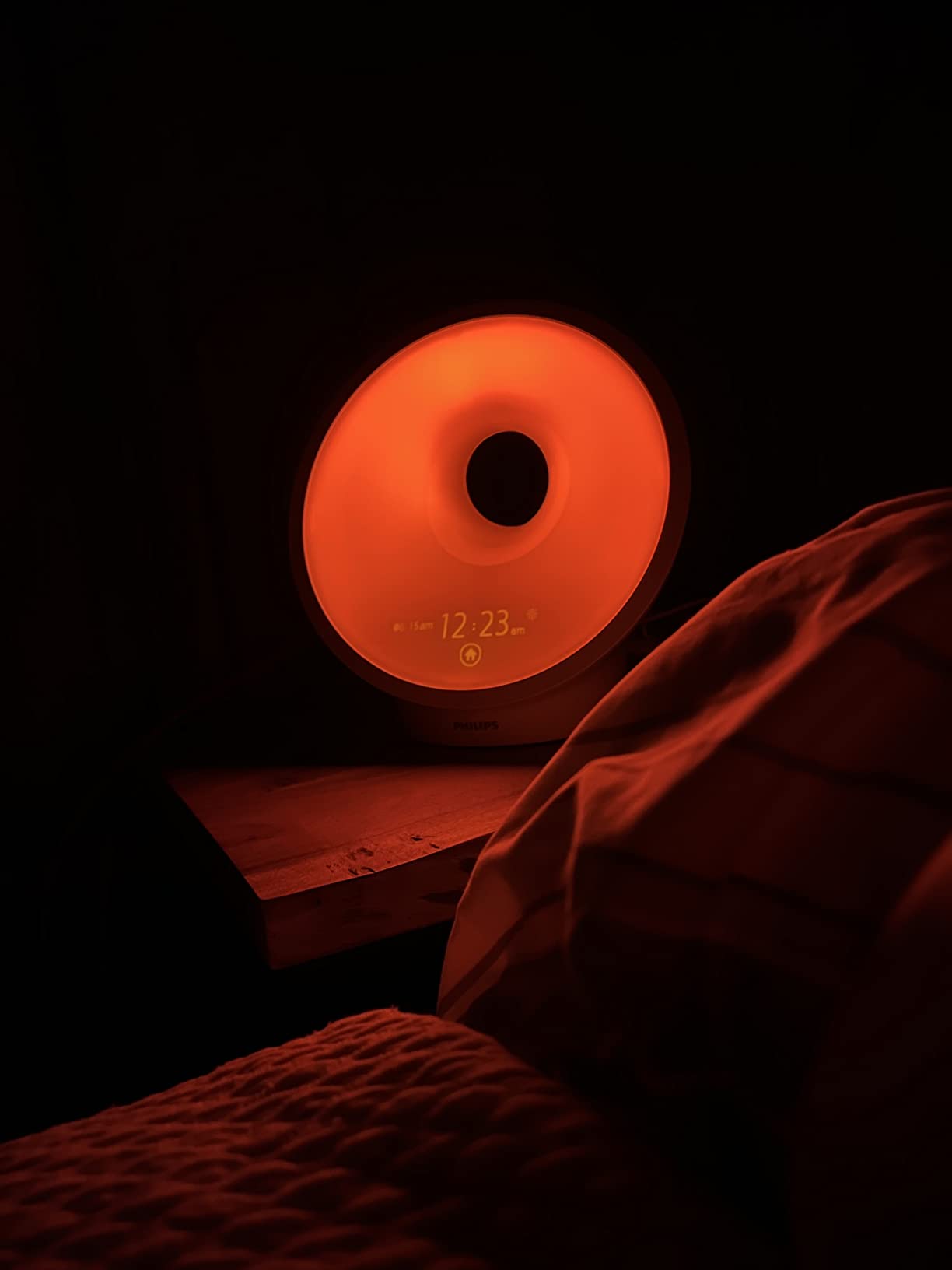
What Sets It Apart From the HF3520
The HF3650 adds RelaxBreathe, a phone charging dock, Bluetooth speaker, battery backup, and personalized sunrise profiles. The HF3520 costs significantly less and offers the same core sunrise simulation without those extras. If RelaxBreathe appeals to you, the HF3650 justifies its higher price. If you just want a great sunrise alarm, the HF3520 is the better value.
The menu navigation on the HF3650 is admittedly confusing. Multiple Reddit users on r/HubermanLab and r/sleep noted that setting up personalized profiles requires careful reading of the manual. Once configured, though, daily operation is straightforward.
Who Should Buy This Model
This clock is best for people who want a premium dawn simulator with built-in wind-down features. If RelaxBreathe sounds like something you would use nightly, and you value having a charging dock and battery backup on your nightstand, the HF3650 is worth the investment.
It is overkill if you only need a basic sunrise alarm. The lack of app connectivity at this price is also a legitimate frustration, especially when the Hatch Restore 3 offers robust app control for a similar cost.
5. Odokee Sunrise Alarm Clock – Best Hatch Alternative Without Subscription
Odokee Sunrise Alarm Clock White Noise Machine: Natural Wake Up Light
Sunrise simulation 5-60 min
25 sleep sounds
7 alarm sounds
Bluetooth audio streaming 5W
12 color night light
0-100% dimmable display
Battery backup
Pros
- Hatch alternative at fraction of price
- No app needed with simple button controls
- 25 sleep sounds including white noise varieties
- Bluetooth speaker works well
- Display can turn completely off
- Battery backup for power loss
- Snooze keeps light on while only sound stops
Cons
- Only one alarm setting
- Fixed 9-minute snooze time
- Light can flicker on some brightness settings
- Some find initial setup challenging
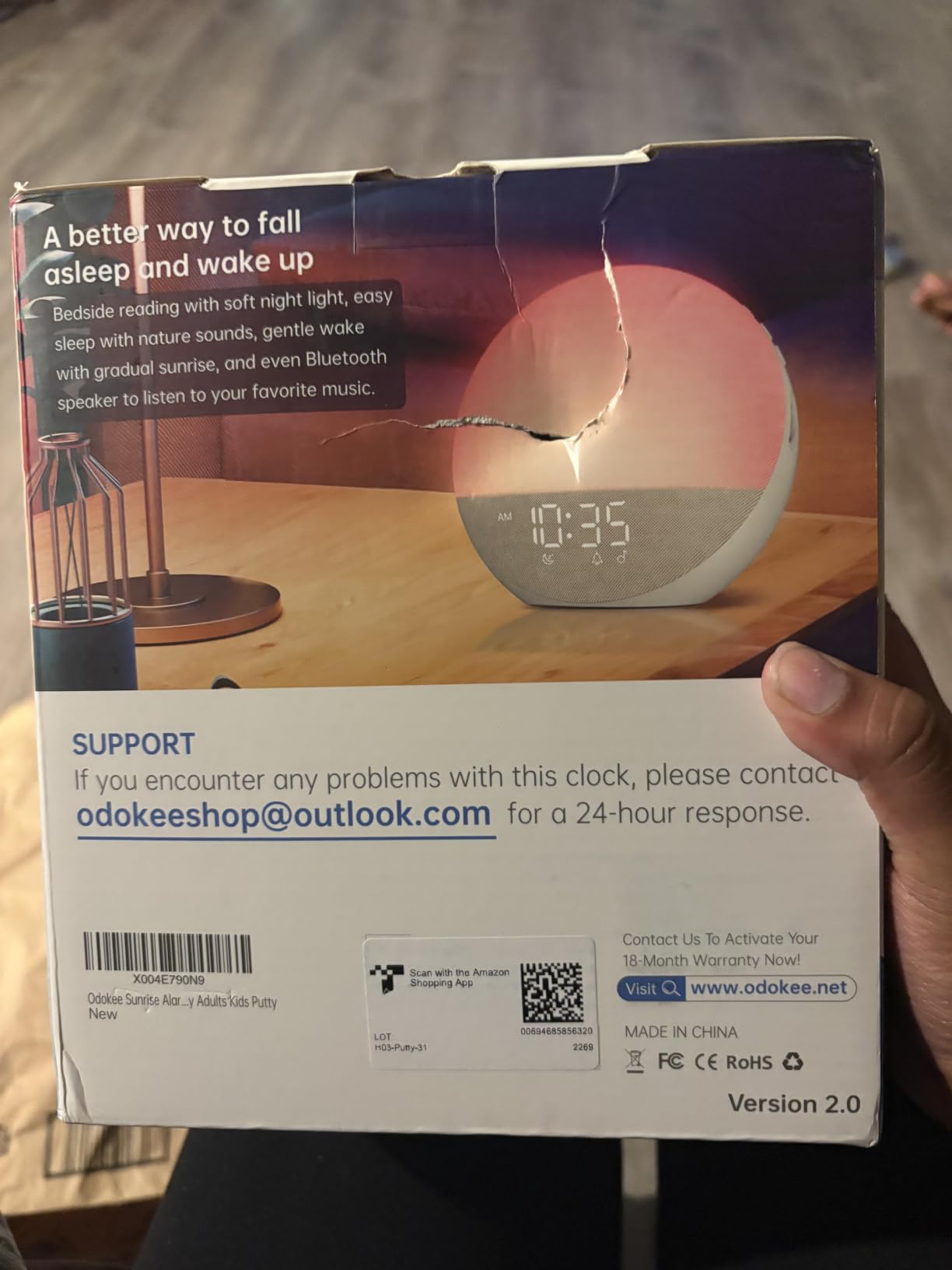
The Odokee Sunrise Alarm Clock is the model I recommend most often to friends who want Hatch Restore features without the subscription. For about one-third the price of the Hatch Restore 3, the Odokee gives you 25 sleep sounds, Bluetooth audio streaming, a 12-color night light, and a customizable sunrise simulation that runs from 5 to 60 minutes.
The first thing I noticed about the Odokee is its clean, putty-colored design that would not look out of place next to a Hatch on a nightstand. The front panel has a soft, fabric-like texture that feels more premium than the glossy plastic of the JALL. The display dims from 0 to 100 percent, meaning you can turn the clock numbers completely off at night if you are sensitive to light.
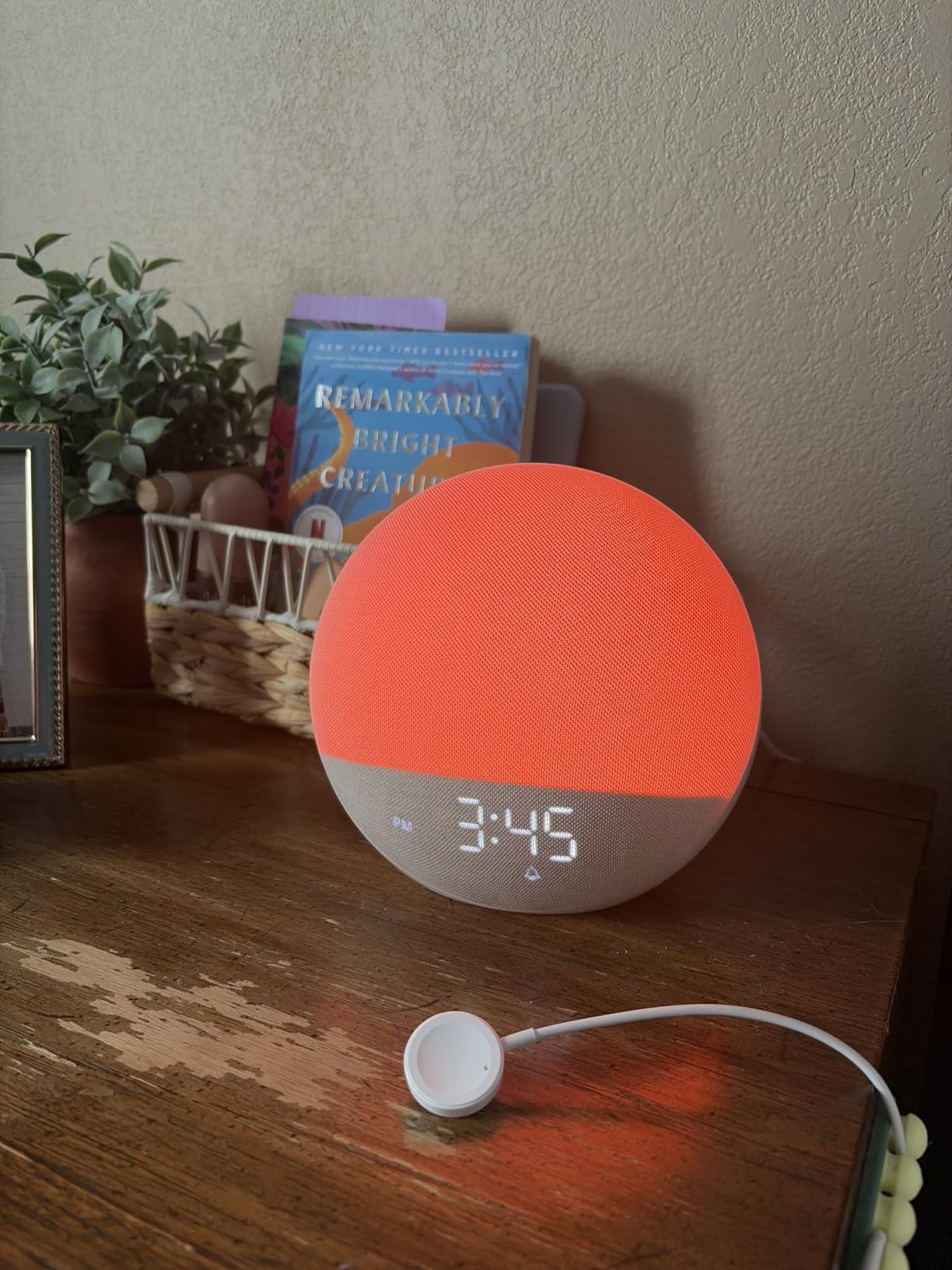
The 25 sleep sounds cover the expected categories: white noise, pink noise, brown noise, blue noise, and various nature sounds. The inclusion of pink and brown noise is notable because those lower-frequency sounds are increasingly recommended by sleep specialists for deeper, more restful sleep. The Bluetooth speaker delivers clear audio at 5W, good enough for audiobooks or sleep podcasts.
The sunrise simulation is adjustable from 5 to 60 minutes, which gives you flexibility. A 5-minute sunrise works for quick naps, while a full 60-minute simulation mirrors what Philips recommends for circadian alignment. The light brightens gradually, though not quite as smoothly as the Philips models.
Snooze Behavior and Display Control
One detail that impressed me is the snooze behavior. When you press snooze, the sound stops but the sunrise light stays on. This is actually better than many competitors that kill both light and sound on snooze, then restart the whole cycle. Keeping the light on means your body continues receiving the wake-up signal during the snooze period.
The fixed 9-minute snooze is a minor annoyance if you prefer a longer snooze window. Some users also reported light flickering on certain brightness settings, though this was not consistent across all units.
Who Should Buy This Model
The Odokee is the best sunrise alarm clock for anyone who wants premium features at a budget price. If you have been tempted by the Hatch Restore but balk at the subscription, this is your answer. It is also great if you prefer physical buttons over app controls.
The main limitation is the single alarm setting. If you need different wake times for weekdays and weekends, you will have to manually change the alarm time. For couples or shift workers, this could be a dealbreaker.
6. REACHER Wood Grain Sunrise Alarm Clock – Best for Wood Aesthetic Lovers
REACHER Wood Grain Sunrise Alarm Clock and Sound Machine Nightlight
Sunrise simulation 5-60 min
26 sleep sounds
8 night light colors
Wood grain design
5-180 min sleep timer
0-100% dimmable display
Battery backup
Pros
- Affordable alternative to Hatch clock
- Beautiful wood grain aesthetic
- 26 different sleep sounds
- Easy to set up without instructions
- Display can be dimmed to complete darkness
- Gradual and effective sunrise wake up
- Battery backup for power outages
Cons
- Only one alarm setting no dual alarm
- Alarm sounds are somewhat strange
- Learning curve due to many features
- Limited wake-up sounds only 4 options
The REACHER Wood Grain Sunrise Alarm Clock is the most aesthetically pleasing wake-up light I tested. Its wood-grain finish blends naturally into bedrooms with warm-toned furniture, which is something no white plastic alarm clock can claim. If you care about how your nightstand looks, this model earns serious style points.
Beyond looks, the REACHER delivers solid sunrise functionality. The light gradually brightens from 1 percent to 100 percent over a customizable window of 5 to 60 minutes. With 26 sleep sounds including white noise, ocean waves, rain, and wind, you have more sound options than most clocks at this price point.
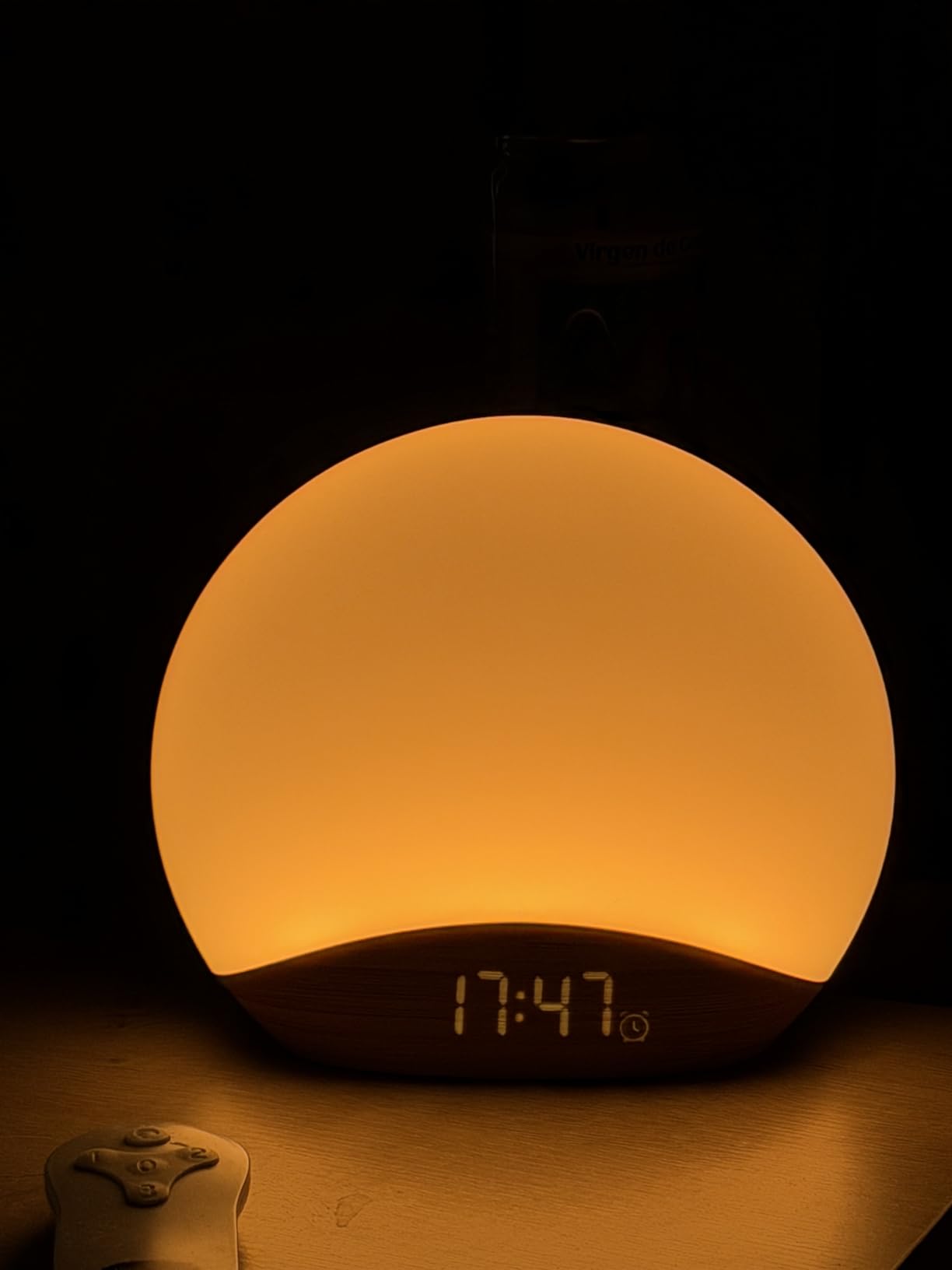
I was impressed by how easy the REACHER was to set up. Many sunrise alarm clocks require a manual-reading session before you can get them working, but this one was intuitive right out of the box. The display dims to complete darkness, which is a feature that light-sensitive sleepers will appreciate immediately.
The 5-to-180-minute sleep timer is more flexible than what most competitors offer. You can set white noise to play for just long enough to fall asleep, or keep it running all night. The battery backup ensures your settings survive power outages, which is critical for an alarm clock you depend on.
Sleep Timer and Night Light Flexibility
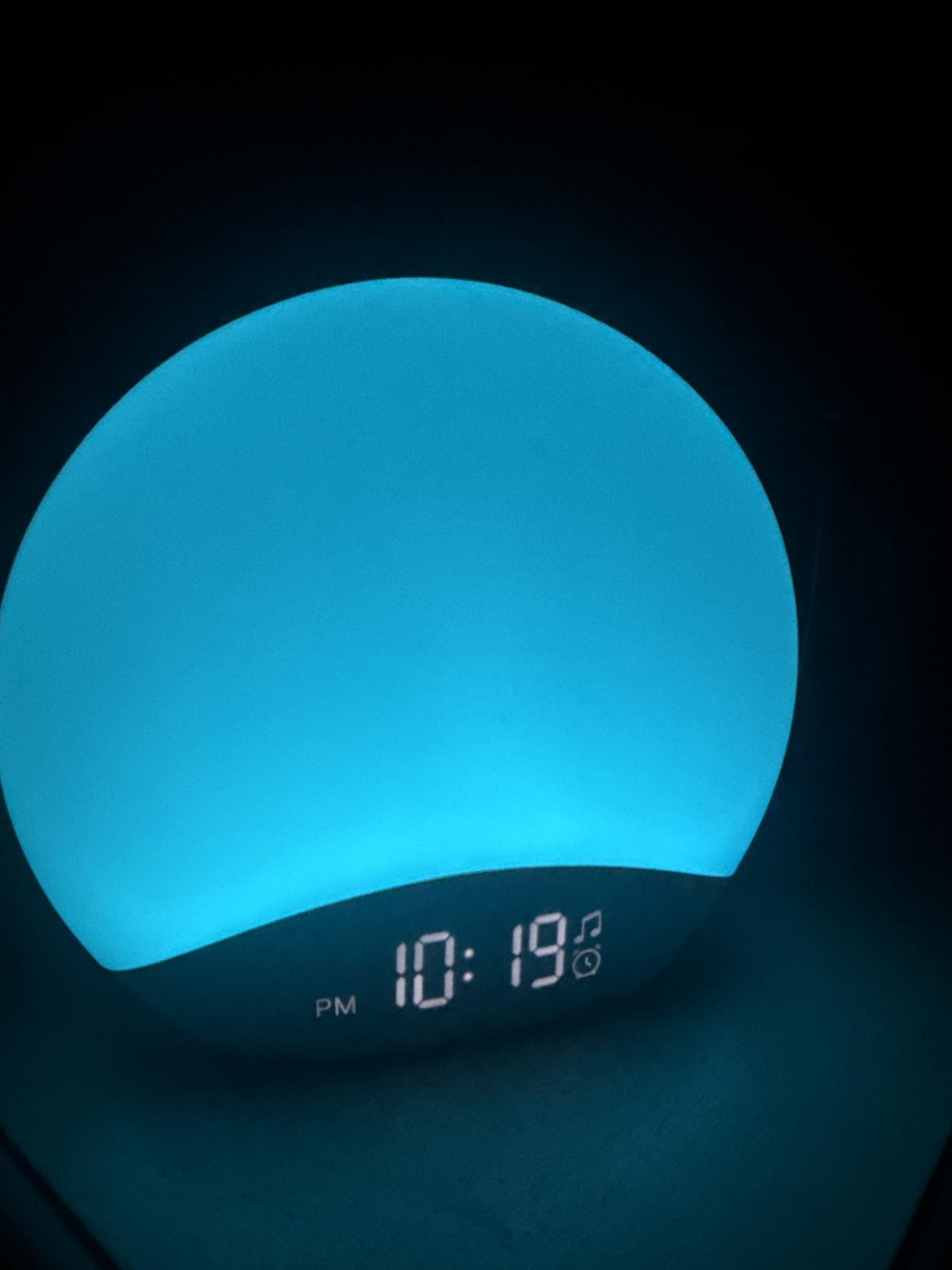
The wide range of the sleep timer, from 5 to 180 minutes, gives you precise control over how long sleep sounds play. The 8 night light colors are adjustable in brightness, so you can use this as a gentle reading light or a comforting glow for kids who do not like total darkness.
The wood grain finish is real wood material, not a plastic veneer. This makes the REACHER heavier and more stable than similarly sized plastic clocks, which addresses a common complaint about budget sunrise alarms tipping over easily.
Who Should Buy This Model
The REACHER is the best sunrise alarm clock if you want something that looks good on your nightstand and does not scream tech device. It suits design-conscious buyers, people who want lots of sleep sounds without paying Hatch prices, and anyone furnishing a bedroom with wood tones.
Be aware that it only supports one alarm, and the wake-up sound options are limited to four. If you need dual alarms or a wide variety of wake-up tones, look elsewhere. But for a beautiful, functional dawn simulator at an affordable price, the REACHER delivers.
7. Dreamegg Sunrise 1 – Best Phone-Free Sunrise Alarm Clock
Dreamegg Sunrise Alarm Clock, Natural Wake up Light, White Noise Machine
29 soothing sounds
Customizable sunrise and sleep routines
9 colors with adjustable brightness
Cotton-linen fabric cover
Phone-free setup
Dimmable night light
Pros
- Phone-free setup no app required
- 29 soothing sound options
- Customizable sunrise alarm and sleep routines
- Dimmable night light with 9 colors
- Fabric cover reduces blue light effect
- Great value compared to premium alternatives
Cons
- Sunrise light increases in steps rather than gradually
- Display brightness lowest level still too bright for some
- Only 1 alarm setting
- White noise stops when snooze is pressed
The Dreamegg Sunrise 1 exists for a specific type of person: someone who wants to keep their phone out of the bedroom entirely. Unlike the Hatch Restore 3, which requires an app for setup and ongoing customization, the Dreamegg is fully controlled through physical buttons on the device. No app, no Bluetooth pairing, no phone needed.
One verified reviewer named Megan captured the appeal perfectly: she needed to banish her phone from the bedroom for her mental health, which meant finding an alarm clock that could work independently. She chose the Dreamegg over a fancy subscription-based clock and reported waking up before the alarm because of how bright the sunrise light becomes.
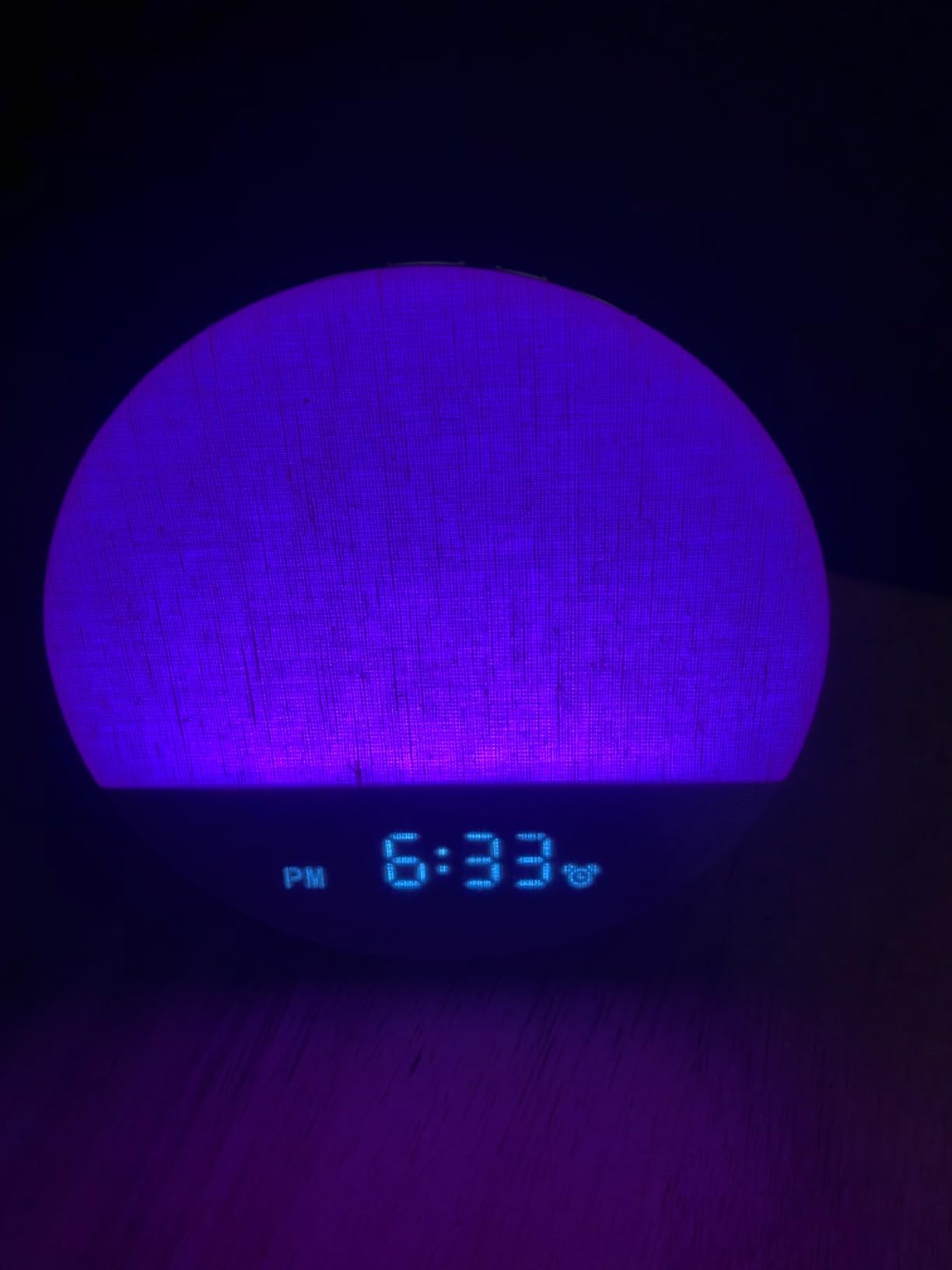
The cotton-linen fabric cover is a thoughtful design choice. Unlike glossy plastic screens that emit blue light, the fabric diffuses the light softly, reducing harshness and creating a warmer glow. This also makes the Dreamegg one of the most attractive sunrise clocks available, with a cushion-like appearance that suits relaxed bedroom decor.
With 29 soothing sounds including nature sounds, meditations, lullabies, white noise, brown noise, pink noise, and fan sounds, the sound library is extensive. The sunrise alarm is customizable, and you can create simple sleep routines that pair sunset lighting with sound.
Fabric Cover and Blue Light Reduction
The cotton-linen fabric over the display is the Dreamegg’s signature feature. By physically filtering the light output, the fabric reduces the blue light that can interfere with melatonin production. This is particularly valuable at night, when even a dim clock display can disrupt sleep for sensitive individuals.
The trade-off is that the fabric can make the display slightly harder to read during the day compared to a bare LED screen. Some users reported the lowest brightness level still feels too bright through the fabric, which suggests the dimming range could be wider.
Who Should Buy This Model
The Dreamegg Sunrise 1 is the best sunrise alarm clock for phone-free sleepers who want a beautiful, fabric-covered device with a rich sound library. It is ideal for digital detoxers, parents who want lullabies and white noise in a child’s room, and anyone who values tactile controls over app menus.
Watch out for the choppy sunrise transition. The light increases in visible steps rather than a smooth gradient, which is the main reason it ranks below the Philips models. If you need dual alarms, this clock will not work for you either.
8. Vivilumens Sunrise Alarm Clock – Best for Heavy Sleepers on a Budget
Vivilumens Sunrise Alarm Clock with Sound Machine for Heavy Sleepers Adults
Sunrise simulation 10 min before alarm
Dual alarm clocks
10 soothing sounds with 30/60/90 timer
3 level dimmable touch table lamp
USB charging port
Snooze mode
Breathing light function
Pros
- Beautiful modern vintage design
- Dual alarm settings for different schedules
- USB charging port included
- Good sound quality and variety of white noise options
- Effective sunrise simulation
- Adjustable clock brightness
Cons
- Light temperature fixed at 3500K cannot change
- Touch controls can accidentally disable alarm
- Sunrise light only runs 30 minutes then auto-cancels
- Complex settings need careful reading
- Sound volume does not increase with light
The Vivilumens Sunrise Alarm Clock combines a wake-up light, white noise machine, touch lamp, and USB charger into one affordable device. It is specifically marketed for heavy sleepers, and the dual alarm functionality makes it one of the few budget options that supports two different wake times.
The modern vintage design is immediately striking. The wood grain body and touch-sensitive lamp surface give it a premium feel that punches above its price point. One verified buyer described it as looking modern and vintage at the same time, and she noted it has been very effective at waking her up without the heart-attack sensation of a loud alarm.
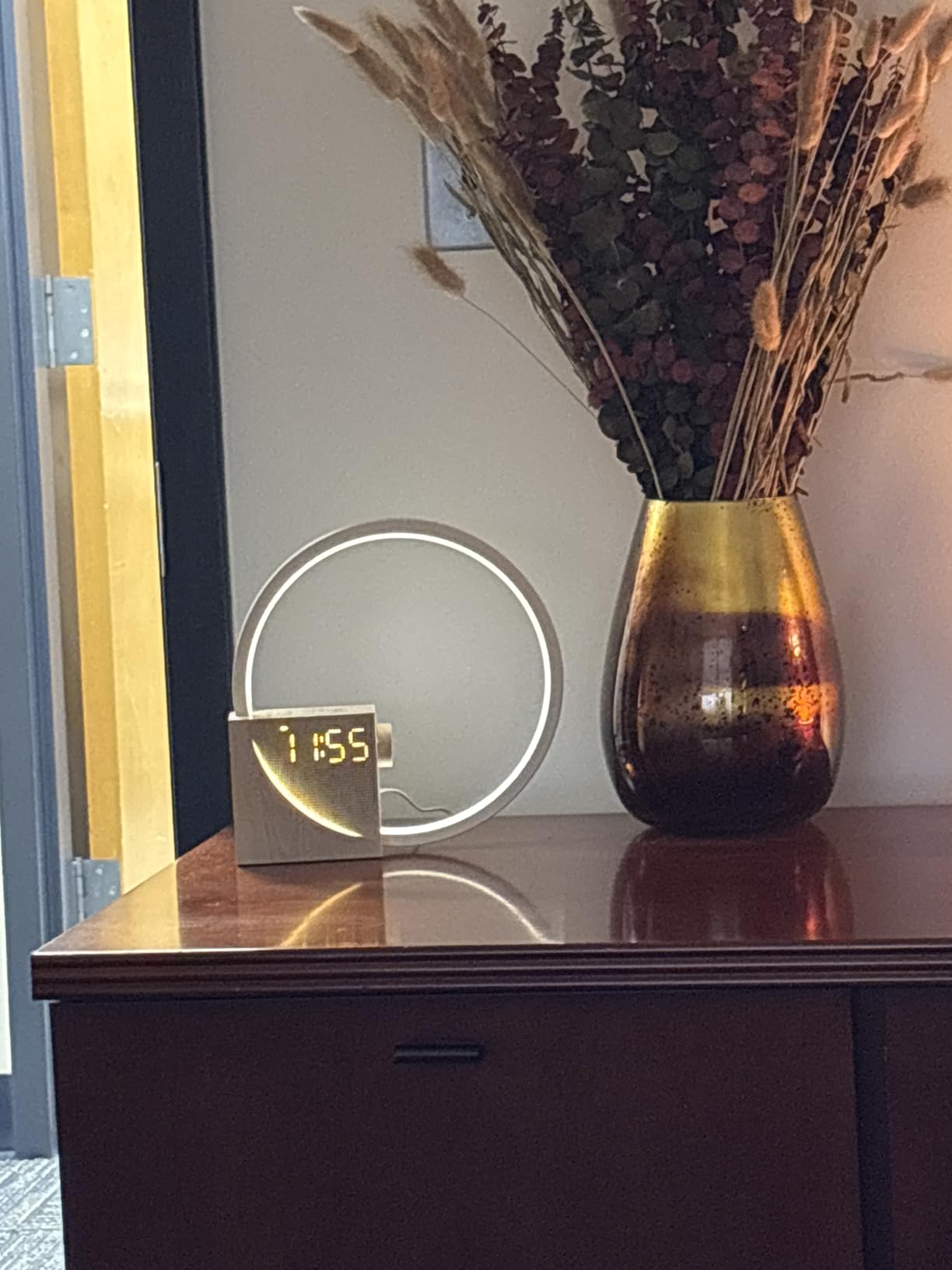
The sunrise simulation begins 10 minutes before your alarm, with light gradually brightening. While 10 minutes is shorter than the 30-minute window Philips recommends, it is enough for lighter sleepers who just need a gentle nudge. The 10 white noise sounds come with 30, 60, and 90-minute timers, giving you control over how long ambient sounds play.
The USB charging port is a practical addition that means one less cable cluttering your nightstand. The 3-level dimmable touch lamp function means you can use the Vivilumens as a bedside reading light, not just an alarm. The breathing light function pulses slowly, which can help with relaxation before sleep.
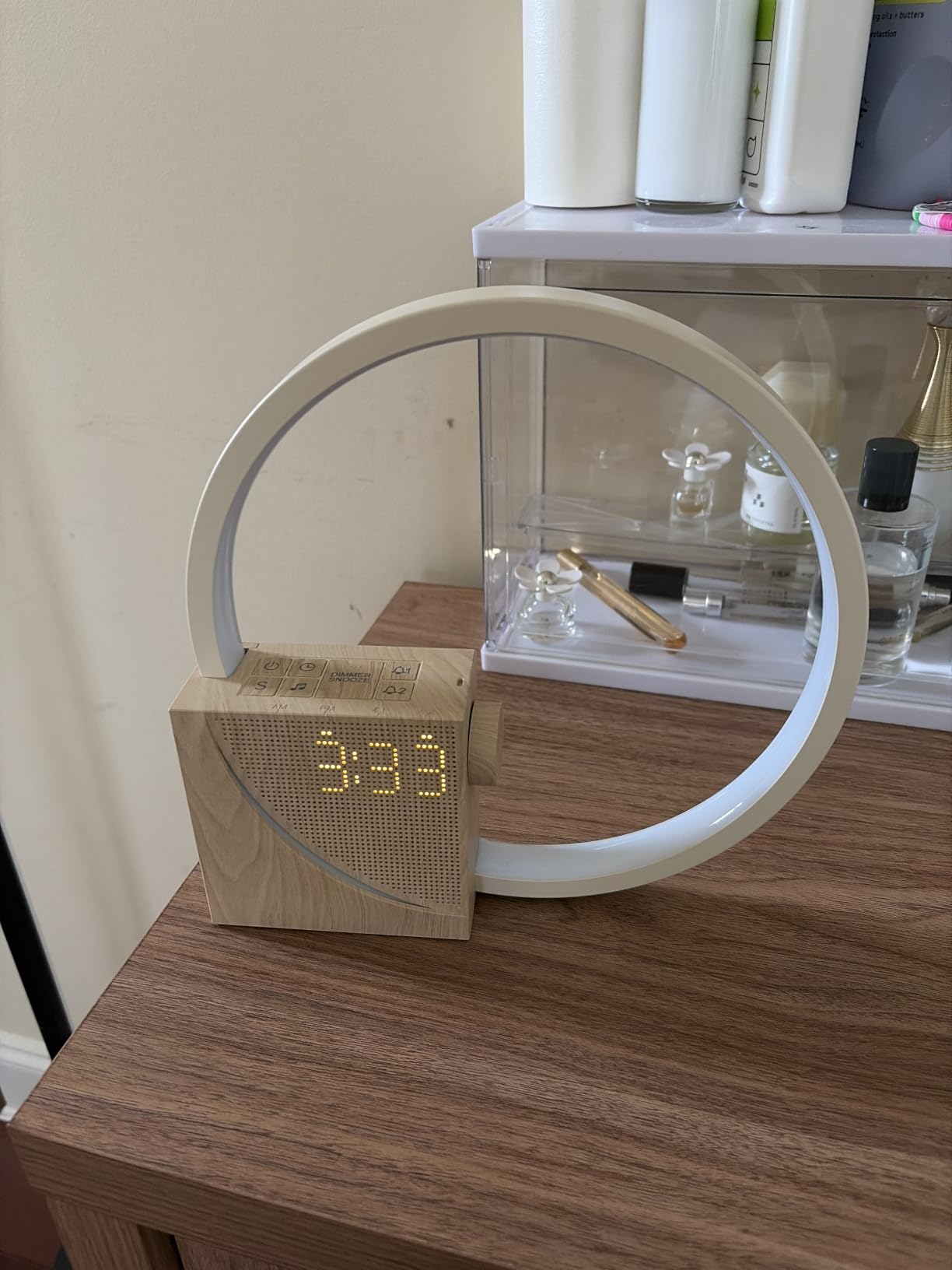
Touch Controls and Dual Alarm Setup
The touch-sensitive surface is responsive but has a downside. Some users reported accidentally disabling the alarm when reaching for the snooze function in the dark. The touch controls also mean there are no physical buttons to feel for when your eyes are not yet adjusted to the morning light.
The dual alarm setup is straightforward once you read the instructions, though the initial configuration is complex enough that the manual is essential reading. The settings menu requires careful navigation, and misconfiguring the alarm is a real possibility if you skip the setup guide.
Who Should Buy This Model
The Vivilumens is the best sunrise alarm clock for heavy sleepers on a budget who need dual alarms. If you and your partner wake at different times, or you have different weekday and weekend schedules, this is one of the most affordable options that supports that.
Be aware that the light temperature is fixed at 3500K and cannot be adjusted. This means you get a neutral white light rather than the warm-to-cool color progression that Philips offers. The sunrise also auto-cancels after 30 minutes, so it will not keep trying if you sleep through it.
How to Choose the Best Sunrise Alarm Clock for Your Sleep Style
Choosing among the best sunrise alarm clocks comes down to a few key decisions. After testing eight models, here is what actually matters when making your choice.
Light Quality and Brightness
The single most important factor is how well the sunrise simulation mimics natural dawn. Look for clocks that transition through color temperatures, starting with warm reds and oranges before reaching bright white. Philips excels here with clinically studied color progressions. Budget models often step up brightness in visible increments rather than smooth gradients.
Brightness matters too. A clock that maxes out at 100 lux will barely register in a bright bedroom, while models reaching 300 lux or higher can genuinely simulate morning light. If you are a heavy sleeper, prioritize brightness and light coverage area.
Sound Options
Consider whether you need white noise to fall asleep, natural sounds to wake up, or both. Clocks like the JALL and Odokee offer 25 or more sounds. The Hatch Restore 3 offers 80+ sounds but locks many behind a subscription. If you specifically want pink or brown noise, check the sound list before buying.
App Control vs Physical Buttons
The Hatch Restore 3 and Philips HF3650 represent two philosophies. Hatch puts everything in an app, which allows for complex routines but requires your phone. Philips uses physical buttons, which work without connectivity but can be harder to navigate in the dark. Decide which approach fits your lifestyle.
Subscription Considerations
If you are considering the Hatch Restore 3, factor in the $5.99 monthly or $59.99 annual Hatch+ subscription. The basic sunrise alarm works without it, but the full sound library and meditation content require payment. The Odokee and REACHER offer similar sound variety with no subscription at all.
Alarm Flexibility
If you need dual alarms for different schedules, your options narrow. The JALL, Philips HF3520, and Vivilumens support dual alarms. The Odokee, REACHER, and Dreamegg only offer a single alarm setting. This is a practical detail that matters more than it seems.
Display Dimming
For light-sensitive sleepers, the ability to dim the clock display completely is essential. The JALL, Odokee, REACHER, and Dreamegg all allow the display to go fully dark. The Philips HF3520 auto-dims based on ambient light. Some budget models keep a persistent glow that can bother sensitive sleepers.
Frequently Asked Questions
How do sunrise alarm clocks work?
Sunrise alarm clocks work by gradually increasing light intensity over 10 to 60 minutes before your set alarm time, mimicking a natural dawn. This light exposure signals to your circadian rhythm that morning is approaching, which suppresses melatonin production and helps reduce sleep inertia so you wake up feeling less groggy.
Do sunrise alarm clocks actually help you wake up better?
Yes, clinical studies have shown that sunrise alarm clocks can reduce sleep inertia and improve how alert you feel upon waking. The gradual light exposure helps your body transition naturally from deep sleep to wakefulness, which is why Philips wake-up lights have been validated in sleep research. Many users report waking up before the alarm sound even plays.
Are sunrise alarm clocks worth the money?
Sunrise alarm clocks are worth the money if you struggle with groggy mornings, have dark winter mornings, sleep in a windowless bedroom, or want a gentler wake-up experience. Budget options like the JALL or Odokee deliver core sunrise functionality for under $40, while premium models like the Philips HF3520 and Hatch Restore 3 offer advanced features for those willing to invest more.
What is the difference between a sunrise alarm clock and a regular alarm?
A regular alarm uses sound alone to wake you, often jarring you from deep sleep and causing a spike in heart rate. A sunrise alarm clock uses gradually increasing light, sometimes paired with sound, to ease your body out of sleep more naturally. The light triggers biological wake-up processes before the alarm sounds, resulting in a smoother transition to wakefulness.
How bright should a sunrise alarm clock be?
For effective sunrise simulation, look for a clock that reaches at least 200 to 300 lux at maximum brightness. This intensity is bright enough to suppress melatonin and signal your circadian rhythm. Lower brightness levels around 100 lux can work for light sleepers, but heavy sleepers typically need 300 lux or higher to wake reliably. Models with adjustable brightness give you the most flexibility.
Final Verdict on the Best Sunrise Alarm Clocks
After testing eight models, our top recommendation for the best sunrise alarm clock in 2026 remains the Philips SmartSleep HF3520 for its clinically proven light quality and smooth color transitions. If budget is your priority, the JALL Full-Screen Wake Up Light delivers the most features per dollar we have seen. And for a premium, app-driven sleep experience, the Hatch Restore 3 offers unmatched customization, provided you are comfortable with the subscription model.
For Hatch-like features without recurring costs, the Odokee is the sweet spot. For phone-free simplicity with a beautiful fabric design, the Dreamegg Sunrise 1 stands out. Whatever your sleep style, a dawn simulator can genuinely change how your mornings feel, and any clock on this list will get you closer to waking up naturally.