
Our team spent three months playing 15 different word board games across 12 game nights with groups ranging from two to ten people. We wanted to find the best word board games that work for adults, families, and mixed skill levels without leaving anyone bored at the table. The games we tested range from lightning-fast party rounds to thoughtful crossword builders, and each one earned its spot on this list through real play, not just box reading.
Word games matter because they bring people together around language instead of luck. You do not need to be a spelling champion to enjoy most of these titles. Several options on our list welcome casual players while still offering depth for word lovers who want a challenge.
We paid close attention to how each game handles downtime, group size, and replay value. Some games fell flat because turns dragged on too long. Others shined because they kept every player engaged from start to finish.
The recommendations below reflect what actually worked at our table, not just what looks good in a store aisle.
Table of Contents
Top 3 Picks for Best Word Board Games
Before we break down every option, here are the three games that stood out most during our testing. These represent the best overall experience, the strongest classic value, and the most accessible entry point.

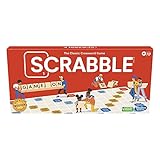
Hasbro Scrabble Board Game
- 2-4 players
- 40 min playtime
- Classic crossword with wooden tiles
- 5k+ reviews

Best Word Board Games in 2026
The table below shows every game we tested with player count, play time, and key features. You can scan this chart to find a match for your next game night.
| Product | Specifications | Action |
|---|---|---|
| CGE Codenames |
|
Check Latest Price |
 Incohearent Incohearent |
|
Check Latest Price |
 Blank Slate Blank Slate |
|
Check Latest Price |
 Tapple Tapple |
|
Check Latest Price |
| Boggle |
|
Check Latest Price |
 The Chameleon The Chameleon |
|
Check Latest Price |
| Scrabble |
|
Check Latest Price |
 Just One Just One |
|
Check Latest Price |
 25 Words or Less 25 Words or Less |
|
Check Latest Price |
 Upwords Upwords |
|
Check Latest Price |
 Balderdash Balderdash |
|
Check Latest Price |
 Scattergories Scattergories |
|
Check Latest Price |
 Taboo Taboo |
|
Check Latest Price |
 Decrypto Decrypto |
|
Check Latest Price |
 Letter Jam Letter Jam |
|
Check Latest Price |
1. Codenames – Team Word Association Game for Groups
CGE Codenames Board Game (2nd Edition)
4-8+ players
15 min playtime
Team word association
200 cards with 400 codenames
Pros
- Fun for all ages and group sizes
- Easy to learn but offers endless replay value
- Encourages creative thinking and teamwork
- High-quality components
- Quick setup and gameplay
Cons
- Downtime while spymasters come up with clues
- Requires at least 4 players
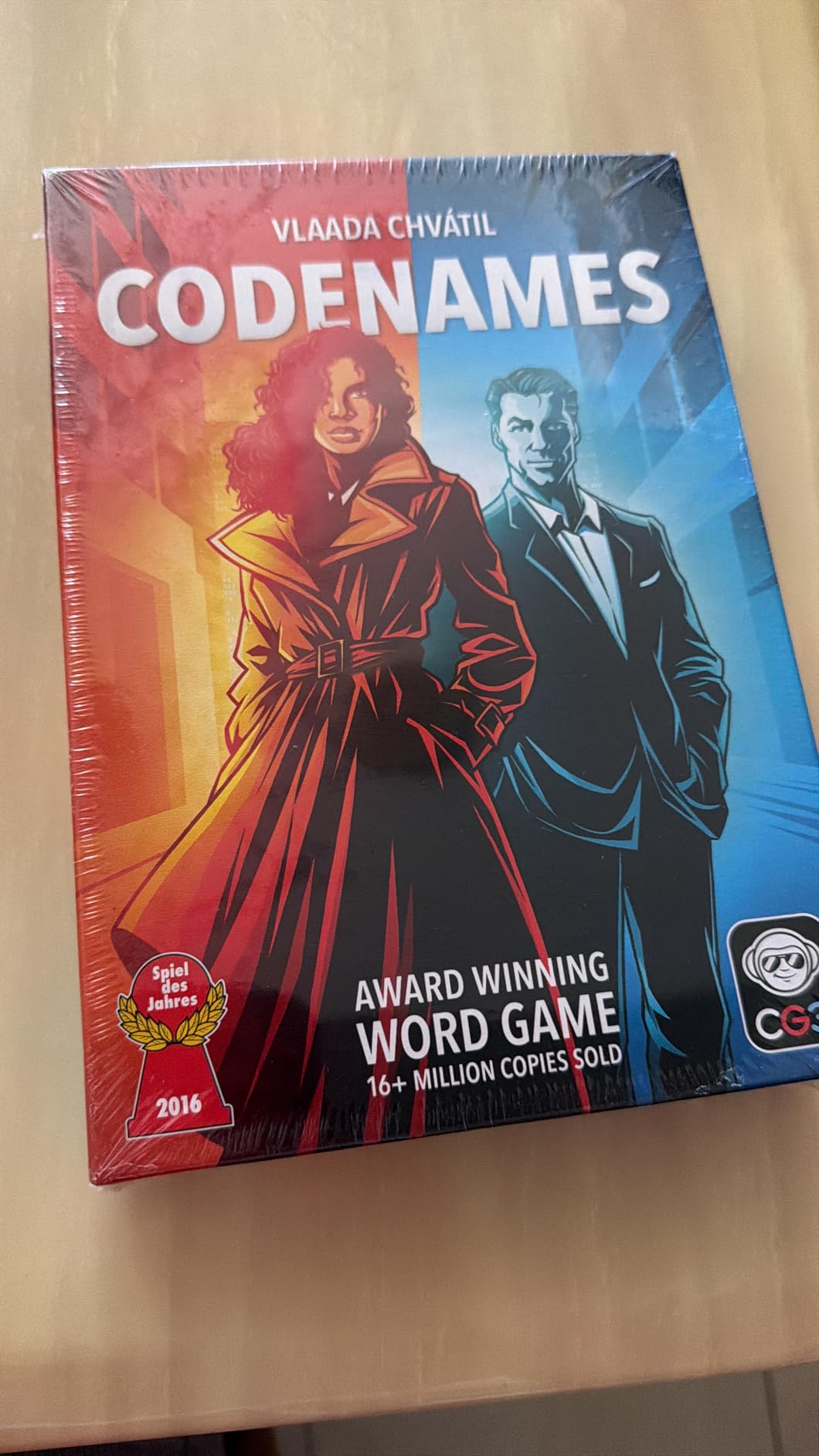
When our team tested Codenames, we immediately understood why it tops so many lists of best word board games for adults and families alike. The game splits players into two teams, each with a spymaster who gives one-word clues tied to multiple words on a 5×5 grid. We played with six people and four people, and both sessions felt equally tense and rewarding.
The best moments happen when a spymaster connects three seemingly unrelated words with a single brilliant clue. One of our testers linked “Peanut,” “Butter,” and “Jelly” with the clue “Sandwich 3,” and the whole table cheered. The game creates natural highs without any complex rules to memorize.
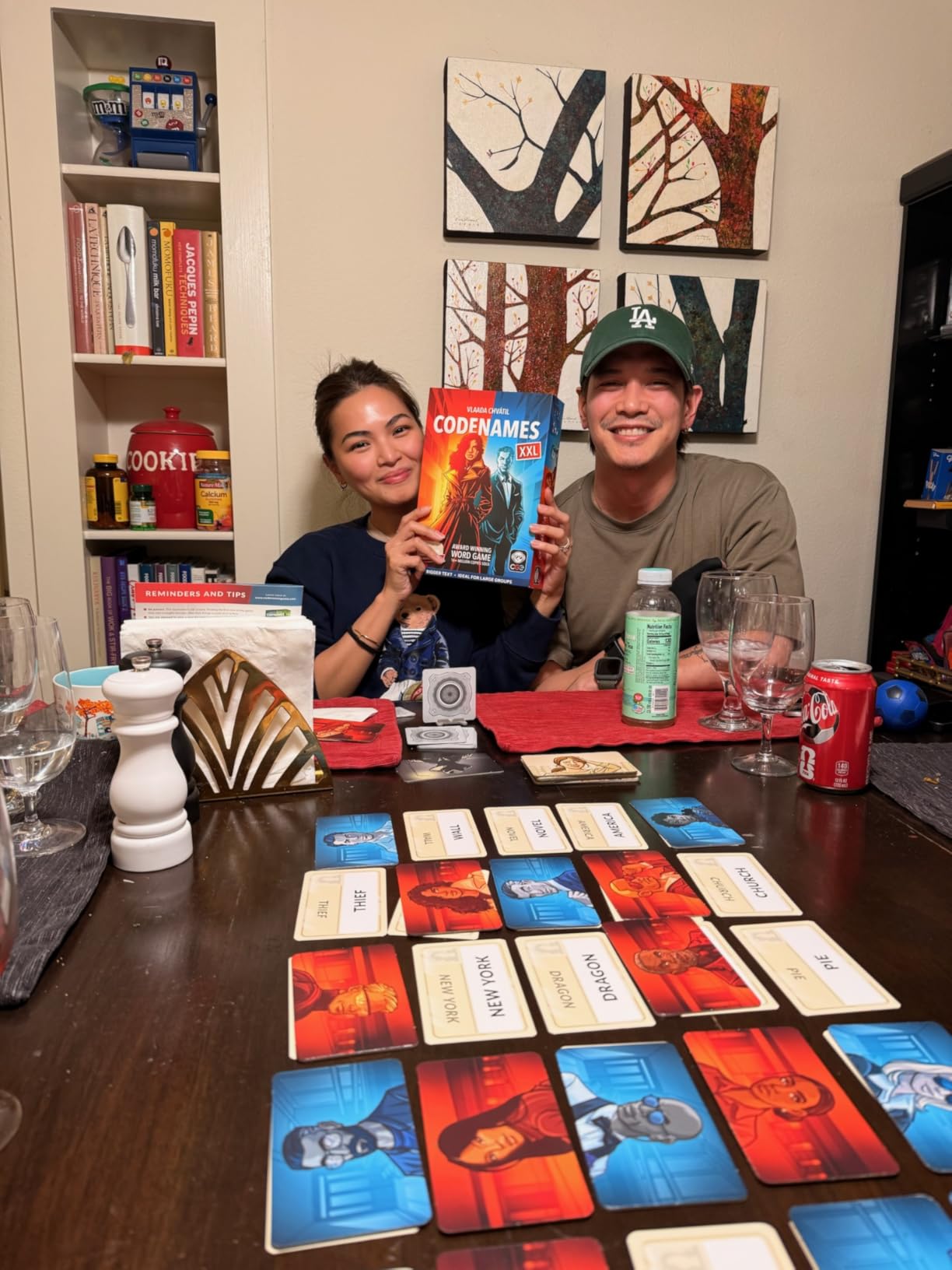
The components are sturdy and the cards are thick enough to survive repeated shuffling. The second edition includes revised word lists that remove some dated references. Setup takes under two minutes, which makes it easy to pull out when friends arrive unexpectedly.
We did notice a small amount of downtime when spymasters stared at the grid searching for the perfect clue. The game works best when spymasters think quickly rather than overanalyzing every option. The assassin card adds real tension, since one wrong guess can end the entire round.
Best suited for groups that want team competition without heavy rules
Codenames shines at parties, family reunions, and casual game nights where you want something social. The team structure means quieter players can participate without being put on the spot individually. It also works well as an ice breaker because the clues reveal how people think.
We found it scales nicely from four players up to eight or more. Larger groups simply split into bigger teams, and the spymasters still control the pace. The game rarely overstays its welcome since each round lasts about 15 minutes.
Not ideal for couples or solo players
You need at least four people to play Codenames properly, so it is not a good choice for couples or small households. The game also depends heavily on the spymasters being comfortable with creative thinking. If your group prefers straightforward strategy over word association, another option on this list will fit better.
Players who dislike any downtime between turns may get restless while waiting for spymasters. The game does not offer a solo mode or two-player variant, so you will need a regular group to justify the purchase.
2. Incohearent – Decode Gibberish Party Game
Incohearent, The Guess the Gibberish Party Game by Relatable
3-8 players
30 min playtime
Decode gibberish phrases
300 cards with three categories
Pros
- TikTok viral game
- Great for parties
- Travel-friendly
- Three categories: Party
- Spicy
- Pop Culture
Cons
- Spicy edition may be too sexual for some
- Requires 3+ players
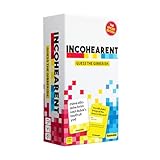
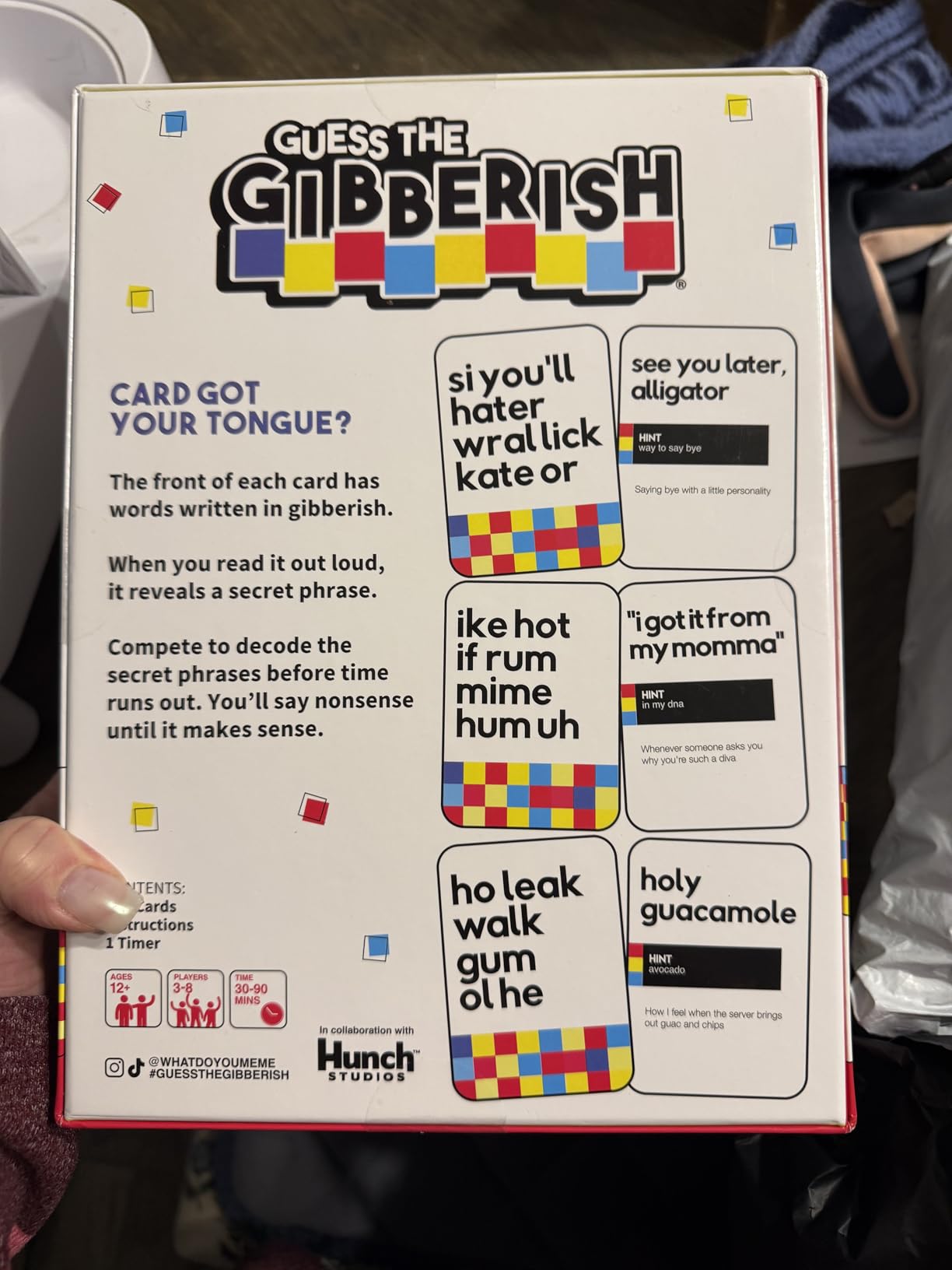
Incohearent became a viral hit on social media for good reason. The game presents players with gibberish phrases that sound like real words when spoken aloud. Our team laughed for twenty minutes straight trying to decode phrases like “shore dukes cud” into actual expressions.
The color-coded cards split into Party, Spicy, and Pop Culture categories, so you can control the tone of your game night. We stuck mostly with the Party deck during family testing and saved Spicy for adult-only gatherings. The cards are compact and the box fits easily into a bag for travel.
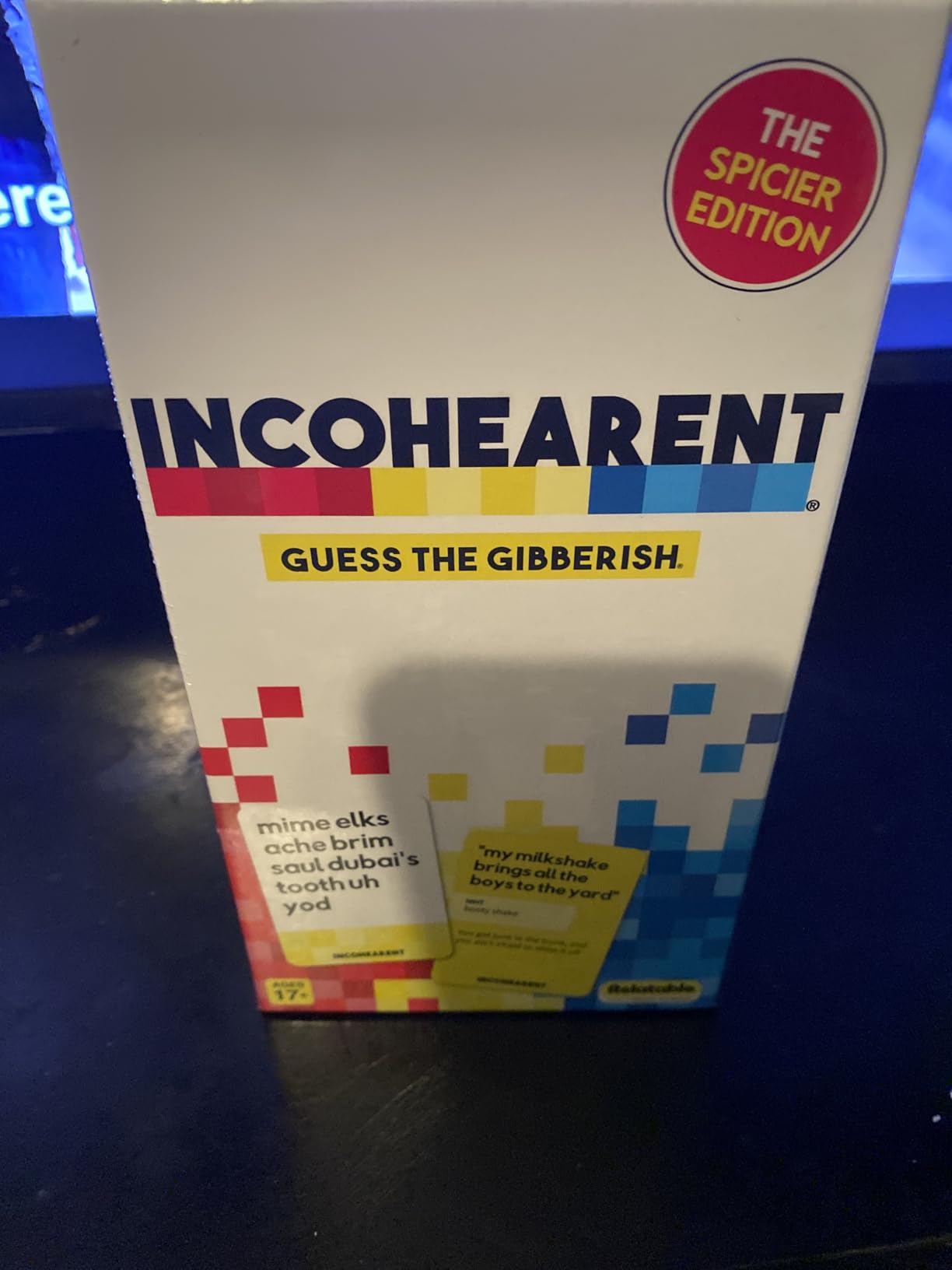
The 300-card deck gives you plenty of replay value before you start seeing repeats. The rules are simple enough that you can explain them in under a minute. One player reads the gibberish while the rest of the group shouts guesses until someone solves it.
We did find that the Spicy category pushes boundaries that some players may not enjoy. The game recommends ages 17 and up, and that rating exists for a reason. If you plan to play with mixed generations, filter the deck beforehand to avoid awkward moments.
Best suited for loud parties and groups that love quick laughs
This game thrives in energetic environments where players are comfortable shouting answers. It works especially well as a warm-up game before switching to something more strategic. The rounds move fast, so nobody sits idle for long.
Incohearent is one of the better options for travel because the box is small and the cards are durable. You can play it in a hotel room, at a campsite, or in the back seat during a road trip with the right lighting.
Not ideal for quiet groups or players under 17
Players who prefer calm, thoughtful gameplay will find Incohearent chaotic and stressful. The game rewards fast talking and quick reactions, not careful planning. It also requires at least three players, so couples and solo gamers should look elsewhere.
The Spicy deck content may offend some players even in adult groups. If your friends dislike edgy humor, you will end up playing only the Party category, which limits the variety over multiple sessions.
3. Blank Slate – Word Matching Family Game
Blank Slate Board Game, A Party Game of Addicting Predictions
3-8 players
30 min playtime
Word association party game
Scoreboard and 8 dry-erase slates
Pros
- Fun for all ages
- Easy to learn
- Low-pressure gameplay
- High replay value
- Portable
Cons
- Dry-erase markers may dry out
- More fun with 4+ players
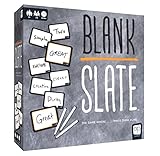
Blank Slate surprised our team with how simple yet addictive it turned out to be. Each round presents a word cue like “ice ___” and every player writes down the word they think others will choose. Matching answers score points, which creates a fun mind-reading dynamic.
The game comes with 250 double-sided cue cards, which means you have 500 cues before you see repeats. The dry-erase slates are a nice touch because they keep the game eco-friendly and reduce waste. We played with a group of five and a group of eight, and both sizes worked well.
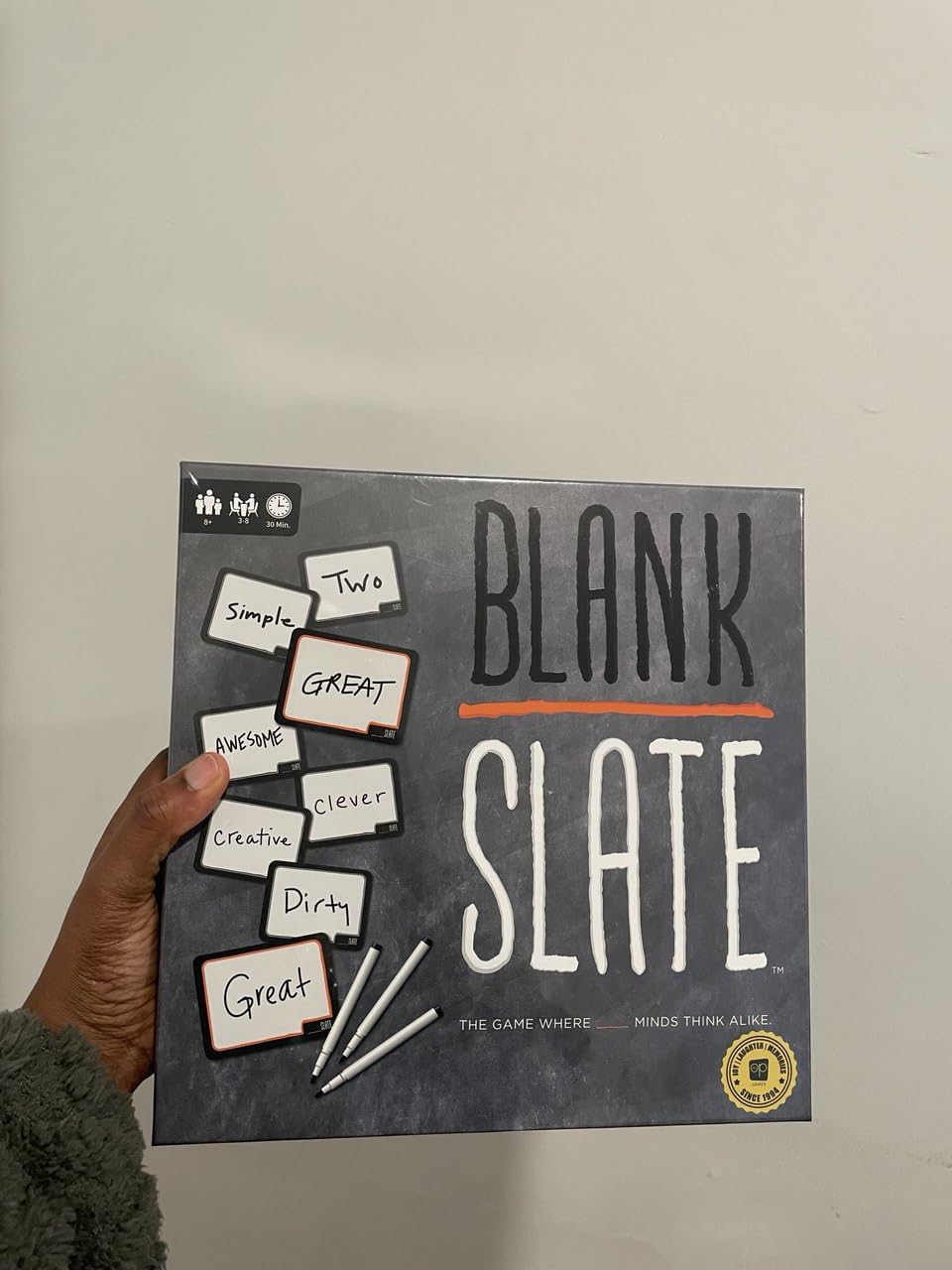
The low-pressure gameplay makes Blank Slate ideal for families with mixed ages. Younger kids can compete with adults because the game rewards shared thinking, not vocabulary size. The scoreboard is simple and the rules take about two minutes to explain.
We did notice that the dry-erase markers can dry out if you forget to cap them. You may want to keep a spare set of low-odor markers around just in case. The game also loses some magic with only three players because the matching probability drops too low.

Best suited for families and mixed-age groups
Blank Slate is one of the few word games where a 10-year-old can legitimately beat a college professor. The word cues are broad enough that different generations often think alike. We saw grandparents and grandchildren match answers repeatedly during our testing.
The game works well as a starter activity because it is warm and social rather than intensely competitive. You can play it while snacking or chatting without losing track of the rules. The compact box makes it easy to store or bring to someone else’s house.
Not ideal for competitive players who want deep strategy
If your group prefers games with complex scoring systems and long-term planning, Blank Slate will feel too light. The game is about connection, not conquest. Players who want to outsmart opponents through skill alone may find the random matching element frustrating.
The dry-erase slates also require a flat surface to write on, which makes the game harder to play in cars or on couches. You really need a table for everyone to participate comfortably.
4. Tapple – Fast-Paced Electronic Word Game
USAOPOLY The Original TAPPLE, The Fun & Fast-Paced Family Word Game
2-8 players
15 min playtime
Award-winning fast-paced word game
144 fun categories
Pros
- Award-winning fast-paced word game
- Portable
- Easy to learn
- TikTok popular
Cons
- Does not include all letters
- Requires 2 AA batteries
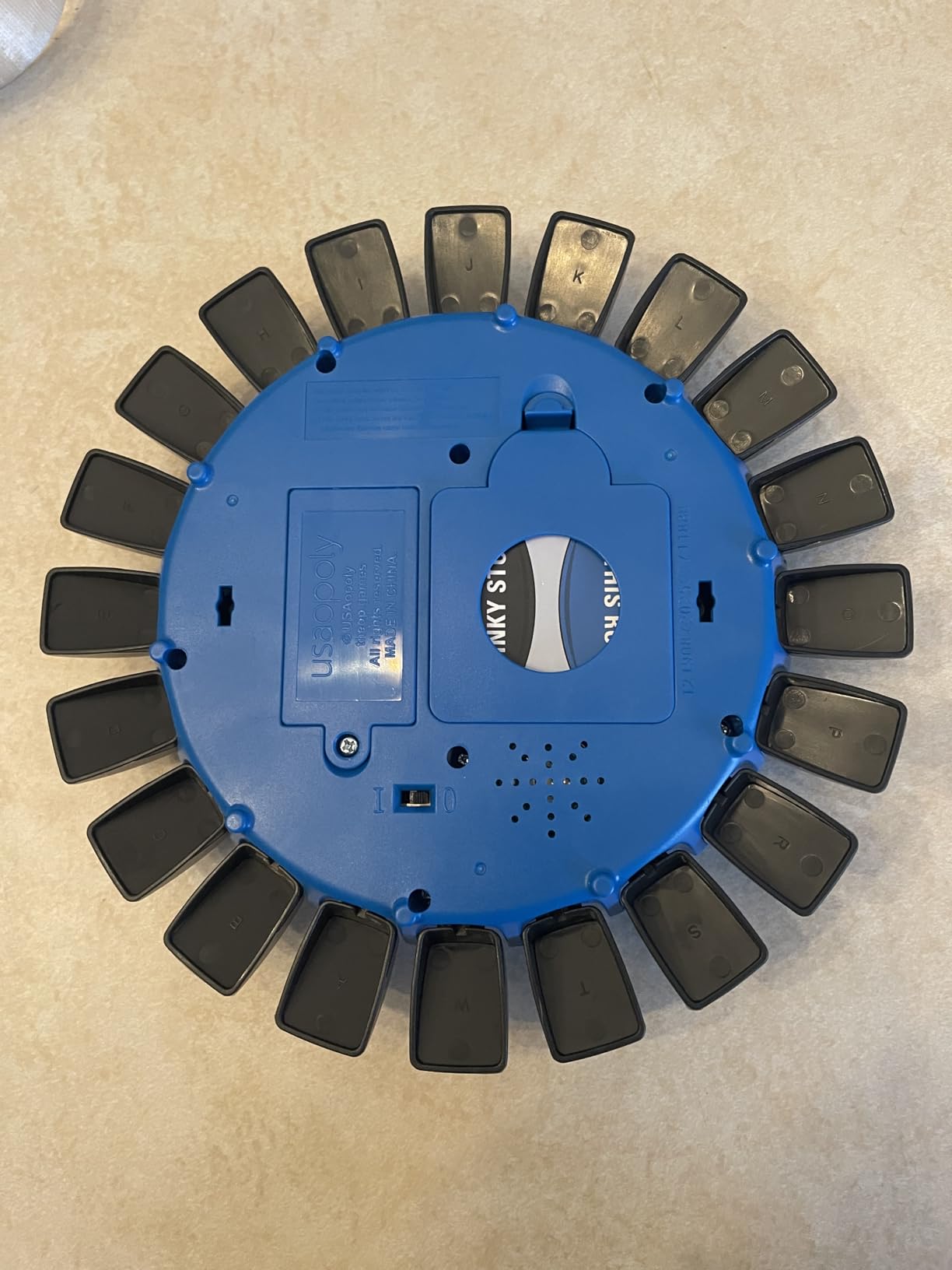
Tapple combines a timer, a wheel, and category cards into a frantic race against the clock. Players choose a category, press the timer, and shout words that start with available letters while tapping the corresponding button on the wheel. Our team found the physical interaction addictive.
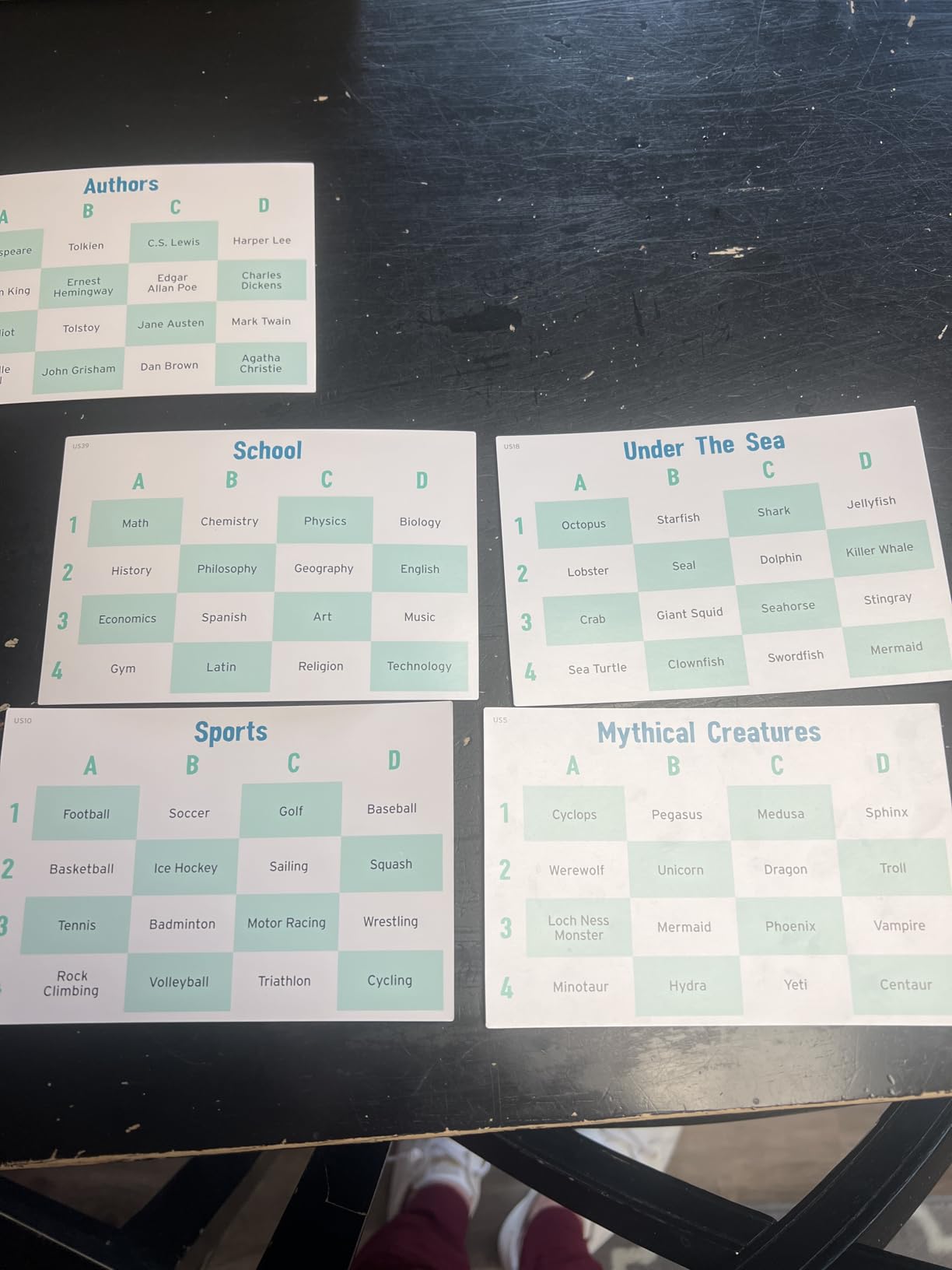
The game includes 36 category cards with four categories each, giving you 144 total options. The wheel itself is sturdy and the buttons have a satisfying click. The built-in timer beeps faster as time runs out, which adds genuine pressure without needing a separate sand timer.
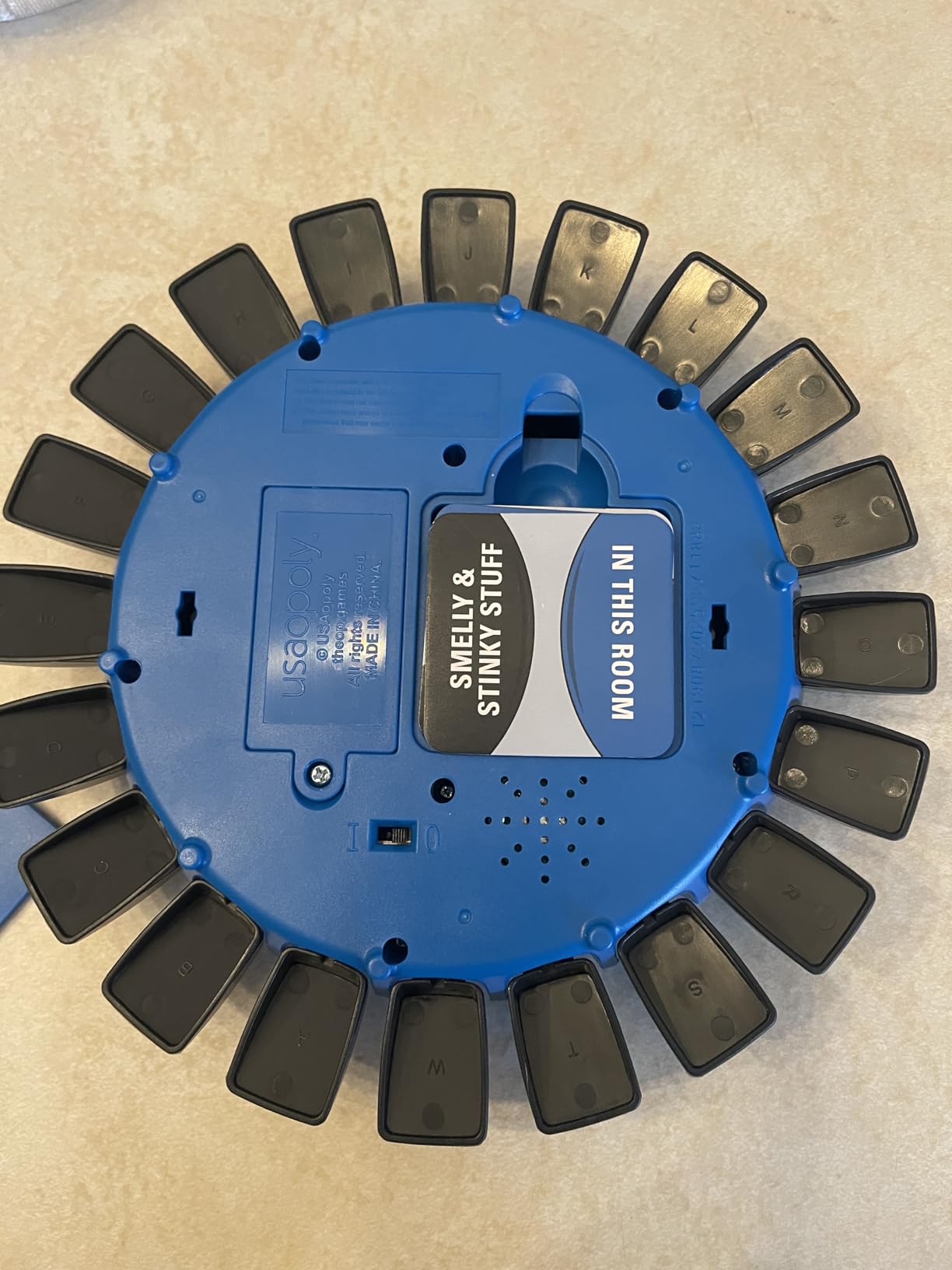
We tested Tapple with kids and adults, and both groups loved the tactile nature of the game. The wheel does not include every letter of the alphabet, which actually helps balance the difficulty. Letters like Q, X, and Z are omitted so the game flows faster.
The game requires two AA batteries, which last a long time based on our testing. The game is also one of the more portable options on this list because everything stores neatly inside the wheel itself. We took it to a picnic and it survived without issue.
Best suited for fast-paced groups and players who love timers
Tapple works brilliantly when you want a high-energy game that lasts under 15 minutes. The physical tapping adds a kinetic element that keeps people engaged. It is also one of the better word games for younger players because the categories are simple and the rules are visual.
The game stores compactly, making it a solid choice for travel or camping. The timer and buttons are loud enough to hear over background music but not so loud that they annoy neighbors.
Not ideal for players who dislike pressure or loud sounds
The timer beeps insistently, which some players find stressful rather than exciting. If your group prefers relaxed, conversational games, Tapple will feel jarring. The game also requires batteries, which means you need to keep spares on hand for longer trips.
Players with limited dexterity may struggle to tap the buttons quickly under pressure. The wheel is designed for speed, and the game does not accommodate anyone who needs extra time to process their answers.
5. Boggle – Classic Word Search Game
Hasbro Gaming Boggle Classic Game | Word Search Games | Ages 8+ | 1 or More Players | Portable Travel Size | Fun Family Dice Games for Adults and Kids
2+ players
90 second rounds
Portable word search
16 letter cubes with sand timer
Pros
- Classic word game loved by all ages
- Portable travel size
- Shake up letters for different gameplay
- Great for spelling skills
Cons
- Case can be difficult to open
- Timer is small
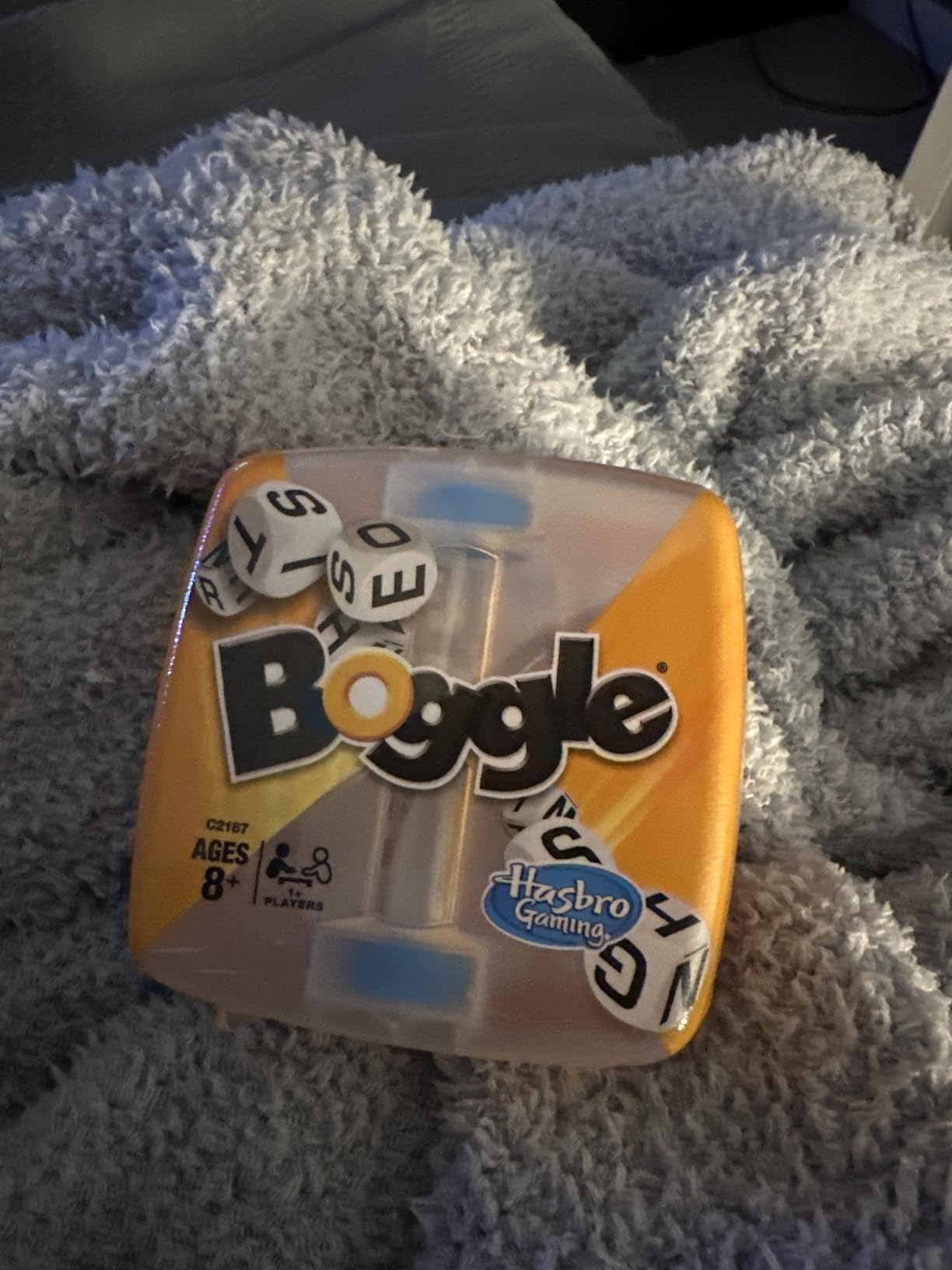
Boggle has been around for decades, and this classic edition proves the formula still works. You shake the letter cubes, flip the timer, and race to find as many words as possible before the sand runs out. Our team played multiple rounds in a row because the 90-second limit keeps the tension high without exhausting anyone.
The portable case is a major advantage. All 16 letter cubes and the timer fit inside the lid, so you can toss the game into a bag without losing pieces. We took Boggle on a weekend trip and played it in a hotel lobby while waiting for dinner.
The textured game board keeps the cubes in place once you settle them.
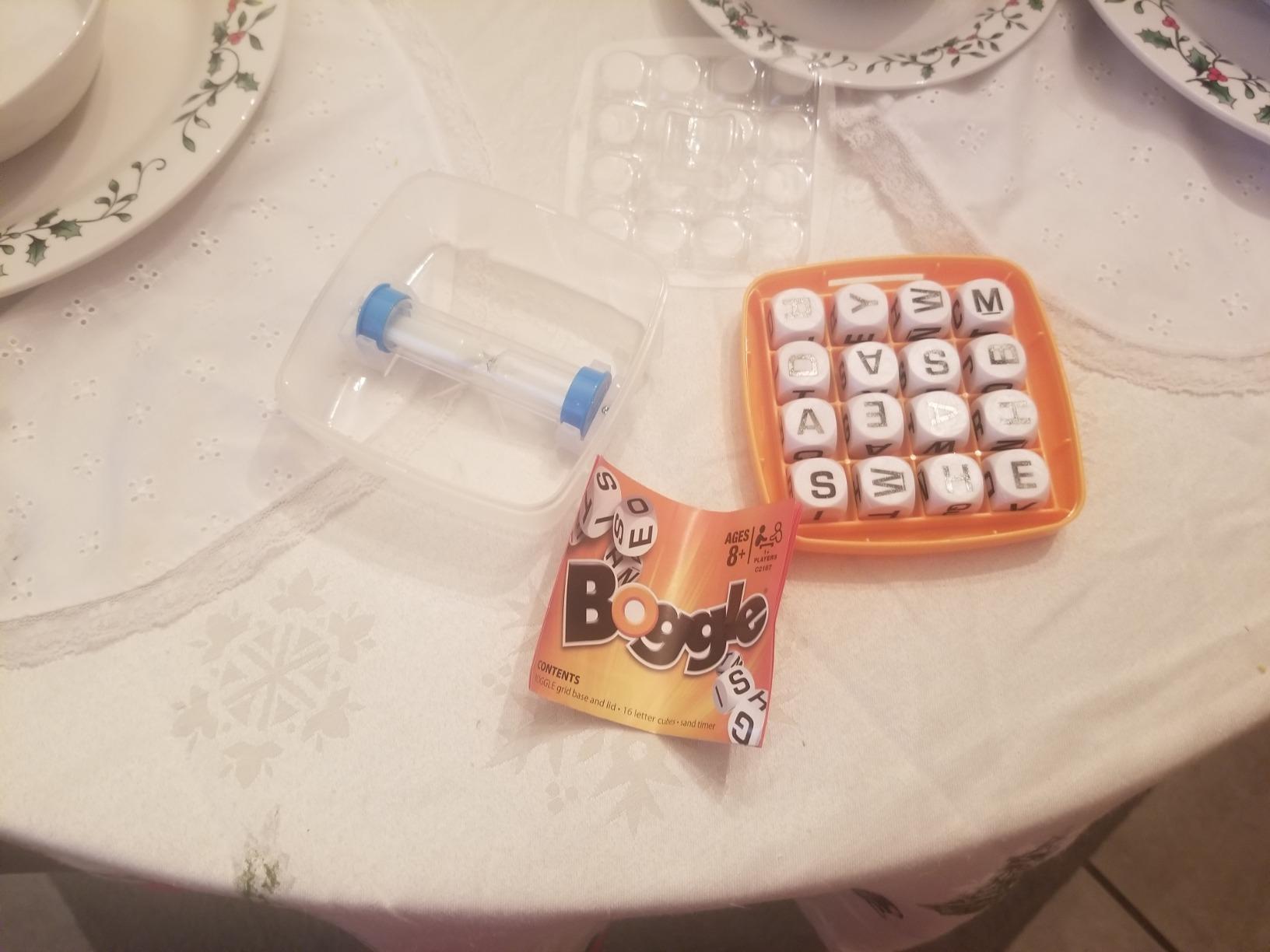
The letter distribution is random every round, which means no two games play the same. We noticed that some shakes produce easier grids than others, but that randomness is part of the charm. The game rewards pattern recognition and quick spelling, not just vocabulary depth.
The sand timer is small, which can make it hard to see from across the table. We ended up using a phone timer as a backup in larger groups. The case latch can also be stiff when new, though it loosens up after several openings.
Best suited for quick rounds and travel
Boggle is perfect when you want a word game that fits into small pockets of time. You can play a single round in under two minutes or chain ten rounds together for a longer session. The travel case makes it one of the most portable options on this list.
The game works well for kids who are building spelling skills because it rewards finding simple words alongside complex ones. Parents can play with children and both sides stay competitive. The quick rounds prevent younger players from losing interest.
Not ideal for players who dislike speed pressure or duplicate word arguments
The 90-second timer forces rushed thinking, which frustrates players who prefer slow, deliberate word building. After each round, you also spend time comparing word lists and crossing out duplicates. Some groups find this bookkeeping tedious.
Boggle also lacks the social interaction of team-based games. Everyone stares at the grid silently, which can feel isolating compared to games where players talk and collaborate. If your group values conversation over competition, Codenames or Just One will fit better.
6. The Chameleon – Bluffing Word Deduction Game
The Chameleon Social Deduction Board Game for Adults, Ages 12+
3-8 players
15 min playtime
Bluffing board game
80 extra secret words
Pros
- Easy to learn in 2 minutes
- Multi-award winning
- Great for family game nights
- Compact and portable
Cons
- Requires 3-8 players
- May be challenging for younger players
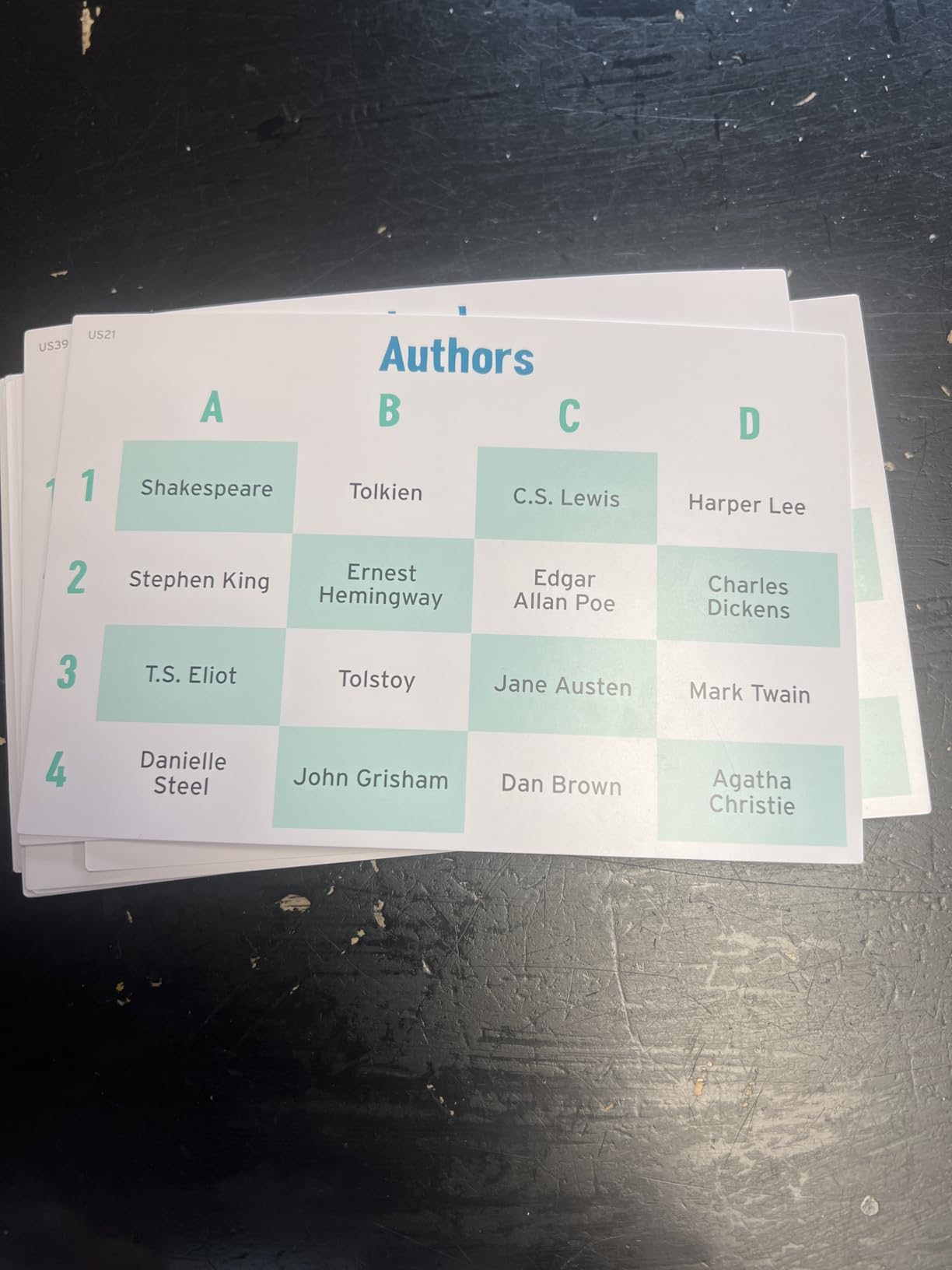
The Chameleon is a bluffing game where one player is the chameleon and everyone else knows a secret word. The non-chameleons must identify the imposter while the chameleon tries to guess the secret word from context clues. Our team loved the social tension this creates.
The game is genuinely easy to learn in about two minutes. One person reads the rules aloud, and you are ready to play. The card deck includes 80 secret words, and the game provides a code system that randomly selects the target word each round without needing a dealer.
The bluffing mechanic encourages creative thinking. The chameleon has to give answers that sound natural while the other players try to be specific enough to prove their innocence without revealing too much to the imposter. We saw some incredible bluffs where the chameleon fooled everyone until the final vote.
The box is compact and the components are durable. The game has won multiple awards, including Best Party Game at the UK Games Expo. It handles group sizes from three to eight, though we found it most fun with five or six players.
Best suited for groups that love social deduction and bluffing
If your group enjoys games like Werewolf or Mafia, The Chameleon will be an instant hit. The rounds are short, the accusations are hilarious, and the game never feels mean-spirited. It works well as a follow-up to a heavier board game because it is light and conversational.
The game is also family-friendly despite the bluffing theme. The secret words are everyday objects and concepts, so younger players can participate without needing obscure vocabulary. The age rating of 14 is conservative, in our opinion.
Not ideal for players who hate lying or confrontation
The entire game revolves around deception and calling people out. If anyone in your group is uncomfortable with either element, they will not enjoy The Chameleon. The game also breaks down with only three players because the voting becomes too obvious.
Players who prefer pure word games may find the bluffing mechanic distracts from the vocabulary aspect. The secret word is just a backdrop for the social deduction, so language lovers might want a more text-focused option instead.
7. Scrabble – Classic Crossword Board Game
Hasbro Gaming Scrabble Board Game, Classic Word Games for Kids Ages 8 and Up, Fun Family Game for 2-4 Players, The Classic Crossword Game
2-4 players
40 min playtime
Classic crossword game
100 wooden letter tiles with racks
Pros
- Classic Scrabble with wooden tiles
- High quality components
- Great for improving vocabulary
- Textured gameboard keeps tiles in place
Cons
- Gameboard can shift during play
- Score pad not always included
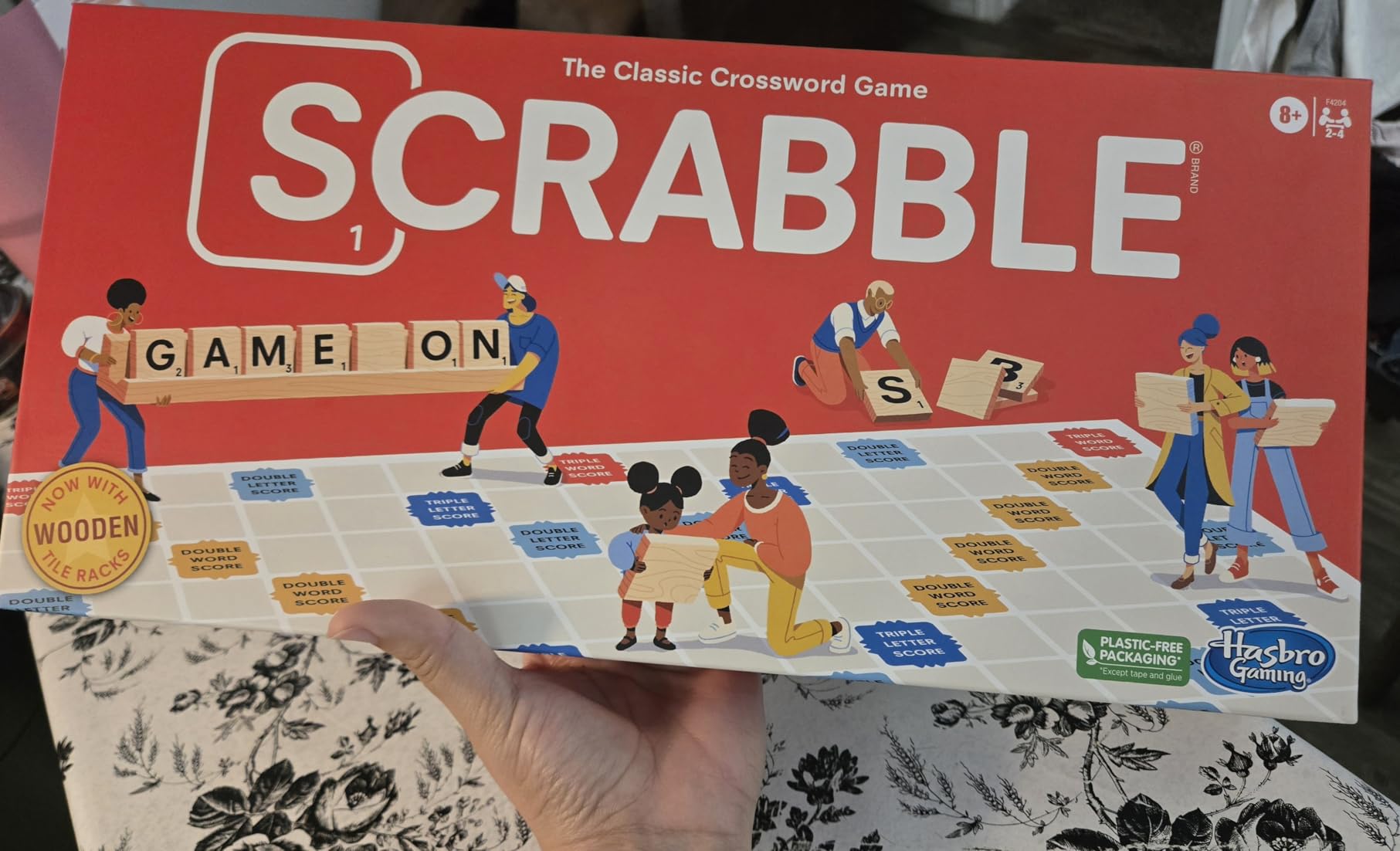
Scrabble remains the most recognizable word board game for good reason. This classic edition includes wooden letter tiles and tile racks that feel substantial in your hands. Our team played a full four-player game and appreciated the textured board that prevents tiles from sliding around.
The game rewards vocabulary depth and strategic placement. You can play a simple word for safety or stretch for a high-scoring bingo that uses all seven tiles. We found that experienced players still enjoy the game even against newcomers because the board layout changes every match.
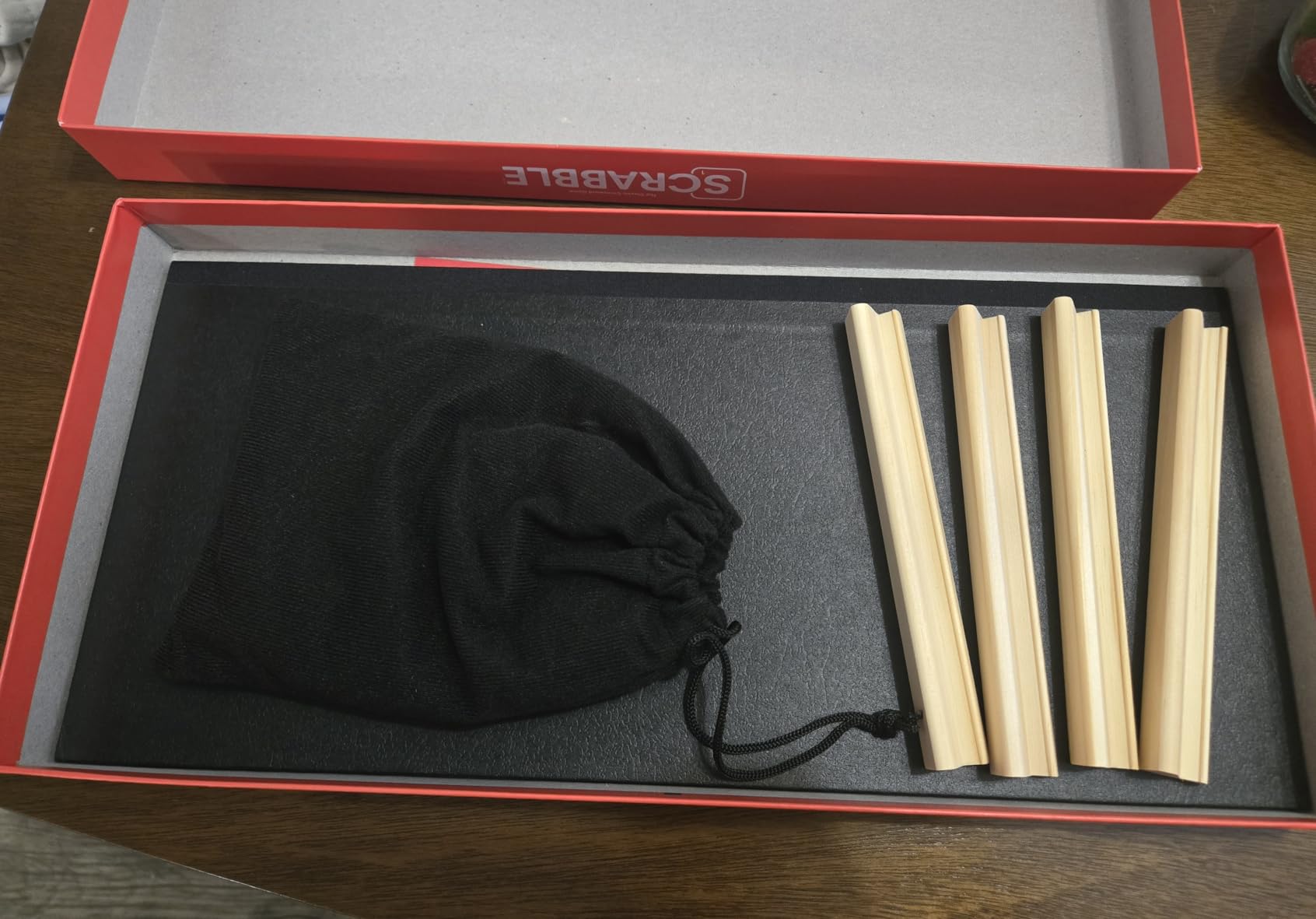
The wooden tiles are a nice upgrade from plastic versions. They have a pleasant weight and the letter ink is crisp. The drawstring bag for tile drawing is also a thoughtful touch that keeps the game feeling high-quality.
The main drawback we noticed is the gameboard itself. It is a foldable board, and the seam can shift slightly if players lean on the table. We recommend playing on a flat, stable surface.
Some editions also omit the score pad, so you may need a notebook or phone calculator handy.
Best suited for players who want classic word-building strategy
Scrabble is the right choice when you want a game that genuinely rewards a strong vocabulary. The premium squares on the board create strategic decisions about where to place words. It also teaches spelling and anagram skills naturally without feeling like a classroom exercise.
The game works well for two players who want a quiet, thoughtful evening. It also scales to four players, though downtime between turns increases. The 40-minute playtime is accurate for experienced players, though newcomers may need closer to an hour.
Not ideal for players who dislike downtime or direct competition
Scrabble can feel isolating because each player spends several minutes staring at their own tiles while others wait. This downtime is the most common complaint we heard from our testers. The game is also purely competitive, with no cooperative mode for players who prefer teamwork.
The scoring system can feel harsh for beginners who place small words while veterans rack up points on triple word scores. If your group has mixed skill levels, you may want a handicap system or a different game entirely.
8. Just One – Cooperative Mystery Word Game
Asmodee Just One Party Game (2025 Refresh) – Cooperative Mystery Word Guessing Fun for Family & Friends, Kids & Adults, Ages 8+, 3-7 Players, 15 Minute Playtime
3-7 players
20 min playtime
Cooperative party game
110 cards with stands and crayons
Pros
- Cooperative gameplay encourages teamwork
- Easy to learn in 3 minutes
- Suitable for all ages
- High replayability
Cons
- Marker quality may vary
- Black pencil low contrast on darker trays
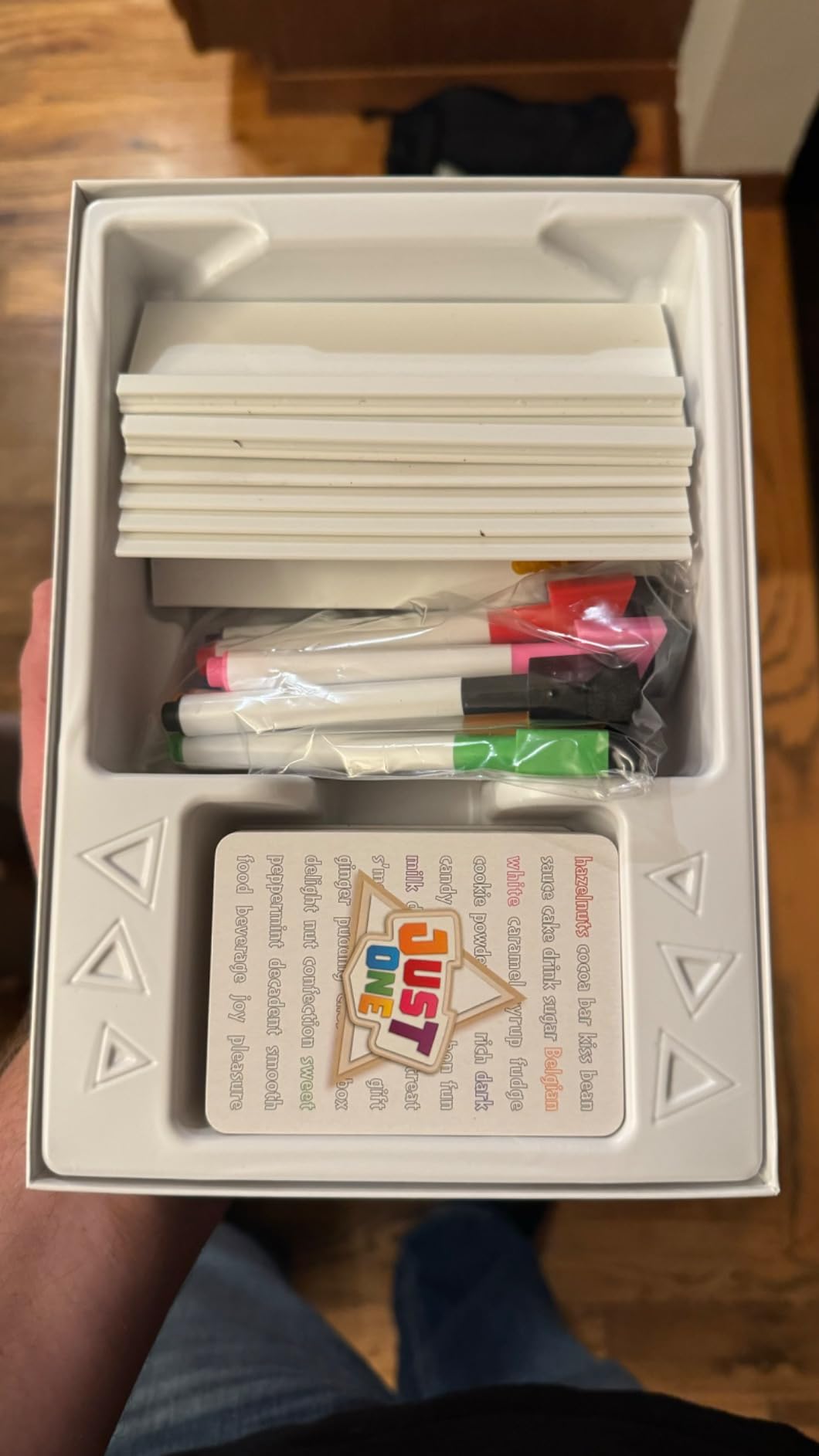
Just One is a cooperative word game where players write one-word clues to help a guesser identify a mystery word. The twist is that duplicate clues cancel each other out, which forces everyone to think creatively. Our team found this simple rule creates remarkable depth.
The game is genuinely easy to learn in about three minutes. You deal a card, place it in the stand, and start writing. The cooperative nature means there is no winner or loser, just a team score that you try to beat over multiple rounds.
We played seven rounds in a row and still wanted more.
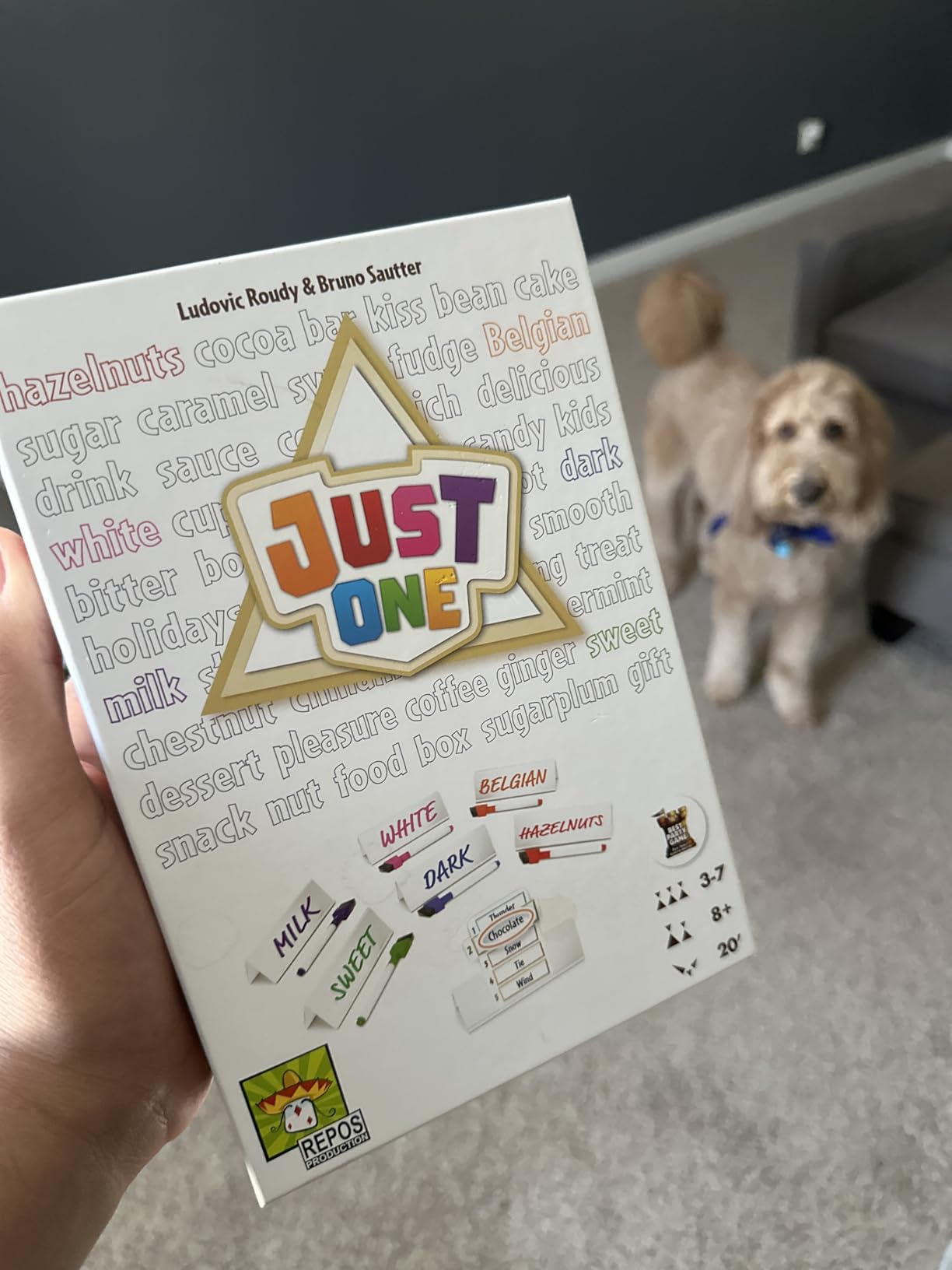
The 2025 refresh edition includes improved components and updated word lists. The card stands are plastic and the erasable crayons wipe clean with the included cloths. We did notice that the black crayon can be hard to see on darker backgrounds, but the trays are light enough that this is rarely a problem.
The game works for three to seven players, and we tested both ends of that range. With three players, the clue pool is smaller but the game still functions. With seven, the variety of clues is hilarious and the cancel mechanic happens more often.
Best suited for cooperative groups and players who hate direct conflict
Just One is the perfect choice when your group prefers working together over competing against each other. The game creates moments of shared triumph when the guesser nails a difficult word based on obscure clues. It also avoids the hurt feelings that can come from direct confrontation in competitive games.
The game works across all ages because the clue writing is open-ended. A child can write “fluffy” while an adult writes “canine,” and both clues help identify the word “dog.” The cooperative format keeps everyone engaged on every turn.
Not ideal for competitive players who need a winner
If your group thrives on rivalry and individual scoring, Just One will feel flat. The game intentionally avoids crowning a single winner. Some players also find the cooperative format less replayable over time because there is no metagame or strategy to refine.
The marker quality can vary by edition, and the small writing surface limits players who have large handwriting. You may need to replace the crayons with dry-erase markers if they wear down quickly.
9. 25 Words or Less – Fast Word Guessing Game
25 Words or Less Board Game, Figure Out the Secret Words Before Time Runs Out, 300 Cards, Timer & Countdown Board Included, Fast-Paced Party Game for Families & Adults,Fun for Game Nights & Gatherings
4+ players
30 min playtime
Fast-paced word challenge
300 cards with countdown board
Pros
- Home version of TV game show
- Bidding mechanic adds strategy
- 300 cards provide lots of content
- Solid durable components
Cons
- Tough for kids under 8
- Needs at least 4 players
25 Words or Less brings the TV game show format into your living room. Teams bid on how few words they need to describe a set of secret words, then race against the timer to communicate them to a teammate. Our team loved the bidding phase because it adds a layer of strategy before the frantic guessing starts.
The game includes 300 cards and a countdown board that tracks the bidding and the timer. The components are solid, with thick cards that survive repeated shuffling. The rules explain the TV show mechanics clearly, so you do not need to have watched the program to understand the game.
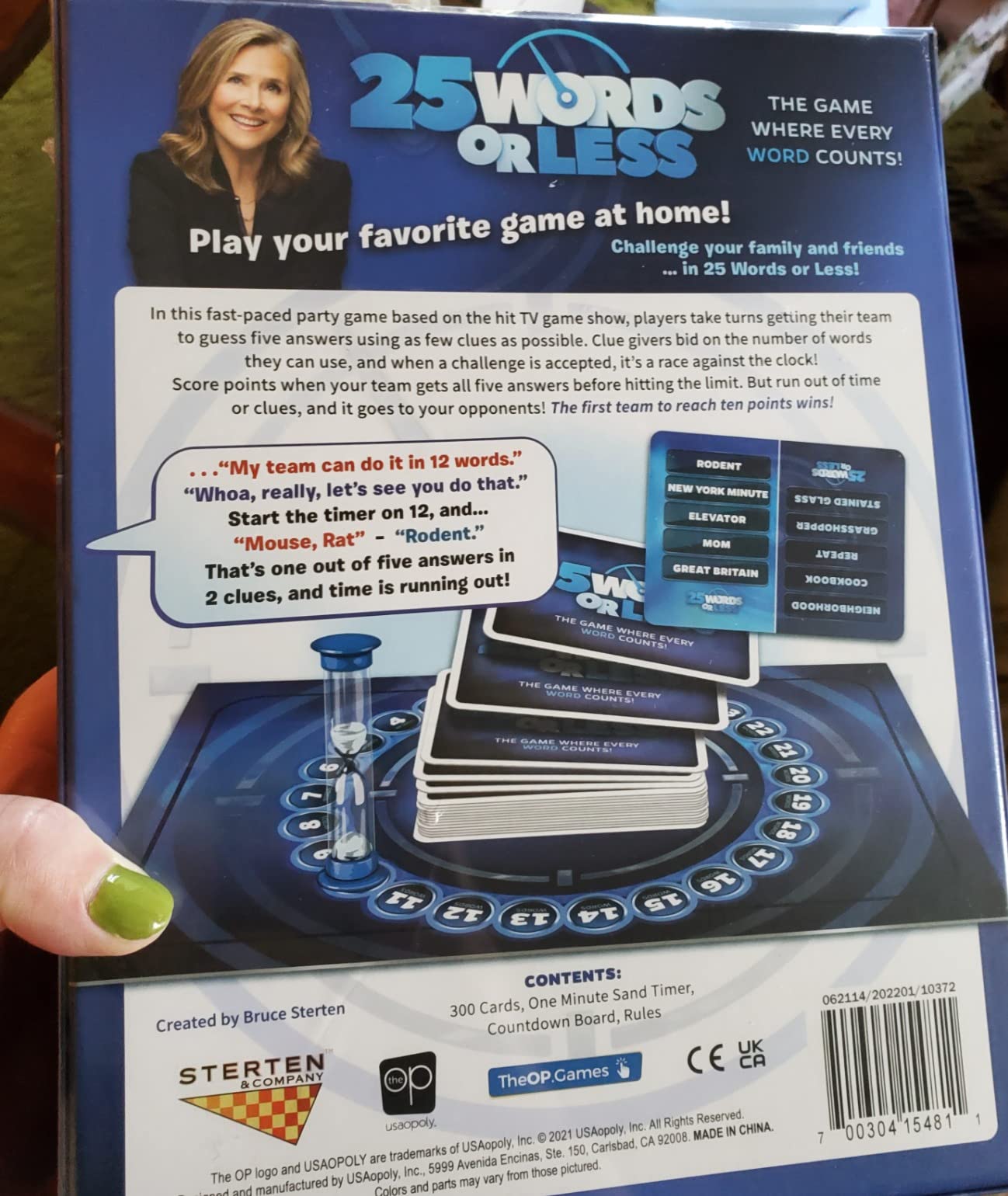
The bidding system creates genuine tension. One team might bid “I can do it in 20 words,” and the other team counters with “19 words.” The risk of overbidding keeps everyone engaged during the setup phase.
We saw several rounds where a team won the bid but failed to deliver, which made the table erupt in laughter.
The game recommends ages 10 and up, and we agree with that assessment. Younger players can participate, but the bidding strategy and the vocabulary on some cards may be too advanced. The game requires at least four players to form teams, so it is not a couple’s activity.

Best suited for groups that love game shows and bidding mechanics
If your group enjoys the energy of TV game shows, 25 Words or Less captures that spirit perfectly. The bidding adds a unique mechanic that most other word games lack. The countdown timer keeps the pressure high without making the rounds feel unfair.
The game works well at parties because it is loud, fast, and easy to watch even when you are not playing. Spectators can cheer for their favorite team without needing to understand complex rules. The 30-minute playtime is accurate for most groups.
Not ideal for small groups or players who dislike timers
You need at least four people to form two teams, so the game is useless for couples or trios. The timer also creates pressure that some players find unpleasant rather than exciting. If your group prefers calm, thoughtful games, this one will feel too frantic.
The card content can be challenging for younger kids or non-native speakers. Some of the secret words are abstract concepts that require nuanced descriptions. The game works best when everyone at the table shares a similar vocabulary level.
10. Upwords – Stackable Tile Word Game
Spin Master Games, Upwords, Classic Word Game with Stackable Letter Tiles, Family Board Game, Crossword Activity, 1-4 Players, for Ages 8 & Up
2-4 players
60 min playtime
Word-building with stackable tiles
Rotating Lazy Susan board
Pros
- Stackable tiles allow building on existing words
- Lazy Susan makes it easy to turn board
- High quality components
- Can be played solo
Cons
- Tile ink may wear off
- Scoring can be tedious
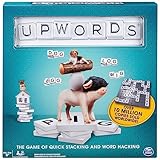
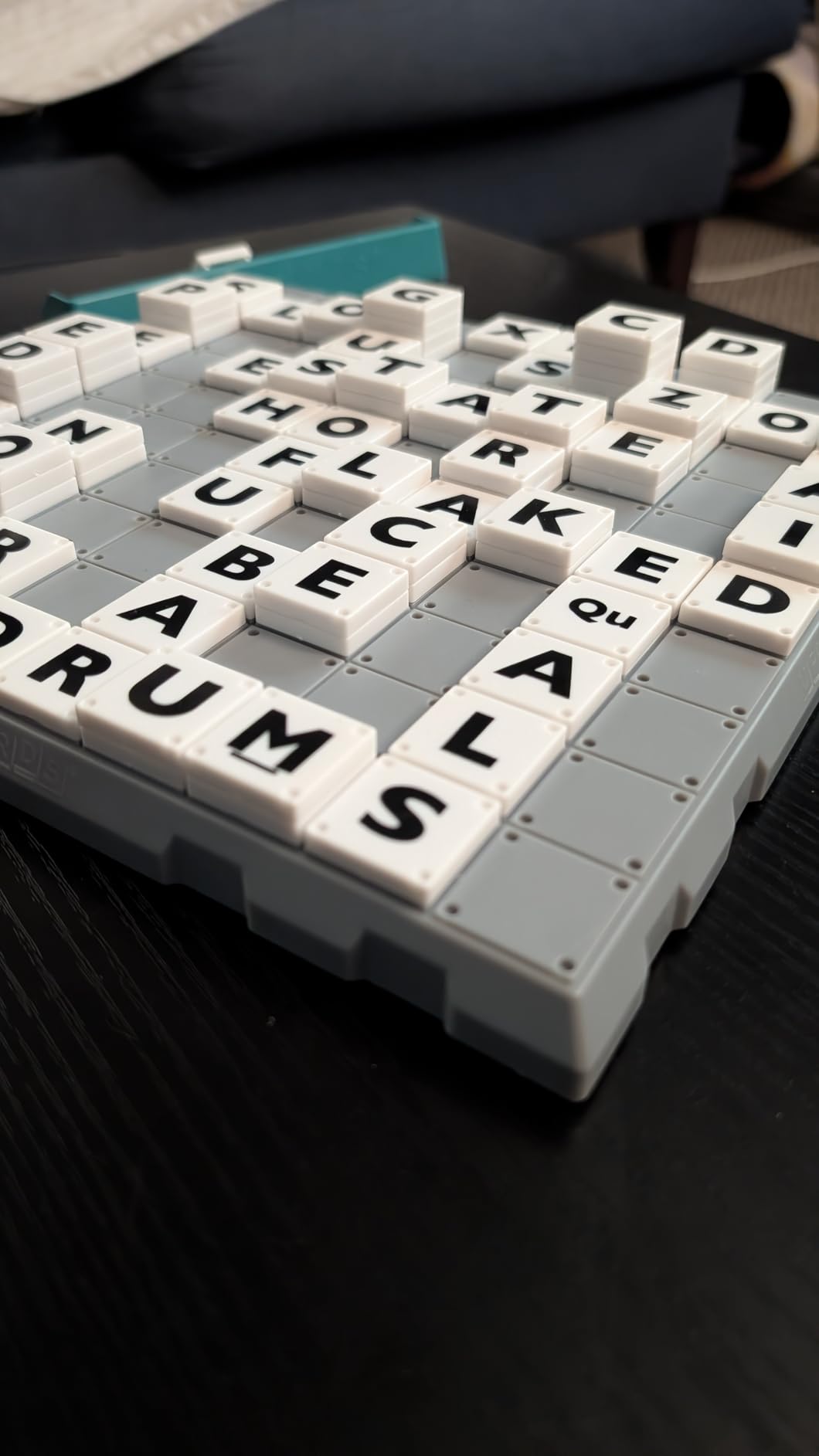
Upwords takes the classic crossword concept and adds vertical stacking. You can place tiles on top of existing words to change them into new words, which adds a three-dimensional strategy that Scrabble lacks. Our team enjoyed the ability to mutate words mid-game.
The rotating Lazy Susan board is a standout feature. It makes the game accessible to all players regardless of where they sit. We tested it with four people and nobody had to crane their neck or move their chair to see the grid.
The board surface is smooth and the tiles stack neatly without sliding.
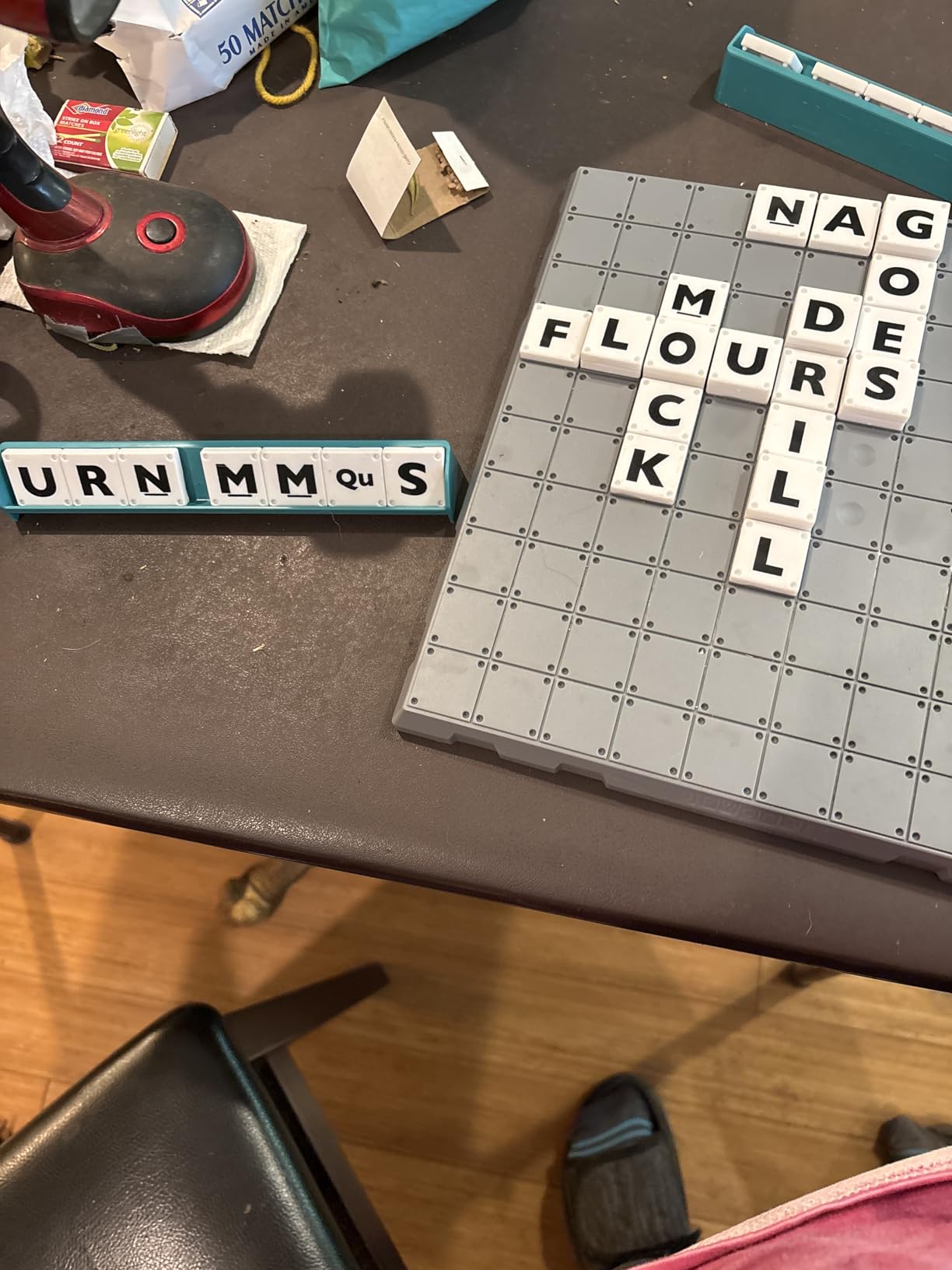
The game includes 100 letter tiles and four tile racks, plus a tile bag for drawing. The tiles are thick enough to stack several layers high without wobbling. We managed to build stacks four tiles tall during one of our test games, which felt satisfying.
The scoring rewards taller stacks, which encourages aggressive play. We found that experienced players quickly learn to build on high-value positions rather than spreading across the board. The game can also be played solo as a puzzle, which is a nice bonus for quiet evenings.
Best suited for players who want Scrabble with a twist
Upwords is the ideal choice when you love word-building but want more flexibility than traditional crossword games. The stacking mechanic keeps the board dynamic from start to finish. The Lazy Susan design also makes it one of the more physically accessible games on this list.
The solo mode is a genuine plus. You can practice word patterns alone or use the game as a creative puzzle. The 60-minute playtime is longer than most options here, which makes it a good centerpiece for a dedicated game night.
Not ideal for groups who want fast rounds or simple scoring
The scoring system is more complex than Scrabble because you must count height bonuses and stack values. Some players found this bookkeeping tedious, especially after a long day. The game also takes up more table space than compact options like Boggle or Tapple.
The tile ink may wear off over years of heavy play. We did not see this during our testing, but user reviews mention it as a long-term concern. If you plan to play weekly for years, you may want to handle the tiles gently.
11. Balderdash – Bluffing Definition Game
Mattel Games Balderdash Board Game for Adults & Teens with Guessing & Bluffing, The Game of Twisting Truths for 2 to 6 Players
2-6 players
45 min playtime
Hilarious bluffing party game
Five categories of clues
Pros
- Hilarious bluffing party game
- Great for family game nights
- Easy to learn rules
- Five categories: people
- words
- initials
- laws
- movies
Cons
- Components may feel cheaper
- Non-creative players can slow game
Balderdash asks players to create fake definitions for obscure words, laws, and movie titles while one player guesses the real answer. The bluffing is hilarious because the genuine answers are often stranger than the made-up ones. Our team laughed until we cried during our first session.
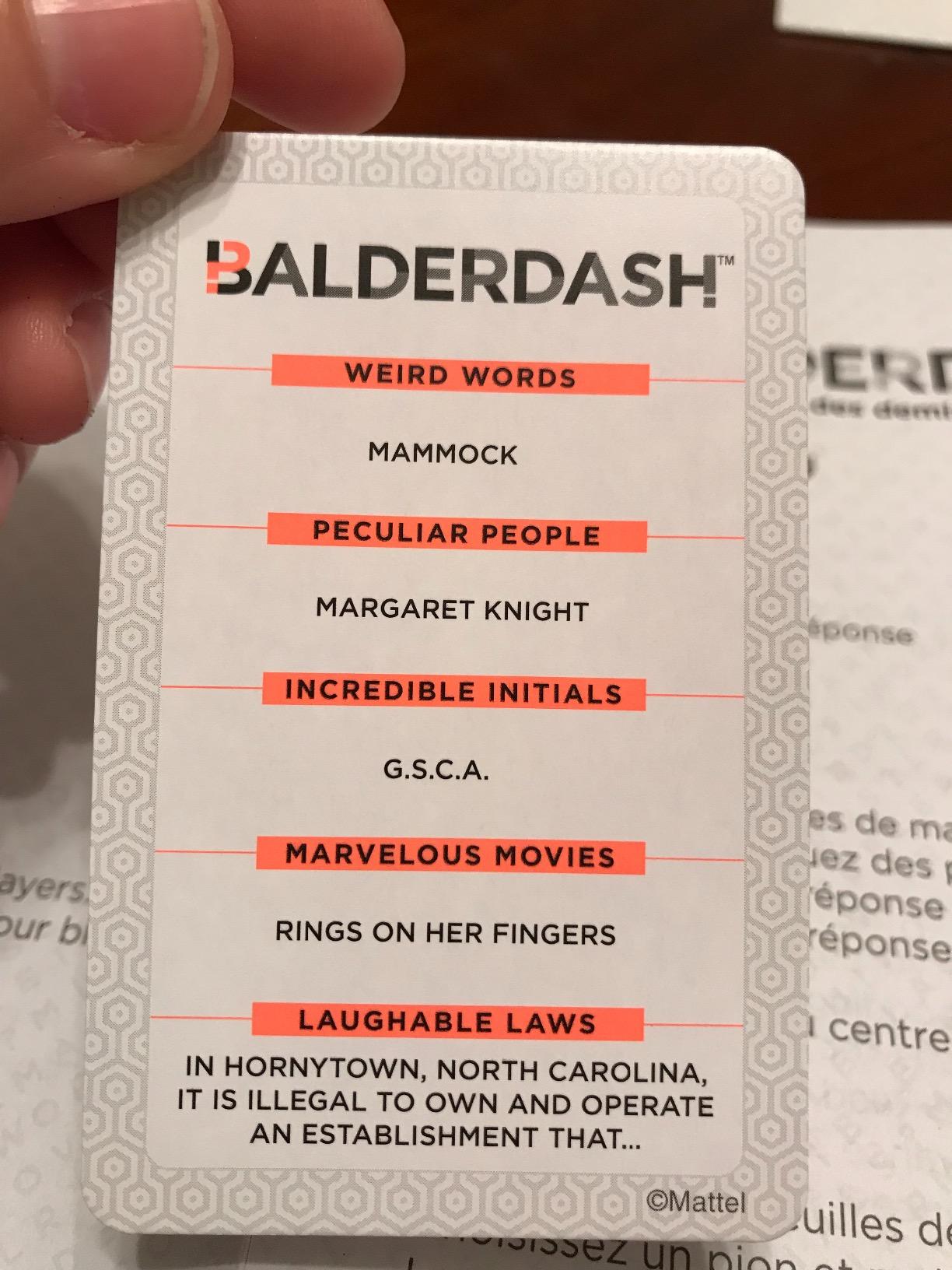
The game covers five categories: people, words, initials, laws, and movies. This variety keeps the game fresh over multiple rounds. One round you are inventing a biography for a real person nobody has heard of, and the next round you are crafting a fake law that sounds plausible enough to fool your friends.
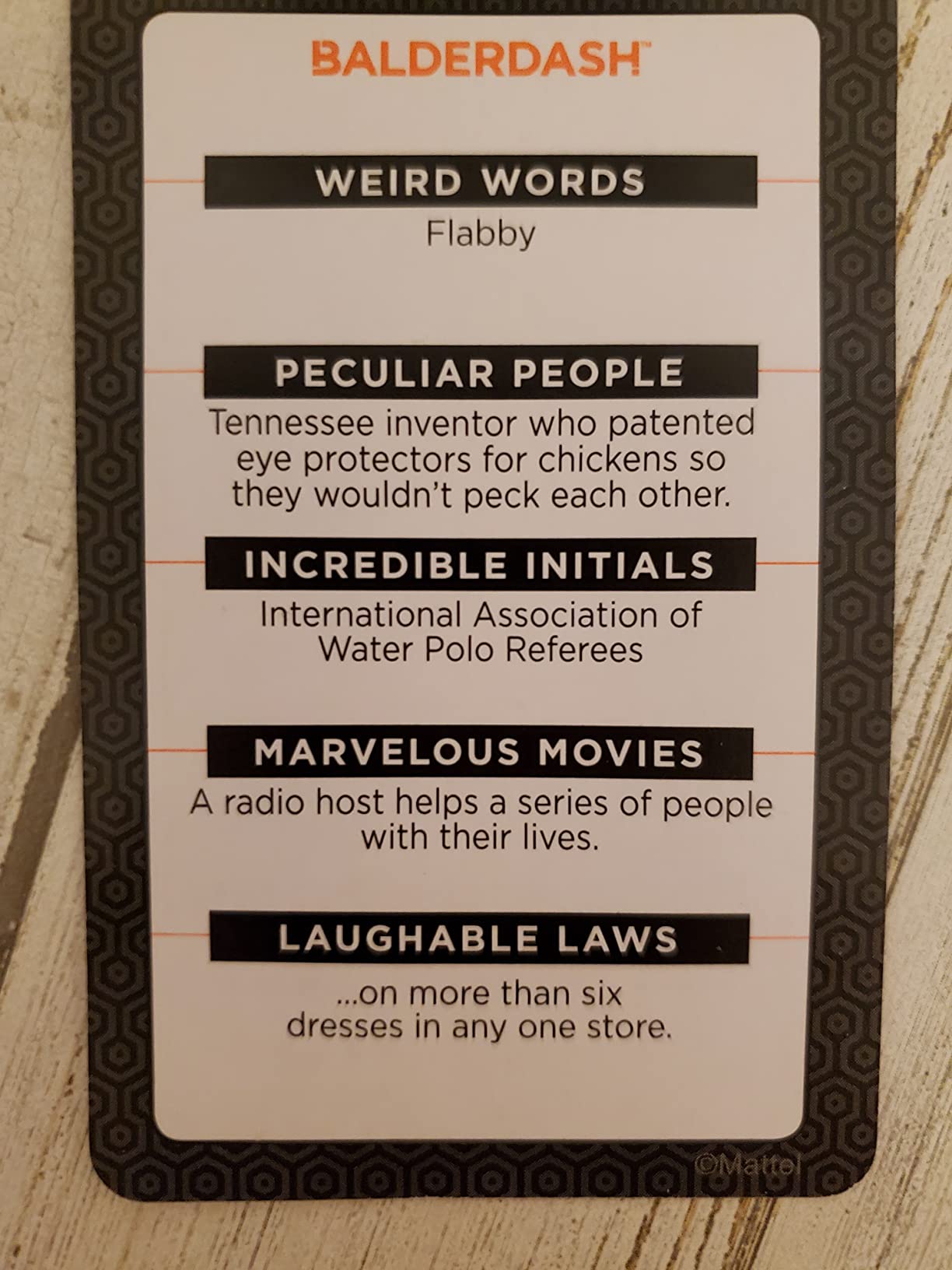
The rules are easy to learn in about five minutes. Each player writes their fake answer on a slip, the reader shuffles them with the real answer, and everyone votes. The scoring rewards both clever bluffs and correct guesses.
We noticed that the best bluffs are specific and slightly absurd rather than completely wild.
The game components are functional but basic. The cards and board are thinner than some competitors, which is worth considering if you plan to travel with the game frequently. The game also depends heavily on players being willing to write creative answers quickly.
Best suited for creative groups with a good sense of humor
Balderdash thrives when your group is willing to be silly and inventive. The game is less about spelling and more about storytelling. It works well as a party game because the answers are shared aloud and everyone votes together.
The social atmosphere is warm and collaborative despite the competitive scoring. The five categories give you enough variety to play for hours without repetition. The movie and law categories were our favorites because the real answers are genuinely unbelievable.
The game also works as a low-stakes warm-up before switching to a more serious board game.
Not ideal for literal thinkers or players who dislike writing
Players who struggle to invent fake answers will slow the game down and feel self-conscious. The game demands creativity, and not everyone enjoys being put on the spot. If your group prefers games with fixed rules and clear answers, Balderdash will feel too open-ended.
The game also requires a decent vocabulary to appreciate the real answers. Some of the words and laws are genuinely obscure, which can make the reading phase feel like a lecture for younger players. The age rating of 12 is appropriate, in our opinion.
12. Scattergories – Quick-Wit Categories Game
Hasbro Gaming Scattergories Classic Game, Party Game for Adults and Teens Ages 13 and up, Board Game for 2+ Players
2-4+ players
30 min playtime
Classic quick-wit categories game
48 category list cards with 20-sided die
Pros
- Fast-paced quick-wit categories game
- Great for parties
- Easy to learn and play
- Sturdy folders
Cons
- Some received opened or damaged packages
- Minimal packaging
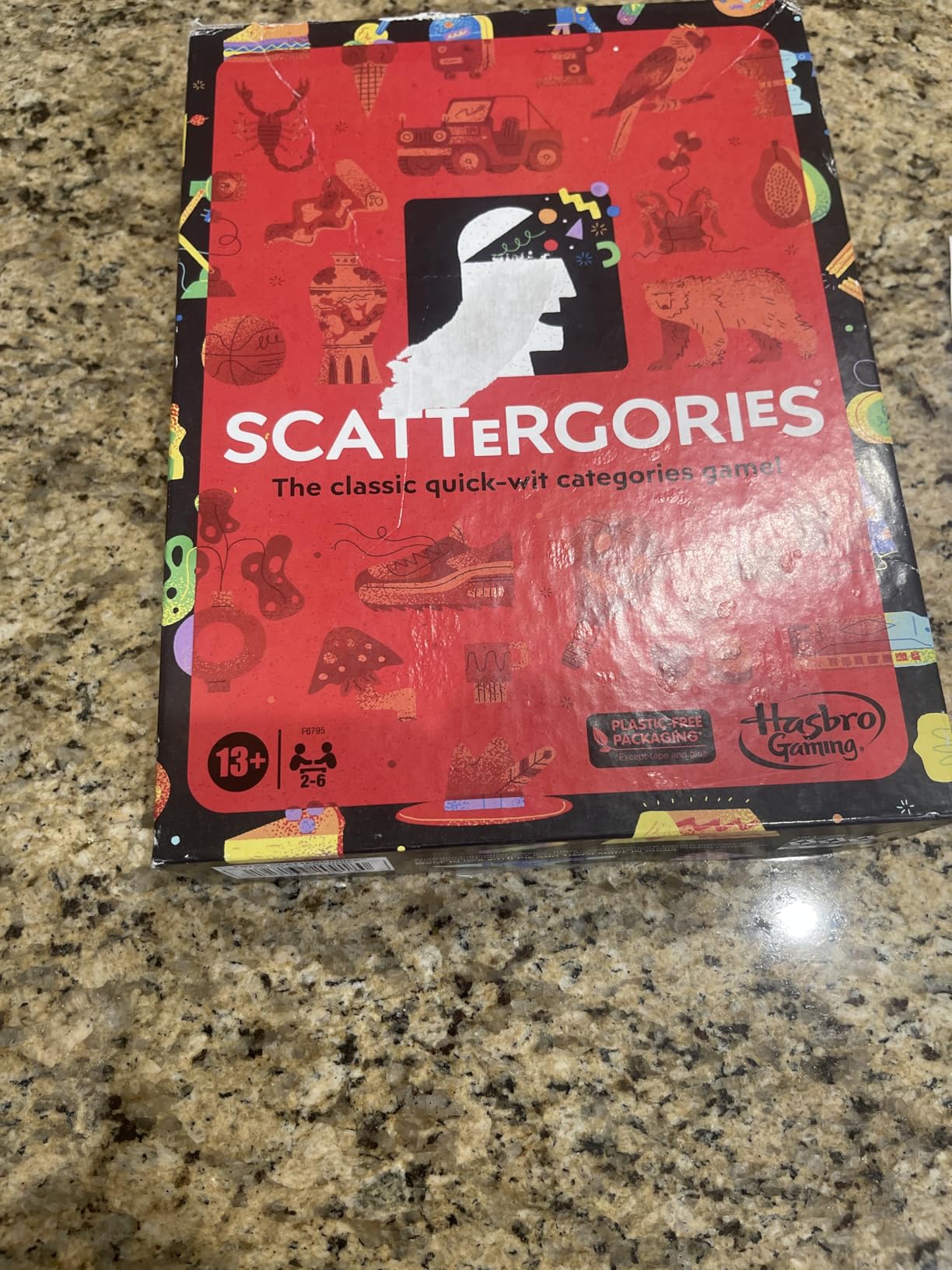
Scattergories is a classic for a reason. You roll a 20-sided die to select a letter, then race to fill out a category list with words starting with that letter. Our team played multiple rounds and the energy stayed high because the timer forces immediate decisions.
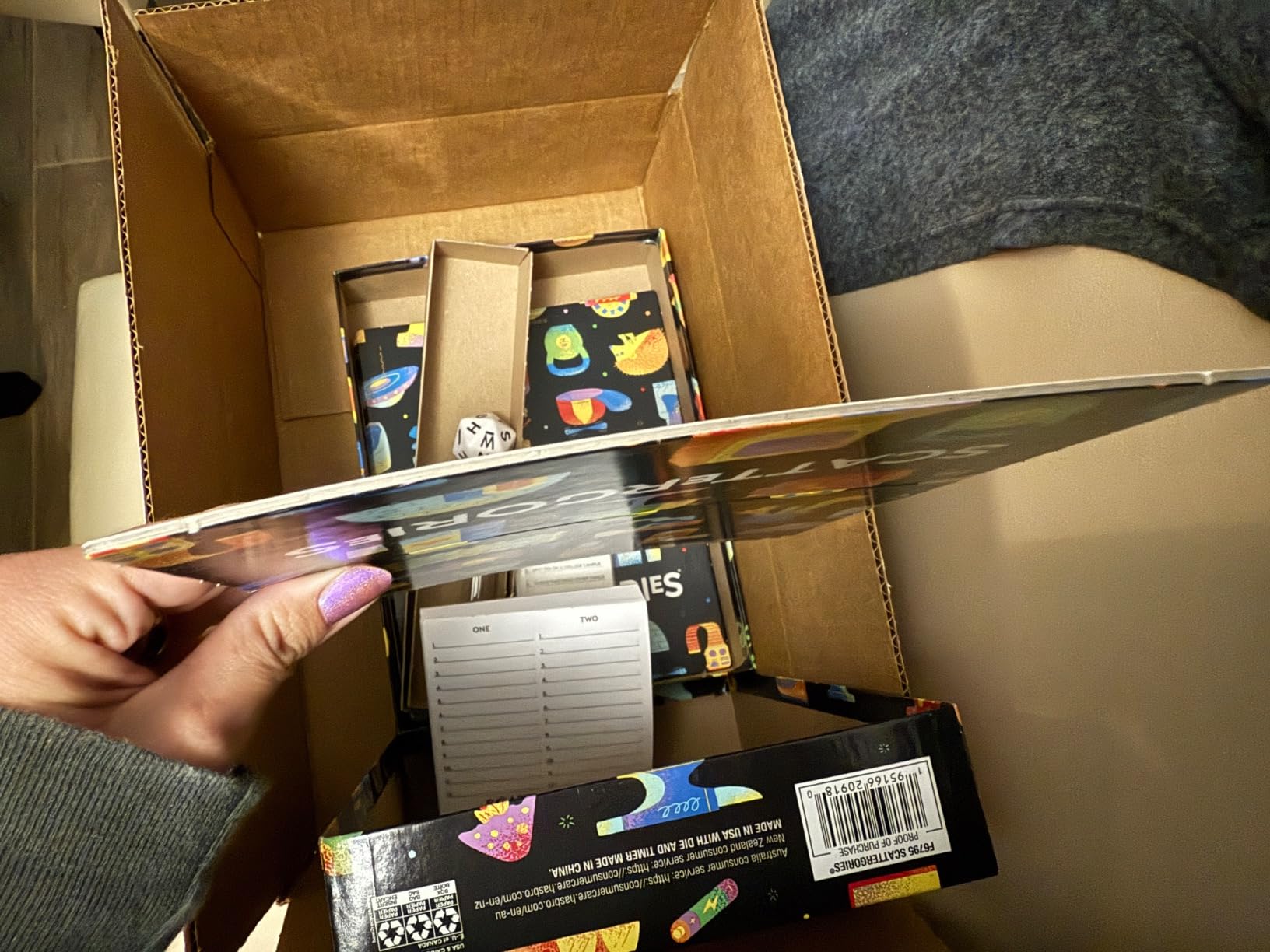
The game includes 48 category list cards, which gives you plenty of variety before repeats. The folders are sturdy and the answer sheets are thick enough to write on without tearing. The modern edition includes a QR code for an online timer and virtual letter die, which is a nice touch for digital-native players.
The real fun comes from the arguments. Is “The Empire State Building” a valid answer for “Buildings” starting with E? The rulebook says yes if the group agrees, which leads to hilarious debates. Our team established a house rule that creative answers get bonus points if they make the whole table laugh.
The game supports two to four players officially, but we easily played with six by adding extra folders and answer sheets. The 20-sided die is satisfying to roll and the letter distribution is fair. The 30-minute playtime is accurate for most groups.
Best suited for fast thinkers and groups who love creative answers
Scattergories rewards players who can think quickly under pressure. The timer creates a sense of urgency that prevents analysis paralysis. The game also works well for mixed skill levels because the categories are broad enough that anyone can contribute at least one answer.
The party atmosphere is genuine. You can play Scattergories while eating, chatting, or listening to music because the rules are simple and the turns are simultaneous. The folders keep answers hidden until the reveal phase, which adds a nice moment of suspense.
Not ideal for players who dislike ambiguity or timer pressure
The game requires group consensus on whether answers are valid, which can lead to frustration if players disagree. The timer also forces fast writing, which is stressful for people who prefer careful thought. If your group has a low tolerance for debate, the reveal phase may feel argumentative.
The category cards can repeat after several sessions, which reduces replay value for dedicated players. You can download new lists online, but the base game eventually runs dry for groups who play weekly. The minimal packaging is also a common complaint from buyers.
13. Taboo – Forbidden Word Party Game
Hasbro Gaming Taboo Classic Game, Party Word Guessing Game for Adults and Teens, Board Game for 4+ Players Ages 13 and Up
4+ players
30 min playtime
Classic forbidden word game
212 cards with 848 guess words
Pros
- Classic Taboo with modern twist
- Great party game
- 848 guess words included
- Portable
Cons
- Buzzer different from original
- Some advanced vocabulary
Taboo is the classic game where you try to get your team to say a guess word without using any of the forbidden words listed on the card. The modern edition updates the card content with pop culture references and current concepts. Our team found the new cards more relatable than the original 1980s versions.
The game includes 212 cards with 848 guess words total, which gives you substantial replay value. The sand timer and buzzer are included, so you do not need any external devices. The buzzer is slightly different from the original electronic version, but it still serves the same purpose effectively.
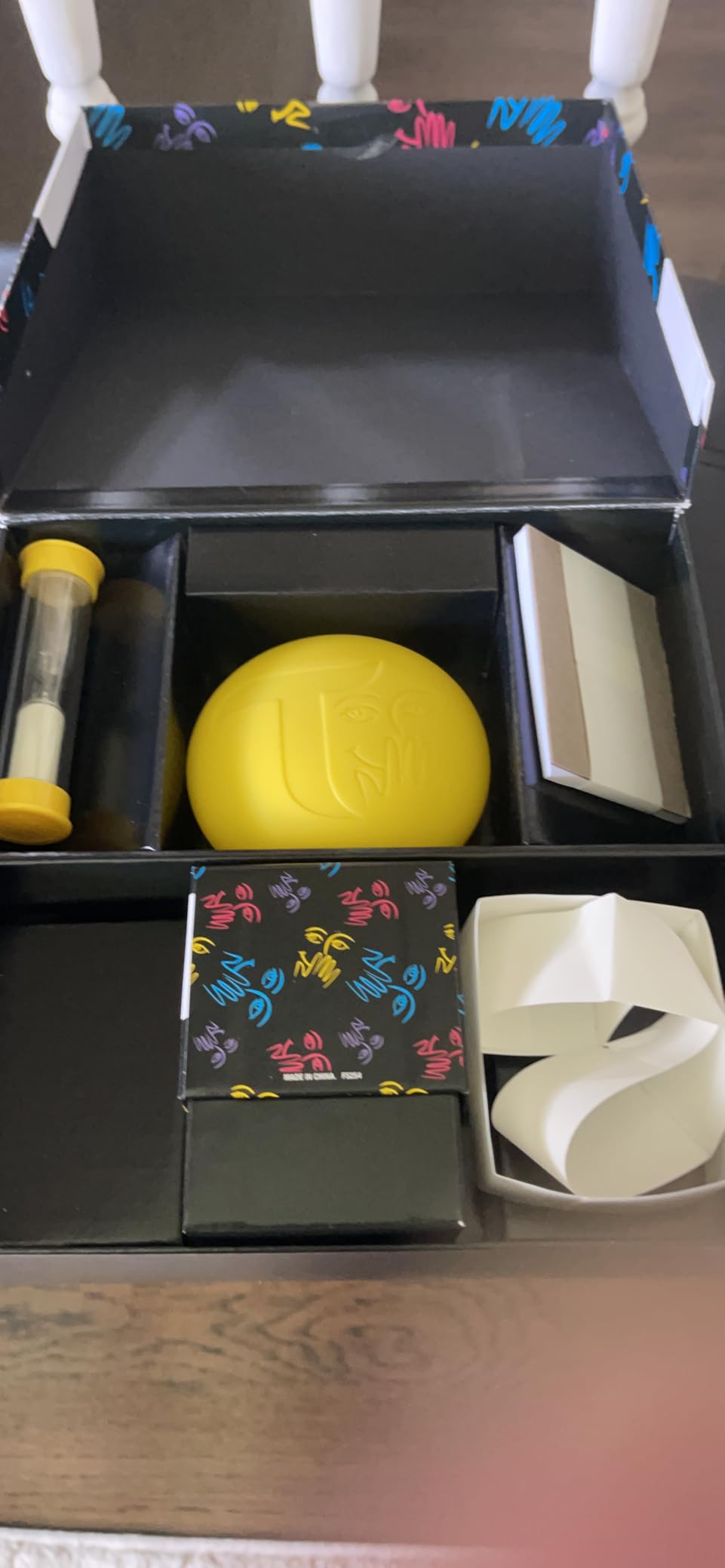
The forbidden words are cleverly chosen to make descriptions challenging. Trying to get someone to say “pizza” without saying “cheese,” “crust,” or “Italian” forces you to think sideways. Our team came up with some incredible descriptions during testing, including one player who described pizza as “the food that makes you fold the box in shame after finishing it alone.”
The game is portable and the box is compact. The cards are thick enough to survive repeated play. We did notice that some of the vocabulary is advanced, which makes the game more suitable for teenagers and adults than for younger children.
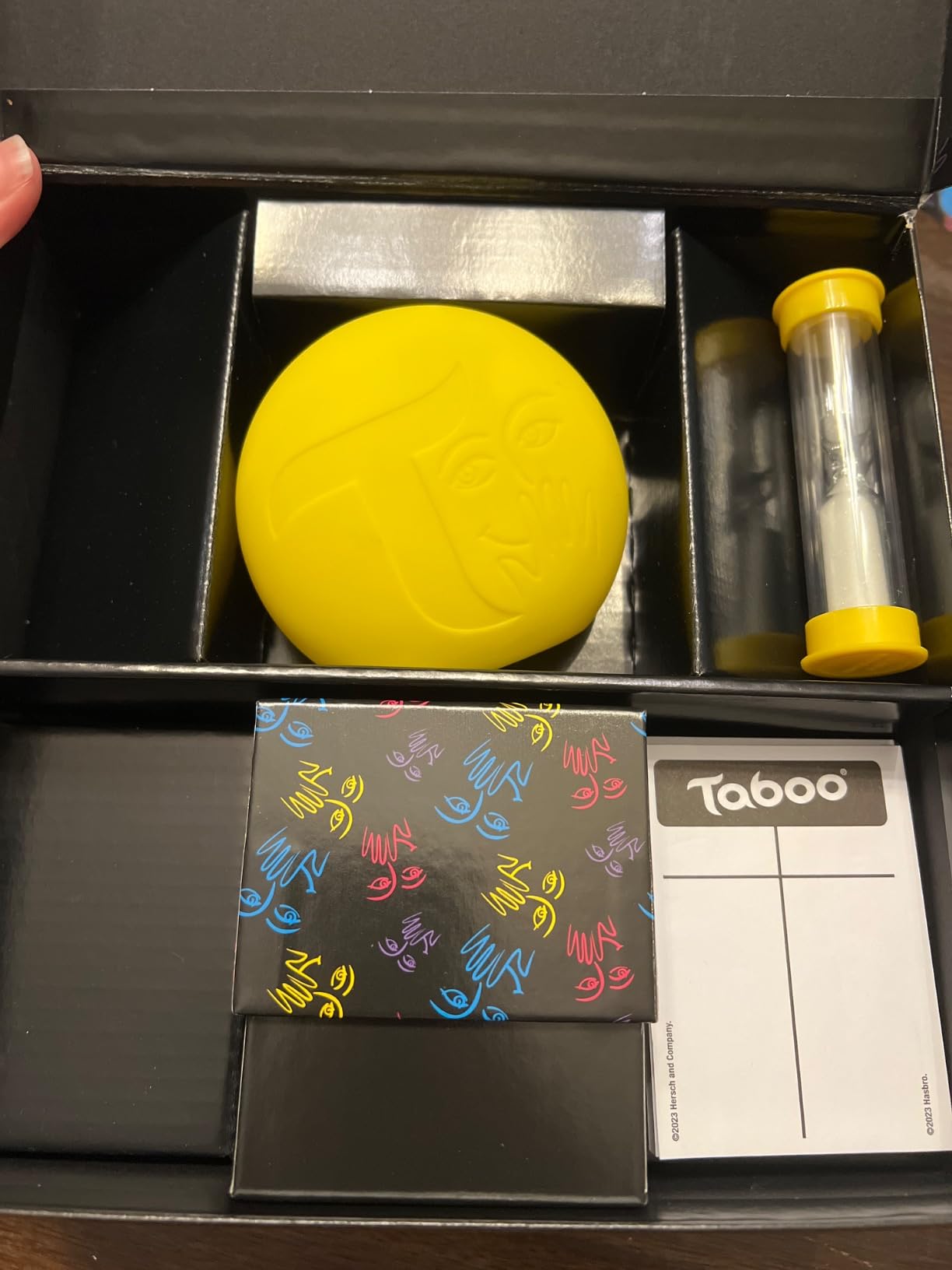
Best suited for groups that love quick talking and creative descriptions
Taboo works brilliantly when you want a game that rewards fast talking and clever wordplay. The rounds are short and the energy stays high because the timer forces constant speech. It is also a great ice breaker because the ridiculous descriptions create instant laughter.
The game handles groups from four to ten or more by simply adding teams. The rules are intuitive enough that you can explain them in under a minute. The portable box makes it easy to bring to any gathering.
Not ideal for players who are uncomfortable with public speaking
The entire game revolves around giving speeches under pressure. Shy players or anyone with anxiety about speaking in front of groups will not enjoy Taboo. The buzzer mechanic also adds confrontation, which can feel harsh if the opposing team is aggressive about catching forbidden words.
Some of the guess words require cultural knowledge that not everyone shares. Non-native speakers or people from different backgrounds may struggle with references that the rest of the group takes for granted. The game works best when everyone at the table shares similar pop culture exposure.
14. Decrypto – Spy Code Deduction Game
Decrypto | Deduction Party Game | #2 Party Game on BoardGameGeek | Great for Teens and Adults | Ages 12+ | 3 to 8 Players | 15 Minutes
3-8 players
15 min playtime
Deduction party game
110 keyword cards with screens
Pros
- Highly interactive with no downtime
- Easy to learn but difficult to master
- Great spy theme
- Works with various group sizes
Cons
- Rules feel clunky initially
- Small card sizes
Decrypto is a spy-themed deduction game where two teams try to intercept each other’s secret codes while protecting their own. The game uses a clever system of keyword cards and anaglyph effects to scramble information. Our team found it deeply addictive after the first learning round.
The setup involves each team drawing four keyword cards and placing them in a specific order behind a screen. The encryptor then gives clues that correspond to the code numbers, and the team must guess while the opposing team tries to intercept. The intercept mechanic means everyone is engaged on every turn.
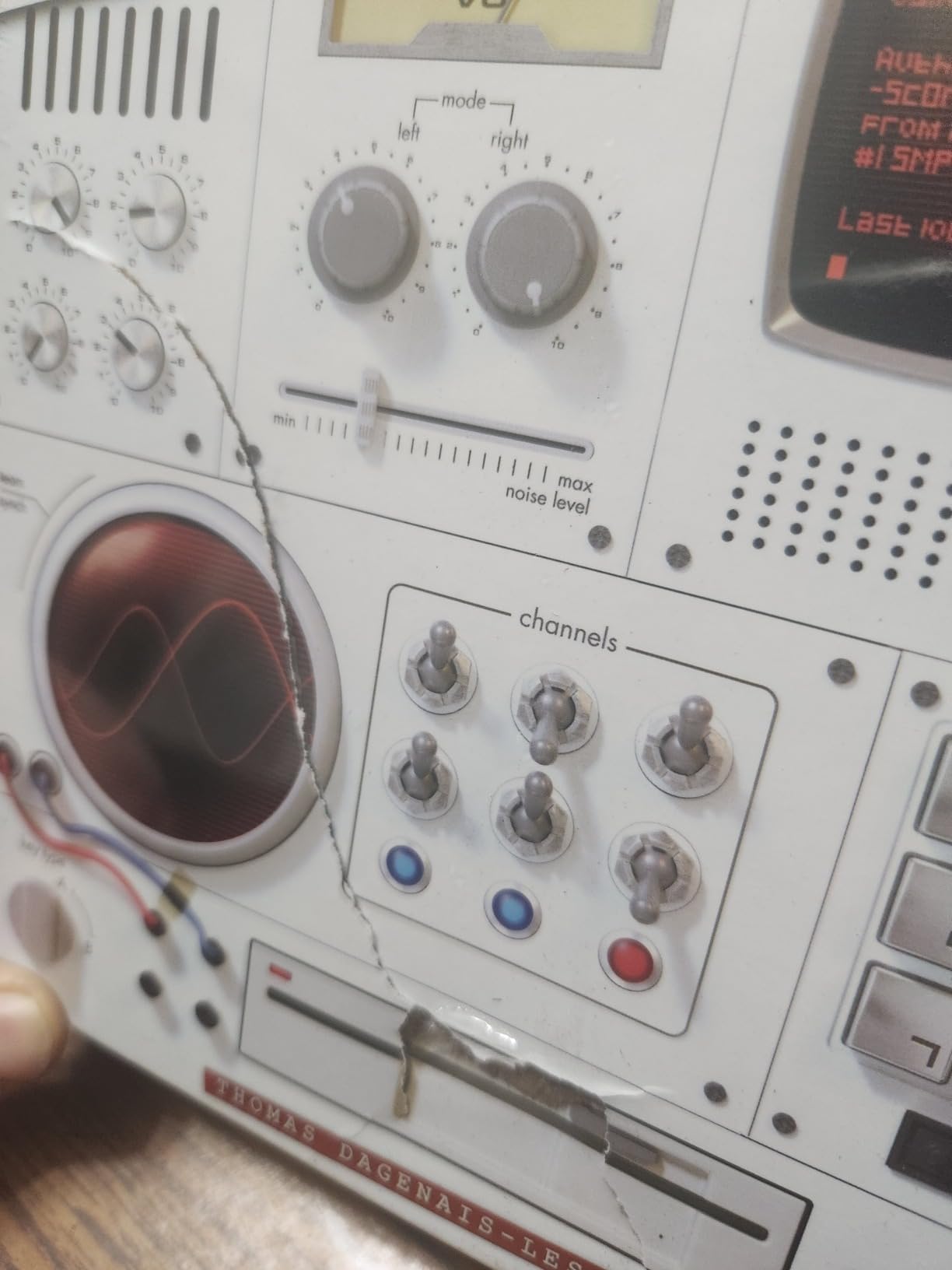
The game is highly interactive with no downtime. While one encryptor is giving clues, both teams are actively trying to decode the message. The spy theme is well executed without being overwhelming.
The components include screens, note sheets, and a sand timer that all fit neatly into the box.
The rules do feel clunky during the first game. We recommend playing a practice round where everyone discusses the logic openly. After that first learning game, the flow becomes natural and the rounds speed up significantly.
The small card sizes are a minor annoyance but do not affect gameplay.
Best suited for strategic groups who love deduction and code-breaking
Decrypto is the right choice when your group wants a game with genuine depth and replayability. The code system creates a meta-game where teams learn each other’s thinking patterns over multiple rounds. The intercept mechanic rewards attentive listening, which keeps every player focused.
The game works with three to eight players, and we found it equally strong at both ends. The 15-minute playtime is accurate for experienced groups, though newcomers may need 25 minutes for the first game. The spy theme adds flavor without distracting from the core mechanics.
Not ideal for casual players who want instant fun
The learning curve is real. Decrypto requires one full game to understand the logic, and some players may tune out during that initial explanation. If your group wants to open a box and start playing immediately, this game will frustrate them.
The small cards and note sheets also require good lighting and a stable table. The game depends heavily on the encryptor being good at giving clues. A bad encryptor can ruin the experience for their entire team, which creates social pressure.
If your group prefers games where no single player can sink the team, look at cooperative options like Just One or Letter Jam instead.
15. Letter Jam – Cooperative Letter Deduction Game
CGE Letter Jam Board Game
3-8 players
30 min playtime
Cooperative word game
64 letter cards with wildcards
Pros
- Cooperative gameplay - everyone wins or loses together
- Endless replayability
- Scalable difficulty
- Great deduction puzzle element
Cons
- Rules confusing initially
- Requires fine motor skills for writing
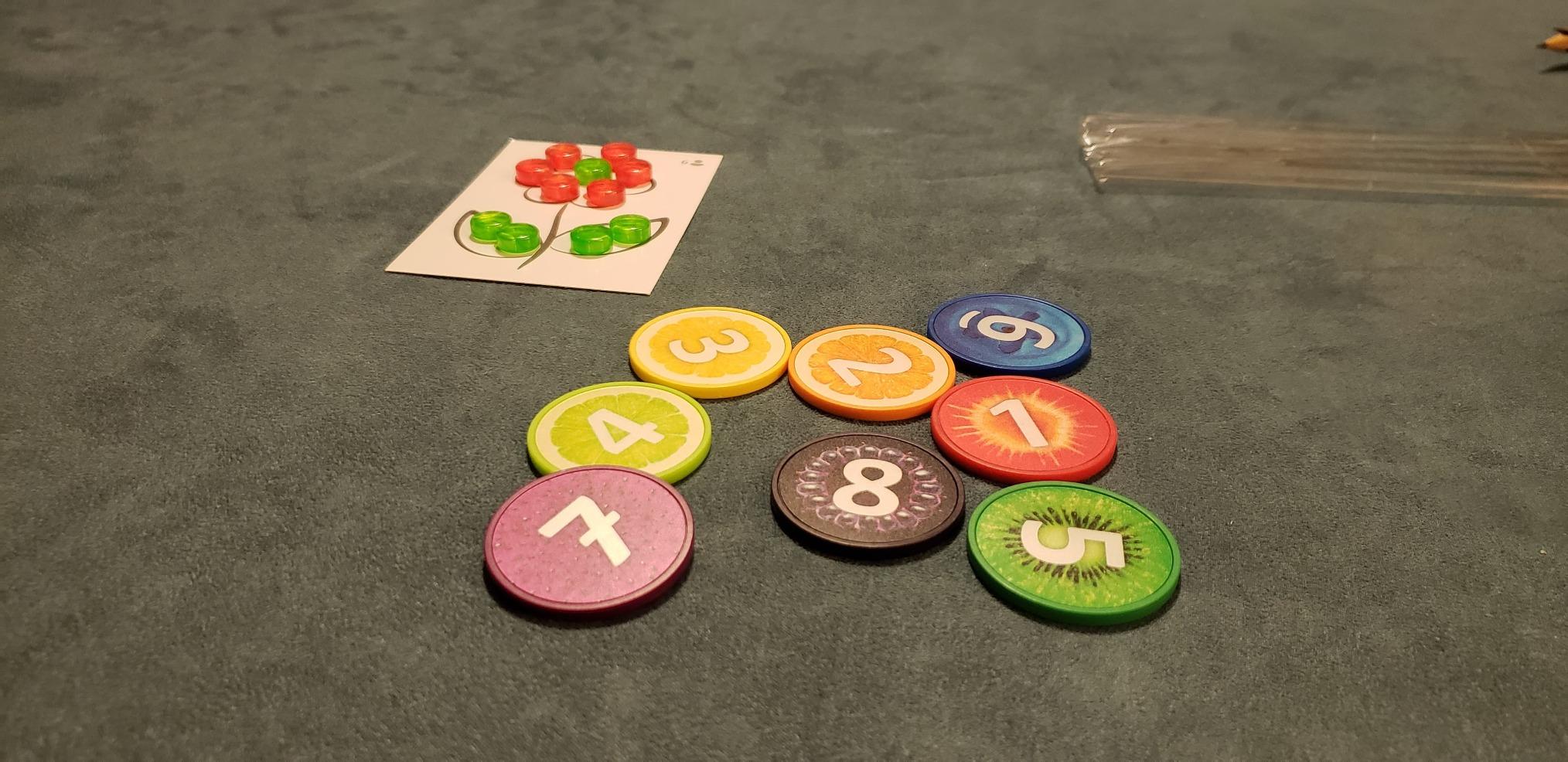
Letter Jam is a cooperative word game where players hold letter cards facing outward so they can see everyone else’s letters but not their own. The group gives clues to help each player deduce their own letters and spell a final word together. Our team found the hidden-information mechanic brilliant.
The game includes 64 letter cards, a wildcard, poker chips, and card stands. Each player arranges their letters in a stand that faces the other players, creating a natural setup for the deduction phase. The cooperative format means you are genuinely working together rather than competing for points.
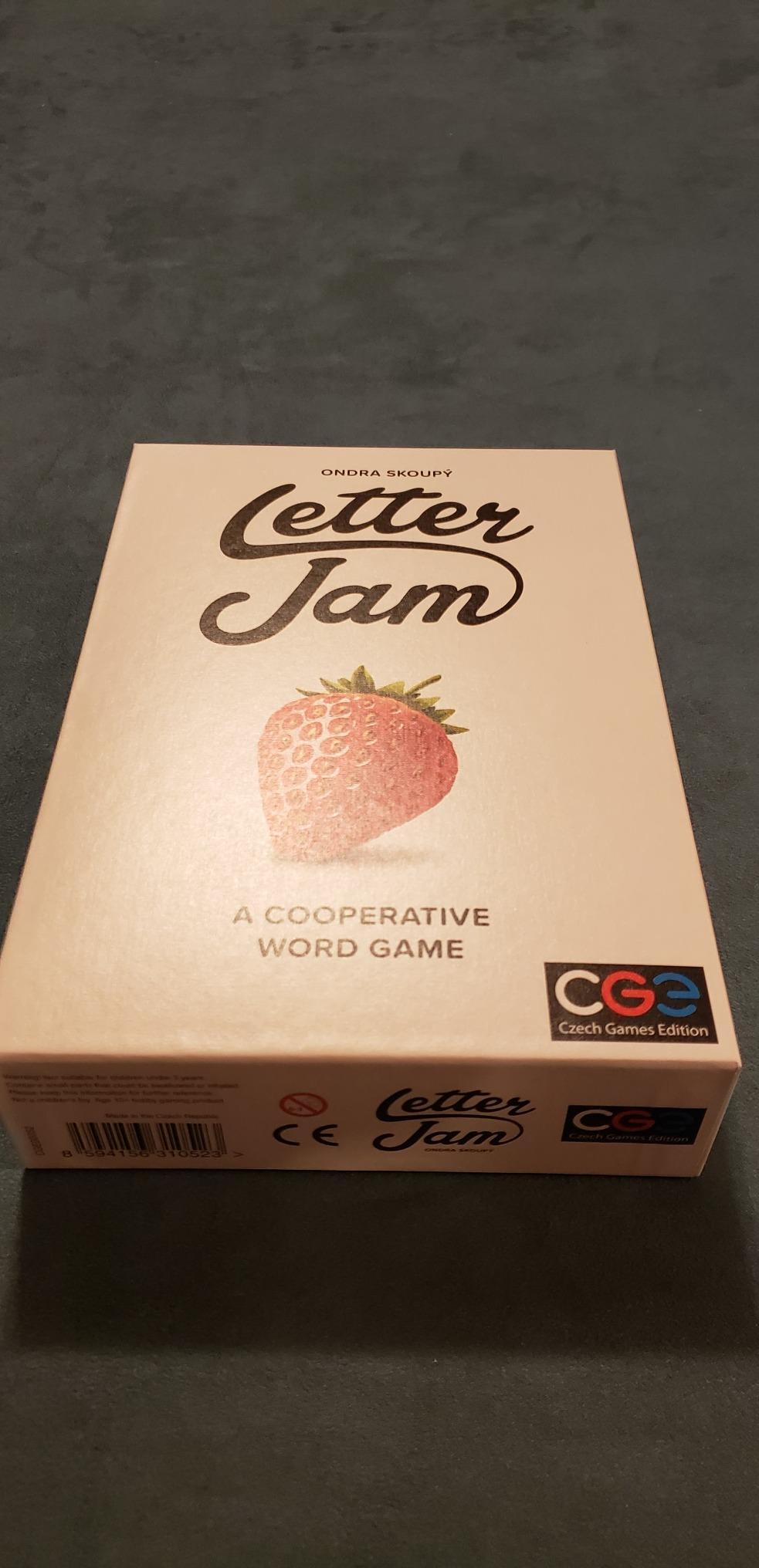
The clue system is elegant. You give clues by spelling words using the visible letters, which helps players narrow down what they might be holding. The wildcard adds flexibility when the letter distribution is cruel.
We played five games and the letter combinations were different every time.
The game is scalable in difficulty. You can adjust the number of letters each player holds or add challenge rules for experienced groups. The 30-minute playtime is accurate for the standard mode, though harder variants can take longer.
Best suited for puzzle lovers and cooperative game fans
Letter Jam is ideal when your group wants a brain teaser that feels like a team escape room. The deduction element is satisfying without being opaque. The game creates genuine moments of revelation when a player finally guesses their letter correctly based on subtle clues.
The cooperative nature makes it perfect for groups who dislike cutthroat competition. Everyone wins or loses together, which keeps the mood positive. The game also works well as a two-person puzzle if you want a quieter, more intimate experience.
Not ideal for players who dislike writing or complex logic
The game requires writing notes and tracking letters, which demands fine motor skills and a flat surface. Players with arthritis or vision issues may struggle with the small card stands and note sheets. The rules are also confusing during the first game, so patience is required.
The pace is slower than party games like Taboo or Incohearent. If your group wants loud, fast fun, Letter Jam will feel like a logic class. The game rewards careful thought over quick reactions, which is great for some players but a dealbreaker for others.
How to Choose the Right Word Board Game
After testing 15 games across multiple settings, we noticed a few patterns that help predict which game will work for your group. The right choice depends on player count, play time, game style, and the age range of your players. Here is what we learned.
Match the player count to your group size
Some games on this list require at least four players while others work with two. Codenames, Taboo, and 25 Words or Less need teams, so they are useless for couples. Boggle, Upwords, and Scrabble work perfectly for two players.
If your group size varies, Blank Slate and Tapple handle both small and large tables well. We found that the best parties happen when the game matches the headcount. Forcing a team game onto three people creates awkward balancing issues.
Conversely, playing a two-player game with eight people means most of the group sits idle.
Consider the play time you want
Play time ranges from 90 seconds per round in Boggle to 60 minutes for a full Upwords game. If you want a quick filler between other activities, Tapple, Decrypto, and Boggle are ideal. If you want the main event of the evening, Scrabble, Upwords, and Balderdash offer longer, more involved experiences.
Our testing showed that 15 to 30 minutes is the sweet spot for most groups. Games in that range feel substantial without overstaying their welcome. The Chameleon, Codenames, Just One, and Scattergories all fall into this comfortable window.
Think about cooperative versus competitive play
Some players love the thrill of competition while others prefer teamwork. Just One and Letter Jam are fully cooperative, which makes them perfect for groups that want to avoid hurt feelings. Scrabble, Upwords, and Scattergories are purely competitive.
Codenames, Taboo, and 25 Words or Less use team competition, which adds camaraderie without isolating individuals. We recommend starting with a cooperative game if your group is new to word games.
Just One is especially welcoming because it builds trust rather than rivalry. Once the group is comfortable, you can introduce competitive options without anyone feeling intimidated.
Factor in age and skill level
Many word games on this list are rated for ages 8 and up, but the actual difficulty varies. Boggle and Blank Slate are genuinely accessible to kids. Decrypto, Balderdash, and Incohearent are better suited for teenagers and adults.
If you need a game that bridges generations, Codenames, Just One, and Blank Slate are the safest bets. From our forum research, one of the biggest pain points parents mention is finding games that work for both kids and adults. The cooperative games on this list solve that problem because younger players can contribute without being outscored by older siblings.
Look for portability if you travel
Not every game travels well. Scrabble and Upwords have large boards that require table space. Boggle, Tapple, and Incohearent fit into small bags and can play on a picnic blanket or hotel desk. If you want a game for vacations or road trips, prioritize the compact options.
Our team took Boggle and Tapple on a weekend trip and both performed flawlessly. The electronic timer in Tapple survived jostling in a backpack, and the Boggle case kept all the cubes secure. Larger games like Balderdash and Scrabble stayed home because the boxes were too bulky.
Frequently Asked Questions
What are some fun word board games for adults?
Fun word board games for adults include Codenames for team strategy, Taboo for fast-paced guessing, and The Chameleon for social deduction. Incohearent offers hilarious party laughs, while Decrypto provides deep code-breaking logic. For cooperative play, Just One and Letter Jam work well with adult groups. The best choice depends on whether your group prefers competitive, cooperative, or bluffing mechanics.
What are the top 10 family board games?
Top family board games that focus on words include Scrabble for classic crossword building, Boggle for quick word searches, and Blank Slate for simple word matching. Just One offers cooperative fun for mixed ages, while Scattergories and Tapple work well with kids and parents together. Balderdash and Upwords round out the list for families who want bluffing or stacking mechanics. These games are rated for ages 8 and up, making them accessible to most family members.
What is the popular word family game?
Scrabble remains the most popular word family game worldwide. It has sold over 150 million sets and is played in dozens of languages. The classic crossword format appeals to both children learning spelling and adults who enjoy strategic word placement. Modern editions include wooden tiles and textured boards that improve the tactile experience. Scrabble works for two to four players and typically lasts around 40 minutes.
What are word games for adults in a group?
Word games for adult groups include Codenames for team-based guessing, Taboo for forbidden-word challenges, and 25 Words or Less for TV show-style bidding. Incohearent and Balderdash provide party atmospheres with bluffing and humor. For adults who want strategic depth, Decrypto and Upwords offer more complex mechanics. Most of these games require four or more players and work best when the group is comfortable with fast talking and creative thinking.
What are some good word-based games besides Scrabble?
Good word-based games beyond Scrabble include Codenames for team clues, Boggle for speed word searches, and Upwords for stackable tile building. Just One offers a cooperative twist where players write clues together. Letter Jam provides a hidden-letter deduction puzzle. For party settings, The Chameleon, Taboo, and Blank Slate create social interaction around words without requiring a large vocabulary. These options cover bluffing, deduction, speed, and teamwork mechanics.
Final Thoughts on Word Board Games in 2026
The best word board games for your group depend on your player count, your preferred play style, and how much time you have. Codenames earned our top spot because it balances accessibility, replayability, and social interaction better than anything else we tested. Scrabble remains the classic choice for dedicated word builders, while Boggle offers the best portable option for quick rounds.
No matter which game you choose, the real value comes from the time spent around the table with people you enjoy. Word games create laughter, teach language skills, and build connections without requiring screens or complicated setups. We hope our testing helps you find the perfect addition to your game night shelf in 2026.