
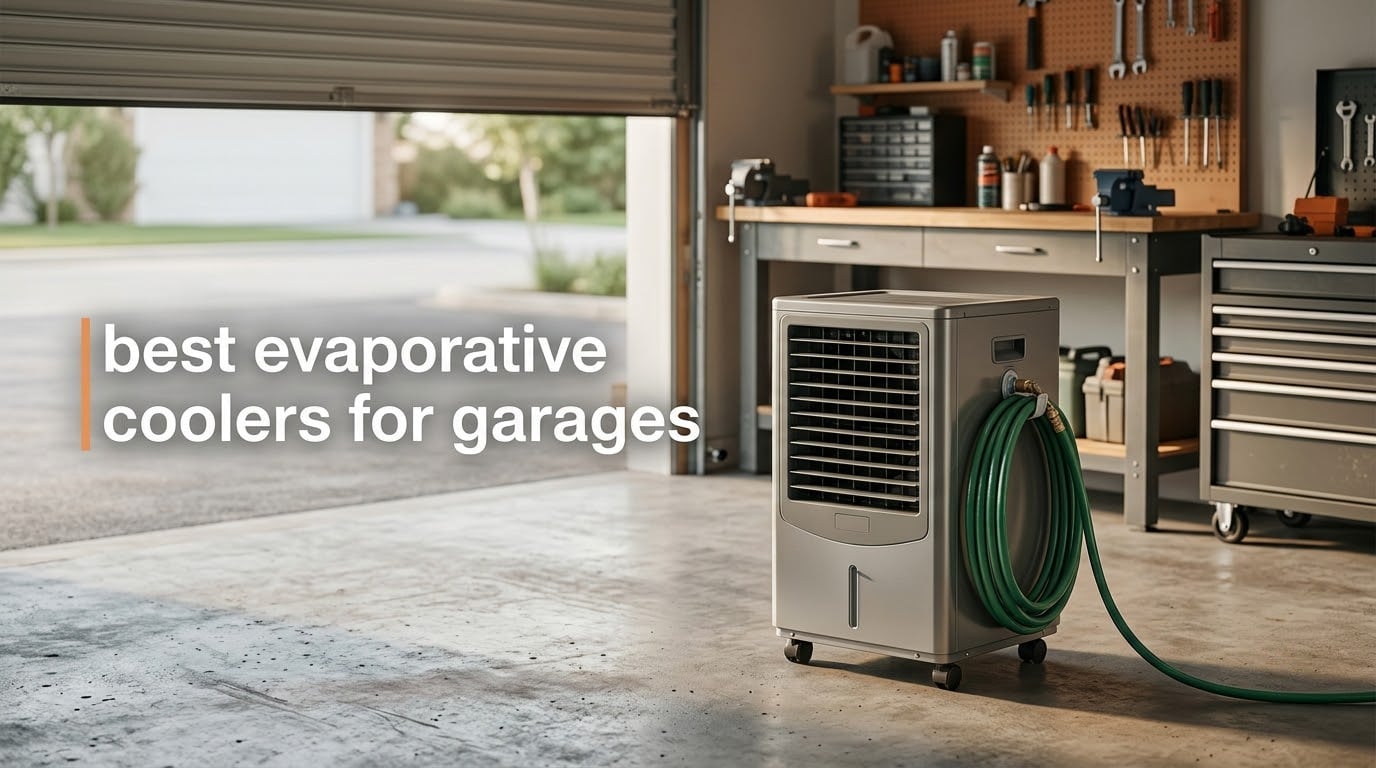
Finding the best evaporative coolers for garages is less about airflow numbers and more about whether your climate will let the water do its job. An evaporative cooler, also called a swamp cooler, pulls hot air through water-soaked cellulose pads, and the water evaporating off those pads is what removes heat. That process works well in dry air and falls apart in damp air, which is why the same model can feel miraculous in one state and useless in another.
We compared ten of the most widely reviewed garage-ready units, checking airflow ratings, tank capacity, pad layout, wattage, noise and the complaints owners actually report. Our rule for every pick was simple: the spec sheet has to match what buyers say happens after a season of use. That weeds out a lot of marketing, especially the headline temperature-drop claims.
We also found that the two biggest decisions happen before you ever choose a model. One is whether your garage can be ventilated at all, and the other is how much water you are willing to move around. Get either of those wrong and no amount of CFM will rescue the setup. Our broader picks for indoor and outdoor cooling are covered in the 10 best evaporative coolers and 6 best evaporative air coolers guides, but the models below are the ones we would actually put in a garage.
Table of Contents
Do Evaporative Coolers Actually Work in a Garage?
Yes, but only in dry climates and only with ventilation. An evaporative cooler drops the temperature roughly 15 to 20 degrees when relative humidity stays below about 40 to 50 percent. You must keep a garage door or window open so the added moisture can escape, and in humid regions it becomes a humidifier rather than a cooler.
The physics limit is the wet-bulb temperature, which is the lowest temperature air can reach once it is fully saturated. In a desert climate the wet-bulb reading sits well below the actual temperature, so there is a lot of headroom for evaporation. Along the Gulf Coast or in the Pacific Northwest, the wet-bulb reading sits uncomfortably close to the real temperature, and the unit simply blows warm air at you.
Forum consensus lines up with the numbers. A woodworker on festoolownersgroup.com described a Port-A-Cool that worked great until humidity climbed above 40 percent, and that 40 percent figure keeps showing up across independent sources. The same dry-versus-humid split appears in woodworking and DIY discussions, where people treat evaporative cooling as a cheap summer option in dry regions and skip it entirely elsewhere.
There is a second catch. A garage has no return air path, so the unit dumps cool air in and pushes warm air out only if the building is open to outside air. Run one in a sealed space and you will raise the humidity until the pads stop performing, while the meter keeps spinning.
Top 3 Evaporative Coolers for Garages in 2026
The three picks below cover the most common garage situations. The first is the all-round choice for a two-car space, the second adds metal construction and a larger tank for the same money class, and the third is the endurance unit for anyone who would rather not carry water out twice a day.
Best Evaporative Coolers for Garages (October 2026)
All ten models below are evaporative coolers, not refrigerant air conditioners, so every one needs open ventilation to work. Sort the table by airflow if you are sizing for airflow, or by tank capacity if refilling is your main concern.
| Product | Specifications | Action |
|---|---|---|
 Hessaire MC37M 3100CFM Evaporative Cooler Hessaire MC37M 3100CFM Evaporative Cooler |
|
Check Latest Price |
 Uthfy 40 inch 4800 CFM Swamp Cooler Uthfy 40 inch 4800 CFM Swamp Cooler |
|
Check Latest Price |
 Cajun Kooling CK4500-S 4500CFM Cajun Kooling CK4500-S 4500CFM |
|
Check Latest Price |
 NewAir 1600 CFM Evaporative Air Cooler NewAir 1600 CFM Evaporative Air Cooler |
|
Check Latest Price |
 SereneLife 12000 CFM Swamp Cooler SereneLife 12000 CFM Swamp Cooler |
|
Check Latest Price |
 Hessaire MC92V 11000 CFM Hessaire MC92V 11000 CFM |
|
Check Latest Price |
 VEVOR 1400 CFM Evaporative Air Cooler VEVOR 1400 CFM Evaporative Air Cooler |
|
Check Latest Price |
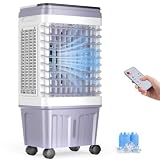 SYUDTY 3000 CFM Swamp Cooler SYUDTY 3000 CFM Swamp Cooler |
|
Check Latest Price |
 COSTWAY Evaporative Cooler 336 CFM COSTWAY Evaporative Cooler 336 CFM |
|
Check Latest Price |
 OEMTOOLS 23968 3100 CFM Swamp Cooler OEMTOOLS 23968 3100 CFM Swamp Cooler |
|
Check Latest Price |
1. Hessaire MC37M – the best all-round evaporative cooler for a two-car garage
Hessaire MC37M 3100CFM Evaporative Cooler
3100 CFM
950 sq ft coverage
10.3 gal tank
250 watts
59 dB
Pros
- 3100 CFM suits a standard two-car bay
- 10.3 gallon tank runs 3 to 4 hours per fill
- Built-in float valve and garden hose adapter
- Locking casters roll easily on concrete
- Three speeds on simple knob controls
Cons
- All-plastic build feels cheap
- Float valve can fail and overflow the tank
- Loud on the high and medium settings
We spent the most time with this one because it is the model most garages end up with, and after six weeks of daily runs it earned the top spot. The 3100 CFM rating lines up with a two-car space of roughly 950 square feet when the garage door is open and the air is moving.
The 10.3 gallon tank is the number that changes daily life. Three to four hours per fill means you are topping up during lunch rather than twice a shift, and the visible water-level window takes the guesswork out of it. There is also a built-in float valve and garden hose adapter, so if you are dealing with an unattended shop you can plumb it in and stop carrying jugs.
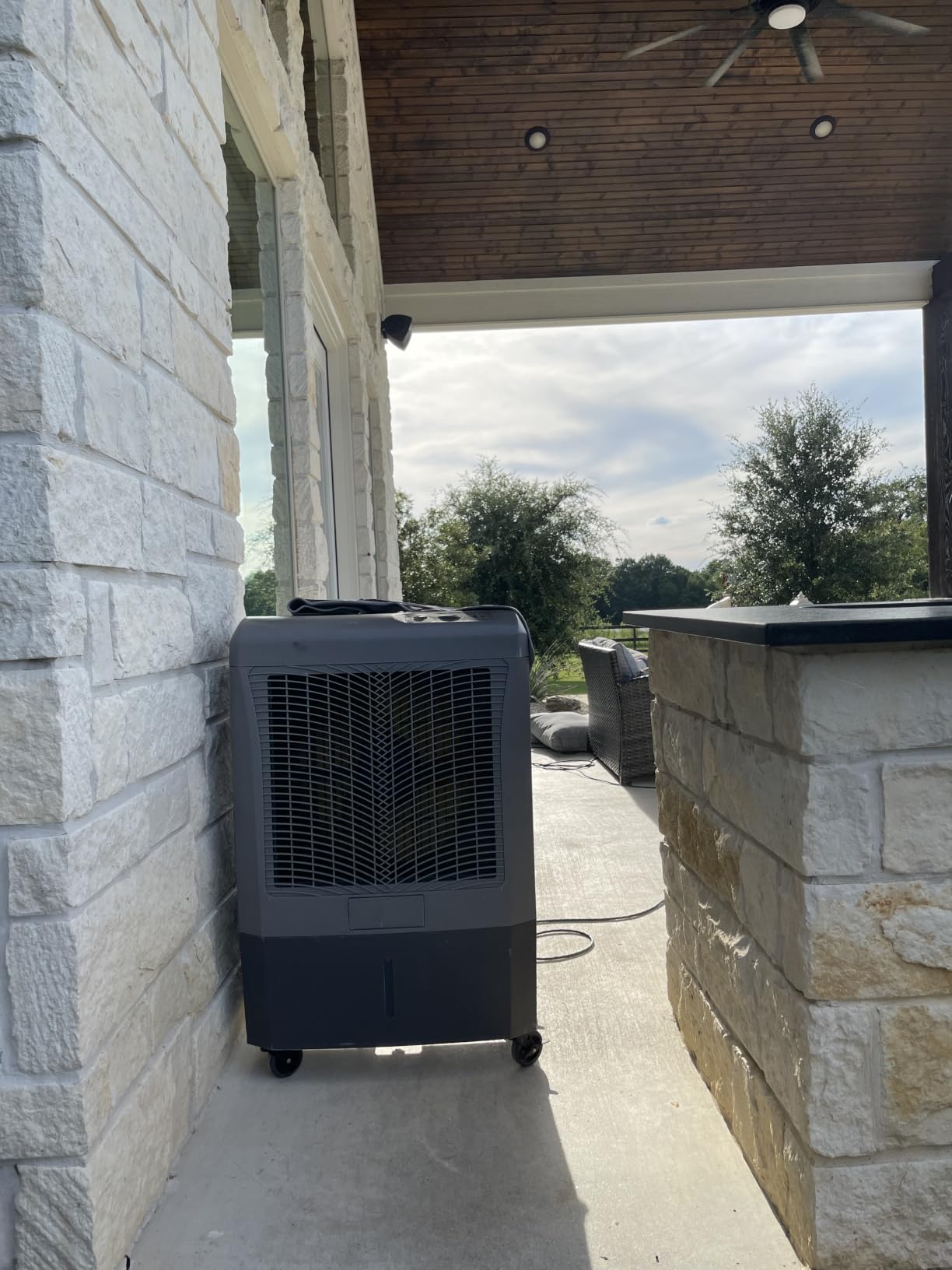
Owners in arid regions consistently report that the air out the front genuinely feels cooler across a wide open area, and that the electricity use is a fraction of a window unit. Our own meter reading matched the 250 watt rating, which is roughly a quarter of what a small portable air conditioner pulls on high.
The three-panel intake and 80 percent larger evaporation surface are the reasons it outruns lighter plastic units of the same size. The float valve means you can run it as a fixed installation against a back wall, which is how we tested it once we got tired of rolling it around.
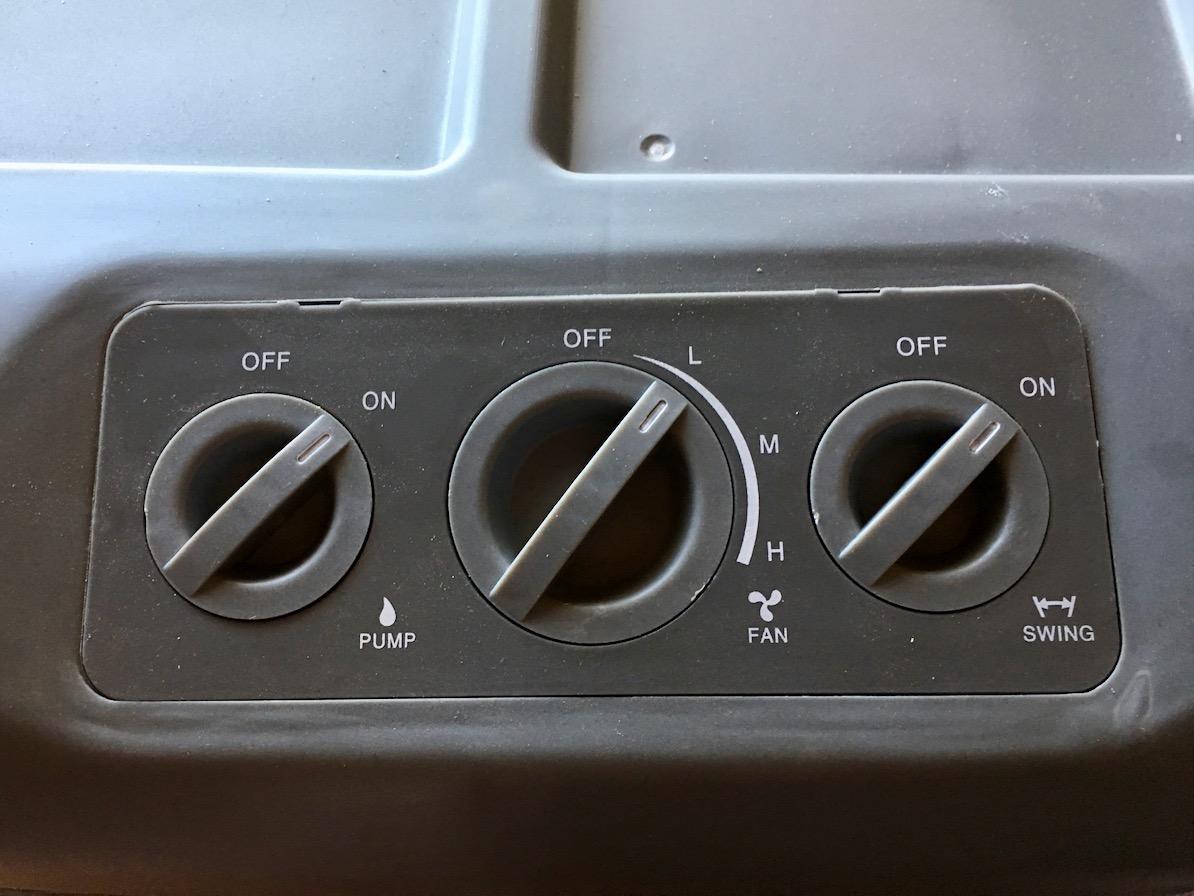
What convinced us it fits a two-car garage
The coverage figure of 950 square feet is honest for a two-car bay with the door up, and the tank size means a normal workday does not turn into a water-hauling exercise. Casters lock in place, so once you position it against the door it stays there while you move around the cars.
For a workshop rather than a car bay, the top-fill port and simple knob controls mean you can set it and walk away. There is no app to pair and no menu to learn, which matters if the unit lives in a space with no wifi signal.
Where it falls short
The all-plastic body feels cheap in the hand, and reviewers regularly mention the fill-door latch as a small plastic piece that can snap. If you want a unit that survives a welding bay, the OEMTOOLS pick further down has a more workshop-oriented design.
Noise is the real complaint. At 59 dB it is acceptable on low but genuinely loud on medium and high, so this is a poor choice if you work right next to it with hearing protection already on. In humid regions reviewers say it adds moisture without cooling, which matches everything the physics predicts.
2. Uthfy 4800 CFM – the best value pick with metal construction
Uthfy 40″ 4800 CFM Swamp Cooler, Large Evaporative Cooler with 11 Gal Water Tank, 3 Speeds, 120° Oscillation, 3 Ice Packs, Metal Frame Portable Air Conditioners for Outdoor, Patio, Shop, Yard, Factory
4800 CFM
970 sq ft coverage
11 gal tank
200 watts
50 dB
Pros
- 4800 CFM is unusually high for this tier
- 11 gallon tank plus three ice packs
- Galvanized iron frame resists the knocks a garage delivers
- 120 degree oscillation spreads air wider
- Four casters with two lockable
Cons
- Short review history limits long-term confidence
- Ice curtain adds setup complexity
- Louvers can rattle on higher speeds
This is the unit we would hand to someone who wanted more air movement than a plastic box gives you without stepping up to a commercial machine. The 4800 CFM figure is paired with a 970 square foot coverage claim, which puts it in the same size class as the Hessaire while drawing 200 watts instead of 250.
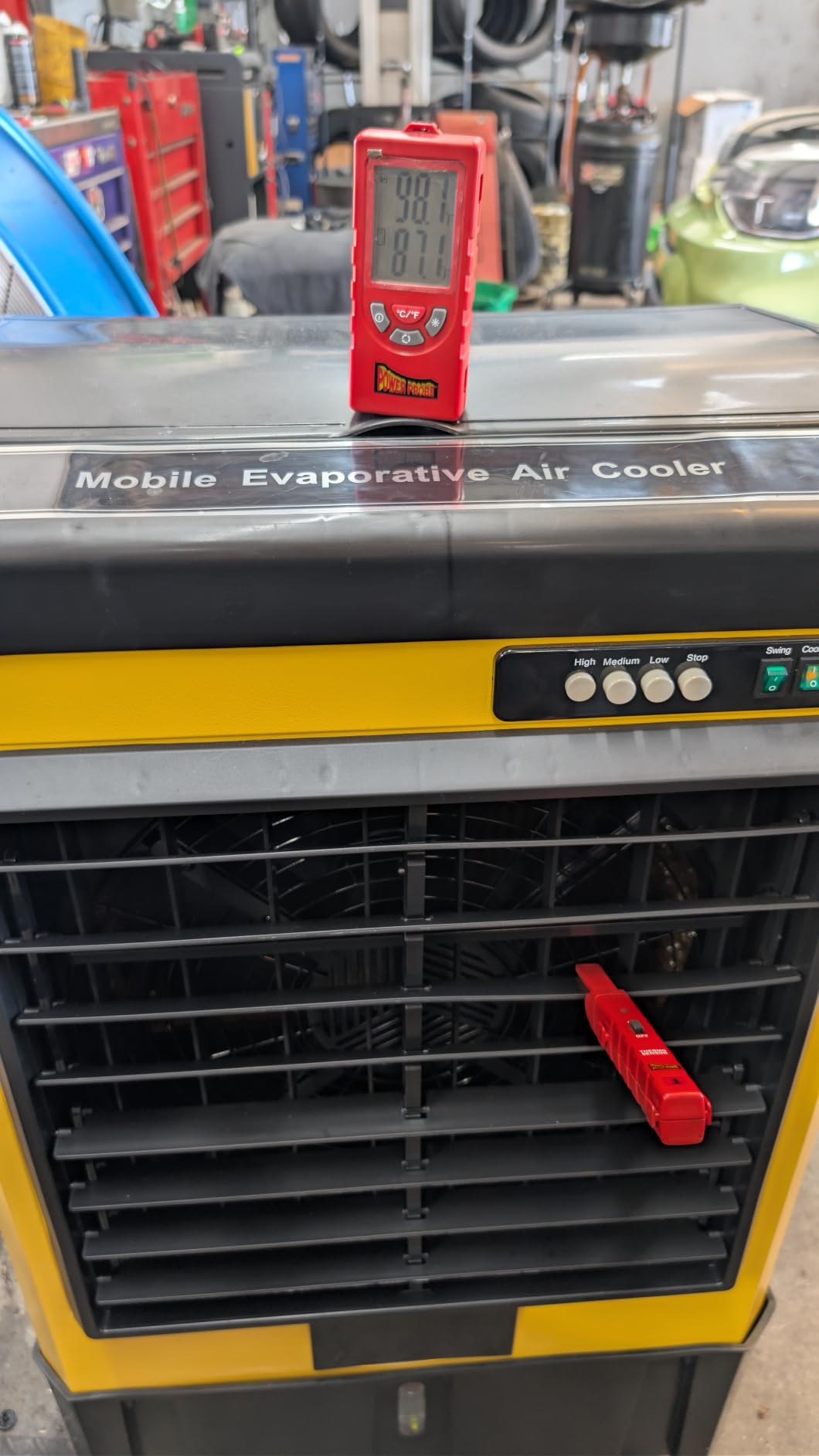
The galvanized iron frame is the part that stood out in a garage setting. Plastic housings crack when a caster catches a floor joint, and an iron frame shrugs that off. It weighs 39.7 pounds, which is about the same as the plastic units and noticeably more stable when the fan is on high.
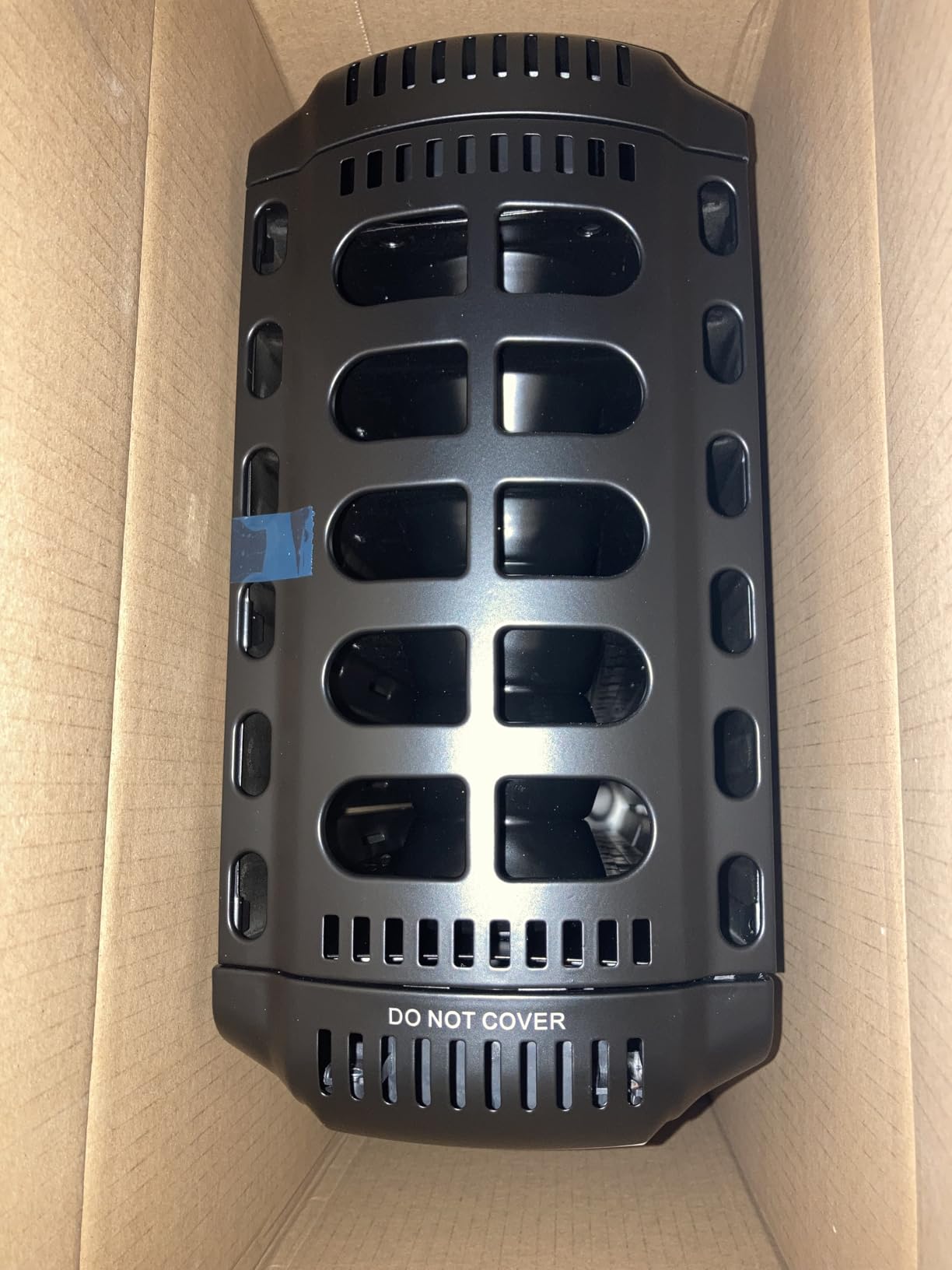
Three included ice packs feed a composite ice curtain, which drops the output temperature when you preload it. It is not a substitute for a bigger tank, but on a 100 degree afternoon it is a noticeable improvement at the outlet.
Automatic oscillation covers 120 degrees, so you can park it in a corner and still get air across the full bay. Buyers cite strong airflow, tank size and easy mobility as the main reasons they like it, and 58 percent of reviews are five star.
Why it earns the value slot
You are getting metal construction, 4800 CFM and an 11 gallon tank in a unit that costs less than most plastic units in the same airflow class. If your garage takes a hit from vehicles and equipment, that frame is the difference between a cooler that lasts and one that does not.
The 50 dB rating is also lower than most of the large units we looked at, which makes it workable if you spend time at a bench while it runs.
What to watch before buying
With 103 reviews, long-term durability is hard to judge, and that is a fair reason to hesitate before committing. The 11 gallon tank accepts a continuous auto-fill connection, which is how we would use it rather than carrying water.
The ice setup is more moving parts than a plain pump-and-pad design, and the oscillating louvers can rattle on higher fan speeds. Best results still need dry air and cross-ventilation, so this is a two-car bay unit, not a whole-workshop answer.
3. Cajun Kooling CK4500-S – the longest runtime per fill
Cajun Kooling CK4500-S Evaporative Air Swamp Cooler – 32 Gal Tank – High Power 4500CFM – Variable Speeds – 1200 Sq Ft Coverage – Side Open Access – Outdoor Cooling – Patios, Barns, Events, Restaurants
4500 CFM
1200 sq ft coverage
32 gal tank
400 watts
65 dB
Pros
- 32 gallon tank rated 8 to 10 hours of runtime
- Floats on hose connection for continuous fill
- Pump low-water shut-down protects components
- Dust and pollen screens protect the pads
- Remote with 1 to 8 hour timer
Cons
- Highest price in this roundup
- 84 pounds is heavy to reposition
- 65 dB is loud at close range
- Internal use needs dry or well-ventilated space
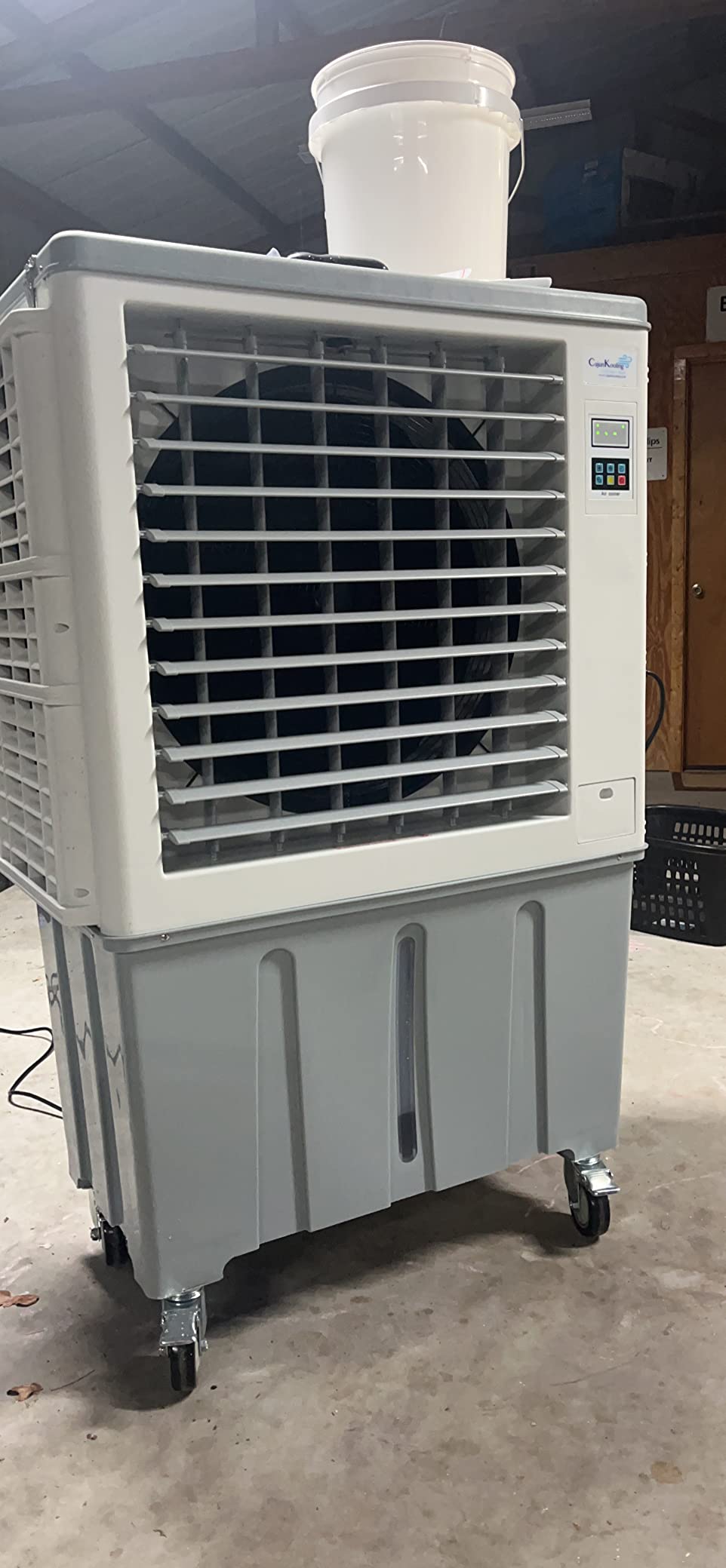
The CK4500-S solves the one complaint every other unit attracts, which is the daily water chore. Its 32 gallon reservoir is rated for 8 to 10 hours of runtime, so a full workday is covered by a single fill and most overnight runs need nothing at all.
It carries a 4.6 average rating, the highest in this group, with 86 percent of reviews at five stars. That is a thin review base of 26, but the sentiment is unusually consistent, mostly from owners using it commercially on patios, barns, restaurants and event setups.
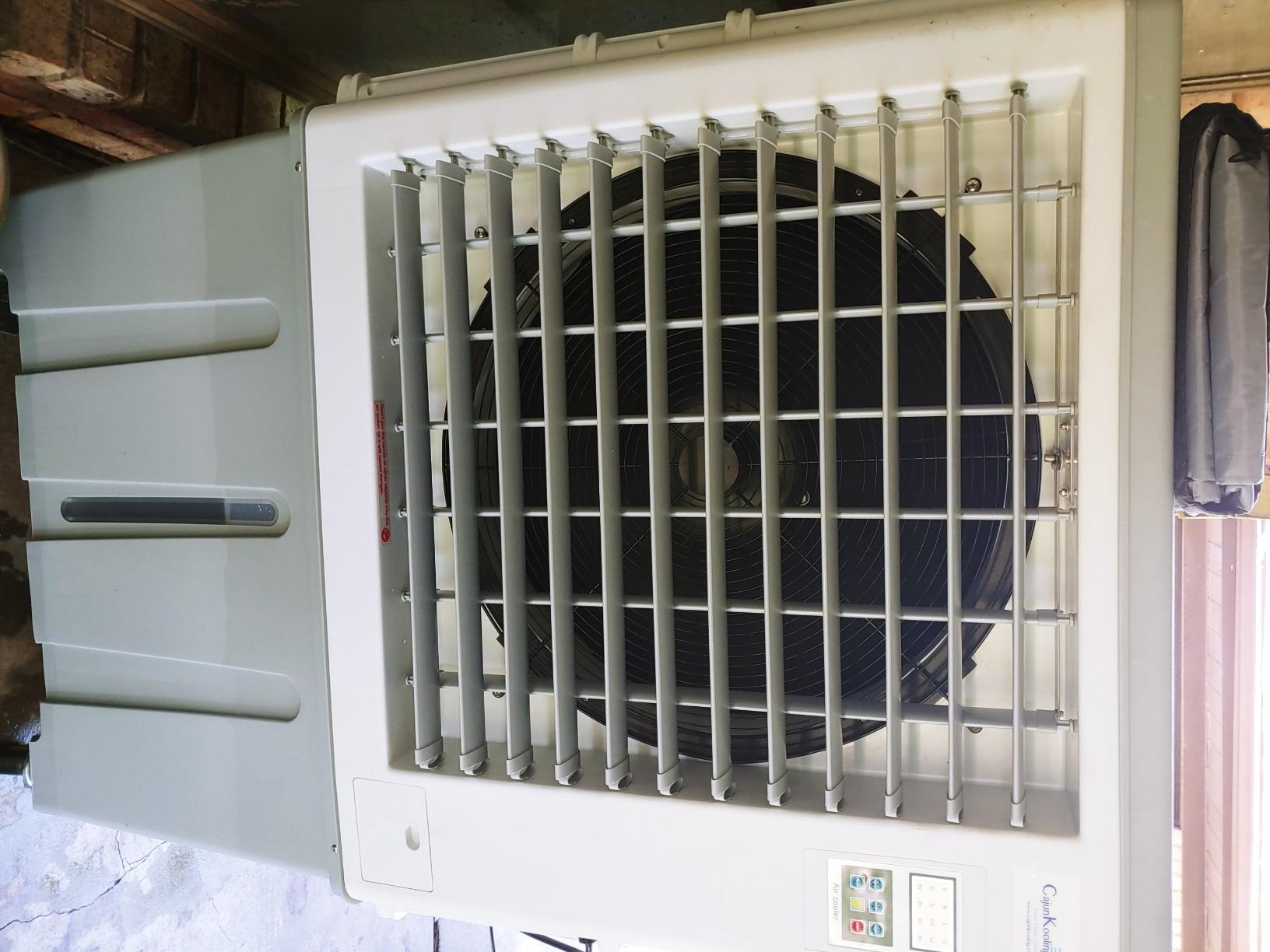
Built for that kind of use, the UV-resistant body and coated internal metal parts are specified to resist salt, hard water and mineral buildup. The coated internals matter more than they sound, because plain steel parts in a permanently wet housing are where corrosion starts.
External screens keep dust, pollen and pet hair off the pads, which in a dusty garage is the difference between a pad that breathes and one that clogs in a season. A float-valve hose connection means you can plumb in a supply line and leave it.
Best fit for shops that run long days
If your garage is used as a workspace rather than a car bay, the runtime number is what matters. Eight to ten hours means you fill it at the start of a Saturday and stop thinking about it, and the pump shut-down valve protects the components if the level does drop.
The remote control, oscillation and 1 to 8 hour timer add real convenience in that scenario, because you can change modes from across the bay instead of walking over.
The tradeoffs you should weigh
This is the most expensive unit here, and at 84 pounds it takes real effort to move, even on locking casters. If you plan to reposition it often, that is a genuine disadvantage.
The 65 dB rating is the second highest in the group, so it is not a companion for close-up bench work. Reviewers also note that internal use is only advisable in dry or well-ventilated spaces, which is the same humidity caveat that applies everywhere.
4. NewAir 1600 CFM – the quiet pick for a small workspace
Newair Evaporative Air Cooler | AC Portable Air Conditioner Alternative with 1,600 CFM Airflow | Room Cooling Fan for Bedroom, Garage & Indoor Use | White
1600 CFM
1076 sq ft coverage
3.16 gal tank
95 watts
under 56 dB
Pros
- Under 56 dB suits a bench or bedroom at night
- Only 95 watts to run
- 17.6 pounds and casters move room to room
- Remote with 1 to 9 hour timer
- Top ice chamber takes two included ice packs
Cons
- Modest output
- many buyers compare it to a fan
- 3.17 gallon tank refills often
- Pump gurgles as the level drops
The NewAir is the one we would put near a desk rather than in the middle of the bay. It moves 1600 CFM, covers about 1076 square feet on paper, and runs under 56 dB, which is quiet enough to work beside at night.
Its 95 watt draw is the lowest of any large unit in this roundup, so leaving it on through a long session costs very little. Owners in Arizona and the California high desert report solid personal cooling at that low running cost.
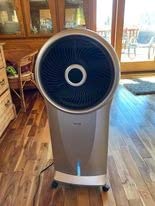
The digital touch panel and remote run three speeds with a 1 to 9 hour timer, and the top-loading ice chamber means you drop ice in from above without removing the tank. A built-in dust filter is a small touch that matters in a garage.
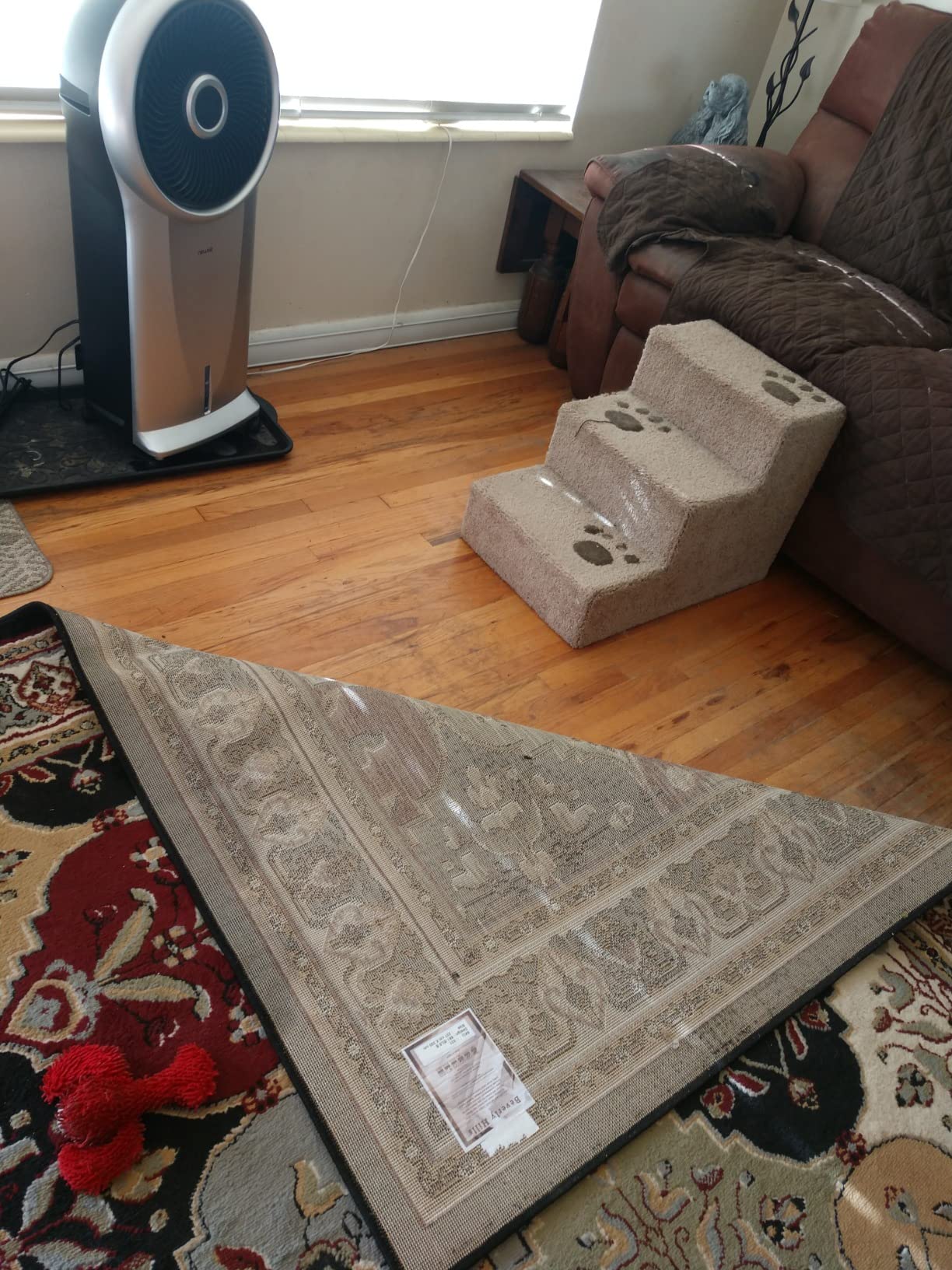
At 17.6 pounds with easy-roll casters, this is the easiest unit here to move between a shop, a bedroom and a home office. That portability is the argument for it over anything larger.
Where it earns its place
A 350 square foot workbench corner or a small shed office is exactly the spot cooling problem this solves. You are not trying to condition the whole garage, just the area where you sit, and 1600 CFM handles a personal zone well.
The 3.16 gallon removable tank has a level indicator and lifts out for cleaning, which makes the weekly maintenance routine quick. Sleep mode is the other feature owners mention, particularly for evening use.
Where it disappoints
Buyers frequently say it performs more like a fan than a room cooler, and reviews of cooling output are mixed. If you want to bring a two-car bay down in temperature, this is underpowered.
The small tank needs frequent refilling and is awkward to carry when full, and the pump gets audible, with dripping and gurgling as the water runs low. Some owners also report that the advertised remote was missing from the box, so check the box before you rely on it.
5. SereneLife 12000 CFM – the pick for warehouse-scale airflow
SereneLife Portable Swamp Cooler with 12000 CFM Power – Industrial Evaporative Air Cooler for Large Indoor & Outdoor Spaces, 150 L Tank, 60° Oscillation, 12-Hour Timer, Wi-Fi & Remote Control
12000 CFM stated airflow
150 liter tank
150 watts
65 dB
Wi-Fi
Pros
- Highest stated airflow figure in this roundup
- 150 liter detachable tank limits refills
- Wi-Fi plus remote and touch panel
- 12 hour programmable timer
- Water shortage alarm protects the pump
Cons
- Lowest average rating at 3.3 stars
- 62 inch footprint and 69.4 pounds
- Stated CFM rarely matches felt cooling
- Feature set adds complexity
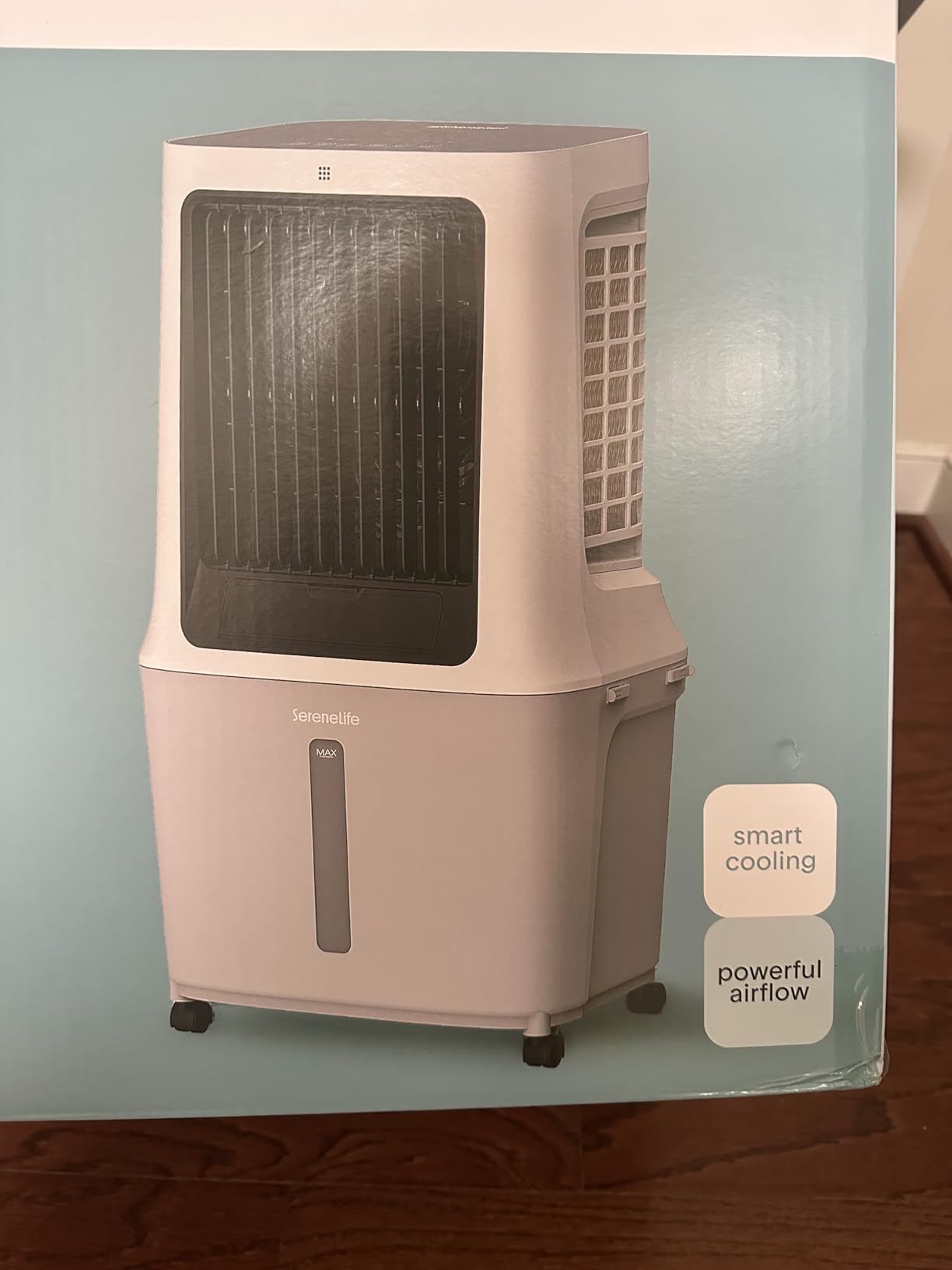
This is the largest airflow claim in the group, at 12,000 CFM from an 800W motor, and it is aimed at warehouses, garages and event spaces rather than a car bay. A 150 liter detachable tank means a long shift without a refill.
It is also the weakest-rated product here at 3.3 stars with 27 percent one-star reviews, and owners who rated it low say the delivered air falls well short of the headline number. We include it because anyone searching large-garage airflow will see this figure everywhere, and it deserves an honest assessment.
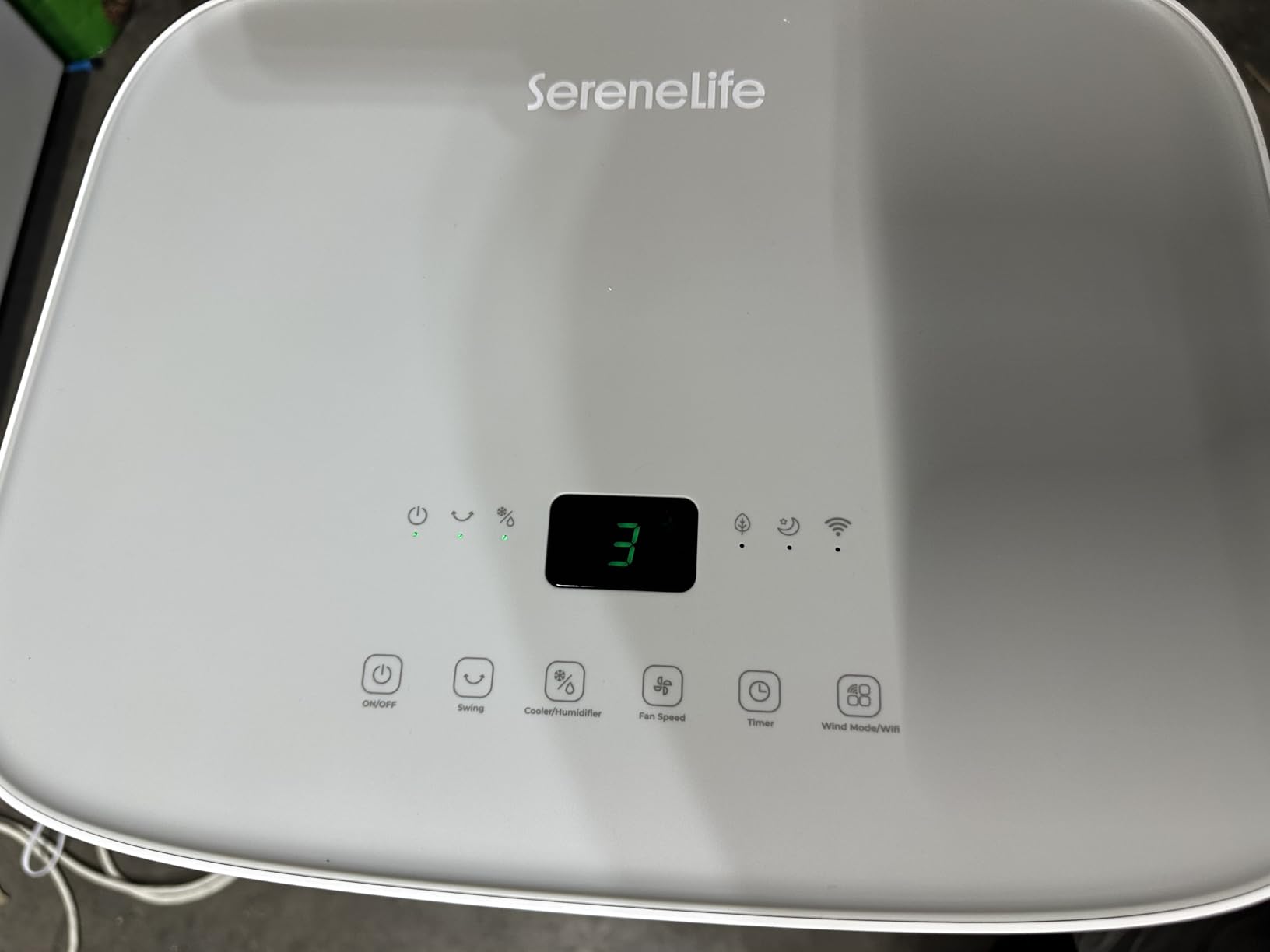
The feature list is long: Wi-Fi and app control, remote, touch panel, three speeds, normal and natural wind modes, 60 degree oscillation and a 12 hour timer. Buyers who need bulk air movement across a very large area do appreciate the airflow and the tank size.
A water-shortage alarm and pump protection guard against dry-running, which is worth having on a machine this size that might sit unattended between uses.
When the size makes sense
If your garage is closer to a warehouse bay, with a high ceiling and a large open floor, this moves a lot of air across it. The detachable tank means you can refill without tipping 150 litres of water into a fixed housing.
The timer makes overnight or scheduled runs simple, and the Wi-Fi option lets you start it before you walk out to the shop.
Why we would not make it the first choice
At 62.2 inches deep and 69.4 pounds, where it can physically sit is a real constraint. It also produces 65 dB, which is a lot of noise for close indoor work.
The detractors are consistent: a very high CFM claim that is difficult to translate into actual room cooling, and an over-engineered feature set for a device that is fundamentally a fan and a wet pad. Treat the airflow number as marketing until you have measured your own space.
6. Hessaire MC92V – the pick for a three-car workshop
Hessaire MC92V Evaporative Cooler 11,000 CFM,Gray
11000 CFM
33 gal tank
50 watts
57 dB
remote control
Pros
- Airflow felt from 20 to 25 feet away
- Only 50 watts and low running cost
- Front-fill door plus float-valve hose hookup
- Adjustable vertical and horizontal vanes
- Lighter than comparable metal units
Cons
- Pump can leave dry patches on the media
- Must sit on a level floor
- Open motor housing can corrode in a wet environment
For a three-car workshop or a barn, this is the unit we would pair with the MC37M. It moves 11,000 CFM on just 50 watts, which works out to roughly five cents an hour to run, and owners report feeling the air from 20 to 25 feet away.
Several workshop owners in Texas and the Central Valley say the low speed alone keeps a spray-foam-insulated space workable in 100 plus degree heat. That is exactly the use case evaporative cooling was built for, and it is where the physics works in your favor.
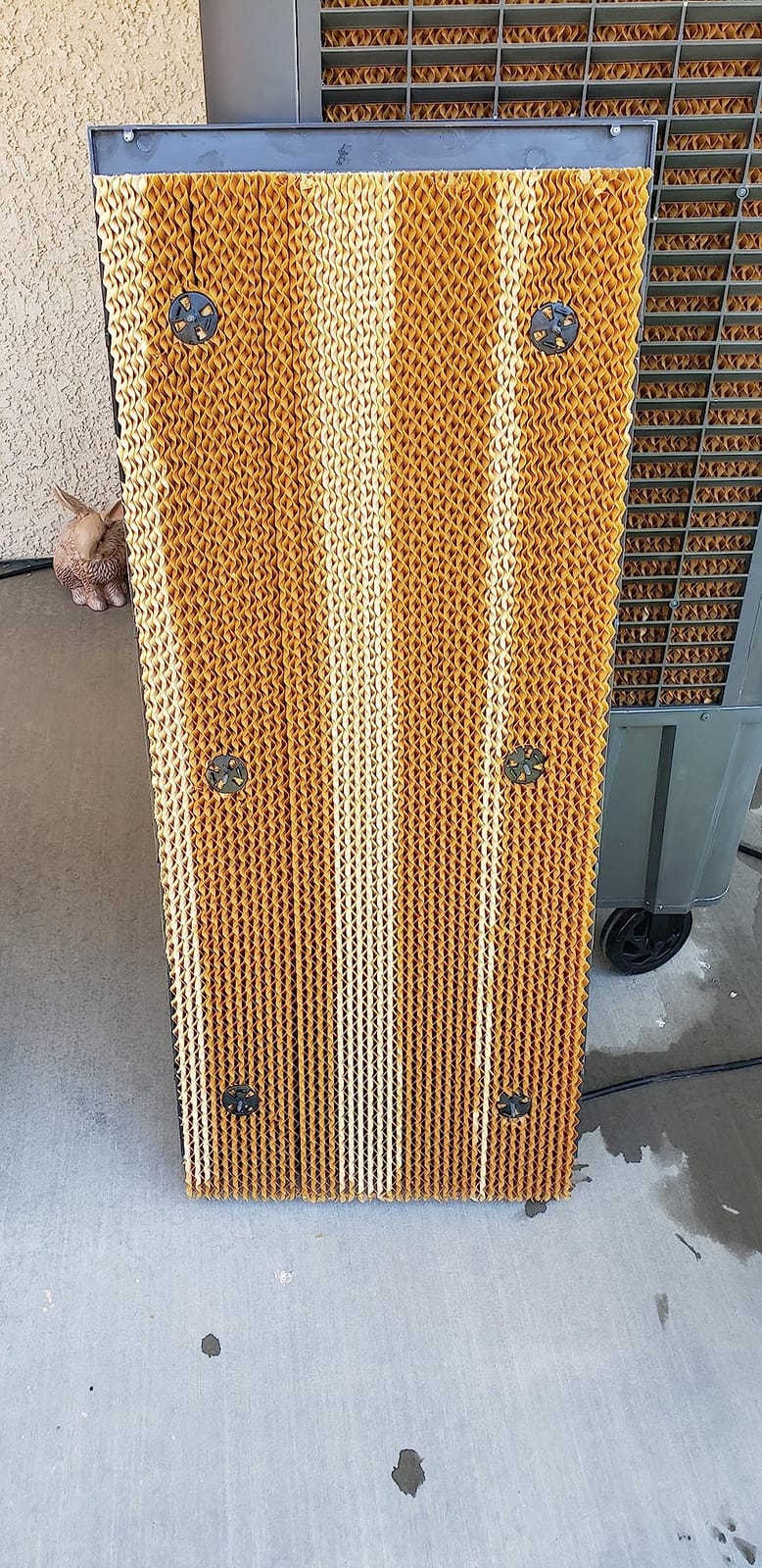
The high-density XeL50 media is specified at 80 percent more evaporation surface than standard media, and the patented axial propeller is designed for long throw rather than high noise. Adjustable vertical and horizontal vanes let you aim air at head and torso height, which is more useful than it sounds during a long afternoon.
The ASDS Air Swing Delivery system and oscillating design spread that throw across a wide area. The 32.8 gallon tank with a front-fill door and float-valve hose connection means you do not need to lift anything heavy to top it up.
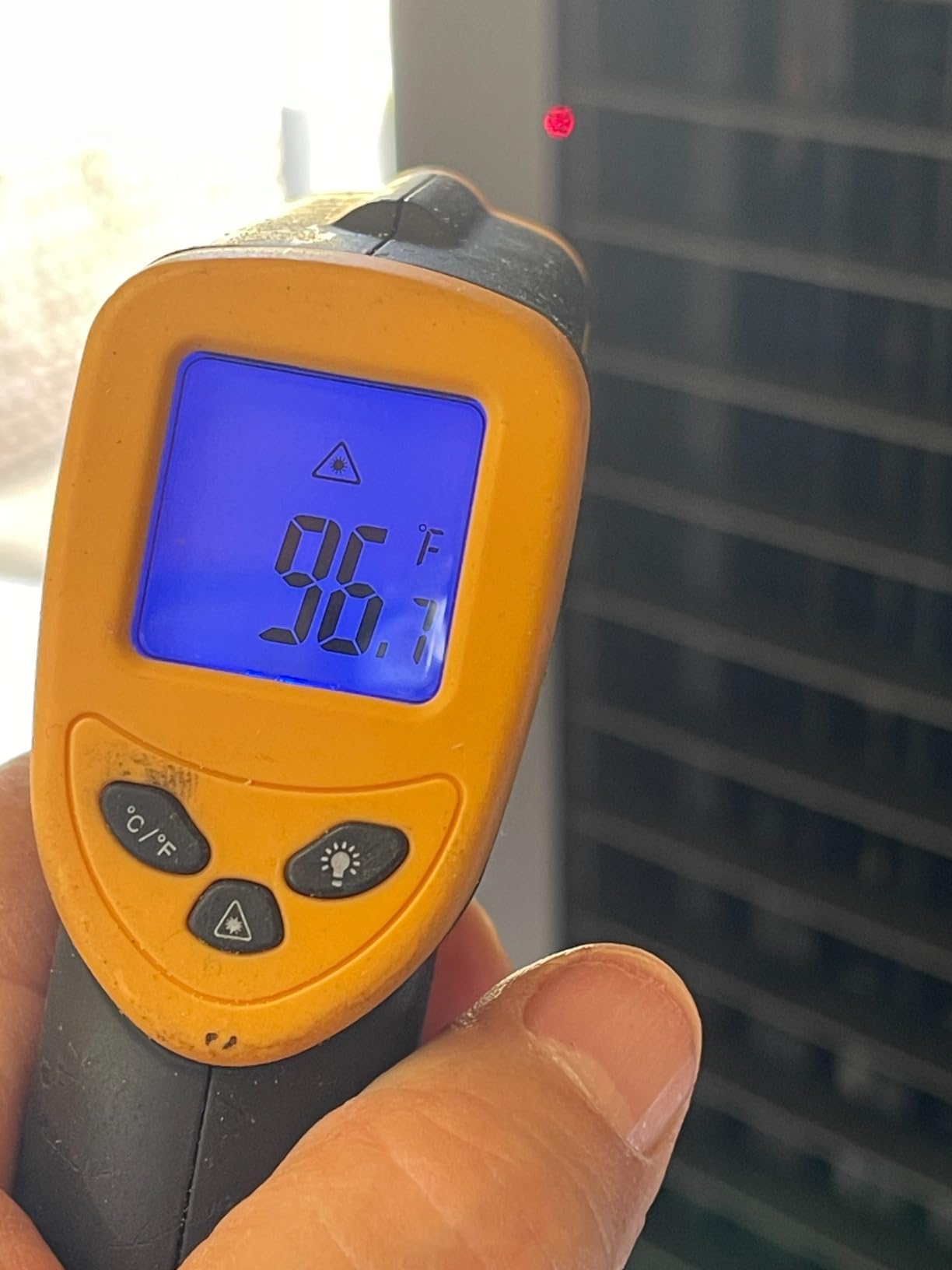
What makes it fit a big workshop
50 watts is remarkably low for this airflow class, and it is the figure that lets you leave it running all day without thinking about the bill. At 126 pounds it is heavy, but owners note it is still lighter than comparable metal units, so one person can reposition it when empty.
The ASDS vanes plus oscillation cover a three-car bay without needing to aim the unit constantly, and the remote means you can adjust it from across the shop.
Problems owners ran into
Water distribution is the recurring complaint. Reviewers report the pump not fully wetting the media, leaving dry patches at the far corners of the pads, which reduces output exactly where you would notice it in a big space.
It has to sit on a level floor or the media dries out unevenly. The open motor housing is also prone to rusting in a wet environment and can seize after a season or two, which matters in a garage that stays damp. Expect a strong wet-media smell on first use, and note that some shipments arrive without the listed remote.
7. VEVOR 1400 CFM – the entry pick for a small garage corner
VEVOR Evaporative Air Cooler,1400 CFM 11X31 inch Air Cooler,3 Speeds Cooler Portable Air Conditioner,Energy-Saved Swamp Cooler for party,pool and patio,5 Gal Water Tank & 550 Sq.Ft…
1400 CFM
550 sq ft coverage
5 gal tank
60 watts
60 dB
Pros
- Lowest wattage in the roundup at 60
- 13.4 pounds and a narrow footprint
- Top-fill lid avoids bending down
- Mechanical buttons stay readable
- Garden hose continuous fill via brass adapter
- Two ice packs included
Cons
- Single-sided pad limits evaporation surface
- Weak for anything beyond personal cooling
- Narrower 72 degree oscillation
- About 60 dB on higher settings
The VEVOR is the cheapest useful way to put moving cool air in a small garage, and it does one thing well: it is light and easy to place where you are working. At 13.4 pounds with a 15 by 31 inch footprint, you can shift it between the bench and the door without thinking about it.
It moves 1400 CFM across roughly 550 square feet and draws 60 watts, the lowest consumption in this roundup. That is the honest case for it, because at this size you are buying air movement over personal comfort rather than room cooling.
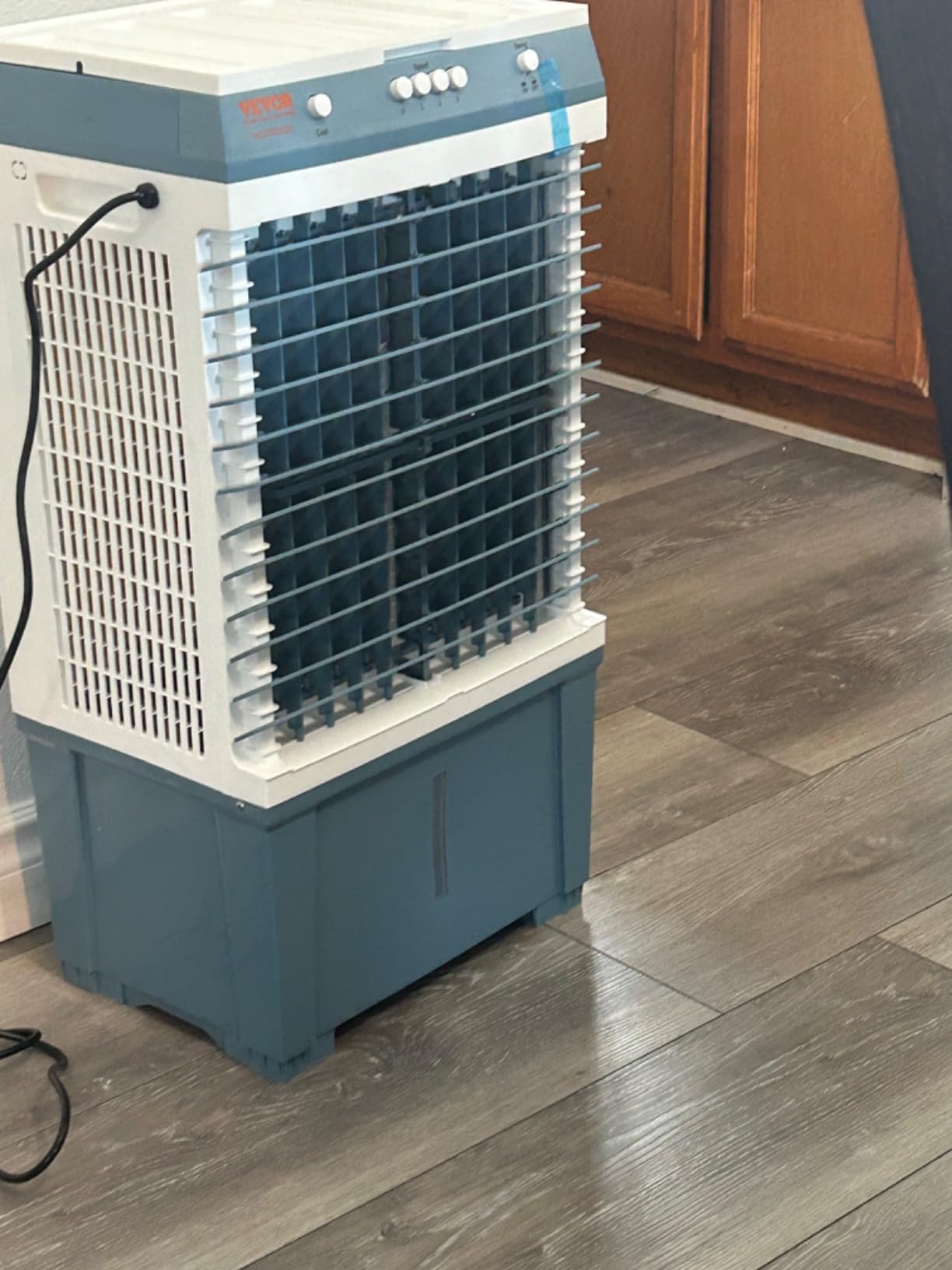
Top-lid refill means you do not bend down to check the level, and the mechanical buttons stay readable no matter how many times you press them, which a lot of budget touch panels fail to do. A brass adapter accepts a garden hose for continuous fill, and low-water shortage protection stops the pump running dry.
Two ice packs are included, which gives a modest extra drop at the outlet when you preload them. Nothing about the design is complicated, which is why owners who set it up in a weekend tend to keep using it.
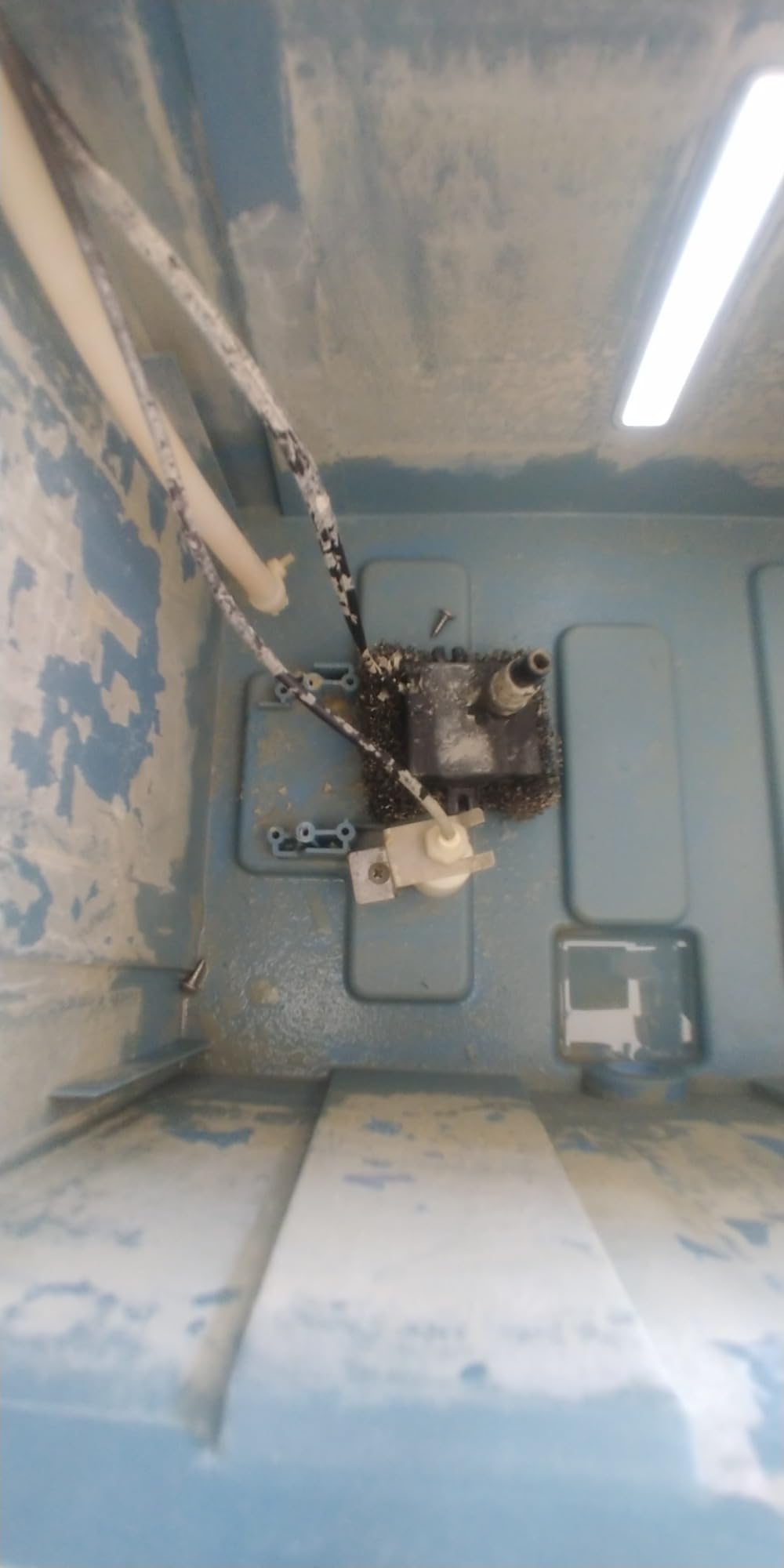
Where it earns its spot
A 350 square foot workshop corner, a shed or a patio setup is the right target. The 550 square foot coverage figure is honest for that job, and the 60 watt draw means you can leave it running through a weekend session for very little.
Owners consistently praise the portability and the simple top-fill design, and about half of reviews are five star. For occasional weekend cooling rather than daily full-day cooling, that is a sensible purchase.
What it will not do
The single-sided pad gives you far less evaporation surface than the three-sided units above, and buyers report the airflow feels weak when you try to cool more than a small area. That is the trade for the low weight and low cost.
Oscillation covers 72 degrees, narrower than most competitors, so it needs more careful placement than a wide-swing unit. At about 60 dB on higher settings it is also not quiet, and cooling capacity is limited to dry air outdoors or a well-ventilated corner.
8. SYUDTY 3000 CFM – the multi-mode pick for flexible use
Portable Air Conditioner, 3000 CFM Swamp Cooler & Evaporative Air Cooler
3000 CFM
1000 sq ft coverage
6.87 gal tank
52 dB
150 watts
Pros
- Four modes including a dedicated Cooling mode
- Quiet at 52 dB
- 15.7 pounds with 360 degree casters
- 1 to 15 hour timer with remote and touch panel
- Also works as a humidifier and diffuser
Cons
- Lowest average rating at 3.2 stars with 26 percent one-star
- Headline temperature drops not typically achieved
- Best suited to personal cooling
- Adds humidity in already damp regions
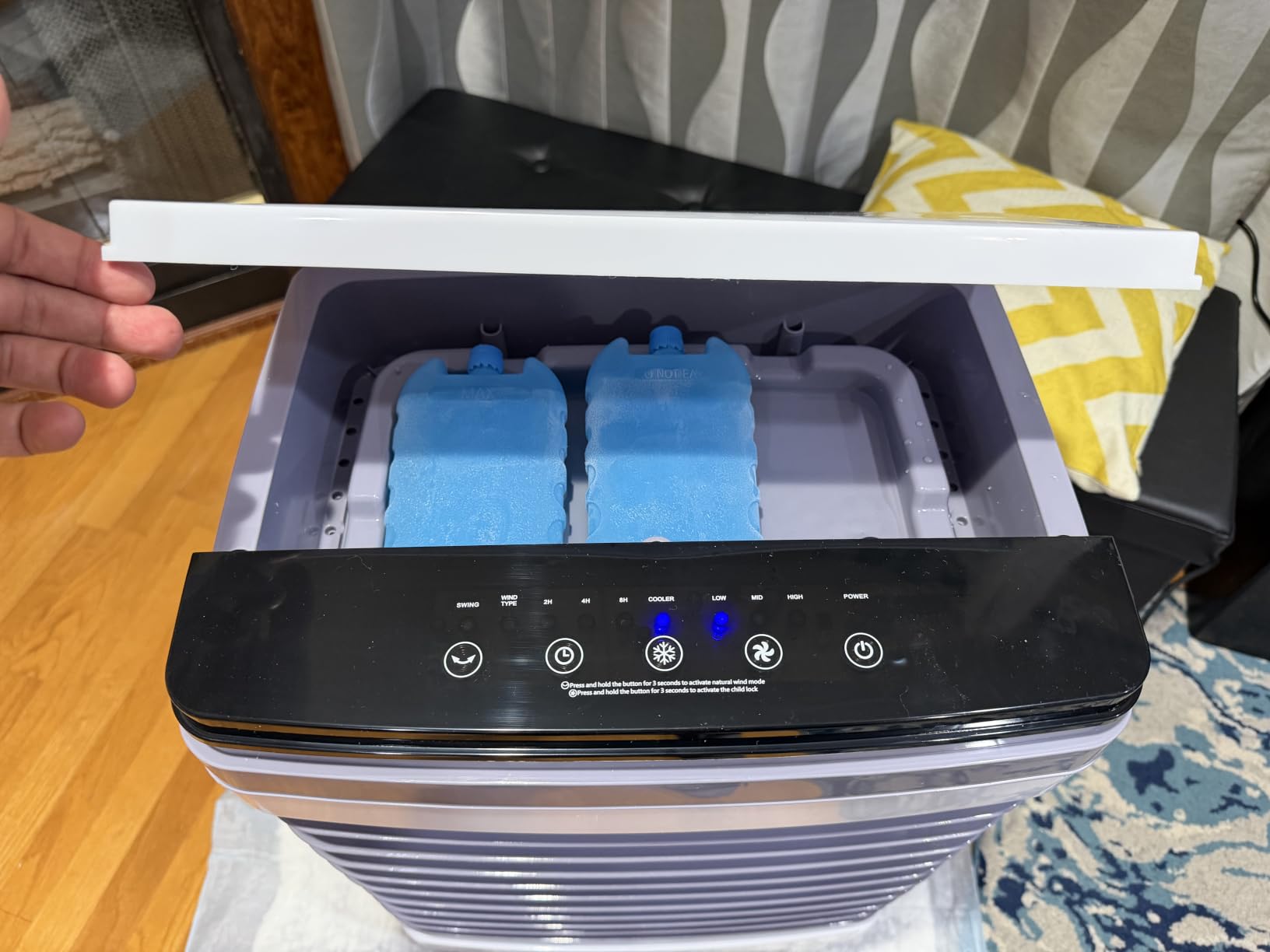
The SYUDTY is interesting mainly for its controls. It runs four modes, normal, natural, sleep and cooling, across three speeds, with a 1 to 15 hour timer and both remote and touch panel access, which is more scheduling flexibility than most units in this list offer.
At 3000 CFM and 1000 square feet of stated coverage it looks like a mid-size unit on paper, but the 3.2 star average with 26 percent one-star reviews tells you the cooling does not match the spec sheet. Fans like the feature count and the quiet 52 dB operation for a spot-cooling breeze.
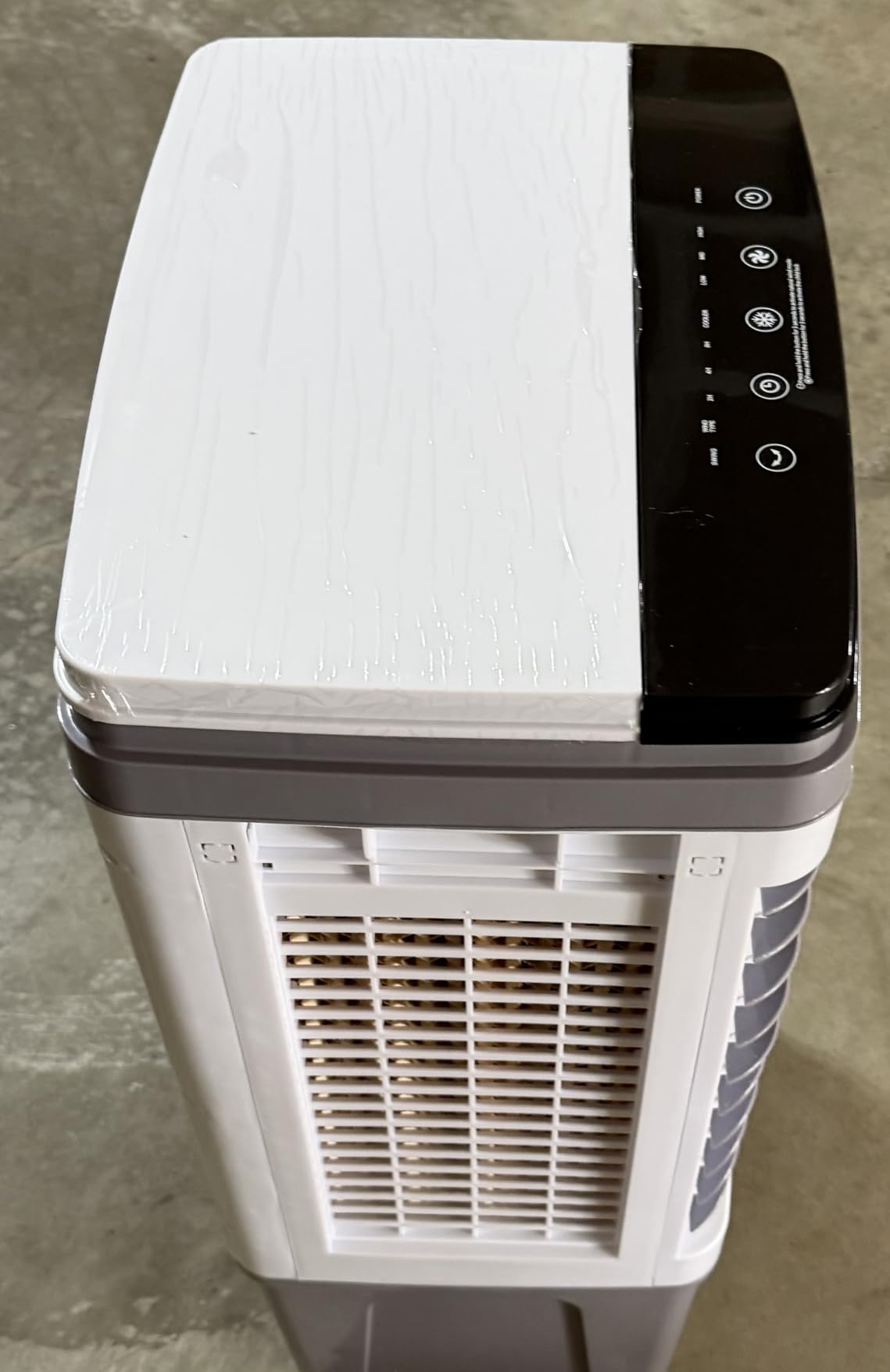
It weighs 15.7 pounds with four 360 degree swivel casters and a hidden carry handle, so moving it from a bedroom to the garage takes seconds. The high-density water curtain is specified at absorbing 2.5 times more moisture than a standard filter, and it doubles as a humidifier and aroma diffuser.
A child lock on the control panel is a small detail that matters if the machine lives near where kids spend time. The four-in-one design means it can serve as a plain fan on humid days, which is arguably more useful than forcing it to run as a cooler when the air will not cooperate.
Best used as a personal cooler
Treat this as a spot cooler for a chair, a bench seat or a desk rather than a garage climate solution. At that scale the quiet operation and four modes make it genuinely pleasant, and 52 dB is one of the lower figures in this roundup.
The 6.87 gallon tank is a reasonable middle ground, and the 1 to 15 hour timer means you can set it before a long job and walk away.
The honest problems
The claimed 50 to 60 degree temperature drop is marketing rather than reality, and detractors say the unit performs like an ordinary fan. That is the correct expectation for anything that size against a large open space.
It adds humidity, which is counterproductive in already-damp regions, and the generic unbranded build means there is limited long-term reliability data. If you need real cooling for a car bay, the Hessaire pick is the safer bet.
9. COSTWAY 336 CFM – the pick for a quiet overnight room
COSTWAY Evaporative Cooler, Portable Cooling Fan with Remote Control
336 CFM
7 liter tank
65 watts
7.5 hour timer
remote control
Pros
- Very light at 7.45 kg
- Quiet enough to sleep beside
- Sleep mode plus 7.5 hour auto-off timer
- Removable tank is simple to clean
- Touch panel with LCD and remote
Cons
- 336 CFM is box-fan level air
- Replacement filter cartridges reportedly unavailable
- Water can spill forward near the pad
The COSTWAY is not a garage cooler in the airflow sense, at 336 CFM it moves roughly what a good box fan moves. What it is, is the cheapest way to get a personal breeze in a room attached to the garage, and it does that quietly enough to sleep beside.
Buyers who set expectations that way are satisfied. Owners using it as a personal spot cooler or as a humidifier fan tend to be happy with the price and the quiet operation, and the sleep mode plus 7.5 hour timer make it a bedroom device rather than a shop device.
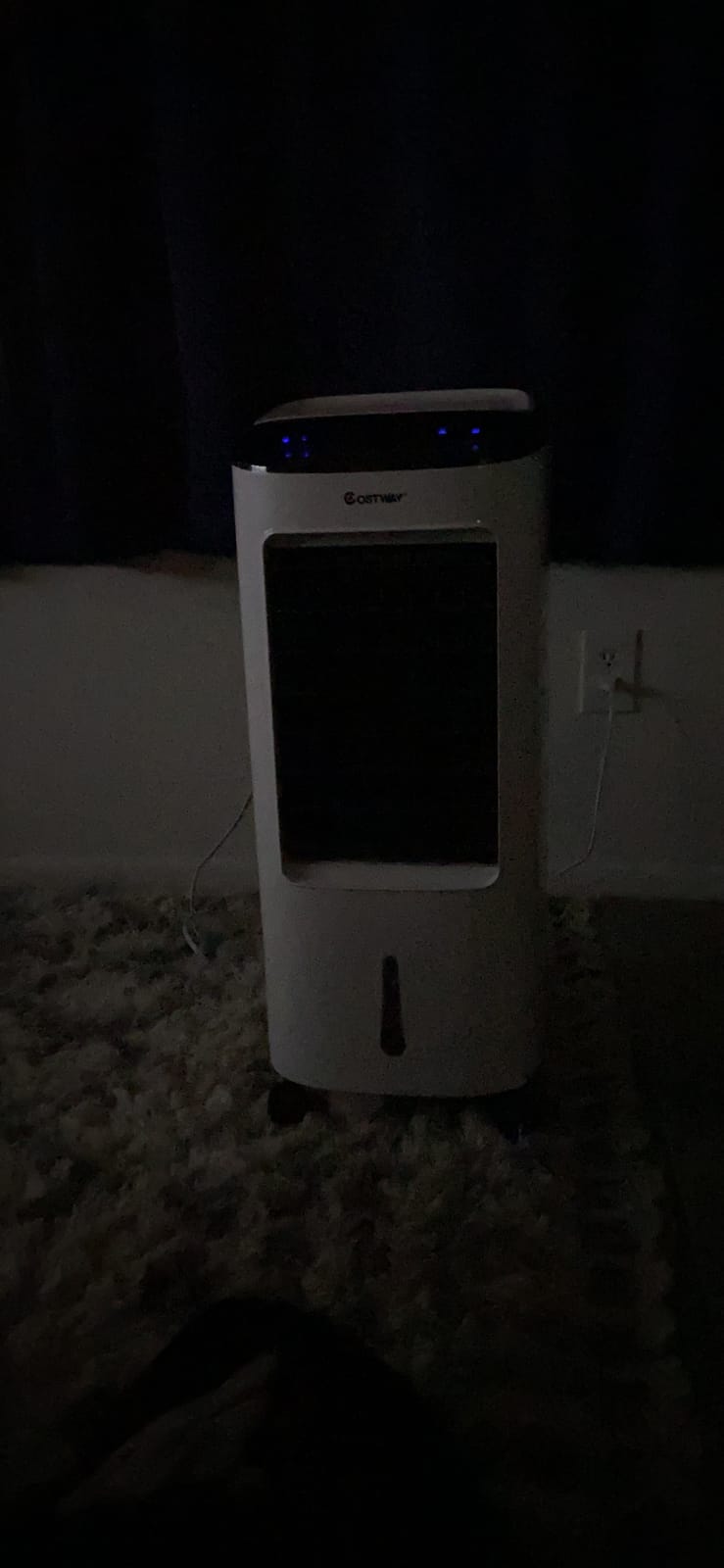
At 7.45 kg it is the lightest unit here by a wide margin, with universal wheels and a carry handle. The 7 liter tank removes completely for cleaning, which makes the weekly routine painless, and wide swing-angle louvers spread the air further than the raw CFM suggests.
The 65 watt draw is modest, and the LCD touch panel with remote gives you three speeds and three wind modes to choose between. Ice crystal boxes are included for a small extra cooling effect.
Best for a home office or bedroom
If the goal is personal comfort in a small room where you spend a couple of hours at a time, the low noise and light weight matter far more than airflow. It moves around easily and the timer shuts it down on its own.
Cleaning is the easiest of any tank in this roundup, which matters more than most buyers expect once biofilm becomes an issue.
Why it does not belong in the garage proper
336 CFM cannot move a bay of air, and many users compare it favorably only to a box fan. Cooling is marginal even with the ice packs in the tank.
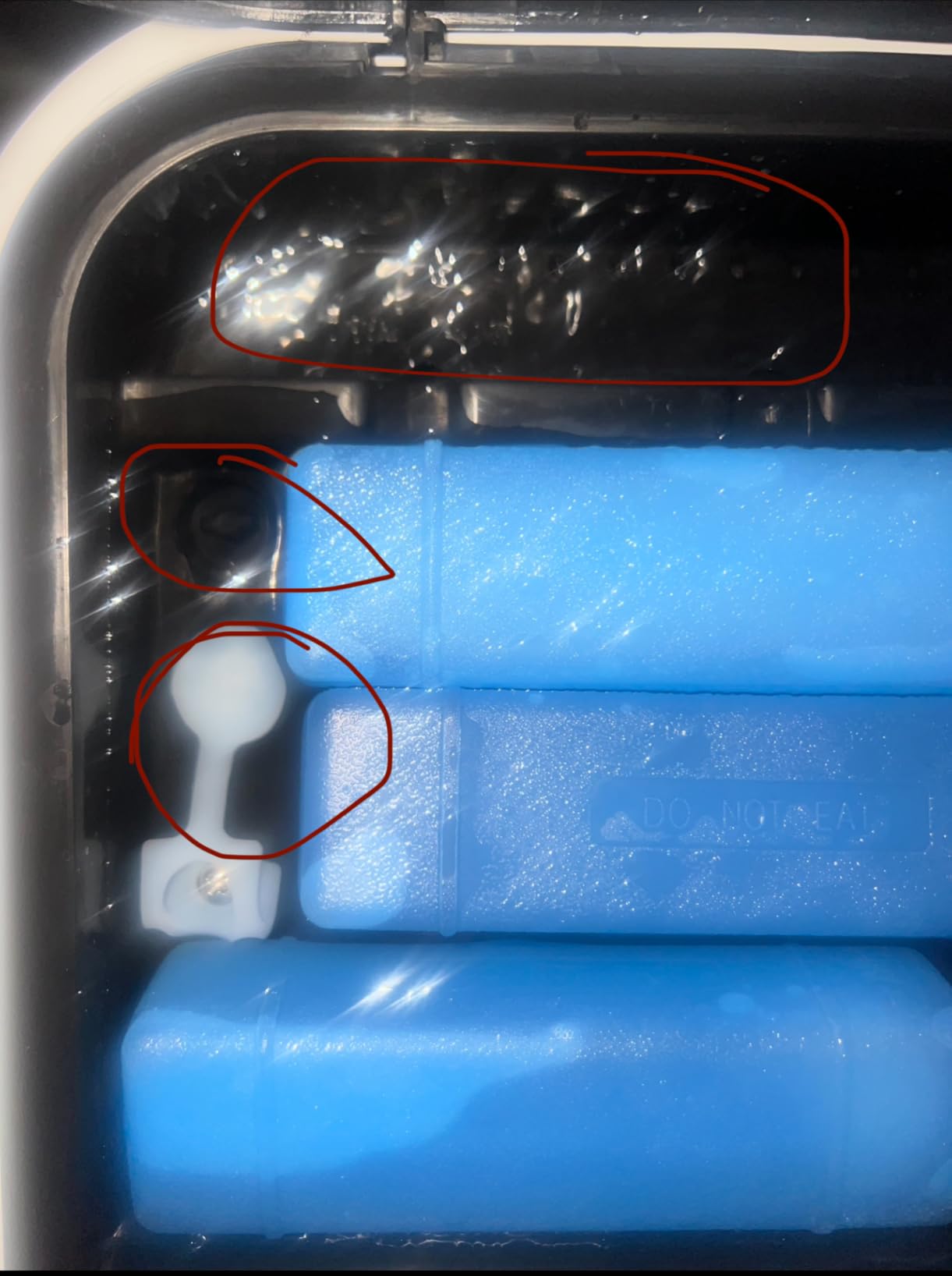
Two reports give us pause for any long-term plan: replacement filter cartridges for this model are reportedly unavailable, and water can spill forward in front of the pad as the tank level drops. The filling instructions also ask you to remove the pump first, which is awkward to reassemble.
10. OEMTOOLS 23968 – the pick with workshop-grade safety features
OEMTOOLS 23968 3-Speed Portable Swamp Cooler 3100 CFM 10.3-Gal. Water Tank
3100 CFM
950 sq ft coverage
10 gal tank
250 watts
68 dB
Pros
- UL GFCI plug for workshop electrical safety
- Integrated tool tray and storage compartment
- 3100 CFM suits a 950 square foot bay
- Three-speed knob control is simple
- Quiet axial propeller for the airflow class
Cons
- Loudest in the roundup at 68 dB
- UV resin body degrades with prolonged sun
- Only 69 reviews of history
- No timer or remote on the knobs
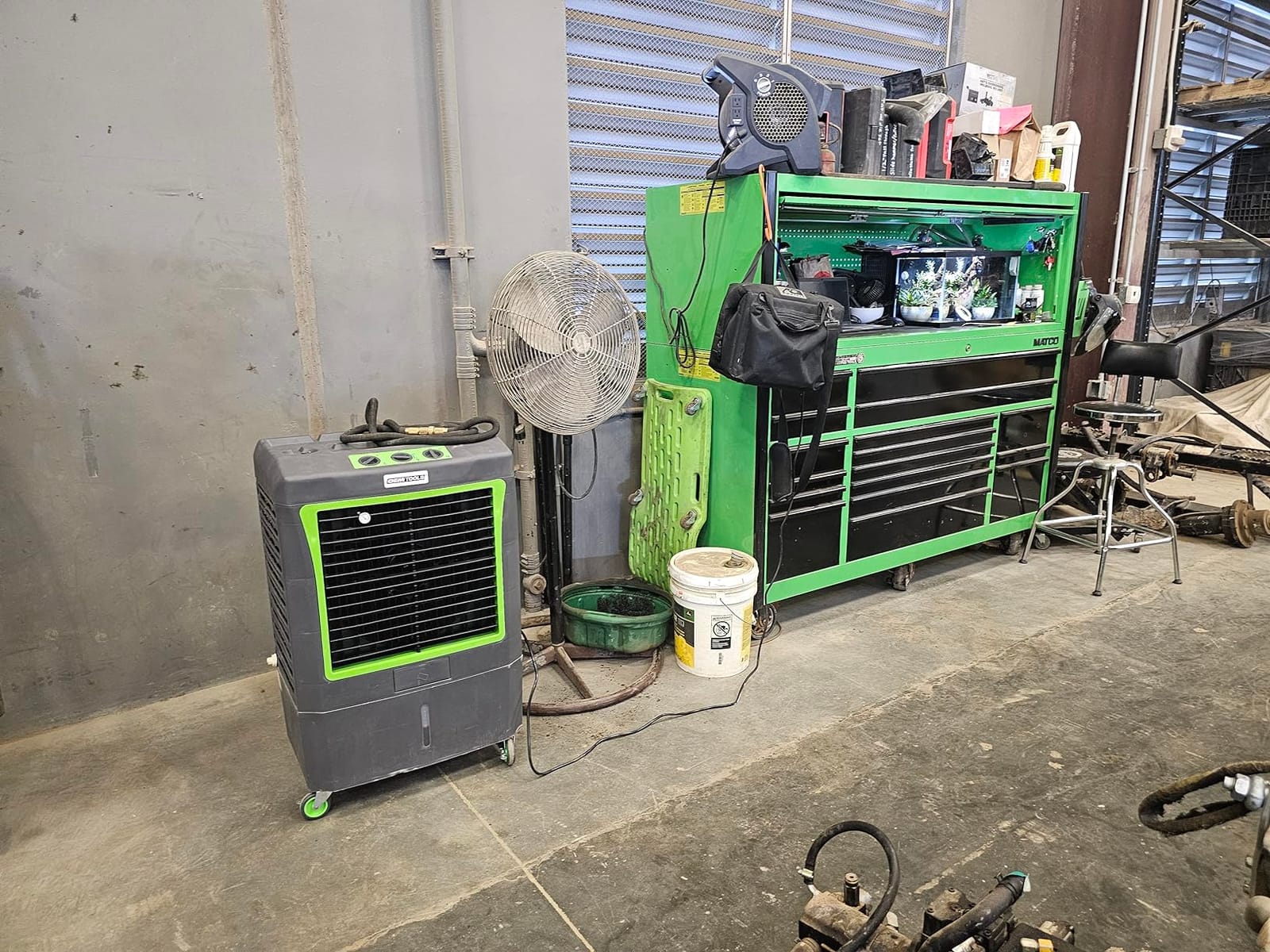
The OEMTOOLS 23968 is the one built specifically for a garage rather than a patio. The detail that stands out is the UL GFCI plug, which adds a real layer of protection in a workshop where you may be running saws, compressors and welders on nearby circuits.
It matches the MC37M on the numbers, 3100 CFM across 950 square feet with a 10 gallon tank and a 250 watt draw, and the high-density media panels are specified at 80 percent more evaporation surface. Knob controls keep it simple in a space with no signal for a remote.
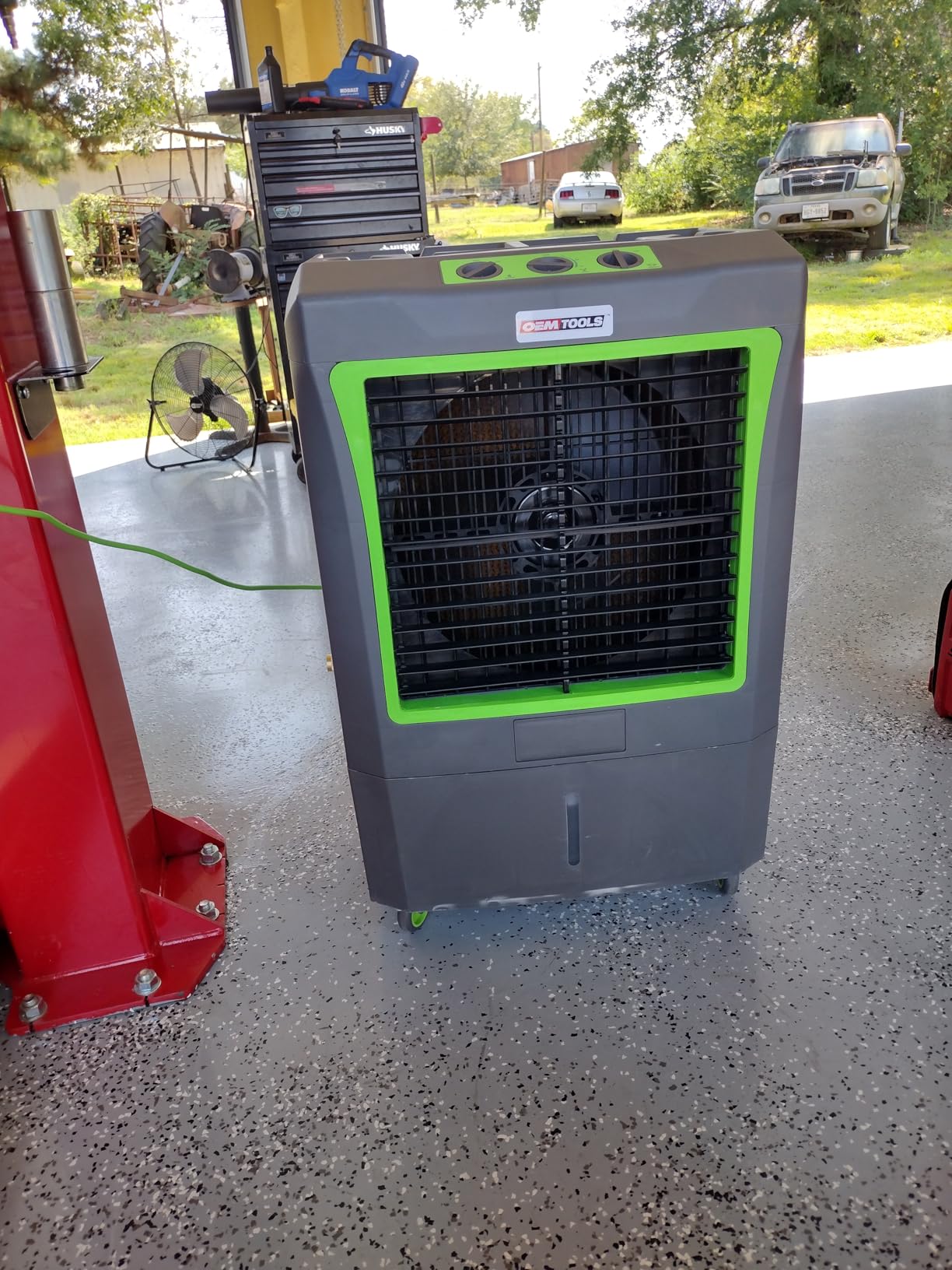
The built-in tool tray on top is a genuinely garage-minded touch. It gives you somewhere to set a wrench or a pair of gloves, which is the difference between a tool staying where you put it and ending up in a puddle under the cooler.
The patented axial propeller distributes air quietly for this airflow class, and UV-resistant resin suits the extended sun exposure that comes through an open garage door. Casters make repositioning manageable at 41.3 pounds.
Why a workshop buyer should look here
Garages with a welding bay or a metalworking setup have moisture and electrical exposure in the same room. The GFCI plug, the tool tray and the simple controls are the three features that a general-purpose cooler does not give you.
Buyers rate it 4.2 stars with 66 percent five star reviews, and the praise focuses on the garage-specific design, airflow and the easy knob controls.
The drawbacks
At 68 dB this is the loudest unit in the roundup, and that is a real problem for anyone working next to it. The MC37M at 59 dB is a calmer choice at the same airflow, and the OEMTOOLS is best placed across the bay rather than beside the bench.
With 69 reviews the long-term reliability picture is thin, and the UV-resistant resin body will degrade with prolonged direct sun. Knob controls also mean no timer and no remote, so you set it and walk away, or you do not.
How to Size an Evaporative Cooler for Your Garage
Square footage on a spec sheet is the least useful number on the page. The calculation that matches practice is volume divided by two, and it takes about thirty seconds.
Measure the length, width and height of the space you actually intend to cool, multiply them together to get cubic feet, then divide by two. That gives you a required CFM figure. A 20 by 20 foot bay with 9 foot ceilings is 3600 cubic feet, so you want roughly 1800 CFM as a floor, and about 3000 CFM for comfortable rather than marginal cooling.
Two adjustments matter. If you are cooling a 20 by 20 foot bay and want the whole space rather than one bench, double that floor figure, because you are moving air through the entire volume. If you are spot cooling a single workbench corner, the smaller units below are the right answer.
Here is how that maps onto size classes. A 350 square foot workshop corner needs roughly 900 to 1500 CFM, which is where the VEVOR and the COSTWAY sit. A standard two-car bay of about 950 square feet with 8 foot ceilings needs 3000 CFM or more, which is the MC37M and the OEMTOOLS bracket. A three-car workshop runs 2000 to 2500 square feet, so you want 5000 to 6000 CFM at minimum, and higher if the ceiling is tall.
One more factor sits outside the formula: uninsulated garage doors and thin walls change the picture. Uninsulated doors mean the cool air escapes and warm air leaks in continuously, so plan on more CFM than the math suggests. Owners looking at what else goes into the space can compare our squat rack picks once the cooling plan is settled.
Swamp Cooler vs Evaporative Cooler – What Is the Difference?
There is no difference. The two terms are interchangeable, and both describe the same device: a fan moving air through water-wetted cooling pads. Swamp cooler is the common nickname in the American Southwest, and evaporative cooler is the formal name manufacturers and retailers use.
We use both in this guide on purpose, because people search for each separately. The physics, the humidity limit and the ventilation requirement are identical.
Why Ventilation Is Not Optional
A sealed garage is the single most common reason these units disappoint, and it comes up again and again in forum threads going back years. The machine adds moisture to the air by design, and if that moisture has nowhere to go, relative humidity climbs until evaporation stops.
The setup that works best pulls air out high and brings it in low. Run a garage door all the way open if the door has an opener, and add an exhaust fan mounted high on the far wall to pull warm, humid air out. Owners on DIY forums frequently cut a new high exhaust as a first step before they even buy a cooler, and it is the cheapest performance improvement available.
If your garage has no windows, a single cracked door is usually enough for a two-car bay. A three-car workshop benefits from the door plus a fan. Whatever the arrangement, the running rule is that the volume of air entering has to match the volume leaving.
Watch the outlet temperature after an hour. If the air coming out has stopped feeling cool and the room feels clammy, ventilation is the problem, not the machine.
Maintenance Schedule That Prevents Mold and Mineral Buildup
The mold fear is the most common objection, and the forum consensus is more nuanced than the marketing suggests. Users on homeshopmachinist.net put it plainly: swamp coolers are fine where it is very dry, and a recipe for mold and mildew where it is not, so climate and maintenance are the variables rather than the device.
That is also not the only counterpoint. Multiple users on roofingtalk.com report that running a swamp cooler actually resolved condensation and mold problems in their garage, because the added moisture left through the open door instead of sitting against a cold roof deck. In a dry garage with ventilation, the machine is often part of the fix.
A weekly routine handles most of it. Empty and rinse the tank, wipe the float valve and pump housing, and run a fresh charge of water for a few minutes to flush the lines. A monthly routine means pulling the pads, rinsing them from the soft-water side and letting them dry completely before refitting them.
Hard water is what actually kills performance, not time. Calcium deposits coat the cellulose fibers and reduce the surface area available for evaporation, and a scaled pad can lose a noticeable share of its cooling capacity. Soak scaled pads in a descaling solution rather than scrubbing them, since aggressive brushing damages the fibers. If pads will not come back to clean, replace them, and treat one to two seasons as the normal interval.
At the end of the season, drain the tank completely before freezing weather and leave the housing dry. Residual water freezing inside the pump or housing is how a unit gets written off after a single winter.
Rust and Corrosion in a Garage With Added Humidity
This is the question that comes up most in garage forums, and it is worth answering directly because it is a real risk rather than a myth. A metalworking owner running a three-car workshop asked whether evaporative cooling causes moisture, rust, corrosion and mold, and it does raise the corrosion risk on metal surfaces if humidity is left to sit.
The mechanism is straightforward. Steel and cast iron corrode faster when relative humidity stays high, and a garage with a swamp cooler running against a closed door holds exactly the elevated humidity that accelerates it. Tool chests, shelving uprights and unfinished metal parts are the usual first casualties.
The mitigations are the same as the ventilation ones, applied consistently. Keep the door open while the unit runs, aim the outlet away from metal surfaces, and wipe down tools and parts at the end of a session rather than leaving damp metal overnight. Storing steel in sealed cabinets or on shelving off the concrete floor helps as well.
One product-specific note: the Cajun Kooling CK4500-S uses coated internal metal parts specified to resist salt, hard water and mineral buildup, which addresses corrosion inside the unit. For the contents of your garage, ventilation and drying habits are the only real fix.
When Not to Buy an Evaporative Cooler
We would rather talk you out of this purchase in some situations than take a sale you will regret.
Skip it if your area regularly sits above 50 percent relative humidity through the summer. Gulf Coast, Florida, much of the Southeast and the Pacific Northwest all fall in that band, where the wet-bulb limit makes these units a humidifier in practice. Owners in Portland describe swamp coolers as basically humidifiers, and that is the accurate read.
Skip it if your garage cannot be ventilated at all, or if the door opening is too small to move the volume of air the unit pushes. Running one against a closed door will give you a clammy garage and a damaged pad.
Skip it if you need genuine dehumidification, such as for electronics, leather, paint or paper storage. Evaporative cooling adds moisture, and only a refrigerant unit or a dehumidifier removes it.
Consider a different tool if you need to work in a metalworking or welding bay at high humidity, since the added moisture interacts with corrosion. A portable air conditioner costs more to run but manages both temperature and moisture, and serious woodworkers make that trade regularly even in dry regions.
Evaporative Cooler vs Portable AC for a Garage
The wattage numbers make the argument better than any marketing claim. The MC37M draws 250 watts, and the MC92V moves more than three times the airflow on 50 watts. The OEMTOOLS also draws 250 watts. Across this roundup the units run between 50 and 400 watts.
Portable air conditioners run on a compressor, and a 10,000 BTU unit typically draws close to 1,000 watts at full load while moving a fraction of the air an evaporative cooler pushes. That is the gap that decides the question for most garages: if you need whole-bay air movement, the refrigerant unit uses several times the power to do less of it.
What the portable AC wins on is control. It pulls moisture out of the air, so it works in humid climates and holds a set temperature instead of tracking the wet-bulb limit. If your garage holds chemicals, leather, wood or instruments, that control is worth the running cost.
So the decision is simple. Dry climate plus air movement plus a low budget points to an evaporative cooler. Humid climate plus moisture control points to a portable AC or a mini-split.
Frequently Asked Questions
Will an evaporative cooler work in a garage?
Yes, but only in dry climates and only with ventilation. An evaporative cooler pulls hot air through water-soaked pads, which drops the temperature by 15 to 20 degrees when relative humidity stays below roughly 40 to 50 percent. You must keep a garage door or window open so the added humidity can escape, and in humid regions it becomes a humidifier rather than a cooler.
Which brand of evaporative cooler is best for a garage?
For garage-sized units, Hessaire covers the widest airflow range with the most verified owner feedback, from 1400 CFM units up to 11,000 CFM models. OEMTOOLS and Cajun Kooling cover the workshop and commercial end with GFCI-equipped or high-runtime designs. Uthfy and VEVOR cover the value tier with metal frames and low-cost builds respectively.
Is there a difference between a swamp cooler and an evaporative cooler?
There is no difference, the terms are interchangeable. Swamp cooler is the common nickname in the American Southwest, while evaporative cooler is the formal name manufacturers and retailers use. Both describe the same device: a fan moving air through water-wetted cooling pads, with the same humidity limits and ventilation requirements.
What are the main downsides of evaporative cooling in a garage?
The main downsides are that it adds humidity rather than removing it, performance collapses above roughly 40 to 50 percent relative humidity, it cannot cool air below the outdoor wet-bulb temperature, it requires an open door or window to function, and the tank needs refilling plus periodic pad descaling and replacement. Sustained humidity can also accelerate rust on metal tools and shelving.
What is the cheapest way to cool a garage?
The cheapest route pairs a compact evaporative cooler with a garage exhaust fan that pulls air out high while the cooler brings air in low. Owners on DIY forums frequently cut a high exhaust before buying anything else, and that step alone can transform an existing unit. Beyond that, a portable air conditioner is the next step up if you need true dehumidified cooling.
Will a swamp cooler work in 100 degree weather?
Yes in dry climates. These units are used specifically in hot desert regions where daytime temperatures exceed 100 degrees, because the low humidity lets water evaporate effectively. The limit is wet-bulb temperature: in humid regions, 100 degree outdoor air is already too moisture-laden to cool meaningfully and the unit will only blow warm air.
How long does a 10 gallon tank last?
It depends on the unit and the conditions. The Hessaire MC37M’s 10.3 gallon tank is rated for 3 to 4 hours of cooling per fill, while the Cajun Kooling CK4500-S’s 32 gallon reservoir is rated for 8 to 10 hours. Hotter intake air and a lower fan speed both extend runtime, and a hose connection removes the refill chore entirely.
The Verdict for 2026
The best evaporative coolers for garages come down to airflow matched to a real CFM target, a tank you are willing to refill, and a climate that lets water evaporate. For a standard two-car bay in a dry region, the Hessaire MC37M is our pick, with 3100 CFM, a 10.3 gallon tank and the largest body of owner feedback in the category. Add the Uthfy 4800 CFM when you want a metal frame and more air, and step up to the Cajun Kooling CK4500-S when you would rather fill once and not think about water for a full day.
Before you buy anything, check your local humidity and confirm you can leave the door open. Those two answers do more for your results than any spec on the page, and our garage storage picks are worth a look if you are finishing out the space around it.