
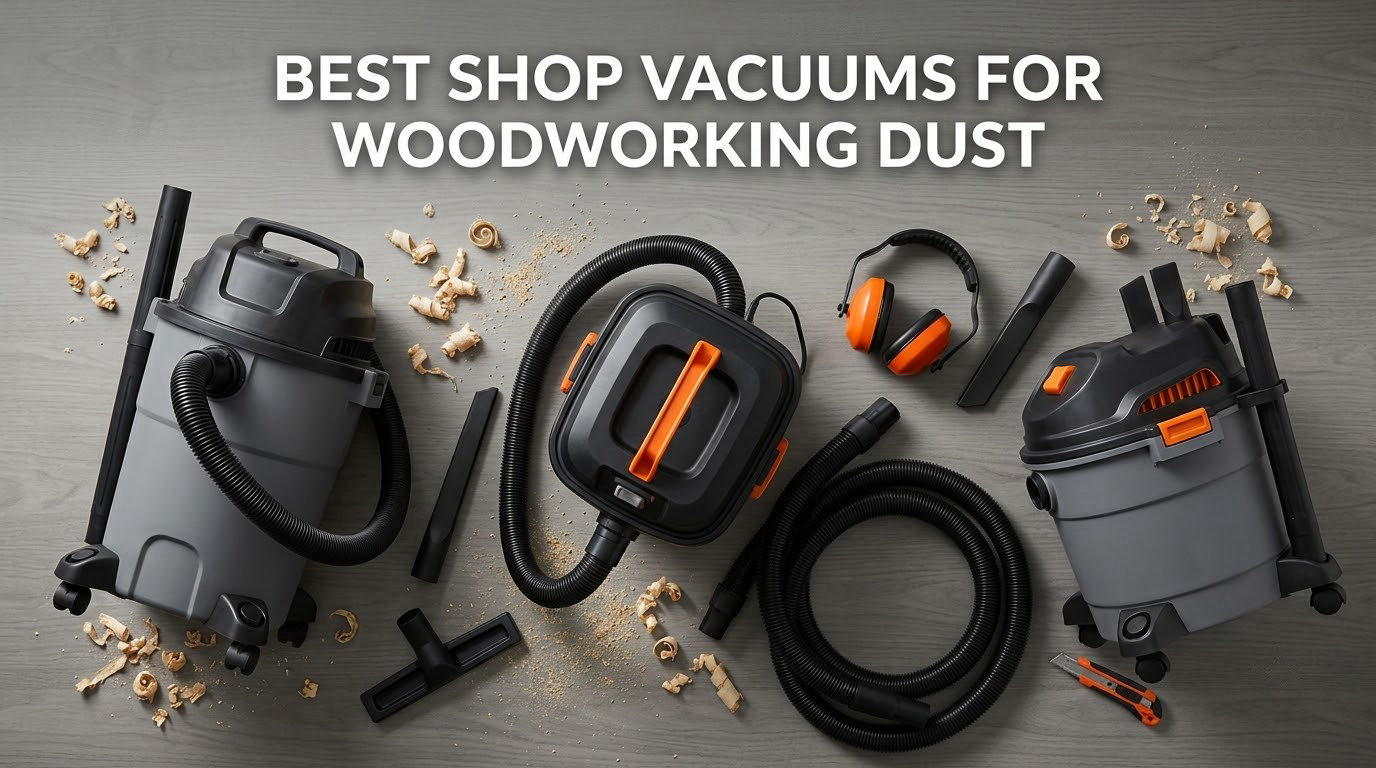
The fastest way to clear a garage or basement shop is to stop chasing dust with a broom and start pulling it off the tool. A good shop vacuum captures sawdust at the source, before it settles on your bench, your tools and your lungs. That is why the best shop vacuums for woodworking dust are not all the same machine, and why the answer depends entirely on which tools you own.
We compared ten of the most-reviewed machines in this class, from budget wet/dry vacs to dedicated HEPA dust extractors, and read what owners say after a season of sanding rather than a week. We looked at published airflow, water lift, tank size, filter type, noise and hose diameter, and we flagged the gaps between the spec sheet and the real shop floor. The two families behave very differently, and buying the wrong one is the most common expensive mistake in this category.
Our framework is simple. If you run handheld sanders, a router and a track saw, you want a dust extractor with a self-cleaning filter and a tool-activated outlet. If you want one machine that also handles water, leaves and garage debris, you want a wet/dry shop vac. If you are feeding a table saw, jointer or planer, neither is enough and you need a real collector. We explain that split in detail below, and we have picked a winner in each tier.
If your priorities lean toward general garage cleanup rather than fine wood dust, our guide to the best shop vacuums for garages covers a different set of priorities. If you are already planning the bigger system, start with our dust collection system picks instead.
Top 3 Picks for Best Shop Vacuums for Woodworking Dust in 2026

Quick Overview: 10 Shop Vacs and Dust Extractors Compared in 2026
| Product | Specifications | Action |
|---|---|---|
 Festool CT Midi HEPA Festool CT Midi HEPA |
|
Check Latest Price |
| Bosch VAC090AH 9 Gallon HEPA Extractor |
|
Check Latest Price |
 DEWALT DWV010 8-Gallon HEPA Extractor DEWALT DWV010 8-Gallon HEPA Extractor |
|
Check Latest Price |
 Makita VC4210L 11 Gallon Wet/Dry HEPA Extractor Makita VC4210L 11 Gallon Wet/Dry HEPA Extractor |
|
Check Latest Price |
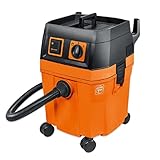 Fein Turbo II Wet/Dry Extractor Fein Turbo II Wet/Dry Extractor |
|
Check Latest Price |
 CRAFTSMAN CMXEVBE17595 16 Gallon Wet/Dry CRAFTSMAN CMXEVBE17595 16 Gallon Wet/Dry |
|
Check Latest Price |
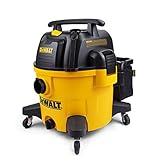 DEWALT DXV09PA 9 Gallon Wet/Dry Vac DEWALT DXV09PA 9 Gallon Wet/Dry Vac |
|
Check Latest Price |
 STANLEY 10 Gallon Wet Dry Vacuum STANLEY 10 Gallon Wet Dry Vacuum |
|
Check Latest Price |
 DEWALT STEALTHSONIC 5 Gallon Quiet Vac DEWALT STEALTHSONIC 5 Gallon Quiet Vac |
|
Check Latest Price |
 RIDGID 50353 16-Gallon Stainless Steel Wet/Dry RIDGID 50353 16-Gallon Stainless Steel Wet/Dry |
|
Check Latest Price |
Can You Use a Shop Vac for Wood Dust?
Yes, a shop vacuum can handle wood dust, but only if the filter is fine enough and the airflow holds up as the filter loads. A wet/dry vac with a pleated paper cartridge works for chips, coarse sawdust and cleanup. Fine sanding dust, especially from a random orbital sander, chokes a cartridge filter within minutes and the suction collapses.
Our verdict in short:
A wet/dry shop vac is right for coarse debris, occasional sanding, wet pickup and general shop cleanup.
A HEPA dust extractor with an automatic filter-cleaning cycle is right for fine sanding dust and long sessions, because the pulse cycle keeps airflow from dropping as the filter loads.
Neither is right for a table saw, jointer or planer. Those machines need 300 CFM or more through 4 inch ductwork, which is dust collector territory.
Shop Vac vs Dust Extractor vs Dust Collector
The three categories overlap in marketing language but not in engineering. A shop vac is a utility machine with a wet/dry tank, a blower port and a cartridge filter. A dust extractor is a smaller, taller machine built around HEPA cartridges, a timed filter-cleaning pulse and a tool-activated outlet so it runs only while the tool runs. A dust collector is a large stationary machine plumbed to fixed machines through rigid ducting.
The dividing line is hose diameter and airflow. Shop vacs and extractors move air through 1-1/4 inch or 1-1/2 inch hose, which is sized for handheld tools. Collectors move air through 4 inch duct. Woodworkers on r/woodworking put it plainly: a shop vac is fine for most portable power tools, while stationary machines generally require 300 CFM or more.
So the honest answer to which one you need: buy the extractor if your dust comes from a sander or router, buy the wet/dry vac if you also want water and debris capability, and save for a collector if the planer is the machine you use most. If you already own a wet/dry vac, our dust collection system guide covers the upgrade path.
1. Festool CT Midi HEPA Extractor: Best Overall for Woodworking Dust
Festool 574837 Ct Midi I Hepa Bluetooth Dust Extractor
130 CFM suction
3.9 gallon tank
24.9 lb
3 year warranty
Pros
- Bluetooth auto-start with Festool battery packs
- 3-stage HEPA filtration
- Anti-static conical hose
- Compact and quiet for a 130 CFM machine
- Quick filter clean
Cons
- Highest outlay in this list
- Accessories sold separately
- Adapters needed for non-Festool tools
The CT Midi is the one we would put in a shop that does serious finish work, and it earns the top spot on the strength of the whole package rather than any single spec. It moves 130 CFM through a 3.9 gallon tank at 24.9 pounds, which is a lot of airflow in a body small enough to walk around with one hand.
What sold us is the Bluetooth activation. Pair it with a Festool battery pack and the extractor starts the moment the sander does and stops shortly after, which removes the single most annoying habit in shop dust collection, which is starting and stopping by hand. The Sys-dock with T-Loc also means the machine locks straight onto a Systainer, so the whole thing moves as one machine.
Owners consistently report a dramatic drop in airborne dust and relief from eye and sinus irritation, and that matches what a three-stage HEPA design is supposed to do. The filter clean takes seconds, and the anti-static conical hose will not snag on a workpiece edge the way a ribbed hose does.
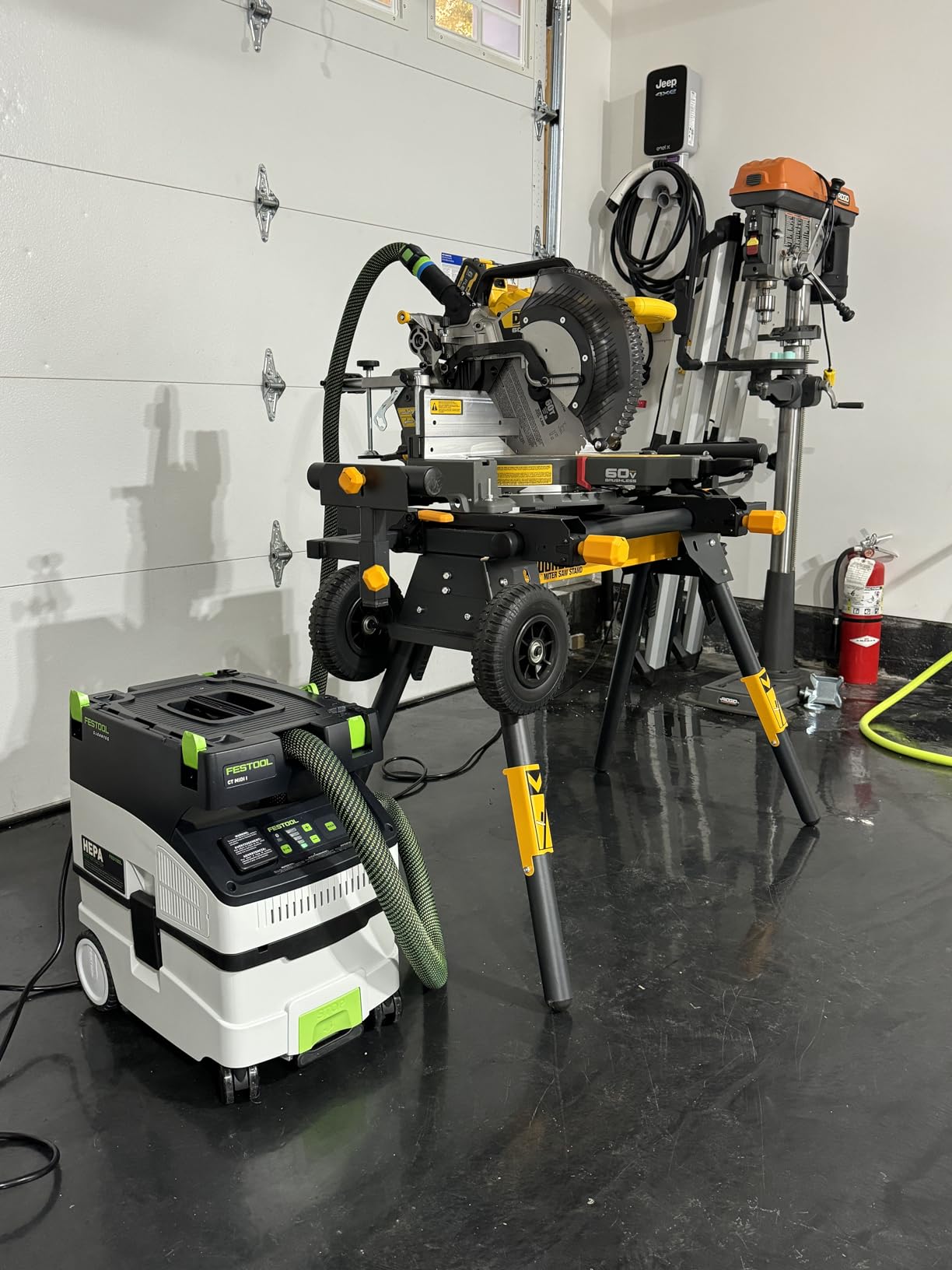
Fine dust capture is where this machine separates itself from every wet/dry vac in the list. The 3.9 gallon tank is small by wet/dry standards, but with a fleece bag and a self-cleaning filter you are emptying after a session rather than mid-session.
The thing that gives us pause is total outlay. The machine and the accessories are both costly, and if you run non-Festool tools you will be buying adapters. Budget for that before you commit, because the accessory list is where the real spend hides.
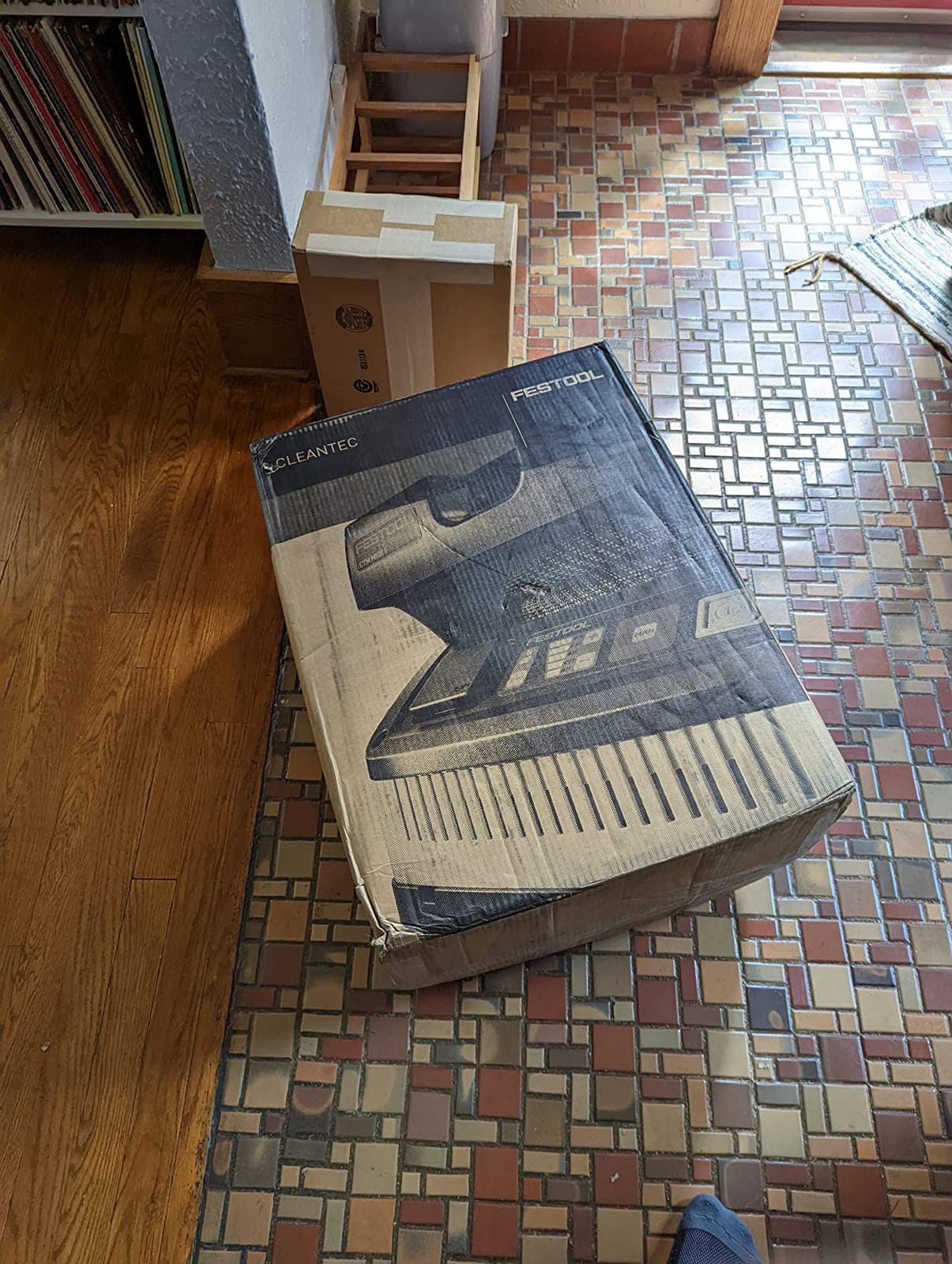
Who the Festool CT Midi suits
It suits finish carpenters, custom furniture makers and anyone sanding a lot of panels who has already committed to Festool tools or is willing to buy one battery pack for the activation. It also suits small shops where floor space is tight, since the form factor is far more compact than a 16 gallon wet/dry vac.
If your sanding is heavy and your sessions are long, the combination of Bluetooth start, three-stage filtration and a fast filter clean means you spend your time working rather than managing the machine.
Who should skip the Festool CT Midi
Skip it if you also need wet pickup, a blower port or a large tank for bulky offcuts. This is a dedicated extractor, and asking it to do utility vacuum work is asking the wrong machine.
Also skip it if the kit does not stretch to the premium tier. The airflow here is excellent but not higher than several cheaper machines, and you are paying a large premium for the automation and the filter quality rather than for raw CFM.
2. Bosch VAC090AH 9 Gallon HEPA Extractor: Best for Fine Sanding Dust
Bosch VAC090AH 9 Gallon Dust Extractor with Auto Filter for Grinder 1773AK
150 CFM airflow
97 inch water lift
60 dB
1 year warranty
Pros
- Very high airflow for a 9 gallon extractor
- HEPA rated at 99.97 percent at 0.3 micron
- 15-second automatic filter cleaning
- Power tool actuation with suction dial
- 60 dB operating level
Cons
- Filtration trades away raw suction
- Fleece bags and filters add running cost
- Adapters needed for different tool ports
The Bosch pairs 150 CFM with 97 inches of static water lift in a 9 gallon body, and that combination is what makes it our pick for fine sanding dust. Airflow is what keeps a filter alive when the dust is small enough to blind it.
The 15-second filter-cleaning cycle is the most aggressive interval on this list, and it is the reason the machine holds suction through a full day of sanding. The Power Broker dial gives you three suction levels, which matters more than most buyers expect: too much pull on a random orbital sander creates the swirl marks that ruin a panel.
Owners consistently praise the airflow, the HEPA capture and the self-cleaning cycle, while noting that raw suction is traded away for filtration. That is the correct trade for a sander, and the wrong trade for pulling chips off a floor.
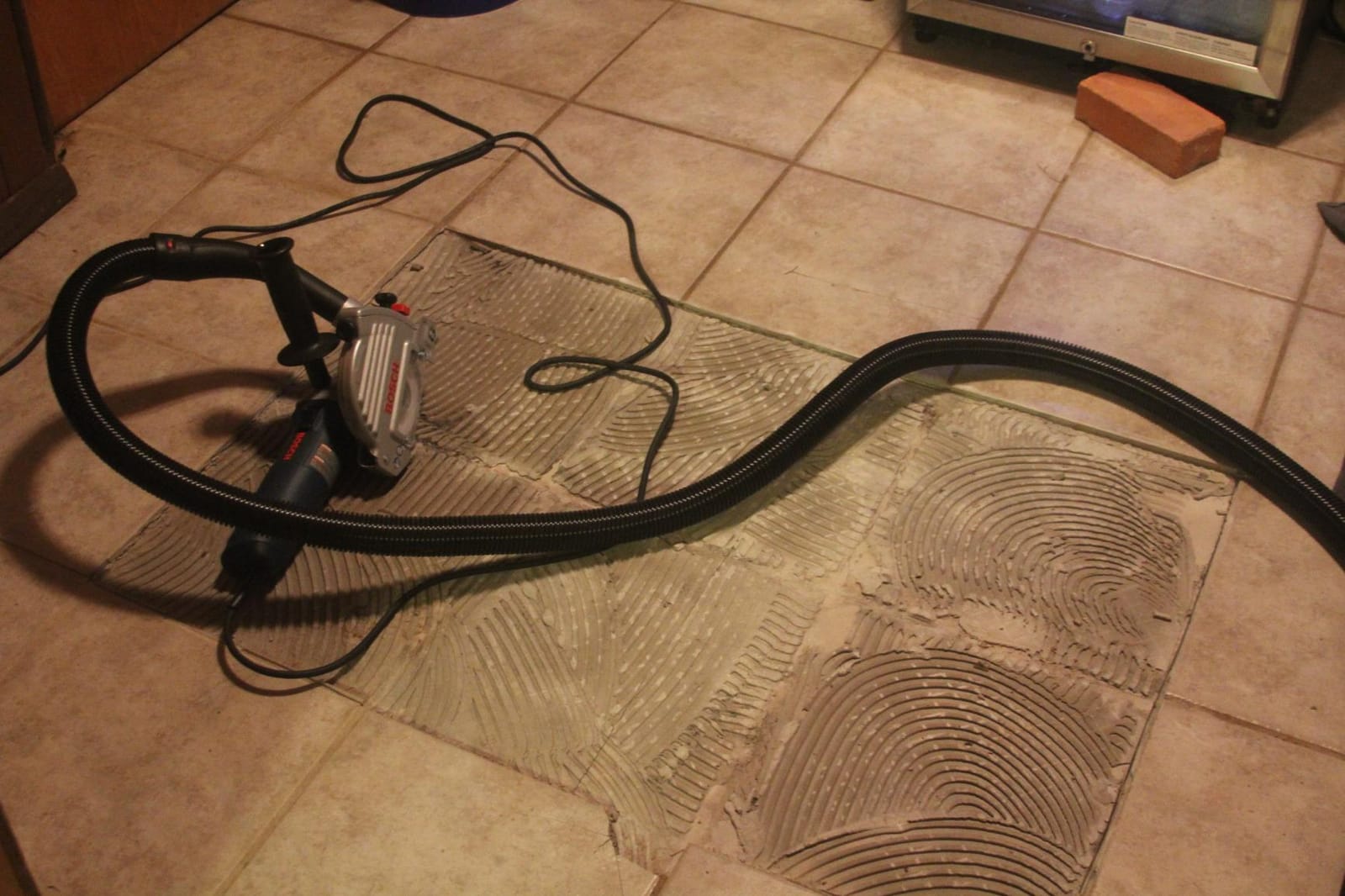
The HEPA filter captures 99.97 percent of particles at 0.3 microns or larger, and the fleece bag below it keeps the cartridge from absorbing dust and losing airflow. Bosch pairs this with a PRO plus GUARD system aimed at OSHA silica dust goals, which matters if you are refinishing older furniture or trim.
At 60 dB it is also one of the quieter machines here, and at 28 pounds it moves around a shop floor without drama. The included adapter requirements are the fiddly part, so plan your tool ports before the first sanding session.
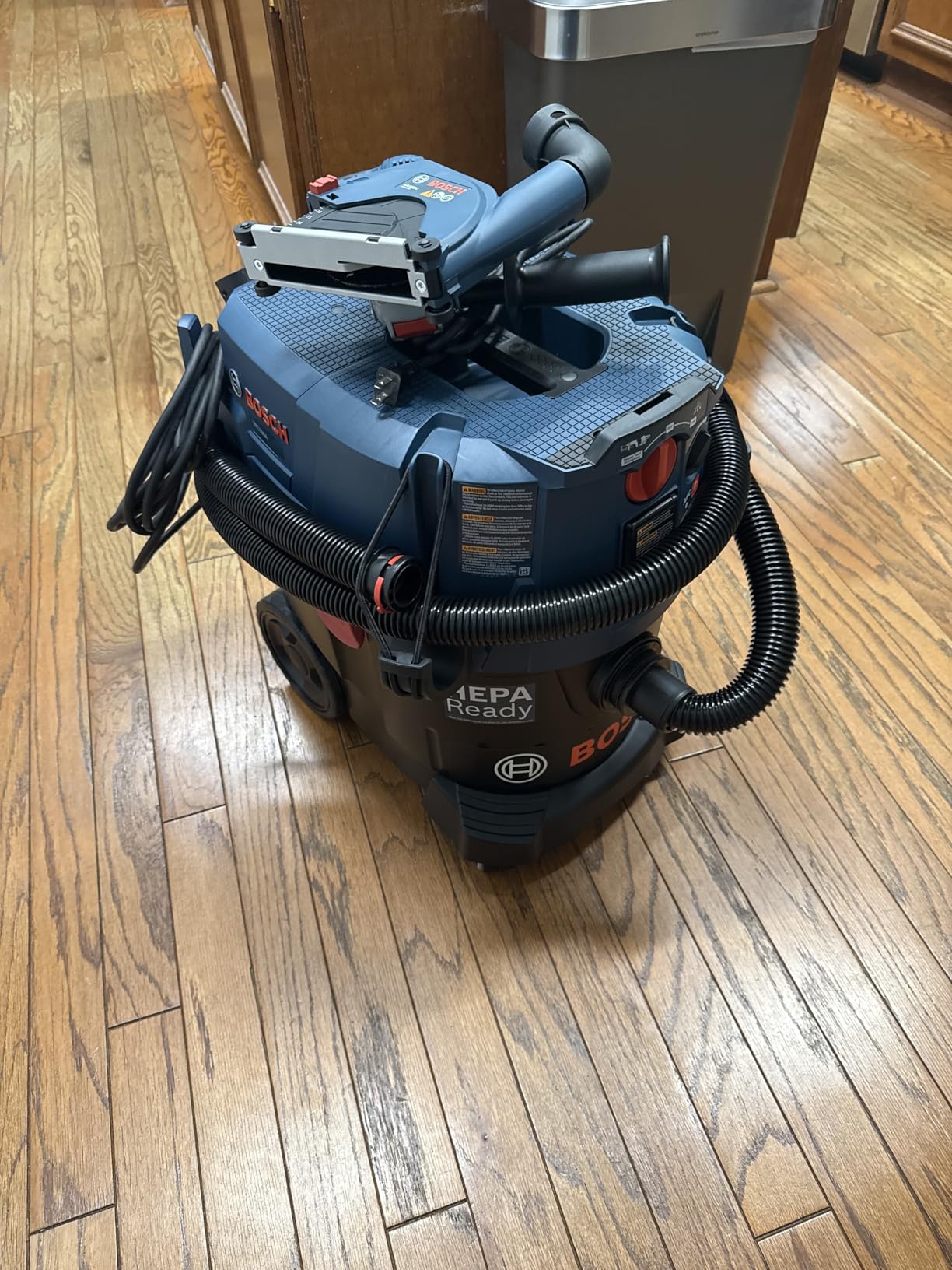
Who the Bosch VAC090AH suits
It suits anyone whose main dust problem is a random orbital or finish sander, and anyone working under a silica compliance goal. The suction dial also makes it a good fit for delicate veneer and softwood, where full-blast pull can burn the surface.
If you are pairing it with a track saw or a router, the 150 CFM and the tool activation mean you never have to reach for a switch mid-cut.
Who should skip the Bosch VAC090AH
Skip it if you need to move water, blow leaves or pick up large debris. The cartridge and HEPA stack is built for fine particulate, and the extra filtration costs you raw suction compared with a plain shop vac.
Also consider the one-year limited warranty. It is the shortest in this group, and on a machine with a self-cleaning motor assembly that is a real consideration if you are buying for a commercial shop.
3. DEWALT DWV010 8-Gallon HEPA Extractor: Best for Corded Power Tools
DEWALT DWV010 HEPA Dust Extractor with Automatic Filter Cleaning, 8-Gallon
150 CFM airflow
8 gallon tank
15 ft anti-static hose
80 dB
Pros
- Filter pulses every 30 seconds to hold airflow
- Reliable tool-activated start and stop
- Light enough to reposition at 22 pounds
- Good fine-dust capture for plaster and refinishing
- Universal hose connector with swivel
Cons
- Lower suction than a plain shop vac
- Heavy when full with fixed rear casters
- Stiff proprietary hose
- High-pitched noise at full load
The DWV010 is the extractor most people end up with, and the reason is simple: it does the one job that matters, holding suction through a long job, without pretending to be a wet/dry vac. The 30-second filter pulse on dual self-cleaning HEPA filters is the mechanism that keeps a 150 CFM motor from choking halfway through a cabinet.
Tool activation is genuinely reliable with corded tools, and there is a post-shutoff delay that clears the hose so you do not find a slug of dust on the bench when the sander stops. That single feature changes how the machine feels in daily use more than any spec on the list.
Several reviews report it capturing enough dust to work without a mask during refinishing, which tells you the filtration is doing real work rather than just marketing.
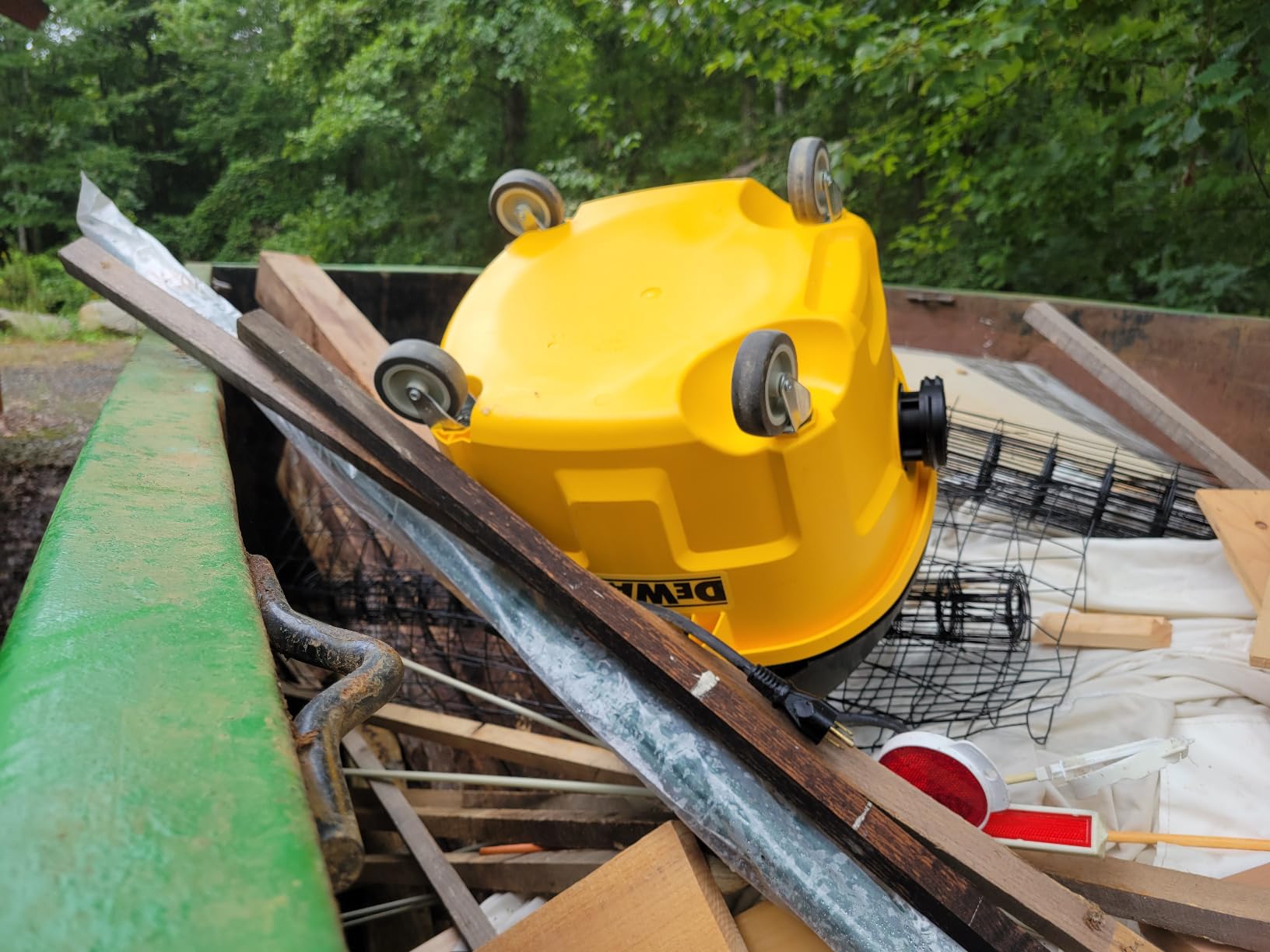
It ships with a 15 foot anti-static hose at 1.25 inch diameter, which is long enough to reach a bench in most shops without an extension cord. The universal hose connector with swivel is a genuine improvement over the adapter confusion that plagued earlier versions.
Meets the EPA RRP rule for HEPA vacuums when paired with DWV9330 filters, which matters for anyone doing renovation work where lead paint is possible. At 80 dB it is the loudest extractor here, so it is a poor fit for a basement shop attached to living space.
Who the DEWALT DWV010 suits
It suits weekend refinishers and pros who run corded sanders and a track saw, and anyone who wants the vacuum to start itself. The 8 gallon tank is a sensible middle ground between a compact 5 gallon machine and a full wet/dry vac.
It is also the option to beat if you are doing trim and cabinet work and need lead-safe capture without buying into a single brand ecosystem.
Who should skip the DEWALT DWV010
Skip it if noise is a factor. At 80 dB it is loud enough that you will be working around it rather than with it, and a muffler is worth considering if the shop shares walls.
Also skip it if you pull chips and offcuts. The lower suction relative to a plain shop vac is a direct consequence of the HEPA stack, and it is noticeable on coarse debris.
4. Makita VC4210L 11 Gallon Wet/Dry HEPA Extractor: Best for Quiet Shops
Makita VC4210L 11 Gallon Wet/Dry HEPA Filter Dust Extractor/Vacuum
148 CFM suction
92 inch water lift
11 gallon tank
60 dB
Pros
- Much quieter than a typical shop vac
- Automatic filter cleaning extends filter life
- 11 gallon tank with fleece bags
- Two power levels
- Rugged build that survives daily use
Cons
- Auto filter clean makes a startling thumping sound
- Less raw suction than a traditional shop vac
- 1.5 inch hose cannot take large chips
- Weak pictorial instructions
The Makita is the compromise pick for a shop that cannot take 80 dB, pairing 148 CFM and 92 inches of water lift with a 60 dB rating and an 11 gallon tank. It also does double duty, working as both a wet/dry vac and a HEPA extractor, which makes it a genuinely two-purpose tool.
Two power levels let you dial the suction down for a delicate panel and up for a track saw, and the on-board tool-activated outlet has a 10 second off delay so the hose clears itself. Three hose cuff adapters are included, which covers most common tool ports without a separate purchase.
Owners report the machine still performing after heavy daily use, and several describe the auto-clean thump as the feature they did not understand at first and now rely on. It is the sound of the filter being cleaned, and it is the reason the filter lasts.
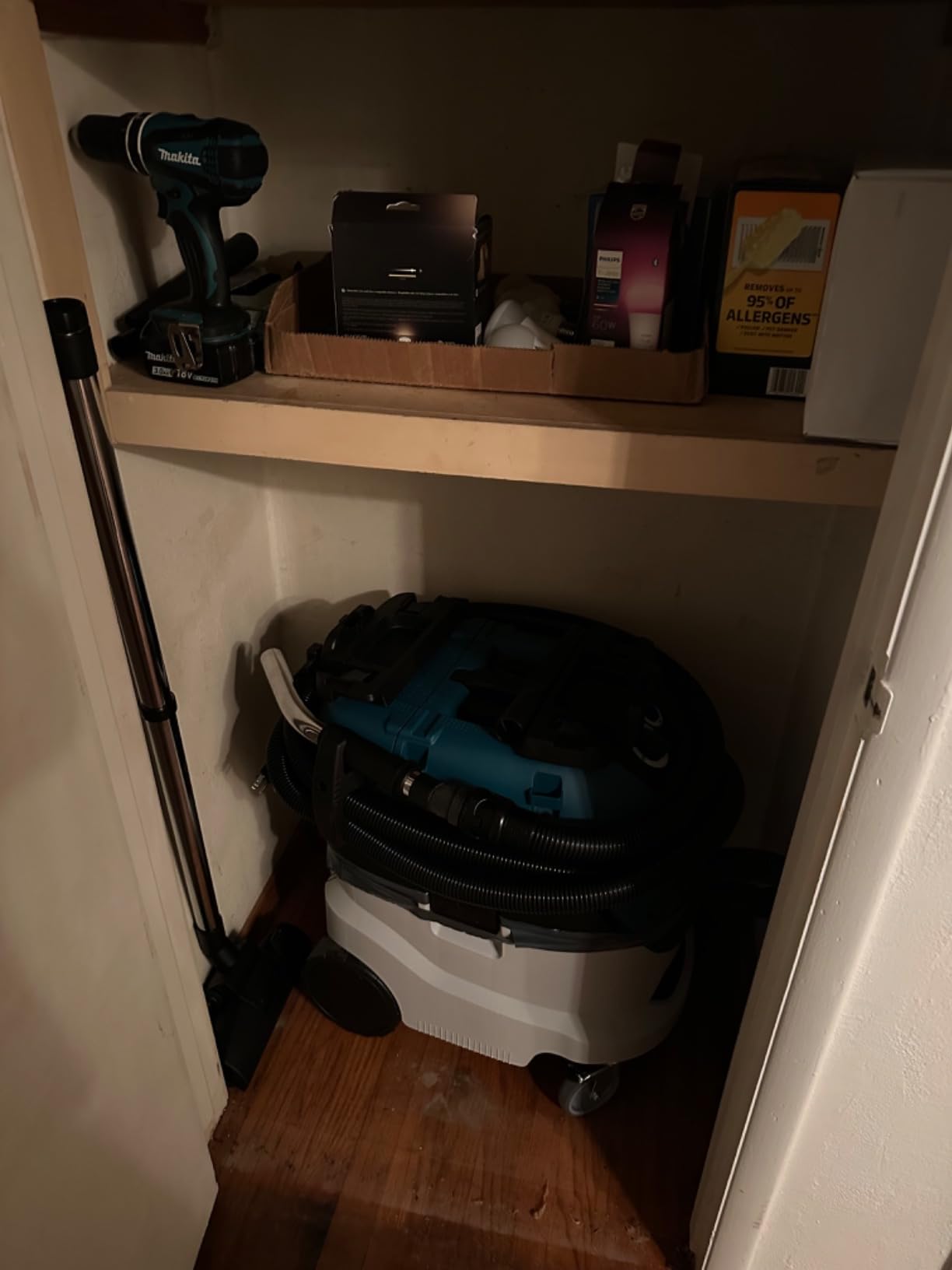
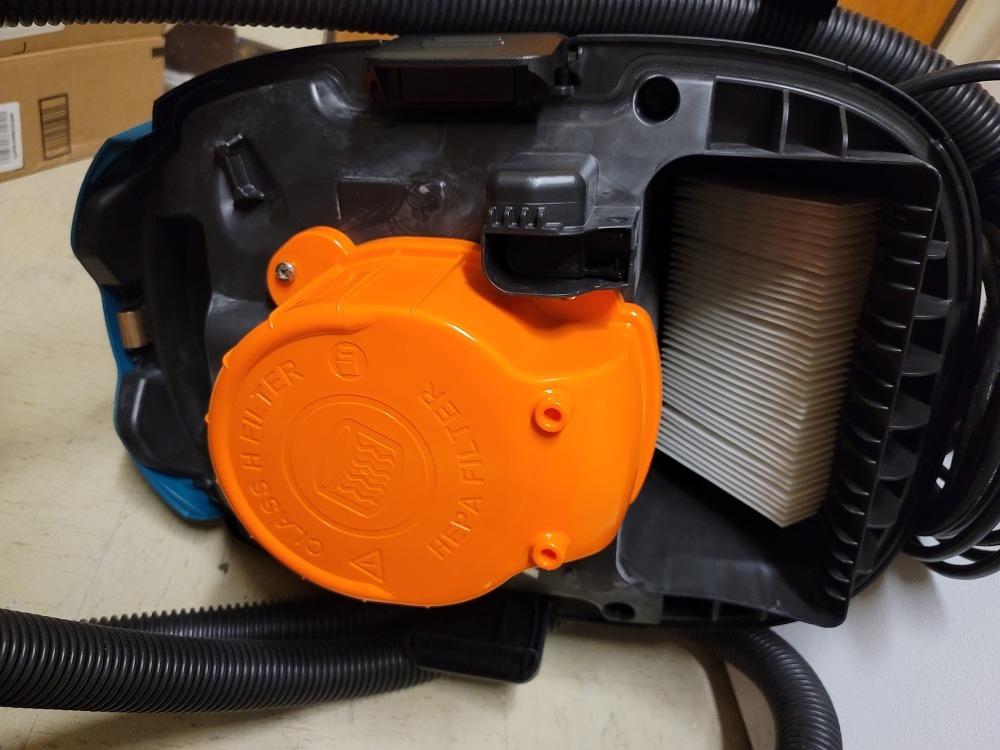
Two-stage filtration does the heavy lifting here, with a main flat filter capturing 99.95 percent of particles at 2 microns and larger, and a HEPA stage above it. The oversized rubber wheels and on-board storage for hose, cord and accessories make it easy to move as a machine.
The drawbacks are predictable. Fleece bags are expensive and hard to source outside the US, few replacement bags are included, and the instructions are pictorial only. At 35.3 pounds it is also the heaviest machine on this list, so plan your route between machines.
Who the Makita VC4210L suits
It suits a basement, garage or condo shop where noise is the binding constraint, and anyone who wants wet pickup capability alongside fine dust capture. The two power levels also make it a good fit for people sanding softwood who keep generating swirl marks.
If you are already buying Makita tools, the tool-activated outlet pairs naturally and the 11 gallon tank means fewer trips to the bin during a long run.
Who should skip the Makita VC4210L
Skip it if the auto filter clean sound bothers you. Owners are split on it, and if you are running a sander next to a recording setup or working night shifts, the periodic thump is a real annoyance.
Skip it if you need to move large chips and construction debris, because the 1.5 inch hose will not take it, and skip it if you want a warranty, since this listing carries none.
5. Fein Turbo II Wet/Dry Extractor: Best for Stationary Machines
Fein Turbo II Wet/Dry Vacuum – 8.4-Gal Shop Vac for Garage, Woodworking & Jobsite, 151 CFM Suction, Quiet 66 dB, Long Cord & Hose, Anti-Static Tool-Activated Dust Extractor – 92036118090
151 CFM airflow
98 PSI water lift
66 dB(A)
3 year warranty
Pros
- Quiet operation at 66 dB(A) in a full-size body
- Strong suction at table saws and miter saws
- 19 ft cord and 13 ft hose
- Anti-static system for fine dust
- Autostart outlet with overload delay
Cons
- Accessories and bags cost more over time
- Redundant cord and hose storage
- Parts for older Turbo models discontinued
- Isolated early motor failure reports
The Fein Turbo II is the most convincing raw suction machine in this group, with 151 CFM and 98 PSI of static water lift from a 1,100 watt motor, at 66 dB(A). It is also the only machine here that combines wet/dry capability, tool activation and a published dB(A) figure, which makes it the one to consider first if your shop shares walls with living space.
Owners report it collecting nearly all dust from table saws and miter saws, which is a higher bar than the extractors manage. The 19 foot cord and 13 foot hose also mean you rarely reposition it in a large shop, and the anti-static system matters more with fine dust than most buyers expect.
Durability is the standout story. Multiple owners describe Fein Turbo machines still running after 13 to 15 years with only brushes needing replacement, which is a completely different service life from anything else on this list.
Who the Fein Turbo II suits
It suits pros who want more suction than an extractor without moving to a full collector, and it suits anyone running a miter saw or table saw on a smaller scale where chip volume is manageable. The autostart outlet pairs well with random orbital sanders.
For CNC work, Fein machines are frequently paired with a cyclone separator ahead of the canister, which cuts the dust reaching the filter and extends the interval between filter changes.
Who should skip the Fein Turbo II
Skip it if you are buying on a tight budget, because bags and accessories add up over time and the parts situation for older Turbo models has ended. Plan your filter and bag supply before the machine needs them.
Also skip it if a full tank is a problem. At 25 pounds empty, a loaded canister is a two-person lift, and the wheels are not the large-over-cord type you get with a dedicated cart.
6. CRAFTSMAN CMXEVBE17595 16 Gallon Wet/Dry Vac: Best for High-Volume Cleanup
CRAFTSMAN CMXEVBE17595 16 Gallon 6.5 Peak HP Wet Dry Shop Vacuum
16 gallon tank
6.5 Peak HP
69 dB
3 year warranty
Pros
- Extra-large 16 gallon tank
- 6.5 Peak HP for wet and dry work
- 2-1/2 inch Dual-Flex hose resists kinking
- Large accessory bundle included
- Three-year limited warranty
Cons
- Pleated paper filter clogs fast with fine dust
- Bulkier and heavier than smaller machines
- Fixed wheels rather than swiveling casters
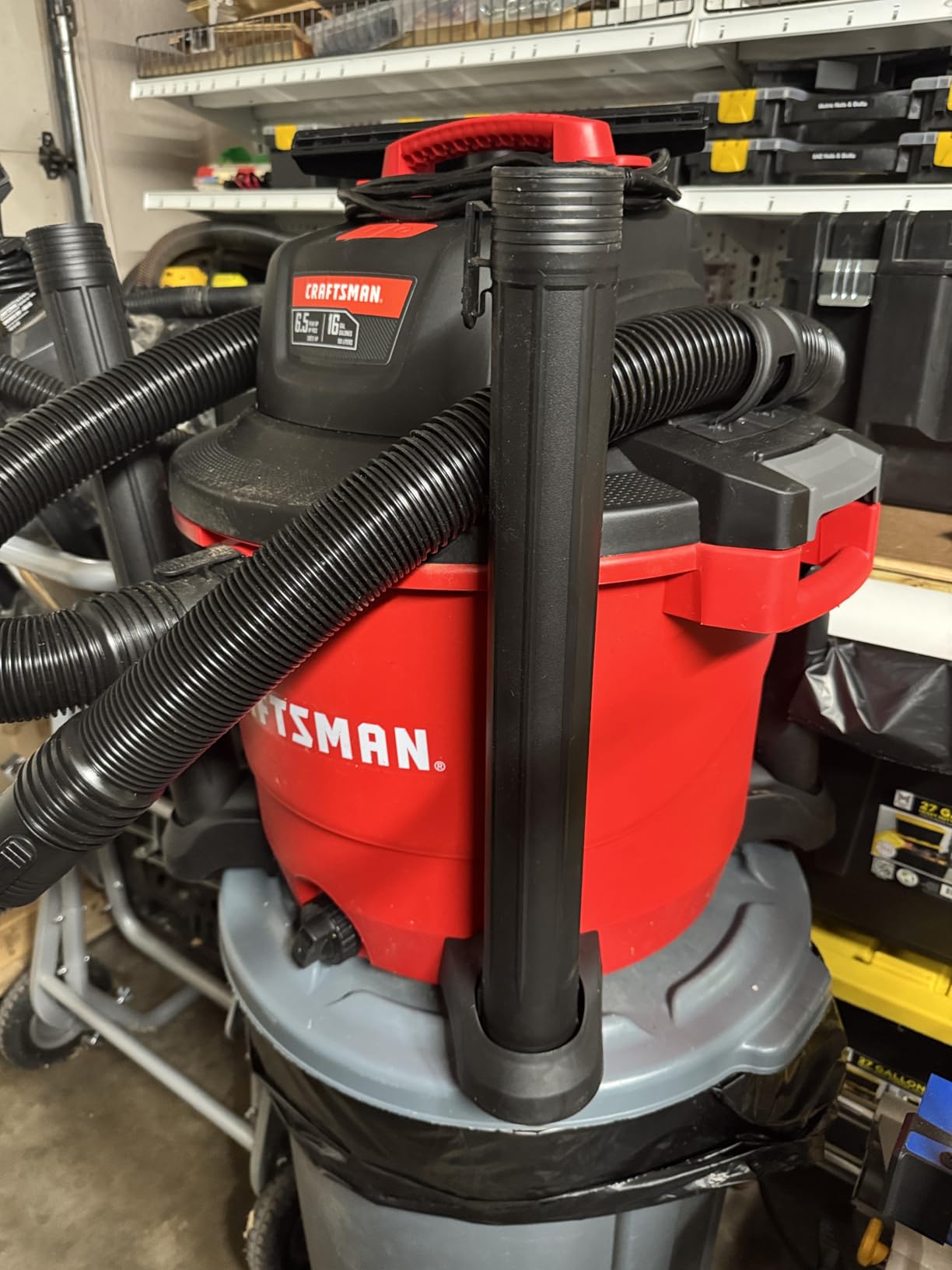
With more than 8,600 reviews behind it, the CMXEVBE17595 is the most proven machine in this roundup, and at 16 gallons with 6.5 Peak HP it is the value pick for a shop that handles volume. The 2-1/2 inch Dual-Flex hose is a real upgrade, since it resists kinking at both ends, and a 2-1/2 inch hose moves noticeably more air than the 1-1/4 inch hose on a typical extractor.
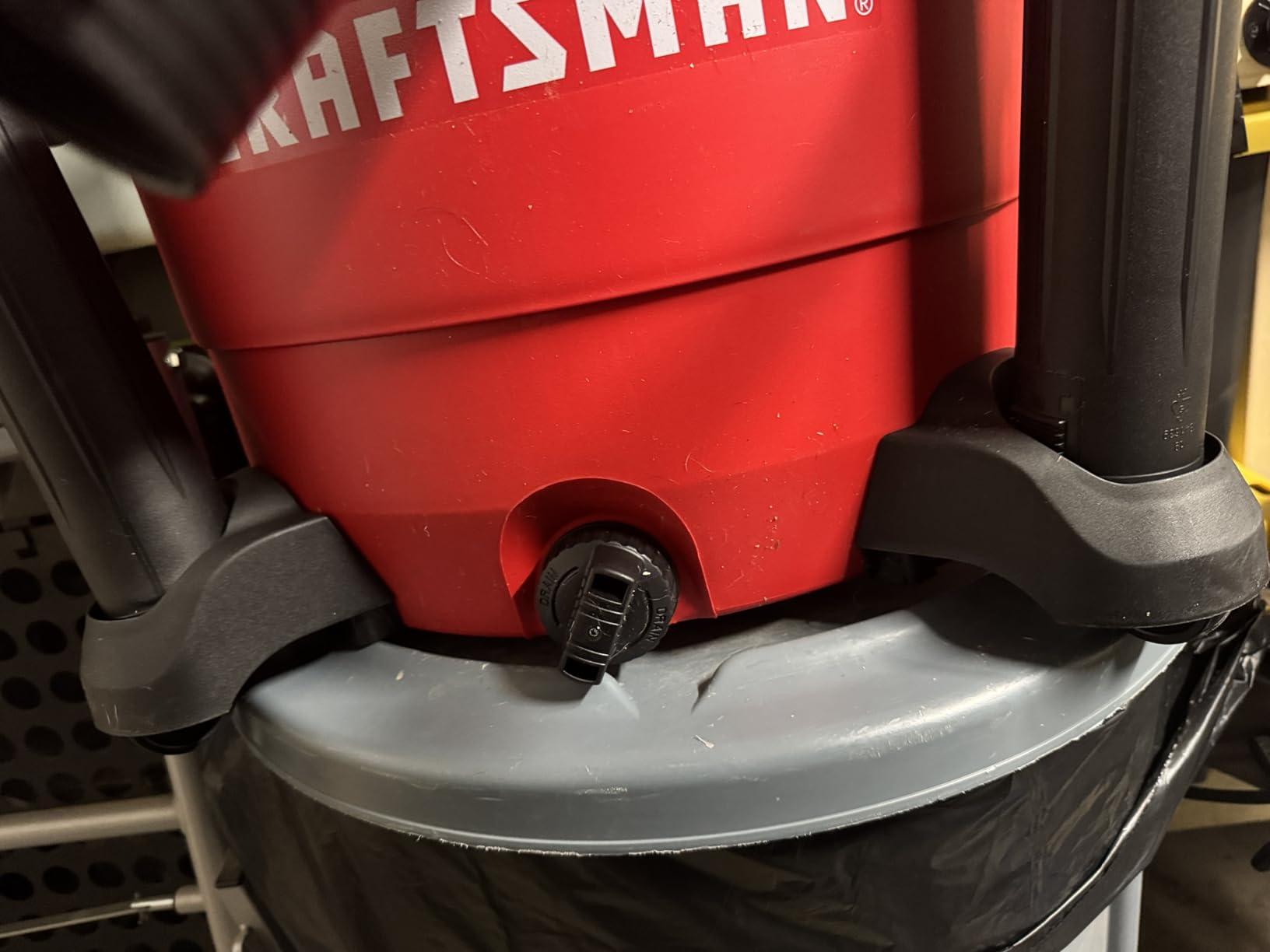
The accessory bundle is unusually complete for the money, with extension wands, utility, car and wet nozzles, a Qwik Lock pleated paper filter and a dust bag. The rear blowing port and oversized built-in drain make it a genuine three-purpose tool.
Owners point to capacity, power and the accessory bundle as the strengths. The limit is fine dust, and it is a hard limit.
Fine wood dust fills a pleated paper cartridge quickly, and when it does, airflow drops well before the filter looks dirty. That is the mechanical reality of fine particulate on a paper media, and it is why every extractor in this list uses a self-cleaning cycle instead.
At 26 pounds and 21 by 24 by 27 inches, this is a large machine to move around a small shop, and the fixed wheels make that worse. Plan its position carefully and use it as a station rather than a tool you roll from bench to bench.
Who the CRAFTSMAN 16 Gallon suits
It suits weekend builders, garage shops and anyone who vacuums up after a big cut rather than capturing at the tool. The 16 gallon tank means you can run a whole project before emptying, and the Qwik Lock filter system has a wide range of compatible replacements.
It is the right call if your dust is mostly chips and coarse sawdust from a track saw, a miter saw or a chop saw.
Who should skip the CRAFTSMAN 16 Gallon
Skip it for finish sanding. You will be swapping or cleaning the cartridge constantly, and the lost airflow is exactly the problem you are trying to solve. If your main machine is a random orbital sander, look at the top three extractors instead.
Skip it in a tight shop too, because a 16 gallon canister on fixed wheels needs floor space you may not have.
7. DEWALT DXV09PA 9 Gallon Wet/Dry Vac: Best for Wet and Dry Versatility
DEWALT 9 Gallon Wet/Dry VAC, Heavy-Duty Shop Vacuum with Attachments, 5 Peak HP, with Blower Function, DXV09PA
9 gallon tank
5 Peak HP
85 inch suction
3 year warranty
Pros
- Strong suction for a 9 gallon machine
- Wet pickup
- dry pickup and blower function
- Upgraded more flexible hose
- Accessory storage bag
- 10 ft cord with cord wrap
Cons
- Louder than premium machines during long use
- Cartridge filter needs frequent cleaning with fine dust
- Some accessories sold separately
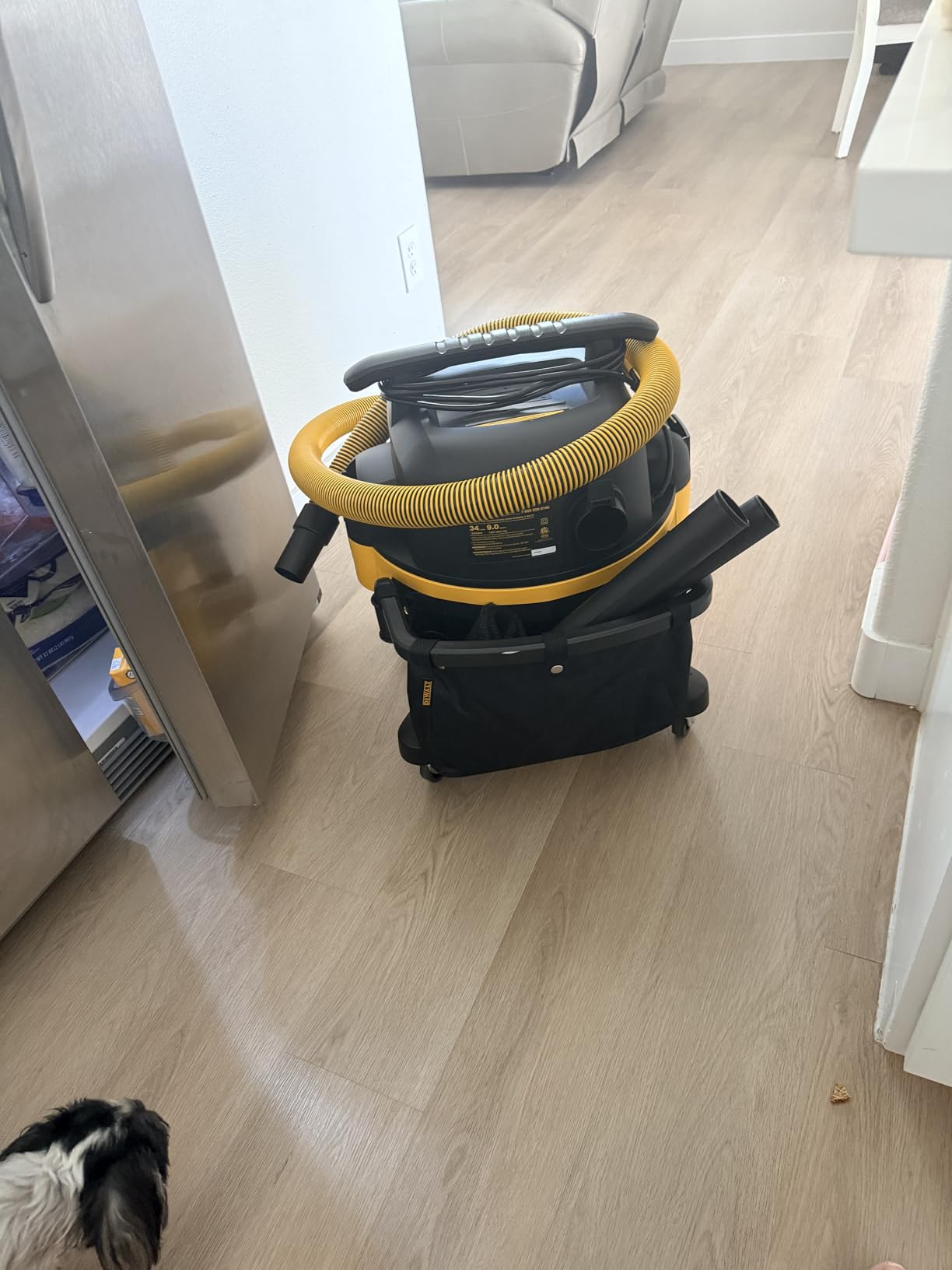
The DXV09PA is the most complete single-machine answer here, with 85 inches of maximum suction, a 9 gallon tank and a built-in blower port with three nozzle adaptors. If you want one vacuum for shop cleanup, wet pickup and blowing out the bench, this is the one.
The 5 Peak HP motor delivers genuinely strong suction for a 9 gallon canister, and the upgraded hose is noticeably more flexible than earlier versions, which fixes a complaint that plagued this category for years. Rubberized casters and a water-resistant on/off switch are sensible shop details.
Reviewers like the combination of suction, a usable blower port and a complete accessory kit at this price. The main drawback cited is noise, at 78 dB.
The cartridge filter is the trade-off. Fine sawdust loads it quickly, and there is no self-cleaning cycle to recover the airflow, so this is a machine you maintain rather than one that maintains itself. Keeping a spare cartridge on hand is the difference between a five-minute pause and an afternoon of lost suction.
At 22.5 pounds and 18 by 17.5 by 22 inches, it is a manageable size for a garage, and the three-year warranty is longer than most of the extractors in this roundup.
Who the DEWALT DXV09PA suits
It suits a generalist who wants one machine for the shop, the garage and the occasional wet job. The blower port makes it useful for blowing debris off a bench or out of a fence line, which no extractor in this list can do.
It is also a good fit if you already own DEWALT tools and want the color and accessory ecosystem to match.
Who should skip the DEWALT DXV09PA
Skip it if sanding is your primary dust source, because a cartridge filter with no cleaning cycle will disappoint you within the first hour of finish work. The 78 dB rating also makes it a poor choice next to living space.
Skip it if you expect to run it empty regularly without a dust bag, because fine dust will find a way past a bare cartridge.
8. STANLEY 10 Gallon Wet Dry Vacuum: Budget Pick
STANLEY 10 Gallon Wet Dry Vacuum, 6 Peak HP Poly Built-in Drain Shop Vac Blower with Powerful Suction, Multifunctional Shop Vacuum W/ 6 Horsepower Motor for Job Site, Garage, Basement, Van, Workshop
10 gallon tank
6 Peak HP
80 dB
2 year warranty
Pros
- Very strong suction for the money
- 10 gallon tank is large at this tier
- Wet
- dry and blow in one machine
- Over 24 feet of cleaning reach
- Buoy technology auto power-off in water
Cons
- Very loud during use
- Thinner tank plastic than premium brands
- Cartridge filter needs regular cleaning
- Two-year warranty only
The Stanley is the cheapest way into this category and it is not a token entry. The 6 Peak HP pure copper motor delivers 85 inches of maximum suction, which matches the 85 inch figure published for the DEWALT DXV09PA, and reviewers report it pulling water from a flooded basement without complaint.
The 10 gallon polypropylene tank is larger than most competitors at this tier, and the wet, dry and blow three-in-one design with a rear blow port means one machine covers three jobs. Over 24 feet of cleaning reach from the 6 foot hose, 18 foot cord and two extension wands means you rarely need to plug in again.
Buoy technology, which cuts power when the water level is reached, is a small safety feature that shows the manufacturer thought about wet use rather than just advertising it.
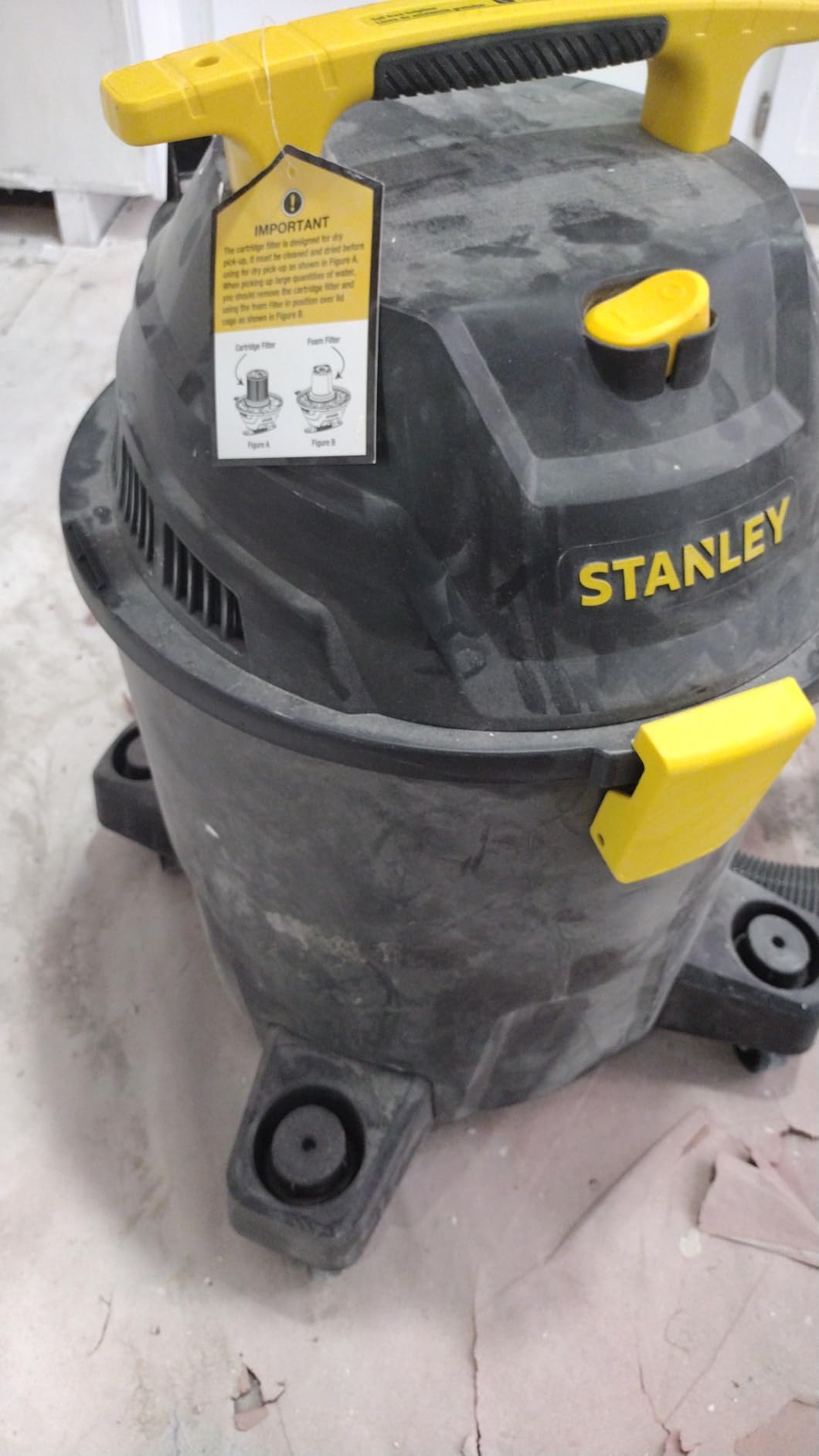
Noise is the honest drawback. At 80 dB it matches the loudest machine in the extractor group, and multiple owners call it jarring in enclosed spaces. If you work in a basement, plan on long breaks between sander runs.
The 10 gallon tank is polypropylene, and owners comparing it against premium brands note the walls are thinner. That is a durability trade, not a defect, but if you plan to drop the canister off a tailgate regularly, choose a stainless tank instead.
Who the STANLEY 10 Gallon suits
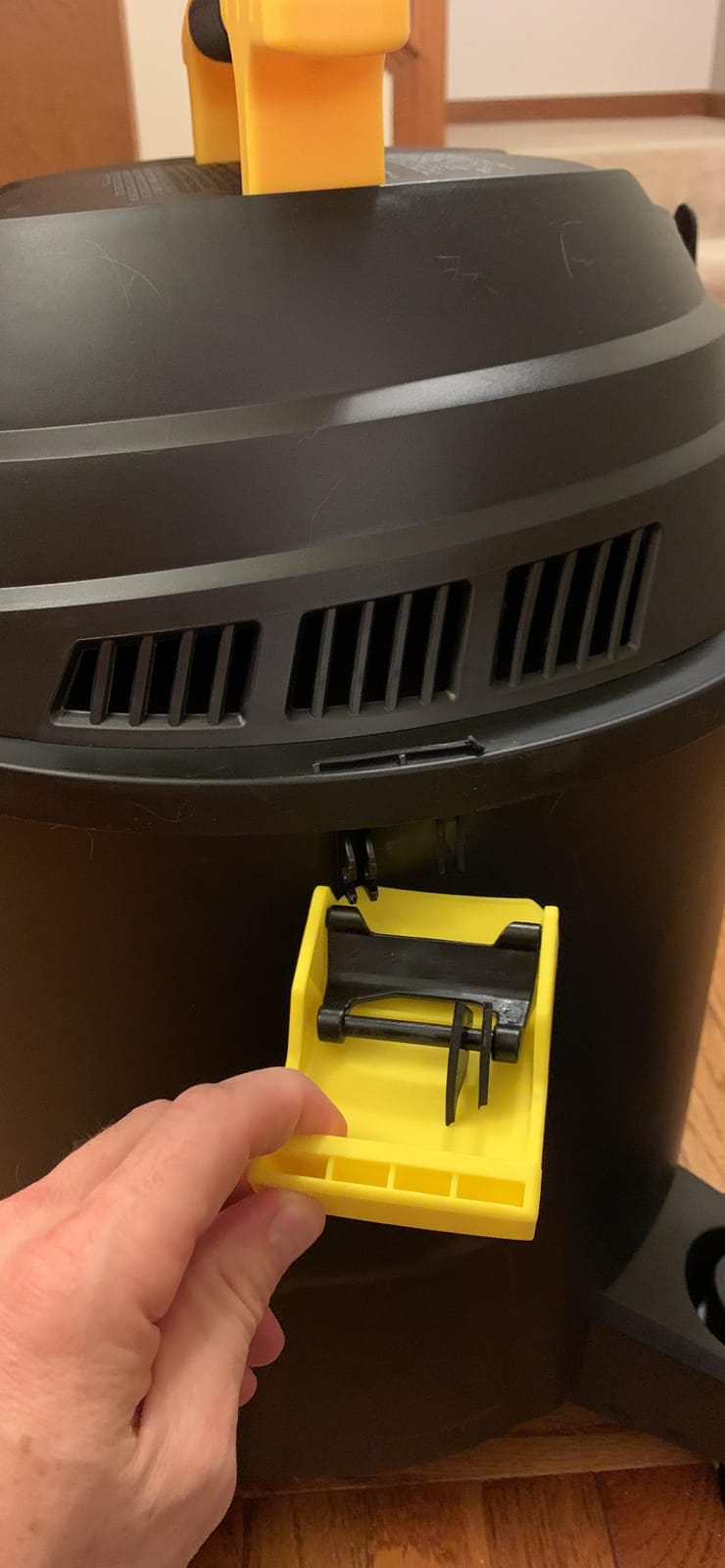
It suits a first-time buyer, a renter or a weekend woodworker who needs a capable shop vac without a large outlay. Four casters, a large top handle and on-board accessory storage make it easy to move between the bench and the truck.
It is also a strong second machine for wet jobs, so you are not dragging your fine dust extractor into a spill.
Who should skip the STANLEY 10 Gallon
Skip it for fine sanding dust. The cartridge filter needs regular cleaning and there is no recovery cycle, so you will spend your session managing suction rather than sanding.
Skip it if you work indoors where noise matters, and consider it only if the two-year warranty is acceptable for how long you expect to own it.
9. DEWALT STEALTHSONIC 5 Gallon Quiet Shop Vac: Best for Small Shops
DEWALT STEALTHSONIC 5 Gallon Ultra Quiet Wet Dry Shop Vac DXV05P-QT
5 gallon tank
4 Peak HP
65 dB
18.3 pounds
Pros
- Noticeably quieter than conventional shop vacs
- Light at 18.3 pounds and easy to carry
- Washable cartridge plus foam filter and bags
- Generous accessory kit
- Good suction for routine cleanup
Cons
- Small tank means frequent emptying
- Wheels catch on the power cord
- Flimsy accessory storage bag
- No exhaust port for blowing
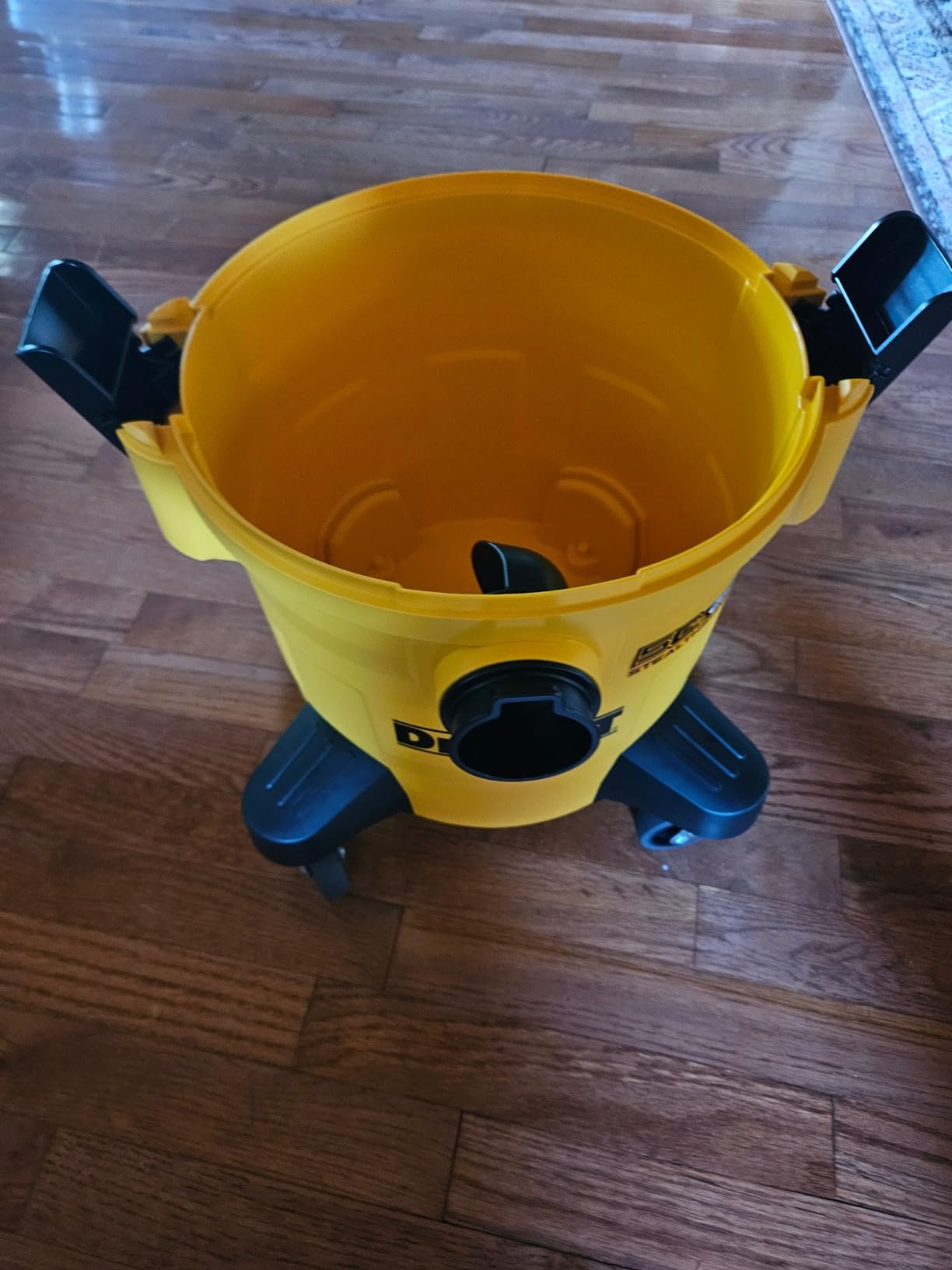
At 65 dB and 18.3 pounds, the STEALTHSONIC is the most portable machine here and the quietest of the wet/dry vacs in this roundup, and 4 Peak HP is enough suction for routine garage, vehicle and workshop cleanup. For a small shop or an apartment workshop where floor space is the constraint, it solves the two problems that stop people buying anything at all.
Owners report the machine is the quietest wet/dry vac they have used, and the washable cartridge plus foam filter and disposable bags mean you are not hunting for proprietary replacements every month. The accessory kit is generous for the tier, with wands, nozzles, a tool adapter and a storage bag.
The practical criticisms are worth knowing: the 5 gallon tank fills fast, the wheels catch on the power cord while rolling, and the storage bag is flimsy.
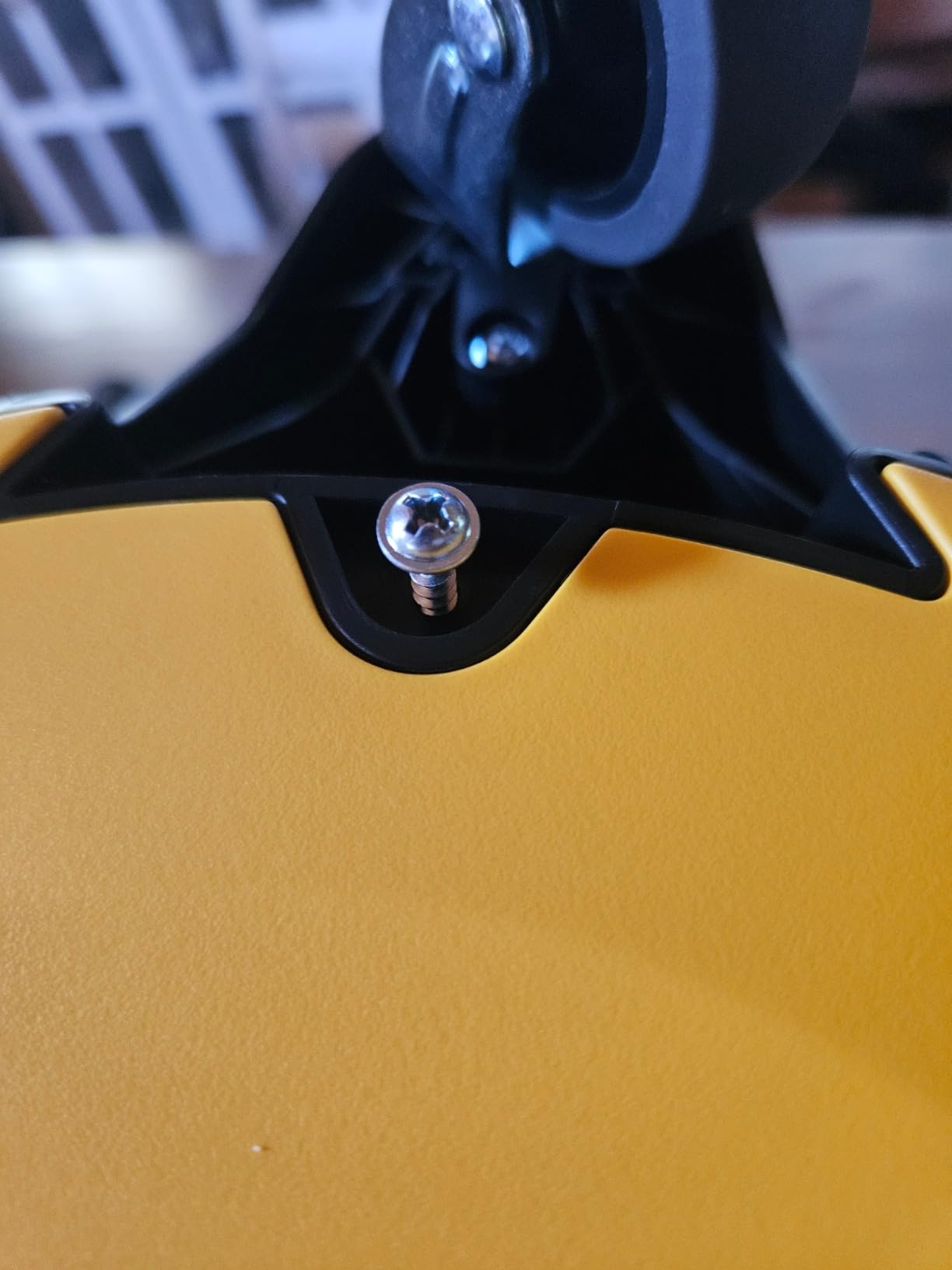
One design note that catches people out, there is no exhaust port for attaching a hose for blowing, so this is a vacuum and not a three-in-one. Some owners also report the machine can be switched on by its own hose contacting the power switch, so position it where the hose cannot reach the switch.
At 18.5 by 17.9 by 26.4 inches, it is tall and narrow rather than wide, which actually works well in a corner of a small shop. The three-year warranty is a good sign for a machine in this size class.
Who the DEWALT STEALTHSONIC suits
It suits condo, apartment and basement shops where noise is a real constraint, and anyone who needs to carry their vacuum up and down stairs. At 18.3 pounds it is the only machine in this roundup you can comfortably move with one hand.
It also suits occasional woodworkers who vacuum up after a project rather than capturing at the tool, and vehicle owners who want one machine for both.
Who should skip the DEWALT STEALTHSONIC
Skip it if you sand a lot, because the small tank means you will interrupt a session to empty it, and a cartridge filter plus a 5 gallon canister is the wrong combination for fine dust.
Skip it if you need a blower function or plan to fill a tank with large debris in one pass.
10. RIDGID 50353 16-Gallon Stainless Steel Wet/Dry Vac: Best for Durability
RIDGID 50353 1610RV Stainless Steel 16-Gal. Wet Dry Shop Vacuum with Cart, 6.5 Peak HP Motor, Large Wheels, Pro Hose, Drain, and Blower Port, Red
16 gallon stainless tank
6.5 Peak HP
70 dB
cart and large wheels
Pros
- Stainless tank cleans out thoroughly
- Plenty of suction for water and dust
- Cart and large rear wheels roll over cords and thresholds
- Long cord means few extension cords
- Blower port clears sawdust
Cons
- Included hose feels cheap and fittings are loose
- Noisy at full suction
- Stainless can pit and spot-rust over time
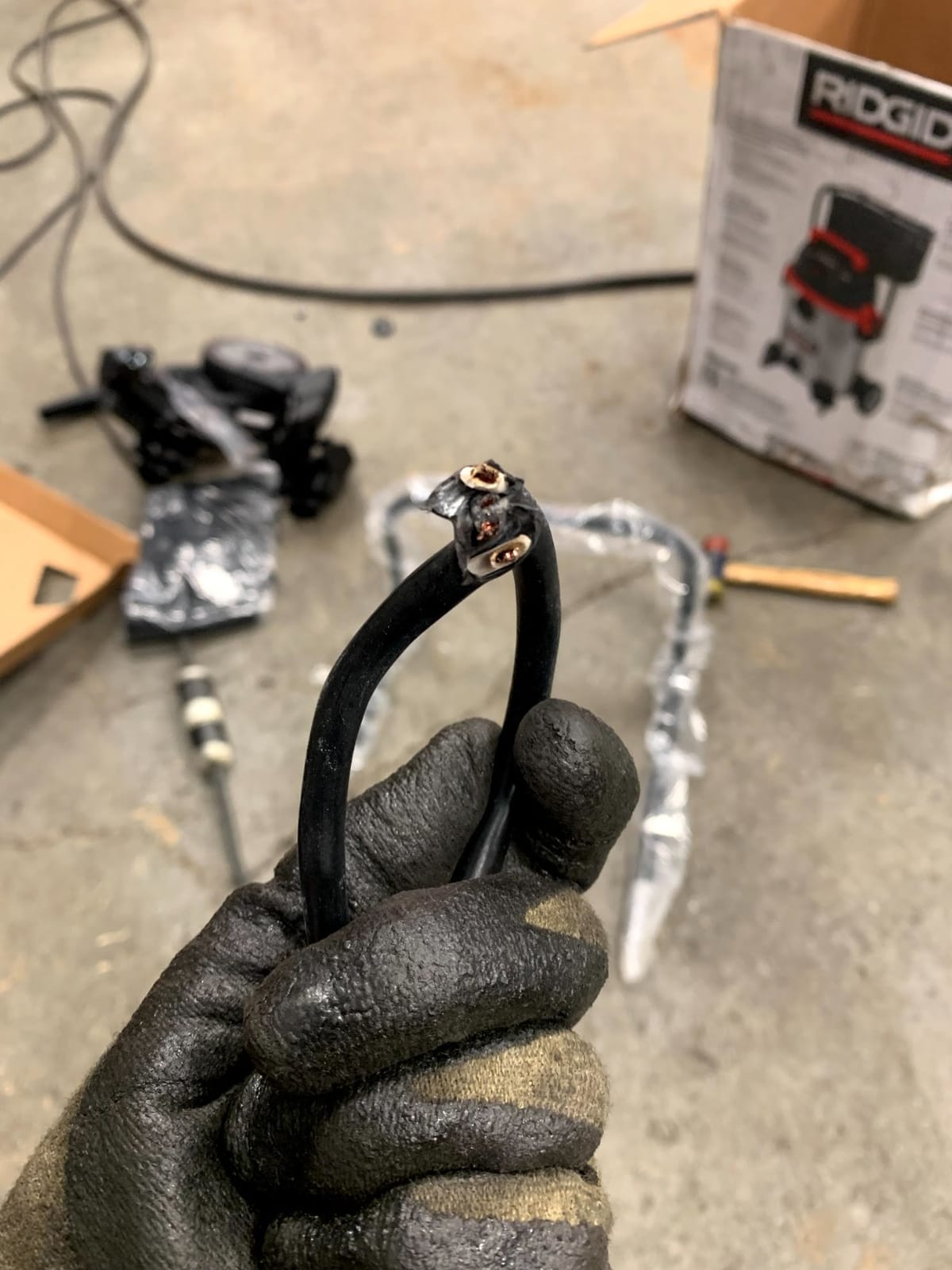
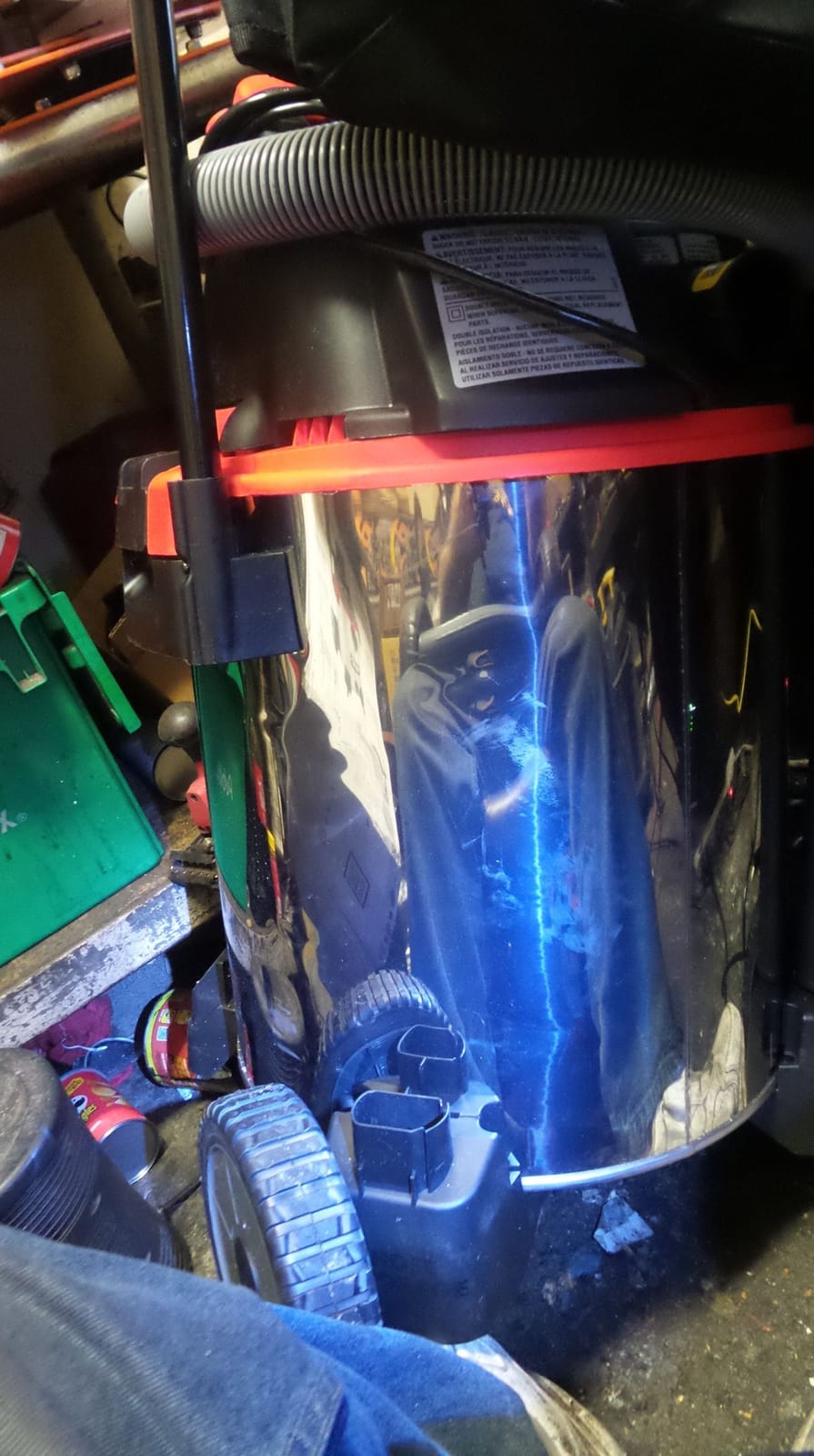
The RIDGID 50353 is the machine that shows up most often in woodworkers’ recommendations, and the stainless steel tank explains why. You can knock out compacted sawdust and hose it down; a plastic tank holds dust in its texture and you end up scraping it out with a putty knife.
The 6.5 Peak HP motor drawing 12 amps gives strong suction for both water pickup and dust collection, and the cart with push handle and large rear wheels is the part people underestimate. Those wheels roll over power cords and thresholds, which is the difference between a machine you keep and one you drag.
Owners report multi-year durability, with some machines running for over a decade, and the RIDGID is the wet/dry recommendation most frequently repeated on r/woodworking, largely because widely available filters matter when you own a machine for ten years.
The 16 gallon stainless tank with drain and blower port handles both wet and dry work, and the top-mounted accessory pouch keeps the nozzles where you can find them. The long cord means an extension cord is rarely needed in a normal shop.
At 70 dB it is mid-pack on noise, and the standard hose is the weak point, with attachments that do not lock in firmly. Replacing the hose with a better one is the first upgrade most owners make, and adding an exhaust muffler helps with the sound.
Who the RIDGID 50353 suits
It suits owners who want one machine for wood dust, water and blowing, and who value a tank they can actually clean. The cart and large wheels make it the easiest of the large machines to move around a working shop.
It suits people who already own one and expect to keep it, since the availability of filters and parts is a genuine long-term advantage.
Who should skip the RIDGID 50353
Skip it for fine sanding dust, because the cartridge filter has no self-cleaning cycle and will load up in minutes of orbital sanding. Use it as a cleanup machine alongside an extractor rather than as your only machine.
Skip it if noise is your binding constraint, and inspect the tank on arrival, since stainless tanks can show dents from transport.
How to Choose a Shop Vac for Woodworking Dust
Airflow first, always. Peak horsepower is a marketing number that tells you how hard the motor can pull in a sealed chamber, not how much air it moves through a 10 foot hose. Published CFM and inches of water lift are the figures that predict whether your filter survives a session. A 6.5 Peak HP wet/dry vac and a 1,100 watt extractor can land in the same airflow range.
Tank size follows the dust. Coarse chips and project cleanup want 10 to 16 gallons. Fine sanding dust wants a smaller tank with a fleece bag and a filter that cleans itself, because volume is not what limits you there, airflow is.
Hose diameter is the most overlooked spec. A 1-1/4 inch hose suits sander and router ports, 1-1/2 inch moves noticeably more air for the same motor, and 2-1/2 inch or 4 inch is dust collector territory. Adapters solve a lot of this. Flexible dust ports that fit awkward tool openings are the standard forum recommendation for non-standard machines.
Filter type decides your maintenance schedule. A pleated paper cartridge is cheap and coarse, a fleece bag protects the filter and captures fines, and a HEPA cartridge with an automatic cleaning cycle is what fine dust actually requires. A cyclone separator ahead of the canister, which we cover below, extends filter life more effectively than any filter upgrade.
Noise and power round it out. Anything above 75 dB is hard to live with next to a workshop, and the two quietest machines here are the Makita at 60 dB and the Bosch at 60 dB. Peak amperage matters if you are running the vacuum on the same circuit as a saw, which is exactly what tool-activated setups are designed to avoid.
One practical note, your vacuum and your dust collection need to work together. Once your vacuum is handling the sander and the router, a dedicated floor sweep is the fastest way to handle the bulk that remains, and our dust mop picks cover that. Bench and task lighting matter just as much, and our shop light guide covers it.
Adding a Cyclone Separator or Dust Deputy
A cyclone separator between your hose and the canister is the single highest-value upgrade in this category, and it is the most commonly discussed addition on woodworking forums. A Dust Deputy, or the equivalent bucket head sold at the big home improvement stores, is the budget version of the same idea.
The mechanism is simple. Coarse debris spins down and drops into the separator or bucket before the air ever reaches the filter, so the filter only ever sees the finest fraction. Woodworkers report that this is what keeps dust from coming back up the hose and coating the canister, and it is why a bucket head ahead of a plain shop vac is such a common setup.
It also means you empty a cheap bucket instead of cleaning a filter. For a table saw or joister where chip volume is high, the separator is what makes a small canister viable at all. Pairing a Fein Turbo with a separator ahead of it is a frequently recommended setup for CNC work, where fine dust volume is relentless.
The trade is that you lose the sealed canister and replace it with an open container, so fine dust escapes into the room air. That is exactly why the extractor picks above pair well with a fleece bag inside a separator: coarse debris drops into the bucket and the fines stay captured in the bag.
Filter Clogging: Why Your Vacuum Fills Fast and What to Do
Filter clogging is the most repeated complaint across woodworking forums, and the mechanism explains it. Fine wood dust packs into the pores of a filter rather than sitting on top of it. Once the surface is loaded, airflow drops, and the vacuum does not clean itself back to full power because the restriction is now the filter, not the tank.
That is why the extractor group exists. A 15 or 30 second cleaning pulse dislodges the loaded layer back off the media and into the tank or bag, which is why a Bosch or a DEWALT extractor holds its published CFM through a long job while a cartridge wet/dry vac does not.
Four things help with any machine. Keep a spare filter on hand so a swap takes minutes. Use a fleece bag rather than a bare cartridge, because the bag catches what would otherwise blind the media. Run the filter clean cycle the moment suction feels different, not at the end of the day. And keep a cyclone or bucket head ahead of the canister so the filter never sees the bulk of the load.
One warning from the forums worth repeating: peak horsepower will not tell you whether a vacuum keeps up. As woodworkers put it, horses do not pull well through straws, and the number that predicts performance is airflow at the tool.
Frequently Asked Questions
Can you use a shop vac for wood dust?
Yes, a shop vacuum can handle wood dust, but only if the filter is fine enough and the airflow holds up as the filter loads. A wet/dry vac with a pleated paper cartridge suits chips and coarse sawdust, while fine sanding dust from a random orbital sander needs a HEPA dust extractor with an automatic filter-cleaning cycle.
What is the best shop vac for woodshop dust collection?
For fine dust, a HEPA dust extractor with a self-cleaning cycle and tool-activated outlet wins. Our overall pick is the Festool CT Midi at 130 CFM with Bluetooth auto-start, while the Bosch VAC090AH offers 150 CFM and a 15-second filter clean for heavy sanding. For coarse debris and general cleanup, a 16 gallon wet/dry vac gives you the most capacity per dollar.
Is a dust collector stronger than a shop vac?
Yes, for stationary machines. A dust collector moves air through 4 inch ducting and typically 300 CFM or more, which is what a table saw, jointer or planer needs to actually clear chips. Shop vacs and dust extractors run through 1-1/4 inch or 1-1/2 inch hose and are sized for handheld tools.
How much CFM do I need for dust collection?
For a handheld sander, router or track saw, roughly 100 to 150 CFM through a 1-1/4 inch or 1-1/2 inch hose is the workable range. A table saw, jointer or planer needs 300 CFM or more through 4 inch duct, which is collector territory rather than shop vac territory.
What size hose do I need for dust collection?
A 1-1/4 inch hose matches most sander and router dust ports, and 1-1/2 inch moves more air for the same motor. Widen to 2-1/2 inch or 4 inch only when you move to stationary machines. Adapters and flexible dust ports solve mismatches between a hose and an awkward tool opening.
Why does my shop vac filter clog so fast with wood dust?
Fine wood dust packs into the pores of a filter rather than sitting on the surface, so airflow drops while the filter still looks partly clean. An automatic filter-cleaning pulse dislodges that layer, a fleece bag captures fines before they reach the media, and a cyclone separator or bucket head removes the bulk of the debris before it ever reaches the canister.
What is the best vacuum for a quiet indoor shop?
The Makita VC4210L and the Bosch VAC090AH are both rated at 60 dB, and the Makita adds an 11 gallon tank and wet/dry capability. For a smaller budget machine, the DEWALT STEALTHSONIC at 65 dB and 18.3 pounds is the most portable option for a basement or condo workshop.
Which Shop Vac Should You Buy in 2026?
If your dust comes from a sander, the best shop vacuums for woodworking dust in this roundup are the extractors, and the Festool CT Midi HEPA is the one we would buy first. Its 130 CFM, three-stage HEPA filtration and Bluetooth auto-start handle the two problems that slow most shops down, which are lost airflow and a machine that runs when you forget to start it.
Buy the Bosch VAC090AH instead if fine dust is your worst problem and you want the most airflow in a compact canister with a 15-second filter clean. Buy the Makita VC4210L if noise is your binding constraint, since 60 dB and an 11 gallon tank make it the quiet shop default.
Buy the CRAFTSMAN 16 gallon or the RIDGID stainless 16 gallon if your dust is chips rather than fines, and add the DEWALT DXV09PA if you want wet pickup and a blower port in the same machine. The STANLEY 10 gallon covers the budget case, and the DEWALT STEALTHSONIC is the answer for a small shop where you carry your vacuum up the stairs.
Whatever you choose, capture at the tool rather than sweeping the floor, keep a spare filter on hand, and add a cyclone or bucket head if your filter keeps loading. If you are still deciding how the vacuum fits into the rest of your setup, our clamp guide is where most shops finish their bench setup next.