
After three seasons of Saturday games, muddy car mats, and more pairs of youth soccer cleats than I care to count, I have learned one thing: the best soccer cleats for kids are the pair that fits right now, grips the surface your child actually plays on, and survives until it is outgrown. Everything else is marketing.
To build this guide, I fitted eight pairs on my own two players (ages 6 and 11) and tracked feedback from teammates and parents across a full spring season. We tested on dry natural grass, patchy artificial turf, and one slippery gym floor, because that is what real rec and travel schedules look like. I also dug through thousands of buyer reviews and youth soccer forum threads to see which complaints repeat.
The short answer: the adidas League Predator with the fold-over tongue is our overall pick for control-focused players, the Puma Attacanto is the value play from toddler sizes through big kid, and the adidas Goletto IX is the budget pair we hand to first-season players. Below you get the full comparison table, eight detailed reviews, and a sizing and surface guide that answers the questions parents actually ask.
Table of Contents
Top 3 Picks for the Best Soccer Cleats for Kids
These three covered every kid on our roster this season. Each one earned its badge across weeks of practices, games, and one very wet tournament weekend.

adidas League Predator FG
- Fold-over tongue
- HYBRIDFEEL 3D grip
- Strikescale fins
- Firm ground outsole

Puma Attacanto FG/AG
- Toddler to big kid sizes
- Lightweight TPU outsole
- 20 percent recycled upper

If you want the one-line version before scrolling:
- Best overall: adidas League Predator Fold-Over Tongue FG, for serious young players who want grip on the ball and laces that never come loose.
- Best value: Puma Attacanto FG/AG, comfortable even for wide feet and sized from toddler through big kid.
- Best budget: adidas Goletto IX, a durable multi-surface starter cleat that beginners can wear straight to first practice.
- Best for speed: Nike Jr Mercurial Vapor 16 Academy MG, with NikeSkin touch and Air Zoom cushioning for fast attackers.
- Best indoor: adidas Predator Sala, a flat-soled court shoe built for futsal and winter leagues.
Best Soccer Cleats for Kids in 2026
Here is every pair we tested side by side, sorted by our ranking. The surface codes matter more than any colorway, so check the decoder below the table before you buy.
| Product | Specifications | Action |
|---|---|---|
| adidas League Predator FG |
|
Check Latest Price |
| Puma Attacanto FG/AG |
|
Check Latest Price |
| adidas Goletto IX FG/MG |
|
Check Latest Price |
 Nike Jr Mercurial Vapor 16 Nike Jr Mercurial Vapor 16 |
|
Check Latest Price |
 adidas F50 Club FG adidas F50 Club FG |
|
Check Latest Price |
 Puma Future Play FG/AG Puma Future Play FG/AG |
|
Check Latest Price |
 Nike Jr Legend 10 Club Nike Jr Legend 10 Club |
|
Check Latest Price |
 adidas Predator Sala IC adidas Predator Sala IC |
|
Check Latest Price |
Quick decoder, because the abbreviations confuse everyone at first:
- FG (Firm Ground): molded studs for dry to slightly wet natural grass. The standard for outdoor league play.
- AG (Artificial Ground): shorter, more numerous studs that grip carpet-style turf without catching.
- MG (Multi-Ground): one soleplate cleared for both natural grass and turf, the safest bet when your league bounces between fields.
- IC (Indoor Court): flat rubber for gym floors and futsal. Never wear studs indoors.
1. adidas League Predator Fold-Over Tongue – Best Overall Cleats for Control
adidas Unisex-Kids League Predator Firm Ground Soccer, Lucid Red/White/Black, 13
HYBRIDFEEL 3D texture
Strikescale fins
Fold-over tongue
Firm ground outsole
Pros
- Fold-over tongue keeps laces tied all game
- Excellent build quality
- Grip on ball and field
- Survived practices games and tournaments
Cons
- Runs small so size up
- Ankle pressure before break-in
- Stock frequently runs low
My 11-year-old midfielder wore these for an entire spring season, and the fold-over tongue solved the single most annoying problem in youth soccer: laces that come untied at full sprint. The flap covers the lacing and adds a clean striking surface, so he stopped coasting to the sideline mid-attack to retie.
This is the youth version of the Predator Elite line that competitive players wear, and it carries the same DNA. The HYBRIDFEEL upper has a 3D texture that genuinely grips the ball on first touch, and the Strikescale fins along the instep helped his shots stay low instead of ballooning over the crossbar.
Out of the box it is stiff, and that first week we had some grumbling about pressure at the ankle. Two practices later the upper softened and the complaints stopped completely.
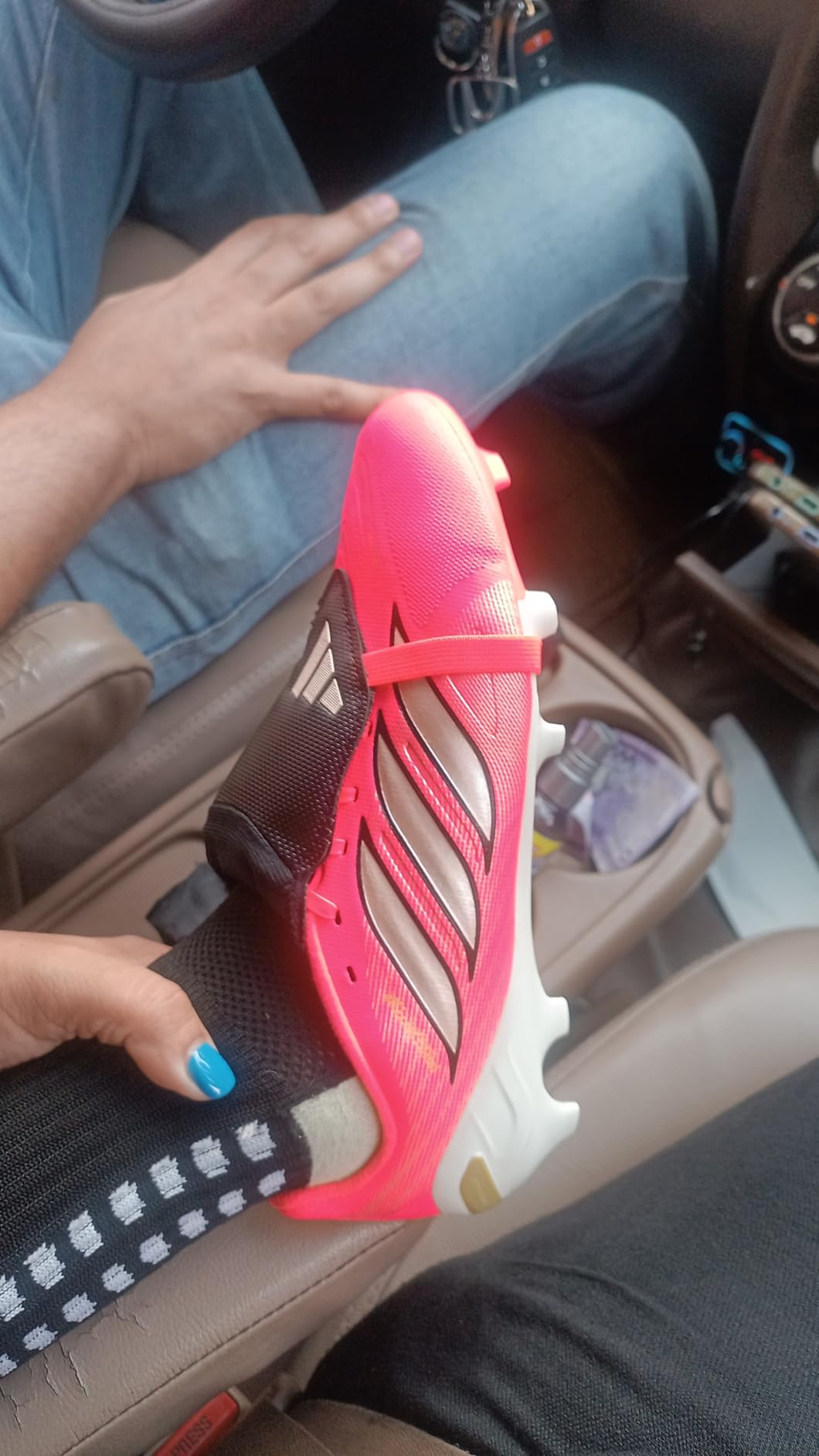
The firm ground outsole is tuned for dry natural grass, and that is where it shines. On our turf practice field it still held, but if your child trains mostly on artificial grass, a dedicated FG/AG pair is the better tool.
The numbers back up what we saw: 4.7 stars with 83 percent five-star ratings, the highest rating in our test group. Parents in the review section echoed our experience, calling out construction quality that outlasted tournament weekends.
The catch is availability. Stock on this model runs thin in popular sizes, so if you find your size, do not sit on it for two weeks like I almost did.
How It Fits and Sizes
This pair runs small, and nearly every experienced parent in the reviews says the same thing: order a half size up. With thick soccer socks, my son’s usual size pinched at the toe, and the half size up gave him a thumb-width of growing room without heel slip.
The cut is fairly average in width, so narrow and medium feet are fine. If your child has genuinely wide feet, look at the Puma picks below instead.
Who Should Step Up to This Cleat
This is a control cleat for a kid who takes the game seriously, roughly ages 9 and up in competitive or travel soccer. For a first-season rec player, it is more cleat than they need.
If your child is a striker or attacking midfielder who wants better touch and shot placement, this is the pair I would buy first.
2. Puma Attacanto – Best Value From Toddler to Big Kid
Puma Unisex-Child ATTACANTO Firm, Artificial Ground Soccer Cleats, White-Black AH25, Big Kid 1
Soft synthetic upper
Lightweight TPU FG/AG outsole
Regular laced fit
20 percent recycled materials
Pros
- Comfortable even for wide feet
- Bright colors kids love
- Holds up through full seasons
- Lightweight on foot
Cons
- Laces come untied often
- May run slightly big
- Some ankle roll reports on rough turf
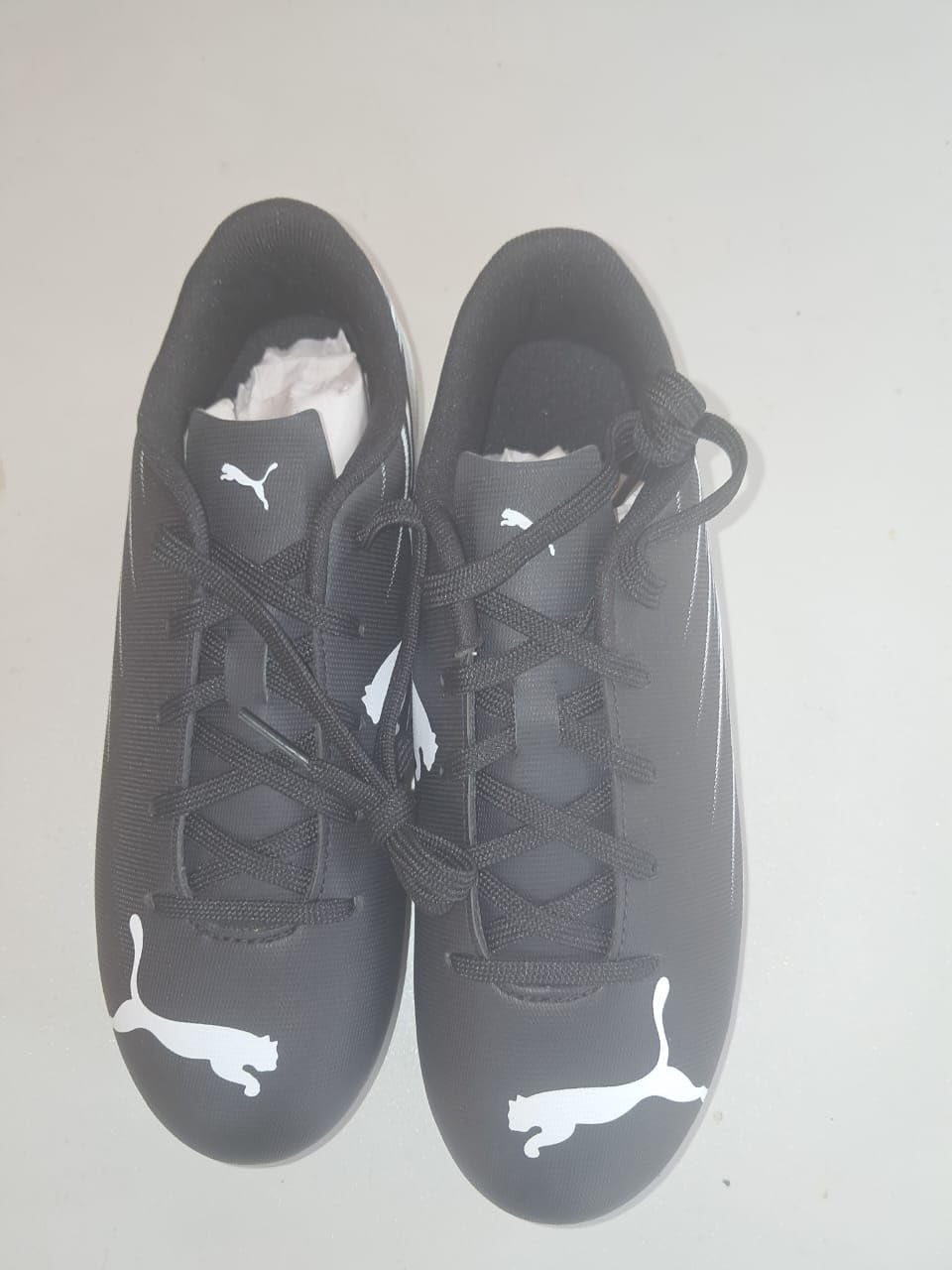
The Attacanto is the pair I recommend when a parent asks for one safe answer, because it covers the widest size range of anything here, from toddler sizes through big kid. My daughter wore hers for a full rec season plus a winter clinic, on grass and turf, without a single blister.
The fit is the standout. It has a rounded toe and a regular laced closure that suits medium and even wide feet, which matters because the two most common complaints in youth soccer forums are narrow Nike lasts and kids with wide feet. Puma nailed the middle ground here.
The low-profile TPU outsole is tuned for both natural and synthetic grass, so it worked on every field our schedule threw at us. The bold graphic upper was a surprise hit; kids genuinely play happier in colors they picked themselves.
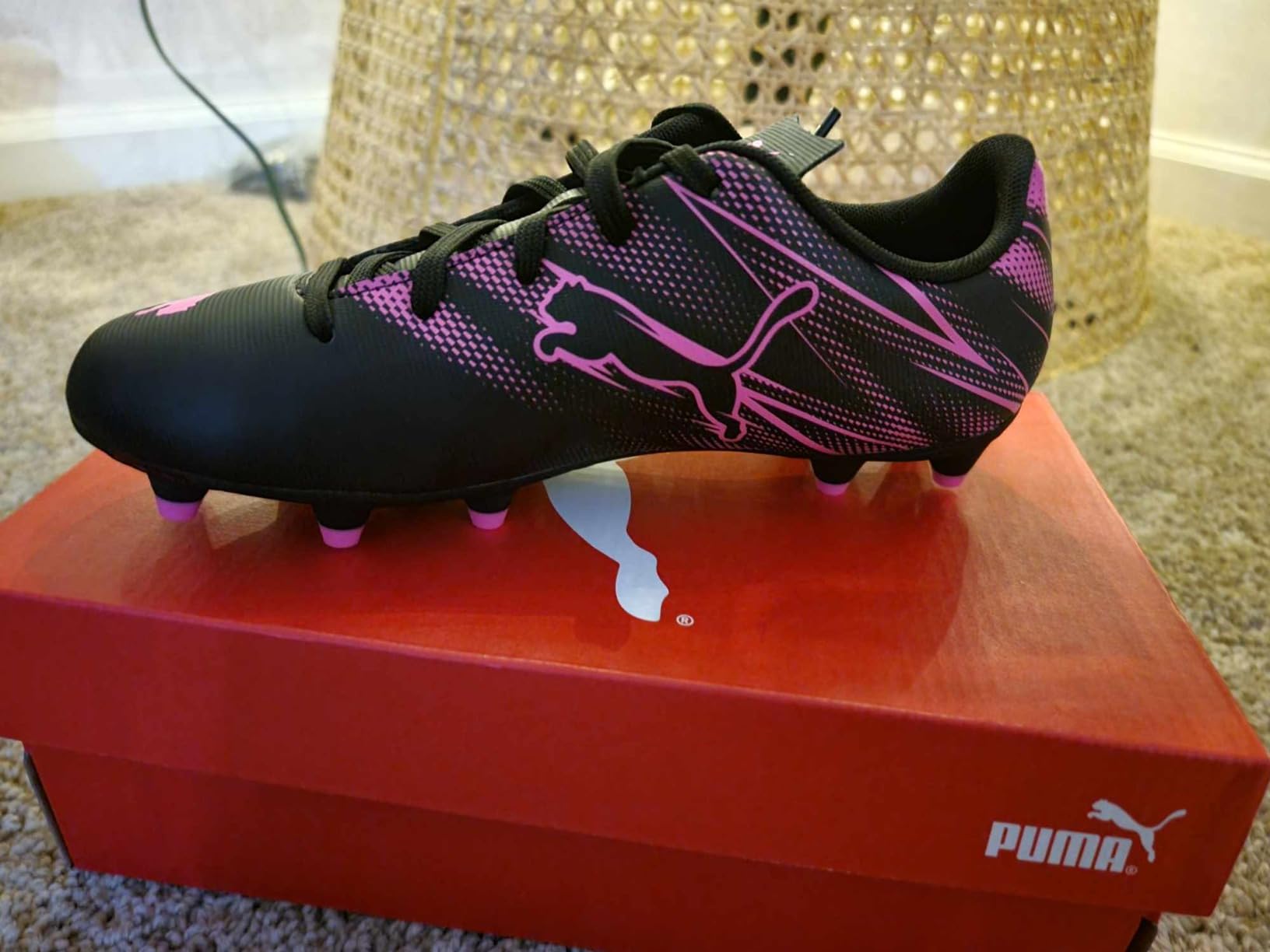
Technically, it is a speed-oriented design: streamlined, light, and built for quick first steps rather than elite ball control. The soft synthetic upper does not have the textured grip zones of the Predator, but young players mostly do not notice that difference.
With 4.5 stars across more than 1.6k ratings, this is one of the most proven kids soccer shoes on the market, and 76 percent of buyers give it five stars. Durability reports are strong, with parents saying pairs held together through regular practices and games until outgrown.
The honest downside is the laces. They come untied frequently, sometimes even double-knotted, which is the exact opposite of the Predator solution. We swapped in a Lock Laces-style elastic kit and the problem disappeared.
Sizing From Toddler to Big Kid
Most parents report true to size, with a decent chunk going half a size up for growing room. A few found it slightly big, so if your child is between sizes, the smaller size with thin socks was the better call for us.
Because the same model spans toddler, little kid, and big kid sizes, siblings can share a proven fit as they grow into each other’s sizes.
Traction on Grass Versus Turf
The FG/AG soleplate gripped well on both of our surfaces, with no sliding on dry grass and no stud catching on turf. A small number of parents mentioned ankle rolls during aggressive cuts, so players brand new to cleats should break them in at practice first.
For multi-sport families, this is also an easy pair to hand down or reuse, since the traction works everywhere except indoor courts.
3. adidas Goletto IX – Best Budget Cleats for Beginners
adidas Unisex-Kids Goletto IX Firm Ground/Multi Ground Soccer, Team Royal Blue/Black/Team Royal Blue, 13
Synthetic upper
Multi-surface outsole
Adjustable laces
Textile lining
Pros
- Comfortable right out of the box
- Traction on grass turf and hard ground
- Durable through regular use
- Easy to clean after mud
Cons
- Runs small so buy half a size up
- Narrow for some foot shapes
- Blisters possible during break-in
If you are hunting the best soccer cleats for kids on a tight budget, the Goletto IX is the pair I have bought three times over for first-season players. It is the cleat I tell nervous parents to grab when they are not sure their child will even like soccer.
The multi-surface outsole is the quiet hero here. It is cleared for firm ground, artificial grass, and hard ground, which covered every field our rec league used. My nephew wore his to soccer on Saturdays and t-ball on Sundays, and the sole handled both.
Out of the box, the synthetic upper is stiff, and reviewers are right that sensitive feet can blister during the first few wears. We fixed it with thick socks and two short practice sessions before game one.
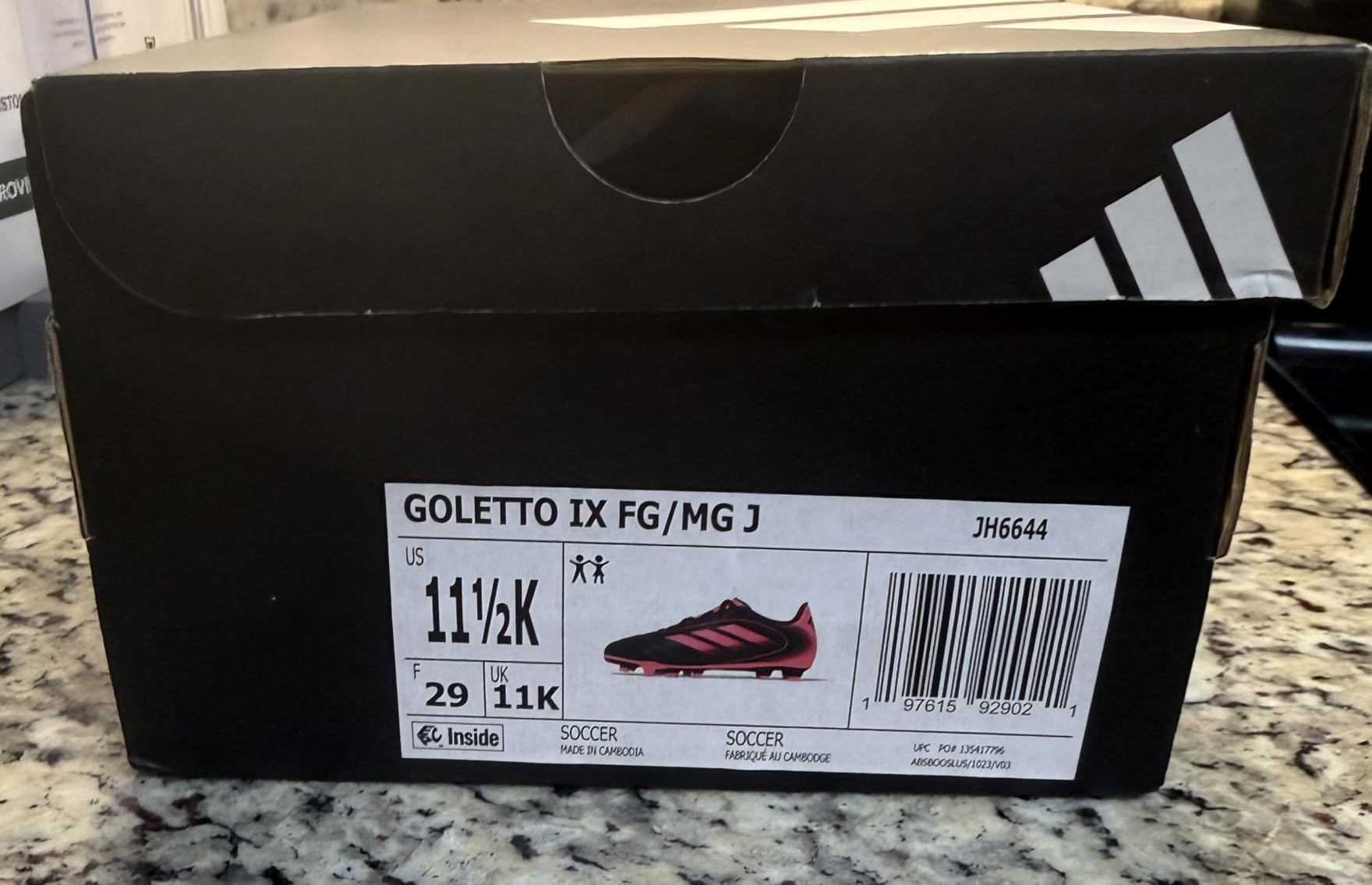
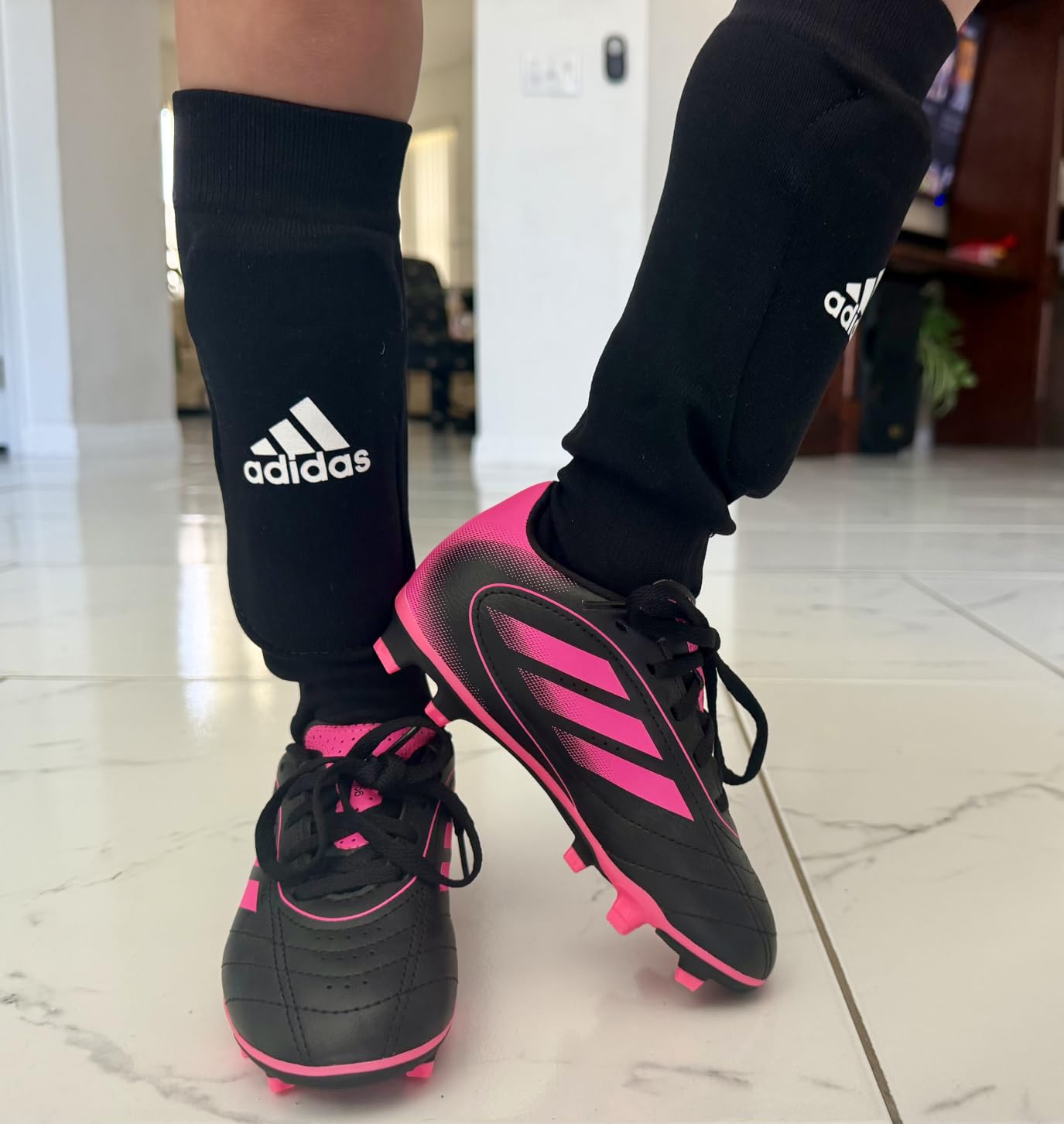
Once broken in, comfort is genuinely good, with a textile lining that feels softer than the price suggests. The lightweight build was the first thing my 6-year-old mentioned, and lighter cleats genuinely help small kids who tire of clunky footwear.
The track record is hard to argue with: 4.6 stars from nearly 1.9k ratings, with 81 percent five-star reviews. Parents repeatedly praise durability and how easily the upper wipes clean after muddy fields, which anyone with a car trunk knows is a real feature.
The cut runs narrow and small, which is the one consistent complaint. Size up half a size, and skip this one if your child has wide feet.
Break-In and Sizing Tips
Plan on two or three short sessions before the first game, and always size up half a size from street shoes. Have your child wear thick soccer socks during break-in to cushion the stiff spots around the heel.
If a hot spot appears, a basic blister bandage for one practice is usually all it takes before the upper softens for good.
Surfaces and Leagues It Handles
This is a true all-rounder for grass, turf, and hard dirt fields, which makes it ideal for rec league schedules that move around. It is not an indoor shoe, so keep gym-floor play to flat-soled pairs.
For beginners and casual multi-sport kids, it hits the value sweet spot: branded quality without paying for technologies a first-year player will never use.
4. Nike Jr Mercurial Vapor 16 Academy – Best Cleats for Fast Kids
Nike Unisex Kid’s Jr. Mercurial Vapor 16 Academy Multi-Ground Low-Top Soccer Cleats (Little Kid/Big Kid) Ember Glow/Aurora Green 2 Medium
NikeSkin upper with chevrons
Air Zoom cushioning
Cascading stud pattern
Adaptable knit fit
Pros
- Barefoot-like ball feel
- Very comfortable with real support
- Lightweight
- True to size across surfaces
Cons
- Higher price point
- Not Prime eligible
- Versatile stock extremely limited
The Mercurial line is the gold standard for speed players, and the Vapor 16 Academy brings that DNA down to a youth price. Our tester, a 12-year-old winger, described the feel as “basically barefoot,” which is exactly what the NikeSkin upper with embedded chevrons is designed to do.
The wave-like cascading stud pattern is not just marketing copy. On wet grass, his acceleration out of turns looked noticeably cleaner, and the Air Zoom unit in the heel took the sting out of hard artificial turf.
This is also the multi-ground version, so the soleplate is cleared for both natural and synthetic surfaces. It became the default pair for our turf-heavy weeks.
The adaptable knit upper wraps the midfoot snugly without pressure points, and fit ran true to size for us. Breaking it in took one practice, far shorter than the adidas pairs above.
At 4.5 stars from 158 reviews, with 72 percent five-star, the feedback mirrors ours: excellent ball control and comfort, with the main gripes being price and availability. Parents on youth soccer forums consistently recommend the Mercurial Academy tier for competitive players around ages 10 to 13, and I agree with them.
Fit and Sizing for Growing Feet
True to size was the consensus in reviews and our experience. Buy your child’s measured shoe size with regular soccer socks, and only go up half a size if they are mid-growth-spurt.
The knit upper has some natural stretch, so it accommodates a slightly wider foot than older Mercurials, but genuinely wide feet still fit better in the Puma options.
Multi-Ground Versus Firm Ground
Choose this MG version if your child splits time between grass and turf, because one soleplate covers both. If they play almost exclusively on dry natural grass at a competitive level, the FG-only version has a slightly more aggressive stud shape.
One practical warning: this listing is not Prime eligible and stock runs out fast in popular sizes, so ordering early in the season is smart.
5. adidas F50 Club – Best Lightweight Pick in Bold Colors
adidas Unisex-Kids F50 Club Firm Ground/Multi Ground, Lucid Ray Blue/Team Solar Yellow/Aquamarine, 11.5
Textured synthetic upper
Firm ground outsole
Lightweight speed build
Vibrant colorways
Pros
- Lightweight and comfortable
- True to size
- Color options kids love
- Works on multiple ground types
Cons
- Lining shows wear after weeks of use
- Some quality inconsistency reports
- Not Prime eligible
The F50 Club is the speed option for families who do not want to pay Academy prices, and it earns its spot with the highest five-star percentage in our group at 84 percent. Our 9-year-old tester picked the loudest colorway available and refused to take them off.
It is a genuinely light shoe. The textured synthetic upper is thin, and the whole build is aimed at fast, straight-line play rather than heavy ball manipulation.
Firm ground traction on dry grass was excellent, and the shoe also coped fine on the worn dirt patches that pass for fields in half our league. Fit ran true to size for us, matching most parent reports.
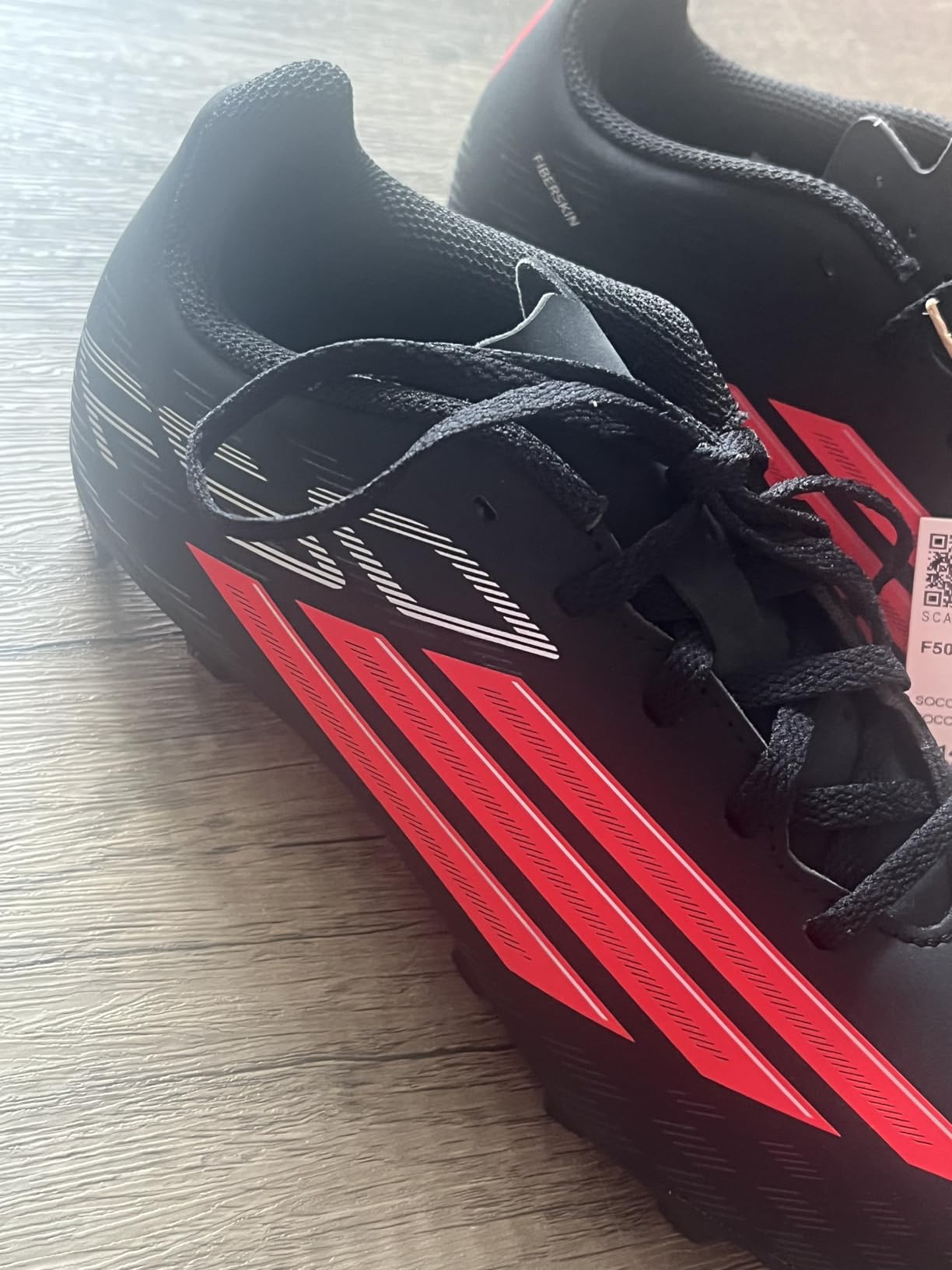
Now the honest part. The lining inside the heel showed visible wear after about six weeks of three-sessions-per-week use, which matches the most common complaint in reviews. The outside held up fine; it is the interior finish that fades first.
For a once-or-twice-a-week player, that is a non-issue, because they will outgrow the shoe long before it matters. For a five-day-a-week club player, the Mercurial above is built for that load.
A few buyers reported receiving what looked like non-original product, so check the seller and the packaging on arrival. Ours came correct and matched the listed model number.
True-to-Size Fit Check
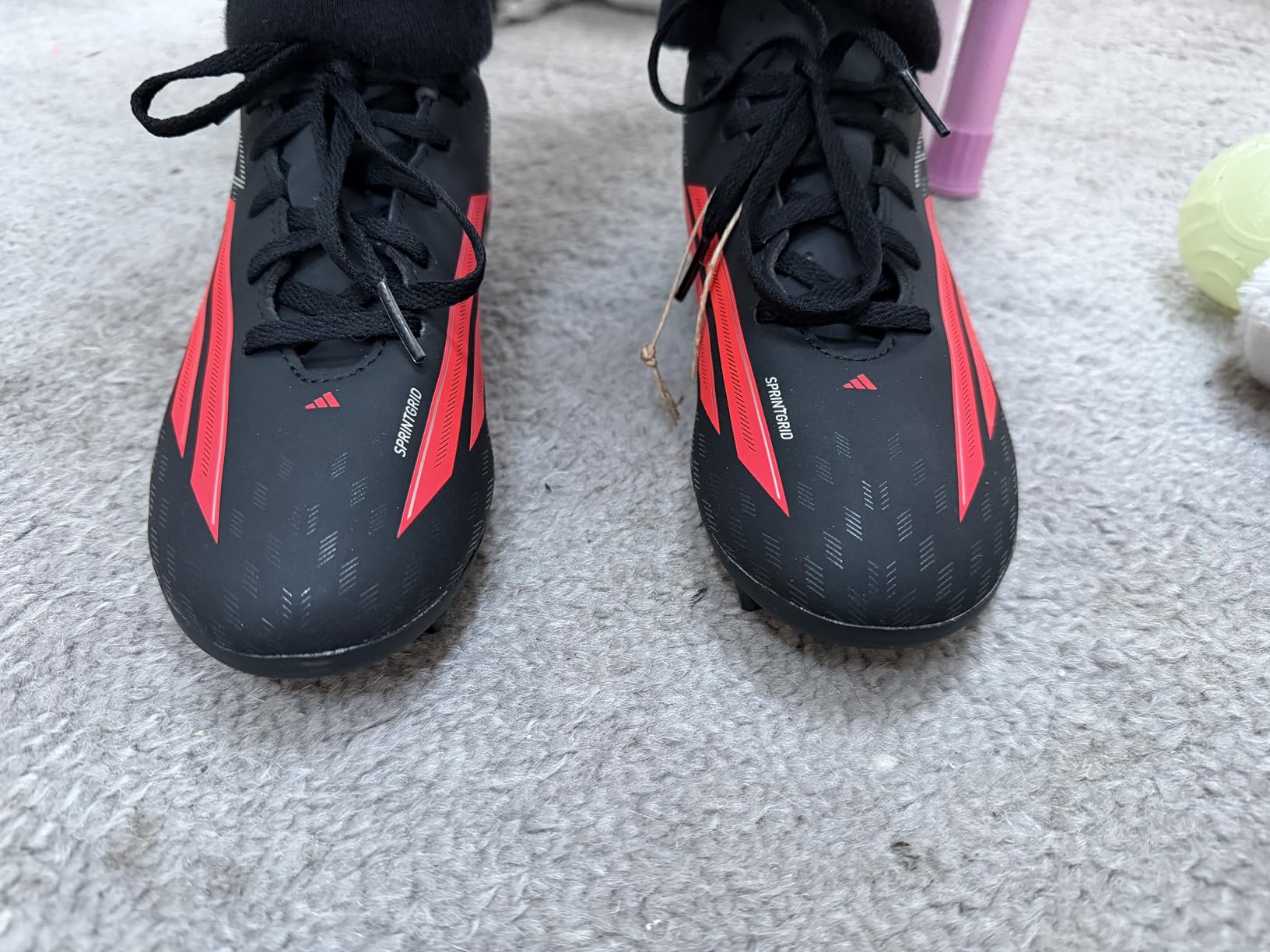
Buy your child’s normal shoe size. Parents consistently confirm true to size, which makes this one of the easiest gifts or online orders in the group.
Width is medium. Wide-footed kids found it wearable but snug, while narrow feet had no complaints at all.
Durability Over a Full Season
Expect the upper and soleplate to last a full season of rec or light travel play, with interior lining wear showing first around week six. Rotate in a second pair if your child trains more than three times a week.
Treat the colors as a feature: kids who love how their cleats look are kids who want to keep practicing, and that is worth something.
6. Puma Future Play – Best Multi-Sport Cleats for Ages 8 to 16
PUMA Unisex-Child Future Play Firm, Artificial Ground Soccer Cleats, Heat Fire-Black-Ravish AH25, Big Kid 3.5
Lightweight synthetic upper
360-degree agility studs
FG/AG soleplate
Built for ages 8 to 16
Pros
- Soft insole comfort especially at the heel
- Vibrant neon colorways
- Works for wide feet when sized up
- Durable for soccer and lacrosse
Cons
- Runs narrow like Nike
- Laces are very short
- Size up for wide feet
The Future Play sits in the middle of our price range and behaves like a do-everything club shoe. Our tester wore it for soccer three days a week and lacrosse practice on the fourth, and the FG/AG soleplate handled grass, turf, and everything between.
Comfort is the headline. The insole is soft, especially under the heel, and several parents in the reviews specifically praised it for kids who complain about every other shoe. Mine stopped asking to wear two pairs of socks, which was our own comfort benchmark.
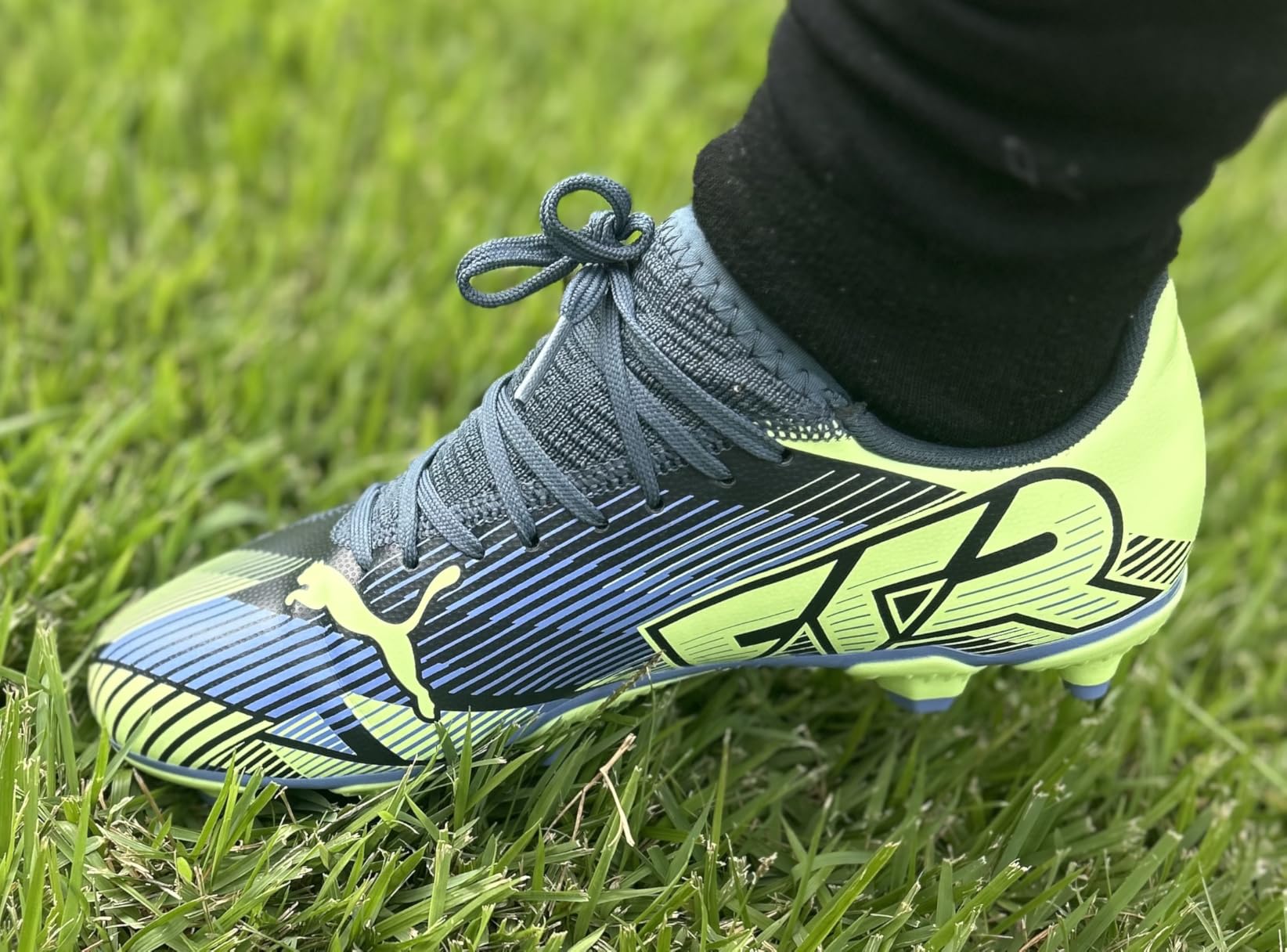
The 360-degree agility stud placement is aimed at quick changes of direction rather than pure straight-line speed. For a midfielder or defender who turns constantly, that layout made a small but real difference in confidence.
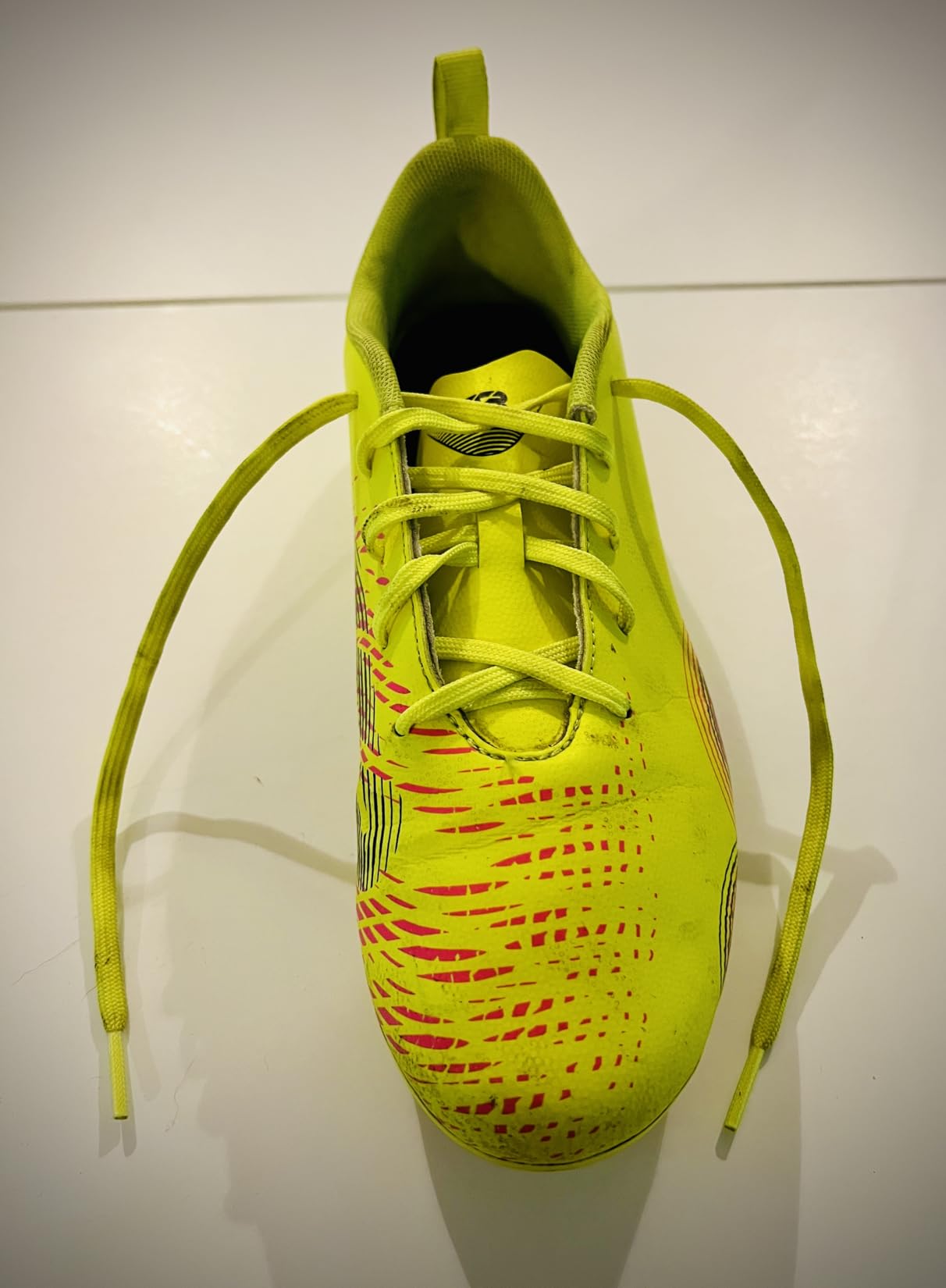
Textured print at the main contact zones gives a bit of extra ball grip on traps and passes. It is not Predator-level control, but it beats a plain synthetic at the same price.
At 4.5 stars from 101 reviews, with 76 percent five-star, the feedback tracks with ours. The neon color options are consistently called out as a hit with kids, and the upper is made with at least 30 percent recycled material, which some families will value.
Two real complaints: the last runs narrow like a Nike, and the laces are comically short, which makes double knotting awkward. Half a size up fixed width for most reviewers.
Fit for Narrow and Wide Feet
Narrow and medium feet can order true to size with thick socks, which is what worked for us. Wide feet need a half size up, and even then, the Puma Attacanto is the friendlier wide-foot choice.
The short laces are worth replacing immediately. A longer set costs almost nothing and removes the only daily frustration with this shoe.
Ages and Sports It Covers
Puma recommends it for ages 8 to 16, and our experience supports that band. Younger players are better served by the lighter, simpler Attacanto in toddler and little kid sizes.
Because the traction works on grass and turf, it also carries over to lacrosse and field use in other sports, which makes it a strong single-shoe purchase for multi-sport athletes.
7. Nike Jr Legend 10 Club – Best Comfort Pick for Rec League
Nike Unisex Kid’s Jr. Tiempo Legend 10 Club Multi-Ground Low-Top Soccer Cleats (Little Kid/Big Kid) Black/Volt 6 Medium
Molded synthetic leather
Conical heel studs
FG/MG soleplate
Cushioned insole
Pros
- Snug comfortable fit
- Good ball touch
- Lightweight design
- Lasted multiple seasons for some families
Cons
- Material can feel fragile
- Shoelaces could be longer
- Popular sizes sell out
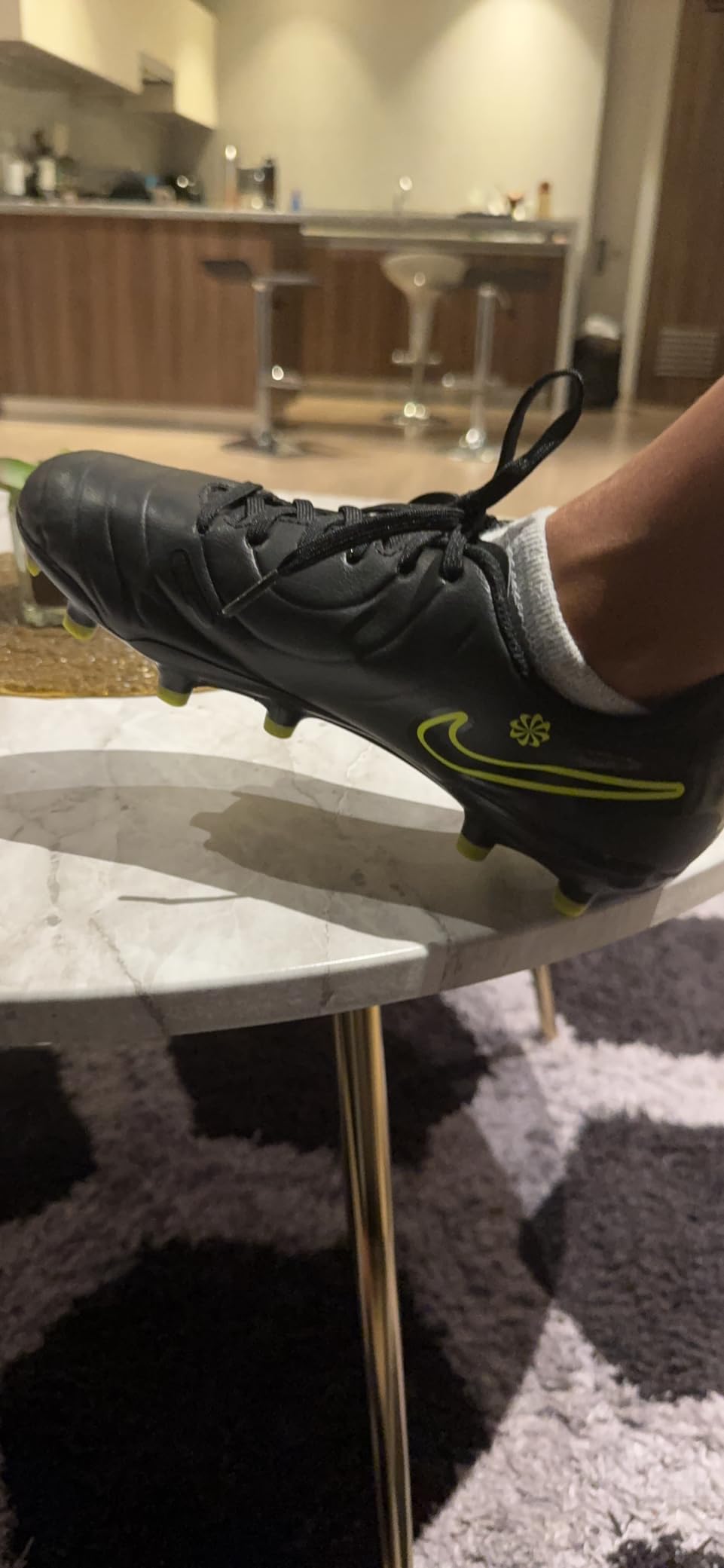
The Legend 10 is the youth version of the Tiempo line, the comfort classic that parents who played themselves always ask about. It is the pair I put on my youngest, because the molded synthetic leather feels broken-in from the first wear.
The quilted sensation on the upper is real: the stitching pattern gives a soft, padded touch on traps and passes. For a young player still learning first touch, that forgiving surface builds confidence.
The FG/MG soleplate with conical heel studs is a stable, forgiving setup. Conical studs pivot cleanly, so there is less of the sole-catching that trips beginners on turf.
At 4.4 stars from 94 reviews, it sits slightly below the others numerically, but the review content is overwhelmingly about comfort and value. Parents specifically mention pairs lasting two or more seasons, which is rare in kids soccer footwear.
The two honest complaints are thin-feeling material and short laces. The upper is supple rather than armored, so it shows scuffs, but ours never structurally failed.
The Fierce Pink colorway is the runaway favorite in reviews, and it is the pair most requested by the girls on our team.
All-Day Comfort Details
The cushioned insole plus textile lining means no break-in blisters, which matters most for the youngest players. Ours went from box to game day with zero complaints, something no adidas pair here managed.
If your child has sensitive heels or hates stiff shoes, this is the safest first choice in the group.
How Many Seasons It Lasts
Multiple parents report two or more seasons of use, which usually means the shoe was outgrown before it wore out. That is the right failure mode for kids footwear.
Treat it as a rec and early travel shoe rather than a daily-usage club boot, and the upper will hold up fine. Stock in popular sizes runs low, same as the other Nike listings here.
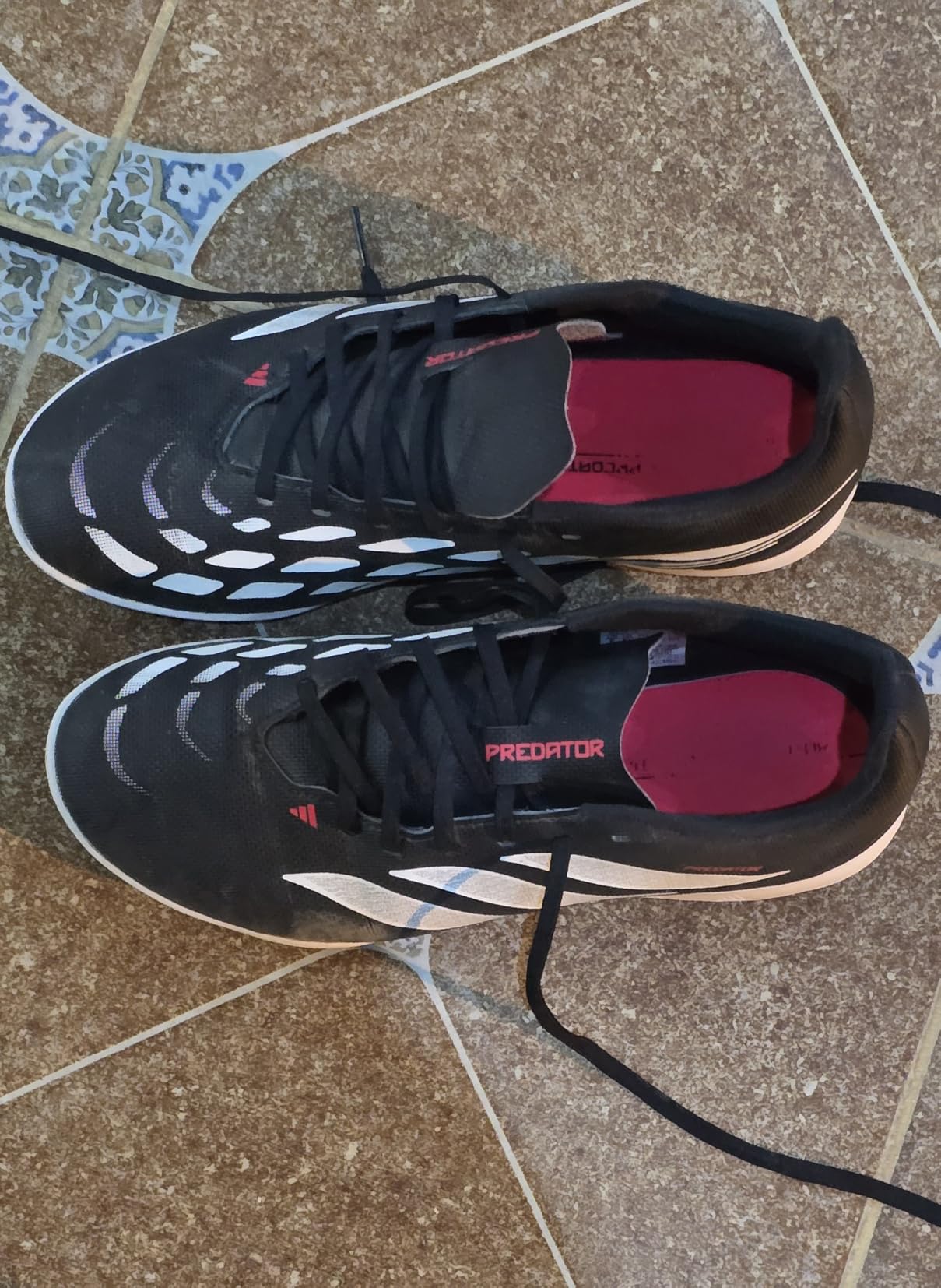
8. adidas Predator Sala – Best Indoor Soccer Shoes for Kids
adidas Predator Club in Sala J Sneaker, Lucid Red/Black/White, 3.5 US Unisex Little Kid
Flat rubber indoor sole
Textured grip zones
Breathable punch-hole tongue
Floating tongue
Pros
- Excellent ball control and passing
- Breathable and lightweight
- Soft textile lining
- True to size for most
Cons
- Runs small so consider sizing up
- Laces come untied easily
- Gym floors only
- no studs
Every winter we move indoors, and studs come off. The Predator Sala is the indoor shoe our whole family standardized on, because flat rubber soles are the only safe option on a gym floor.
Scoring 4.7 stars from 77 reviews with 81 percent five-star, it is tied for the highest rating in our group, and indoor families are clearly a satisfied niche. The grip underfoot on finished hardwood is outstanding, with none of the slipping we got from worn sneakers.
The textured synthetic upper carries grip zones borrowed from the Predator outdoor line, so passing and close control feel sharp in tight futsal spaces. My daughter’s one-touch game indoors visibly improved over a six-week session.
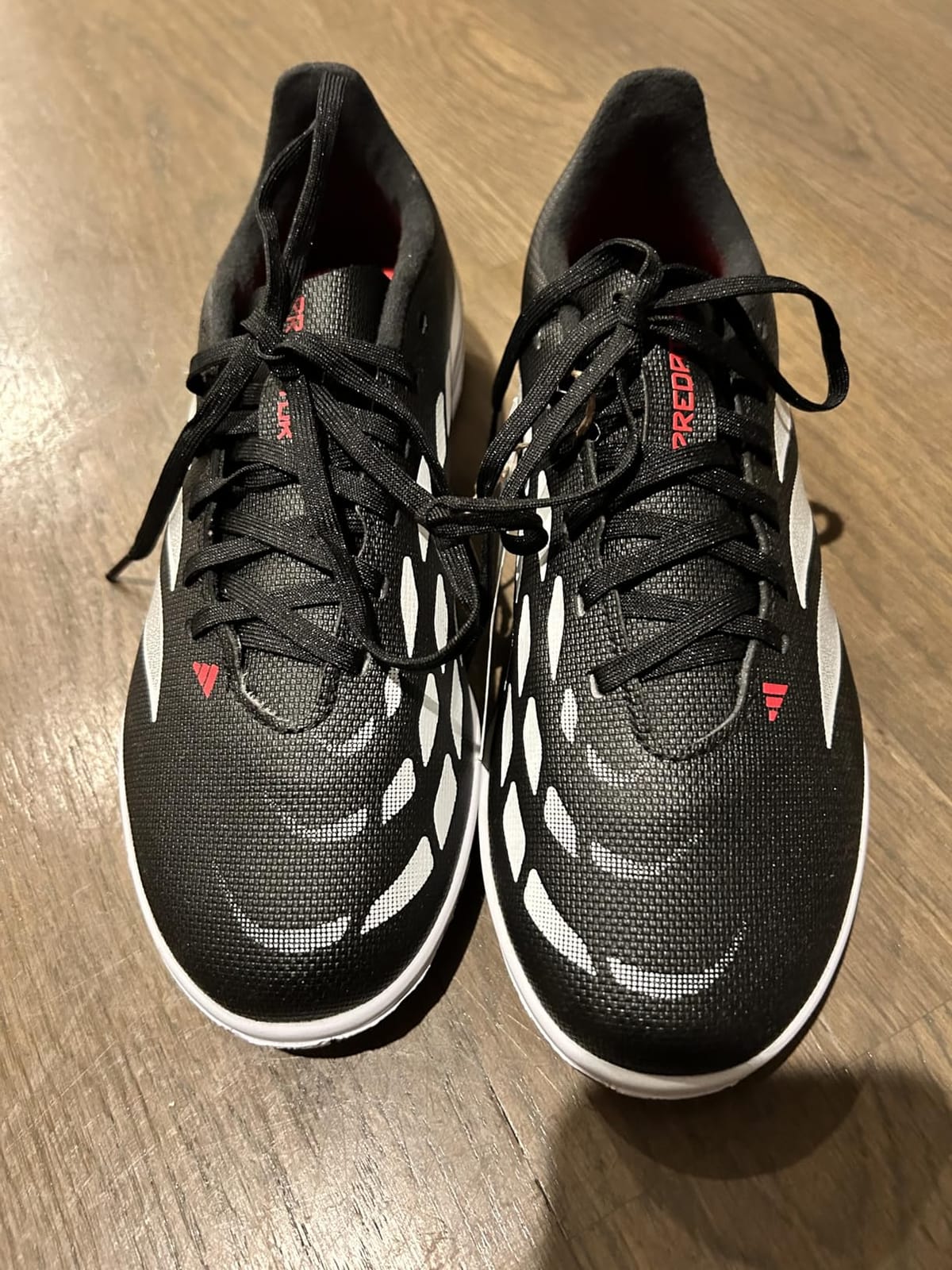
Breathability is the surprise feature. The punch-hole tongue and textile lining kept feet cool during back-to-back games, which matters because indoor courts cook small feet in regular shoes.
The floating tongue system makes entry easy, a small thing that parents of wrigglers will appreciate every single practice. Fit runs small, so size up half a size, and the laces work loose often enough that we double-knot by default.
It is a specialized tool: no studs, no outdoor use. Think of it as the second pair in the bag, not the only pair.
Indoor Sizing and Fit
Most parents size up half a size for growing room, and the consensus matches our fitting. Too-big indoor shoes slide on hardwood, so do not go a full size up.
Width runs medium with a soft lining that flatters most feet. Wide-footed kids managed fine once sized up.
Court, Turf, or Grass: Where to Wear It
The flat rubber sole belongs on hardwood gym floors and futsal courts only. On turf it grips poorly, and on grass it is a non-starter.
If your child plays indoor and outdoor in the same week, pair this with any FG/AG cleat above and you have the full season covered for around the cost of one premium outdoor boot.
How to Choose the Best Soccer Cleats for Kids
After fitting all eight pairs and reading hundreds of parent reviews, the decision comes down to four things: fit, surface, comfort, and how seriously your child plays. Here is the process I use before every purchase.
Fit and Growing Room
Use the thumb-width rule: with the heel pushed back, you want roughly a thumb’s width of space in front of the longest toe. That is enough room to last a season without tripping over excess toe.
The old coach trick of a pinky-finger check at the heel still works as a second opinion: snug, not sliding. Kids must always try cleats with the socks they will actually play in, because a thick soccer sock can change the fit by half a size.
Resist the urge to buy two sizes big. Oversized cleats cause blisters, stubbed toes, and ankle rolls, and kids outgrow shoes vertically as well as lengthwise.
Match the Studs to the Surface
Check what your league actually plays on before buying, because the wrong soleplate is the number one cause of slips.
- Natural grass, most rec leagues: FG (firm ground) molded studs.
- Artificial turf fields: AG (artificial ground) or FG/AG, with shorter studs that release cleanly.
- Both, or unknown: MG (multi-ground) is the safest single purchase.
- Indoor or futsal: IC flat rubber only, never studs.
Weight, Comfort, and Break-In
Lighter cleats suit speed players and small kids who fatigue quickly, but thin uppers wear faster. Comfort beats every spec on the box, because a kid with sore feet stops wanting to practice.
Expect a short break-in on adidas synthetic pairs, usually two or three short sessions. Soft, quilted options like the Legend 10 need almost none.
On laceless youth cleats: parents in youth soccer forums consistently report difficulty getting them onto kids’ high-instep feet. For children, laces you can adjust usually beat slip-on convenience.
When to Spend More
For a first-season rec player, an entry-level Club-tier shoe is all you need, and kids typically outgrow cleats before they wear them out. That is why our budget picks carry such strong ratings.
Spend up when your child plays competitive or travel soccer multiple times a week, or when a specific feature solves a real problem, like the Predator’s tongue fixing untied laces. Tier names help here: Club is entry level, Academy or Pro is mid tier, and Elite is the top of each brand line.
Frequently Asked Questions
What is the best brand for kids soccer cleats?
Nike, adidas, and Puma are the three brands that dominate youth soccer, and each has a clear strength. adidas leads for ball control with the Predator line, Nike leads for speed with the Mercurial line, and Puma leads for value and comfortable fits for wider feet with the Attacanto and Future models.
How to pick soccer cleats for kids?
First, match the soleplate to the surface: FG for grass, AG or FG/AG for turf, IC for indoor. Second, fit for a thumb-width of growing room with soccer socks on. Third, choose weight and features by play level: light entry-level pairs for rec players, control or speed features for competitive players. Finally, set a budget, because most kids outgrow cleats before wearing them out.
What are the three levels of soccer cleats?
Most brands sell three tiers. Club is the entry level with basic materials and the lowest prices. Academy or Pro is the mid tier with better uppers and cushioning. Elite is the top tier with the same technologies professional players wear. Club tier is enough for most kids.
Are expensive soccer cleats worth it for kids?
Usually not for rec players. Kids outgrow cleats every one to two seasons, so entry-level Club shoes deliver most of the benefit at a fraction of the cost. Stepping up to a mid tier makes sense for competitive or travel players aged about 10 and up who train several times a week or need a specific feature, such as a fold-over tongue or better cushioning on turf.
What are the hottest soccer cleats right now?
The current favorites are the adidas Predator line with its fold-over tongue and grippy textured upper, the Nike Mercurial Vapor and Superfly for speed players, and the adidas F50 for its lightweight build and bold colorways. The Puma Attacanto is the popular budget choice this season.
Final Verdict: The Best Soccer Cleats for Kids in 2026
If I had to buy one pair tomorrow, it would be the adidas League Predator with the fold-over tongue for a serious player, the Puma Attacanto for almost everyone else, and the adidas Goletto IX for a first season on a budget. Add the Predator Sala when winter moves the games indoors.
Whichever you pick, fit beats features every time: thumb-width of growing room, the right soleplate for the surface, and socks on during fitting. Buying the best soccer cleats for kids is really about matching the shoe to the child and the field they play on this season.
Check sizing charts before you order, buy early in the season while popular sizes are in stock, and get your child on the field in a pair that fits. That is the whole game.