

The best space heaters for basements are the Dr. Infrared DR-968 for all-around room heat, the DREO DR-HSH010 for large drafty spaces, and the De’Longhi EW7707CM if you want quiet radiant warmth that never dries the air. Basements are not just colder rooms. They are the hardest rooms in most houses to heat, and picking the wrong unit is the reason so many buyers end up disappointed.
The reason is physics that a bedroom never has to deal with. Below grade you are losing heat continuously through a bare concrete slab and through foundation walls that sit against cold soil. Add drafts from above-grade windows and doors, higher ambient moisture, and a stairwell opening that pulls cold air in every time someone comes downstairs, and a heater that would be a nuisance upstairs becomes a genuine comfort upgrade.
That is also why sizing matters more than brand. A single 1500-watt heater covers roughly 150 square feet as a primary heat source. Basements run far larger than that, and the honest answer for a 1000 square foot lower level is usually more than one heater, or a system a space heater cannot replace.
Here is a quick answer before the detail:
- Best overall: Dr. Infrared DR-968, a hybrid infrared quartz and PTC cabinet rated around 5200 BTU that throws real whole-room heat at 39 dB.
- Best for large drafty basements: DREO DR-HSH010, a 1500-watt oil-filled radiator with seven fins, four power modes, and owners who specifically use it below grade.
- Best for finished basements with little floor space: Heat Storm HS-1500-PHX-WIFI, a wall-mounted 1500-watt infrared unit with Wi-Fi app control and a cool-to-touch housing.
- Best budget: Comfort Zone CZ600BK, a silent convection baseboard with a cool-touch housing, tip-over cutoff, and the lowest cost of the eight reviewed here.
- Best silent: ENVI LE5012P, a fan-less 500-watt wall panel that draws only 4.2 amps and can run alongside other heaters on one circuit.
Over the next few sections I break down all eight of the best space heaters for basements, then cover heater types, sizing math, the humidity question nobody answers, and the basement electrical rules that matter more than most buyers expect.
Top 3 Picks for Basement Heating in 2026
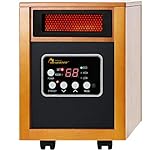
Dr Infrared DR-968
- Infrared quartz plus PTC hybrid
- 5200 BTU
- 39 dB blower
- 50-85F electronic thermostat

Heat Storm HS-1500-PHX-WIFI
- Wall-mounted 1500W infrared
- Wi-Fi app control
- cool-touch housing
- remote included

De’Longhi EW7707CM Oil Filled
- 1500W oil-filled radiator
- fan-less and near-silent
- thermal cut-off
- anti-freeze mode
All 8 Best Space Heaters for Basements Compared (October 2026)
The table below is the full lineup. Every wattage, coverage figure, and safety feature here comes from the manufacturer specification, and every rating is from verified buyer reviews rather than our own lab.
| Product | Specifications | Action |
|---|---|---|
| Dr Infrared DR-968 |
|
Check Latest Price |
| Heat Storm HS-1500-PHX-WIFI |
|
Check Latest Price |
| De’Longhi EW7707CM |
|
Check Latest Price |
 De’Longhi HMP1500 De’Longhi HMP1500 |
|
Check Latest Price |
 ENVI LE5012P ENVI LE5012P |
|
Check Latest Price |
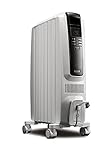 De’Longhi Dragon TRD40615E De’Longhi Dragon TRD40615E |
|
Check Latest Price |
 DREO DR-HSH010 DREO DR-HSH010 |
|
Check Latest Price |
 Comfort Zone CZ600BK Comfort Zone CZ600BK |
|
Check Latest Price |
For a broader view of how these units compare with the rest of the category, our general guide to the best space heaters overall covers the non-basement options we left out here, and the infrared space heater roundup goes deeper on quartz and radiant designs.
How We Chose: What We Checked on Every Unit
To be straight with you: we did not run these heaters in a climate-controlled chamber. What follows is a specification and reviewer-experience evaluation, not a laboratory certification. Every rating and review count on this page is copied from the verified buyer reviews attached to each product.
That distinction matters more in this category than in most, because heater performance is dominated by two things nobody can read on a box: the thermal mass of the room and how much moisture the building is taking on. So we weighted our criteria toward what actually changes the outcome in a basement.
Here is what we weighed for each of the eight picks:
- Rated coverage against real basement square footage. Manufacturers rate 1500-watt units at 150 square feet as a primary heat source. We treat those numbers as the honest figure, not the optimistic ones.
- Amperage and circuit load. Most of these draw a full 12.5 amps. That matters enormously in a basement with few outlets and a shared circuit.
- Noise. Measured in dB where the manufacturer publishes it, and taken from buyer reports where it does not. A loud fan cycling on and off all night is a real problem in a basement used as a bedroom or office.
- Humidity behaviour. Whether the unit blasts air or heats surfaces changes how a damp basement feels, and how much it dries out.
- Safety hardware. Tip-over protection, overheat protection, a real thermostat, and listed certification.
- Warranty length. A 3-year warranty tells you something very different from a 1-year one, and buyers running heaters for entire winters notice.
1. Dr Infrared DR-968 Hybrid Heater for Best Overall Basement Heat
Dr Infrared Heater DR-968 Portable Space Heater, 1500-Watt, Cherry
1500W hybrid infrared quartz and PTC, 5200 BTU, 39 dB blower, 50-85F thermostat, 19 lb
Pros
- Hybrid infrared and PTC element delivers genuine whole-room heat rather than warming only the person in front of it
- Very quiet at 39 dB with owners sleeping through it
- 72-inch cord and caster wheels make it easy to reposition
- Remote control with 12-hour shut-off timer and electronic thermostat
- Less drying than fan-forced ceramic units
Cons
- Draws a full 12.5 amps and has tripped breakers when sharing a circuit
- Strong factory odor that takes a few days to dissipate
- Better at maintaining a room's temperature than raising a large open space quickly
This is the unit I recommend first, and the reason is unusually simple: it is the most proven heater in the group. It carries a 4.5-star average across more than 28,000 buyer reviews, and that volume of long-term owner feedback is worth more in a basement than a clever spec sheet.
The design is a hybrid. An infrared quartz tube provides radiant heat that reaches you directly, while a PTC ceramic element and a high-pressure blower move air through the cabinet. That combination is why owners describe it as warming the room rather than warming the person in front of it, which is exactly the behaviour you want below grade where cold falls down the walls.
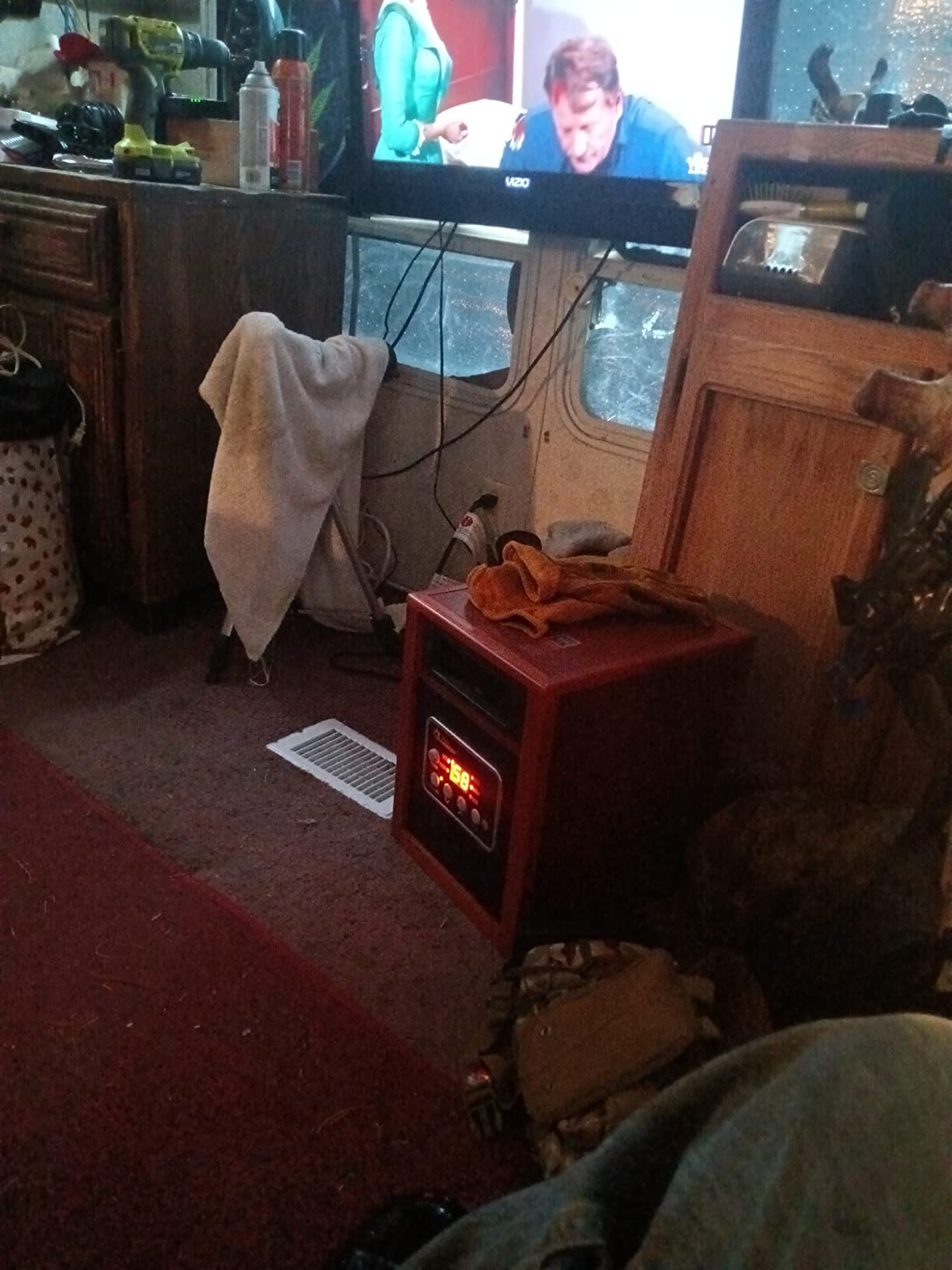
At 39 decibels it is the quietest-feeling unit in this roundup, and that has a specific basement benefit. A fan that cycles audibly every few minutes will wake light sleepers, and a basement rec room or home office is exactly the kind of space where that gets annoying fast.
Some of the specification numbers matter more here than elsewhere. The 72-inch cord gives you real placement flexibility in a room where outlets are scarce. The electronic thermostat runs from 50 to 85 degrees Fahrenheit, and the 12-hour timer with remote means you can start it before you come downstairs rather than sitting in the cold waiting for it.
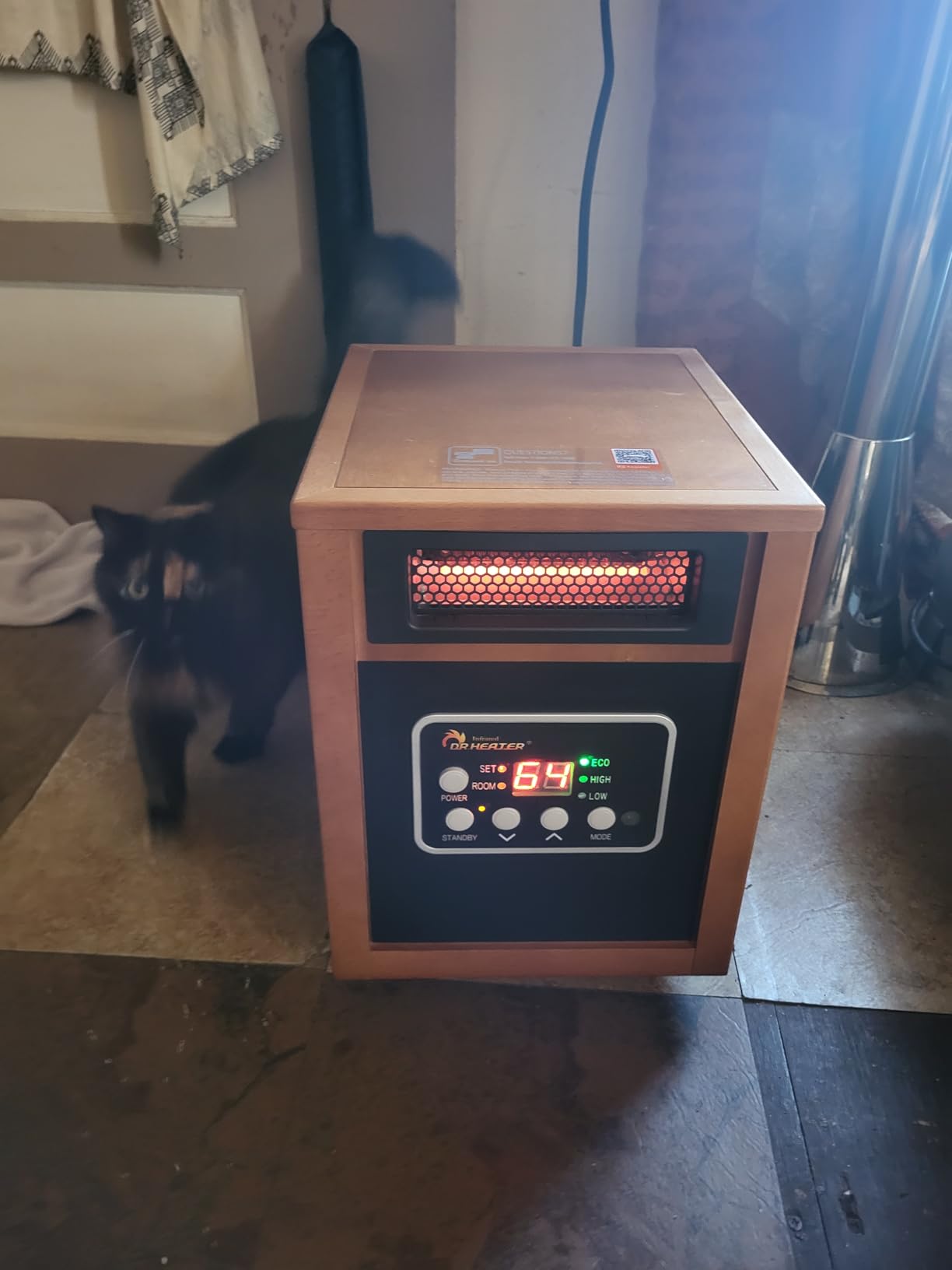
There is a real caveat, and it is the same one buyers describe most often. This is a zone heater and a supplement. Several owners report that it will not bring a large open room up to comfort quickly on a genuinely cold day, and it is far better at holding a temperature once the space is already warm. If you are trying to raise a 900 square foot basement from 45 degrees in January, one unit will not do it.
Worth knowing before first use: this unit pulls 12.5 amps, and some owners have tripped household breakers when sharing a circuit with other high-draw appliances. Plug it directly into a wall outlet, not a power strip.
Where the DR-968 earns its place in a basement
This is the pick for a finished basement rec room, a media room, or a home office in the lower level, anywhere the goal is a comfortable occupied zone rather than heating the entire footprint. The hybrid element also produces noticeably less drying than a pure fan-forced ceramic tower, which is a real advantage in a room that is already damp.
Where the DR-968 will disappoint you
It will not rescue a large open basement from a cold start, and it is not the quietest option for a sleeping space if fan noise bothers you at all. It also runs at full 1500 watts whenever it is calling for heat, so in a room already at setpoint, the DREO radiator below offers finer control at a lower draw.
2. Heat Storm HS-1500-PHX-WIFI Wall-Mounted Infrared for Finished Basements
Heat Storm HS-1500-PHX-WIFI Infrared Heater, Wifi Wall Mounted
1500W wall-mounted infrared, 5200 BTU, Wi-Fi app control, cool-touch housing, 9 lb
Pros
- Wall-mount design keeps floor and walkway completely clear
- Wi-Fi app lets you warm the space before coming downstairs
- Housing and grill stay cool to the touch
- safe around children and pets
- Cord hides inside the housing when mounted over an outlet
- Tip-over shutoff built in
Cons
- Coverage is 150 sq ft as a primary source and about 750 sq ft as a supplemental zone heater
- Wall-mount only
- no feet are included so it cannot be used freestanding
- Needs a wall and an outlet below it
- Some owners find it runs continuously on high
Basement floors are the scarcest real estate in the house. Between the support columns, the stairs, the egress window wells, and the storage you would rather not stack around a portable heater, a wall-mounted unit solves a problem that portable designs cannot.
This one runs at 1500 watts and 5200 BTU, and the manufacturer rates it at 150 square feet as a primary heat source and up to 750 square feet as a supplemental zone heater. Take that split seriously, because it describes exactly how you should use it: as a targeted heat source for one wall, one seating area, or one desk, not as the answer for a whole basement.
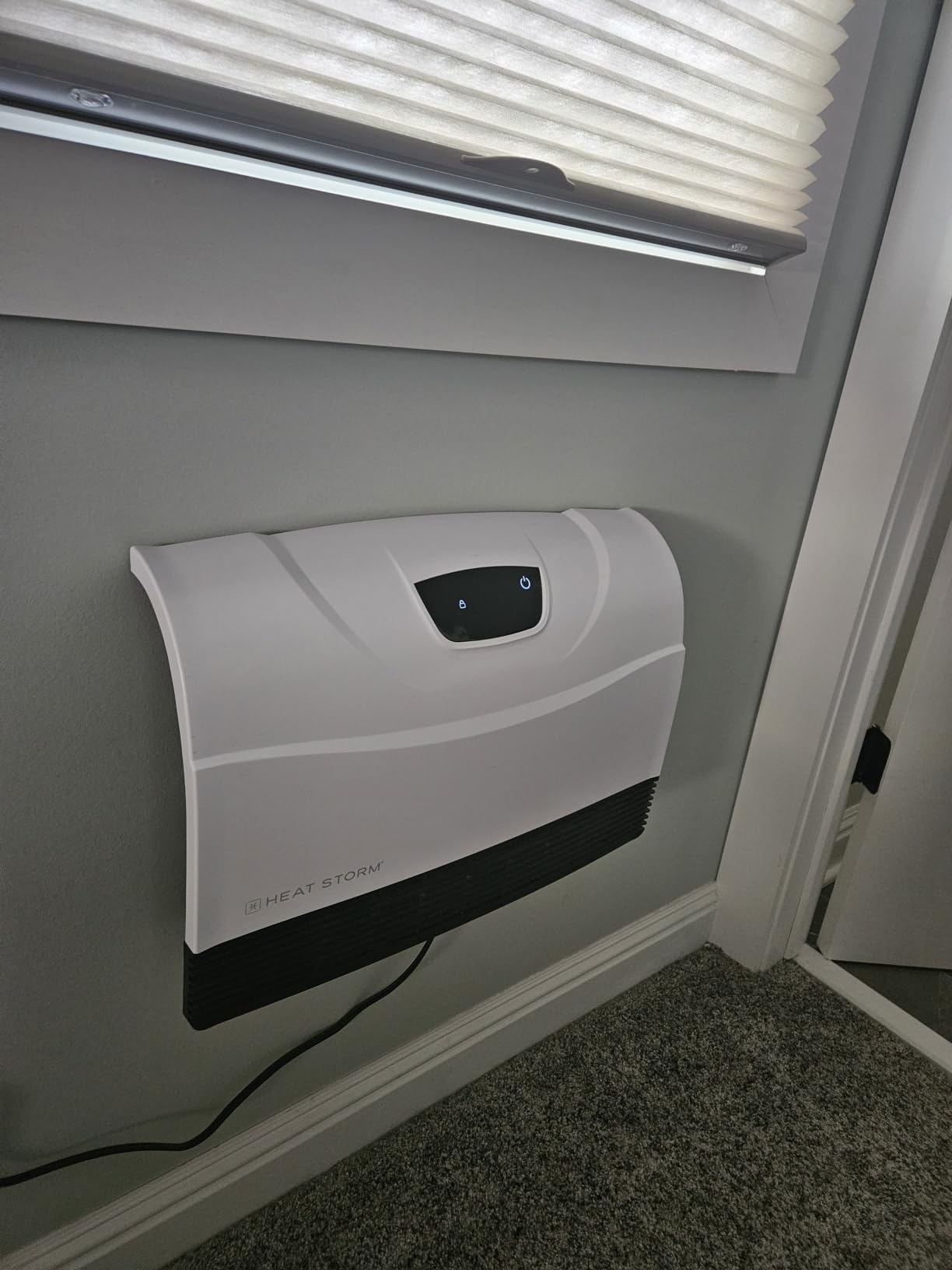
The Wi-Fi app is the feature that changes daily behaviour. You can start heating from upstairs while you are finishing coffee, which matters far more in a basement than it does in a room you are already standing in.
Two safety details stand out for a family space. The housing and grill stay cool to the touch, so a curious child or a dog can brush past it without a burn risk, and the manufacturer rates the wall behind it as staying cool too. The tip-over shutoff is also present, which is unusual on a wall-mounted design.
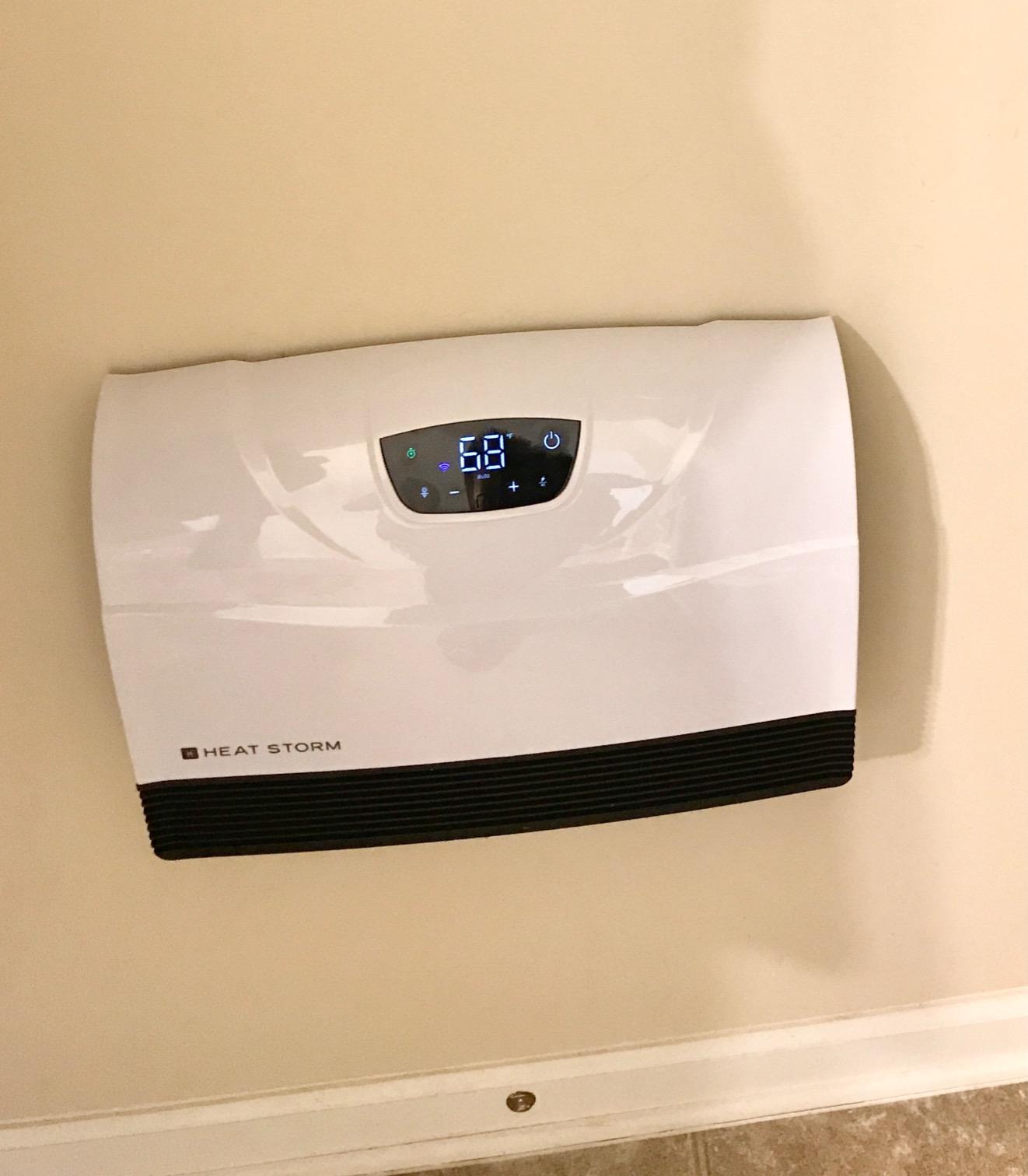
The installation reality is straightforward. Mount the bracket, plug it into an outlet, and the cord tucks into the housing so nothing hangs loose. But this is a wall-mounted version only, and feet are not included, so if you want to move it to another room you are unbolting it rather than picking it up.
For a finished basement where appearance and clear walkways are priorities, that trade is worth it. If you are heating an unfinished space, a portable unit is simpler and cheaper.
Who this wall heater is for
It suits a finished basement media room, a home office, or a workout corner where you want warmth without a box sitting in the walkway. The cool-touch housing also makes it a reasonable pick for a basement playroom, where a hot metal grille at toddler height would be a genuine concern.
Who should skip it
Anyone hoping to heat a large open lower level, because at 1500 watts in a basement losing heat through a cold slab, it will be running constantly and never catching up. It is also the wrong tool if you do not have a suitable wall with an outlet below it.
3. De’Longhi EW7707CM Oil-Filled Radiator for Quiet Basement Warmth
De’Longhi Oil filled Radiator Heater, 1500W Electric Space Heater for indoor use, portable room heater, Energy Saving, full room like office and bedroom with safety features, EW7707CM
1500W oil-filled radiator, fan-less, 3 heat settings, 23.2 lb, thermal cut-off and anti-freeze
Pros
- Near-silent fan-less operation that light sleepers do not notice
- Radiant oil-filled design is gentler and less drying than ceramic
- ComfortTemp modulates power and temperature for up to 20 percent better efficiency
- Sealed diathermic oil reservoir never needs refilling
- Anti-freeze mode switches on below 41F
Cons
- Takes two to three hours of continuous running to warm a room
- Short cord forces placement near an outlet
- Numbered dial thermostat needs calibrating with a separate thermometer
- Small hard plastic wheels scratch wood
There is a reason oil-filled radiators have been the same shape for fifty years. Thermal mass works, because the sealed diathermic oil reservoir holds heat and keeps radiating into the room after the heater has switched itself off. The temperature therefore stays steadier than it does with a fan-forced design that cycles on and off, which suits a below-grade space where heat is always drifting away.
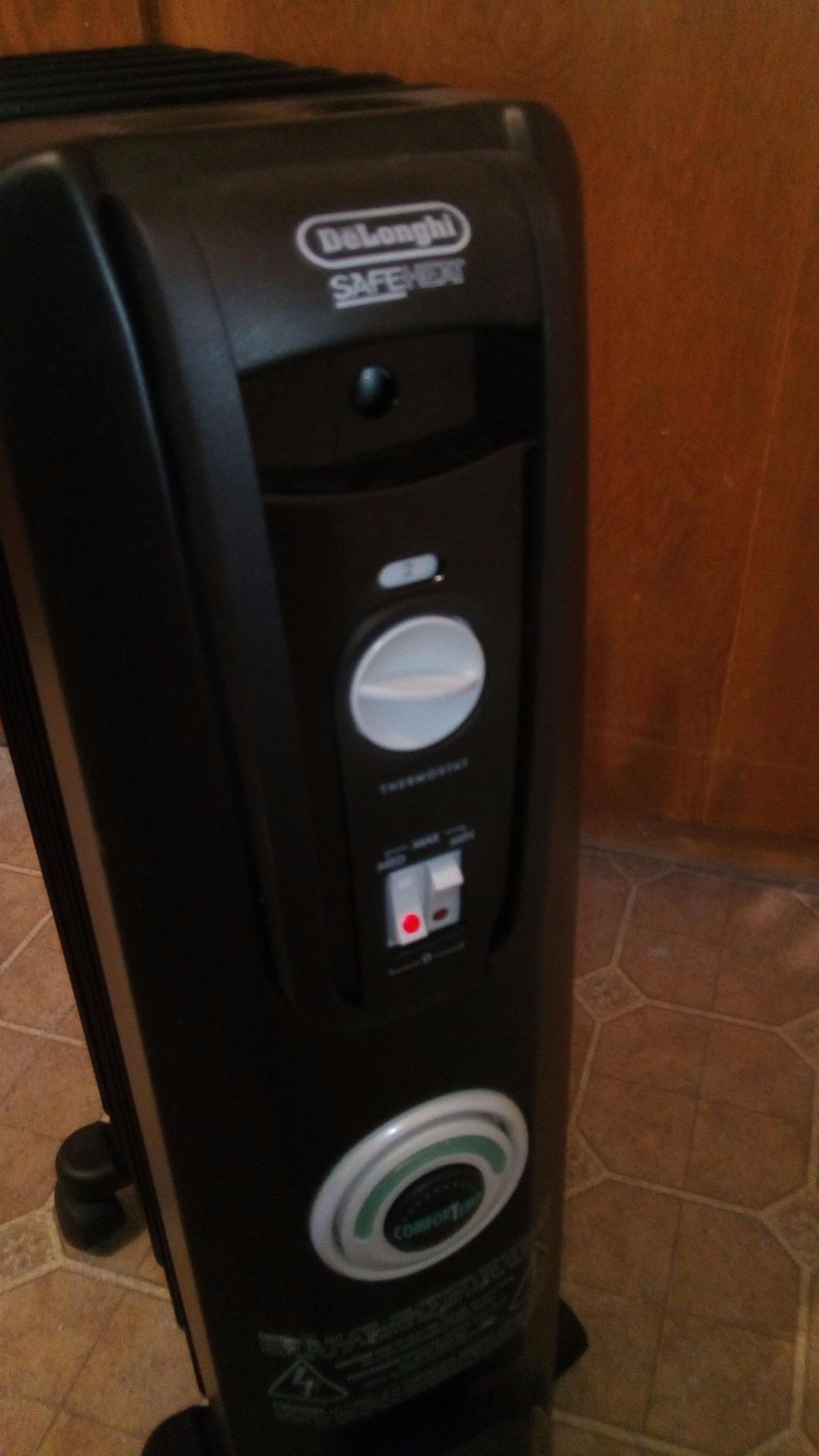
The fan-less design has a second benefit that matters in a damp lower level. With no fan, there is no forced airflow stirring up dust, pollen, or dander, and the air is not blown and dried the way a ceramic tower dries it. Owners with allergy concerns mention this repeatedly.
Its 23.2-pound weight is worth thinking about before you buy. That is a genuinely solid radiator, and while the integrated handle and fold-under snap wheels do help, moving it between rooms takes two hands and a clear path.
There is also a genuine basement feature here. The anti-freeze mode switches the unit on below 41 degrees Fahrenheit, so in an unheated lower level this can hold a threshold temperature overnight without you managing anything. The built-in thermal cut-off handles the overheat side, and the three-year warranty is among the longest here.
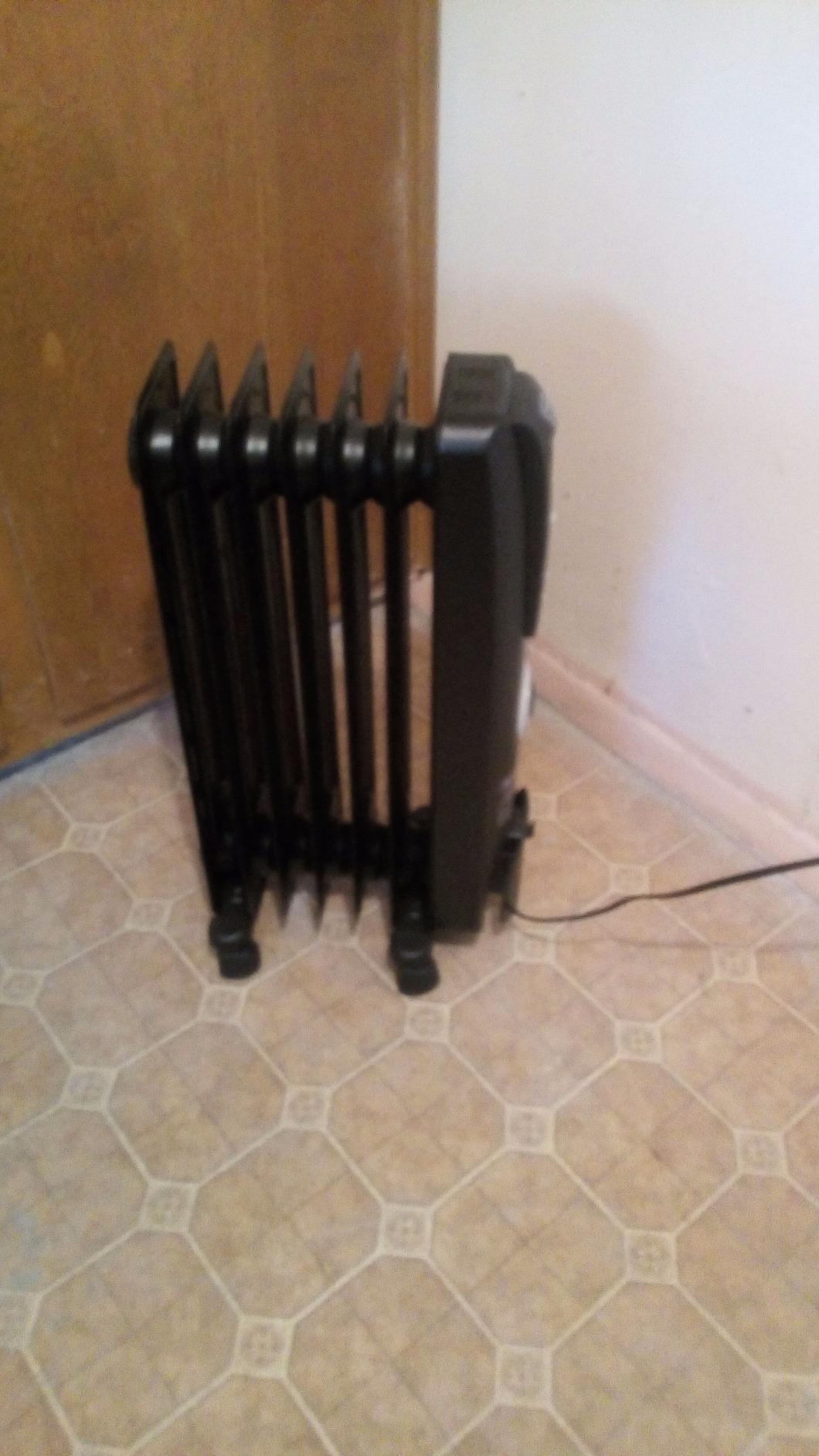
Now the honest part. This takes two to three hours of continuous running to bring a room up to temperature. If you walk into a cold basement and want warmth in five minutes, this is the wrong unit and the disappointment is completely predictable. Think of it as a maintainer, not a warmer.
The dial thermostat is also worth flagging because it trips people up. It uses numbered settings rather than degrees, so you will need a separate thermometer to calibrate it once and then leave it alone.
When this radiator is the right basement choice
It fits a finished basement bedroom or a quiet office where fan noise is unacceptable, and it is a sensible overnight companion for a basement where you care more about steady moderate heat than fast warm-up. For anyone with asthma or allergies sensitive to stirred dust, the fan-less design is a real advantage.
When it is the wrong choice
Skip it for a spot you use in bursts. An office you sit in for twenty minutes, or a laundry room you run the dryer in, will not benefit from a device that needs three hours. The 23-pound weight is real too, so moving it between rooms is a two-person job.
4. De’Longhi HMP1500 Micathermic Panel for Low-Ceiling Basement Rooms
DeLonghi Mica Panel Space Heater, 1500W quiet electric space heater for indoor use, adjustable thermostat, freestanding/ easy wall mount, full room heating with built-in safety features, HMP1500 Black
1500W micathermic mica panel, wall-mount kit included, 10.1 lb, 2 heat settings, 3-year warranty
Pros
- Micathermic panel gives gentle radiant heat without stirring dust
- Quiet enough for bedrooms and offices
- Slim 10.1 lb body with carry handle
- Works freestanding or wall-mounted with the included kit
- Freeze-standby mode below 41F protects pipes in an unheated space
- Thermal shutoff and internal tip-over switch
Cons
- Simple dial thermostat with limited precision compared to digital units
- Only two heat settings so control is coarse
- Panel surface warms in operation so clearance matters
- Warms up more gradually than a fan-forced heater
Micathermic is a hybrid design worth understanding before you buy, because the name sounds like marketing and the mechanism is real. A mica panel radiates heat outward from its face while natural convection currents draw room air in through the bottom and exhaust it warm through the top. No fan is involved at all.
The practical result is a low-profile heater that produces even, gentle, silent warmth. In a basement with a low ceiling and a walkway you need to keep clear, that combination is genuinely useful, and the included wall-mount kit means the floor stays completely free.
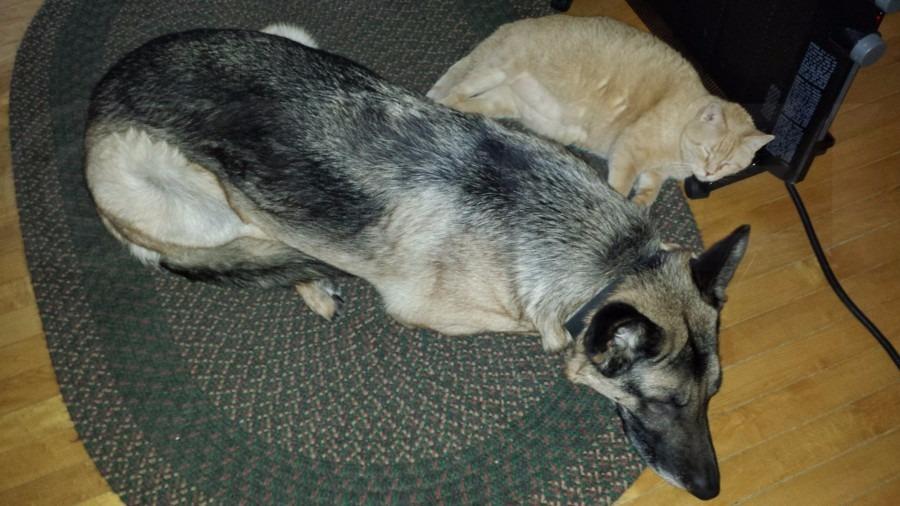
The freeze-standby mode is the feature that makes this a basement product rather than just a general heater. Below 41 degrees Fahrenheit the unit activates to hold the space above freezing, which is the exact condition under which exposed pipes along an exterior foundation wall start to be a problem.
Because there is no fan, it also does not blow air around, and the manufacturer positions it as allergy friendly. In a damp lower level, where the concern is often as much about air quality as temperature, that is a reasonable thing to want.
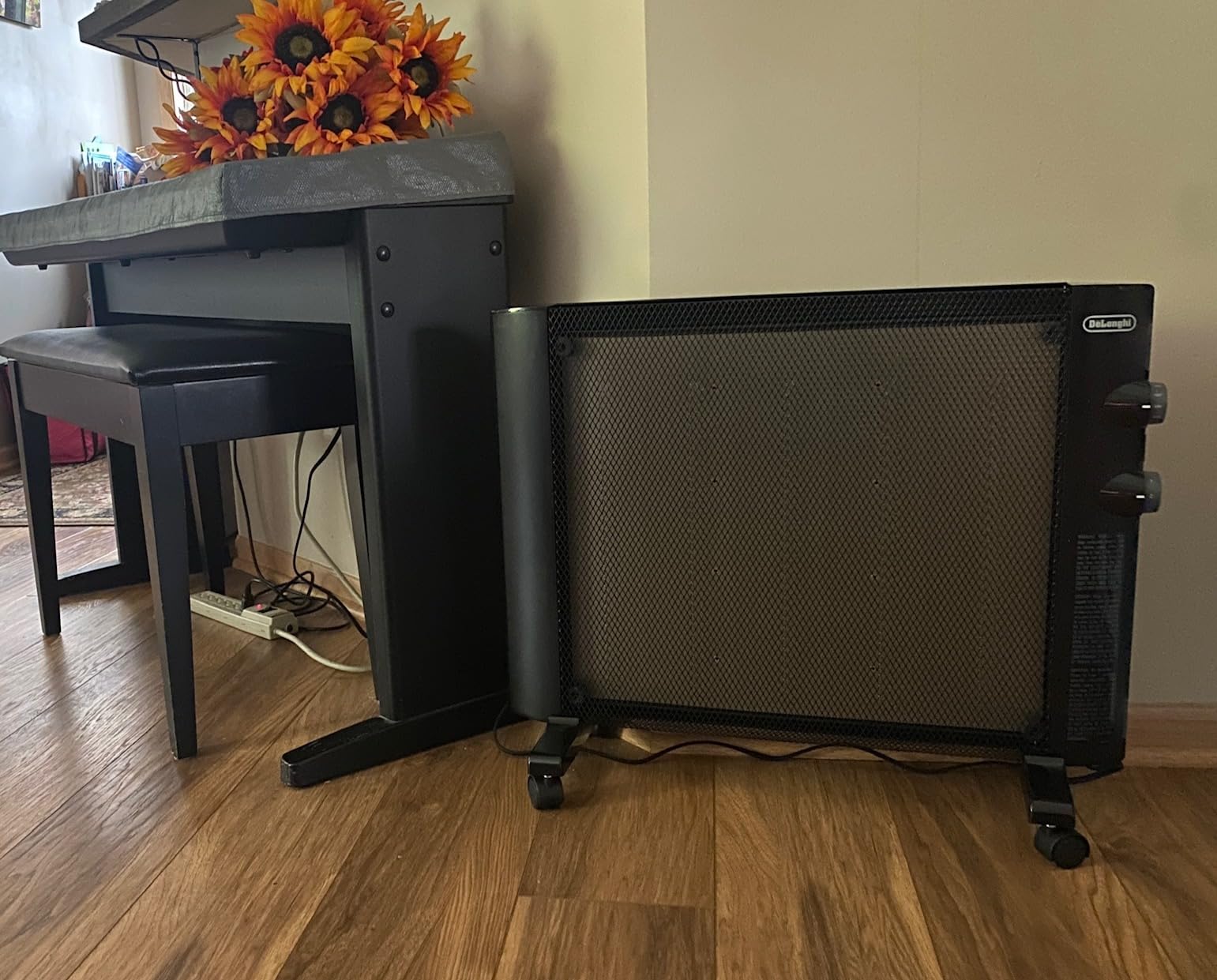
The control side is the weak point, and reviewers are consistent about it. The thermostat is a simple adjustable dial with no digital display, so the precision is coarse, and there are only two heat settings. If you want the ability to hold a specific setpoint within a degree or two, a digital model such as the DREO radiator below is a better fit.
The panel face does warm in operation, so keep the clearance guidance in mind if the unit is mounted where someone walks past it.
When the micathermic panel fits a basement
It suits a low-ceiling finished basement, a basement bathroom where you want warmth without moving air, or any spot where the wall is available and the floor is not. The freeze-standby mode makes it a reasonable low-effort companion for an unheated lower level where pipes run near the foundation wall.
When it falls short
It is a poor fit for a small enclosed closet-like space where you need fast, intense heat, and it is a poor fit for anyone who wants precise temperature control without a separate thermometer to calibrate against. Two heat settings is genuinely few.
5. ENVI LE5012P Fan-Less Wall Panel for Silent Basement Bedrooms
Envi Plug-in Electric Panel Wall Heaters for Indoor Use, Energy Efficient 24/7 Heating w/Safety Sensor Protection, Patented Quiet Fan-less Design, Easy 2-Min Install, Space Heater, Made in USA
500W fan-less convection wall panel, 4.2 amps, 90F cool-touch surface, 150 sq ft, 3-year warranty
Pros
- Draws only 500 watts and 4.2 amps so several can share one circuit
- Completely silent fan-less design with no moving parts and no filter to clean
- 90F surface temperature plus a wall-sense sensor that cuts power if removed
- Slim 2.25-inch profile hangs flush and clears the floor
- Installs in minutes using the box insert as a template
Cons
- 500 watts is a booster for a small closed room
- not an open or drafty basement
- Cannot keep up when outdoor temperatures fall below about 30F
- Rotary thermostat has no numbered scale and produces an audible click
- Highest cost in this roundup
This is the only heater in the group that a basement electrical circuit is genuinely comfortable with. At 500 watts and 4.17 amps, roughly a third of the current of a 1500-watt unit, you can run more than one on a single 15-amp circuit without drama. In a basement with limited capacity, that is not a minor specification detail, it is the whole reason to consider it.
The fan-less stack convection design has no moving parts and no filter, which means it is genuinely silent and genuinely maintenance free. If you are furnishing a basement bedroom or a home office where any fan noise is unacceptable, nothing else here matches it.
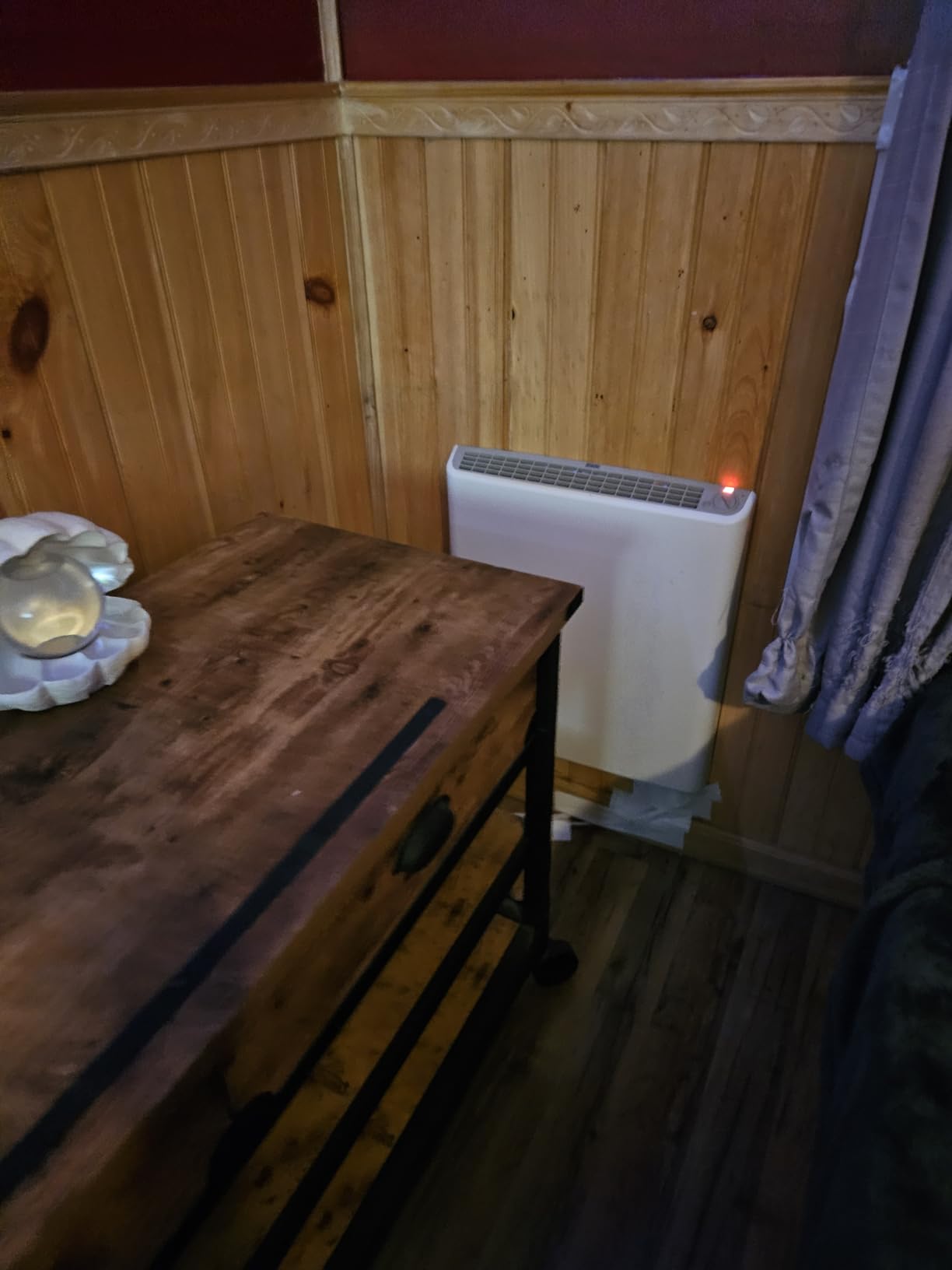
Safety is where this unit is unusually strong. The housing runs at a cool 90 degrees Fahrenheit, and the wall-sense safety sensor cuts power if the unit is removed from the wall, which is a protection level you rarely see in a portable heater. A three-year warranty and a made-in-the-USA build add to the confidence.
Installation is quick, since the packaging insert doubles as a mounting template, the extra cord tucks into the housing, and a right-angle plug keeps the cord flat against the wall. Some owners pair it with a Wi-Fi smart plug for scheduling, which solves the missing built-in timer.
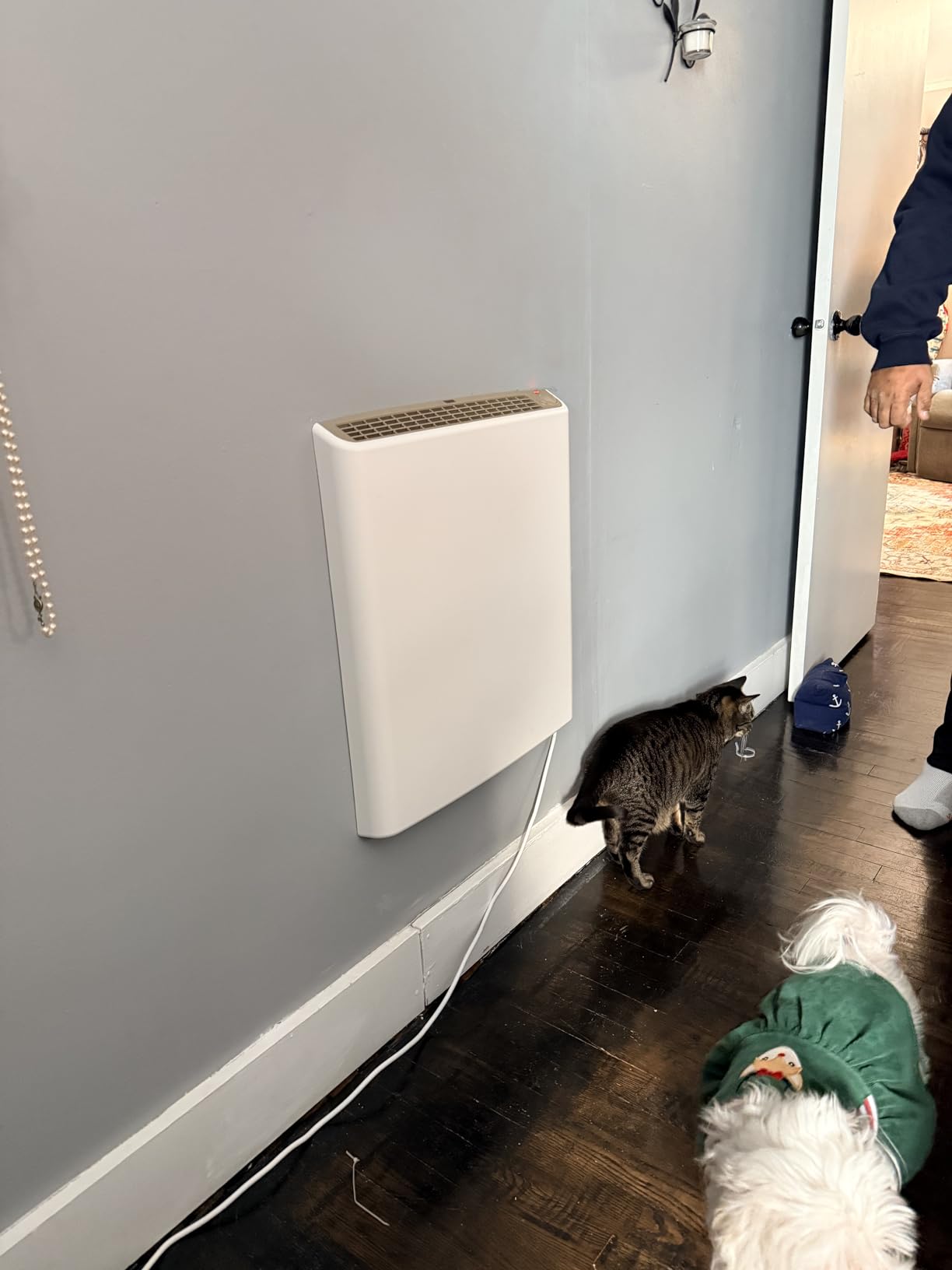
Now the honest limitation, which is large enough to deserve its own paragraph. 500 watts covers about 150 square feet in a closed room, and owners report that it cannot keep up when outdoor temperatures drop below roughly 30 degrees. This is a booster, not a heat source for an open or drafty basement, and treating it as one is the single most common disappointment in its reviews.
The 4.1-star average across about 3,200 reviews is the lowest here, and the reviews explain the split clearly. Buyers who wanted a silent, cool-touch, low-draw booster are delighted. Buyers who expected a room heater are unhappy, and the gap between the marketing and the real output is what they object to.
Where the ENVI panel works
A basement bedroom, a small finished room, a home office nook, or a laundry room where you want gentle background warmth and absolute silence. It is also the smart choice when your circuit capacity limits how many heaters you can run at once.
Where it does not
Do not buy it to heat an open lower level, and do not expect it to carry a room in deep winter. The rotary thermostat has no numbered scale, so you calibrate by trial and error, and the click is audible in a dead-quiet room.
6. De’Longhi Dragon TRD40615E Digital Radiator for Frozen Pipe Protection
De’Longhi Dragon Digital Oil Filled Radiator Heater, 1500W Electric Space Heater for indoor use, programmable timer, Energy Saving, full room heater with safety features TRD40615E
1500W oil-filled radiator, 24-hour programmable timer, 23-foot cord, child lock, 3-year warranty
Pros
- Digital control panel with LED display and a 24-hour programmable timer
- 23-foot cord gives real placement flexibility in a basement
- 75 percent more radiant surface than the RadiaS line for faster heat transfer
- Quiet fan-less operation that does not dry the air
- ECO Plus regulates power flow to manage energy use
- Child lock plus thermal cut-off and anti-freeze mode below 41F
Cons
- Heaviest unit in the roundup at 26.6 lb
- so repositioning takes effort
- Single-speed radiant design means slow warm-up rather than quick heat
- More expensive than non-digital radiators of similar output
- Electronics add failure points a mechanical dial does not have
This one solves a specific basement problem better than anything else here: a lower level where you are not trying to be comfortable, you are trying to stop pipes freezing. The 24-hour programmable timer lets you schedule heating for the coldest hours without anyone having to remember to switch it on.
The 23-foot cord is the detail that quietly changes what you can do. Most portable heaters come with a 6-foot cord, and in a basement with outlets only near the stairs, that is the difference between heating the area around the outlet and heating the area around the pipes.
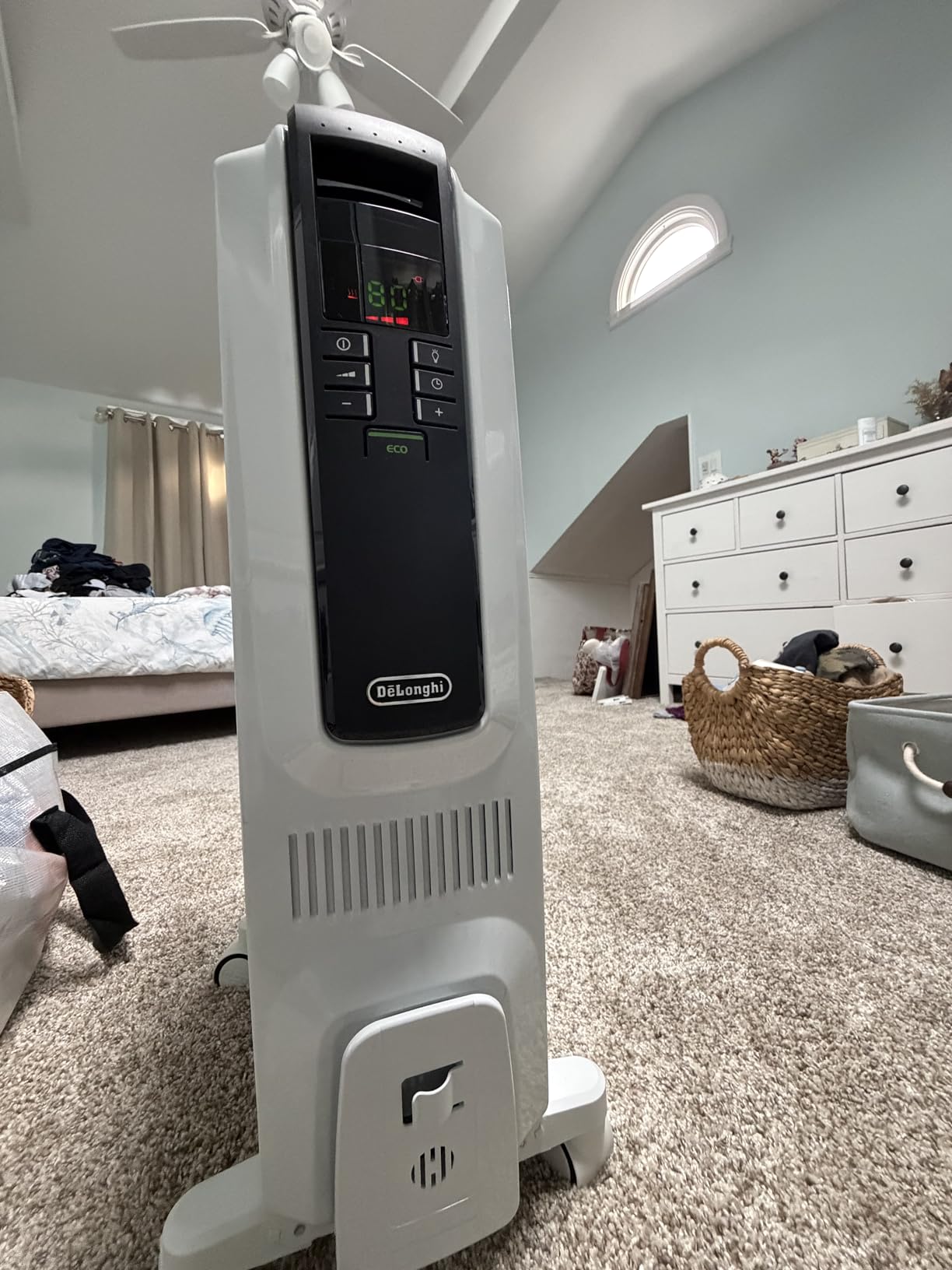
Compared with the simpler De’Longhi radiator, the design carries 75 percent more radiant surface area than the RadiaS line, which shortens warm-up time and pushes more heat into the room rather than just at the nearest surface.
The safety and scheduling combination is strong for an unattended space. Child lock, thermal cut-off, anti-freeze mode below 41 degrees Fahrenheit, and a three-year warranty. Front and rear handles plus rubber-coated snap wheels help with repositioning, though at 26.6 pounds you will still want two hands and a clear path.
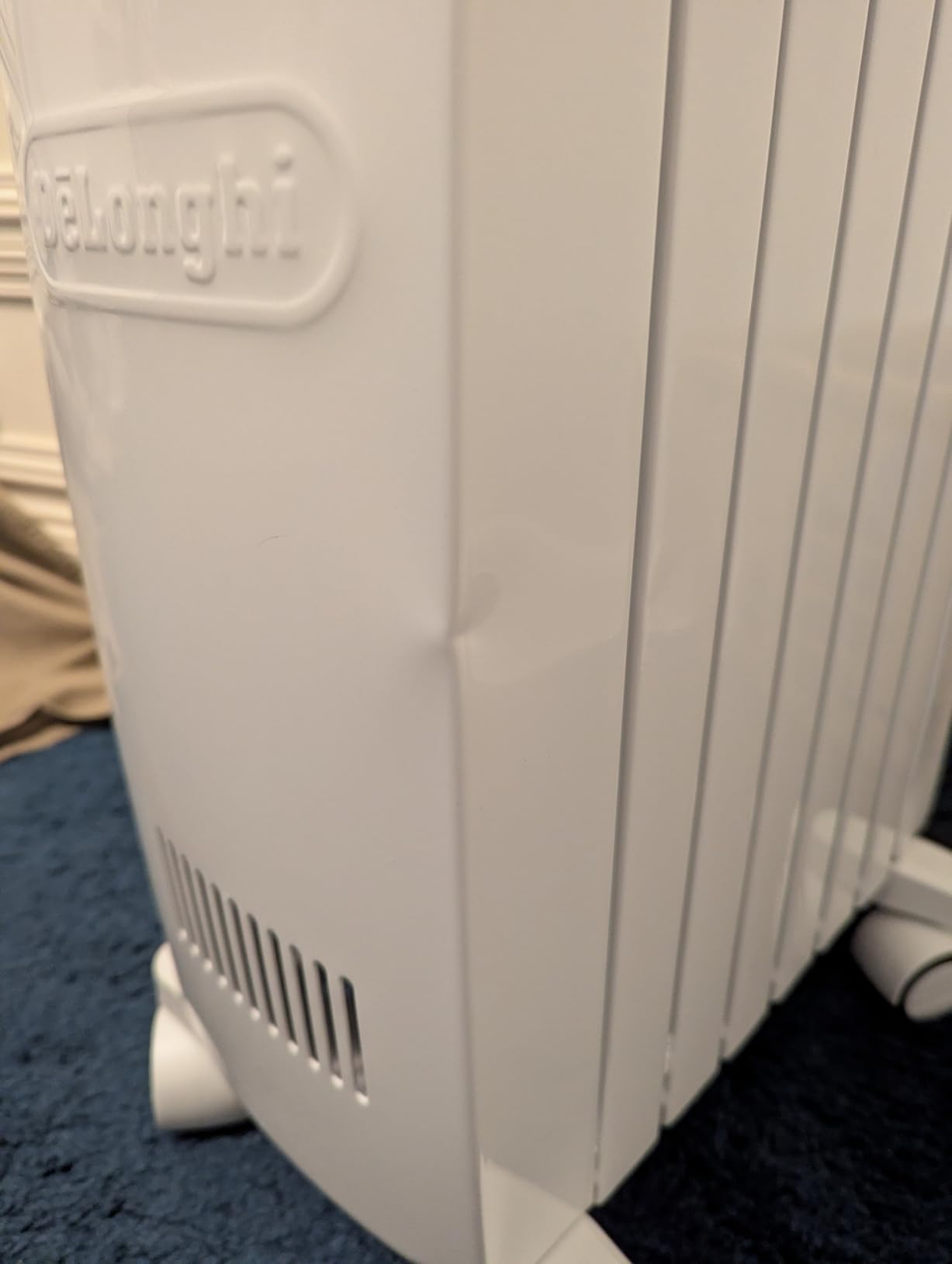
Being a single-speed radiant design with no fan, it warms up slowly. That is inherent to oil-filled construction and not a defect, but it means this is a poor choice for a spot you want warm in the next ten minutes.
There is also a straightforward price-versus-feature judgement. Compared with a mechanical dial radiator of similar output, the digital panel and timer are the reason to pay more; against a fan-forced heater, the 26.6-pound weight and slow warm-up are what you give up.
Why the digital radiator suits pipe protection
It is the pick for a basement where exposed plumbing runs along an exterior foundation wall, for a garage or workshop, or for winterising an unheated lower level. Scheduling through a 24-hour timer plus anti-freeze mode means protection that does not depend on anyone remembering.
When to choose something faster instead
If you want a warm room within minutes of arriving, a fan-forced hybrid like the DR-968 is a much better tool. Also weigh the 26.6 pounds honestly if you plan to move it between rooms regularly, and note the added electronics as more that can fail over a decade of service.
7. DREO DR-HSH010 Oil-Filled Radiator for Large Drafty Basements
DREO Oil Filled Radiator Heater, Electric Heaters for indoor use Large Room
1500W oil-filled radiator, four modes from 600W to 1500W, LED touchscreen and remote, ETL listed
Pros
- Four modes including 600W
- 900W
- and 1500W give far finer control than a two-speed dial
- Seven fins disperse heat across a large room
- Silent fan-less operation that holds a room within about 1F of setpoint overnight
- Triple overheat protection
- ETL listed
- burn-proof plug
- child lock
- 24-hour timer and remote
Cons
- Eco mode runs at full power for the first 40 minutes regardless of the thermostat setting
- Surface temperature gets very hot
- so caution around children and pets
- Radiator slow warm-up rather than instant heat
- Faint high-pitched whine from the LCD when the screen is on
Among buyers who specifically use it below grade, this is the one that comes up most often for large open basements, and the reason is the four-mode power control. Most oil-filled radiators give you two speeds. This one gives you Eco plus 600, 900, and 1500 watts, which means you can run it at half output for hours without the room overshooting.
That matters in a basement where heat leaves continuously. A unit running flat out all night at 1500 watts will simply burn electricity and hold the same temperature as one cycling between 600 and 900.
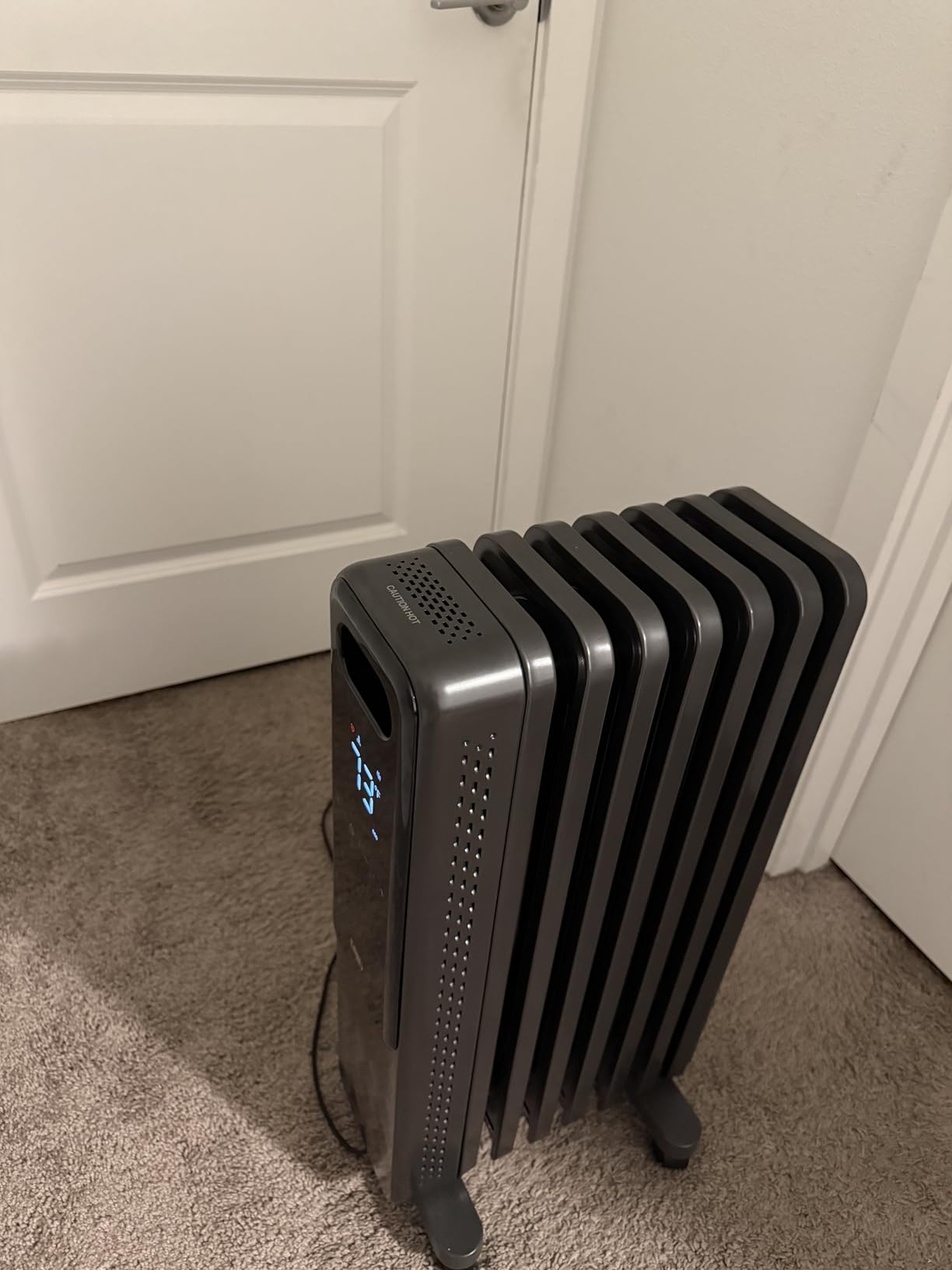
The control interface is genuinely modern for this category: a large LED touchscreen, an included remote, a 24-hour programmable timer, a child lock, and a screen-off mode. That last one is not cosmetic, because owners report a faint high-pitched whine from the display that disappears once the screen is switched off.
On safety, the specification is the most thorough in the group. Triple overheat protection, fire-resistant material, ETL listed, tip-over and tilt protection, and a burn-proof plug. Seven fins spread the heat across a wider area than a conventional radiator.
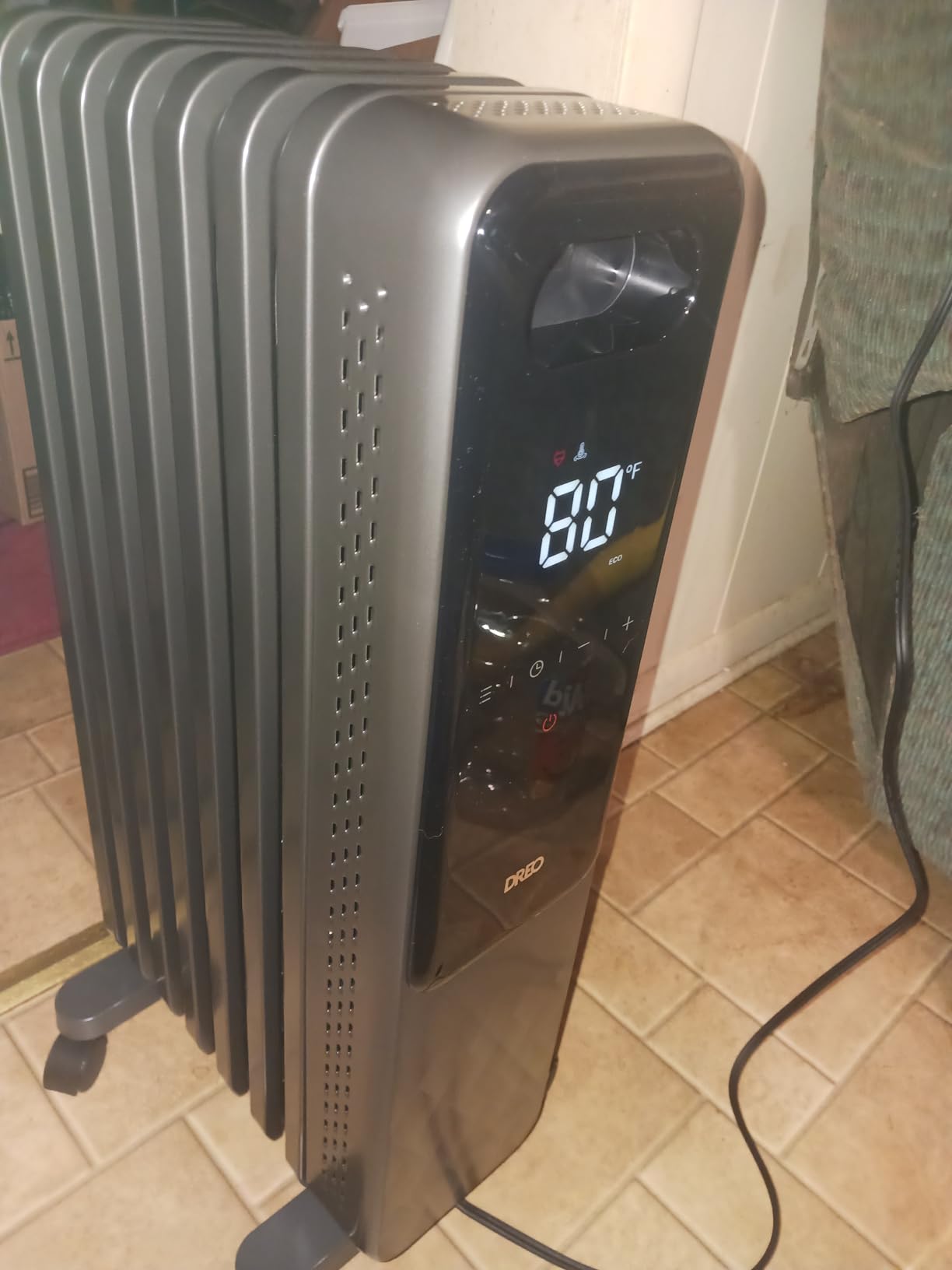
Now the flaw that comes up most often, and it is specific enough that you should know it before buying. In Eco mode the unit runs at full power for the first 40 minutes regardless of where the thermostat is set. Several owners consider this a design flaw rather than a feature, and it means your first 40 minutes in the evening are not the low-cost period you might expect.
The other recurring notes are shared with every radiator here: a slow warm-up, and a surface that gets hot enough to demand caution around young children and pets. A first-run odour dissipates after break-in.
Why this radiator fits a large drafty basement
It suits an open lower level where you want to hold a temperature for hours rather than blast heat for twenty minutes. The selectable power levels, 24-hour timer, and remote let you run a genuinely low-output setting overnight, which is the cheapest way to protect pipes and the most comfortable way to sleep near one.
Where you will notice its limits
Do not expect quick heat, and be cautious with small children because the surface runs hot. If precise digital control at a lower wattage matters most, this is the best of the group; if absolute silence with no electronics is what you want, the ENVI panel or a mechanical dial radiator is a better match.
8. Comfort Zone CZ600BK Convection Baseboard as the Budget Zone-Heating Pick
COMFORT ZONE Convection Baseboard Space Heater with Manual Thermostat
1500W convection baseboard, fan-less and silent, cool-touch housing, 150 sq ft, 1-year warranty
Pros
- Lowest cost of the eight
- which makes heating several basement zones realistic
- Silent fan-less convection with no airflow and no drying
- Low-profile baseboard sits flush along a wall with a cool-touch exterior
- Two simple dials that are easy to operate
- Tip-over cutoff switch and overheat protection sensor
- Owners report good results in basements
- mud rooms
- and garages
Cons
- Manual dial thermostat only
- with no display
- remote
- or timer
- Rated coverage of about 150 sq ft makes it a small-room heater
- Some owners report failure around the one-year mark
- Only a 1-year warranty
- the shortest here
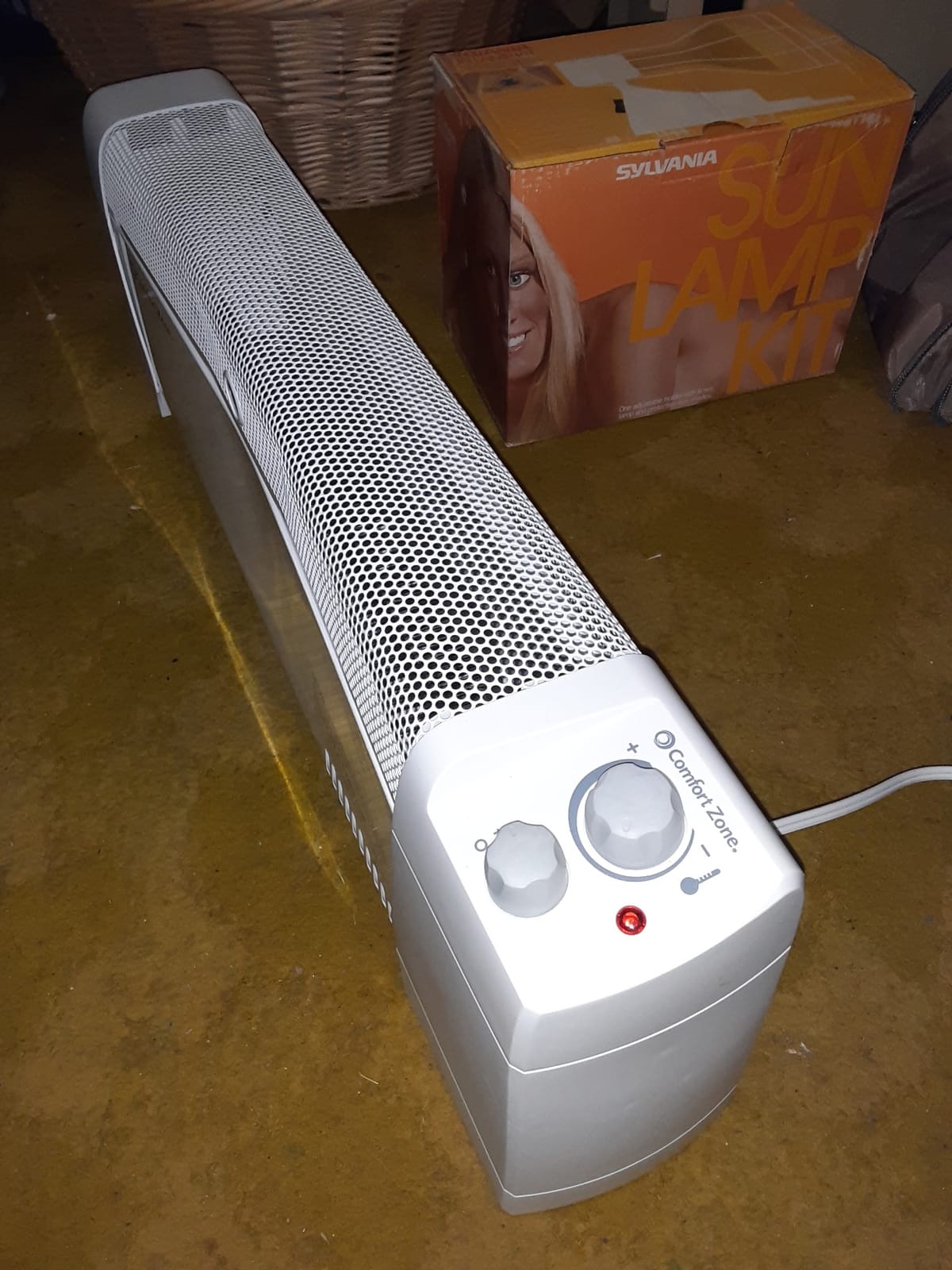
The honest argument for this heater is arithmetic. If your basement has three or four zones and you want each one warm, the cost of buying one premium heater per zone changes the maths entirely. At this price, covering a whole lower level with several small convection heaters becomes realistic for the first time in this roundup.
The design suits the basement specifically. A low-profile baseboard sits flush against a wall, the exterior stays cool to the touch while operating, and the fan-less convection design means it neither blows air nor dries it. That makes it comfortable to place close to a foundation wall in a way a ceramic tower is not.
Owners consistently report using it successfully in basements, mud rooms, garages, and converted attics, and the two-dial manual control is genuinely simple to operate, which is why it turns up in homes with older residents.
It does have tip-over cutoff and overheat protection. It is worth noting that the rated coverage is about 150 square feet, so think of it as a small-room or supplemental heater rather than a large-space one.
The durability concern is the part to weigh most carefully. Several owners report units failing after roughly a year of use, and one reported a melted thermostat knob with a burning smell. Against that, the warranty is one year against manufacturer defects, which is the shortest of the eight reviewed here.
That is the trade: you accept a shorter expected service life and no digital controls in exchange for the lowest cost and a simple, silent, safe form factor. For a basement zone you heat intermittently that is a reasonable trade, but as a primary heater you expect to run every winter for a decade, it is not.
Where this baseboard heater makes sense
It fits a finished basement with several small rooms, a mud room or entryway, a garage, or a converted attic. Anywhere you want silent, dripless, non-drying warmth close to a wall at the lowest cost of anything on this list.
Where you should spend more instead
Do not rely on it as your only heat source for a room you depend on every day, given the reported failure pattern and the one-year warranty. If you want controls, a timer, or setpoint precision, you need a digital model.
For the widest comparison of portable heaters beyond the basement use case, see our space heaters for large rooms guide, and for the full line of quiet radiant designs see the oil-filled space heater rankings.
Which Heater Type Actually Works in a Basement?
Every electric space heater converts essentially all of the electricity it draws into heat at the point of use. There is no meaningful efficiency gap between a ceramic tower and an oil-filled radiator. What differs is how well each one distributes heat, how long it holds it, and how quietly it works while doing it.
That reframe matters because sellers use the word efficiency loosely. The real questions for a basement are speed, distribution, retention, noise, and whether the unit dries the air. Here is how the main types compare.
Infrared quartz heaters: fast and directional
An infrared quartz tube heats a glowing element that radiates heat directly at you and at nearby surfaces. You feel it within seconds, which is why this type suits a desk, a sofa, or a workbench. The limit is range, since radiant heat falls off quickly: an infrared unit warms the person in front of it far better than it warms the far end of a basement. The Dr. Infrared DR-968 and the Heat Storm HS-1500 both fall into this family, and both perform better when paired with an element that moves air.
Forced air and ceramic towers: affordable and quick, but drying
A ceramic element with a fan behind it pushes hot air across the room in minutes. It is the most common and often the least expensive design, and it works well for quick warm-up. The two complaints are consistent: the air feels dry, and the fan is audible. In an already damp basement the drying matters less than it would upstairs, but the noise still matters in a sleeping space.
Oil-filled radiators: slow to start, best at holding
Thermal mass is the whole idea. The sealed oil reservoir heats up, stores energy, and radiates it steadily for a long time after switch-off. The result is the steadiest room temperature of the types here, and the quietest, because there is no fan. The cost is a warm-up of two to three hours. Three of the eight picks use this design, a fair signal of how well it suits below-grade spaces.
Micathermic panels: radiant plus natural convection
A mica panel radiates from its face while natural convection currents circulate room air through the body without a fan. The profile is thin, it can be wall-mounted, and it runs quietly and gently. The trade is slower warm-up than a fan-forced unit and coarser controls on budget versions.
Convection baseboards and wall panels: quiet, low-profile, low output
These warm by natural convection alone, so they are silent, and their housings stay cool enough to sit close to a wall or a walkway. Most baseboard and panel models are low-wattage by design, which makes them excellent supplements and zone heaters, and generally too weak to heat an open lower level on their own. That same low wattage is what lets several of them share a single circuit.
How Many Heaters Does Your Basement Need?
Size a basement space heater at roughly 10 watts per square foot of floor area, which means a standard 1500-watt unit is matched to about 150 square feet.
That is the arithmetic that surprises people. A 1500-watt heater sold as suitable for a 576 square foot room is rated for supplemental use in a room that is already reasonably warm, not for raising 576 square feet from cold. Below grade, with heat leaving through a cold slab and foundation walls, the conservative figure is the one to plan around.
Here is how that translates for common basement sizes, and honestly, when one heater is not the answer.
- 150 sq ft: about 1,500W needed, so a single 1500W heater handles it as a primary source.
- 300 sq ft: about 3,000W, so two 1500W heaters, ideally in separate zones or on separate circuits.
- 500 sq ft: about 5,000W, so three to four heaters, or one 240V hardwired heater installed by an electrician.
- 800 sq ft: about 8,000W, so multiple heaters plus draft control, or move up to a ductless mini-split.
- 1,000 sq ft: about 10,000W, so seven 1500W heaters in theory and a ductless mini-split in practice.
At 1,000 square feet, the 10-watts-per-square-foot rule asks for about 10,000 watts, which is roughly seven standard 1500-watt heaters. That is the point where a space heater stops being the right product. Seven portable heaters also means seven outlets, and typically a dedicated 20-amp circuit for each, and a permanent installation a portable heater was never designed for.
So be honest with yourself at two thresholds. First, if one 1500-watt unit will not hold a target temperature, adding a second in a different part of the space works far better than upsizing, because you are splitting the load across the floor area. Second, if you need more than about four 1500-watt heaters, the honest recommendation is a ductless mini-split, electric baseboard, or a 240V hardwired heater, installed by an electrician.
Two operating habits cut the number of heaters you need more than any product choice. First, draft-proofing: sealing the rim joist, weather-stripping above-grade windows and doors, and insulating pipes along the foundation wall. Second, running heaters at moderate output rather than maximum. A radiator cycling between 600 and 900 watts holds a room for far less energy than one pinned at 1500.
Humidity and Condensation: What Heaters Do and Do Not Fix
Sustained relative humidity above about 60 percent in a basement drives mould, mildew, and musty odour, and worsens condensation on cold concrete. 70 percent is a level worth taking seriously rather than monitoring and ignoring.
Space heaters do not remove moisture. That is the whole answer, and it is the answer most buyers do not want to hear. What happens when you warm cold air is that its capacity to hold water vapour rises, so the relative humidity reading drops without a single molecule of water leaving the room.
That is why a heater can make a damp basement feel worse. If your basement is net-gaining moisture from the soil through the foundation wall or through the slab, adding heat raises the saturation of that air and pushes condensation onto the coldest surfaces, which are exactly the concrete walls you were trying to warm. Building-science forums make this point consistently: heat alone will not fix a basement that is gaining moisture.
What actually takes dampness out, in the order that works:
- Run a dehumidifier. This is the only step that removes water from the air. Pairing a space heater with a dedicated basement dehumidifier is far more effective than either device alone.
- Control the sources. Grade the soil around the foundation, clear gutters and downspouts, and seal cracks in the foundation wall. Fixing inflow beats any machine you plug in.
- Insulate the rim joist and insulate pipes. A cold rim joist is a condensation site all winter. Insulating it removes the surface that collects water.
- Ventilate after showering and cooking. Exhaust fans move moisture out of the building rather than circulating it.
- Add heat last. Heat makes the space comfortable, but only after moisture is under control.
The flip side answers the question about a heater that does not dry out the air. Infrared and oil-filled radiators warm surfaces instead of blasting air, so they dry a room far less than a forced-air ceramic tower. If you have a genuinely damp basement, less drying is a benefit rather than a defect. For our full rundown of that side of the problem, see our basement dehumidifier guide.
If you have taken these steps and are still choosing, note that a low-wattage unit that runs continuously, like the ENVI panel, adds heat gently and slowly, which produces less abrupt shifts in relative humidity than a 1500-watt fan-forced unit cycling hard in a closed room.
Basement Electrical and Safety Rules You Should Not Skip
Yes, you can use a space heater in a basement, and it is done every winter in millions of homes. But the conditions matter, and most of them come from the Consumer Product Safety Commission and the National Fire Protection Association rather than from any manual.
The CPSC reports more than a thousand home fires a year involving space heaters. The overwhelming majority of those trace back to placement, extension cords, and unattended use, not to a manufacturing defect. So the rules are worth taking seriously.
- Keep three feet of clearance on all sides. That is the CPSC and NFPA guideline, and you should always defer to your specific unit’s manual, which may be stricter.
- Never use an extension cord or a power strip. This is the rule that surprises people most and it is non-negotiable. A 1500-watt heater pulls 12.5 amps, which is at or beyond the capacity of most power strips, and the connection points overheat.
- Plug directly into a wall outlet. No adapters, no power strips, no extension leads under a rug or along a baseboard.
- Plan for circuit load. A 12.5-amp heater on a 15-amp circuit leaves almost nothing for anything else, and two 1500-watt heaters on one circuit will trip the breaker. Multiple heaters should go on separate circuits, and that is where low-draw panels like the ENVI unit earn their place.
- Use GFCI protection near water. Basement bathrooms and laundry rooms are exactly where dampness and electricity meet. Unfinished areas and wet locations need GFCI-protected outlets, and an ALCI-equipped plug, which cuts power if the plug itself leaks current to the cord, adds a second layer of protection in those rooms.
- Confirm tip-over and overheat protection, and keep a working smoke alarm in the basement. Unfinished basements are frequently missing one.
- Unplug it when the room is unoccupied, and use the built-in timer or a smart plug rather than leaving it running indefinitely.
On overnight use specifically: running a listed heater with tip-over and overheat protection overnight, on a hard floor, away from anything combustible, with a working smoke alarm in the room, is generally acceptable. Running one overnight in an unoccupied space with no alarm is not.
Where to Put a Basement Heater So It Works
Placement matters more below grade than it does in any other room, because the heat you generate is constantly being pulled toward the cold surfaces. Five positions cover most basements well.
- Below drafty above-grade windows and doors. Cold air pours in there and falls, so a heater positioned in that falling column of air does the most work.
- Along a cold foundation wall, roughly a foot out from it, so the warm air rises along the surface rather than across the room. A low-profile baseboard is ideal here.
- Near the stairwell opening, but not in the doorway itself. Heat rises up a stairwell, so a unit at the base feeds the whole upper house.
- Elevated off bare concrete, which pulls heat out of the room directly. A small platform or riser under a portable unit measurably improves how much of its output reaches the air.
- At the end of the room you actually use, not in the centre. Heating the space you sit in beats trying to average the temperature across a large open floor.
What not to do is just as important: keep heaters well away from stored cardboard, clothing, and furniture, never place one in a walkway or a doorway, and never leave one under a window where condensation can drip onto it.
Frequently Asked Questions
What is the most efficient heater for a basement?
Every electric heater converts essentially all its wattage into heat, so efficiency means distribution rather than conversion. For a large basement, a fan-forced hybrid or a micathermic panel spreads heat through the space; an oil-filled radiator holds temperature most steadily; an infrared unit warms you fastest but the shortest distance.
How many space heaters does a basement need?
Use the 10 watts per square foot rule. A standard 1500W unit covers about 150 sq ft as a primary source, so a 300 sq ft basement needs two, a 500 sq ft basement needs three or four, and a 1,000 sq ft basement needs roughly seven. Past about four heaters, a ductless mini-split or a 240V hardwired heater is the better answer.
Do space heaters decrease humidity in a basement?
Not really. Heating cold air lowers the relative humidity reading because warm air can hold more water vapour, but no moisture leaves the room. If the basement is gaining moisture through the foundation or slab, added heat can actually increase condensation on cold concrete. Pair heat with a dehumidifier and source control.
What takes dampness out of a basement?
A dedicated dehumidifier first, since it is the only device that removes water from the air. Then control the sources: grade the soil against the foundation, clear gutters, seal cracks, and insulate the rim joist and any pipes. Ventilate after showering and cooking, and add heat last.
What is a good space heater that does not dry out the air?
Infrared quartz and oil-filled radiators heat surfaces rather than blowing air, so they dry a room far less than a fan-forced ceramic tower. Among the eight reviewed here, the De’Longhi EW7707CM, the De’Longhi Dragon TRD40615E, and the DREO DR-HSH010 are all fan-less. In a damp basement, less drying is a benefit.
Are space heaters safe to leave on overnight in a basement?
A UL or ETL listed heater with tip-over and overheat protection, on a hard floor away from combustibles, in a room with a working smoke alarm, is generally acceptable overnight. Never run one in an unoccupied space with no alarm, and never through an extension cord or power strip.
The Right Basement Heater Comes Down to Square Footage
After working through eight of the best space heaters for basements, the pattern is clear. The Dr. Infrared DR-968 is the best overall choice because its hybrid infrared and PTC design delivers genuine whole-room heat at 39 dB, and more than 28,000 buyer reviews back that up. For a large drafty lower level, the DREO DR-HSH010 wins on selectable power levels and modern controls. For a finished space where the floor needs to stay clear, the Heat Storm HS-1500-PHX-WIFI is hard to beat.
But the decision comes down to your square footage, not the badge. One 1500-watt heater is the right answer for about 150 square feet. Beyond that, you are adding heaters, and once you pass roughly four, you should be pricing a ductless mini-split or a 240V hardwired heater instead.
Two things will help more than any product. Deal with the drafts and the moisture first, because a sealed, drier basement needs far less heat. And respect the electrical rules: wall outlet only, three feet of clearance, and never an extension cord.
Whatever you pick, measure your space, work out how many zones you actually want warm, and start there. Our picks above are updated for 2026 and reviewed against current buyer feedback, so you can weigh them against your own square footage rather than a marketing claim.