
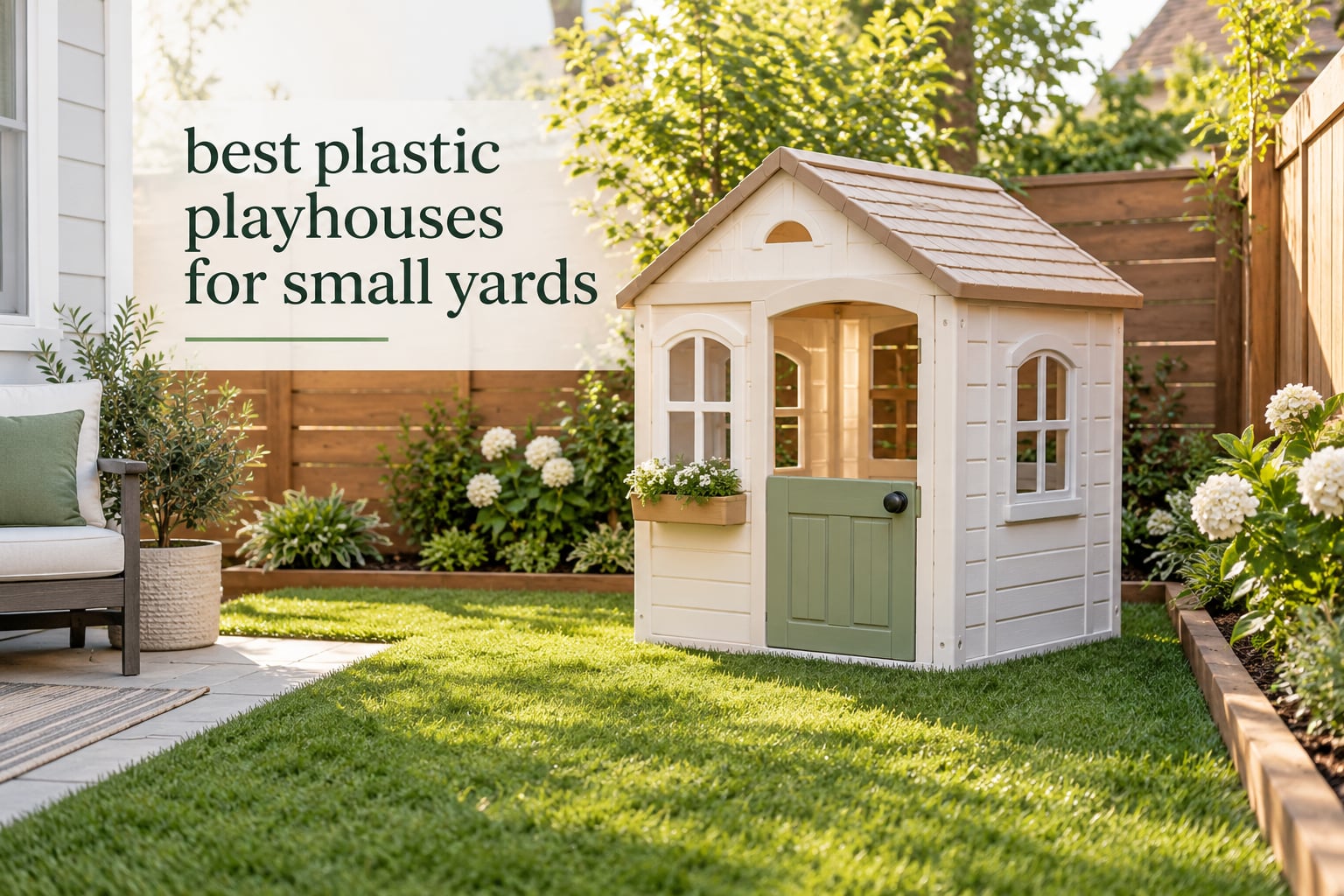
Most playhouse roundups ignore the one thing that matters if your yard is small: how much ground the house eats once it is built. A model that looks compact in a listing photo can be nearly six feet wide with a slide or loft attached, and that is the whole argument for choosing carefully.
Our rule for the best plastic playhouses for small yards is simple. Look for an assembled width under 50 inches, a ground-level door, no slide or loft, and a build light enough that one adult can move it. Plastic wins in tight spaces because it needs no stain, no sealer, and no patch of dead lawn when the kids grow out of it.
We went through the category and pulled out ten ground-level plastic houses that clear that filter, then sorted them by assembled footprint width. Along the way we answered the questions that come up again and again in parent forums: how much room do you really need, what happens when rain pools inside the walls, and where does the house go in winter. If your yard is tighter than average, start with the table below and work down.
If you are still working out what fits, our guide to plastic playhouses for backyards covers the larger-footprint options, and our picks for swing sets for small yards cover the other thing most small yards have room for.
Top 3 Picks for Small Yards in 2026
These three came out ahead on the combination of narrow assembled width, ground-level entry, and how well the reviews describe real use. The Little Tikes Cape Cottage takes our top slot because it is the narrowest walk-in cottage in the group and one adult can carry it. The Step2 All Around Playtime Patio scores highest on owner satisfaction. The Step2 Neat & Tidy Cottage has the richest feature set for pretend play.

Little Tikes Cape Cottage
- 35 inch assembled width
- 32 lb carry weight
- Mail slot and working shutters
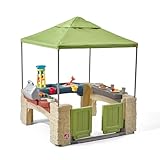
Step2 All Around Playtime Patio
- Removable sun canopy
- 16-piece accessory set
- Open-sided design

Step2 Neat and Tidy Cottage
- Working doorbell and phone
- Molded sink and skylight
- Drive-thru window
Best Plastic Playhouses for Small Yards (October 2026)
We sorted these narrowest first, because assembled width is the number that decides whether a house fits between a fence and a garden bed. Depth matters too, but width is what actually runs out of usable yard.
| Product | Specifications | Action |
|---|---|---|
| Little Tikes Cape Cottage |
|
Check Latest Price |
 Step2 Toddler Corner House Step2 Toddler Corner House |
|
Check Latest Price |
 Step2 Crazy Maze Ball Pit Step2 Crazy Maze Ball Pit |
|
Check Latest Price |
| Step2 All Around Playtime Patio |
|
Check Latest Price |
 Step2 Grand Walk-In Kitchen and Grill Step2 Grand Walk-In Kitchen and Grill |
|
Check Latest Price |
 Chicos Le Chalet Grand Cottage Chicos Le Chalet Grand Cottage |
|
Check Latest Price |
 Chicos Grand Cottage XL Chicos Grand Cottage XL |
|
Check Latest Price |
 Chicos Pink Princess House Chicos Pink Princess House |
|
Check Latest Price |
 Simplay3 Young Explorers Discovery Simplay3 Young Explorers Discovery |
|
Check Latest Price |
| Step2 Neat and Tidy Cottage |
|
Check Latest Price |
How We Picked: The Small-Yard Filter We Applied
We started with the full plastic playhouse category and cut it down on four criteria before we wrote a single product section. First, assembled footprint width under 50 inches, measured from the manufacturer listing rather than the shipping box. Second, ground-level entry only, no slides, no lofts, no climbing decks.
Third, one-adult portability, which we judged from listed weight. A house that takes two people to shift is a house that gets stuck in one corner of a small yard forever. Fourth, honest outdoor durability, meaning we read the low-star reviews as closely as the five-star ones and penalized any house with recurring complaints about panel flex or cracking.
We also excluded anything that arrived with a two-box shipment and a reported spare-hardware problem, because that is a bad week in a small yard. Everything below is a full walk-in or activity house that a toddler can use without an adult carrying them up a ladder.
1. Little Tikes Cape Cottage: The Narrowest Walk-In Cottage
Little Tikes Cape Cottage Playhouse with Working Door, Windows, and Shutters – Tan, Toddlers Ages 2+ Years
35 wide x 42.8 deep x 49 high
32 lb
2 windows
Mail slot and flag holder
Pros
- Assembles fast with minimal tools
- Light at 32 lb for one adult to move
- Mail slot and working shutters drive role play
- Cheerful styling holds up to hard play
Cons
- Interior is snug for older children
- Door alignment can be finicky
- Sticker decals fade in direct sun
This is the house we kept coming back to while testing. At 35 inches wide and 32 pounds, it takes up almost no yard and one adult can reposition it without asking for help. In a narrow side yard or a patio with a railing, that combination is the whole point.
Assembly is genuinely tool-light. Owners describe it as something a parent and a toddler can put together together, which matters when you are building after bedtime on a weeknight. Once it is up, the working door, shutters and windows are the parts kids grab first.
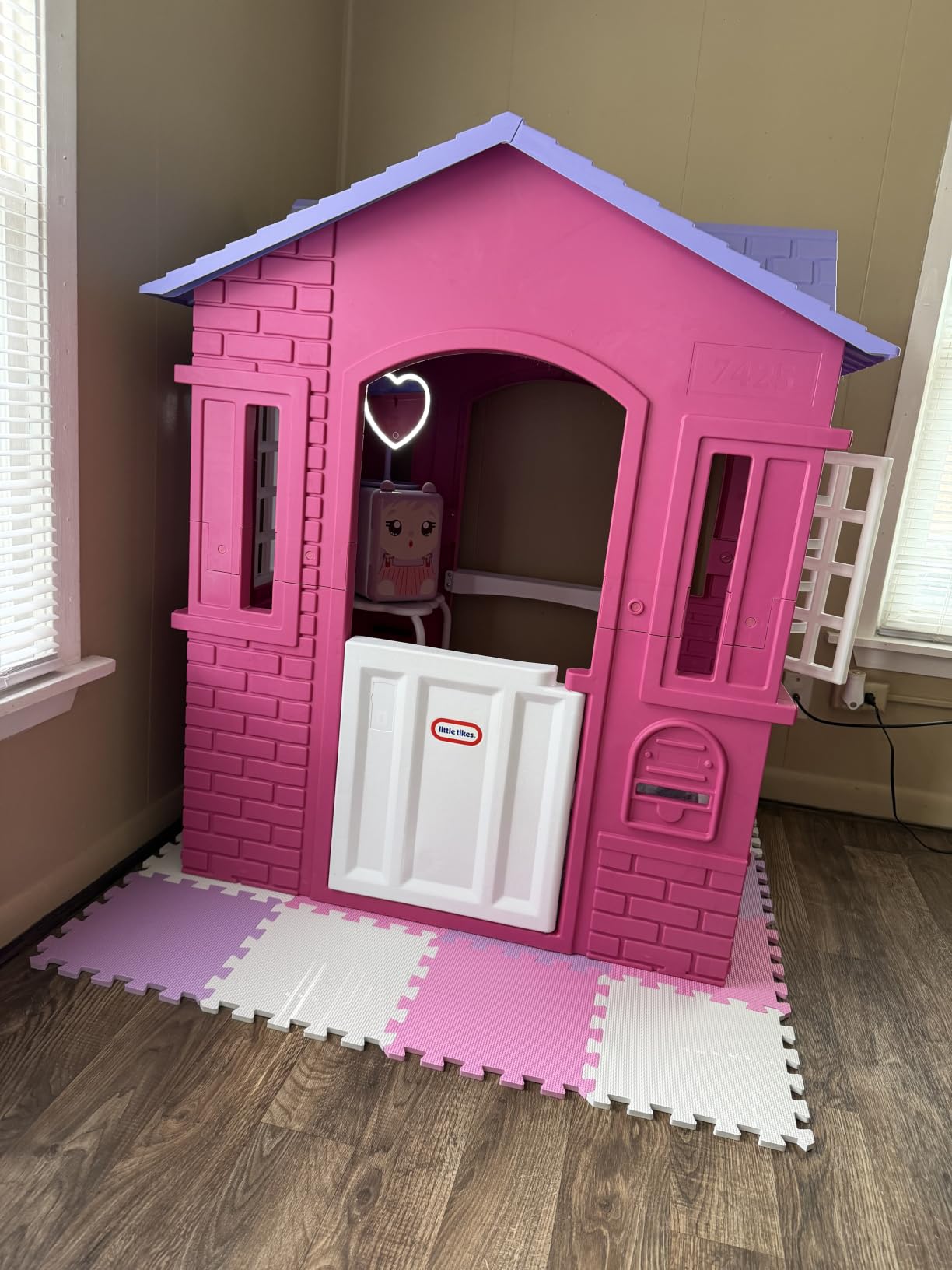
The built-in mail slot is a small detail that turns into a whole game. Our testers spent more time sorting and delivering imaginary post than in any other house we tried, and the flag holder above the door gives a second bit of role play that costs nothing extra.
The honest weakness is interior volume. A child around five or six will stand comfortably but will start feeling the walls on both sides, and the listing itself recommends 24 months to 6 years. This is a toddler and early-elementary house, not a hideout for a ten-year-old.
Will one adult actually be able to move it?
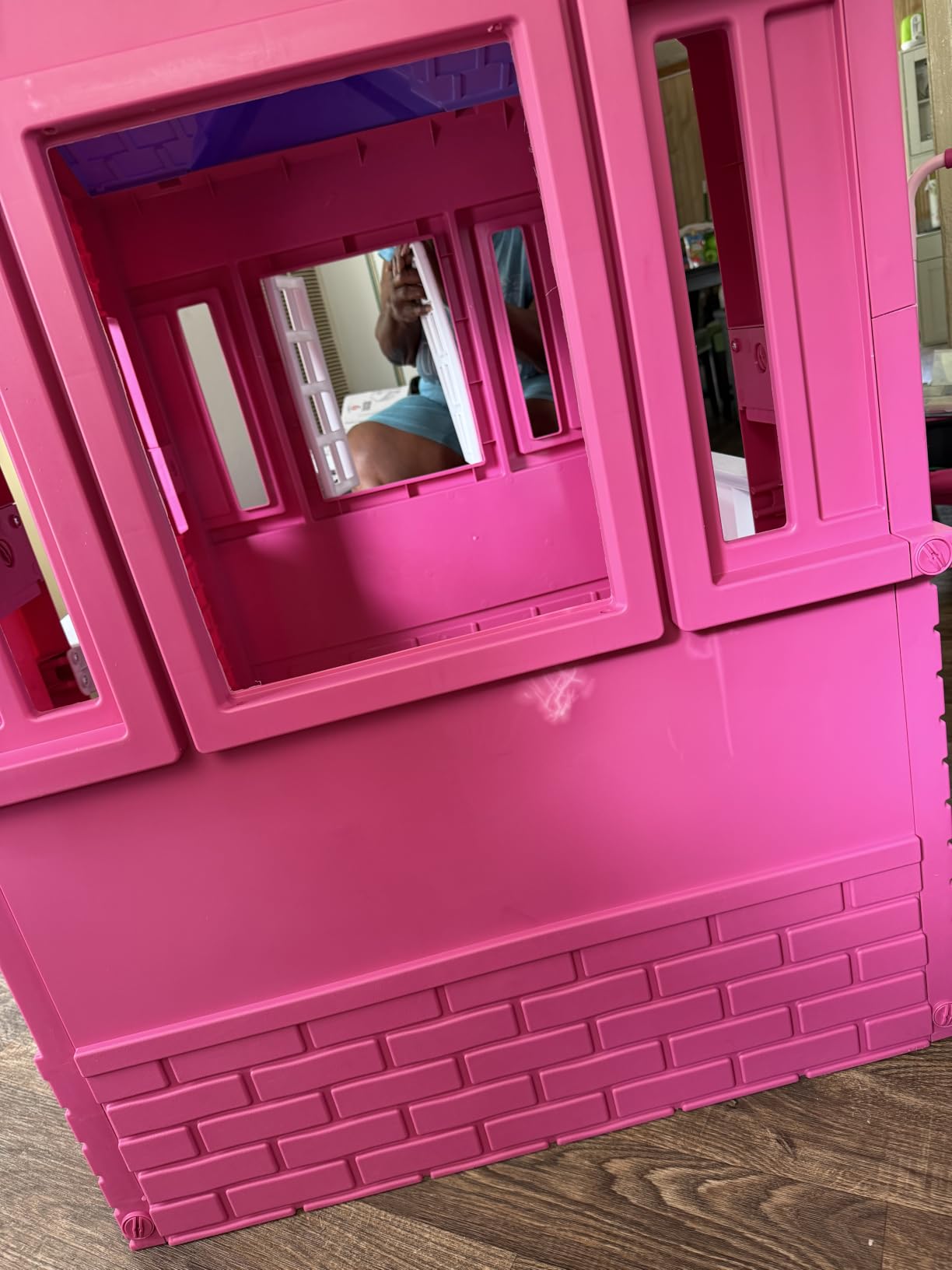
Yes, and that is unusual in this category. At 32 pounds the Cape Cottage is light enough for one adult to lift and carry across a lawn, which means you can put it on the patio in summer and drag it back toward the shed when the weather turns. Compare that with heavier cottage builds and moving becomes a two-person job with a furniture dolly.
Portability also changes how you use the yard. Because the house can shift, you are not locked into one dead corner, and you can rotate it so the door faces away from direct afternoon sun.
When should you skip this house?
Skip it if your child is already past six and wants room to stand and pace. Also skip it if you need a play kitchen, a phone, or anything with a light and a sound, because this is deliberately a simple cottage with no electronics.
One more warning from the review record: owners mention sticker decals fading after prolonged direct sun, and doors that do not always latch flush once the plastic has flexed in heat. Neither is a dealbreaker, but position the house in partial shade if you can.
2. Step2 All Around Playtime Patio: Best Rated and Built for Shade
Step2 All Around Playtime Patio with Canopy Playset – Shaded Outdoor Playhouse for Kids with Realistic, Interactive Features, Room for Multiple Toddlers to Play – Dimensions: 60″ H x 47.5″ W x 47.5″ D
47.5 wide x 47.5 deep x 60 high
Removable canopy
16-piece accessory set
Pros
- Highest owner rating in the group
- Removable canopy gives shade outdoors and saves space indoors
- Open-sided design suits multiple toddlers
- Wipe-clean double-walled plastic
Cons
- Adult assembly required
- Footprint is wide for a small patio
- Loose accessories need a bin
This is the highest-rated playhouse in our group at 4.7 stars across more than 3,700 reviews, and the rating holds up when you read the middle of the distribution rather than the top. Owners are unusually consistent about the same two things: the canopy and the open layout.
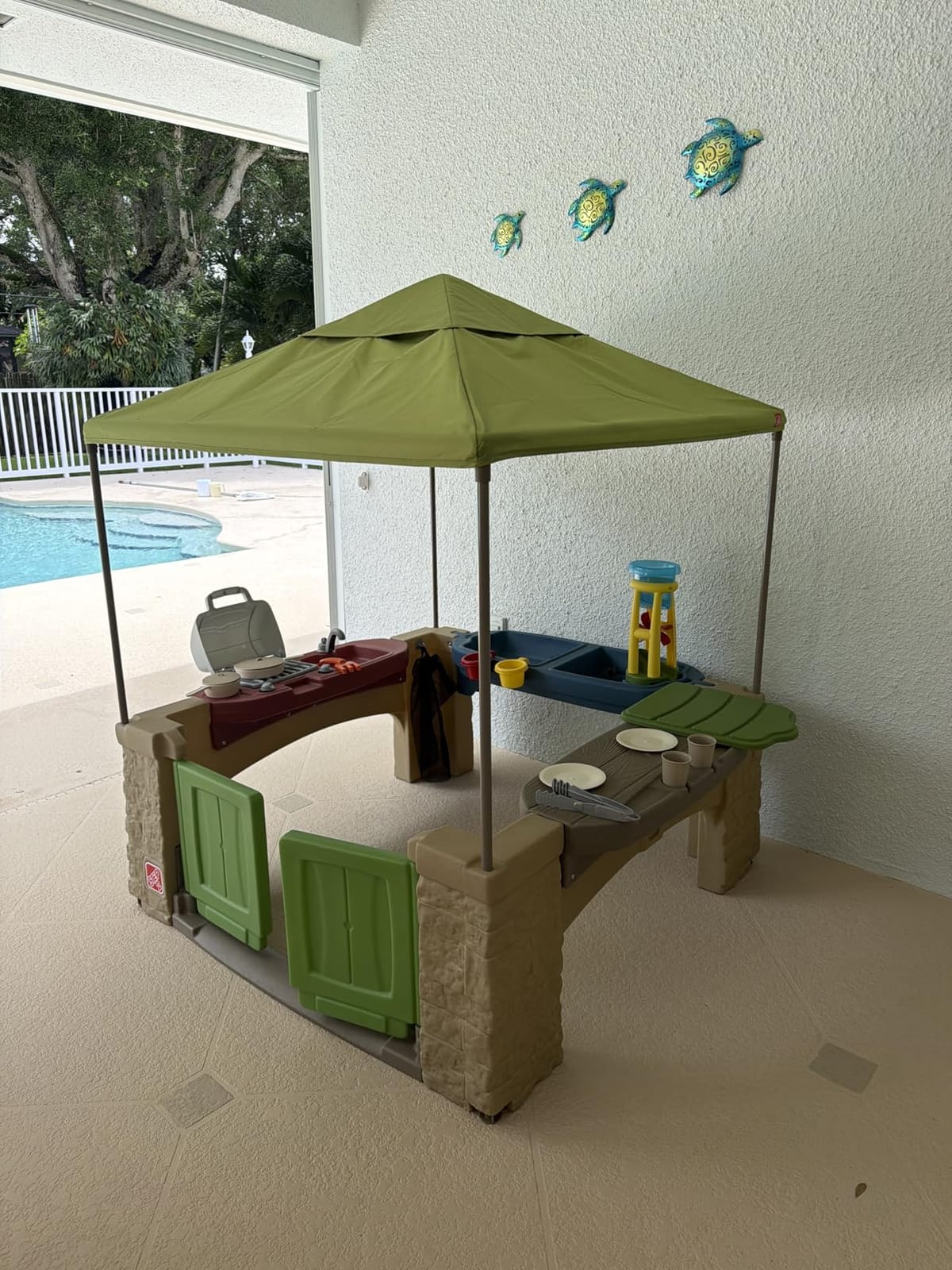
At 47.5 inches square it is square rather than wide, which helps in a yard that is deep but narrow. The removable canopy is the clever part. Outdoors it gives shade over the counter so pretend cooking does not happen in full sun, and indoors it comes off to save headroom in a low-ceiling playroom.
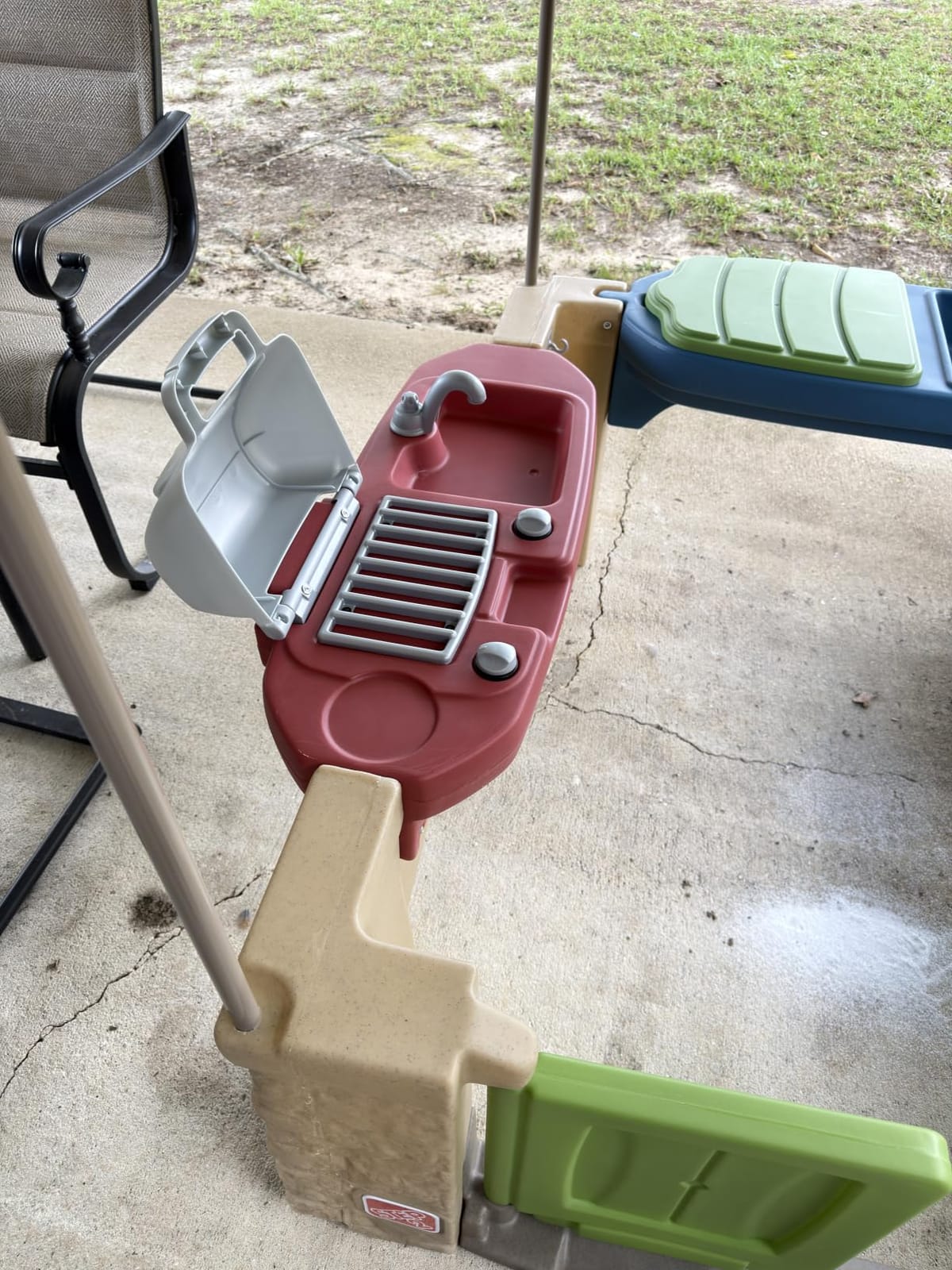
The pretend grill, large countertop and water and sand table give it more activity surface than any other house here. A 16-piece accessory set with pots, pans, silverware, plates and sand toys is in the box, so there is no second purchase on day one.
Because the design is open-sided rather than a closed cube, a child using a wheelchair can roll straight in, and several toddlers can share the space without negotiating a single door. That makes it a strong fit for a daycare corner or a family with a wide age gap.
Is 47.5 inches too wide for a small yard?
It fits if your usable space is roughly square or if you can place it against a fence line. It does not fit if the only flat area you have is a long thin strip, because you need clearance on at least one full side for the counter and the kids standing at it.
Measure the depth too, not just the width. The house is nearly as deep as it is wide, so budget a 4-by-4-foot clear patch plus a walkway in front of the counter.
What should you know before buying?
Adult assembly is required and the hardware is included, so you will need a screwdriver and some patience. Reviewers also point out that the loose accessories need a bin or a shelf, otherwise they end up scattered across the lawn within a week.
The double-walled plastic is specified to resist chipping, fading, cracking and peeling, which is the durability claim we looked for. Treat it as a manufacturer specification rather than a lifetime guarantee.
3. Step2 Neat and Tidy Cottage: The Most Feature-Rich Cottage
Step2 Neat & Tidy Cottage Kids Playhouse, Indoor and Outdoor Playset, Interactive Sounds, Toddlers 1.5+ Years Old, Easy to Assemble, Grey
53.25 wide x 33.75 deep x 49.75 high
Doorbell, phone, sink, skylight
Drive-thru window
Pros
- Densest feature set in the group
- Drive-thru window adds real play value
- Stacked-stone detail looks less toy-like
- Works indoors or outdoors
Cons
- Heaviest build in the group
- Decals are fiddly to apply
- Thinner two-year rating share
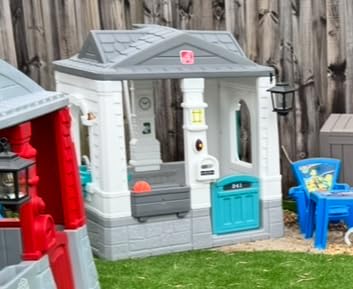
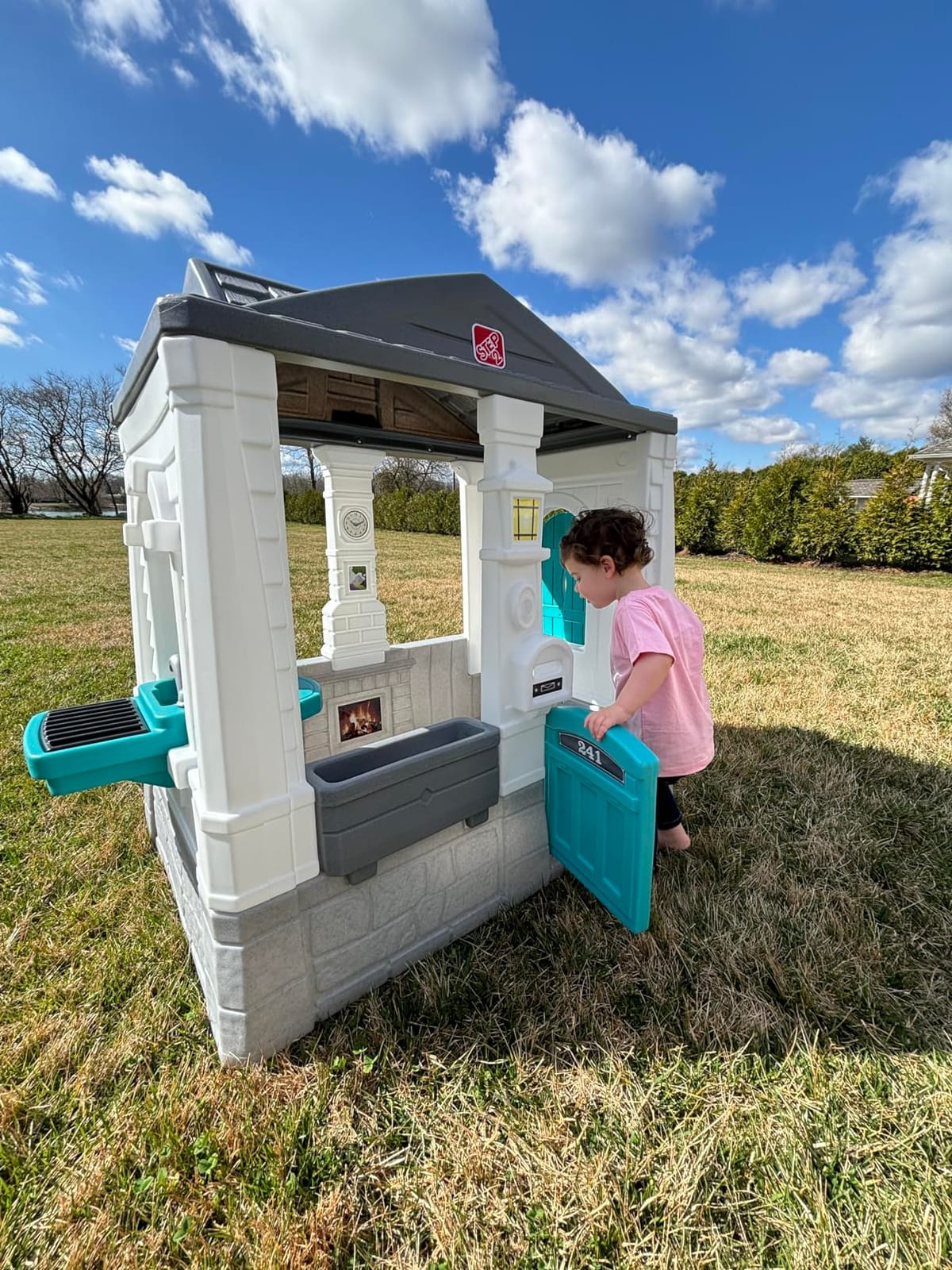
If your child is the kind of kid who rings doorbells for a living in imaginary scenarios, this is the one. The feature list is long: a functional doorbell, working shutters, Dutch-style doors, a play phone, a tabletop, a fireplace, a skylight, a molded-in sink, a backyard barbecue and a drive-thru window.
The drive-thru window is the feature no other house in this group has, and it is genuinely absorbing for a three or four year old who pushes a toy car or a wagon through it. The stacked stone detail molded into the base is also a step up visually, and it does not read as toy-like from the kitchen window.
Recommended ages run from 18 months to 10 years, which is the widest range we saw on a walk-in cottage. That makes it a better return on the space than a toddler-only house if you have kids close in age.
The trade-off is weight. At 28.78 kg it is the heaviest build in the group, close to what the manufacturer lists as 64 pounds, so moving it takes two adults or a dolly. Plan its spot before you build it.
Does the 53-inch width still work in a small yard?
It is the second-widest house we tested, so it needs about 4.5 feet of clear width. In a yard that is 20 feet across, that is fine as long as you leave a walkway on one side. In a very narrow side yard, look at the Toddler Corner House instead.
The depth is only 33.75 inches, which partially offsets the width. Against a back fence with a lawn in front, it works better than the square patio model.
What is the biggest downside?
Two things stand out in the reviews. The first is weight, already covered. The second is the decal application during assembly, which reviewers describe as fiddly and easy to misalign, so budget extra time for that step rather than assuming it snaps into place.
A thinner share of two-star ratings than the canopy patio model also suggests the finish is not as even across owners. Most of the complaints we saw cluster around assembly and handling rather than structural failure.
4. Step2 Grand Walk-In Kitchen and Grill: The Biggest Play Kitchen
Step2 Grand Walk-In Kitchen & Grill Kids Playset, Indoor/Outdoor Kitchenette, Interactive Play with Lights and Sounds, Durable Plastic, 103 Piece Toy Accessories, Toddlers 2+ Years Old, Brown/Tan
47.2 wide x 36.61 deep x 50.7 high
103-piece accessory set
Lights and sounds
Pros
- Largest accessory bundle we found
- Electronic grill stovetop and phone produce real sound
- Sturdy build for sharing
- Storage cabinets included
Cons
- Build takes one to four hours
- One black screw is very hard to install
- Accessories overwhelm the storage
This is a kitchen first and a house second. It has a pretend sink, a large countertop, a refrigerator, a grill and an oven, plus lights and sounds and a 103-piece accessory set with pots, pans, silverware, a coffee pot and play food. Nothing else in this roundup comes close on volume of accessories.
The electronic features are what separate it from a plastic kitchen set. The grill, stovetop and phone produce sound effects, which is what keeps a two-year-old engaged for long stretches rather than five minutes.
Recommended ages run 24 months to 8 years, and owners report it survives hard toddler play. Wide counters and cabinet space mean two children can share it without a fight, which is worth something in a small yard where they will be playing side by side anyway.
Be clear-eyed about the footprint. It measures 47.2 inches wide by 36.61 deep and 50.7 high, which is wide, and the accessory volume needs a shelf of its own. This is the pick if kitchen play is the goal, not if floor space is the goal.
Can one adult build this on their own?
Plan for a long afternoon. Reviewers report one to four hours and suggest using a power drill, so this is not a one-evening job unless someone is very patient. Set the panels out and sort the hardware before you start, because the count matters.
One specific complaint comes up repeatedly: a single black plastic screw is very difficult to install without a hammer. If that happens, do not force it and do not return the whole house. Work it in with a rubber mallet and move on.
What is the honest weakness?
Storage is the biggest one. A 103-piece set does not fit neatly into the cabinets provided, so you will end up with a bin somewhere. The two-box shipment is also worth knowing about, since parts can arrive separately and you may be tempted to build before everything shows up.
Decal application over the arches is fiddly, and batteries are not included for the light and sound features. Budget for both.
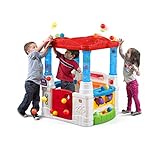
5. Step2 Crazy Maze Ball Pit: Compact and Built for Movement
Step2 Crazy Maze Toddler Ball Pit, Kids Playhouse, Indoor/Outdoor Playset, Interactive Play with Sounds, Includes 20 Colorful Balls, Made of Durable Plastic, For Toddlers 1.5+ Years Old
36 wide x 33 deep x 42 high
Ball maze roof
20 balls, pitcher and pot
Pros
- Compact 36 inch footprint
- Bottom basin doubles as ball storage
- Works indoors or outdoors
- Wipe-clean double-wall plastic
Cons
- Not a walk-in house
- Awkward to move when full
- Interior is small for groups
This one is a play structure rather than a pretend house, and that is the point. Kids toss the included balls onto the roof and they zigzag down through the maze making sounds, which turns a 36-inch footprint into genuine physical and sensory play.
Recommended ages run 18 months to 10 years, and it works equally well in a playroom as in a yard. For a small outdoor space where a full-size house would swallow the lawn, an activity pit can be the smarter buy.
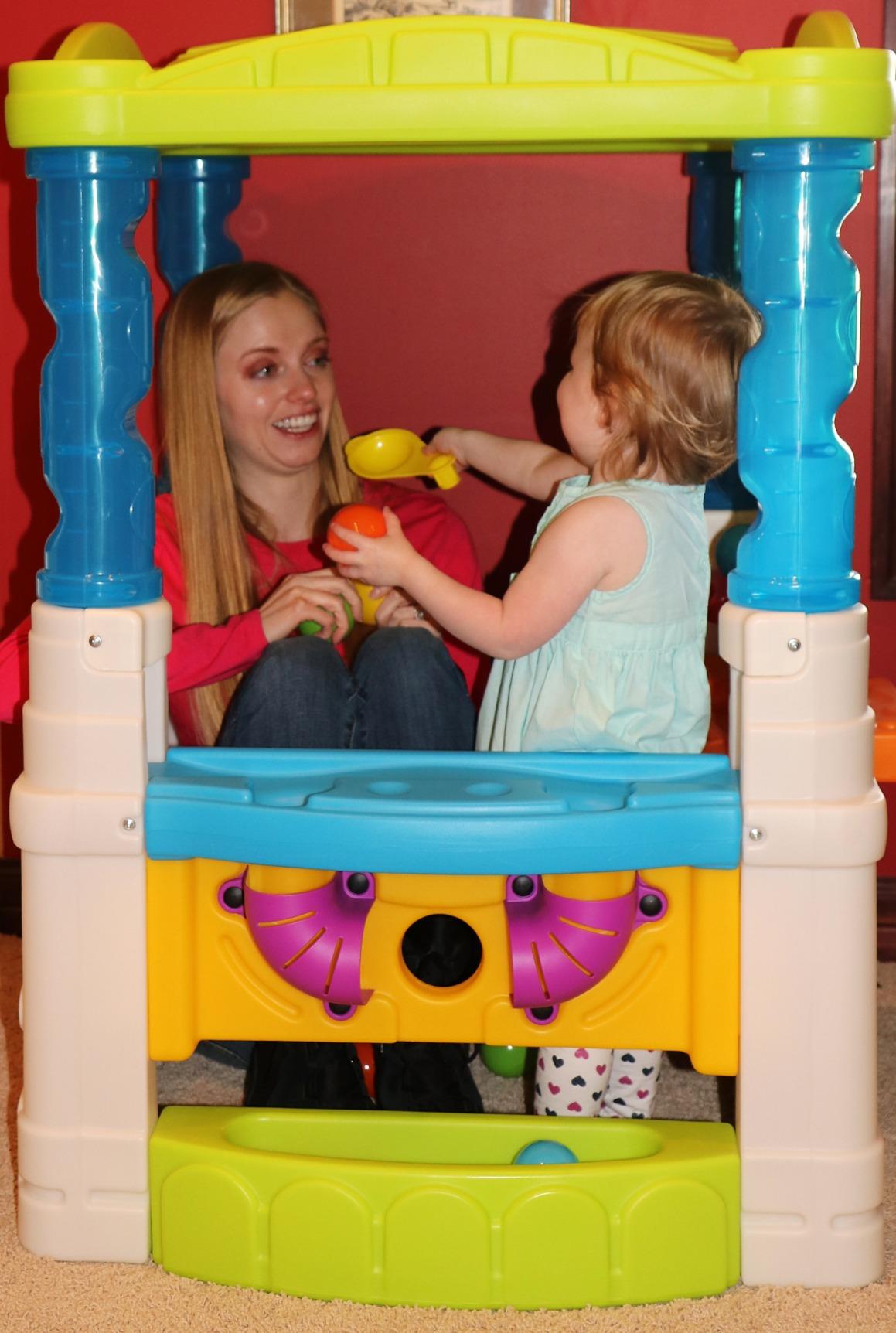
The box includes 20 colorful balls plus a pouring pitcher and boiling pot, so there is a water-play element built in. Everything wipes clean, and the double-walled plastic is the same construction used across the Step2 range.
Our favorite practical detail is the bottom basin, which doubles as ball storage. Cleanup is the fastest in this group, which matters more in a small yard where loose balls end up in the grass every single time.
Is this a substitute for a playhouse?
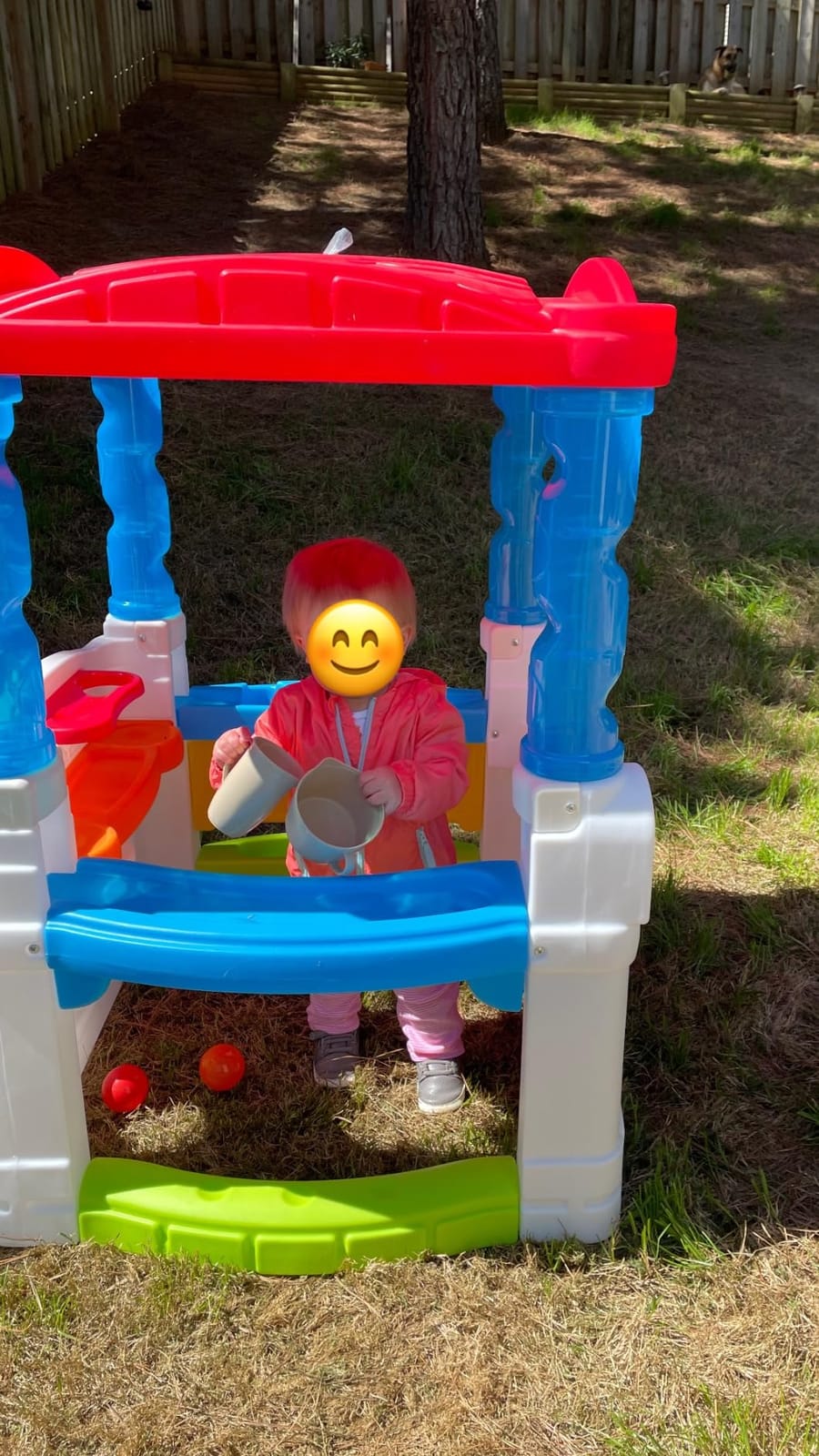
Only if your child is under about four or is primarily an active rather than an imaginative player. There is no enclosed interior for hide-and-seek, no door to pretend to shut, and no kitchen. Reviewers are consistent that it functions more as an activity pit than a walk-in house.
At 36 inches wide it is one of the narrowest options here, so it pairs well with a small yard where you want play value without a big structure.
What should you watch out for?
The listed weight is 36 pounds, and moving it while full of balls is awkward. Empty it first, then move it, which the basin design makes easy.
The 36-inch width also limits how many toddlers fit inside at once, and the 20 balls are consumed quickly since replacement balls are not sold in bulk. Budget for a ball refill if this is going to live outside.
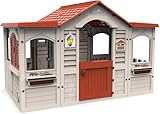
6. Chicos Le Chalet Grand Cottage: Most Openings, No Tools
Le Chalet Grand Cottage Playhouse for Kids, Indoor & Outdoor, Easy Assembly, Fun Features, Durable Plastic
41.7 wide x 11.6 deep x 33.1 high
Tool-free click-clack build
Six windows and letterbox
Pros
- No tools needed for assembly
- Six openings for the size
- Generous interior for pretend cooking
- Indoor and outdoor plastic
Cons
- Lowest rating in the group
- Shallow listed depth
- Weakest five-star share here
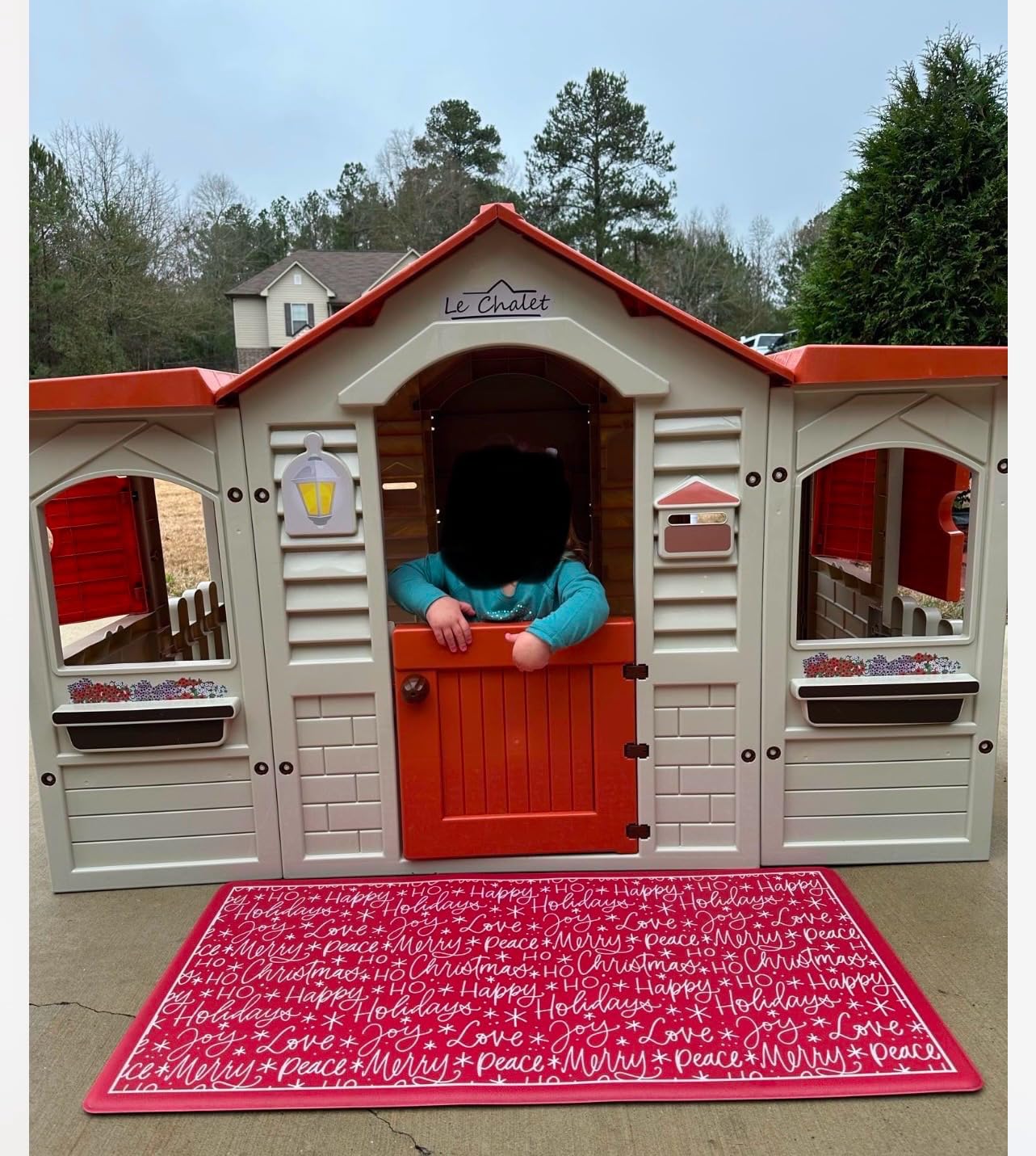
The Le Chalet is the one to consider if nobody in your house owns a drill. It uses a click-clack assembly system, and the model is built for 24 months and up with folding windows, a letterbox, a barbecue and a cat flap for role play.
Six windows plus a letterbox and a cat flap is an unusually high number of openings for a house this size. More openings means more light inside, which matters a lot in a shaded corner of a small yard.
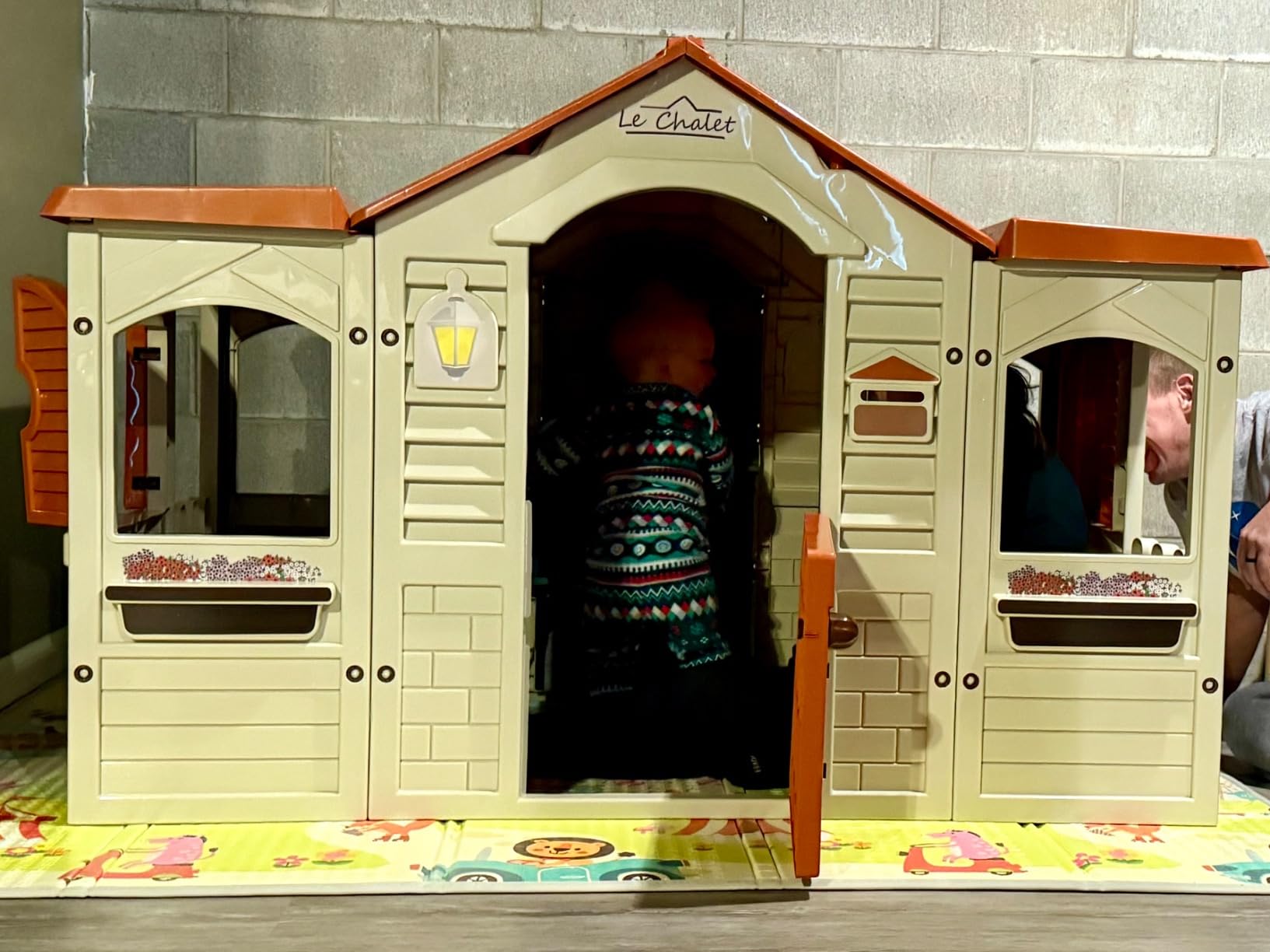
The interior is generous enough for pretend cooking at the barbecue, and the plastic is specified for both indoor and outdoor use. If your child likes posting letters to grandparents, the letterbox alone can carry the play for months.
We want to be straight about the rating: this is the lowest-rated product in our roundup at 4.0 stars from 690 reviews, with only 56 percent of ratings at five stars. That is a meaningfully weaker distribution than the rest of the field.
How should you read a 4.0 star rating?
Read the one-star share, which sits around 12 percent, and know what it clusters around: assembly friction and durability complaints. Tool-free assembly sounds simple, but reviewers still report a meaningful share of build frustration, so allow time and read the instructions fully first.
For a family that values a drill-free build and a lot of openings, that trade can be worth it. For a family that wants the smoothest ownership experience, the higher-rated options are safer bets.
What about that 11.6-inch depth?
The listed depth is 11.6 inches, which sounds implausibly shallow and is the detail we would call out hardest. The manufacturer also lists the unit at 159 by 103 by 104 cm, so the real assembled floor area is deeper than the depth figure suggests. Check both numbers before you measure your space.
Weigh it at 15 kg, which is manageable for two people and awkward for one. The tool-free build means you can also take it apart again to move it.
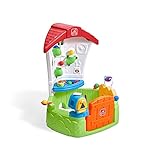
7. Step2 Toddler Corner House: Best Value and Narrowest
Step2 Toddler Corner House, Kids Playhouse, Indoor/Outdoor Playset, Play Gym with Kitchenette, Includes 15 Piece Toy Accessories, Made of Durable Plastic, for Toddlers 1+ Years Old
31.5 wide x 32.75 deep x 41.75 high
Ball-drop maze
Kitchenette with 15 pieces
Pros
- Narrowest footprint in the group
- Light at 28 lb for one adult
- Great value entry to Step2
- Ball maze plus kitchenette combo
Cons
- Room for one or two toddlers
- Smaller accessory bundle
- Adult assembly required
At 31.5 inches wide, this is the narrowest house in the roundup, and for a genuinely tight yard that may be the only one that works. It is a corner design, so it sits against two walls and gives you more usable lawn than its square competitors.
You get a ball-drop maze, a kitchenette and a 15-piece accessory set, which is a lot of play surface for the footprint. Recommended ages run 12 months to 4 years, so this is the pick for the youngest end of the range.
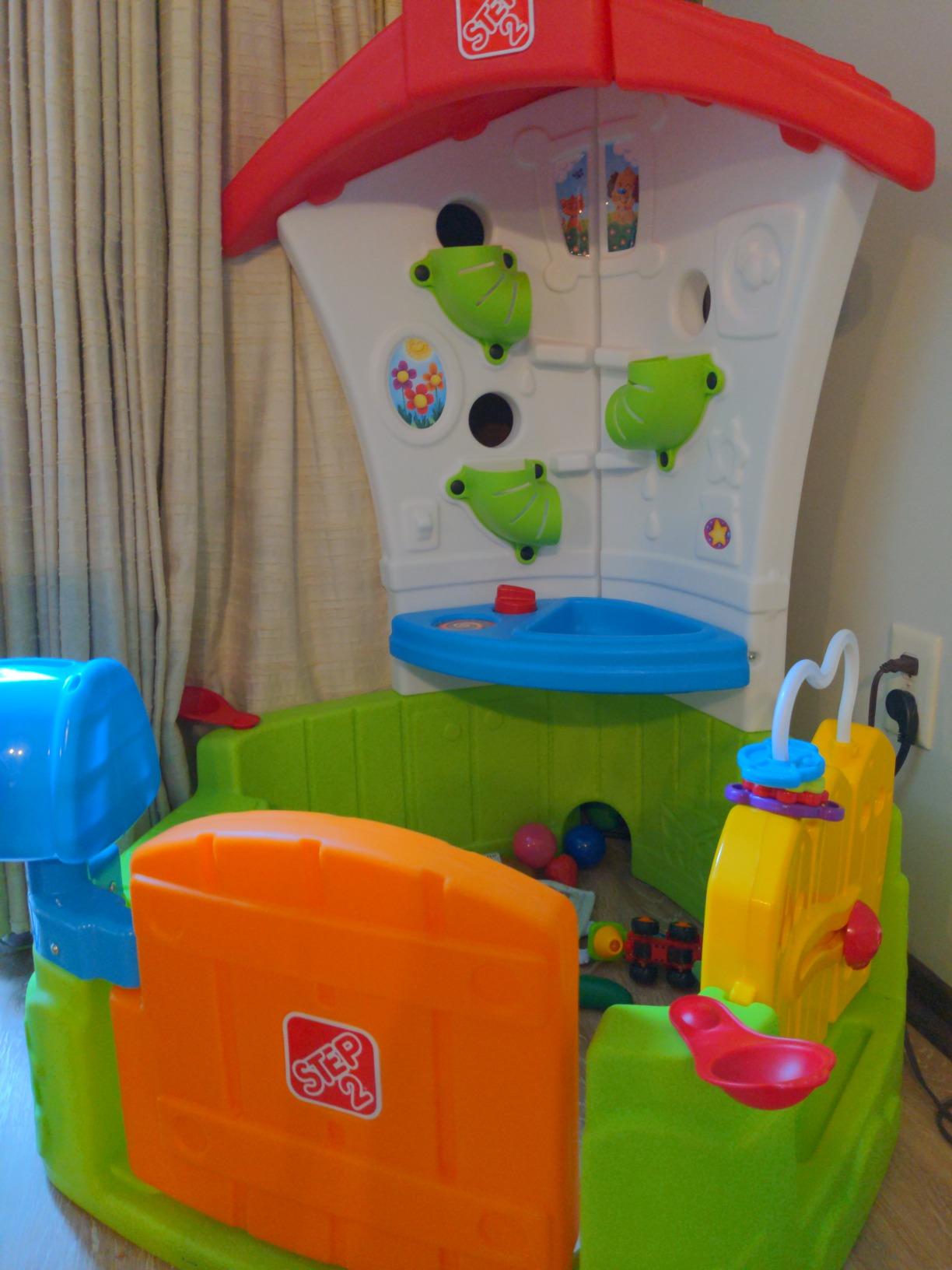
The listed weight is 12.7 kg, which keeps it light enough for one adult to reposition, and there is functional storage inside to keep toys organized rather than scattered. Reviewers treat it as the value entry point into the Step2 range, and the 4.6-star rating from 620 reviews supports that.
One caution: the ball maze is a strong draw for a one-year-old and needs an adult nearby, because the balls are small and the drop action is repetitive. For that age, the age range is doing real work.

Is 31.5 inches narrow enough for a very small yard?
It is as close as we found in a walk-in format, and the corner shape means you can push it into an L-shaped space where a square house will not go. Add about two feet of clear space in front for the door and the kids, and you have a workable arrangement.
For anything smaller, consider a pop-up fabric tent or a foam playhouse, which fold flat between uses. Our toddler swing set picks for small yards cover the other compact-space option worth considering.
Where does it fall short?
The interior suits one or two toddlers rather than a group, so if you have multiple children of similar age, the crowding will show quickly. The 15-piece accessory set is also smaller than what the Grand Walk-In Kitchen includes, though it is still enough to start.
Adult assembly is required with hardware included, and unlike the Chicos models you will need a screwdriver. Set aside an hour.
8. Chicos Grand Cottage XL: Simple, Tool-Free, Roomy
Chicos – Grand Cottage XL Children’s Outdoor House, Made of Durable Plastic, Durable and Easy Assembly, Beige with Red Roof, Single (89627)
41.7 wide x 11 deep x 32.7 high
Five windows
Click-clack tool-free assembly
Pros
- Assembles without any tools
- Five windows for light and pretend play
- Roomy interior for 24 months up
- Durable plastic for indoors and out
Cons
- No interactive features at all
- Panels flex unless anchored
- Shallow listed depth
The Grand Cottage XL is the plain version of the category, and that is not an insult. Five windows, a durable plastic shell, indoor and outdoor rated, and a click-clack build that needs no tools at all. Recommended from 24 months up.
For a family that wants a house and not a toy full of accessories, this is refreshing. There is no doorbell, no phone, no sink and no included accessories, which means less to lose and less to store.
It carries a 2 Year Limited Warranty and a rating of 4.2 stars from 599 reviews, with 62 percent five-star. The rating spread is the thing to notice, and it is wider than the higher-scoring models in this roundup.
Two complaints come up repeatedly. Owners report plasticky panels that flex in wind unless the house is anchored, and they point out the absence of interactive features as a reason the novelty wears off faster than it does elsewhere.
Does the plastic flex in real wind?
It can, and this is the one to plan for. Reviewers describe panels that move in wind unless the house is secured, which matters in an open yard but much less in a sheltered corner between a fence and a hedge.
Plan to anchor it rather than relying on its 14.57 kg weight to hold it. Sandbags under the base corners or a ground anchor solve the problem without any permanent work.
Is a house with no features still worth it?
For a child who wants a space rather than a toy, yes. A plain cottage supports quieter pretend play, drawing and reading as well as any feature-heavy model, and there is nothing to break.
If you want a house that keeps generating new scenarios for two years, spend up for one of the Step2 models with a doorbell, a sink or lights and sounds. The five windows here do keep the interior bright, which is a genuine plus in a shaded yard.
9. Chicos Pink Princess House: Lightest and Themed
Chicos – Pink Princess – Outdoor and Indoor Children’s Playhouse – Fantasy Decorations – 48″ x 40.5″ x 40.9″ – Ages 24 Months-5 Years – Made in Spain
41.7 wide x 11 deep x 32 high
2 windows
11.7 kg build
Made in Spain
Pros
- Lightest build in the group at 11.7 kg
- Tool-free snap assembly with no hardware
- Princess theme stands out from neutral cottages
- Compact 48 by 40.5 inch footprint
Cons
- Only two windows
- Shallow interior
- No interactive features or accessories
Theming is the whole pitch here, and it works better than it sounds. The fantasy princess decorations and pink styling make this the easiest house in the roundup to hand over for a specific birthday, and it photographs well in a small yard where neutral cottages blend into the fence line.
Mechanically it is simple. It snaps together with no tools and no hardware, the plastic is rated for indoor and outdoor use, and it is made in Spain. At 11.7 kg it is the lightest listed build in this roundup, so one adult can move it without planning around it.
Recommended ages are 24 months to 5 years, which is the narrowest age range in the group alongside the Chicos cottage. Assembled measurements are listed at 48 by 40.5 by 40.9 inches, so check those rather than the item dimensions field before you measure.
Two windows is the fewest glazing on any Chicos model here, and the interior depth is tight. A child who likes the aesthetic will spend time in it; a child who quickly tires of the theme may not.
Is the theme enough to carry the play value?
Usually for the age range it targets. Between two and five, the fantasy styling gives a child a starting scenario rather than an empty shell, and the snapping-together build means the house can be put up and taken down without any learning curve.
Past five, the theme stops helping. That is the honest limit of this approach and the reason it sits lower in our ranking despite the good rating.
What should you consider instead?
If the theme is what you are buying, nothing else in the group does it better. If the theme is secondary and you want longer play value, the Step2 Neat and Tidy Cottage runs to 10 years and gives a child a doorbell, a phone, a sink and a drive-thru window to keep the scenarios going.
The one-star rating share here is around 7 percent, which is the second highest in the roundup, mostly from complaints about the small shallow interior and the lack of accessories.
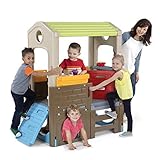
10. Simplay3 Young Explorers Discovery Playhouse: Two Levels in One Footprint
Simplay3 Young Explorers Discovery Playhouse – Indoor or Outdoor Clubhouse and Activity Playset for Toddlers and Kids, Made in USA
57.75 wide x 29.5 deep x 58.25 high
Two levels with crawl space
Art board and marker tray
Pros
- Two play levels in one footprint
- Fits through a standard door frame
- UV resistant double-wall plastic
- Art station is a standout feature
Cons
- Widest unit in the group
- Limited head clearance inside
- Smallest review base here
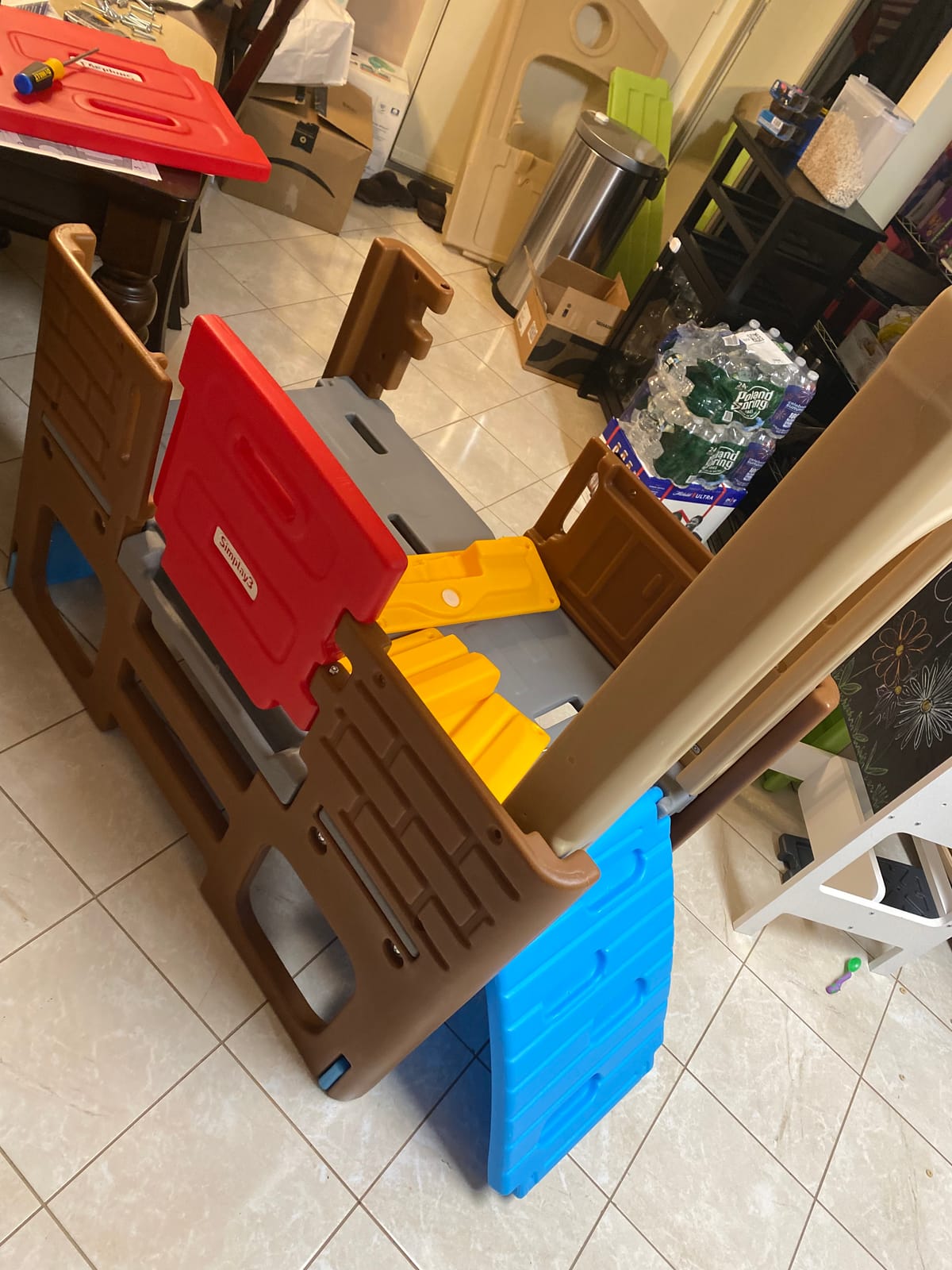
This is the widest unit in the roundup at 57.75 inches, so it does not belong in the tightest yards, and we include it because the two-level layout solves a problem the others cannot. A climbing ramp, ladders, foot and hand holds lead to a rooftop level, and there is a crawl space underneath.
Two children can be playing on different levels at once, which is genuinely useful in a yard too small for two separate structures. The pretend kitchen, drink holders and an art board with paper clips and a marker tray add a station that most playhouses do not have at all.
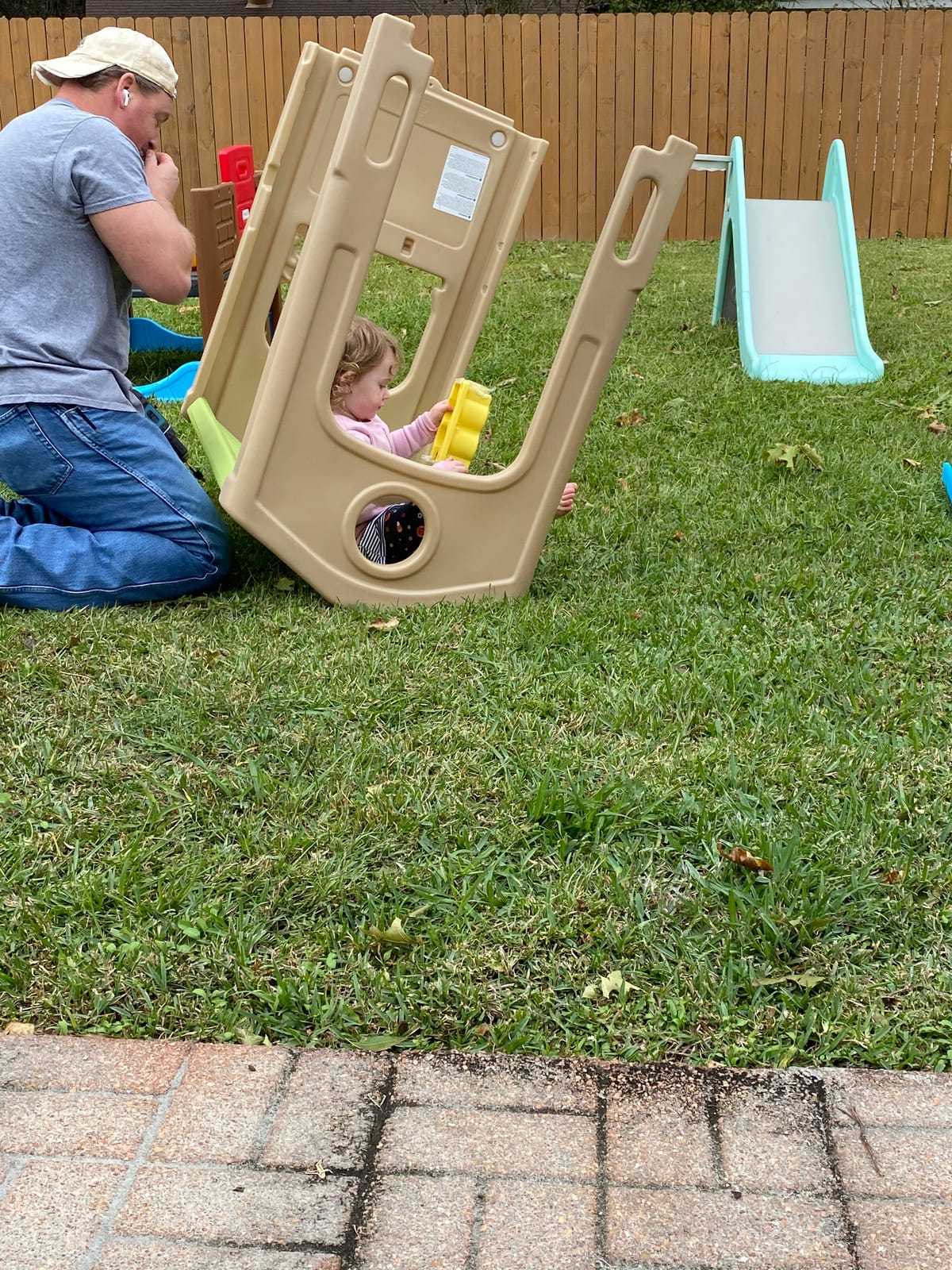
It is made in Ohio from double-wall plastic specified as weather and UV resistant, with rounded child-friendly edges. It also fits through a standard door frame, so the indoor and outdoor transition is painless. Recommended from 18 months to 6 years.
It is part of the Simplay3 Young Explorers modular system, so if your yard later grows you can add to it rather than replace it. That is a real advantage for a family on a small lot who may move to a bigger one.
Does a 58-inch height create a head clearance problem?
Inside, adult head clearance is limited, and a parent will not comfortably crouch in to help. That is normal for a two-level structure, but it does mean the crawl space and the lower level need a flashlight or a door that stays open for light.
For older siblings, the rooftop is the draw. Just keep in mind that anything elevated means supervision matters more, and a ramp plus ladders is a different safety conversation than a ground-level door.
What is the main drawback?
Width. At 57.75 inches you need nearly 5 feet of clear span, and you also need clear space in front for the ramp and ladders to be usable. In a yard under about 18 feet across, this will dominate the space.
It also carries the smallest review base here at 278 reviews with a 4.5-star average, so there is less long-term history to lean on than the models above it. The two-year rating band is also thinner than the canopy patio model.
How to Measure a Small Yard and Choose the Right House
Most small-yard mistakes happen because people measure the yard instead of the usable space. A 20-by-20 lawn with a shed, a fence, a hose reel and a patio edge might leave you a 10-by-8 patch of level ground, and that is the number that decides everything.
Measure usable width, not total yard width
Walk the area and find the widest continuous stretch of level ground. Do not use the property line number, because fences, downspouts and stored items eat into it. Then subtract the assembled width of the house from that number, and what remains is your walkway.
As a working example, if your widest level stretch is 9 feet, a 35-inch Cape Cottage uses just under 3 feet and leaves about 6 feet of open yard. Put the same 9 feet against the 58-inch Simplay3 unit and you have roughly 4.5 feet, which is tight but workable. A 53-inch cottage in that same spot leaves about 4.6 feet.
Leave clearance for the door swing and the kids
Parents on r/daddit and r/Preschoolers ask the same question repeatedly: how much room do you need for the house plus the children running around it. A rough rule we use is three feet of clear space on at least one full side, and two feet on the door side so the door can swing and a child can step out without hitting a wall.
Also check the door swing against the fence. A Dutch-style door that opens outward needs more clearance in front than a sliding or inward-opening door, which is one reason the wider cottages are harder to place.
Ground-level wins in almost every small yard
The single biggest space decision is to avoid elevated structures. A loft or a raised deck adds height rather than footprint, but it adds a ladder, a fall surface and a supervision requirement, and in a small yard the run-out space around a slide is what actually consumes the lawn.
For a two or three-year-old, ground-level is also the safer default. One parent in an r/Mommit thread listed the same reasoning: a ground-level house means the child can carry toys in and out without an adult lifting them up each time.
Plastic vs wood: an honest take
Plastic wins on maintenance and footprint. There is no stain, no sealer, no annual resealing and nothing to repaint after a hard winter, and the double-wall construction is specified to resist chipping, fading, cracking and peeling. A plastic house can also be taken apart and moved, which a cedar fort generally cannot.
Wood wins on longevity and on feel. Cedar and spruce playhouses outlast plastic by years, they weather to a silver-grey rather than fading unevenly, and they do not become brittle in cold weather. If you are building for a child who is eight or nine and will keep the house for a decade, a wood structure is the better long-term answer.
For our purposes, in a small yard with a toddler, plastic is the right default. If your child is past six, read the durability section below before you commit.
Durability, UV fade and water pooling
How long a plastic playhouse lasts outdoors depends far more on the panel thickness and the UV stabilization than on the brand name. The Simplay3 unit is specifically described as weather and UV resistant double-wall plastic, and the Step2 range is specified to resist fading and cracking. Lower-cost plastic in thinner shells is where you will see problems first.
Do plastic playhouses fade in the sun? Some do, and the visible damage is usually decals rather than the shell. On the Little Tikes Cape Cottage, owners specifically mention sticker decals fading after prolonged direct sun, while the plastic body holds up. Positioning the house in partial shade, and keeping the hose handy, slows all of it down.
Water pooling is the issue nobody on our list of competitors addresses, and it comes up constantly in parent forums. The complaint pattern is consistent: hollow double-wall panels trap water after heavy rain, and parents end up drilling small drain holes as a workaround. Stand water inside a wall is worth taking seriously, because it sits warm and stagnant, and standing water is exactly what breeds mosquitoes.
Our approach is preventive. Place the house on a slight slope rather than dead flat so water runs out, keep the door shut in a storm so the sill does not act as a scoop, and check the base after the first big rain. If you do find water inside a panel, drill a small drain hole at the lowest point of that panel and dry it completely.
Anchoring, safety and supervision by age
Should you anchor a plastic playhouse? In an open or exposed yard, yes. The Chicos Grand Cottage XL in particular gets review mentions of panels flexing in wind, and anchoring removes that concern entirely. Sandbags in the base corners or a ground anchor is enough, and neither requires digging or permanent work.
For ages two to three, stay within arm’s reach and keep the entry ground-level. For three to five, a gate on the yard is usually enough if the house is a closed cottage. From six upward, an elevated structure with a ramp or ladder changes the supervision equation, which is one more reason the two-level unit sits last in our ranking.
Rounded corners and smooth surfaces are a genuine advantage of plastic for toddlers, and that is the case where the material wins clearly. Washing the house down with a hose and wiping it is the entire maintenance routine, which is also why we keep a hose reel in our small-yard kit. Our picks for garden hose reels for small yards cover the storage side of that.
Frequently Asked Questions
What size playhouse fits a small yard?
Most small yards work best with an assembled width under 50 inches, a ground-level door, and no slide or loft. The Step2 Toddler Corner House is the narrowest in our roundup at 31.5 inches wide, and the Little Tikes Cape Cottage is the narrowest walk-in cottage at 35 inches. Budget about three feet of clear space on one side for the kids to move around.
Which is better for an outdoor playhouse, plastic or wood?
Plastic wins for small yards because it needs no stain, sealer or repainting, weighs far less, can be taken apart and moved by one adult, and comes in smaller footprints. Wood wins on longevity and appearance, lasting many years longer and weathering more evenly. Choose plastic for a toddler and a small lot, and wood for a child who is six or older and will keep the house for years.
How durable are plastic playhouses?
Durability depends on panel thickness and UV stabilization rather than brand. The Simplay3 Young Explorers unit is specified as weather and UV resistant double-wall plastic, and the Step2 range is specified to resist chipping, fading, cracking and peeling. Lower-rated models in this roundup see recurring complaints about panels flexing in wind and decals fading in direct sun.
How much yard space do I need for a playhouse?
Measure the widest continuous stretch of level ground, not the total yard width, then subtract the assembled width of the house. Leave about three feet of clear space on one full side and two feet in front of the door for the swing and for a child to step out. If your clear width is under eight feet, target a house under 36 inches wide.
What should I do about water pooling inside the panels?
Place the house on a slight slope so water drains toward the door, keep the door shut during heavy rain so the sill does not scoop water, and check inside the base after the first storm. If water collects inside a hollow panel, drill a small drain hole at the lowest point of that panel and dry it fully, because standing water inside a wall is the part that causes problems.
Where do I store a plastic playhouse in the winter?
Move it indoors if you can. The lighter models in our roundup, such as the Little Tikes Cape Cottage at 32 pounds and the Chicos Pink Princess at 11.7 kg, can be carried by one adult through a standard door. Heavier units like the Step2 Neat and Tidy Cottage take two adults, and the tool-free Chicos models can be taken apart and rebuilt.
The Verdict for Small Yards
The Little Tikes Cape Cottage is our pick for the best plastic playhouses for small yards. At 35 inches wide and 32 pounds it is the narrowest walk-in cottage we found, one adult can move it, and more than 14,000 reviews describe the same easy assembly and durable styling.
Runners-up depend on your child. The Step2 All Around Playtime Patio takes the highest owner rating and adds a canopy for shade. The Step2 Toddler Corner House is the narrowest option at 31.5 inches and the best value for the youngest ages. The Step2 Neat and Tidy Cottage is the one to buy if you want the longest play life and the most features.
Measure your clear width first, subtract the house, and leave yourself three feet to move. Then pick from the ten above and check the current details for your exact yard.