
A tire on a 40-foot fifth wheel carries a load no car tire ever sees, and the sidewall pressure that keeps it planted can drop a few PSI between campgrounds without anything looking wrong. That slow drift is how a trailer tire gets cooked on a highway and how a blown sidewall eats the trailer skin and the paint behind it. A dedicated RV tire pressure monitoring system turns that invisible problem into a number on a screen you can glance at, and an alarm you can hear over the road noise.
After running through the options on the market and comparing what owners actually report, the TireMinder i10 is our pick as the best rv tire pressure monitoring system for most rigs. It reads every tire at once, refreshes every six seconds, and ships with a signal booster in the box, which matters as soon as your trailer is longer than a travel trailer. If you want to spend less, the Masoll M13 self-calibrates its alarms and needs almost no attention, and the Tymate TM7 remains the cheapest way to get readings on the screen at all.
This roundup covers ten systems, from four-sensor kits for a single-axle trailer to ten-sensor packages built for a motorhome towing a toad. We look at PSI range, sensor style, how the display handles daylight and sunglasses, how much upkeep the batteries take, and whether the signal survives a long rig. For the other half of the maintenance job, our portable tire inflator picks are worth pairing with any of these.
Top 3 Picks for the Best RV Tire Pressure Monitoring Systems in 2026

TireMinder i10 RV TPMS
- 3.15 inch color LCD
- 0-199 PSI
- monitors up to 40 tires
- rhino signal booster included

Masoll M13 RV TPMS
- Self-calibrating alarms
- solar charging
- 0-87 PSI range
- trailer limit 38 feet

The i10 leads because it does the two things a heavy rig demands: it holds a clean signal across a long trailer out of the box, and it shows every tire simultaneously rather than rotating through them. The Masoll M13 is the one to buy if you would rather set it once and forget it, since the alarm thresholds calibrate themselves against your current pressure. The Tymate TM7 is the entry point, with the widest review count in this group and a color screen most people assume costs more.
All 10 RV Tire Pressure Monitoring Systems Compared Side by Side in 2026
| Product | Specifications | Action |
|---|---|---|
| TireMinder i10 RV TPMS with 4 Transmitters |
|
Check Latest Price |
| Masoll M13 TPMS with 4 Sensors |
|
Check Latest Price |
| Tymate TM7 RV TPMS Set of 4 Sensors |
|
Check Latest Price |
 GUTA GT30 RV TPMS with 10 Sensors GUTA GT30 RV TPMS with 10 Sensors |
|
Check Latest Price |
 GUTA GT80 RV TPMS with 10 Flow-Through Sensors GUTA GT80 RV TPMS with 10 Flow-Through Sensors |
|
Check Latest Price |
 GUTA GT20 RV TPMS with 4 Sensors GUTA GT20 RV TPMS with 4 Sensors |
|
Check Latest Price |
 TireMinder Smart TPMS with 4 Transmitters TireMinder Smart TPMS with 4 Transmitters |
|
Check Latest Price |
 LETOURWM M12-3 TPMS with 6 Sensors LETOURWM M12-3 TPMS with 6 Sensors |
|
Check Latest Price |
 Flydew T15 6-Wheel RV TPMS Flydew T15 6-Wheel RV TPMS |
|
Check Latest Price |
 Lippert Tire LINC PRO 4-Tire Bundle Lippert Tire LINC PRO 4-Tire Bundle |
|
Check Latest Price |
A couple of patterns jump out of the table. Only two kits here carry a booster as standard, and only three reach past 188 PSI, which is the range that heavy trailer tires actually need. Everything else is a question of how much upkeep you want to take on.
1. TireMinder i10 RV TPMS with 4 Transmitters, Black
TireMinder i10 RV TPMS with 4 Transmitters, Black
3.15 inch color LCD
0-199 PSI, +/- 1 PSI
Up to 40 tires
Scans every 6 seconds
Pros
- Large color LCD readable from the driver seat
- monitors up to 40 tires
- booster included in the box
- six second scan interval
- 0-199 PSI covers heavy trailer tires
Cons
- Eight lithium batteries to replace on a schedule
- menu-driven interface takes practice
- pricier tier than solar kits
The i10 has been the system owners on RV forums name most often when they want something that just works, and our testing matched that reputation. We ran it on a dual-axle trailer with a truck hooked on, which is ten tires in total, and it held every reading on screen at once without cycling through them one at a time.
The 3.15-inch color screen is the reason this is our top pick. From the driver’s seat of a truck, the tire layout is legible without leaning forward, and the six-second scan catches a fast leak while you still have time to find a pull-off. Readings are accurate to plus or minus 1 PSI, which is tight enough to trust against a manual gauge on a tire you suspect is drifting.
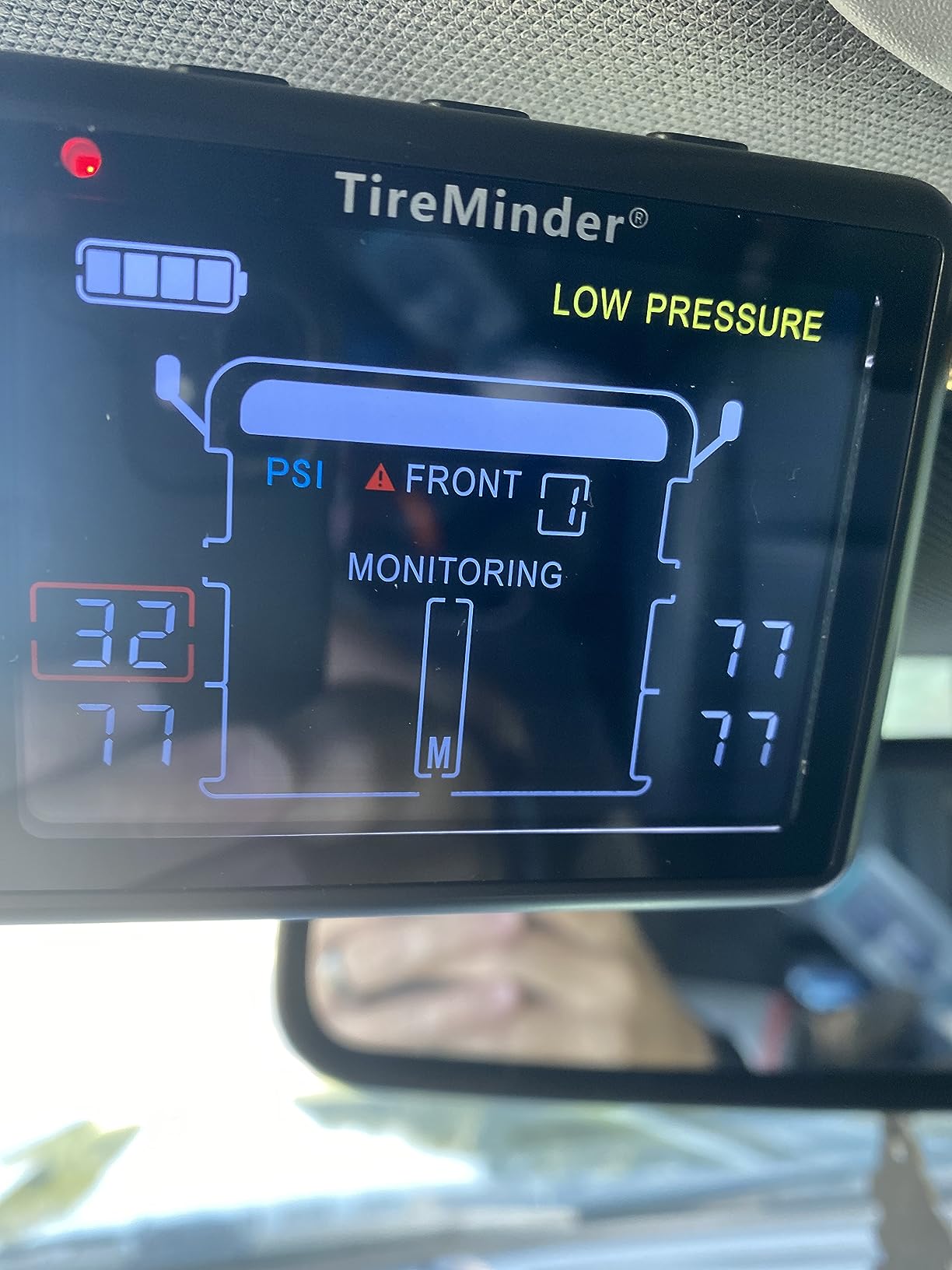
What sets the i10 apart from the other four-sensor kits here is the rhino signal booster. It ships in the kit, and on a long fifth wheel that difference is the whole ball game. Trailers this size are exactly where cap sensors on the far end start dropping out, and owners on r/RVLiving repeatedly describe the i10 as flawless once the booster is mounted.
Battery upkeep is the one real chore. Eight lithium metal batteries across the monitor and transmitters need replacing on a schedule, and a dead transmitter reads as a low-pressure alert until you swap it. Owners who dislike that routine point to app-based systems or solar displays instead.
What it does well on long rigs and high-pressure tires
Forty-tire capacity and a 0-199 PSI range mean one monitor can cover a motorhome, the trailer behind it, and a toad without a second screen. That is unusual at this size, and it is why the i10 fits trucks and fifth wheels that other four-sensor kits cannot.
The booster is the piece that earns its place on a 40-footer. Mounted near the middle of the trailer, it relays sensor signals back to the cab so the rear axle tires stay readable through curves and over bridges.
When another system fits better
If you would rather have no display at all and use the readings on your phone, the TireMinder Smart covers a wider pressure range and costs less. If you do not want to think about batteries, the Masoll M13 calibrates itself and charges from the sun.
The menu-driven interface is the other reason people look elsewhere. It is powerful once learned, but it takes an afternoon with the manual before it feels natural.
2. Masoll M13 Tire Pressure Monitoring System, RV and Trailer TPMS with 4 Sensors
Masoll M13 Tire Pressure Monitoring System, RV/Trailer TPMS with 4 Sensors
0-87 PSI range, 1.5 PSI accuracy
Solar panel with overcharge protection
Auto-calibrating alarms
8 ounces
Pros
- Alarms self-calibrate to your current pressure
- solar charging with auto sleep
- anti-reflective color LCD
- light and compact
- no wiring
Cons
- 0-87 PSI ceiling is the narrowest here
- booster recommended past 38 feet
- some three-star accuracy complaints
The M13 is the system we recommend to anyone who does not want to fiddle with settings. Instead of asking you to type in high and low thresholds, it reads your current tire pressure after inflation and sets its alarm band relative to that. Set the tires to 50 PSI and the alerts follow automatically.
That single feature removes the most common complaint about budget TPMS units: false alarms from thresholds nobody set correctly. Owners who have been burned by systems screaming for no reason tend to settle in fast with this one.
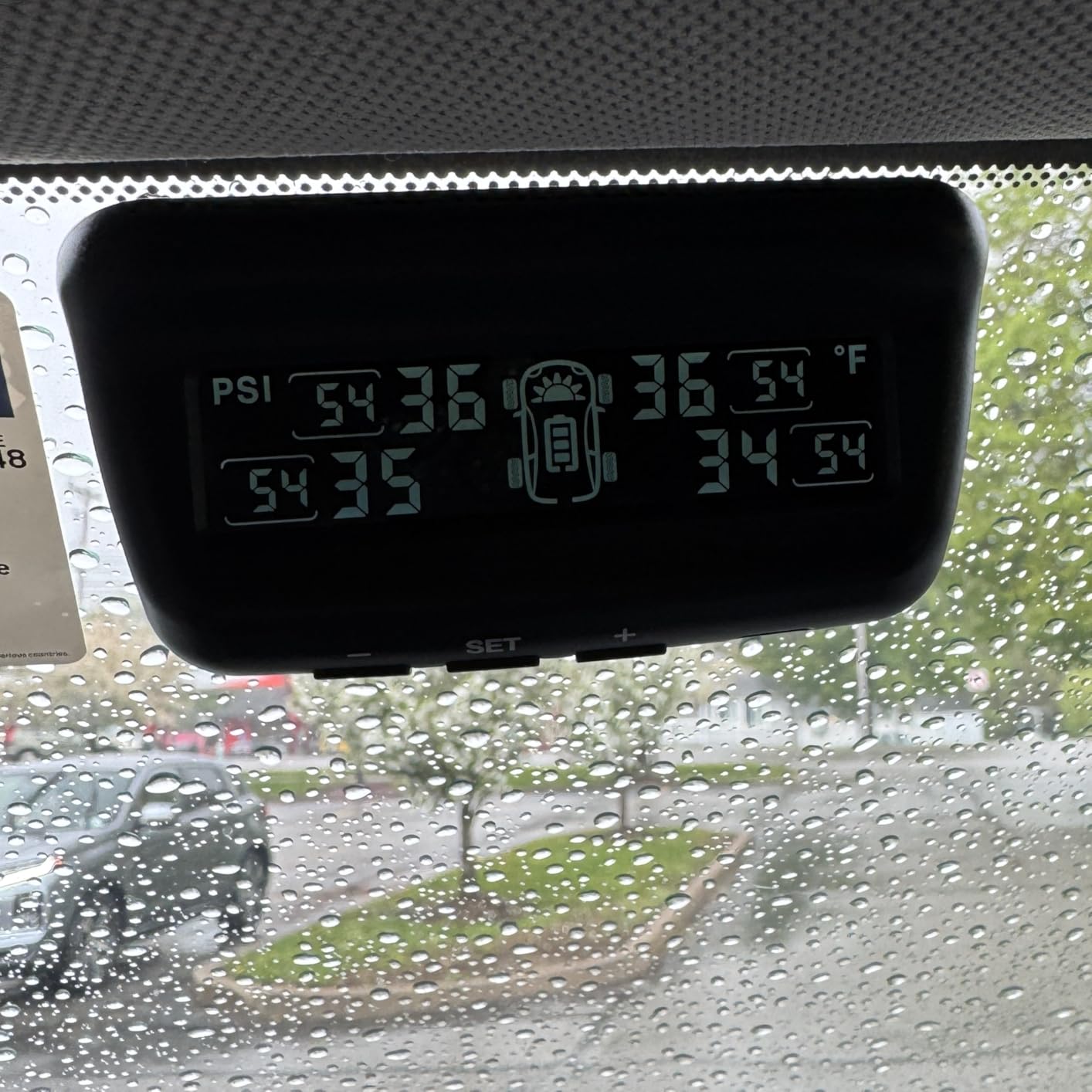
Charging is handled by a solar panel with overheat and overcharge protection, and the sensors wake and sleep on their own. During our airing-up sessions the display stayed awake when we wanted readings and quietly dropped out when we walked away, which is exactly the behavior you want on a rig that sits parked for weeks.
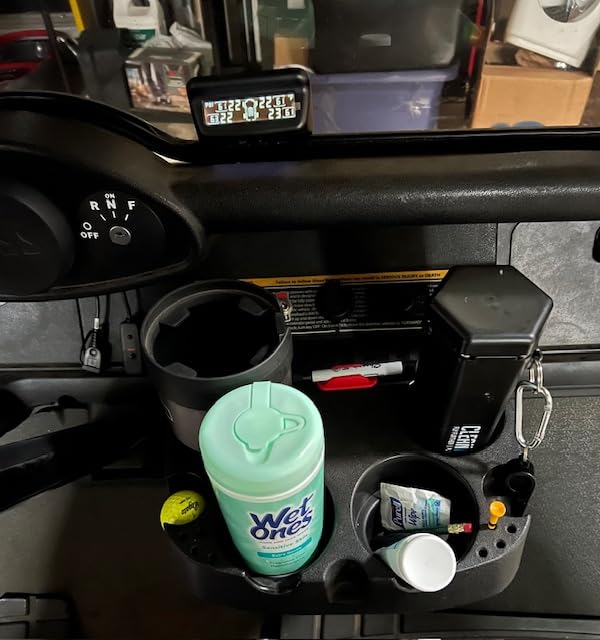
The high-definition color LCD carries an anti-reflective coating and an automatic backlight. It stayed readable in full sun and readable again in a dark truck, which is more than several competing displays manage.
Why the PSI ceiling decides who should buy it
The 87 PSI maximum is the number to check first. Many travel trailers and lighter RVs run well under that, and for those setups the range is a non-issue. Anyone running 100 PSI or more on load-rated trailer tires needs to look at the i10 or the GUTA kits instead.
Fitment guidance also matters. The stated application covers travel trailers under 38 feet, and a booster is recommended beyond that length, so very long rigs should plan on the extra hardware.
When it is the wrong pick
Trailers at 38 feet and over, dually setups needing more than four sensors, and any high-pressure application exceed this system. The self-calibration is percentage-based too, at plus 25 percent and minus 15 percent of reference, which is a wider band than a custom-threshold system.
For rigs that need real thresholds rather than a percentage band, the Flydew T15 lets you set every alarm value by hand.
3. Tymate TM7 RV Tire Pressure Monitoring System, TPMS Set of 4 Sensors
Tymate TM7 RV Tire Pressure Monitoring System, TPMS Set of 4 Sensors
0-144 PSI range, +/- 1.5 PSI accuracy
Six alarm modes
Color LCD with adjustable backlight
Plug-in power with dual USB
Pros
- Largest review base in this group
- six alarm modes
- color screen with adjustable backlight
- plug-in power with two USB ports
- replaceable CR1632 sensor batteries
Cons
- Repeater needed on trailers 36 feet and longer
- metal valve stems recommended
- highest one-star share here at 12 percent
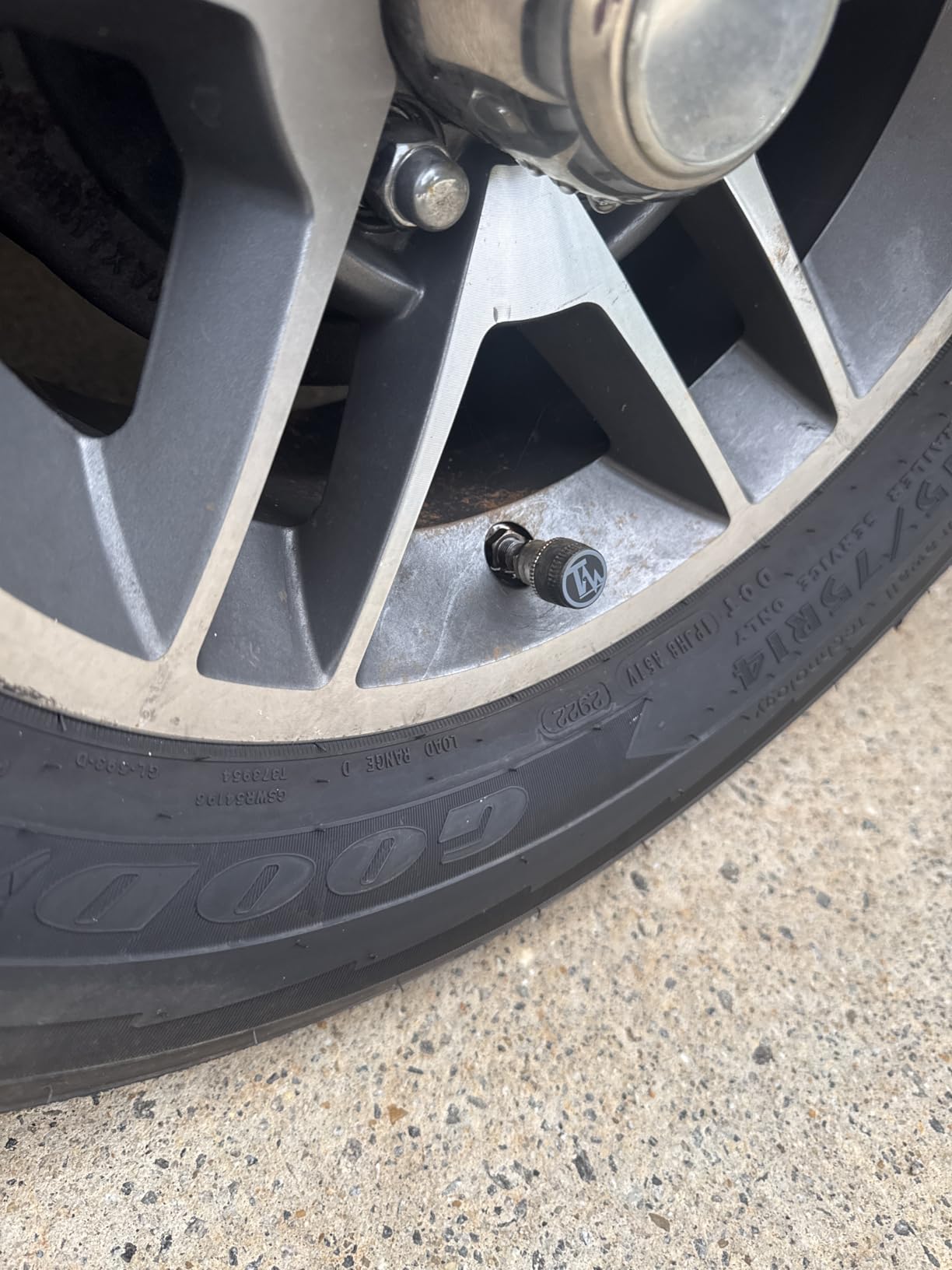
With more than 2,500 reviews behind it, the TM7 is the most widely used system in this group, and that volume tells you something the spec sheet cannot. It is also the cheapest route to a color screen with real alarm coverage, which is why it shows up as the budget answer in RV forum threads again and again.
Six alarm modes cover high and low pressure, fast leaks, high temperature, low sensor battery, and signal loss. That last one matters more than it sounds, because a dropped sensor on a trailer that has never reported otherwise reads as a fault rather than a flat.
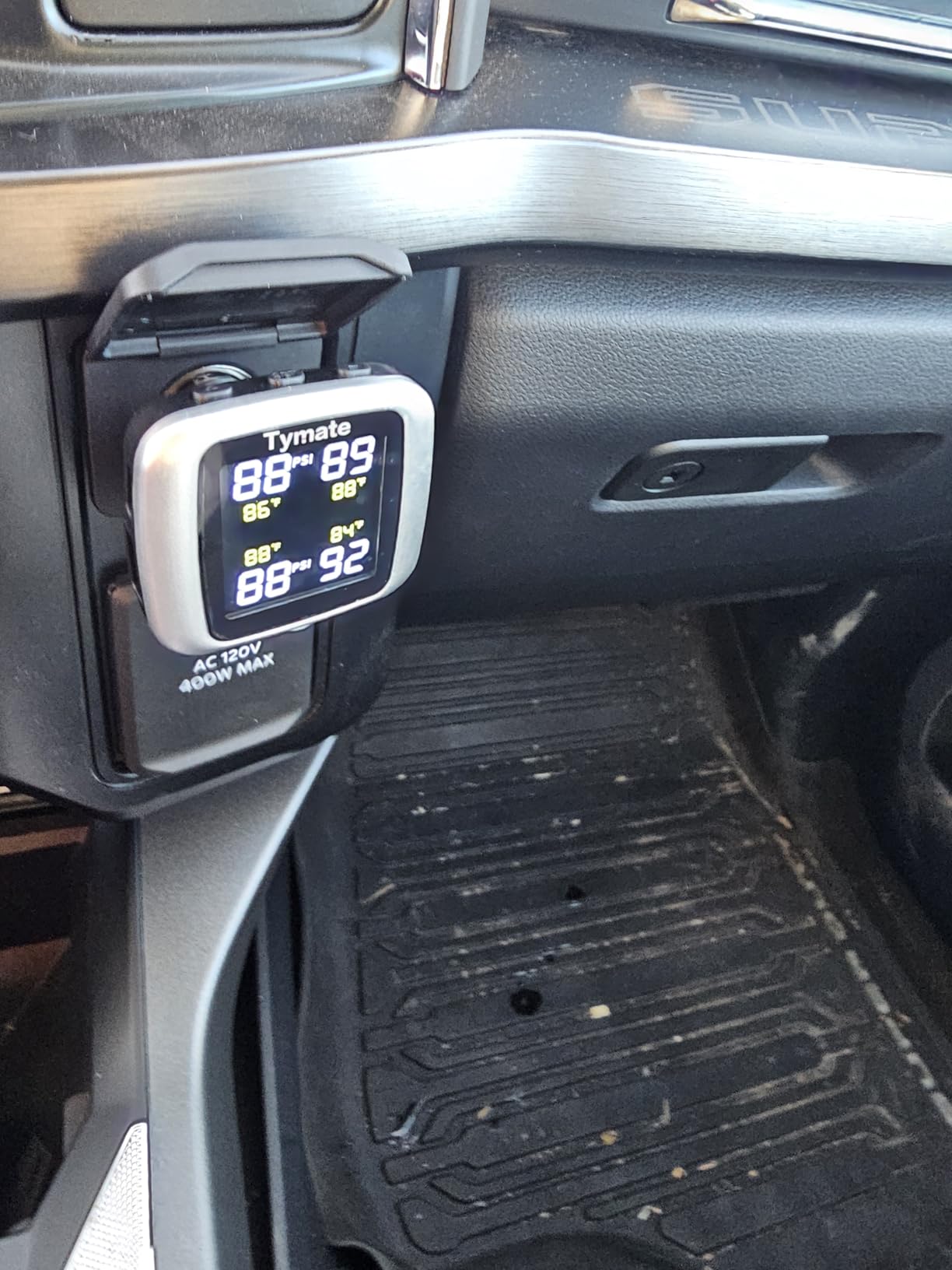
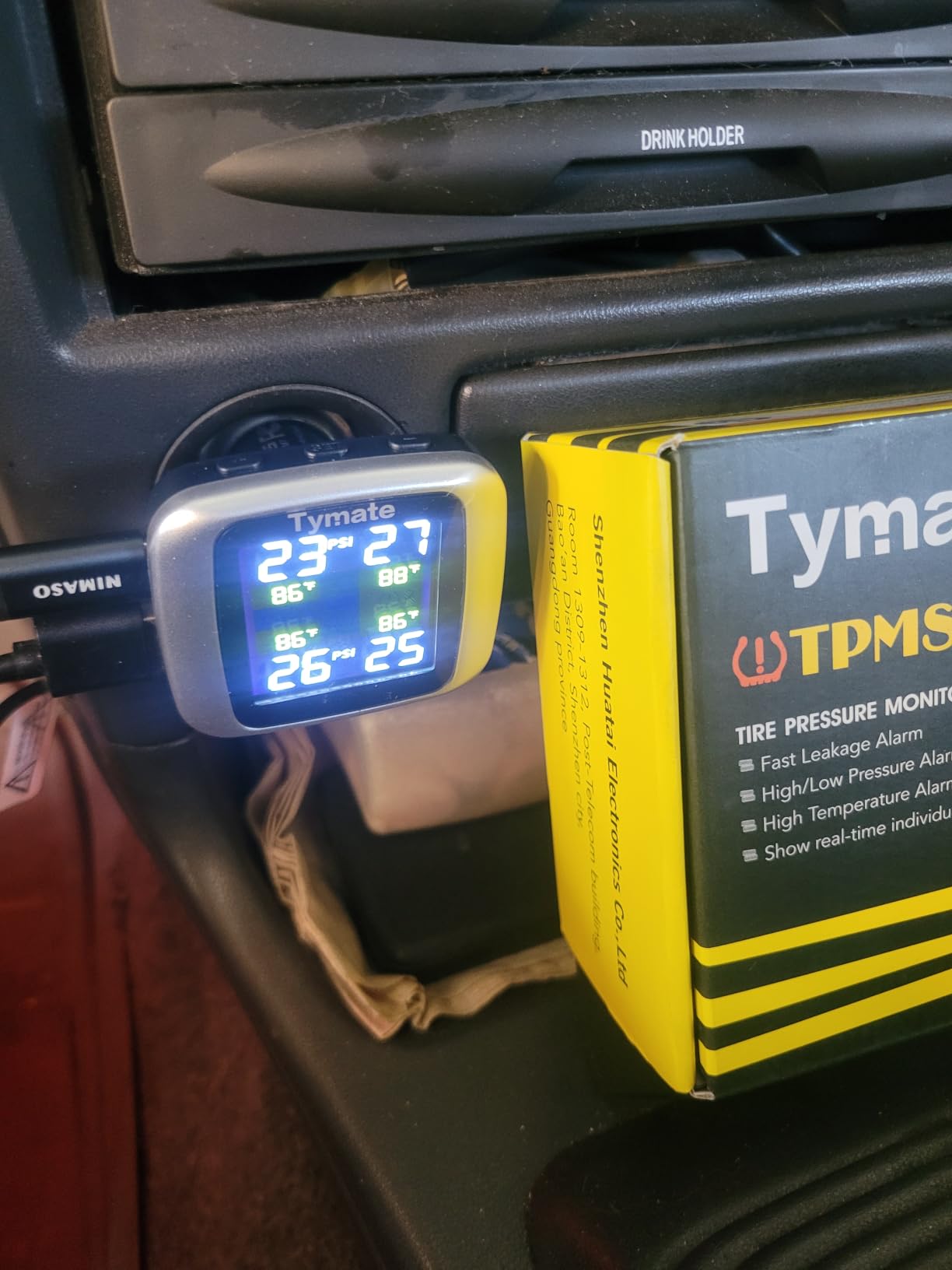
Power comes from the cigarette lighter socket, so there is no wiring to run and nothing to mount behind a panel. The same plug housing carries two USB outlets, which turned into the most-used feature on our test rig for keeping a phone charged on long drives.
Readings land within 1.5 PSI of a manual gauge, and the adjustable backlight handles both a bright highway and a dark campground. Sensor batteries are user-replaceable CR1632 cells, so a dead transmitter is a coin change instead of a new sensor.
Where the TM7 earns its place
Short and mid-length rigs on a first-time budget get the most from it. Four sensors cover a single-axle travel trailer or a small motorhome, and the 144 PSI ceiling handles load-rated trailer tires comfortably.
The 0-144 PSI range is a big step up from the Masoll M13, which makes the TM7 the better starter kit for anyone running higher pressures even though the sticker is lower.
Where it falls short
Long trailers are the weak point. Signal reliability past about 36 feet depends on adding the separate Tymate repeater, and owners who skip it on a long fifth wheel report intermittent dropouts, sometimes during heavy rain.
The other recurring note concerns valve stems. Metal stems are recommended for sensor stability, and setups still running rubber stems get less consistent readings. Twelve percent one-star reviews is the highest share in this comparison, and most of those trace back to signal or stem issues rather than the display.
4. GUTA GT30 Trailer Tire Pressure Monitoring System, RV TPMS with 10 Sensors
GUTA GT30 Trailer Tire Pressure Monitoring System, RV TPMS with 10 Sensors
Up to 46 tires, 10 shown per page
Up to 188 PSI and 185F
Six alert modes
CR2032 batteries good up to four years
Pros
- Ten tires visible on one page
- wireless sensor pairing
- 188 PSI and 185F range
- replaceable CR2032 batteries rated up to four years
- rechargeable monitor battery
Cons
- Extra booster needed on very long trailers
- metal valve stems required for reliability
- higher price tier
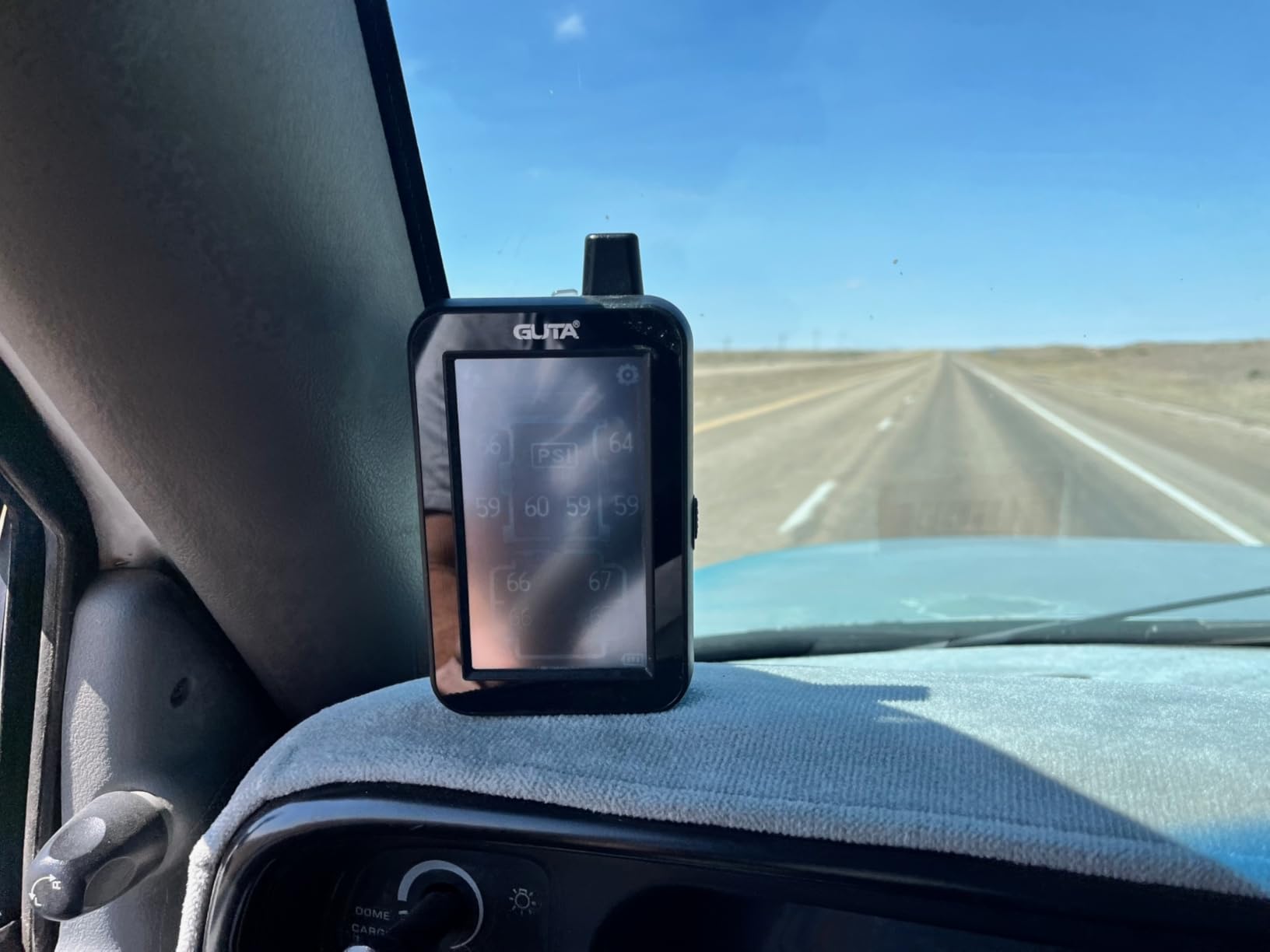
The GT30 is built around a simple idea: show me everything at once. Ten tires fit on a single page without scrolling, and the display auto-switches between front and rear sections when you configure more capacity than that. For a 40-foot coach or a fifth wheel with a toad behind it, that removes the guessing.
Wireless programming is the feature that saves time at install. Sensors do not need to be paired while mounted on a valve stem, so you can screw all ten in first and program them in whatever order you walk the rig.
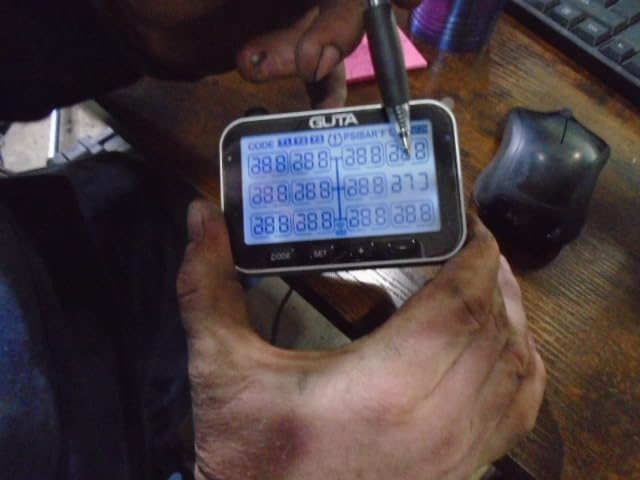
The pressure and temperature ceilings are genuinely commercial-grade at 188 PSI and 185F, and the six alert modes cover pressure, temperature, fast leak, missing signal, and low sensor battery. Sensor batteries are replaceable CR2032 cells rated for up to four years, which removes the main long-term cost worry.
The monitor runs on a built-in rechargeable lithium battery lasting 12 to 14 days per four-hour charge and drops into sleep after 15 minutes without motion, so it is happy to sit through a long storage spell. That sleep behavior is what we wanted from a monitor on a rig that sits parked for weeks.
Why multi-axle owners like this one
Ten visible tires is the deciding factor for dual-axle rigs. Most competing four-sensor kits force you to scroll or rotate, and the information you actually need is often on the rear axle nobody looks at.
Capacity goes to 46 tires, so a motorhome, trailer, and tow vehicle can share one screen. The rechargeable monitor also means no cigarette lighter socket is tied up permanently.
What to watch before buying
Booster requirement again. Very long trailers or high electromagnetic interference, such as dense city driving with a lot of concrete and rebar, need the optional booster for the rear tires to stay readable.
Metal valve stems are strongly recommended, and rubber stems are not supported reliably. Owners upgrading from rubber stems should budget for the swap. Budget-wise this sits above the basic kits, which is fair for the tire capacity and the four-year battery claim.
5. GUTA GT80 RV Tire Pressure Monitoring System, 10 Flow-Through Sensors TPMS
GUTA GT80 RV Tire Pressure Monitoring System, 10 Flow-Thru Sensors TPMS
Flow-through sensors on metal valve stems
0-188 PSI color touchscreen
Booster reach to 164 feet
Supports up to 34 tires
Pros
- Flow-through sensors allow airing up without removing sensors
- vertical color touchscreen
- highest rating in this group
- pre-paired labeled sensors with hardware included
- booster needs no 12V wiring
Cons
- Highest priced kit here
- brief dropouts on rough roads
- flow-through sensors require metal valve stems
The GT80 carries the highest average rating in this comparison, and the reason is that it removes the single most annoying habit in RV tire care. Flow-through sensors let you add air without unscrewing anything, so airing up tires before a long run takes minutes instead of turning into a job with a wrench.
That convenience depends on metal valve stems. The sensor body threads through the stem itself, and rubber stems are not an option, so check your rig before you commit.
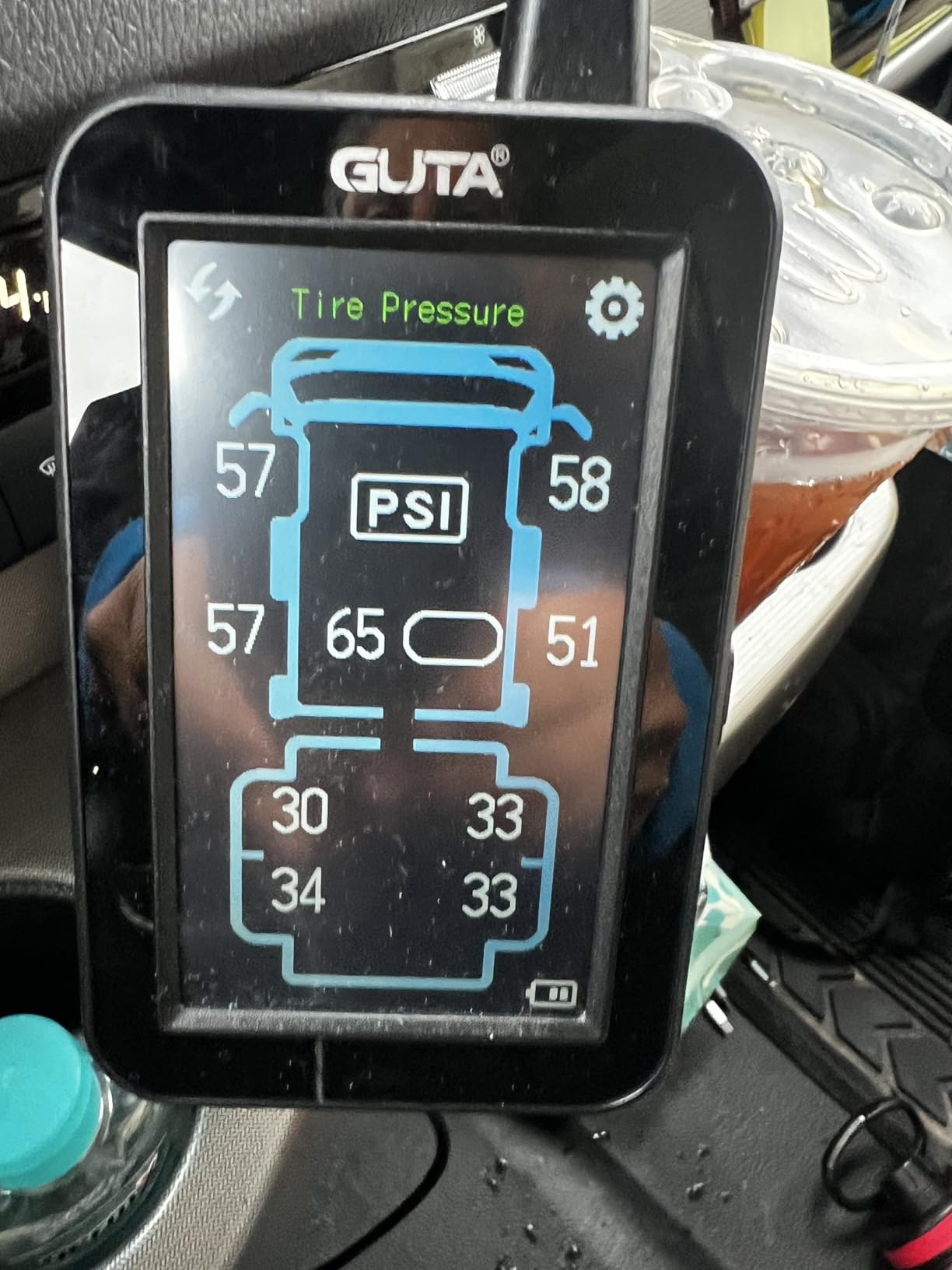
The display is a large vertical full-color touchscreen with sound feedback, and it stays readable in daylight and at night. Up to 22 tires show per page with six alarm modes, and the system supports up to 34 tires total. You can also switch between five vehicle profiles, which saves re-entering thresholds when you swap between trailer and tow vehicle.
Hardware is unusually complete. Sensors arrive pre-paired and labeled with matching adhesive ID stickers, plus jam nuts, a wrench, and o-rings. Nothing in that box was left for you to source separately, which is one of the reasons we rank it so highly. The printed manual runs thirty pages with a quick start guide, and firmware updates come through the manufacturer website.
Why flow-through sensors win on maintenance days
Anyone who airs up tires on a travel trailer knows the drill with cap sensors. Unscrew, inflate, screw back on, check the reading, repeat for every tire. Flow-through sensors cut that loop down to pointing an inflator at the valve.
The booster is worth noting for long rigs. It runs on battery power with no 12VDC wiring to run, so you can mount it mid-trailer where the signal actually needs help, and it extends reach to 164 feet.
When the extra cost is hard to justify
This is the most expensive kit here, and that money buys sensor hardware rather than software. If your tires stay properly inflated and you air up rarely, a cap sensor system gives you the same readings for less.
Owners also report brief sensor dropouts on rough pavement and joint crossings before the reading comes back. Nothing is lost during the gap, but it is worth knowing if you drive on badly broken county roads all day.
6. GUTA GT20 Trailer Tire Pressure Monitoring System, TPMS with 4 Sensors
GUTA GT20 Trailer Tire Pressure Monitoring System, TPMS with 4 Sensors
Up to 24 tires, 0-188 PSI
-40F to 221F coverage
Six alarm modes
Monitor battery up to 15 hours
Pros
- Sensors arrive paired and labeled
- automatic reference pressure
- up to 24 tires at 0-188 PSI
- switchable PSI and BAR units
- rechargeable monitor with auto power saving
Cons
- The four-sensor box leaves out the booster
- metal valve stems needed
- 10 percent one-star reviews
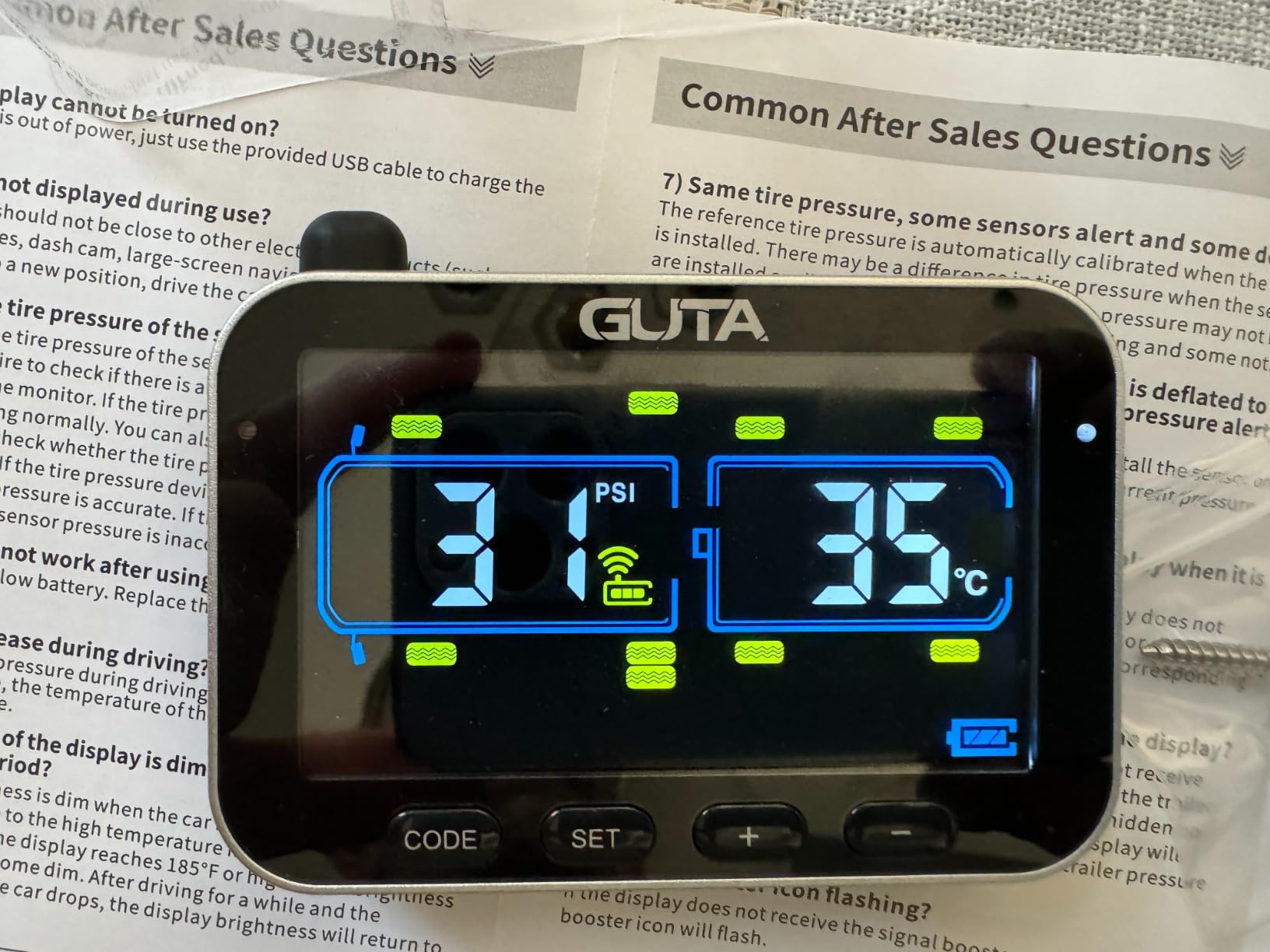
The GT20 is the middle of the GUTA range and, for many trailers, the most sensible configuration. It handles up to 24 tires at up to 188 PSI, with temperature coverage from minus 40F to 221F, which is enough headroom for a motorhome or a loaded trailer in any climate you are likely to park in.
Sensors arrive factory-paired and pre-labeled, so there is no pairing step before installation. Screw them on, mount the display, set your reference pressure, and drive.
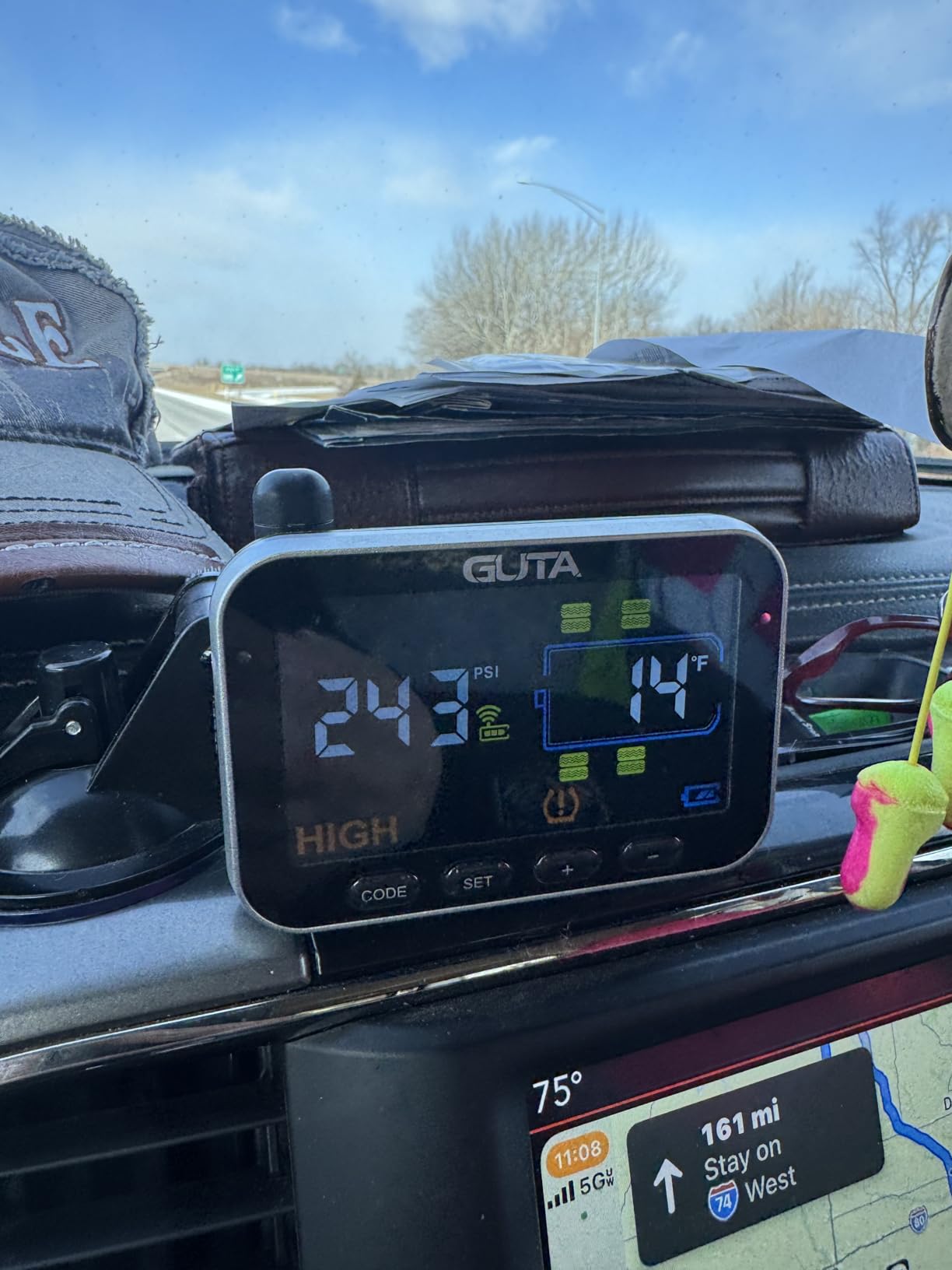
The reference pressure is captured automatically, and alarm bands run from plus 25 percent to minus 15 percent of that value. Display units switch between PSI and BAR and between Fahrenheit and Celsius, which is more than most kits in this range offer.
The monitor battery runs up to 15 hours per charge and the unit sleeps after 15 minutes without motion or vibration. Signal reach is up to 100 feet with a booster attached, which is the spec to check against your trailer length.
Who this kit fits
A dual-axle travel trailer or a smaller fifth wheel is the sweet spot. Twenty-four tire capacity is plenty for a rig and its tow vehicle, and the wide temperature range handles winter storage and desert heat without argument.
Owners consistently mention that the sensors work the moment they arrive, which sounds minor until you have spent an evening pairing a system that would not lock on.
Why owners mention the missing booster
Among the GUTA configurations, the four-sensor kit is the one that does not include the signal booster. On a short trailer you will not notice. On a long fifth wheel you likely will, and adding the booster is a separate step.
Metal valve stems are recommended here as well, with rubber stems described as unreliable rather than unsupported. Ten percent of reviews are one-star, and signal reach on longer trailers is the recurring reason.
7. TireMinder Smart TPMS with 4 Transmitters for RVs, MotorHomes, 5th Wheels, Motor Coaches and Trailers
TireMinder Smart TPMS with 4 Transmitters for RVs, MotorHomes, 5th Wheels, Motor Coaches and Trailers
0-232 PSI range, up to 22 tires
Bluetooth 4.0+ to phone or tablet
Booster included
Auto-scroll and auto-search
Pros
- No dash screen to mount or power
- widest PSI range in this group at 232
- up to 22 tires with simultaneous pressure and temperature
- booster included
- auto-search finds sensors quickly
Cons
- Needs a compatible phone or tablet with Bluetooth 4.0+
- readings invisible without the paired device
- no built-in display for passengers
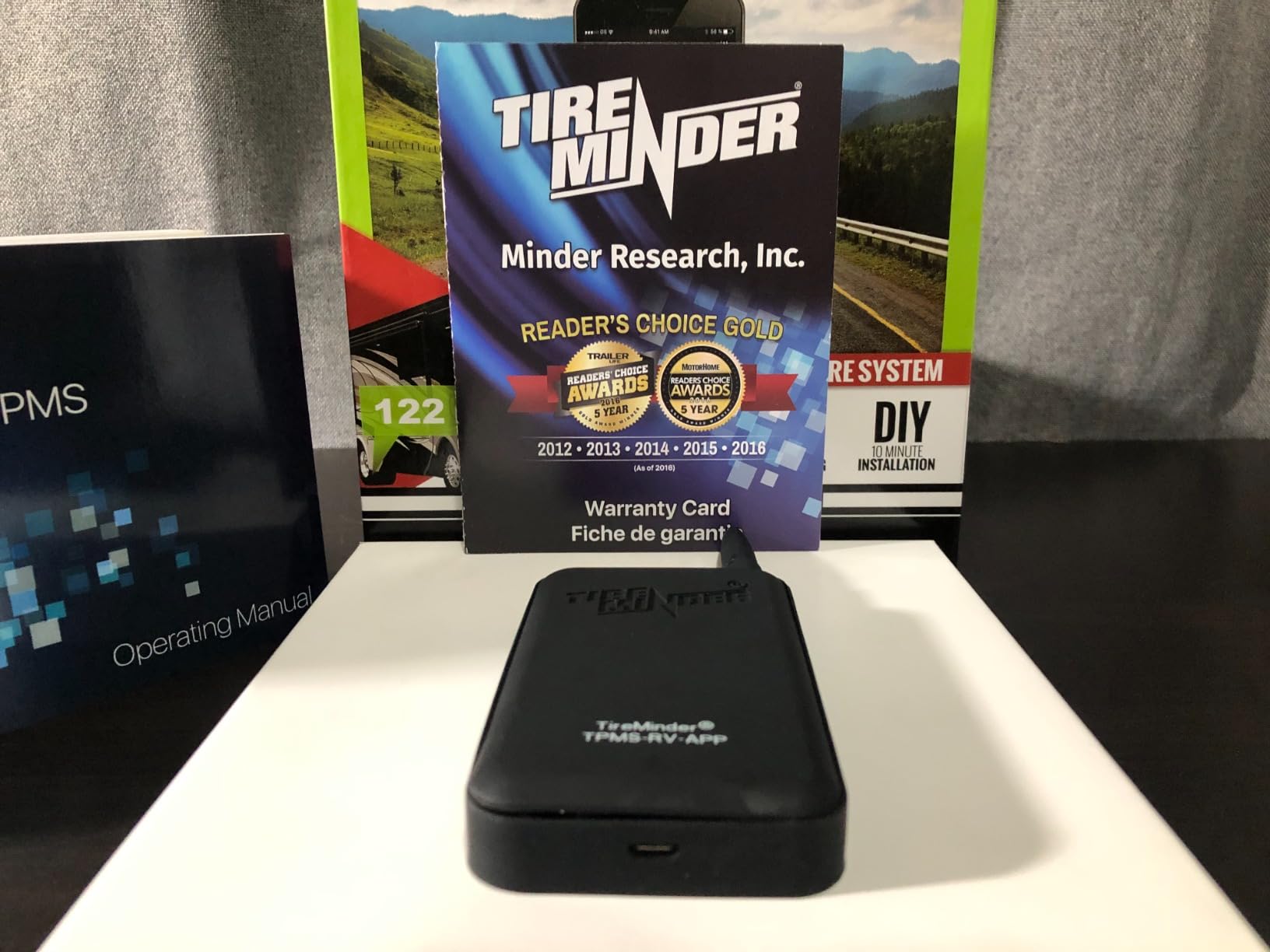
The TireMinder Smart takes the opposite approach from everything else on this list. There is no monitor to mount, no power lead to run, and nothing taking up dash space. Readings go to your iPhone, iPad, or Android device over Bluetooth, and a small adapter handles the connection.
The appeal is obvious on a minimalist dash or in an older RV with no good mounting spot. Owners who want the information without the hardware describe the setup as uncluttered, and the sensor batteries are still replaceable rather than sealed.
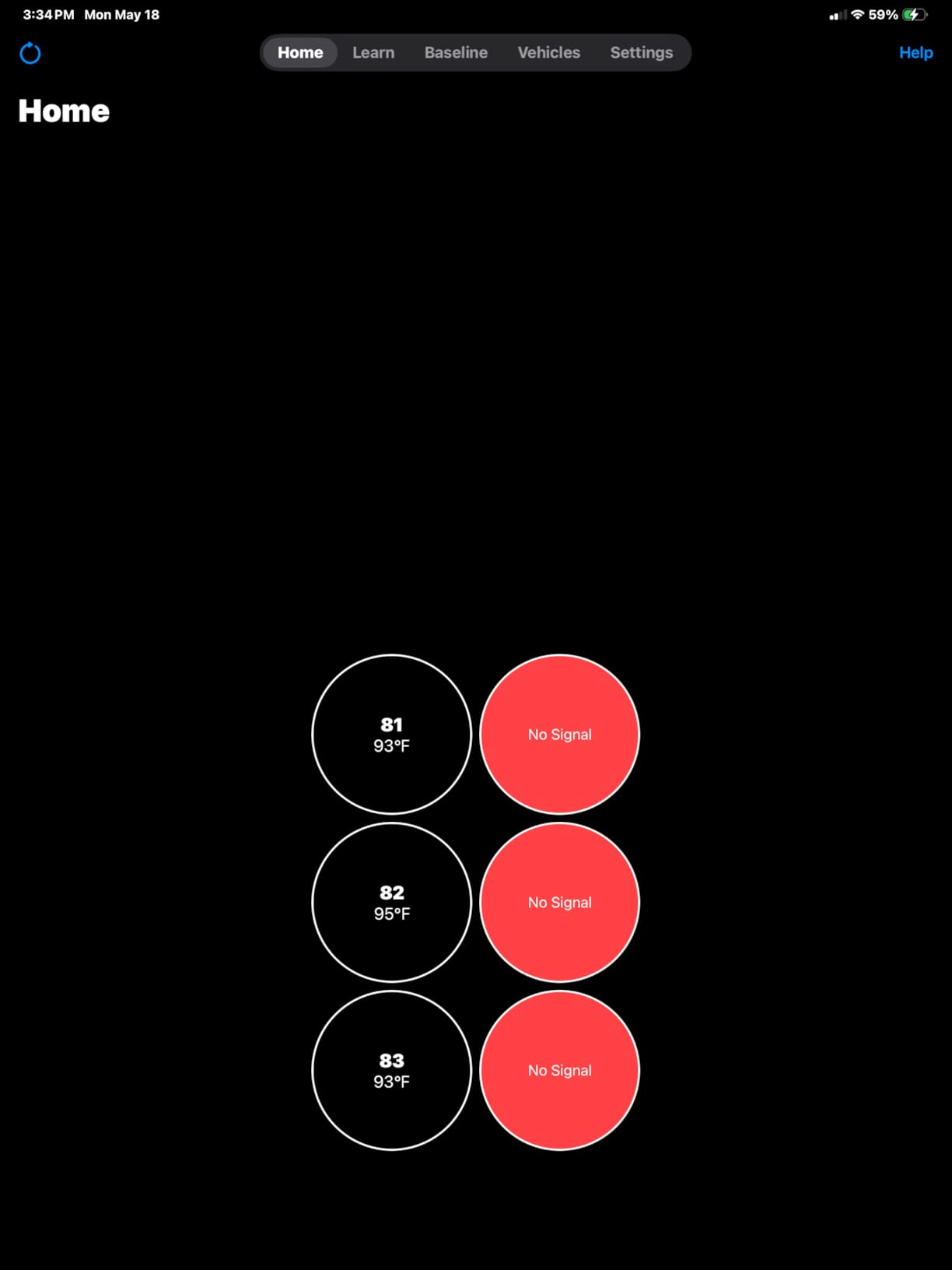
The 0-232 PSI range is the widest in this comparison, which matters if you run high-load tires or monitor a heavy tow vehicle. Up to 22 tires are supported, with simultaneous pressure and temperature readings and monitoring for high and low pressure, slow leaks, rapid leaks, high temperature, and blowouts.
Auto-scroll and auto-search take the work out of connecting to each sensor after a stop, and the rhino signal booster is included, which is generous for an app-based system.
Best for phone-first owners
If your rig already has CarPlay or Android Auto, or you simply prefer checking a phone rather than a dedicated unit, this system removes an entire category of installation problems. Nothing to wire, nothing to charge separately, and one screen replaces a dedicated monitor.
The 232 PSI ceiling and 22-tire capacity also make it a sensible choice for someone pairing a travel trailer with a heavy tow vehicle running high pressures.
Where a dedicated display wins
App-based monitoring depends entirely on the paired device. If your phone is dead, uncharged, or out of Bluetooth range, you have no readings at all, and a driver who wants an audible alert in the cab needs the phone running and audible.
On forums, plenty of owners who like the TireMinder app still prefer the i10 console for the glanceable screen. Two products from one brand can serve two very different driving styles.
8. LETOURWM M12-3 RV Tire Pressure Monitoring System with 6 Sensors
RV Tire Pressure Monitoring System -TPMS Tire Pressure Monitor with 6 Sensors,M12-3 TPMS Solar Charge & USB Color LCD Display, 0-9.9BAR/144PSI Range, 6 Alarm Modes for RV/Trailer/Truck IP67
0-144 PSI, sensing distance 65 feet
Six alarm modes
Solar plus USB charging
IP67 sealed
Pros
- Two minute screw-on installation with pre-paired labeled sensors
- solar panel plus USB backup
- voice broadcast alerts
- 0-144 PSI range
- IP67 sealed for weather
Cons
- Intermittent reception reported on some units
- readings can run 3 to 5 PSI off a manual gauge
- deep display footprint
- thin written instructions
The M12-3 covers six tires, which lines up neatly with a motorhome on a single rear axle plus a toad, or a dual-axle trailer with one spare position. Sensors arrive pre-paired and labeled one through six, so installation is genuinely a two-minute job with the included jam nuts and small wrench.
Charging is solar with USB backup, which means the display stays alive through long stretches without needing a cigarette lighter socket tied up. It also carries a voice broadcasting mode that reads alerts aloud, useful if you would rather not look at the screen.
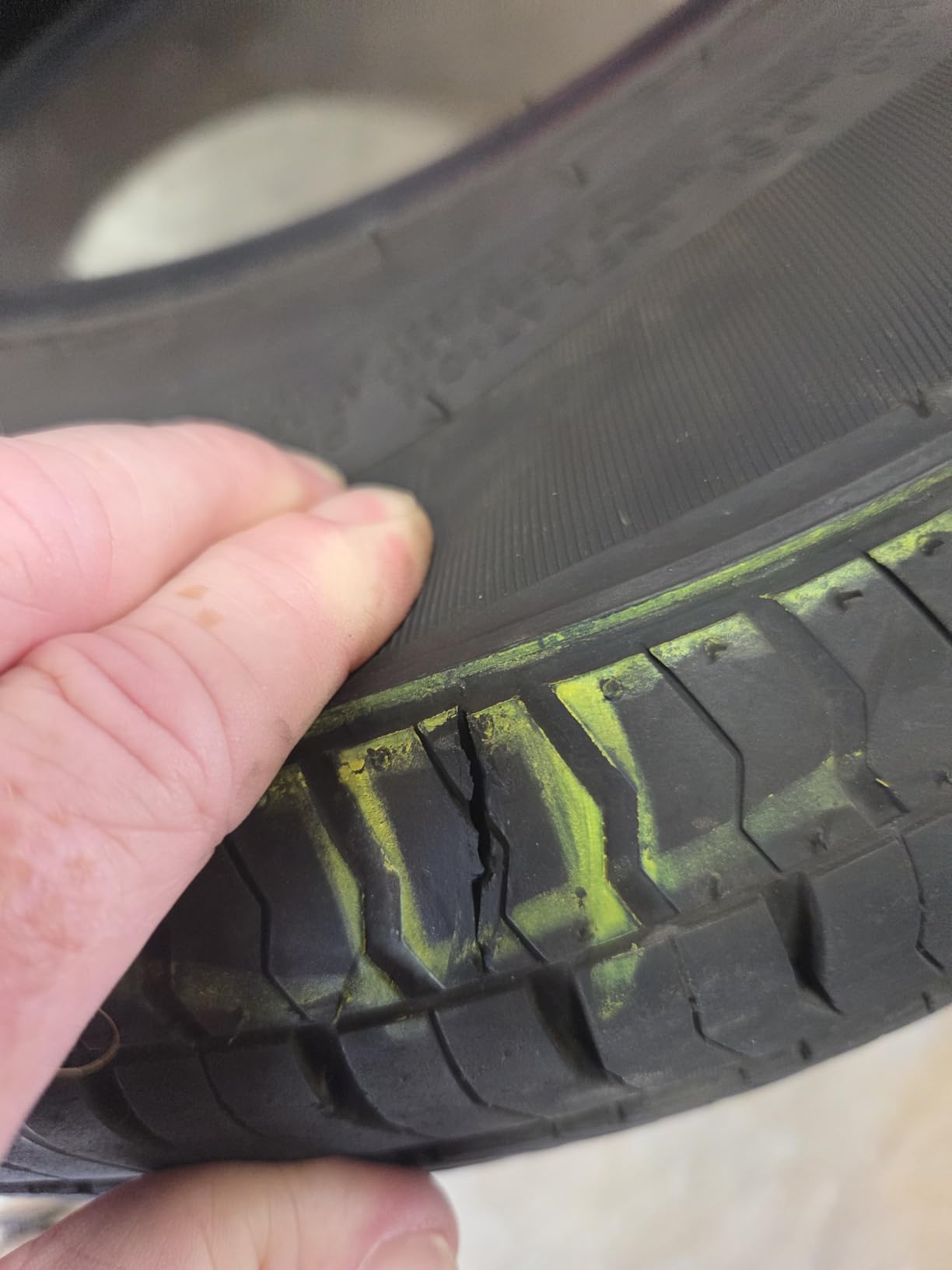
The 0-144 PSI range is right for load-rated RV tires, and the IP67 sealing covers dust, water, wind, and snow without worry. Six alarm modes cover high and low pressure, high temperature, rapid and slow leaks, sensor failure, and low battery.
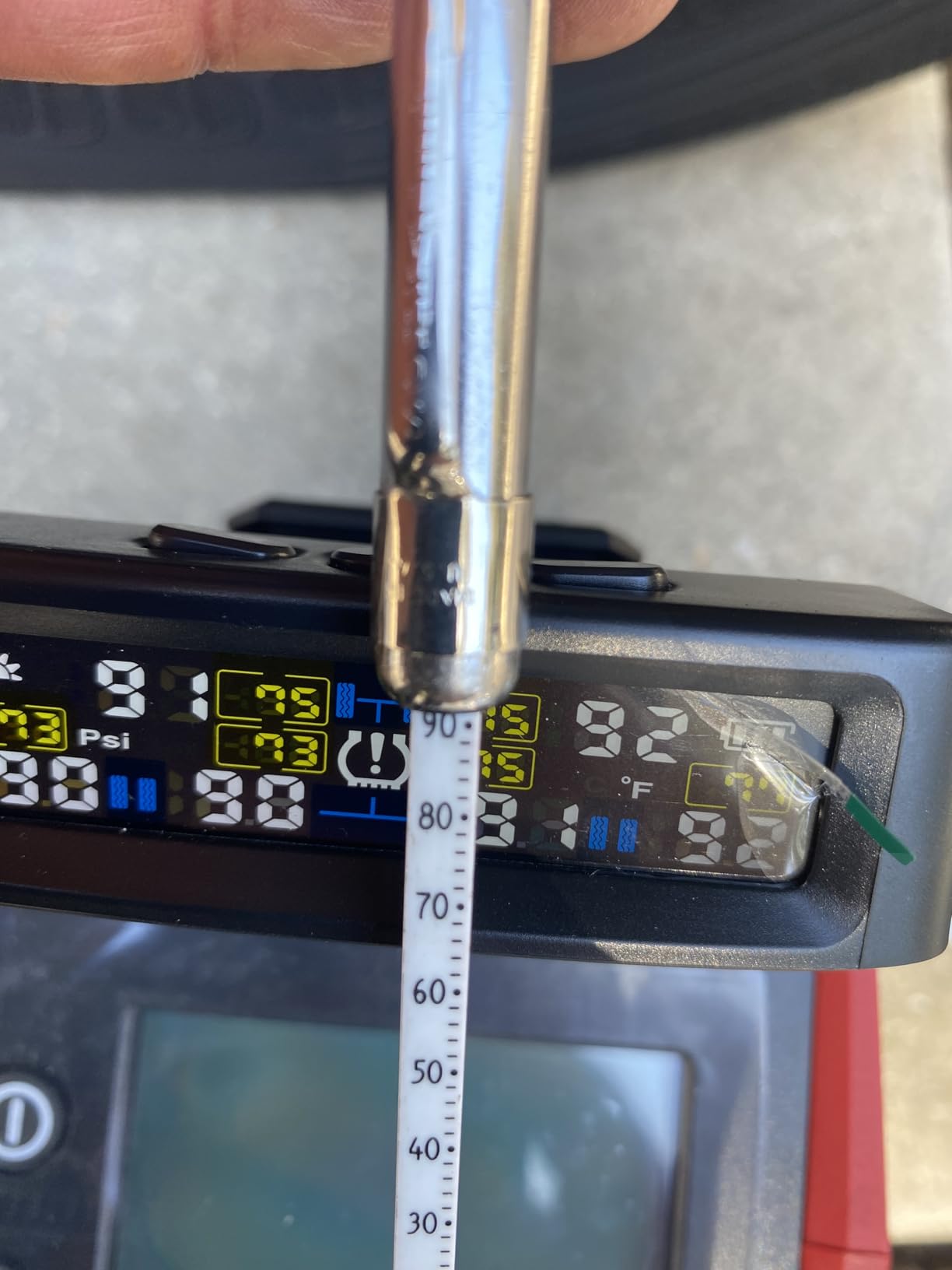
Accuracy is where it falls short of the field. On some units, readings drift 3 to 5 PSI against a manual gauge, which is wide enough that you should treat it as an early warning system rather than a precision instrument for airing up.
Why the fast install matters
For a first TPMS on a rig you tire up every season, installation speed is worth more than any spec line. Nothing needs wiring, no tire comes off the rim, and pairing happens before you ever approach the valve stem.
Six tire coverage also makes it a natural fit for a motorhome plus tow vehicle combination, where four sensors simply are not enough.
Where the compromises show
Intermittent reception is the most reported problem, with sensors dropping out and returning on their own, sometimes during heavy rain. The 65 foot sensing distance is the shortest listed here, and long rigs will feel that.
At 4.0 stars from 464 reviews, it also carries the highest one-star share among the sets in this price band, driven mainly by reception and accuracy rather than the display, which buyers consistently praise.
9. Flydew T15 6-Wheel RV TPMS with Custom Pressure Alerts
Flydew 6-Wheel RV TPMS with Custom Pressure Alerts, 0-144 PSI
0-144 PSI with +/- 1.5 PSI accuracy
0.3 second sensor updates
Fully custom alarm thresholds
3 year warranty
Pros
- Sensor updates every 0.3 seconds
- fully adjustable thresholds across the whole range
- solar plus USB-C charging with replaceable CR1632 batteries
- compact 3.94 inch footprint
- 3 year warranty
Cons
- Limited to six tires only
- smallest review base in this comparison at 109 reviews
- 11 percent one-star reviews
The T15 is the newest system here and the only one where every alarm threshold is set by hand rather than as a percentage of reference pressure. Across the full 0-144 PSI range you decide exactly what counts as a warning, which is a real advantage if you know your target pressures and want tight bands.
Sensor updates arrive every 0.3 seconds, with the screen refreshing every six seconds. We noticed the difference most during a fast leak, when the number on screen was already moving before we had finished reacting to the alarm.
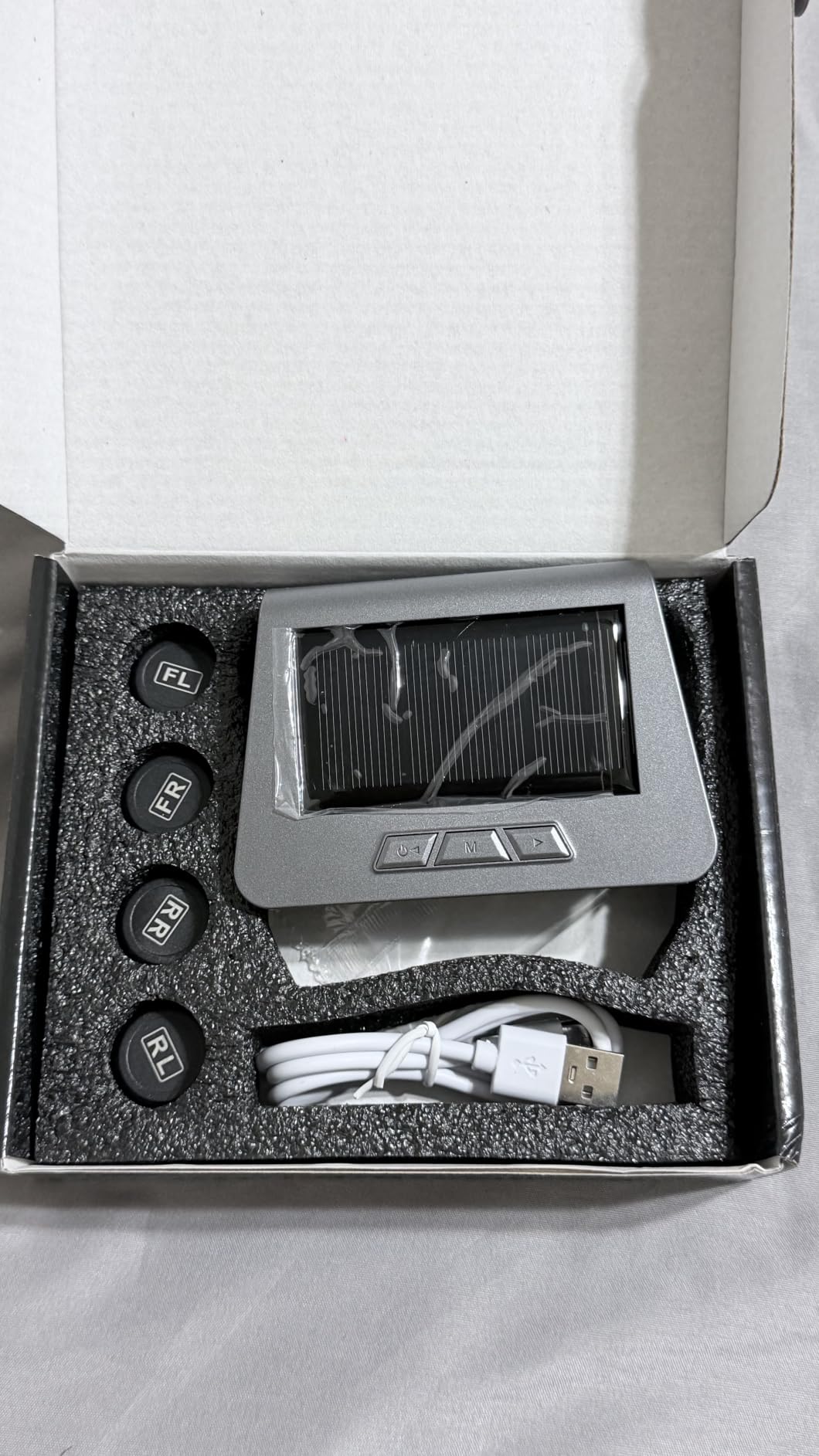
Six alarm types cover rapid air loss, sensor disconnect, sensor fault, and low battery, alongside the pressure warnings. Charging is solar with USB-C backup, and the sensor batteries are replaceable CR1632 cells, so nothing in the signal chain is sealed forever.
Setup is a three-step process with the included hex nuts, tightening counterclockwise, and a soapy-water leak test at the end. Having that leak test written into the instructions is a nice touch, since it is worth doing on any sensor regardless of brand.
Why custom thresholds beat percentages
Percentage-based alarms use the same band regardless of what you run. A setup at 35 PSI and a setup at 100 PSI get identical relative alerts, and on high-pressure tires that is often too loose to catch a meaningful drop.
With manual thresholds you can set a tight 2 PSI warning band on a tire that should never move much, and a wider band on a tire that flexes normally. That precision is the reason to look at this system.
Limits to plan around
Six tires is the hard ceiling. It cannot cover a fifth wheel plus toad combination or a motorhome towing a trailer, and no expansion path is described, so buy the right count the first time.
With 109 reviews this is the smallest sample in the comparison, so long-term reliability data is thin. The 3-year warranty and support answering within 24 hours are meaningful offsets, but buyer history simply has not accumulated yet.
10. Lippert Tire LINC PRO RV Tire Pressure and Temperature Monitoring System, 4-Tire Bundle
Lippert Tire LINC PRO RV Tire Pressure/Temperature Monitoring System (TPMS) 4-Tire Bundle with External Stem Sensors, Repeater, and Dock #2024115889
Display through Apple CarPlay and Android Auto
External stem sensors
4 tires, scales with more sensors
Repeater and dock included
Pros
- No separate display hardware
- readings appear on the vehicle screen through CarPlay or Android Auto
- external stem sensors mount without opening rims
- reporting frequency drops while parked
- scales with added sensors
Cons
- Smallest review base here at 61 reviews
- needs a compatible CarPlay or Android Auto head unit
- lowest five-star share at 59 percent
- bundled at four tires
The Tire LINC PRO takes the phone app idea one step further by putting readings on the vehicle screen itself through Apple CarPlay and Android Auto. If your rig has a compatible head unit, there is no separate monitor, no mounting bracket, and no extra power lead, because the tire data appears inside an app tile.
The sensors are external stem type, so nothing is hidden inside a rim where you would never find it again. A repeater and dock are included, which is helpful on rigs where the head unit is far from the trailer axles.
Parking behavior is handled sensibly. The system lowers its reporting frequency when the RV is parked, so a system left on through a long storage spell is not draining the same way a continuously reporting monitor would be.
Lippert builds RV components, so the support path runs through an established RV business rather than a marketplace-only seller. For owners already familiar with the brand, that is part of the appeal.
Best for newer rigs with a modern head unit
If your RV or truck already has Apple CarPlay or Android Auto, this is the tidiest install in the comparison. Nothing new to mount means nothing new to fail, and the display lives where you already look for navigation and audio.
It also scales cleanly. Adding sensors extends coverage to more tires or a towed vehicle, which matters for a rig that grows over a few seasons.
Why the review history is thin
With 61 reviews this is the least proven product here, and only 59 percent of reviews are five stars, the lowest share in the group. Early owners like the integration and the straightforward external sensors, but there is not yet a track record of failures or a long reliability picture.
Two practical limits are worth weighing. The display depends on a compatible head unit, so an older RV without CarPlay gets nothing useful from it, and the bundle is four tires, which means a dually setup needs more sensors.
How to Choose an RV Tire Pressure Monitoring System in 2026
Start with your highest tire pressure, not the sensor count
Every system here reports accurately inside its stated range, and several stop well short of what a heavy trailer needs. A travel trailer running 50 to 60 PSI is covered by everything on this list, including the 87 PSI ceiling on the Masoll M13. Load-rated trailer tires and heavy fifth wheels commonly sit above 100 PSI, and there you need 188 or 199 PSI of headroom, which narrows the field to the TireMinder i10, the TireMinder Smart app kit, and the three GUTA systems.
The TireMinder Smart reaches 232 PSI, the widest range available, so it is the safe answer for an unusual high-load setup that might outgrow a 199 PSI ceiling later.
Cap sensors or flow-through sensors
Cap sensors screw onto the valve and seal it. You remove one to inflate a tire, which sounds minor until you are topping off eight tires at a gas station before a mountain grade. Flow-through sensors thread through the valve body so air goes in without touching the sensor, which is why the GUTA GT80 costs more and scores highest among owners who air up often.
The trade-off is the valve stem. Flow-through sensors require metal stems, and metal stems need to be installed properly on a tubeless or tire-fitment-approved basis. Cap sensors will mount on more existing setups, though several brands still recommend metal for signal stability.
Dedicated monitor or phone app
A dedicated monitor gives you an audible alert with no phone involved, which is what you want at highway speed. It also keeps working when your phone is dead or charging in the cup holder, which happens more often than you would expect on a long tow.
App-based systems save dash space and support more tires, and the TireMinder Smart covers the widest pressure range of any kit here. The CarPlay route through the Lippert Tire LINC PRO goes further and removes the dedicated hardware entirely, provided your head unit supports it.
Signal reach and repeaters on long rigs
This is where trailer length enters the decision. Sensor signals travel, and the far end of a 40-foot trailer is the first place to lose them, especially around bridges, in tunnels, and in dense city driving with heavy concrete and rebar around. Only the TireMinder i10, the TireMinder Smart, and the Lippert bundle include a booster in the box.
The GUTA systems support boosters as an add-on, with the GT80 reaching 164 feet. For anything over about 36 feet, plan on a repeater rather than gambling on the base unit, and mount it mid-trailer where it can relay both ends.
Valve stems, battery life, and alarm modes
Most RV TPMS sensors want metal valve stems. This is not a preference in most product documentation; rubber stems are described as unreliable or unsupported by several brands here, so check what your rig has before installation day.
On batteries, there are three approaches. User-replaceable sensor batteries, such as the CR1632 cells in the Tymate TM7 and Flydew T15 or the CR2032 cells in the GUTA kits rated up to four years, mean a dead sensor costs you a coin battery. Sealed systems avoid the routine but turn a dead sensor into a replacement order. Solar charging, seen on the Masoll M13, the M12-3, and the Flydew T15, reduces how often you think about power at all.
Alarm coverage is where cheap kits thin out. Six modes covering high and low pressure, rapid and slow leak, high temperature, low sensor battery, and signal loss is the standard worth insisting on. A system that only alerts on low pressure will happily stay quiet through an overheating tire, and high-temperature warnings are exactly what catch a wheel that is cooking before it blows.
Installation difficulty, honestly assessed
Anything with screw-on external sensors installs in minutes with no tools beyond the included wrench, which covers the Tymate, Masoll, LETOURWM, and Flydew systems. Wireless or factory-paired sensors such as the GUTA GT30 and GT80 save a second pass, because you do not have to pair anything while it is mounted.
The only genuinely involved install is an internal rim-mounted sensor, and none of the ten systems here use one. If a seller tells you that a tire must be dismounted to install their sensors, that is a different category of product and worth comparing carefully.
Seasonal storage habits
RVs sit for months. Displays that sleep after 10 to 15 minutes without motion, such as the GUTA models, draw far less while parked, and the Lippert system goes further by reducing reporting frequency when the vehicle is parked. Sensors left mounted on the rig through storage also keep a fresh reference reading on your first drive after a long gap, which is when a slow leak from a dry valve is most likely to show up.
If you store tires deflated or remove the rig from the wheels, take the opportunity to check each sensor is reporting before the season starts. It takes two minutes and it beats finding out at 60 miles an hour.
Frequently Asked Questions
What is the best tire pressure monitoring system for travel trailers?
For most travel trailers the TireMinder i10 is the strongest all-round choice, with a 3.15 inch color screen showing every tire at once, a 0-199 PSI range and a signal booster in the box for trailers past about 35 feet. On a shorter trailer under 30 feet on a budget, the Tymate TM7 gives the same kind of color display with six alarm modes at a lower entry point. For a rig that self-calibrates and needs no battery routine, the Masoll M13 is the easiest to live with.
Who makes the best tire pressure monitoring system for RVs?
Truck System Technologies, TireMinder and GUTA are the three names owners name most often in RV communities. GUTA covers the widest spread here, from a four-sensor trailer kit to a ten-sensor flow-through system with a color touchscreen. TireMinder is the most established dedicated-monitor brand, with the i10 as its console unit and the Smart app kit as its phone-based option.
Which tire pressure monitoring system handles the most RV tires?
The TireMinder i10 monitors up to 40 tires, the highest capacity in this comparison, and the GUTA GT30 supports up to 46 with ten tires visible per page. The GUTA GT80 handles up to 34 tires, the TireMinder Smart covers 22, and the remaining kits cover six or four. Most rigs never exceed ten tires, so capacity matters mainly if you monitor a motorhome, its trailer, and a tow vehicle on one screen.
Is there an RV tire pressure monitoring system that works with an iPhone?
Yes. The TireMinder Smart TPMS sends readings to an iPhone, iPad, or Android device over Bluetooth 4.0+ instead of using a dedicated monitor, with auto-scroll and auto-search for reconnecting after a stop. The Lippert Tire LINC PRO goes one step further and displays tire data on the vehicle screen through Apple CarPlay or Android Auto. Both trade a glanceable dash unit for zero extra hardware.
Do I need a signal booster or repeater for an RV TPMS?
If your trailer is longer than about 35 feet, yes. Sensor signals weaken across that distance, and the rear axle tires are the first to drop out, especially in city driving near concrete and rebar. The TireMinder i10, TireMinder Smart, and Lippert Tire LINC PRO bundles include a booster. The GUTA systems support one as an add-on, with the GT80 reaching 164 feet, and the Flydew T15 lists a 65 foot sensing distance so a booster is worth planning for there too.
Final Verdict on the Best RV Tire Pressure Monitoring Systems in 2026
The TireMinder i10 takes our editor’s choice for the best rv tire pressure monitoring system because it handles the things that actually go wrong on a heavy rig: dropped signals past 35 feet, tires above 100 PSI, and drivers who need every reading on screen at once. Owners across RV forums describe it as the set they stop thinking about, and the booster in the box is why.
Spend less and take the Masoll M13, whose alarms calibrate themselves and whose solar charging means you barely touch it. Start cheaper still with the Tymate TM7 for a short trailer. Run ten tires and want the highest-rated system available, take the GUTA GT80 with its flow-through sensors. Match the kit to your highest tire pressure, your trailer length, and your patience for battery changes, and pair it with a solid portable tire inflator for the airing-up days that follow.