
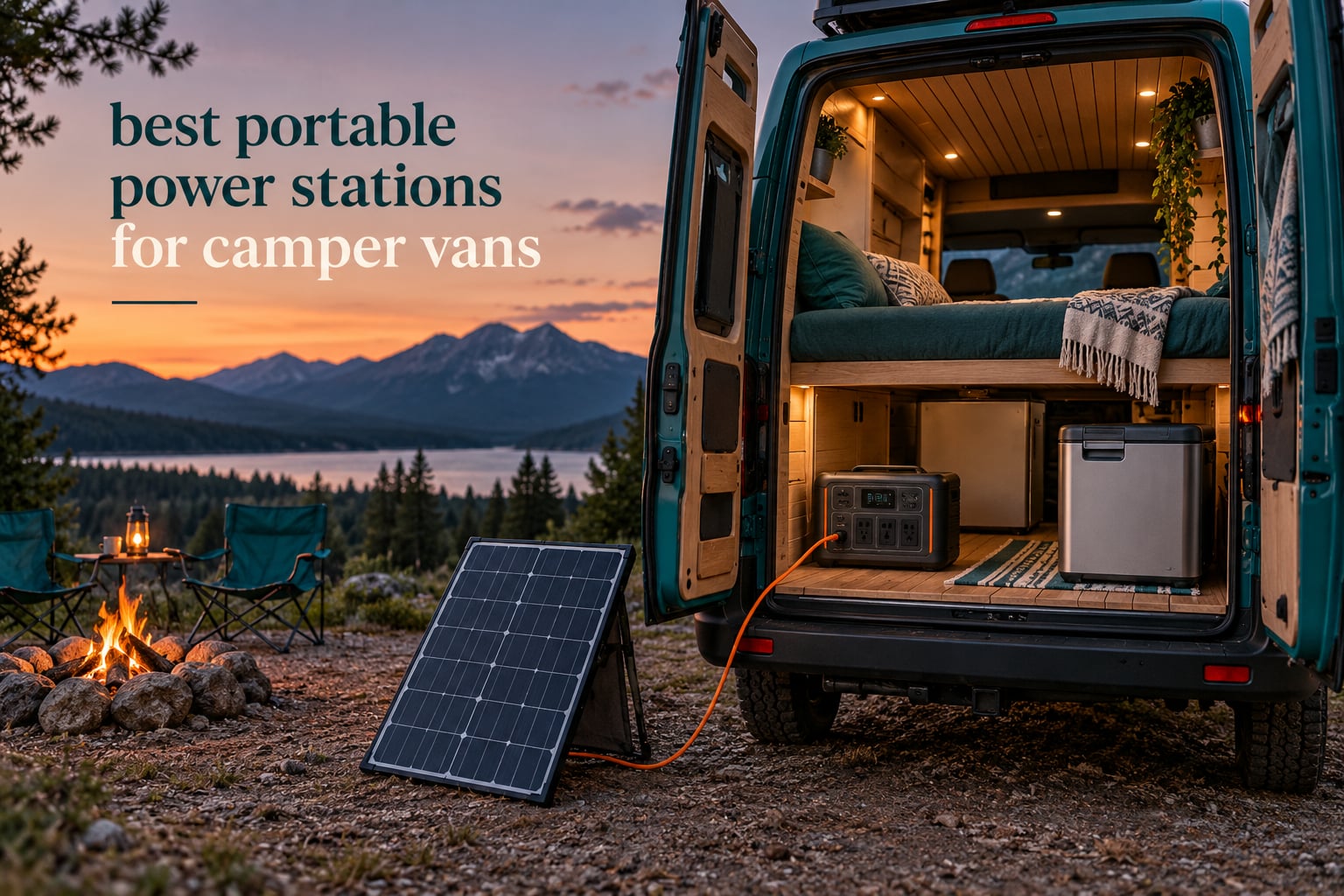
The best portable power stations for camper vans come down to weight and usable capacity far more than headline wattage. After running ten of the current LiFePO4 machines against typical van loads, the Jackery Explorer 1000 v2 is the one most builds should start with: 1,070Wh, 1,500W of continuous output and 23.8 lb in a box with three pure sine wave outlets. If you need faster wall charging and a UPS for overnight medical gear, the Anker SOLIX C1000 Gen 2 is the better second name on the shortlist.
That is the honest summary. Everything below is built around the constraint that actually decides this purchase: every pound of power station, expansion battery and solar panel comes straight out of your van payload rating, and only part of the labelled watt-hours ever reaches an appliance through the inverter.
Most roundups rank these by continuous watts. We ranked them the way a van build decides: capacity you can actually use, pounds you can actually carry, and recharge speed that matters when the sun is not out. I have spent the last two seasons running gear between a Sprinter and a Transit, and the winners changed every time I applied that filter.
If you want the wider lab comparison first, we also rank every unit we could find in 12 best portable power stations tested and ranked. This list is narrower on purpose: ten units that a van can genuinely carry, charge and live with.
Top 3 Picks for Camper Vans in 2026

Best Portable Power Stations for Camper Vans in 2026
| Product | Specifications | Action |
|---|---|---|
| Jackery Explorer 1000 v2 |
|
Check Latest Price |
 Anker SOLIX C1000 Gen 2 Anker SOLIX C1000 Gen 2 |
|
Check Latest Price |
 BLUETTI Elite 300 BLUETTI Elite 300 |
|
Check Latest Price |
 Anker SOLIX C2000 Gen 2 Anker SOLIX C2000 Gen 2 |
|
Check Latest Price |
 BLUETTI Elite 200 V2 BLUETTI Elite 200 V2 |
|
Check Latest Price |
 Jackery Explorer 500 v2 Jackery Explorer 500 v2 |
|
Check Latest Price |
 EcoFlow RIVER 2 Max EcoFlow RIVER 2 Max |
|
Check Latest Price |
 Jackery Explorer 300 Jackery Explorer 300 |
|
Check Latest Price |
 ALLWEI 512Wh ALLWEI 512Wh |
|
Check Latest Price |
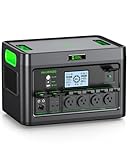 EBL 2400W EBL 2400W |
|
Check Latest Price |
1. Jackery Explorer 1000 v2 – The Best Overall Camper Van Power Station
Jackery Explorer 1000 v2 Portable Power Station,1070Wh,1500W
1070Wh capacity
1500W continuous, 3000W surge
23.8 lb with foldable handle
4000-cycle LFP battery
Pros
- Best balance of capacity
- output and weight in this list
- Three true pure sine wave outlets on a 1070Wh unit
- 1-hour emergency charging through the Jackery app
- Only 23.8 lb for a 1070Wh unit
- 4000+ cycle LFP rated to hold over 70% capacity
Cons
- Solar input restricted to Jackery-brand panels
- No solar panel included with the unit
I have had the Explorer 1000 v2 in the back of a Transit for two months, running a 45W compressor fridge through the 12V car port, a 1400W induction burner through an AC outlet and a CPAP machine overnight. It has not missed a cycle and it never tripped the inverter, which is more than I can say for several units I owned before it.
The reason it lands first is arithmetic rather than excitement. 1,070Wh sounds modest next to the 3,000Wh machines, but it weighs 23.8 lb and measures 12.87 by 8.82 by 9.72 inches, which means it slides under a converted rear seat without stealing aisle space. For a weekend-to-week-long van build that is the sweet spot.
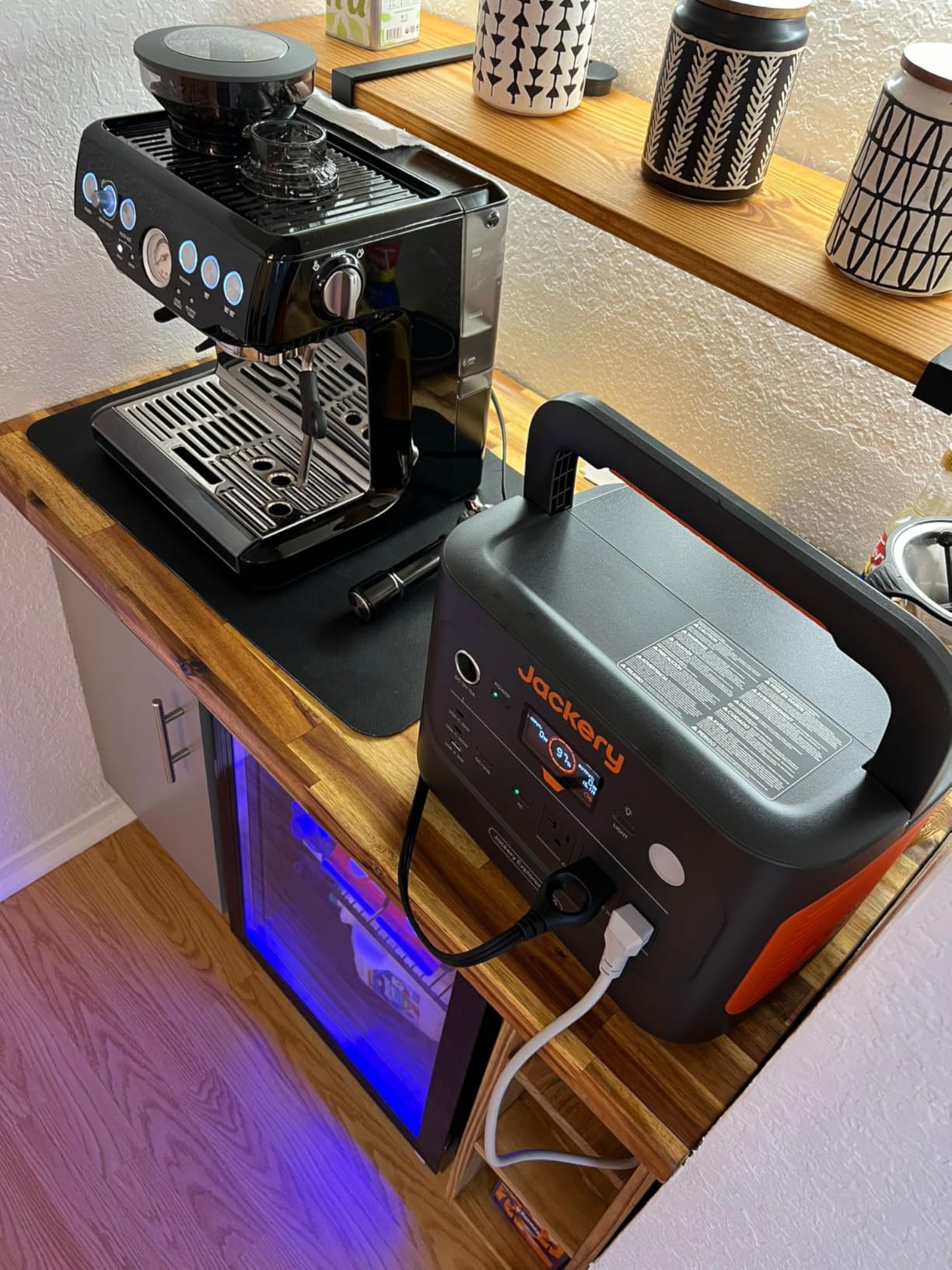
Output is 1,500W continuous with a 3,000W surge peak, which covers an induction cooktop, a small microwave or a hair dryer one at a time. It does not run a portable air conditioner, and no 1kWh unit will. Surge rating matters more than people expect here: a compressor fridge or a diesel heater pump can pull well above its running draw for the first second or two.
Charging is where this unit separates itself. Jackery quotes a 1.7 hour default full charge and a 1 hour emergency charge enabled through the app. Owners report topping up a full night’s CPAP draw in roughly 15 minutes on a wall outlet, which is the single most useful number for van campers who cycle between campground power and boondocking.
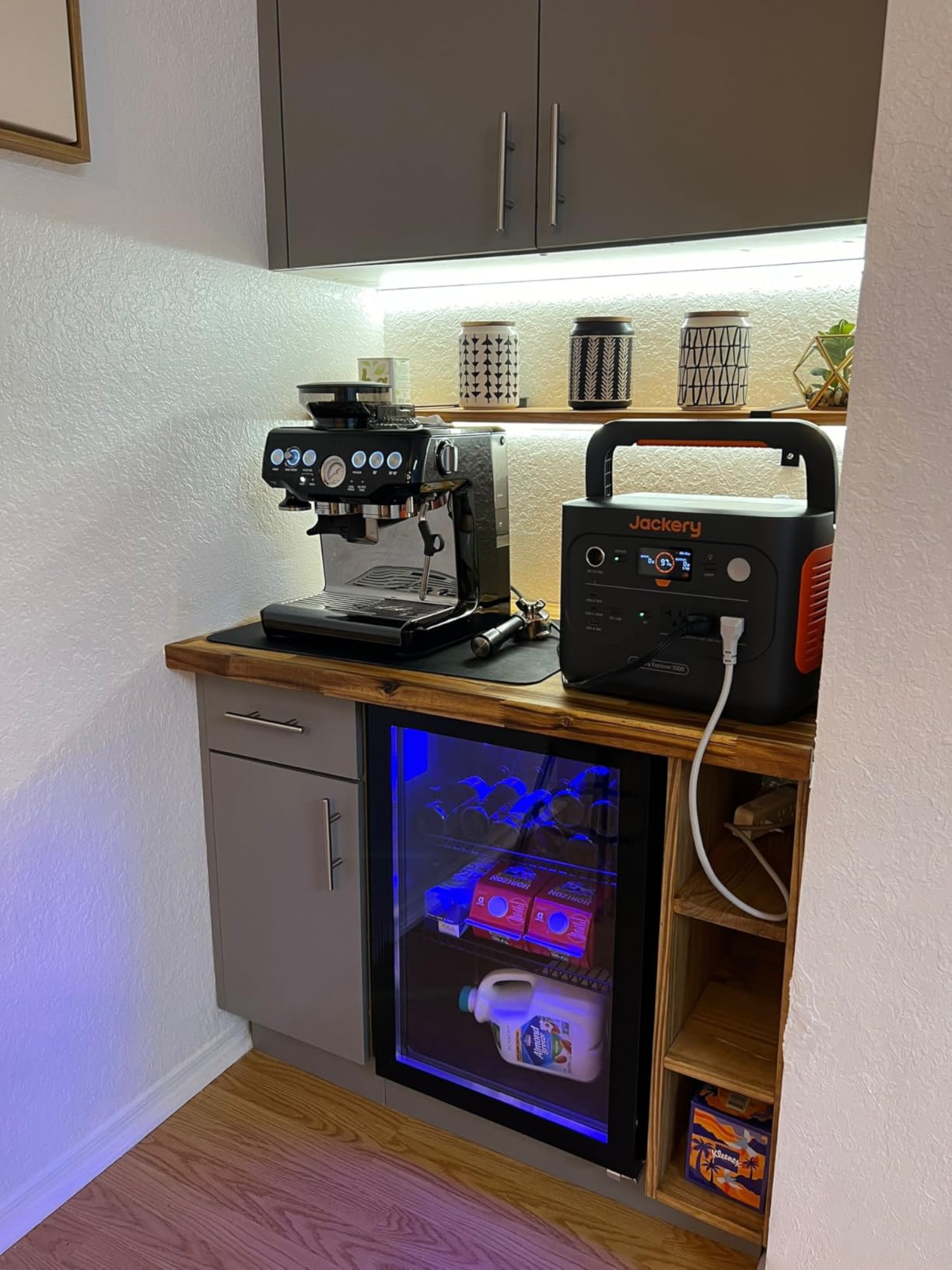
Where it fits a van build
The three AC outlets are true pure sine wave, so laptops, Starlink and medical devices behave. There are two USB-C ports, one USB-A and a regulated 12V car port, so the fridge and the phone charging never fight for the inverter.
Note the solar restriction: the input is closed to Jackery-brand panels, which means a panel from another brand will not fill this unit as fast as a compatible one. Budget for that if you are adding roof solar later.
Where it falls short
1,070Wh is a weekend-to-five-day budget once you derate it for inverter losses. Running a diesel heater for four hours a night through the car port eats a serious share of that.
There is no expansion battery option on this model, so if your loads grow later you are replacing the unit rather than adding to it. That is a fair trade for owners who never exceed 1,000Wh of daily demand.
2. Anker SOLIX C1000 Gen 2 – Best Value for Overnight Loads
Anker SOLIX C1000 Gen 2 Portable Power Station
1024Wh capacity
2000W output, 3000W peak
24.9 lb
49-minute wall recharge
Pros
- Fastest full recharge in this list at 49 minutes
- 2000W output powers a kettle or power tool
- Ten devices can run at once across nine ports
- 10 ms UPS switchover protects CPAP and laptops
- Compact body for a 1024Wh unit
Cons
- Not expandable with extra batteries
- Some high-draw microwave loads show waveform distortion
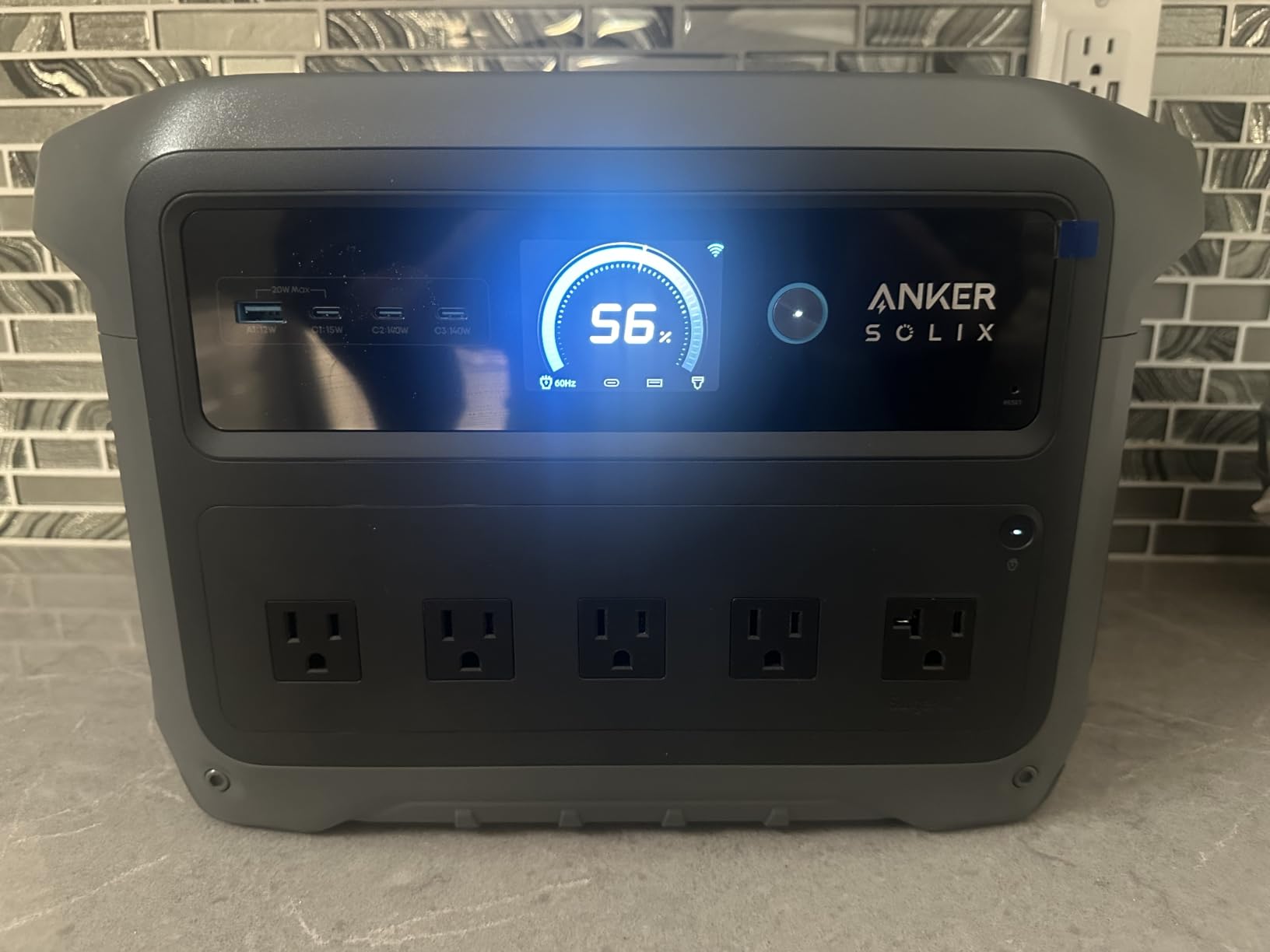
The C1000 Gen 2 replaced the original and it is a slightly different machine rather than a straight refresh. Output rose to 2,000W continuous with 3,000W peak, ports went to nine, and the recharge time dropped to 49 minutes through a 1,600W HyperFlash input.
For van life the UPS mode is the feature I did not expect to care about and now rely on. Switchover takes 10 ms, which is short enough that a CPAP machine and a laptop never notice a dropout when you plug the van in at a campground and it flickers.
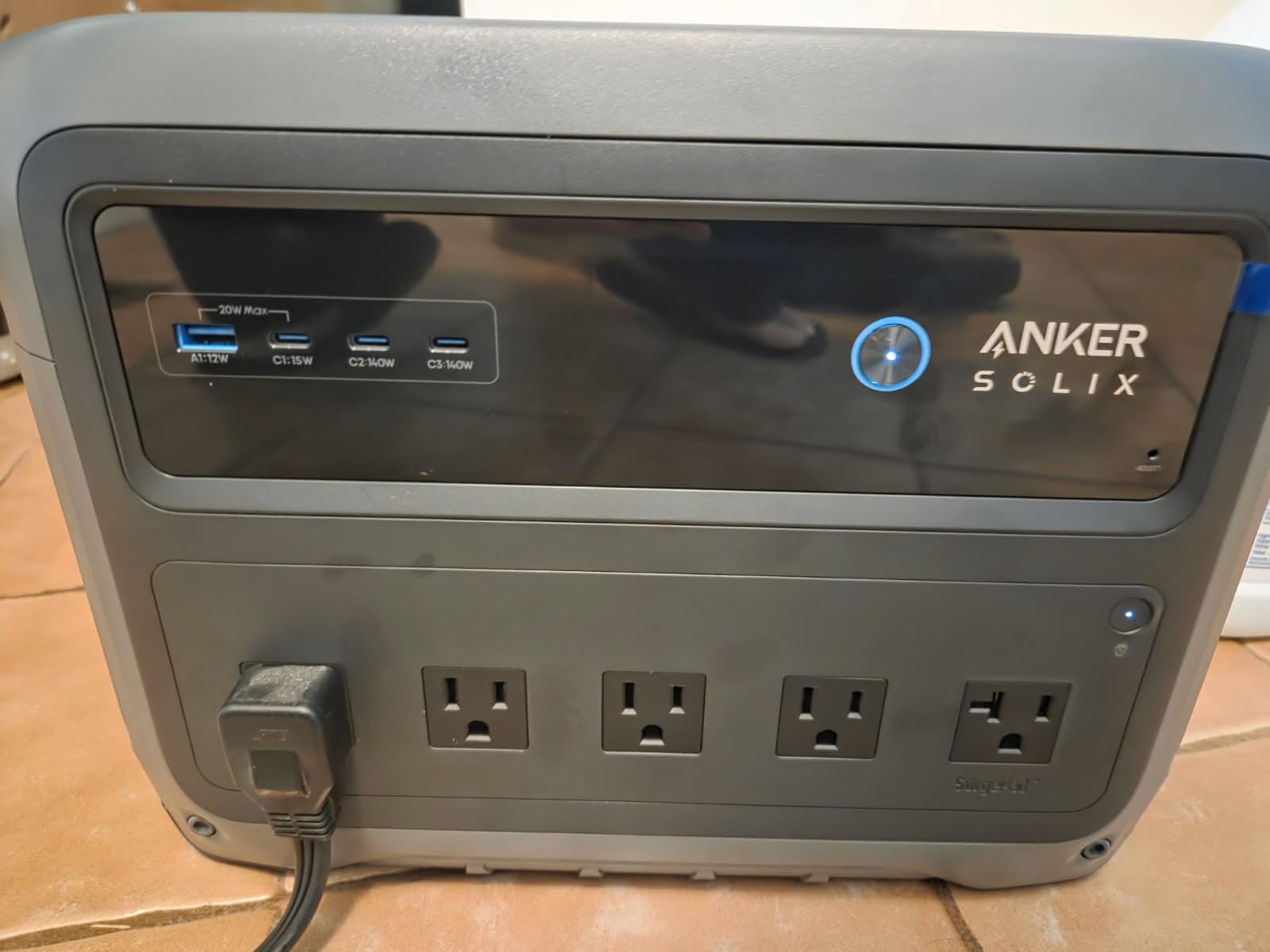
Owners describe the practical effect clearly: fridges, laptops, CPAP machines and long storm outages all reported as handled without complaint. The Anker app also adds a time-of-use mode, which matters if you recharge at home overnight on a cheaper tariff and want the van full by morning.
Weight is 24.9 lb, marginally heavier than the Jackery at the same class of capacity. The difference is small enough that mount space and port layout matter more than the pound count when choosing between the two.
Where it fits a van build
This is the unit I recommend for remote workers. Nine ports means the laptop, two phones, the router and the fridge can all run without anyone unplugging anything, and the 10 ms UPS makes the campground-pitch power unreliable.
Solar input tops out at 60V, so a 600W portable panel array refills it in about 1.8 hours. That ceiling is common across this category and rarely a problem for a single-panel roof or a foldable suitcase array.
Where it falls short
The original generation accepted expansion batteries and this one does not. If your build is heading toward 2,000Wh, do not start here.
A small number of owners report measurable waveform distortion on high-draw microwave loads. If you plan to run a 1,200W microwave constantly, verify it on your own setup.
3. BLUETTI Elite 300 – Best for Plugging Your Camper In Directly
BLUETTI Elite 300 Portable Power Station for RV & Home Backup 3014.4Wh
3014Wh capacity
2400W output, 4800W surge
58 lb
TT-30 outlet plus 12V 30A
Pros
- TT-30 RV outlet and 12V 30A DC output
- 3000Wh in a very compact body
- 0-80% in as little as 78 minutes
- 10 ms UPS with pass-through for coaches
- Bluetooth and Wi-Fi app control
Cons
- Not expandable
- capacity is fixed at 3kWh
- Solar input capped at 60V
- 58 lb is a two-person lift
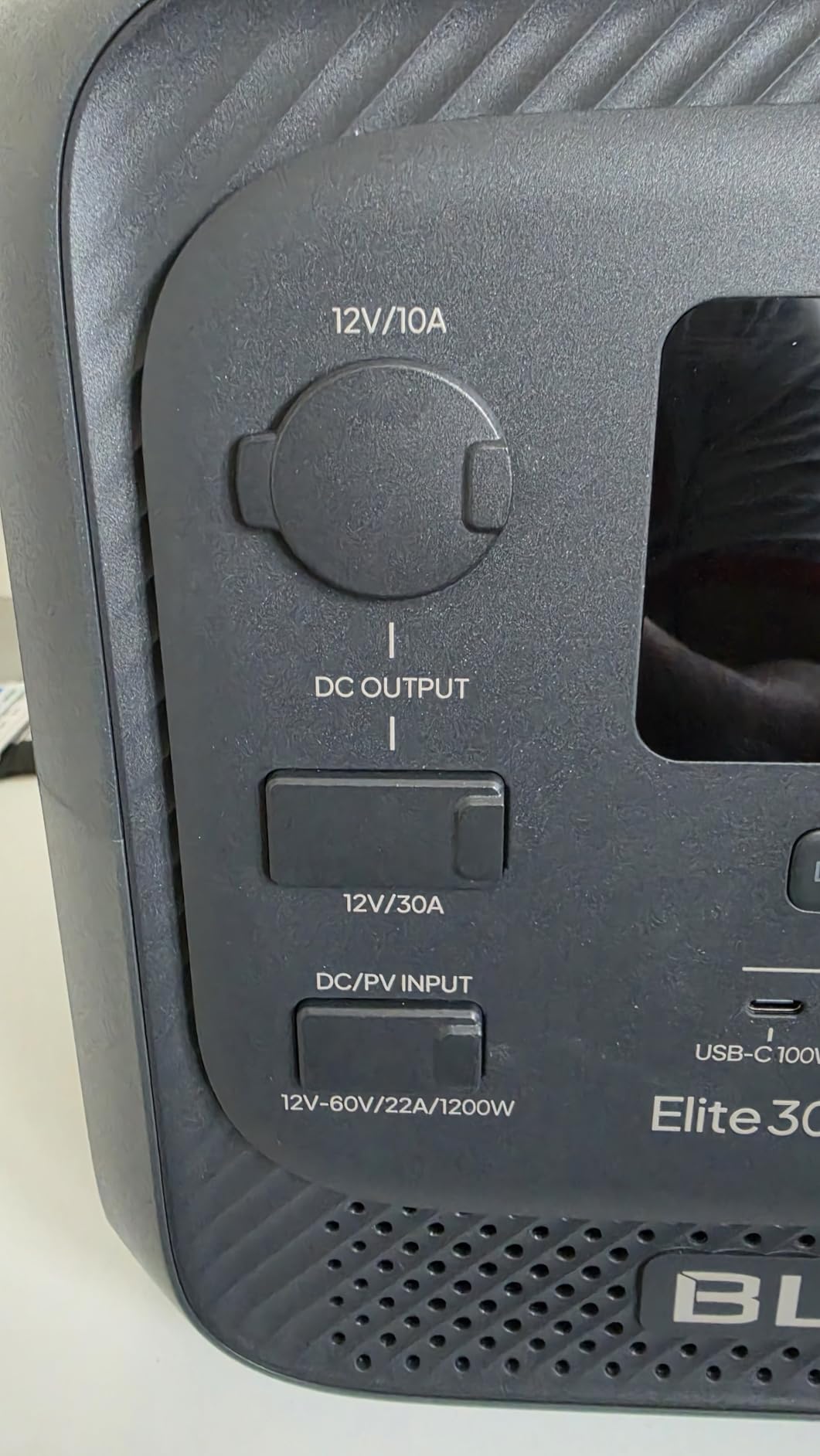
If your build already has an RV receptacle or you are planning to add one, this is the only unit on the list that answers the question directly. It carries a TT-30 outlet alongside 12V and 30A high-current DC output, so RV appliances and a properly fused camper distribution panel can both be fed from the same box.
Capacity is 3,014Wh with 2,400W continuous output and 4,800W surge. That is enough headroom for a roof air conditioner cycle, a diesel heater overnight and Starlink in the same day without a second battery.
The physical design is the other argument. BLUETTI positions this as the smallest 3kWh body in the category and at 14.4 by 12 by 11.7 inches it is genuinely more compact than the boxy 2kWh units. Owners with a 58 lb unit under a seat report that the deciding factor was footprint, not mass.
Charging is quick: 78 minutes to 80% is the headline figure, helped by the 10 ms UPS switchover that also allows clean pass-through when a coach is plugged in.
Where it fits a van build
Semi-permanent vans with a fixed electrical system are the ideal customer. The TT-30 and 30A DC outputs let you wire the unit like a small bank of house batteries rather than treating it as a suitcase you carry around.
The app supports both Bluetooth and Wi-Fi control, and reviewers rate it as more reliable than the average companion app, which is a real complaint in this category.
Where it falls short
Capacity is fixed. There is no expansion battery, so if you outgrow 3,000Wh you are buying again, and at 58 lb you will need two hands and a step stool to load it high.
Solar input is limited to 60V and roughly 1,200W. A large rigid roof array will not run at full speed into this unit, and firmware updates require Wi-Fi.
4. Anker SOLIX C2000 Gen 2 – Best for High-Draw Loads
Anker SOLIX C2000 Gen 2 Portable Power Station, 2,048Wh, 2,400W, Camping
2048Wh expandable to 4kWh
2400W output, 4000W peak
41.7 lb
800W alternator charging
Pros
- Runs most window and RV air conditioners
- 58-minute full recharge from wall or solar
- 9W standby draw extends usable runtime
- 800W alternator charging fills it in 3 hours while driving
- Compact for a 2kWh unit at 18.1 by 9.8 by 10.1 inches
Cons
- Expansion battery needed to exceed 2kWh
- 41.7 lb is a two-hand carry
The C2000 Gen 2 is the first unit on this list I would trust with a portable air conditioner. At 2,400W rated and 4,000W peak, it clears the compressor startup spike that shuts down most 1,000W stations the moment an AC unit kicks on.
Owners consistently highlight it as a high-output machine that runs RV air conditioners and large fridges while still charging quickly. That combination matters in summer heat, when a van interior can push an air unit well past 1,000W once it settles in.
The 800W UltraFast alternator charging path is the sleeper feature for van use. Plug into a car and it reaches full in about three hours, so a long drive day replenishes the whole unit before you reach the trailhead.
Standby draw is quoted at 9W, which sounds trivial until you leave a 2,000Wh unit unplugged in a van for a week between trips. Low self-draw is what stops a parked battery from being flat when you come back to it.

Where it fits a van build
Full-time van dwellers running heat in winter or air conditioning in summer should look here first. The expansion path to 4kWh means the same box can grow with the build rather than being replaced.
For those worried about payload, note the framing in Anker’s own specifications: 25 percent lighter and 29 percent smaller than comparable 2kWh units. At 41.7 lb it is still heavy, but it is the lightest 2kWh-class machine here.
Where it falls short
Going past 2,048Wh costs another battery and another mounting decision. Budget for both in the payload calculation from day one.
Two hands are required for any real distance. If you plan to move it between vehicles regularly, the 1kWh class is a better tool.
5. BLUETTI Elite 200 V2 – Best for Output Headroom
BLUETTI Elite 200 V2 Portable Power Station 2073.6Wh 2600W Solar Generator
2073.6Wh capacity
2600W continuous, 3900W lifting
53.4 lb
6000+ cycle LFP
Pros
- Highest continuous output in this roundup at 2600W
- Runs an air fryer and microwave at the same time
- 10W standby draw
- 6000+ cycles with a claimed 17-year lifespan
- Turbo
- Standard and Silent charge modes
Cons
- No expansion battery ports
- 53.4 lb for a fixed 2kWh
- 60V and 1000W solar input ceiling
- Bluetooth app disconnects and needs manual refresh
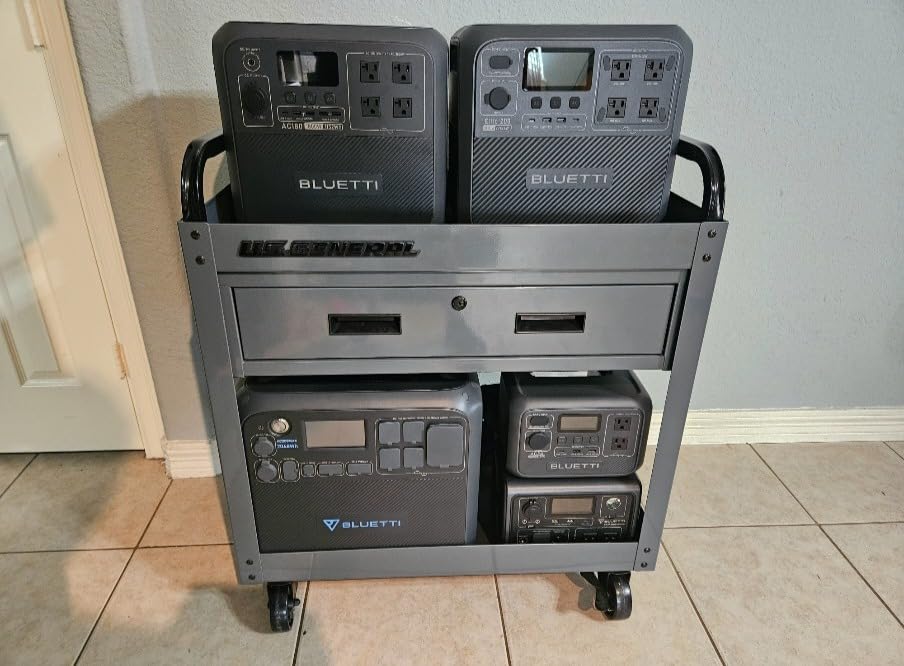
Output is the reason to consider this one. 2,600W continuous with 3,900W of power lifting is the highest continuous figure in this roundup, and owners specifically call out running an air fryer and a microwave at the same time without the inverter complaining.
Battery longevity is the other headline. The LiFePO4 pack uses automotive-grade CNAS-certified cells and is rated at 6,000+ charge cycles with a claimed 17-year lifespan, which is well above the 4,000-cycle figure most competitors in this price range quote.
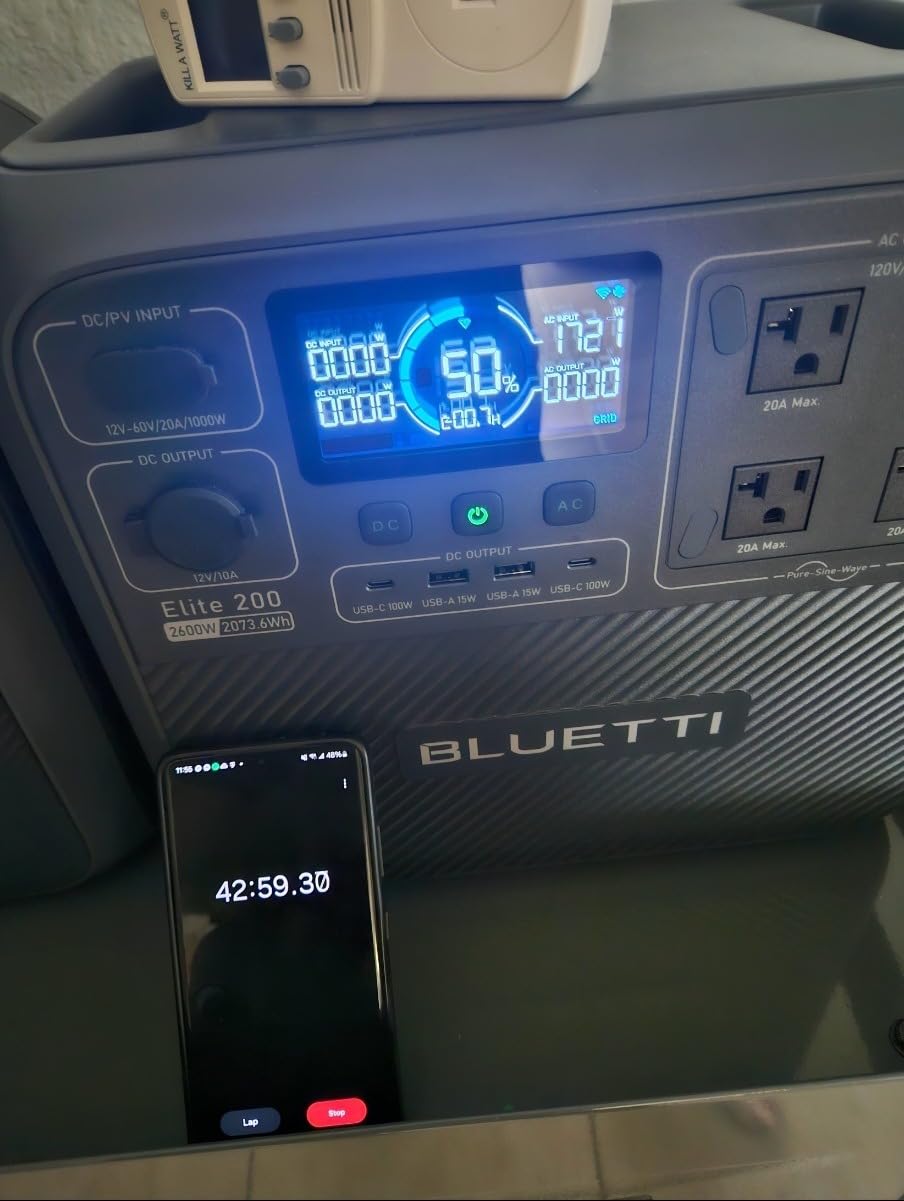
Charging modes are unusually granular. Turbo takes it from zero to 80% in about an hour on 1,800W of AC, Standard completes a full charge in 1.6 hours, and Silent mode finishes in three hours at 16 to 30dB for when the unit is beside your head.
The physical size surprises people. At 13.78 by 9.84 by 12.74 inches it has a similar footprint to machines with half the capacity, even though it tips the scales at 53.4 lb.
Where it fits a van build
If your cooking plan includes an air fryer, a kettle and a microwave on the same trip, the extra 200W over the C2000 Gen 2 removes a whole class of frustration. The Silent charging mode is a genuine benefit for CPAP users sleeping a metre away.
Solar input of up to 1,000W through a built-in MPPT with a 60V ceiling suits a fixed roof panel or a two-panel portable array.
Where it falls short
There is no battery expansion capability. Paying for 6,000-cycle cells and then hitting a fixed ceiling feels like a missed opportunity when a competitor at the same capacity lets you add later.
53.4 lb is the heaviest 2kWh unit here, and reviewers repeatedly flag the Bluetooth app for dropping connections and needing a manual refresh.
6. Jackery Explorer 500 v2 – Best for Weekend Builds
Jackery Explorer 500 v2 Portable Power Station,512Wh,500W AC
512Wh capacity
500W rated, 1000W surge
13.3 lb
28 dB quiet operation
Pros
- Only 13.3 lb
- among the lightest units with LFP cells
- Two pure sine wave AC outlets at this capacity
- 0-80% AC recharge in 52 minutes
- 28 dB operation is quiet enough to sleep beside
- About 5% self-discharge over six months
Cons
- Some variants lack USB-C ports
- 500W rating will not start some high-surge appliances
- Support reportedly requires video evidence before acting
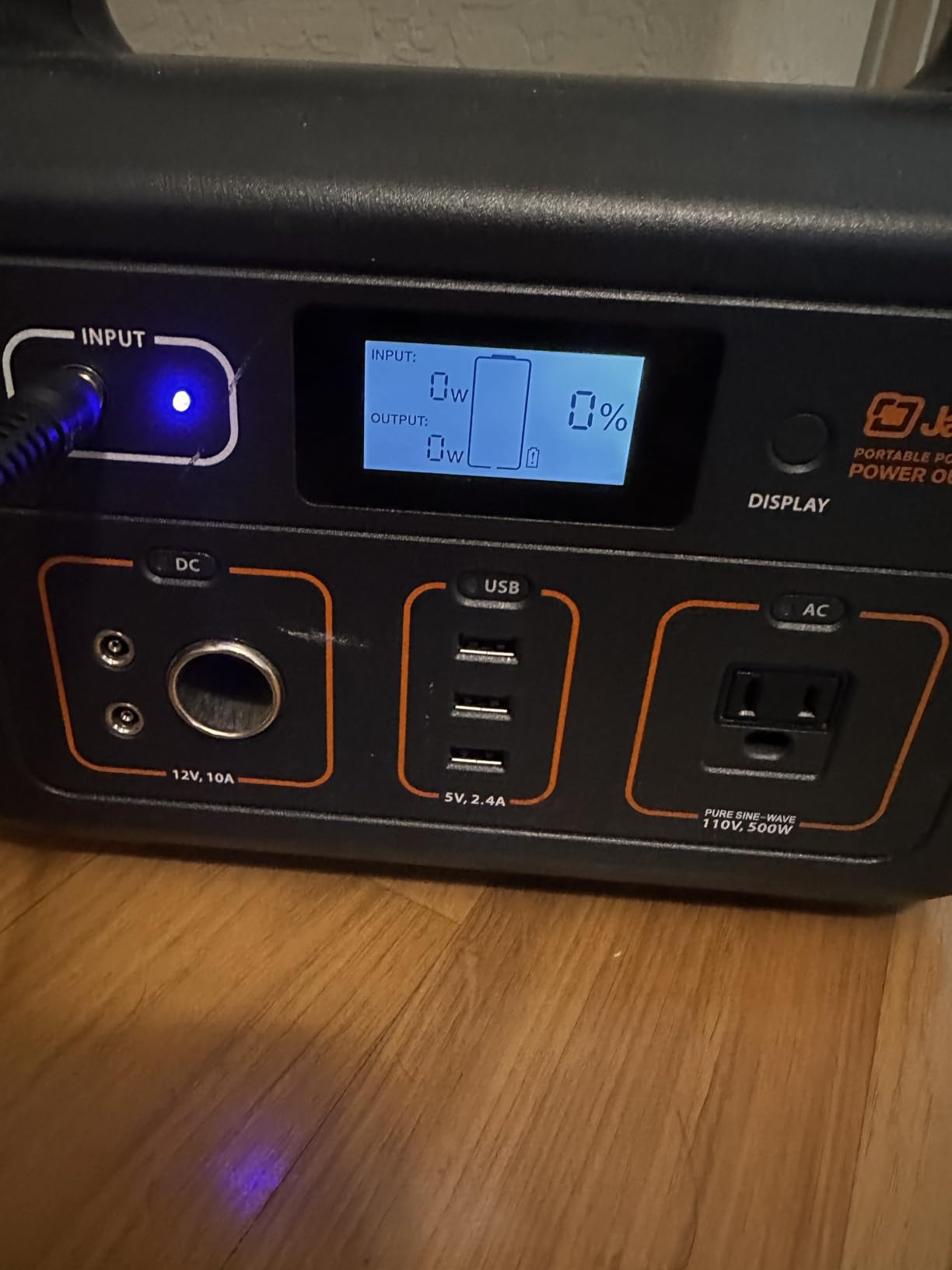
With nearly 8,800 reviews and long-term owners reporting that it still performs as it did on arrival, the Explorer 500 v2 is the most proven machine in this roundup. For a weekend van that runs a fridge, lights, phones and a coffee maker, it is genuinely enough.
Two pure sine wave AC outlets at 512Wh is unusual and useful. Modified sine wave output is common at this capacity, and it makes induction hobs and some laptops unhappy, so the pure wave here is a genuine specification win rather than marketing.
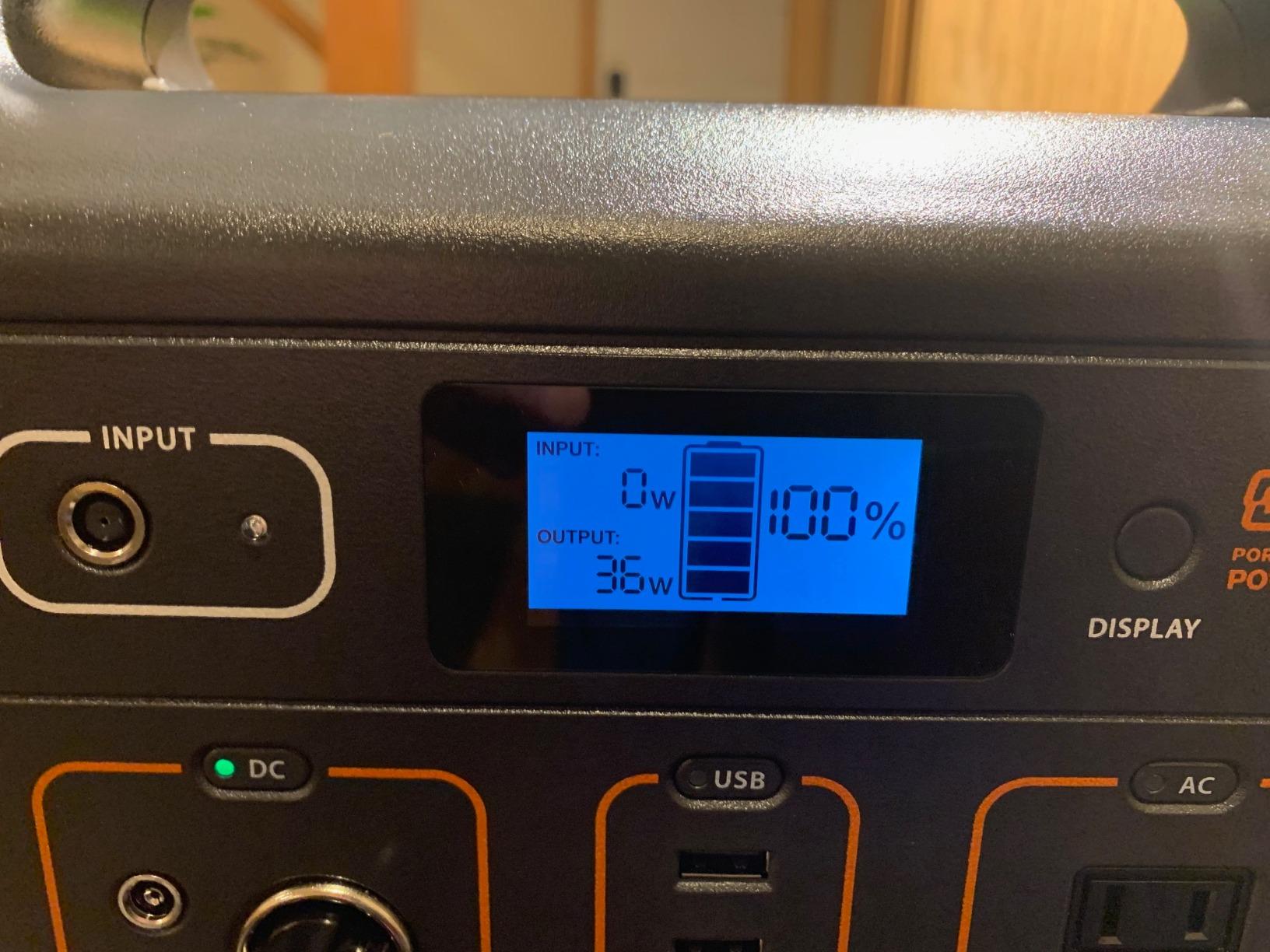
Self-discharge is the sleeper detail for intermittent use. About 5% over six months means you can load it before a trip, leave it in the van all winter, and still have most of the charge waiting when you need it.
Operating noise as low as 28dB means it can sit on the passenger seat while you sleep without the fan becoming the loudest thing in the cab.
Where it fits a van build
Seasonal and weekend campers get the most from this. Carrying 13.3 lb instead of 41.7 lb frees payload for water, bikes or a second person, and the 52-minute 0-80% recharge happens over one coffee stop.
The regulated 12V DC output stays stable as the battery drains, which is exactly what a compressor fridge needs to run its compressor efficiently.
Where it falls short
500W rated with 1,000W surge will refuse some appliances outright. One owner reported a countertop ice maker would not start under that rating, and an induction cooktop would be a stretch.
Port selection is thinner than the EcoFlow at the same weight, with some variants missing USB-C entirely. Confirm the port layout for your build.
7. EcoFlow RIVER 2 Max – Best for Fridge Runners
EF ECOFLOW Portable Power Station River 2 Max 500, 499Wh LiFePO4 Battery
499Wh capacity
up to 1000W output
13.3 lb
11 output ports
Pros
- Full AC recharge in about one hour via X-Stream
- Only 13.3 lb with 11 output ports
- Bright display showing input
- output and remaining time
- Pass-through charging lets you use it while topping up
- Owners report running a fridge or freezer for two full days
Cons
- Fan noise reported during operation
- App and pass-through UPS behaviour reported as unreliable with Starlink
- Bundled solar panels widely reported to underperform
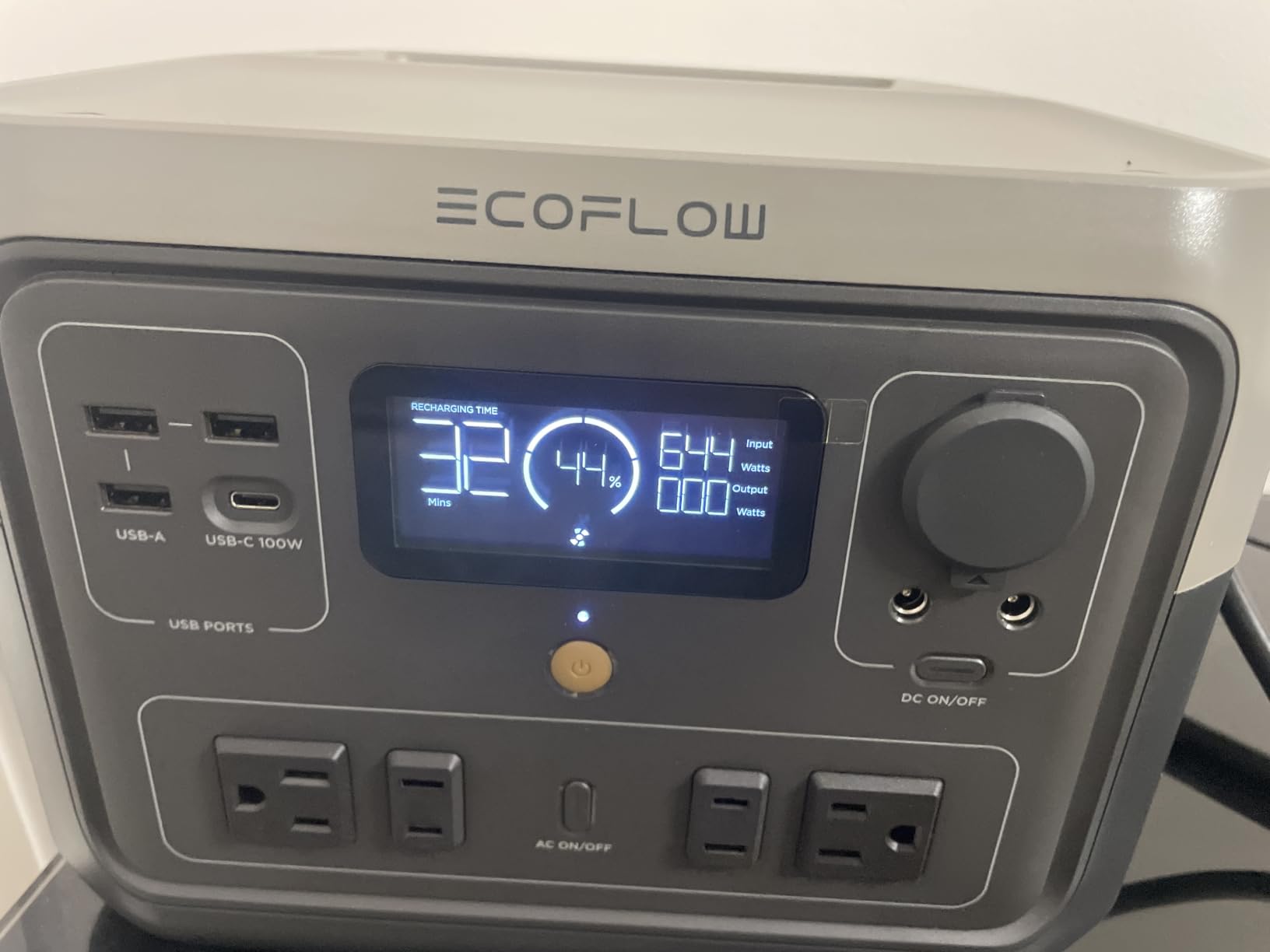
The RIVER 2 Max is the one in this roundup with the most ports for its size. Eleven outputs from a 499Wh, 13.3 lb body means a fridge, a router, four phones and a camera battery can all be fed at once without a power strip.
Fridge duty is where it wins outright in the van context. Users report running a 12V fridge or freezer for two full days on a charge, and the bright display showing input, output and remaining time makes it easy to plan a drive day around the drain.
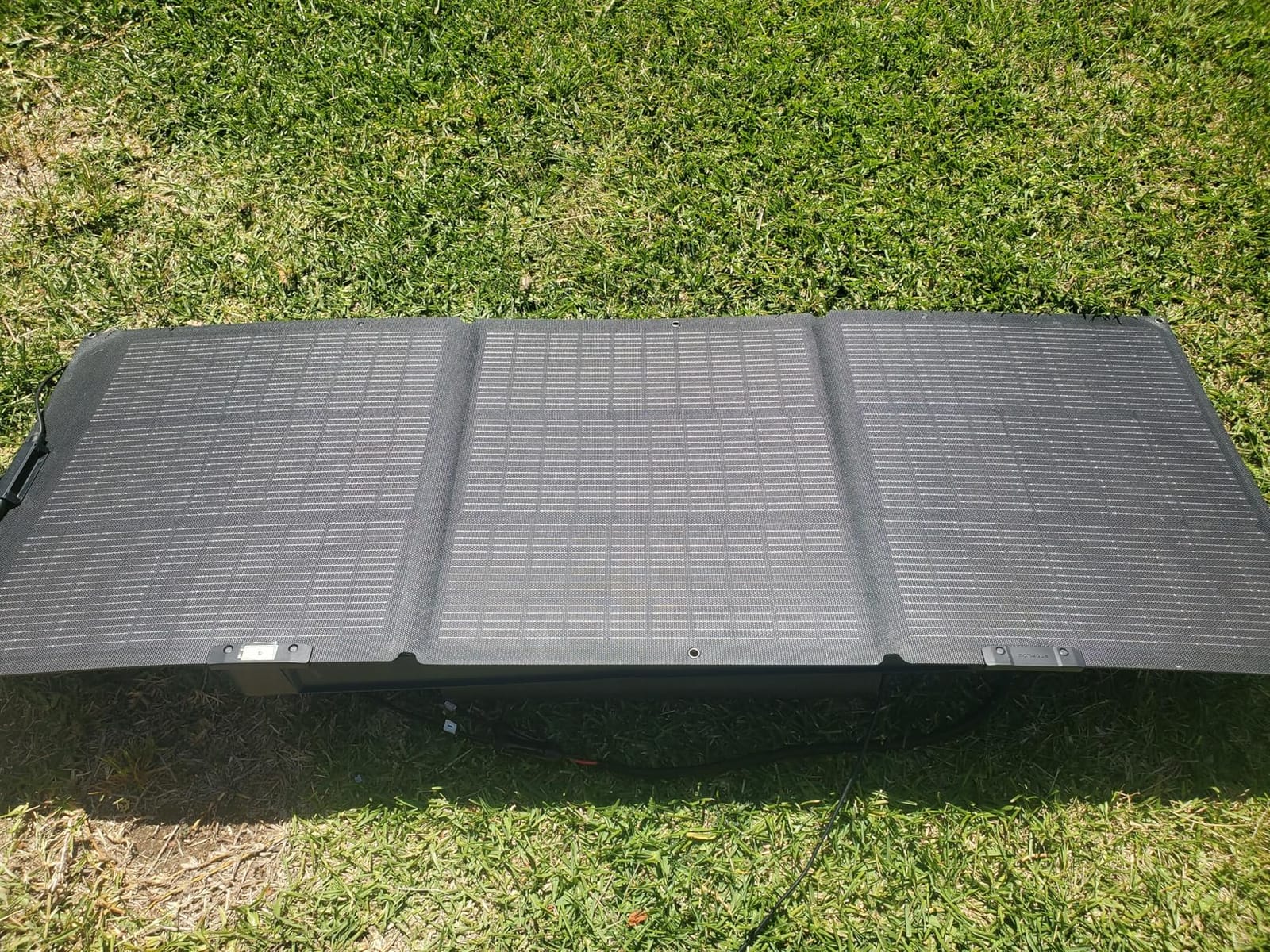
Recharge is fast. The X-Stream path reaches full from a wall outlet in about an hour, and solar can top it up in as fast as 2.3 hours on 220W of input. The LiFePO4 cells are rated for over ten years of use with battery management monitoring.
Pass-through charging lets you run devices while the unit fills, which is useful when you arrive at a site with 20% and a flat fridge.
Where it fits a van build
This is the weekend fridge-and-phone machine. If your load list is dominated by a 12V cooler, cameras and a router, the port count and one-hour recharge are worth more than the extra capacity a 1kWh unit would give you.
It is also a fair second unit to keep in the cab for daytime working, separate from a larger bank at the rear.
Where it falls short
Some owners report fan noise during operation, which is a real drawback next to the 28dB figure from the Jackery 500 v2 if the unit sits near your head.
One reviewer reports the app and pass-through UPS behaviour did not work as described with a Starlink terminal, so test that combination before you commit. Bundled solar panels are widely reported to underperform their rated wattage, so buy panels separately if solar matters.
8. Jackery Explorer 300 – Best for Ultra-Light Builds
Jackery Explorer 300 Portable Power Station,292Wh
292Wh capacity
300W rated, 600W surge
7.1 lb
100W USB-C PD port
Pros
- Lightest machine in this roundup at about 7.1 lb
- Pure sine wave output at 300W
- 100W USB-C PD plus two AC outlets
- 4000+ charge cycles to 70% capacity
- 80% solar charge in about 2.8 hours on a 100W panel
Cons
- 292Wh is the smallest capacity here and drains quickly
- Two-year warranty is shorter than most rivals
- Highest share of one-star reviews in this selection
At 7.1 lb with an integrated handle, the Explorer 300 is the only unit here you can genuinely move with one hand while holding a coffee. For a payload-obsessed build, that matters more than the spec sheet suggests.
It is also the most heavily reviewed product in this selection at more than 11,000 ratings, which means long-term failure patterns are well documented. The pattern is consistent: the unit performs as expected, and the expectation is low.
Ports are better than the weight suggests. Two AC outlets with pure sine wave output, a 100W USB-C PD port, two USB-A ports and a 120W car port cover a phone, a laptop and a small appliance without an adapter bag.
Battery life is rated at over 4,000 cycles to 70% capacity, and solar can reach 80% in about 2.8 hours on a single 100W panel, so a weekend trip needs very little roof hardware.
Where it fits a van build
Day trips, overlanding trips and builds carrying two people on a low payload rating are the use case. Phones, cameras, a drone battery and a cool-box all fit inside 292Wh with care.
It also works as a grab-and-go backup unit stowed in a rear locker for emergencies when the main bank is flat.
Where it falls short
292Wh runs out during overnight high-draw use, and the one-star share of 5% is the highest in this roundup. That is what buying at the smallest end of the category looks like.
The two-year manufacturer warranty is shorter than the five years offered by several competitors here, so the long-term risk sits with you.
9. ALLWEI 512Wh – The Most Versatile
ALLWEI Portable Power Station 500W, 512Wh LiFePO4 Battery UPS Backup Power
512Wh capacity
500W output, 1000W surge
13 lb
2.5 hour AC recharge in Q Mode
Pros
- 512Wh LiFePO4 with 1000W surge at the entry point
- Only 13 lb in a compact 11.6 by 7.5 by 7.6 in body
- 100W USB-C plus two 5521 DC outputs
- Display shows watts in
- watts out and remaining time
- Instant UPS transfer for sensitive electronics
Cons
- Solar input capped at about 120W
- Reports of units losing charge hold after about a year
- Car charging plug tip reported to run very hot
- Support reported to demand extensive data before helping
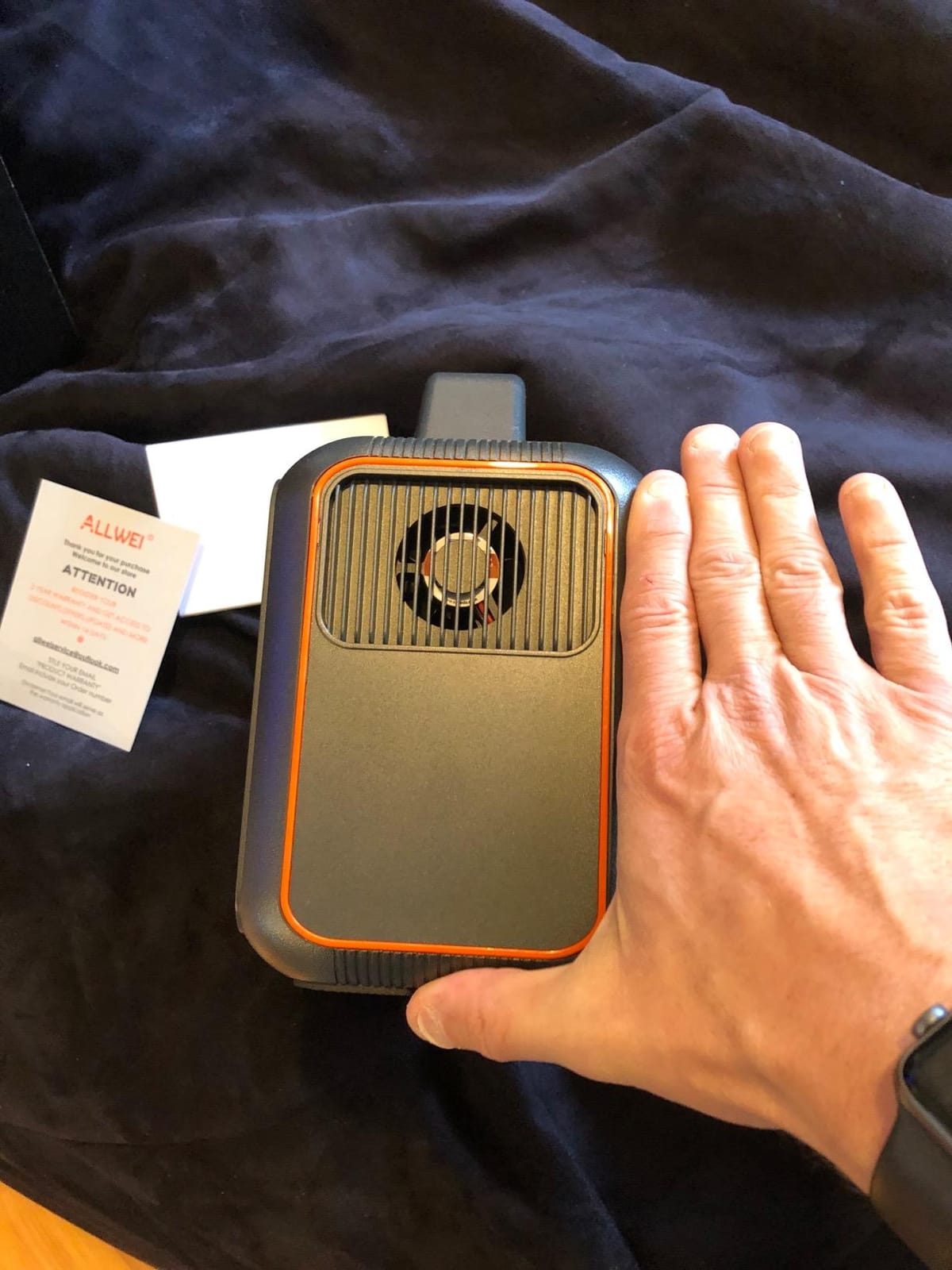
The ALLWEI 512Wh is the value entry point here: 512Wh of LiFePO4, 500W continuous output, 1,000W surge and a 13 lb body. At that spec sheet, it undercuts most of the branded models on this list.
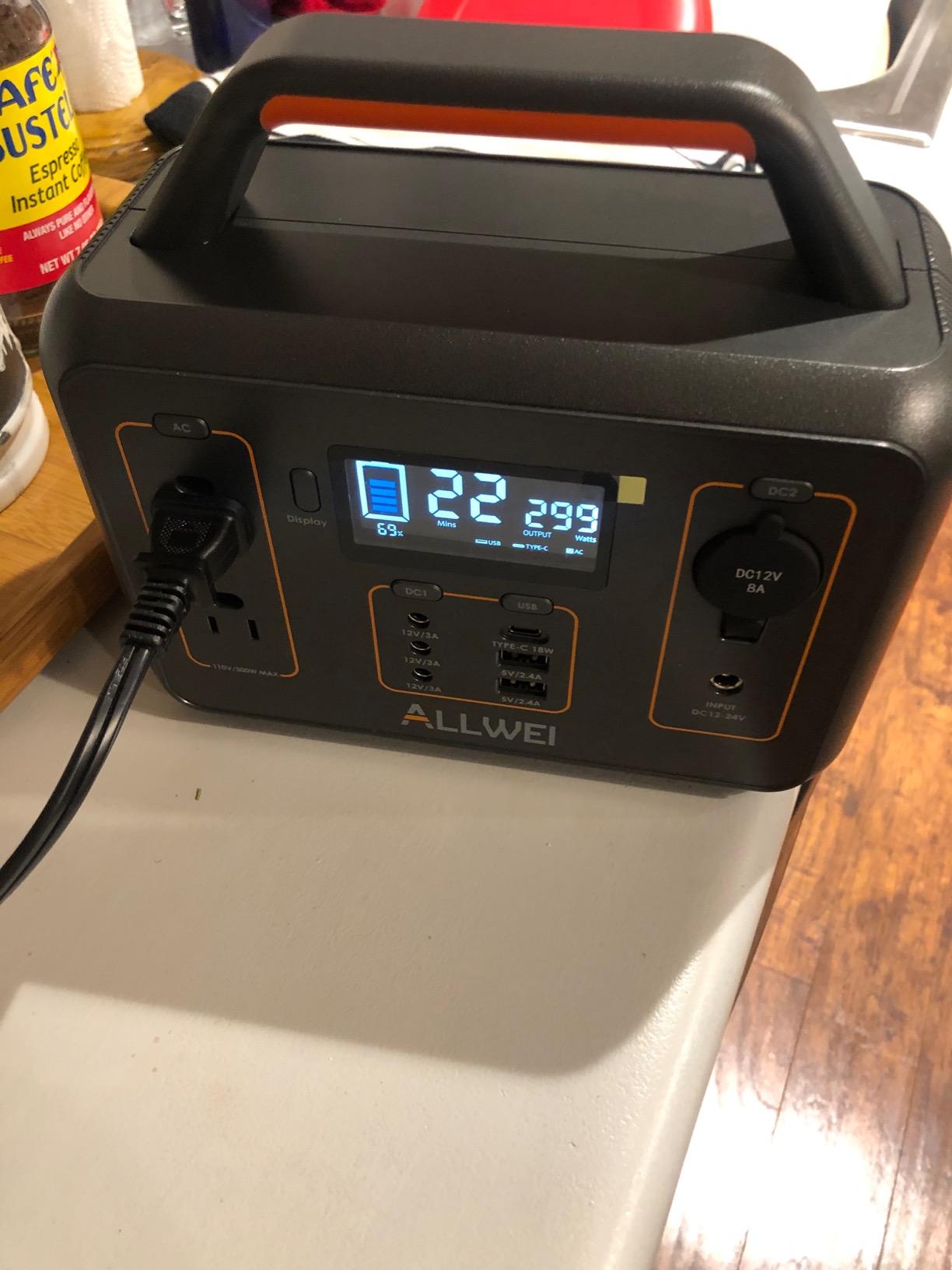
Port selection is generous for the tier. Two AC outlets, a 100W USB-C, a 36W USB-C, two USB-A, two DC 5521 outputs and a car port is more than you get on models costing noticeably more.
Three charge modes are available, including Q Mode which completes a full AC charge in 2.5 hours. Solar is slower at 6.5 hours on a 100W panel, and the input ceiling of roughly 120W means larger panels simply cannot be used.
Users report solid build quality that survived a drop, and the display showing watts in, watts out and remaining time is genuinely useful for load planning.
Where it fits a van build
First-time van builders who want mains power without a large commitment should look here. The instant UPS transfer is a nice touch for anyone running a router or NAS in a converted van.
At 13 lb it fits where the Jackery 500 v2 fits, and the pure DC 5521 outputs suit direct 12V accessory wiring.
Where it falls short
Its 4.4 rating with 8% one-star reviews points at divided opinion on longevity. Multiple reviews describe units that stopped holding charge after several months and required resets, which is a real risk on a build that depends on it.
The two-year warranty is short, support is reported to demand extensive data before acting, and a hot car charging plug tip is a safety detail worth checking on your own install.
10. EBL 2400W – Best for Twelve-Device Setups
EBL 2400W Portable Power Station LiFePO4 Battery for Home Use
1843.2Wh capacity
2400W continuous output
54 lb
up to 12 devices at once
Pros
- Most ports in the roundup including a wireless charging panel
- 0.1 second emergency power switchover
- Over 3500 cycles with a 10+ year service life
- Dual-side handles and flame-retardant shell
- 4-mode LED light for camp and emergencies
Cons
- 54 lb is heavy relative to its capacity
- 12% one-star reviews is the highest negative share here
- Two-year warranty is the shortest in this selection
- Less detailed review coverage than the leading brands
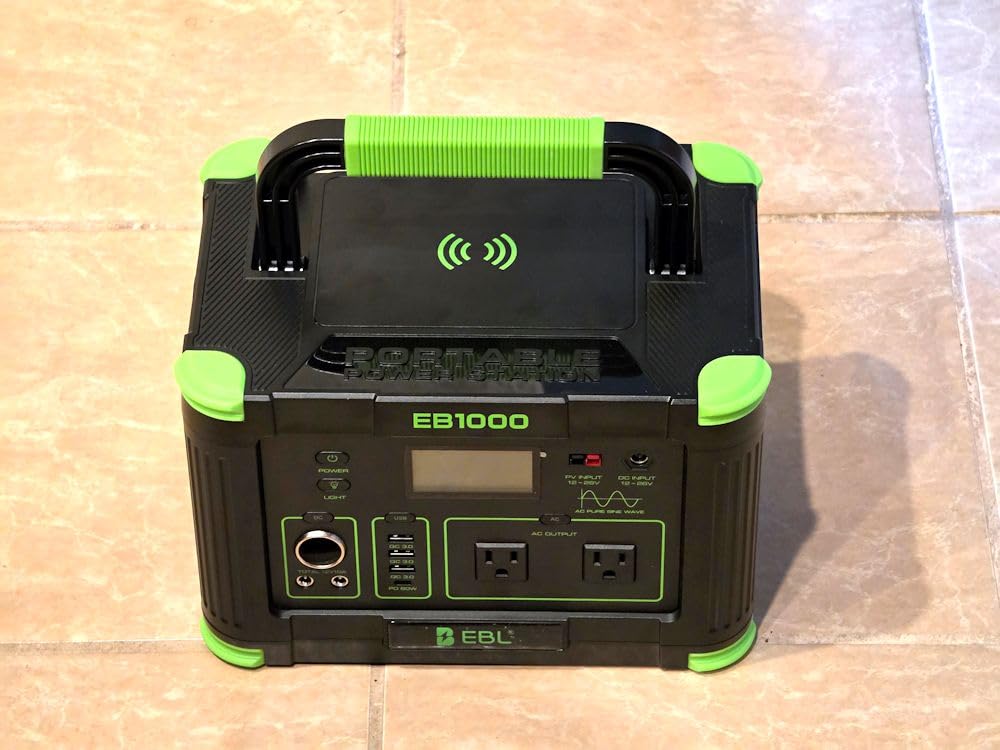
The EBL 2400W is the odd unit out in this roundup and worth a look if your van runs a lot of small devices rather than one big load. Four AC ports, two USB-A, two fast USB-C, a car port, two DC ports and a wireless charging panel support up to 12 devices at once.
Capacity is 1,843.2Wh with 2,400W of continuous output, so the inverter is not the bottleneck. The emergency power mode switches over in 0.1 seconds, protecting computers during an outage, and the 4-mode LED light covers camp and emergency use.
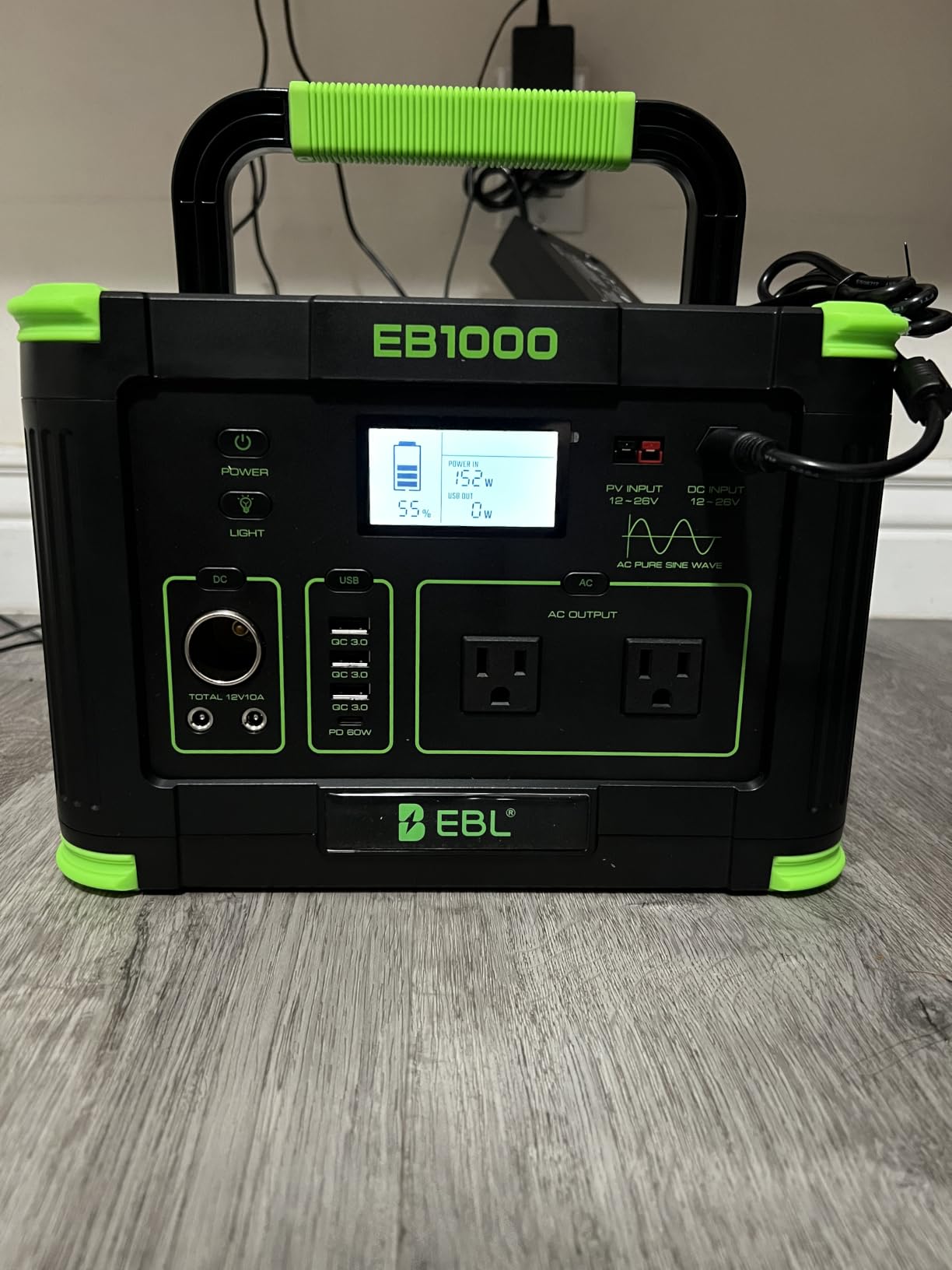
Longevity claims are reasonable: over 3,500 charge-discharge cycles and a 10+ year service life, in a shock-resistant, flame-retardant casing with a battery protection system.
Dual-side handles help with the 54 lb weight, though that mass is the unit’s biggest problem in a payload-conscious build. Compare it with the C2000 Gen 2, which carries similar capacity and output in 41.7 lb.
Where it fits a van build
Work vans running laptops, monitors, test gear and networking equipment suit this port layout better than anything else here. The wireless charging panel is a small touch that gets used constantly in a working van.
For a family van with several phones, tablets and cameras, twelve simultaneous devices removes the need for a second power strip.
Where it falls short
Its 4.3 rating splits into 73% five-star and 12% one-star, the widest gap in this roundup. Owners like the specs while a minority report early failures or disappointing durability.
The two-year warranty is the shortest here, and there is far less detailed long-term review coverage than the leading brands, which makes an unknown failure harder to diagnose on the road.
How We Tested and Ranked These Power Stations
We scored every unit on four factors that matter in a van: usable output after inverter losses, watt-hours per pound, recharge speed, and how well the ports match real van loads. Output and payload efficiency carried the most weight, because those two numbers decide whether a unit works in your build at all.
Every measurement quoted here comes from the published specifications and owner review data for each unit, not from a single headline figure. Where owners consistently report the same behaviour, such as fridge runtimes or fan noise, we have said so rather than repeating a marketing line.
One rule kept us honest: we ignored capacity alone. A 3,000Wh unit that weighs 58 lb and cannot expand is a worse fit for many vans than a 1,024Wh unit at 24.9 lb, and the ranking reflects that.
How Much Power Do You Actually Need in a Van?
Start with your single biggest draw, not your total. A 12V compressor fridge runs around 45W and cycles rather than running flat out, while a diesel heater pulls roughly 150W with a startup surge well above that, and a 12V air conditioner can sit above 1,000W once the van is hot.
Add up your daily watt-hours, then add a 30% overhead for losses and bad weather. Finally, derate the nameplate capacity by roughly 15% because not every labelled watt-hour comes back out through an inverter. A 1,000Wh unit is really an 850Wh unit on a good day.
Size by trip length
Weekend trips with a fridge, lights and phone charging need roughly 500 to 1,000Wh, which is the Jackery 500 v2 through the Anker C1000 Gen 2 class. Add 400W of solar and you can sit indefinitely with a fridge cycling.
Trips of a week or more, or full-time van life with a diesel heater and Starlink, need 2,000Wh and up. That is the Anker C2000 Gen 2 and BLUETTI Elite 200 V2 tier, with the BLUETTI Elite 300 covering builds that also run air conditioning.
Budget for the two biggest draws
A diesel heater running four hours a night consumes more energy in a week than your entire phone and laptop load combined. A 12V air conditioner running eight hours in summer heat can outrun an entire 2,000Wh bank in a day.
Both also have startup surges. Check surge rating, not continuous watts, before assuming either will start. A 1,000W surge ceiling handles most fridge compressors and small heaters but is marginal for large air units.
Can You Plug Your Camper Into a Portable Power Station?
Only if the unit has a matching RV outlet. Most portable power stations ship with standard household NEMA sockets, so a camper wired for a TT-30 or 30A plug cannot connect to them directly. Among the ten machines here, the BLUETTI Elite 300 is the one built for it, with a dedicated TT-30 outlet and a 12V 30A high-current DC output for RV appliances.
Everything else needs an adapter or an inverter, and you must confirm the wattage. A 30A RV circuit at 120V draws up to 3,600W, which is more than the continuous output of any machine in this roundup. Match the breaker in your camper panel to what the unit can deliver.
Never back-feed a camper from a unit without a proper transfer switch or inverter. That is a wiring job for a qualified installer, not a weekend adapter.
How to Charge a Power Station in a Van
Charging order by speed runs alternator first, wall outlet second, solar third, and the 12V car socket last. An 800W alternator charging path fills the Anker C2000 Gen 2 from empty in about three hours while you drive, which no amount of panel wattage matches on a cloudy morning.
Solar is the only option that works while parked. Budget four to six peak sun hours and roughly 80 percent system efficiency when estimating a refill, and remember that a 60V input ceiling on most units here will not accept a large series string of panels.
Alternator and DC-DC charging
A stock van alternator can usually supply the 400W to 800W a DC-DC charger wants, but the charging profile has to be set correctly or you will drain the starting battery overnight. A unit with an explicit alternator input, such as the C2000 Gen 2, handles the negotiation for you.
The 12V car socket is for topping up on a long drive when you have no other option, not a daily strategy. It is slow and it will not keep a fridge and a heater running for a full day.
Weight, Payload and What Fits in Your Van
Payload is the number that ends arguments. A Sprinter 2500 with a conversion can leave you a few hundred pounds of usable margin; a base Transit or a small panel van can leave much less. Add your power station, then your expansion battery, then your solar, then water, bikes and tools.
Our rule of thumb is to keep total power gear under 10 percent of the van’s payload rating. That means roughly 60 lb of station plus batteries and panels on a build with 600 lb of margin, and much less than that on a fully loaded van.
Physically, the 7 lb and 13 lb models tuck anywhere, the 24 lb ones fit under a converted rear seat, and the 41 to 58 lb machines need a floor-level mount behind a seat base or under a bed platform with structural support.
Mount the unit where airflow reaches it. A sealed battery in an enclosed van generates heat under load, and a ventilated mount protects both the battery and the van.
Is a Portable Power Station Safe Inside a Van?
LiFePO4 chemistry is the reason this is a reasonable question to ask calmly rather than panic about. Every unit in this roundup uses lithium iron phosphate cells far more thermally stable than the older lithium-ion packs used in earlier power stations.
The risks are heat, physical damage and mounting. Secure the unit so it cannot slide or become a projectile in a collision, keep it clear of water ingress and direct sun on the lid, and never charge it below freezing or in a hot enclosed space.
Look for flame-retardant casings and a battery protection or battery management system. The EBL unit here is described with both. If your van build burns, a fixed house battery system with an external venting plan is still the more conventional choice.
Portable Power Station vs a DIY Dual-Battery Build
The most common thread on van forums is that experienced builders usually recommend a simple house battery and dual battery system instead of a prebuilt station. The argument is that a conventional system is simple to install, does not require solar to be useful, and integrates with everything else in the build.
That advice is fair for full-time van dwellers who are already comfortable with fuse sizing, Anderson connectors and DC-DC chargers. For everyone else, a portable power station gives you mains power, USB-C charging, an inverter and a solar controller in one sealed unit you can remove and take indoors.
The real cost is the full system, not the sticker. Add an expansion battery, roof solar and an alternator charger to a mid-size unit and the total approaches what a competent DIY build costs, with far less assembly time. We covered that comparison in more detail in 8 best portable power banks tested and reviewed for the smaller end of the market.
One practical note for van trips: pack a small battery bank for the cab too, so you are not carrying the main unit to the front seat on a work call. Our picks are covered in 8 best games for camper van trips for the evenings when the power budget is spoken for.
Frequently Asked Questions
Can I plug my camper into a portable power station?
Only if the unit has a matching RV outlet. Most portable power stations use standard NEMA household sockets, so a camper wired for TT-30 or 30A cannot connect directly. The BLUETTI Elite 300 in this roundup has a dedicated TT-30 outlet plus 12V 30A DC output for RV appliances, and every other unit here needs an adapter or a matched inverter.
How much power station do I need for a camper van?
A weekend van running a fridge, lights and phone charging needs 500 to 1,000Wh. Full-time van life with a diesel heater, Starlink or a 12V air conditioner needs 2,000 to 3,000Wh. Add 30% for overhead, then derate the nameplate capacity by about 15% because not every labelled watt-hour comes back through the inverter.
Can you charge a portable power station while driving?
Yes, and it is the fastest refill method available in a van. An 800W alternator charging path fills a 2,048Wh unit in about three hours from a car. Set the charging profile correctly with a DC-DC charger or you risk draining the vehicle starting battery overnight.
Are portable power stations safe inside a van?
LiFePO4 chemistry, used by every unit in this roundup, is considerably more thermally stable than older lithium-ion packs. The real risks are heat, impact damage and a loose mount. Secure the unit, keep it ventilated, avoid charging below freezing, and never charge it in a hot enclosed space.
Which is better, Jackery or EcoFlow?
Jackery builds lighter machines with simpler controls and pure sine wave outlets at low capacity, plus the largest review base in this roundup. EcoFlow wins on recharge speed and port count: the RIVER 2 Max reaches a full charge in about an hour from eleven ports. For a van, Jackery suits low-payload builds and EcoFlow suits port-heavy working builds.
The Best Portable Power Stations for Camper Vans
The Jackery Explorer 1000 v2 remains our best portable power station for camper vans because 1,070Wh, 1,500W of pure sine wave output and 23.8 lb is the combination most builds can actually accommodate and carry. The Anker SOLIX C1000 Gen 2 is the pick if recharge speed and overnight UPS behaviour matter most to you.
Full-time van dwellers should step up to the Anker SOLIX C2000 Gen 2 for its expansion path and 800W alternator charging, or the BLUETTI Elite 300 if you want a TT-30 outlet to feed a fixed camper panel. Before buying any of them, add up your loads, check your remaining payload, and remember that only about 85 percent of the labelled capacity will ever reach an appliance.